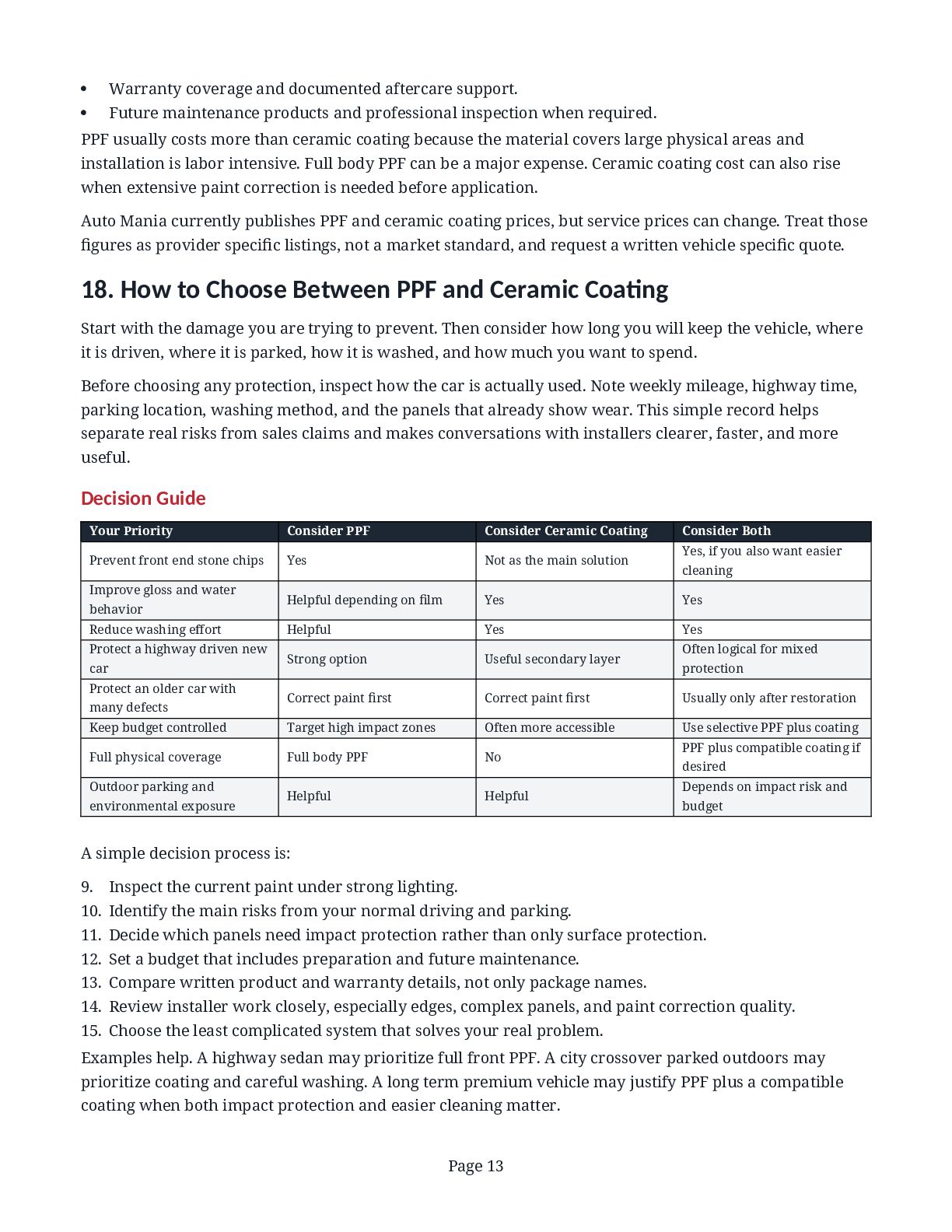
coating makes paint scratch proof. Fact: Ceramic coating can improve surface resistance and reduce friction, but it is not a thick impact layer. Dirty towels, brushes, branches, keys, and abrasive contact can still scratch coated paint. Myth: PPF makes a car completely damage proof. Fact: PPF reduces many chips and light scratches, but strong impacts can puncture film, damage paint, or dent metal underneath. Film is sacrificial protection, not armor. Myth: Ceramic coating means you never need to wash the car. Fact: Hydrophobic paint can release dirt more easily, but pollution, minerals, dust, insects, and traffic film still collect on the surface. Washing remains necessary. Myth: PPF never needs maintenance. Fact: Film still needs washing, safe drying, contamination removal, and edge inspection. Poor care can stain or mar the film and can shorten its useful life. Myth: Every ceramic coating lasts for many years. Fact: Durability varies by chemistry, preparation, application, climate, storage, mileage, and washing habits. A package label should always be read with its maintenance and warranty terms. Myth: PPF prevents every type of scratch. Fact: It can protect against many light scratches, but deep cuts and strong contact can pass through or deform the film. Some films self heal fine marks, not deep damage. Myth: More hardness numbers always mean better real world protection. Fact: Hardness claims use different tests and marketing language. They should not be confused with stone chip protection. Physical impact resistance depends on the whole material system, not a single number. 17. Cost Factors The cost of PPF or ceramic coating should be viewed as a project cost, not only a product price. Two vehicles can require very different labor even when they are similar in size. Major cost factors include: Vehicle size and total surface area. Amount of PPF coverage, from small impact zones to full body installation. Film or coating brand, product line, and material quality. Paint condition before protection. Decontamination, polishing, or paint correction required. Number and shape of body panels, vents, curves, trim pieces, and sensors. Installer skill, facility quality, preparation time, and finishing detail. Edge wrapping, pattern cutting, and custom installation requirements. Page 12


 takeshisumida_
 gpol
 ikuodanaka
 uluru_hr
 ozakiomumkj
 kazuyama88
 shunsuke_takeuchi
 kazumakitao
 layerx
 tamagakiyuya
 hansodeeeeee
 hr1nursing
 caitiem20
 szymonslowik
 joshbly
 chriscoyier
 afnizarnur
 rkendrick25
 sarafernandez
 katiecoart
 62gerente
 addyosmani
 schroneko
 nikkihalliwell