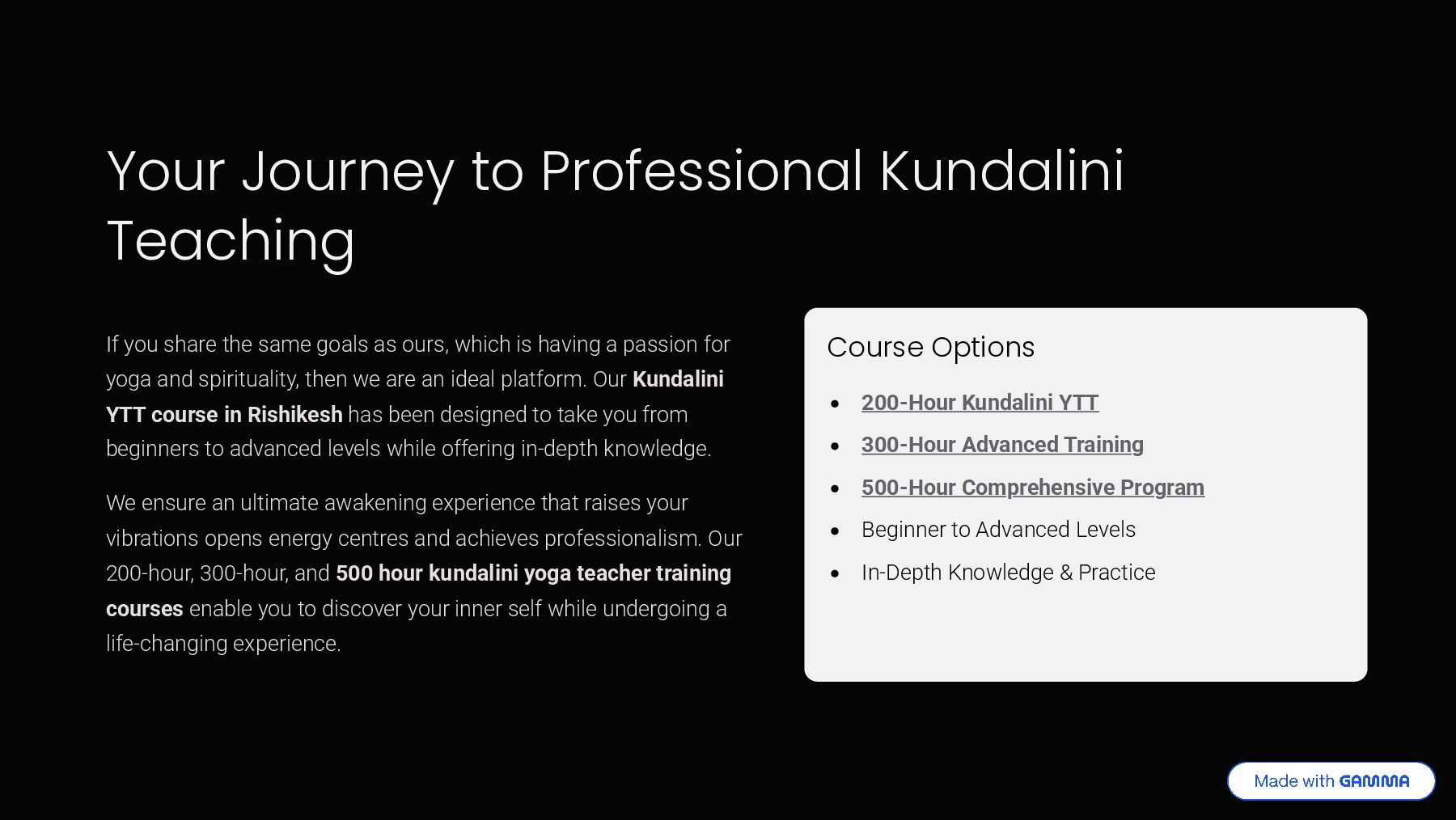
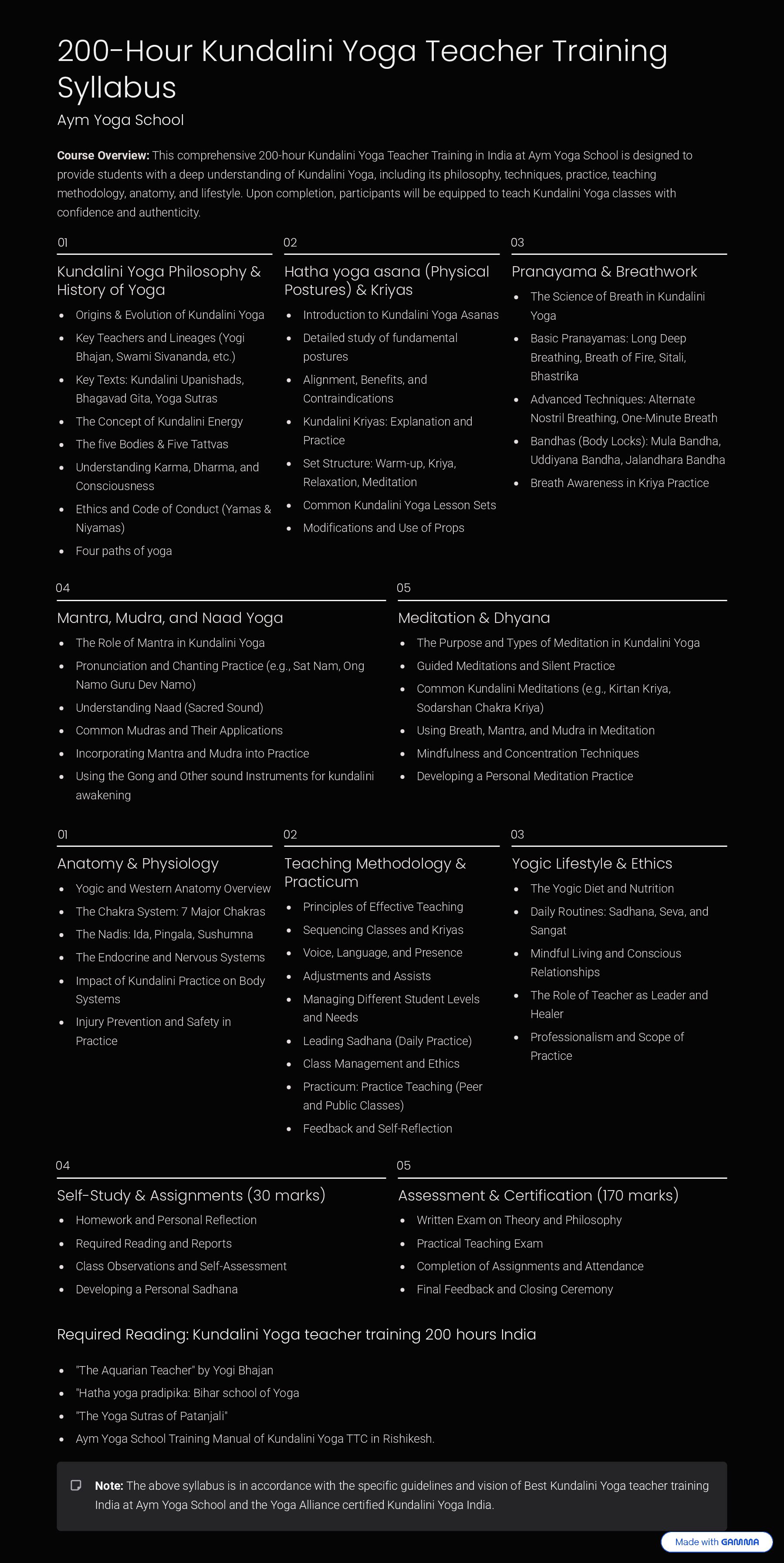
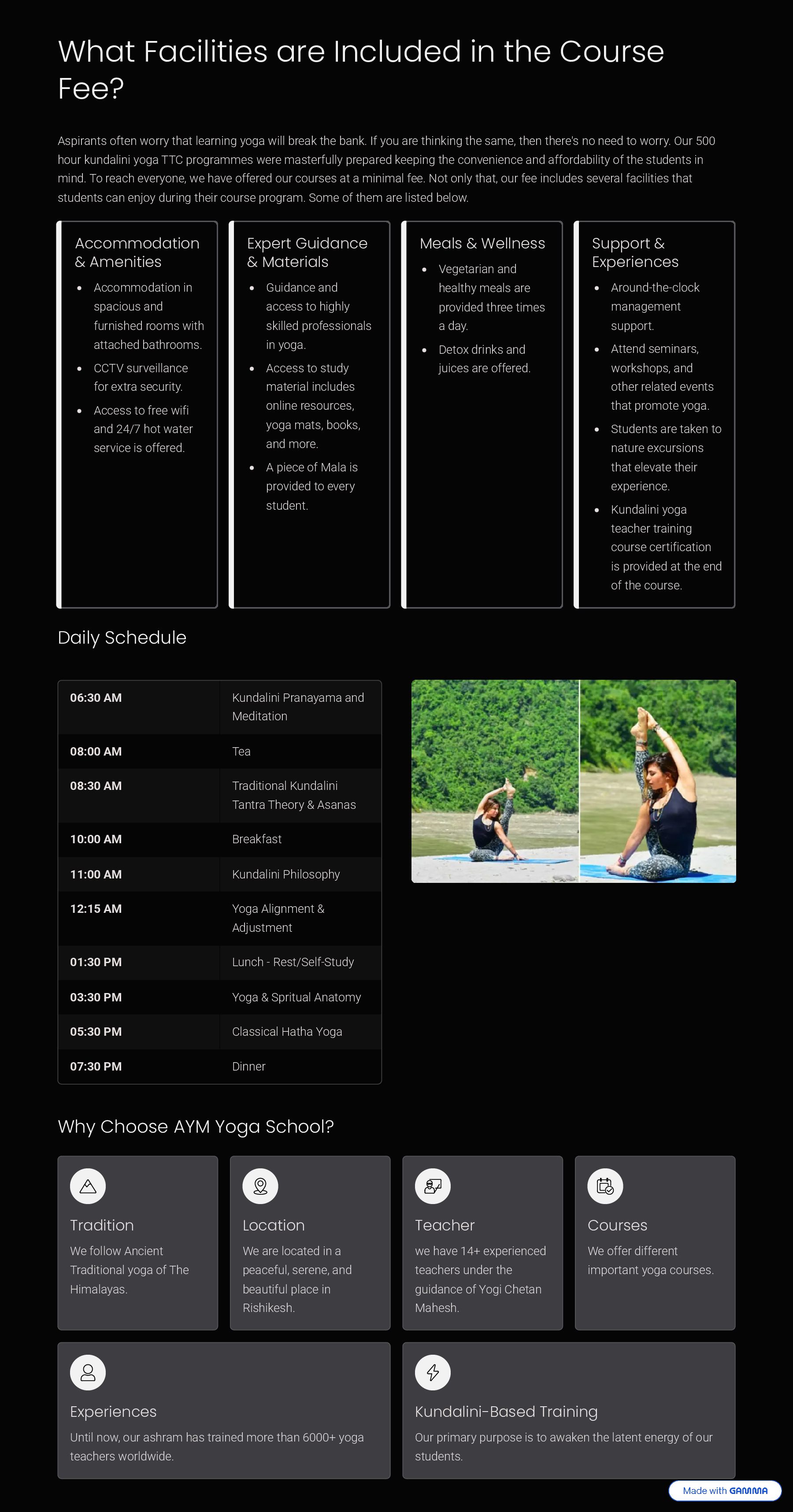
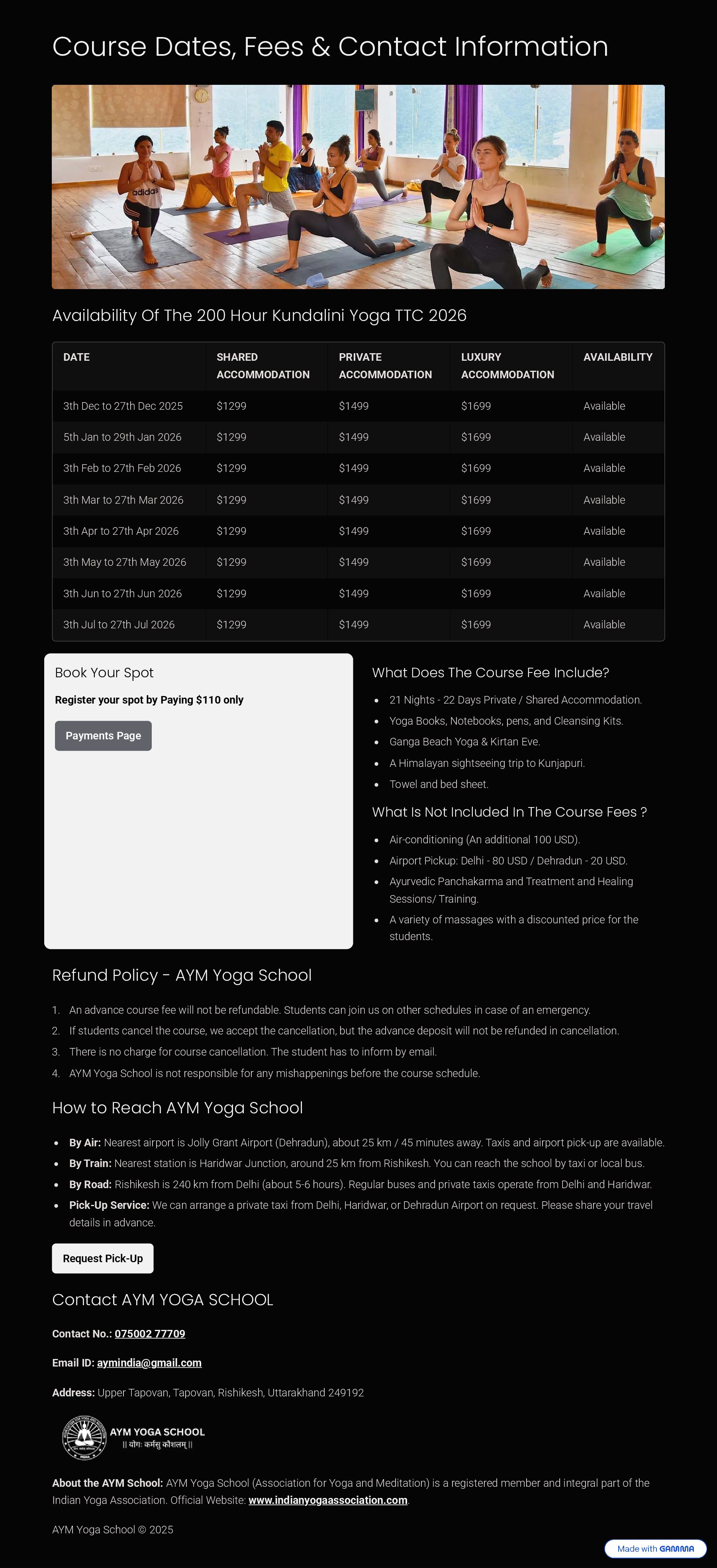
Overview: This comprehensive 200-hour Kundalini Yoga Teacher Training in India at Aym Yoga School is designed to provide students with a deep understanding of Kundalini Yoga, including its philosophy, techniques, practice, teaching methodology, anatomy, and lifestyle. Upon completion, participants will be equipped to teach Kundalini Yoga classes with confidence and authenticity. 01 Kundalini Yoga Philosophy & History of Yoga Origins & Evolution of Kundalini Yoga Key Teachers and Lineages (Yogi Bhajan, Swami Sivananda, etc.) Key Texts: Kundalini Upanishads, Bhagavad Gita, Yoga Sutras The Concept of Kundalini Energy The five Bodies & Five Tattvas Understanding Karma, Dharma, and Consciousness Ethics and Code of Conduct (Yamas & Niyamas) Four paths of yoga 02 Hatha yoga asana (Physical Postures) & Kriyas Introduction to Kundalini Yoga Asanas Detailed study of fundamental postures Alignment, Benefits, and Contraindications Kundalini Kriyas: Explanation and Practice Set Structure: Warm-up, Kriya, Relaxation, Meditation Common Kundalini Yoga Lesson Sets Modifications and Use of Props 03 Pranayama & Breathwork The Science of Breath in Kundalini Yoga Basic Pranayamas: Long Deep Breathing, Breath of Fire, Sitali, Bhastrika Advanced Techniques: Alternate Nostril Breathing, One-Minute Breath Bandhas (Body Locks): Mula Bandha, Uddiyana Bandha, Jalandhara Bandha Breath Awareness in Kriya Practice 04 Mantra, Mudra, and Naad Yoga The Role of Mantra in Kundalini Yoga Pronunciation and Chanting Practice (e.g., Sat Nam, Ong Namo Guru Dev Namo) Understanding Naad (Sacred Sound) Common Mudras and Their Applications Incorporating Mantra and Mudra into Practice Using the Gong and Other sound Instruments for kundalini awakening 05 Meditation & Dhyana The Purpose and Types of Meditation in Kundalini Yoga Guided Meditations and Silent Practice Common Kundalini Meditations (e.g., Kirtan Kriya, Sodarshan Chakra Kriya) Using Breath, Mantra, and Mudra in Meditation Mindfulness and Concentration Techniques Developing a Personal Meditation Practice 01 Anatomy & Physiology Yogic and Western Anatomy Overview The Chakra System: 7 Major Chakras The Nadis: Ida, Pingala, Sushumna The Endocrine and Nervous Systems Impact of Kundalini Practice on Body Systems Injury Prevention and Safety in Practice 02 Teaching Methodology & Practicum Principles of Effective Teaching Sequencing Classes and Kriyas Voice, Language, and Presence Adjustments and Assists Managing Different Student Levels and Needs Leading Sadhana (Daily Practice) Class Management and Ethics Practicum: Practice Teaching (Peer and Public Classes) Feedback and Self-Reflection 03 Yogic Lifestyle & Ethics The Yogic Diet and Nutrition Daily Routines: Sadhana, Seva, and Sangat Mindful Living and Conscious Relationships The Role of Teacher as Leader and Healer Professionalism and Scope of Practice 04 Self-Study & Assignments (30 marks) Homework and Personal Reflection Required Reading and Reports Class Observations and Self-Assessment Developing a Personal Sadhana 05 Assessment & Certification (170 marks) Written Exam on Theory and Philosophy Practical Teaching Exam Completion of Assignments and Attendance Final Feedback and Closing Ceremony Required Reading: Kundalini Yoga teacher training 200 hours India "The Aquarian Teacher" by Yogi Bhajan "Hatha yoga pradipika: Bihar school of Yoga "The Yoga Sutras of Patanjali" Aym Yoga School Training Manual of Kundalini Yoga TTC in Rishikesh. Note: The above syllabus is in accordance with the specific guidelines and vision of Best Kundalini Yoga teacher training India at Aym Yoga School and the Yoga Alliance certified Kundalini Yoga India.


 hirohasuyoutube
 arid2
 ggfs
 takemura_yuto
 pokotyamu
 ikuodanaka
 mwktp
 xinghr
 todatomohiro
 flux
 yoshikikonishi_
 yasslab
 jonoalderson
 reverentgeek
 lcolladotor
 uxyall
 marcoroth
 axbom
 garrettdimon
 brettharned
 honzajavorek
 sonatard