Upgrade to PRO for Only $50/Year—Limited-Time Offer! 🔥

FY 2024: MDC 1 - Nervous System

Avatar for e4health e4health PRO
March 29, 2024
1.2k

FY 2024: MDC 1 - Nervous System

Avatar for e4health

e4health PRO

March 29, 2024
Tweet

Transcript

  1. H I M | C O D I N G

    & C D I | H E A LT H I T | R E V C Y C L E Empowering Better Health e4health tackles healthcare’s data, quality and revenue challenges empowering your providers to focus on better care.
  2. Objectives • Review MDC 1- Diseases and Disorders of the

    Nervous System with a focus on selected diagnoses and procedures • Learner will acquire a basic understanding of the diagnoses and procedures included in MDC-1 • Discuss Query opportunities in MDC-1 • Review coding clinics relevant to the chosen topics in each DRG
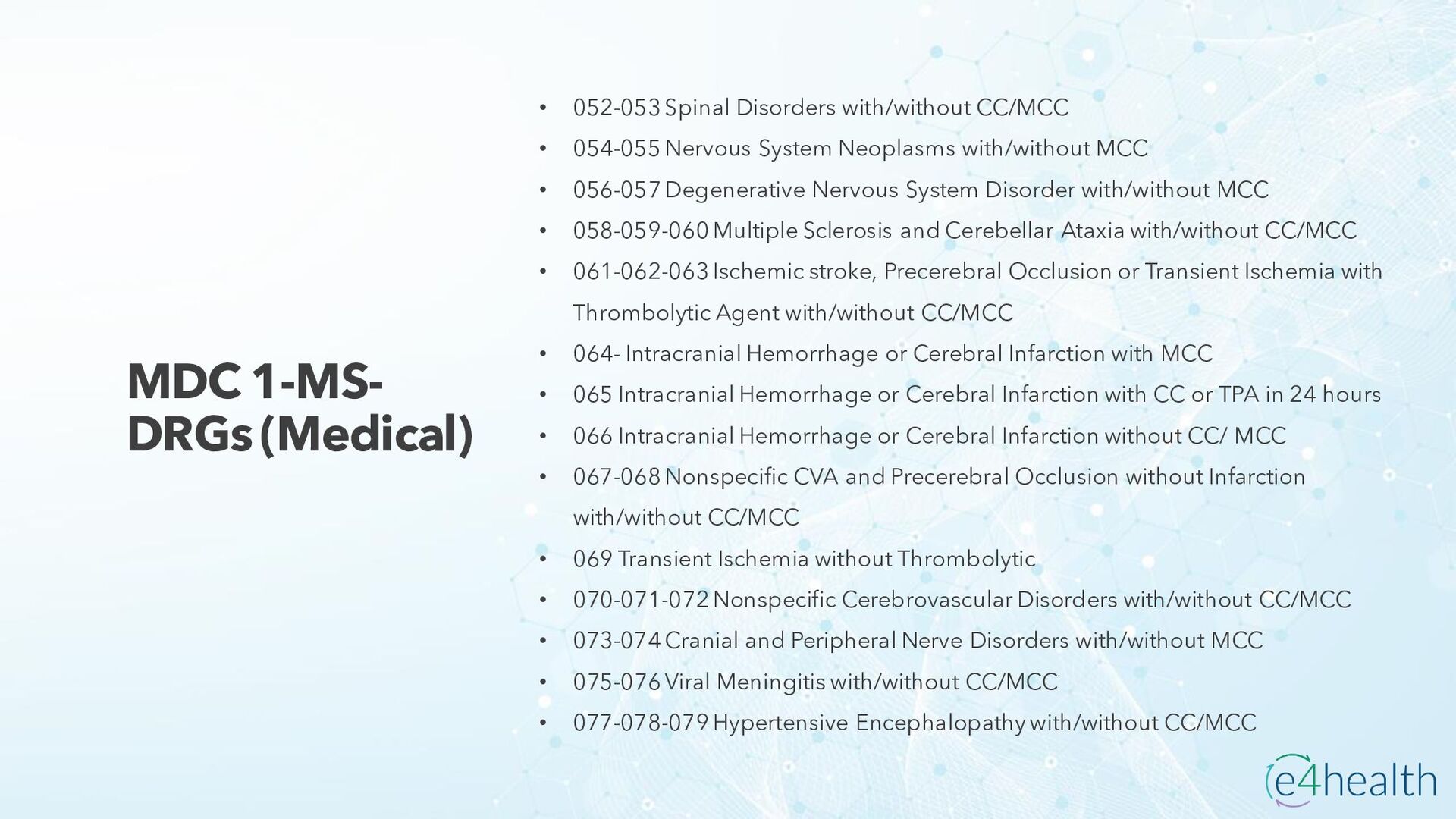
  3. MDC 1-MS- DRGs (Medical) • 052-053 Spinal Disorders with/without CC/MCC

    • 054-055 Nervous System Neoplasms with/without MCC • 056-057 Degenerative Nervous System Disorder with/without MCC • 058-059-060 Multiple Sclerosis and Cerebellar Ataxia with/without CC/MCC • 061-062-063 Ischemic stroke, Precerebral Occlusion or Transient Ischemia with Thrombolytic Agent with/without CC/MCC • 064- Intracranial Hemorrhage or Cerebral Infarction with MCC • 065 Intracranial Hemorrhage or Cerebral Infarction with CC or TPA in 24 hours • 066 Intracranial Hemorrhage or Cerebral Infarction without CC/ MCC • 067-068 Nonspecific CVA and Precerebral Occlusion without Infarction with/without CC/MCC • 069 Transient Ischemia without Thrombolytic • 070-071-072 Nonspecific Cerebrovascular Disorders with/without CC/MCC • 073-074 Cranial and Peripheral Nerve Disorders with/without MCC • 075-076 Viral Meningitis with/without CC/MCC • 077-078-079 Hypertensive Encephalopathy with/without CC/MCC
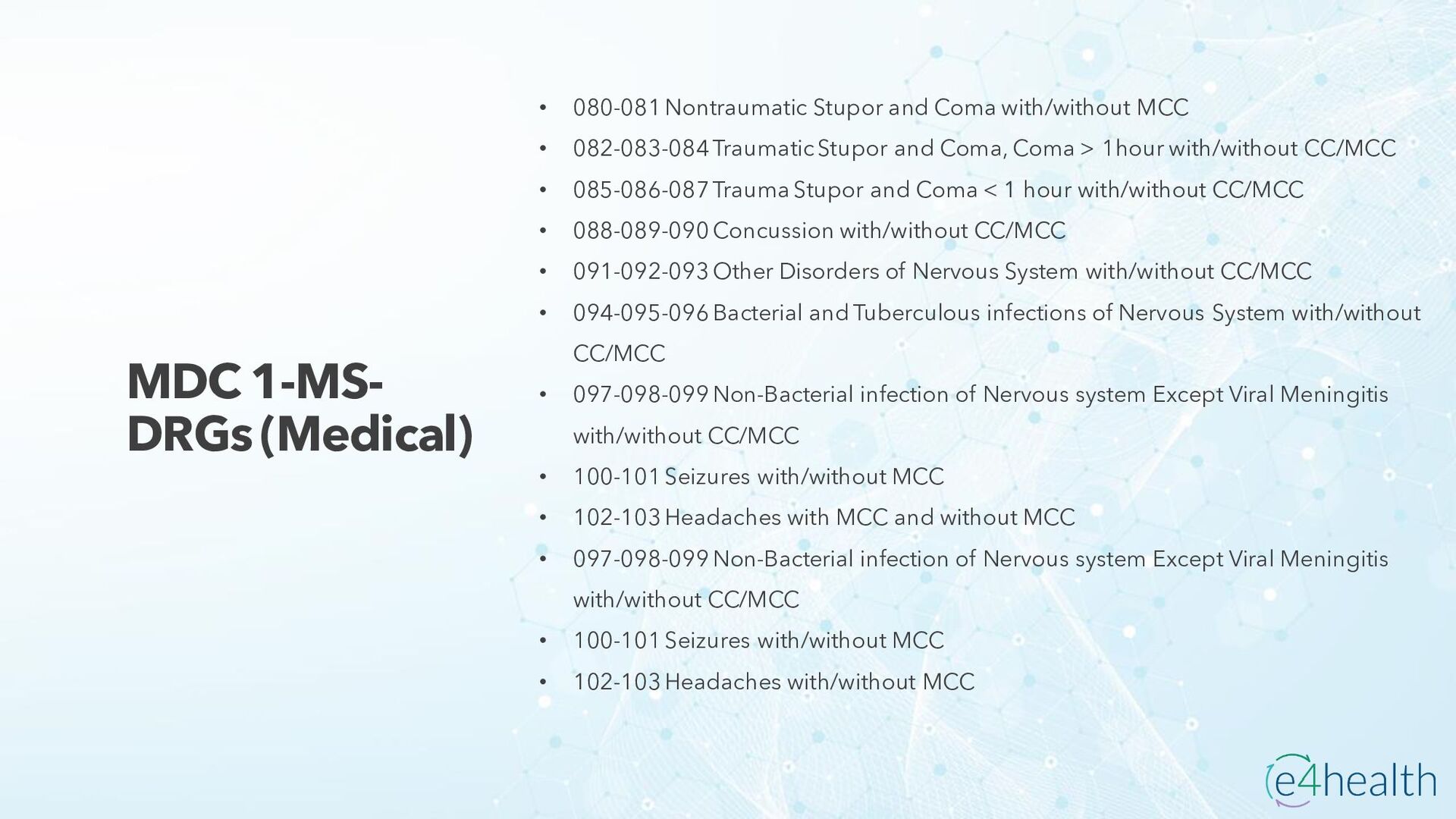
  4. MDC 1-MS- DRGs (Medical) • 080-081 Nontraumatic Stupor and Coma

    with/without MCC • 082-083-084 Traumatic Stupor and Coma, Coma > 1hour with/without CC/MCC • 085-086-087 Trauma Stupor and Coma < 1 hour with/without CC/MCC • 088-089-090 Concussion with/without CC/MCC • 091-092-093 Other Disorders of Nervous System with/without CC/MCC • 094-095-096 Bacterial and Tuberculous infections of Nervous System with/without CC/MCC • 097-098-099 Non-Bacterial infection of Nervous system Except Viral Meningitis with/without CC/MCC • 100-101 Seizures with/without MCC • 102-103 Headaches with MCC and without MCC • 097-098-099 Non-Bacterial infection of Nervous system Except Viral Meningitis with/without CC/MCC • 100-101 Seizures with/without MCC • 102-103 Headaches with/without MCC
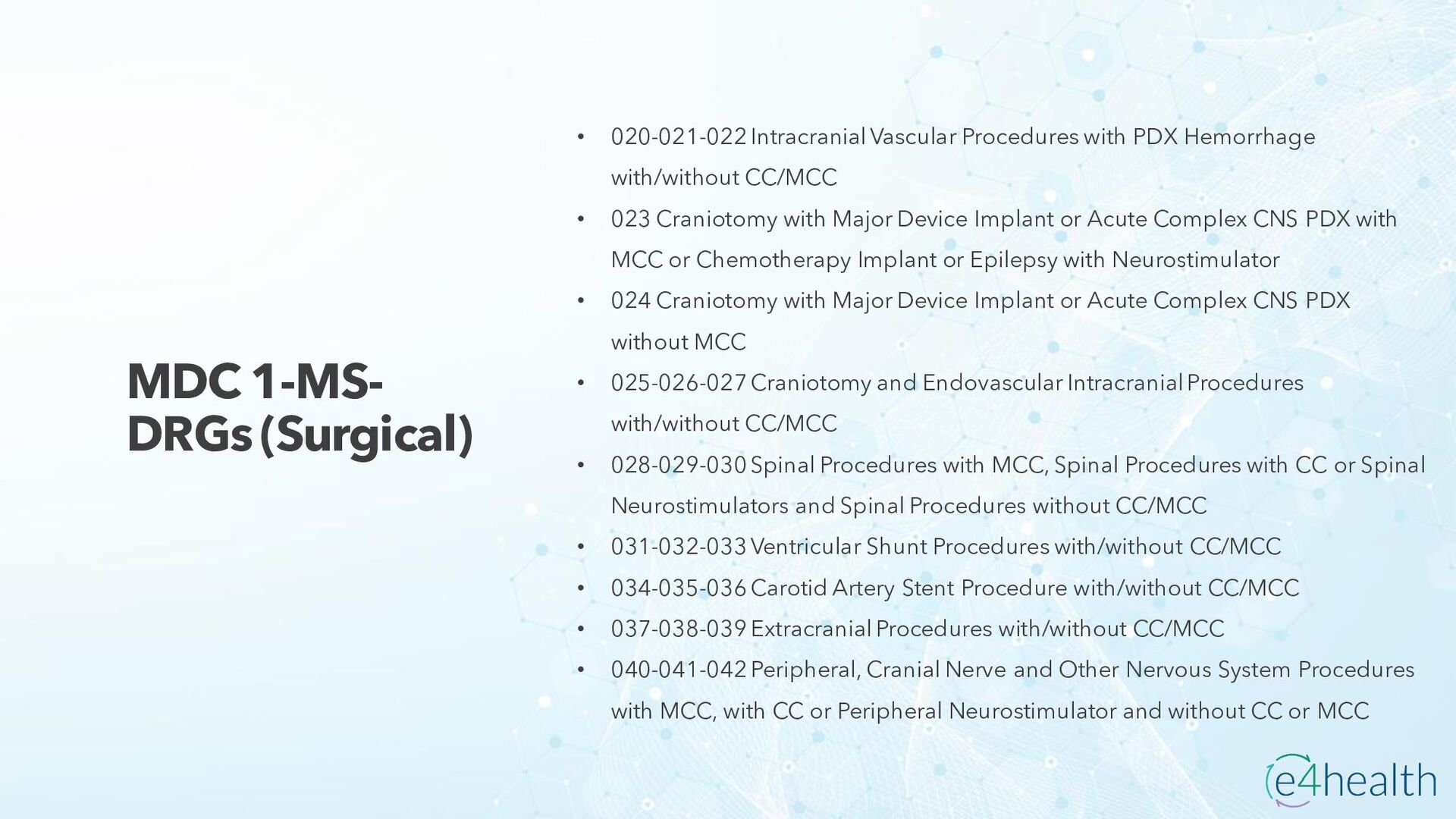
  5. MDC 1-MS- DRGs (Surgical) • 020-021-022 Intracranial Vascular Procedures with

    PDX Hemorrhage with/without CC/MCC • 023 Craniotomy with Major Device Implant or Acute Complex CNS PDX with MCC or Chemotherapy Implant or Epilepsy with Neurostimulator • 024 Craniotomy with Major Device Implant or Acute Complex CNS PDX without MCC • 025-026-027 Craniotomy and Endovascular Intracranial Procedures with/without CC/MCC • 028-029-030 Spinal Procedures with MCC, Spinal Procedures with CC or Spinal Neurostimulators and Spinal Procedures without CC/MCC • 031-032-033 Ventricular Shunt Procedures with/without CC/MCC • 034-035-036 Carotid Artery Stent Procedure with/without CC/MCC • 037-038-039 Extracranial Procedures with/without CC/MCC • 040-041-042 Peripheral, Cranial Nerve and Other Nervous System Procedures with MCC, with CC or Peripheral Neurostimulator and without CC or MCC
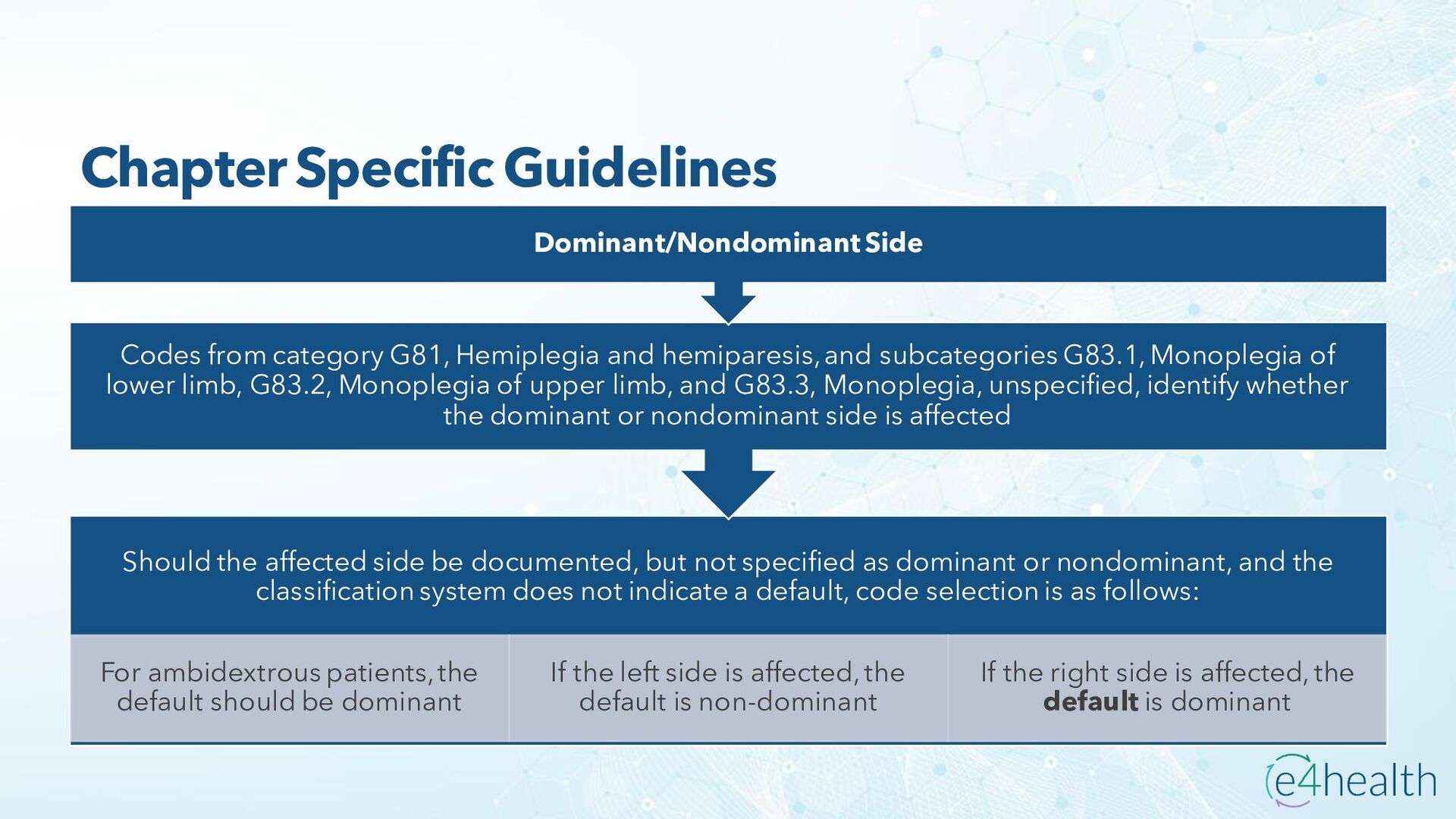
  6. Chapter Specific Guidelines Should the affected side be documented, but

    not specified as dominant or nondominant, and the classification system does not indicate a default, code selection is as follows: For ambidextrous patients, the default should be dominant If the left side is affected, the default is non-dominant If the right side is affected, the default is dominant Codes from category G81, Hemiplegia and hemiparesis, and subcategories G83.1, Monoplegia of lower limb, G83.2, Monoplegia of upper limb, and G83.3, Monoplegia, unspecified, identify whether the dominant or nondominant side is affected Dominant/Nondominant Side
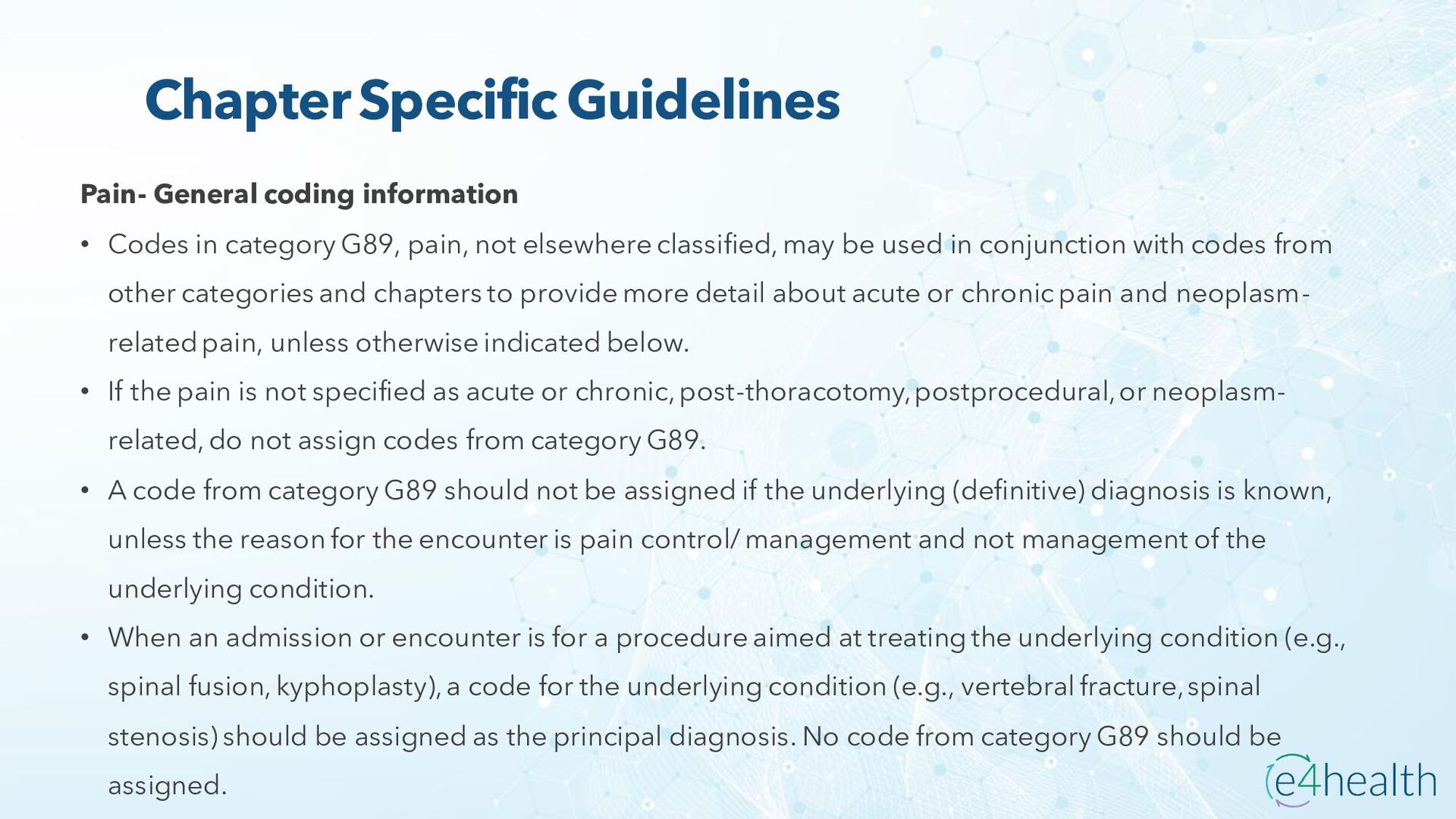
  7. Chapter Specific Guidelines Pain- General coding information • Codes in

    category G89, pain, not elsewhere classified, may be used in conjunction with codes from other categories and chapters to provide more detail about acute or chronic pain and neoplasm- related pain, unless otherwise indicated below. • If the pain is not specified as acute or chronic, post-thoracotomy, postprocedural, or neoplasm- related, do not assign codes from category G89. • A code from category G89 should not be assigned if the underlying (definitive) diagnosis is known, unless the reason for the encounter is pain control/ management and not management of the underlying condition. • When an admission or encounter is for a procedure aimed at treating the underlying condition (e.g., spinal fusion, kyphoplasty), a code for the underlying condition (e.g., vertebral fracture, spinal stenosis) should be assigned as the principal diagnosis. No code from category G89 should be assigned.
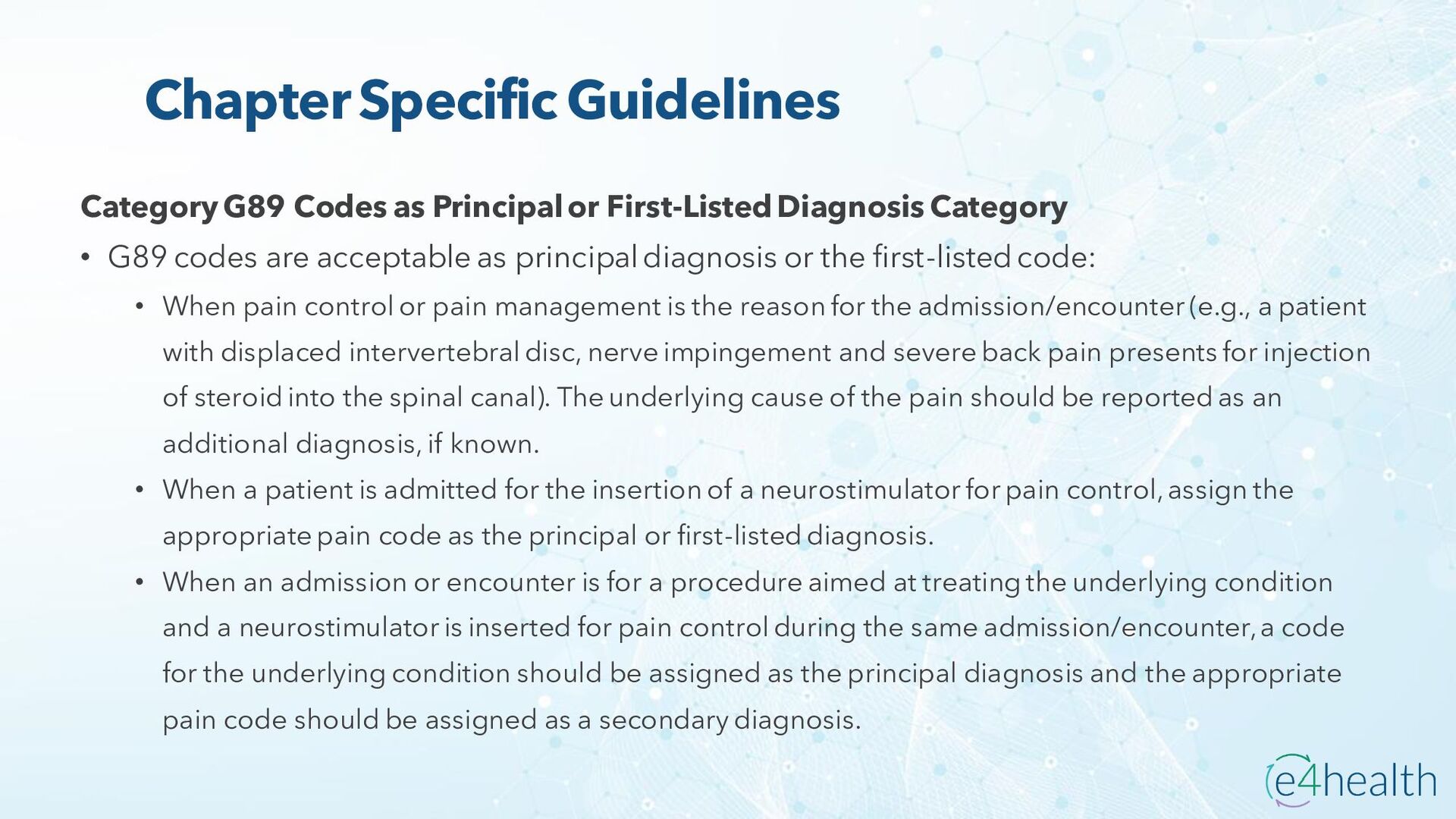
  8. Chapter Specific Guidelines Category G89 Codes as Principal or First-Listed

    Diagnosis Category • G89 codes are acceptable as principal diagnosis or the first-listed code: • When pain control or pain management is the reason for the admission/encounter (e.g., a patient with displaced intervertebral disc, nerve impingement and severe back pain presents for injection of steroid into the spinal canal). The underlying cause of the pain should be reported as an additional diagnosis, if known. • When a patient is admitted for the insertion of a neurostimulator for pain control, assign the appropriate pain code as the principal or first-listed diagnosis. • When an admission or encounter is for a procedure aimed at treating the underlying condition and a neurostimulator is inserted for pain control during the same admission/encounter, a code for the underlying condition should be assigned as the principal diagnosis and the appropriate pain code should be assigned as a secondary diagnosis.
  9. Chapter Specific Guidelines Assigning Category G89 and Site-Specific Pain Codes

    • Category G89 may be used in conjunction with codes that identify the site of pain (including codes from chapter 18) if the category G89 code provides additional information • For example, if the code describes the site of the pain, but does not fully describe whether the pain is acute or chronic, then both codes should be assigned This Photo by Unknown author is licensed under CC BY-NC-ND.
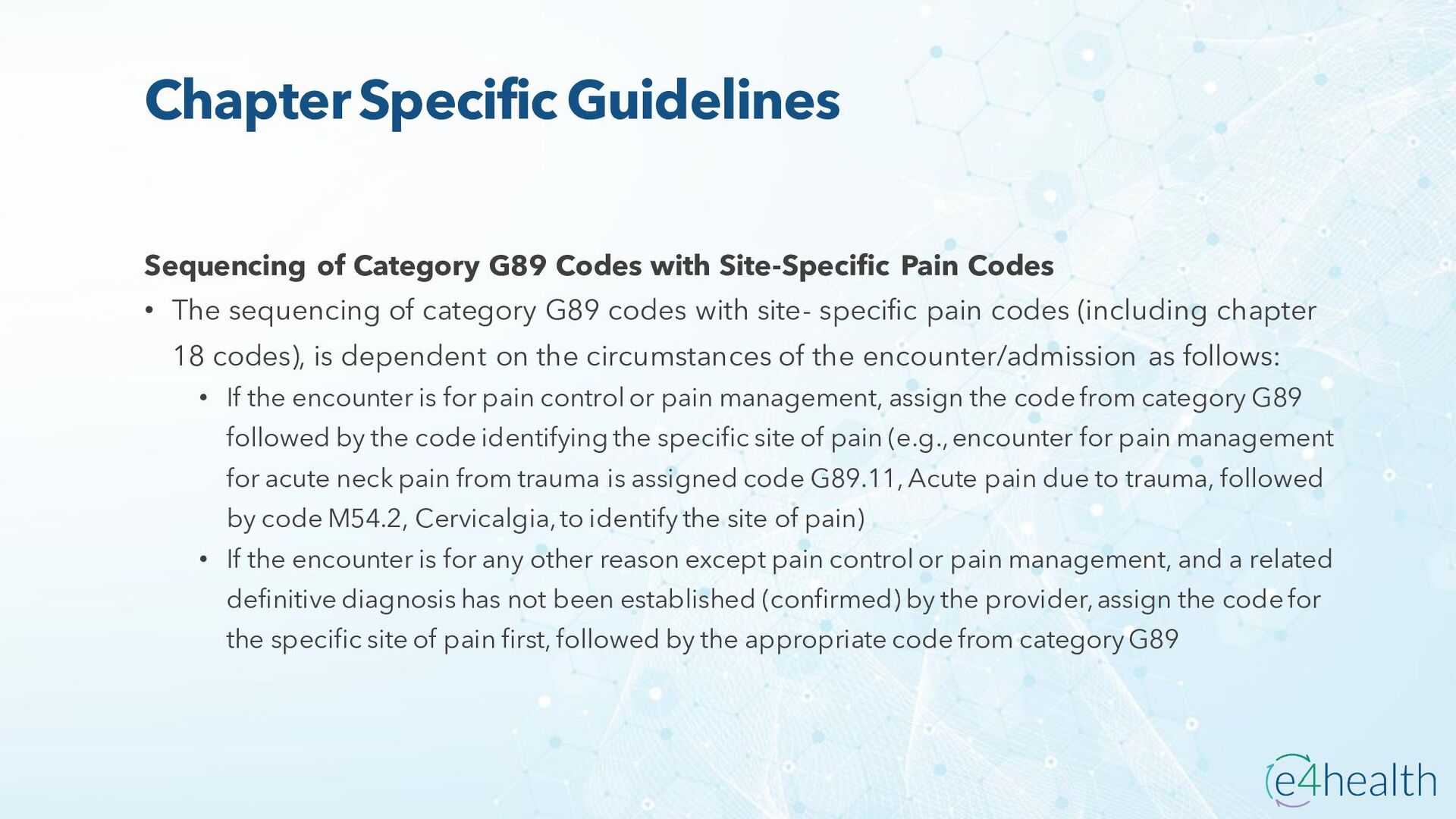
  10. Chapter Specific Guidelines Sequencing of Category G89 Codes with Site-Specific

    Pain Codes • The sequencing of category G89 codes with site- specific pain codes (including chapter 18 codes), is dependent on the circumstances of the encounter/admission as follows: • If the encounter is for pain control or pain management, assign the code from category G89 followed by the code identifying the specific site of pain (e.g., encounter for pain management for acute neck pain from trauma is assigned code G89.11, Acute pain due to trauma, followed by code M54.2, Cervicalgia, to identify the site of pain) • If the encounter is for any other reason except pain control or pain management, and a related definitive diagnosis has not been established (confirmed) by the provider, assign the code for the specific site of pain first, followed by the appropriate code from category G89
  11. Chapter Specific Guidelines Postoperative Pain • The default for post-thoracotomy

    and other postoperative pain not specified as acute or chronic is the code for the acute form • Routine or expected postoperative pain immediately after surgery should not be coded • (a) Postoperative pain not associated with specific postoperative complication Postoperative pain not associated with a specific postoperative complication is assigned to the appropriate postoperative pain code in category G89 • (b) Postoperative pain associated with specific postoperative complication Postoperative pain associated with a specific postoperative complication (such as painful wire sutures) is assigned to the appropriate code(s) found in Chapter 19, Injury, poisoning, and certain other consequences of external causes • If appropriate, use additional code(s) from category G89 to identify acute or chronic pain (G89.18 or G89.28)
  12. Chapter Specific Guidelines CHRONIC PAIN CHRONIC PAIN IS CLASSIFIED TO

    SUBCATEGORY G89.2 THERE IS NO TIME FRAME DEFINING WHEN PAIN BECOMES CHRONIC PAIN THE PROVIDER’S DOCUMENTATION SHOULD BE USED TO GUIDE USE OF THESE CODES
  13. Chapter Specific Guidelines Neoplasm Related Pain Code • G89.3 is

    assigned to pain documented as being related, associated or due to cancer, primary or secondary malignancy, or tumor. • This code is assigned regardless of whether the pain is acute or chronic. This code may be assigned as the principal or first-listed code when the stated reason for the admission/encounter is documented as pain control/pain management • The underlying neoplasm should be reported as an additional diagnosis. When the reason for the admission/encounter is management of the neoplasm and the pain associated with the neoplasm is also documented, code G89.3 may be assigned as an additional diagnosis • It is not necessary to assign an additional code for the site of the pain. See Section I.C.2. for instructions on the sequencing of neoplasms for all other stated reasons for the admission/encounter (except for pain control/pain management) This Photo by Unknown author is licensed under CC BY-NC-ND.
  14. Chapter Specific Guidelines • Chronic pain syndrome • Central pain

    syndrome (G89.0) and chronic pain syndrome (G89.4) are different than the term “chronic pain,” and therefore codes should only be used when the provider has specifically documented this condition This Photo by Unknown author is licensed under CC BY-SA.
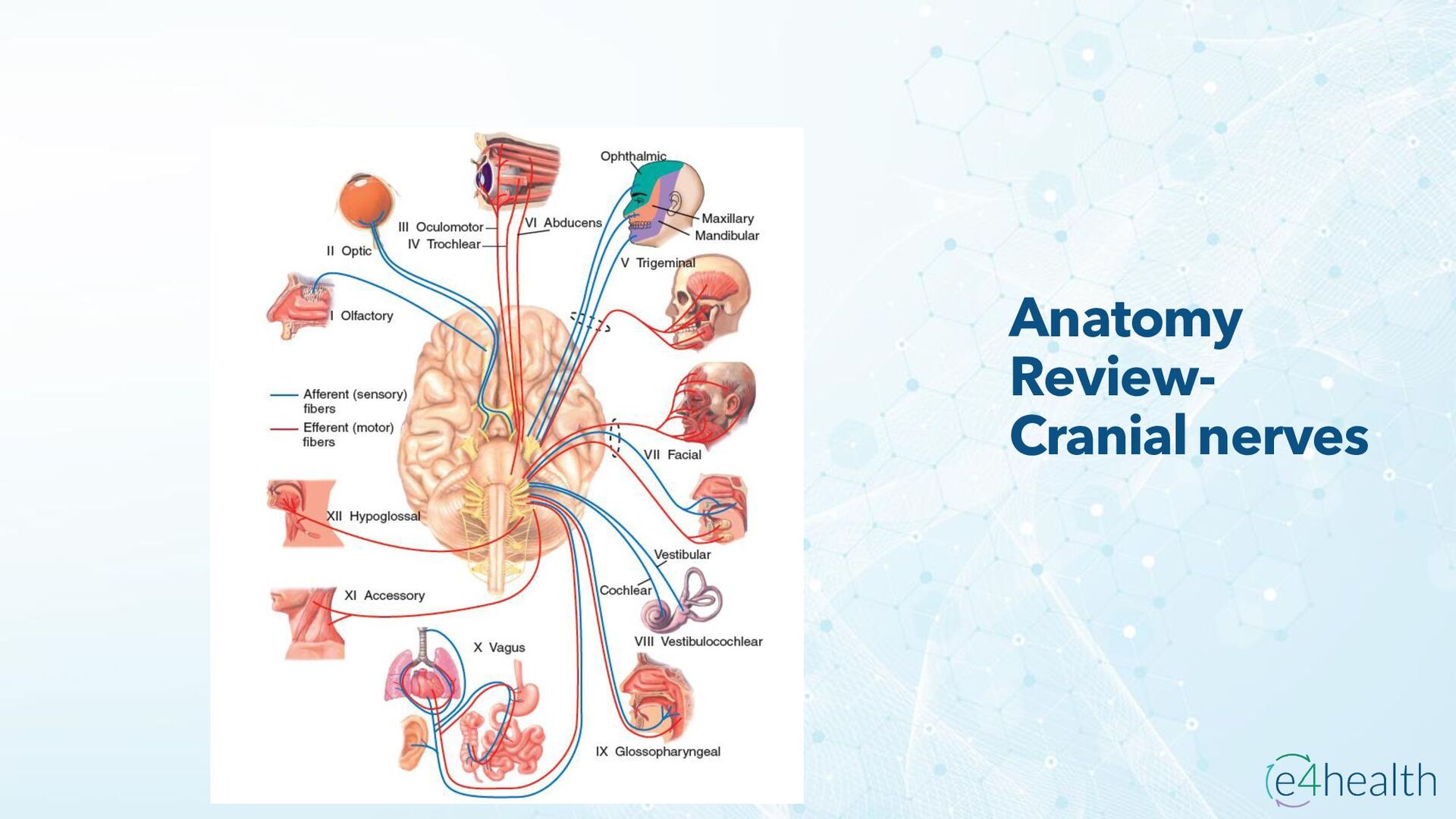
  15. Coding organization of nervous system • The ICD-10-CM Coding Index

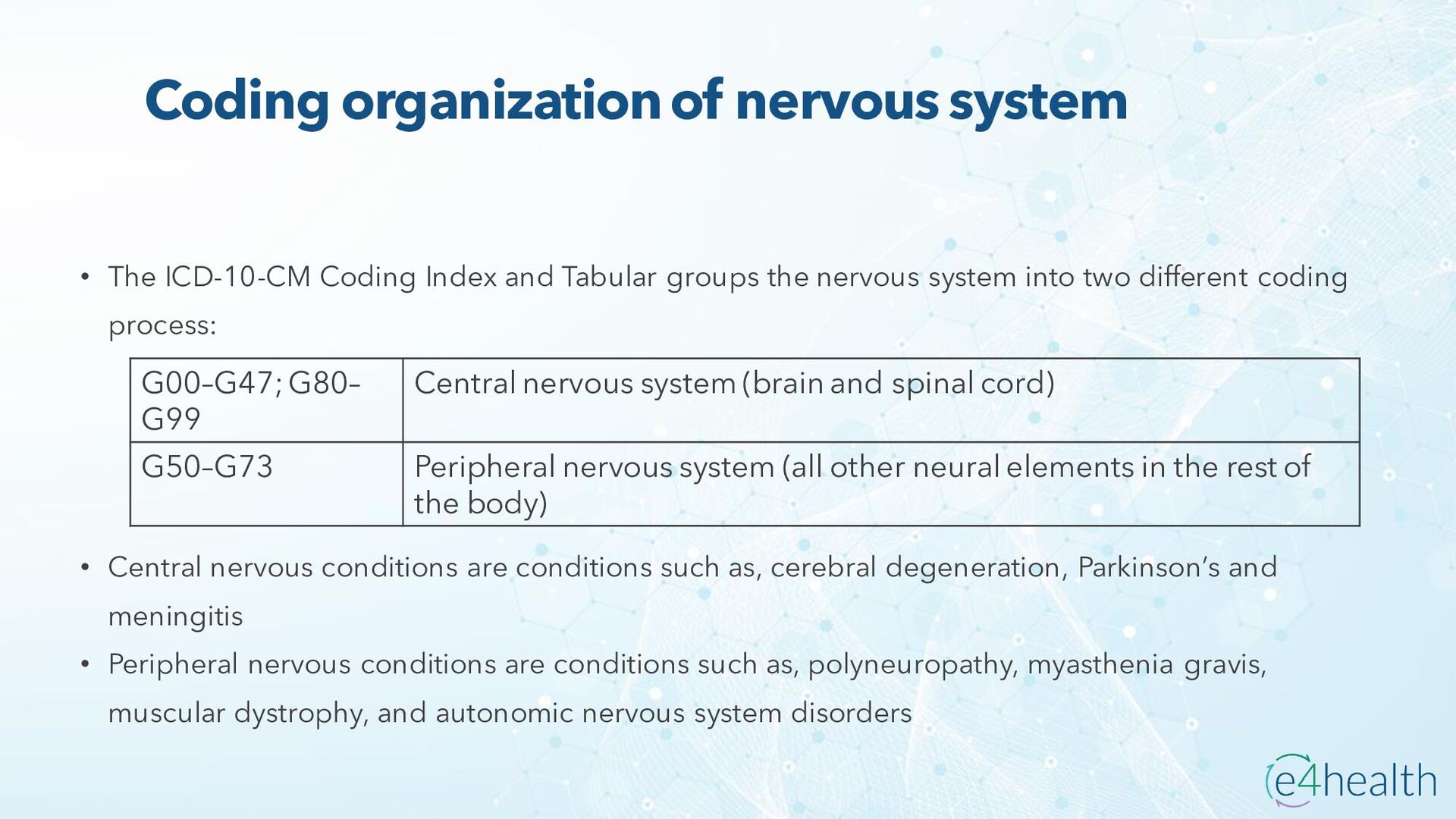
    and Tabular groups the nervous system into two different coding process: • Central nervous conditions are conditions such as, cerebral degeneration, Parkinson’s and meningitis • Peripheral nervous conditions are conditions such as, polyneuropathy, myasthenia gravis, muscular dystrophy, and autonomic nervous system disorders G00–G47; G80– G99 Central nervous system (brain and spinal cord) G50–G73 Peripheral nervous system (all other neural elements in the rest of the body)
  16. Inflammatory Disease of the Central Nervous system • Includes meningitis,

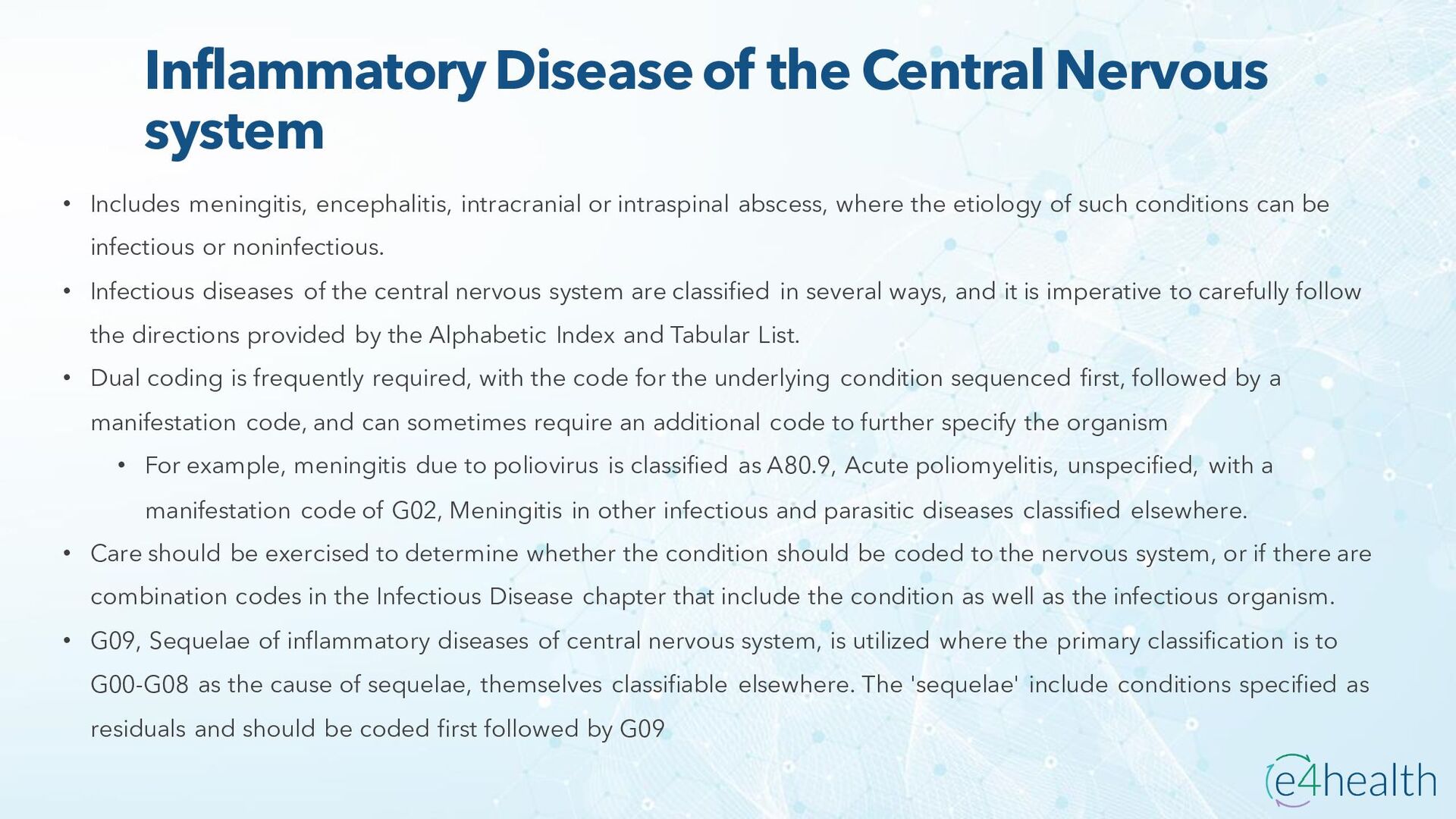
    encephalitis, intracranial or intraspinal abscess, where the etiology of such conditions can be infectious or noninfectious. • Infectious diseases of the central nervous system are classified in several ways, and it is imperative to carefully follow the directions provided by the Alphabetic Index and Tabular List. • Dual coding is frequently required, with the code for the underlying condition sequenced first, followed by a manifestation code, and can sometimes require an additional code to further specify the organism • For example, meningitis due to poliovirus is classified as A80.9, Acute poliomyelitis, unspecified, with a manifestation code of G02, Meningitis in other infectious and parasitic diseases classified elsewhere. • Care should be exercised to determine whether the condition should be coded to the nervous system, or if there are combination codes in the Infectious Disease chapter that include the condition as well as the infectious organism. • G09, Sequelae of inflammatory diseases of central nervous system, is utilized where the primary classification is to G00-G08 as the cause of sequelae, themselves classifiable elsewhere. The 'sequelae' include conditions specified as residuals and should be coded first followed by G09
  17. Viral meningitis Diagnosis based on clinical signs and symptoms •

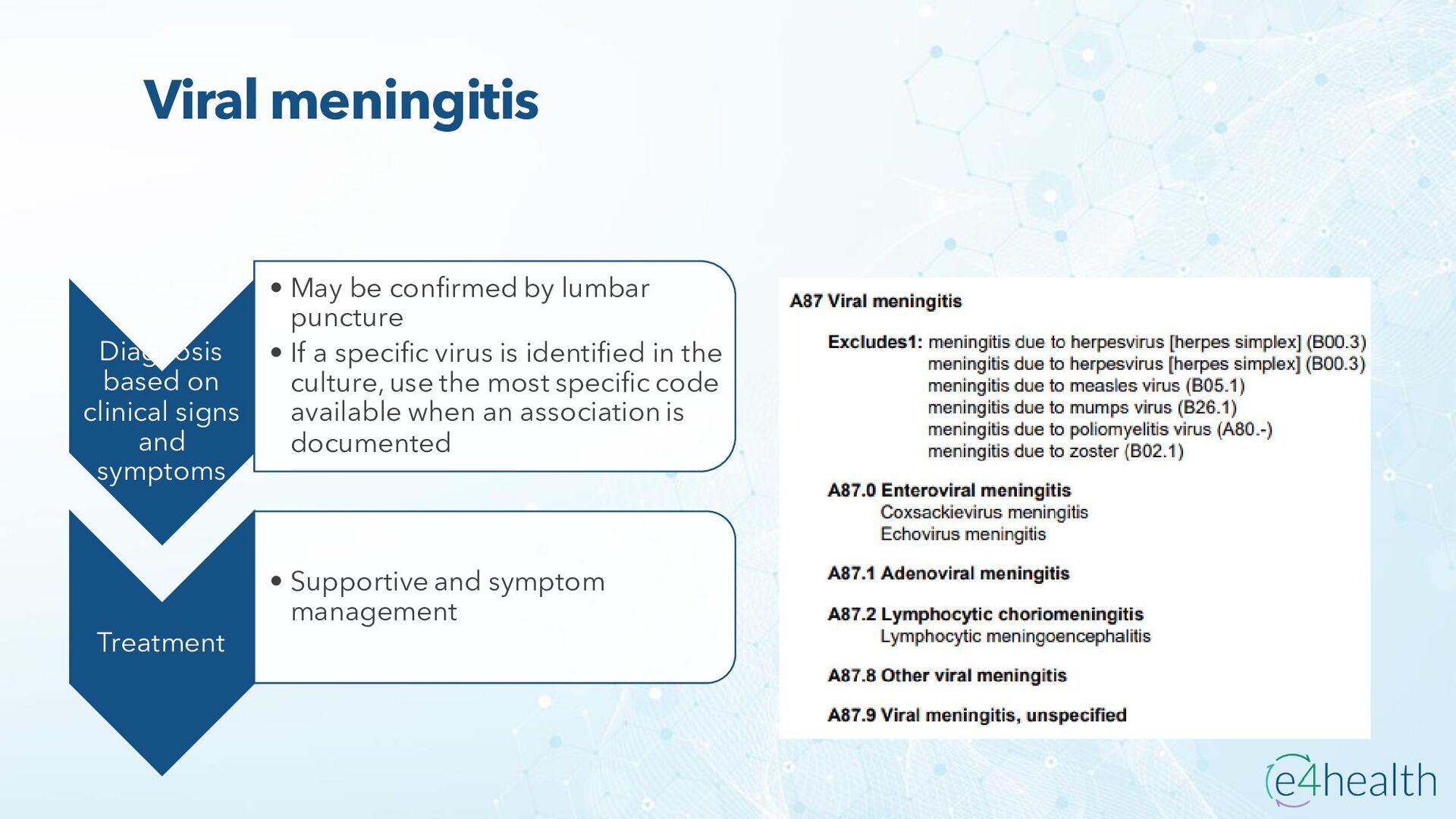
    May be confirmed by lumbar puncture • If a specific virus is identified in the culture, use the most specific code available when an association is documented Treatment • Supportive and symptom management
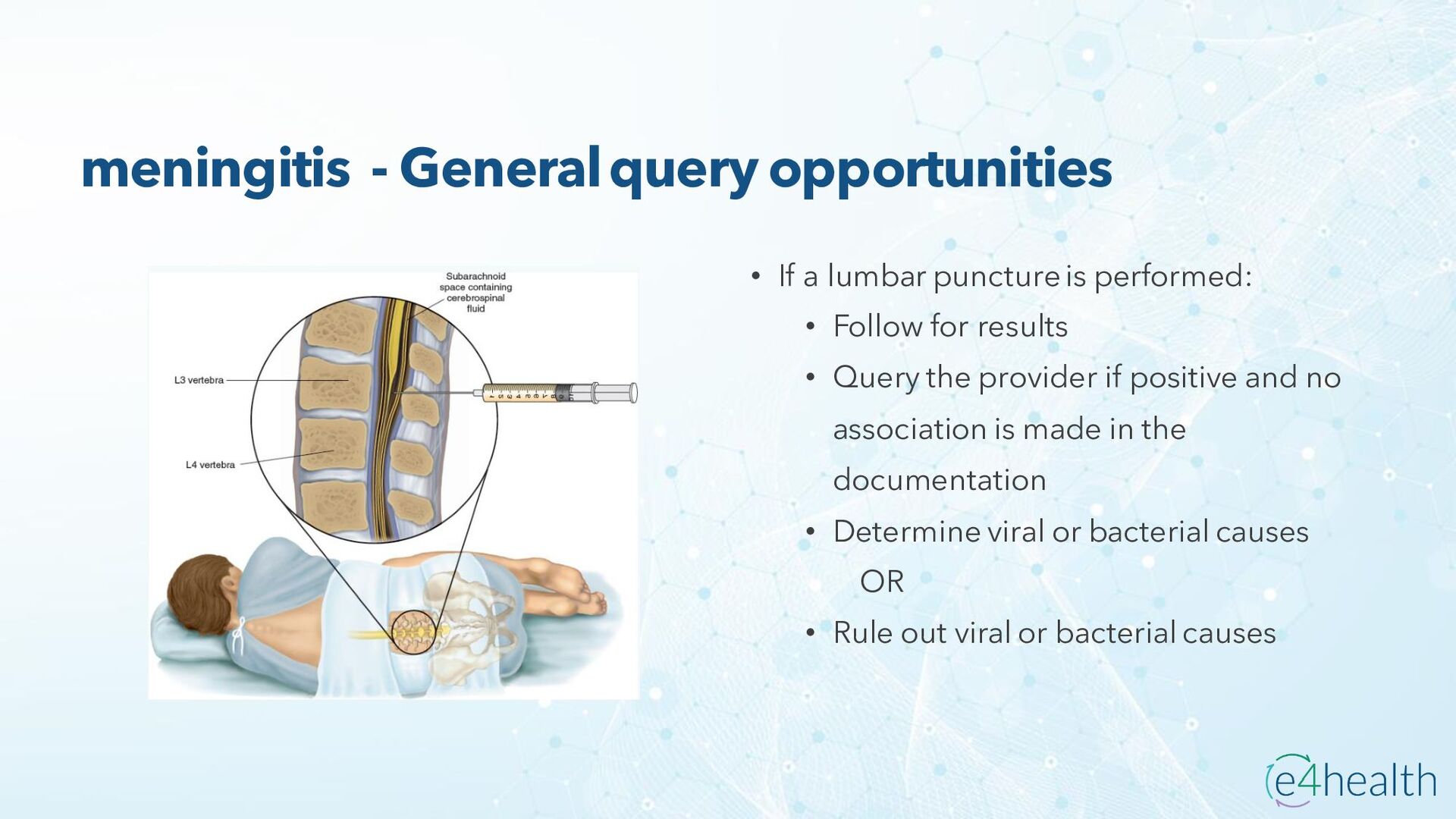
  18. meningitis - General query opportunities • If a lumbar puncture

    is performed: • Follow for results • Query the provider if positive and no association is made in the documentation • Determine viral or bacterial causes OR • Rule out viral or bacterial causes
  19. Cryptococcal meningitis in HIV positive patient - Coding Clinic first

    quarter 2019 pages 9-10 • Question: Current literature states that cryptococcal meningitis is a major HIV-related infection. When a patient who is HIV positive presents due to this condition, is it appropriate to assume a linkage between the HIV and the meningitis and assign code B20, Human immunodeficiency virus [HIV] disease? How should HIV be coded in a patient with cryptococcal meningitis? • Answer: The ICD-10-CM classification does not assume a relationship between cryptococcal meningitis and HIV. Therefore, do not assume that cryptococcal meningitis is an HIV-related infection without provider documentation linking the two conditions. If the medical record documentation does not indicate AIDS, HIV-related infection or other similar terminology indicating the patient has AIDS, it is not appropriate to assign code B20, Human immunodeficiency virus [HIV] disease.
  20. Acute Flaccid Myelitis - Coding Clinic First Quarter 2020 Page

    14 & Fourth Quarter 2021 Page 11 • Question: Currently, ICD-10-CM does not have a code that specifically identifies acute flaccid myelitis (AFM). How is acute flaccid myelitis coded in ICD-10-CM? • Answer: Assign code G04.89, Other myelitis, for AFM. This condition affects the gray matter of the spinal cord and causes the muscles and reflexes of the body to weaken. Other signs and symptoms may include facial drooping/weakness, trouble moving the eyes, drooping eyelids, trouble swallowing or slurred speech. AFM has also been called a "polio-like" illness. The most recent cases in the United States have been seen in children. • A new code (G04.82) was created to identify acute flaccid myelitis (AFM). • Although rare, AFM is a serious neurologic condition that affects the gray matter of the spinal cord and causes the muscles and reflexes of the body to weaken. • Neurologic symptoms may be preceded by a febrile respiratory illness and sometimes pain in the extremities. The most common signs and symptoms may include facial drooping/weakness, trouble moving the eyes, drooping eyelids, trouble swallowing or slurred speech. More severe symptoms involve complete paralysis, the inability to breathe, and respiratory failure, which can result in the need for long-term mechanical ventilation. AFM is also known as a "polio-like" illness. The most recent cases in the United States have been seen in children.
  21. SPINAL CORD INJURY Figure 1. Neana N. (2014) SlideShare [image]

    Birth injuries (slideshare.net) Complete vs. Incomplete Spinal Cord Injury • Complete • Incomplete Level of Spinal Cord Injury • Cervical • Thoracic • Lumbar Spinal Cord Injury
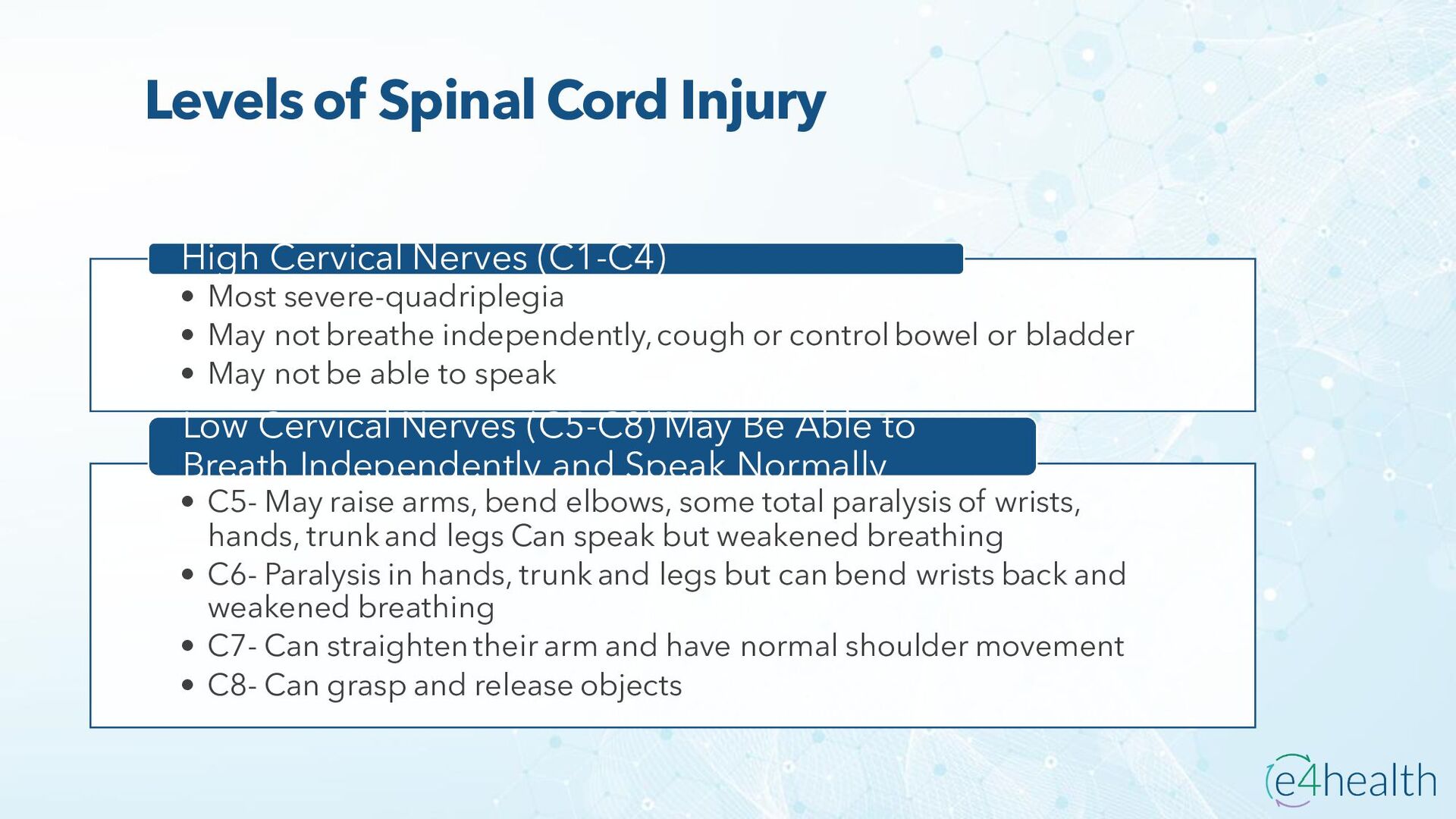
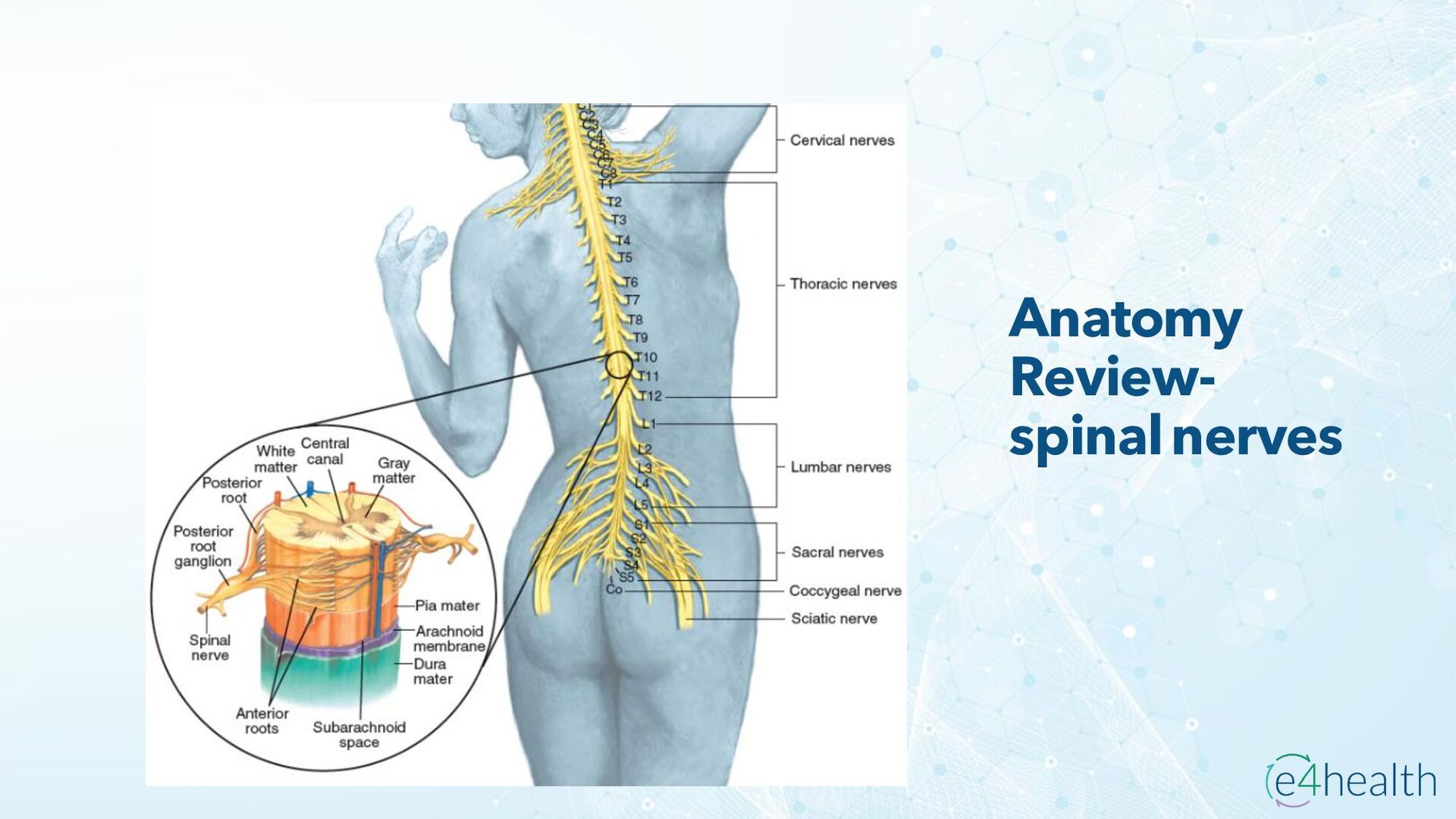
  22. Levels of Spinal Cord Injury • Most severe-quadriplegia • May

    not breathe independently, cough or control bowel or bladder • May not be able to speak High Cervical Nerves (C1-C4) • C5- May raise arms, bend elbows, some total paralysis of wrists, hands, trunk and legs Can speak but weakened breathing • C6- Paralysis in hands, trunk and legs but can bend wrists back and weakened breathing • C7- Can straighten their arm and have normal shoulder movement • C8- Can grasp and release objects Low Cervical Nerves (C5-C8) May Be Able to Breath Independently and Speak Normally
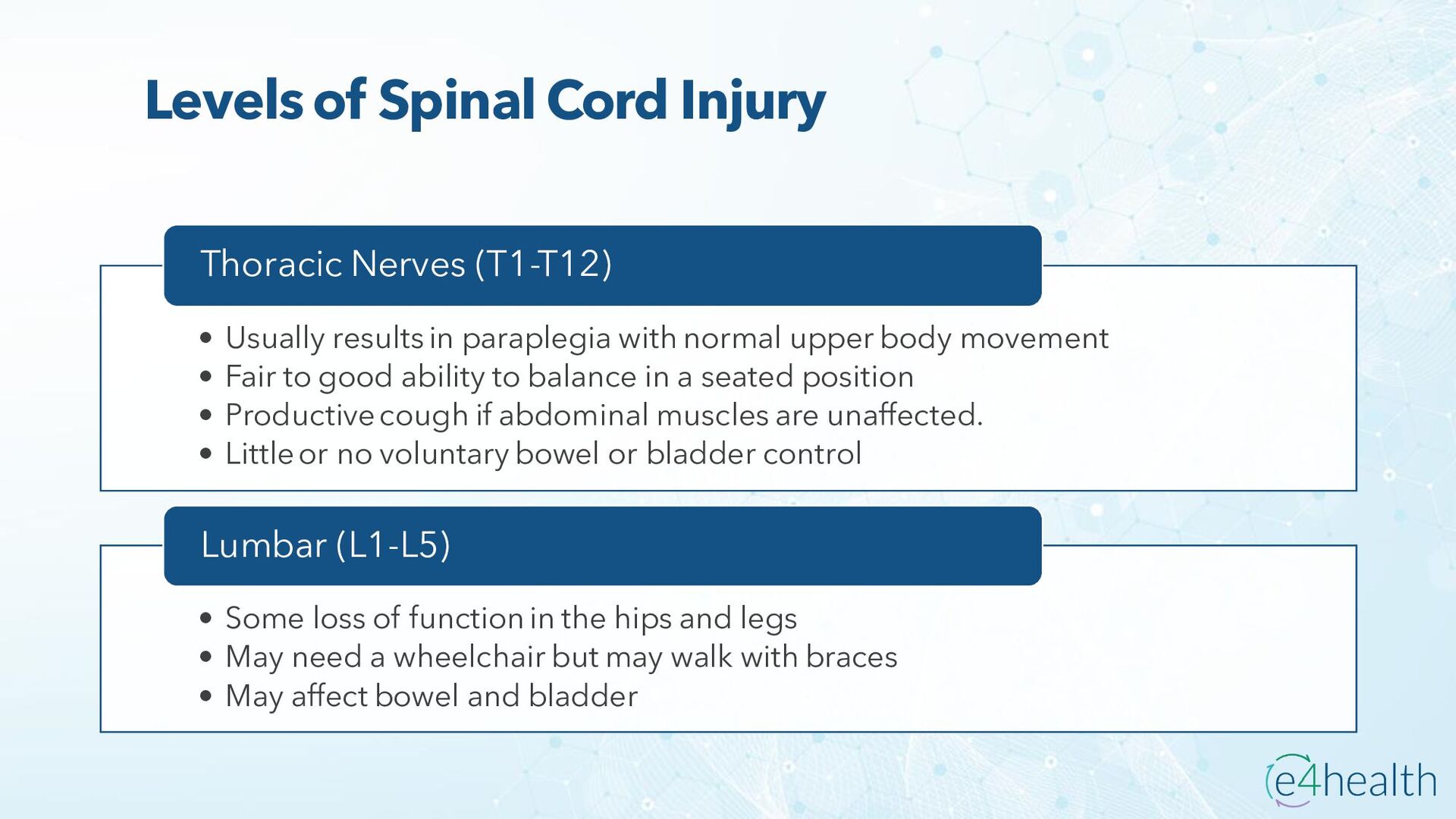
  23. Levels of Spinal Cord Injury • Usually results in paraplegia

    with normal upper body movement • Fair to good ability to balance in a seated position • Productive cough if abdominal muscles are unaffected. • Little or no voluntary bowel or bladder control Thoracic Nerves (T1-T12) • Some loss of function in the hips and legs • May need a wheelchair but may walk with braces • May affect bowel and bladder Lumbar (L1-L5)
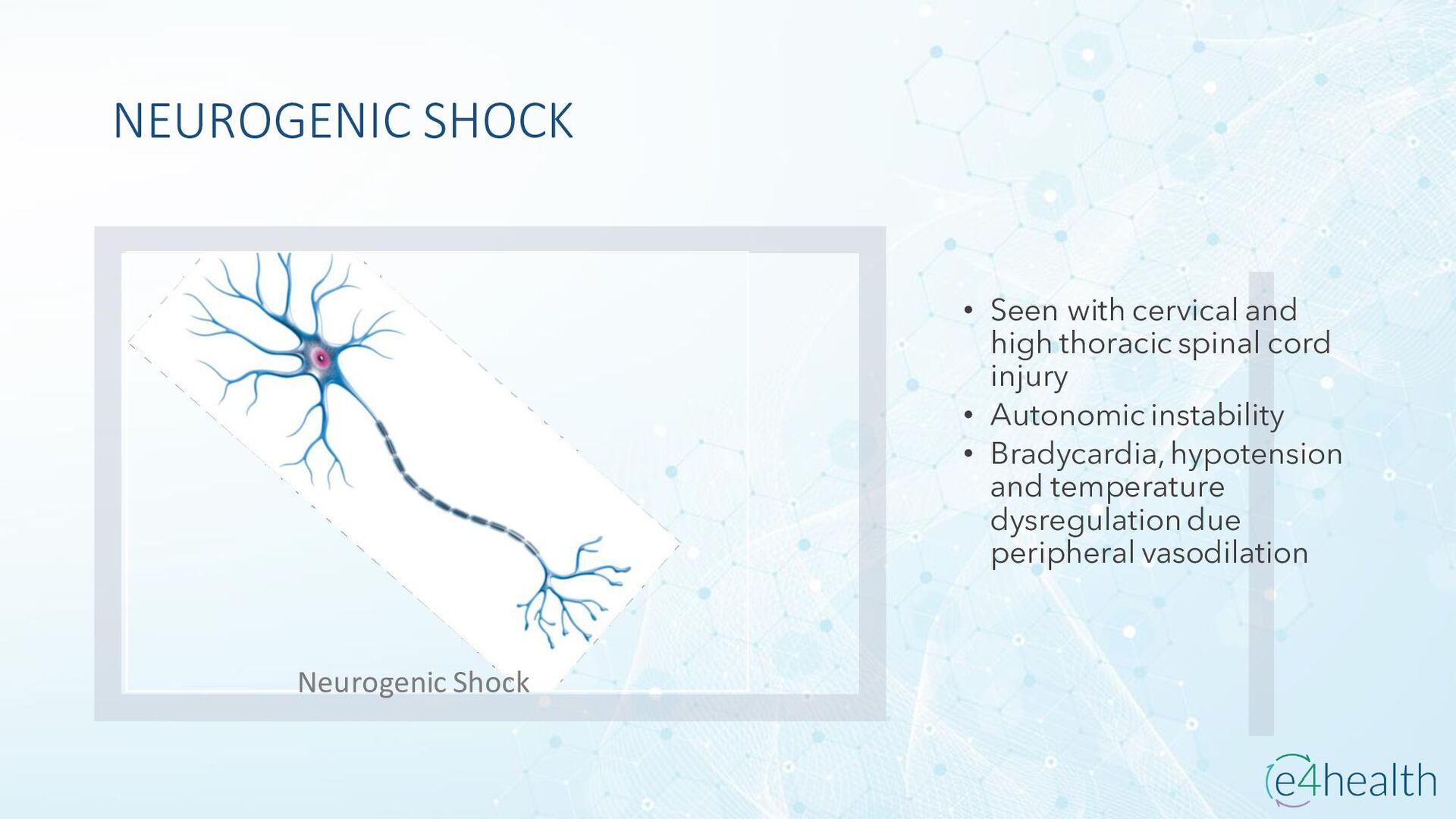
  24. Neurogenic Shock • Seen with cervical and high thoracic spinal

    cord injury • Autonomic instability • Bradycardia, hypotension and temperature dysregulation due peripheral vasodilation NEUROGENIC SHOCK
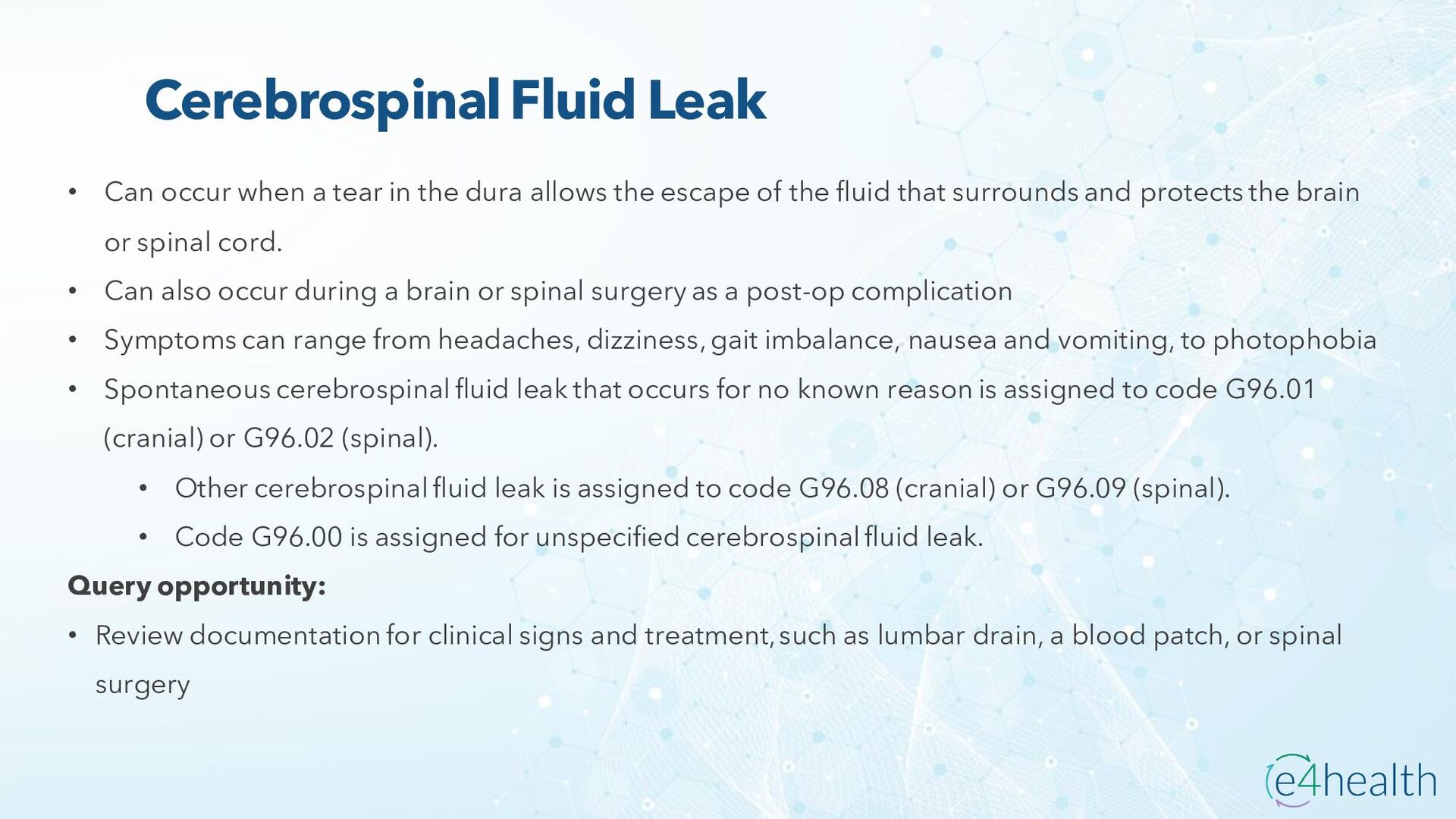
  25. Cerebrospinal Fluid Leak • Can occur when a tear in

    the dura allows the escape of the fluid that surrounds and protects the brain or spinal cord. • Can also occur during a brain or spinal surgery as a post-op complication • Symptoms can range from headaches, dizziness, gait imbalance, nausea and vomiting, to photophobia • Spontaneous cerebrospinal fluid leak that occurs for no known reason is assigned to code G96.01 (cranial) or G96.02 (spinal). • Other cerebrospinal fluid leak is assigned to code G96.08 (cranial) or G96.09 (spinal). • Code G96.00 is assigned for unspecified cerebrospinal fluid leak. Query opportunity: • Review documentation for clinical signs and treatment, such as lumbar drain, a blood patch, or spinal surgery
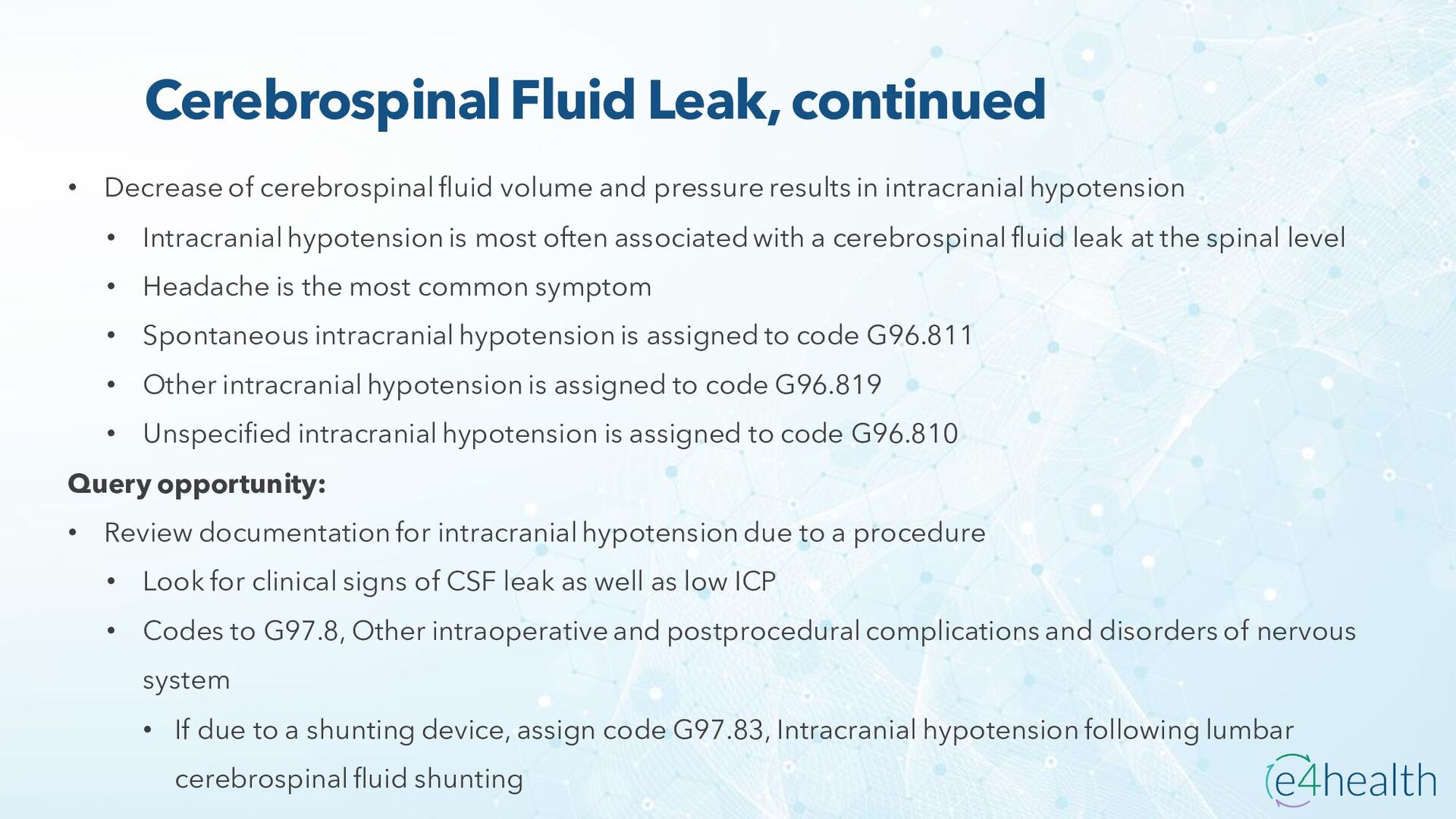
  26. Cerebrospinal Fluid Leak, continued • Decrease of cerebrospinal fluid volume

    and pressure results in intracranial hypotension • Intracranial hypotension is most often associated with a cerebrospinal fluid leak at the spinal level • Headache is the most common symptom • Spontaneous intracranial hypotension is assigned to code G96.811 • Other intracranial hypotension is assigned to code G96.819 • Unspecified intracranial hypotension is assigned to code G96.810 Query opportunity: • Review documentation for intracranial hypotension due to a procedure • Look for clinical signs of CSF leak as well as low ICP • Codes to G97.8, Other intraoperative and postprocedural complications and disorders of nervous system • If due to a shunting device, assign code G97.83, Intracranial hypotension following lumbar cerebrospinal fluid shunting
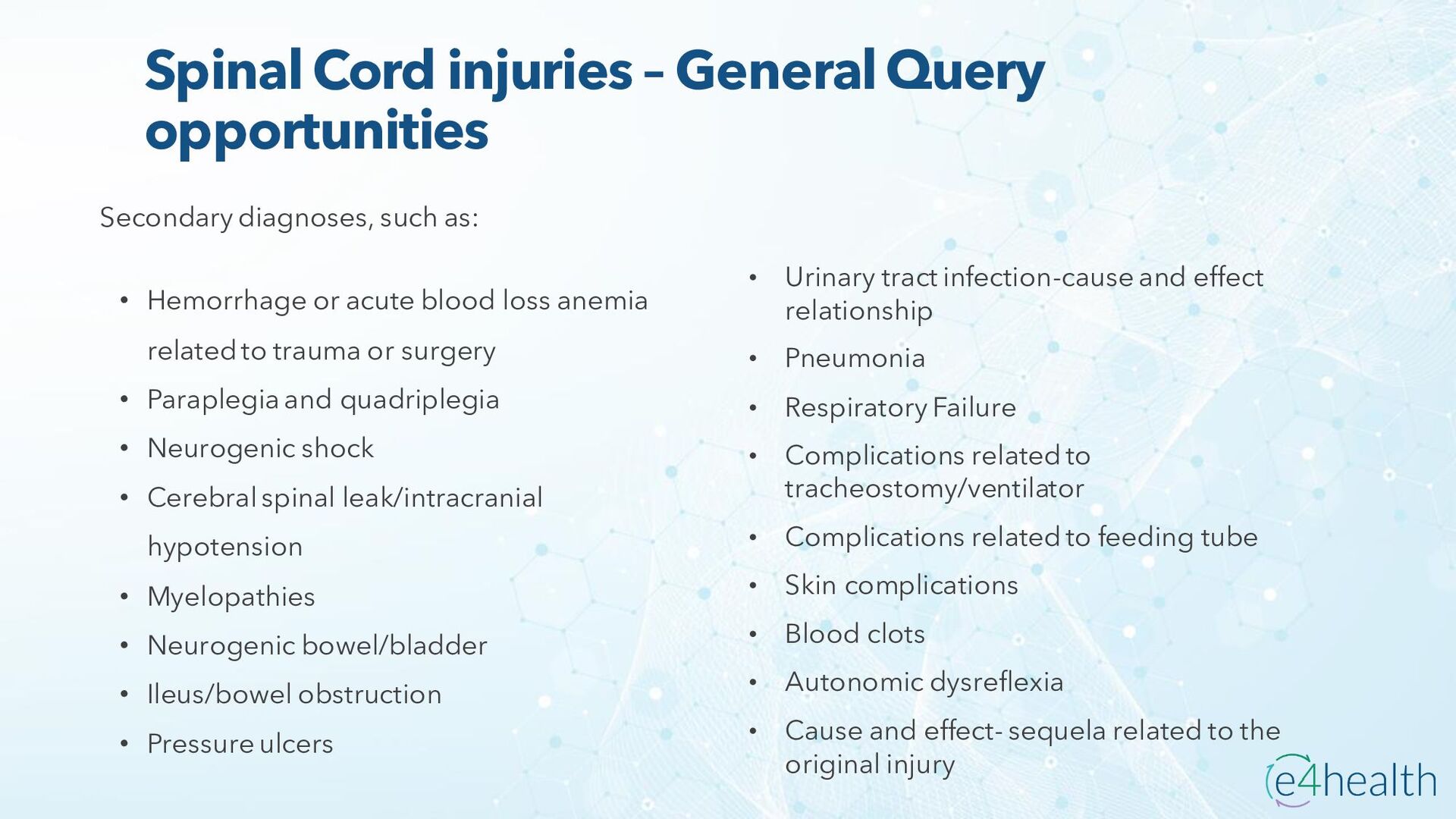
  27. Spinal Cord injuries – General Query opportunities • Hemorrhage or

    acute blood loss anemia related to trauma or surgery • Paraplegia and quadriplegia • Neurogenic shock • Cerebral spinal leak/intracranial hypotension • Myelopathies • Neurogenic bowel/bladder • Ileus/bowel obstruction • Pressure ulcers • Urinary tract infection-cause and effect relationship • Pneumonia • Respiratory Failure • Complications related to tracheostomy/ventilator • Complications related to feeding tube • Skin complications • Blood clots • Autonomic dysreflexia • Cause and effect- sequela related to the original injury Secondary diagnoses, such as:
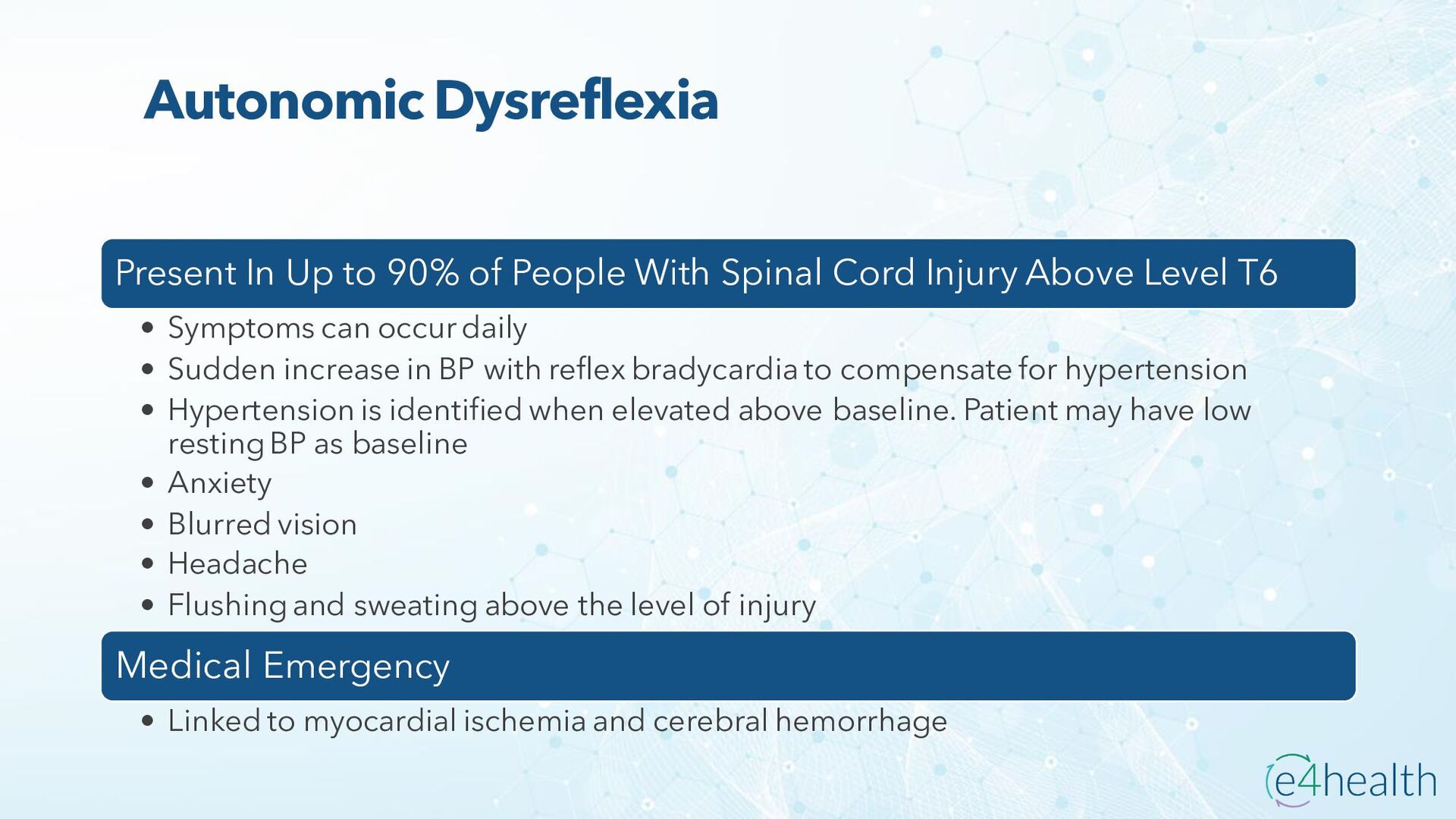
  28. Autonomic Dysreflexia Present In Up to 90% of People With

    Spinal Cord Injury Above Level T6 • Symptoms can occur daily • Sudden increase in BP with reflex bradycardia to compensate for hypertension • Hypertension is identified when elevated above baseline. Patient may have low resting BP as baseline • Anxiety • Blurred vision • Headache • Flushing and sweating above the level of injury Medical Emergency • Linked to myocardial ischemia and cerebral hemorrhage
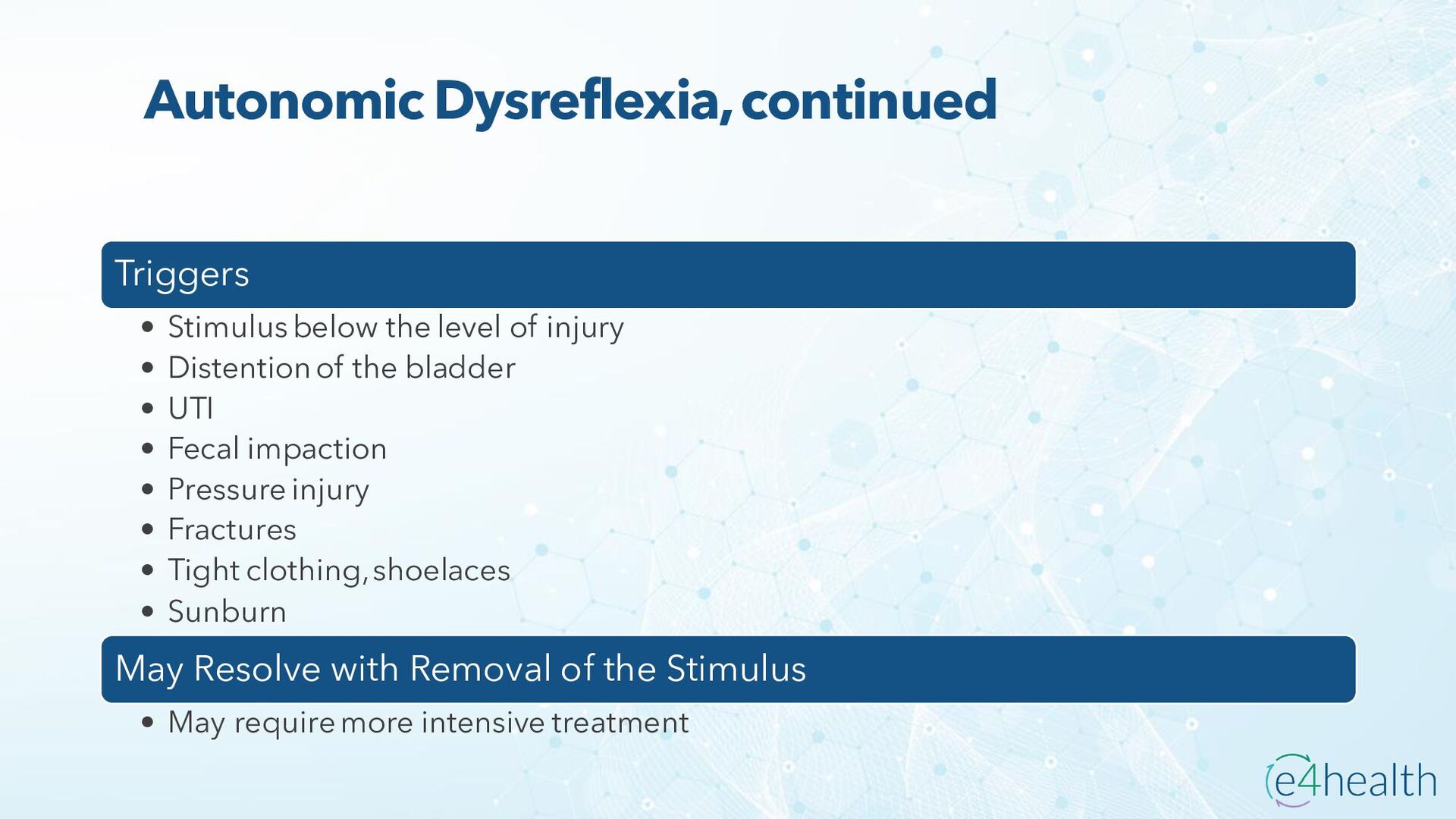
  29. Autonomic Dysreflexia, continued Triggers • Stimulus below the level of

    injury • Distention of the bladder • UTI • Fecal impaction • Pressure injury • Fractures • Tight clothing, shoelaces • Sunburn May Resolve with Removal of the Stimulus • May require more intensive treatment
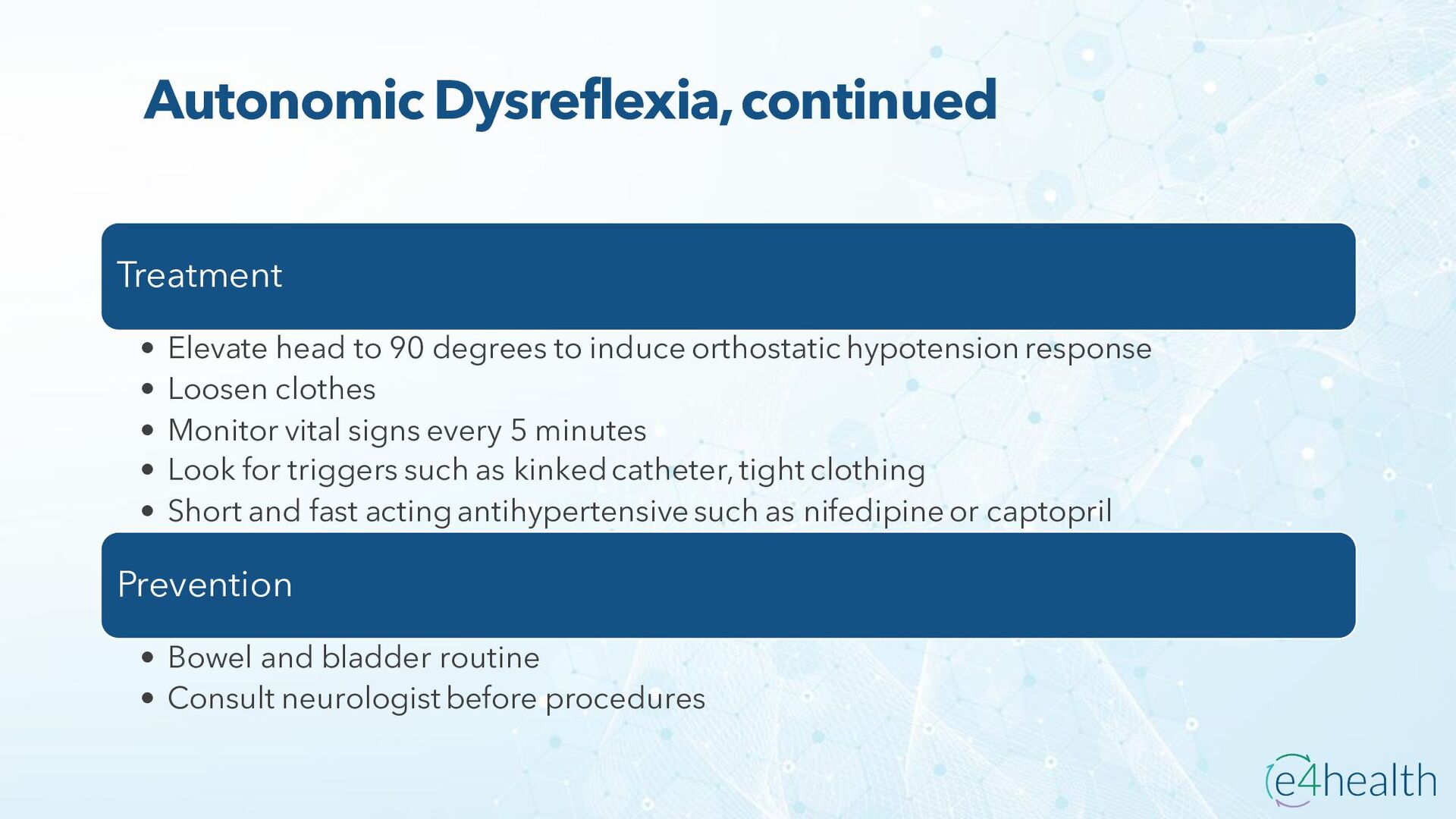
  30. Autonomic Dysreflexia, continued Treatment • Elevate head to 90 degrees

    to induce orthostatic hypotension response • Loosen clothes • Monitor vital signs every 5 minutes • Look for triggers such as kinked catheter, tight clothing • Short and fast acting antihypertensive such as nifedipine or captopril Prevention • Bowel and bladder routine • Consult neurologist before procedures
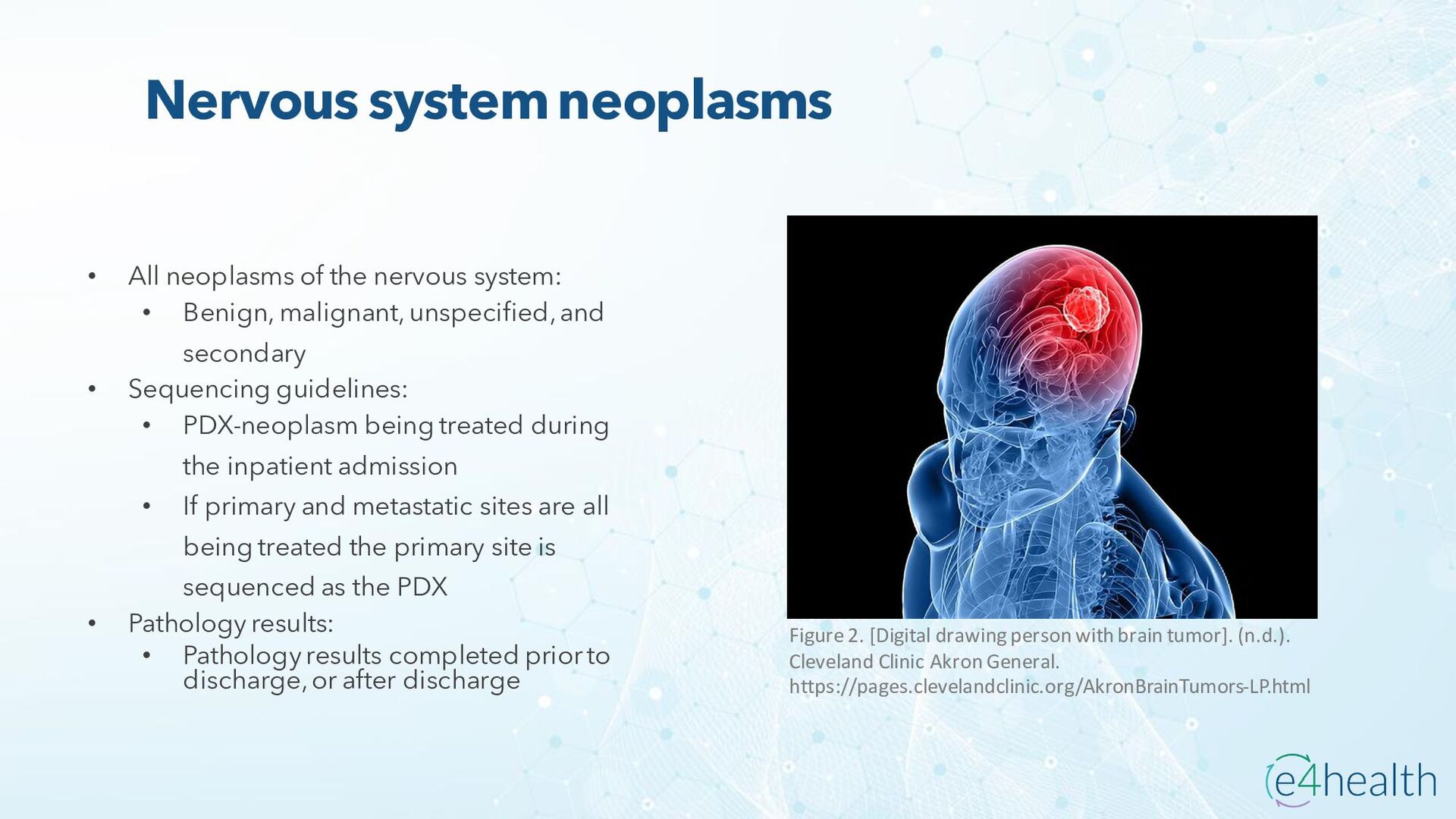
  31. Nervous system neoplasms • All neoplasms of the nervous system:

    • Benign, malignant, unspecified, and secondary • Sequencing guidelines: • PDX-neoplasm being treated during the inpatient admission • If primary and metastatic sites are all being treated the primary site is sequenced as the PDX • Pathology results: • Pathology results completed prior to discharge, or after discharge Figure 2. [Digital drawing person with brain tumor]. (n.d.). Cleveland Clinic Akron General. https://pages.clevelandclinic.org/AkronBrainTumors-LP.html
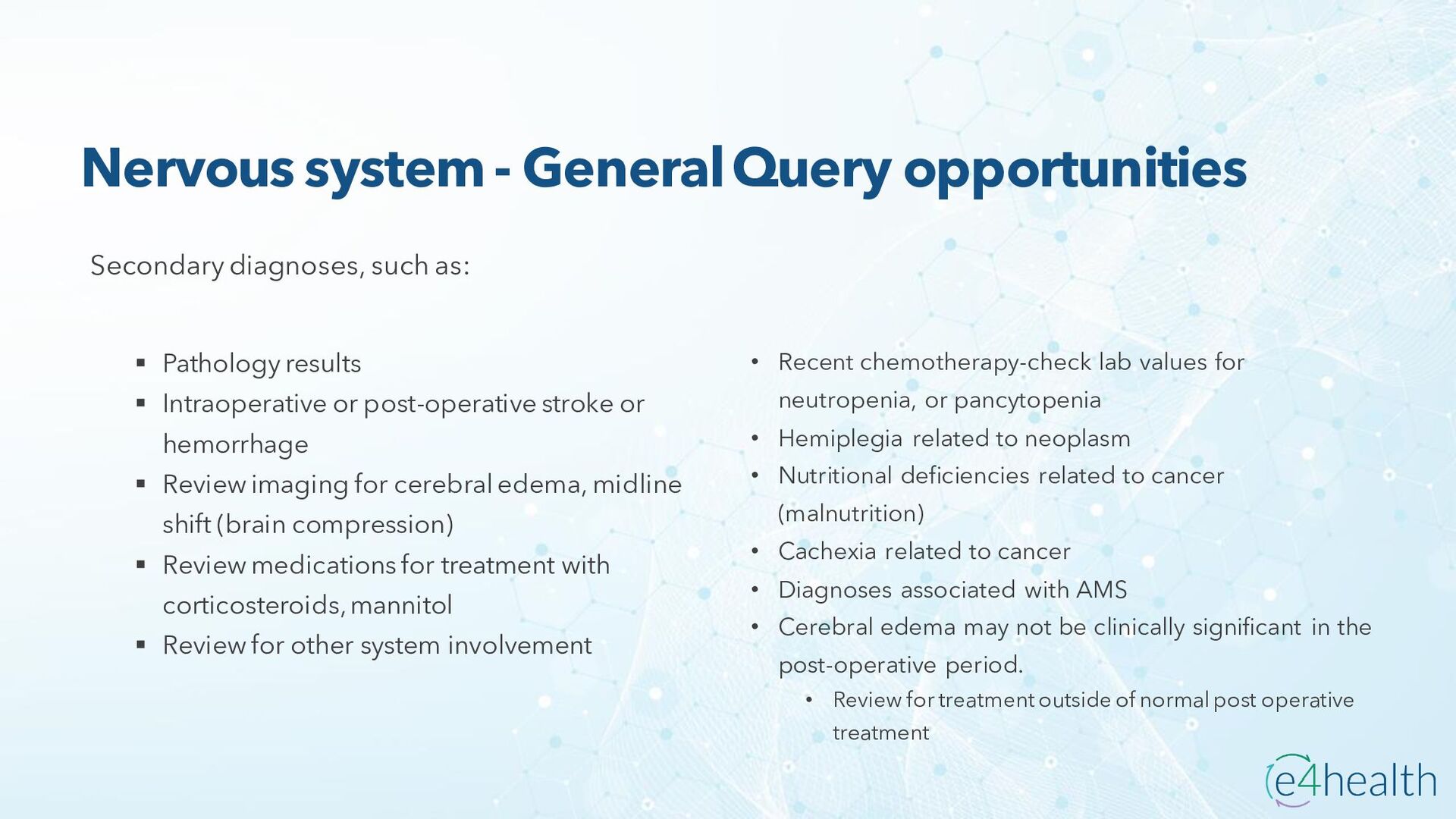
  32. Nervous system - General Query opportunities ▪ Pathology results ▪

    Intraoperative or post-operative stroke or hemorrhage ▪ Review imaging for cerebral edema, midline shift (brain compression) ▪ Review medications for treatment with corticosteroids, mannitol ▪ Review for other system involvement • Recent chemotherapy-check lab values for neutropenia, or pancytopenia • Hemiplegia related to neoplasm • Nutritional deficiencies related to cancer (malnutrition) • Cachexia related to cancer • Diagnoses associated with AMS • Cerebral edema may not be clinically significant in the post-operative period. • Review for treatment outside of normal post operative treatment Secondary diagnoses, such as:
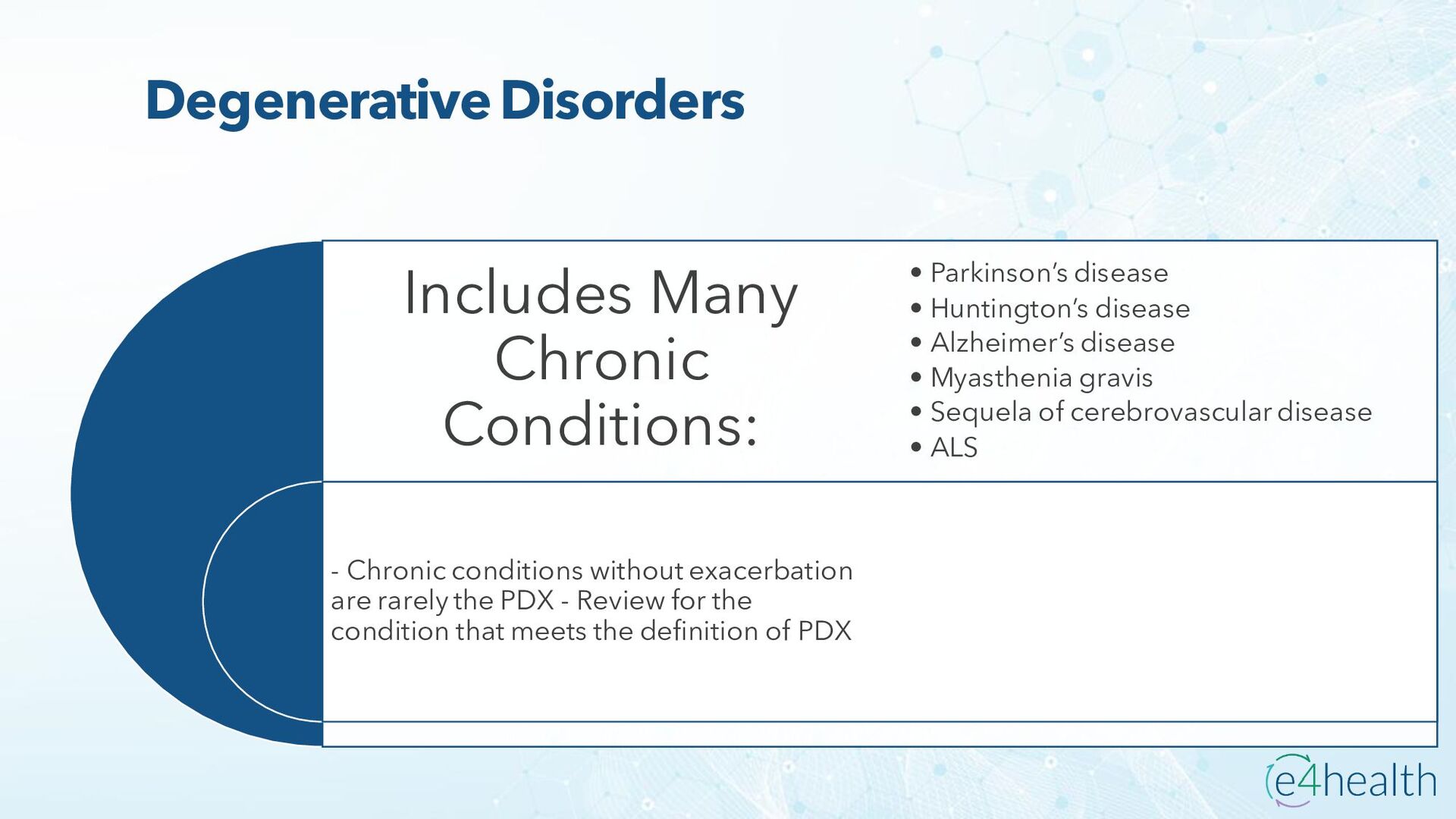
  33. Degenerative Disorders Includes Many Chronic Conditions: - Chronic conditions without

    exacerbation are rarely the PDX - Review for the condition that meets the definition of PDX • Parkinson’s disease • Huntington’s disease • Alzheimer’s disease • Myasthenia gravis • Sequela of cerebrovascular disease • ALS
  34. Parkinson’s Disease • Progressive disorder of the nervous system •

    G20, Parkinson’s disease, includes primary parkinsonism, which is the classic idiopathic Parkinson’s disease • Secondary Parkinsonism, G21-, is due to medication-induced, other nervous system disorder, infection, or other illnesses that causes symptoms similar to Parkinson’s disease • Parkinson’s disease with dementia is coded to G20, followed by the appropriate code from category F02, Dementia in other diseases classified elsewhere
  35. Parkinson's Dementia versus Parkinsonism Coding Clinic Second Quarter 2017 Page

    7 • Question: A patient diagnosed with dementia due to Parkinson's disease and aggressive behavior is admitted for treatment. The ICD-10-CM Alphabetic Index to Diseases and Injuries for Parkinson's dementia with behavioral disturbance seems inconsistent. Depending on which Index entry is used, either code G20, Parkinson's disease or code G31.83, Dementia with Lewy bodies, is assigned. The Alphabetic Index entry for "Dementia" has subentries for Parkinsonism (G31.81) and Parkinson's disease (G20). However, the Index entry for Parkinson's disease directs to see Parkinsonism. This instructional note is mandatory and indicates Parkinson's disease is coded as Parkinsonism. What is the appropriate code assignment for Parkinson's dementia with aggressive behavior? • Answer: Assign codes G20, Parkinson's disease, and F02.81, Dementia in other diseases classified elsewhere with behavioral disturbance, for Parkinson's dementia with aggressive behavior.
  36. Parkinson's Dementia versus Parkinsonism Coding Clinic Second Quarter 2017 Page

    7 (CONT'D) • Parkinson's disease is a progressive disorder of the nervous system, which typically affects middle-aged adults. It is associated with degeneration of the basal ganglia and a deficiency of the neurotransmitter dopamine. Parkinson's disease affects movement, and tremors are a well-known sign of the disease. • Parkinsonism refers to symptoms of Parkinson's disease (e.g., slow movements and tremors), regardless of the cause, and is typically caused by another condition or external agent, such as drugs. These two conditions are not classified the same. The Centers for Disease Control and Prevention (CDC) is aware of inconsistencies in the Alphabetic Index, and is considering possible modifications to the indexing of this condition. NOTE: Coding Clinic, Fourth Quarter 2022, page 14 reflects new subcategories have been created with new codes under categories F01, Vascular Dementia, F02, Dementia in other diseases classified elsewhere, and F03, Unspecified Dementia to recognize the stages of severity and to identify the behavioral and psychological symptoms of dementia.
  37. Alzheimer's disease • Progressive atrophy involving the degeneration of nerve

    cells • Affects mental changes that range from intellectual and cognitive impairments to dementia • Coded to category G30 and is further subdivided to specify early onset (G30.0), late onset (G30.1), other (G30.8), or unspecified (G30.9). • Dementia is an inherent part of Alzheimer's disease. • A code from category F02, Dementia in other diseases classified elsewhere, is assigned as an additional diagnosis to specify the presence or absence of anxiety, behavioral, mood, or psychotic disturbances. • Additionally, a code from subcategory F06.7 is assigned if there is mild neurocognitive disorder.
  38. Alzheimer's disease and dementia - Coding Clinic first quarter 2017

    pages 43-44 • Question: What is the correct code assignment for a diagnosis of Alzheimer's disease without provider documentation of dementia? When referencing the Alphabetic Index, the coding professional is directed to codes G30.9, Alzheimer's disease, unspecified, and [F02.80], Dementia in other diseases classified elsewhere without behavioral disturbance. Based on this index entry, are two codes required, or must the provider specifically document Alzheimer's disease with dementia? • Answer: Dementia is an inherent part of Alzheimer's disease; therefore, the provider does not need to separately document it. Assign code G30.9, Alzheimer's disease, unspecified, followed by code F02.80, Dementia in other diseases classified elsewhere, without behavioral disturbance. In the Alphabetic Index, code G30.9 is listed first, followed by code F02.80 or F02.81 in brackets. Code G30.9 represents the underlying etiology, Alzheimer's disease, and must be sequenced first, whereas codes F02.80 and F02.81 represent the manifestation of dementia in diseases classified elsewhere, with or without behavioral disturbance.
  39. Alzheimer's disease and dementia - Coding Clinic first quarter 2017

    pages 43-44, continued • The Official Guidelines for Coding and Reporting pertaining to the etiology/manifestation convention (1.A.13), states "Certain conditions have both an underlying etiology and multiple body system manifestations due to the underlying etiology. For such conditions, the ICD-10-CM has a coding convention that requires the underlying condition be sequenced first, if applicable, followed by the manifestation. Wherever such a combination exists, there is a "use additional code" note at the etiology code, and a "code first" note at the manifestation code. These instructional notes indicate the proper sequencing order of the codes, etiology followed by manifestation." • NOTE: As of October 1, 2022, new codes have been added to recognize the stages of severity and to identify the behavioral and psychological symptoms of dementia (BPSD).. See advice published in Coding Clinic, 4th Quarter 2022, pages 14-15.
  40. Mild Neurocognitive Disorder Due to Known Physiological Condition - Coding

    Clinic Fourth Quarter 2022 Page 16 • Mild neurocognitive disorder, also known as mild cognitive impairment (MCI), can be defined as an impairment in memory or thinking that is beyond what is considered normal age-related changes and yet, not so severe that it is considered dementia. MCI symptoms are subtle and do not significantly affect a patient's daily life and activities. Patients with MCI typically do not experience other disturbances such as personality changes or functional impairments but are at an increased risk for developing dementia caused by Alzheimer's or other neurological conditions. Typical symptoms include forgetfulness and word-finding difficulties. • Subcategory F06.7, Mild neurocognitive disorder due to known physiological condition, and new codes have been created to identify mild cognitive disorder due to other physiological conditions. • F06.70, Mild neurocognitive disorder due to known physiological condition without behavioral disturbance • F06.71, Mild neurocognitive disorder due to known physiological condition with behavioral disturbance • These codes are assigned to capture MCI in patients who have not yet developed dementia. The fifth-digit classifies the presence or absence of behavioral disturbances. This will allow for tracking of the progression of behavioral symptoms that are a significant indicator of the progression of the underlying disease.
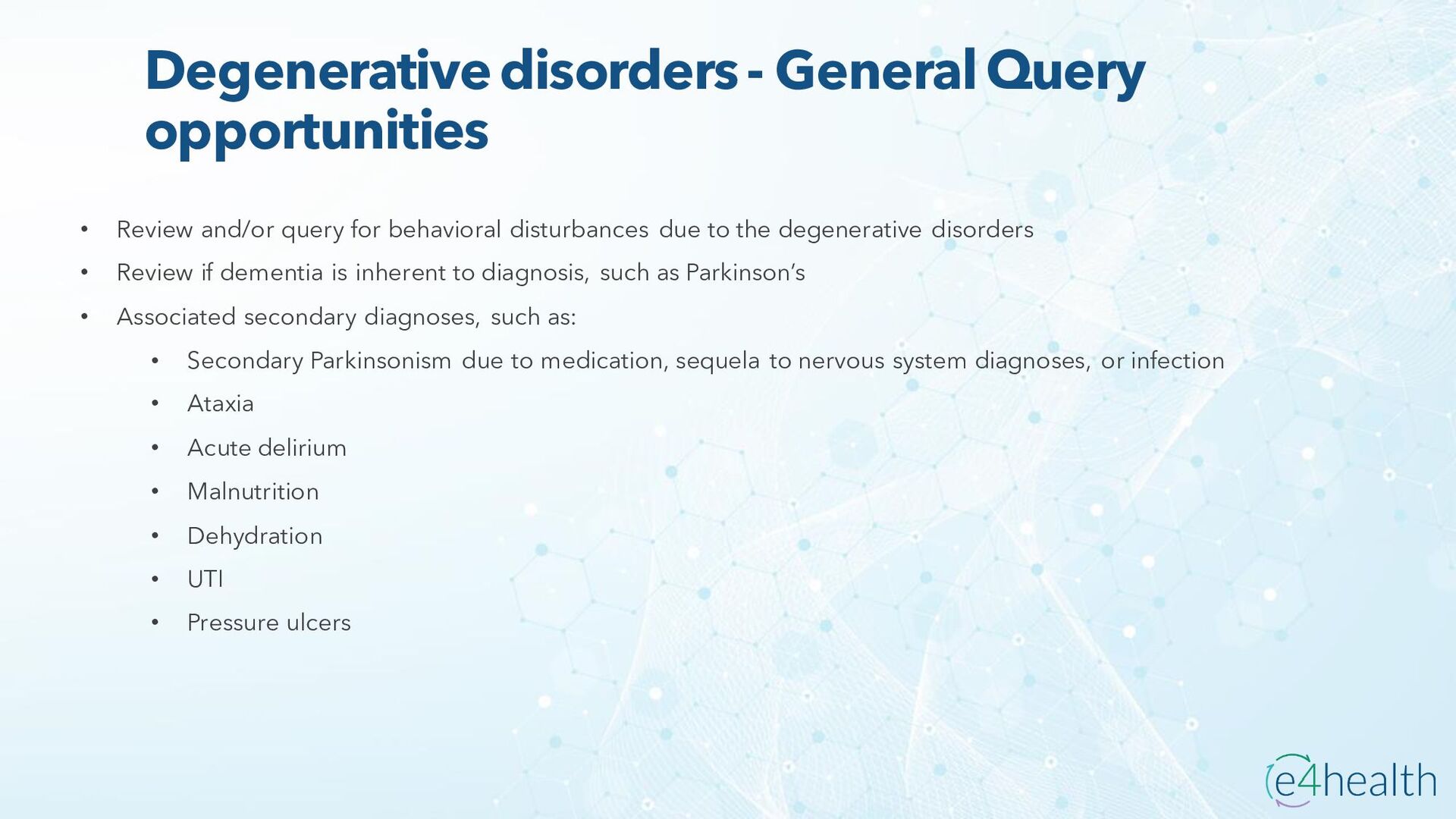
  41. Degenerative disorders - General Query opportunities • Review and/or query

    for behavioral disturbances due to the degenerative disorders • Review if dementia is inherent to diagnosis, such as Parkinson’s • Associated secondary diagnoses, such as: • Secondary Parkinsonism due to medication, sequela to nervous system diagnoses, or infection • Ataxia • Acute delirium • Malnutrition • Dehydration • UTI • Pressure ulcers
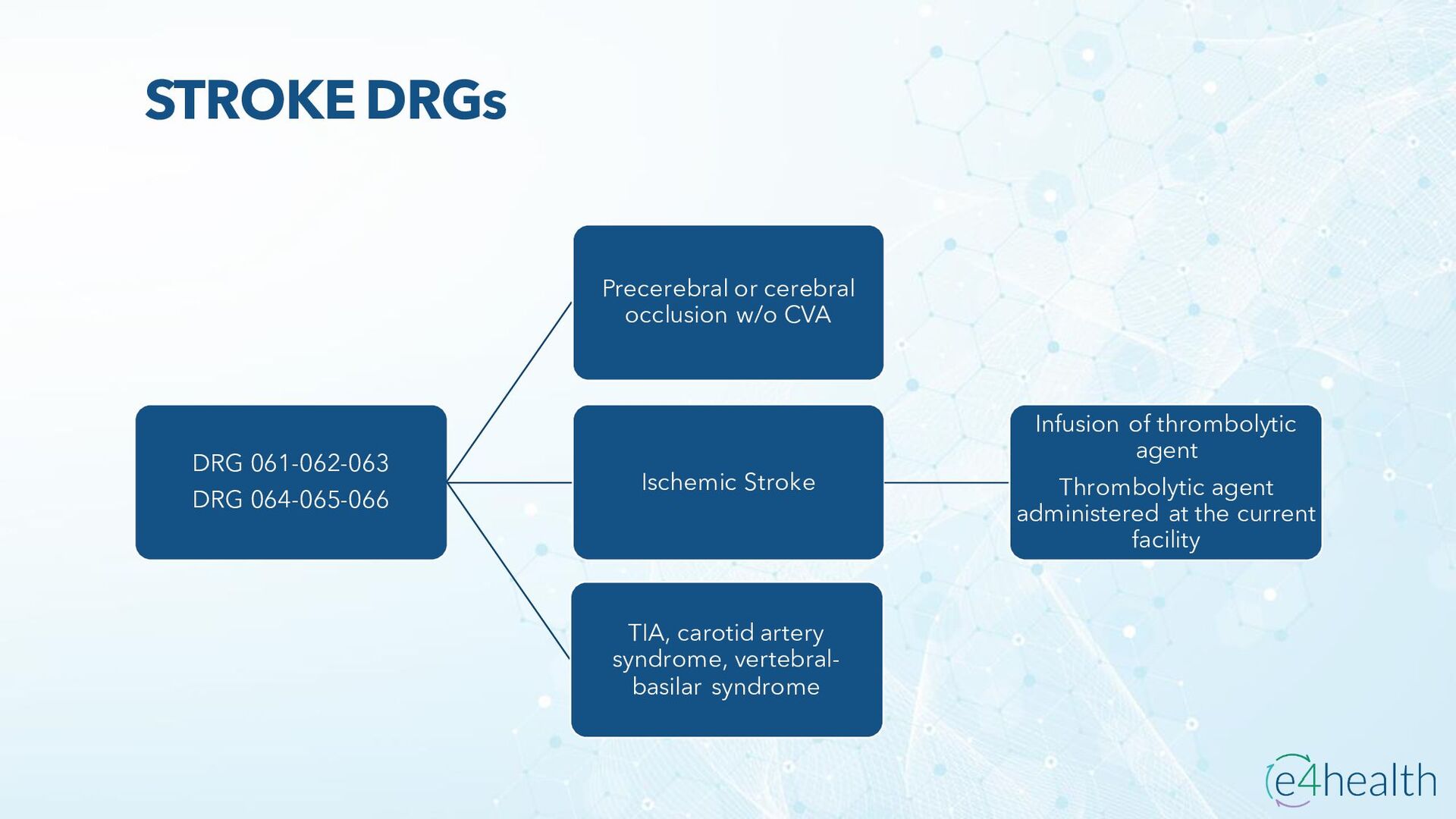
  42. STROKE DRGs DRG 061-062-063 DRG 064-065-066 Precerebral or cerebral occlusion

    w/o CVA Ischemic Stroke Infusion of thrombolytic agent Thrombolytic agent administered at the current facility TIA, carotid artery syndrome, vertebral- basilar syndrome
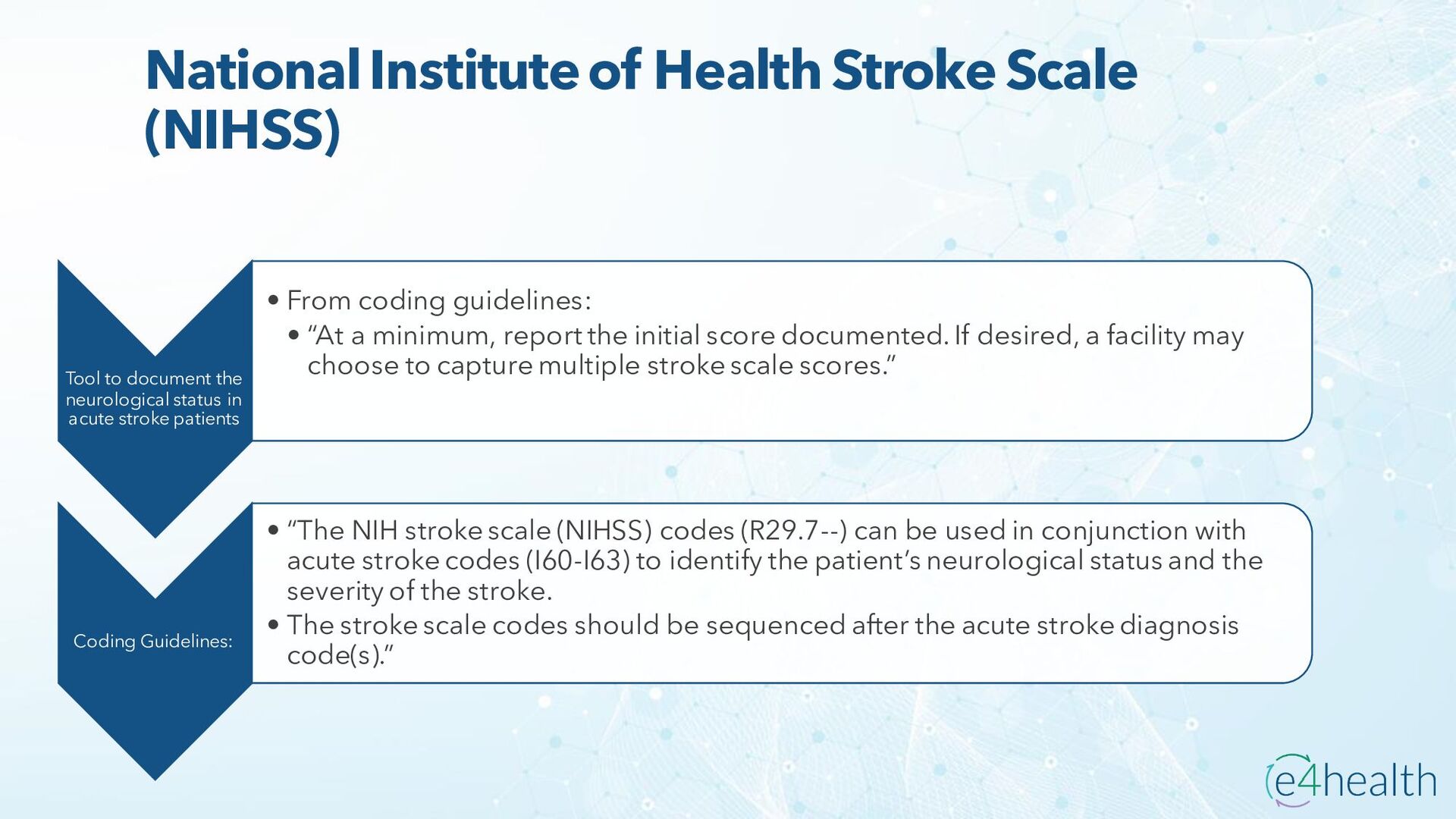
  43. National Institute of Health Stroke Scale (NIHSS) Tool to document

    the neurological status in acute stroke patients • From coding guidelines: • “At a minimum, report the initial score documented. If desired, a facility may choose to capture multiple stroke scale scores.” Coding Guidelines: • “The NIH stroke scale (NIHSS) codes (R29.7--) can be used in conjunction with acute stroke codes (I60-I63) to identify the patient’s neurological status and the severity of the stroke. • The stroke scale codes should be sequenced after the acute stroke diagnosis code(s).”
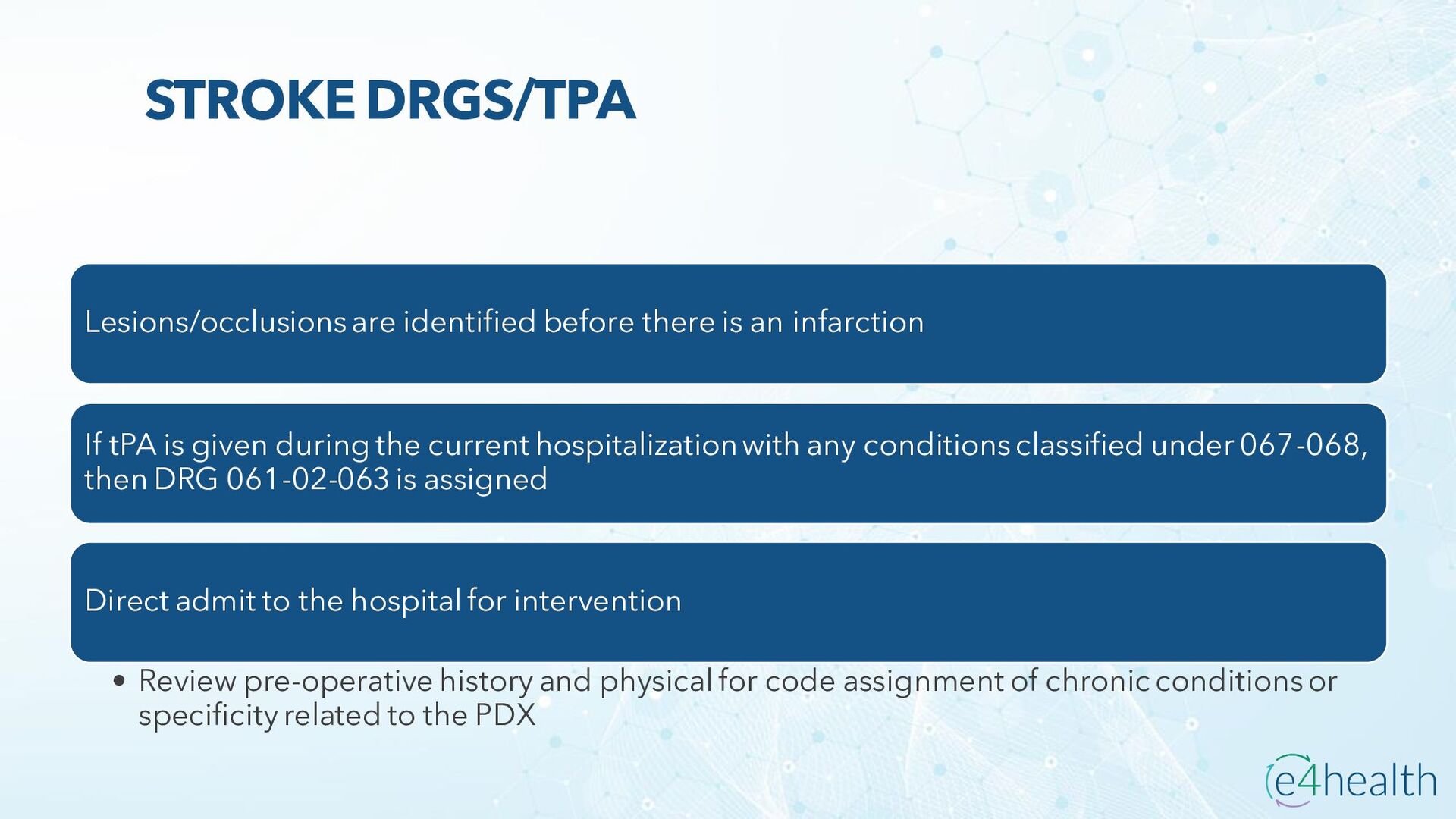
  44. STROKE DRGS/TPA Lesions/occlusions are identified before there is an infarction

    If tPA is given during the current hospitalization with any conditions classified under 067-068, then DRG 061-02-063 is assigned Direct admit to the hospital for intervention • Review pre-operative history and physical for code assignment of chronic conditions or specificity related to the PDX
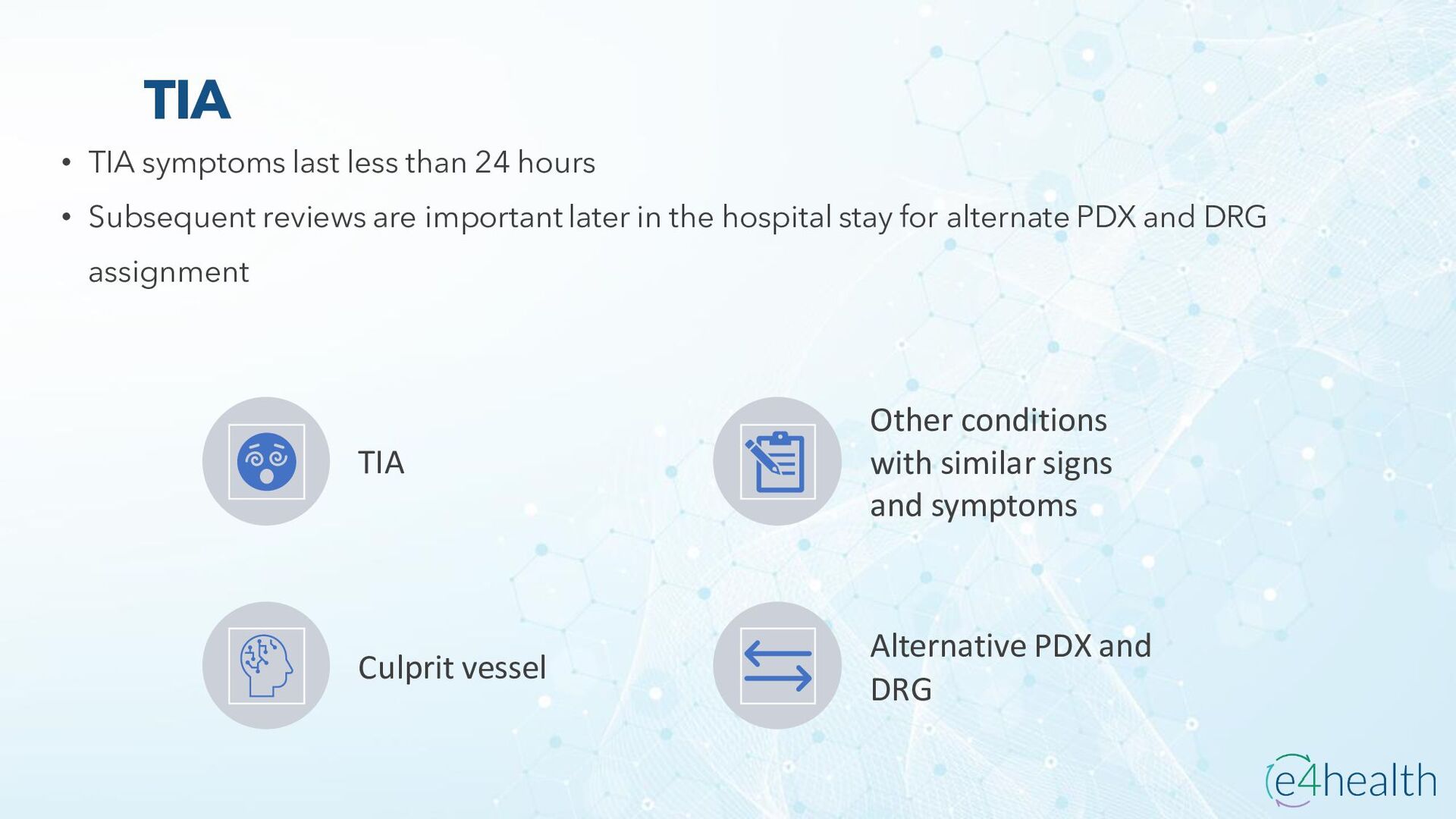
  45. TIA • TIA symptoms last less than 24 hours •

    Subsequent reviews are important later in the hospital stay for alternate PDX and DRG assignment TIA Other conditions with similar signs and symptoms Culprit vessel Alternative PDX and DRG
  46. Chronic cerebrovascular accident/stroke - Coding Clinic second quarter 2020 page

    29 • Question: An 84-year-old male with chronic gait instability is admitted after a fall. The provider's documentation states that the patient's gait instability is related to chronic cerebrovascular accident (CVA). How is gait instability due to chronic CVA coded? • Answer: Although the index leads to code I63.9, Cerebral infarction, unspecified, based on the documentation, the patient does not have a current cerebrovascular infarction. Assign code R26.89, Other abnormalities of gait and mobility and code I69.398, Other sequelae of cerebral infarction. The gait instability is coded as a late effect or sequela (neurological deficit), associated with the patient's previous CVA.
  47. Upper/lower extremity weakness following acute CVA - Coding clinic first

    quarter 2017 page 47-48 • Question: A patient presented with weakness of the right arm due to an old cerebrovascular accident (CVA). The provider documented, "h/o CVA with mild residual right arm weakness." How would weakness of one extremity (upper or lower) be coded in a patient who is post CVA? • Answer: Assign the appropriate code from subcategory I69.33-, Monoplegia of upper limb following cerebral infarction, or I69.34-, Monoplegia of lower limb following cerebral infarction, for upper or lower limb weakness that is clearly associated with a CVA. • Previous advice in Coding Clinic, First Quarter 2015, states that, "unilateral weakness that is clearly documented as being associated with a stroke, is considered synonymous with hemiparesis or hemiplegia. Unilateral weakness outside of this clear association cannot be assumed as hemiparesis/ hemiplegia, unless it is associated with some other brain disorder or injury." This same logic would apply to upper or lower limb weakness that is clearly associated with a stroke.
  48. Residual right-sidedweakness due to previous cerebral infarction - Coding Clinic

    first quarter 2015 page 25 • Question: The patient is a 72-year-old male admitted to the hospital, because of gastrointestinal bleeding. The provider documented that the patient had a history of acute cerebral infarction with residual right sided weakness (dominant side) and ordered an evaluation by physical and occupational therapy. What is the appropriate code assignment for residual right-sided weakness, resulting from an old CVA without mention of hemiplegia/hemiparesis? • Answer: Assign code I69.351, Hemiplegia and hemiparesis following cerebral infarction, affecting right dominant side, for the residual right-sided weakness due to cerebral infarction. When unilateral weakness is clearly documented as being associated with a stroke, it is considered synonymous with hemiparesis/hemiplegia. Unilateral weakness outside of this clear association cannot be assumed as hemiparesis/hemiplegia, unless it is associated with some other brain disorder or injury.
  49. Coding neurological deficits due to stroke - Coding Clinic first

    quarter 2014 page 253 • Question: Does the advice from Coding Clinic, First Quarter 2010, page 5, regarding the coding of neurologic deficits caused by CVA even when they have resolved at the time of discharge from hospital hold true for ICD-10-CM as well? • Answer: Hemiplegia is not inherent to an acute cerebrovascular accident (CVA). Therefore, it should be coded even if the hemiplegia resolves, with or without treatment. The hemiplegia affects the care that the patient receives. Report any neurological deficits caused by a CVA even when they have been resolved at the time of discharge from the hospital.
  50. Stroke/Cerebrovascular accident/TIA - Query opportunities ▪ For patients who have

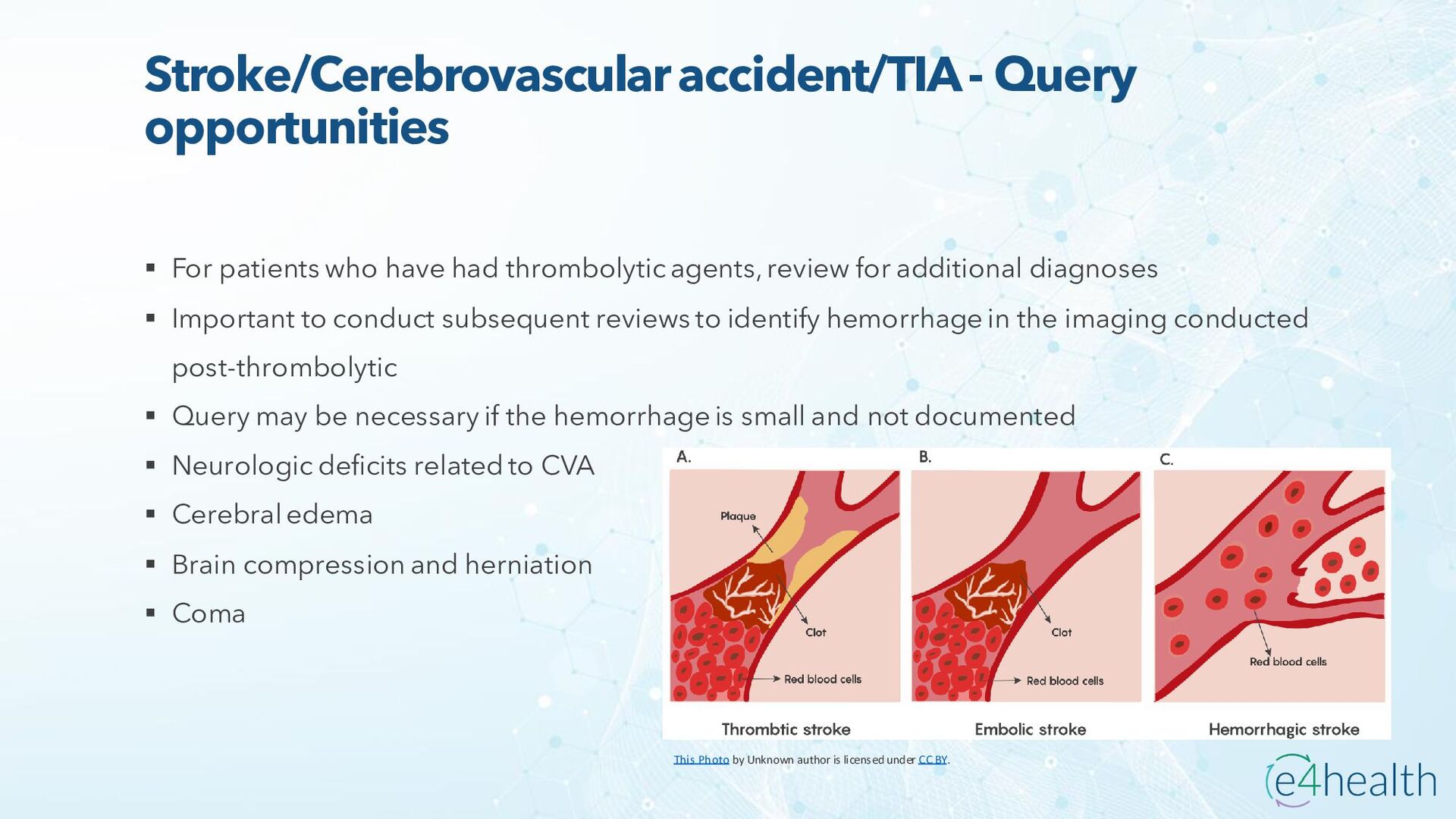
    had thrombolytic agents, review for additional diagnoses ▪ Important to conduct subsequent reviews to identify hemorrhage in the imaging conducted post-thrombolytic ▪ Query may be necessary if the hemorrhage is small and not documented ▪ Neurologic deficits related to CVA ▪ Cerebral edema ▪ Brain compression and herniation ▪ Coma This Photo by Unknown author is licensed under CC BY.
  51. Encephalopathy • General term used to describe any disorder of

    cerebral function with the classic symptom of altered mental status that is reversible if the underlying reason is corrected • Delirium also has a classic symptom of altered mental status and can be used interchangeability by providers • Delirium is a mental manifestation vs. encephalopathy is part of an underlying pathophysiologic process • Clarification between encephalopathy and its type vs. delirium is needed to reflect how truly sick the patient is • Identification of the common types of encephalopathy best reflects the severity of illness • Types include anoxic, alcoholic, hepatic, hypertensive, metabolic (septic), toxic, Wernicke's
  52. Types of Encephalopathy Anoxic • Also known as hypoxic encephalopathy

    • Brain damage due to lack of oxygen due to cessation of cerebral blood flow that can cause permanent or chronic cognitive brain function • Classified as G93.1, Anoxic brain damage, not elsewhere classified • Query opportunity: Secondary diagnoses such as brain death and organ failures Alcoholic • Complication of alcoholic liver disease due to excessive drinking • Results in the loss of brain function and tissue due to decreased levels of thiamine • Classified as G31.2, Degeneration of nervous system due to alcohol • Query opportunity: specificity of alcohol use, abuse, or dependence
  53. Types of Encephalopathy Hepatic • Brain damage due to liver

    disease • Classified as K72.90, Hepatic failure, unspecified, without coma, if the etiology is unknown • Hepatic encephalopathy is NOT equivalent to hepatic coma • Hepatic (liver) failure with no documentation of hepatic coma, is defaulted to K72.90, Hepatic failure, unspecified without coma
  54. Hepatic Encephalopathy - Coding Clinic Second Quarter 2016 Page 35

    • Question: We were given advice to assign a code for "hepatic failure with hepatic coma" anytime "hepatic encephalopathy" is documented. Is this correct? • Answer: Hepatic encephalopathy is not synonymous with hepatic coma. The appropriate code assignment for hepatic encephalopathy would depend on the underlying cause. When coding hepatic encephalopathy, it is the physician's responsibility to document whether or not the patient has hepatic encephalopathy "with" coma. • The ICD-10-CM Index to Diseases entry for "Encephalopathy, hepatic" states "see, Failure, hepatic." At the Index entry "Failure, hepatic," there are now subentries for codes to specifically describe hepatic failure with or without coma. The default for this condition is "without coma." • Assign code K72.90, Hepatic failure, unspecified without coma, if the only documentation in the medical record is "hepatic encephalopathy," without any further specification.
  55. Hepatic Encephalopathy - Coding Clinic Fourth Quarter 2022 Page 27

    • Subcategory K76.8, Other specified diseases of liver, has been further expanded, and code K76.82, Hepatic encephalopathy, has been created to uniquely identify hepatic encephalopathy (without coma). • Hepatic encephalopathy (HE) is a specific type of encephalopathy that occurs when liver disease causes toxins to build up in the patient's blood. Ammonia is one of the toxins that is normally made harmless by the liver. However, when ammonia or other toxic substances build up in the body and the liver is unable to remove these toxins from the blood, these toxins may travel to the brain and temporarily affect brain function. • Symptoms of HE include anxiety, cognitive impairment, issues with balance, muscle twitches, impaired thinking, mood changes, sleep problems and hand flapping. There are treatments such as antibiotics that stop bacterial growth and medications that reduce ammonia and remove toxins from the body and into the colon. However, if the underlying cause of the liver disease is not treated and toxins continue to build, patients with advanced HE lose consciousness and go into a hepatic coma. • This new code will allow hepatic encephalopathy (without coma) to be accurately classified and will enable enhanced reporting/tracking for research and clinical purposes.
  56. Types of Encephalopathy • Diagnosis made in patients with severely

    elevated blood pressure and altered mental status by first ruling out other causes • May also have other organ injuries related to HTN emergency • AKI, heart failure or retinopathy • MRI for cerebral edema to further specify as: • PRES-Posterior Reversible Encephalopathy Syndrome- Bilateral white matter edema in the posterior cerebral hemisphere • Hypertensive brainstem encephalopathy- Pontine region edema Hypertensive Encephalopathy Signs and Symptoms ▪ Review MRI or CT Scan results ▪ Review or query for underlying cause ▪ Review for other organ damage related to hypertensive emergency Query opportunities
  57. Types of Encephalopathy Metabolic  ICD-10-CM Index and Tabular also

    code septic encephalopathy as metabolic encephalopathy  Temporary or permanent damage to the brain due to lack of glucose, oxygen, or other metabolic agent, or caused by organ dysfunction  Symptoms include an altered state of consciousness, usually characterized as delirium, confusion, or agitation, and changes in behavior or personality. Extreme conditions include stupor or coma.  Symptoms can develop quickly and may resolve when the underlying condition is reversed  Assign code G93.41, Metabolic encephalopathy, for this condition
  58. Encephalopathy due to Diabetic Hypoglycemia - Coding Clinic Third Quarter

    2015 Page 21 & Third Quarter 2016 Page 42  Question: A patient with diabetes mellitus was admitted when she was found to be lethargic. Her blood sugar readings were low. Discharge diagnosis was documented as acute encephalopathy secondary to hypoglycemia. What are the diagnosis code assignments for encephalopathy due to hypoglycemia in a diabetic patient?  Answer: Assign code E11.649, Type 2 diabetes mellitus with hypoglycemia without coma, as the principal diagnosis. Assign also code G93.41, Metabolic encephalopathy, as an additional diagnosis.  Question: The Central Office has received several requests to clarify advice published in Coding Clinic, Third Quarter, 2015, page 21, about encephalopathy due to diabetic hypoglycemia. When the terms "encephalopathy, hypoglycemic" are referenced, the Index directs to code E16.2, Hypoglycemia. Additionally, there was no recommendation to query the provider regarding the underlying cause, which could be due to insulin or another hypoglycemic agent; and there was no mention of metabolic encephalopathy in the question.  Answer: Codes E11.649, Type 2 diabetes mellitus with hypoglycemia without coma, and G93.41, Metabolic encephalopathy, are the correct code assignments for metabolic encephalopathy due to diabetic hypoglycemia. The fact that the provider specifically documented "metabolic encephalopathy" in his final diagnostic statement was inadvertently omitted from the published question.  Although the Index directs to code E16.2, Hypoglycemia, unspecified, under "encephalopathy, hypoglycemic," code E16.2 is not appropriate as it refers to nondiabetic hypoglycemia. In addition, the patient had taken his antidiabetic medication as prescribed and there was no indication in the health record of adverse effect, underdosing, and/or poisoning.
  59. Encephalopathy due to Sepsis - Coding Clinic Second Quarter 2017

    Page 8  Question: A patient is admitted with mental status changes and is diagnosed with severe sepsis secondary to urinary tract infection, acute renal failure and acute encephalopathy. The provider documented "sepsis associated encephalopathy." How should the encephalopathy be coded (G94 vs. G93.41)?  Answer: Assign code G93.41, Metabolic encephalopathy, for sepsis-associated encephalopathy. This code assignment can be found in the Index under:  Encephalopathy (acute)  septic G93.41  Code G94, Other disorders of brain in diseases classified elsewhere, should only be assigned for those conditions with Index entries that directly point to code G94 for certain etiologies; otherwise assign code G93.40, Encephalopathy, unspecified, if the type of encephalopathy is not documented. Assign a more specific code, when the type of encephalopathy is documented.
  60. Encephalopathy Caused by Other Conditions - Coding Clinic Second Quarter

    2018 Page 24  Question: Coding Clinic Second Quarter 2017, pages 8-9, provided two examples of encephalopathy caused by other conditions. In the first example, code G93.40, Encephalopathy, unspecified, was assigned. However, in the second example code G93.49, Other encephalopathy, was assigned for encephalopathy secondary to an acute stroke. Please clarify the appropriate code assignment for encephalopathy when it is caused by some other condition and the encephalopathy is not specified.  Answer: The advice provided in Coding Clinic Second Quarter 2017, pages 8-9 is accurate. When encephalopathy is linked to a specific condition, such as stroke or urinary tract infection, it is appropriate to use the code describing "other encephalopathy." Therefore, assign code G93.49, Other encephalopathy, when encephalopathy is linked to a condition, but a specific encephalopathy (e.g., metabolic, toxic, hypertensive, etc.) is not documented.  As previously stated in Coding Clinic Second Quarter 2017, code G94, Other disorders of brain in diseases classified elsewhere, should only be assigned for those conditions with Index entries that directly point to code G94, for certain etiologies.
  61. Encephalopathy due to Urinary Tract Infection - Coding Clinic Second

    Quarter 2018 Page 22  Question: A patient is diagnosed with encephalopathy due to urinary tract infection (UTI). Is code G94, Other disorders of brain in diseases classified elsewhere, assigned? How should encephalopathy due to UTI be coded?  Answer: Assign codes G93.49, Other encephalopathy, and N39.0, Urinary tract infection, site not specified. The sequencing of the principal diagnosis would be based on the condition found after study to be responsible for the hospital admission.  As previously stated in Coding Clinic Second Quarter 2017, pages 8-9, code G94, Other disorders of brain in diseases classified elsewhere, should only be assigned for those conditions with Index entries that directly point to code G94, for certain etiologies.
  62. Types of Encephalopathy Toxic  Degenerative neurological disorder caused by

    exposure to toxic substances or as an adverse effect of medication.  Characterized by an altered mental status, and symptoms can include memory loss, small personality changes, lack of concentration, involuntary movements, nausea, fatigue, seizures, arm strength problems, and depression.  Toxic encephalopathy is classified as G92.9, Unspecified toxic encephalopathy  However, toxic metabolic encephalopathy is classified to G92.8, Other toxic encephalopathy.  Sequencing of toxic encephalopathy due to drugs is based on whether the drug toxicity qualifies as an adverse effect or poisoning.  If toxic encephalopathy is an adverse effect (drug has been correctly prescribed and properly administered), assign the toxic encephalopathy followed by the appropriate code for the adverse effect of the drug (T36– T50). The code for the drug will have a fifth or sixth character 5 (e.g., T36.0x5-) to indicate adverse effect.  If the toxic encephalopathy is due to a poisoning from a toxic agent, code first the poisoning due to drug or toxic from categories T51–T65 followed by Code G92.9 for unspecified toxic encephalopathy
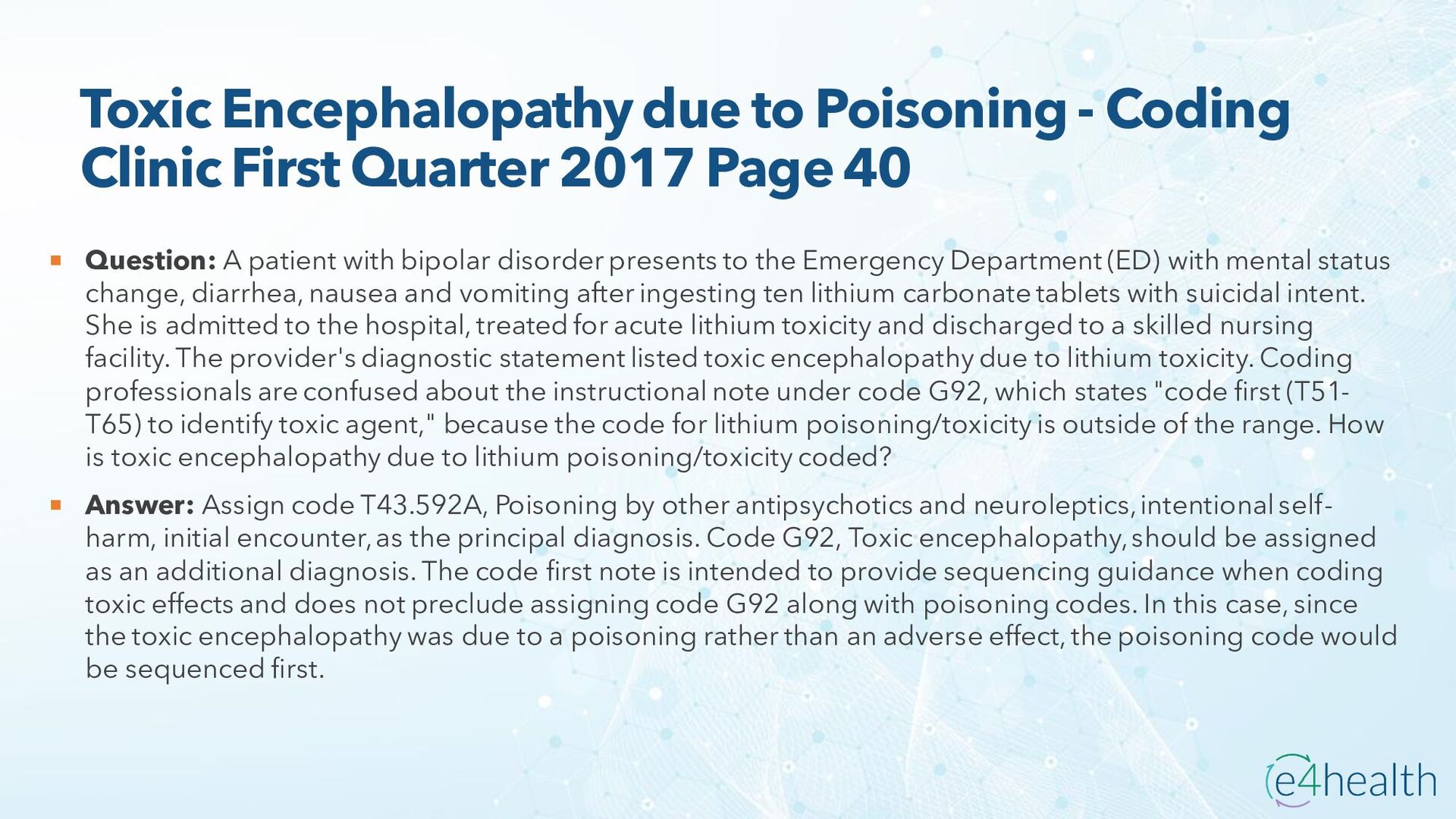
  63. Toxic Encephalopathy due to Poisoning - Coding Clinic First Quarter

    2017 Page 40  Question: A patient with bipolar disorder presents to the Emergency Department (ED) with mental status change, diarrhea, nausea and vomiting after ingesting ten lithium carbonate tablets with suicidal intent. She is admitted to the hospital, treated for acute lithium toxicity and discharged to a skilled nursing facility. The provider's diagnostic statement listed toxic encephalopathy due to lithium toxicity. Coding professionals are confused about the instructional note under code G92, which states "code first (T51- T65) to identify toxic agent," because the code for lithium poisoning/toxicity is outside of the range. How is toxic encephalopathy due to lithium poisoning/toxicity coded?  Answer: Assign code T43.592A, Poisoning by other antipsychotics and neuroleptics, intentional self- harm, initial encounter, as the principal diagnosis. Code G92, Toxic encephalopathy, should be assigned as an additional diagnosis. The code first note is intended to provide sequencing guidance when coding toxic effects and does not preclude assigning code G92 along with poisoning codes. In this case, since the toxic encephalopathy was due to a poisoning rather than an adverse effect, the poisoning code would be sequenced first.
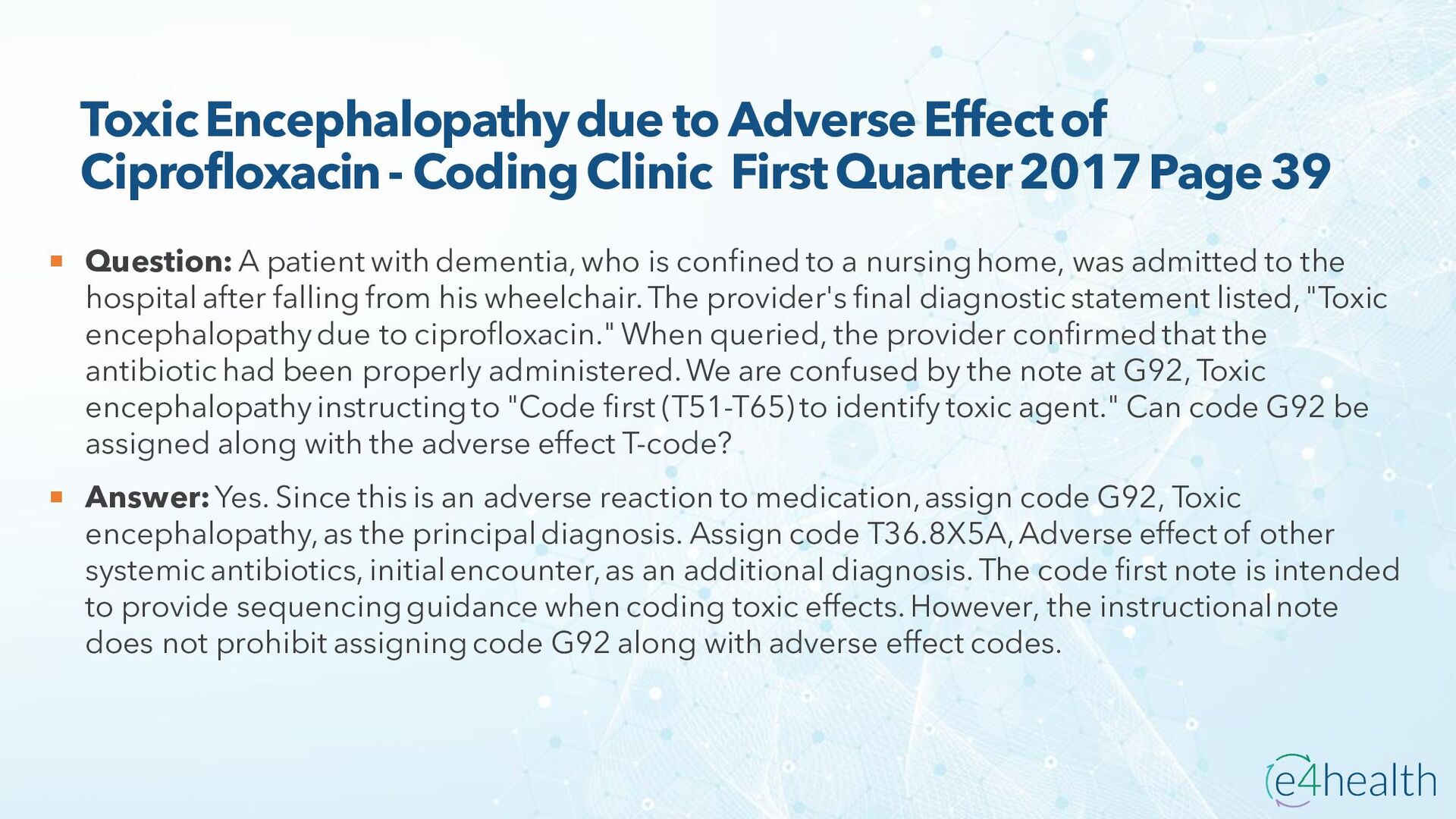
  64. Toxic Encephalopathy due to Adverse Effect of Ciprofloxacin - Coding

    Clinic First Quarter 2017 Page 39  Question: A patient with dementia, who is confined to a nursing home, was admitted to the hospital after falling from his wheelchair. The provider's final diagnostic statement listed, "Toxic encephalopathy due to ciprofloxacin." When queried, the provider confirmed that the antibiotic had been properly administered. We are confused by the note at G92, Toxic encephalopathy instructing to "Code first (T51-T65) to identify toxic agent." Can code G92 be assigned along with the adverse effect T-code?  Answer: Yes. Since this is an adverse reaction to medication, assign code G92, Toxic encephalopathy, as the principal diagnosis. Assign code T36.8X5A, Adverse effect of other systemic antibiotics, initial encounter, as an additional diagnosis. The code first note is intended to provide sequencing guidance when coding toxic effects. However, the instructional note does not prohibit assigning code G92 along with adverse effect codes.
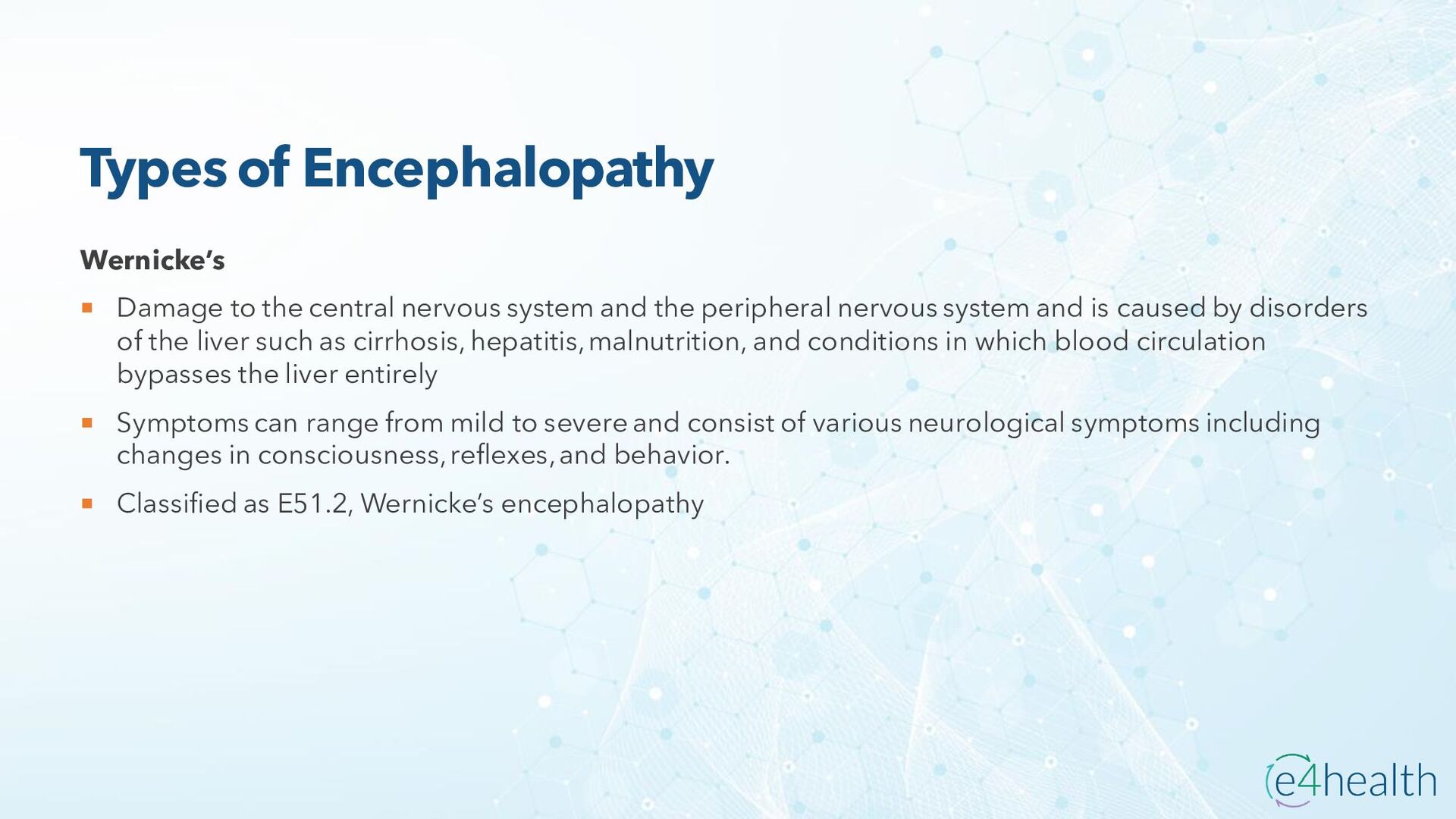
  65. Types of Encephalopathy Wernicke’s  Damage to the central nervous

    system and the peripheral nervous system and is caused by disorders of the liver such as cirrhosis, hepatitis, malnutrition, and conditions in which blood circulation bypasses the liver entirely  Symptoms can range from mild to severe and consist of various neurological symptoms including changes in consciousness, reflexes, and behavior.  Classified as E51.2, Wernicke’s encephalopathy
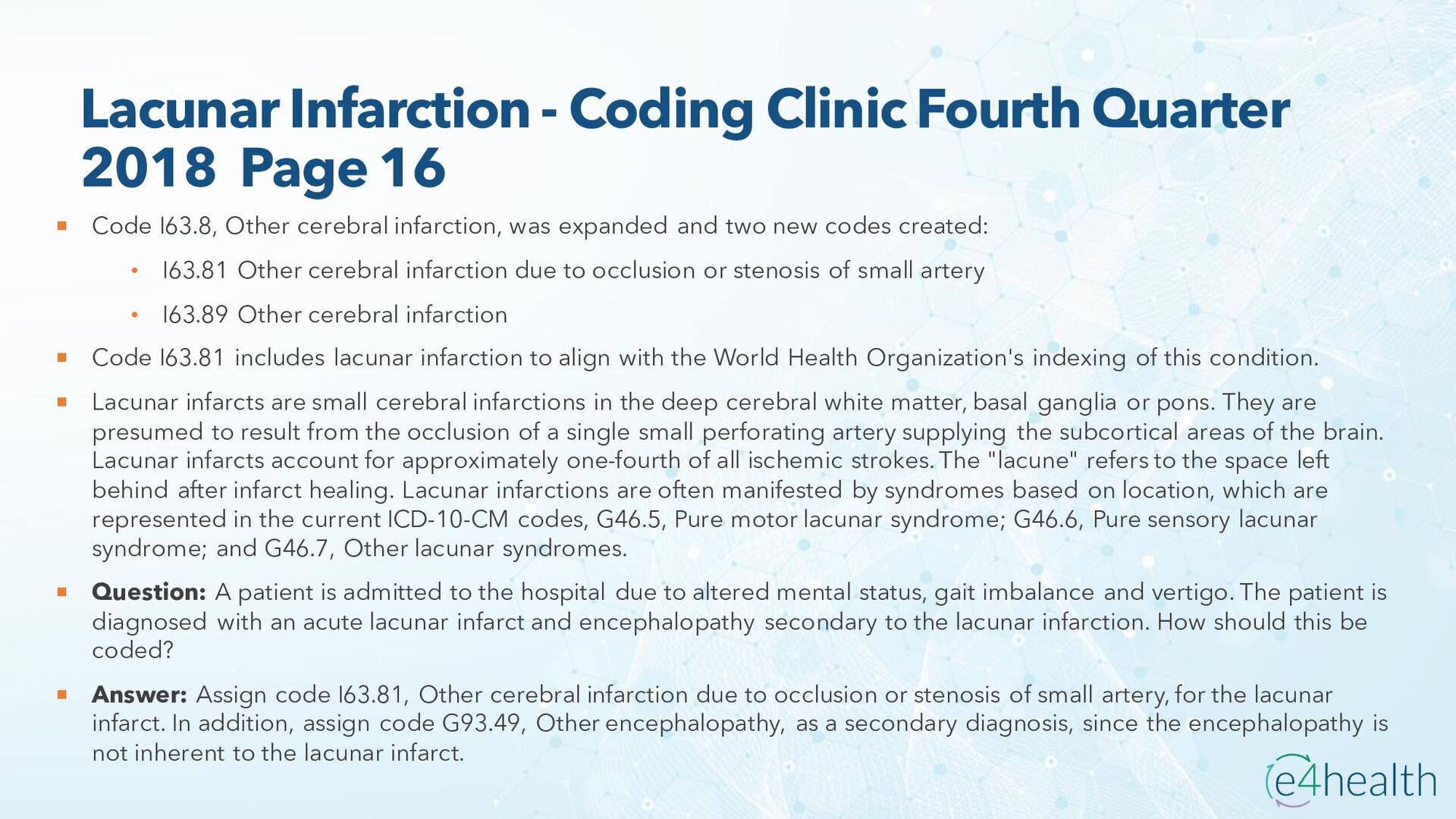
  66. Lacunar Infarction - Coding Clinic Fourth Quarter 2018 Page 16

     Code I63.8, Other cerebral infarction, was expanded and two new codes created: • I63.81 Other cerebral infarction due to occlusion or stenosis of small artery • I63.89 Other cerebral infarction  Code I63.81 includes lacunar infarction to align with the World Health Organization's indexing of this condition.  Lacunar infarcts are small cerebral infarctions in the deep cerebral white matter, basal ganglia or pons. They are presumed to result from the occlusion of a single small perforating artery supplying the subcortical areas of the brain. Lacunar infarcts account for approximately one-fourth of all ischemic strokes. The "lacune" refers to the space left behind after infarct healing. Lacunar infarctions are often manifested by syndromes based on location, which are represented in the current ICD-10-CM codes, G46.5, Pure motor lacunar syndrome; G46.6, Pure sensory lacunar syndrome; and G46.7, Other lacunar syndromes.  Question: A patient is admitted to the hospital due to altered mental status, gait imbalance and vertigo. The patient is diagnosed with an acute lacunar infarct and encephalopathy secondary to the lacunar infarction. How should this be coded?  Answer: Assign code I63.81, Other cerebral infarction due to occlusion or stenosis of small artery, for the lacunar infarct. In addition, assign code G93.49, Other encephalopathy, as a secondary diagnosis, since the encephalopathy is not inherent to the lacunar infarct.
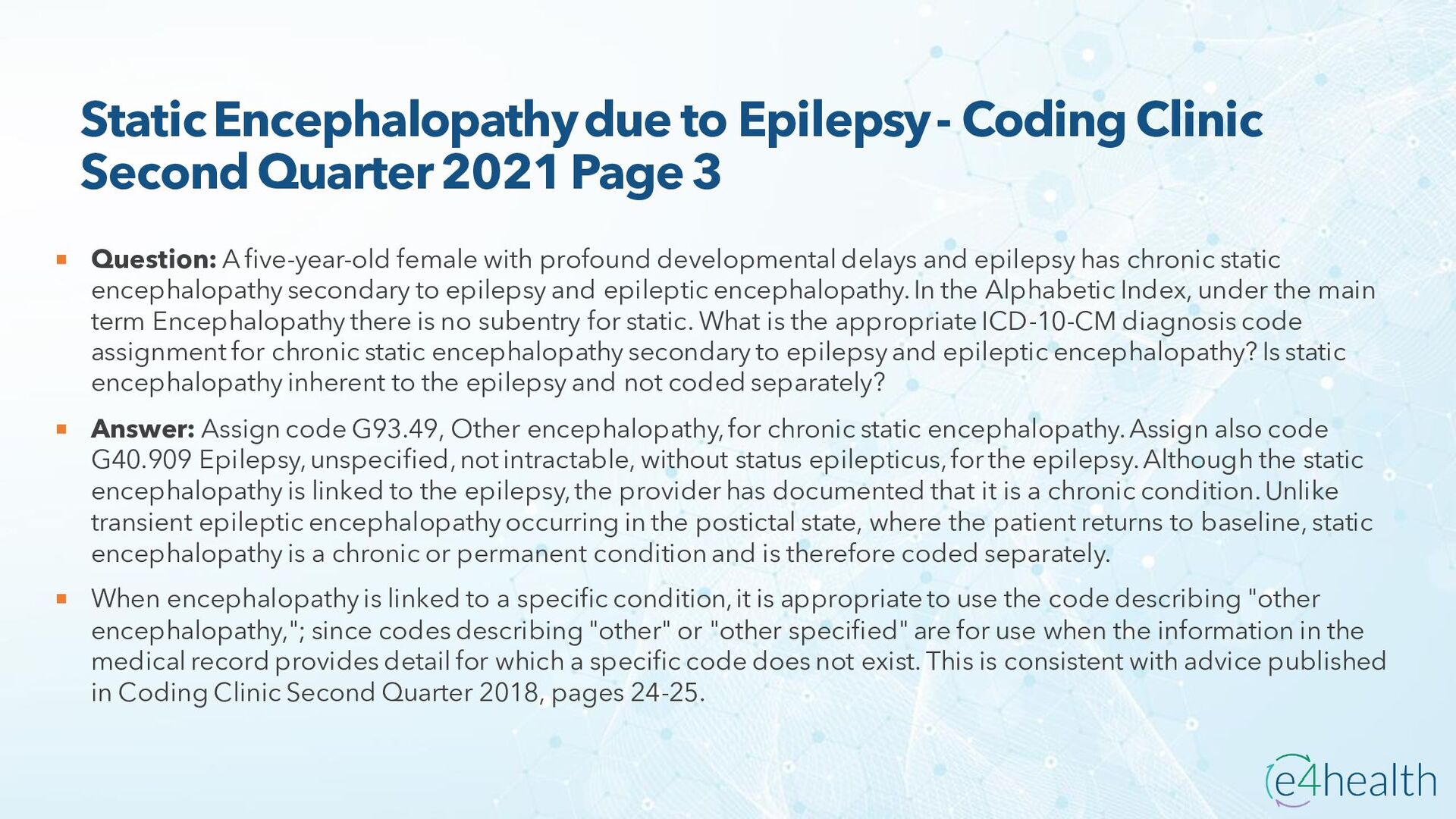
  67. Static Encephalopathy due to Epilepsy - Coding Clinic Second Quarter

    2021 Page 3  Question: A five-year-old female with profound developmental delays and epilepsy has chronic static encephalopathy secondary to epilepsy and epileptic encephalopathy. In the Alphabetic Index, under the main term Encephalopathy there is no subentry for static. What is the appropriate ICD-10-CM diagnosis code assignment for chronic static encephalopathy secondary to epilepsy and epileptic encephalopathy? Is static encephalopathy inherent to the epilepsy and not coded separately?  Answer: Assign code G93.49, Other encephalopathy, for chronic static encephalopathy. Assign also code G40.909 Epilepsy, unspecified, not intractable, without status epilepticus, for the epilepsy. Although the static encephalopathy is linked to the epilepsy, the provider has documented that it is a chronic condition. Unlike transient epileptic encephalopathy occurring in the postictal state, where the patient returns to baseline, static encephalopathy is a chronic or permanent condition and is therefore coded separately.  When encephalopathy is linked to a specific condition, it is appropriate to use the code describing "other encephalopathy,"; since codes describing "other" or "other specified" are for use when the information in the medical record provides detail for which a specific code does not exist. This is consistent with advice published in Coding Clinic Second Quarter 2018, pages 24-25.
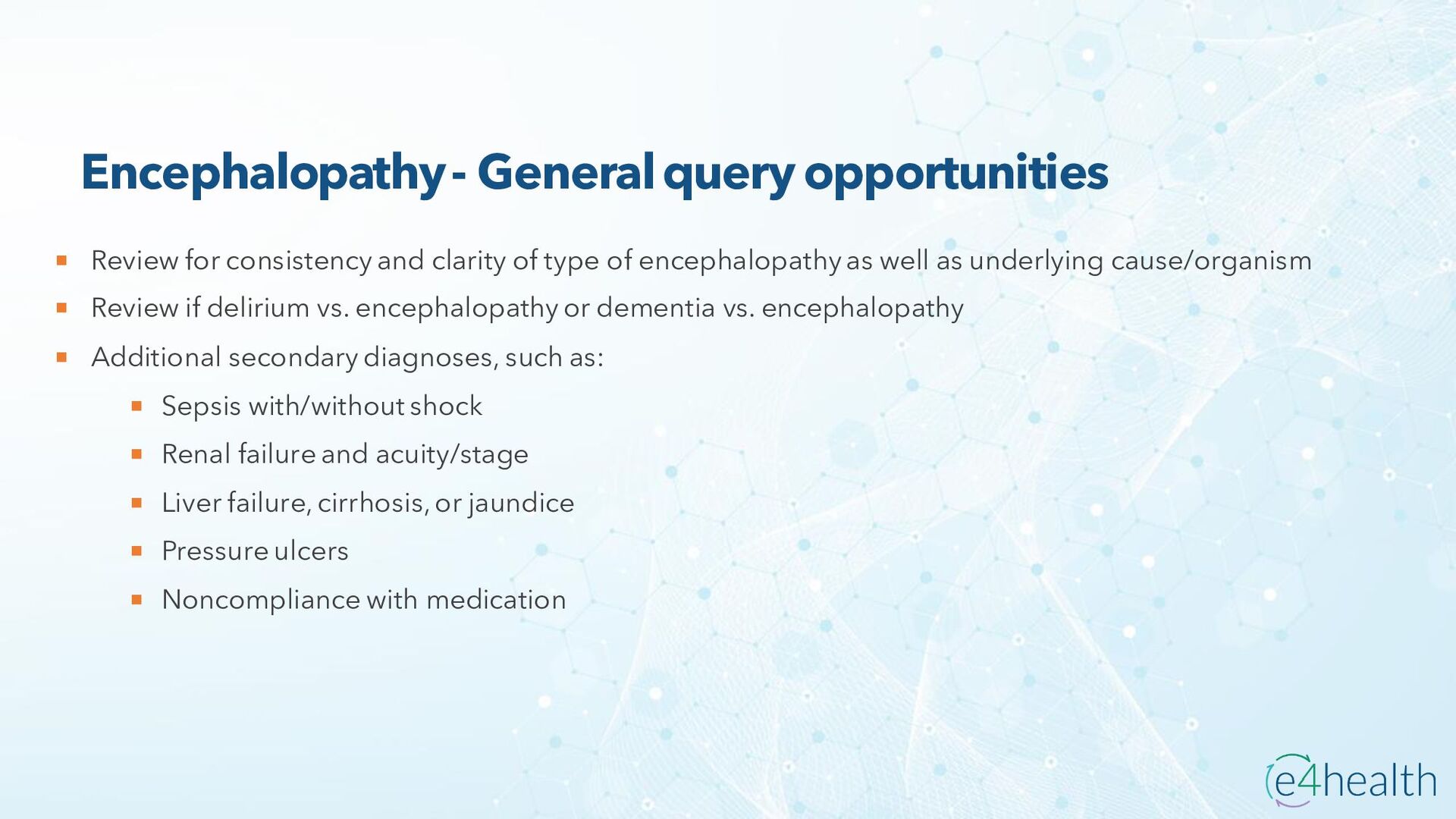
  68. Encephalopathy - General query opportunities  Review for consistency and

    clarity of type of encephalopathy as well as underlying cause/organism  Review if delirium vs. encephalopathy or dementia vs. encephalopathy  Additional secondary diagnoses, such as:  Sepsis with/without shock  Renal failure and acuity/stage  Liver failure, cirrhosis, or jaundice  Pressure ulcers  Noncompliance with medication
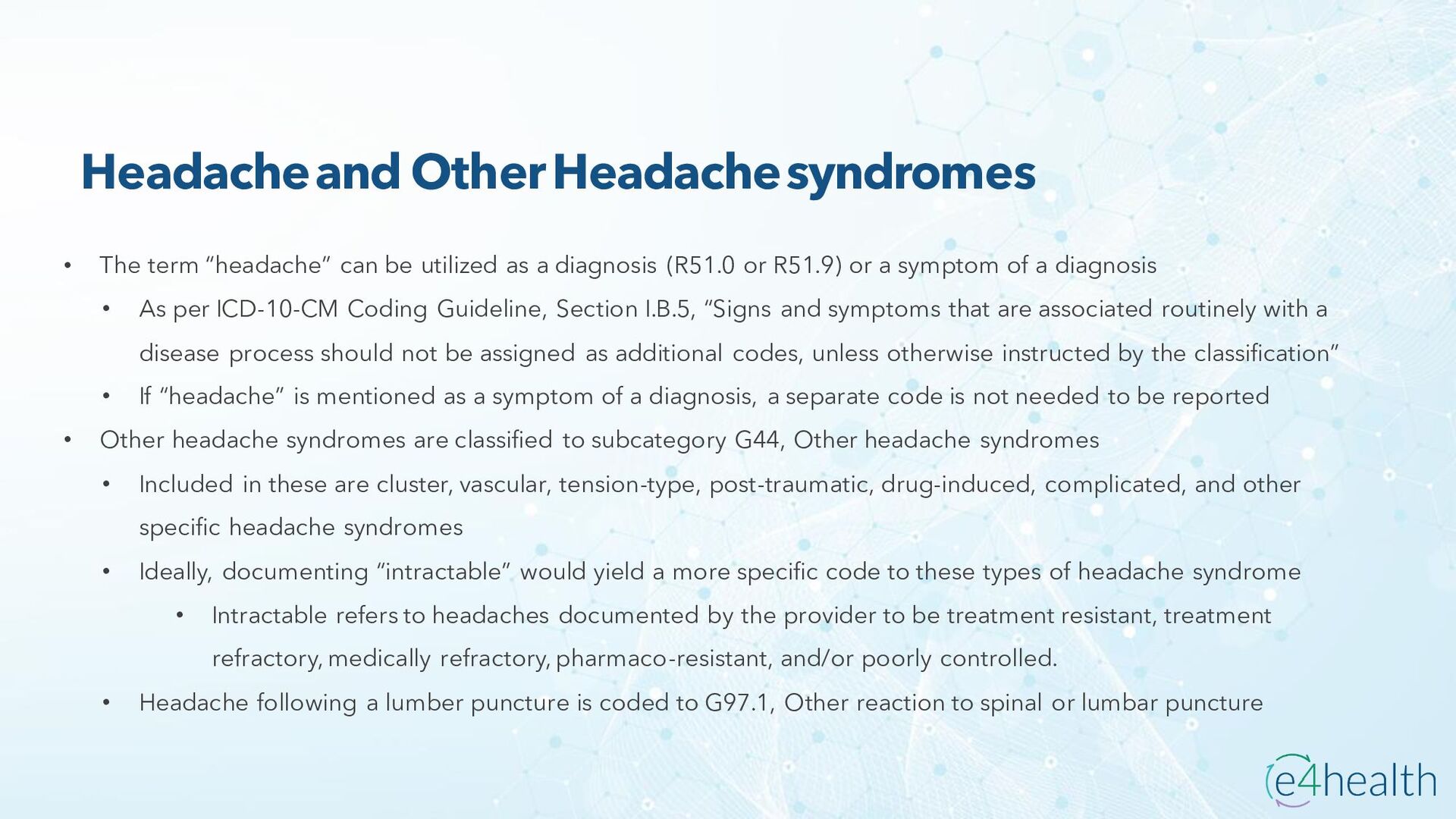
  69. Headache and Other Headache syndromes • The term “headache” can

    be utilized as a diagnosis (R51.0 or R51.9) or a symptom of a diagnosis • As per ICD-10-CM Coding Guideline, Section I.B.5, “Signs and symptoms that are associated routinely with a disease process should not be assigned as additional codes, unless otherwise instructed by the classification” • If “headache” is mentioned as a symptom of a diagnosis, a separate code is not needed to be reported • Other headache syndromes are classified to subcategory G44, Other headache syndromes • Included in these are cluster, vascular, tension-type, post-traumatic, drug-induced, complicated, and other specific headache syndromes • Ideally, documenting “intractable” would yield a more specific code to these types of headache syndrome • Intractable refers to headaches documented by the provider to be treatment resistant, treatment refractory, medically refractory, pharmaco-resistant, and/or poorly controlled. • Headache following a lumber puncture is coded to G97.1, Other reaction to spinal or lumbar puncture
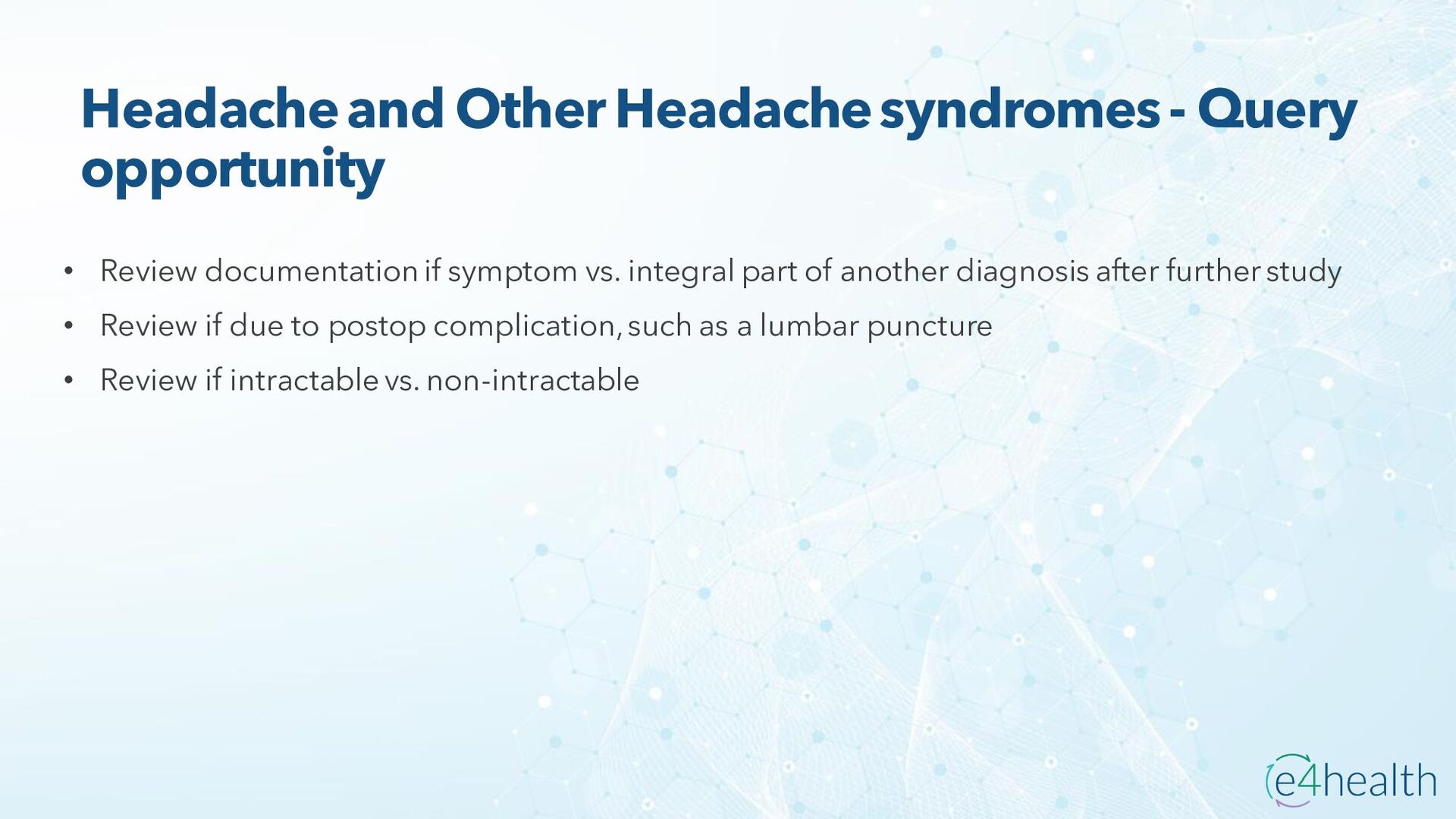
  70. Headache and Other Headache syndromes - Query opportunity • Review

    documentation if symptom vs. integral part of another diagnosis after further study • Review if due to postop complication, such as a lumbar puncture • Review if intractable vs. non-intractable
  71. Migraines • A neurological syndrome with symptoms of severe headaches,

    nausea and vomiting that can last 4 to 72 hours • Can have an “aura,” which is an unusual visual, olfactory, or other sensory experiences, preceding a migraine • Classified to subcategory G43, Migraine • Ideally, documenting “intractable” would yield a more specific code for migraines • Intractable refers to headaches documented by the provider to be treatment resistant, treatment refractory, medically refractory, pharmaco-resistant, and/or poorly controlled. • Documentation of status migrainosus, which refers to a severe migraine attack that lasts for more than 72 hours, is also needed for a more specific code Query opportunity: • Review if with or without aura • Review if intractable vs. non-intractable • Review if with or without status migrainosus
  72. Epilepsy • A disorder of cerebral function characterized by recurrent

    seizures that can occur either idiopathically or due to a number of diseases, such as such as brain tumor, cerebrovascular accident, alcoholism, electrolyte imbalance, and febrile conditions • Should not be assumed, that any diagnostic statement describing convulsions or seizures should be coded to epilepsy • A diagnosis of epilepsy can have serious legal and personal implications for the patient, such as the inability to obtain a driver’s license, a code for epilepsy must not be assigned unless the physician clearly identifies the condition as such in the diagnostic statement • When the physician mentions a history of seizure in the workup but does not include any mention of seizures in the diagnostic statement, no code should be assigned unless clear documentation indicates that the criteria for reporting the condition have been met and the physician agrees that a code should be added
  73. Epilepsy, Continued • ICD-10-CM provides a fifth-character subclassification for category

    G40, Epilepsy and recurrent seizures, that permits identification of epilepsy as intractable when so described by the physician • Intractable refers to headaches documented by the provider to be treatment resistant, treatment refractory, medically refractory, pharmaco-resistant, and/or poorly controlled • Coding professionals should not assume that the condition is intractable from general statements in the medical record • Please note that the ICD-10-CM classification assigns seizure disorder and recurrent seizures to epilepsy, code G40.909 • The main term Seizure(s) is indexed to R56.9, which reports a symptom code • In addition, a sixth character for G40 is used to identify whether status epilepticus is present
  74. Epilepsy - Query opportunity • Review if clinically indicative of

    epilepsy vs. a single convulsion/seizure • Review type of epilepsy • Review if intractable vs. non-intractable • Review if with or without status epilepticus
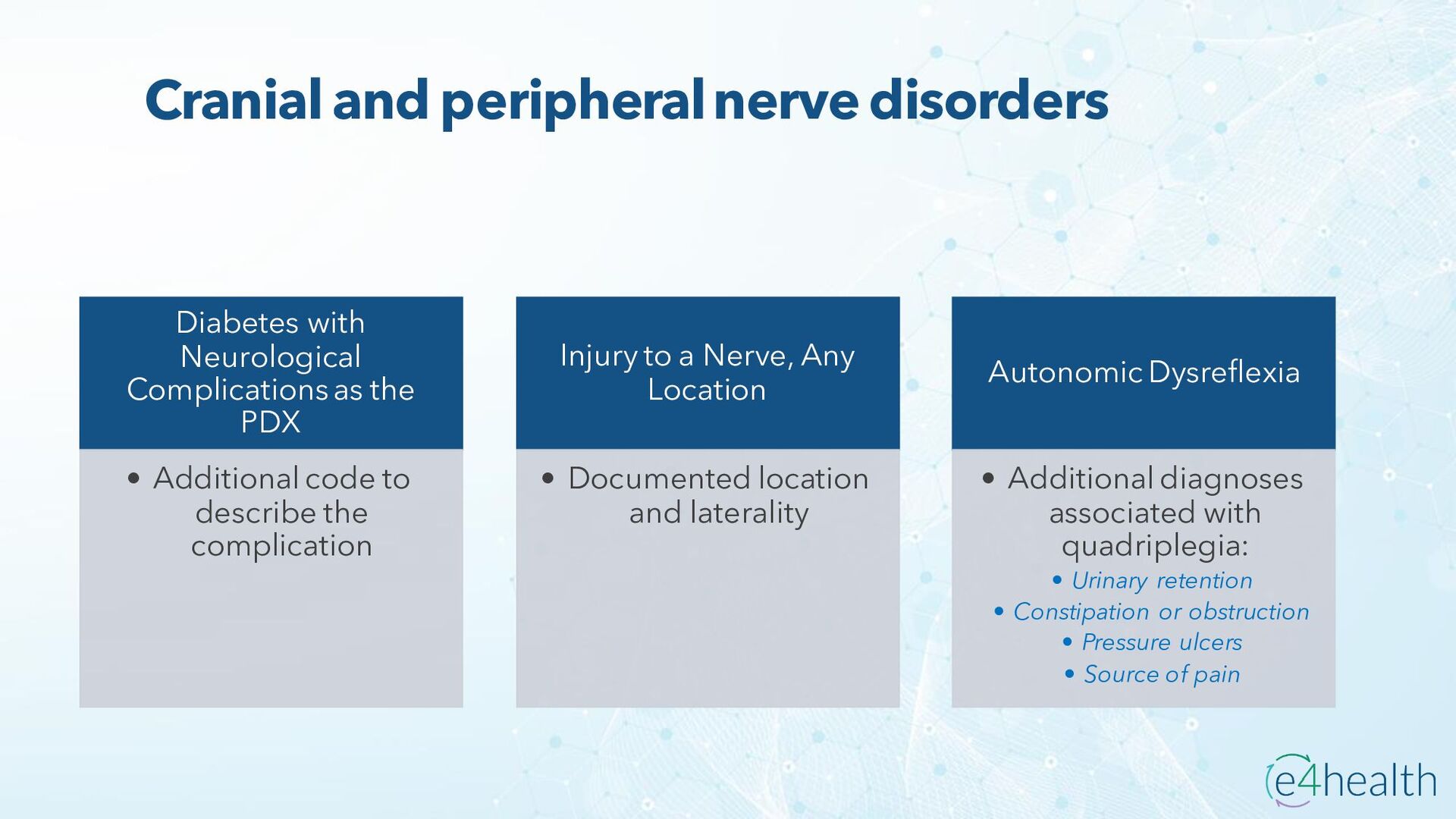
  75. Cranial and peripheral nerve disorders Diabetes with Neurological Complications as

    the PDX • Additional code to describe the complication Injury to a Nerve, Any Location • Documented location and laterality Autonomic Dysreflexia • Additional diagnoses associated with quadriplegia: • Urinary retention • Constipation or obstruction • Pressure ulcers • Source of pain
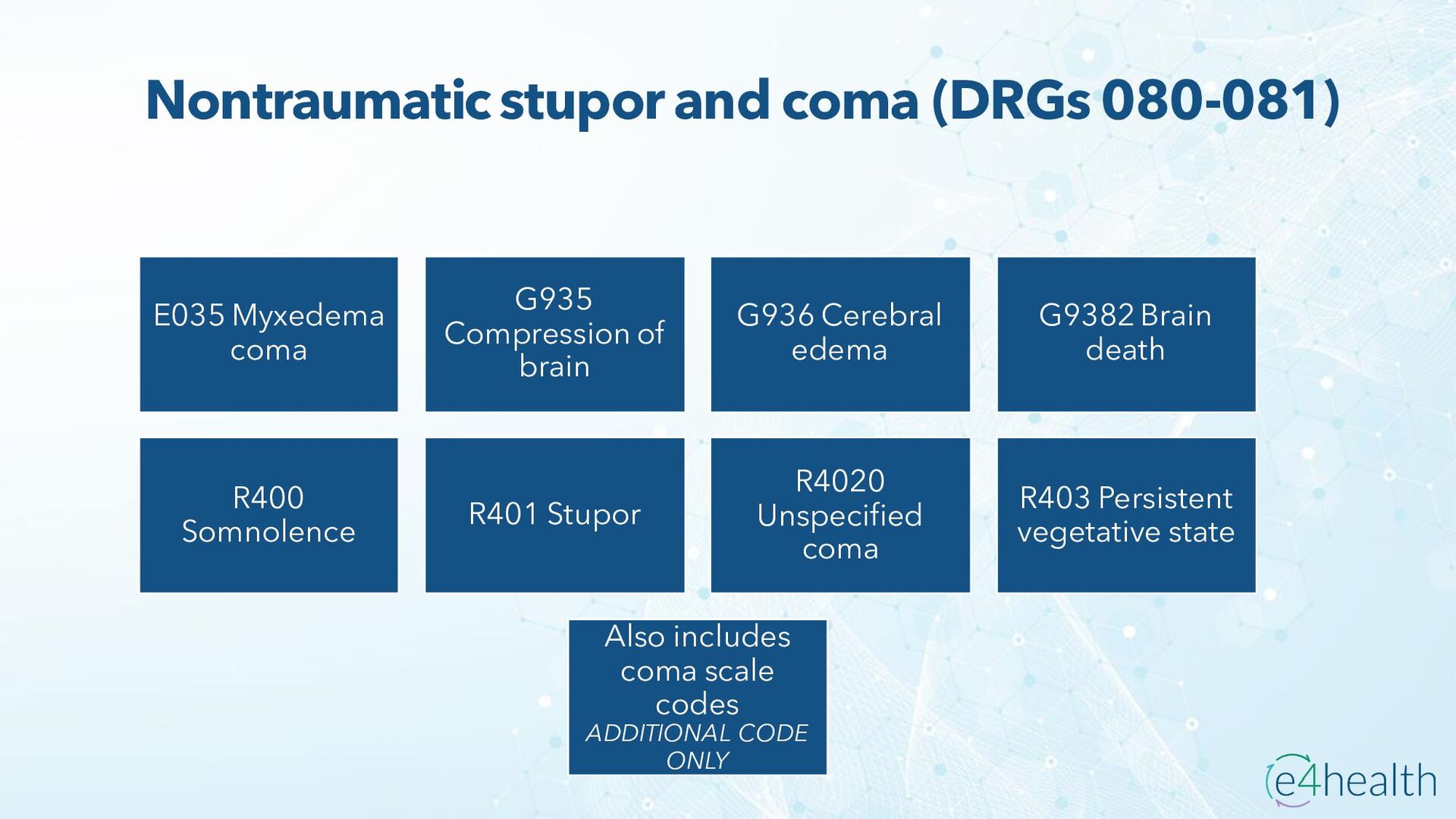
  76. Nontraumatic stupor and coma (DRGs 080-081) E035 Myxedema coma G935

    Compression of brain G936 Cerebral edema G9382 Brain death R400 Somnolence R401 Stupor R4020 Unspecified coma R403 Persistent vegetative state Also includes coma scale codes ADDITIONAL CODE ONLY
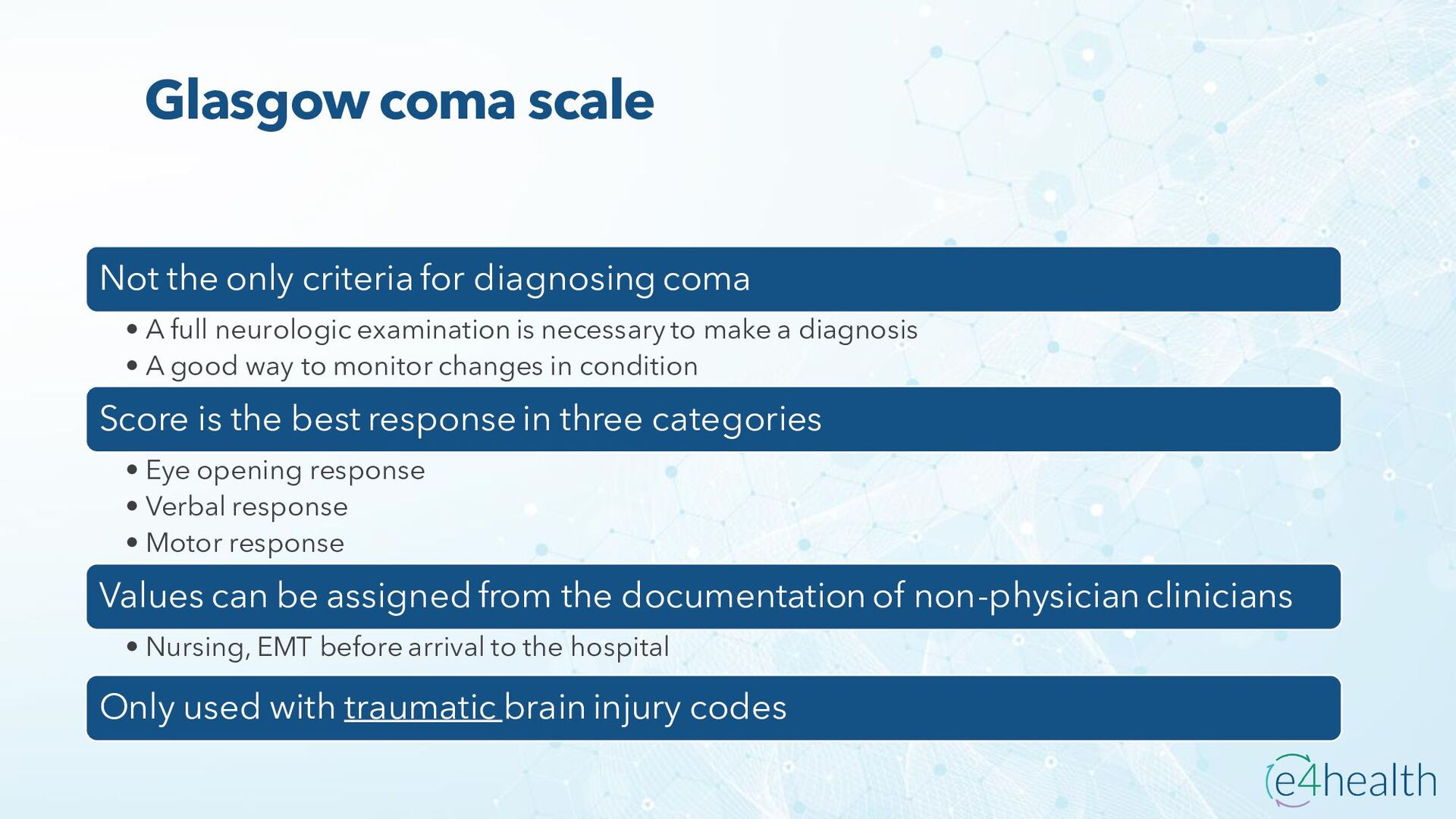
  77. Glasgow coma scale Not the only criteria for diagnosing coma

    • A full neurologic examination is necessary to make a diagnosis • A good way to monitor changes in condition Score is the best response in three categories • Eye opening response • Verbal response • Motor response Values can be assigned from the documentation of non-physician clinicians • Nursing, EMT before arrival to the hospital Only used with traumatic brain injury codes
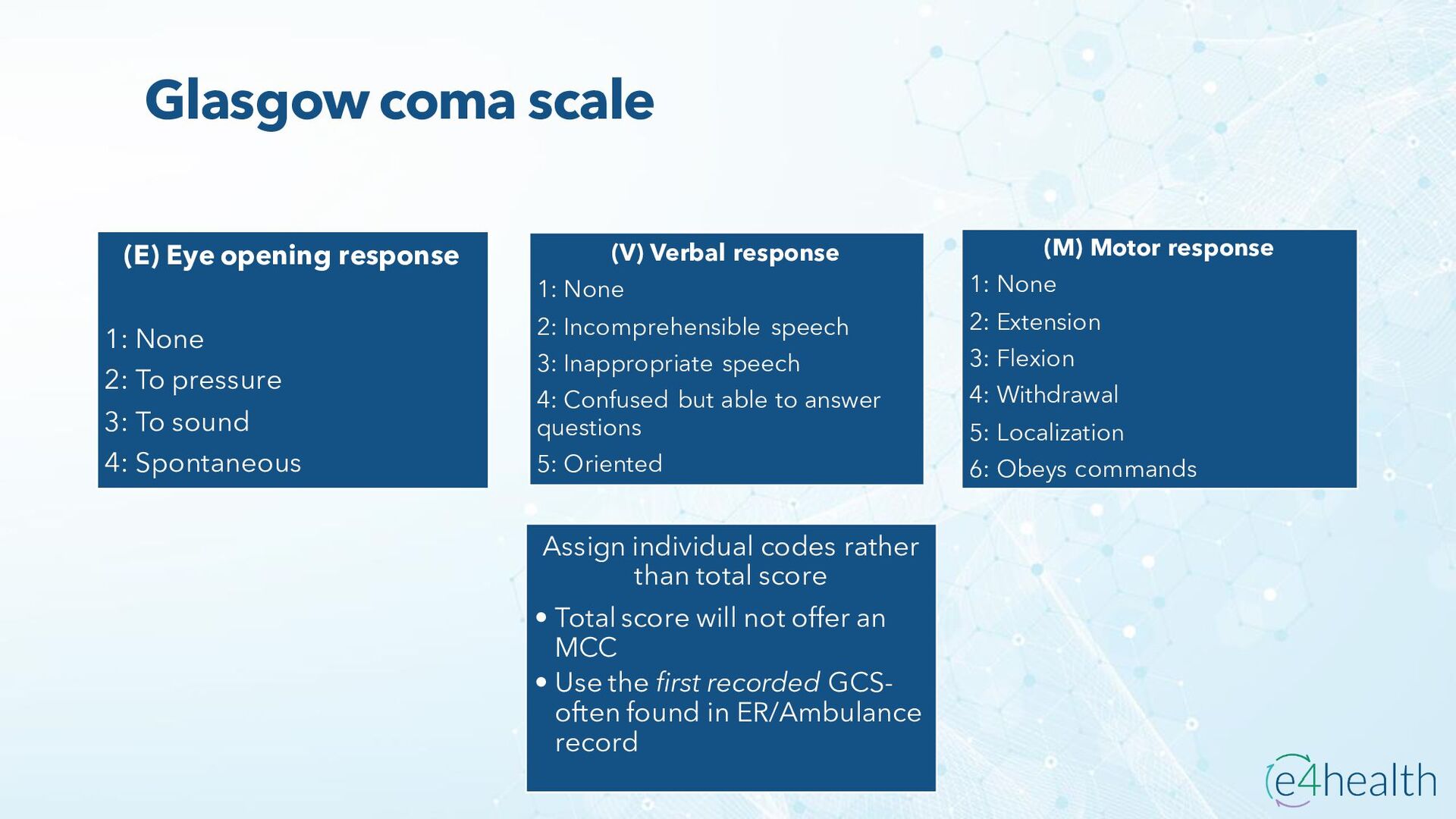
  78. Glasgow coma scale (E) Eye opening response 1: None 2:

    To pressure 3: To sound 4: Spontaneous (V) Verbal response 1: None 2: Incomprehensible speech 3: Inappropriate speech 4: Confused but able to answer questions 5: Oriented (M) Motor response 1: None 2: Extension 3: Flexion 4: Withdrawal 5: Localization 6: Obeys commands Assign individual codes rather than total score • Total score will not offer an MCC • Use the first recorded GCS- often found in ER/Ambulance record
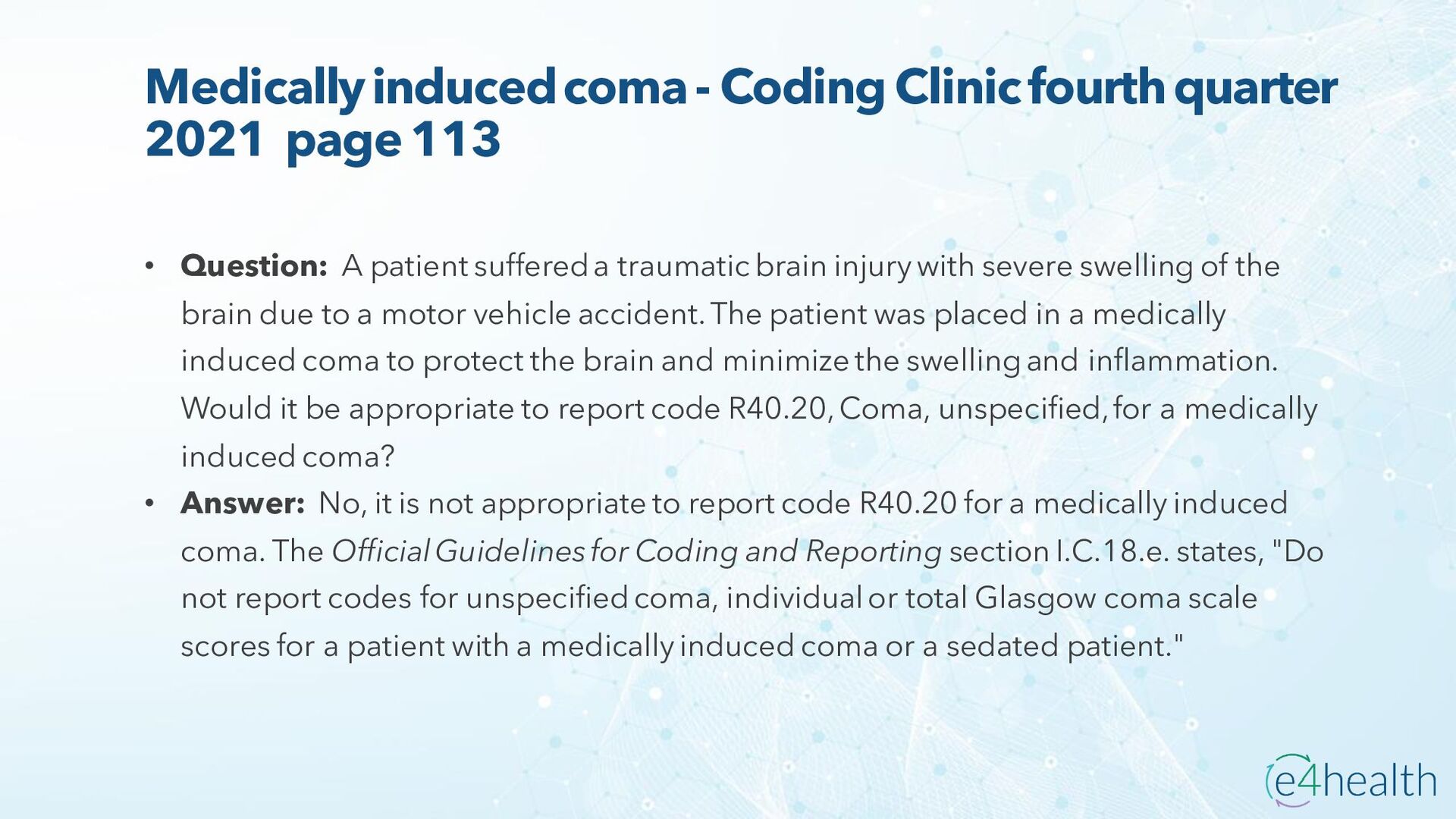
  79. Medically induced coma - Coding Clinic fourth quarter 2021 page

    113 • Question: A patient suffered a traumatic brain injury with severe swelling of the brain due to a motor vehicle accident. The patient was placed in a medically induced coma to protect the brain and minimize the swelling and inflammation. Would it be appropriate to report code R40.20, Coma, unspecified, for a medically induced coma? • Answer: No, it is not appropriate to report code R40.20 for a medically induced coma. The Official Guidelines for Coding and Reporting section I.C.18.e. states, "Do not report codes for unspecified coma, individual or total Glasgow coma scale scores for a patient with a medically induced coma or a sedated patient."
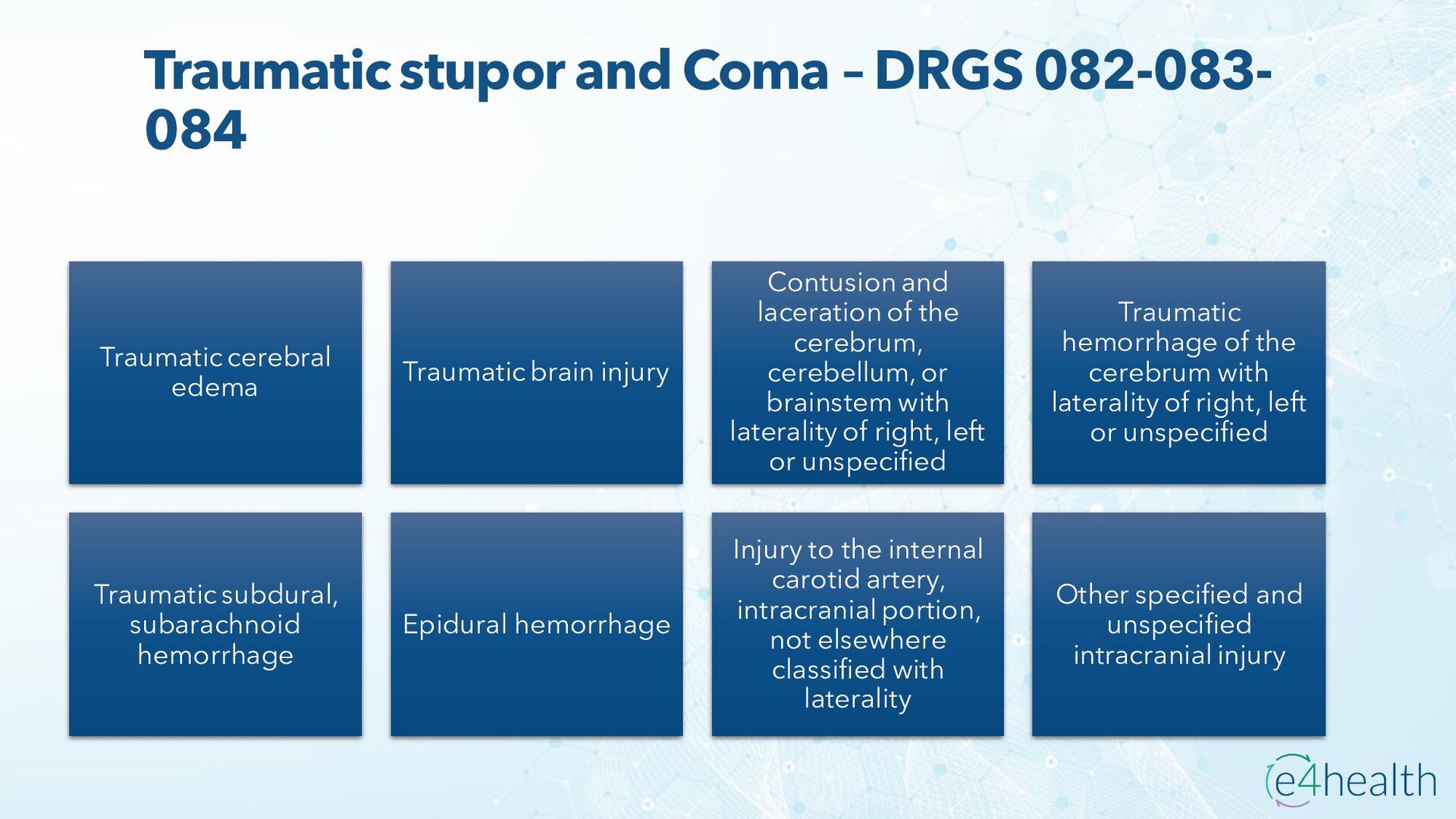
  80. Traumatic stupor and Coma – DRGS 082-083- 084 Traumatic cerebral

    edema Traumatic brain injury Contusion and laceration of the cerebrum, cerebellum, or brainstem with laterality of right, left or unspecified Traumatic hemorrhage of the cerebrum with laterality of right, left or unspecified Traumatic subdural, subarachnoid hemorrhage Epidural hemorrhage Injury to the internal carotid artery, intracranial portion, not elsewhere classified with laterality Other specified and unspecified intracranial injury
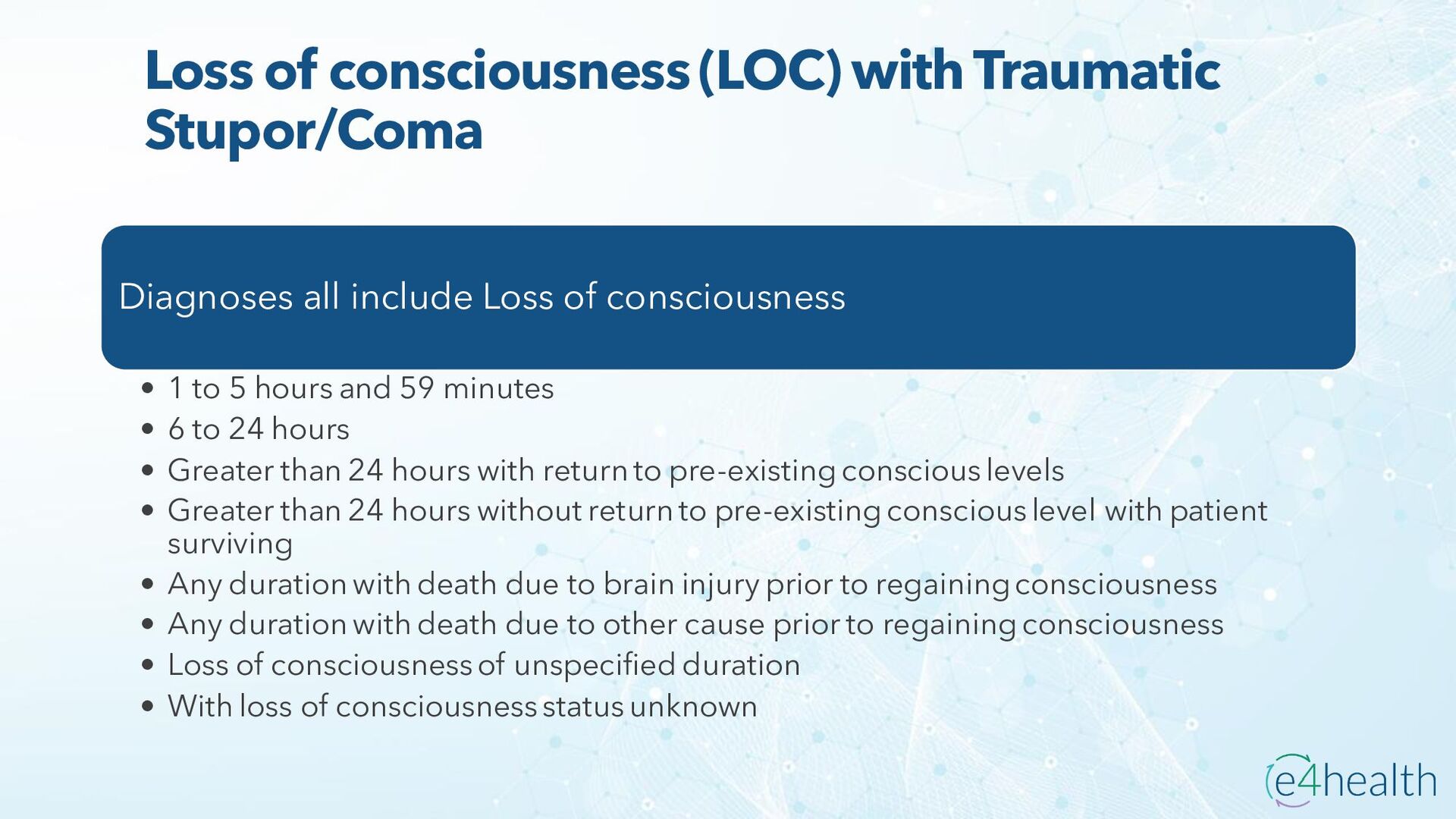
  81. Loss of consciousness (LOC) with Traumatic Stupor/Coma Diagnoses all include

    Loss of consciousness • 1 to 5 hours and 59 minutes • 6 to 24 hours • Greater than 24 hours with return to pre-existing conscious levels • Greater than 24 hours without return to pre-existing conscious level with patient surviving • Any duration with death due to brain injury prior to regaining consciousness • Any duration with death due to other cause prior to regaining consciousness • Loss of consciousness of unspecified duration • With loss of consciousness status unknown
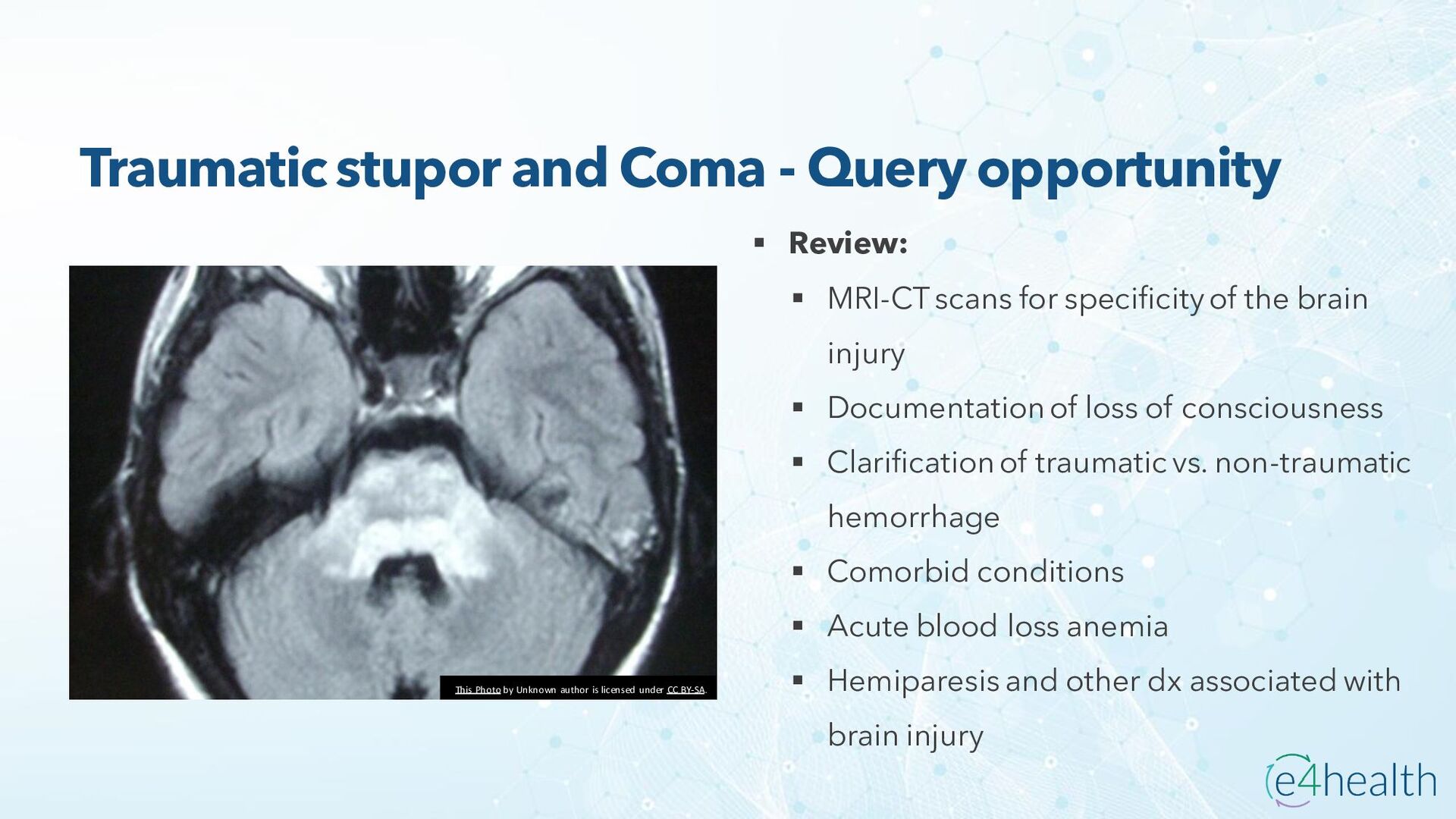
  82. Traumatic stupor and Coma - Query opportunity ▪ Review: ▪

    MRI-CT scans for specificity of the brain injury ▪ Documentation of loss of consciousness ▪ Clarification of traumatic vs. non-traumatic hemorrhage ▪ Comorbid conditions ▪ Acute blood loss anemia ▪ Hemiparesis and other dx associated with brain injury This Photo by Unknown author is licensed under CC BY-SA.
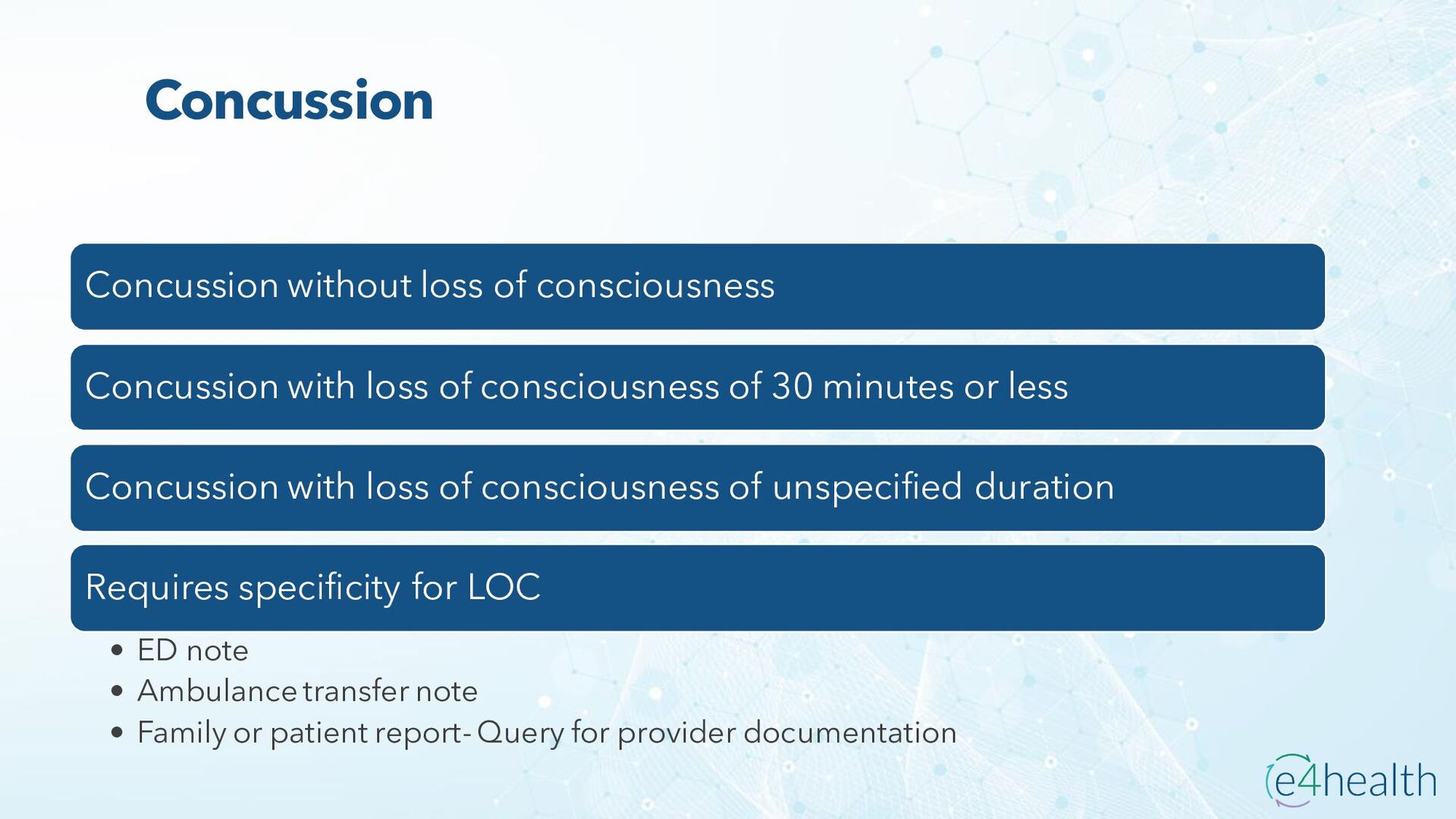
  83. Concussion Concussion without loss of consciousness Concussion with loss of

    consciousness of 30 minutes or less Concussion with loss of consciousness of unspecified duration Requires specificity for LOC • ED note • Ambulance transfer note • Family or patient report- Query for provider documentation
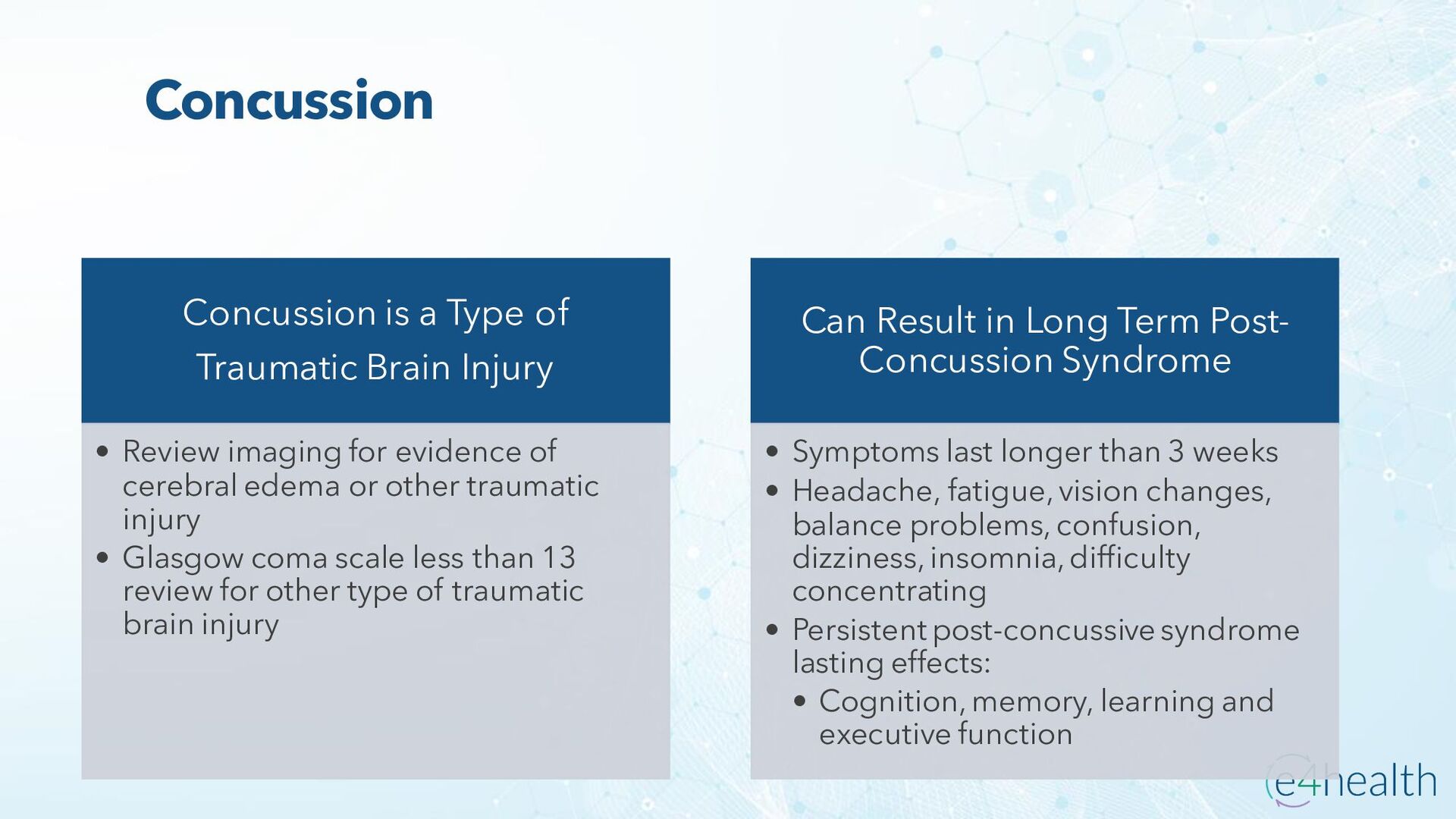
  84. Concussion Concussion is a Type of Traumatic Brain Injury •

    Review imaging for evidence of cerebral edema or other traumatic injury • Glasgow coma scale less than 13 review for other type of traumatic brain injury Can Result in Long Term Post- Concussion Syndrome • Symptoms last longer than 3 weeks • Headache, fatigue, vision changes, balance problems, confusion, dizziness, insomnia, difficulty concentrating • Persistent post-concussive syndrome lasting effects: • Cognition, memory, learning and executive function
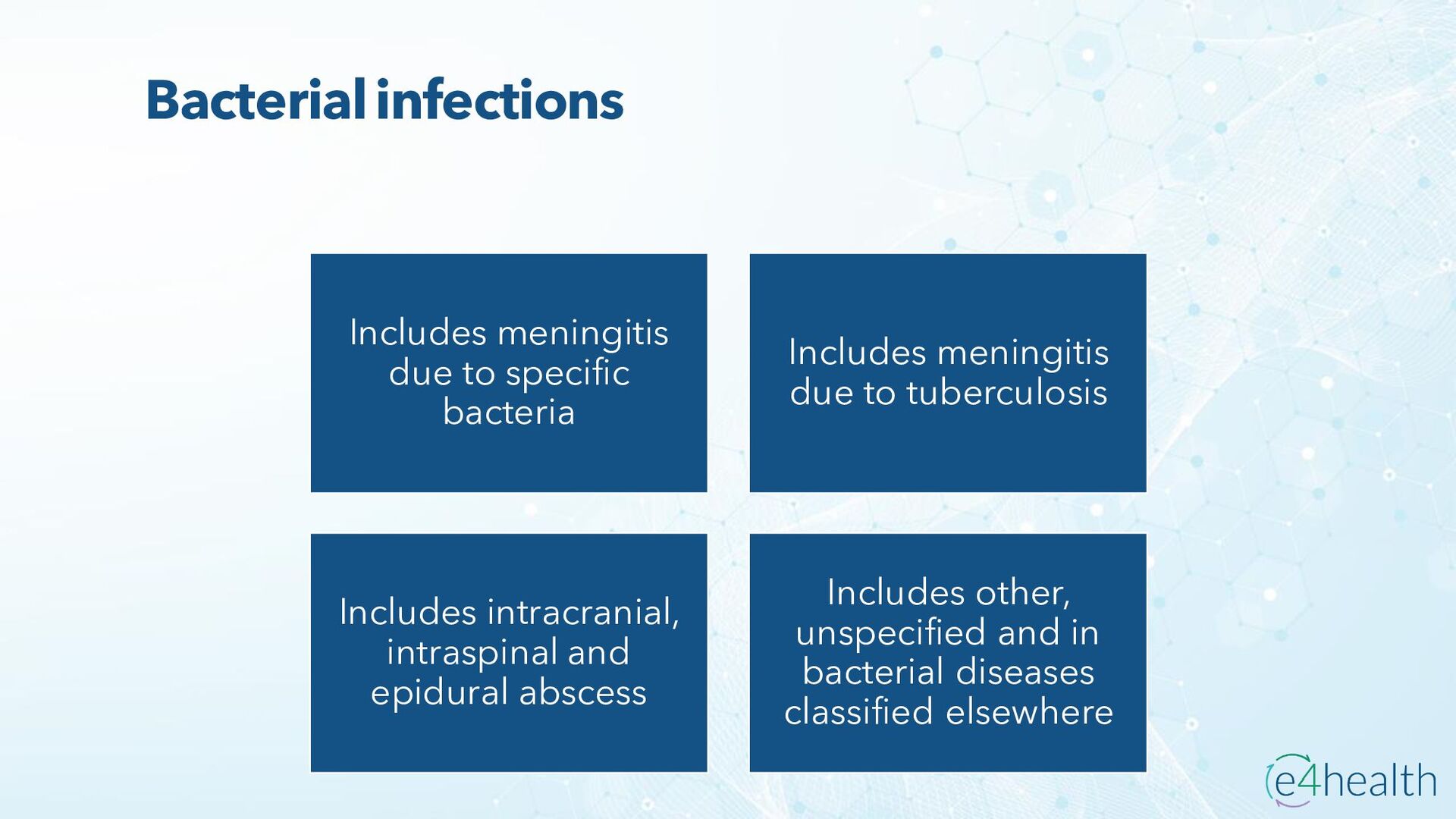
  85. Bacterial infections Includes meningitis due to specific bacteria Includes meningitis

    due to tuberculosis Includes intracranial, intraspinal and epidural abscess Includes other, unspecified and in bacterial diseases classified elsewhere
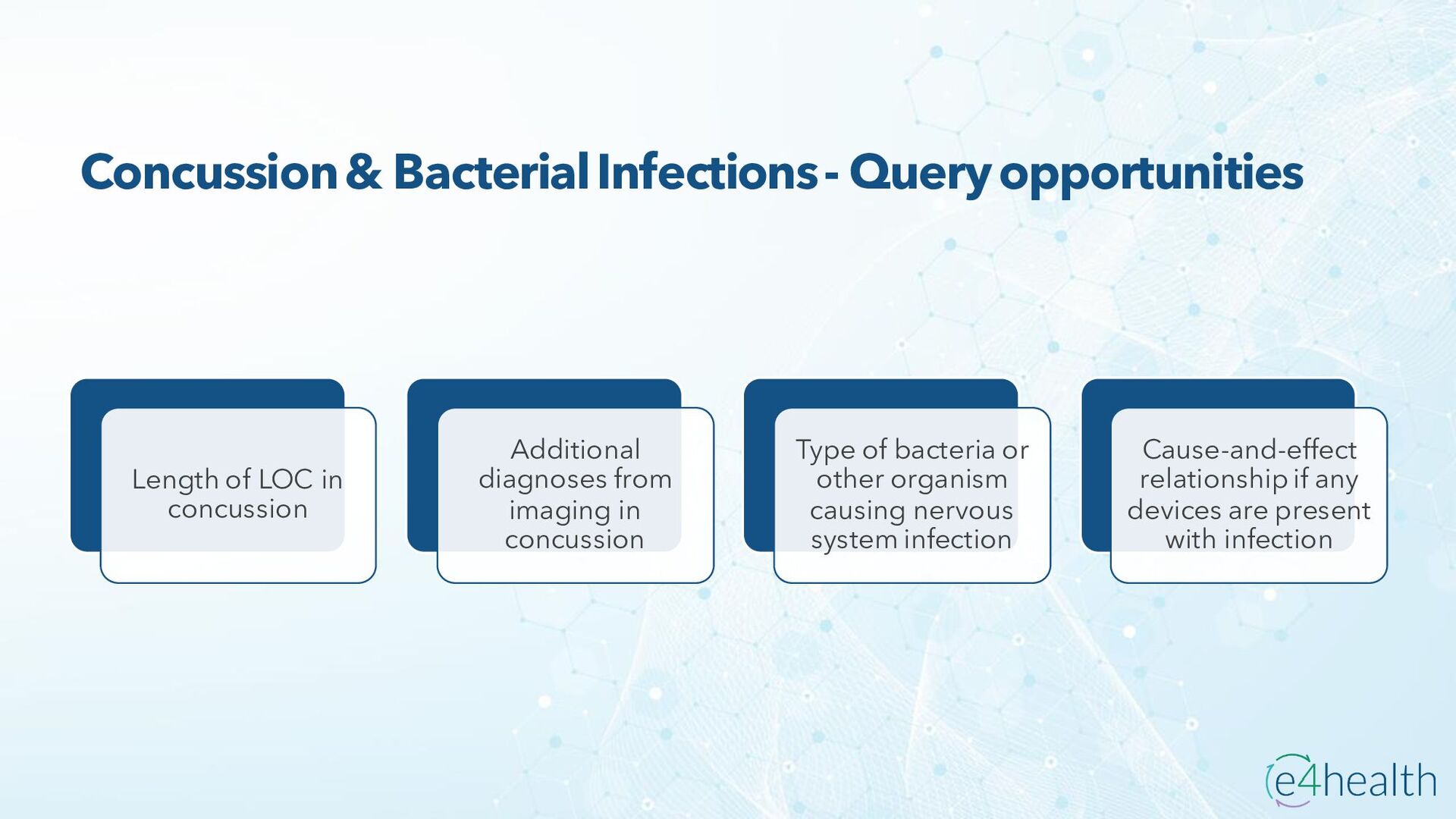
  86. Concussion & Bacterial Infections - Query opportunities Length of LOC

    in concussion Additional diagnoses from imaging in concussion Type of bacteria or other organism causing nervous system infection Cause-and-effect relationship if any devices are present with infection
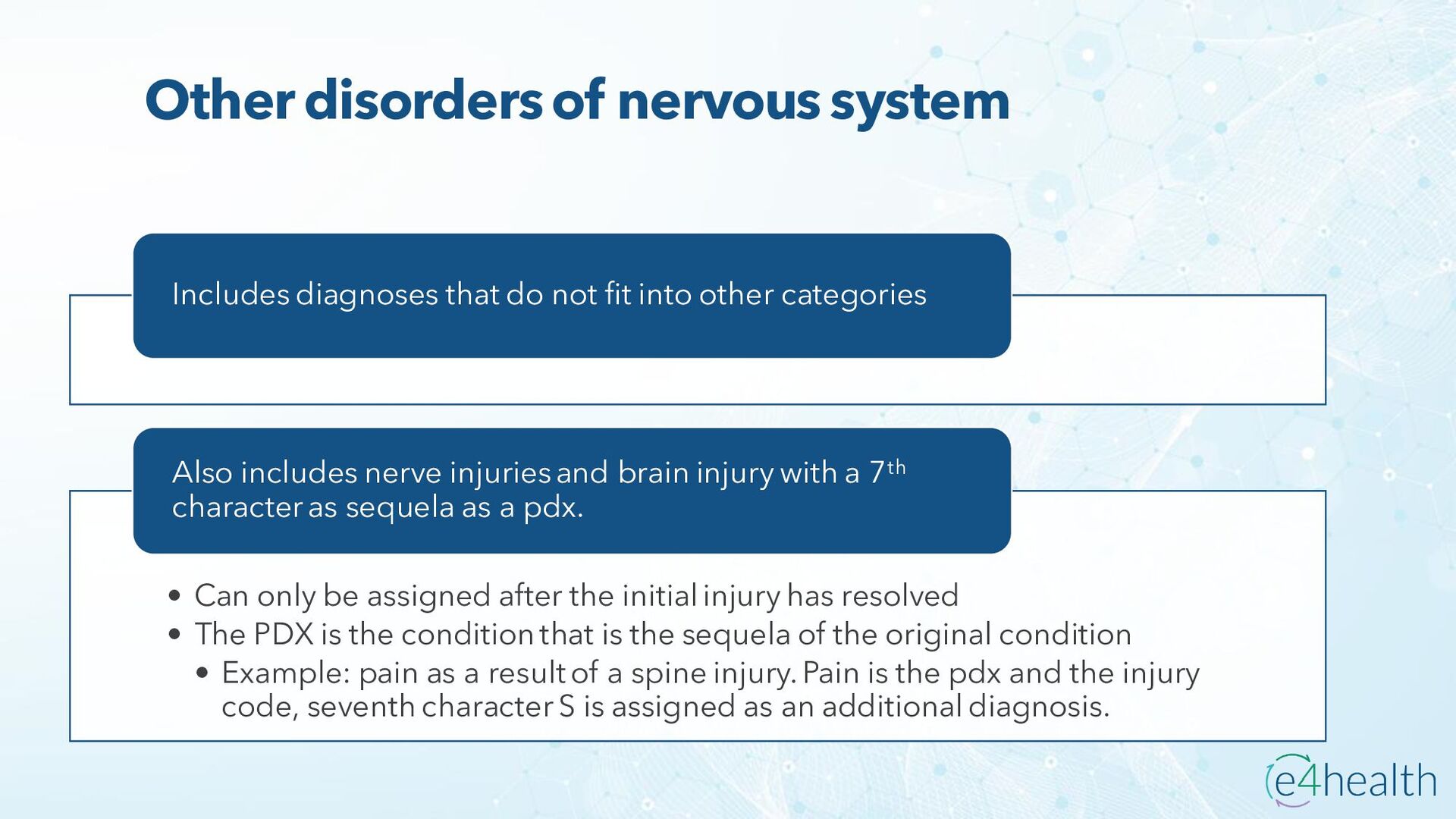
  87. Other disorders of nervous system Includes diagnoses that do not

    fit into other categories • Can only be assigned after the initial injury has resolved • The PDX is the condition that is the sequela of the original condition • Example: pain as a result of a spine injury. Pain is the pdx and the injury code, seventh character S is assigned as an additional diagnosis. Also includes nerve injuries and brain injury with a 7th character as sequela as a pdx.
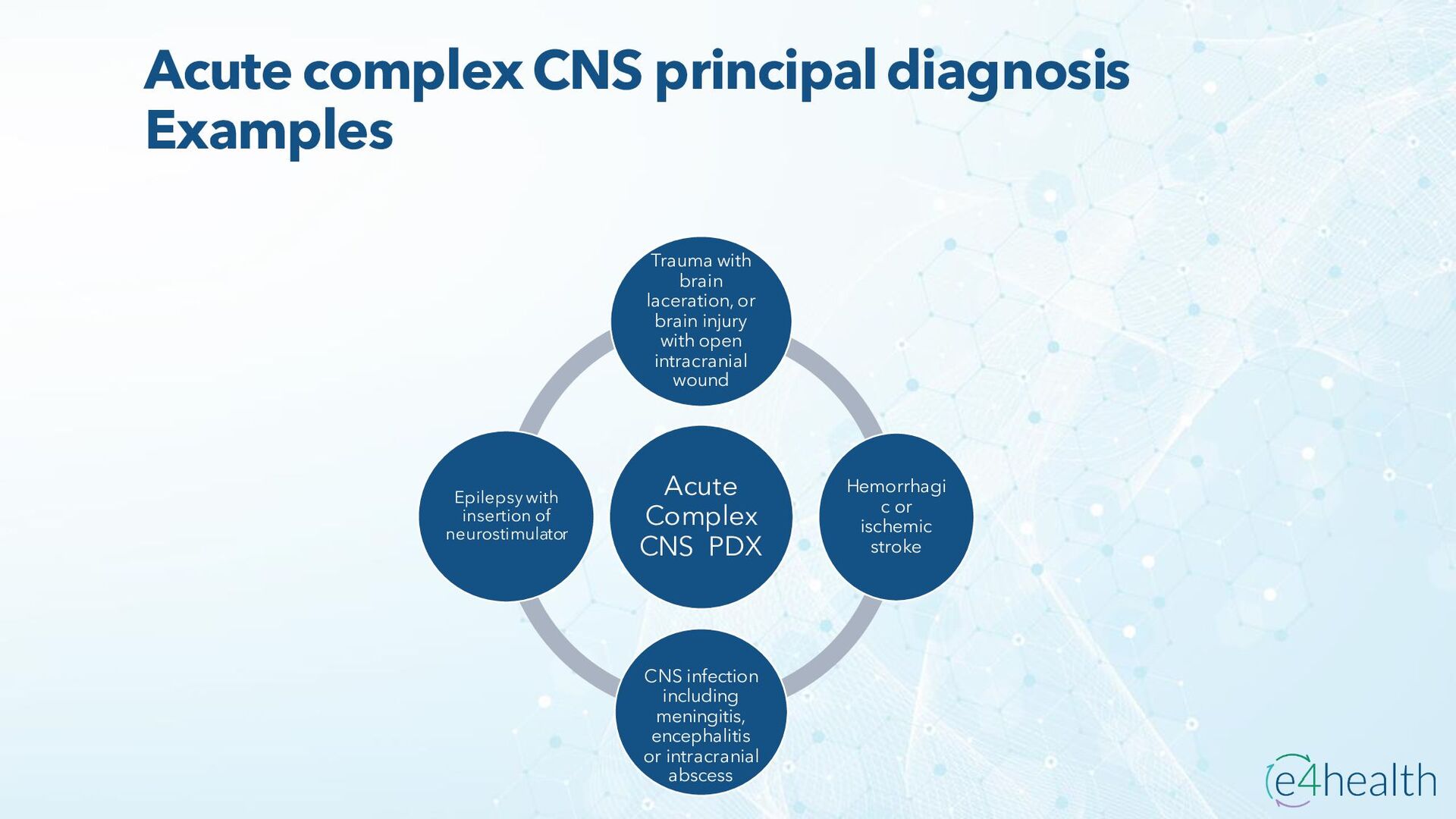
  88. Acute complex CNS principal diagnosis Examples Acute Complex CNS PDX

    Trauma with brain laceration, or brain injury with open intracranial wound Hemorrhagi c or ischemic stroke CNS infection including meningitis, encephalitis or intracranial abscess Epilepsy with insertion of neurostimulator
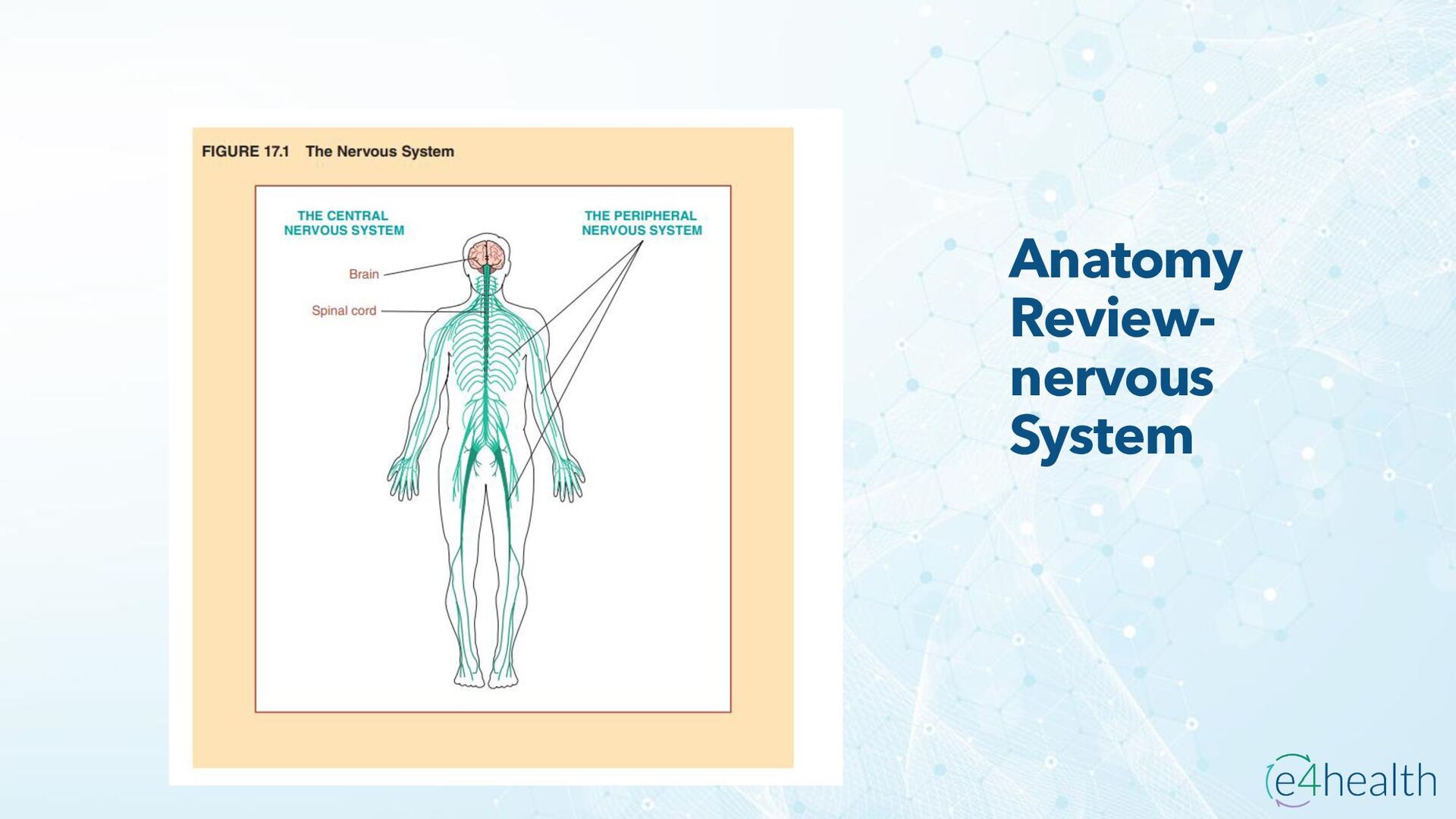
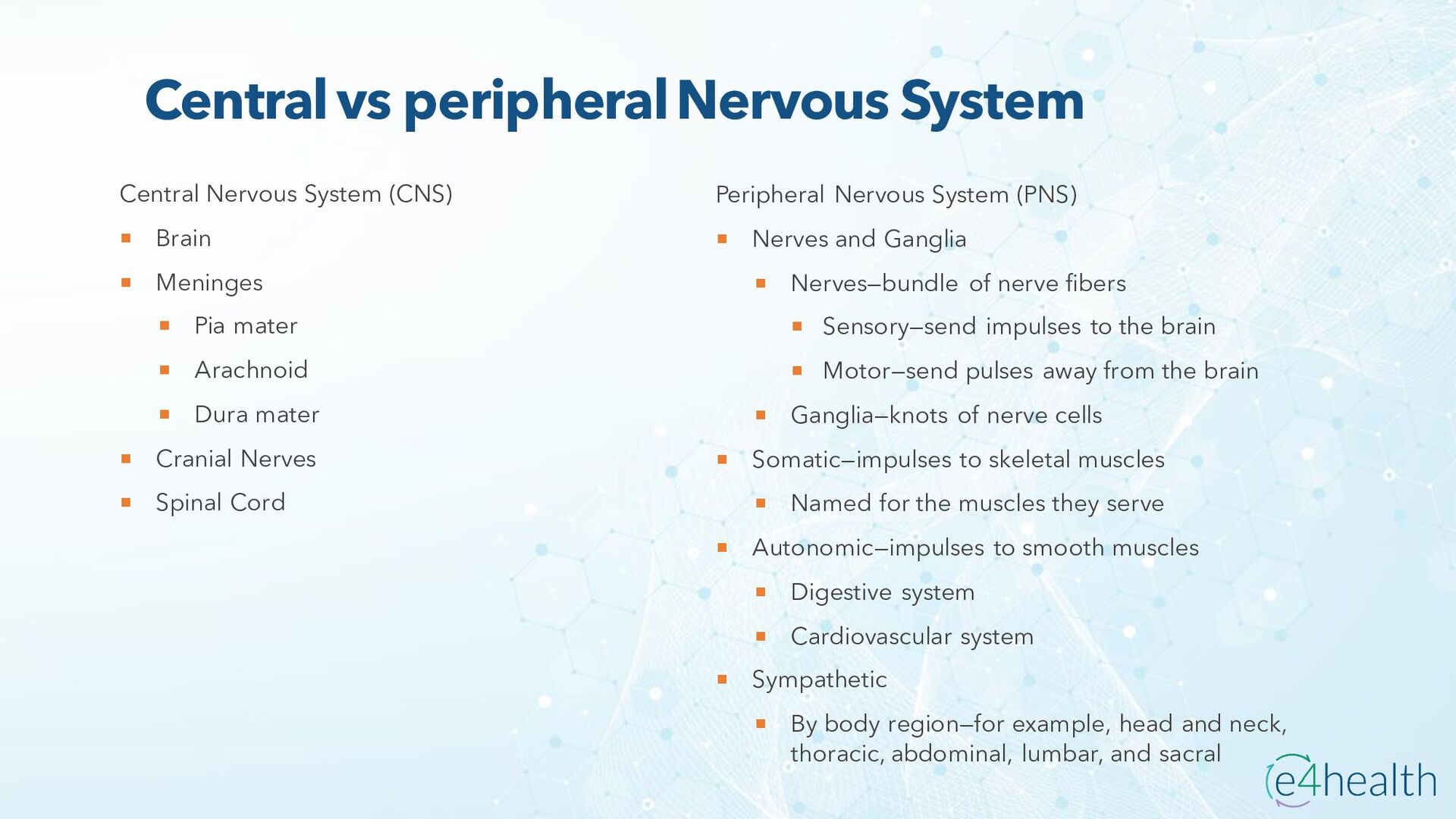
  89. Central vs peripheral Nervous System Peripheral Nervous System (PNS) 

    Nerves and Ganglia  Nerves—bundle of nerve fibers  Sensory—send impulses to the brain  Motor—send pulses away from the brain  Ganglia—knots of nerve cells  Somatic—impulses to skeletal muscles  Named for the muscles they serve  Autonomic—impulses to smooth muscles  Digestive system  Cardiovascular system  Sympathetic  By body region—for example, head and neck, thoracic, abdominal, lumbar, and sacral Central Nervous System (CNS)  Brain  Meninges  Pia mater  Arachnoid  Dura mater  Cranial Nerves  Spinal Cord
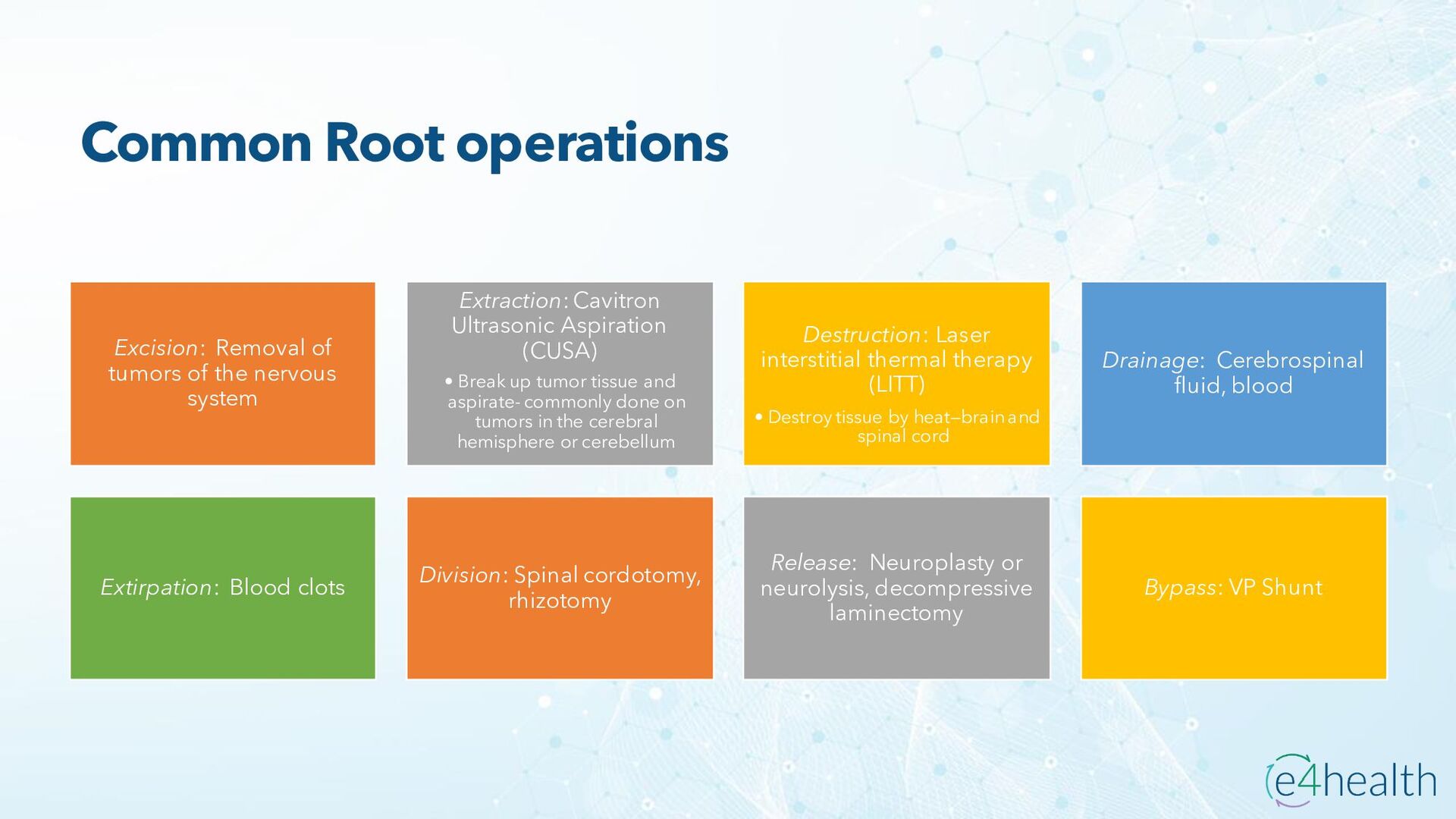
  90. Common Root operations Excision: Removal of tumors of the nervous

    system Extraction: Cavitron Ultrasonic Aspiration (CUSA) • Break up tumor tissue and aspirate- commonly done on tumors in the cerebral hemisphere or cerebellum Destruction: Laser interstitial thermal therapy (LITT) • Destroy tissue by heat—brain and spinal cord Drainage: Cerebrospinal fluid, blood Extirpation: Blood clots Division: Spinal cordotomy, rhizotomy Release: Neuroplasty or neurolysis, decompressive laminectomy Bypass: VP Shunt
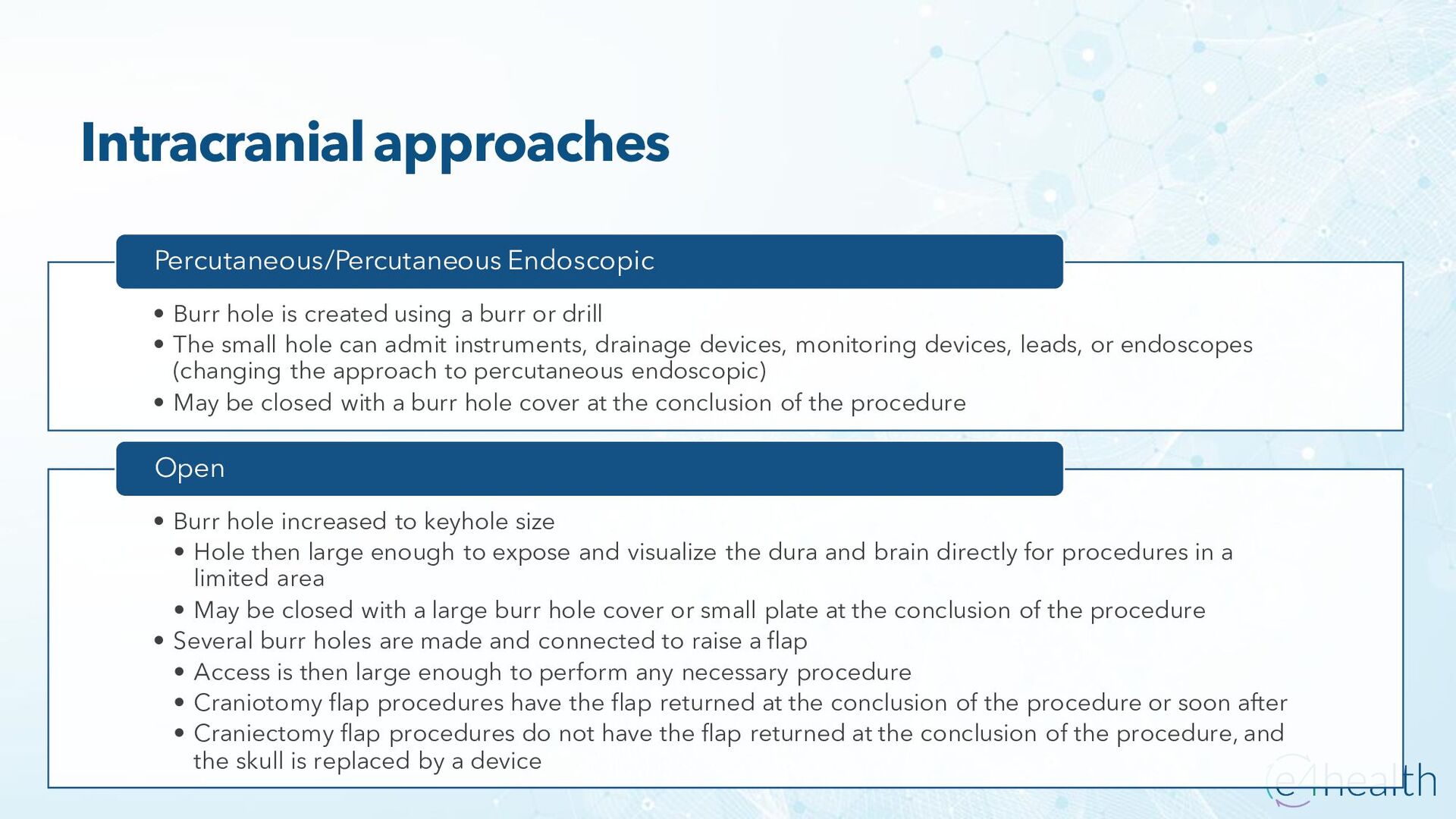
  91. Intracranial approaches • Burr hole is created using a burr

    or drill • The small hole can admit instruments, drainage devices, monitoring devices, leads, or endoscopes (changing the approach to percutaneous endoscopic) • May be closed with a burr hole cover at the conclusion of the procedure Percutaneous/Percutaneous Endoscopic • Burr hole increased to keyhole size • Hole then large enough to expose and visualize the dura and brain directly for procedures in a limited area • May be closed with a large burr hole cover or small plate at the conclusion of the procedure • Several burr holes are made and connected to raise a flap • Access is then large enough to perform any necessary procedure • Craniotomy flap procedures have the flap returned at the conclusion of the procedure or soon after • Craniectomy flap procedures do not have the flap returned at the conclusion of the procedure, and the skull is replaced by a device Open
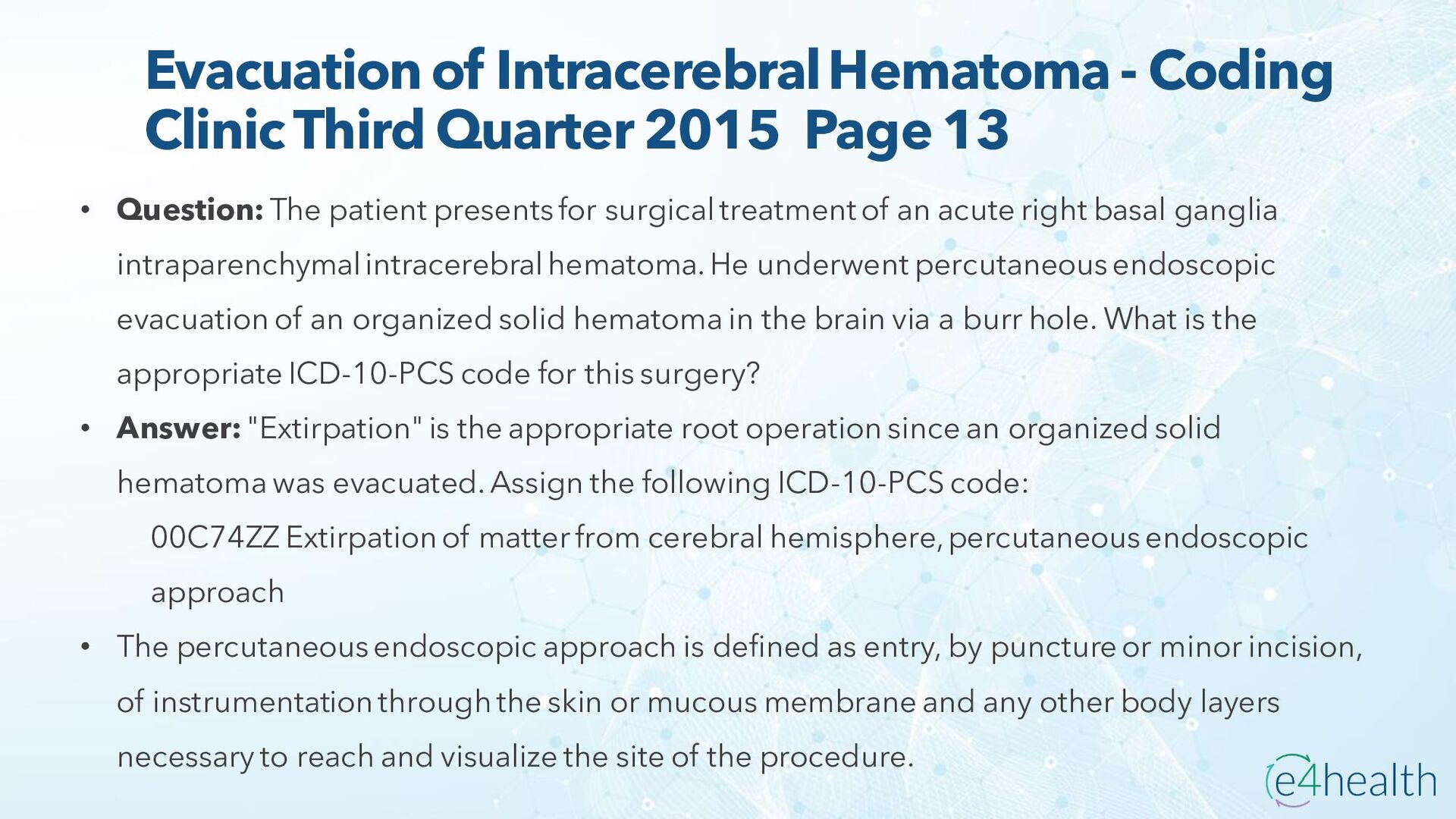
  92. Evacuation of Intracerebral Hematoma - Coding Clinic Third Quarter 2015

    Page 13 • Question: The patient presents for surgical treatment of an acute right basal ganglia intraparenchymal intracerebral hematoma. He underwent percutaneous endoscopic evacuation of an organized solid hematoma in the brain via a burr hole. What is the appropriate ICD-10-PCS code for this surgery? • Answer: "Extirpation" is the appropriate root operation since an organized solid hematoma was evacuated. Assign the following ICD-10-PCS code: 00C74ZZ Extirpation of matter from cerebral hemisphere, percutaneous endoscopic approach • The percutaneous endoscopic approach is defined as entry, by puncture or minor incision, of instrumentation through the skin or mucous membrane and any other body layers necessary to reach and visualize the site of the procedure.
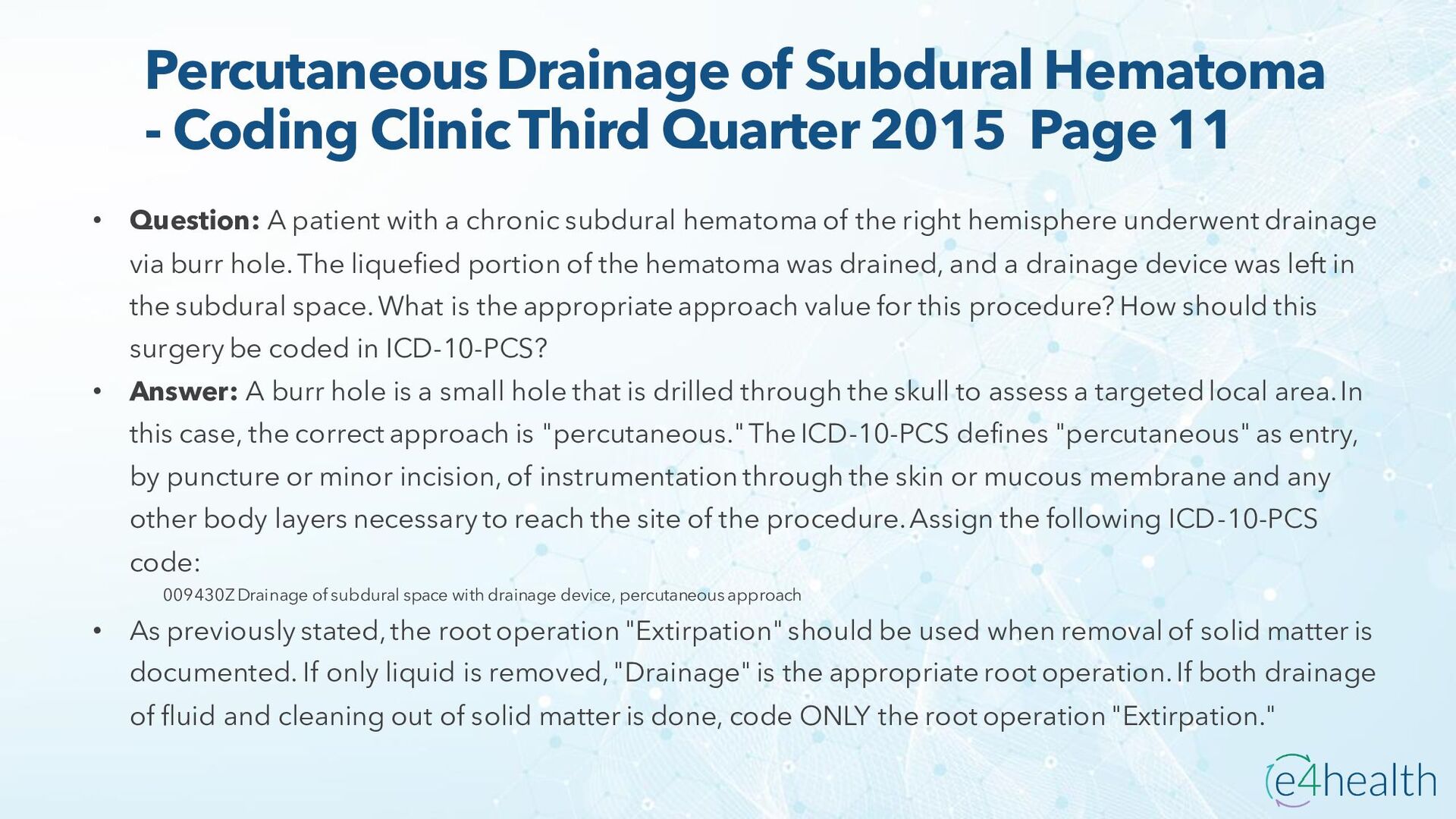
  93. Percutaneous Drainage of Subdural Hematoma - Coding Clinic Third Quarter

    2015 Page 11 • Question: A patient with a chronic subdural hematoma of the right hemisphere underwent drainage via burr hole. The liquefied portion of the hematoma was drained, and a drainage device was left in the subdural space. What is the appropriate approach value for this procedure? How should this surgery be coded in ICD-10-PCS? • Answer: A burr hole is a small hole that is drilled through the skull to assess a targeted local area. In this case, the correct approach is "percutaneous." The ICD-10-PCS defines "percutaneous" as entry, by puncture or minor incision, of instrumentation through the skin or mucous membrane and any other body layers necessary to reach the site of the procedure. Assign the following ICD-10-PCS code: 009430Z Drainage of subdural space with drainage device, percutaneous approach • As previously stated, the root operation "Extirpation" should be used when removal of solid matter is documented. If only liquid is removed, "Drainage" is the appropriate root operation. If both drainage of fluid and cleaning out of solid matter is done, code ONLY the root operation "Extirpation."
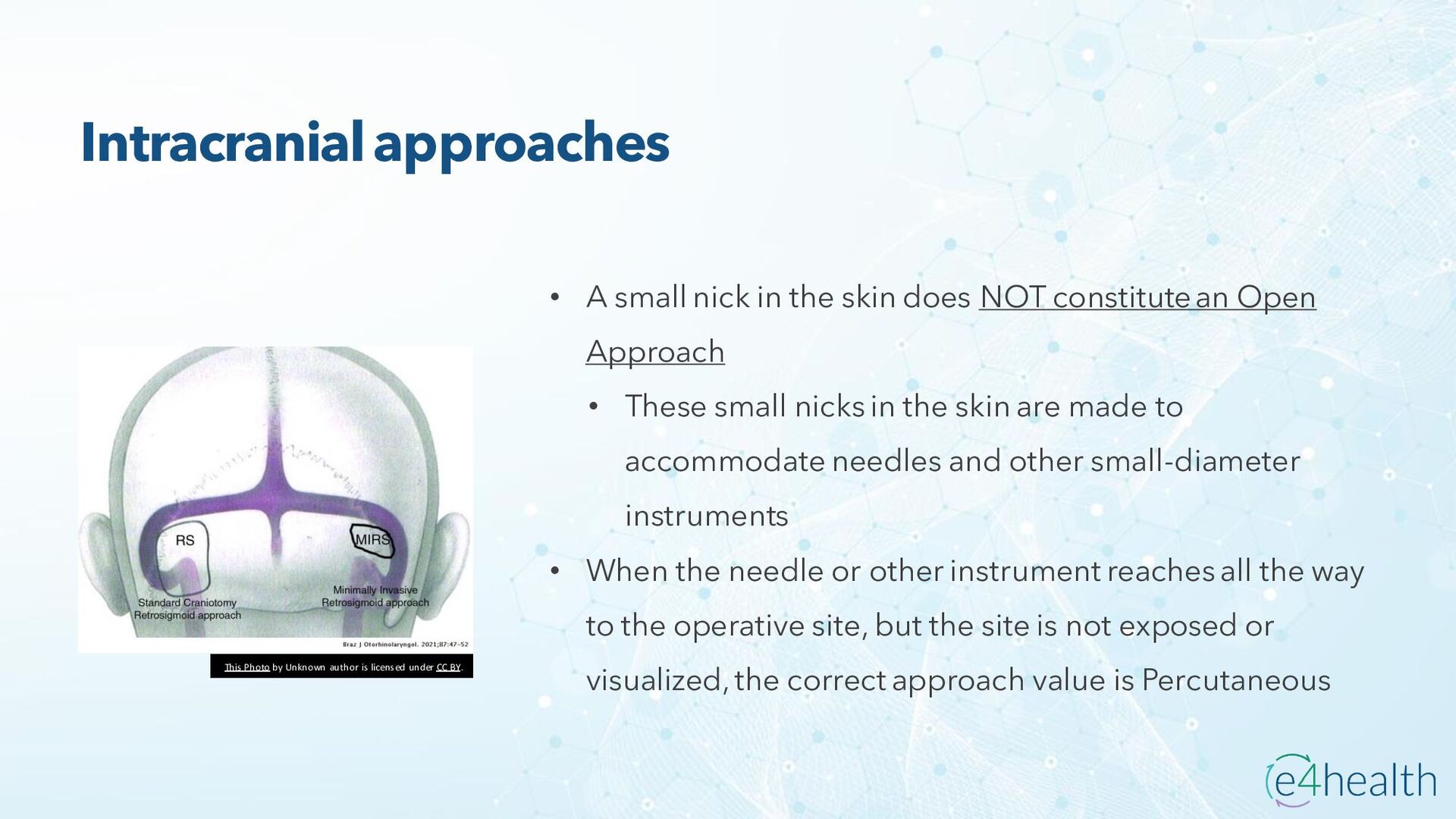
  94. Intracranial approaches • A small nick in the skin does

    NOT constitute an Open Approach • These small nicks in the skin are made to accommodate needles and other small-diameter instruments • When the needle or other instrument reaches all the way to the operative site, but the site is not exposed or visualized, the correct approach value is Percutaneous This Photo by Unknown author is licensed under CC BY.
  95. Devices • Examples: • Stimulators • Monitoring • Infusion •

    Drainage • Radioactive Element, Cesium-131 Collagen Implant • Tissue substitutes • Bypass • Supplement • Revision This Photo by Unknown author is licensed under CC BY.
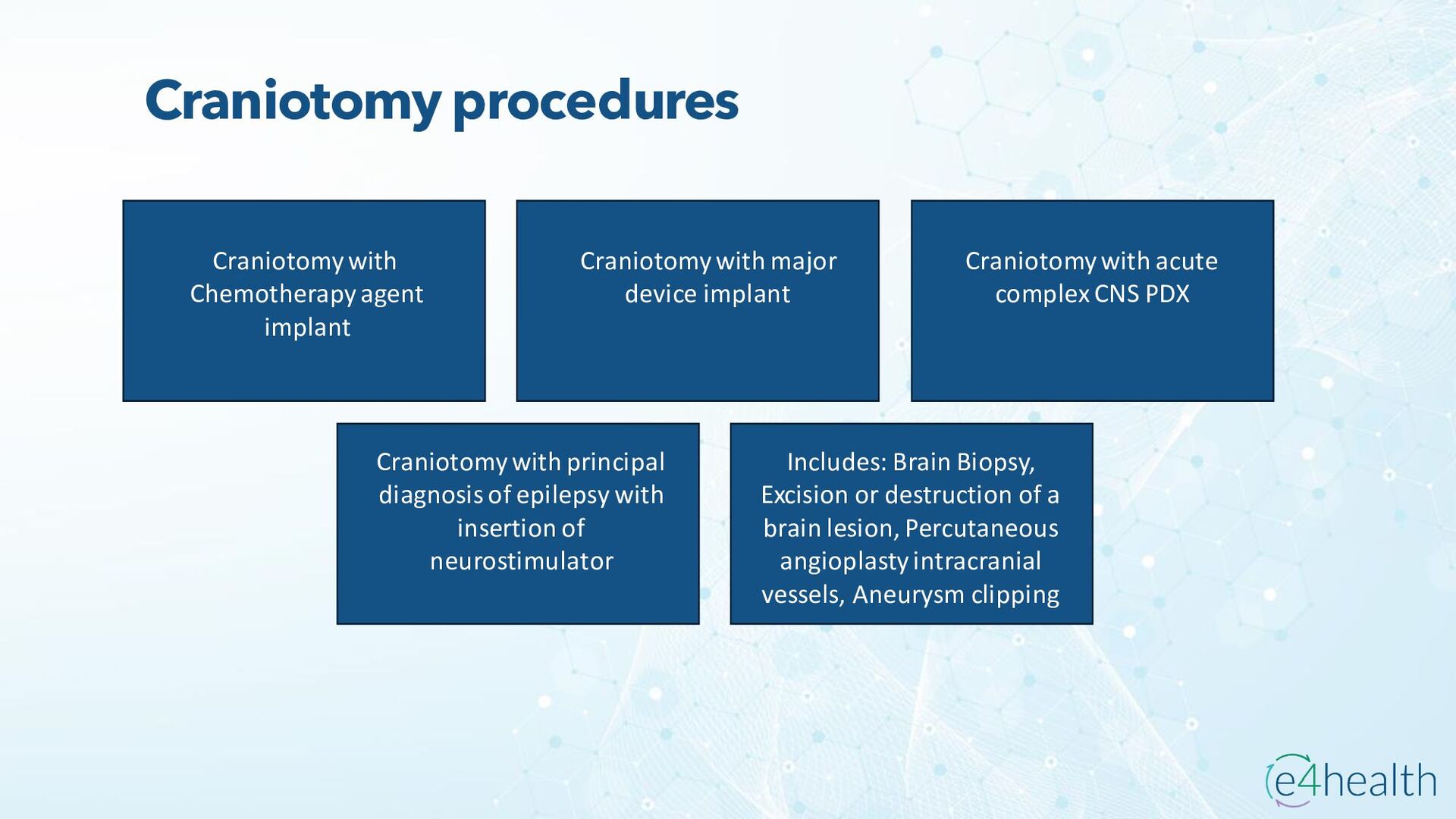
  96. Craniotomy procedures Craniotomy with Chemotherapy agent implant Craniotomy with major

    device implant Craniotomy with acute complex CNS PDX Craniotomy with principal diagnosis of epilepsy with insertion of neurostimulator Includes: Brain Biopsy, Excision or destruction of a brain lesion, Percutaneous angioplasty intracranial vessels, Aneurysm clipping
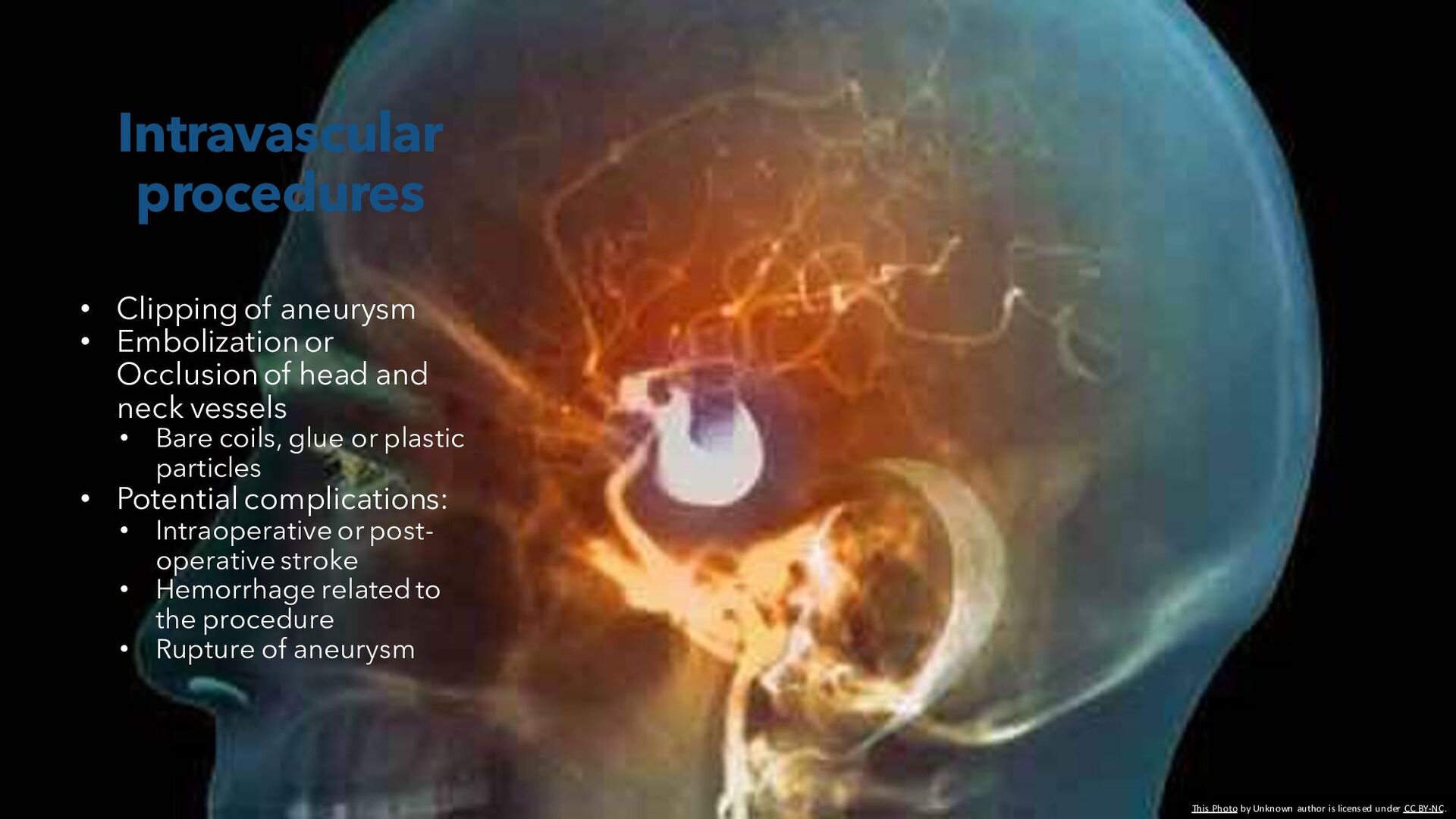
  97. Intravascular procedures • Clipping of aneurysm • Embolization or Occlusion

    of head and neck vessels • Bare coils, glue or plastic particles • Potential complications: • Intraoperative or post- operative stroke • Hemorrhage related to the procedure • Rupture of aneurysm This Photo by Unknown author is licensed under CC BY-NC.
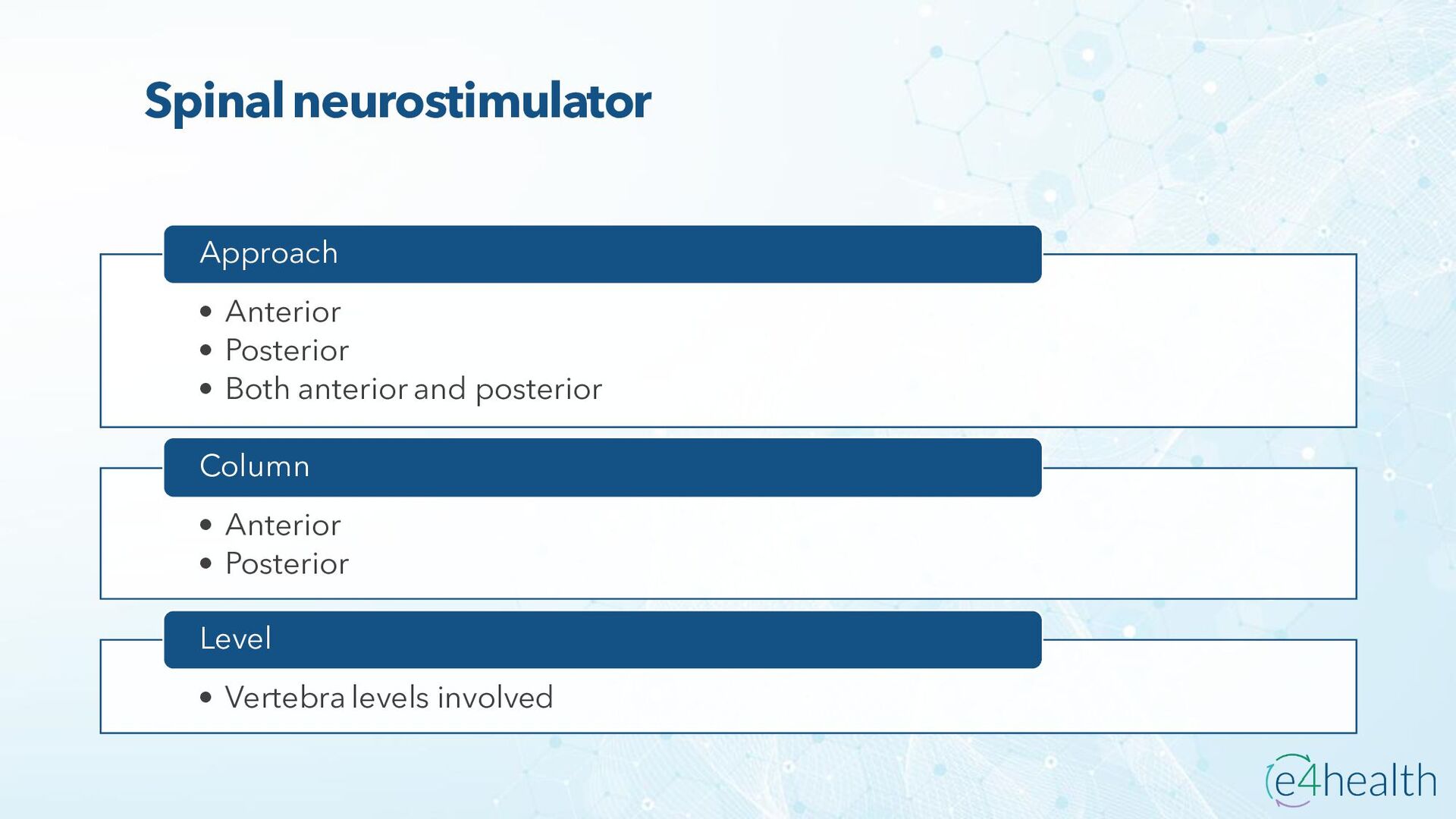
  98. Spinal neurostimulator • Anterior • Posterior • Both anterior and

    posterior Approach • Anterior • Posterior Column • Vertebra levels involved Level
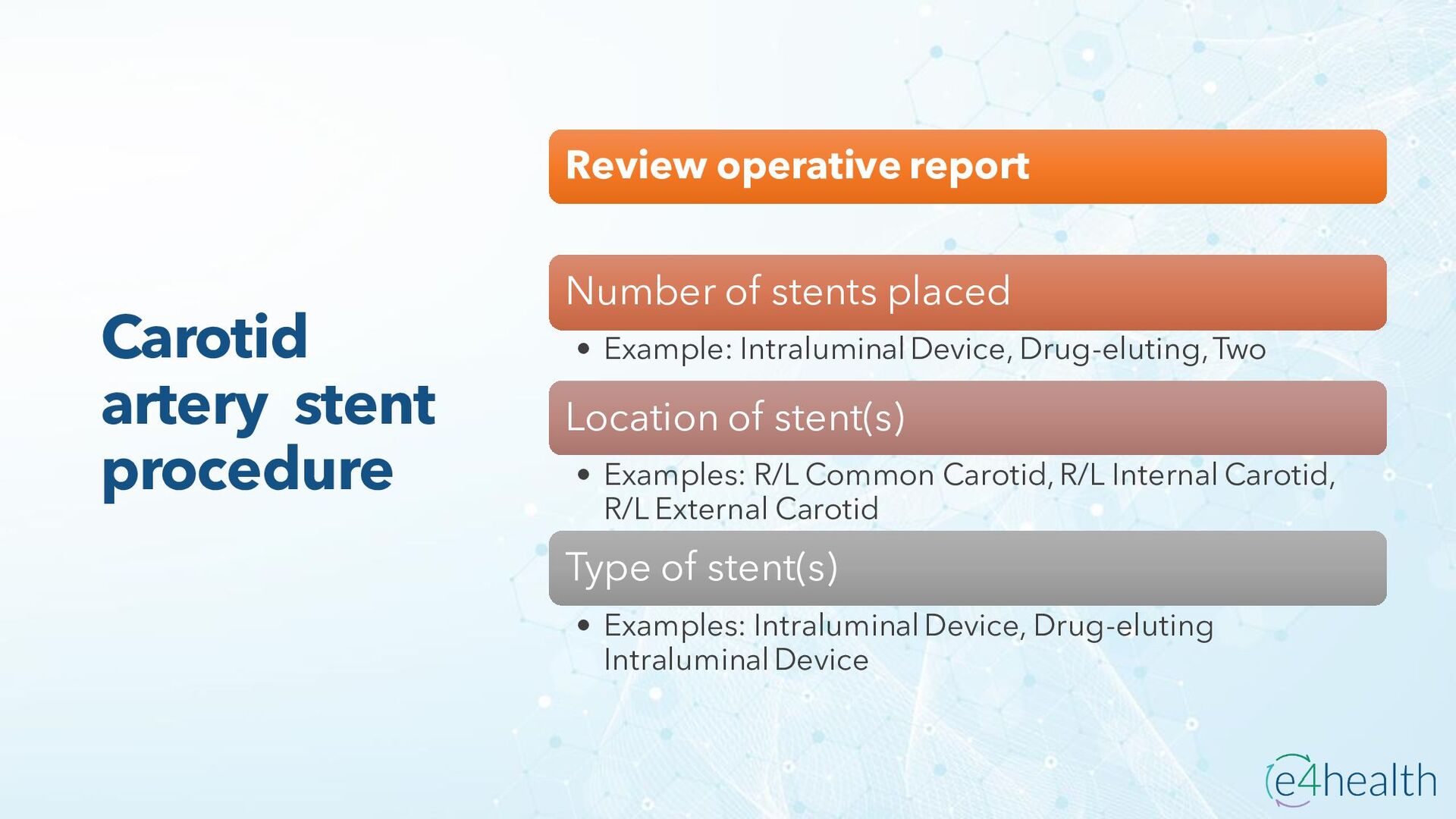
  99. Carotid artery stent procedure Review operative report Number of stents

    placed • Example: Intraluminal Device, Drug-eluting, Two Location of stent(s) • Examples: R/L Common Carotid, R/L Internal Carotid, R/L External Carotid Type of stent(s) • Examples: Intraluminal Device, Drug-eluting Intraluminal Device
  100. Transcarotid Arterial Catheterization - Coding Clinic Third Quarter 2019 Page

    29 • Question: A patient underwent transcarotid arterial catheterization (TCAR) to treat right internal carotid artery stenosis. At surgery, a cutdown was made in the neck; the common carotid artery was accessed with a needle; a microwire was advanced; and the internal carotid artery was wired. The vessel was predilated with a balloon, the stent was landed and completion angiogram showed excellent results. Coding Clinic Second Quarter 2017, page 23, advised "Open approach" for a thrombectomy performed via catheter where the procedure site was reached through an open incision. What is the appropriate approach value for this procedure? • Answer: Assign the following procedure code: 037K3DZ Dilation of right internal carotid artery with intraluminal device, percutaneous approach, for the TCAR procedure performed. • The angioplasty and stent placement were performed using a percutaneous approach. The balloon and stent were placed through a puncture site in the common carotid artery and threaded into the internal carotid artery; the operative site (internal carotid artery) was not directly exposed. In ICD-10-PCS, "Percutaneous approach" is defined as, "Entry, by puncture or minor incision, of instrumentation through the skin or mucous membrane and any other body layers necessary to reach the site of the procedure." • In the example published in Coding Clinic Second Quarter 2017, page 23, multiple thrombectomies were performed during an open bypass procedure, thus "Open approach" was used.
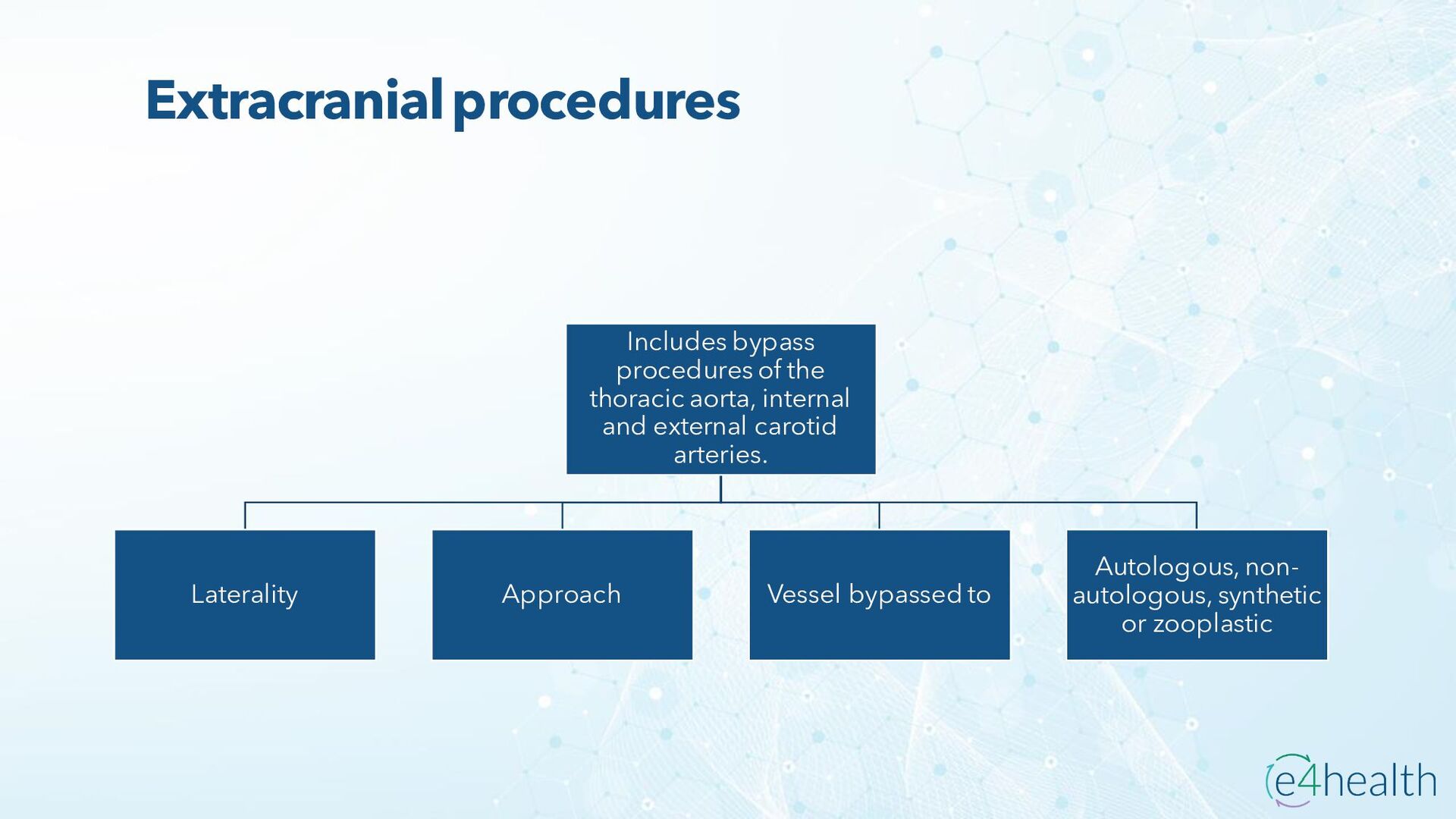
  101. Extracranial procedures Includes bypass procedures of the thoracic aorta, internal

    and external carotid arteries. Laterality Approach Vessel bypassed to Autologous, non- autologous, synthetic or zooplastic
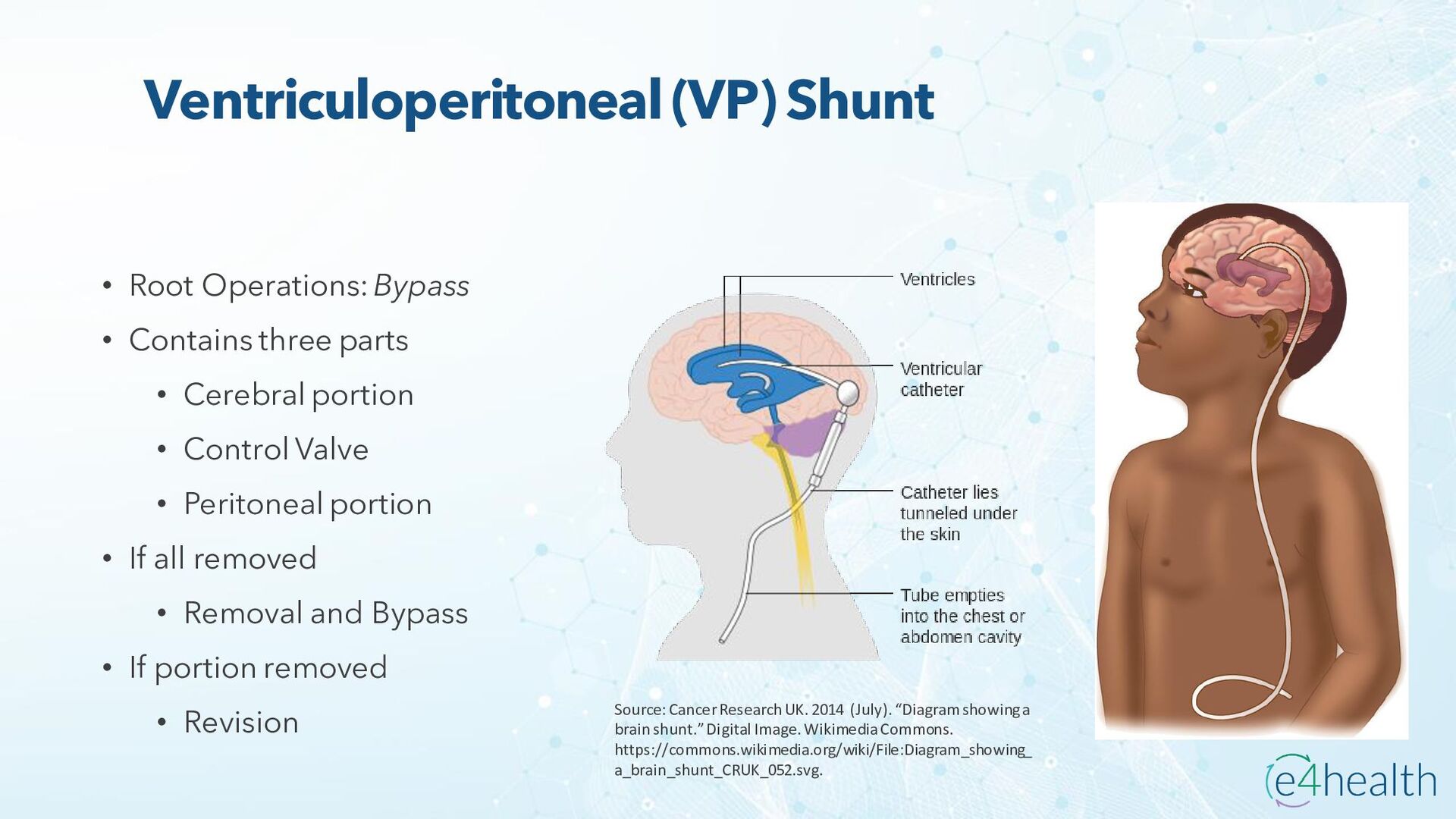
  102. Ventriculoperitoneal (VP) Shunt • Root Operations: Bypass • Contains three

    parts • Cerebral portion • Control Valve • Peritoneal portion • If all removed • Removal and Bypass • If portion removed • Revision Source: Cancer Research UK. 2014 (July). “Diagram showing a brain shunt.” Digital Image. Wikimedia Commons. https://commons.wikimedia.org/wiki/File:Diagram_showing_ a_brain_shunt_CRUK_052.svg.
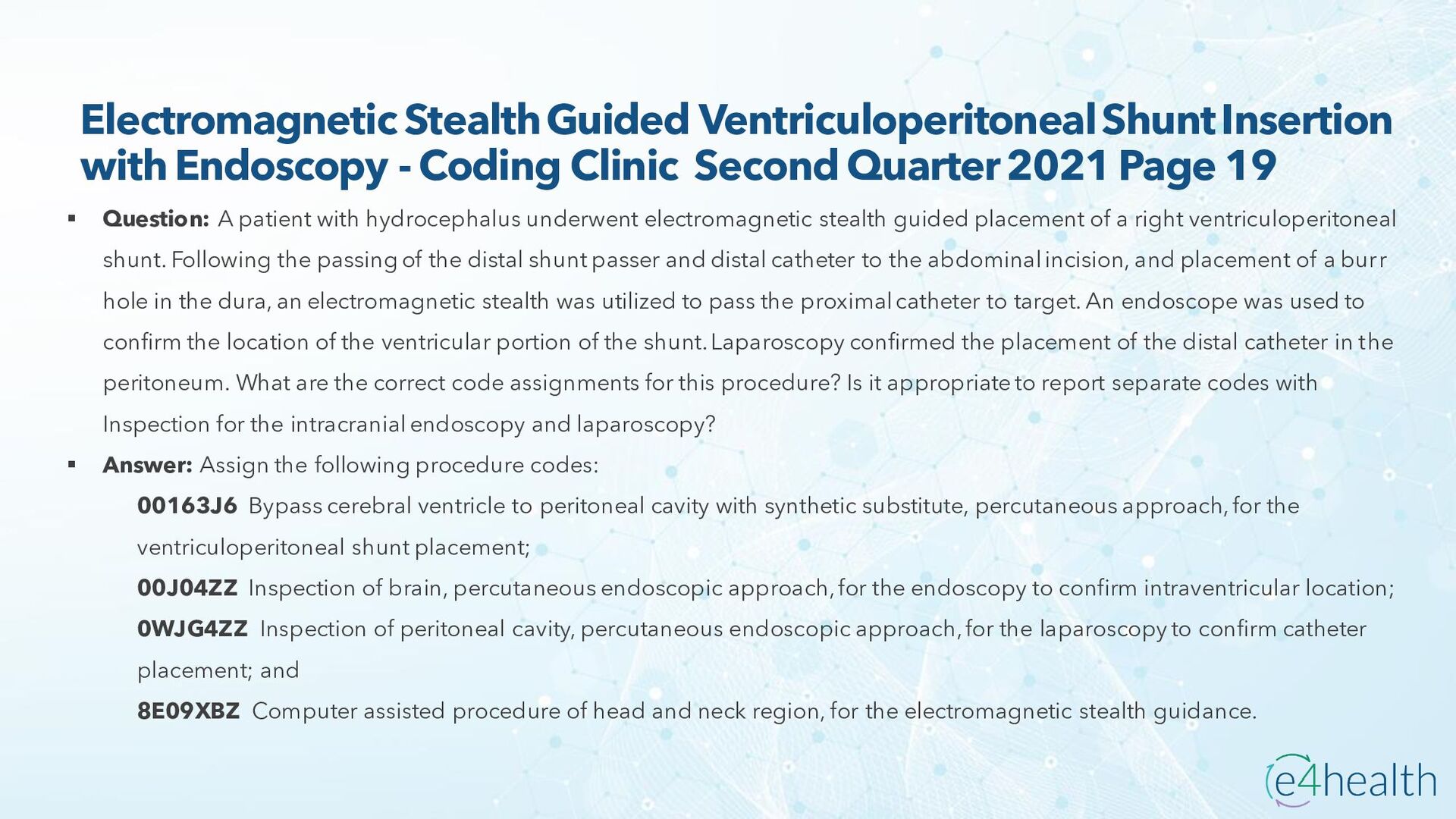
  103. Electromagnetic Stealth Guided Ventriculoperitoneal Shunt Insertion with Endoscopy - Coding

    Clinic Second Quarter 2021 Page 19 ▪ Question: A patient with hydrocephalus underwent electromagnetic stealth guided placement of a right ventriculoperitoneal shunt. Following the passing of the distal shunt passer and distal catheter to the abdominal incision, and placement of a burr hole in the dura, an electromagnetic stealth was utilized to pass the proximal catheter to target. An endoscope was used to confirm the location of the ventricular portion of the shunt. Laparoscopy confirmed the placement of the distal catheter in the peritoneum. What are the correct code assignments for this procedure? Is it appropriate to report separate codes with Inspection for the intracranial endoscopy and laparoscopy? ▪ Answer: Assign the following procedure codes: 00163J6 Bypass cerebral ventricle to peritoneal cavity with synthetic substitute, percutaneous approach, for the ventriculoperitoneal shunt placement; 00J04ZZ Inspection of brain, percutaneous endoscopic approach, for the endoscopy to confirm intraventricular location; 0WJG4ZZ Inspection of peritoneal cavity, percutaneous endoscopic approach, for the laparoscopy to confirm catheter placement; and 8E09XBZ Computer assisted procedure of head and neck region, for the electromagnetic stealth guidance.
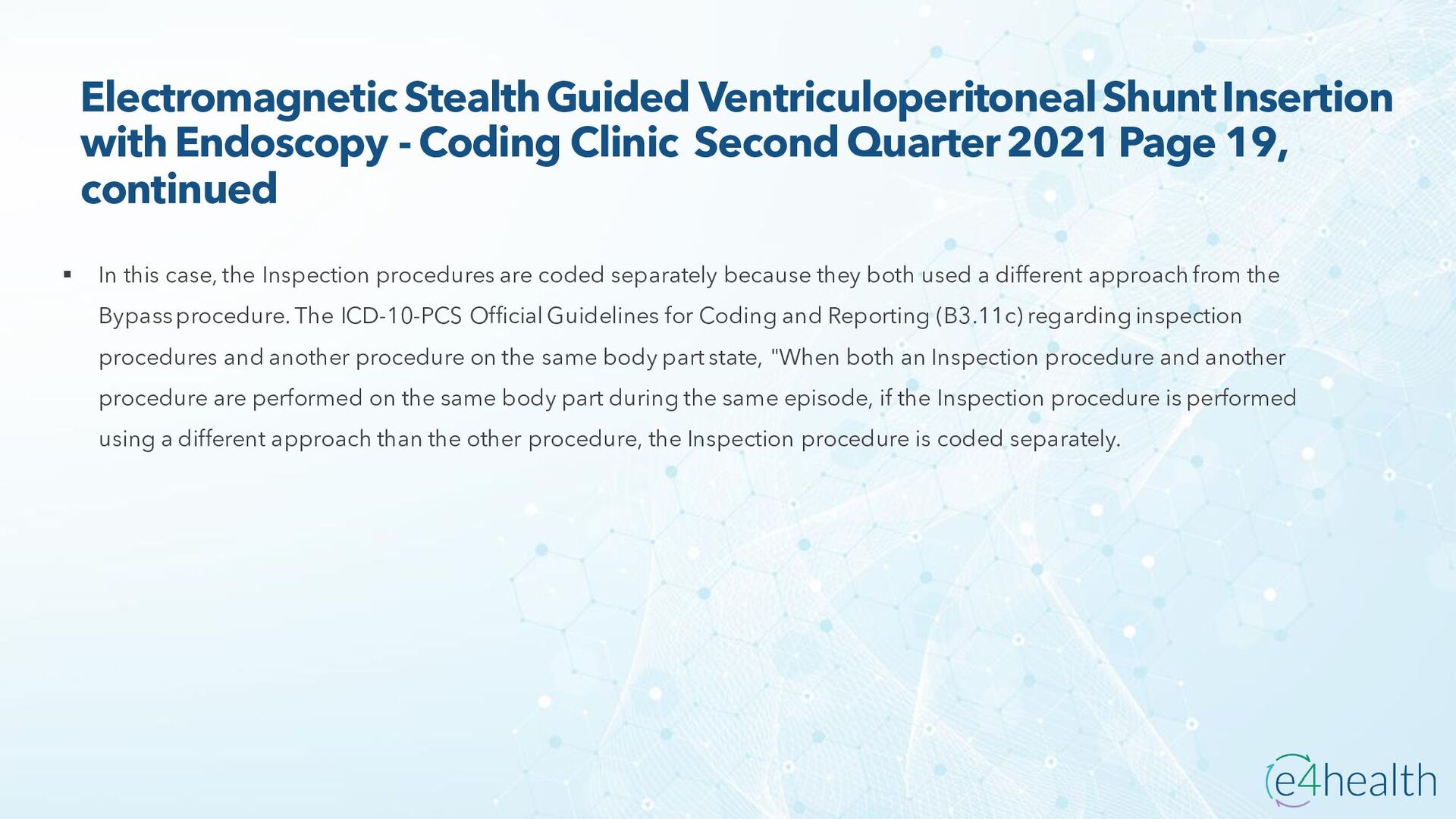
  104. Electromagnetic Stealth Guided Ventriculoperitoneal Shunt Insertion with Endoscopy - Coding

    Clinic Second Quarter 2021 Page 19, continued ▪ In this case, the Inspection procedures are coded separately because they both used a different approach from the Bypass procedure. The ICD-10-PCS Official Guidelines for Coding and Reporting (B3.11c) regarding inspection procedures and another procedure on the same body part state, "When both an Inspection procedure and another procedure are performed on the same body part during the same episode, if the Inspection procedure is performed using a different approach than the other procedure, the Inspection procedure is coded separately.
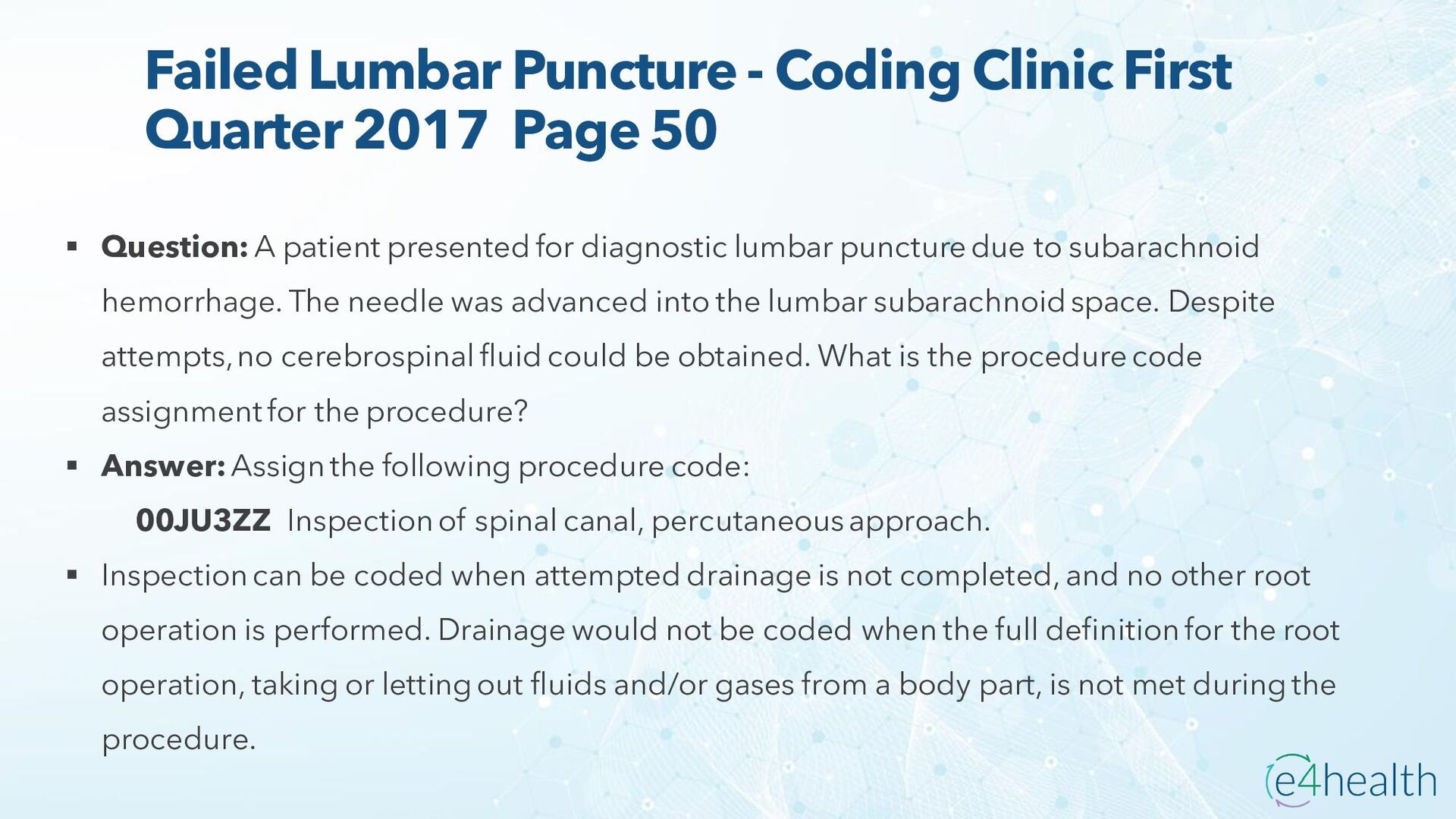
  105. Failed Lumbar Puncture - Coding Clinic First Quarter 2017 Page

    50 ▪ Question: A patient presented for diagnostic lumbar puncture due to subarachnoid hemorrhage. The needle was advanced into the lumbar subarachnoid space. Despite attempts, no cerebrospinal fluid could be obtained. What is the procedure code assignment for the procedure? ▪ Answer: Assign the following procedure code: 00JU3ZZ Inspection of spinal canal, percutaneous approach. ▪ Inspection can be coded when attempted drainage is not completed, and no other root operation is performed. Drainage would not be coded when the full definition for the root operation, taking or letting out fluids and/or gases from a body part, is not met during the procedure.
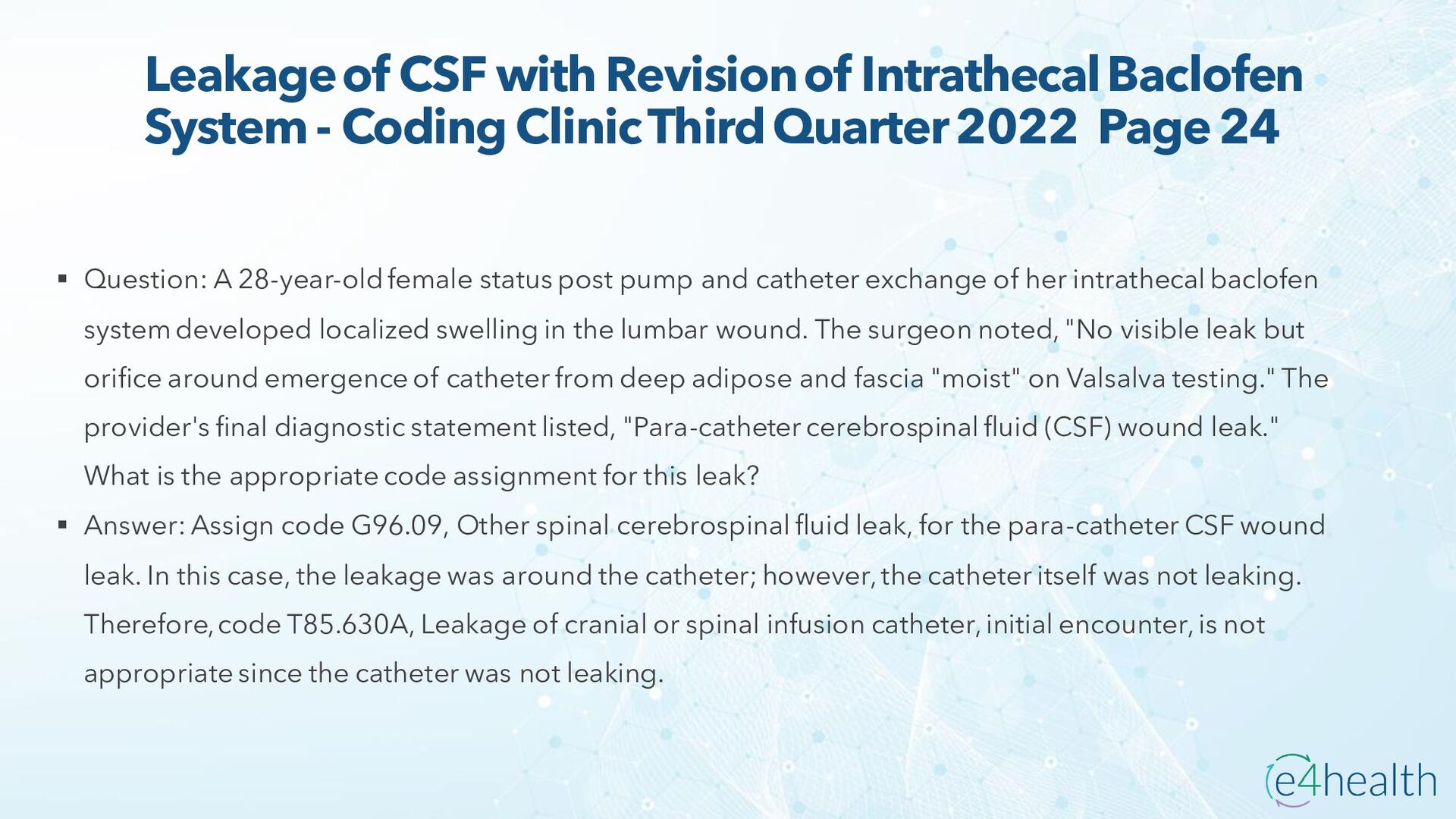
  106. Leakage of CSF with Revision of Intrathecal Baclofen System -

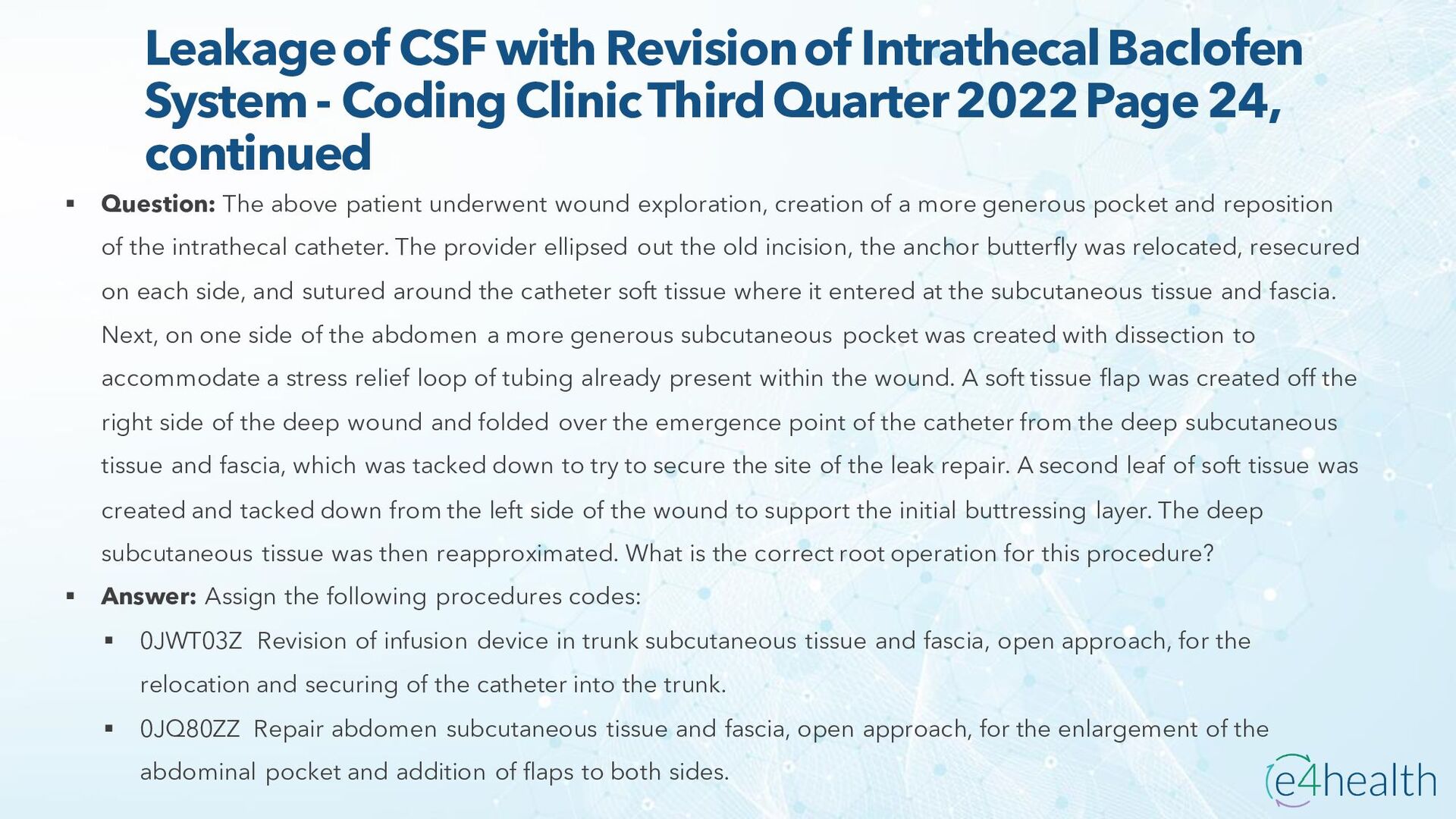
    Coding Clinic Third Quarter 2022 Page 24 ▪ Question: A 28-year-old female status post pump and catheter exchange of her intrathecal baclofen system developed localized swelling in the lumbar wound. The surgeon noted, "No visible leak but orifice around emergence of catheter from deep adipose and fascia "moist" on Valsalva testing." The provider's final diagnostic statement listed, "Para-catheter cerebrospinal fluid (CSF) wound leak." What is the appropriate code assignment for this leak? ▪ Answer: Assign code G96.09, Other spinal cerebrospinal fluid leak, for the para-catheter CSF wound leak. In this case, the leakage was around the catheter; however, the catheter itself was not leaking. Therefore, code T85.630A, Leakage of cranial or spinal infusion catheter, initial encounter, is not appropriate since the catheter was not leaking.
  107. Leakage of CSF with Revision of Intrathecal Baclofen System -

    Coding Clinic Third Quarter 2022 Page 24, continued ▪ Question: The above patient underwent wound exploration, creation of a more generous pocket and reposition of the intrathecal catheter. The provider ellipsed out the old incision, the anchor butterfly was relocated, resecured on each side, and sutured around the catheter soft tissue where it entered at the subcutaneous tissue and fascia. Next, on one side of the abdomen a more generous subcutaneous pocket was created with dissection to accommodate a stress relief loop of tubing already present within the wound. A soft tissue flap was created off the right side of the deep wound and folded over the emergence point of the catheter from the deep subcutaneous tissue and fascia, which was tacked down to try to secure the site of the leak repair. A second leaf of soft tissue was created and tacked down from the left side of the wound to support the initial buttressing layer. The deep subcutaneous tissue was then reapproximated. What is the correct root operation for this procedure? ▪ Answer: Assign the following procedures codes: ▪ 0JWT03Z Revision of infusion device in trunk subcutaneous tissue and fascia, open approach, for the relocation and securing of the catheter into the trunk. ▪ 0JQ80ZZ Repair abdomen subcutaneous tissue and fascia, open approach, for the enlargement of the abdominal pocket and addition of flaps to both sides.
  108. Other procedures Includes procedures on cranial and peripheral nerves such

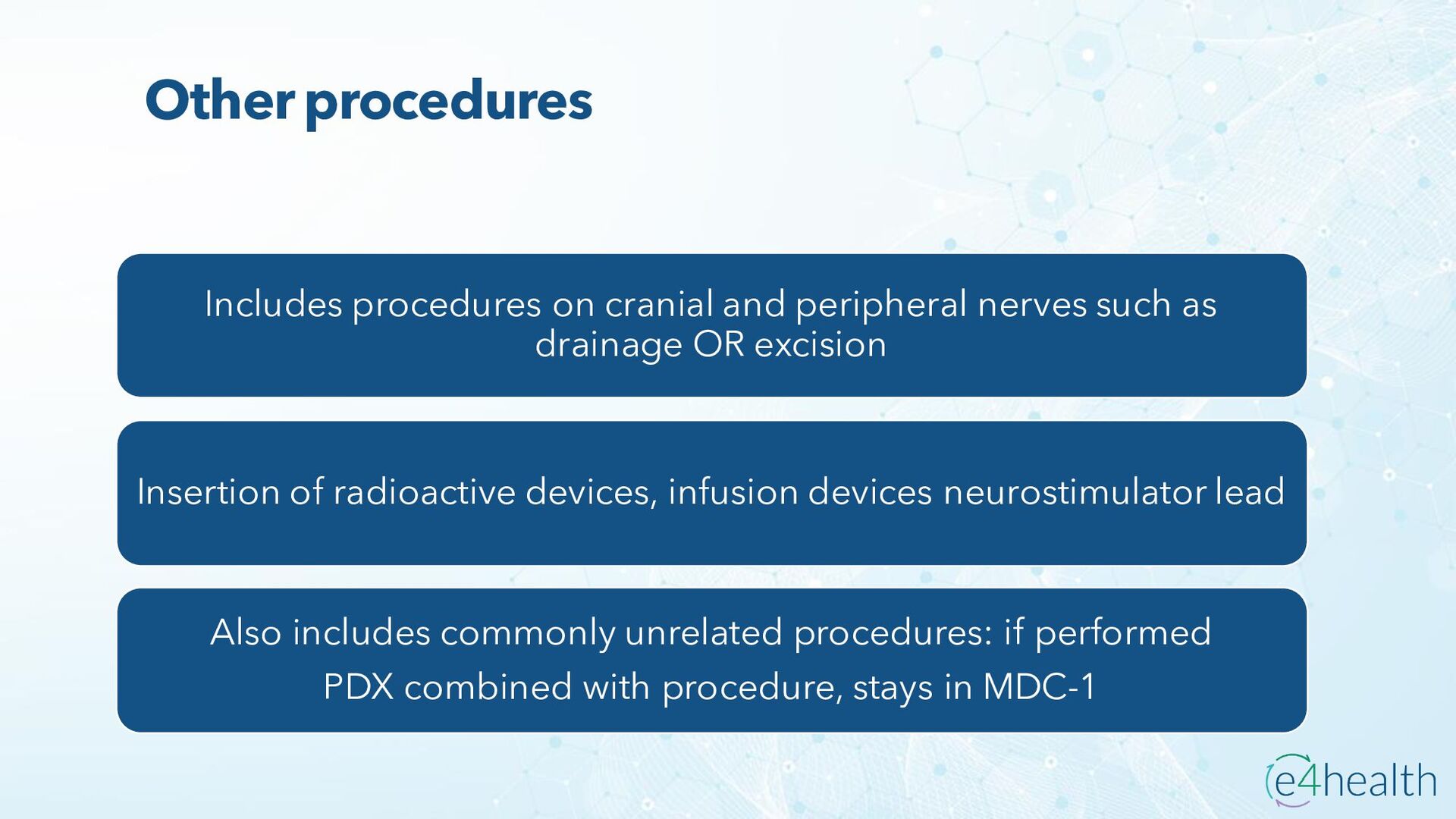
    as drainage OR excision Insertion of radioactive devices, infusion devices neurostimulator lead Also includes commonly unrelated procedures: if performed PDX combined with procedure, stays in MDC-1
  109. References • AHA ICD-10-CM and ICD-10-PCS Coding Handbook • ICD-10-PCS:

    An Applied Approach 2023 • Cengage: 3-2-1 CODE IT! • Medical Terminology Systems, 8th Edition • 2022 ICD-10-CM | CMS. (2022, April 1). CMS.Gov. Retrieved May 24, 2022, from https://www.cms.gov/medicare/icd-10/2022-icd-10-cm • Carrier, K. (2019, September 13). Spinal Fusion Coding, An E-Book. HIAcode. Retrieved February 28, 2022, from https://hiacode.lpages.co/spinal-fusion-series/ • Cragg, J., & Krassioukov, A. (2012). Autonomic dysreflexia. CMAJ : Canadian Medical Association journal = journal de l'Association medicale canadienne, 184(1), 66. https://doi.org/10.1503/cmaj.110859 • Neana, F. (2017, May 7). Birth injuries. SlideShare. Retrieved February 24, 2022, from https://www.slideshare.net/fathineana/birth-injuries-75758150
  110. References • Potter T, Schaefer TJ. Hypertensive Encephalopathy. [Updated 2022

    Apr 28]. In: StatPearls [Internet]. Treasure Island (FL): StatPearls Publishing; 2022 Jan-. Available from: https://www.ncbi.nlm.nih.gov/books/NBK554499/ • Sagar, D., & Cho, J. J. (2017, October 31). Europe PMC. Europe PMC. Retrieved February 25, 2022, from https://europepmc.org/article/NBK/nbk459361 • Migraine - Neurologic Disorders - Merck Manuals Professional Edition • Webinar-Slides-Encephalopathy-06.2021-Pinson-Tang-updated.pdf (pinsonandtang.com) • Note from the Instructor: Encephalopathy tips | ACDIS • Parkinson Disease - Neurologic Disorders - Merck Manuals Professional Edition • Secondary and Atypical Parkinsonism - Neurologic Disorders - Merck Manuals Professional Edition • Alzheimer Disease - Neurologic Disorders - Merck Manuals Professional Edition • The International Classification of Headache Disorders - ICHD-3