Upgrade to PRO for Only $50/Year—Limited-Time Offer! 🔥

FY 2024: MDC 7 - Hepatobiliary System

Avatar for e4health e4health PRO
April 03, 2024
510

FY 2024: MDC 7 - Hepatobiliary System

Avatar for e4health

e4health PRO

April 03, 2024
Tweet

Transcript

  1. H I M | C O D I N G

    & C D I | H E A LT H I T | R E V C Y C L E Empowering Better Health e4health tackles healthcare’s data, quality and revenue challenges empowering your providers to focus on better care.
  2. Objectives • Review MDC 7- Diseases and Disorders of the

    Hepatobiliary System and Pancreas with a focus on selected diagnoses and procedures • Learner will acquire a basic understanding of the diagnoses and procedures included in MDC-7 • Discuss Query opportunities in MDC-7 • Review coding clinics relevant to the chosen topics in each DRG
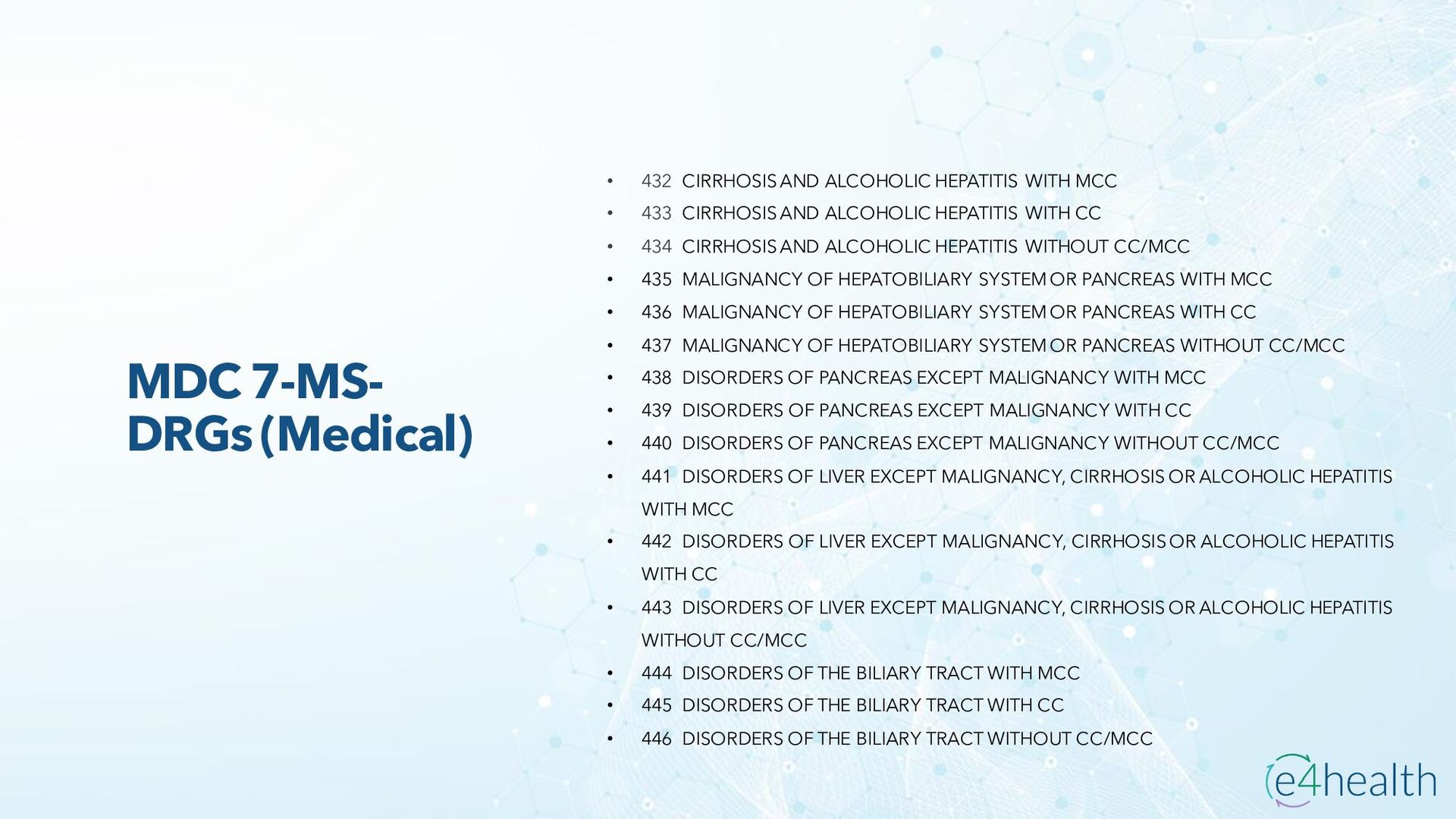
  3. MDC 7-MS- DRGs (Medical) • 432 CIRRHOSIS AND ALCOHOLIC HEPATITIS

    WITH MCC • 433 CIRRHOSIS AND ALCOHOLIC HEPATITIS WITH CC • 434 CIRRHOSIS AND ALCOHOLIC HEPATITIS WITHOUT CC/MCC • 435 MALIGNANCY OF HEPATOBILIARY SYSTEM OR PANCREAS WITH MCC • 436 MALIGNANCY OF HEPATOBILIARY SYSTEM OR PANCREAS WITH CC • 437 MALIGNANCY OF HEPATOBILIARY SYSTEM OR PANCREAS WITHOUT CC/MCC • 438 DISORDERS OF PANCREAS EXCEPT MALIGNANCY WITH MCC • 439 DISORDERS OF PANCREAS EXCEPT MALIGNANCY WITH CC • 440 DISORDERS OF PANCREAS EXCEPT MALIGNANCY WITHOUT CC/MCC • 441 DISORDERS OF LIVER EXCEPT MALIGNANCY, CIRRHOSIS OR ALCOHOLIC HEPATITIS WITH MCC • 442 DISORDERS OF LIVER EXCEPT MALIGNANCY, CIRRHOSIS OR ALCOHOLIC HEPATITIS WITH CC • 443 DISORDERS OF LIVER EXCEPT MALIGNANCY, CIRRHOSIS OR ALCOHOLIC HEPATITIS WITHOUT CC/MCC • 444 DISORDERS OF THE BILIARY TRACT WITH MCC • 445 DISORDERS OF THE BILIARY TRACT WITH CC • 446 DISORDERS OF THE BILIARY TRACT WITHOUT CC/MCC
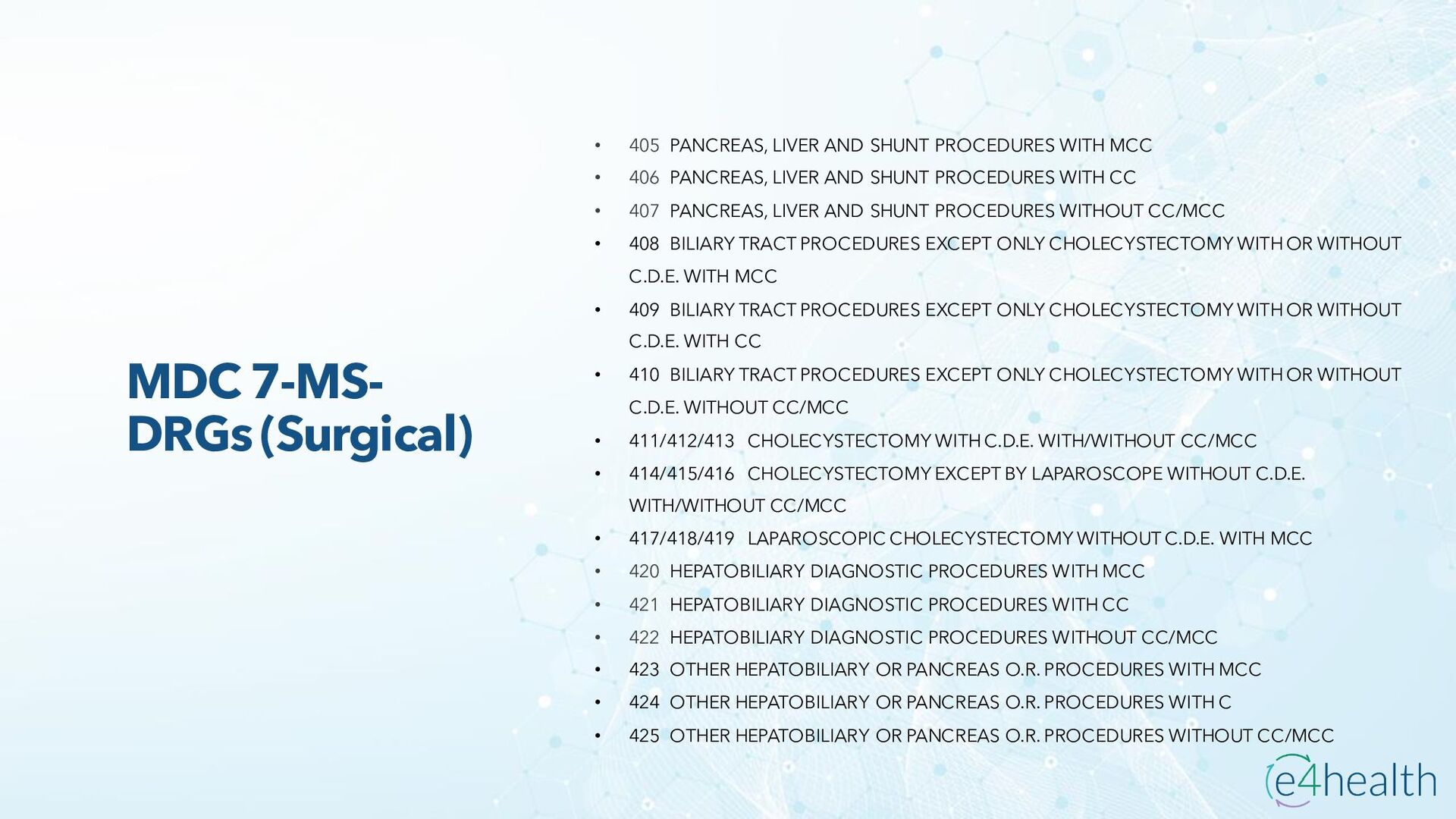
  4. MDC 7-MS- DRGs (Surgical) • 405 PANCREAS, LIVER AND SHUNT

    PROCEDURES WITH MCC • 406 PANCREAS, LIVER AND SHUNT PROCEDURES WITH CC • 407 PANCREAS, LIVER AND SHUNT PROCEDURES WITHOUT CC/MCC • 408 BILIARY TRACT PROCEDURES EXCEPT ONLY CHOLECYSTECTOMY WITH OR WITHOUT C.D.E. WITH MCC • 409 BILIARY TRACT PROCEDURES EXCEPT ONLY CHOLECYSTECTOMY WITH OR WITHOUT C.D.E. WITH CC • 410 BILIARY TRACT PROCEDURES EXCEPT ONLY CHOLECYSTECTOMY WITH OR WITHOUT C.D.E. WITHOUT CC/MCC • 411/412/413 CHOLECYSTECTOMY WITH C.D.E. WITH/WITHOUT CC/MCC • 414/415/416 CHOLECYSTECTOMY EXCEPT BY LAPAROSCOPE WITHOUT C.D.E. WITH/WITHOUT CC/MCC • 417/418/419 LAPAROSCOPIC CHOLECYSTECTOMY WITHOUT C.D.E. WITH MCC • 420 HEPATOBILIARY DIAGNOSTIC PROCEDURES WITH MCC • 421 HEPATOBILIARY DIAGNOSTIC PROCEDURES WITH CC • 422 HEPATOBILIARY DIAGNOSTIC PROCEDURES WITHOUT CC/MCC • 423 OTHER HEPATOBILIARY OR PANCREAS O.R. PROCEDURES WITH MCC • 424 OTHER HEPATOBILIARY OR PANCREAS O.R. PROCEDURES WITH C • 425 OTHER HEPATOBILIARY OR PANCREAS O.R. PROCEDURES WITHOUT CC/MCC
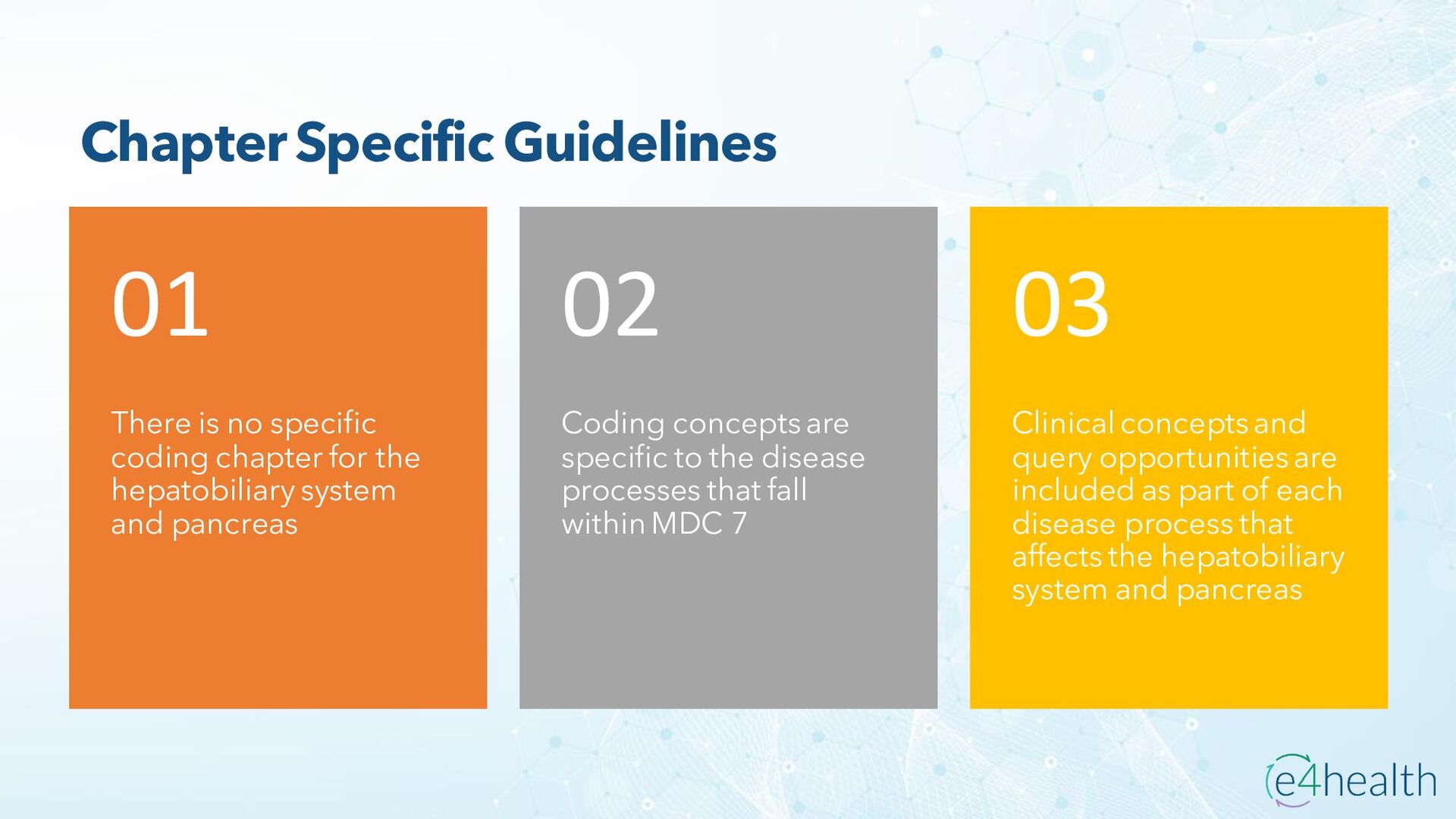
  5. Chapter Specific Guidelines There is no specific coding chapter for

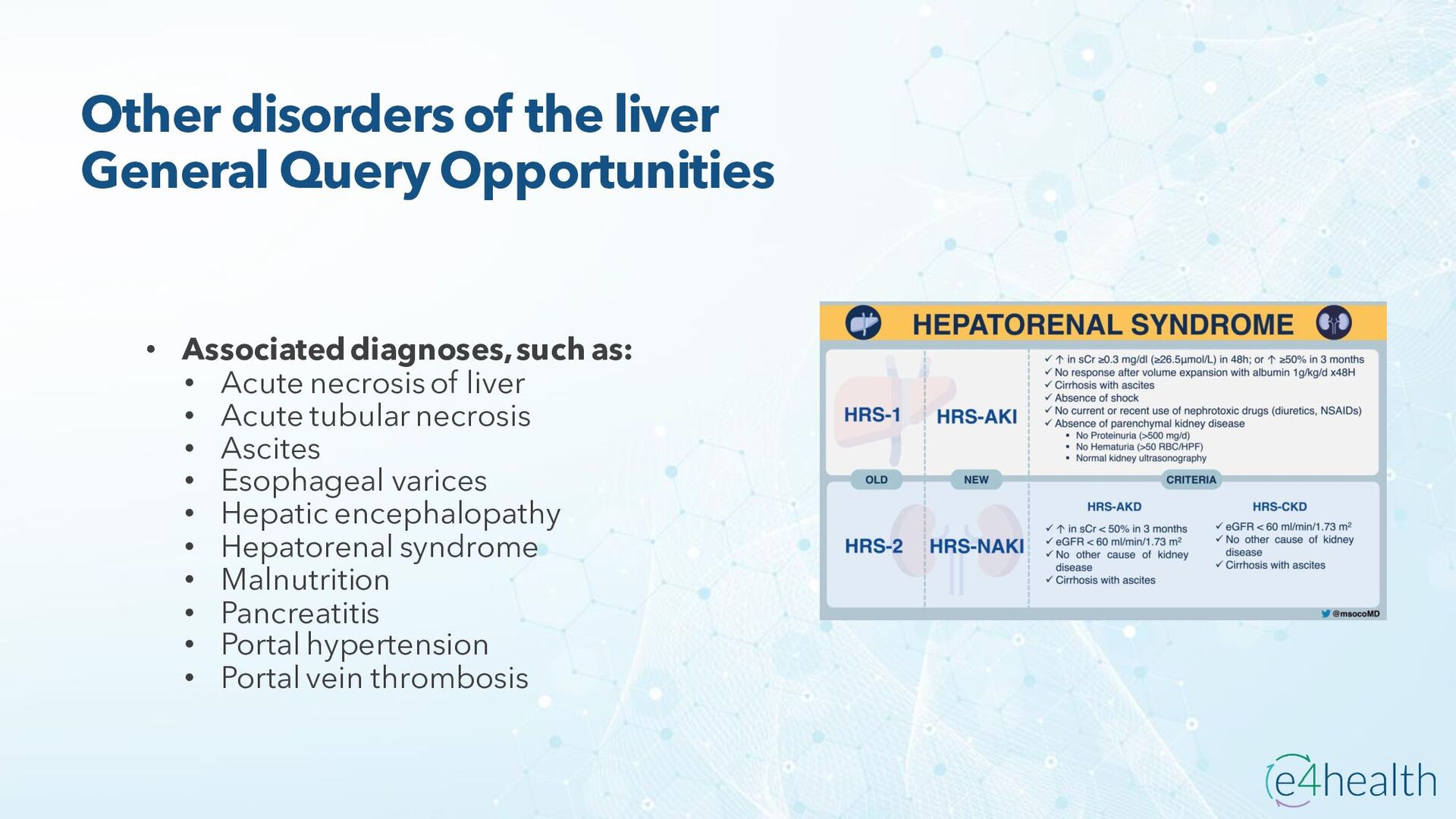
    the hepatobiliary system and pancreas 01 Coding concepts are specific to the disease processes that fall within MDC 7 02 Clinical concepts and query opportunities are included as part of each disease process that affects the hepatobiliary system and pancreas 03
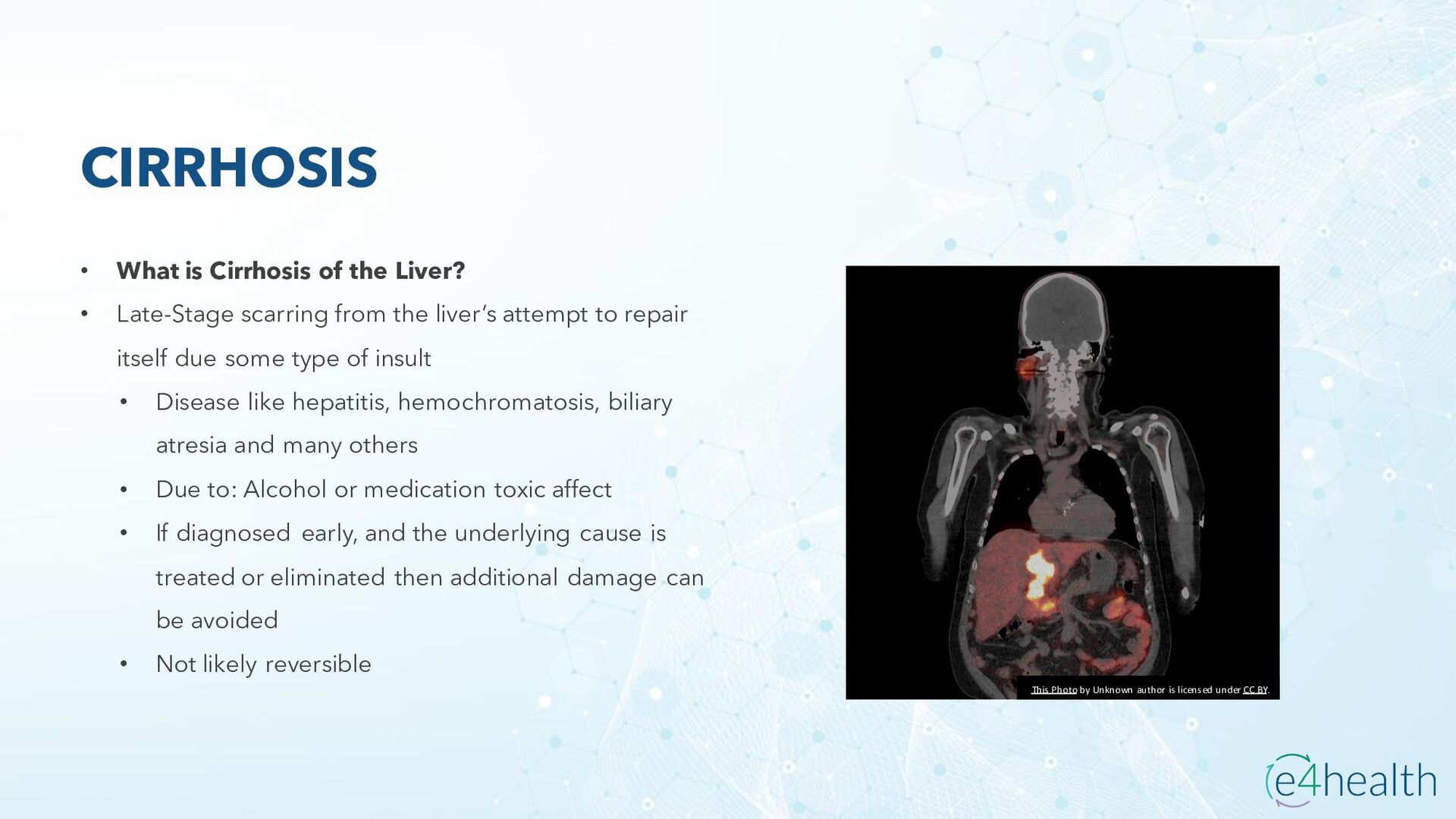
  6. CIRRHOSIS • What is Cirrhosis of the Liver? • Late-Stage

    scarring from the liver’s attempt to repair itself due some type of insult • Disease like hepatitis, hemochromatosis, biliary atresia and many others • Due to: Alcohol or medication toxic affect • If diagnosed early, and the underlying cause is treated or eliminated then additional damage can be avoided • Not likely reversible This Photo by Unknown author is licensed under CC BY.
  7. Cirrhosis of the Liver Clinical Indicators Early signs and symptoms

    Right upper quadrant discomfort or mild pain Nausea and vomiting Poor appetite and weight loss Later signs and symptoms Jaundice and dark urine Ascites Edema Bleeding and bruising Encephalopathy
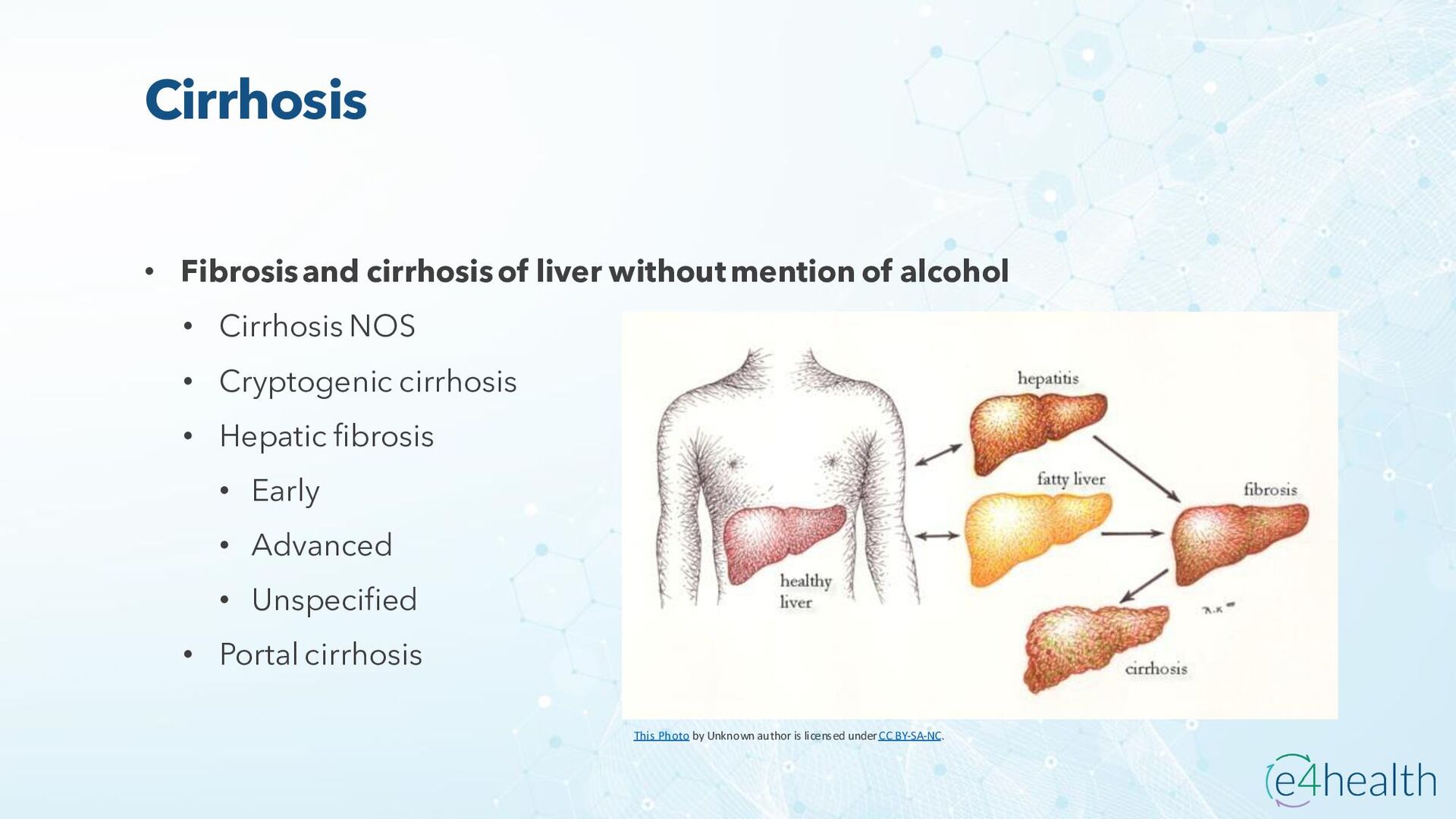
  8. Cirrhosis • Fibrosis and cirrhosis of liver without mention of

    alcohol • Cirrhosis NOS • Cryptogenic cirrhosis • Hepatic fibrosis • Early • Advanced • Unspecified • Portal cirrhosis This Photo by Unknown author is licensed under CC BY-SA-NC.
  9. Primary biliary cirrhosis • Primary Biliary Cirrhosis (Primary Biliary Cholangitis)

    • Inflammation in the bile ducts causing bile to back up in the liver resulting in scarring • Thought to be autoimmune in nature • Often no early symptoms, but most common is extreme itching • Later signs and symptoms the same as other cirrhosis
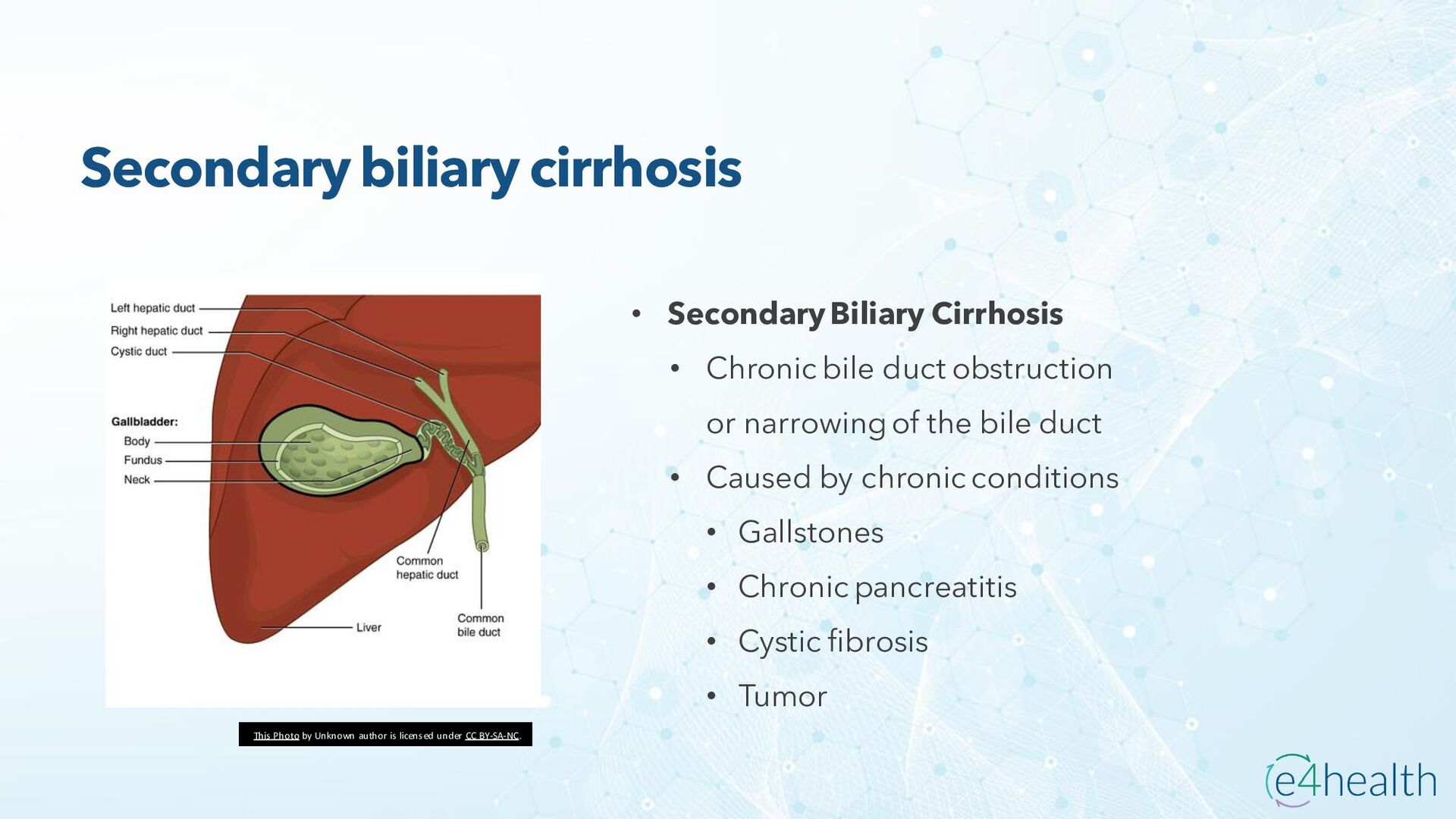
  10. Secondary biliary cirrhosis • Secondary Biliary Cirrhosis • Chronic bile

    duct obstruction or narrowing of the bile duct • Caused by chronic conditions • Gallstones • Chronic pancreatitis • Cystic fibrosis • Tumor This Photo by Unknown author is licensed under CC BY-SA-NC.
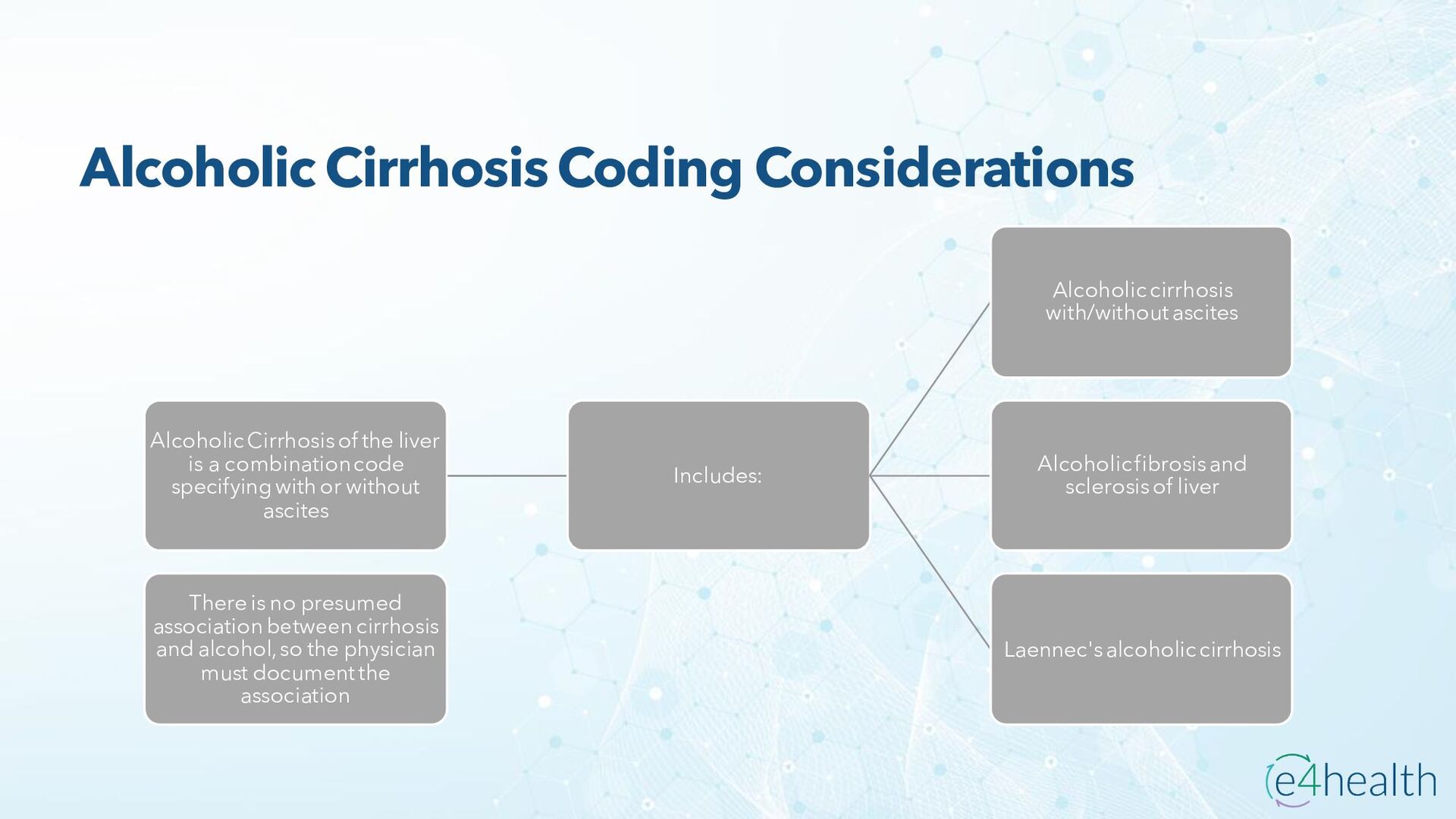
  11. Alcoholic Cirrhosis Coding Considerations Alcoholic Cirrhosis of the liver is

    a combination code specifying with or without ascites Includes: Alcoholic cirrhosis with/without ascites Alcoholic fibrosis and sclerosis of liver Laennec's alcoholic cirrhosis There is no presumed association between cirrhosis and alcohol, so the physician must document the association
  12. Alcoholic liver disease • Stages of Alcoholic Liver Disease •

    Alcoholic fatty liver • Most common • Enlarged liver due to fat • Reversible with the elimination of alcohol intake • Alcoholic hepatitis • Inflammation of the liver from liver damage caused by the production of a toxic metabolite of alcohol called acetaldehyde • May be reversible with the elimination of alcohol intake if caught before death of the liver cells occurs • Alcoholic cirrhosis • End-stage disease • Cirrhosis refers to the replacement of normal liver tissue with scar tissue. Cirrhosis is permanent, even if a person stops drinking
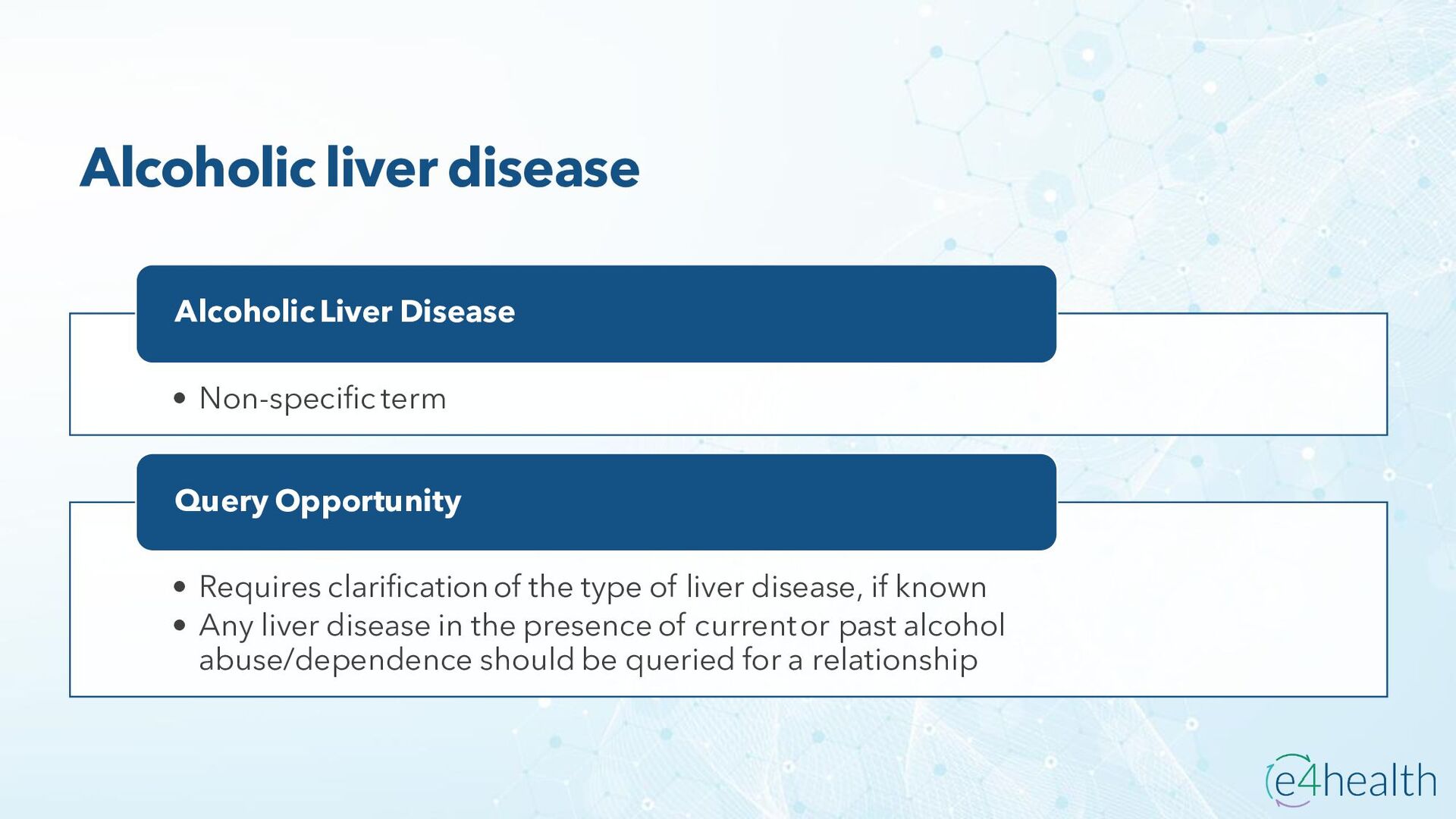
  13. Alcoholic liver disease • Non-specific term Alcoholic Liver Disease •

    Requires clarification of the type of liver disease, if known • Any liver disease in the presence of current or past alcohol abuse/dependence should be queried for a relationship Query Opportunity
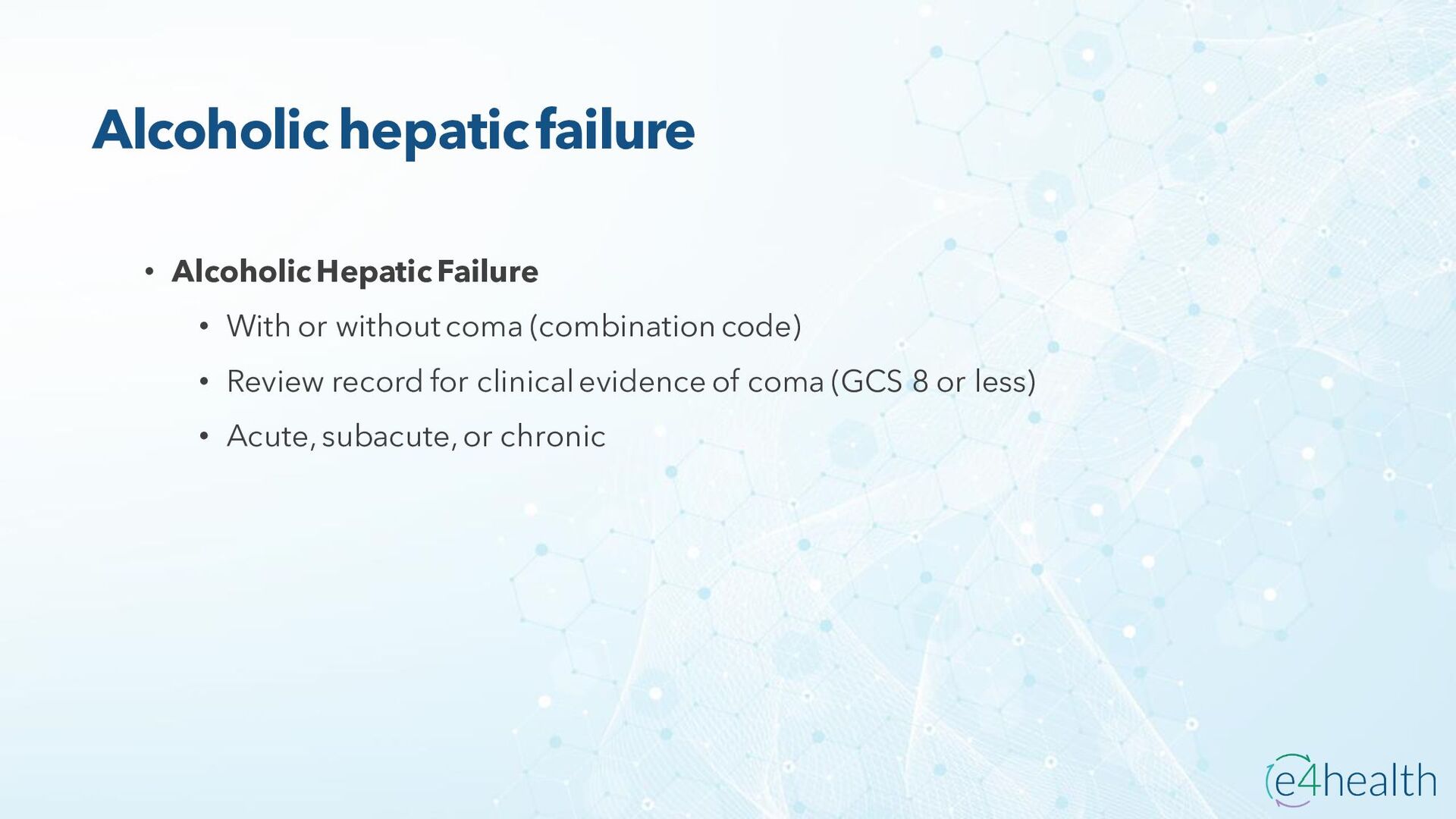
  14. Alcoholic hepatic failure • Alcoholic Hepatic Failure • With or

    without coma (combination code) • Review record for clinical evidence of coma (GCS 8 or less) • Acute, subacute, or chronic
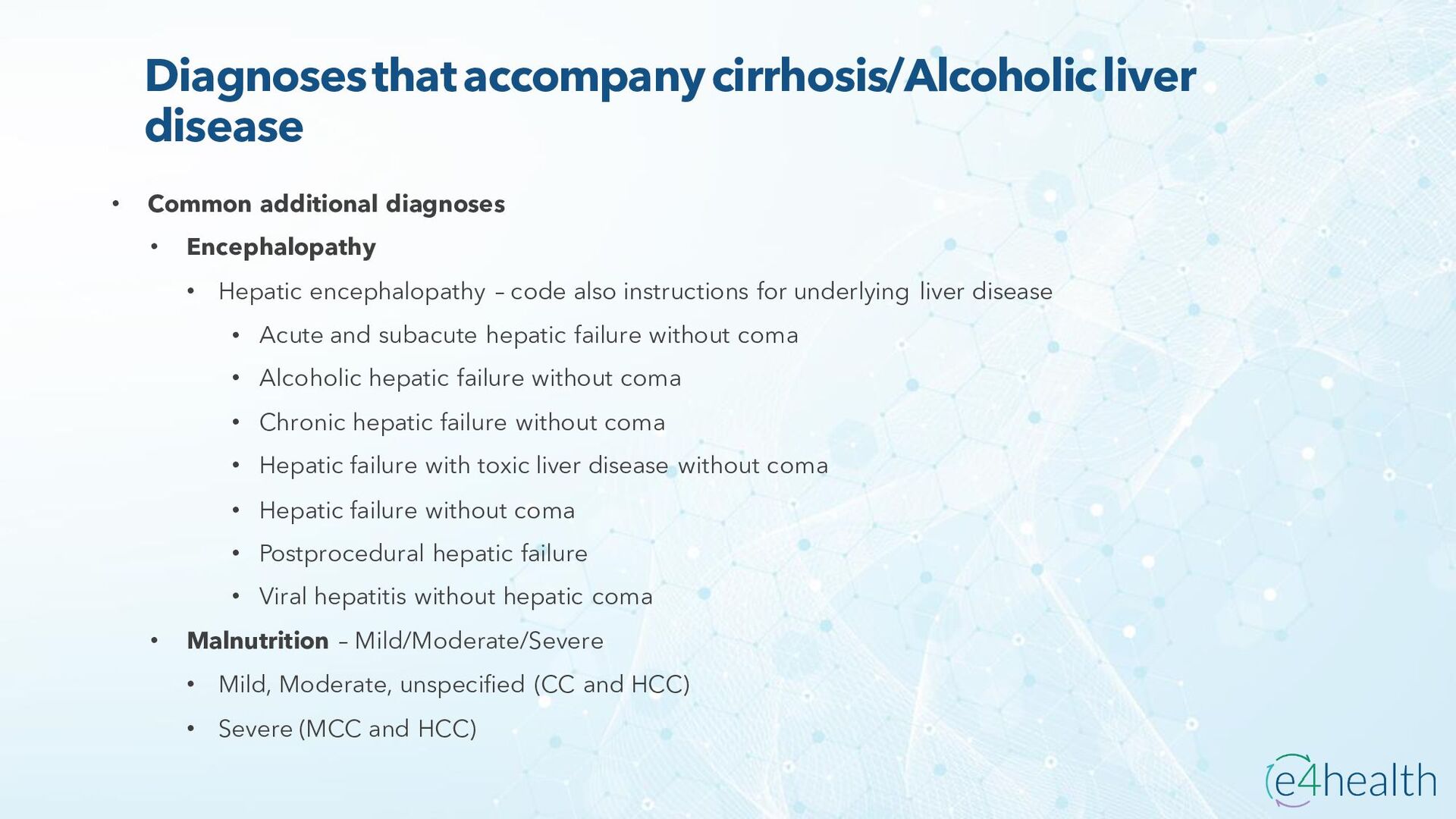
  15. Diagnoses that accompany cirrhosis/Alcoholic liver disease • Common additional diagnoses

    • Encephalopathy • Hepatic encephalopathy – code also instructions for underlying liver disease • Acute and subacute hepatic failure without coma • Alcoholic hepatic failure without coma • Chronic hepatic failure without coma • Hepatic failure with toxic liver disease without coma • Hepatic failure without coma • Postprocedural hepatic failure • Viral hepatitis without hepatic coma • Malnutrition – Mild/Moderate/Severe • Mild, Moderate, unspecified (CC and HCC) • Severe (MCC and HCC)
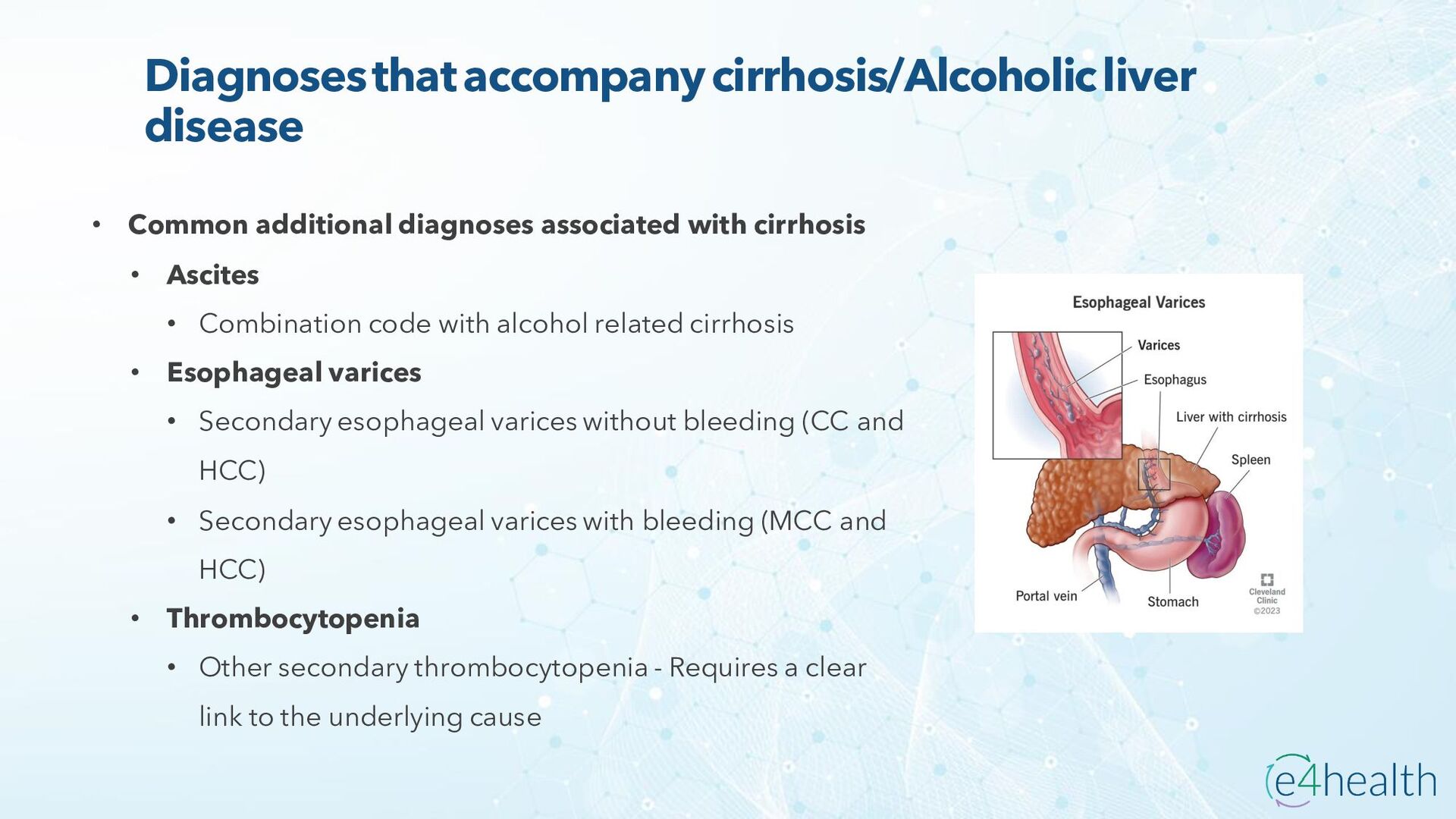
  16. Diagnoses that accompany cirrhosis/Alcoholic liver disease • Common additional diagnoses

    associated with cirrhosis • Ascites • Combination code with alcohol related cirrhosis • Esophageal varices • Secondary esophageal varices without bleeding (CC and HCC) • Secondary esophageal varices with bleeding (MCC and HCC) • Thrombocytopenia • Other secondary thrombocytopenia - Requires a clear link to the underlying cause
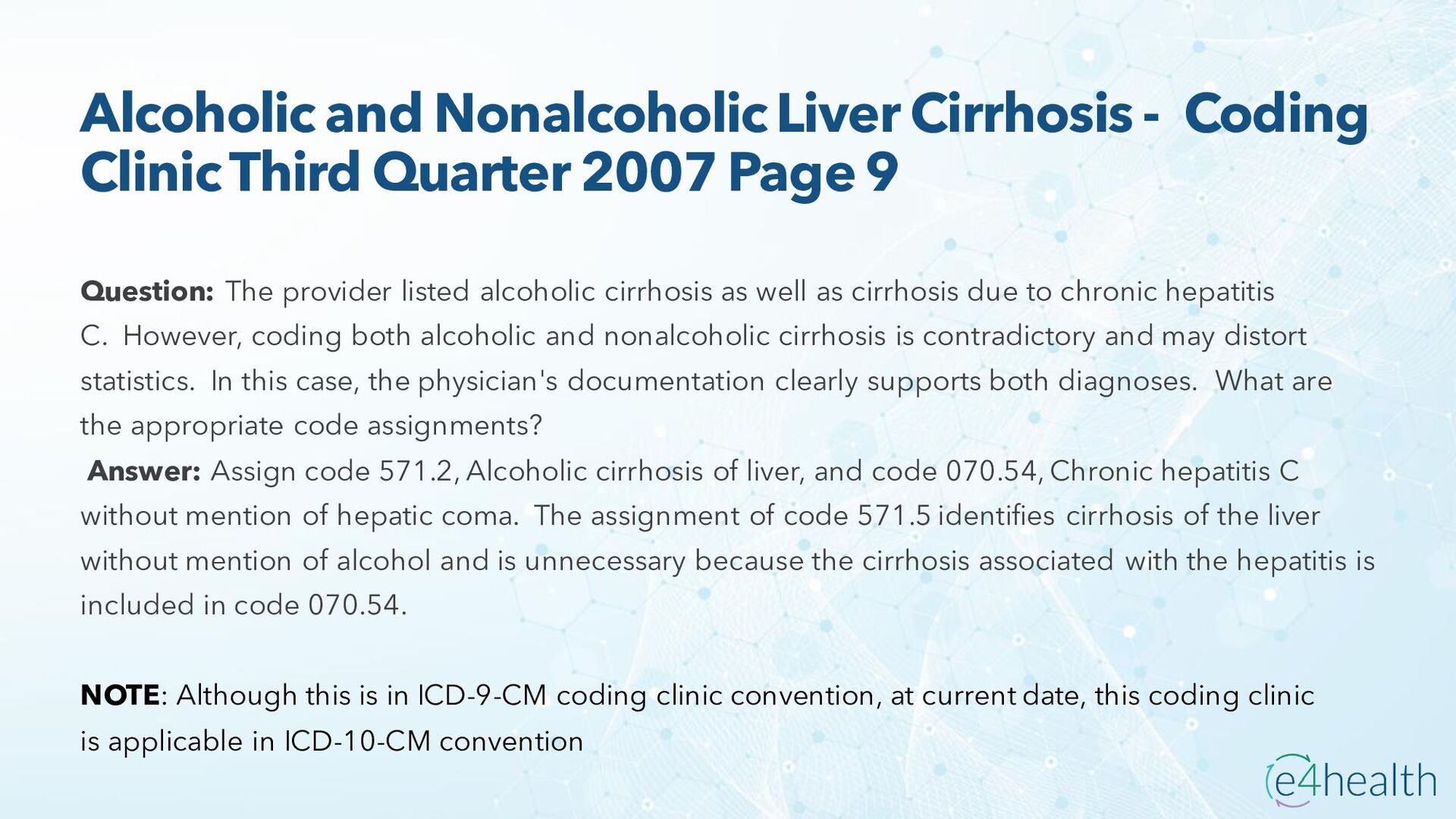
  17. Alcoholic and Nonalcoholic Liver Cirrhosis - Coding Clinic Third Quarter

    2007 Page 9 Question: The provider listed alcoholic cirrhosis as well as cirrhosis due to chronic hepatitis C. However, coding both alcoholic and nonalcoholic cirrhosis is contradictory and may distort statistics. In this case, the physician's documentation clearly supports both diagnoses. What are the appropriate code assignments? Answer: Assign code 571.2, Alcoholic cirrhosis of liver, and code 070.54, Chronic hepatitis C without mention of hepatic coma. The assignment of code 571.5 identifies cirrhosis of the liver without mention of alcohol and is unnecessary because the cirrhosis associated with the hepatitis is included in code 070.54. NOTE: Although this is in ICD-9-CM coding clinic convention, at current date, this coding clinic is applicable in ICD-10-CM convention
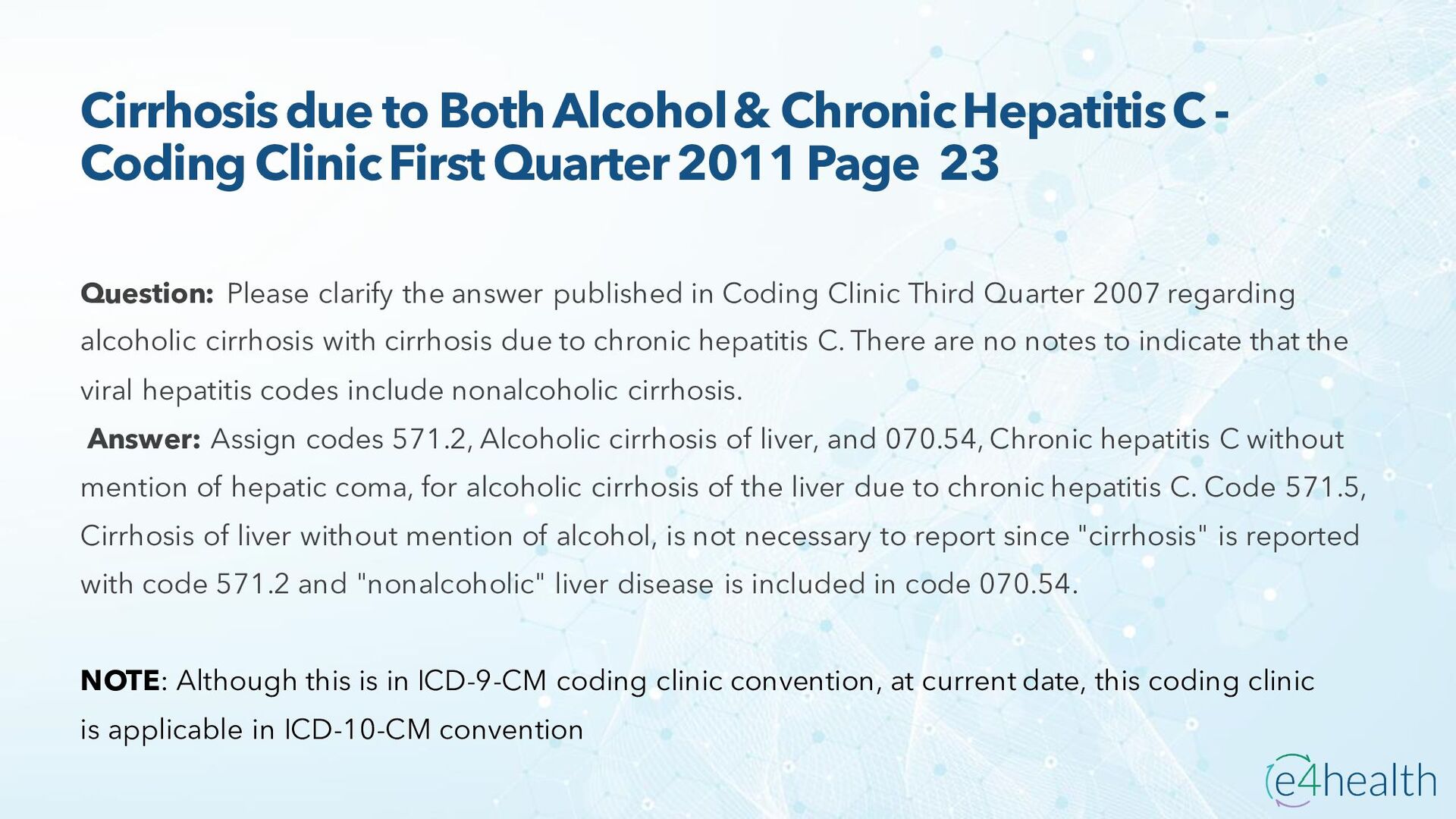
  18. Cirrhosis due to Both Alcohol & Chronic Hepatitis C -

    Coding Clinic First Quarter 2011 Page 23 Question: Please clarify the answer published in Coding Clinic Third Quarter 2007 regarding alcoholic cirrhosis with cirrhosis due to chronic hepatitis C. There are no notes to indicate that the viral hepatitis codes include nonalcoholic cirrhosis. Answer: Assign codes 571.2, Alcoholic cirrhosis of liver, and 070.54, Chronic hepatitis C without mention of hepatic coma, for alcoholic cirrhosis of the liver due to chronic hepatitis C. Code 571.5, Cirrhosis of liver without mention of alcohol, is not necessary to report since "cirrhosis" is reported with code 571.2 and "nonalcoholic" liver disease is included in code 070.54. NOTE: Although this is in ICD-9-CM coding clinic convention, at current date, this coding clinic is applicable in ICD-10-CM convention
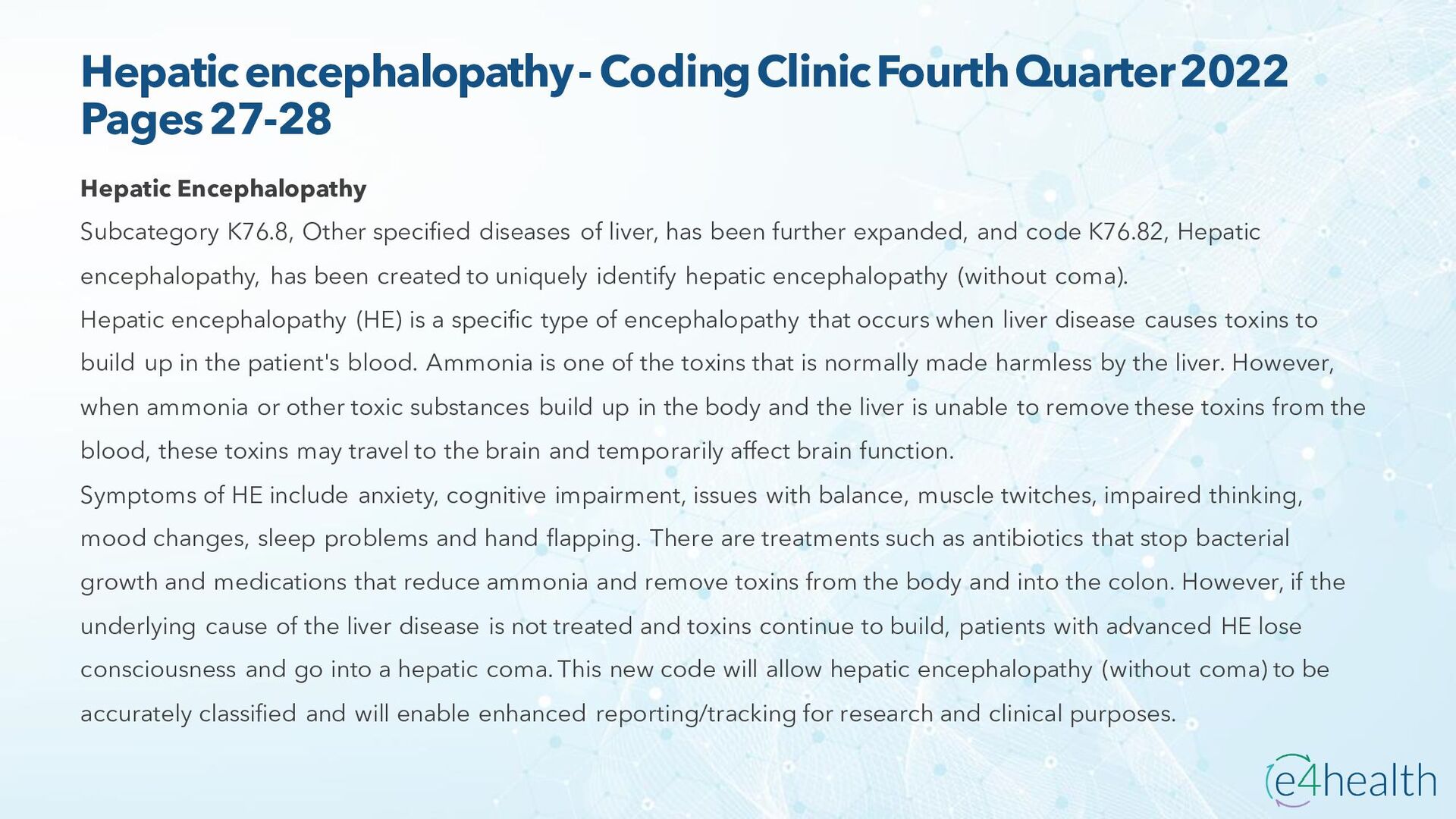
  19. Hepatic encephalopathy - Coding Clinic Fourth Quarter 2022 Pages 27-28

    Hepatic Encephalopathy Subcategory K76.8, Other specified diseases of liver, has been further expanded, and code K76.82, Hepatic encephalopathy, has been created to uniquely identify hepatic encephalopathy (without coma). Hepatic encephalopathy (HE) is a specific type of encephalopathy that occurs when liver disease causes toxins to build up in the patient's blood. Ammonia is one of the toxins that is normally made harmless by the liver. However, when ammonia or other toxic substances build up in the body and the liver is unable to remove these toxins from the blood, these toxins may travel to the brain and temporarily affect brain function. Symptoms of HE include anxiety, cognitive impairment, issues with balance, muscle twitches, impaired thinking, mood changes, sleep problems and hand flapping. There are treatments such as antibiotics that stop bacterial growth and medications that reduce ammonia and remove toxins from the body and into the colon. However, if the underlying cause of the liver disease is not treated and toxins continue to build, patients with advanced HE lose consciousness and go into a hepatic coma. This new code will allow hepatic encephalopathy (without coma) to be accurately classified and will enable enhanced reporting/tracking for research and clinical purposes.
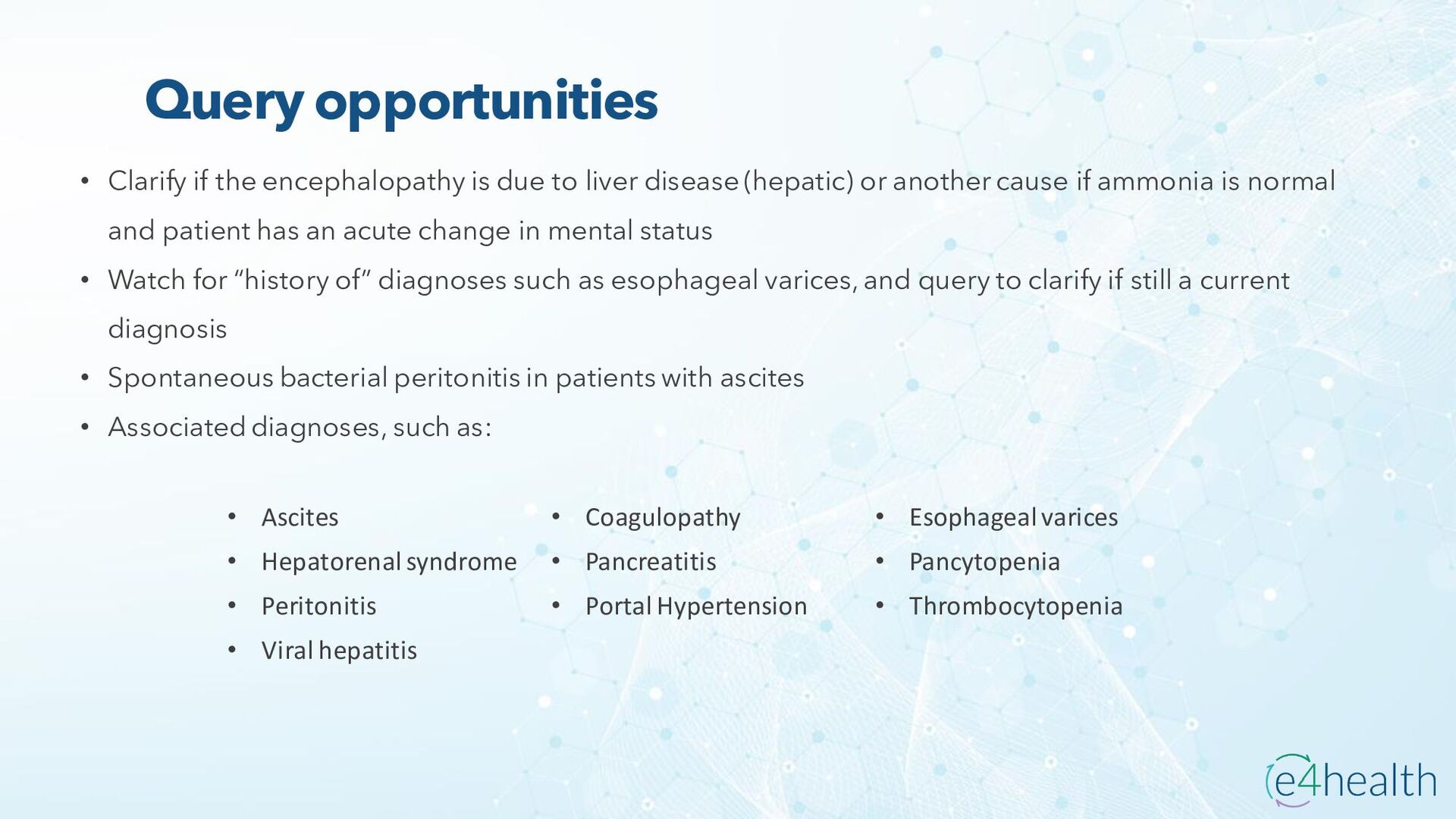
  20. Query opportunities • Clarify if the encephalopathy is due to

    liver disease (hepatic) or another cause if ammonia is normal and patient has an acute change in mental status • Watch for “history of” diagnoses such as esophageal varices, and query to clarify if still a current diagnosis • Spontaneous bacterial peritonitis in patients with ascites • Associated diagnoses, such as: • Ascites • Coagulopathy • Esophageal varices • Hepatorenal syndrome • Pancreatitis • Pancytopenia • Peritonitis • Portal Hypertension • Thrombocytopenia • Viral hepatitis
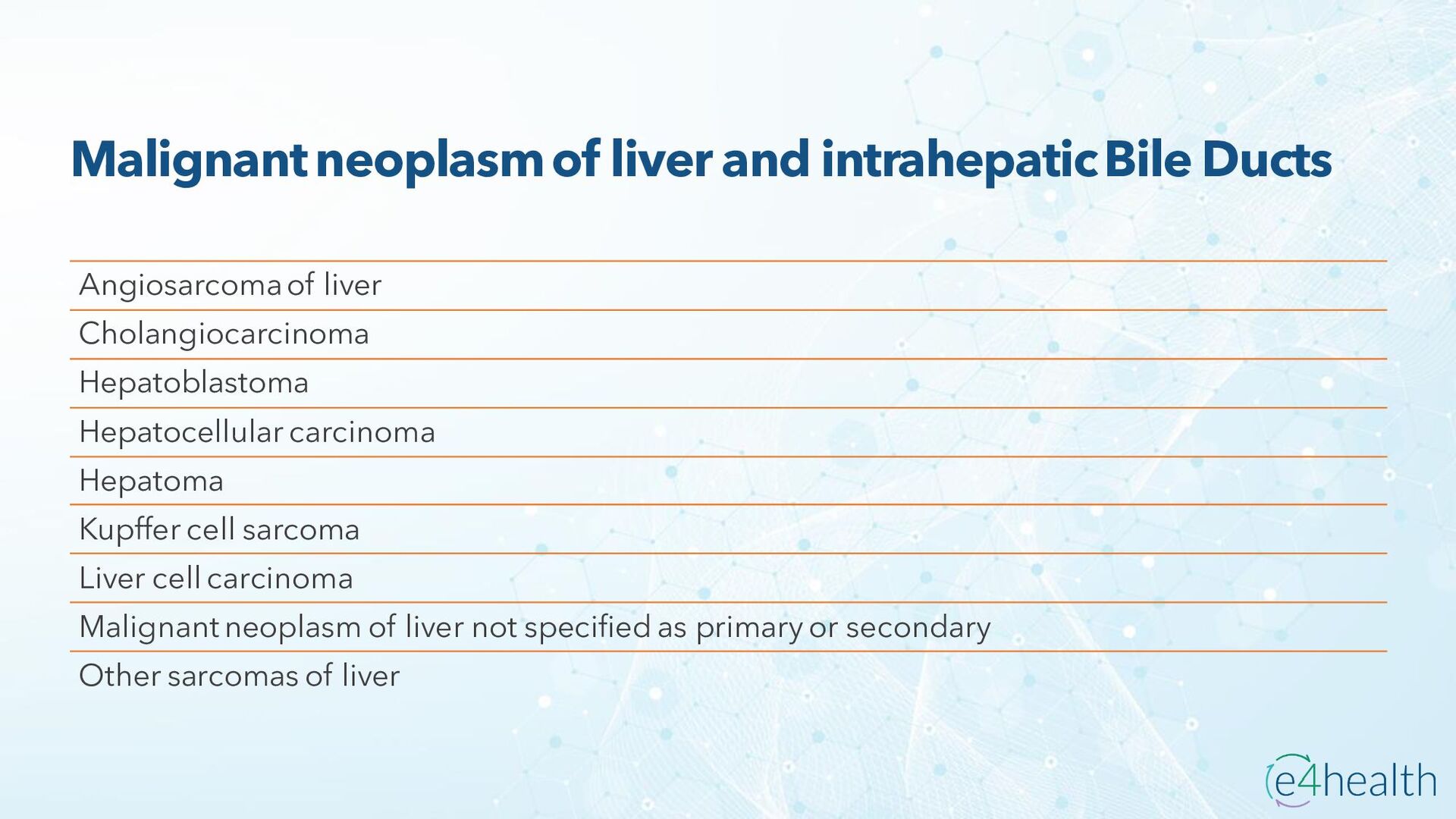
  21. Malignant neoplasm of liver and intrahepatic Bile Ducts Angiosarcoma of

    liver Cholangiocarcinoma Hepatoblastoma Hepatocellular carcinoma Hepatoma Kupffer cell sarcoma Liver cell carcinoma Malignant neoplasm of liver not specified as primary or secondary Other sarcomas of liver
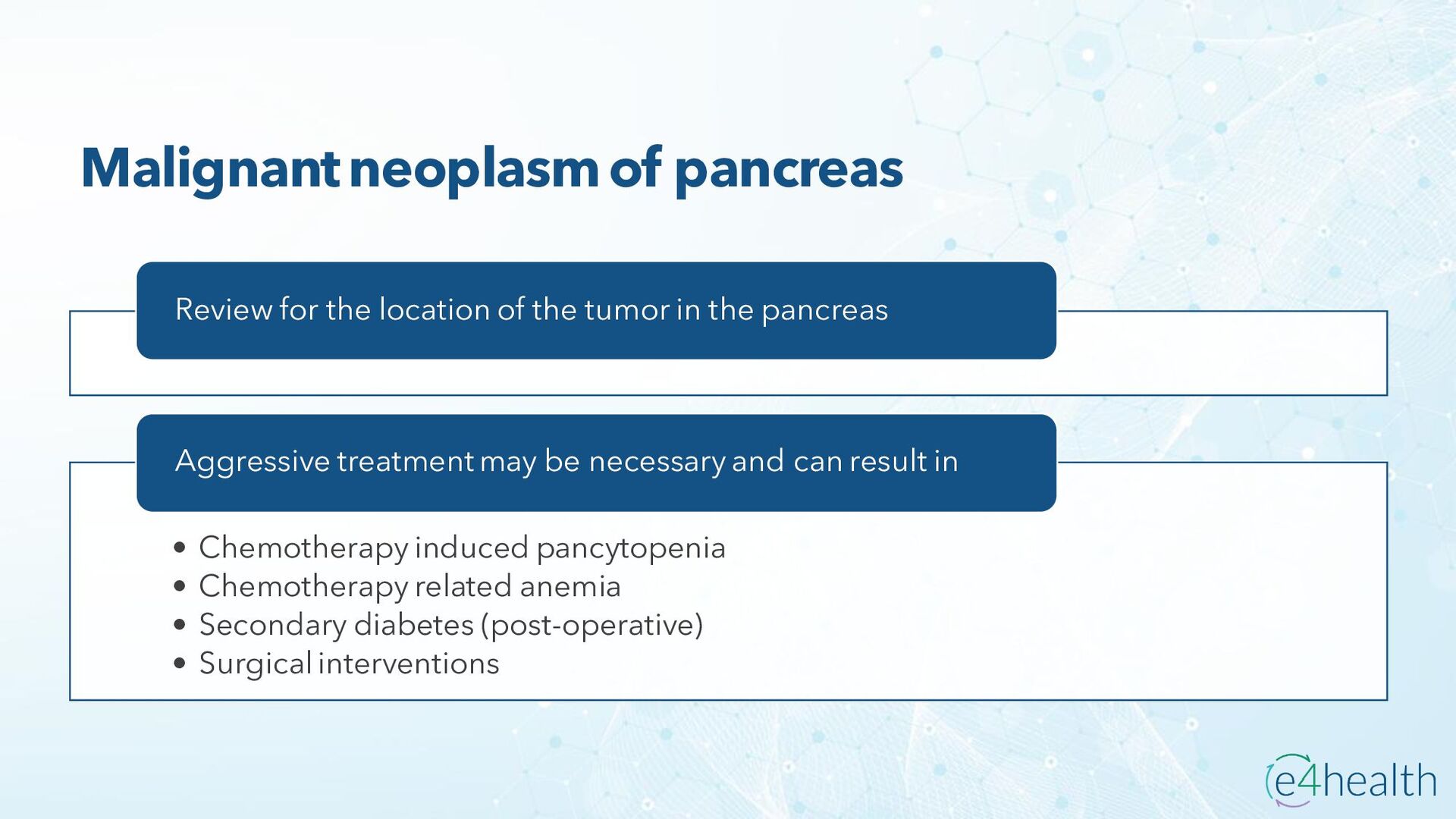
  22. Malignant neoplasm of pancreas Review for the location of the

    tumor in the pancreas • Chemotherapy induced pancytopenia • Chemotherapy related anemia • Secondary diabetes (post-operative) • Surgical interventions Aggressive treatment may be necessary and can result in
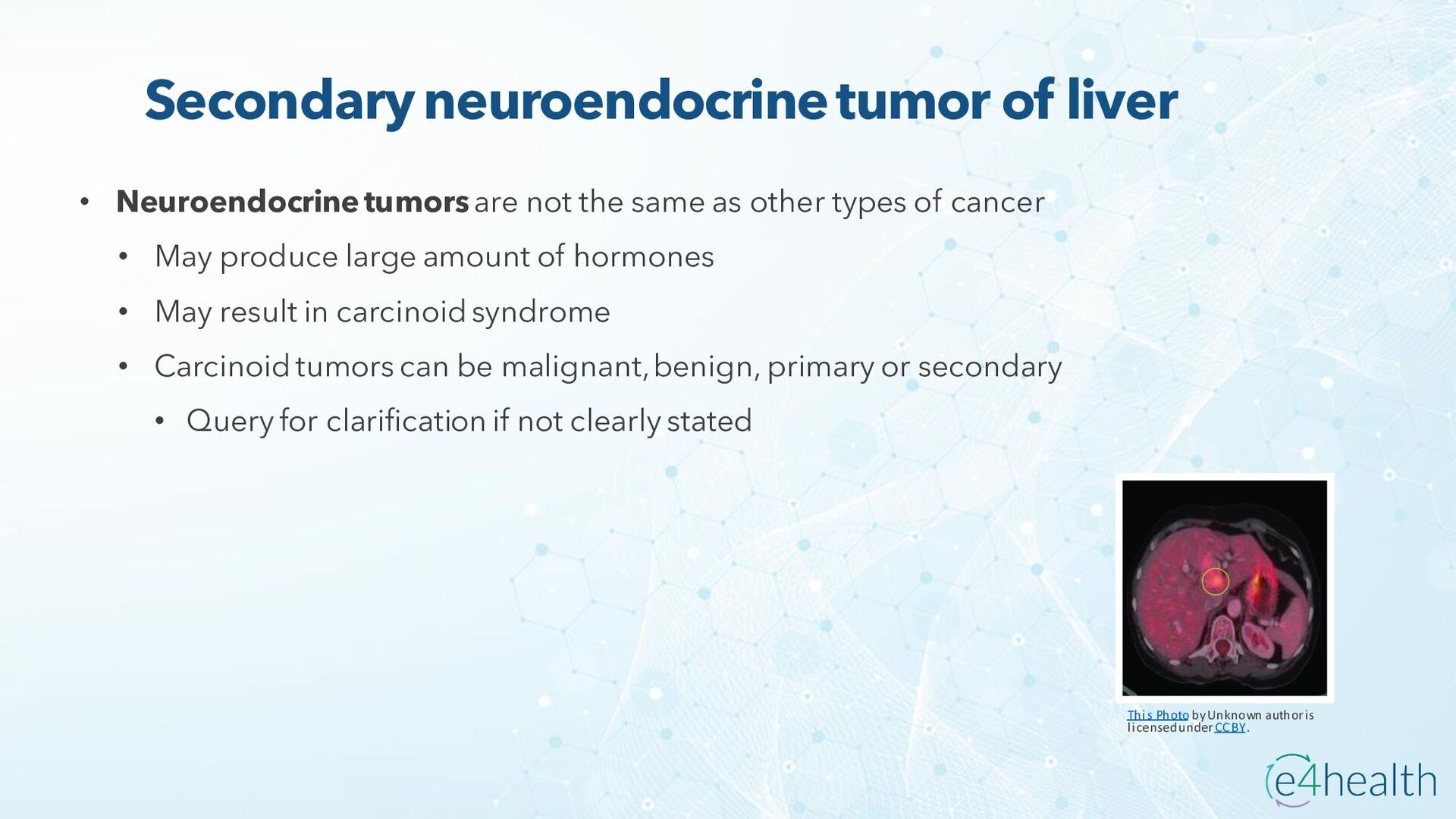
  23. Secondary neuroendocrine tumor of liver • Neuroendocrine tumors are not

    the same as other types of cancer • May produce large amount of hormones • May result in carcinoid syndrome • Carcinoid tumors can be malignant, benign, primary or secondary • Query for clarification if not clearly stated This Photo by Unknown author is licensed under CC BY.
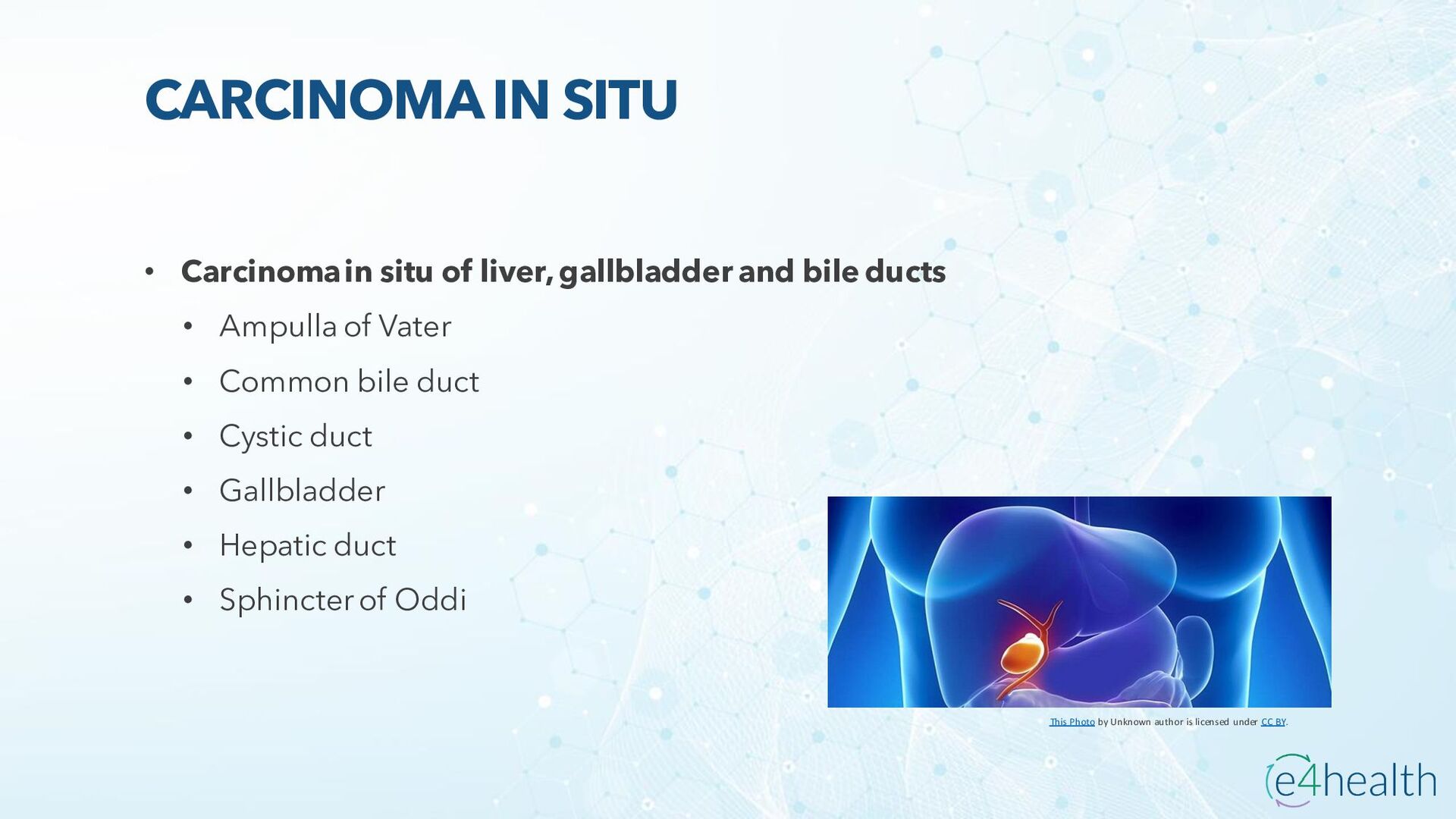
  24. CARCINOMA IN SITU • Carcinoma in situ of liver, gallbladder

    and bile ducts • Ampulla of Vater • Common bile duct • Cystic duct • Gallbladder • Hepatic duct • Sphincter of Oddi This Photo by Unknown author is licensed under CC BY.
  25. Carcinoid Syndrome Tests and Diagnosis • Rule out other causes

    for signs and symptoms • 5-HIAA urine test – looking for 5-HIAA a substance produced from serotonin • Blood plasma test for 5-HIAA – more convenient than urine test • Chromogranin A test – substance produced by a NET that may or may not be producing other active substances • Imaging to locate the neuroendocrine tumor • Endoscopy
  26. Carcinoid Syndrome Treatment Surgery to remove or reduce the neuroendocrine

    tumor Somatostatin analogs Octreotide (sandostatin) Lanreotide Pasireotide Chemotherapy The only treatment for carcinoid syndrome is to treat the tumor itself
  27. Hepatobiliary Neoplasms - General Query Opportunities • If documentation is

    vague or unclear query for type and location of tumor • Review for metastatic sites, if unclear query • Review labs for anemia or pancytopenia related to chemotherapy • If anemic, and there has been bleeding clarify if related to cancer, or to bleeding • Associated diagnoses, such as: • Acute necrosis of liver • Ascites • Cholangitis • Hepatic encephalopathy • Jaundice • Malnutrition • Metastasis to liver, lung, bone • Obstruction of bile duct • Pancreatitis • Portal vein thrombosis • Pulmonary embolism
  28. Diseases of the Pancreas • Many different pancreatic diseases •

    Abscess of pancreas • Alcoholic • Acute pancreatitis (idiopathic, biliary, gallstone, alcohol induced, drug induced, or unspecified) • Chronic pancreatitis (alcohol induced, other type, or unspecified) • Necrotizing pancreatitis • Cyst of pancreas • Cytomegaloviral pancreatitis • Gangrene of pancreas • Hemorrhagic pancreatitis • Pseudocyst of pancreas
  29. Pancreatitis Acute pancreatitis • Inflammation in the pancreatitis • Not

    usually an infection • Symptoms - upper abdominal pain (pain may radiate to back or worsen after eating), nausea, vomiting, fever, sweating , and rebound tenderness Chronic pancreatitis • Chronic Inflammation in the pancreas • Usually caused by alcohol • Symptoms - upper abdominal pain, indigestion, weight loss, and oily smelly stools. Can Cause SIRS – Monitor for infection, If Sepsis is documented with pancreatitis query to clarify SIRS or Sepsis due to an infection and the location of that infection
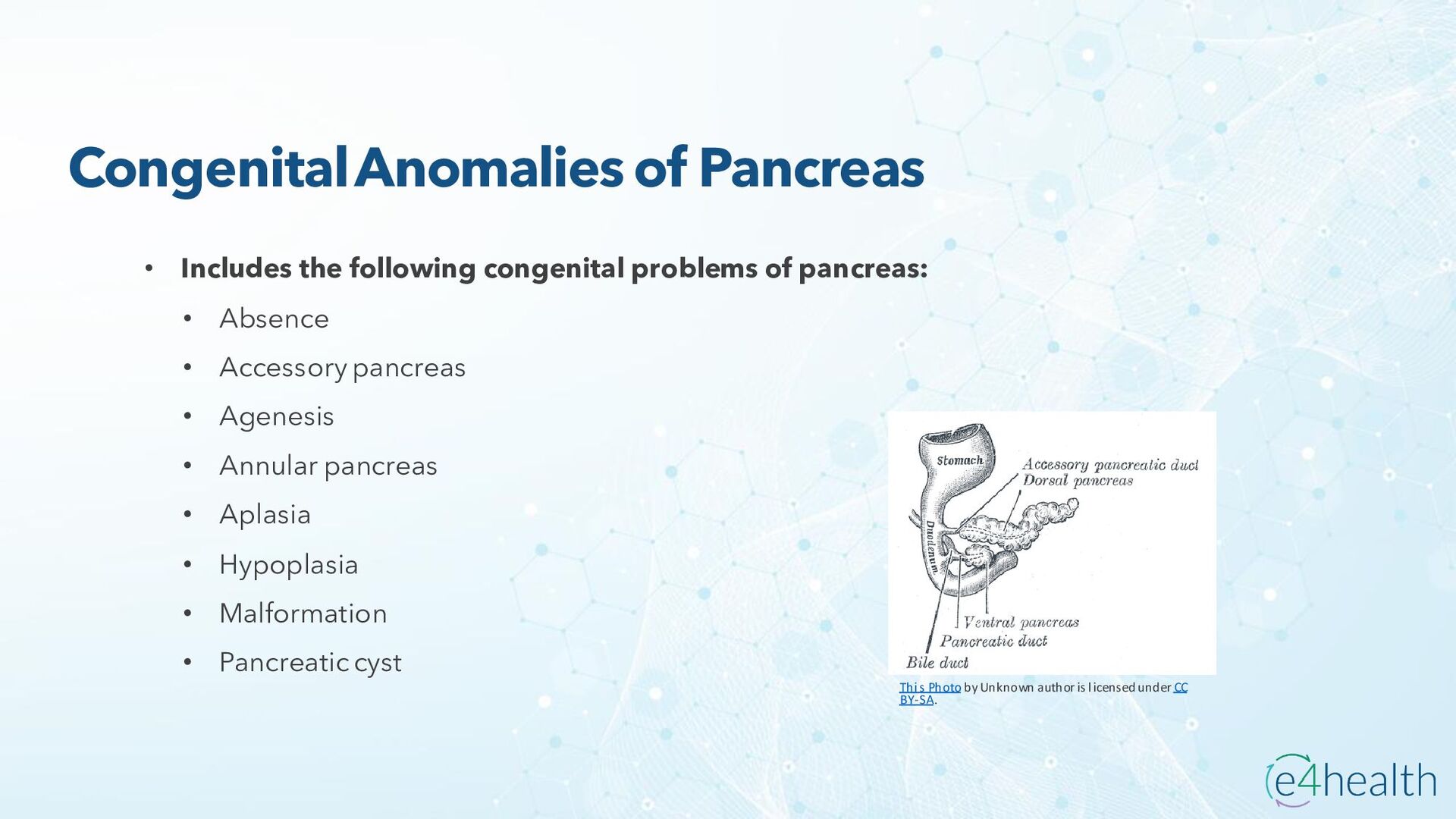
  30. Congenital Anomalies of Pancreas • Includes the following congenital problems

    of pancreas: • Absence • Accessory pancreas • Agenesis • Annular pancreas • Aplasia • Hypoplasia • Malformation • Pancreatic cyst This Photo by Unknown author is licensed under CC BY-SA.
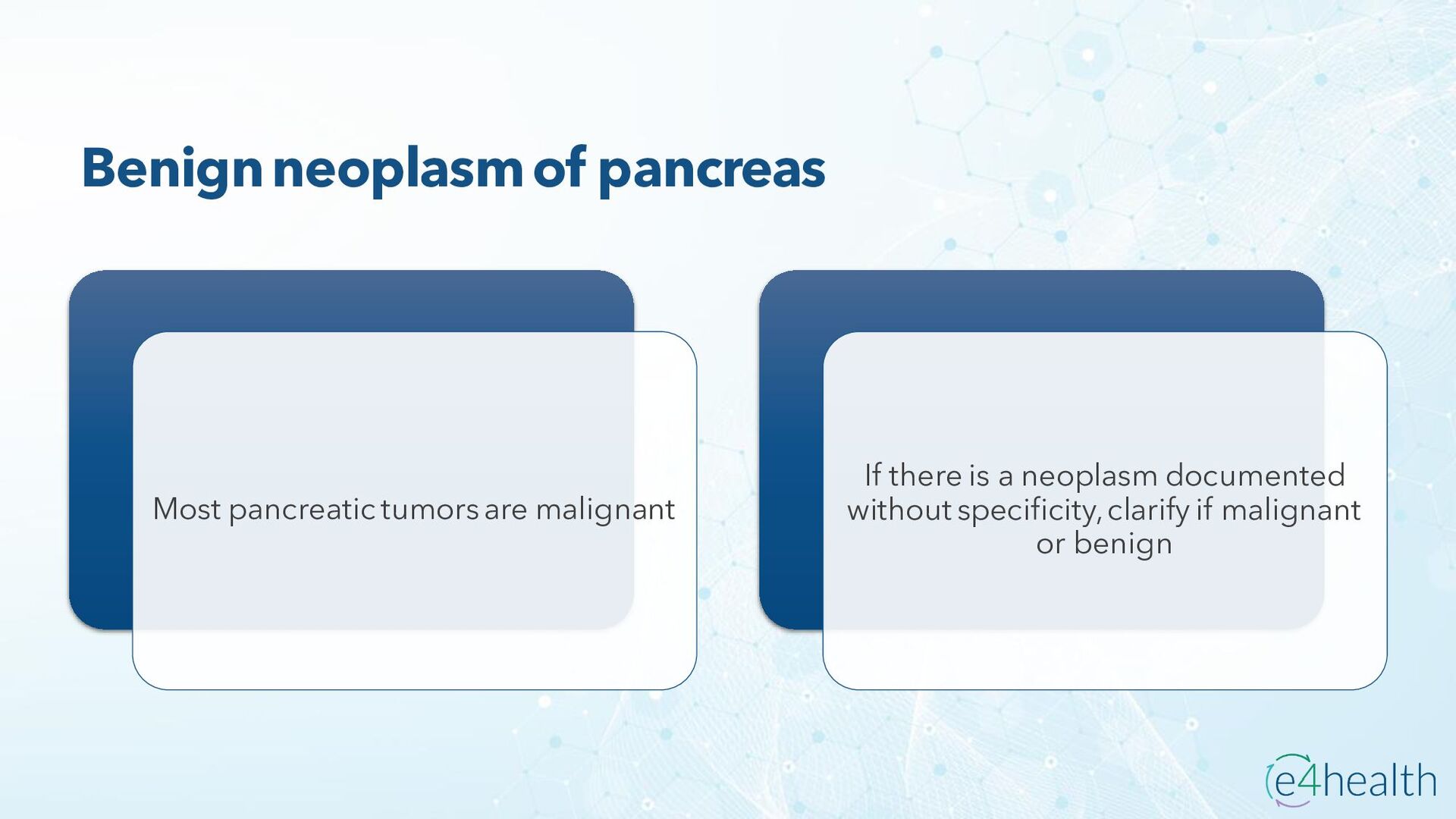
  31. Benign neoplasm of pancreas Most pancreatic tumors are malignant If

    there is a neoplasm documented without specificity, clarify if malignant or benign
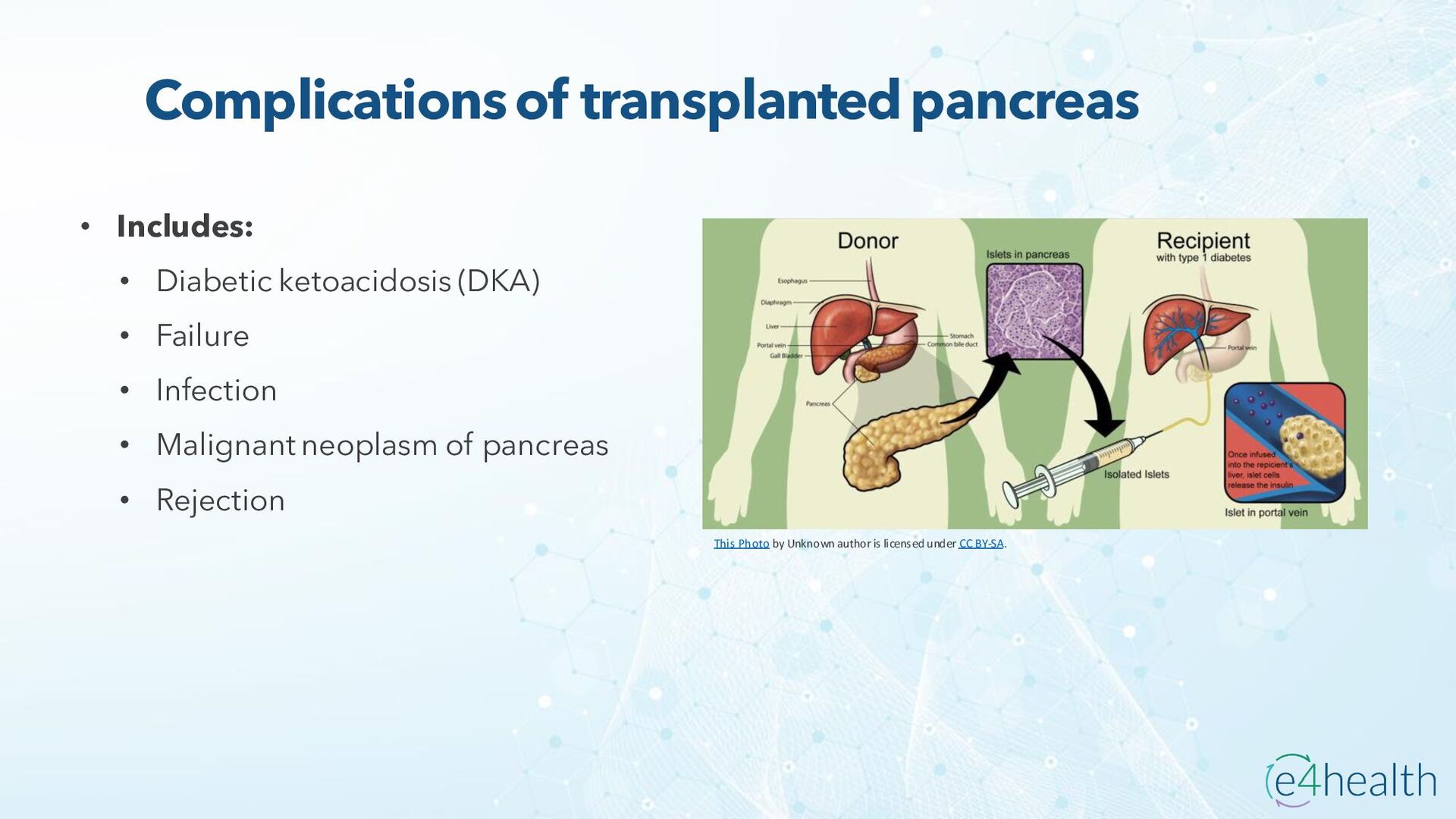
  32. Complications of transplanted pancreas • Includes: • Diabetic ketoacidosis (DKA)

    • Failure • Infection • Malignant neoplasm of pancreas • Rejection This Photo by Unknown author is licensed under CC BY-SA.
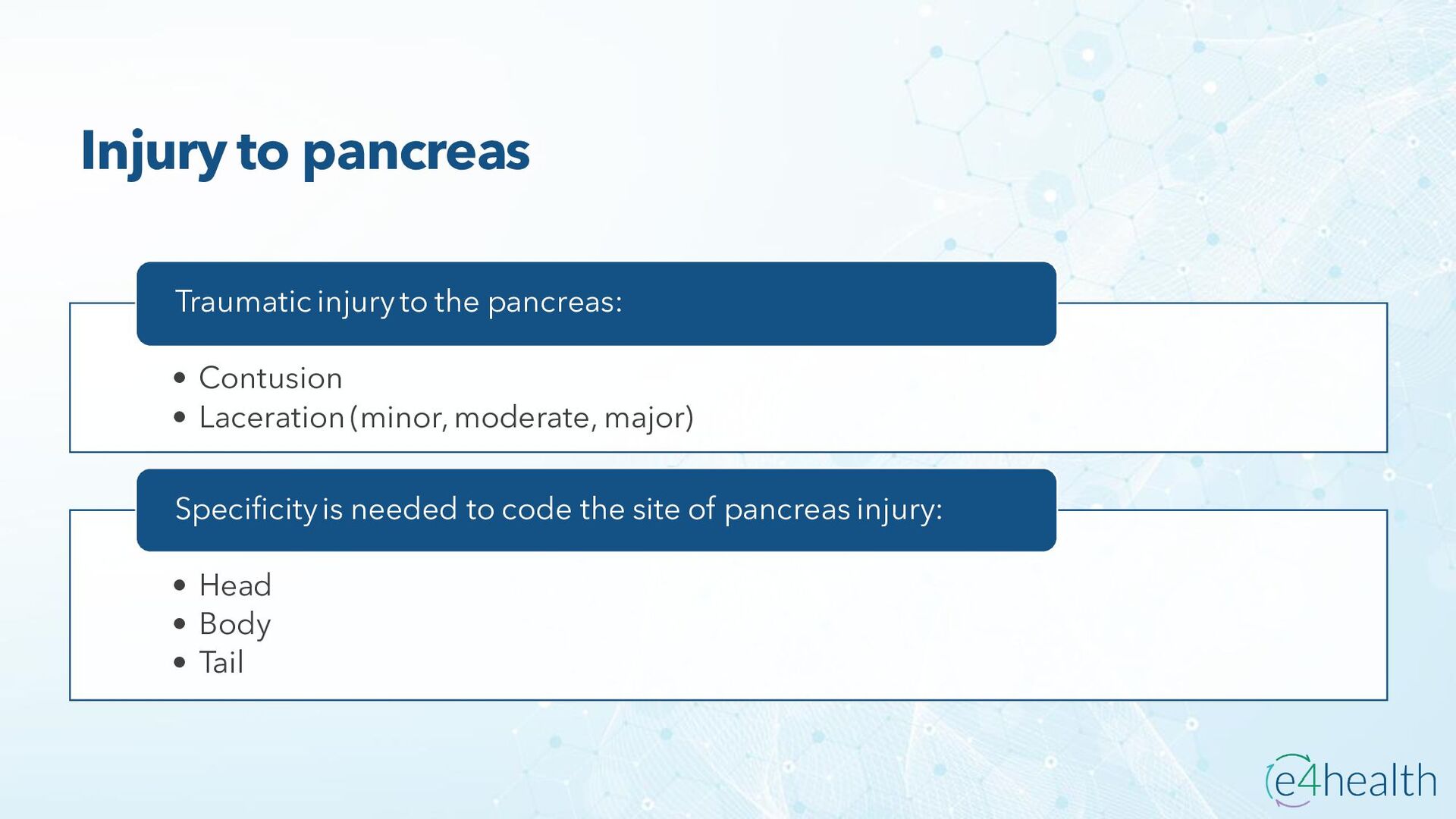
  33. Injury to pancreas • Contusion • Laceration (minor, moderate, major)

    Traumatic injury to the pancreas: • Head • Body • Tail Specificity is needed to code the site of pancreas injury:
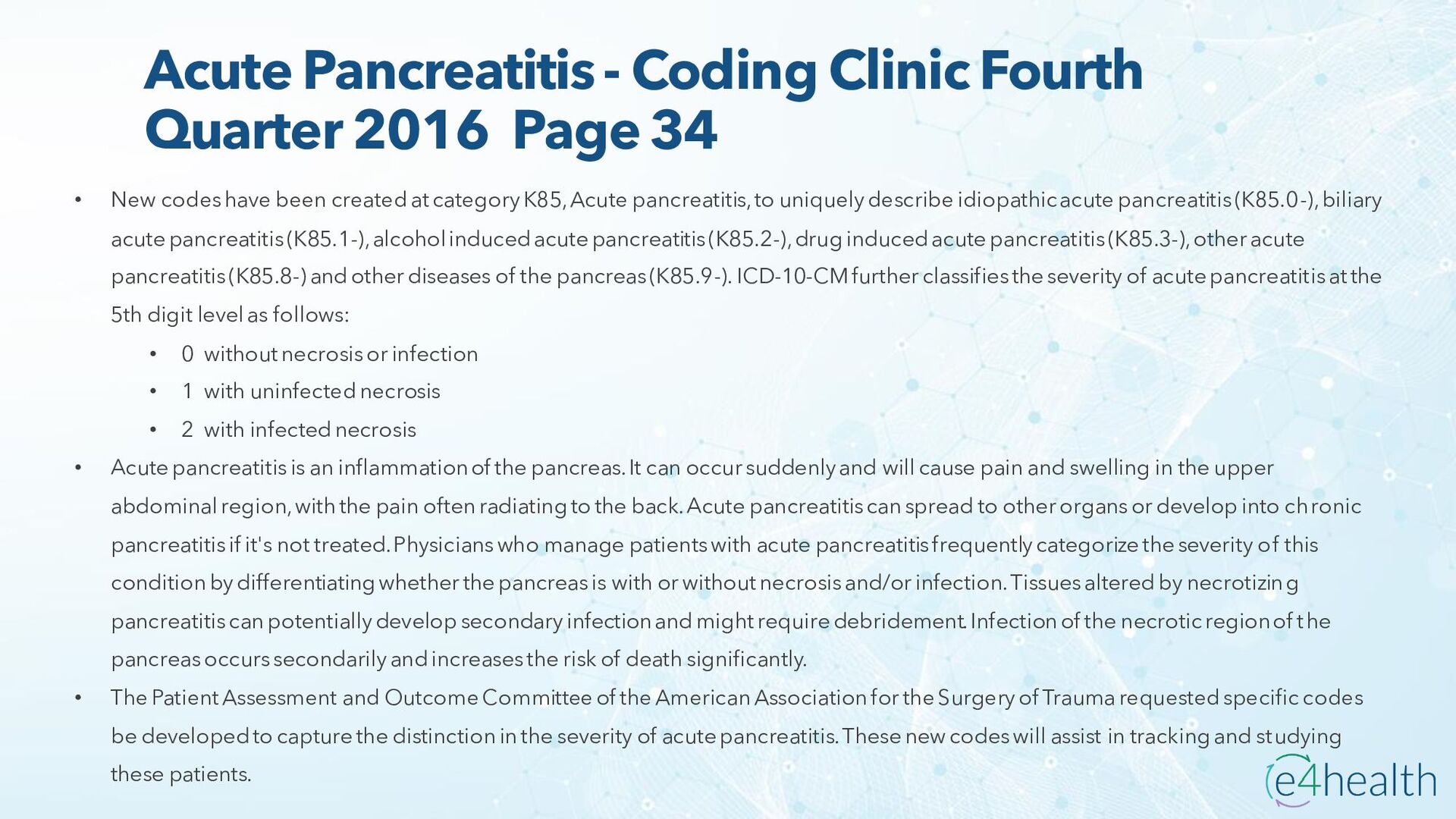
  34. Acute Pancreatitis - Coding Clinic Fourth Quarter 2016 Page 34

    • New codes have been created at category K85, Acute pancreatitis, to uniquely describe idiopathic acute pancreatitis (K85.0-), biliary acute pancreatitis (K85.1-), alcohol induced acute pancreatitis (K85.2-), drug induced acute pancreatitis (K85.3-), other acute pancreatitis (K85.8-) and other diseases of the pancreas (K85.9-). ICD-10-CM further classifies the severity of acute pancreatitis at the 5th digit level as follows: • 0 without necrosis or infection • 1 with uninfected necrosis • 2 with infected necrosis • Acute pancreatitis is an inflammation of the pancreas. It can occur suddenly and will cause pain and swelling in the upper abdominal region, with the pain often radiating to the back. Acute pancreatitis can spread to other organs or develop into chronic pancreatitis if it's not treated. Physicians who manage patients with acute pancreatitis frequently categorize the severity of this condition by differentiating whether the pancreas is with or without necrosis and/or infection. Tissues altered by necrotizing pancreatitis can potentially develop secondary infection and might require debridement. Infection of the necrotic region of the pancreas occurs secondarily and increases the risk of death significantly. • The Patient Assessment and Outcome Committee of the American Association for the Surgery of Trauma requested specific codes be developed to capture the distinction in the severity of acute pancreatitis. These new codes will assist in tracking and studying these patients.
  35. Alcoholic Pancreatitis and Alcohol Dependence - Coding Clinic First Quarter

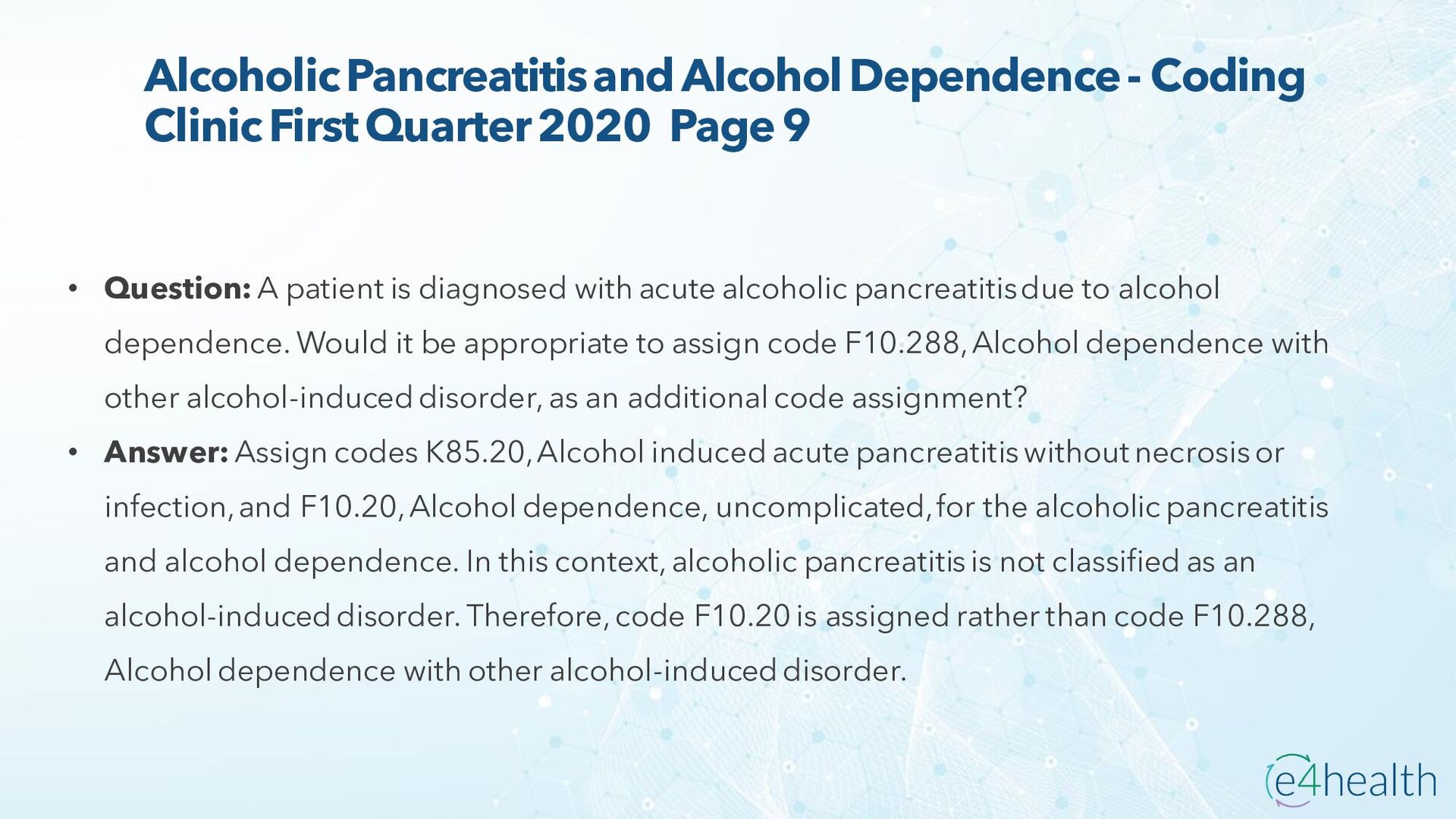
    2020 Page 9 • Question: A patient is diagnosed with acute alcoholic pancreatitis due to alcohol dependence. Would it be appropriate to assign code F10.288, Alcohol dependence with other alcohol-induced disorder, as an additional code assignment? • Answer: Assign codes K85.20, Alcohol induced acute pancreatitis without necrosis or infection, and F10.20, Alcohol dependence, uncomplicated, for the alcoholic pancreatitis and alcohol dependence. In this context, alcoholic pancreatitis is not classified as an alcohol-induced disorder. Therefore, code F10.20 is assigned rather than code F10.288, Alcohol dependence with other alcohol-induced disorder.
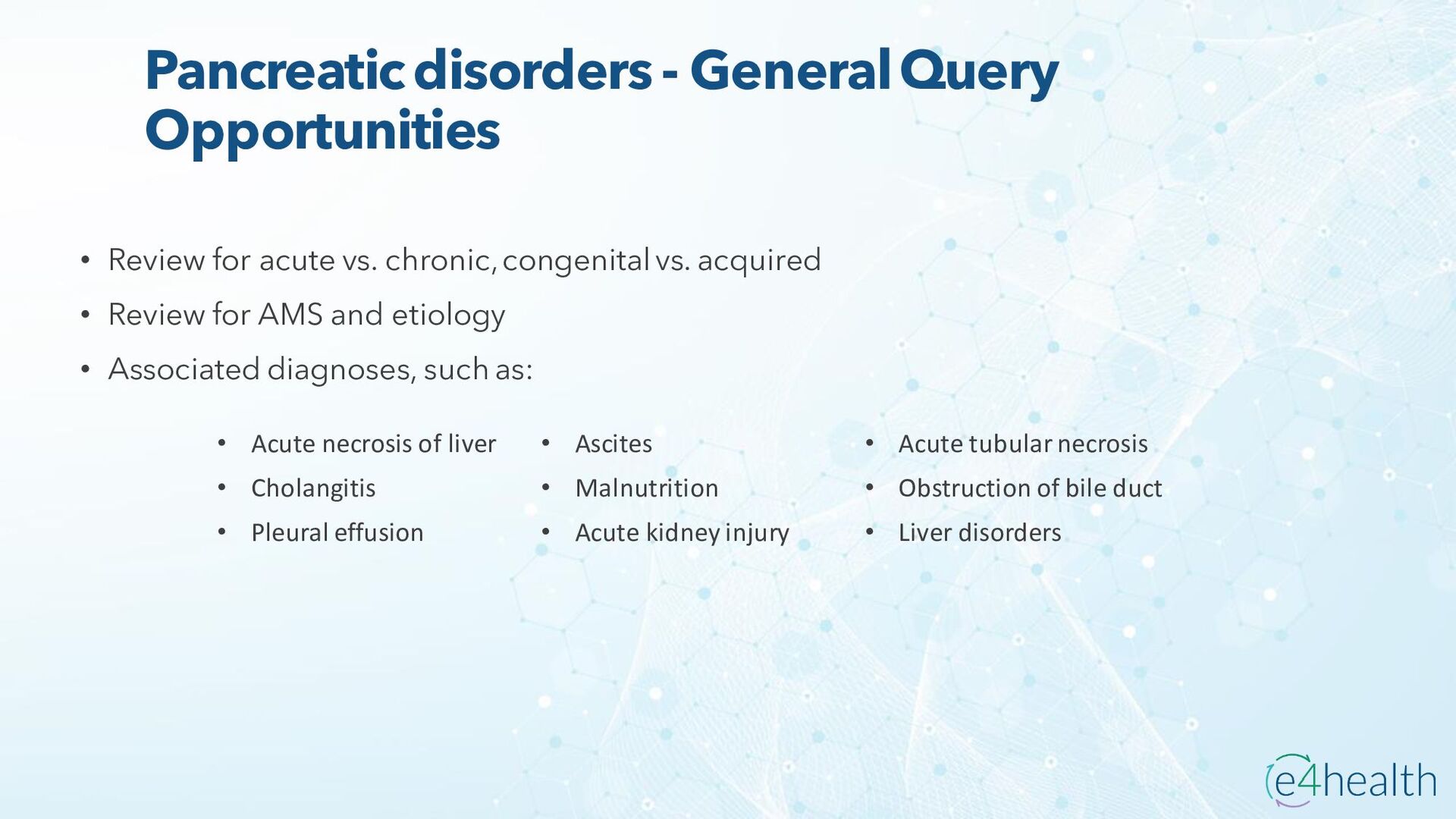
  36. Pancreatic disorders - General Query Opportunities • Review for acute

    vs. chronic, congenital vs. acquired • Review for AMS and etiology • Associated diagnoses, such as: • Acute necrosis of liver • Ascites • Acute tubular necrosis • Cholangitis • Malnutrition • Obstruction of bile duct • Pleural effusion • Acute kidney injury • Liver disorders
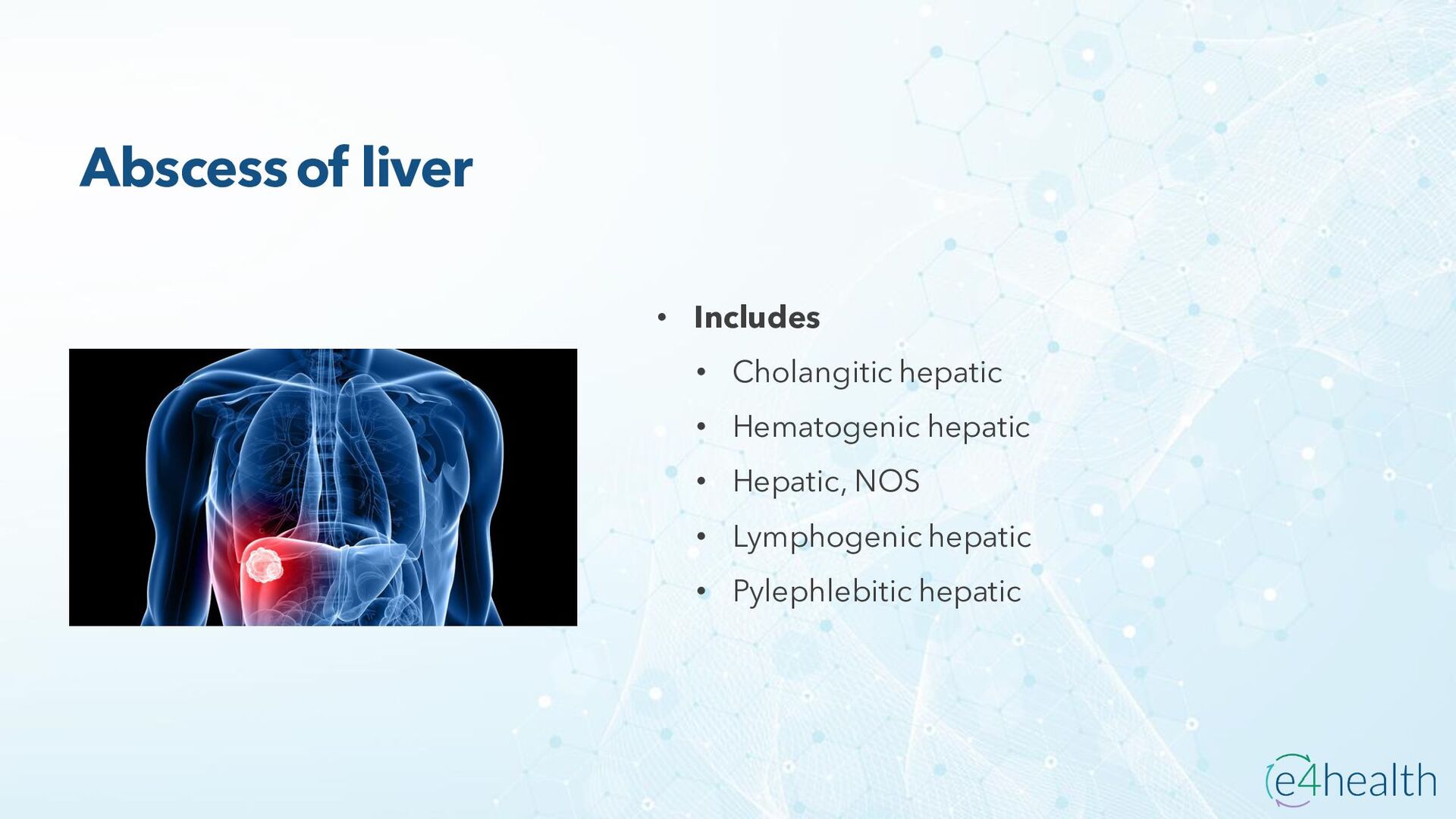
  37. Abscess of liver • Includes • Cholangitic hepatic • Hematogenic

    hepatic • Hepatic, NOS • Lymphogenic hepatic • Pylephlebitic hepatic
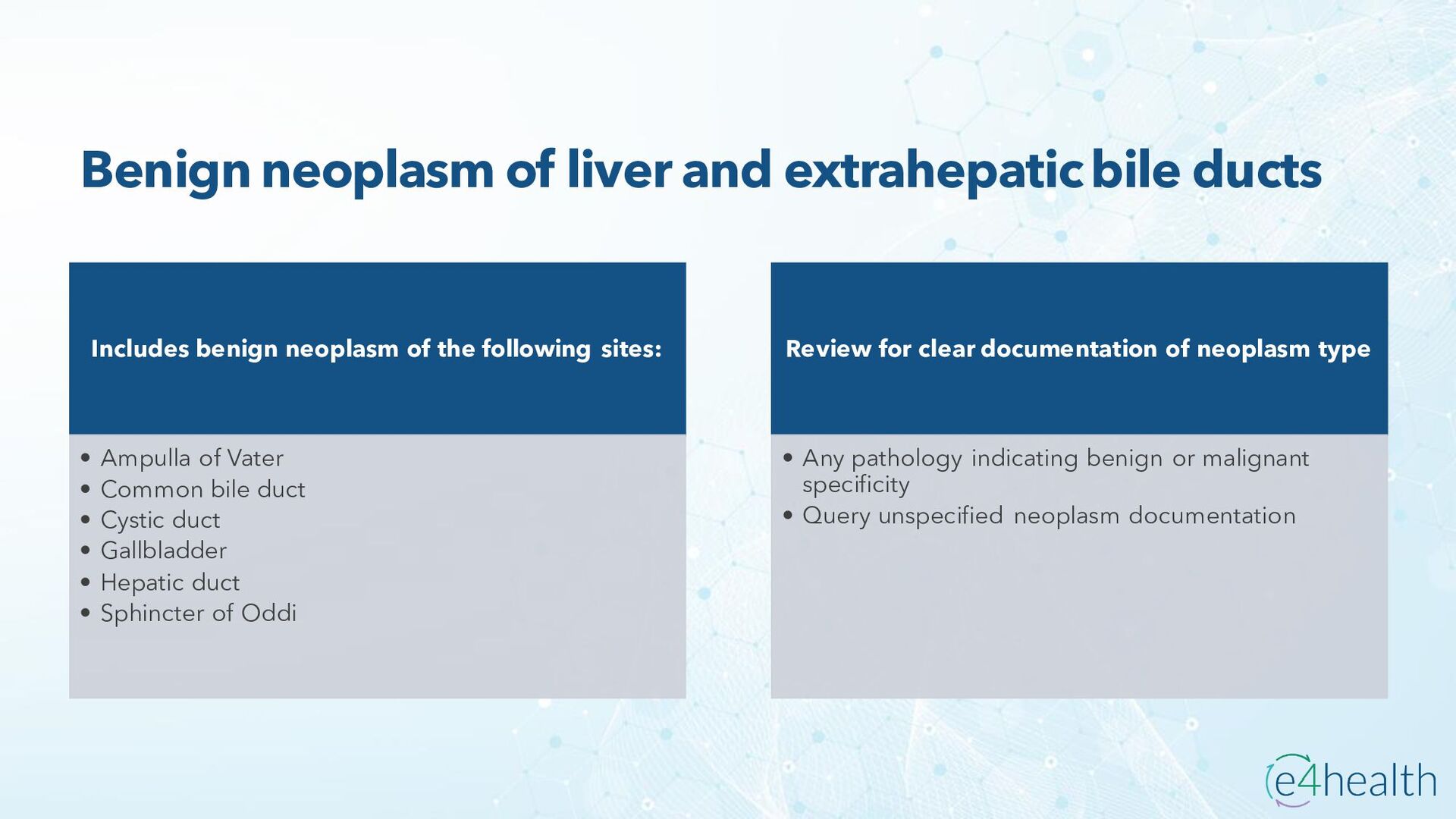
  38. Benign neoplasm of liver and extrahepatic bile ducts Includes benign

    neoplasm of the following sites: • Ampulla of Vater • Common bile duct • Cystic duct • Gallbladder • Hepatic duct • Sphincter of Oddi Review for clear documentation of neoplasm type • Any pathology indicating benign or malignant specificity • Query unspecified neoplasm documentation
  39. Complications of transplanted liver • Includes the following complications of

    a transplanted liver: • Failure • Infection • Malignancy • Rejection • Malignancy is common due to the use of immunosuppressant therapy, and recurrence of hepatic carcinoma • Complication of the transplanted organ will be sequenced as the principal diagnosis • The malignancy associated with the transplanted organ is sequenced as an additional diagnosis. (CC)
  40. chronic passive congestion of liver • Includes: • Cardiac cirrhosis

    • Cardiac sclerosis • Venous congestion in the liver from right- sided heart failure • Chronic congestion leads to fibrosis, and cirrhosis • Diagnosis: • Patients with right-sided heart failure along with jaundice, hepatomegaly and abnormal liver values. • Right upper quadrant pain and tender hepatomegaly. • May have ascites.
  41. Chronic nonalcoholic liver disease Includes: • Fatty liver disease •

    Nonalcoholic fatty liver disease (NAFLD) • NAFLD is a term used for a range of liver condition affecting patient’s that use little to no alcohol • Nonalcoholic steatohepatitis (NASH) • NASH is an aggressive form of NAFLD which results in liver inflammation and can worsen to cirrhosis and liver failure Query opportunities: • If not clearly documented a query should be initiated for the type of nonalcoholic liver disease • Fatty Liver disease is non-specific. Specificity should be requested for NASH or NAFLD • Review record for opportunity to query for obesity/BMI
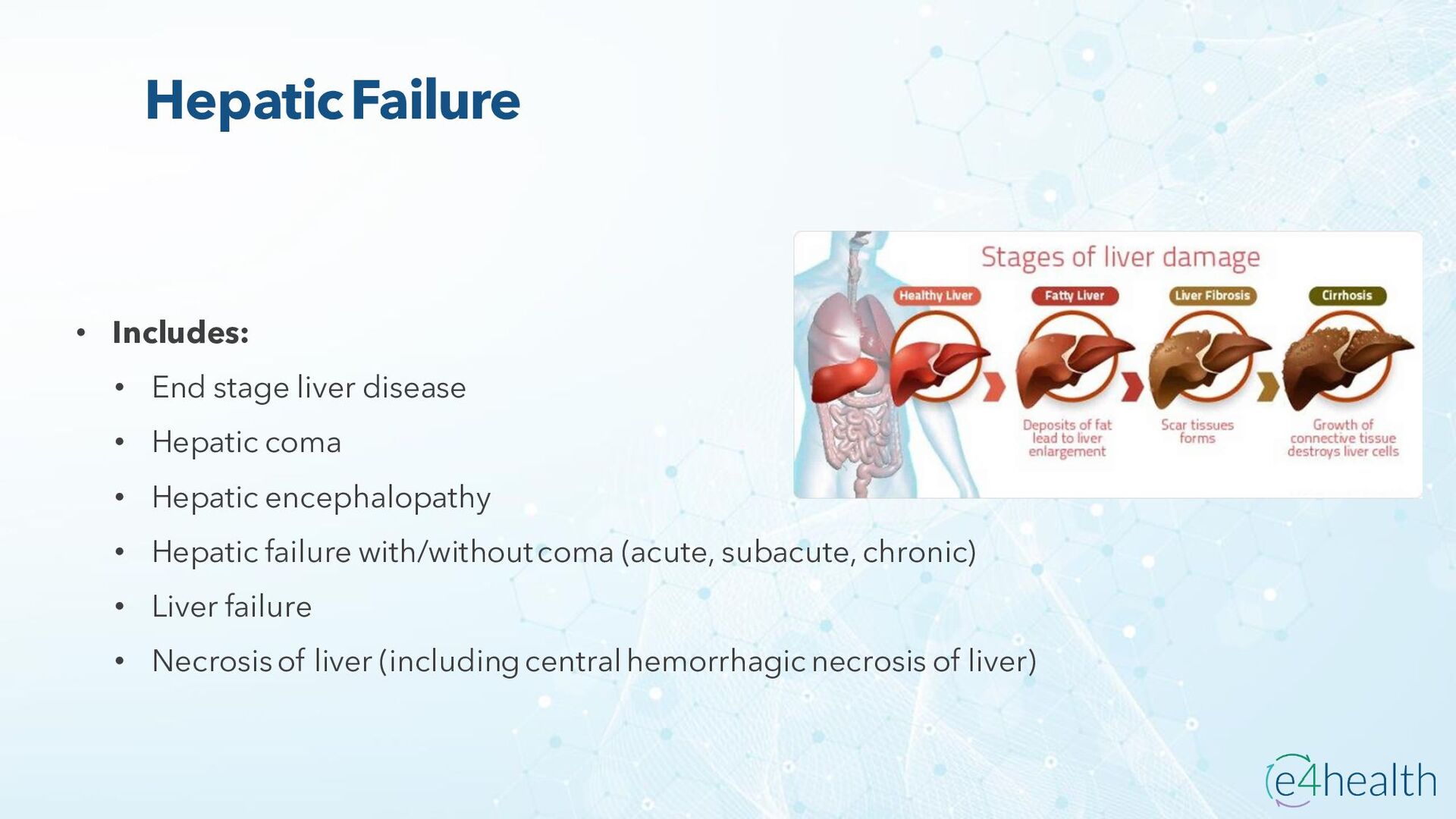
  42. Hepatic Failure • Includes: • End stage liver disease •

    Hepatic coma • Hepatic encephalopathy • Hepatic failure with/without coma (acute, subacute, chronic) • Liver failure • Necrosis of liver (including central hemorrhagic necrosis of liver)
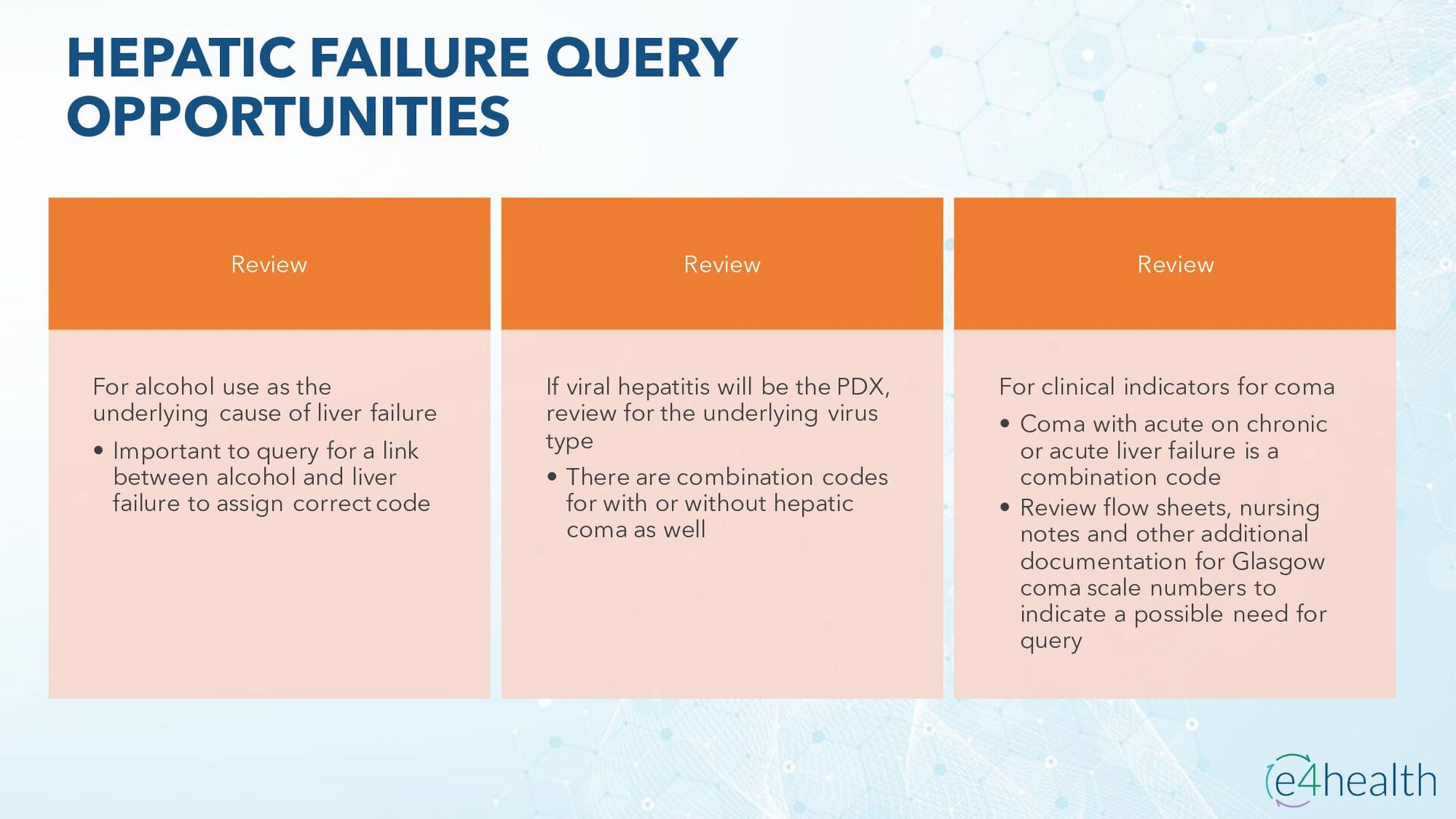
  43. HEPATIC FAILURE QUERY OPPORTUNITIES Review For alcohol use as the

    underlying cause of liver failure • Important to query for a link between alcohol and liver failure to assign correct code Review If viral hepatitis will be the PDX, review for the underlying virus type • There are combination codes for with or without hepatic coma as well Review For clinical indicators for coma • Coma with acute on chronic or acute liver failure is a combination code • Review flow sheets, nursing notes and other additional documentation for Glasgow coma scale numbers to indicate a possible need for query
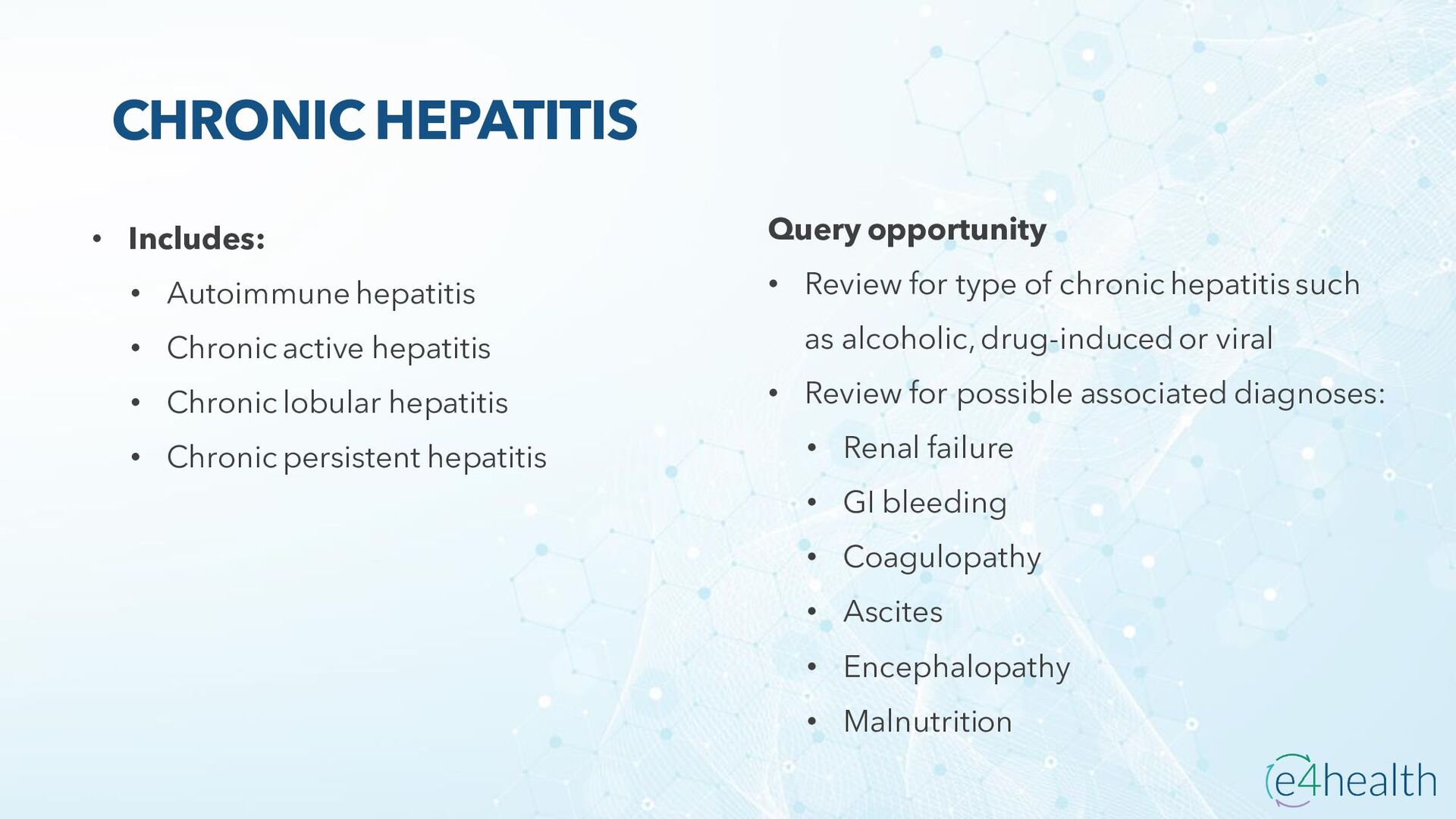
  44. CHRONIC HEPATITIS • Includes: • Autoimmune hepatitis • Chronic active

    hepatitis • Chronic lobular hepatitis • Chronic persistent hepatitis Query opportunity • Review for type of chronic hepatitis such as alcoholic, drug-induced or viral • Review for possible associated diagnoses: • Renal failure • GI bleeding • Coagulopathy • Ascites • Encephalopathy • Malnutrition
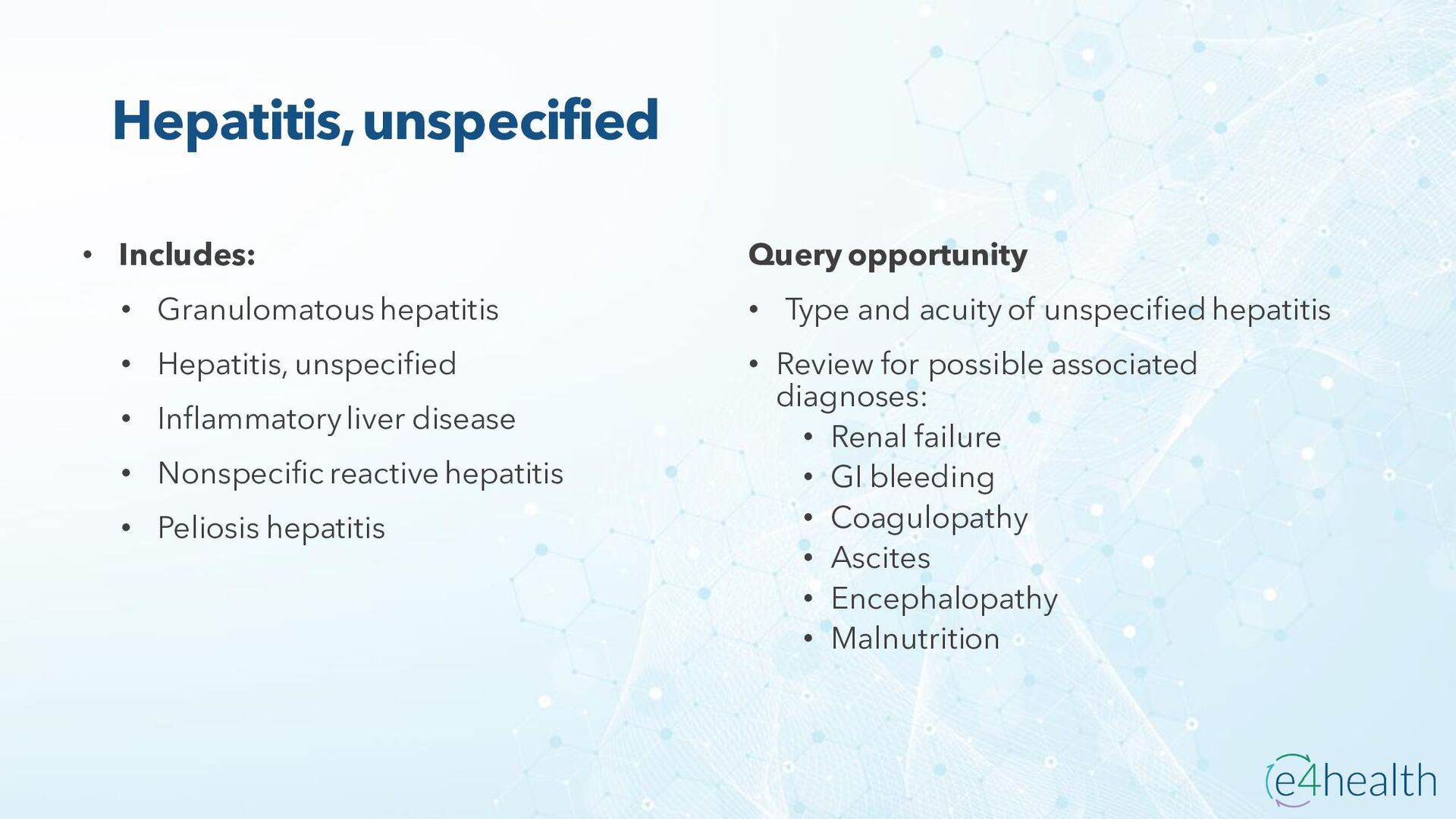
  45. Hepatitis, unspecified • Includes: • Granulomatous hepatitis • Hepatitis, unspecified

    • Inflammatory liver disease • Nonspecific reactive hepatitis • Peliosis hepatitis Query opportunity • Type and acuity of unspecified hepatitis • Review for possible associated diagnoses: • Renal failure • GI bleeding • Coagulopathy • Ascites • Encephalopathy • Malnutrition
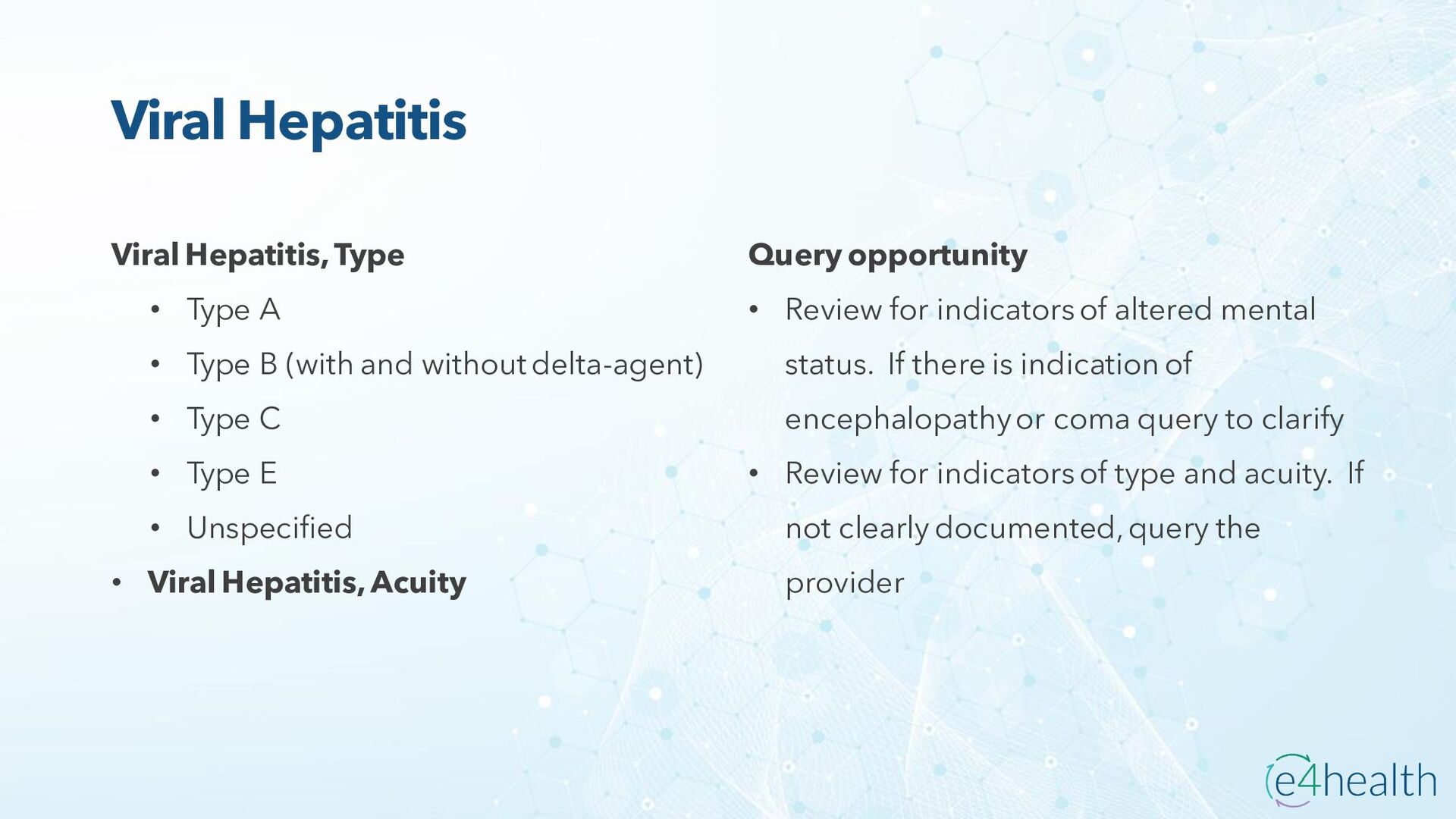
  46. Viral Hepatitis Viral Hepatitis, Type • Type A • Type

    B (with and without delta-agent) • Type C • Type E • Unspecified • Viral Hepatitis, Acuity Query opportunity • Review for indicators of altered mental status. If there is indication of encephalopathy or coma query to clarify • Review for indicators of type and acuity. If not clearly documented, query the provider
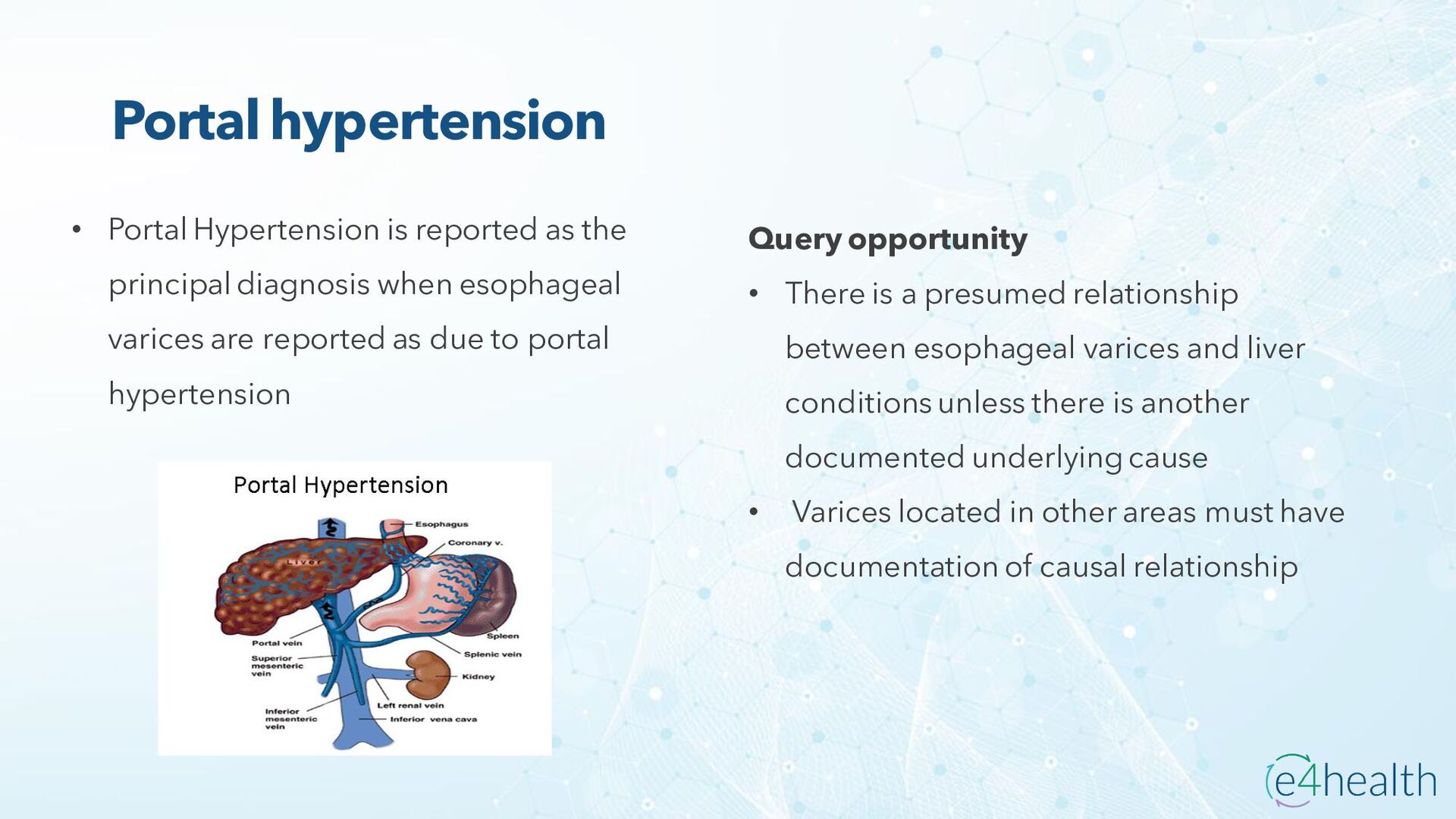
  47. Portal hypertension • Portal Hypertension is reported as the principal

    diagnosis when esophageal varices are reported as due to portal hypertension Query opportunity • There is a presumed relationship between esophageal varices and liver conditions unless there is another documented underlying cause • Varices located in other areas must have documentation of causal relationship
  48. Traumatic Injury to the liver Injury of the liver includes

    the following types of injuries: • Minor laceration - laceration involving capsule only, or only minor involvement of hepatic parenchyma (less than 1 cm deep) • Moderate laceration - laceration involving parenchyma, but without major disruption of parenchyma (less than 10 cm long and less than 3 cm deep) • Major laceration - laceration with significant disruption of hepatic parenchyma (greater than 10 cm long and 3 cm deep). Also includes multiple moderate lacerations and stellate laceration of liver. Query opportunities • If not documented, query for the degree of liver laceration • Review for other injuries that could move the DRG assignment to Major Significant Trauma
  49. Portal Vein Thrombosis • Common causes include pancreatitis, cirrhosis and

    cholangiocarcinoma • Includes portal (vein) obstruction • Can be life-threatening, causing splenomegaly, hepatitis, portal hypertension and bleeding varices • Symptoms • Upper abdominal pain • Ascites and fever • Treatment • Thrombolytic therapy • Beta-blockers • Antibiotics • Ocetrotide to reduce blood flow to the liver • Shunt insertion between the portal and hepatic veins • Liver transplant
  50. Toxic liver disease Toxic liver disease can be caused by

    medications, herbal supplements, chemicals, solvents and alcohol, causing hepatotoxicity, and may lead to cirrhosis, liver failure and death Range of liver disease from mild abnormalities to acute liver failure Diagnosis is based on history, suspected medication as a cause of liver injury and ruling out other hepatic disease Majority of toxic liver disease is idiosyncratic • Occurs 5-90 days after causative medication is taken • 6% will have chronic disease even after medication is stopped • Mortality is 10% in patients with severe disease
  51. Toxic liver disease • Most common medications • Antibiotics •

    NSAIDS • Statins (rare) • Antiretroviral (10% of treated patients) This Photo by Unknown author is licensed under CC BY-SA-NC.
  52. Other disorders of the liver General Query Opportunities • Associated

    diagnoses, such as: • Acute necrosis of liver • Acute tubular necrosis • Ascites • Esophageal varices • Hepatic encephalopathy • Hepatorenal syndrome • Malnutrition • Pancreatitis • Portal hypertension • Portal vein thrombosis
  53. Cholecystitis • Includes: • Abscess of gallbladder • Empyema of

    gallbladder • Gangrene of gallbladder • Cholecystitis should be documented as acute, chronic, acute with chronic or unspecified • Query Opportunity • Acuity of cholecystitis • Calculus or obstruction Is a combination code with cholecystitis • Hydrops (CC) is reported separately. It is not integral to the cholecystitis • Review pathology reports for perforation of bile duct or of gall bladder. If not documented, query the provider for clinical significance and inclusion in the progress notes • Review the record for signs and symptoms of sepsis
  54. Cholelithiasis • Calculus of: • Bile duct • Common duct

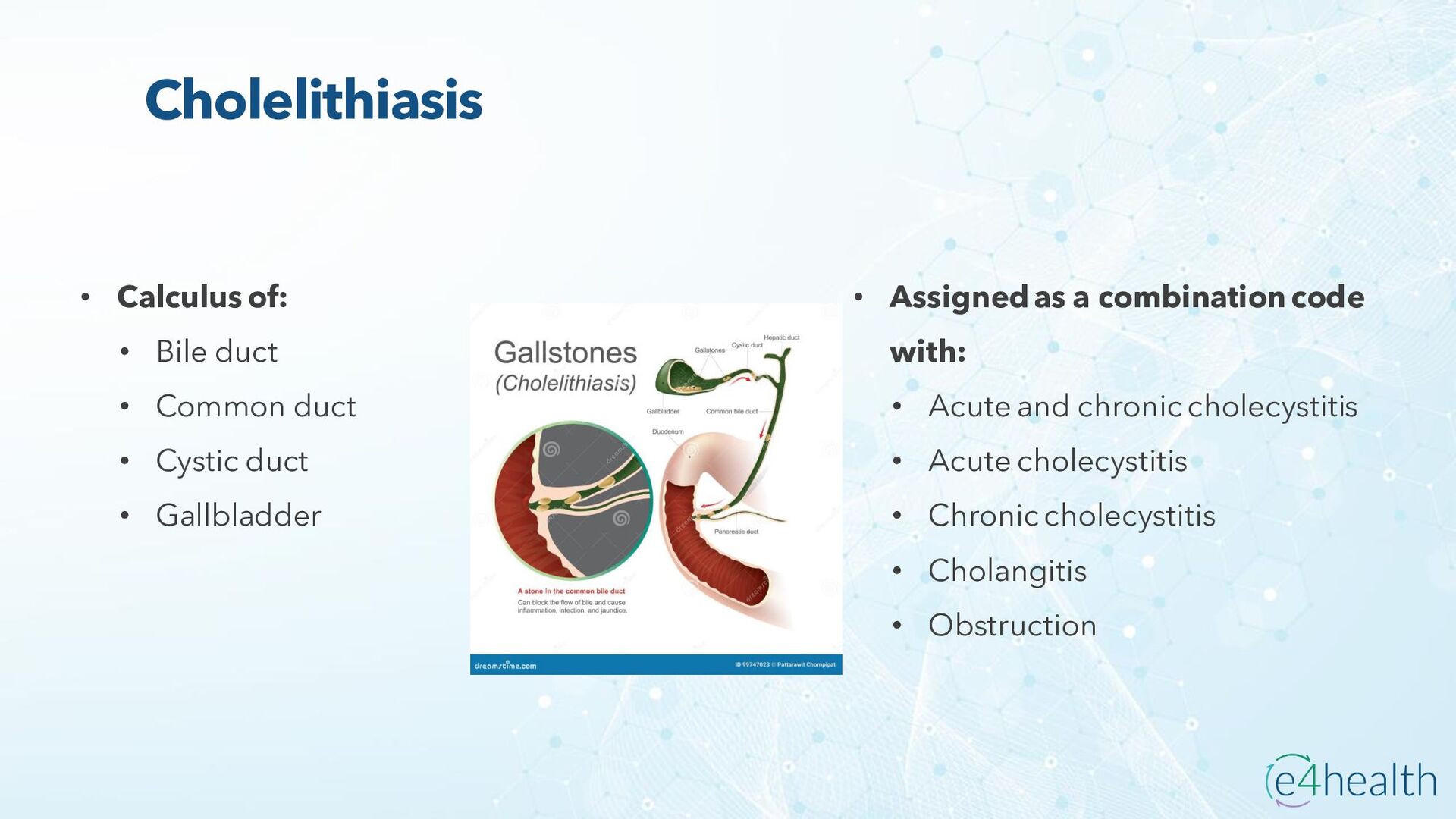
    • Cystic duct • Gallbladder • Assigned as a combination code with: • Acute and chronic cholecystitis • Acute cholecystitis • Chronic cholecystitis • Cholangitis • Obstruction
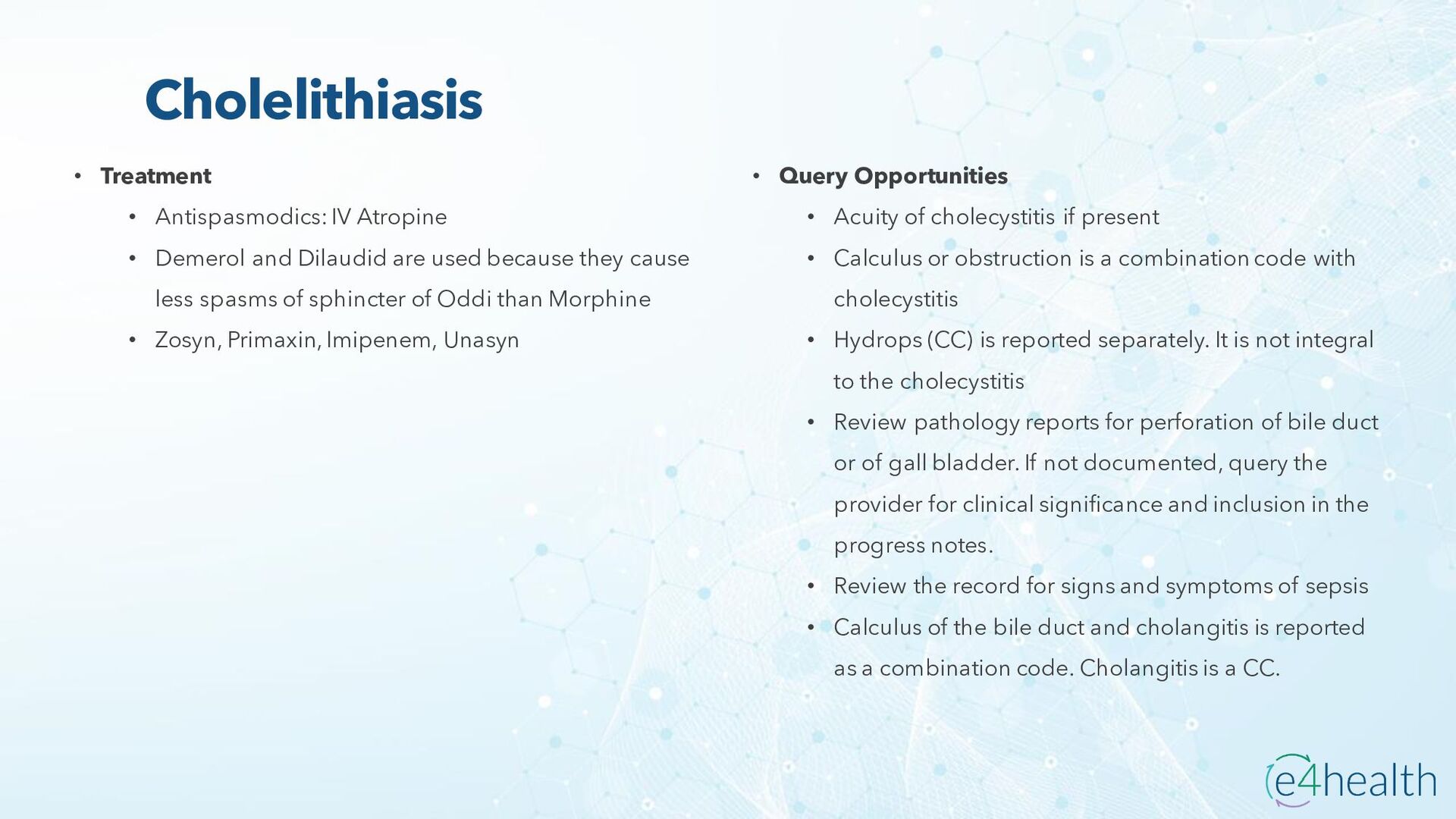
  55. Cholelithiasis • Treatment • Antispasmodics: IV Atropine • Demerol and

    Dilaudid are used because they cause less spasms of sphincter of Oddi than Morphine • Zosyn, Primaxin, Imipenem, Unasyn • Query Opportunities • Acuity of cholecystitis if present • Calculus or obstruction is a combination code with cholecystitis • Hydrops (CC) is reported separately. It is not integral to the cholecystitis • Review pathology reports for perforation of bile duct or of gall bladder. If not documented, query the provider for clinical significance and inclusion in the progress notes. • Review the record for signs and symptoms of sepsis • Calculus of the bile duct and cholangitis is reported as a combination code. Cholangitis is a CC.
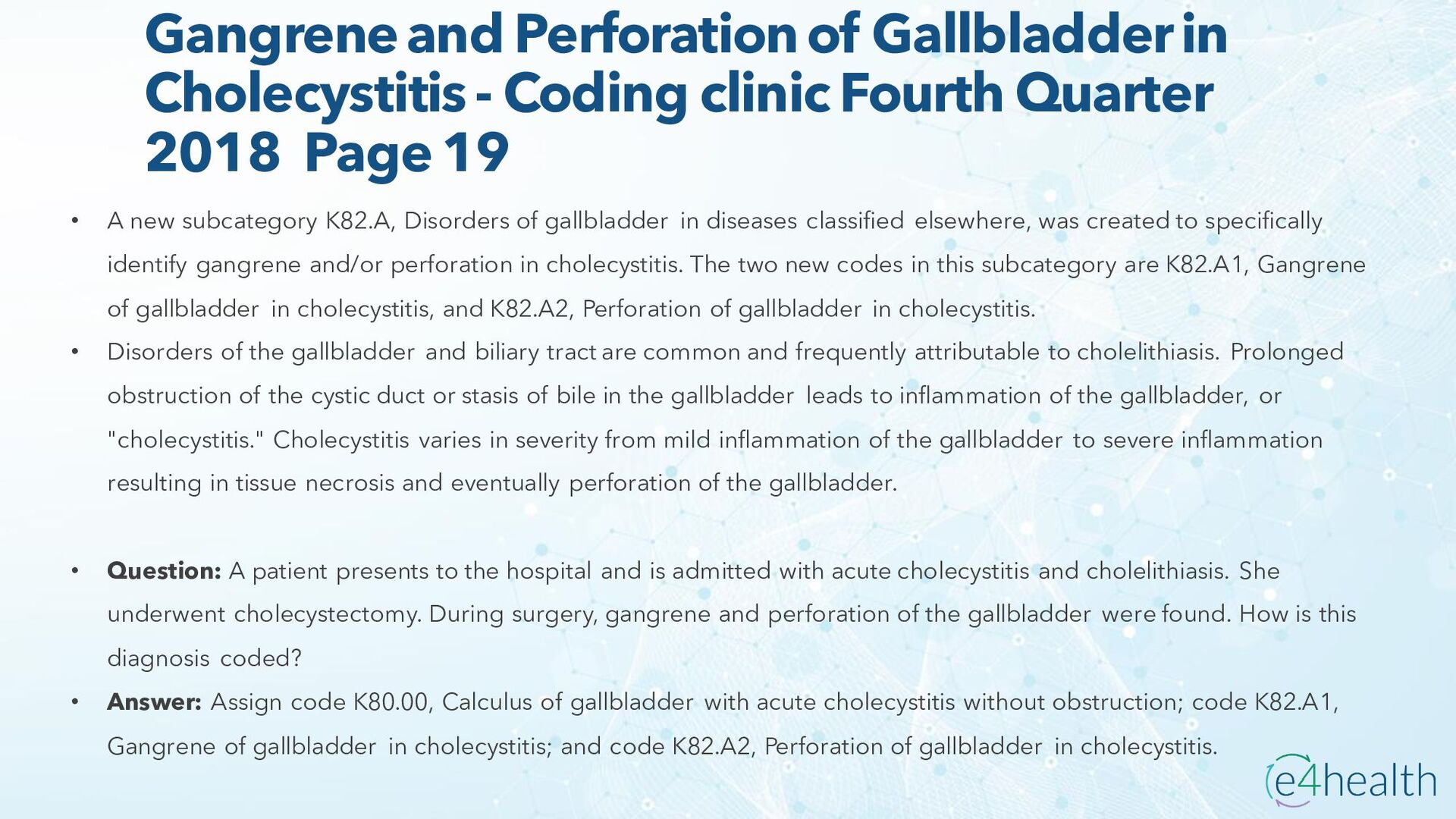
  56. Gangrene and Perforation of Gallbladder in Cholecystitis - Coding clinic

    Fourth Quarter 2018 Page 19 • A new subcategory K82.A, Disorders of gallbladder in diseases classified elsewhere, was created to specifically identify gangrene and/or perforation in cholecystitis. The two new codes in this subcategory are K82.A1, Gangrene of gallbladder in cholecystitis, and K82.A2, Perforation of gallbladder in cholecystitis. • Disorders of the gallbladder and biliary tract are common and frequently attributable to cholelithiasis. Prolonged obstruction of the cystic duct or stasis of bile in the gallbladder leads to inflammation of the gallbladder, or "cholecystitis." Cholecystitis varies in severity from mild inflammation of the gallbladder to severe inflammation resulting in tissue necrosis and eventually perforation of the gallbladder. • Question: A patient presents to the hospital and is admitted with acute cholecystitis and cholelithiasis. She underwent cholecystectomy. During surgery, gangrene and perforation of the gallbladder were found. How is this diagnosis coded? • Answer: Assign code K80.00, Calculus of gallbladder with acute cholecystitis without obstruction; code K82.A1, Gangrene of gallbladder in cholecystitis; and code K82.A2, Perforation of gallbladder in cholecystitis.
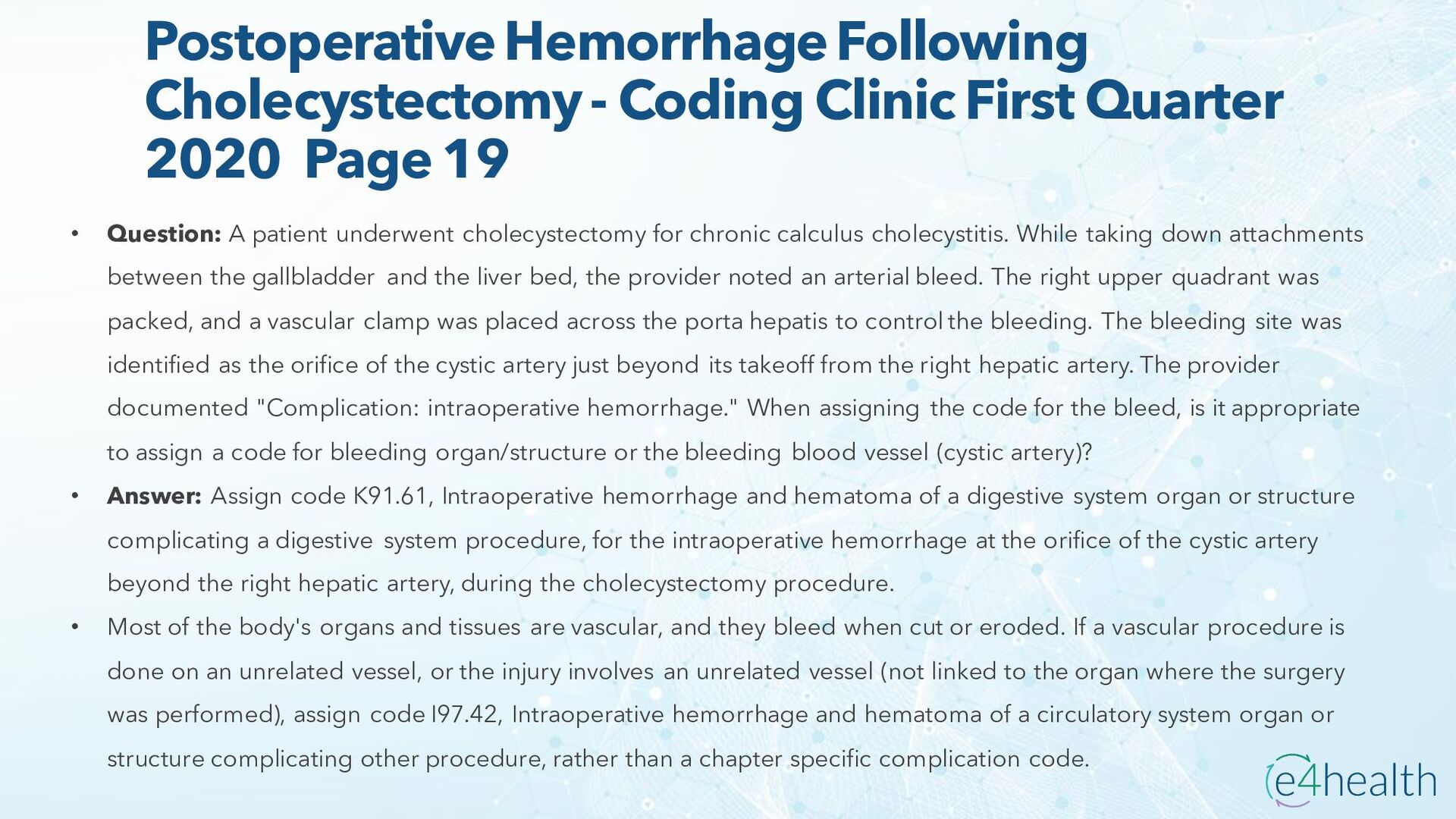
  57. Postoperative Hemorrhage Following Cholecystectomy - Coding Clinic First Quarter 2020

    Page 19 • Question: A patient underwent cholecystectomy for chronic calculus cholecystitis. While taking down attachments between the gallbladder and the liver bed, the provider noted an arterial bleed. The right upper quadrant was packed, and a vascular clamp was placed across the porta hepatis to control the bleeding. The bleeding site was identified as the orifice of the cystic artery just beyond its takeoff from the right hepatic artery. The provider documented "Complication: intraoperative hemorrhage." When assigning the code for the bleed, is it appropriate to assign a code for bleeding organ/structure or the bleeding blood vessel (cystic artery)? • Answer: Assign code K91.61, Intraoperative hemorrhage and hematoma of a digestive system organ or structure complicating a digestive system procedure, for the intraoperative hemorrhage at the orifice of the cystic artery beyond the right hepatic artery, during the cholecystectomy procedure. • Most of the body's organs and tissues are vascular, and they bleed when cut or eroded. If a vascular procedure is done on an unrelated vessel, or the injury involves an unrelated vessel (not linked to the organ where the surgery was performed), assign code I97.42, Intraoperative hemorrhage and hematoma of a circulatory system organ or structure complicating other procedure, rather than a chapter specific complication code.
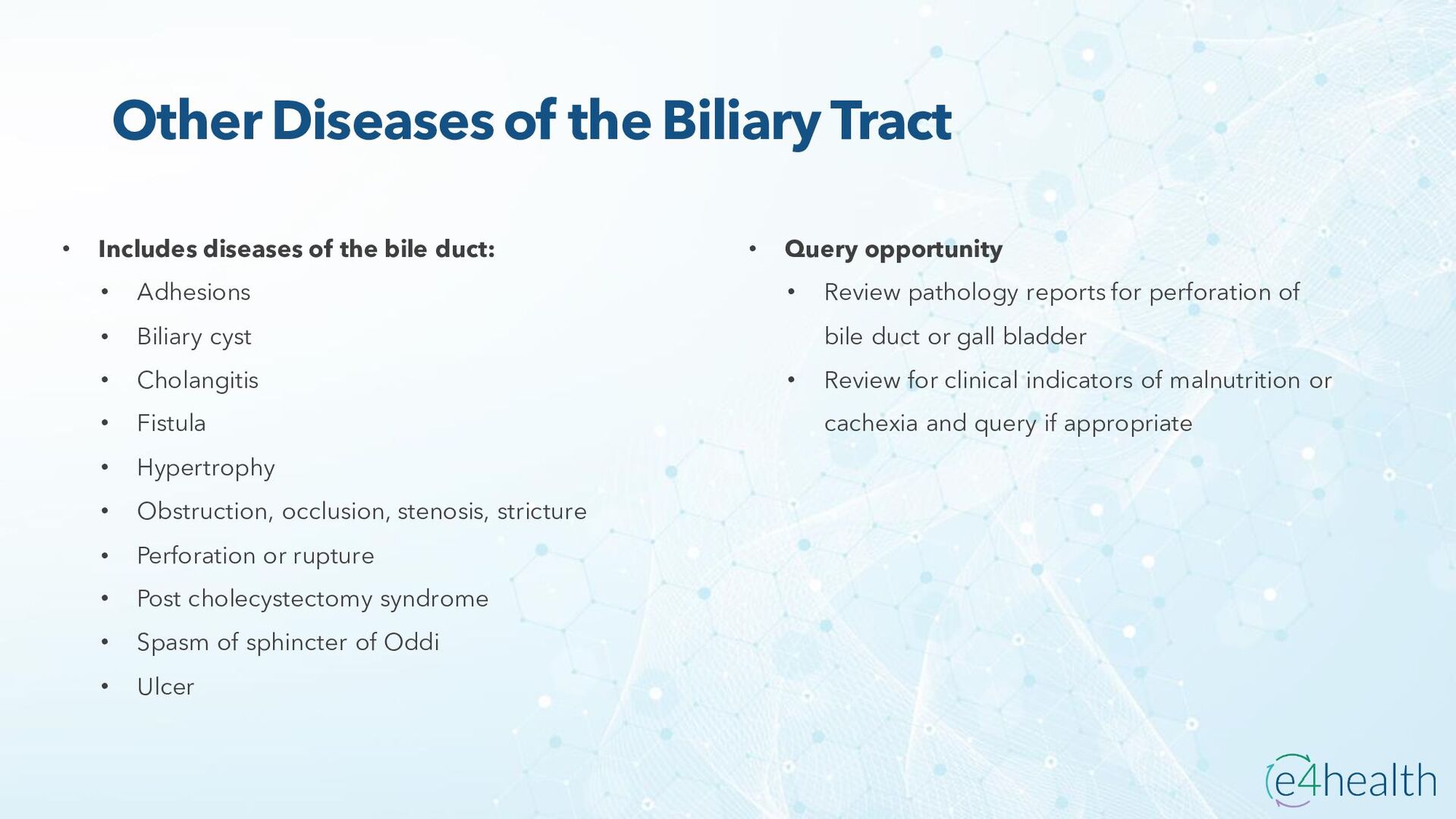
  58. Other Diseases of the Biliary Tract • Includes diseases of

    the bile duct: • Adhesions • Biliary cyst • Cholangitis • Fistula • Hypertrophy • Obstruction, occlusion, stenosis, stricture • Perforation or rupture • Post cholecystectomy syndrome • Spasm of sphincter of Oddi • Ulcer • Query opportunity • Review pathology reports for perforation of bile duct or gall bladder • Review for clinical indicators of malnutrition or cachexia and query if appropriate
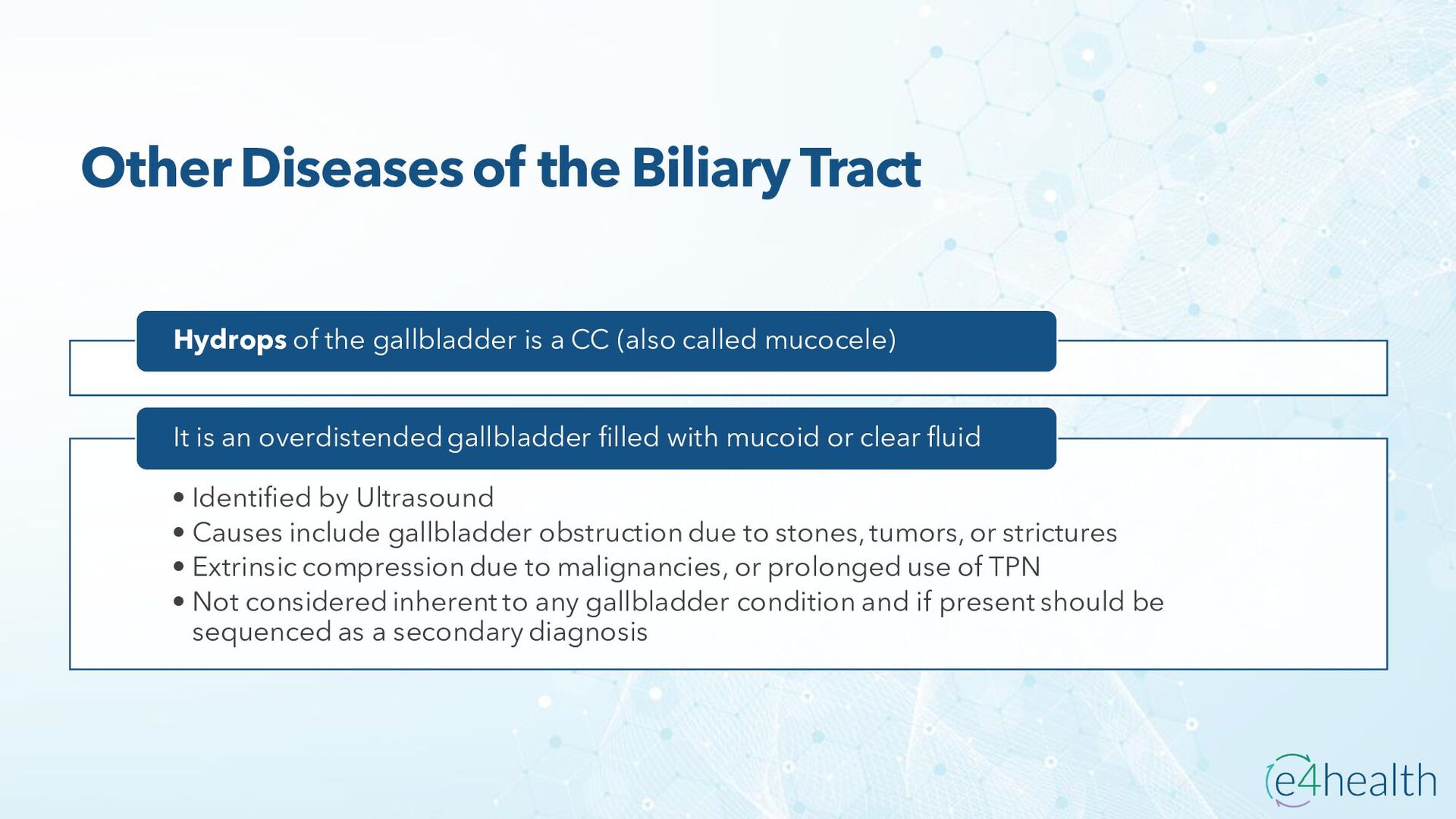
  59. Other Diseases of the Biliary Tract Hydrops of the gallbladder

    is a CC (also called mucocele) • Identified by Ultrasound • Causes include gallbladder obstruction due to stones, tumors, or strictures • Extrinsic compression due to malignancies, or prolonged use of TPN • Not considered inherent to any gallbladder condition and if present should be sequenced as a secondary diagnosis It is an overdistended gallbladder filled with mucoid or clear fluid
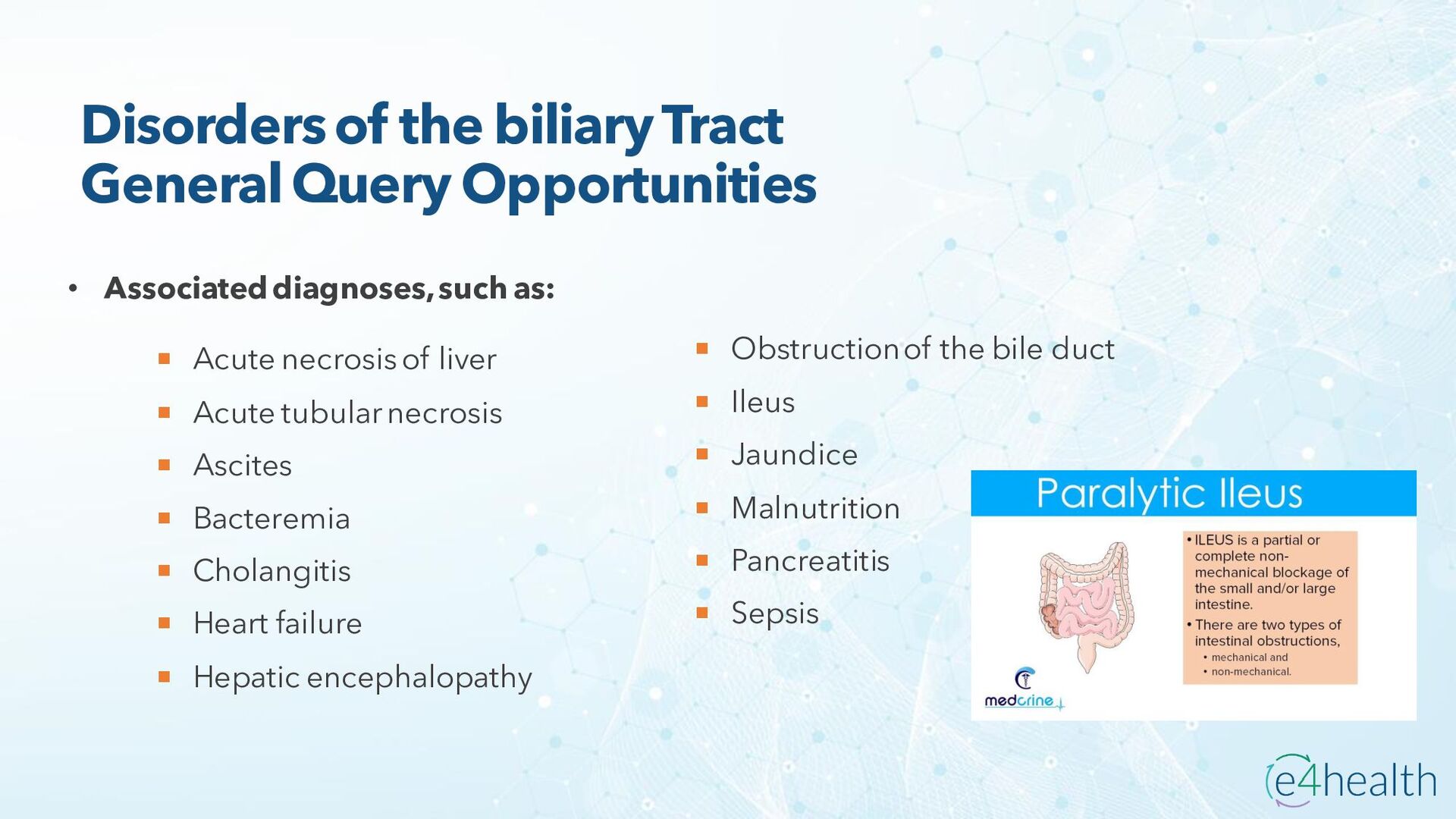
  60. Disorders of the biliary Tract General Query Opportunities • Associated

    diagnoses, such as:  Acute necrosis of liver  Acute tubular necrosis  Ascites  Bacteremia  Cholangitis  Heart failure  Hepatic encephalopathy  Obstruction of the bile duct  Ileus  Jaundice  Malnutrition  Pancreatitis  Sepsis
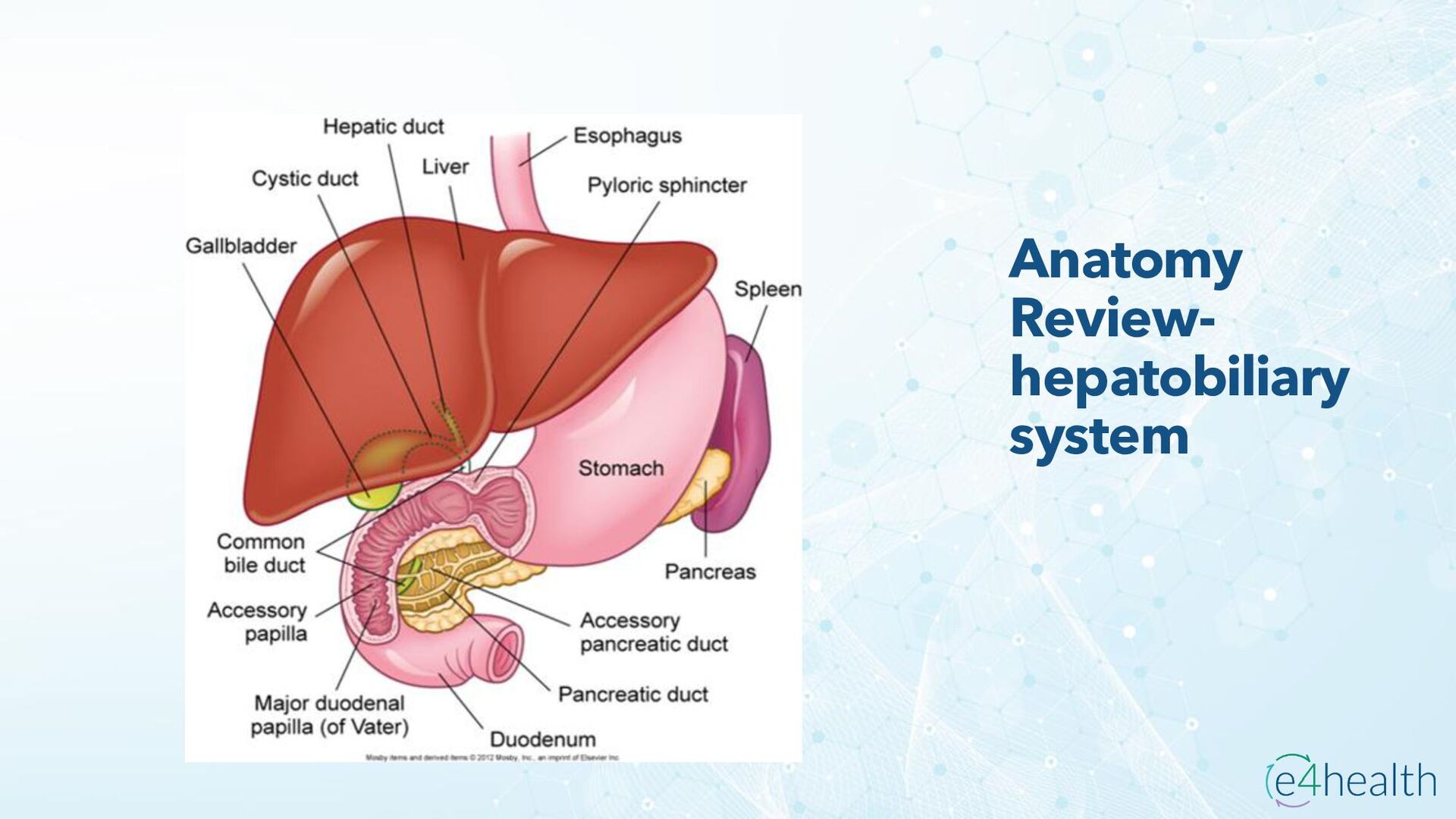
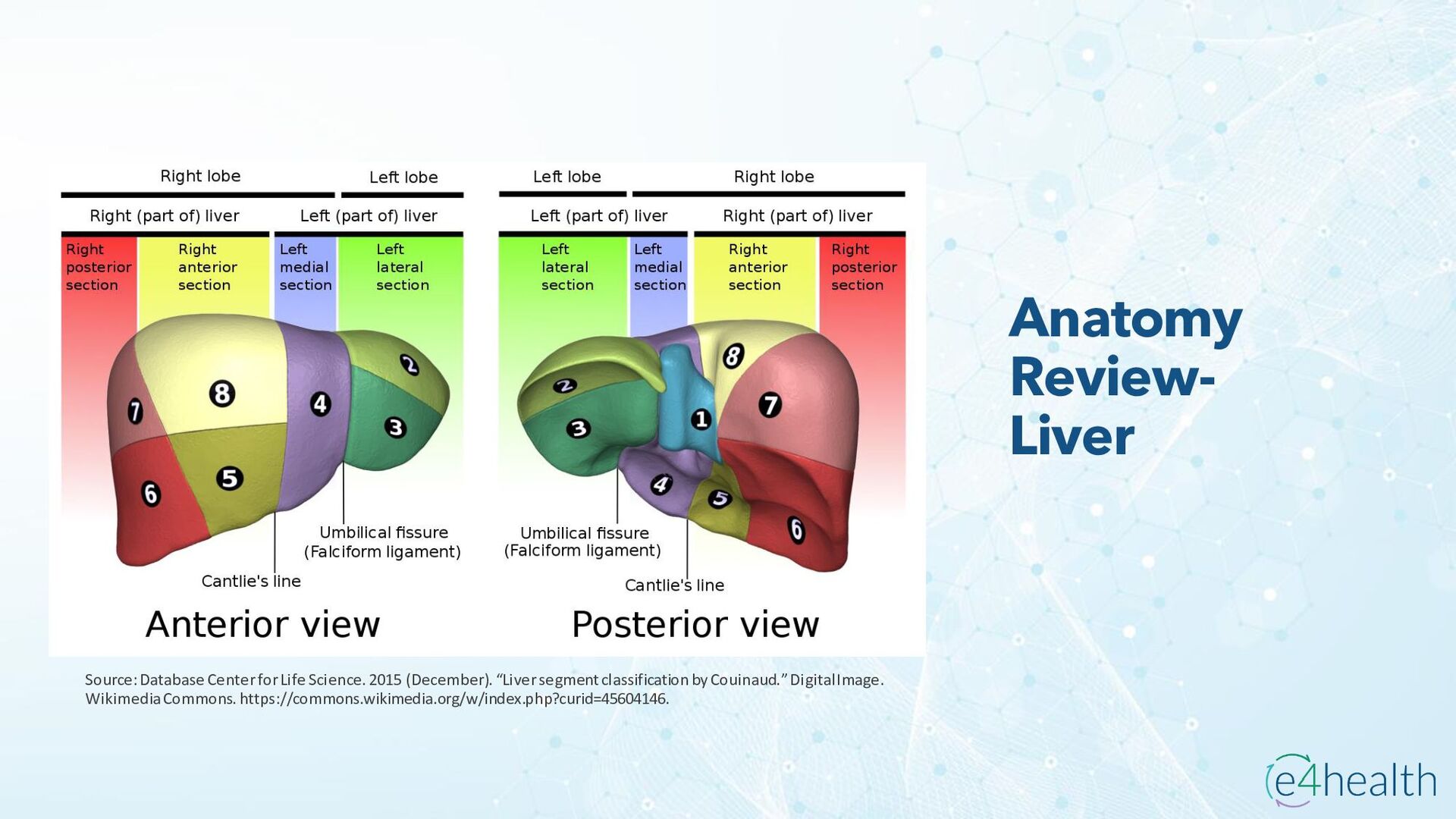
  61. Anatomy Review- Liver Source: Database Center for Life Science. 2015

    (December). “Liver segment classification by Couinaud.” Digital Image. Wikimedia Commons. https://commons.wikimedia.org/w/index.php?curid=45604146.
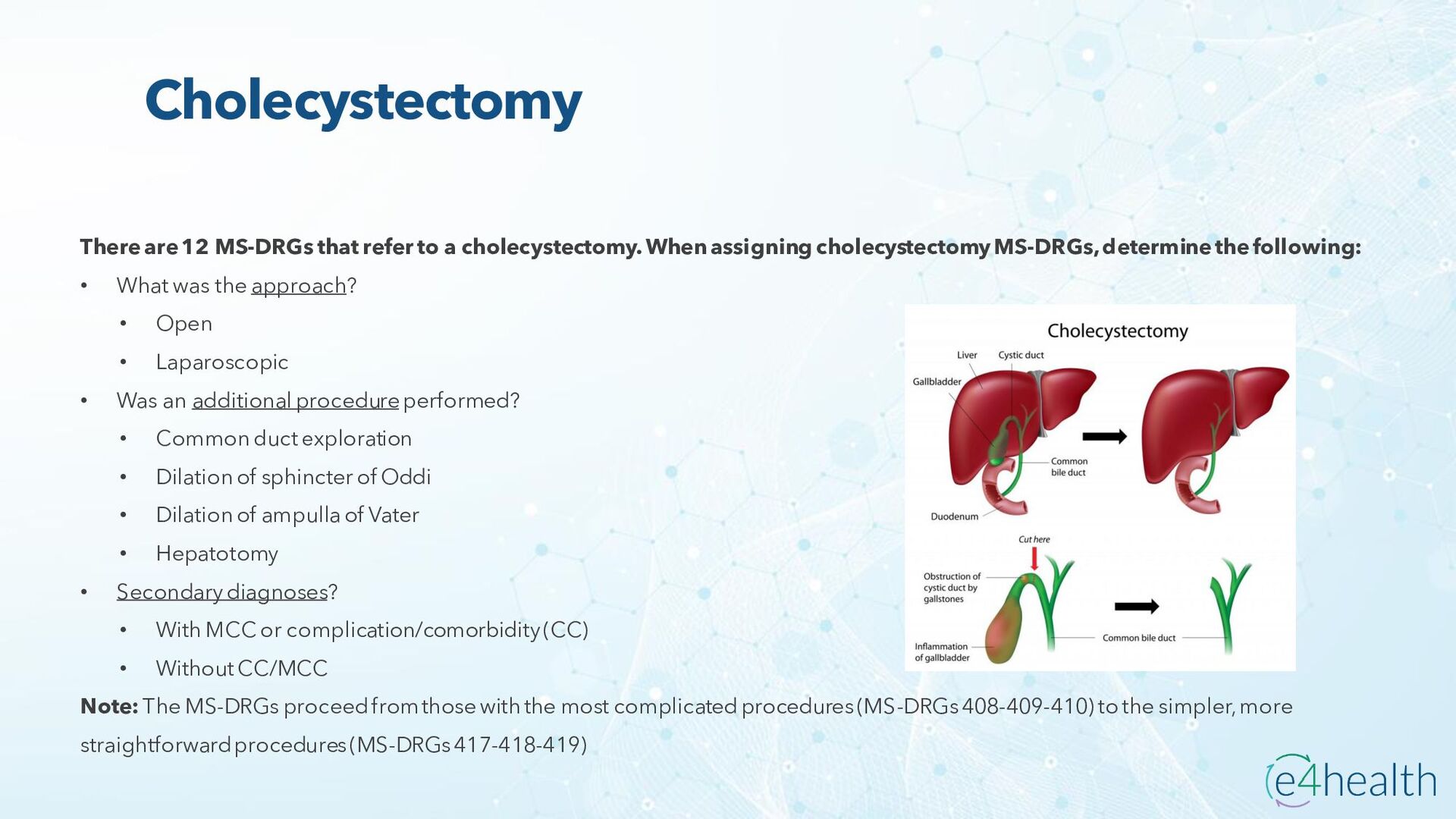
  62. Cholecystectomy There are 12 MS-DRGs that refer to a cholecystectomy.

    When assigning cholecystectomy MS-DRGs, determine the following: • What was the approach? • Open • Laparoscopic • Was an additional procedure performed? • Common duct exploration • Dilation of sphincter of Oddi • Dilation of ampulla of Vater • Hepatotomy • Secondary diagnoses? • With MCC or complication/comorbidity (CC) • Without CC/MCC Note: The MS-DRGs proceed from those with the most complicated procedures (MS-DRGs 408-409-410) to the simpler, more straightforward procedures (MS-DRGs 417-418-419)
  63. Cholecystectomy - General Query Opportunity • Review documentation if lysis

    of adhesions is an additional procedure • Associated secondary diagnoses, such as: • Adhesions • Biliary duct occlusions • Jaundice • SIRS of non-infectious process • Postoperative hemorrhage or hematoma
  64. Control of Intraoperative Bleeding - Coding Clinic Third Quarter 2013

    Page 22 • Question: A patient underwent a laparoscopic cholecystectomy. During the procedure, the gallbladder was dissected out of the liver bed with electrocautery and removed. FloSeal was used on a small bleeder from the liver edge. Would it be appropriate to code the use of FloSeal to the root operation "Repair?" • Answer: No, do not assign a separate code for the use of FloSeal, since it is inherent to the procedure. FloSeal is a high viscosity gel used to control bleeding from capillary oozing to arterial spurting and is used in surgical procedures as an adjunct to hemostasis when control of bleeding by ligature or conventional procedures is ineffective or impractical. • Question: A patient underwent a laparoscopic cholecystectomy. After removal of the gallbladder, a small amount of bleeding in the liver bed had to be controlled. We believed that this was integral to the cholecystectomy. However, a greater amount of bleeding was identified in the omentum. The surgeon had to insert another port to properly identify the site of the bleeding and spent additional time cauterizing and clipping to control the oozing from the omentum. Should this be coded separately, and how? The ICD-10-PCS definition of the root operation "Control" refers to "stopping, or attempting to stop, postprocedural bleeding." Since this was an intra- operative bleeding, rather than postoperative, we're unclear as to how it should be coded. • Answer: Control of the small amount of bleeding from the liver bed is integral to the procedure and should not be coded separately. Although control of bleeding from the omentum required additional time and effort, it is inherent to the procedure and should not be coded separately.
  65. Open Cholecystectomy with Needle Biopsy of Liver - Coding Clinic

    Third Quarter 2016 Page 41 • Question: The patient underwent open cholecystectomy with needle biopsy of the liver. How is the needle biopsy of liver coded? Is this an open or closed biopsy? • Answer: Assign the following ICD-10-PCS code: 0FB00ZX Excision of liver, open approach, diagnostic, for the liver needle biopsy done via an open approach • When it is documented that a biopsy was obtained using a needle, but was performed via the laparotomy incision, the approach is coded as "Open." The needle is the tool used to perform the biopsy. The approach is not percutaneous, because it is not going through the skin. In ICD-10-PCS, "open approach" is defined as cutting through the skin or mucous membrane and any other body layers necessary to expose the site of the procedure."
  66. Gallbladder/bile duct anastomosis Clinical concepts • Includes: • Anastomosis of

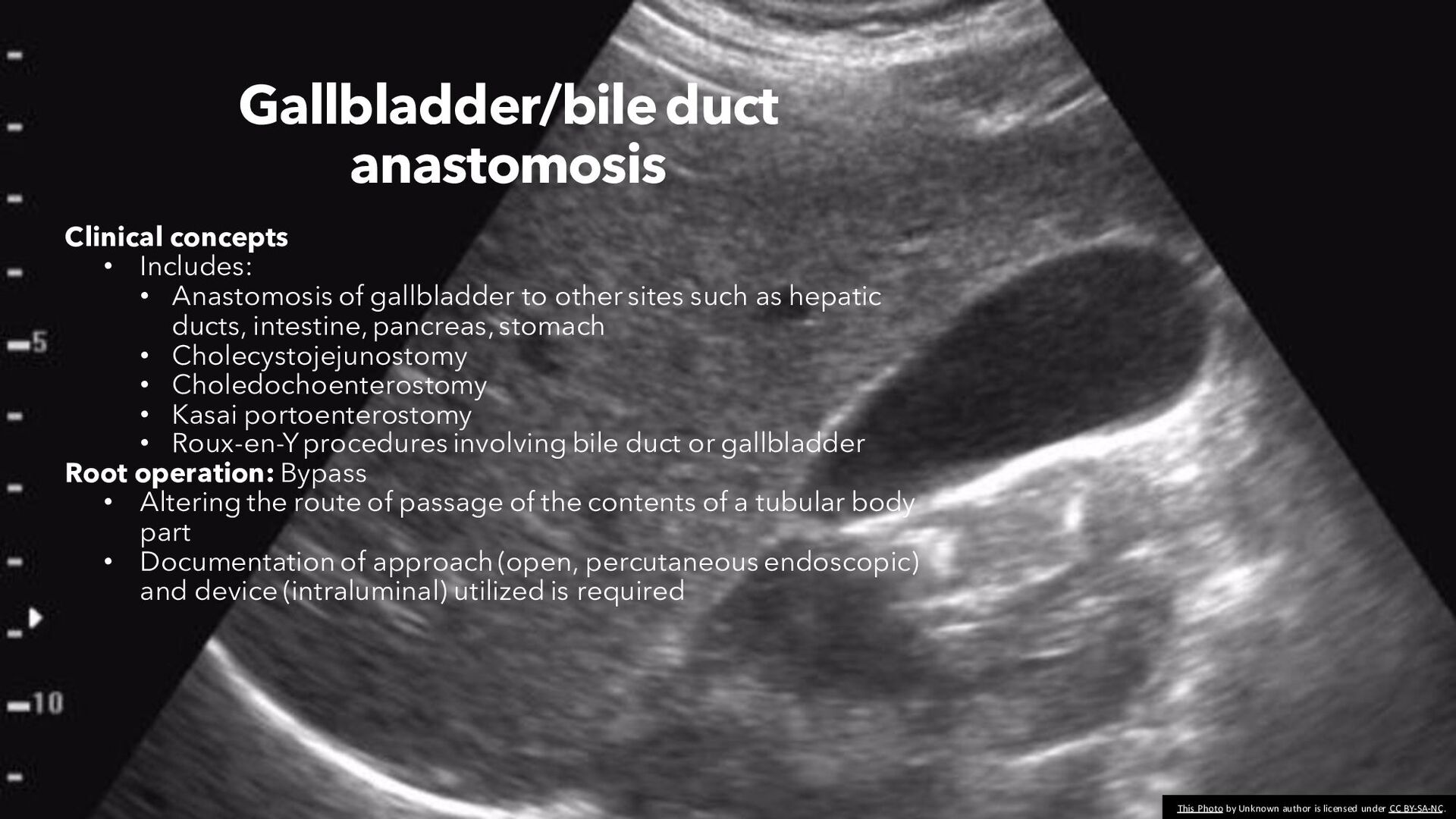
    gallbladder to other sites such as hepatic ducts, intestine, pancreas, stomach • Cholecystojejunostomy • Choledochoenterostomy • Kasai portoenterostomy • Roux-en-Y procedures involving bile duct or gallbladder Root operation: Bypass • Altering the route of passage of the contents of a tubular body part • Documentation of approach (open, percutaneous endoscopic) and device (intraluminal) utilized is required This Photo by Unknown author is licensed under CC BY-SA-NC.
  67. Revision of Common Bile Duct Anastomosis - Coding Clinic Third

    Quarter 2016 Page 27 • Question: A patient who is status post liver transplant was admitted for exploratory laparotomy due to intraperitoneal bleeding. A redo of the bile duct anastomosis was performed due to questionable leaking. The anastomosis was cut out with evidence of excellent bile from the transplanted liver and the anastomosis was re-sutured. What is the correct root operation for revision of the bile duct anastomosis? • Answer: Assign the following ICD-10-PCS code: 0FQ90ZZ Repair common bile duct, open approach, for re-suture of the common bile duct anastomosis with the common bile duct of the transplanted liver • The excision of the anastomosis was done in order to re-suture the anastomosis. The root operation "Repair" is most consistent with what was done. The bile duct anastomosis was restored to its normal anatomic structure and function.
  68. Cholecystostomy Clinical concepts Utilized to drain gallbladder or remove a

    gallstone with root operation of drainage or extirpation Root operation: Drainage: Taking or letting out fluids and/or gases from a body part Extirpation: Taking or cutting out solid matter from a body part Fragmentation: Breaking solid matter in a body part into pieces
  69. Incision of bile duct Clinical concepts • An incision and

    milking of hepatobiliary duct to check for stones or other obstruction. If stones are removed, the root operation will change to extirpation or fragmentation Root operation: • Drainage: Taking or letting out fluids and/or gases from a body part • Inspection: Visually and/or manually exploring a body part
  70. Repair of bile duct • Includes: • Choledochoplasty • Closure

    of artificial opening of bile duct • Repair of fistula of common bile duct • Simple suture of common bile duct Clinical concepts • Dilation: Expanding an orifice or the lumen of a tubular body part • Reattachment: Putting back in, or on, all, or a portion of, a separated body part to its normal location or other suitable location • Repair: Restoring, to the extent possible, a body part to its normal anatomic structure and function • Replacement: Putting in or on biological or synthetic material that physically takes the place and/or function of all, or a portion of, a body part • Supplement: Putting in or on biological or synthetic material that physically reinforces and/or augments the function of a portion of a body part Root operation:
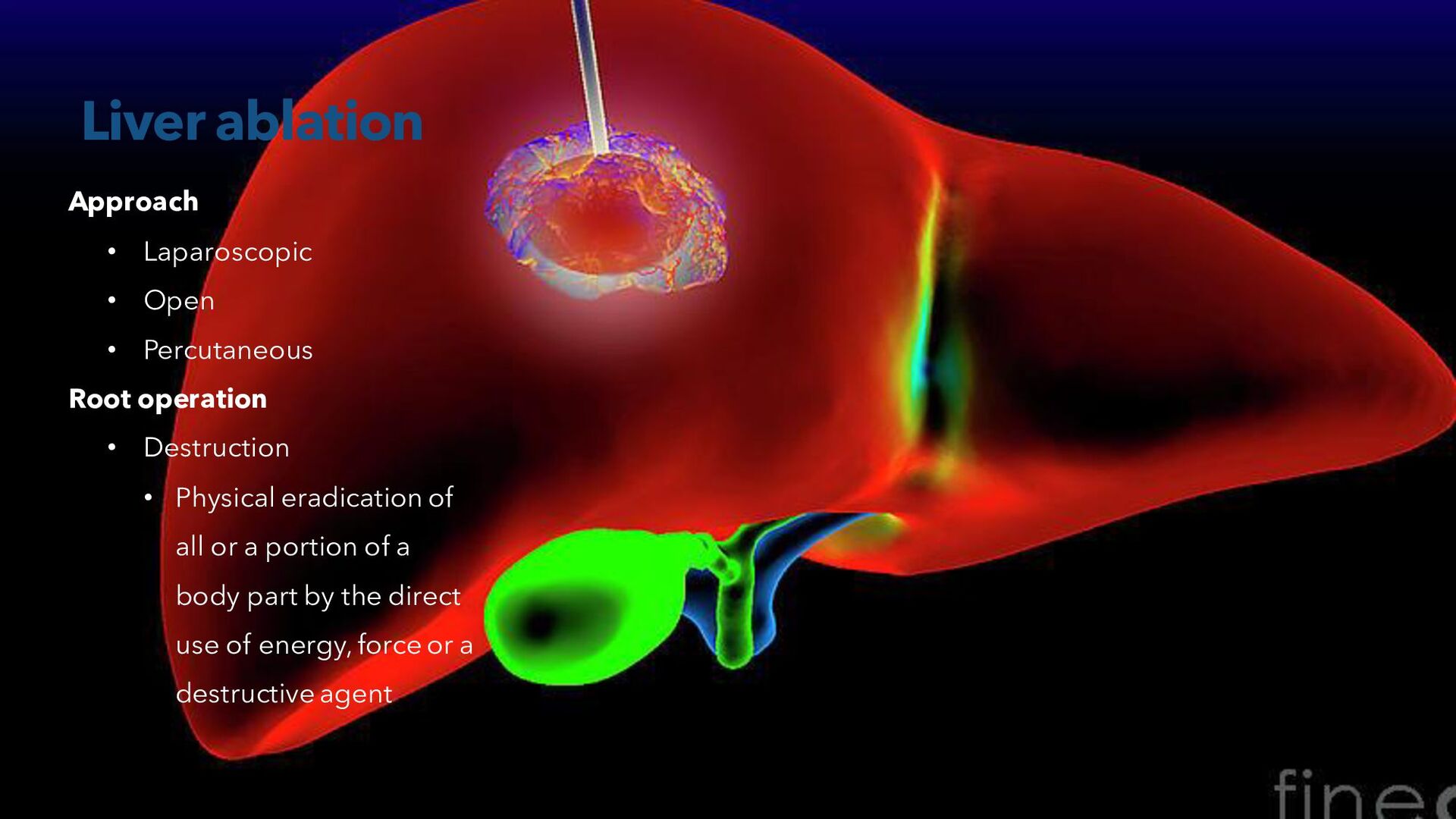
  71. Liver ablation Approach • Laparoscopic • Open • Percutaneous Root

    operation • Destruction • Physical eradication of all or a portion of a body part by the direct use of energy, force or a destructive agent
  72. Hepatotomy Clinical concepts • Hepatotomy is defined as making an

    opening or an "incision" into the liver. Also includes: • Incision of abscess of liver • Removal of gallstones from liver • Stromeyer-Little operation (incision of liver with cannulation) Root operation: • Drainage: Taking or letting out fluids and/or gases from a body part • Extirpation: Taking or cutting out solid matter from a body part • Insertion: Putting in a nonbiological appliance that monitors, assists, performs or prevents a physiological function but does not physically take the place of a body part
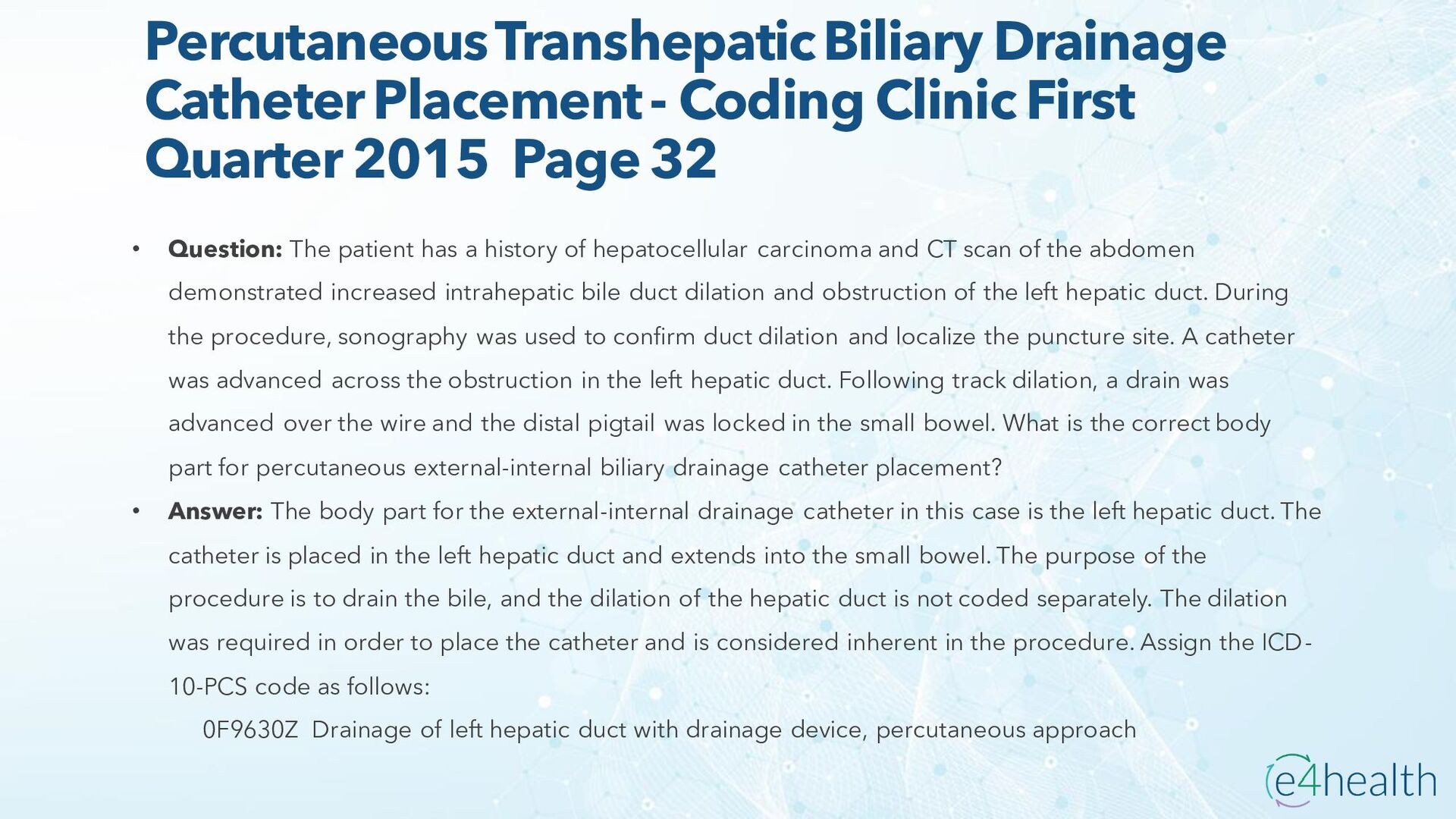
  73. Percutaneous Transhepatic Biliary Drainage Catheter Placement - Coding Clinic First

    Quarter 2015 Page 32 • Question: The patient has a history of hepatocellular carcinoma and CT scan of the abdomen demonstrated increased intrahepatic bile duct dilation and obstruction of the left hepatic duct. During the procedure, sonography was used to confirm duct dilation and localize the puncture site. A catheter was advanced across the obstruction in the left hepatic duct. Following track dilation, a drain was advanced over the wire and the distal pigtail was locked in the small bowel. What is the correct body part for percutaneous external-internal biliary drainage catheter placement? • Answer: The body part for the external-internal drainage catheter in this case is the left hepatic duct. The catheter is placed in the left hepatic duct and extends into the small bowel. The purpose of the procedure is to drain the bile, and the dilation of the hepatic duct is not coded separately. The dilation was required in order to place the catheter and is considered inherent in the procedure. Assign the ICD- 10-PCS code as follows: 0F9630Z Drainage of left hepatic duct with drainage device, percutaneous approach
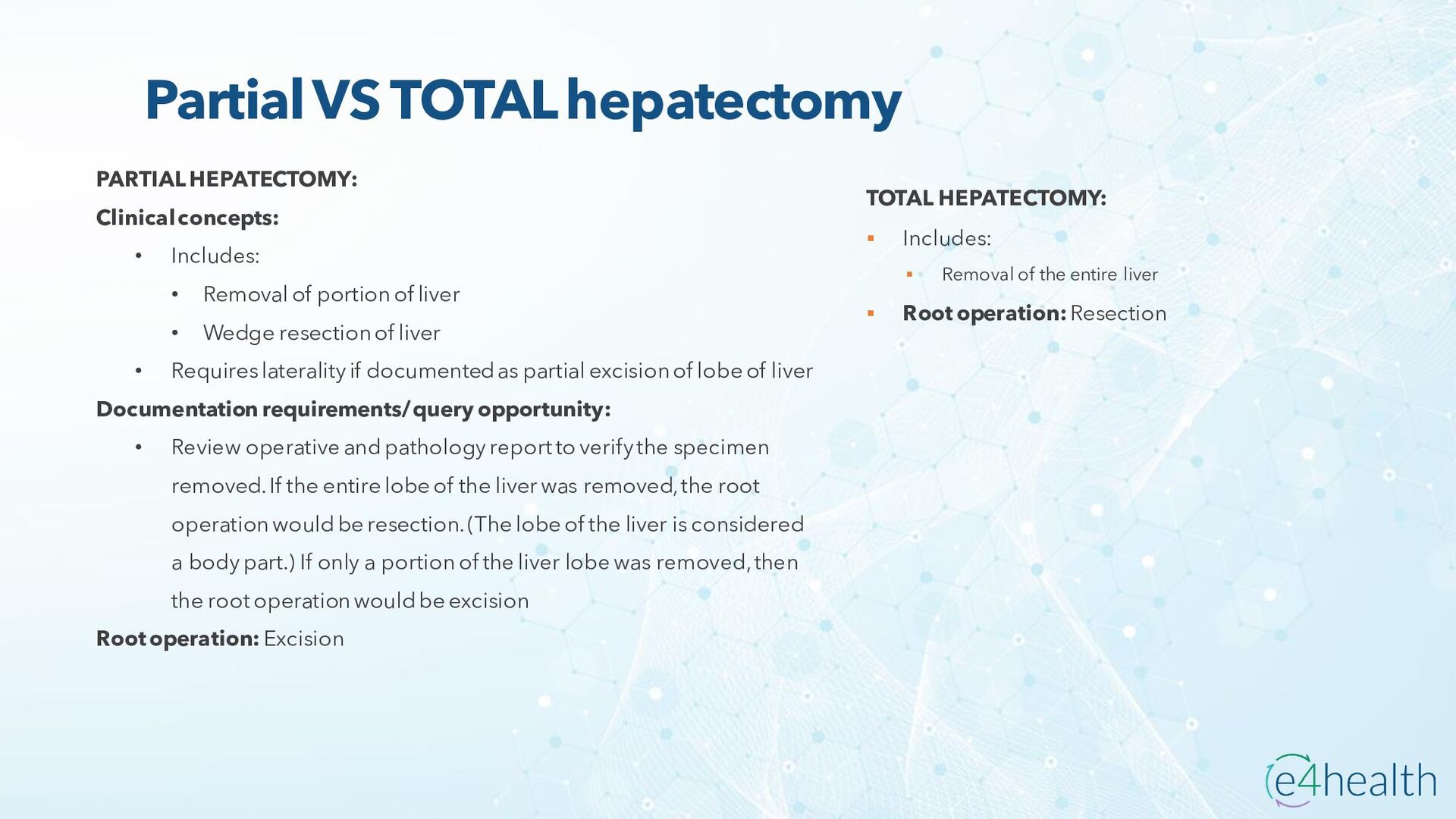
  74. Partial VS TOTAL hepatectomy PARTIAL HEPATECTOMY: Clinical concepts: • Includes:

    • Removal of portion of liver • Wedge resection of liver • Requires laterality if documented as partial excision of lobe of liver Documentation requirements/ query opportunity: • Review operative and pathology report to verify the specimen removed. If the entire lobe of the liver was removed, the root operation would be resection. (The lobe of the liver is considered a body part.) If only a portion of the liver lobe was removed, then the root operation would be excision Root operation: Excision TOTAL HEPATECTOMY: ▪ Includes: ▪ Removal of the entire liver ▪ Root operation: Resection
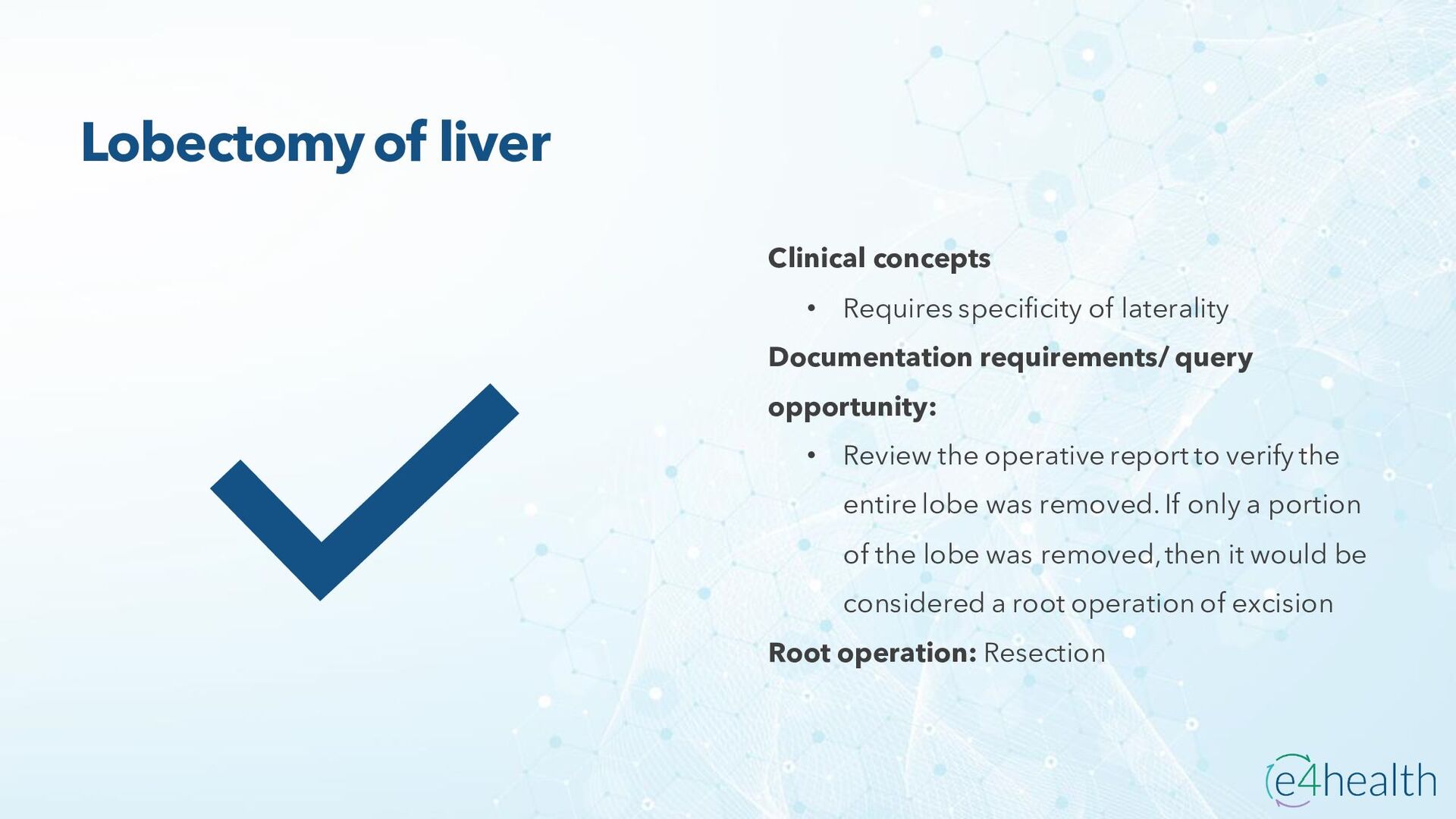
  75. Lobectomy of liver Clinical concepts • Requires specificity of laterality

    Documentation requirements/ query opportunity: • Review the operative report to verify the entire lobe was removed. If only a portion of the lobe was removed, then it would be considered a root operation of excision Root operation: Resection
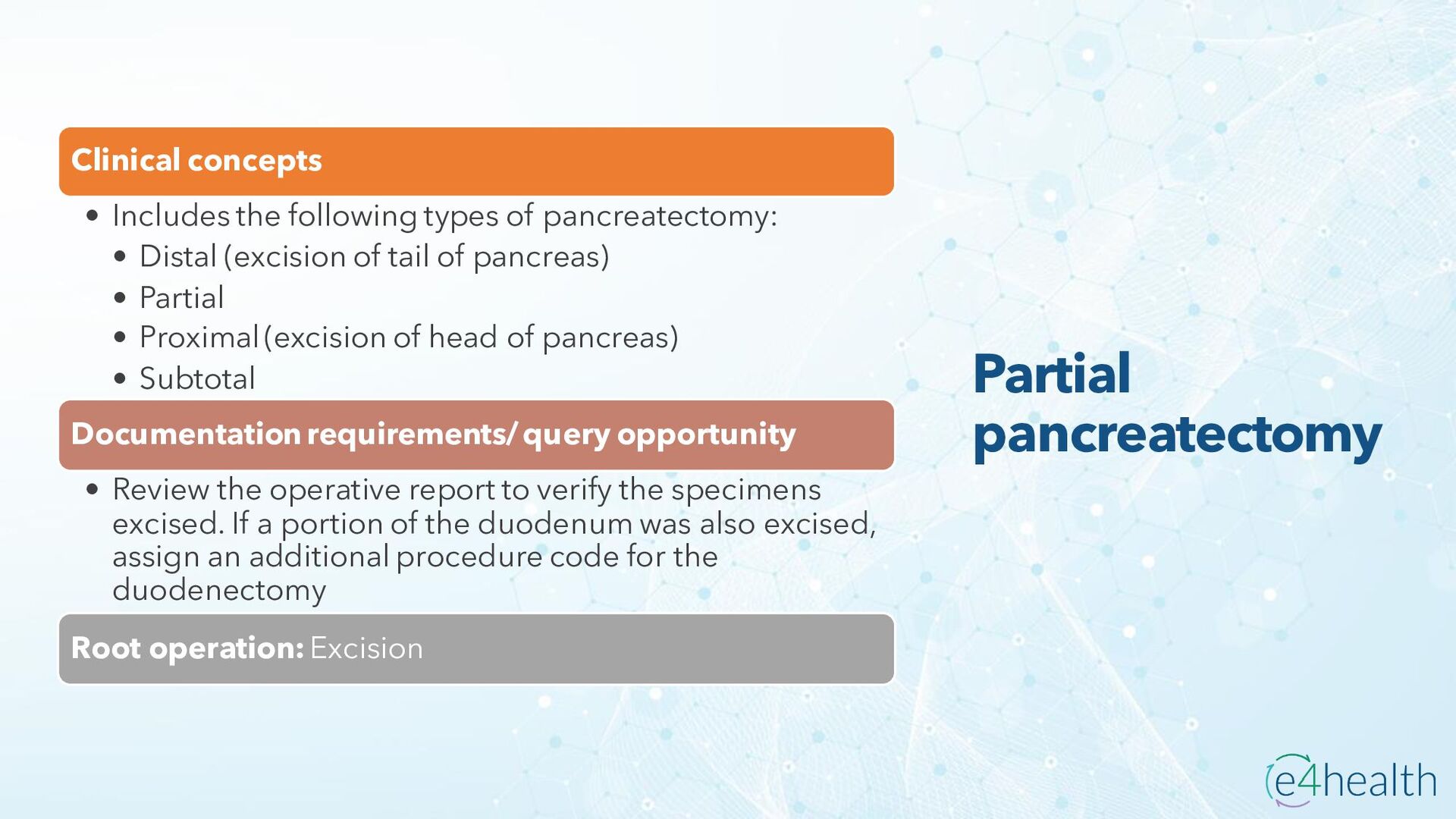
  76. Partial pancreatectomy Clinical concepts • Includes the following types of

    pancreatectomy: • Distal (excision of tail of pancreas) • Partial • Proximal (excision of head of pancreas) • Subtotal Documentation requirements/ query opportunity • Review the operative report to verify the specimens excised. If a portion of the duodenum was also excised, assign an additional procedure code for the duodenectomy Root operation: Excision
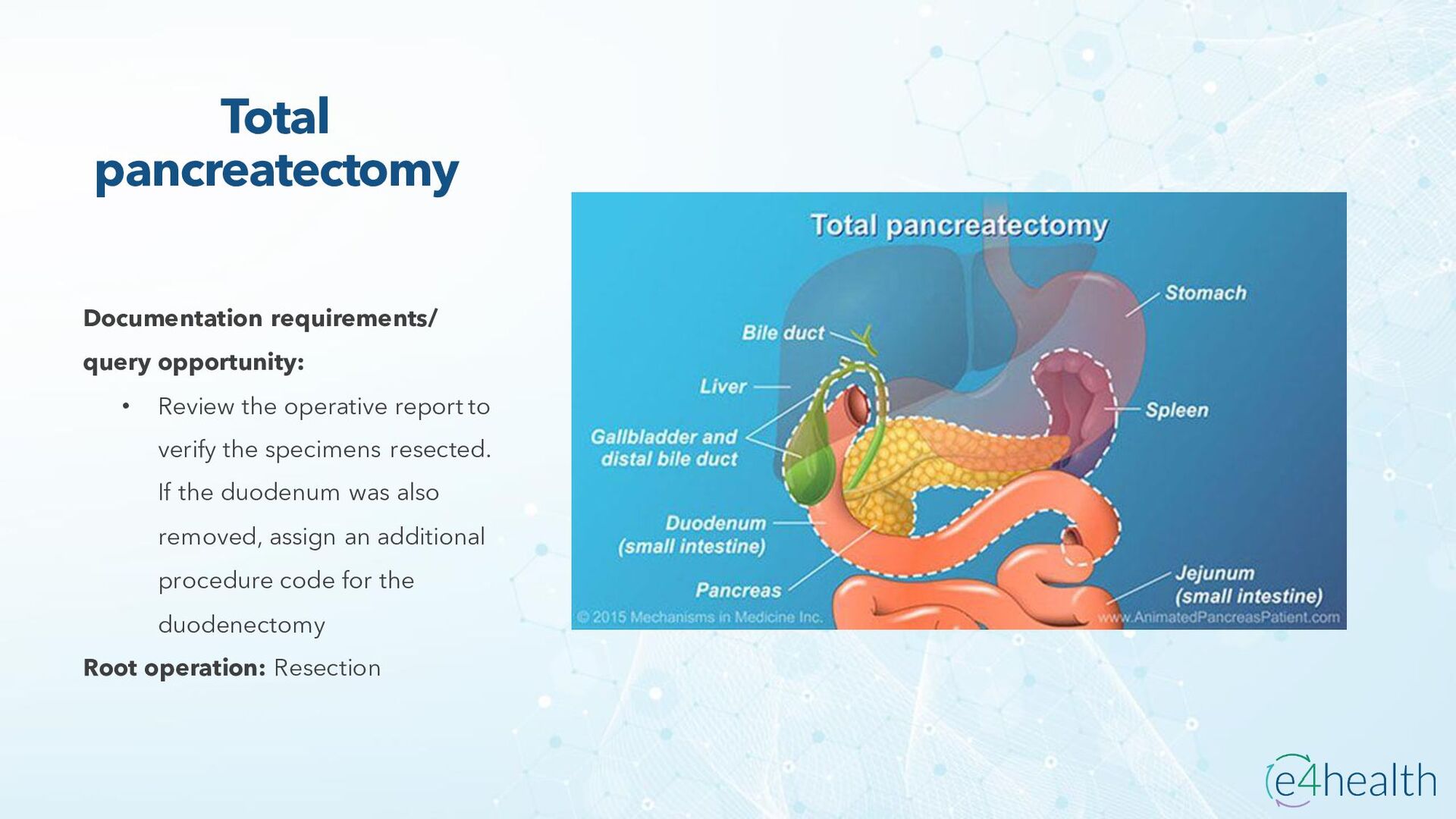
  77. Total pancreatectomy Documentation requirements/ query opportunity: • Review the operative

    report to verify the specimens resected. If the duodenum was also removed, assign an additional procedure code for the duodenectomy Root operation: Resection
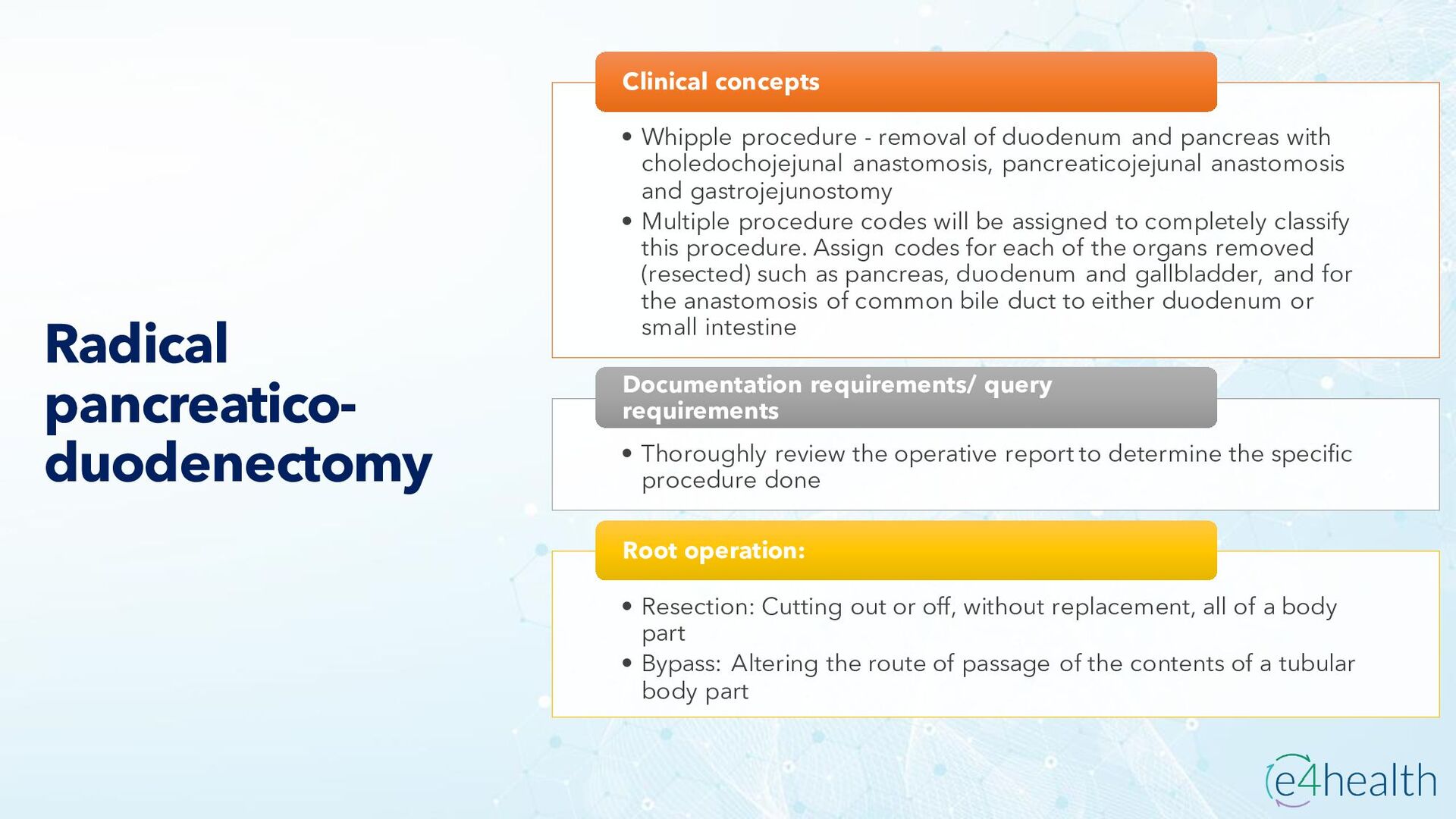
  78. Radical pancreatico- duodenectomy • Whipple procedure - removal of duodenum

    and pancreas with choledochojejunal anastomosis, pancreaticojejunal anastomosis and gastrojejunostomy • Multiple procedure codes will be assigned to completely classify this procedure. Assign codes for each of the organs removed (resected) such as pancreas, duodenum and gallbladder, and for the anastomosis of common bile duct to either duodenum or small intestine Clinical concepts • Thoroughly review the operative report to determine the specific procedure done Documentation requirements/ query requirements • Resection: Cutting out or off, without replacement, all of a body part • Bypass: Altering the route of passage of the contents of a tubular body part Root operation:
  79. Radical pancreatico-duodenectomy • The Whipple procedure (pancreaticoduodenectomy) is a multipart

    surgery performed as treatment primarily for pancreatic cancer, but may also be performed to treat pancreatitis, ampullary cancer, bile duct cancer, neuroendocrine tumors and/or trauma to the pancreas or small intestine. The intent is to remove the head of the pancreas, where most tumors occur. However, because the pancreas is so integrated with other organs, the duodenum (which includes the ampulla of Vater), gallbladder, a portion of the common bile duct and sometimes a portion of the stomach must also be removed. Anastomosis of the remaining organs to allow for normal digestive function is necessary at the completion of the procedure. The anastomosis performed is inherent o the total surgery and is not coded separately. Whipple procedures may be performed via an open approach (more common), laparoscopically and with or without robotic assistance. There are two general types of Whipple procedures: • Conventional, in which typically the head of the pancreas, entire duodenum, gallbladder, portion of the stomach and portion of the common bile duct are removed. • Pylorus sparing, in which the pylorus is preserved and no portion of the stomach is removed, sustaining the function of the gastric reservoir and allowing more normal gastric emptying. The main advantage is the likelihood of better nutritional status postoperatively, and less complicated surgical reconstruction. • When documentation supports a liver biopsy was performed, the operative report should be reviewed thoroughly to determine if a liver incision was done (hepatotomy), closure of a laceration was required, or a wedge resection was done rather than punch biopsy. All these procedures will result in assignment here (MS-DRGs 405/406/407). Punch, open and closed biopsy only are assigned to MS-DRGs 420/421/422.
  80. Pyloric-Sparing Whipple Procedure - Coding Clinic Third Quarter 2014 Page

    32 • Question: The provider documented Whipple pyloric sparing pancreaticoduodenectomy, pancreaticojejunostomy and hepaticojejunostomy. What is the appropriate ICD-10-PCS procedure code assignment for the Whipple pyloric sparing pancreaticoduodenectomy procedure? • Answer: In the pylorus-sparing Whipple, the pylorus section of stomach is not removed. This surgery is a variation of the standard Whipple procedure, and the preservation of the stomach and proximal duodenum sustains the function of the gastric reservoir, allowing normal gastric emptying. In a conventional Whipple, the head of the pancreas, the duodenum, and a portion of the stomach are removed as well as the gallbladder and a portion of the bile duct. The remaining stomach, bile duct and pancreas are then reconnected to the digestive tract. The anastomoses (e.g., pancreaticojejunostomy and hepaticojejunostomy) are inherent to the procedure and included in the code assignment. Assign the following ICD-10-PCS codes for the Whipple pyloric sparing pancreaticoduodenectomy: 0FBG0ZZ Excision of pancreas, open approach 0DB90ZZ Excision of duodenum, open approach
  81. Pancreatotomy Clinical concepts • Includes: • Drainage of pancreatic cyst

    by catheter • Pancreatolithotomy(removal of stone from pancreas) Root operation: • Drainage: Taking or letting out fluids and/or gases from a body part • Extirpation: Taking or cutting out solid matter from a body part • Fragmentation: Breaking solid matter in a body part into pieces
  82. Drainage of Pancreatic Pseudocyst - Coding Clinic Third Quarter 2014

    Page 15 • Question: A patient with known pseudocyst of the pancreas is admitted for endoscopic retrograde cholangiopancreatography (ERCP) and pseudocyst drainage. Multiple balloon sweeps were made of the common bile duct and a 10 French x 7 plastic biliary stent was successfully deployed across the papilla. Then the pancreatic pseudocyst was punctured and aspirated, and a tube placed for continued drainage from the pancreatic pseudocyst to the stomach using ultrasound guidance. What are the appropriate ICD-10-PCS procedure code assignments? • Answer: The aspiration and puncture of the pancreatic pseudocyst is captured by the drainage code. Therefore, no separate code is assigned for puncturing and aspirating the pseudocyst. Assign the following ICD-10-PCS codes: 0F798DZ Dilation of common bile duct with intraluminal device, via natural or artificial opening endoscopic 0F9G40Z Drainage of pancreas with drainage device, percutaneous endoscopic approach • If desired, assign also code BF47ZZZ, Ultrasonography of pancreas, for the ultrasound guidance.
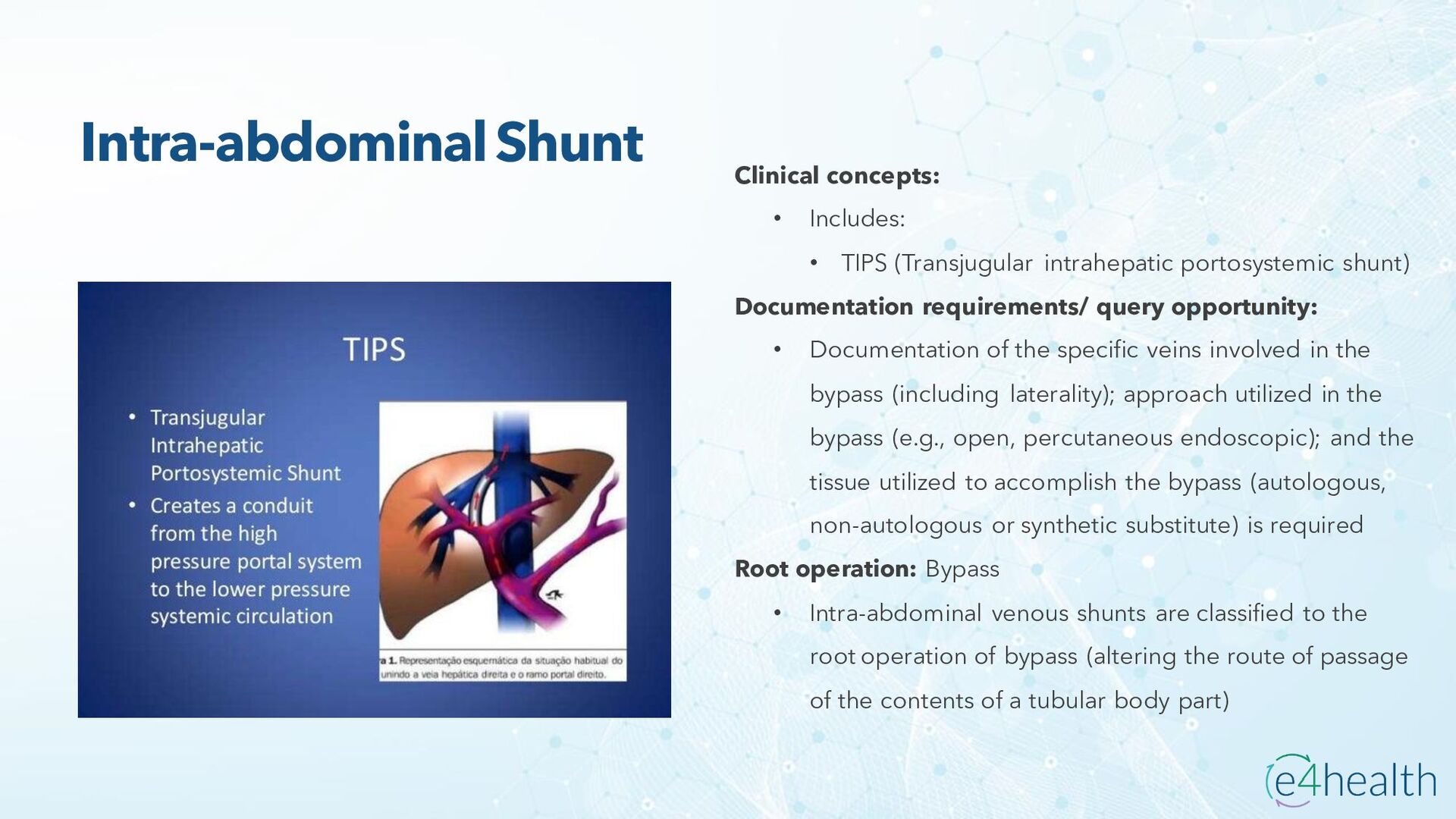
  83. Intra-abdominal Shunt Clinical concepts: • Includes: • TIPS (Transjugular intrahepatic

    portosystemic shunt) Documentation requirements/ query opportunity: • Documentation of the specific veins involved in the bypass (including laterality); approach utilized in the bypass (e.g., open, percutaneous endoscopic); and the tissue utilized to accomplish the bypass (autologous, non-autologous or synthetic substitute) is required Root operation: Bypass • Intra-abdominal venous shunts are classified to the root operation of bypass (altering the route of passage of the contents of a tubular body part)
  84. Other procedures • Biopsy of gallbladder or bile ducts, open

    • Root operation: Excision- Cutting out or off, without replacement, a portion of a body part • Biopsy of liver, open and laparoscopic • Root operation: Excision- Cutting out or off, without replacement, a portion of a body part • Biopsy of pancreas, open • Root operations: Excision- Cutting out or off, without replacement, a portion of a body part • Biopsy of peritoneum • Root operation: Excision- Cutting out or off, without replacement, a portion of a body part • Drainage of peritoneal cavity with or without drainage device • Via percutaneous endoscopic approach • Root operation: Drainage- Taking or letting out fluids and/or gases from a body part • Laparoscopy • Root operation: Inspection- Visually and/or manually exploring a body part • Laparotomy, exploratory • Root operation: Inspection- Visually and/or manually exploring a body part
  85. References • Biliary Cirrhosis / Bile Duct Cancer. (2019, August

    14). Johns Hopkins Medicine. https://www.hopkinsmedicine.org/health/conditions-and-diseases/biliary-cirrhosis-bile-duct-cancer • Cirrhosis - Symptoms and causes. (2021, February 6). Mayo Clinic. https://www.mayoclinic.org/diseases- conditions/cirrhosis/symptoms-causes/syc-20351487 • Diagnosis of Cirrhosis. (2022b, August 29). National Institute of Diabetes and Digestive and Kidney Diseases. https://www.niddk.nih.gov/health-information/liver-disease/cirrhosis/diagnosis • Symptoms & Causes of Cirrhosis. (2022, August 29). National Institute of Diabetes and Digestive and Kidney Diseases. https://www.niddk.nih.gov/health-information/liver-disease/cirrhosis/symptoms-causes • MSN. (n.d.). https://www.msn.com/en-us/health/condition/alcoholic-hepatitis?source=bing_condition • https://my.clevelandclinic.org/health/diseases/15429-esophageal-varices • https://www.renalfellow.org/2021/07/15/hepatorenal-syndrome-current-concepts-and-challenges/
  86. References • Carcinoid Syndrome: Symptoms, Treatment & What It Is.

    (n.d.). Cleveland Clinic. https://my.clevelandclinic.org/health/diseases/22103-carcinoid-syndrome • https://my.clevelandclinic.org/health/diseases/17715-primary-biliary-cholangitis-pbc- • Gallaher JR, Charles A. Acute Cholecystitis: A Review. JAMA. 2022 Mar 8;327(10):965-975. doi: 10.1001/jama.2022.2350. PMID: 35258527. • Hepatic Abscess | Johns Hopkins ABX Guide. (n.d.). https://www.hopkinsguides.com/hopkins/view/Johns_Hopkins_ABX_Guide/540259/all/Hepatic_Abscess • HexaHealth. (2022, December 9). Stages of Alcoholic Liver Disease - How These are Treated? https://www.hexahealth.com/blog/stages-of-alcoholic-liver- disease#:~:text=Different%20Stages%20of%20Alcoholic%20Liver%20Disease%20%20,Replacement%20 of%20healthy%20liver%20tissues%20wit%20. . .%20 • Hussaini SH, Farrington EA. Idiosyncratic drug-induced liver injury: an overview. Expert Opin Drug Saf. 2007 Nov;6(6):673-84. doi: 10.1517/14740338.6.6.673. PMID: 17967156.
  87. References • Littlefield A, Lenahan C. Cholelithiasis: Presentation and Management.

    J Midwifery Womens Health. 2019 May;64(3):289-297. doi: 10.1111/jmwh.12959. Epub 2019 Mar 25. PMID: 30908805. • AHA ICD-10-CM and ICD-10-PCS Coding Handbook • ICD-10-PCS: An Applied Approach 2023 • Cengage: 3-2-1 CODE IT! • Medical Terminology Systems, 8th Edition • Jackson, W. (2023, March 15). Congestive Hepatopathy. Merck Manuals Professional Edition. https://www.merckmanuals.com/professional/hepatic-and-biliary-disorders/vascular-disorders-of-the- liver/congestive-hepatopathy • Knab LM, Boller AM, Mahvi DM. Cholecystitis. Surg Clin North Am. 2014 Apr;94(2):455-70. doi: 10.1016/j.suc.2014.01.005. Epub 2014 Feb 18. PMID: 24679431.
  88. References • Liver function tests - Mayo Clinic. (2021, August

    18). https://www.mayoclinic.org/tests-procedures/liver-function- tests/about/pac-20394595 • Nonalcoholic fatty liver disease - Symptoms and causes - Mayo Clinic. (2021, September 22). Mayo Clinic. https://www.mayoclinic.org/diseases-conditions/nonalcoholic-fatty-liver-disease/symptoms-causes/syc-20354567 • https://www.webmd.com/hepatitis/toxic-liver-disease#1 • https://quizlet.com/543653309/280-hepatobiliary-system-flash-cards/ • Primary biliary cirrhosis, Mayo Clinic Staff, updated March 9, 2018, http://www.mayoclinic.com/health/primary-biliary-cirrhosis/DS00604 • Secondary Biliary Cirrhosis - Causes and Symptoms, http://digestion.ygoy.com/2010/05/14/secondary- biliary-cirrhosis-causes-and-symptoms/
  89. References • Spontaneous bacterial peritonitis in adults: Diagnosis - UpToDate

    • Alcohol Induced Liver Disease, updated June 24th, 2017, http://www.liverfoundation.org/abouttheliver/info/alcohol/ • Alcoholic Liver Disease, Lal, S, Review date 7/10/2017, http://www.nlm.nih.gov/medlineplus/ency/article/000281.htm • Liver Failure, Martin, L., reviewed Aug 13, 2017, http://www.webmd.com/digestive-disorders/digestive- diseases-liver-failure • Hepatopulmonary Syndrome - A Liver-Induced Lung Vascular Disorder, Rodriguez-Roisin, R. and Krowka, M., N Engl J Med 2008; 358:2378-2387May 29, 2008DOI: 10.1056/NEJMra0707185, http://www.nejm.org/doi/full/10.1056/NEJMra0707185
  90. References • Pancreatitis, updated Aug 7, 2018, www.mayoclinic.com/health/pancreatitis/DS00371 • Hepatic

    Encephalopathy, Herrine, SK, updated May 2018 http://www.merck.com/mmhe/sec10/ch135/ch135f.html • Lactulose (Duphalac), last updated June 27, 2019, http://netdoctor.co.uk/medicines/100001447.html • Viral Hepatitis, Division of Viral Hepatitis, Updated July 17, 2018, http://www.cdc.gov/hepatitis • Nonalcoholic Steatohepatitis, Diehl, A. and Tetri, B., November 2016 https://www.niddk.nih.gov/health- information/liver-disease/nafld-nash/all-content • MELD score for Liver Disease. Updated January 2016, http://www.mdcalc.com/meld-score-model-for- end-stage-liver-disease-12-and-older/ • Gallbladder Mucocele, Vijayaraghavan, R., updated June 11, 2018, http://emedicine.medscape.com/article/195165-overview
  91. References • Biliary Atresia, National Digestive Diseases Information Clearinghouse, last

    updated September 2017, http://digestive.niddK.nih.gov/ddiseases/pubs/atresia • Sphincter of Oddi Dysfunction: Diagnosis and Treatment, Sherman, S and Lehman, G., JOP. J Pancreas (Online) 2001; 2(6):382-400, http:// www.joplink.net/prev/200111/04.html http://pancreas.imedpub.com/sphincter-of-oddi-dysfunction-diagnosis-and-treatment.php?aid=2822 • Endoscopic management of bile duct stones: Standard techniques and mechanical lithotripsy, Raijman, I., updated Jan 18, 2018, http:// www.uptodate.com/contents/endoscopic-management-of-bile-duct- stones-standard-techniques-and-mechanical-lithotripsy • ICD-10-PCS Official Guidelines for Coding and Reporting • Esophageal Varices, Cleveland Clinic, last reviewed 3/27/2014, https://my.clevelandclinic.org/health/diseases/15429-esophageal-varices • Spontaneous Bacterial Peritonitis (SBP) Treatment & Management, Green, T., Medscape, Updated October 4, 2017, https://emedicine.medscape.com/article/789105-treatment