Upgrade to PRO for Only $50/Year—Limited-Time Offer! 🔥

FY 2024 MDC Review: All Complications

Avatar for e4health e4health PRO
April 04, 2024
120

FY 2024 MDC Review: All Complications

Avatar for e4health

e4health PRO

April 04, 2024
Tweet

Transcript

  1. H I M | C O D I N G

    & C D I | H E A LT H I T | R E V C Y C L E Empowering Better Health e4health tackles healthcare’s data, quality and revenue challenges empowering your providers to focus on better care.
  2. Objectives • Review Complications with a focus on selected diagnoses

    and procedures • Learner will acquire a basic understanding of the diagnoses and procedures included with Complications • Discuss Query opportunities related to Complications • Review coding clinics relevant to Complications
  3. Various MS-DRGs • Complications fall into various MS- DRGs dependent

    upon the body system and surgical procedures performed, therefore this is not an ‘MDC’ for ‘Complications This Photo by Unknown author is licensed under CC BY-SA- NC.
  4. Chapter specific guidelines • As with all procedural or postprocedural

    complications, code assignment is based on the provider’s documentation of the relationship between the condition and the procedure • Must have a cause-and-effect relationship between the care provided and the condition, where the documentation must support that the condition is clinically significant. • Not necessary for the provider to explicitly document the term “complication.” • For example, if the condition alters the course of the surgery as documented in the operative report, then it would be appropriate to report a complication code. • Query the provider for clarification if the documentation is not clear as to the relationship between the condition and the care or procedure.
  5. Chapter specific guidelines, continued • Complications of surgery and other

    medical care • When the admission is for treatment of a complication resulting from surgery or other medical care, the complication code is sequenced as the principal diagnosis • If the complication is classified to the T80-T88 series and the code lacks the necessary specificity in describing the complication, an additional code for the specific complication should be assigned • Admission Following Post-Operative Observation • When a patient is admitted to an observation unit to monitor a condition (or complication) that develops following outpatient surgery, and then is subsequently admitted as an inpatient of the same hospital, hospitals should apply the Uniform Hospital Discharge Data Set (UHDDS) definition of principal diagnosis as "that condition established after study to be chiefly responsible for occasioning the admission of the patient to the hospital for care."
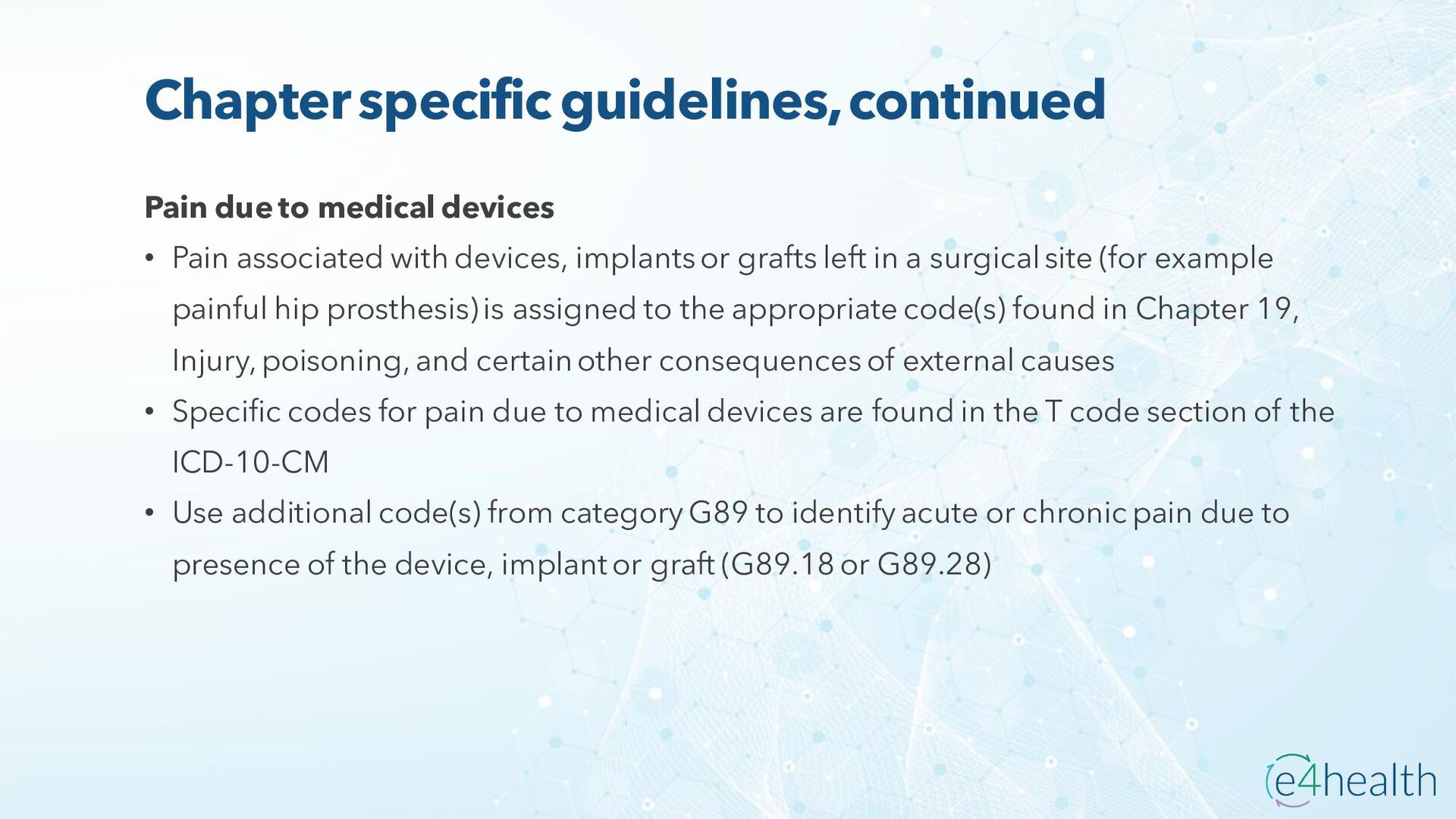
  6. Chapter specific guidelines, continued Pain due to medical devices •

    Pain associated with devices, implants or grafts left in a surgical site (for example painful hip prosthesis) is assigned to the appropriate code(s) found in Chapter 19, Injury, poisoning, and certain other consequences of external causes • Specific codes for pain due to medical devices are found in the T code section of the ICD-10-CM • Use additional code(s) from category G89 to identify acute or chronic pain due to presence of the device, implant or graft (G89.18 or G89.28)
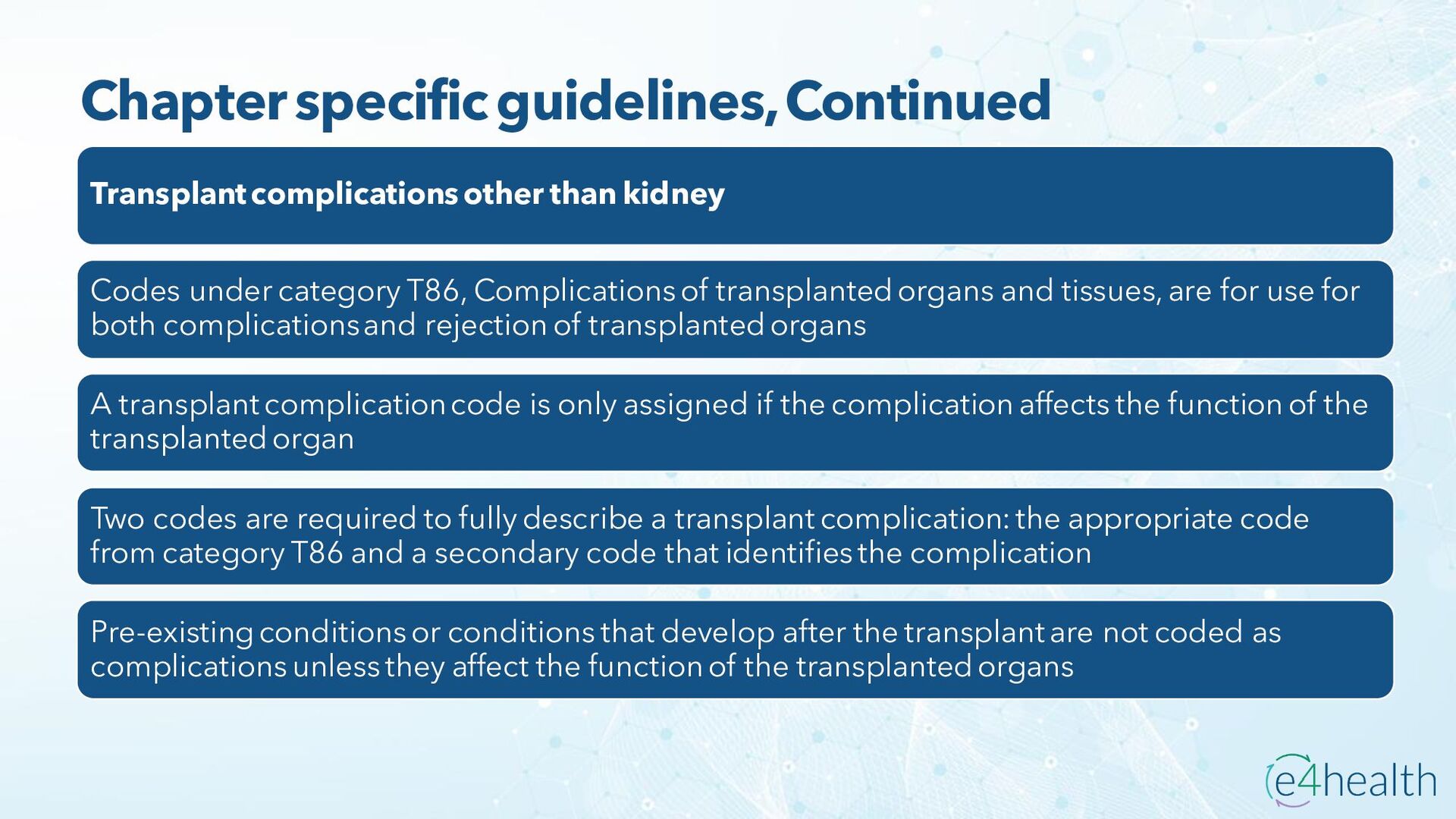
  7. Chapter specific guidelines, Continued Transplant complications other than kidney Codes

    under category T86, Complications of transplanted organs and tissues, are for use for both complications and rejection of transplanted organs A transplant complication code is only assigned if the complication affects the function of the transplanted organ Two codes are required to fully describe a transplant complication: the appropriate code from category T86 and a secondary code that identifies the complication Pre-existing conditions or conditions that develop after the transplant are not coded as complications unless they affect the function of the transplanted organs
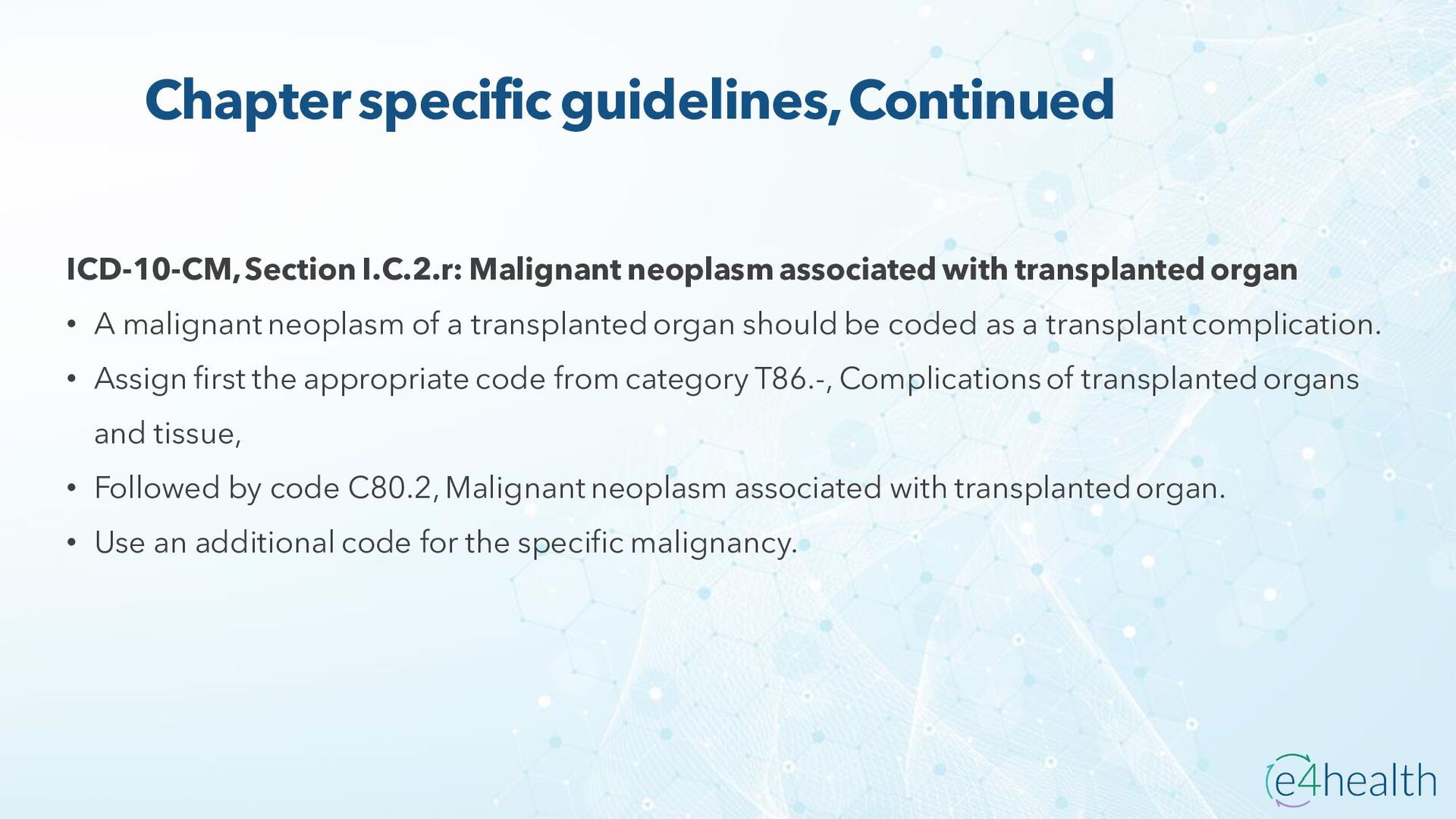
  8. Chapter specific guidelines, Continued ICD-10-CM, Section I.C.2.r: Malignant neoplasm associated

    with transplanted organ • A malignant neoplasm of a transplanted organ should be coded as a transplant complication. • Assign first the appropriate code from category T86.-, Complications of transplanted organs and tissue, • Followed by code C80.2, Malignant neoplasm associated with transplanted organ. • Use an additional code for the specific malignancy.
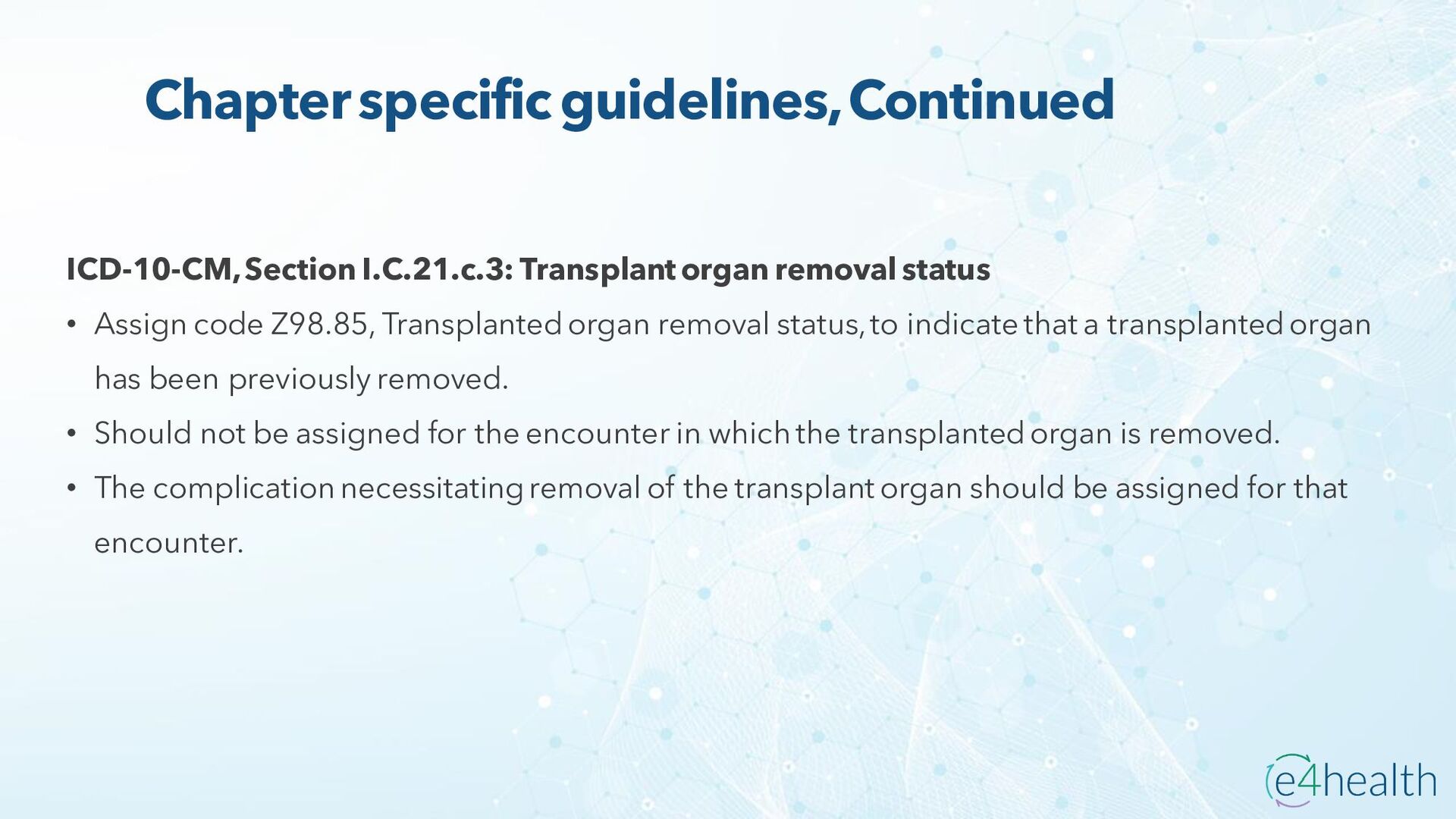
  9. Chapter specific guidelines, Continued ICD-10-CM, Section I.C.21.c.3: Transplant organ removal

    status • Assign code Z98.85, Transplanted organ removal status, to indicate that a transplanted organ has been previously removed. • Should not be assigned for the encounter in which the transplanted organ is removed. • The complication necessitating removal of the transplant organ should be assigned for that encounter.
  10. Chapter specific guidelines, Continued Kidney transplant complications • Patients who

    have undergone kidney transplant may still have some form of chronic kidney disease (CKD) because the kidney transplant may not fully restore kidney function • Code T86.1- should be assigned for documented complications of a kidney transplant, such as transplant failure or rejection or other transplant complication • Code T86.1- should NOT be assigned for post kidney transplant patients who have chronic kidney (CKD) unless a transplant complication such as transplant failure or rejection is documented • If the documentation is unclear as to whether the patient has a complication of the transplant, query the provider • Conditions that affect the function of the transplanted kidney, other than CKD, should be assigned a code from subcategory T86.1, Complications of transplanted organ, Kidney, and a secondary code that identifies the complication • For patients with CKD following a kidney transplant, but who do not have a complication such as failure or rejection, see section I.C.14. Chronic kidney disease and kidney transplant status
  11. Chapter specific guidelines, Continued Complication codes that include the external

    cause As with certain other T codes, some of the complications of care codes have the external cause included in the code The code includes the nature of the complication as well as the type of procedure that caused the complication No external cause code indicating the type of procedure is necessary for these codes
  12. Chapter specific guidelines, Continued Complications of care codes within the

    body system chapters • Intraoperative and postprocedural complication codes are found within the body system chapters with codes specific to the organs and structures of that body system • These codes should be sequenced first, followed by a code(s) for the specific complication, if applicable. • Complication codes from the body system chapters should be assigned for intraoperative and postprocedural complications (e.g., the appropriate complication code from chapter 9 would be assigned for a vascular intraoperative or postprocedural complication) unless the complication is specifically indexed to a T code in chapter 19
  13. Chapter Specific Guidelines, Continued ICD-10-CM, Section I.C.2.c: Neoplasms, Coding and

    Sequencing complications • Coding and sequencing of complications associated with the malignancies or with the therapy thereof are subject to the following guidelines: • Anemia associated with malignancy • When admission/encounter is for management of an anemia associated with the malignancy, and the treatment is only for anemia, the appropriate code for the malignancy is sequenced as the principal or first-listed diagnosis followed by the appropriate code for the anemia (such as code D63.0, Anemia in neoplastic disease) • Anemia associated with chemotherapy, immunotherapy and radiation therapy • When the admission/encounter is for management of an anemia associated with an adverse effect of the administration of chemotherapy or immunotherapy and the only treatment is for the anemia, the anemia code is sequenced first followed by the appropriate codes for the neoplasm and the adverse effect (T45.1X5-, Adverse effect of antineoplastic and immunosuppressive drugs)
  14. Chapter Specific Guidelines, Continued ICD-10-CM, Section I.C.2.c: Neoplasms, Coding and

    Sequencing complications • Coding and sequencing of complications associated with the malignancies or with the therapy thereof are subject to the following guidelines: • Management of dehydration due to the malignancy • When the admission/encounter is for management of dehydration due to the malignancy and only the dehydration is being treated (intravenous rehydration), the dehydration is sequenced first, followed by the code(s) for the malignancy • Treatment of a complication resulting from a surgical procedure • When the admission/encounter is for treatment of a complication resulting from a surgical procedure, designate the complication as the principal or first-listed diagnosis if treatment is directed at resolving the complication.
  15. Chapter Specific Guidelines, Continued ICD-10-CM, Section I.C.4.a.5: Complication due to

    insulin pump malfunction • An underdose of insulin due to an insulin pump failure should be assigned to a code from subcategory T85.6, Mechanical complication of other specified internal and external prosthetic devices, implants and grafts, that specifies the type of pump malfunction, as the principal or first-listed code, followed by code T38.3X6-, Underdosing of insulin and oral hypoglycemic [antidiabetic] drugs. • Additional codes for the type of diabetes mellitus and any associated complications due to the underdosing should also be assigned • An overdose of insulin due to an insulin pump failure, the principal or first-listed code should also be T85.6-, Mechanical complication of other specified internal and external prosthetic devices, implants and grafts, followed by code T38.3X1-, Poisoning by insulin and oral hypoglycemic [antidiabetic] drugs, accidental (unintentional)
  16. Chapter Specific Guidelines, Continued ICD-10-CM, Section I.C.15.p: Sequelae of complication

    of pregnancy, childbirth, and the puerperium • Code O94, Sequelae of complication of pregnancy, childbirth, and the puerperium, • is for use in those cases when an initial complication of a pregnancy develops a sequela or sequelae requiring care or treatment at a future date. • After the initial postpartum period, This code may be used at any time after the initial postpartum period. • Sequencing of Code O94, like all sequela codes, is to be sequenced following the code describing the sequelae of the complication.
  17. Chapter specific guidelines, continued Postoperative pain not associated with a

    specific postoperative complication is assigned to the appropriate postoperative pain code in category G89 Postoperative pain associated with specific postoperative complication Postoperative pain associated with a specific postoperative complication (such as painful wire sutures) is assigned to the appropriate code(s) found in Chapter 19, Injury, poisoning, and certain other consequences of external causes If appropriate, use additional code(s) from category G89 to identify acute or chronic pain (G89.18 or G89.28)
  18. Chapter specific guidelines – 7th Character • For complication codes,

    active treatment refers to treatment for the condition described by the code, even though it may be related to an earlier precipitating problem • For example, code T84.50XA, Infection and inflammatory reaction due to unspecified internal joint prosthesis, initial encounter, is used when active treatment is provided for the infection, even though the condition relates to the prosthetic device, implant or graft that was placed at a previous encounter • 7th character “A”, initial encounter is used for each encounter where the patient is receiving active treatment for the condition • 7th character “D” subsequent encounter is used for encounters after the patient has completed active treatment of the condition and is receiving routine care for the condition during the healing or recovery phase.
  19. Chapter specific guidelines – 7th Character (cont'd) • The aftercare

    Z codes should not be used for aftercare for conditions such as injuries or poisonings, where 7th characters are provided to identify subsequent care • For example, for aftercare of an injury, assign the acute injury code with the 7th character “D” (subsequent encounter). • 7th character “S”, sequela, is for use for complications or conditions that arise as a direct result of a condition, such as scar formation after a burn. The scars are sequelae of the burn. • When using 7th character “S”, it is necessary to use both the injury code that precipitated the sequela and the code for the sequela itself. The “S” is added only to the injury code, not the sequela code. The 7th character “S” identifies the injury responsible for the sequela. • The specific type of sequela (e.g. scar) is sequenced first, followed by the injury code
  20. Chapter specific guidelines Iatrogenic injuries • “Iatrogenic” means that the

    condition resulted from treatment • Injury codes from Chapter 19 should NOT be assigned for injuries that occur during, or as a result of, a medical intervention. Assign the appropriate complication code(s)
  21. Chapter specific guidelines, continued Care for complications of surgical treatment

    for fracture repairs during the healing or recovery phase should be coded with the appropriate complication codes 01 Care of complications of fractures, such as malunion and nonunion, should be reported with the appropriate 7th character for subsequent care with nonunion (K, M, N,) or subsequent care with malunion (P, Q, R) 02 Malunion/nonunion: The appropriate 7th character for initial encounter should also be assigned for a patient who delayed seeking treatment for the fracture or nonunion 03
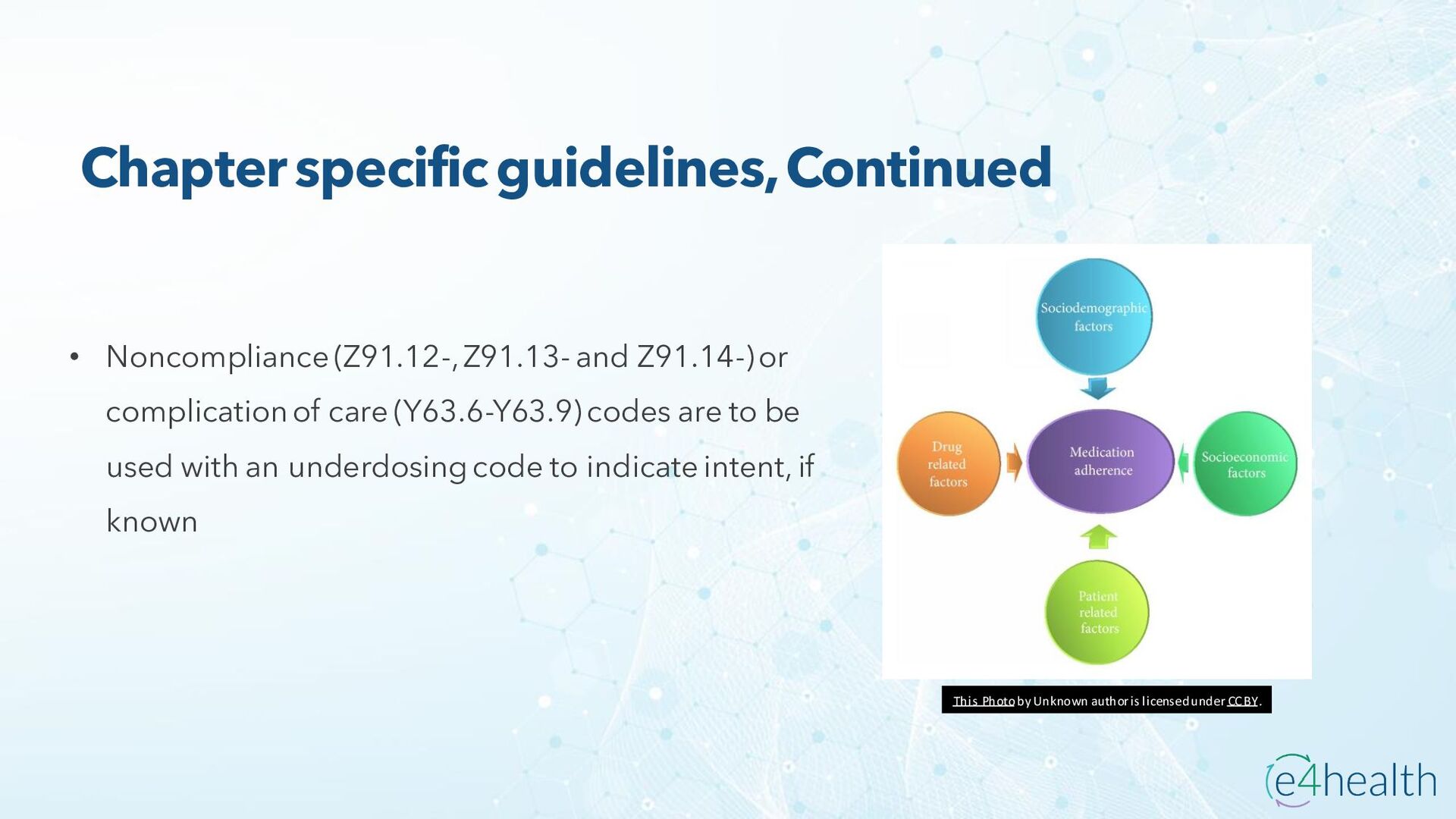
  22. Chapter specific guidelines, Continued • Noncompliance (Z91.12-, Z91.13- and Z91.14-)

    or complication of care (Y63.6-Y63.9) codes are to be used with an underdosing code to indicate intent, if known This Photo by Unknown author is licensed under CC BY.
  23. Complications of medical and surgical care • Categories T80–T88 classify

    complications of medical and surgical care NEC • Not all conditions occurring after surgery or after other care are classified as complications • To report categories T80–T88, the physician must document a cause-and-effect relationship between the care provided and the condition • The coder cannot determine whether a complication exists • Query the provider for clarification, if a postprocedural complication is not clearly documented • This guideline applies to any complications of care, regardless of the chapter in which the code is located • Note that the term “complication” in ICD-10-CM does NOT imply improper or inadequate care
  24. Complications of medical and surgical care Complication Criteria: • There

    must be an unexpected or abnormal occurrence • There must be a documented relationship between the condition and the care • There must be an indication that it is a complication There is no defined time limit for the development of a complication • Can occur during the hospital episode • Shortly after the hospital episode • Years later If the complication occurs during the episode in which the operation or other care was given • Report the complication as an additional code If the complication is the reason for the hospital admission • Report it as the principal diagnosis
  25. Complication coding considerations • Note that not all conditions that

    occur following surgery or other patient care are classified as complications. Complications are determined by multiple criteria. • First, the condition or occurrence must exceed routine expectations for the surgical or medical care • For example, a major amount of bleeding is expected with joint replacement surgery; hemorrhage should not be considered a complication of this procedure unless the bleeding is particularly excessive • In addition, a cause-and-effect relationship between the care provided and the condition must be documented, including some indication that the condition is a complication—as opposed to a postoperative condition in which no complication is present, such as an artificial opening status or an absence of an extremity • In some cases, the cause-and-effect relationship is implicit, as in a complication due to the presence of an internal device, an implant, or a graft or due to a transplant • Code assignment for postprocedural complications is based on the provider's documentation of the relationship between the complication and the procedure
  26. Complications of medical and surgical care Complications of surgical and

    medical care are classified as follows • Complications that occur in specified body sites are classified in that chapter of ICD-10-CM for that site • Complications that affect multiple sites or body systems are generally classified in categories T80– T88 • Intraoperative and postprocedural complication codes are found within the body system chapters of ICD-10-CM, with codes specific to the organs and structures of that body system • Complications of abortion, pregnancy, labor, or delivery are reclassified in chapter 15 of ICD-10- CM
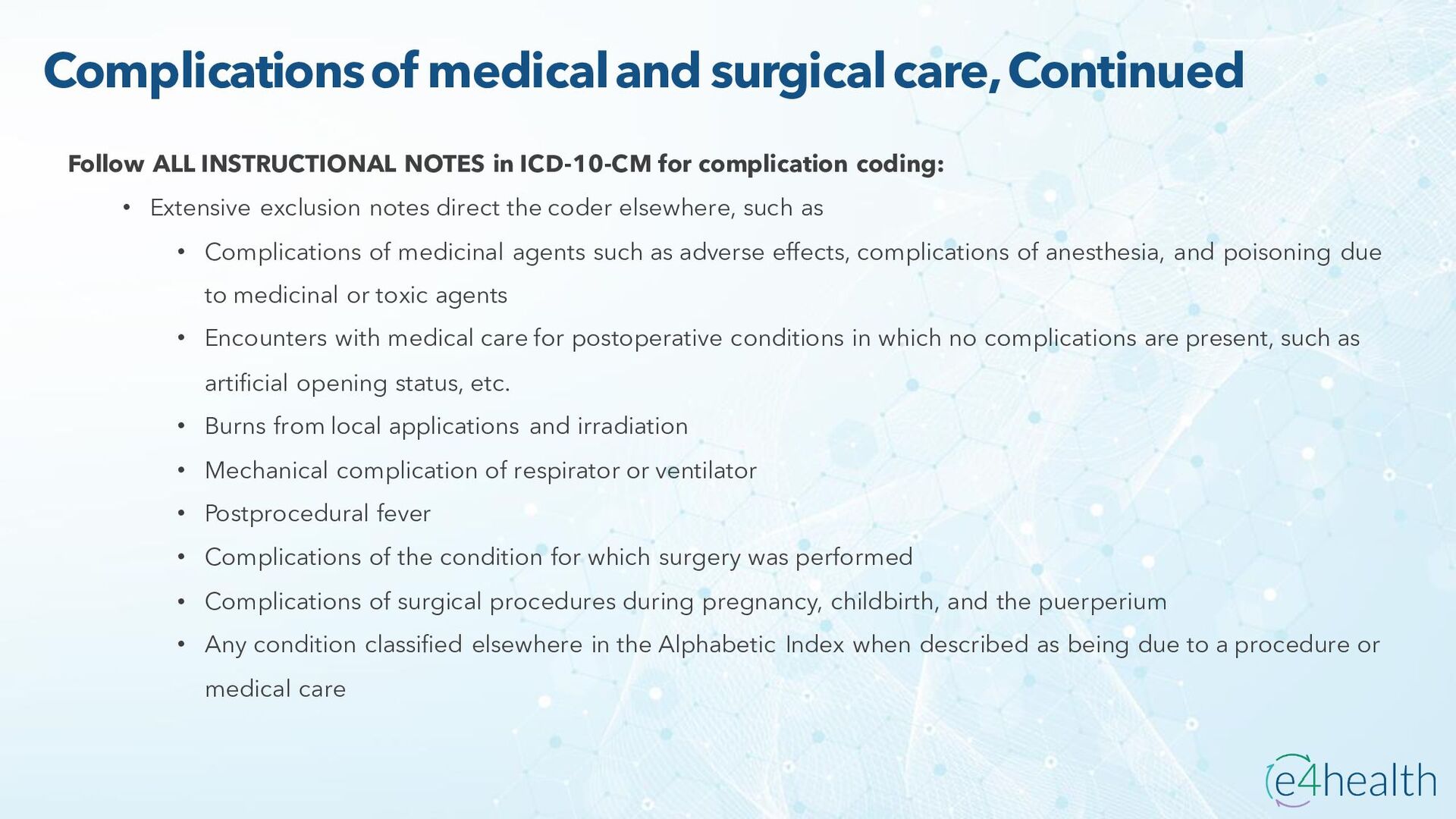
  27. Complications of medical and surgical care, Continued Follow ALL INSTRUCTIONAL

    NOTES in ICD-10-CM for complication coding: • Extensive exclusion notes direct the coder elsewhere, such as • Complications of medicinal agents such as adverse effects, complications of anesthesia, and poisoning due to medicinal or toxic agents • Encounters with medical care for postoperative conditions in which no complications are present, such as artificial opening status, etc. • Burns from local applications and irradiation • Mechanical complication of respirator or ventilator • Postprocedural fever • Complications of the condition for which surgery was performed • Complications of surgical procedures during pregnancy, childbirth, and the puerperium • Any condition classified elsewhere in the Alphabetic Index when described as being due to a procedure or medical care
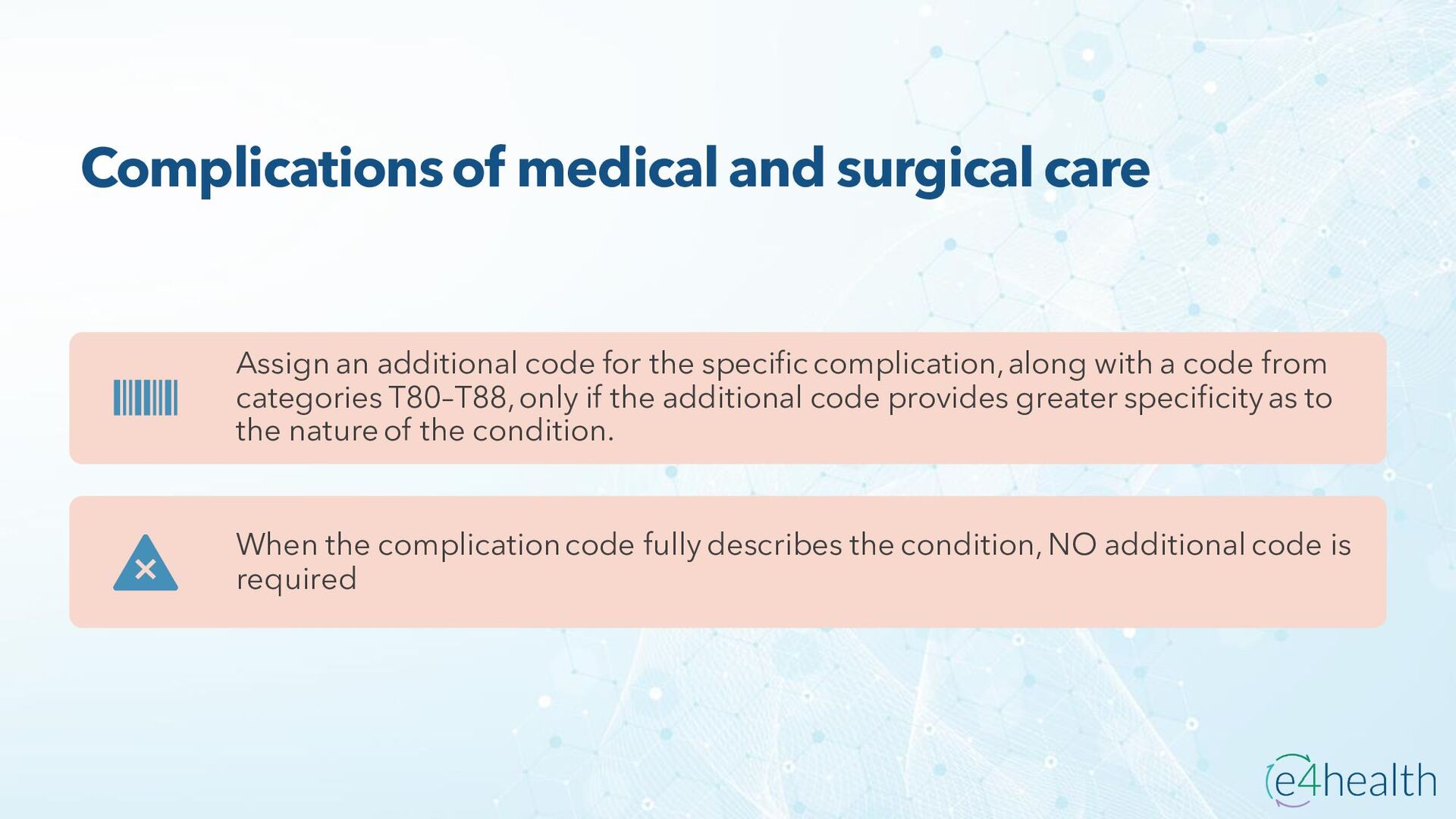
  28. Complications of medical and surgical care Assign an additional code

    for the specific complication, along with a code from categories T80–T88, only if the additional code provides greater specificity as to the nature of the condition. When the complication code fully describes the condition, NO additional code is required
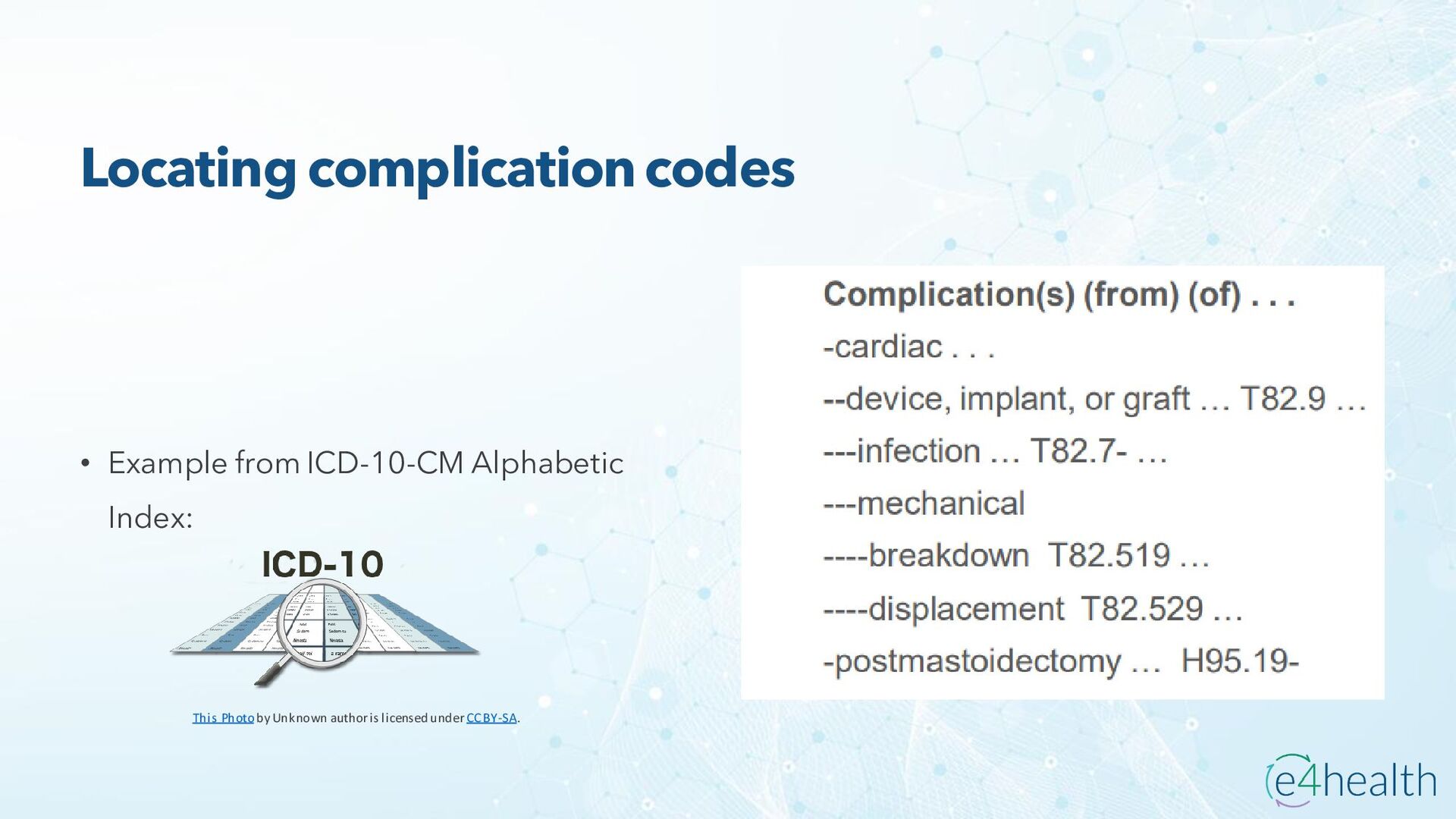
  29. Locating complication codes • Such as “adhesions” or “malfunction” To

    locate complication codes in the Index, refer first to the main term for the condition • Foreign body, accidental puncture, or hemorrhage • Type of procedure (i.e., colostomy, dialysis, or shunt) • Anatomical site or body system affected, such as respiratory system • General terms such as “mechanical,” “infection,” or “graft” If no relevant entry is found in the Index under the main term for the condition, refer to the main term “Complications” and look for the nature of complication, such as:
  30. Locating complication codes • Example from ICD-10-CM Alphabetic Index: This

    Photo by Unknown author is licensed under CC BY-SA.
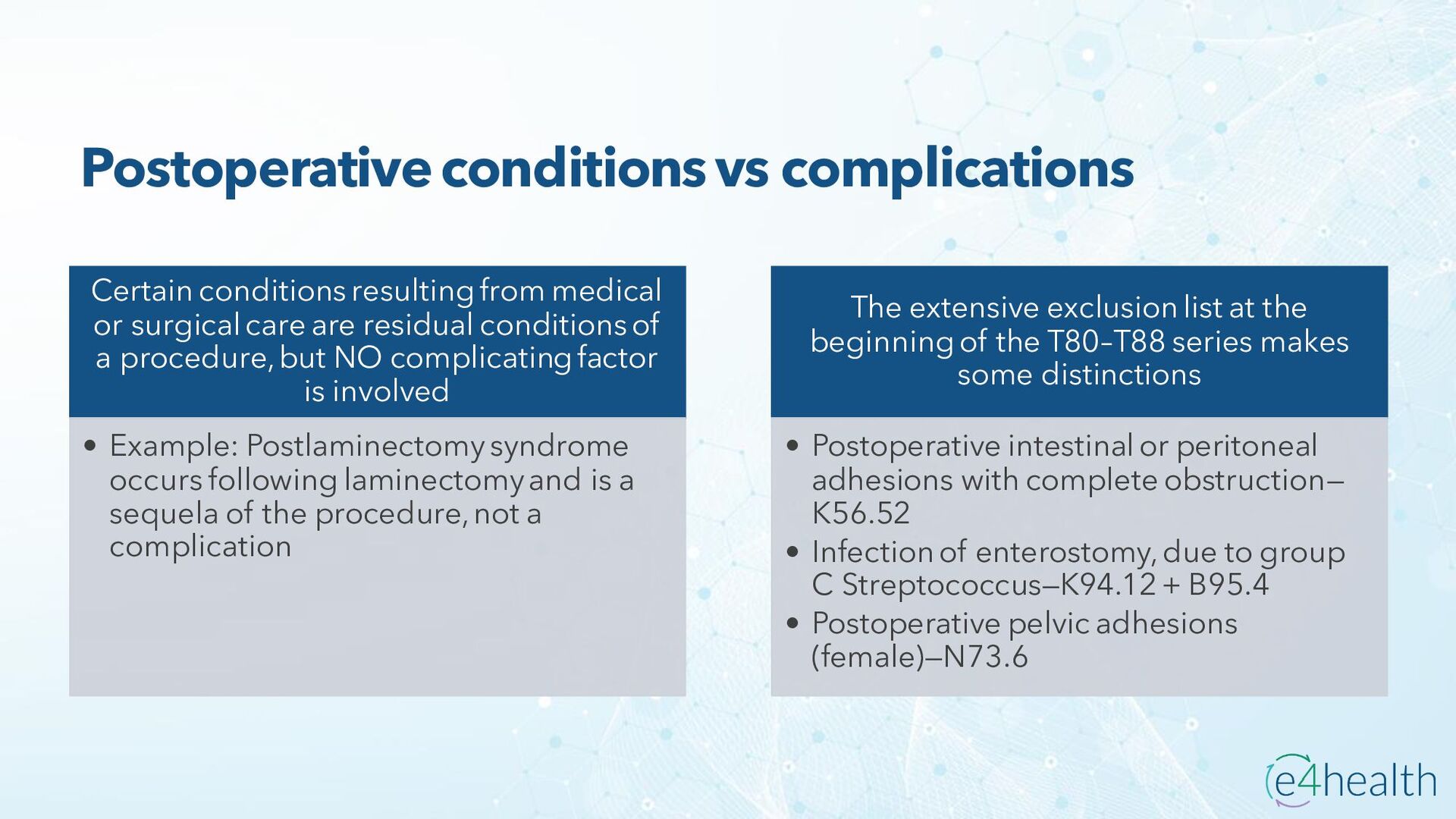
  31. Postoperative conditions vs complications Certain conditions resulting from medical or

    surgical care are residual conditions of a procedure, but NO complicating factor is involved • Example: Postlaminectomy syndrome occurs following laminectomy and is a sequela of the procedure, not a complication The extensive exclusion list at the beginning of the T80–T88 series makes some distinctions • Postoperative intestinal or peritoneal adhesions with complete obstruction— K56.52 • Infection of enterostomy, due to group C Streptococcus—K94.12 + B95.4 • Postoperative pelvic adhesions (female)—N73.6
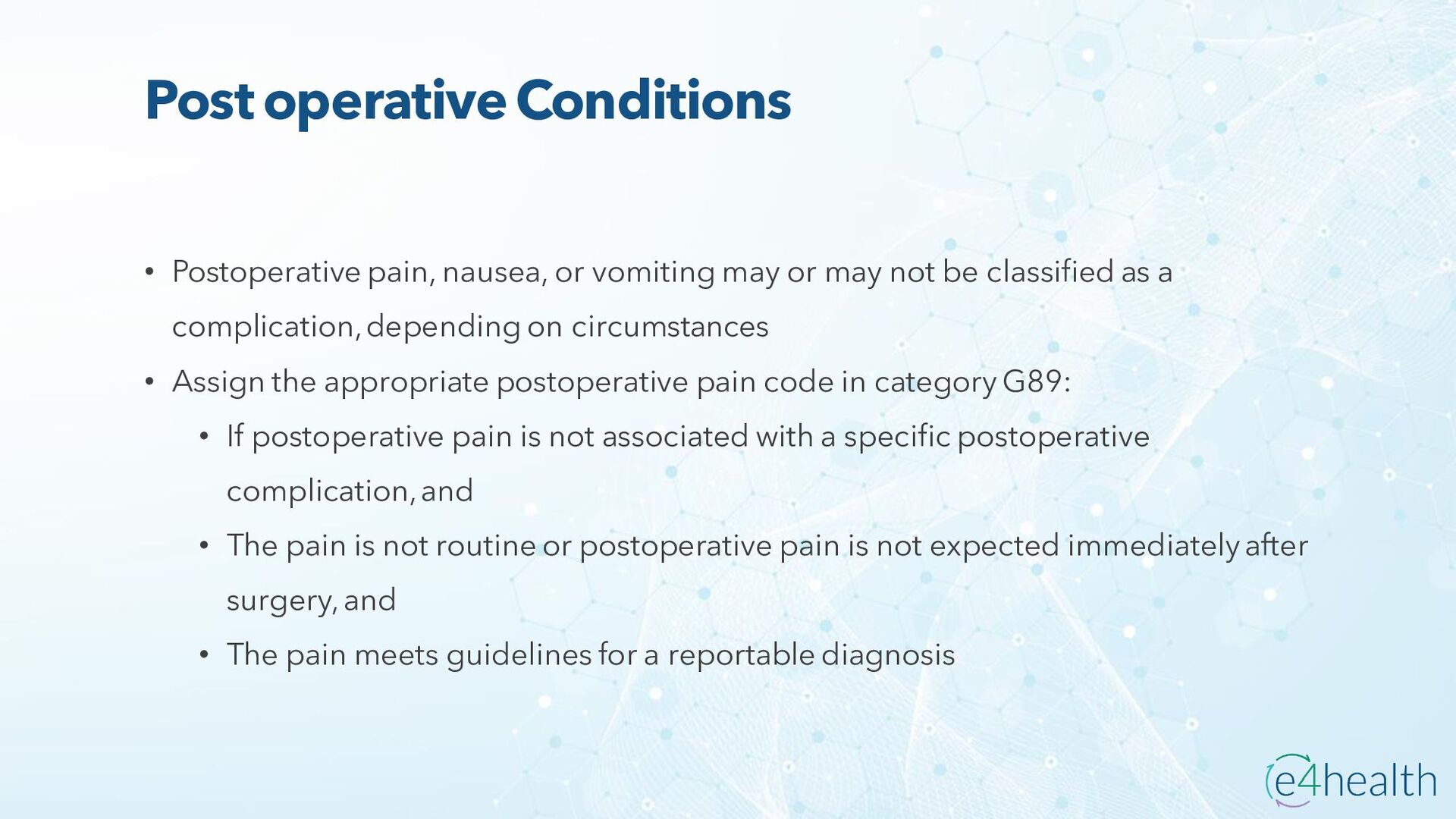
  32. Post operative Conditions • Postoperative pain, nausea, or vomiting may

    or may not be classified as a complication, depending on circumstances • Assign the appropriate postoperative pain code in category G89: • If postoperative pain is not associated with a specific postoperative complication, and • The pain is not routine or postoperative pain is not expected immediately after surgery, and • The pain meets guidelines for a reportable diagnosis
  33. Post operative Conditions, Continued Patients are sometimes admitted following same-day

    surgery for further management rather than specific symptoms Physicians may state, “Admitted for observation”; however, do not assign a code from category Z03, Encounter for medical observation for suspected diseases and conditions ruled out Assign Z48.- as the principal diagnosis when no specific condition is identified This should be used very infrequently
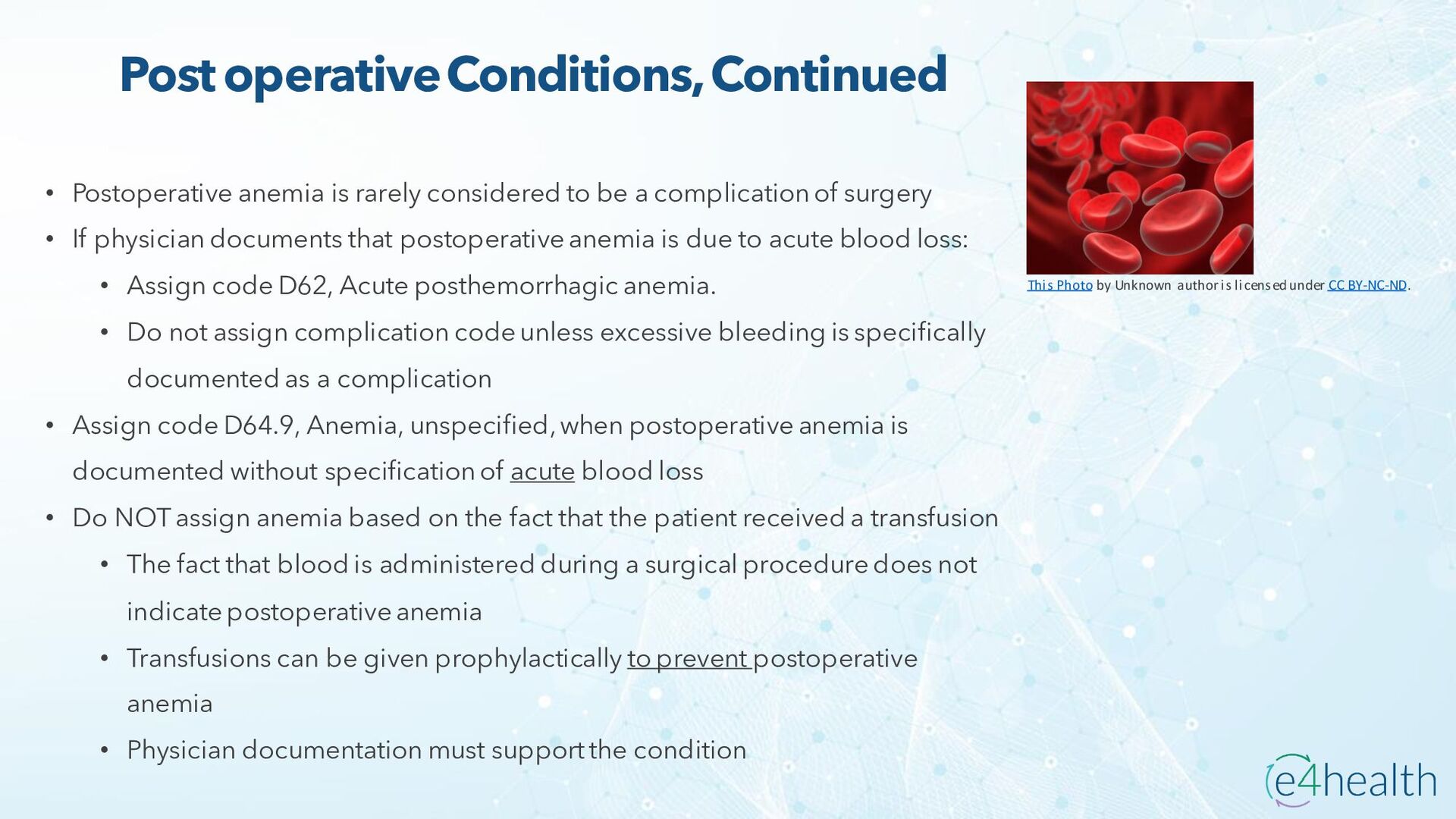
  34. Post operative Conditions, Continued • Postoperative anemia is rarely considered

    to be a complication of surgery • If physician documents that postoperative anemia is due to acute blood loss: • Assign code D62, Acute posthemorrhagic anemia. • Do not assign complication code unless excessive bleeding is specifically documented as a complication • Assign code D64.9, Anemia, unspecified, when postoperative anemia is documented without specification of acute blood loss • Do NOT assign anemia based on the fact that the patient received a transfusion • The fact that blood is administered during a surgical procedure does not indicate postoperative anemia • Transfusions can be given prophylactically to prevent postoperative anemia • Physician documentation must support the condition This Photo by Unknown author is licensed under CC BY-NC-ND.
  35. Post operative Conditions, Continued • Body system chapters classify many

    intraoperative and postprocedural complications with codes specific to the organs and structures of that body system • These codes are sequenced first, followed by codes for the specific complication, if applicable • Additional characters are provided for most of the categories in this section to specify complications, such as: • Intraoperative or postprocedural hemorrhage or hematoma • Accidental puncture and laceration during a procedure • Additionally, codes distinguish whether the condition resulted from a procedure on the specified organ or from complications of other procedure
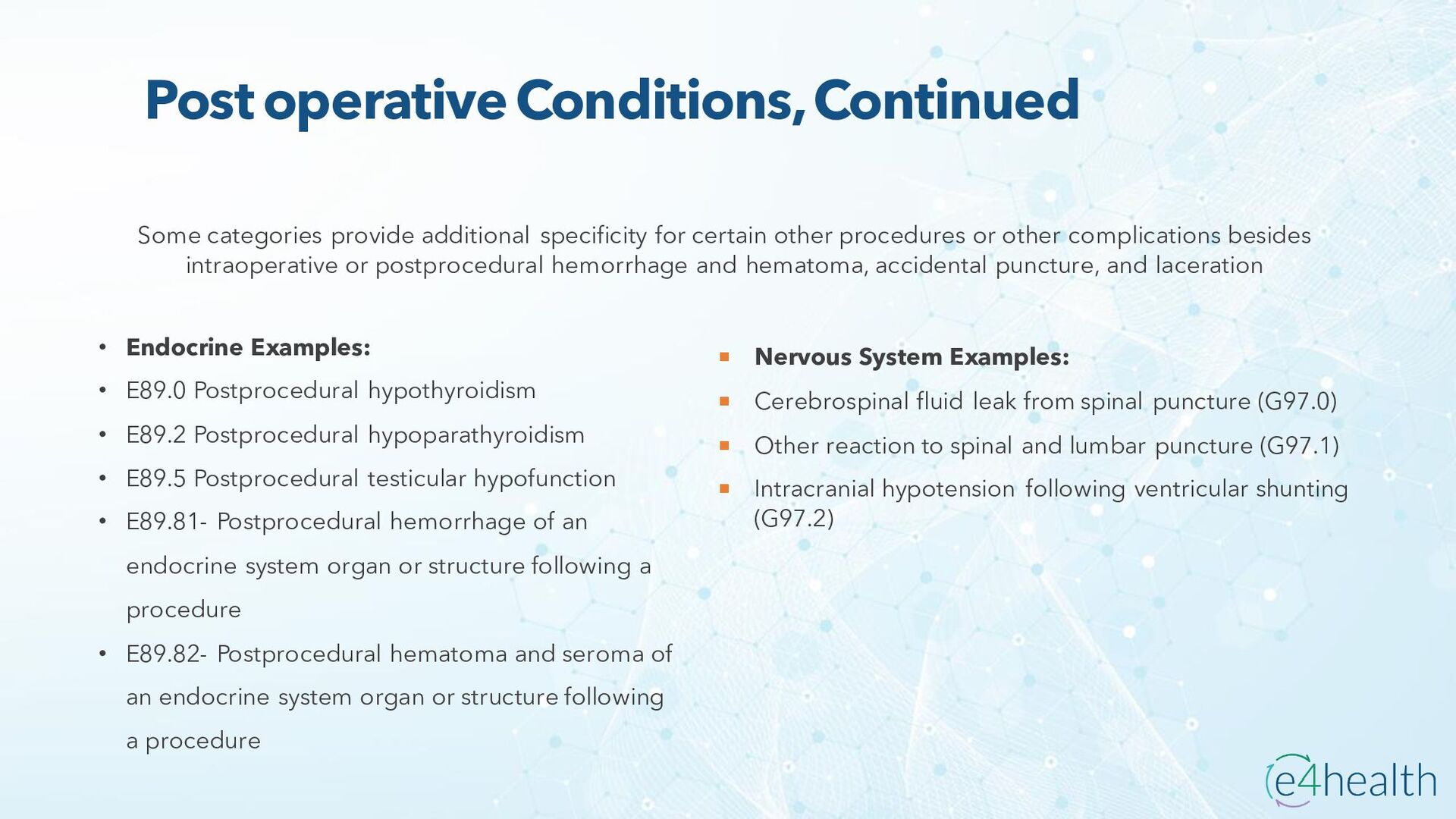
  36. Post operative Conditions, Continued • Endocrine Examples: • E89.0 Postprocedural

    hypothyroidism • E89.2 Postprocedural hypoparathyroidism • E89.5 Postprocedural testicular hypofunction • E89.81- Postprocedural hemorrhage of an endocrine system organ or structure following a procedure • E89.82- Postprocedural hematoma and seroma of an endocrine system organ or structure following a procedure  Nervous System Examples:  Cerebrospinal fluid leak from spinal puncture (G97.0)  Other reaction to spinal and lumbar puncture (G97.1)  Intracranial hypotension following ventricular shunting (G97.2) Some categories provide additional specificity for certain other procedures or other complications besides intraoperative or postprocedural hemorrhage and hematoma, accidental puncture, and laceration
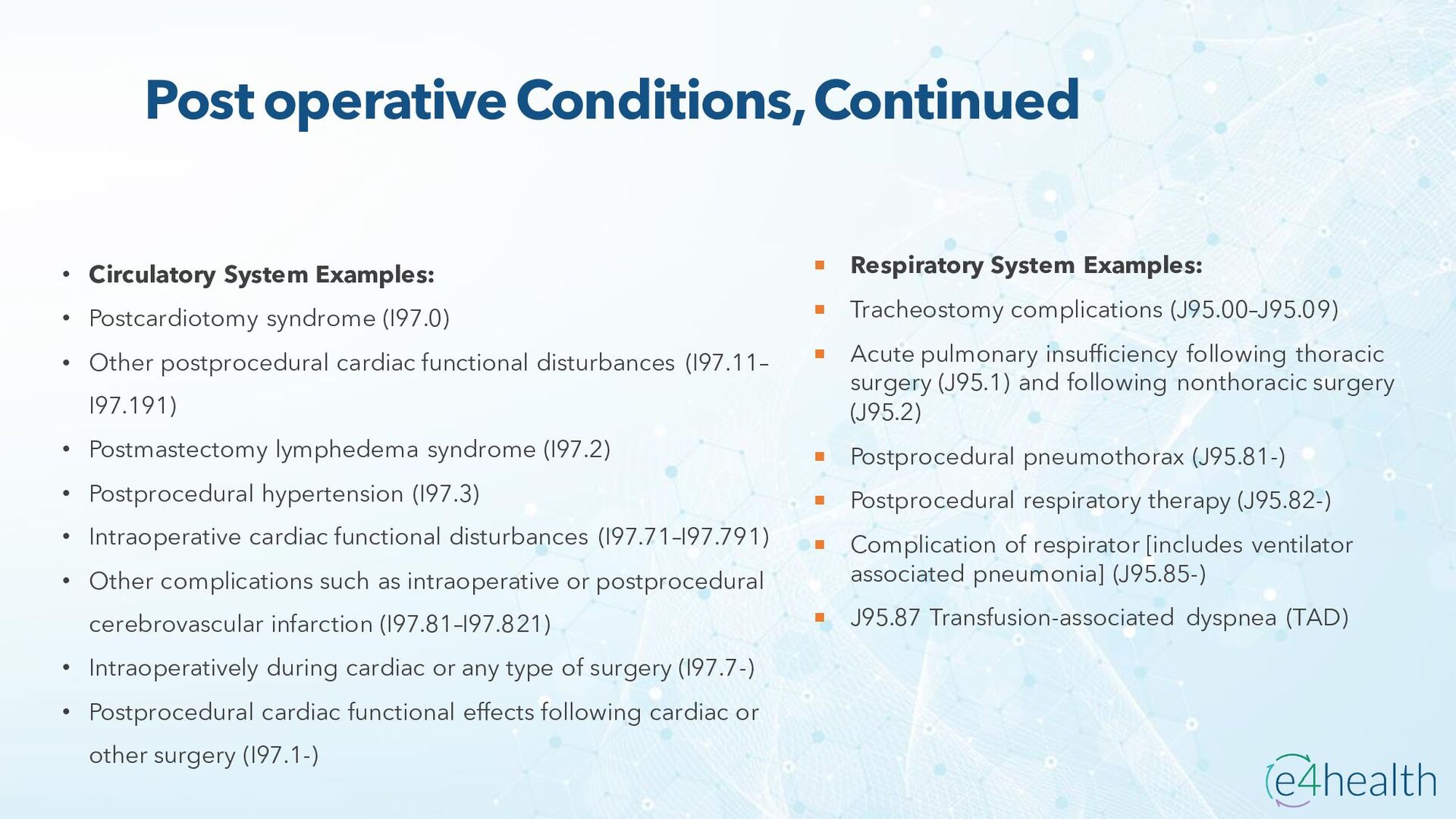
  37. Post operative Conditions, Continued • Circulatory System Examples: • Postcardiotomy

    syndrome (I97.0) • Other postprocedural cardiac functional disturbances (I97.11– I97.191) • Postmastectomy lymphedema syndrome (I97.2) • Postprocedural hypertension (I97.3) • Intraoperative cardiac functional disturbances (I97.71–I97.791) • Other complications such as intraoperative or postprocedural cerebrovascular infarction (I97.81–I97.821) • Intraoperatively during cardiac or any type of surgery (I97.7-) • Postprocedural cardiac functional effects following cardiac or other surgery (I97.1-)  Respiratory System Examples:  Tracheostomy complications (J95.00–J95.09)  Acute pulmonary insufficiency following thoracic surgery (J95.1) and following nonthoracic surgery (J95.2)  Postprocedural pneumothorax (J95.81-)  Postprocedural respiratory therapy (J95.82-)  Complication of respirator [includes ventilator associated pneumonia] (J95.85-)  J95.87 Transfusion-associated dyspnea (TAD)
  38. Post operative Conditions, Continued • Musculoskeletal Examples: • M96.0 Pseudoarthrosis

    after fusion or arthrodesis • M96.1 Postlaminectomy syndrome, NEC • M96.2 Kyphosis postradiation • M96.3 Kyphosis postlaminectomy • M96.4 Lordosis postsurgical • M96.5 Postradiation scoliosis • M96.6- Fracture of bone following insertion of orthopedic implant, joint prosthesis or bone plate • M96.A- Fracture of ribs, sternum and thorax associated with compression of the chest and cardiopulmonary resuscitations  Injection Examples:  Complications following infusion, transfusion, and therapeutic injections are classified in category T80  Central line-associated bloodstream infections are systemic infections  Codes T80.211- and T80.212- distinguish between local and systemic infections due to central venous and pulmonary artery catheters.  Assign code T80.212- for local infections due to a central venous or pulmonary artery catheter (but not due to an infection at another site):  Includes exit or insertion site infections, port or reservoir infections, or tunnel infections.  Includes laboratory-confirmed bloodstream infections
  39. Post operative Conditions, Continued • Blood Incompatibility/Transfusion Reaction Examples: •

    ABO incompatibility reaction (T80.30–T80.39) • Rh and other non-ABO incompatibility reaction (T80.40–T80.49) • Non-ABO incompatibility reaction due to transfusion of blood or blood products (T80.A0–T80.A9) • Acute hemolytic transfusion reaction • Delayed hemolytic transfusion reaction • Hemolytic transfusion reaction is a systemic response by the body to the administration of blood incompatible with the recipient’s blood: • Leads to destruction of red blood cells • Can cause acute renal failure and/or disseminated intravascular coagulation (DIC) • Hemochromatosis due to repeated blood cell transfusions (E83.111) • Transfusion associated circulatory overload (E87.71) • Post-transfusion purpura (D69.51) • Post-transfusion fever (R50.84) This Photo by Unknown author is licensed under CC BY-SA.
  40. Complication vs aftercare It is important for the coder to

    differentiate between: •An admission for aftercare is usually planned care or follow-up care (e.g., removal of pins or plates) •Aftercare is classified to categories Z42–Z51 •Examples: •Change or removal of nonsurgical wound dressing (Z48.00) •Change or removal of surgical wound dressing (Z48.01) •Removal of sutures (Z48.02) •Removal of drains (Z48.03) •The aftercare codes are NOT used for aftercare for injuries •Assign the acute injury code with the seventh-character value for subsequent encounter An admission to manage a complication of surgery or medical care VERSUS an admission for aftercare
  41. Device complications • Categories T82–T85 classify conditions that occur because

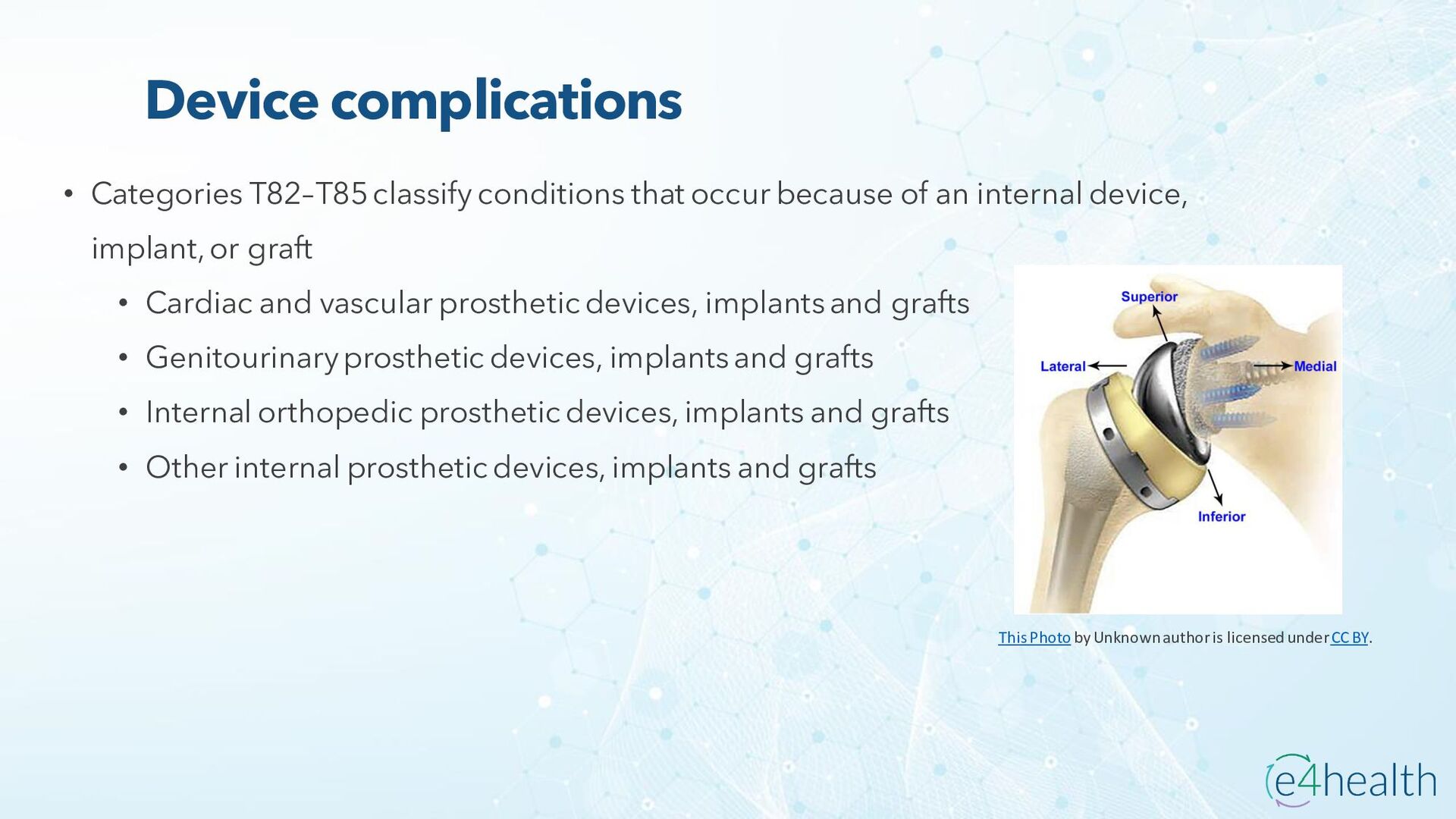
    of an internal device, implant, or graft • Cardiac and vascular prosthetic devices, implants and grafts • Genitourinary prosthetic devices, implants and grafts • Internal orthopedic prosthetic devices, implants and grafts • Other internal prosthetic devices, implants and grafts This Photo by Unknown author is licensed under CC BY.
  42. Device complications • First classified as mechanical or nonmechanical •

    Mechanical complication involves failure of the device, implant, or graft (e.g., displacement or malfunction) • They are further classified by the type of mechanical complication and the type of device involved • Examples: • Perforation of uterus by intrauterine contraceptive device • Protrusion of intramedullary nail in left femur • Displacement of peritoneal dialysis catheter • Obstruction of arteriovenous dialysis catheter • Breakdown of surgically created arteriovenous shunt • Defective cardiac pulse generator
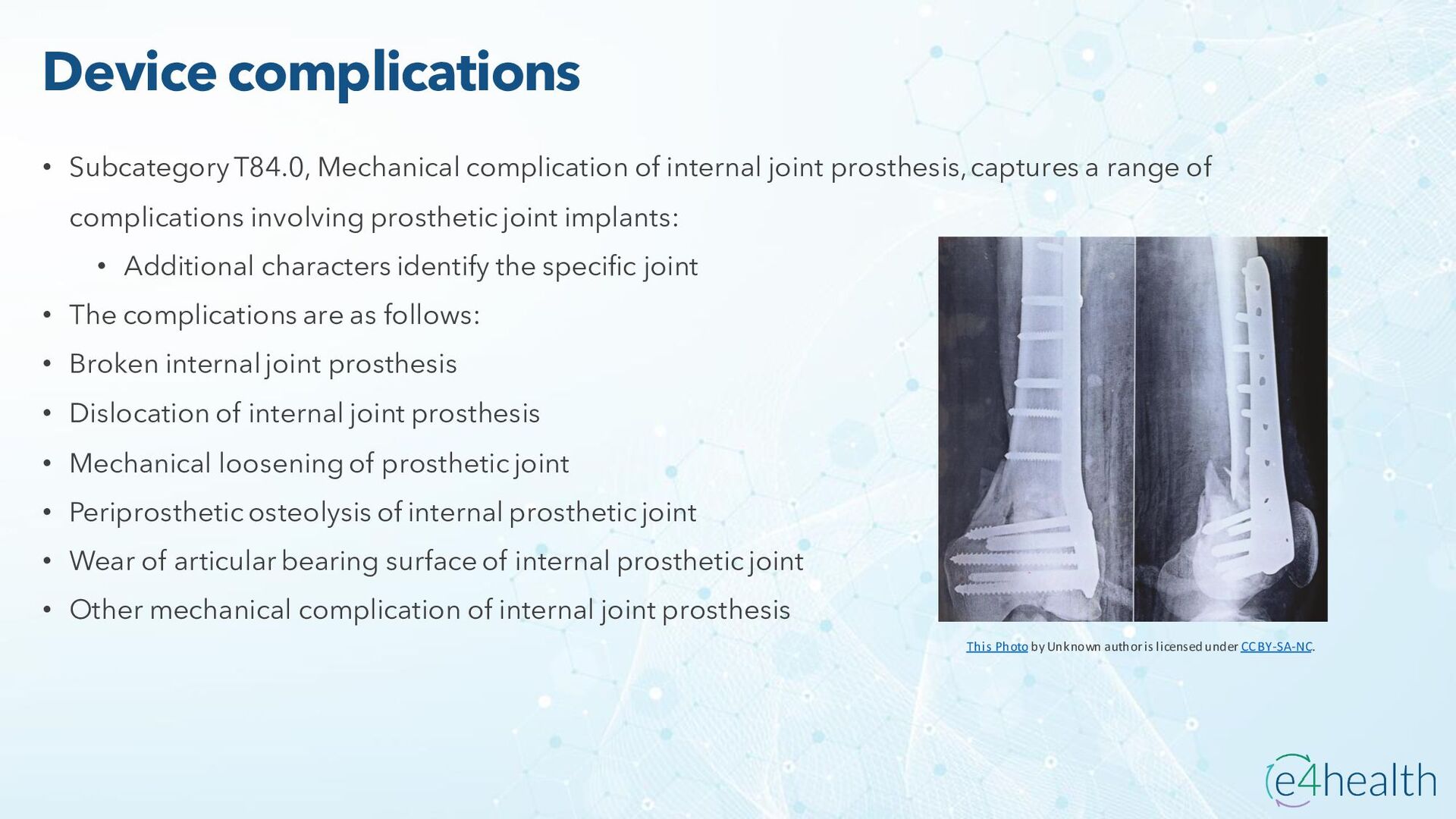
  43. Device complications • Subcategory T84.0, Mechanical complication of internal joint

    prosthesis, captures a range of complications involving prosthetic joint implants: • Additional characters identify the specific joint • The complications are as follows: • Broken internal joint prosthesis • Dislocation of internal joint prosthesis • Mechanical loosening of prosthetic joint • Periprosthetic osteolysis of internal prosthetic joint • Wear of articular bearing surface of internal prosthetic joint • Other mechanical complication of internal joint prosthesis This Photo by Unknown author is licensed under CC BY-SA-NC.
  44. Infection/Inflammatory reaction of Device • Infection and inflammatory reactions due

    to the presence of a device, implant, or graft: • T82.6- Due to cardiac valve prosthesis • T82.7- Due to other cardiac and vascular devices, implants and grafts • T83.5- Due to prosthetic device, implant and graft in urinary system • Example: T83.51- Infection and inflammatory reaction due to urinary catheter • Use additional codes to indicate the specific infection (i.e., cystitis or sepsis, and organism responsible, if known) • T83.6- Due to prosthetic device, implant and graft in genital tract • T84.5- Due to internal joint prosthesis • T84.6- Due to internal fixation device • T84.7 Due to other internal orthopedic prosthetic devices, implants and grafts • T85.7- Due to other internal prosthetic devices, implants and grafts • Assign additional codes to identify the infection
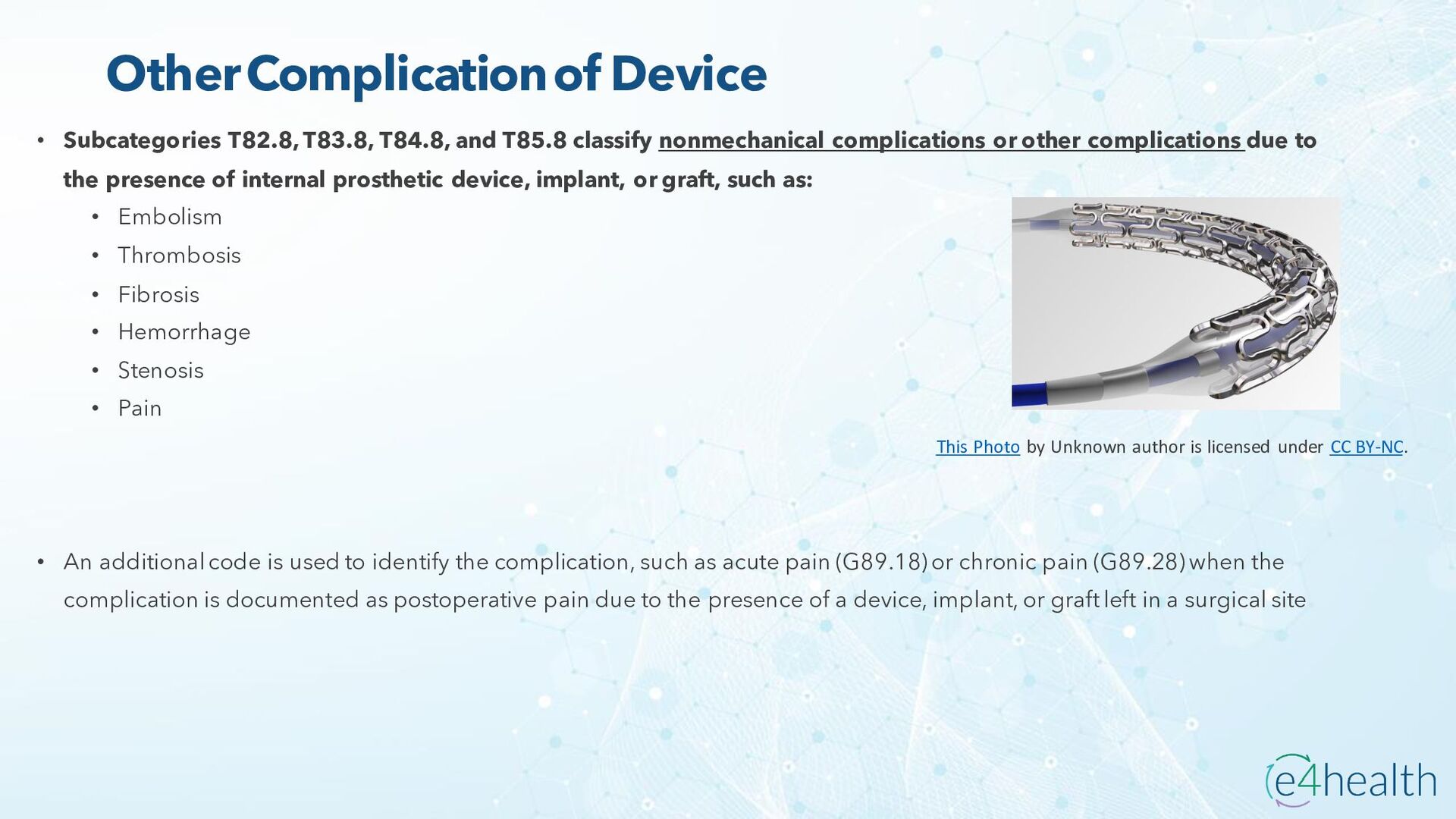
  45. Other Complication of Device • Subcategories T82.8, T83.8, T84.8, and

    T85.8 classify nonmechanical complications or other complications due to the presence of internal prosthetic device, implant, or graft, such as: • Embolism • Thrombosis • Fibrosis • Hemorrhage • Stenosis • Pain • An additional code is used to identify the complication, such as acute pain (G89.18) or chronic pain (G89.28) when the complication is documented as postoperative pain due to the presence of a device, implant, or graft left in a surgical site This Photo by Unknown author is licensed under CC BY-NC.
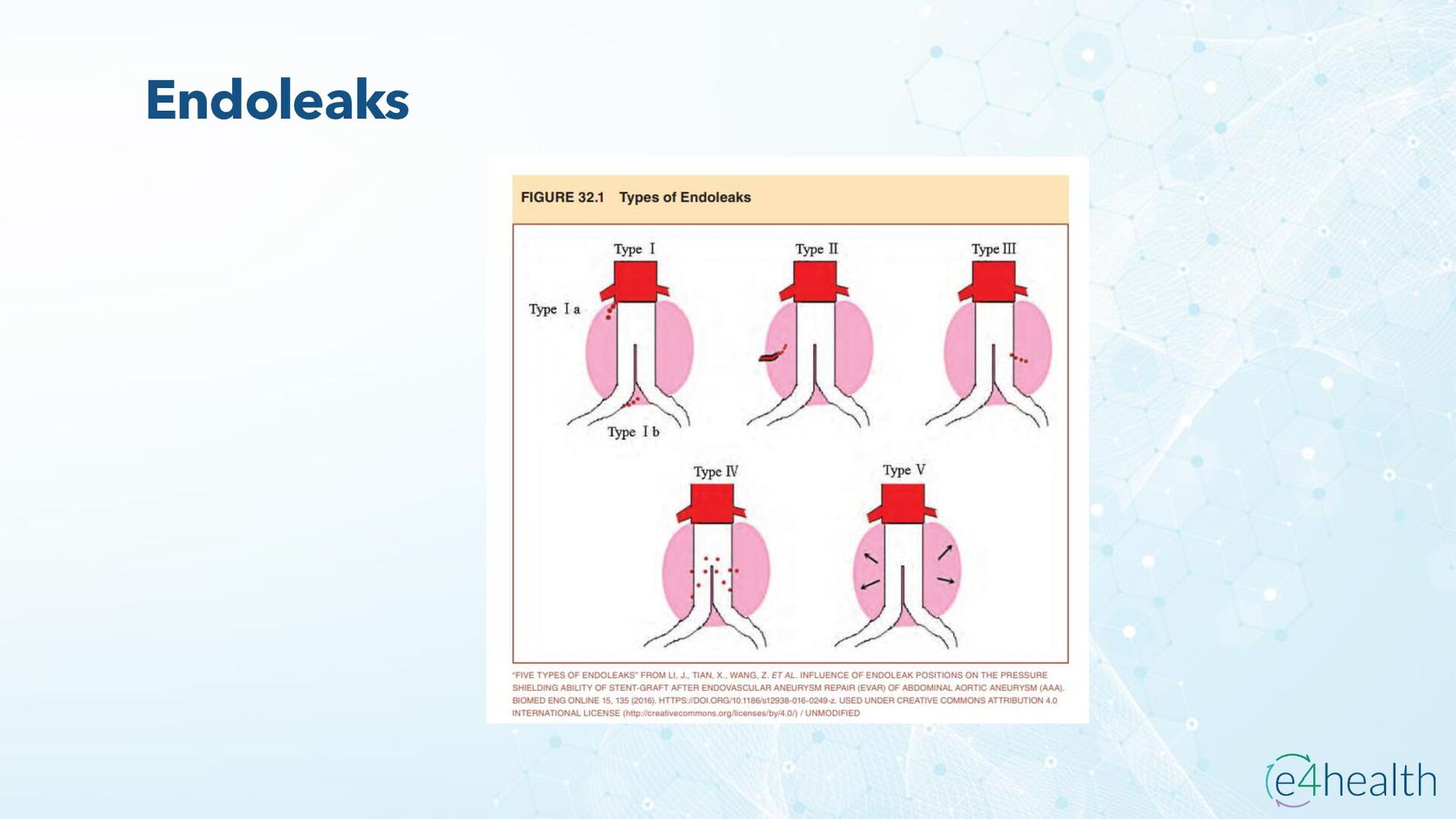
  46. Endoleaks • Endoleaks are not uncommon and can occur when

    blood leaks back into an aneurysmal sac, resulting in pressure within the sac following endovascular aneurysm repair (EVAR) procedures • The common endpoint is a buildup of pressure outside of the graft, but within the aneurysmal sac, as opposed to a true leak where blood leaks out of the circulatory system altogether • The types of endoleaks differ in the point of origin of the leak • The following tables are being provided in response to many requests for assistance in reporting the appropriate codes for both diagnoses and procedures • The descriptions are provided for educational purposes and should not be construed as clinical criteria
  47. Endotype Leak Description ICD-10-CM Code Assignment Type I Endoleak is

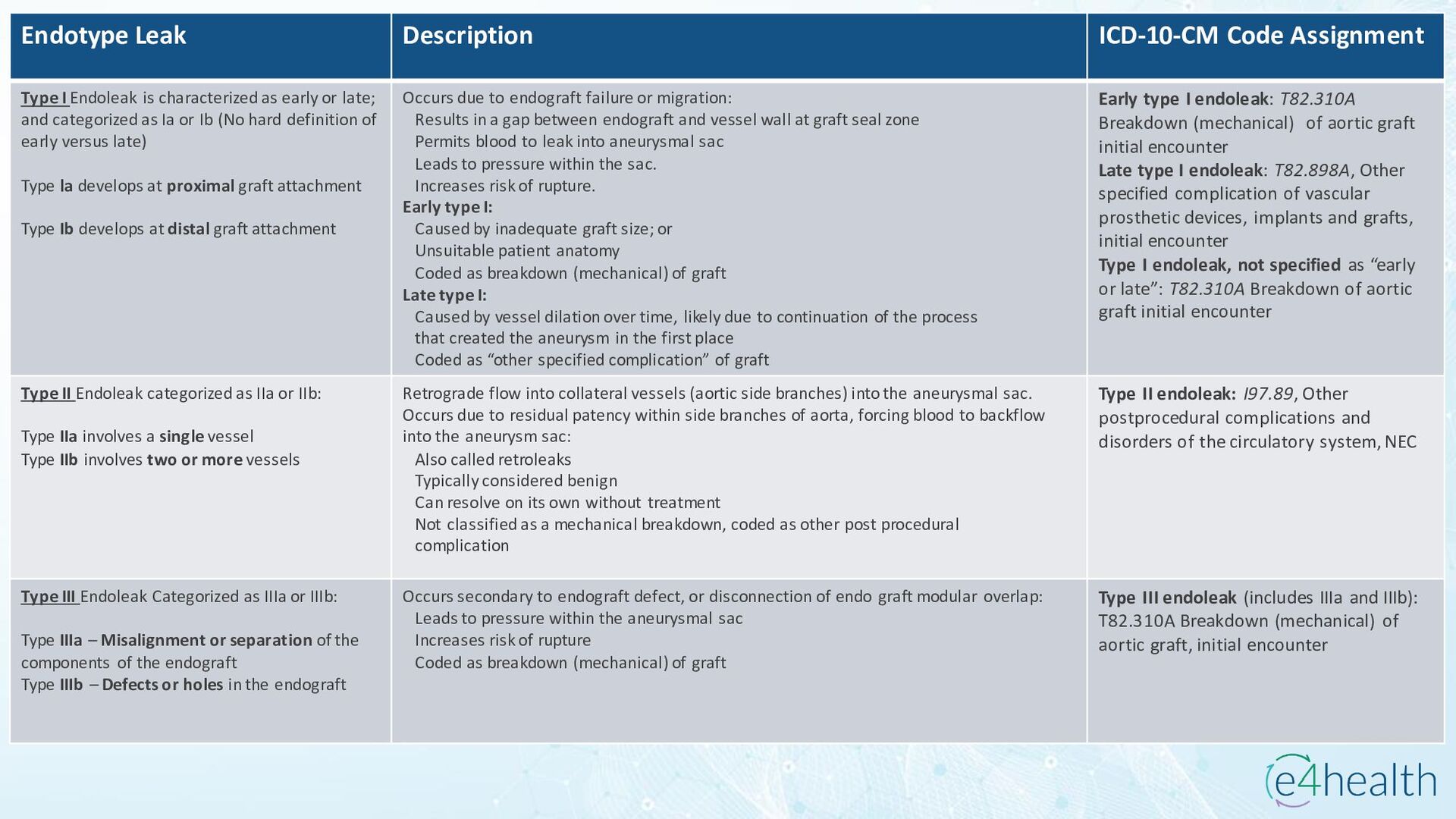
    characterized as early or late; and categorized as Ia or Ib (No hard definition of early versus late) Type la develops at proximal graft attachment Type Ib develops at distal graft attachment Occurs due to endograft failure or migration: Results in a gap between endograft and vessel wall at graft seal zone Permits blood to leak into aneurysmal sac Leads to pressure within the sac. Increases risk of rupture. Early type I: Caused by inadequate graft size; or Unsuitable patient anatomy Coded as breakdown (mechanical) of graft Late type I: Caused by vessel dilation over time, likely due to continuation of the process that created the aneurysm in the first place Coded as “other specified complication” of graft Early type I endoleak: T82.310A Breakdown (mechanical) of aortic graft initial encounter Late type I endoleak: T82.898A, Other specified complication of vascular prosthetic devices, implants and grafts, initial encounter Type I endoleak, not specified as “early or late”: T82.310A Breakdown of aortic graft initial encounter Type II Endoleak categorized as IIa or IIb: Type IIa involves a single vessel Type IIb involves two or more vessels Retrograde flow into collateral vessels (aortic side branches) into the aneurysmal sac. Occurs due to residual patency within side branches of aorta, forcing blood to backflow into the aneurysm sac: Also called retroleaks Typically considered benign Can resolve on its own without treatment Not classified as a mechanical breakdown, coded as other post procedural complication Type II endoleak: I97.89, Other postprocedural complications and disorders of the circulatory system, NEC Type III Endoleak Categorized as IIIa or IIIb: Type IIIa – Misalignment or separation of the components of the endograft Type IIIb – Defects or holes in the endograft Occurs secondary to endograft defect, or disconnection of endo graft modular overlap: Leads to pressure within the aneurysmal sac Increases risk of rupture Coded as breakdown (mechanical) of graft Type III endoleak (includes IIIa and IIIb): T82.310A Breakdown (mechanical) of aortic graft, initial encounter
  48. Endotype Leak Description ICD-10-CM Code Assignment Type IV Endoleak Leakage

    through the graft Typically, an early complication. Caused by graft porosity. Seen less frequently in newer endograft devices. Coded as leakage of graft. Type IV endoleak: T82.330A, Leakage of aortic graft, initial encounter Type V Endoleak Mechanism unknown, but believed to occur when increased graft permeability allows pressure through aneurysmal sac: Increase in maximum aneurysm diameter. Evidence of a leak, but no identifiable endoleak. Also referred to as endotension. Coded as other mechanical complication of graft. Type V endoleak: T82.390A, Other mechanical complication of aortic graft, initial encounter
  49. Transplant complications • Category T86, Complications of transplanted organs and

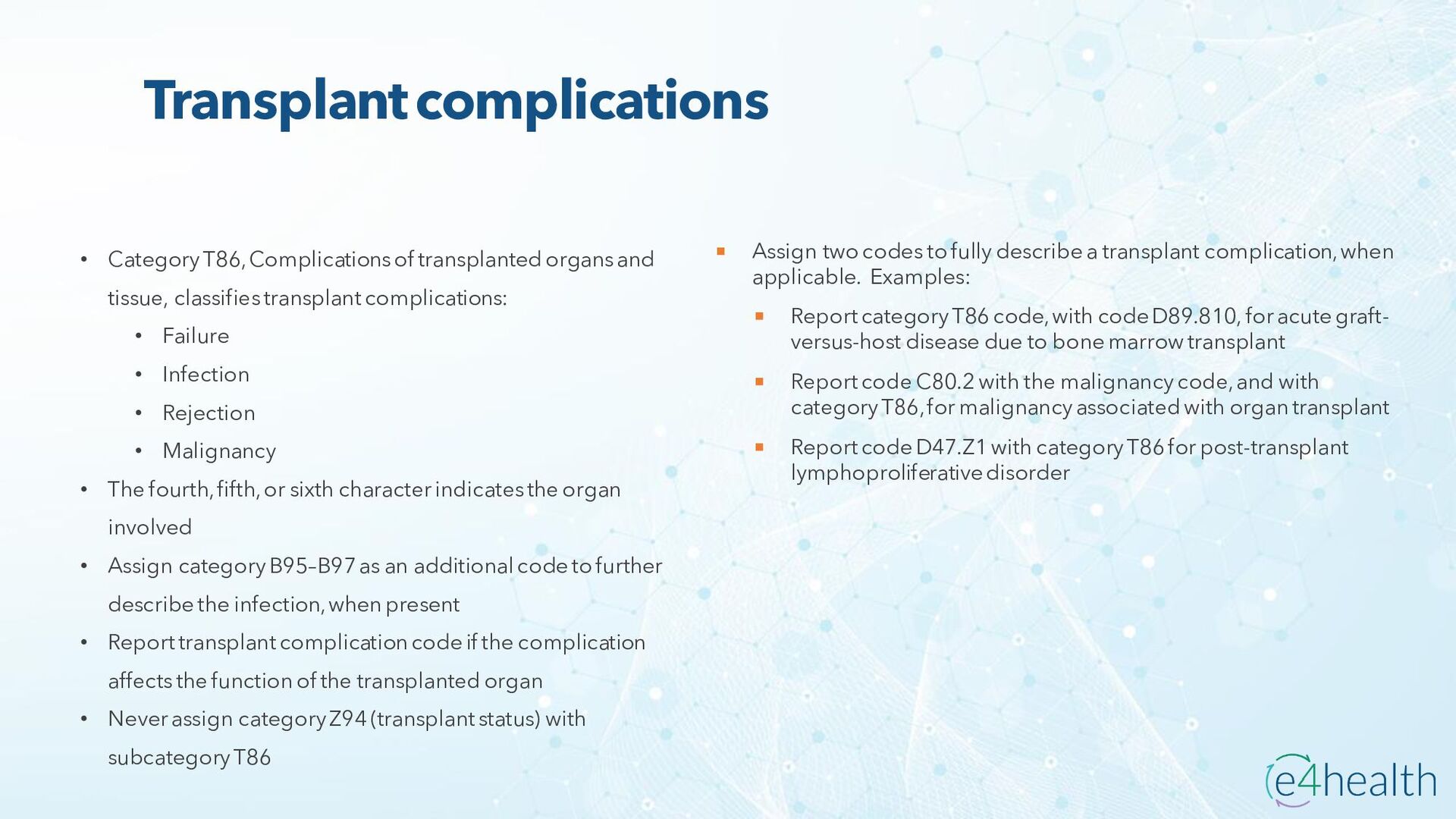
    tissue, classifies transplant complications: • Failure • Infection • Rejection • Malignancy • The fourth, fifth, or sixth character indicates the organ involved • Assign category B95–B97 as an additional code to further describe the infection, when present • Report transplant complication code if the complication affects the function of the transplanted organ • Never assign category Z94 (transplant status) with subcategory T86  Assign two codes to fully describe a transplant complication, when applicable. Examples:  Report category T86 code, with code D89.810, for acute graft- versus-host disease due to bone marrow transplant  Report code C80.2 with the malignancy code, and with category T86, for malignancy associated with organ transplant  Report code D47.Z1 with category T86 for post-transplant lymphoproliferative disorder
  50. Transplant complications • Assign code T86.5 for complications of stem-cell

    transplants • Either autologous stem cells or allogeneic stem cells can be used for transplantation. • Procedure is commonly performed using stem cells collected from the peripheral blood • Complications can include • Graft-versus-host disease • Stem-cell (graft) failure • Organ damage • Cataracts • Secondary cancers • Death  Pre-existing conditions or conditions that develop after the transplant are not coded as complications unless they affect the function of the transplanted organ  Post-transplant surgical complications not related to the function of the transplanted organ are coded to the specific complication  Example: Postsurgical infection reported as a postoperative wound infection is NOT a transplant complication  Infections affecting the function of transplanted organs are classified to category T86  Example: T86.812, Lung transplant infection
  51. Kidney transplant • The presence of CKD alone does NOT

    constitute a kidney transplant complication • Patients with CKD following a transplant should NOT be assumed to have transplant failure or rejection unless it is documented by the provider • These patients may continue to experience CKD, because the transplant may not fully restore kidney function For conditions other than CKD that affect the function of the transplanted kidney:  Assign a code from subcategory T86.1  Assign a secondary code to identify the condition If the documentation supports failure or rejection:  Assign a code from subcategory T86.1, Complications of kidney transplant, with the appropriate CKD code (N18.-) In patients with CKD following a kidney transplant, and for whom there is no transplant complication (such as failure or rejection):  Assign code Z94.0, Kidney transplant status, rather than a code from subcategory T86.1
  52. Postoperative shock • Causes may include myocardial infarction, pericardial tamponade,

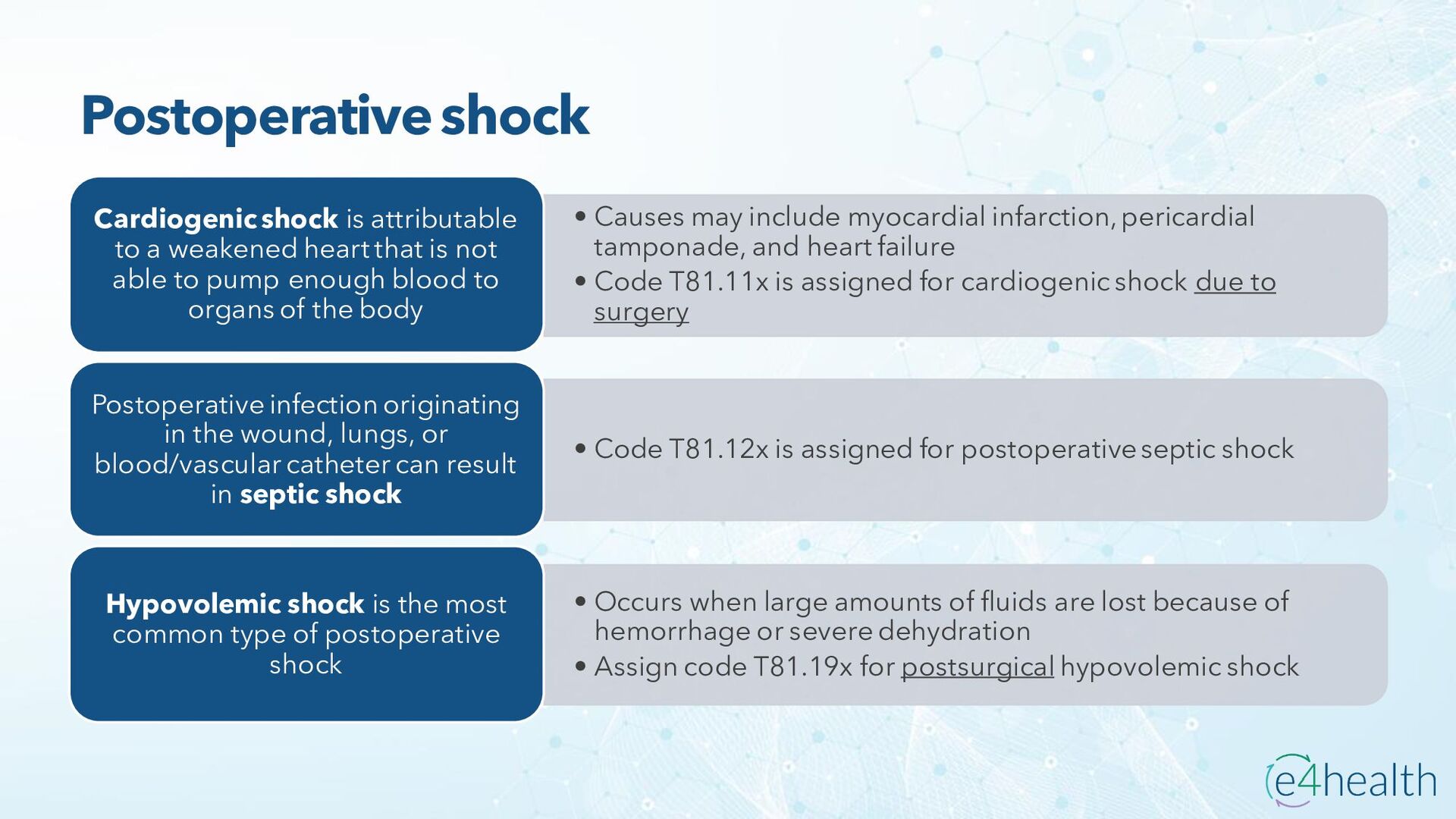
    and heart failure • Code T81.11x is assigned for cardiogenic shock due to surgery Cardiogenic shock is attributable to a weakened heart that is not able to pump enough blood to organs of the body • Code T81.12x is assigned for postoperative septic shock Postoperative infection originating in the wound, lungs, or blood/vascular catheter can result in septic shock • Occurs when large amounts of fluids are lost because of hemorrhage or severe dehydration • Assign code T81.19x for postsurgical hypovolemic shock Hypovolemic shock is the most common type of postoperative shock
  53. Wound dehiscence • Wound dehiscence involves partial or total disruption

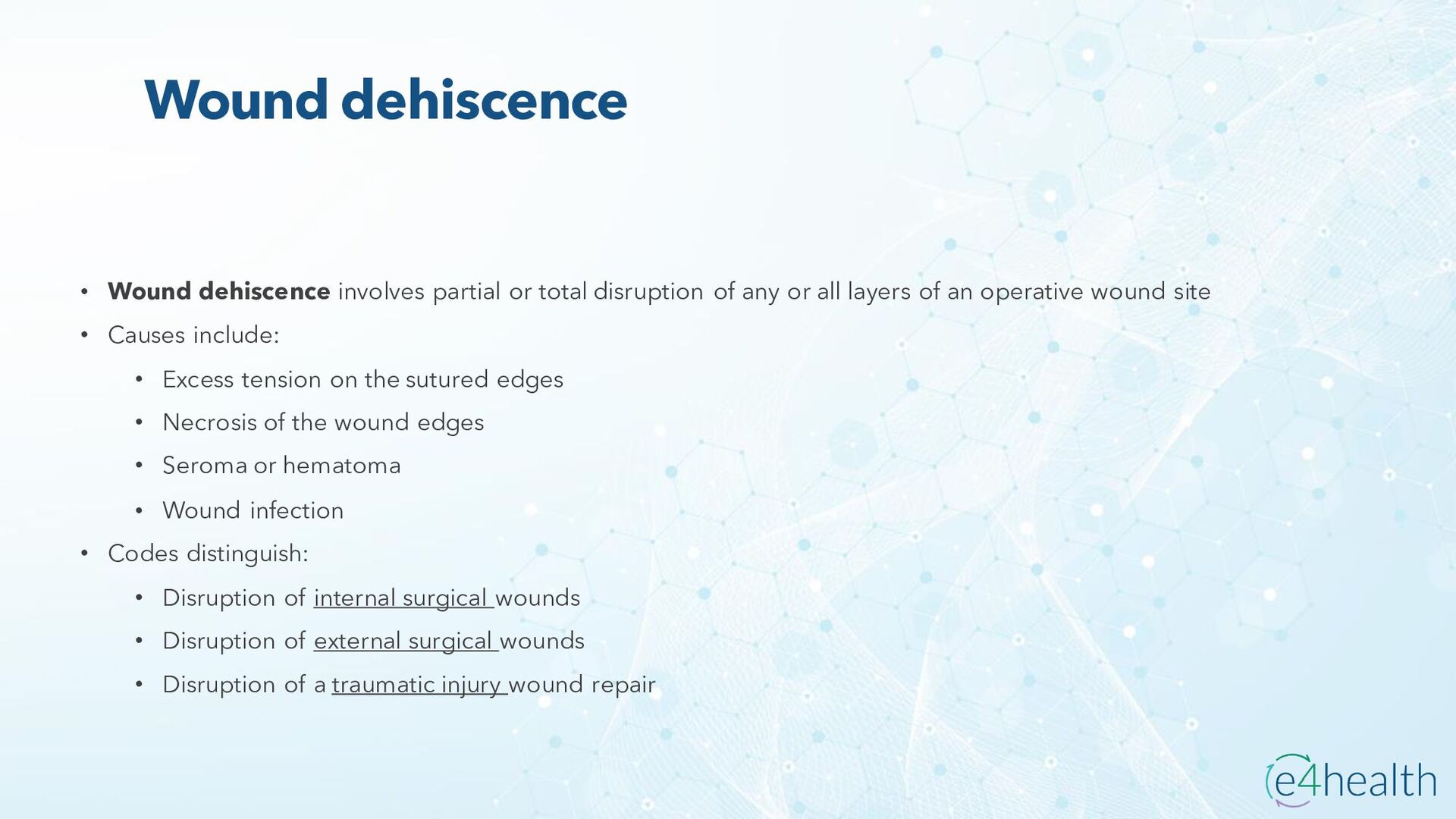
    of any or all layers of an operative wound site • Causes include: • Excess tension on the sutured edges • Necrosis of the wound edges • Seroma or hematoma • Wound infection • Codes distinguish: • Disruption of internal surgical wounds • Disruption of external surgical wounds • Disruption of a traumatic injury wound repair
  54. Foreign Body • Codes in subcategory T81.5 are reported when

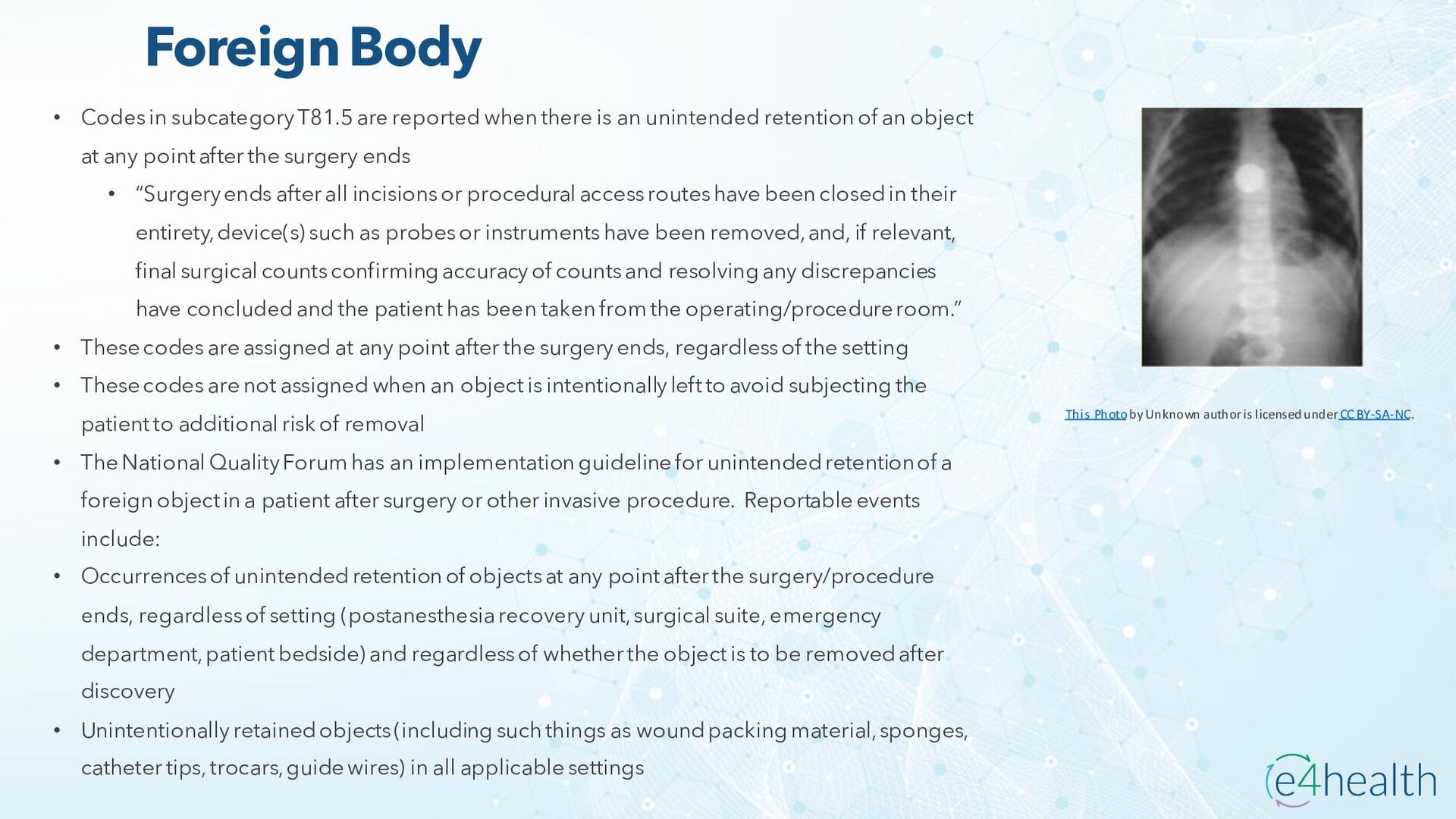
    there is an unintended retention of an object at any point after the surgery ends • “Surgery ends after all incisions or procedural access routes have been closed in their entirety, device(s) such as probes or instruments have been removed, and, if relevant, final surgical counts confirming accuracy of counts and resolving any discrepancies have concluded and the patient has been taken from the operating/procedure room.” • These codes are assigned at any point after the surgery ends, regardless of the setting • These codes are not assigned when an object is intentionally left to avoid subjecting the patient to additional risk of removal • The National Quality Forum has an implementation guideline for unintended retention of a foreign object in a patient after surgery or other invasive procedure. Reportable events include: • Occurrences of unintended retention of objects at any point after the surgery/procedure ends, regardless of setting (postanesthesia recovery unit, surgical suite, emergency department, patient bedside) and regardless of whether the object is to be removed after discovery • Unintentionally retained objects (including such things as wound packing material, sponges, catheter tips, trocars, guide wires) in all applicable settings This Photo by Unknown author is licensed under CC BY-SA-NC.
  55. Accidental Laceration or Puncture • Can be intraoperative complications of

    circulatory, gastrointestinal, genitourinary, hepatobiliary, respiratory, or musculoskeletal procedures, that commonly occur during exploration or repair a body part • Codes are in various subcategories dependent on which body system the accidental puncture or laceration occurred • Most common risk is dense adhesions where providers accidentally nick another body part that is unintentional • Can trigger a Patient Safety Indicator (PSI) • Documentation must be validated in order to ensure it is a true accidental puncture/laceration vs. finding an exclusion for the PSI trigger • If unsure, query the physician if accidental puncture/laceration is inherent to the procedure vs. a true complication
  56. Not classified elsewhere Category T81, Complications of procedures, not elsewhere

    classified, classifies miscellaneous postoperative complications In most cases, additional codes are not required because the complication code provides sufficient specificity Examples of codes in this category include: Postoperative cardiogenic shock Disruption of external operation (surgical) wound Persistent postprocedural fistula A seventh character is required to specify initial encounter (A); subsequent encounter (D), or sequela (S)
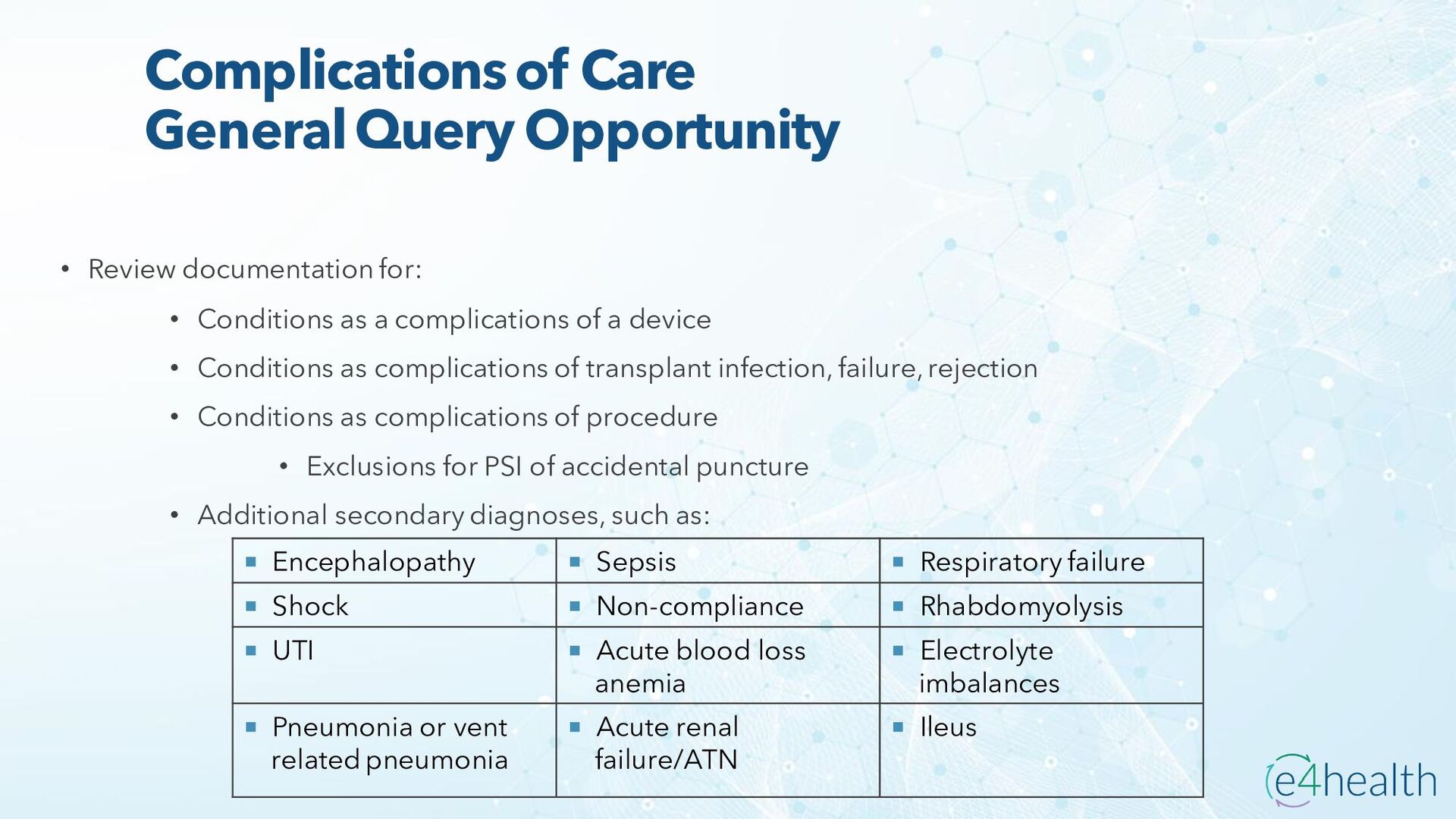
  57. Complications of Care General Query Opportunity • Review documentation for:

    • Conditions as a complications of a device • Conditions as complications of transplant infection, failure, rejection • Conditions as complications of procedure • Exclusions for PSI of accidental puncture • Additional secondary diagnoses, such as:  Encephalopathy  Sepsis  Respiratory failure  Shock  Non-compliance  Rhabdomyolysis  UTI  Acute blood loss anemia  Electrolyte imbalances  Pneumonia or vent related pneumonia  Acute renal failure/ATN  Ileus
  58. External causes • ICD-10-CM provides three sets of External cause

    codes to indicate medical or surgical care as the cause of a complication • Categories Y62–Y69 are reported only when the condition is due to a misadventure of medical or surgical care • Categories Y70–Y82 are reported when a medical device is associated with adverse incidents in diagnostic and therapeutic use • Used to report breakdown or malfunction of medical devices during use, after implantation, or with ongoing use • Categories Y83–Y84 are used when the surgical or other medical procedure is the cause of an abnormal reaction of the patient or of a later complication, without mention of misadventure at the time of the procedure
  59. Epistaxis following NG tube insertion Coding Clinic second quarter 2023

    page 28 • Question: A 96-year-old patient was admitted due to acute-on-chronic systolic/diastolic heart failure, and experienced epistaxis following attempted insertion of a nasogastric (NG) tube. The patient was on long-term anticoagulant therapy. A Rapid Rhino packing was placed to control bleeding. The provider documented that the epistaxis was related to the placement of the NG tube. What are the appropriate diagnosis codes to capture epistaxis due to the attempted insertion of a nasogastric tube? • Answer: Assign codes J95.831, Postprocedural hemorrhage of a respiratory system organ or structure following other procedure, R04.0, Epistaxis, Z79.01, Long term (current) use of anticoagulants, and Y84.8, Other medical procedures as the cause of abnormal reaction of the patient, or of later complication, without mention of misadventure at the time of the procedure, for epistaxis due to attempted insertion of the NG tube occurring in a patient who is on long-term anticoagulation therapy. • In this case, the provider documented that the epistaxis was related to the NG tube insertion and was clinically significant, as an intervention was required in order to stop the bleeding. In addition, traumatic injury codes should not be assigned for injuries that occur during, or as a result of, a medical intervention.
  60. High output ileostomy Coding Clinic second quarter 2023 page 20

    • Question: A patient with an ileocolic anastomosis and diverting loop ileostomy was admitted for high output ileostomy with electrolyte abnormalities. During the admission, anti-motility medications were optimized and the patient was supported with IV hydration. The ostomy output returned to an appropriate volume and consistency and the patient was discharged. Is high output ileostomy considered a complication of the ileostomy? What code is assigned for a final diagnosis of high output ileostomy without documentation of an underlying cause? • Answer: Query the provider regarding the cause of the high output ileostomy. • High output ileostomy may be due to an infectious etiology, malnutrition, dumping and/ or a postsurgical complication. If infectious, code to the appropriate infectious enteritis code. • If a post-surgical complication is the underlying cause, query the provider regarding the specific type of complication (e.g., malabsorption, etc.) and code accordingly. • In addition, assign a secondary code for any other related conditions, such as electrolyte abnormalities, etc., resulting from the high ileostomy output.
  61. Intraoperative tibial fracture during staple removal Coding Clinic second quarter

    2023 page 14 • Question: A patient with left knee osteoarthritis, varus contracture and previous anterior cruciate ligament repair presented for a total knee arthroplasty. During surgery, old staples in the tibia were encountered; these were felt best to be removed. With the use of a slap hammer set, one of the staples was grasped but its removal created a cortical fracture encompassing 4cm of the metaphyseal bone. The surgeon documented that the fracture of the medial tibial plateau was a complication of the procedure. What code(s) is assigned for the intraoperative fracture of the medial tibial plateau that occurred during staple removal? • Answer: Assign codes M96.89, Other intraoperative and postprocedural complications and disorders of the musculoskeletal system, for the tibial plateau fracture due to intraoperative removal of the staple and Y83.8, Other surgical procedures as the cause of abnormal reaction of the patient, or of later complication, without mention of misadventure at the time of the procedure, to describe the external cause.
  62. Bone Resorption of autologous bone flap Coding Clinic second quarter

    2023 page 30-31 • Question: A patient with a history of acute subdural hematoma secondary to a motor vehicle accident previously underwent hemicraniectomy followed by cranioplasty using autologous bone flap. On a follow-up examination, the provider noted that the patient had bone resorption of the autologous bone flap. What is the appropriate code assignment for bone flap resorption? • Answer: Assign code T86.838, Other complications of bone graft, followed by code M95.2, Other acquired deformity of head, for the bone flap resorption. Although bone flap resorption is not specifically indexed in ICD-10-CM, code T86.838 is the appropriate code assignment for bone graft complications that are specified but not specifically classified in ICD-10-CM. Code M95.2 is assigned to further specify the complication.
  63. Tracheocutaneous fistula S/P tracheostomy Coding Clinic First quarter 2023 page

    30 • Question: A 75-year-old patient had previously undergone creation of a tracheostomy that was subsequently taken down. Since that time, the tracheostomy site has remained open with greenish discharge without significant improvement. The patient is now admitted for surgical closure of the tracheocutaneous fistula. What is the appropriate ICD-10-CM code assignment for a tracheocutaneous fistula following tracheostomy reversal? Would the fistula be coded as a persistent postoperative fistula or a complication of the tracheostomy? • Answer: Assign code J39.8, Other specified diseases of upper respiratory tract, as this is the best available option to specify the site of the fistula. The intent of the procedure (tracheostomy) is to create a fistula/stoma and failure of the stoma to close spontaneously is not classified as a "persistent postoperative fistula" nor as a complication of the stoma. Therefore, code T81.83XA, Persistent postprocedural fistula, initial encounter, is not appropriate.
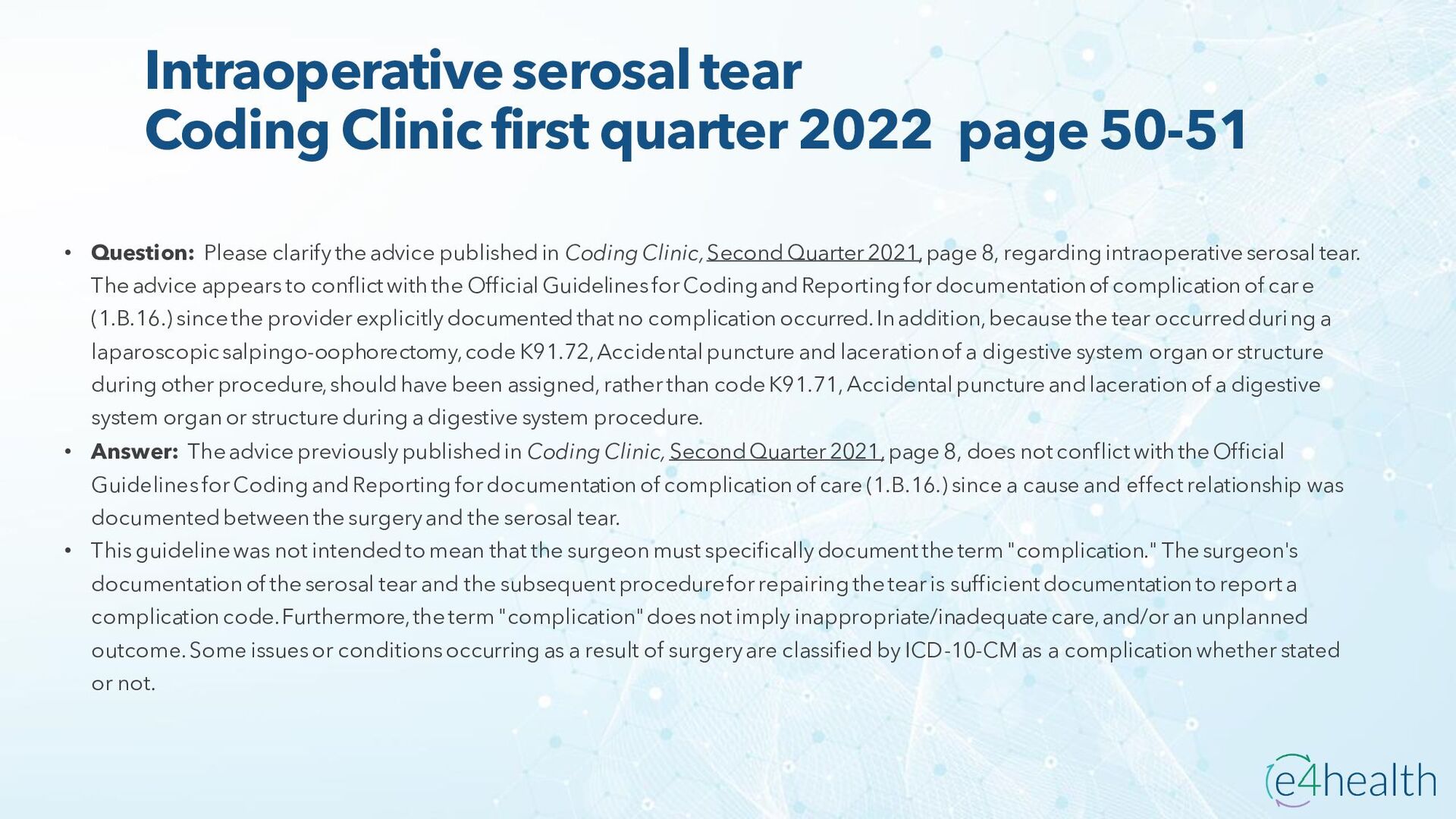
  64. Intraoperative serosal tear Coding Clinic first quarter 2022 page 50-51

    • Question: Please clarify the advice published in Coding Clinic, Second Quarter 2021,page 8, regarding intraoperative serosal tear. The advice appears to conflict with the Official Guidelines for Coding and Reporting for documentation of complication of care (1.B.16.) since the provider explicitly documented that no complication occurred. In addition, because the tear occurred during a laparoscopic salpingo-oophorectomy, code K91.72, Accidental puncture and laceration of a digestive system organ or structure during other procedure, should have been assigned, rather than code K91.71, Accidental puncture and laceration of a digestive system organ or structure during a digestive system procedure. • Answer: The advice previously published in Coding Clinic, Second Quarter 2021,page 8, does not conflict with the Official Guidelines for Coding and Reporting for documentation of complication of care (1.B.16.) since a cause and effect relationship was documented between the surgery and the serosal tear. • This guideline was not intended to mean that the surgeon must specifically document the term "complication." The surgeon's documentation of the serosal tear and the subsequent procedure for repairing the tear is sufficient documentation to report a complication code. Furthermore, the term "complication" does not imply inappropriate/inadequate care, and/or an unplanned outcome. Some issues or conditions occurring as a result of surgery are classified by ICD-10-CM as a complication whether stated or not.
  65. Intraoperative serosal tear Coding Clinic first quarter 2022 page 50-51

    • Although the surgeon stated that the serosal tear was unavoidable, it does not mean that the tear is not a surgical complication. For example, a serosal tear can range from a small nick requiring no treatment at all, to a major tear requiring removal of a portion of the small intestine. Serosal tears alone do not qualify as reportable diagnoses. If, however, the degree of a serosal tear alters the course of the surgery as supported by the medical record documentation, then the tear should be reported. • Although not explicitly stated in the Q&A, the patient had undergone multiple procedures including salpingo-oophorectomy, reduction and repair of an incarcerated ventral hernia with mesh and lysis of adhesions. The serosal tear occurred during the part of the surgery to repair the ventral hernia and lysis of adhesions of the small intestine. Therefore, code K91.71, Accidental puncture and laceration of a digestive system organ or structure during a digestive system procedure, is the correct code assignment.
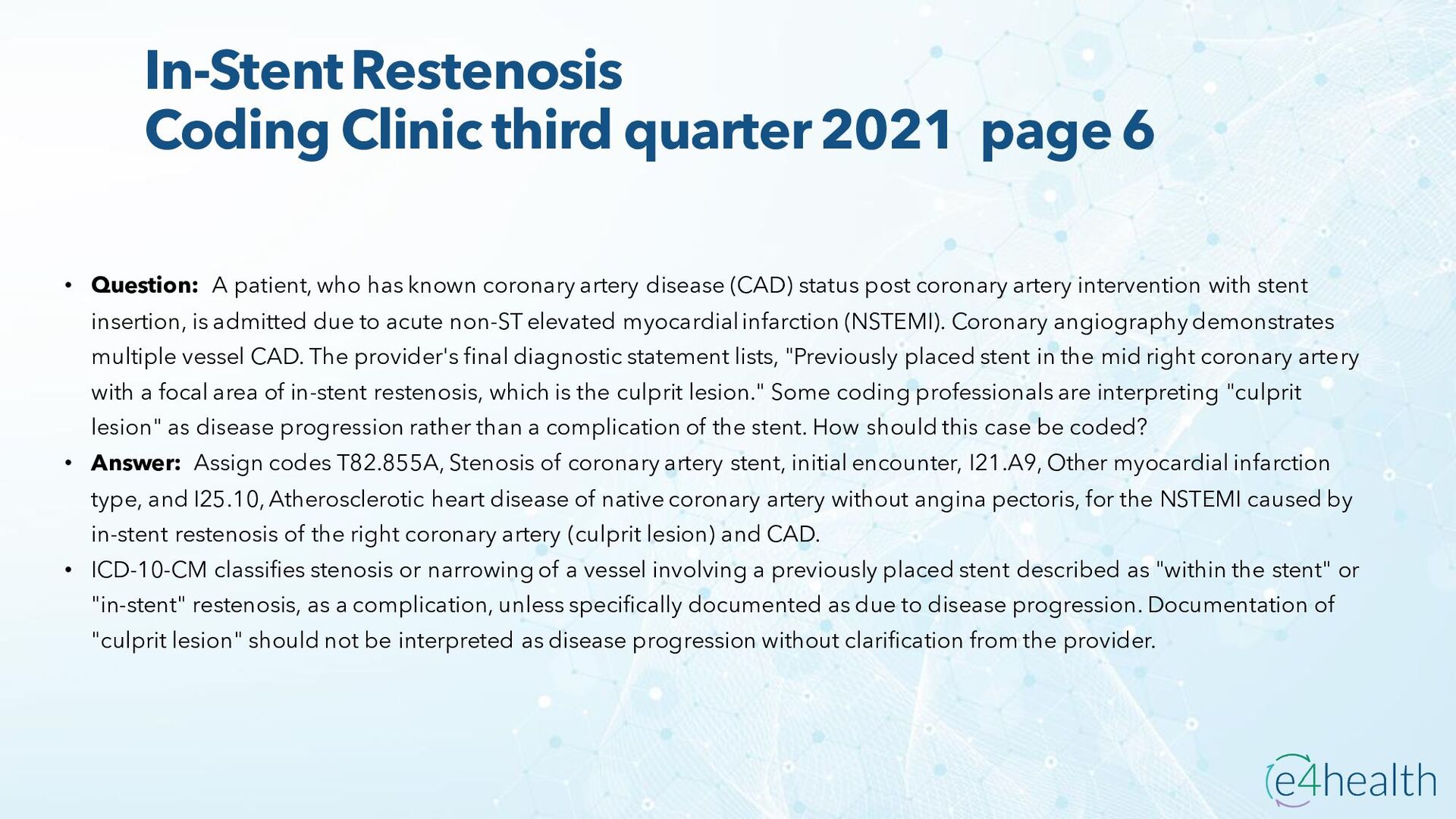
  66. In-Stent Restenosis Coding Clinic third quarter 2021 page 6 •

    Question: A patient, who has known coronary artery disease (CAD) status post coronary artery intervention with stent insertion, is admitted due to acute non-ST elevated myocardial infarction (NSTEMI). Coronary angiography demonstrates multiple vessel CAD. The provider's final diagnostic statement lists, "Previously placed stent in the mid right coronary artery with a focal area of in-stent restenosis, which is the culprit lesion." Some coding professionals are interpreting "culprit lesion" as disease progression rather than a complication of the stent. How should this case be coded? • Answer: Assign codes T82.855A, Stenosis of coronary artery stent, initial encounter, I21.A9, Other myocardial infarction type, and I25.10, Atherosclerotic heart disease of native coronary artery without angina pectoris, for the NSTEMI caused by in-stent restenosis of the right coronary artery (culprit lesion) and CAD. • ICD-10-CM classifies stenosis or narrowing of a vessel involving a previously placed stent described as "within the stent" or "in-stent" restenosis, as a complication, unless specifically documented as due to disease progression. Documentation of "culprit lesion" should not be interpreted as disease progression without clarification from the provider.
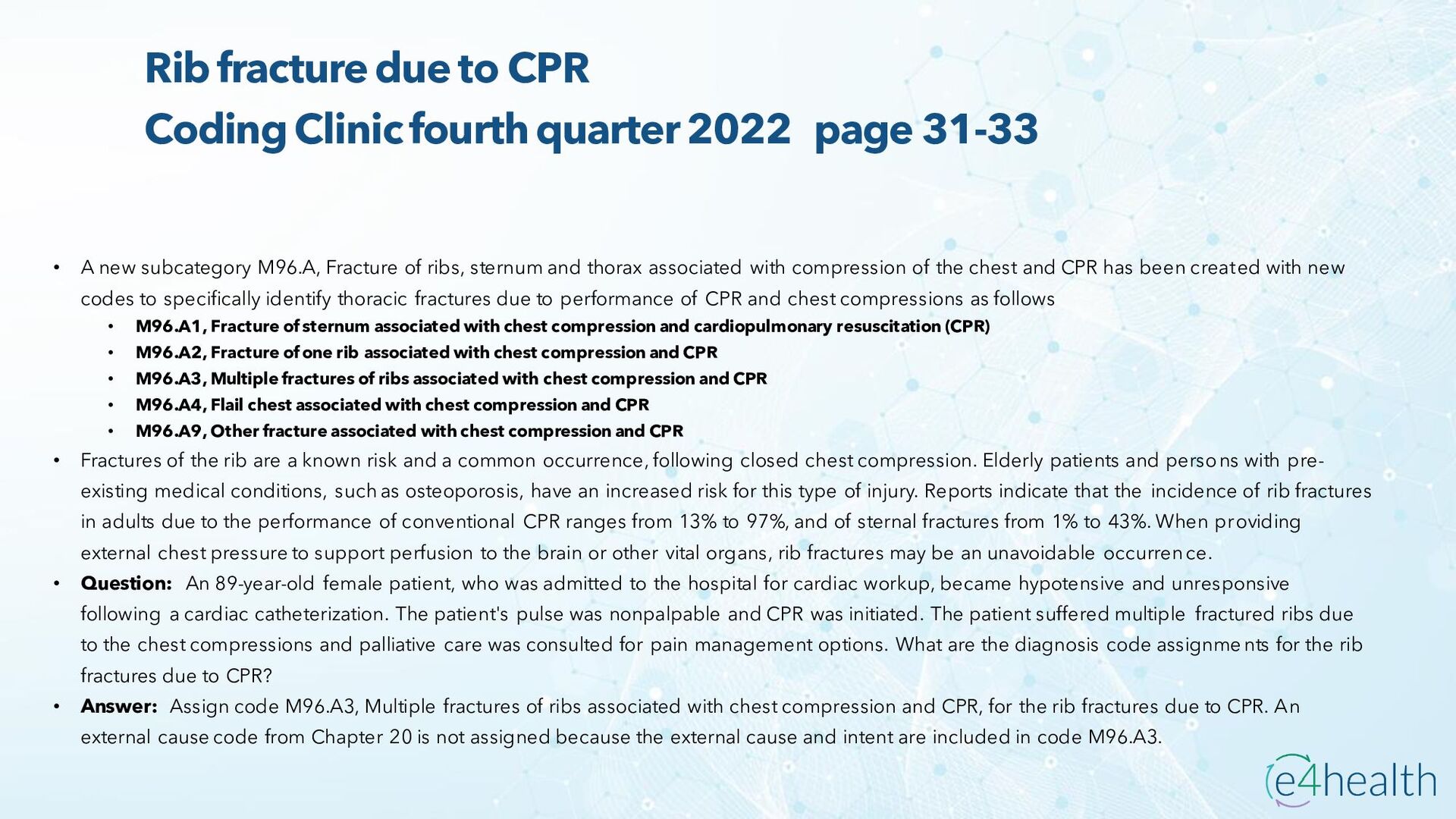
  67. Rib fracture due to CPR Coding Clinic fourth quarter 2022

    page 31-33 • A new subcategory M96.A, Fracture of ribs, sternum and thorax associated with compression of the chest and CPR has been created with new codes to specifically identify thoracic fractures due to performance of CPR and chest compressions as follows • M96.A1, Fracture of sternum associated with chest compression and cardiopulmonary resuscitation (CPR) • M96.A2, Fracture of one rib associated with chest compression and CPR • M96.A3, Multiple fractures of ribs associated with chest compression and CPR • M96.A4, Flail chest associated with chest compression and CPR • M96.A9, Other fracture associated with chest compression and CPR • Fractures of the rib are a known risk and a common occurrence, following closed chest compression. Elderly patients and persons with pre- existing medical conditions, such as osteoporosis, have an increased risk for this type of injury. Reports indicate that the incidence of rib fractures in adults due to the performance of conventional CPR ranges from 13% to 97%, and of sternal fractures from 1% to 43%. When providing external chest pressure to support perfusion to the brain or other vital organs, rib fractures may be an unavoidable occurrence. • Question: An 89-year-old female patient, who was admitted to the hospital for cardiac workup, became hypotensive and unresponsive following a cardiac catheterization. The patient's pulse was nonpalpable and CPR was initiated. The patient suffered multiple fractured ribs due to the chest compressions and palliative care was consulted for pain management options. What are the diagnosis code assignments for the rib fractures due to CPR? • Answer: Assign code M96.A3, Multiple fractures of ribs associated with chest compression and CPR, for the rib fractures due to CPR. An external cause code from Chapter 20 is not assigned because the external cause and intent are included in code M96.A3.
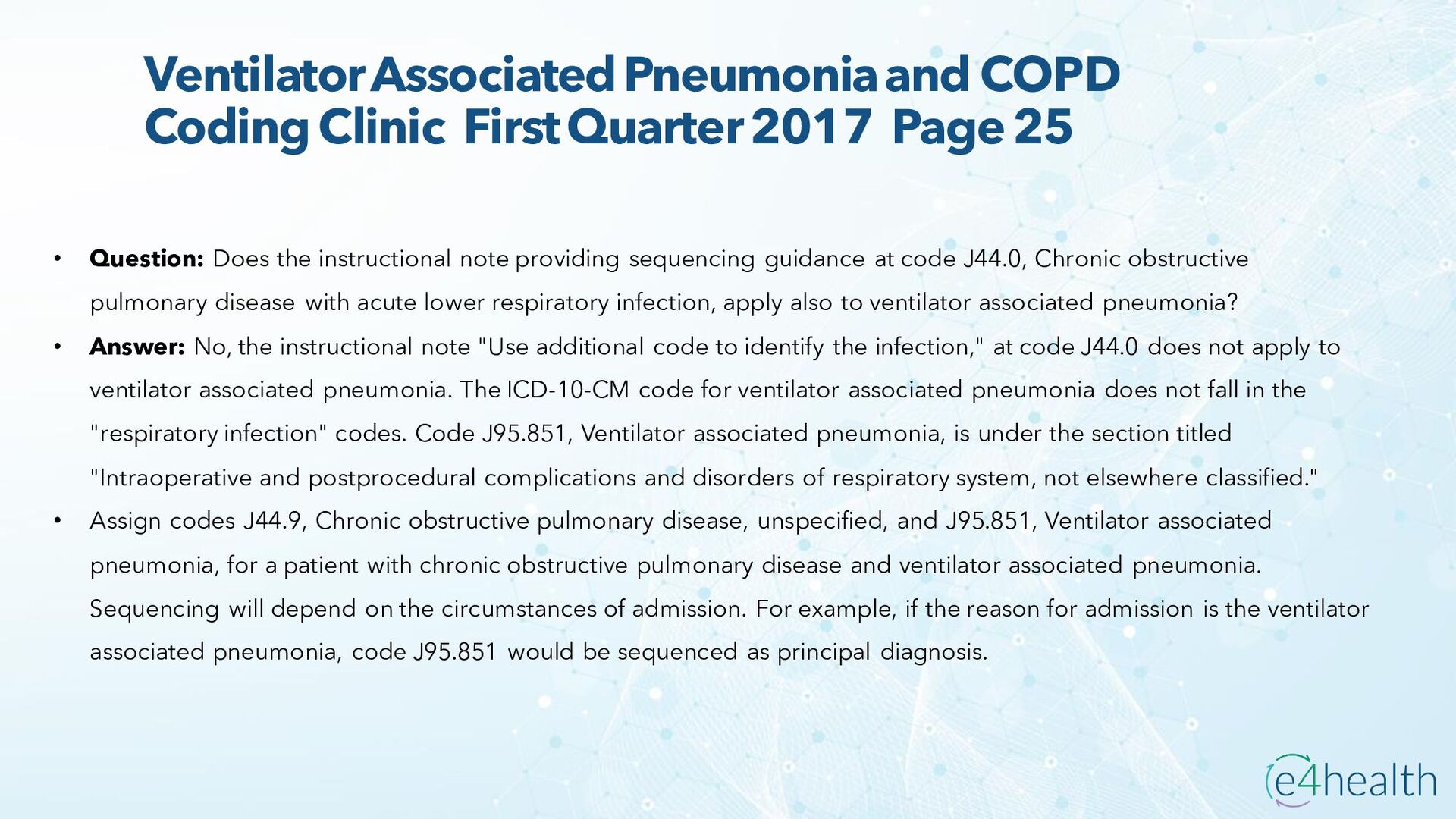
  68. Ventilator Associated Pneumonia and COPD Coding Clinic First Quarter 2017

    Page 25 • Question: Does the instructional note providing sequencing guidance at code J44.0, Chronic obstructive pulmonary disease with acute lower respiratory infection, apply also to ventilator associated pneumonia? • Answer: No, the instructional note "Use additional code to identify the infection," at code J44.0 does not apply to ventilator associated pneumonia. The ICD-10-CM code for ventilator associated pneumonia does not fall in the "respiratory infection" codes. Code J95.851, Ventilator associated pneumonia, is under the section titled "Intraoperative and postprocedural complications and disorders of respiratory system, not elsewhere classified." • Assign codes J44.9, Chronic obstructive pulmonary disease, unspecified, and J95.851, Ventilator associated pneumonia, for a patient with chronic obstructive pulmonary disease and ventilator associated pneumonia. Sequencing will depend on the circumstances of admission. For example, if the reason for admission is the ventilator associated pneumonia, code J95.851 would be sequenced as principal diagnosis.
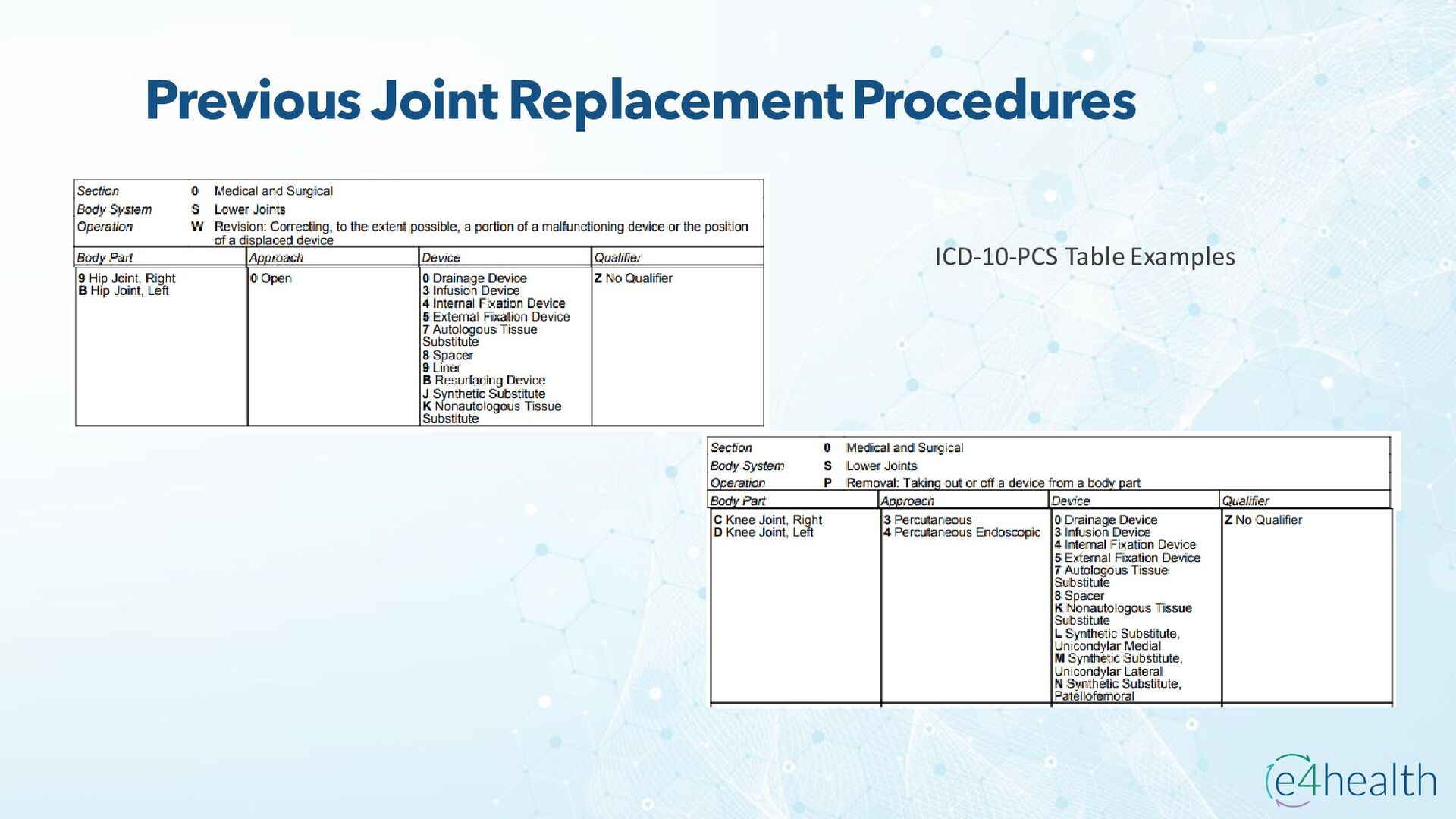
  69. Previous Joint Replacement Procedures • Previous joint replacement • Removal

    of prosthesis • Removal is root operation • Adjustment of prosthesis • Prosthesis is not totally removed • Revision is root operation • Specify the part that is revised • Insert spacer • Insertion is root operation • Remove spacer • Removal is root operation • Replace a previous joint prosthesis • Removal for the removal of the previous joint replacement • Replacement for the adding of the new joint replacement • Resurfacing arthroplasty • Supplement is root operation
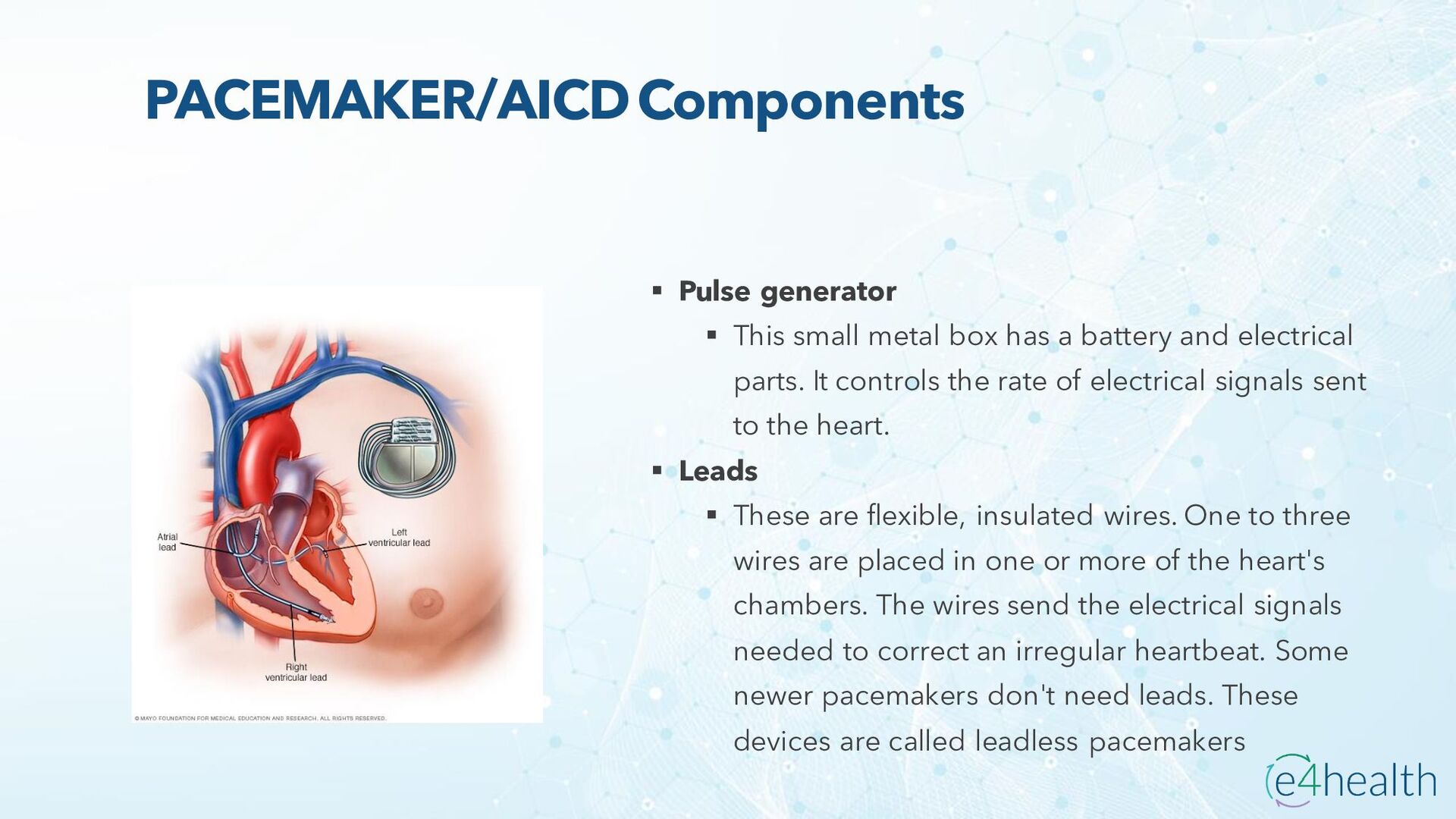
  70. PACEMAKER/AICD Components ▪ Pulse generator ▪ This small metal box

    has a battery and electrical parts. It controls the rate of electrical signals sent to the heart. ▪ Leads ▪ These are flexible, insulated wires. One to three wires are placed in one or more of the heart's chambers. The wires send the electrical signals needed to correct an irregular heartbeat. Some newer pacemakers don't need leads. These devices are called leadless pacemakers
  71. PACEMAKER VS AICD AICD  Single Lead Defibrillator: (1 lead)

    It monitors the rhythm and also shocks the heart in case the bottom part of the heart develops a life threatening rhythm such as ventricular tachycardia or ventricular fibrillation  Dual Lead Defibrillator: (2 leads) It monitors the rhythm in the top and bottom part of the heart and also shocks the heart in case the bottom part of the heart develops a life threatening rhythm such as ventricular tachycardia or ventricular fibrillation  Bi-Ventricular Defibrillator: (3 leads) It monitors the rhythm in the top and bottom part of the heart and also helps in the pumping ability of the heart by resynchronizing the bottom right and the bottom left chambers of the heart. It also shocks the heart in case the bottom part of the heart develops a life threatening rhythm such as ventricular tachycardia or ventricular fibrillation Pacemaker  Single Lead Pacemaker: (1 lead) It only controls the rate and rhythm in the top or bottom part of the heart  Dual Lead Pacemaker: (2 leads) It controls the rate and rhythm in the top and bottom part of the heart  Bi-Ventricular Pacemaker: (3 leads) It controls the rate and rhythm in the top and bottom part of the heart and also helps in the pumping ability of the heart by resynchronizing the bottom right and the bottom left chambers of the heart
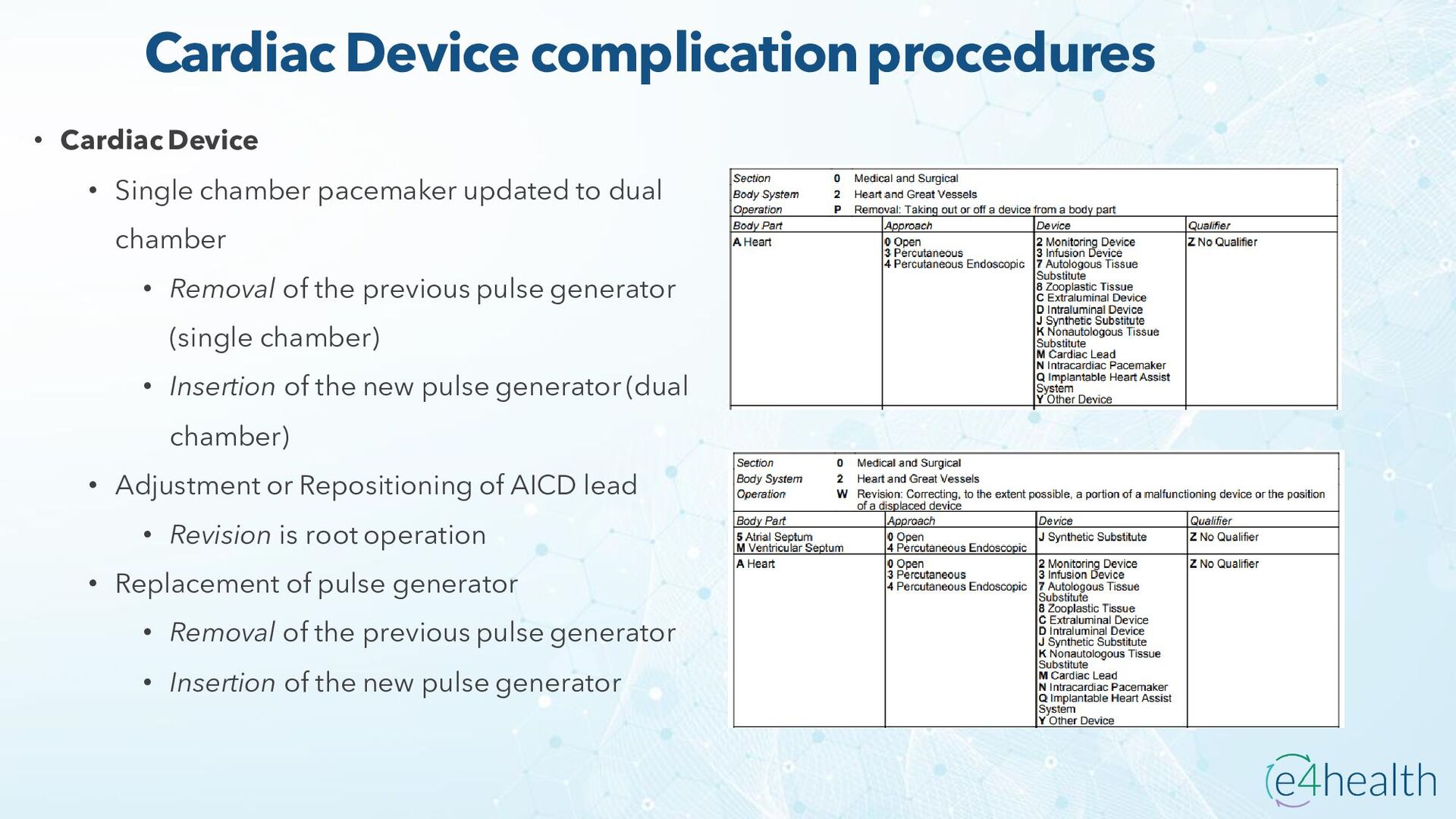
  72. Cardiac Device complication procedures • Cardiac Device • Single chamber

    pacemaker updated to dual chamber • Removal of the previous pulse generator (single chamber) • Insertion of the new pulse generator (dual chamber) • Adjustment or Repositioning of AICD lead • Revision is root operation • Replacement of pulse generator • Removal of the previous pulse generator • Insertion of the new pulse generator
  73. References • AHA ICD-10-CM and ICD-10-PCS Coding Handbook • ICD-10-PCS:

    An Applied Approach 2023 • Cengage: 3-2-1 CODE IT! • Medical Terminology Systems, 8th Edition • https://centralkneeclinic.co.uk/treatment/knee-replacements/total-knee-replacement/ • https://www.mayoclinic.org/tests-procedures/pacemaker/about/pac-20384689 • https://theparisnews.com/understanding-the-differences-between-a-pacemaker-and-a- defibrillator/article_584a1395-42f4-5dbc-b152-a5a5815d7572.html • Accidental Puncture & Laceration: Coding Clinic 2021 Q2 (pinsonandtang.com) • AHRQ QI: PSI Technical Specifications Updates • ACIDS_Complication Coding_8.24.18.pptx (live.com) • Tip: Coding for inpatient postoperative complications requires explicit documentation | ACDIS