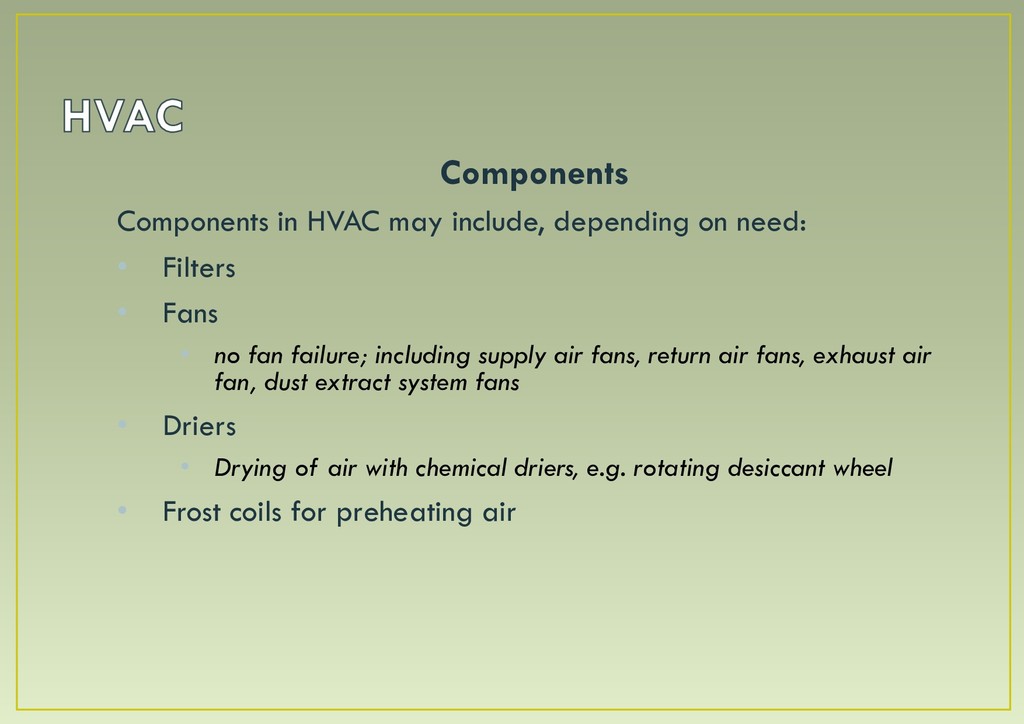
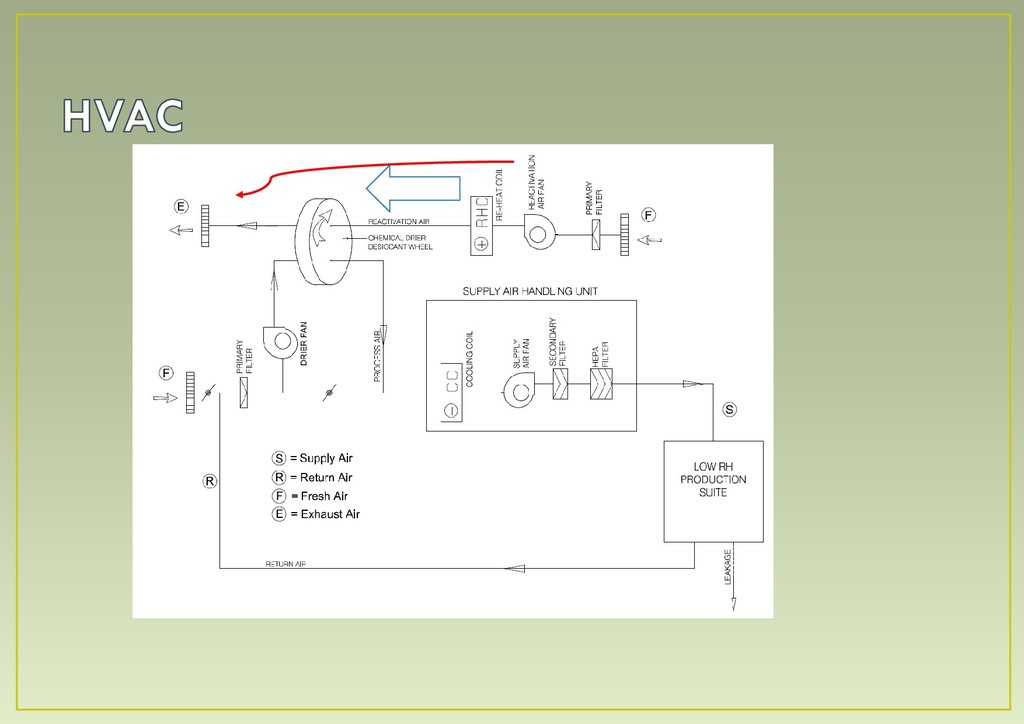
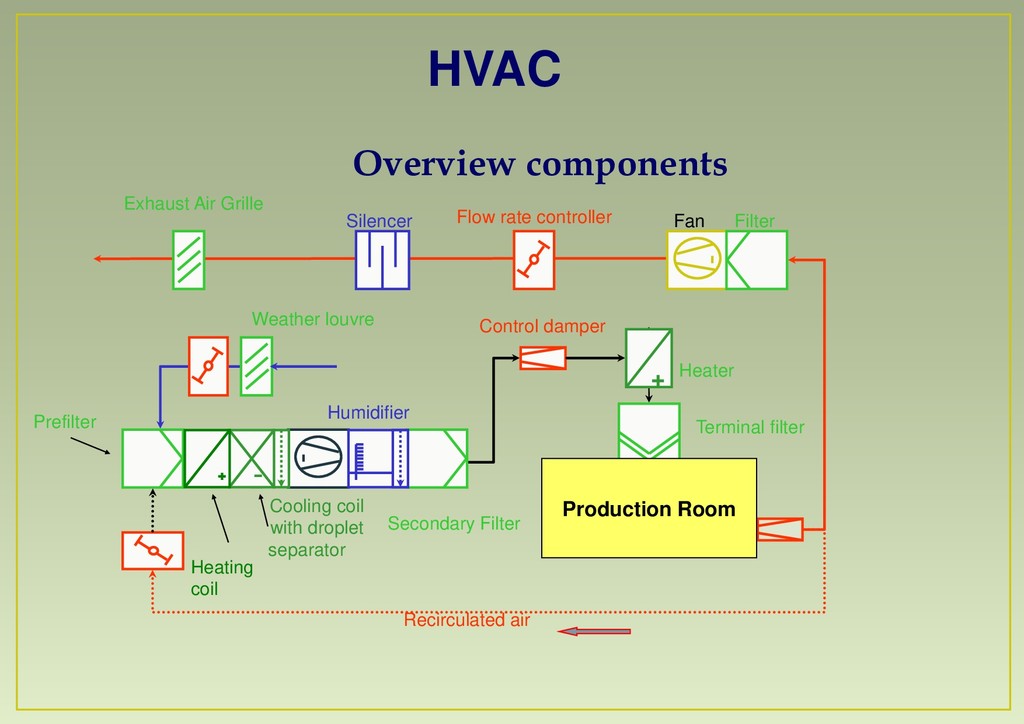
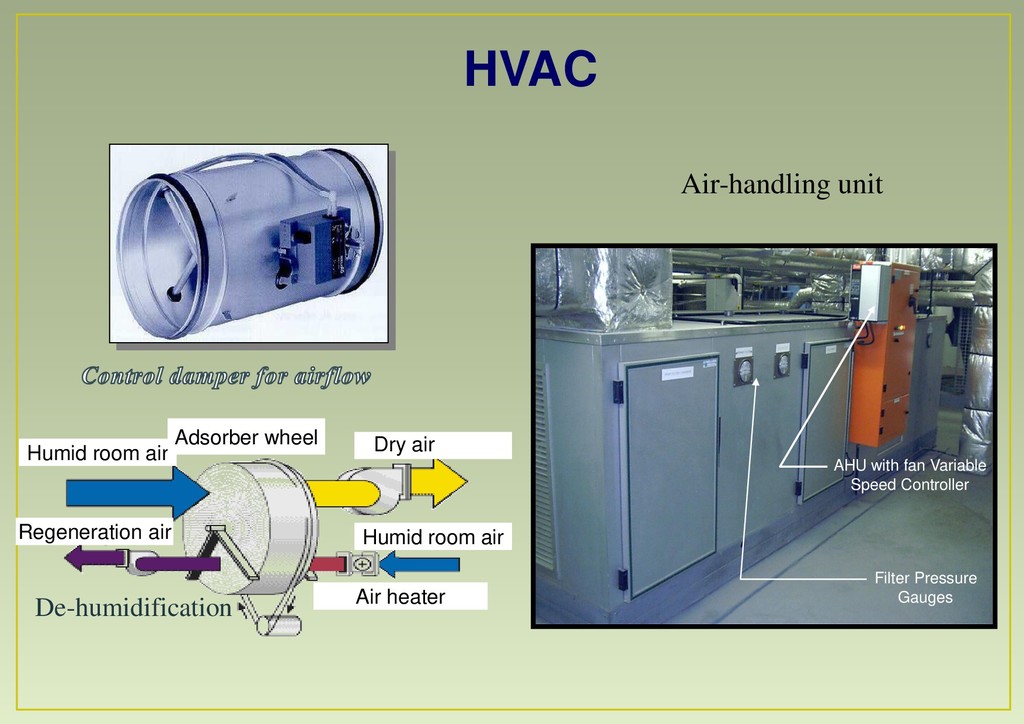
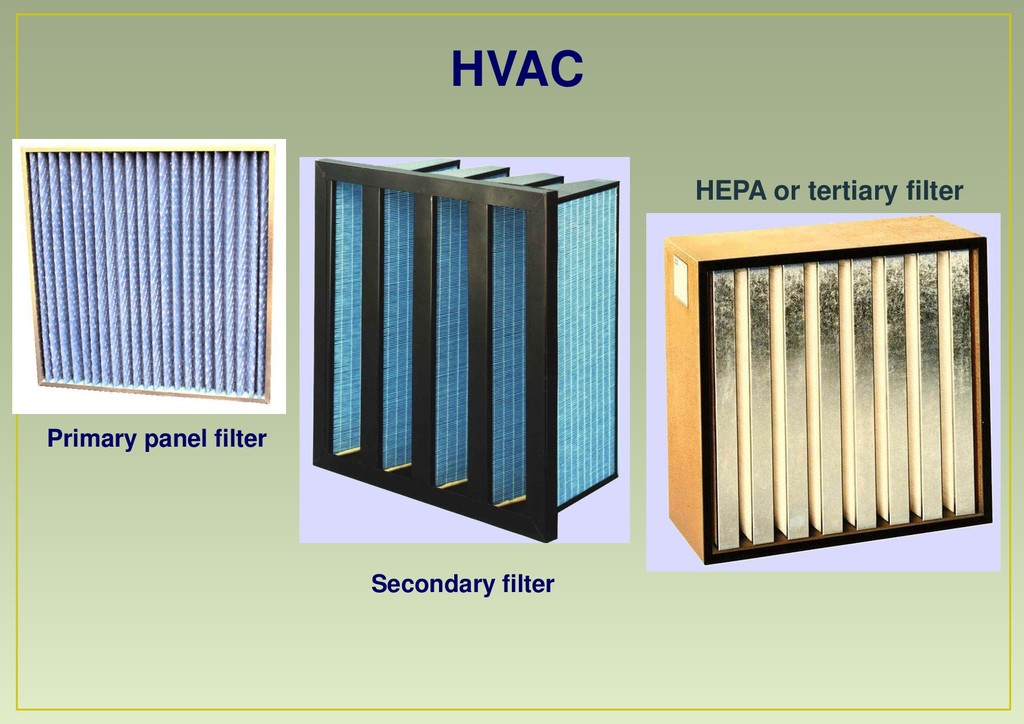
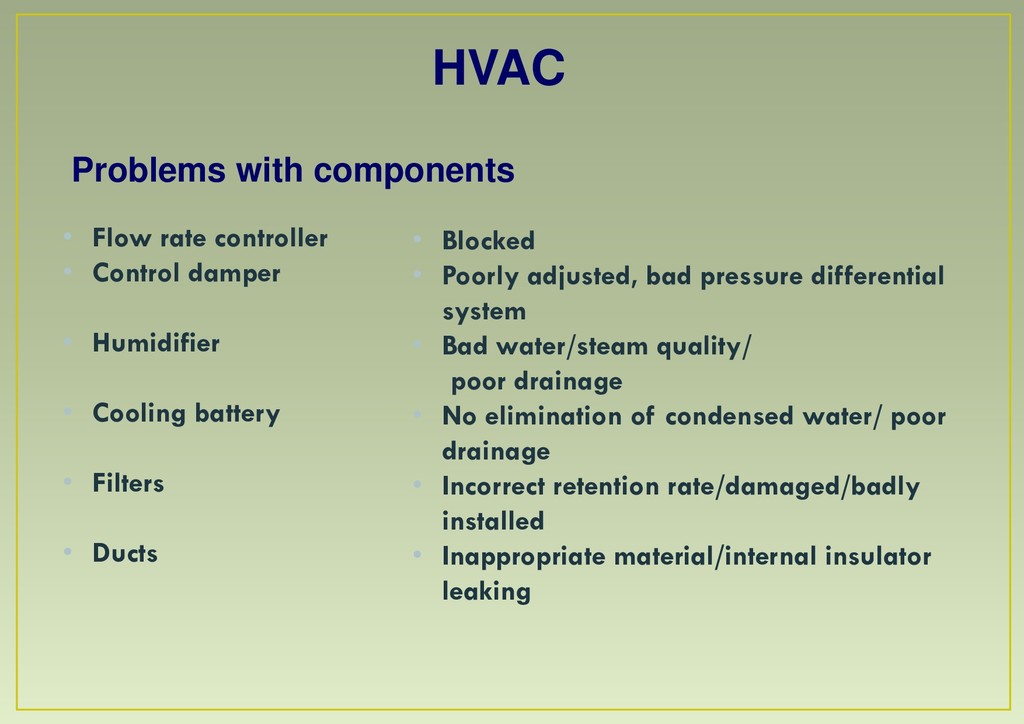
Filters • Fans • no fan failure; including supply air fans, return air fans, exhaust air fan, dust extract system fans • Driers • Drying of air with chemical driers, e.g. rotating desiccant wheel • Frost coils for preheating air
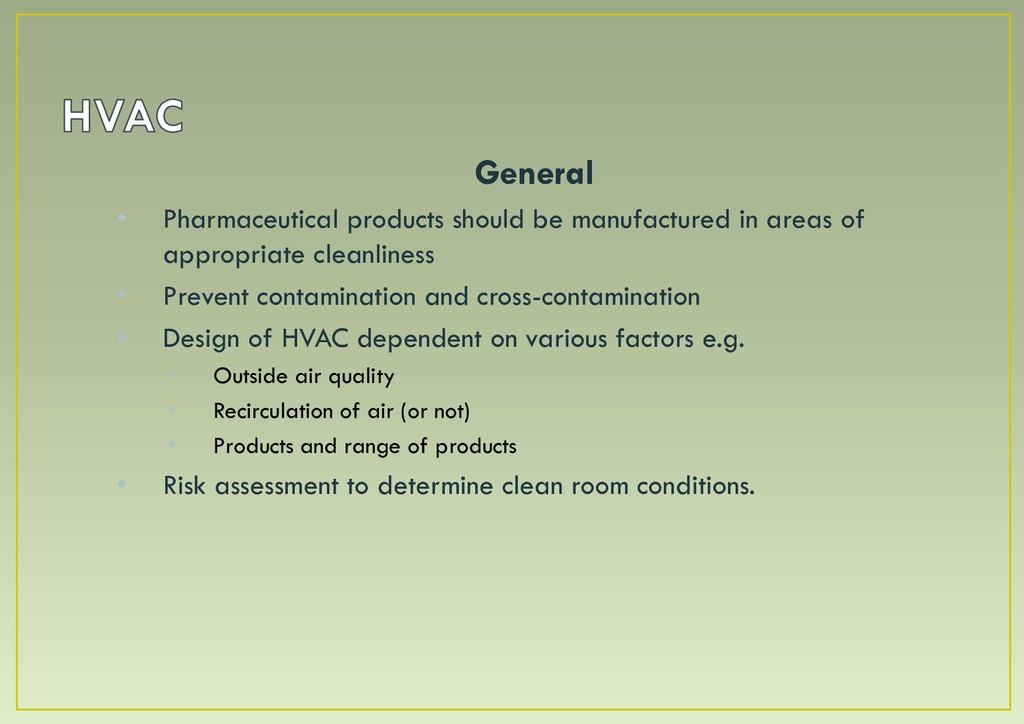
appropriate cleanliness • Prevent contamination and cross-contamination • Design of HVAC dependent on various factors e.g. • Outside air quality • Recirculation of air (or not) • Products and range of products • Risk assessment to determine clean room conditions.
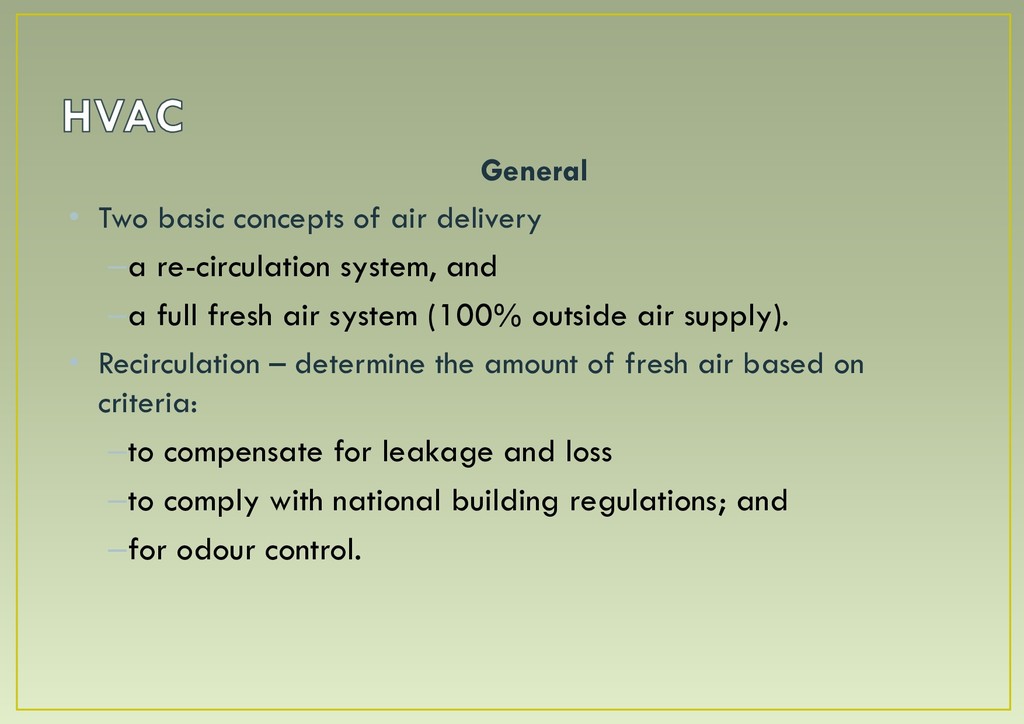
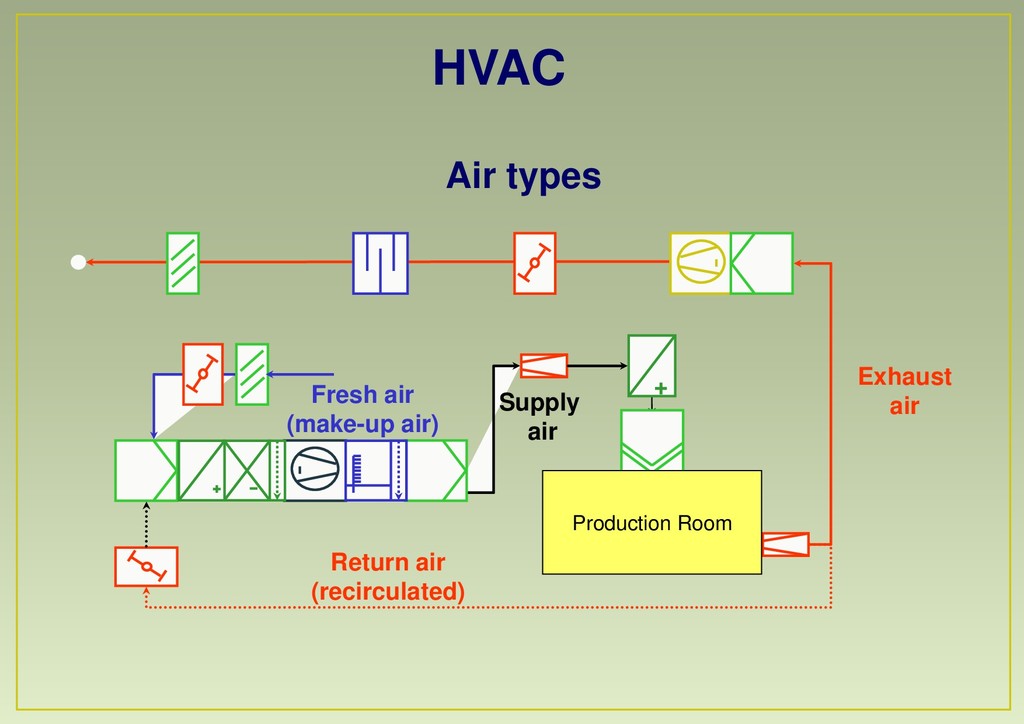
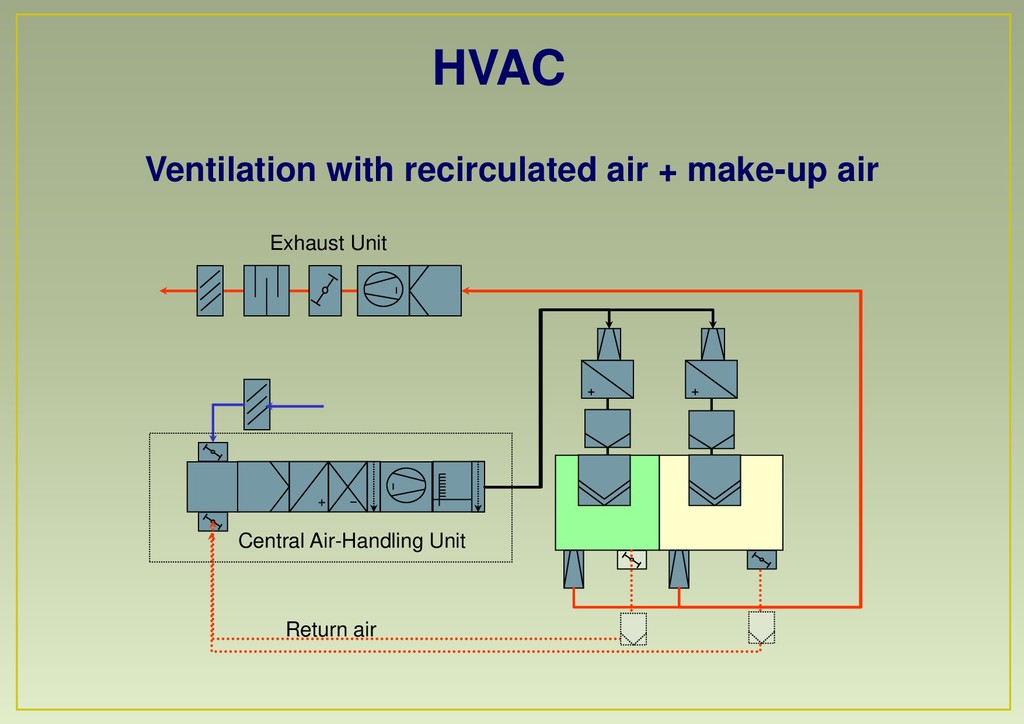
system, and –a full fresh air system (100% outside air supply). • Recirculation – determine the amount of fresh air based on criteria: –to compensate for leakage and loss –to comply with national building regulations; and –for odour control.
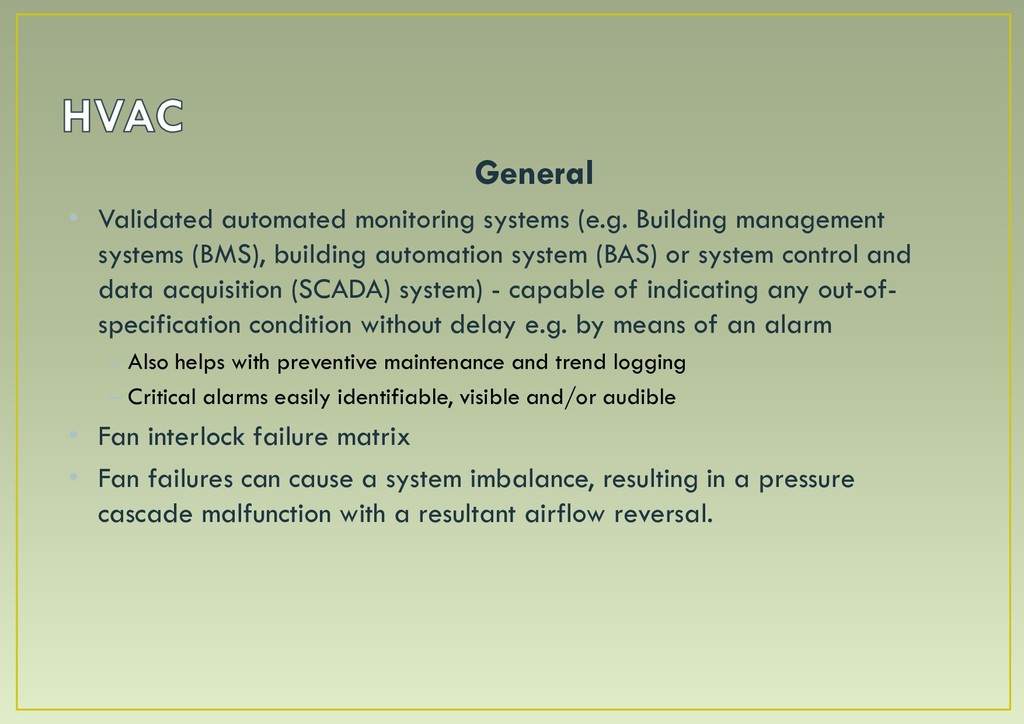
(BMS), building automation system (BAS) or system control and data acquisition (SCADA) system) - capable of indicating any out-of- specification condition without delay e.g. by means of an alarm – Also helps with preventive maintenance and trend logging – Critical alarms easily identifiable, visible and/or audible • Fan interlock failure matrix • Fan failures can cause a system imbalance, resulting in a pressure cascade malfunction with a resultant airflow reversal.
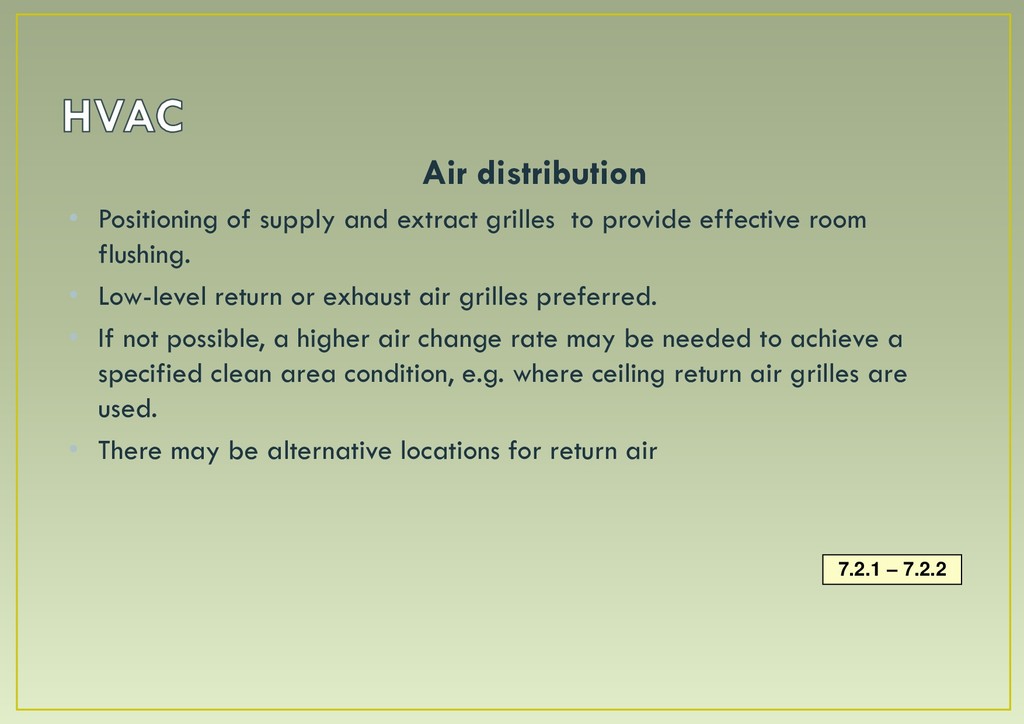
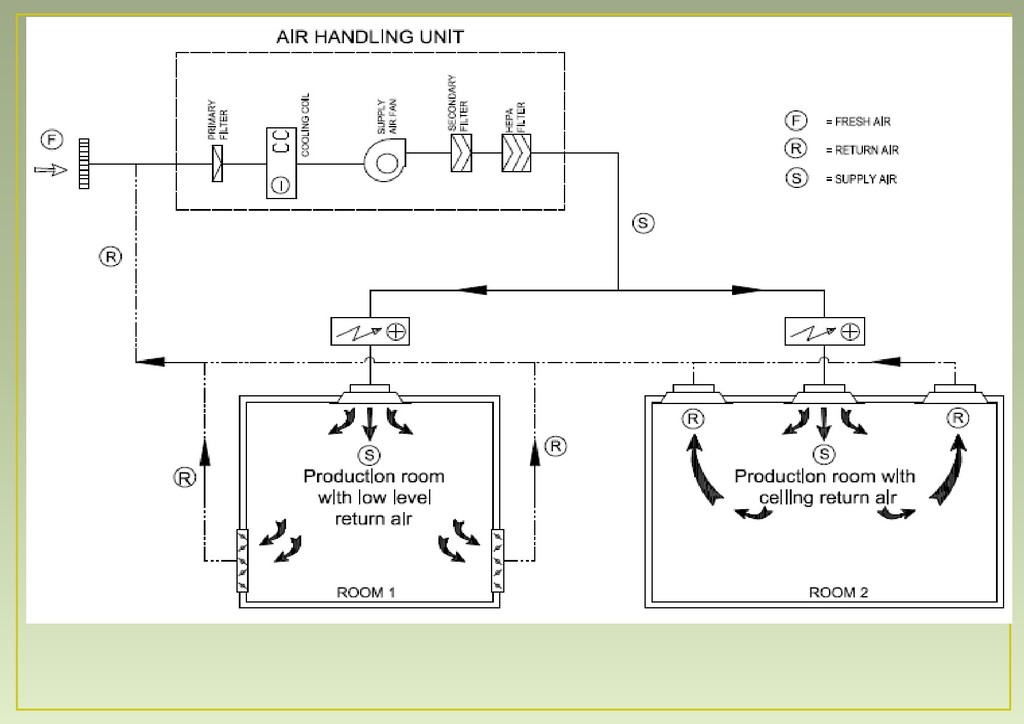
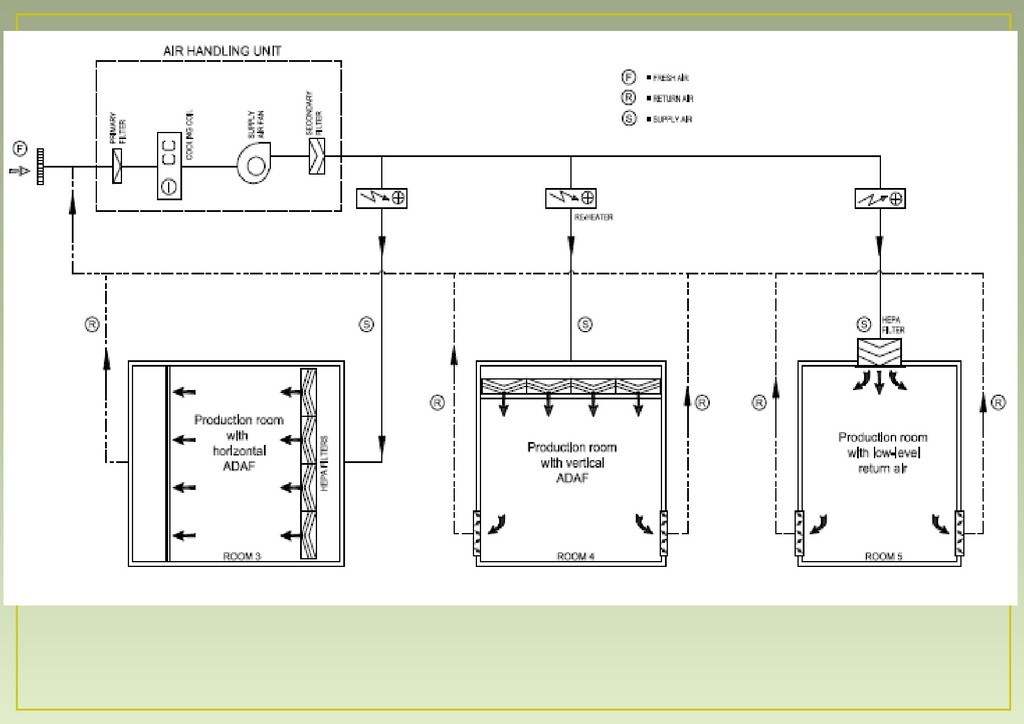
provide effective room flushing. • Low-level return or exhaust air grilles preferred. • If not possible, a higher air change rate may be needed to achieve a specified clean area condition, e.g. where ceiling return air grilles are used. • There may be alternative locations for return air 7.2.1 – 7.2.2
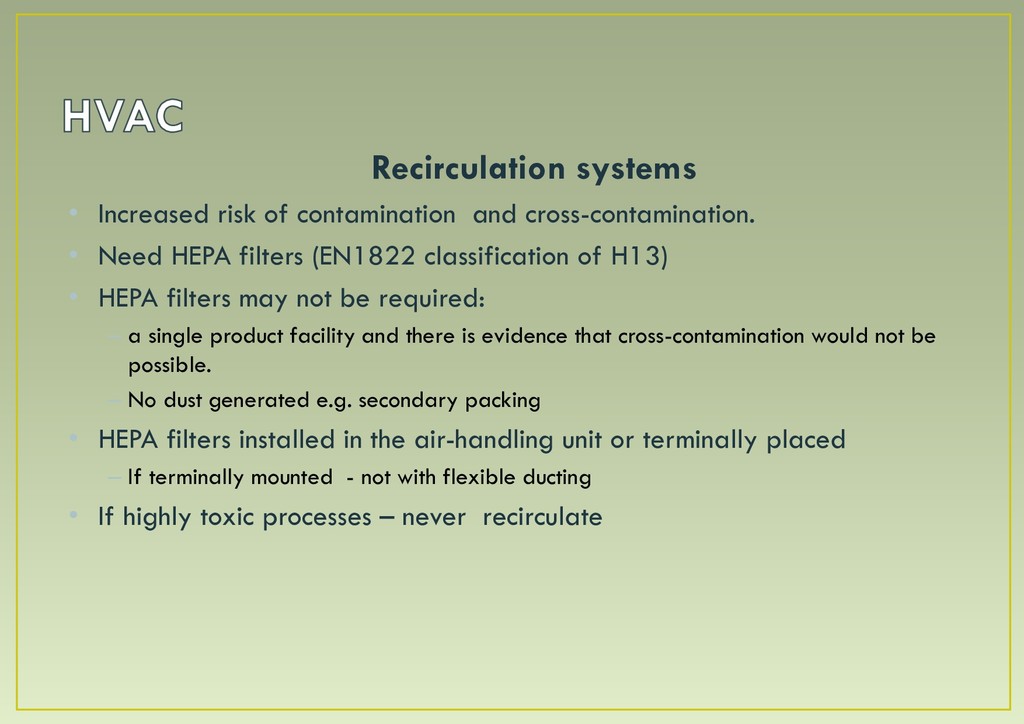
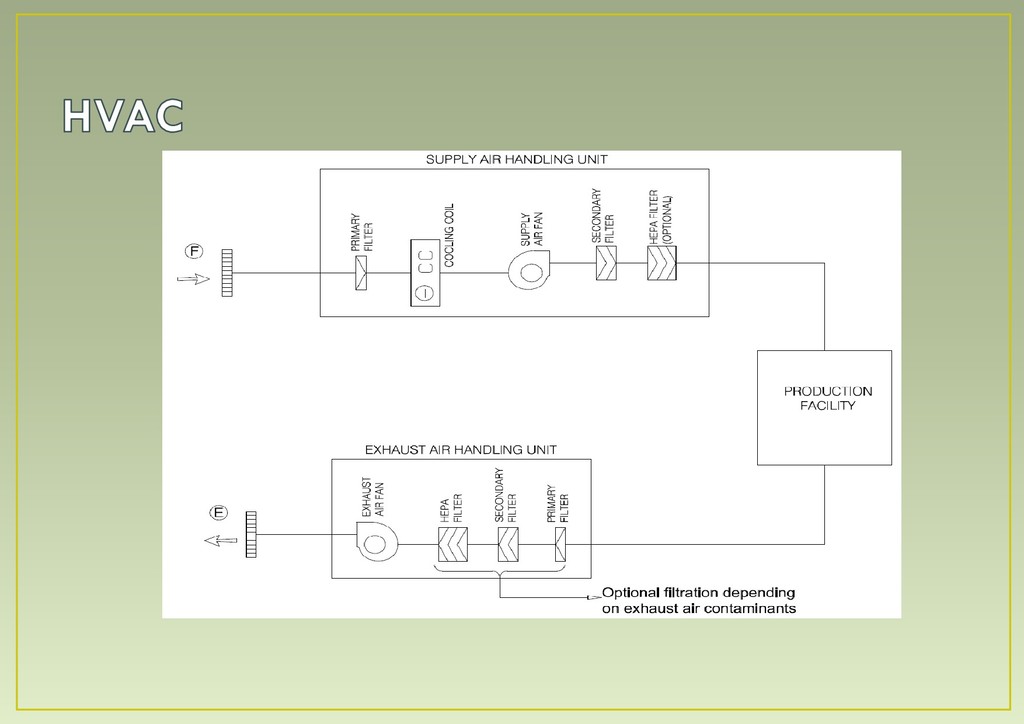
Need HEPA filters (EN1822 classification of H13) • HEPA filters may not be required: – a single product facility and there is evidence that cross-contamination would not be possible. – No dust generated e.g. secondary packing • HEPA filters installed in the air-handling unit or terminally placed – If terminally mounted - not with flexible ducting • If highly toxic processes – never recirculate
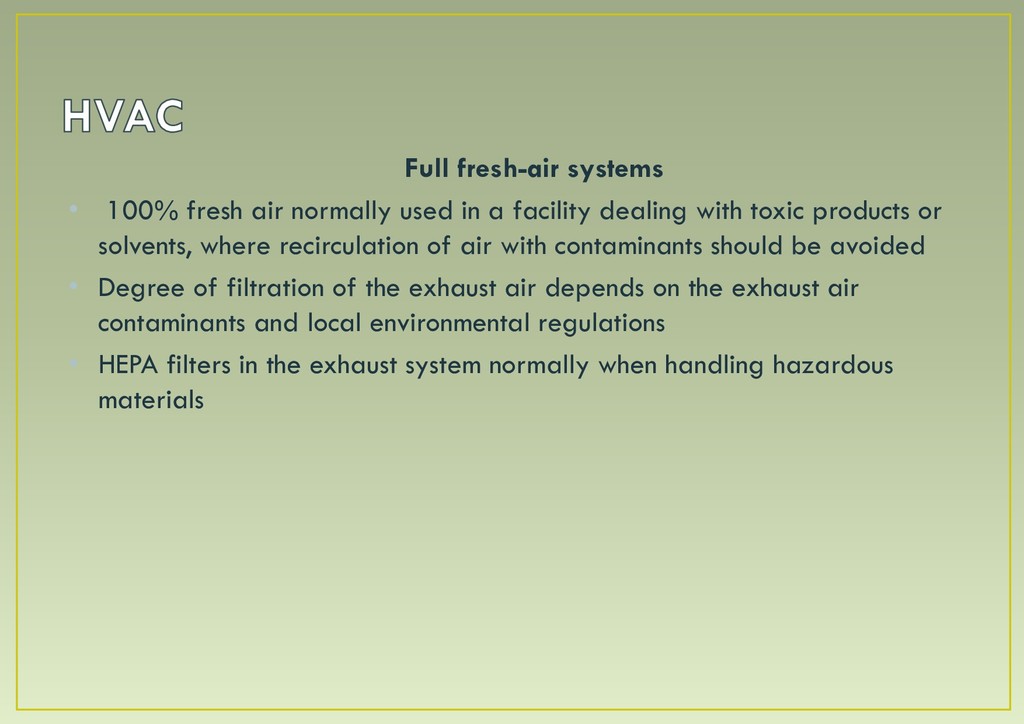
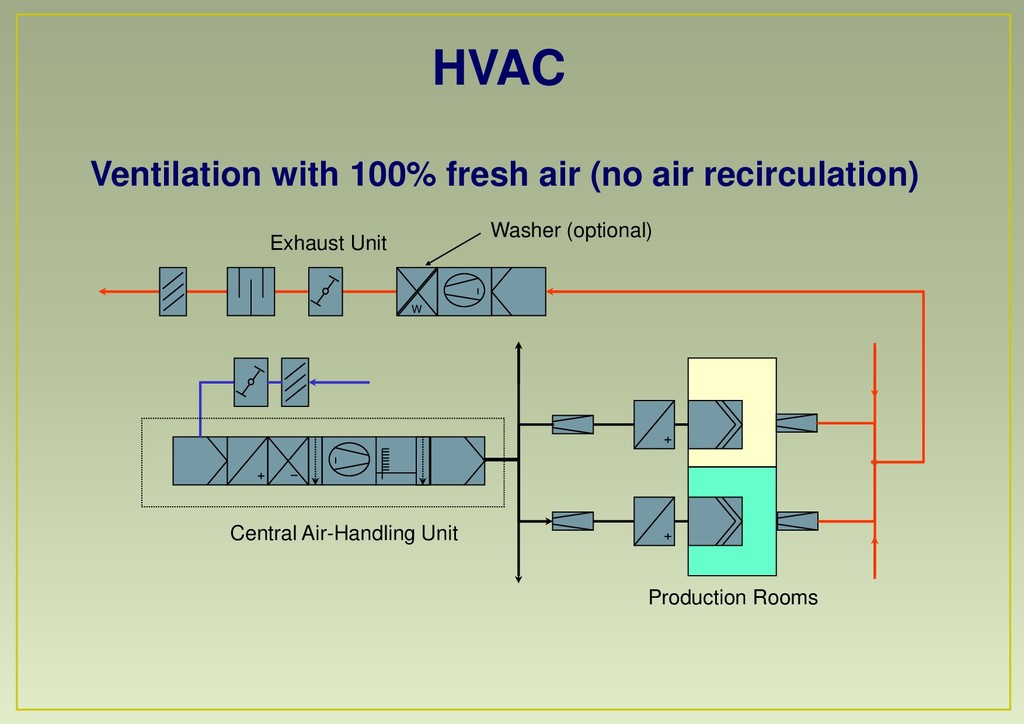
a facility dealing with toxic products or solvents, where recirculation of air with contaminants should be avoided • Degree of filtration of the exhaust air depends on the exhaust air contaminants and local environmental regulations • HEPA filters in the exhaust system normally when handling hazardous materials
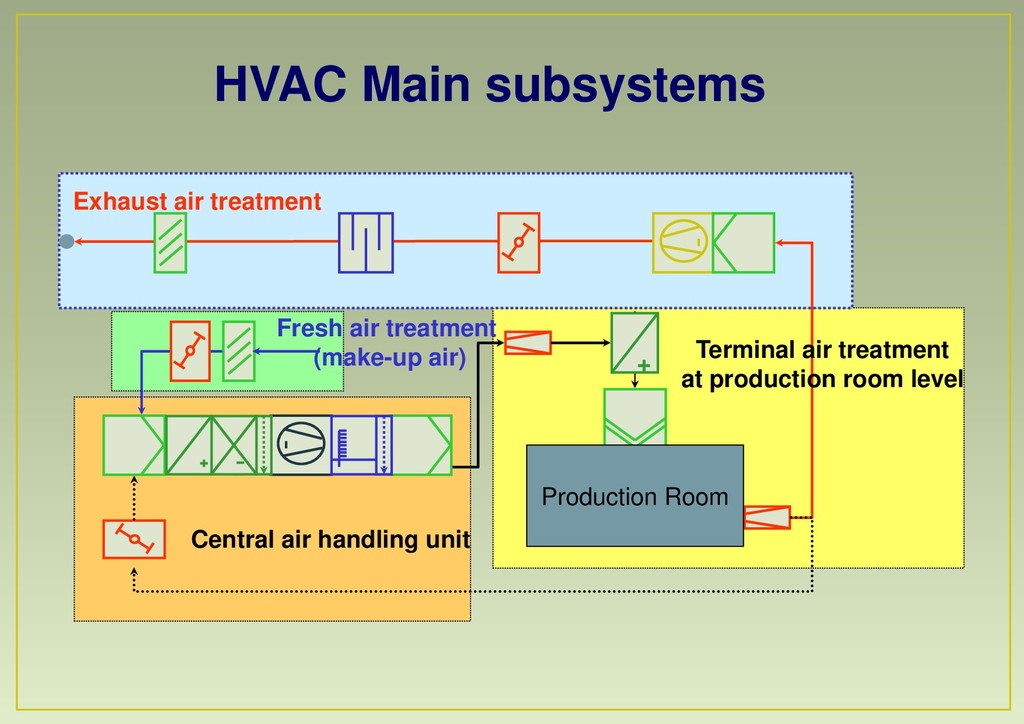
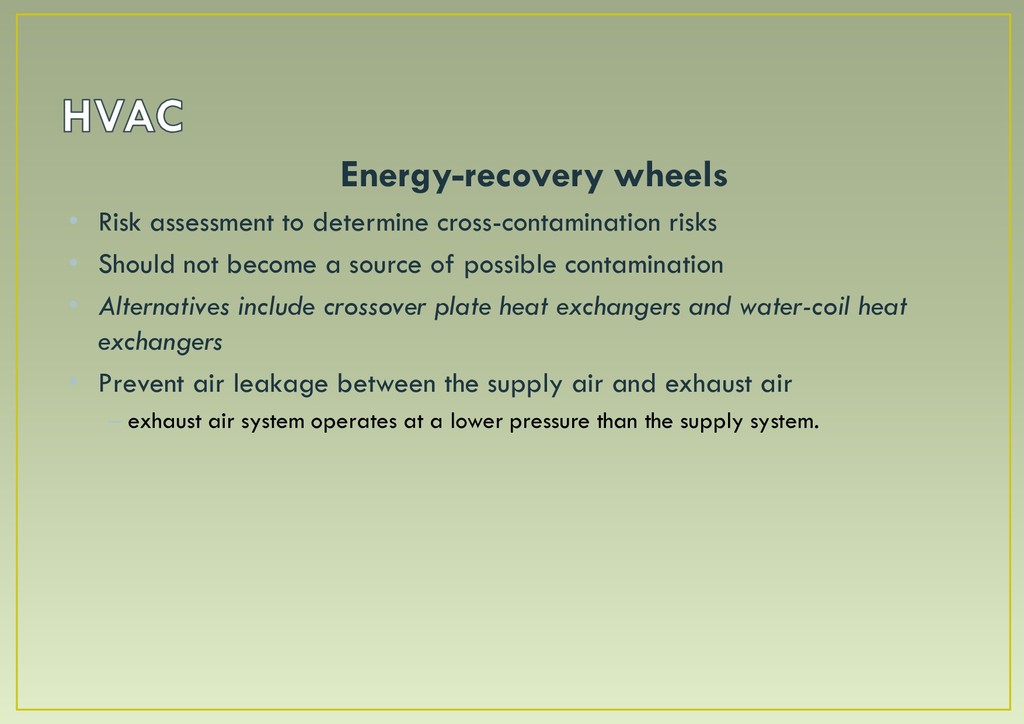
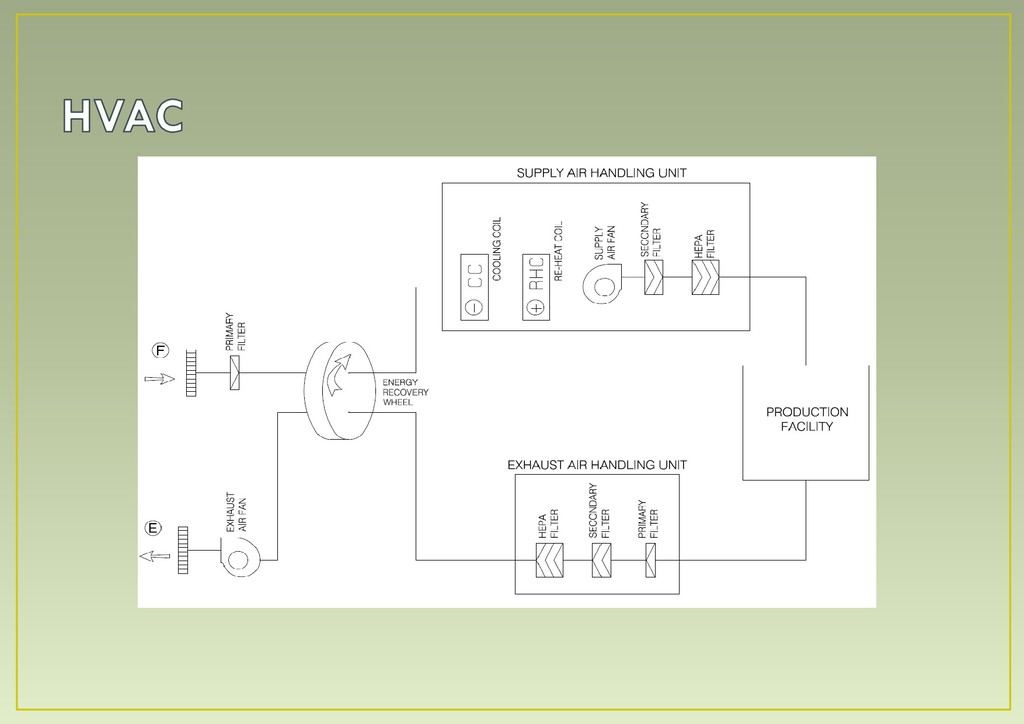
Should not become a source of possible contamination • Alternatives include crossover plate heat exchangers and water-coil heat exchangers • Prevent air leakage between the supply air and exhaust air – exhaust air system operates at a lower pressure than the supply system.
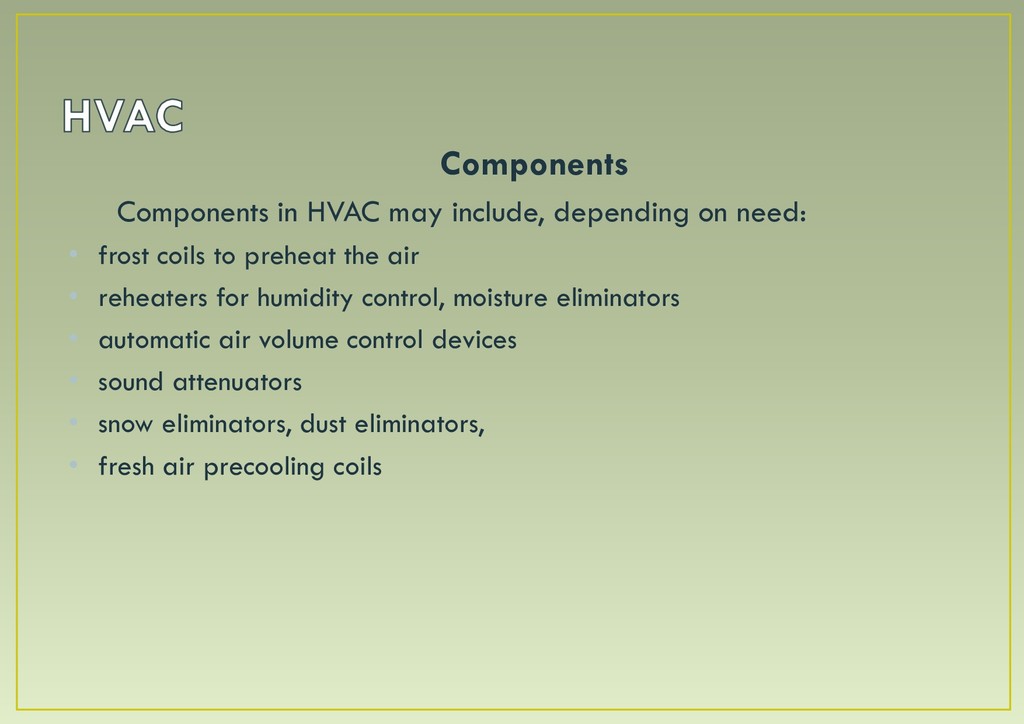
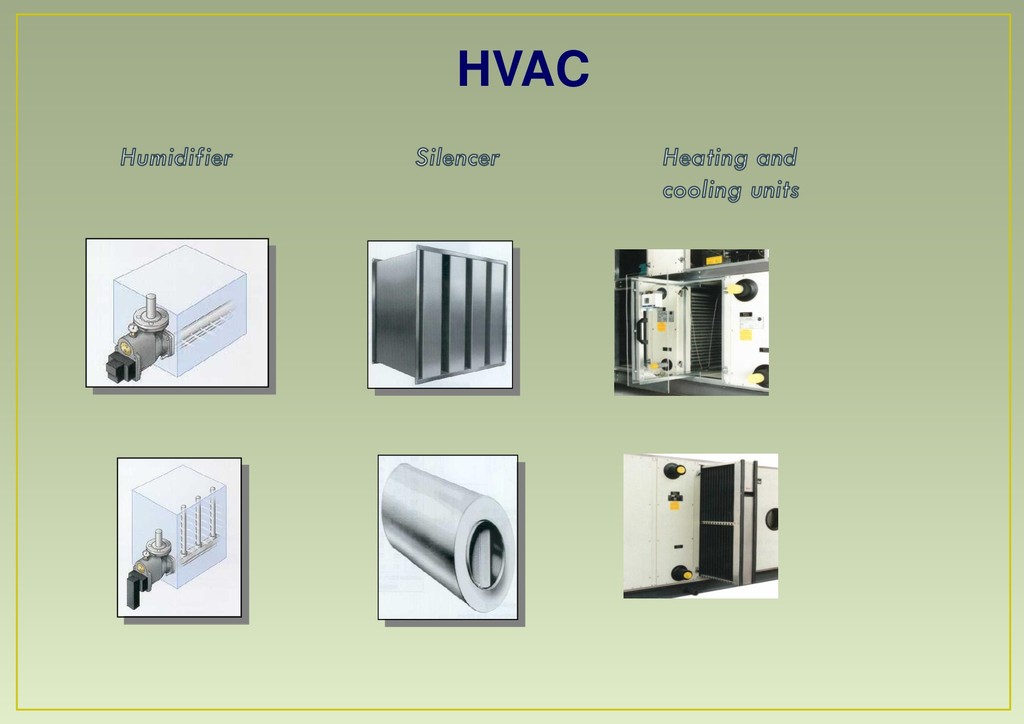
frost coils to preheat the air • reheaters for humidity control, moisture eliminators • automatic air volume control devices • sound attenuators • snow eliminators, dust eliminators, • fresh air precooling coils
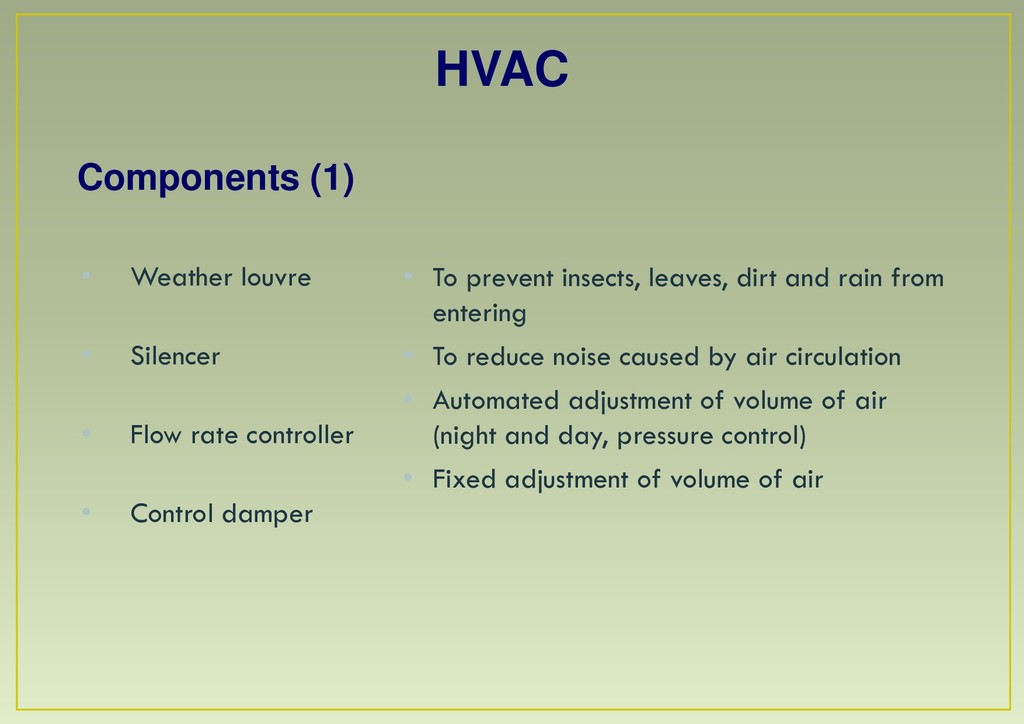
Control damper • To prevent insects, leaves, dirt and rain from entering • To reduce noise caused by air circulation • Automated adjustment of volume of air (night and day, pressure control) • Fixed adjustment of volume of air Components (1) HVAC
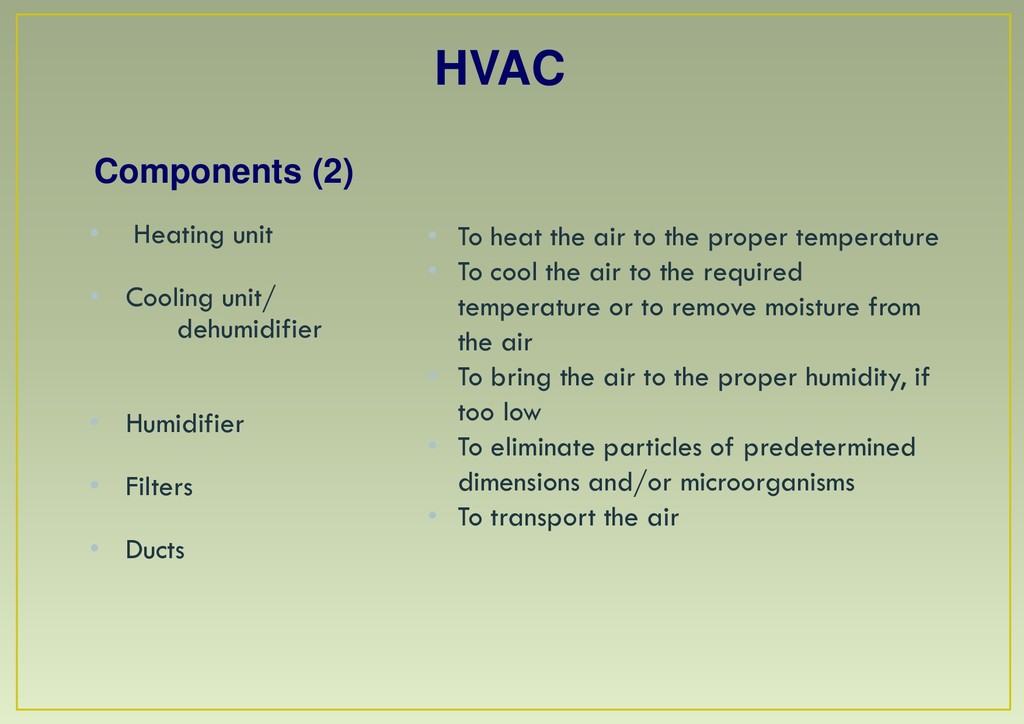
Filters • Ducts • To heat the air to the proper temperature • To cool the air to the required temperature or to remove moisture from the air • To bring the air to the proper humidity, if too low • To eliminate particles of predetermined dimensions and/or microorganisms • To transport the air Components (2) HVAC


 ashisuto_career
 kazuyama88
 kimpachi_d
 progmat
 tbpgr
 handy_official
 ozakiomumkj
 maruishi
 ikuodanaka
 noritaka88tax
 speakbuddy
 reiwatravel_0405
 charlesmeaden
 emna__ayadi
 khoart
 productmarketing
 caitiem20
 jeffersonlam
 baasie
 lara
 marketingsoph
 rkendrick25
 chriscoyier
 katarinadahlin