A practical educational guide for homeowners and businesses considering solar energy systems. Prepared by ESCORE | Odesa, Ukraine Educational deck by ESCORE | Solar power systems 1
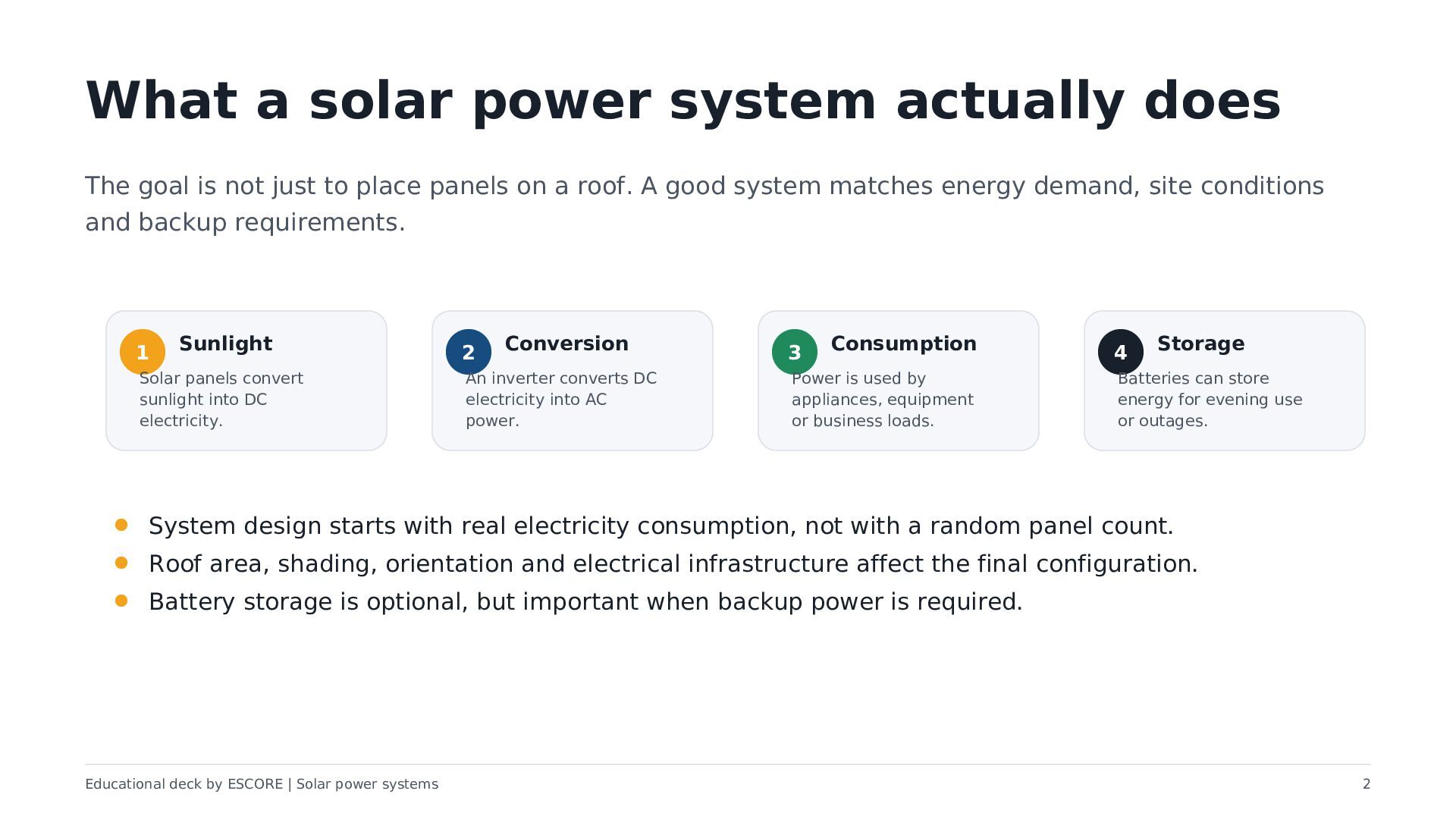
not just to place panels on a roof. A good system matches energy demand, site conditions and backup requirements. Educational deck by ESCORE | Solar power systems 2 1 Sunlight Solar panels convert sunlight into DC electricity. 2 Conversion An inverter converts DC electricity into AC power. 3 Consumption Power is used by appliances, equipment or business loads. 4 Storage Batteries can store energy for evening use or outages. System design starts with real electricity consumption, not with a random panel count. Roof area, shading, orientation and electrical infrastructure affect the final configuration. Battery storage is optional, but important when backup power is required.
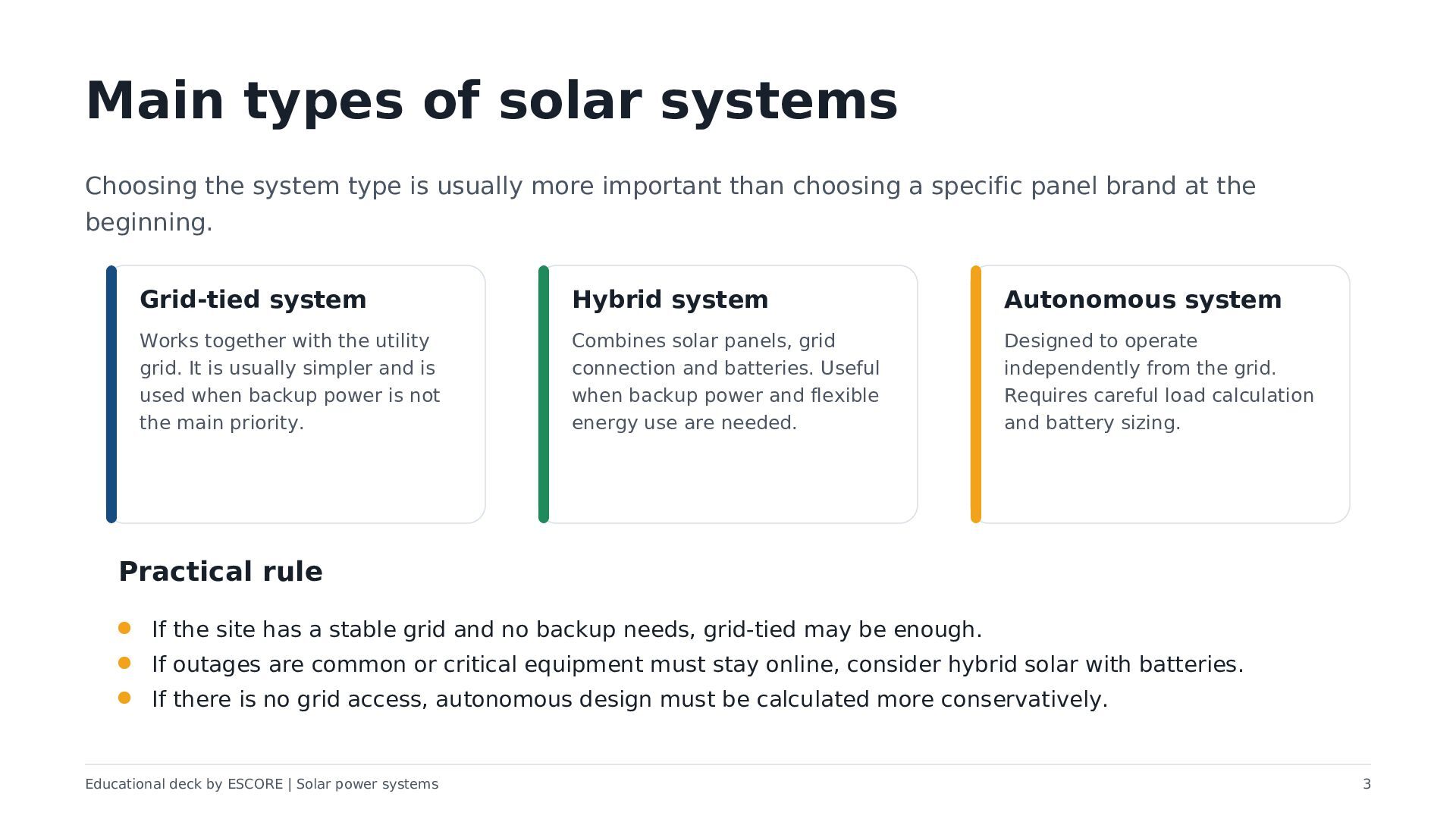
usually more important than choosing a specific panel brand at the beginning. Educational deck by ESCORE | Solar power systems 3 Grid-tied system Works together with the utility grid. It is usually simpler and is used when backup power is not the main priority. Hybrid system Combines solar panels, grid connection and batteries. Useful when backup power and flexible energy use are needed. Autonomous system Designed to operate independently from the grid. Requires careful load calculation and battery sizing. Practical rule If the site has a stable grid and no backup needs, grid-tied may be enough. If outages are common or critical equipment must stay online, consider hybrid solar with batteries. If there is no grid access, autonomous design must be calculated more conservatively.
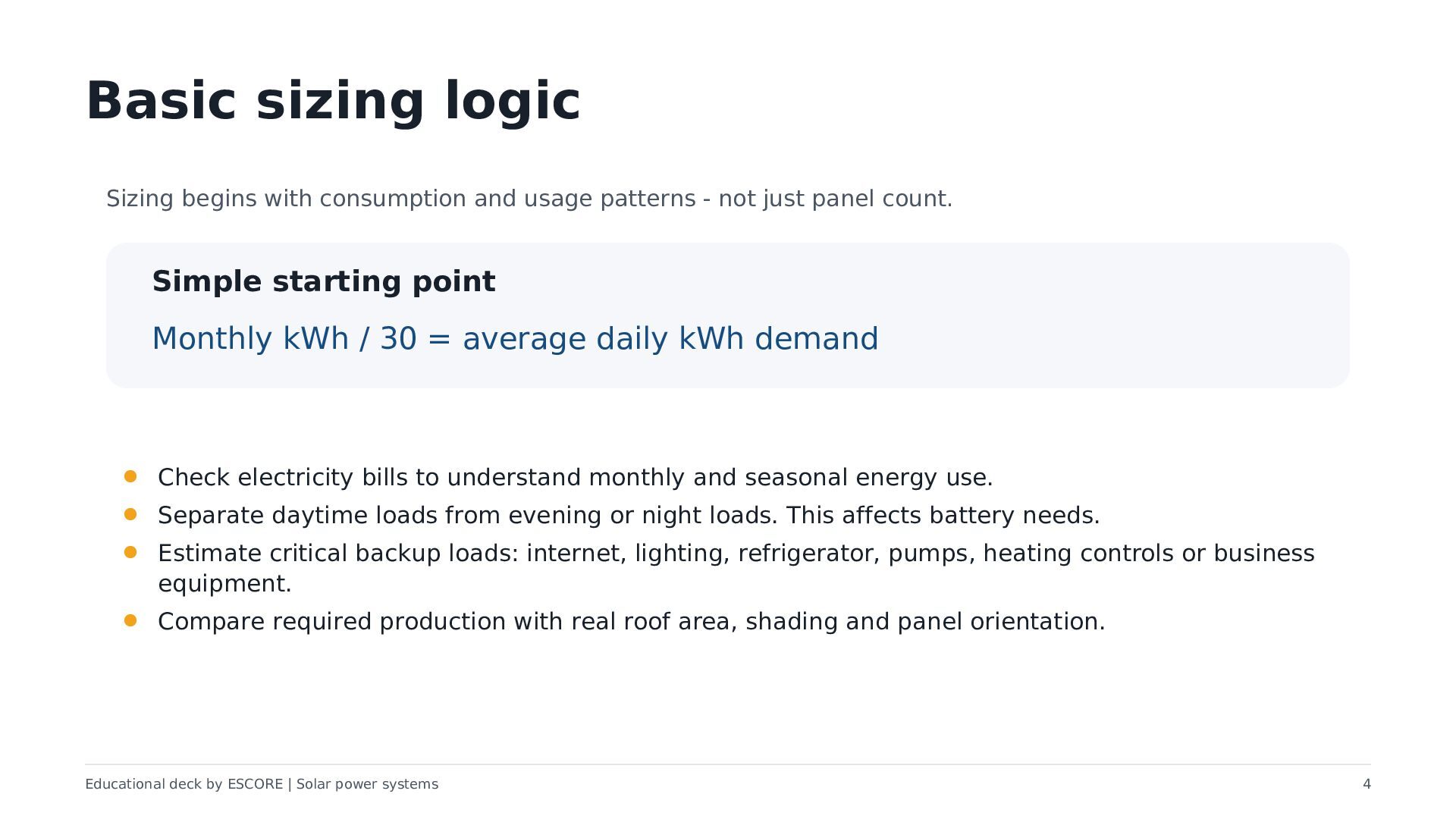
systems 4 Sizing begins with consumption and usage patterns - not just panel count. Simple starting point Monthly kWh / 30 = average daily kWh demand Check electricity bills to understand monthly and seasonal energy use. Separate daytime loads from evening or night loads. This affects battery needs. Estimate critical backup loads: internet, lighting, refrigerator, pumps, heating controls or business equipment. Compare required production with real roof area, shading and panel orientation.
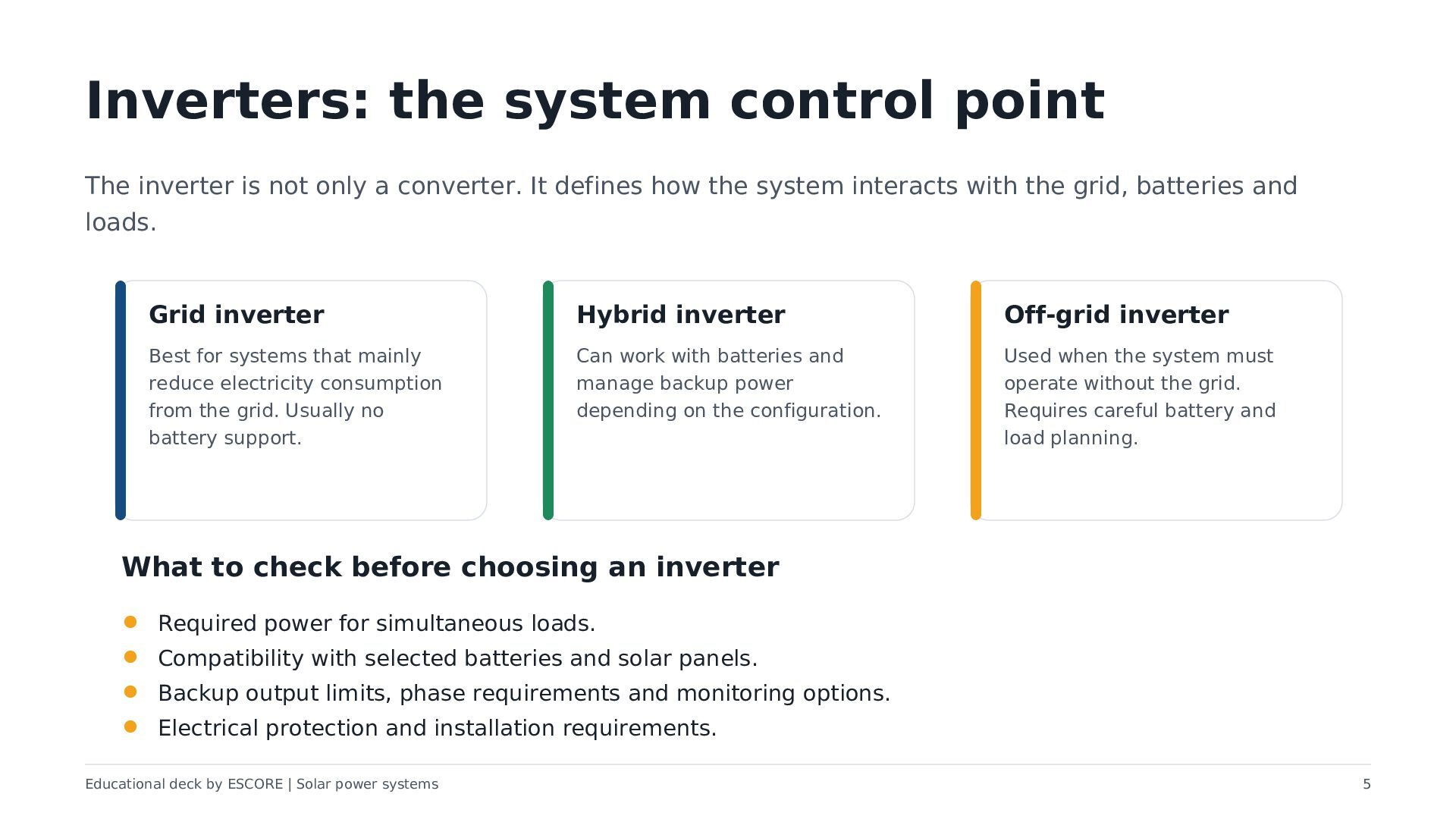
a converter. It defines how the system interacts with the grid, batteries and loads. Educational deck by ESCORE | Solar power systems 5 Grid inverter Best for systems that mainly reduce electricity consumption from the grid. Usually no battery support. Hybrid inverter Can work with batteries and manage backup power depending on the configuration. Off-grid inverter Used when the system must operate without the grid. Requires careful battery and load planning. What to check before choosing an inverter Required power for simultaneous loads. Compatibility with selected batteries and solar panels. Backup output limits, phase requirements and monitoring options. Electrical protection and installation requirements.
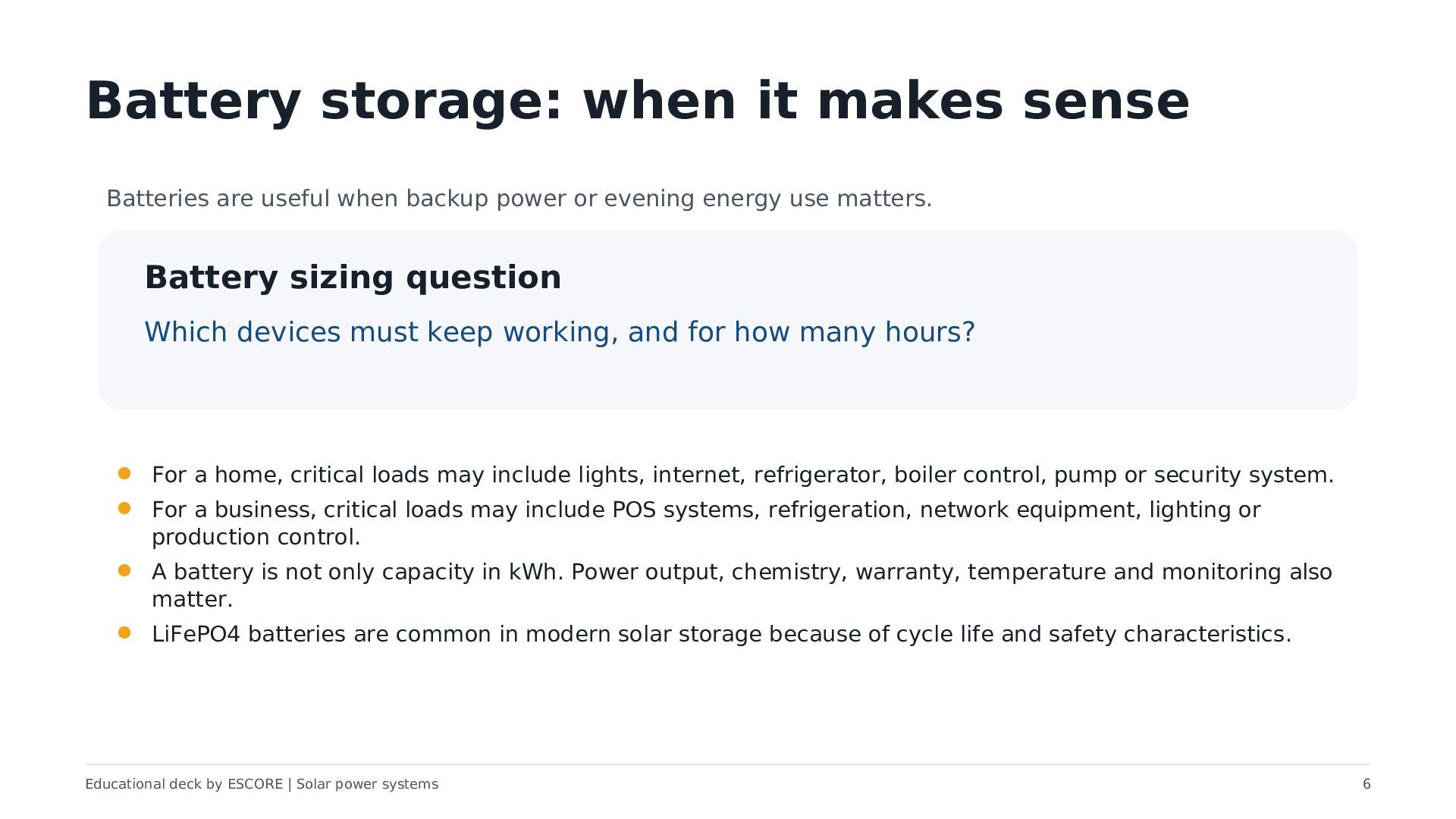
| Solar power systems 6 Batteries are useful when backup power or evening energy use matters. Battery sizing question Which devices must keep working, and for how many hours? For a home, critical loads may include lights, internet, refrigerator, boiler control, pump or security system. For a business, critical loads may include POS systems, refrigeration, network equipment, lighting or production control. A battery is not only capacity in kWh. Power output, chemistry, warranty, temperature and monitoring also matter. LiFePO4 batteries are common in modern solar storage because of cycle life and safety characteristics.
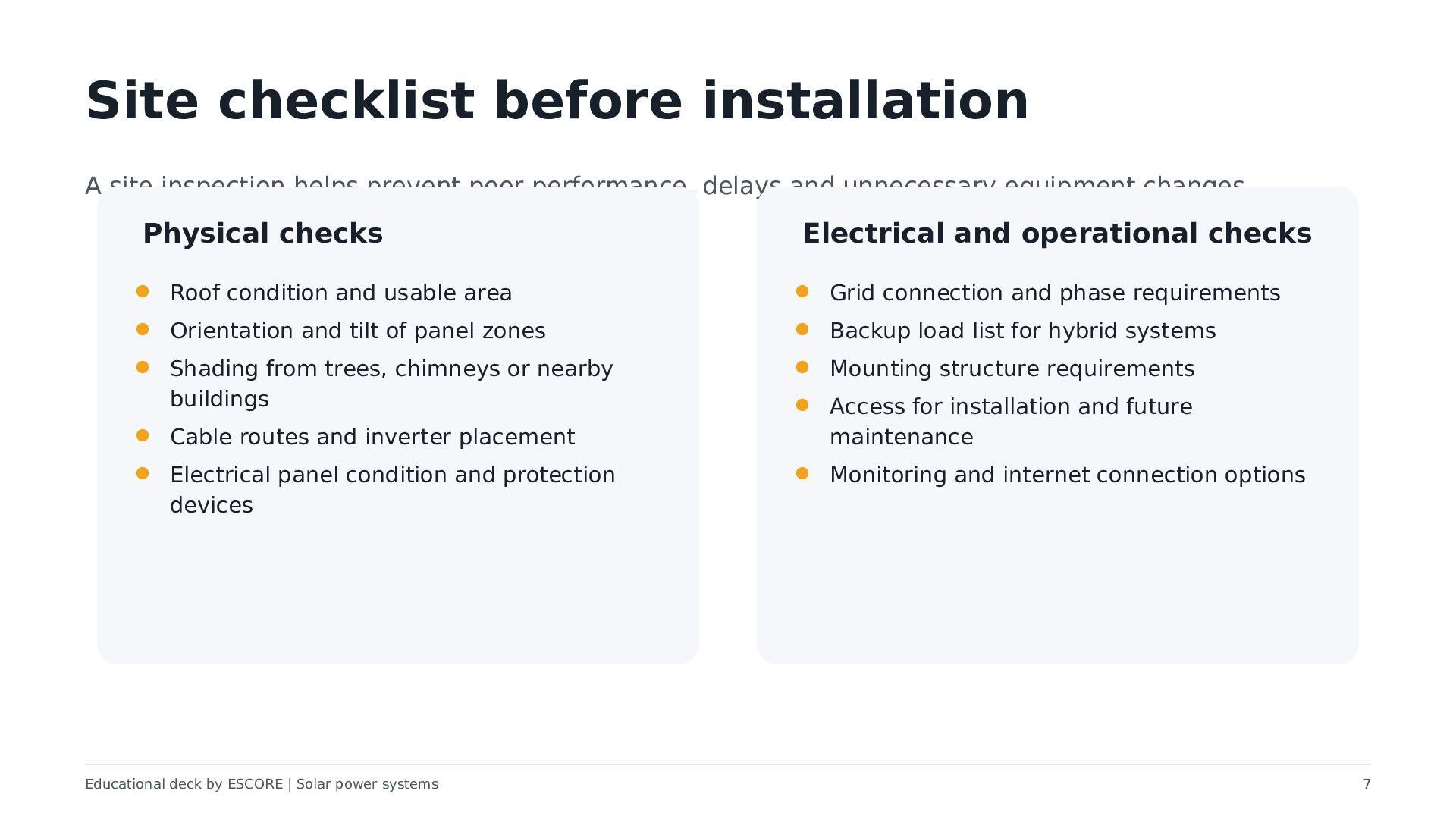
performance, delays and unnecessary equipment changes. Educational deck by ESCORE | Solar power systems 7 Physical checks Electrical and operational checks Roof condition and usable area Orientation and tilt of panel zones Shading from trees, chimneys or nearby buildings Cable routes and inverter placement Electrical panel condition and protection devices Grid connection and phase requirements Backup load list for hybrid systems Mounting structure requirements Access for installation and future maintenance Monitoring and internet connection options
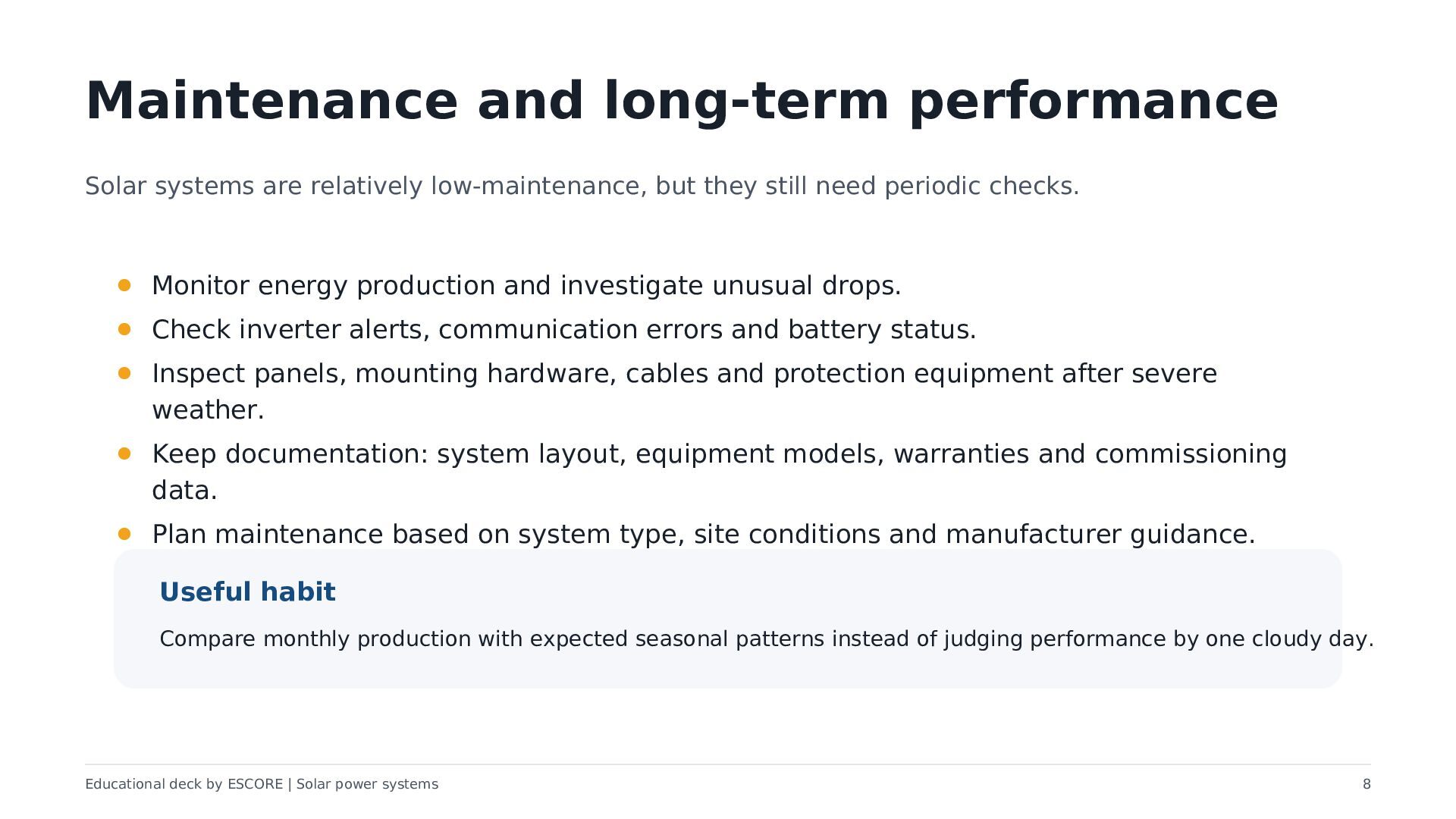
they still need periodic checks. Educational deck by ESCORE | Solar power systems 8 Monitor energy production and investigate unusual drops. Check inverter alerts, communication errors and battery status. Inspect panels, mounting hardware, cables and protection equipment after severe weather. Keep documentation: system layout, equipment models, warranties and commissioning data. Plan maintenance based on system type, site conditions and manufacturer guidance. Useful habit Compare monthly production with expected seasonal patterns instead of judging performance by one cloudy day.
property, not around a generic equipment list. Educational deck by ESCORE | Solar power systems 9 Start with consumption data and critical backup loads. Choose system type first: grid-tied, hybrid or autonomous. Match inverter and battery configuration to real use cases. Inspect roof, shading, electrical panel and cable routes before final design. Use monitoring and maintenance to protect long-term performance. Prepared by ESCORE Solar energy company based in Odesa, Ukraine https://escore.com.ua/


 tamagakiyuya
 attelu
 advalistar
 tsogo817421
 ikuodanaka
 fullkaiten
 kuradashi
 hr1nursing
 hubbleinc
 speakbuddy
 malna
 gatechnologies
 soudai
 aleyda
 destraynor
 mfonobong
 rabernat
 rasmusluckow
 iamctodd
 axbom
 codingconduct
 maggiecrowley
 frankvandijk