is a private foundation with a public service mission, set up under Royal Patronage: o Serves as a bridge between science and society, making polar research accessible and relevant to everyone. o Help to bring crucial scientific knowledge to the forefront of decision-making. o Built the Princess Elisabeth Antarctica station for the Belgian State. o Set a public-private partnership with the Belgian State to create the Polar Secretariat for the running of the Princess Elisabeth Antarctica. o Participating in research and technological activities and leverage funds for research. o Science support activities.
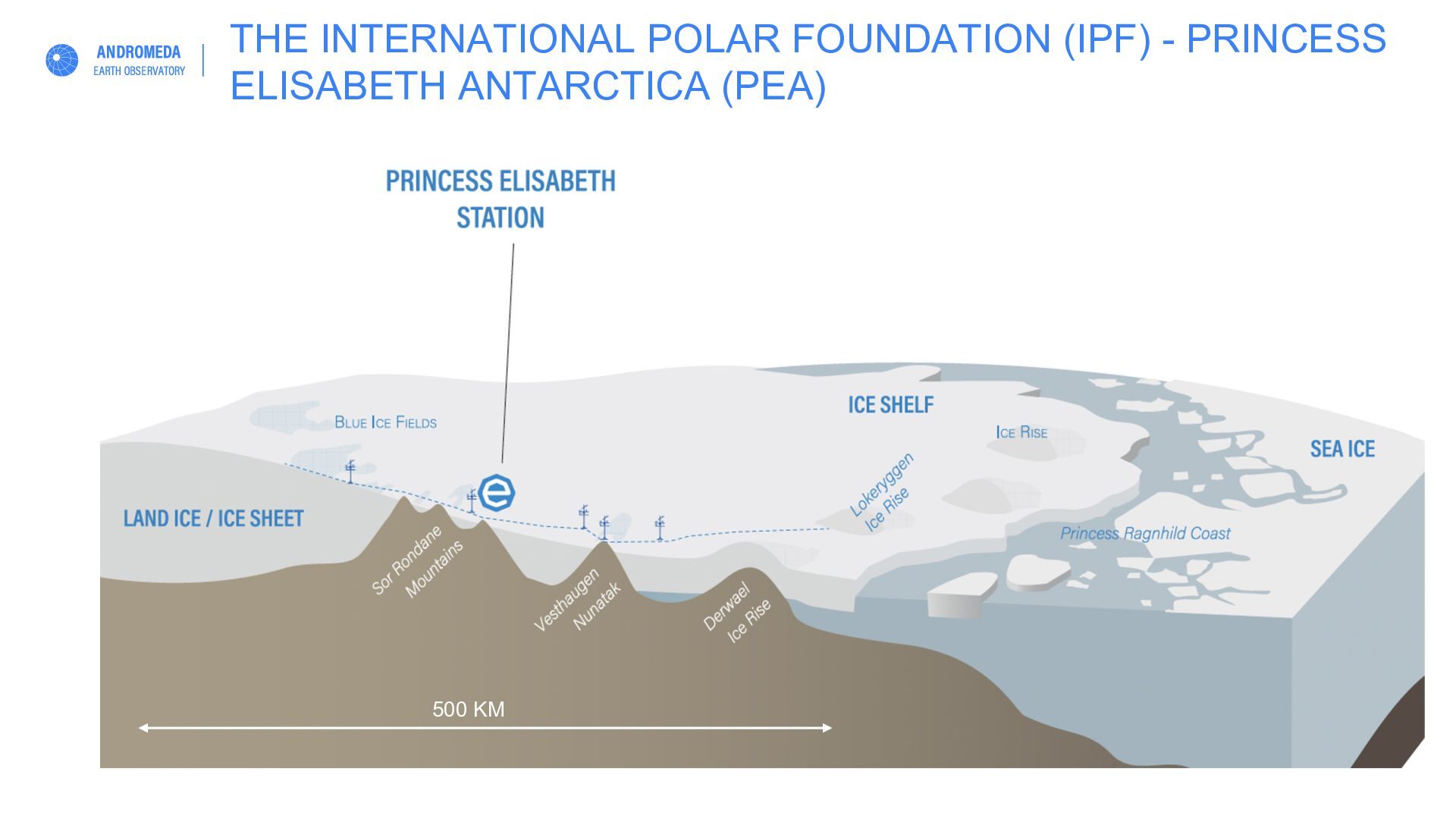
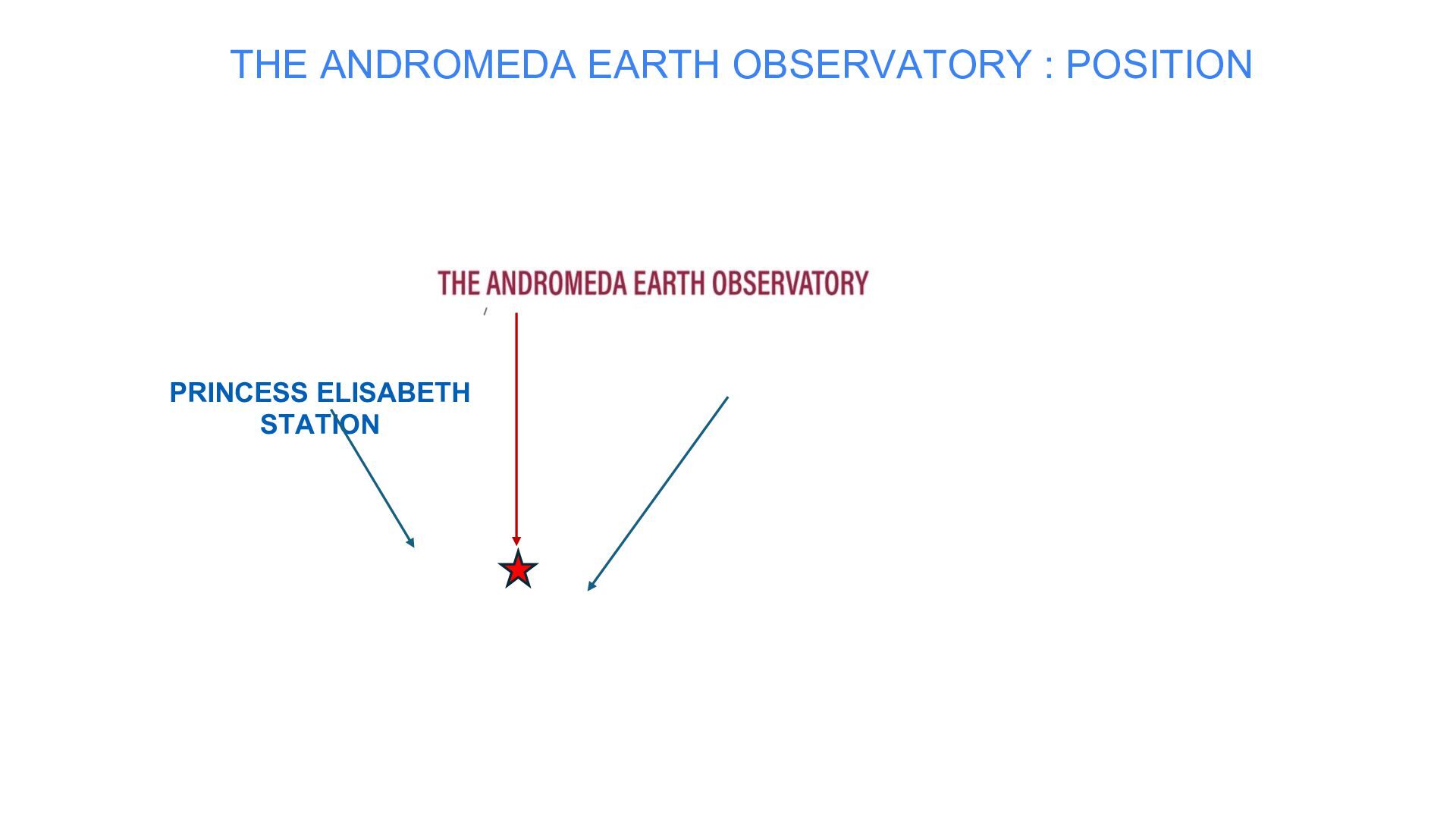
East-Antarctica (Queen Maud land) Sør Rondane Mountains 71°57’S - 23°20’E Altitude: 1397 m Distance from the coast: 220 km Distance from the plateau: 50 km
East-Antarctica (Queen Maud land) Sør Rondane Mountains 71°57’S - 23°20’E Altitude: 1397 m Distance from the coast: 220 km Distance from the plateau: 50 km
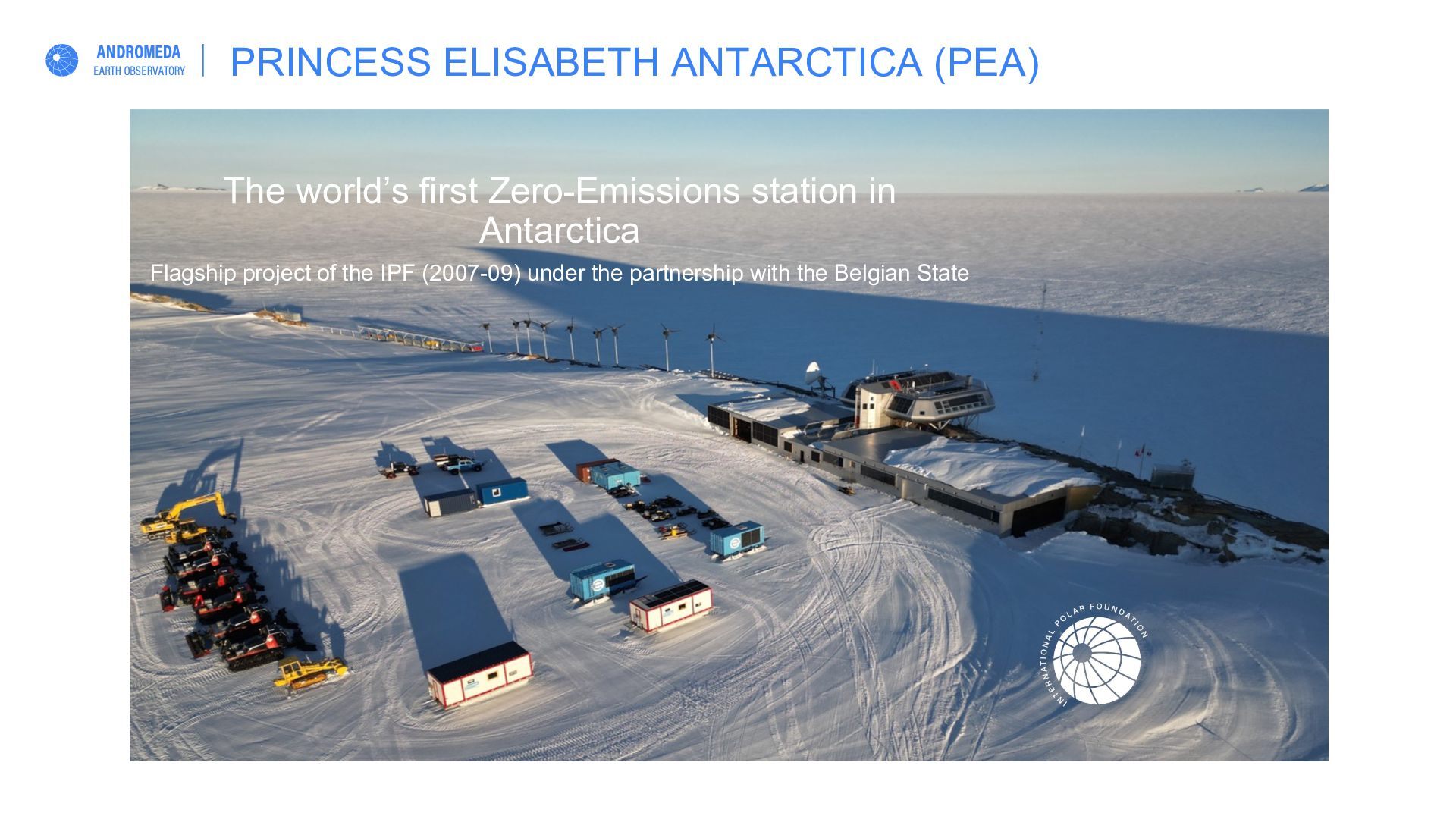
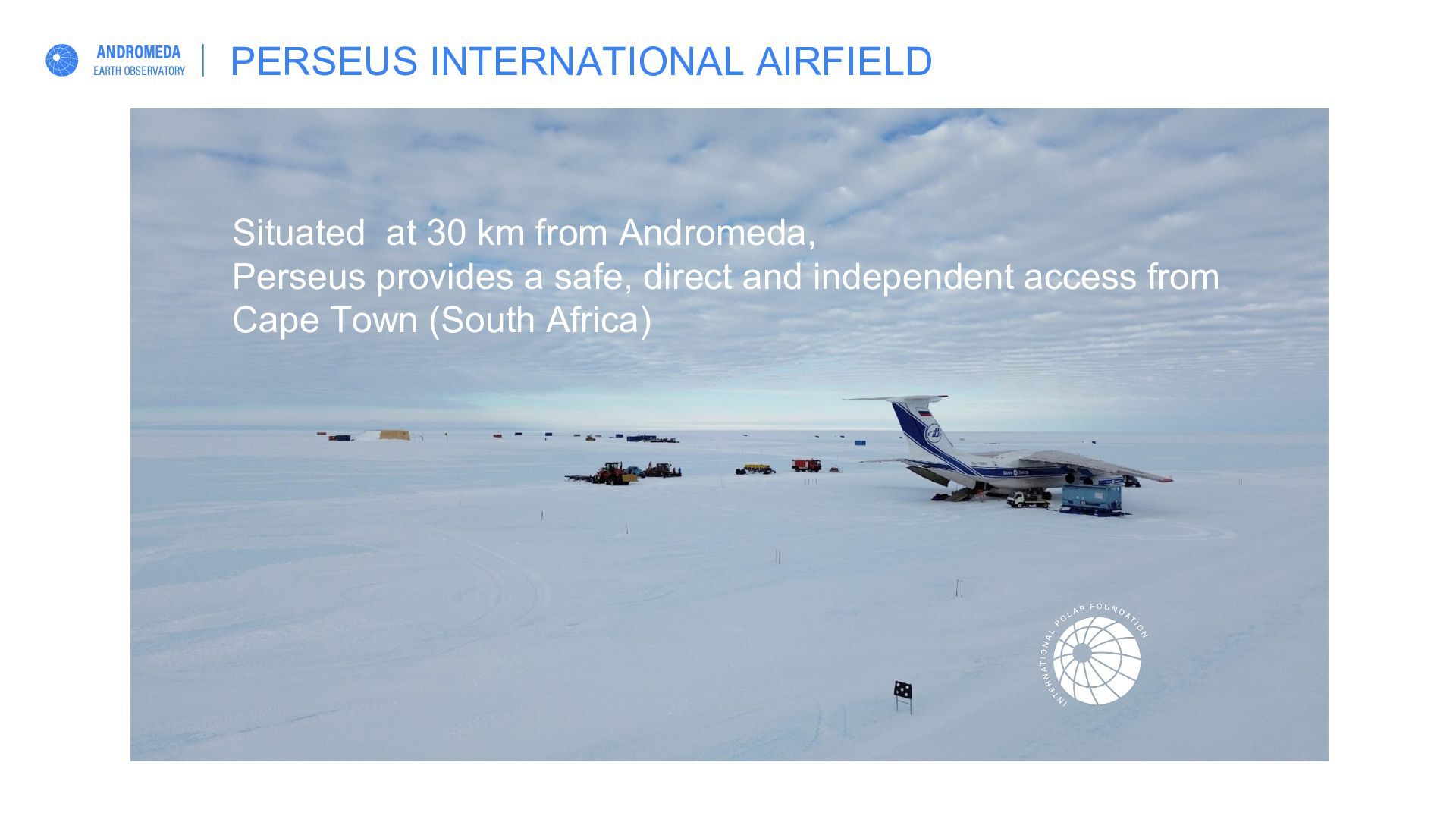
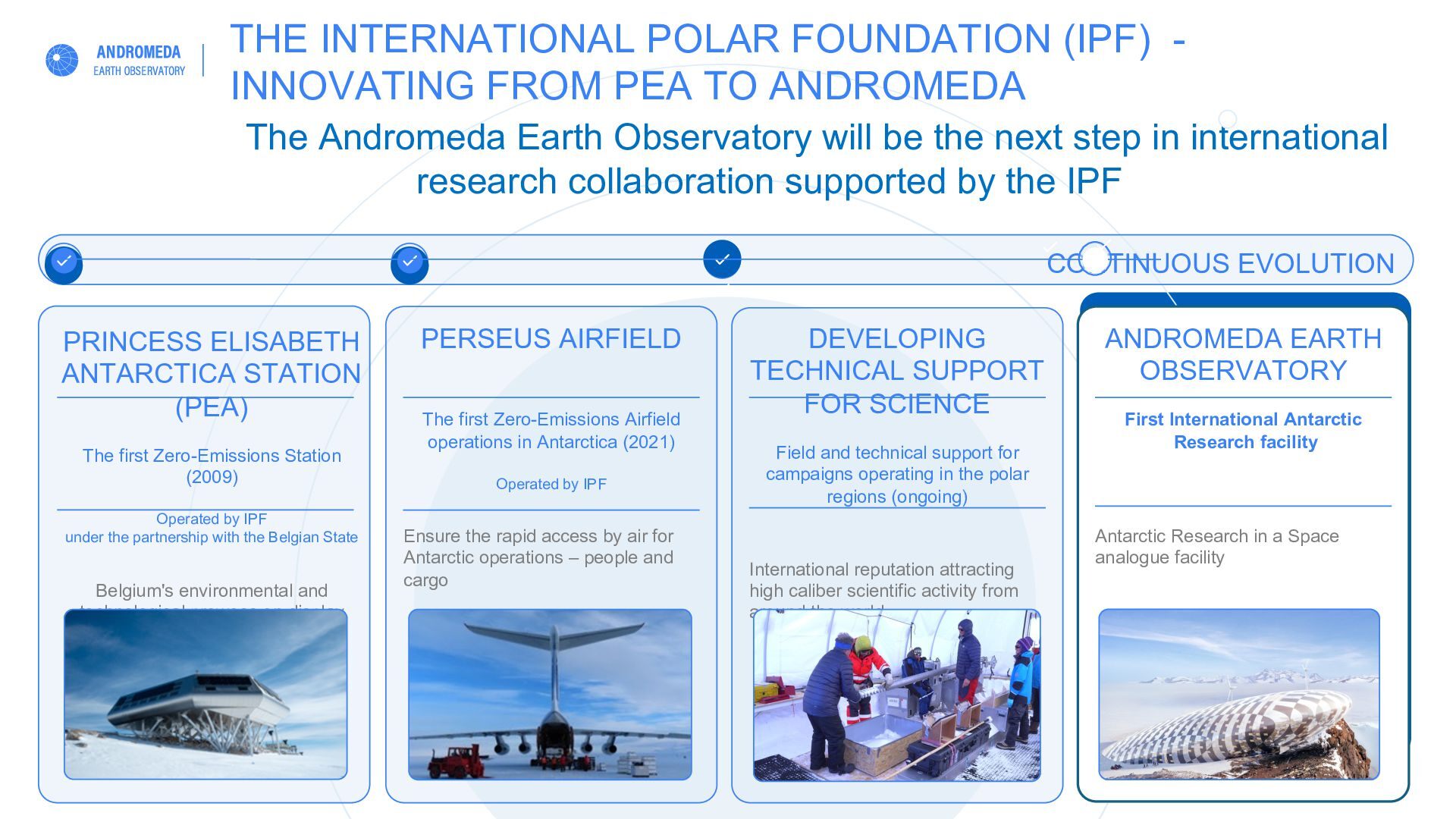
international research collaboration supported by the IPF PRINCESS ELISABETH ANTARCTICA STATION (PEA) The first Zero-Emissions Station (2009) Operated by IPF under the partnership with the Belgian State Belgium's environmental and technological prowess on display ANDROMEDA EARTH OBSERVATORY First International Antarctic Research facility Antarctic Research in a Space analogue facility PERSEUS AIRFIELD The first Zero-Emissions Airfield operations in Antarctica (2021) Operated by IPF Ensure the rapid access by air for Antarctic operations – people and cargo DEVELOPING TECHNICAL SUPPORT FOR SCIENCE Field and technical support for campaigns operating in the polar regions (ongoing) International reputation attracting high caliber scientific activity from around the world THE INTERNATIONAL POLAR FOUNDATION (IPF) - INNOVATING FROM PEA TO ANDROMEDA CONTINUOUS EVOLUTION
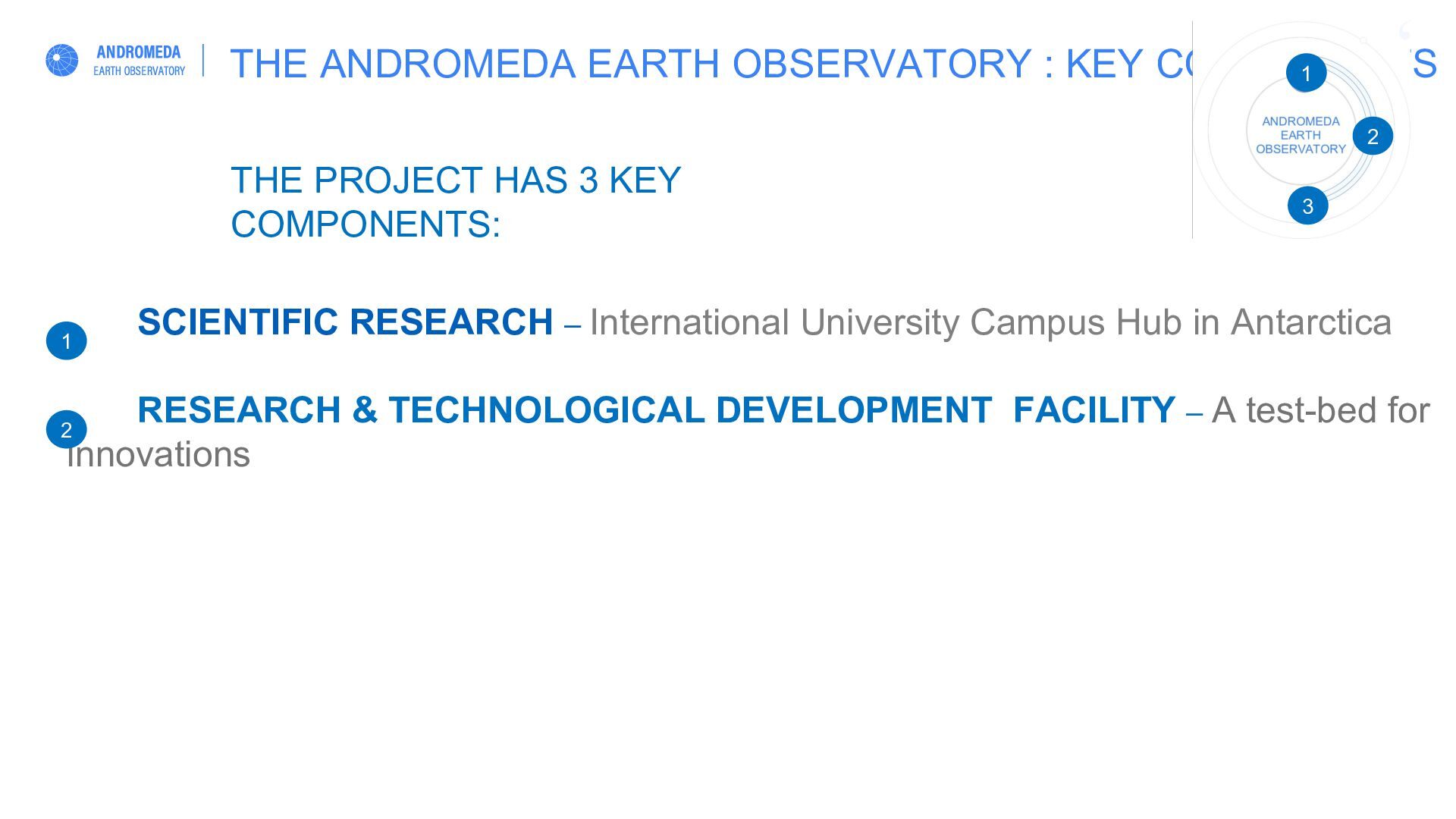
& TECHNOLOGICAL DEVELOPMENT FACILITY – A test-bed for innovations THE ANDROMEDA EARTH OBSERVATORY : KEY COMPONENTS 1 2 1 2 3 THE PROJECT HAS 3 KEY COMPONENTS:
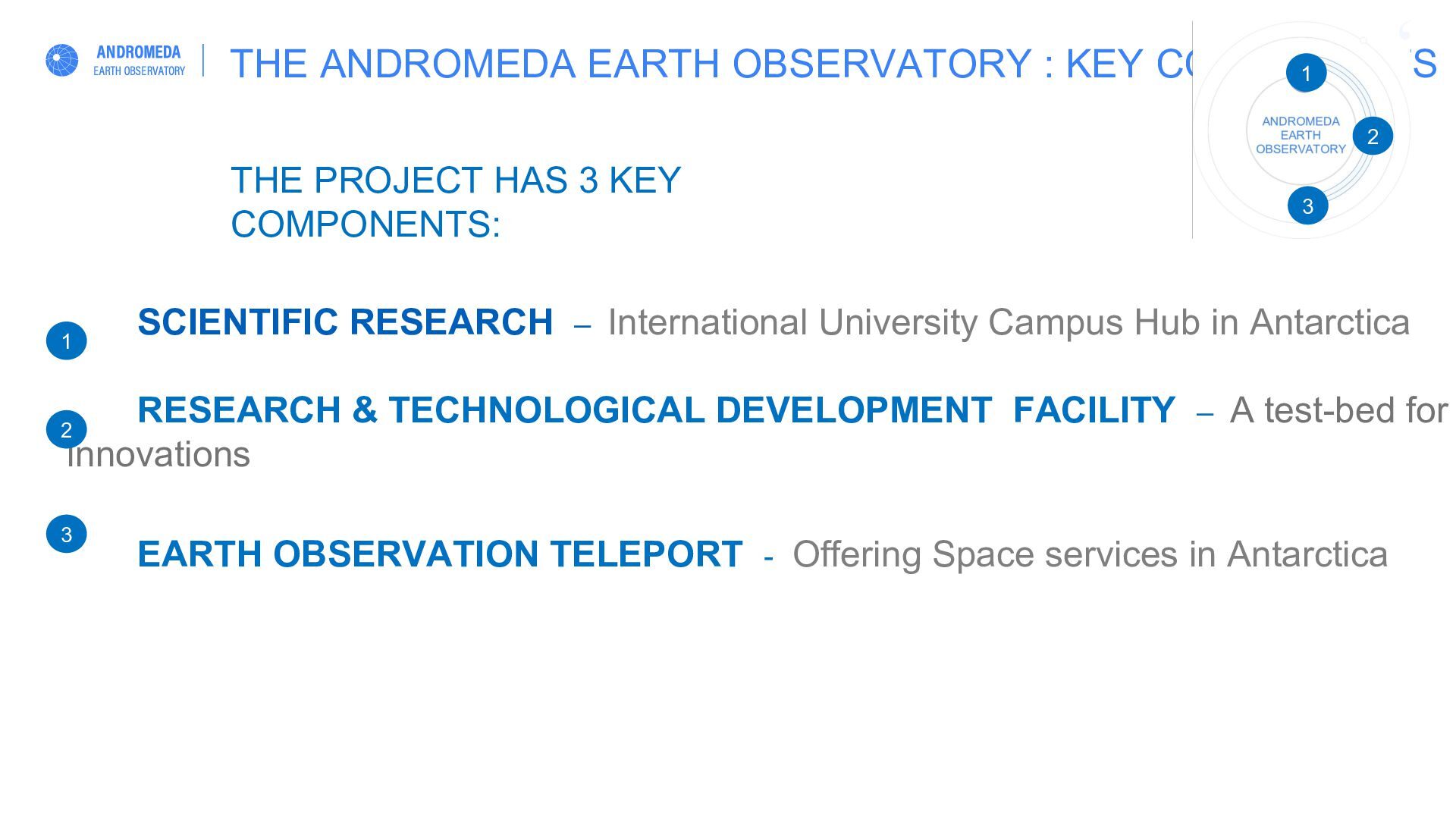
& TECHNOLOGICAL DEVELOPMENT FACILITY – A test-bed for innovations EARTH OBSERVATION TELEPORT - Offering Space services in Antarctica THE ANDROMEDA EARTH OBSERVATORY : KEY COMPONENTS 1 2 3 1 2 3 THE PROJECT HAS 3 KEY COMPONENTS:
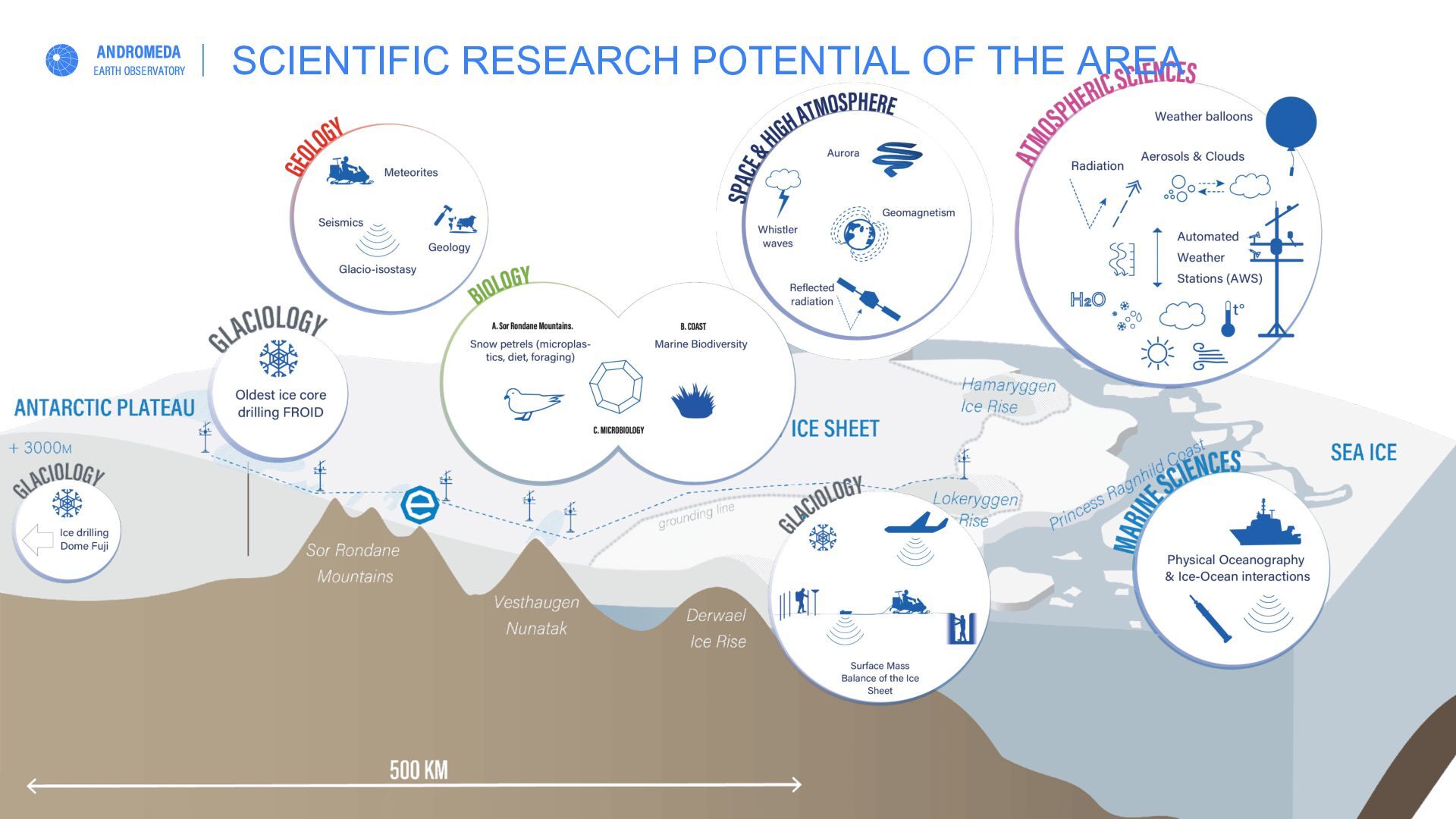
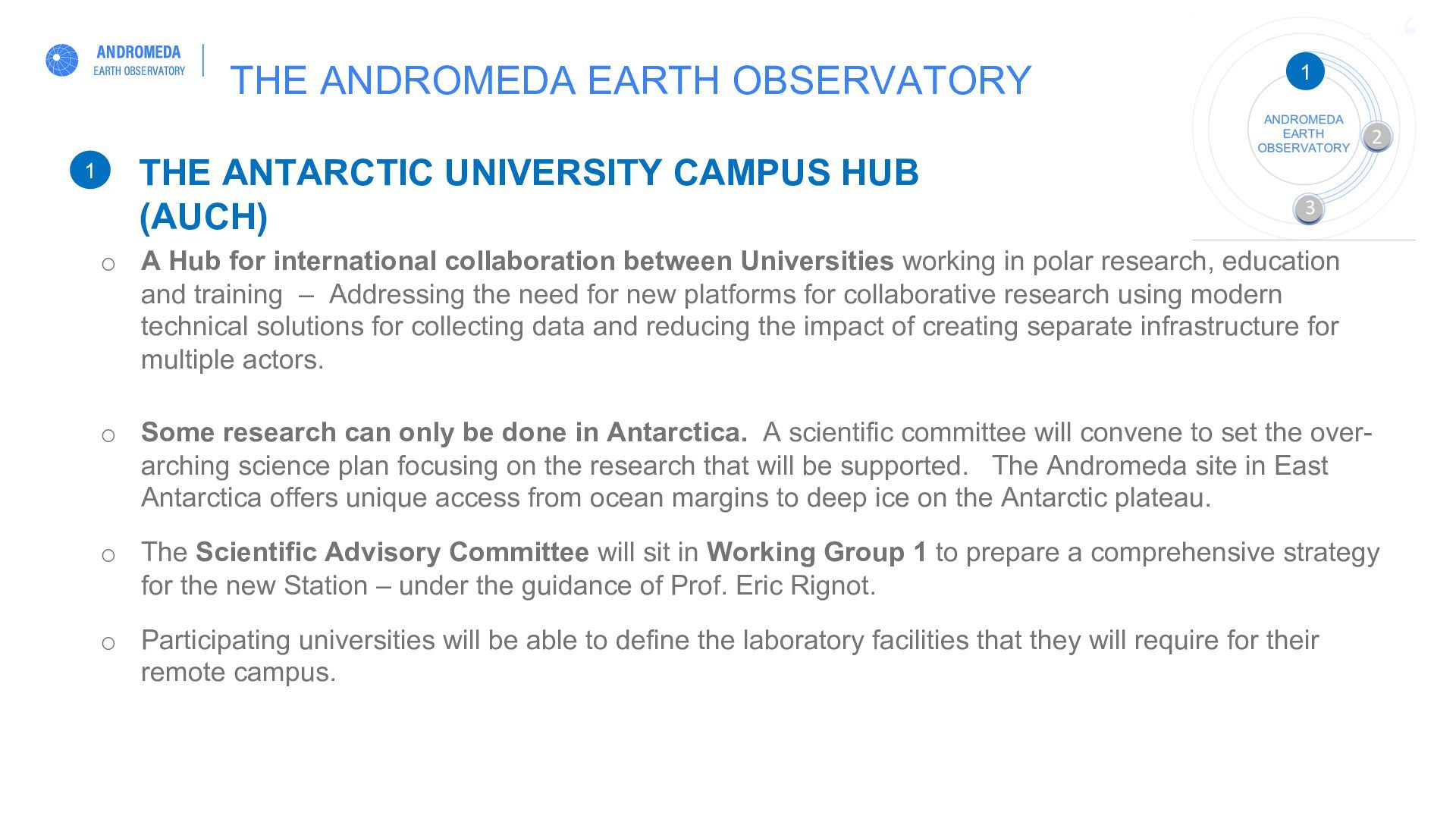
polar research, education and training – Addressing the need for new platforms for collaborative research using modern technical solutions for collecting data and reducing the impact of creating separate infrastructure for multiple actors. o Some research can only be done in Antarctica. A scientific committee will convene to set the over- arching science plan focusing on the research that will be supported. The Andromeda site in East Antarctica offers unique access from ocean margins to deep ice on the Antarctic plateau. o The Scientific Advisory Committee will sit in Working Group 1 to prepare a comprehensive strategy for the new Station – under the guidance of Prof. Eric Rignot. o Participating universities will be able to define the laboratory facilities that they will require for their remote campus. 1 THE ANDROMEDA EARTH OBSERVATORY THE ANTARCTIC UNIVERSITY CAMPUS HUB (AUCH) 1 1
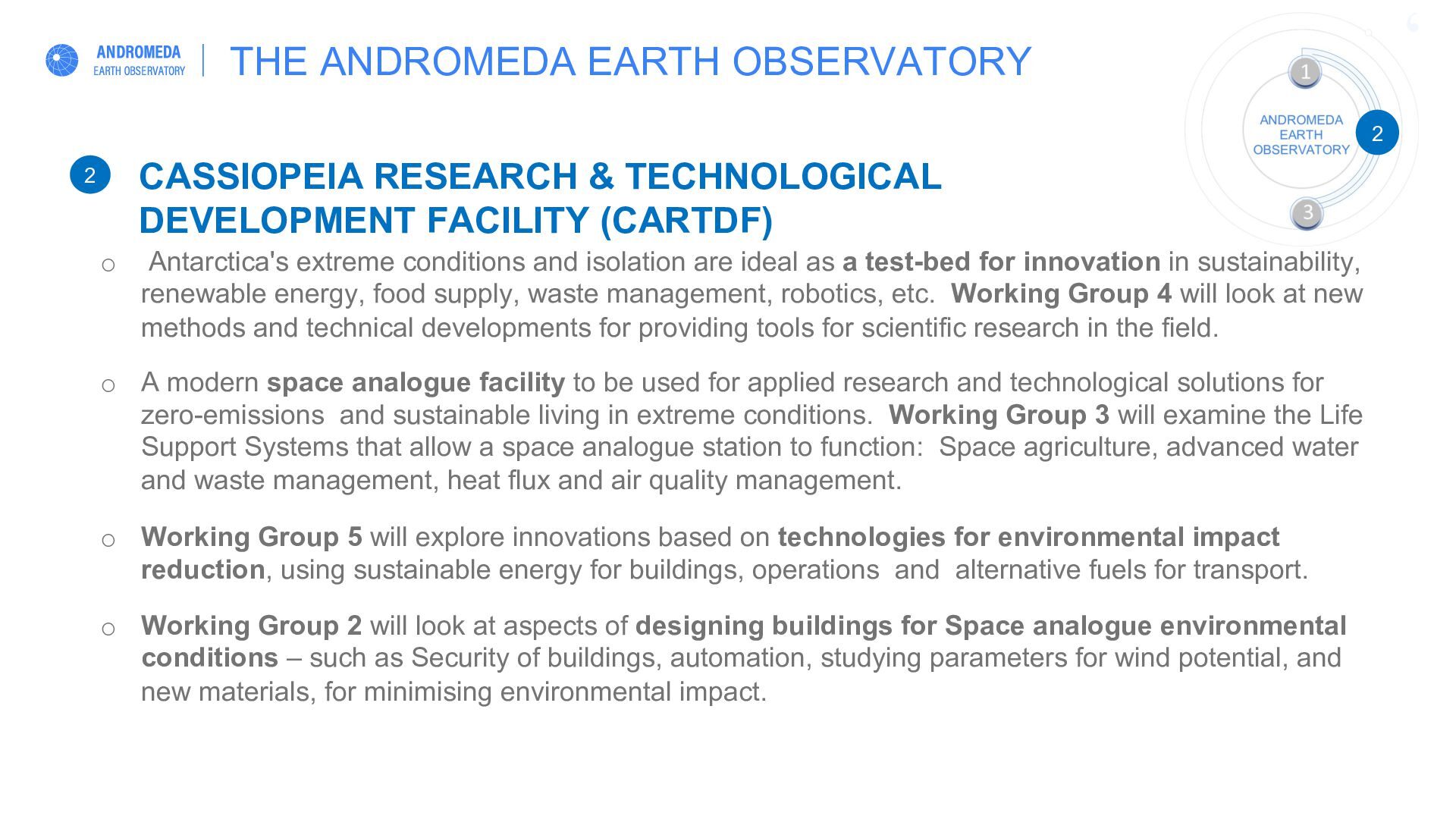
test-bed for innovation in sustainability, renewable energy, food supply, waste management, robotics, etc. Working Group 4 will look at new methods and technical developments for providing tools for scientific research in the field. o A modern space analogue facility to be used for applied research and technological solutions for zero-emissions and sustainable living in extreme conditions. Working Group 3 will examine the Life Support Systems that allow a space analogue station to function: Space agriculture, advanced water and waste management, heat flux and air quality management. o Working Group 5 will explore innovations based on technologies for environmental impact reduction, using sustainable energy for buildings, operations and alternative fuels for transport. o Working Group 2 will look at aspects of designing buildings for Space analogue environmental conditions – such as Security of buildings, automation, studying parameters for wind potential, and new materials, for minimising environmental impact. 2 CASSIOPEIA RESEARCH & TECHNOLOGICAL DEVELOPMENT FACILITY (CARTDF) THE ANDROMEDA EARTH OBSERVATORY 2 2
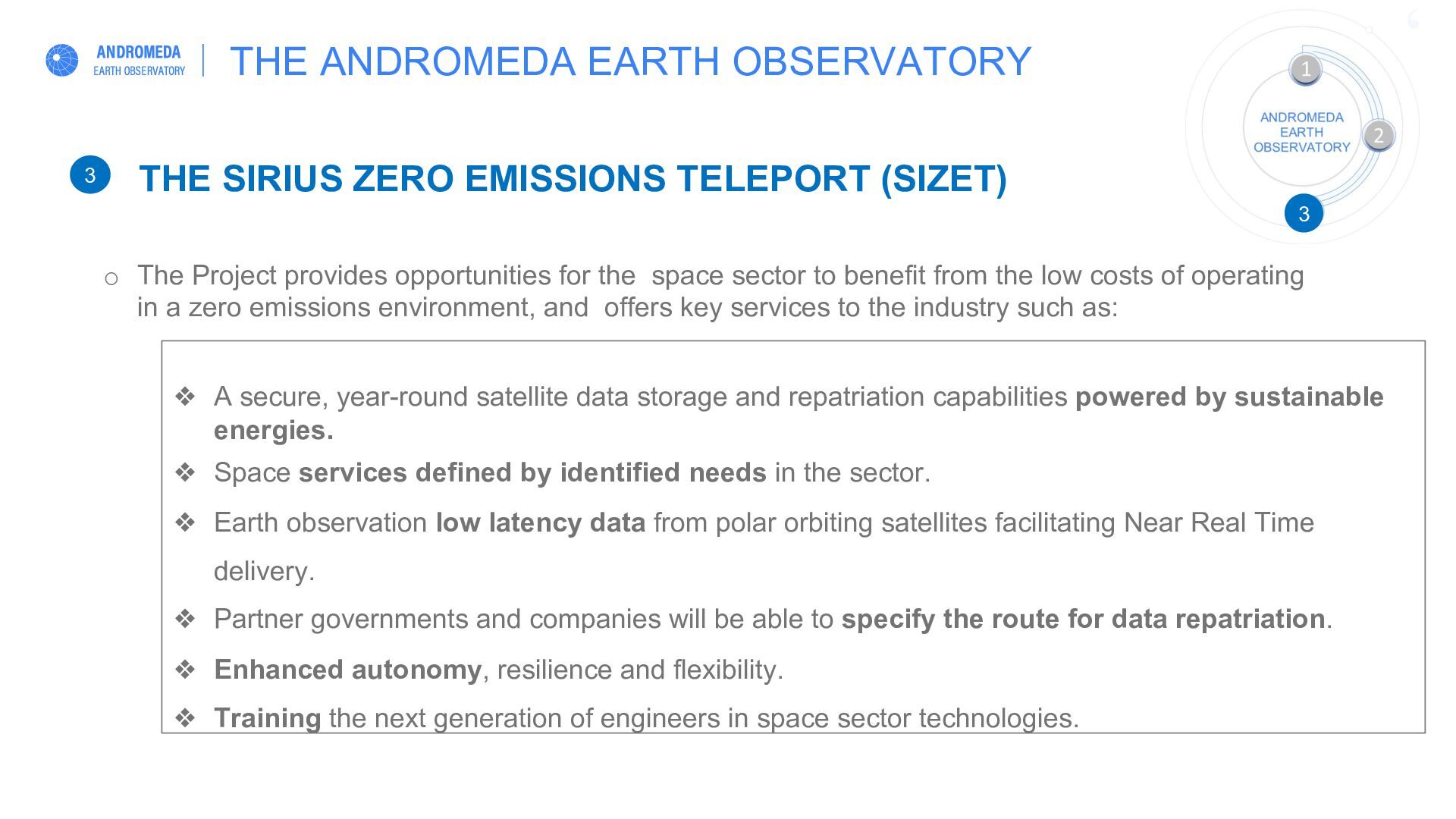
benefit from the low costs of operating in a zero emissions environment, and offers key services to the industry such as: THE SIRIUS ZERO EMISSIONS TELEPORT (SIZET) THE ANDROMEDA EARTH OBSERVATORY ❖ A secure, year-round satellite data storage and repatriation capabilities powered by sustainable energies. ❖ Space services defined by identified needs in the sector. ❖ Earth observation low latency data from polar orbiting satellites facilitating Near Real Time delivery. ❖ Partner governments and companies will be able to specify the route for data repatriation. ❖ Enhanced autonomy, resilience and flexibility. ❖ Training the next generation of engineers in space sector technologies. 3 3
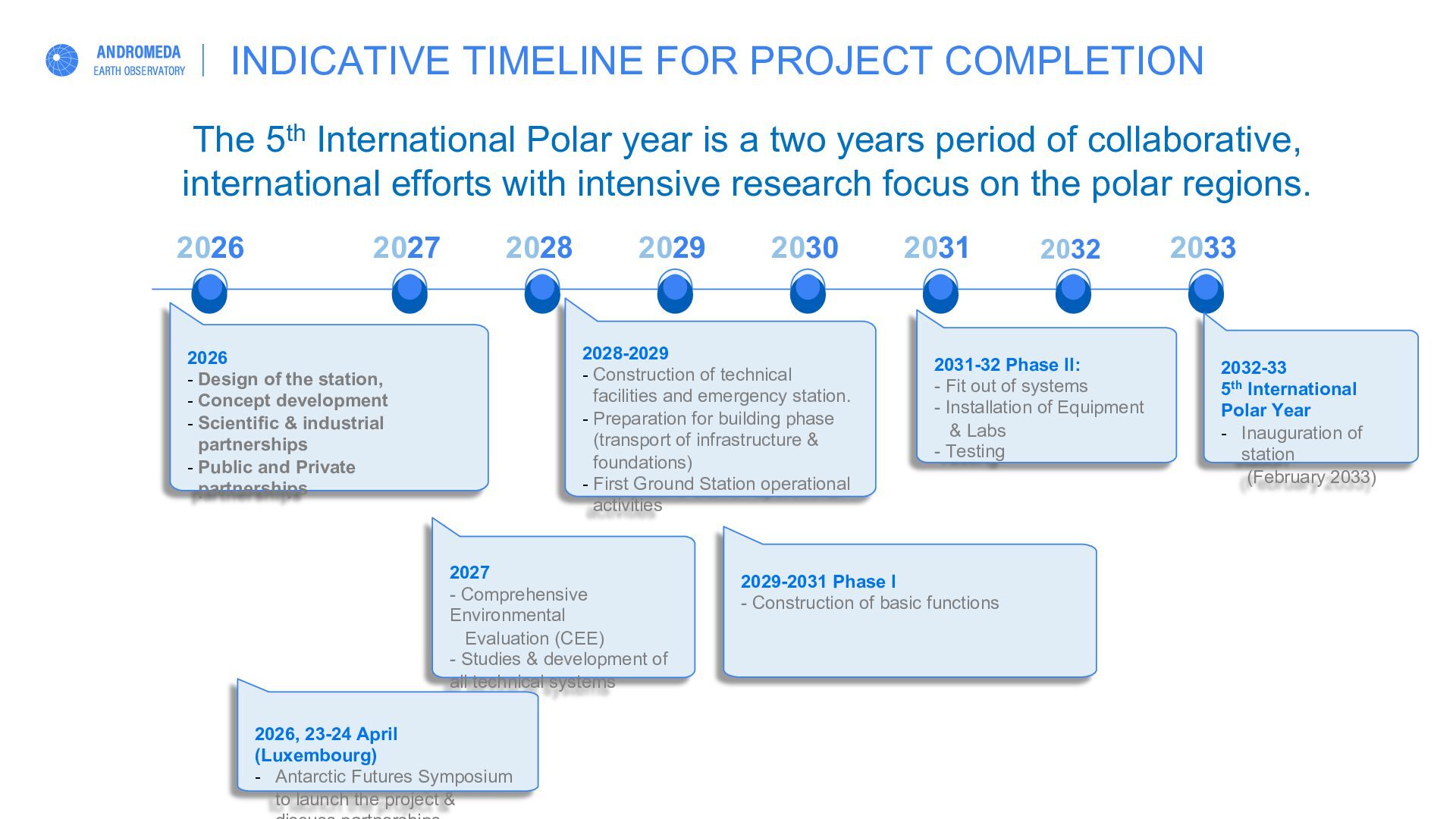
station, - Concept development - Scientific & industrial partnerships - Public and Private partnerships 2026 2027 2028 2029 2030 2031 2032 2033 2031-32 Phase II: - Fit out of systems - Installation of Equipment & Labs - Testing 2027 - Comprehensive Environmental Evaluation (CEE) - Studies & development of all technical systems 2032-33 5th International Polar Year - Inauguration of station (February 2033) The 5th International Polar year is a two years period of collaborative, international efforts with intensive research focus on the polar regions. 2026, 23-24 April (Luxembourg) - Antarctic Futures Symposium to launch the project & 2028-2029 - Construction of technical facilities and emergency station. - Preparation for building phase (transport of infrastructure & foundations) - First Ground Station operational activities 2029-2031 Phase I - Construction of basic functions
international vision o The Andromeda University Hub will host partner institutions on a dedicated remote campus. o Andromeda will bring together researchers from universities, institutes and space sectors from around the world and will facilitate technological innovation with industrial partners. o Offers joint infrastructure management to countries wishing to engage in Antarctic research activities. o Supports bids for Consultative Status at the Antarctic Treaty. o Provides access to a state-of-the-art scientific research station operated entirely with renewables, with a flexible technical and logistic support to deliver research outcomes in extreme conditions. o Builds capacity in research and sustainability in extreme climates with participating Universities and Institutes. o Provides services for Earth Observation, repatriating Earth Observation and Situational Awareness Data from new polar satellites to address bottlenecks in satellite-based services.


 ipfevents
 tagtag
 gkazunii
 xspa2012
 estie
estie
 enakai00
.jpg) lychee1223
lychee1223
 i2tsuki
 trycycle
 sshimizu2006
 ykiyota
 62gerente
 baasie
 lfama
lfama
 aleyda
 nikkihalliwell
 bkeepers
 bermonpainter
 jcasabona
 samanthasiow
 trishagee
 marktimemedia