Upgrade to Pro — share decks privately, control downloads, hide ads and more …

ETCS vs CBTC - Intro to the European Train Cont...

ETCS vs CBTC - Intro to the European Train Control System

Next Gen Rail Systems Conference 2026, Railway Age
October 21, 2026 - Philadelphia, PA

Joffrey Lauthier

October 21, 2026

Transcript

11 slides
  1. ETCS or CBTC? Intro to the European Train Control System

    Joffrey Lauthier Head of Rail North America
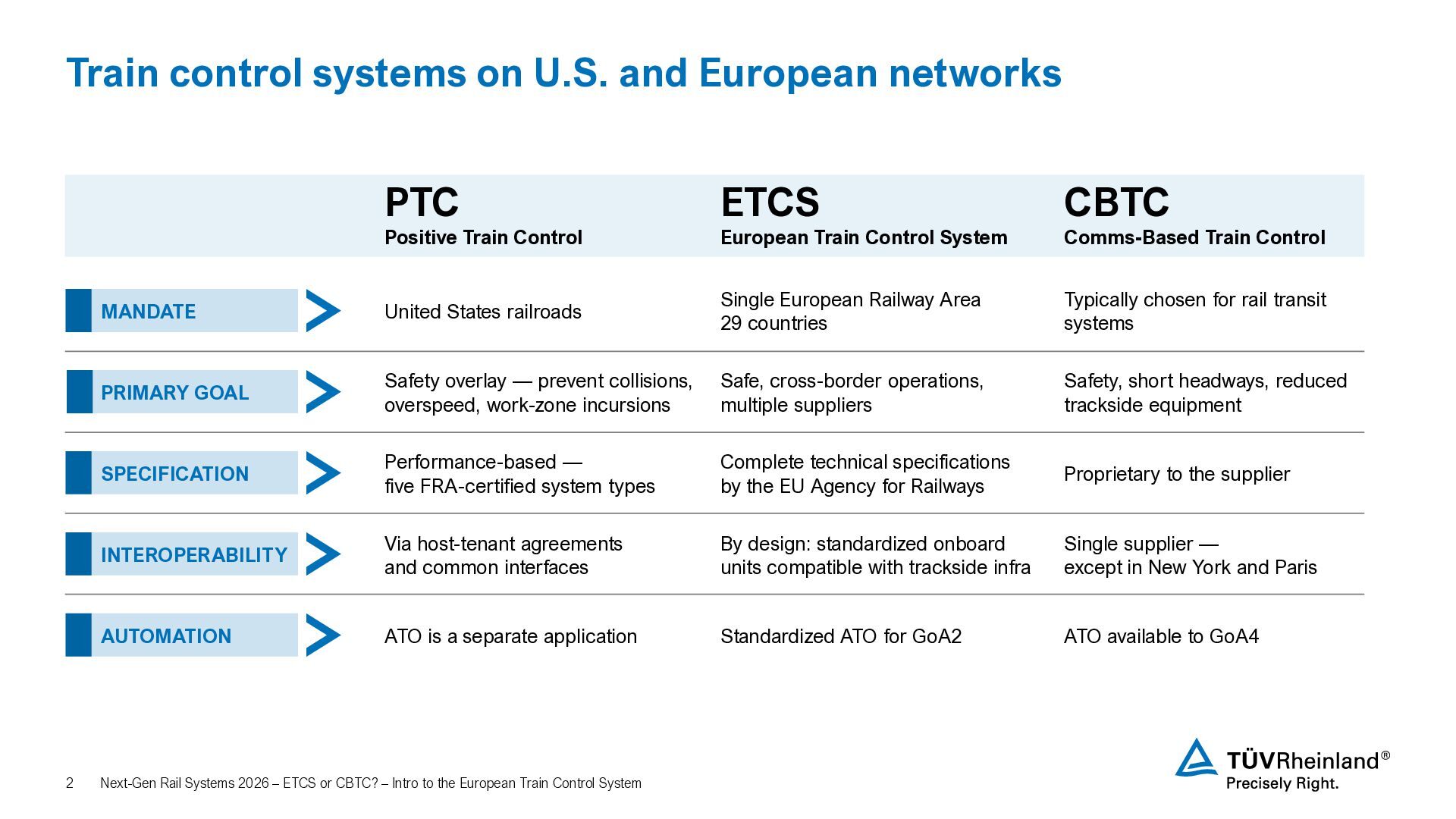
  2. Train control systems on U.S. and European networks PTC ETCS

    CBTC Positive Train Control European Train Control System Comms-Based Train Control 1 MANDATE United States railroads Single European Railway Area 29 countries Typically chosen for rail transit systems 2 PRIMARY GOAL Safety overlay — prevent collisions, overspeed, work-zone incursions Safe, cross-border operations, multiple suppliers Safety, short headways, reduced trackside equipment 3 SPECIFICATION Performance-based — five FRA-certified system types Complete technical specifications by the EU Agency for Railways Proprietary to the supplier 4 INTEROPERABILITY Via host-tenant agreements and common interfaces By design: standardized onboard units compatible with trackside infra Single supplier — except in New York and Paris 5 AUTOMATION ATO is a separate application Standardized ATO for GoA2 ATO available to GoA4 2 Next-Gen Rail Systems 2026 – ETCS or CBTC? – Intro to the European Train Control System
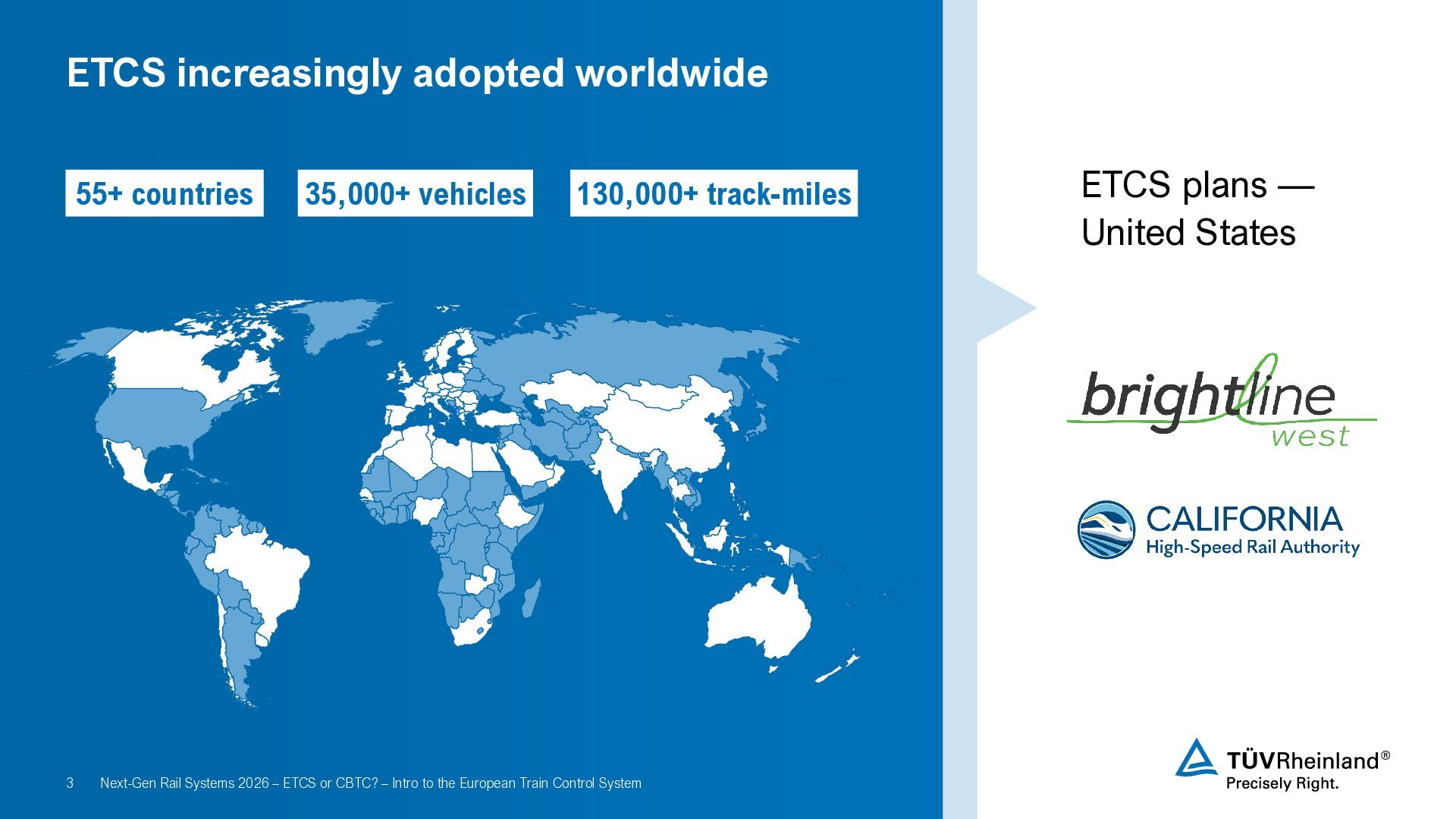
  3. ETCS increasingly adopted worldwide 55+ countries 3 35,000+ vehicles 130,000+

    track-miles Next-Gen Rail Systems 2026 – ETCS or CBTC? – Intro to the European Train Control System ETCS plans — United States
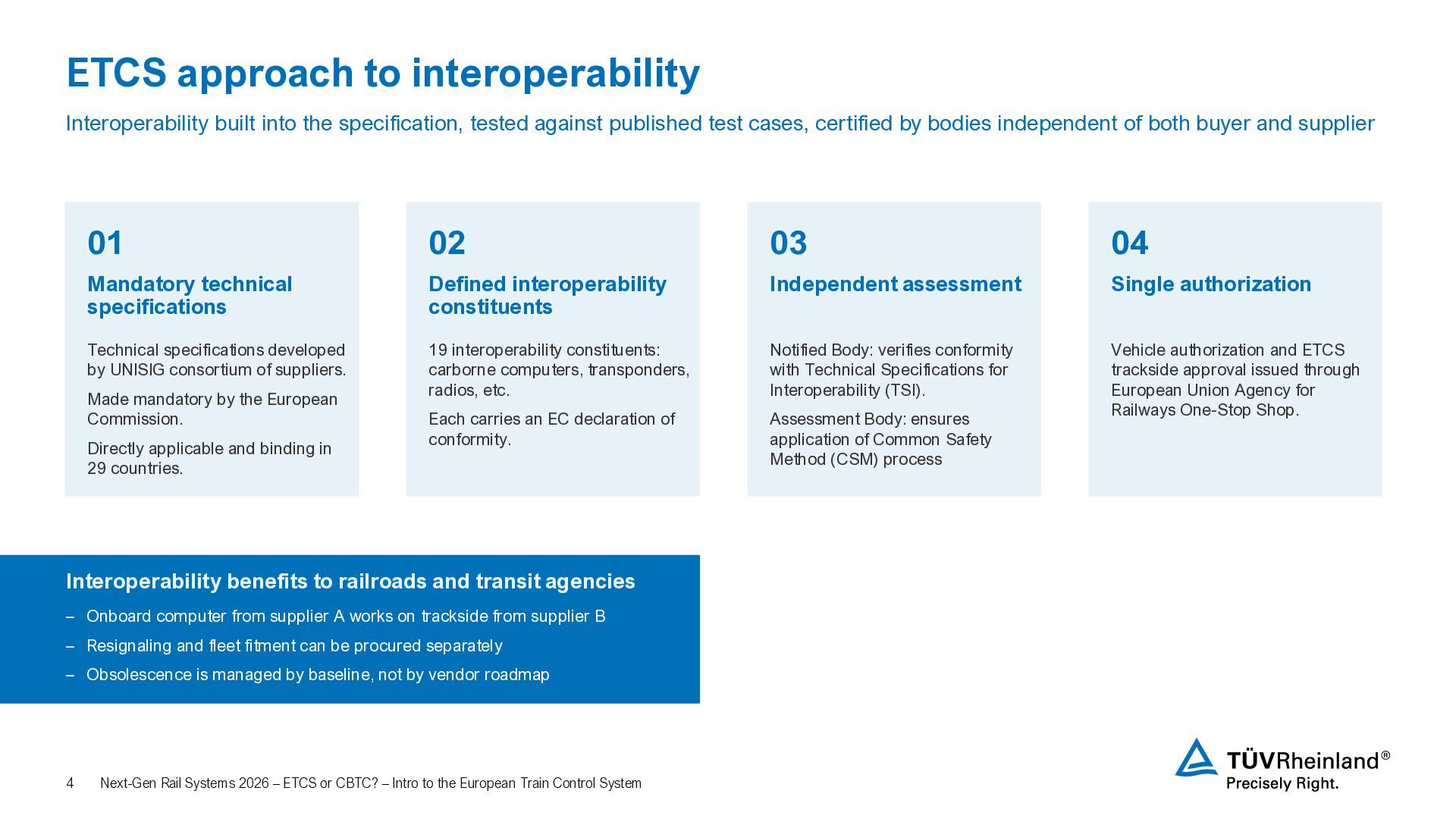
  4. ETCS approach to interoperability Interoperability built into the specification, tested

    against published test cases, certified by bodies independent of both buyer and supplier 01 02 03 04 Mandatory technical specifications Defined interoperability constituents Independent assessment Single authorization Technical specifications developed by UNISIG consortium of suppliers. 19 interoperability constituents: carborne computers, transponders, radios, etc. Notified Body: verifies conformity with Technical Specifications for Interoperability (TSI). Each carries an EC declaration of conformity. Assessment Body: ensures application of Common Safety Method (CSM) process Vehicle authorization and ETCS trackside approval issued through European Union Agency for Railways One-Stop Shop. Made mandatory by the European Commission. Directly applicable and binding in 29 countries. Interoperability benefits to railroads and transit agencies – Onboard computer from supplier A works on trackside from supplier B – Resignaling and fleet fitment can be procured separately – Obsolescence is managed by baseline, not by vendor roadmap 4 Next-Gen Rail Systems 2026 – ETCS or CBTC? – Intro to the European Train Control System
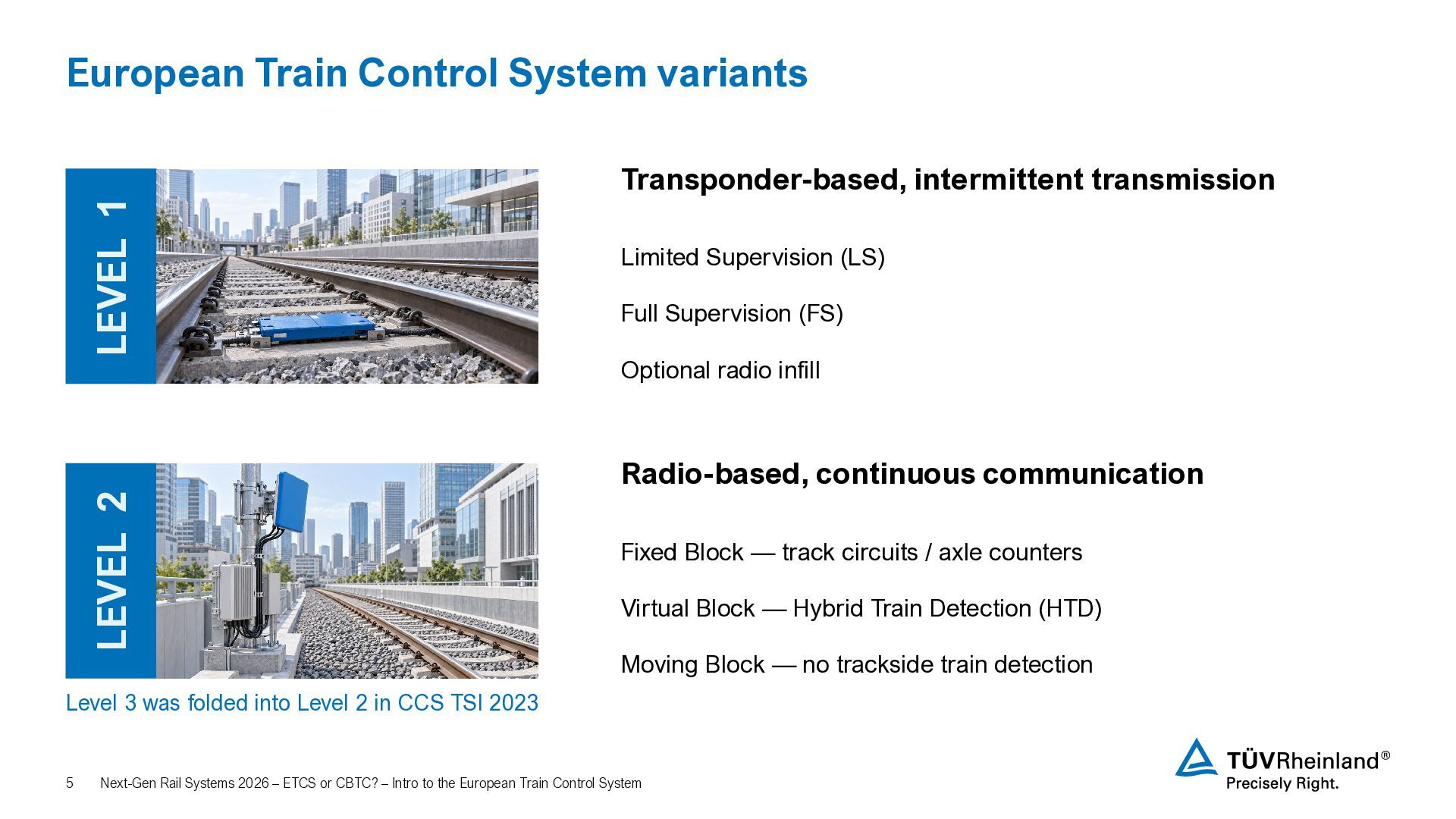
  5. LEVEL 2 LEVEL 1 European Train Control System variants Transponder-based,

    intermittent transmission Limited Supervision (LS) Full Supervision (FS) Optional radio infill Radio-based, continuous communication Fixed Block — track circuits / axle counters Virtual Block — Hybrid Train Detection (HTD) Moving Block — no trackside train detection Level 3 was folded into Level 2 in CCS TSI 2023 5 Next-Gen Rail Systems 2026 – ETCS or CBTC? – Intro to the European Train Control System
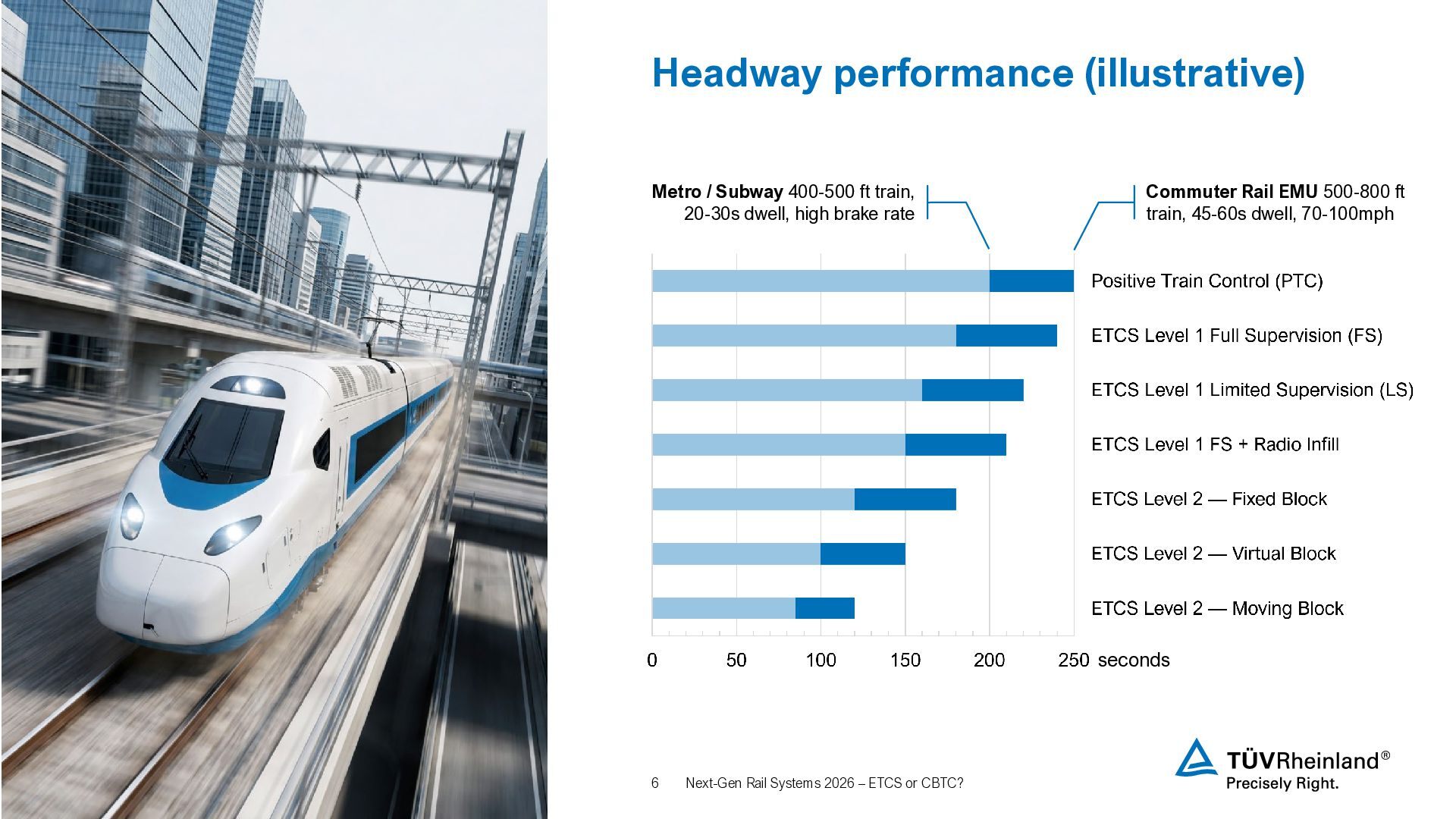
  6. Headway performance (illustrative) Metro / Subway 400-500 ft train, 20-30s

    dwell, high brake rate Commuter Rail EMU 500-800 ft train, 45-60s dwell, 70-100mph seconds 6 Next-Gen Rail Systems 2026 – ETCS or CBTC?
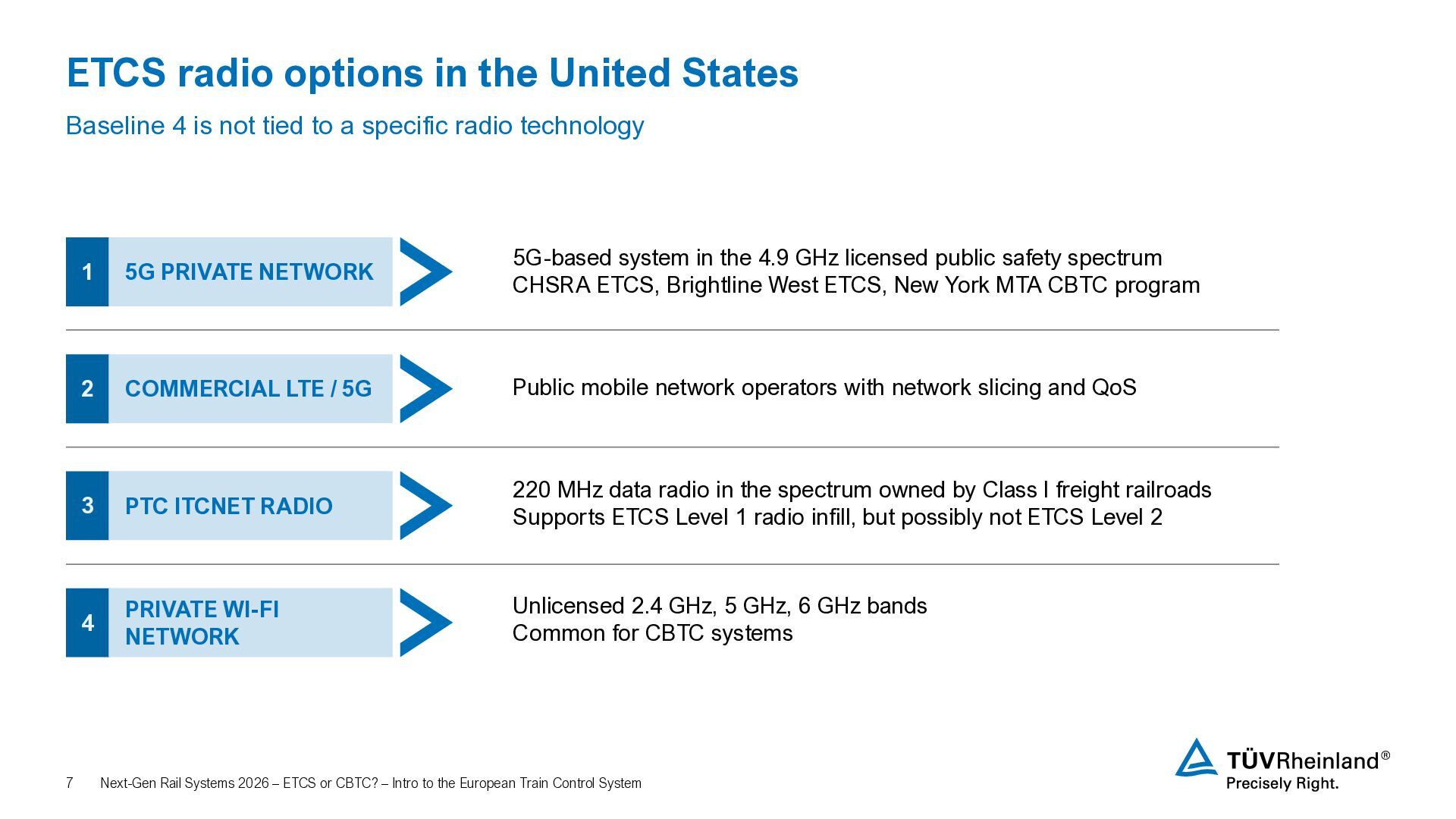
  7. ETCS radio options in the United States Baseline 4 is

    not tied to a specific radio technology 7 1 5G PRIVATE NETWORK 5G-based system in the 4.9 GHz licensed public safety spectrum CHSRA ETCS, Brightline West ETCS, New York MTA CBTC program 2 COMMERCIAL LTE / 5G Public mobile network operators with network slicing and QoS 3 PTC ITCNET RADIO 220 MHz data radio in the spectrum owned by Class I freight railroads Supports ETCS Level 1 radio infill, but possibly not ETCS Level 2 4 PRIVATE WI-FI NETWORK Unlicensed 2.4 GHz, 5 GHz, 6 GHz bands Common for CBTC systems Next-Gen Rail Systems 2026 – ETCS or CBTC? – Intro to the European Train Control System
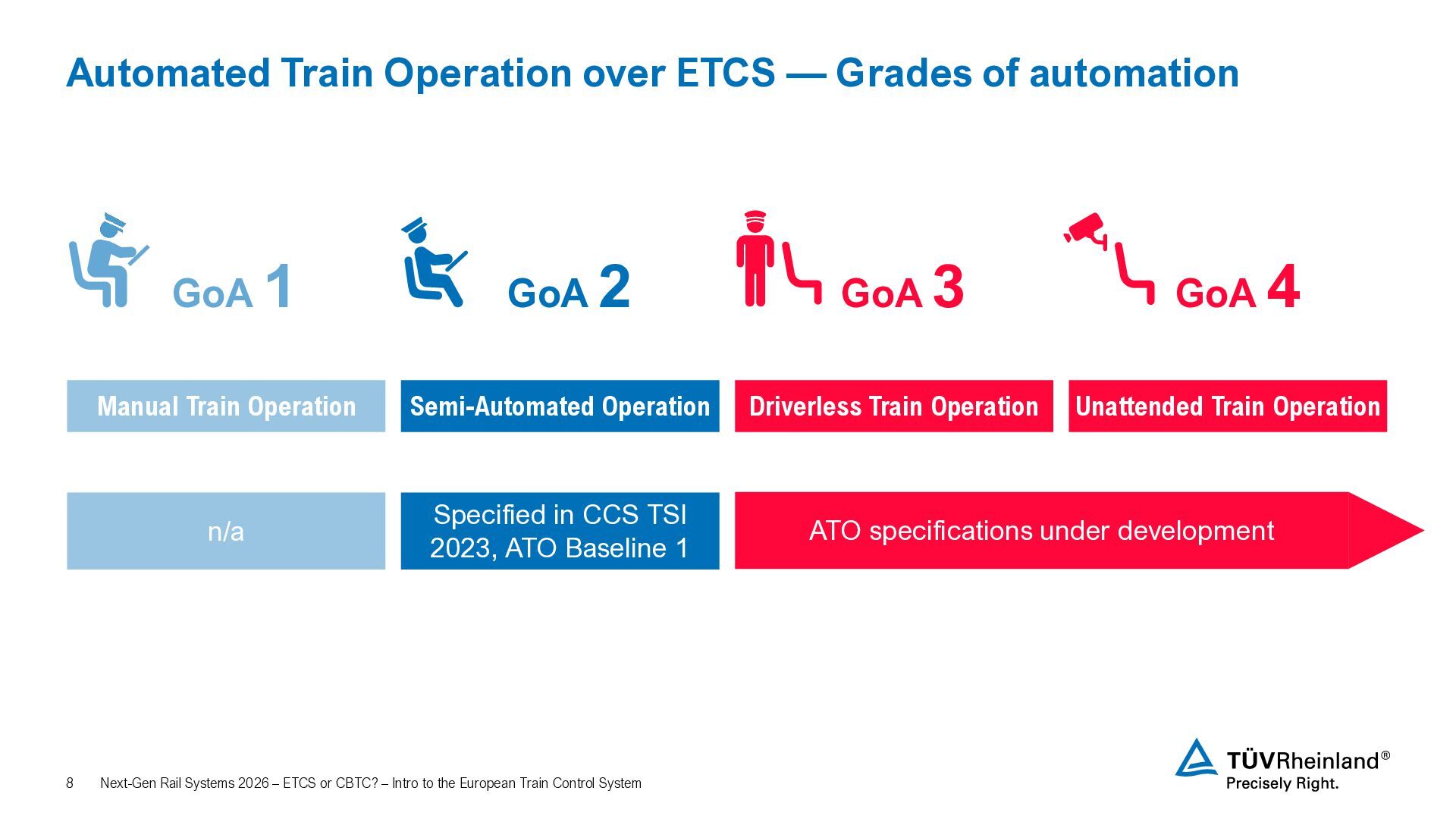
  8. Automated Train Operation over ETCS — Grades of automation 8

    GoA 1 GoA 2 GoA 3 GoA 4 Manual Train Operation Semi-Automated Operation Driverless Train Operation Unattended Train Operation n/a Specified in CCS TSI 2023, ATO Baseline 1 Next-Gen Rail Systems 2026 – ETCS or CBTC? – Intro to the European Train Control System ATO specifications under development
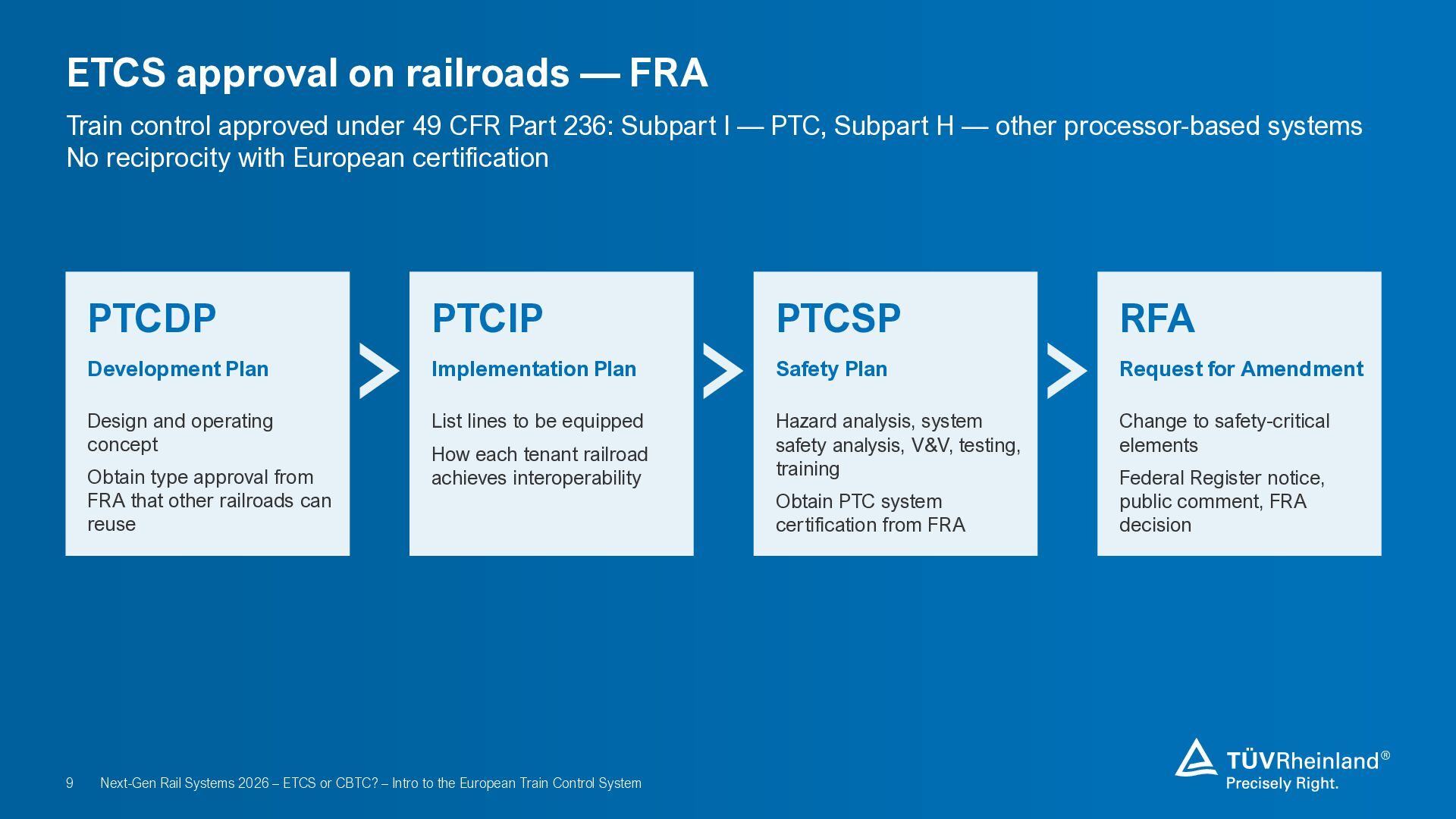
  9. ETCS approval on railroads — FRA Train control approved under

    49 CFR Part 236: Subpart I — PTC, Subpart H — other processor-based systems No reciprocity with European certification PTCDP PTCIP PTCSP RFA Development Plan Implementation Plan Safety Plan Request for Amendment Design and operating concept List lines to be equipped Hazard analysis, system safety analysis, V&V, testing, training Change to safety-critical elements Obtain type approval from FRA that other railroads can reuse 9 How each tenant railroad achieves interoperability Next-Gen Rail Systems 2026 – ETCS or CBTC? – Intro to the European Train Control System Obtain PTC system certification from FRA Federal Register notice, public comment, FRA decision
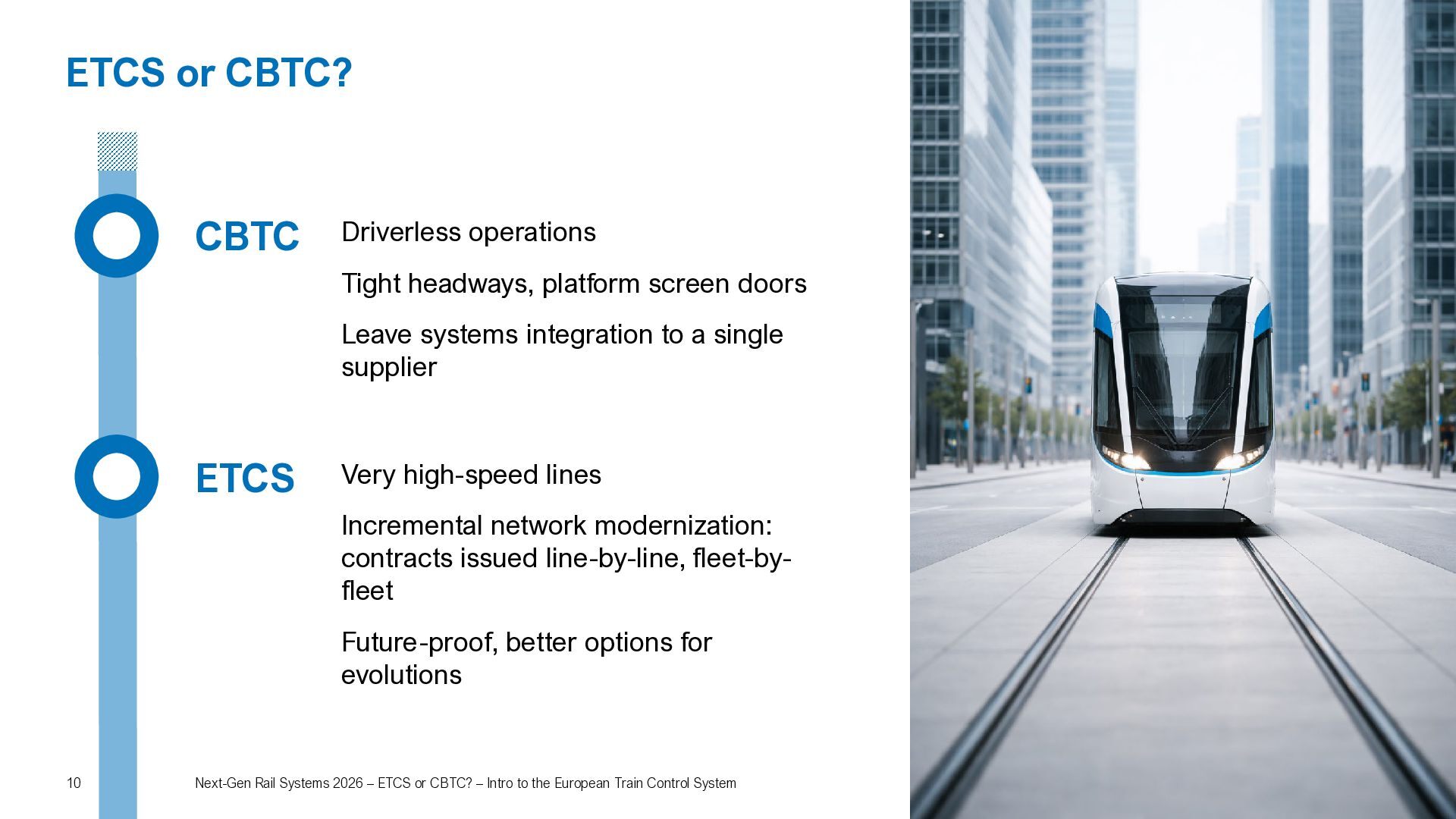
  10. ETCS or CBTC? CBTC Driverless operations Tight headways, platform screen

    doors Leave systems integration to a single supplier ETCS Very high-speed lines Incremental network modernization: contracts issued line-by-line, fleet-byfleet Future-proof, better options for evolutions 10 Next-Gen Rail Systems 2026 – ETCS or CBTC? – Intro to the European Train Control System

More Decks by Joffrey Lauthier

Other Decks in Technology