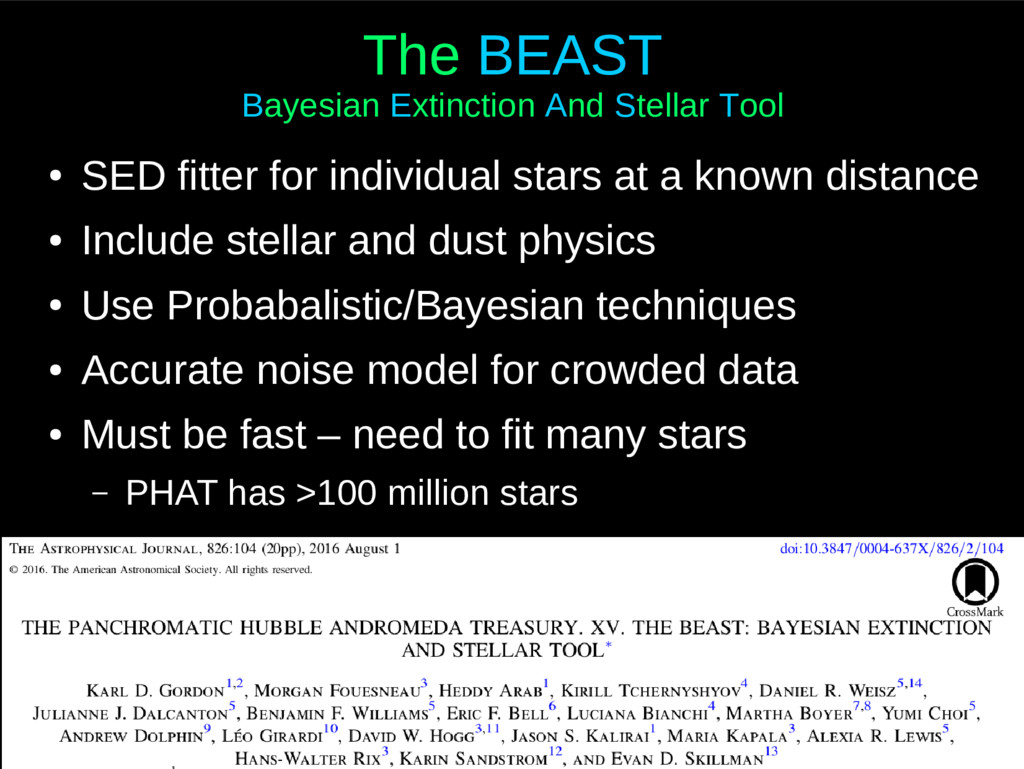
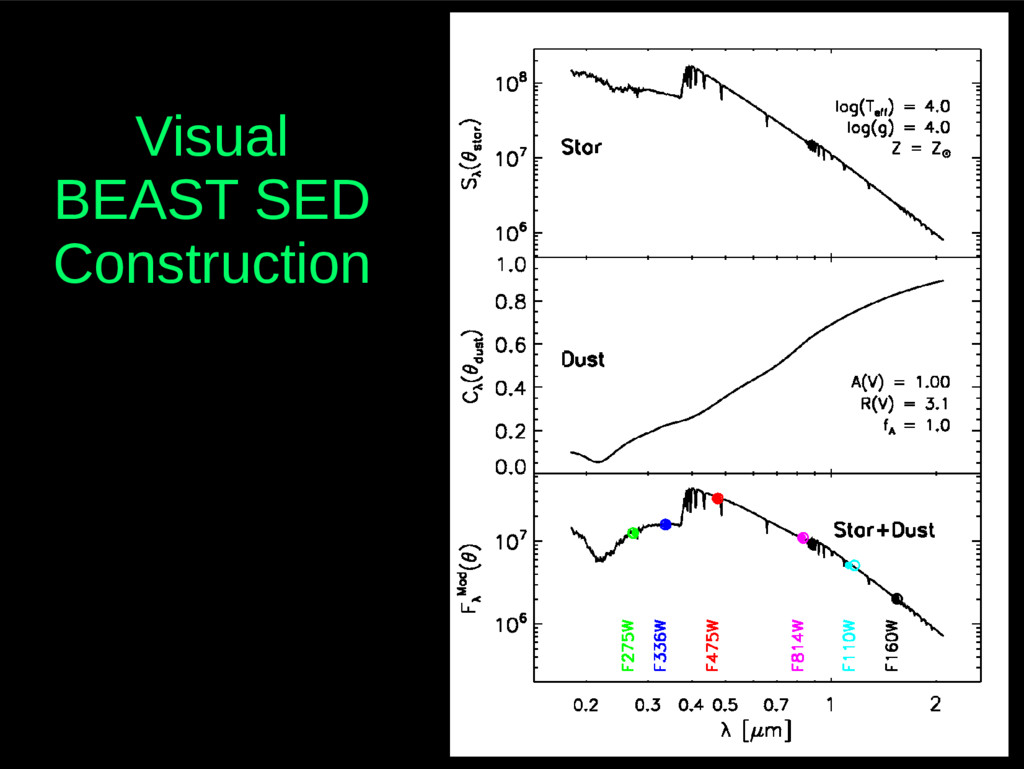
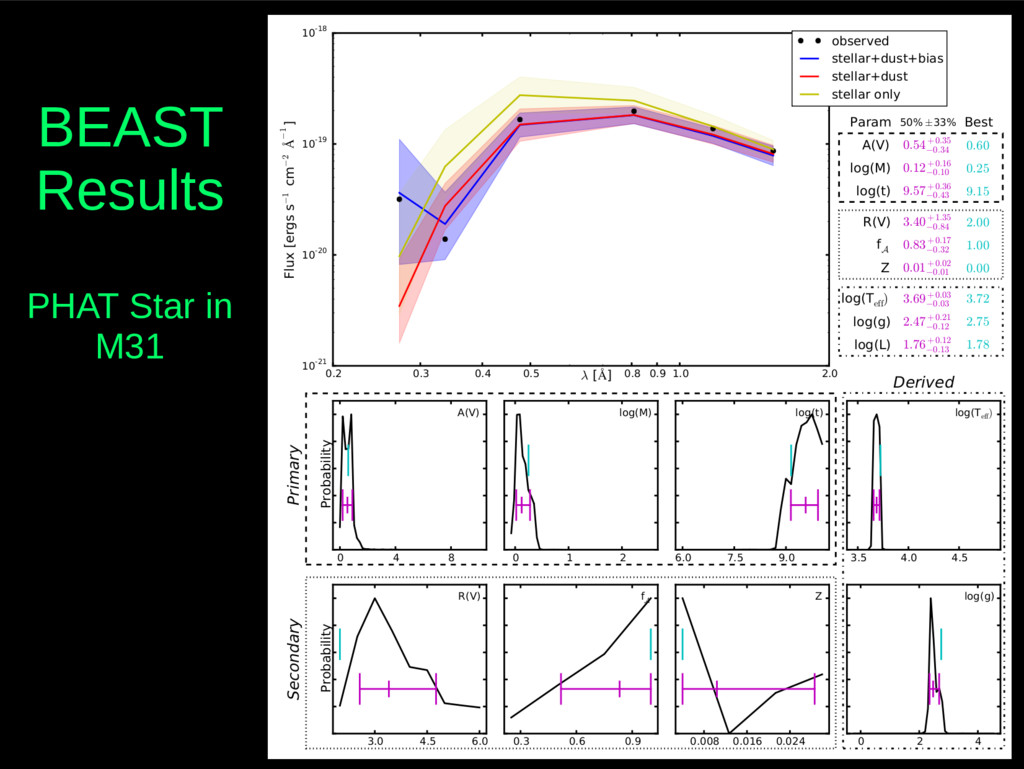
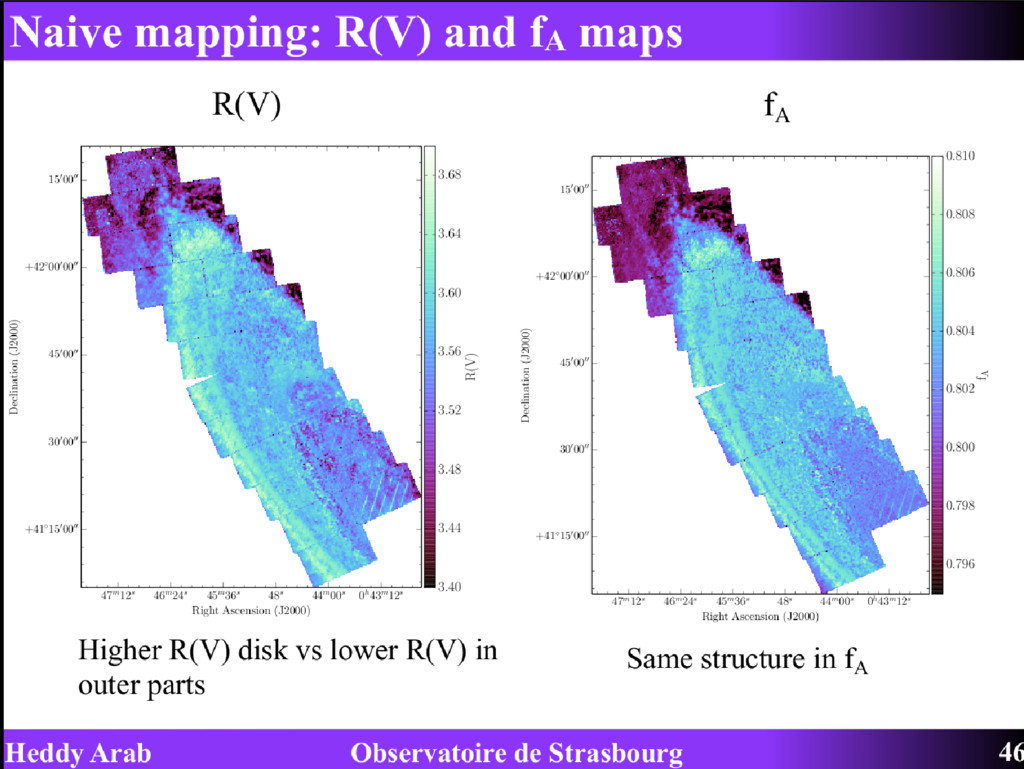
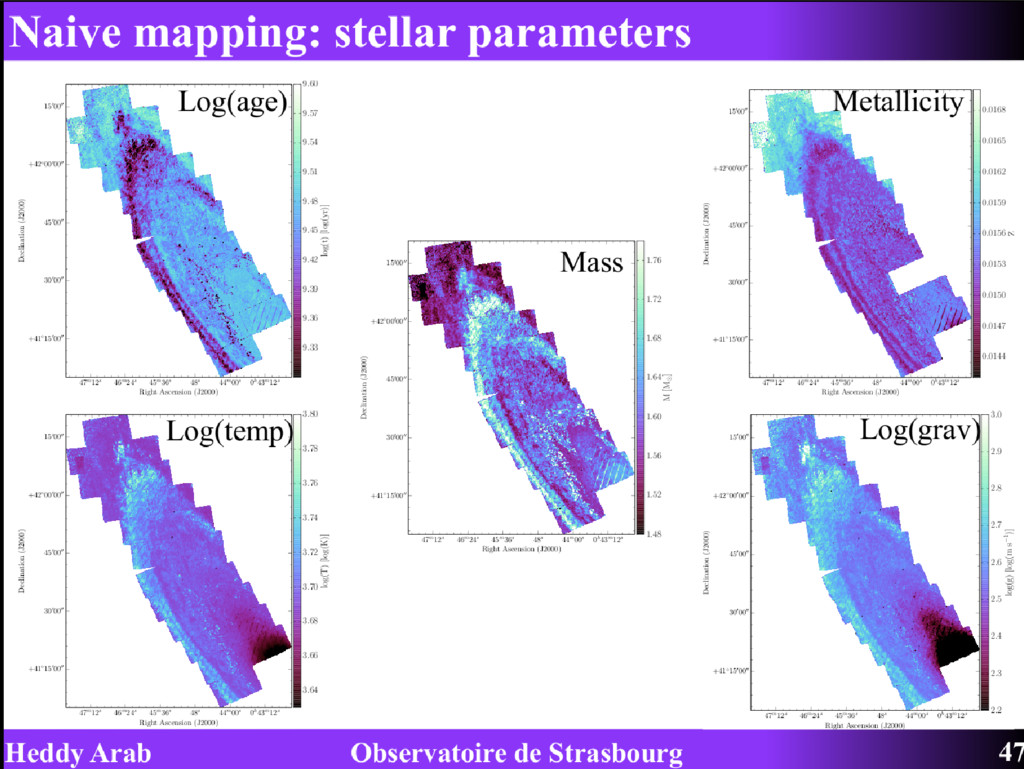
for individual stars at a known distance • Include stellar and dust physics • Use Probabalistic/Bayesian techniques • Accurate noise model for crowded data • Must be fast – need to fit many stars – PHAT has >100 million stars
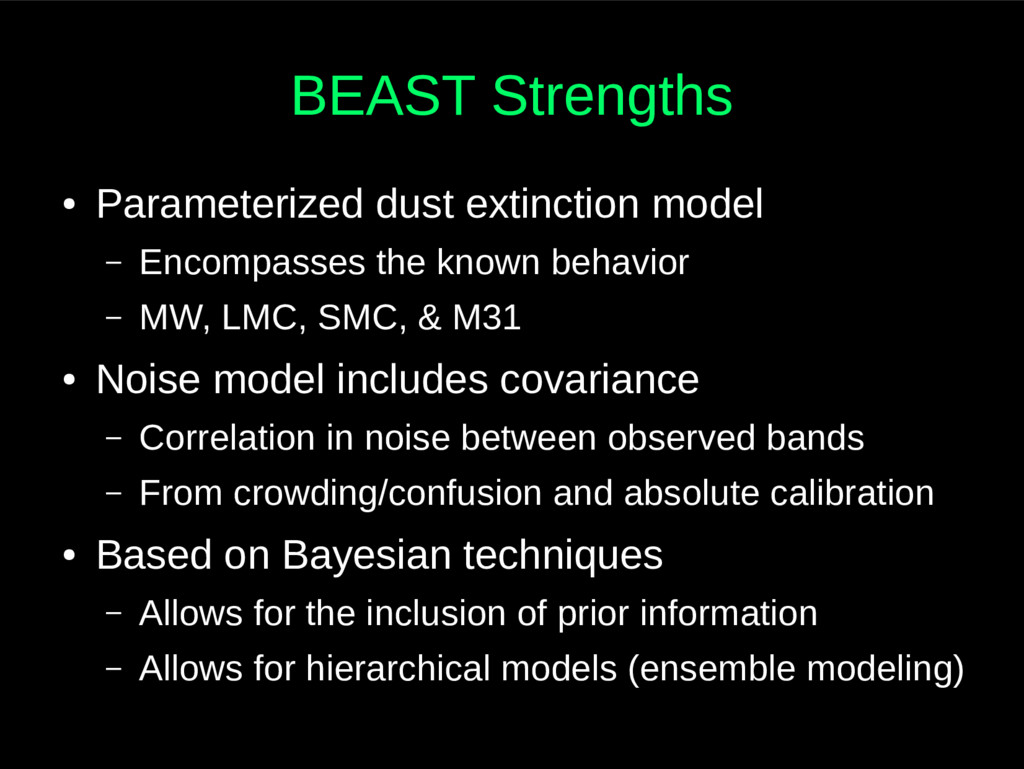
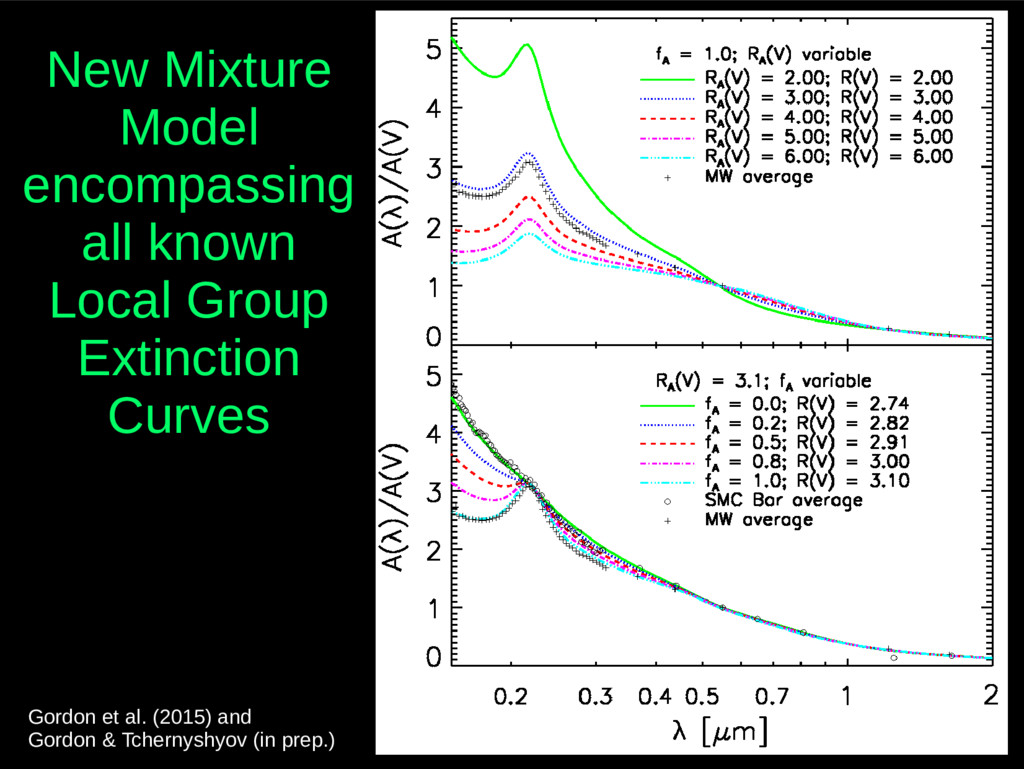
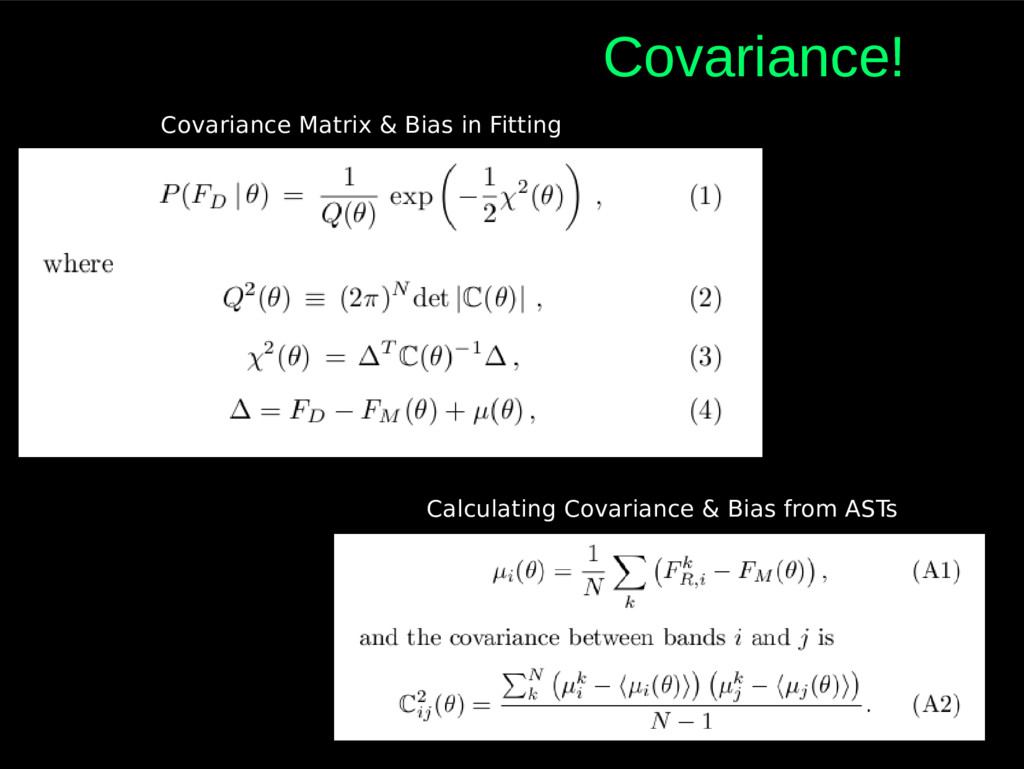
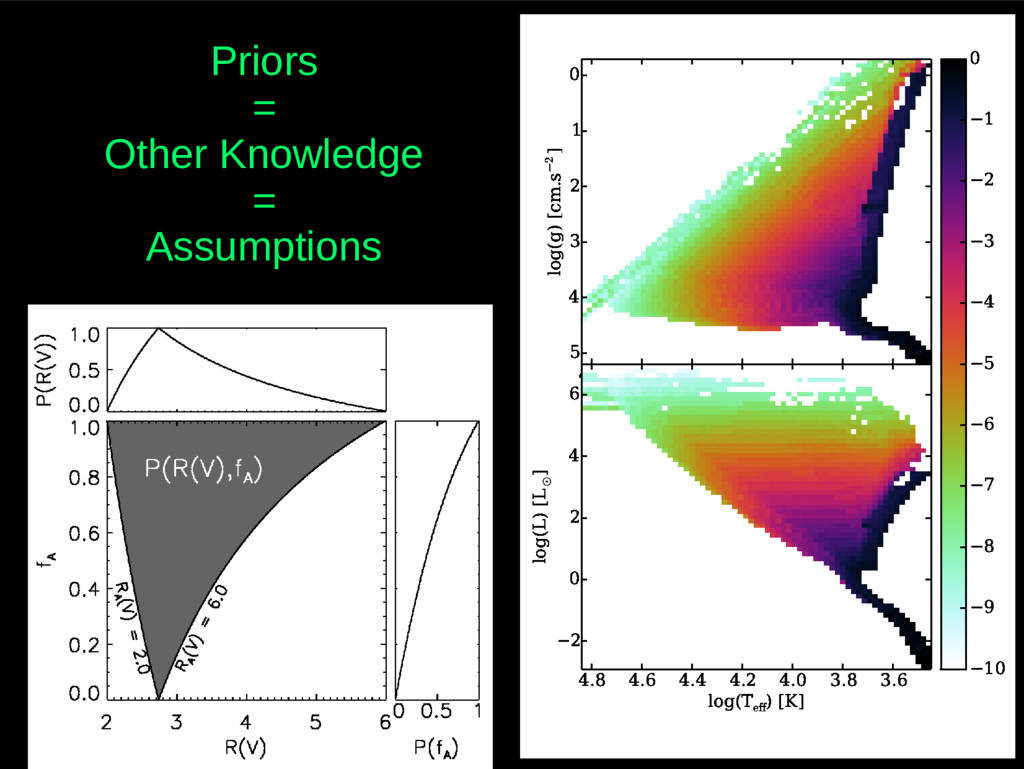
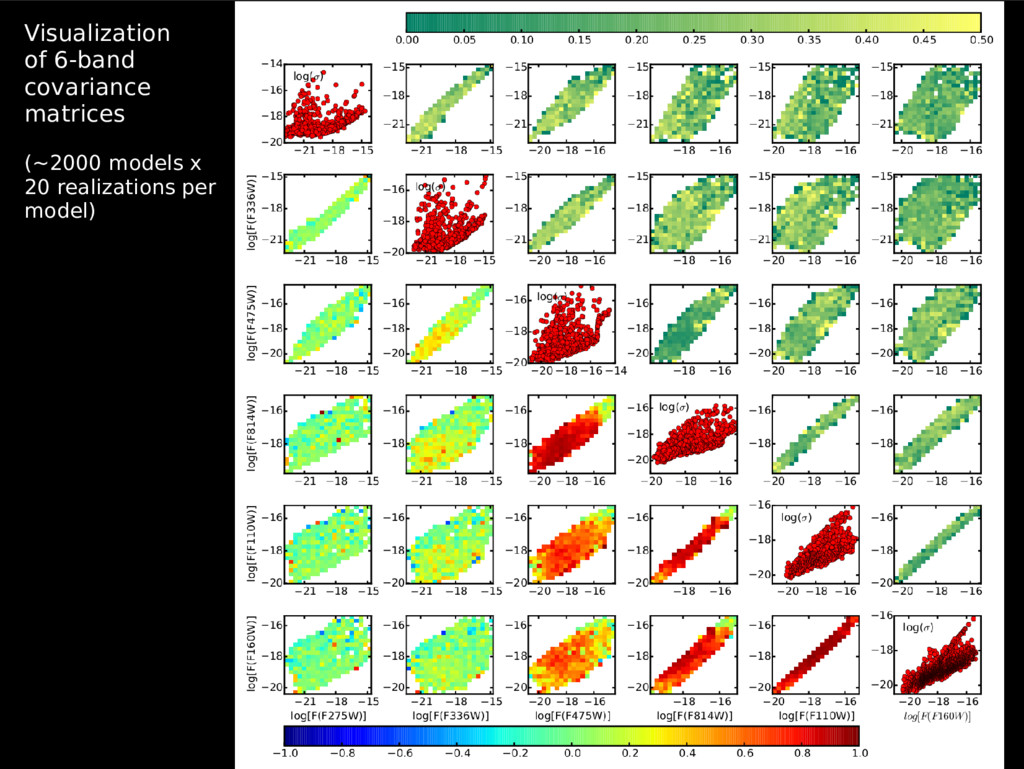
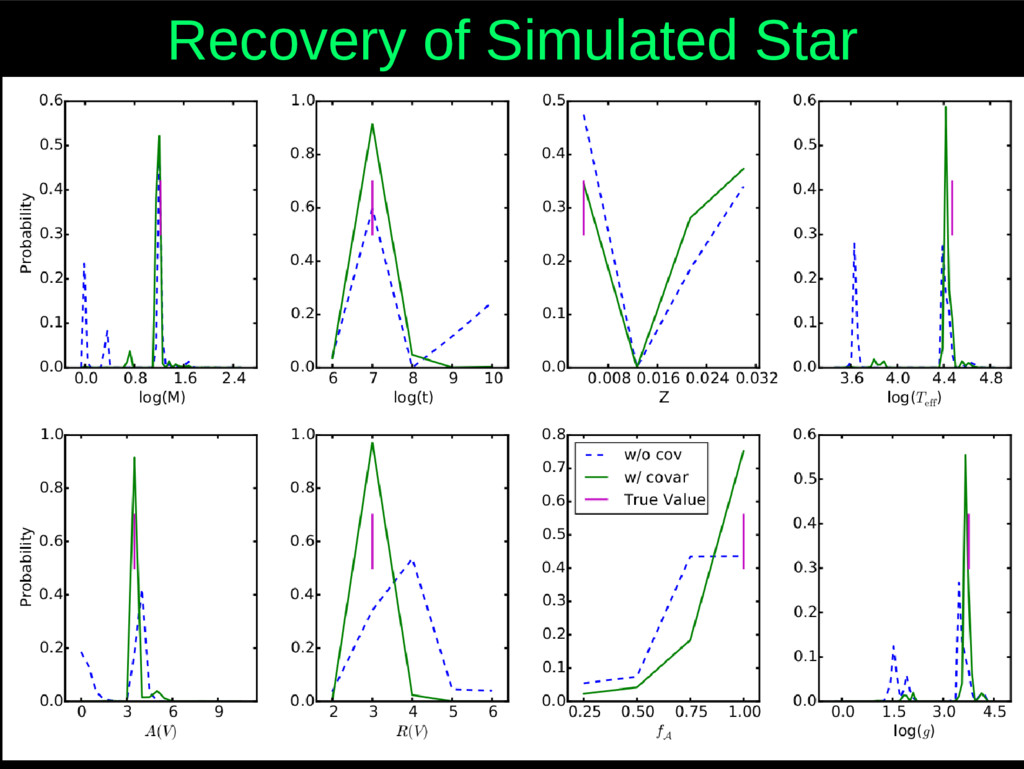
known behavior – MW, LMC, SMC, & M31 • Noise model includes covariance – Correlation in noise between observed bands – From crowding/confusion and absolute calibration • Based on Bayesian techniques – Allows for the inclusion of prior information – Allows for hierarchical models (ensemble modeling)
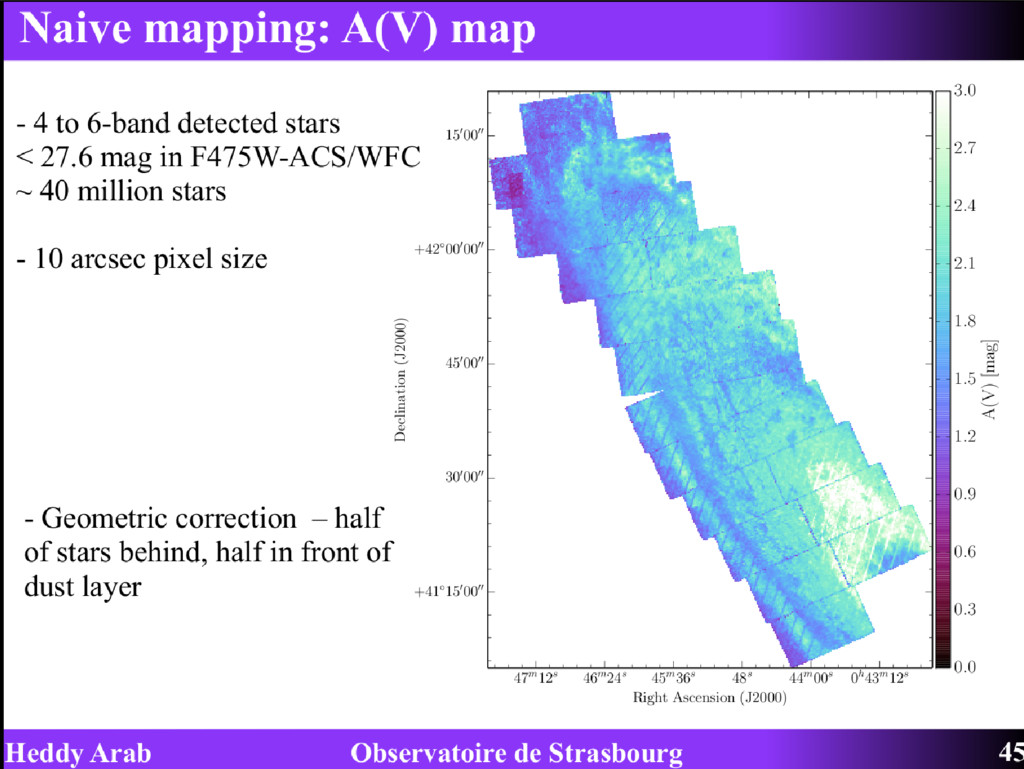
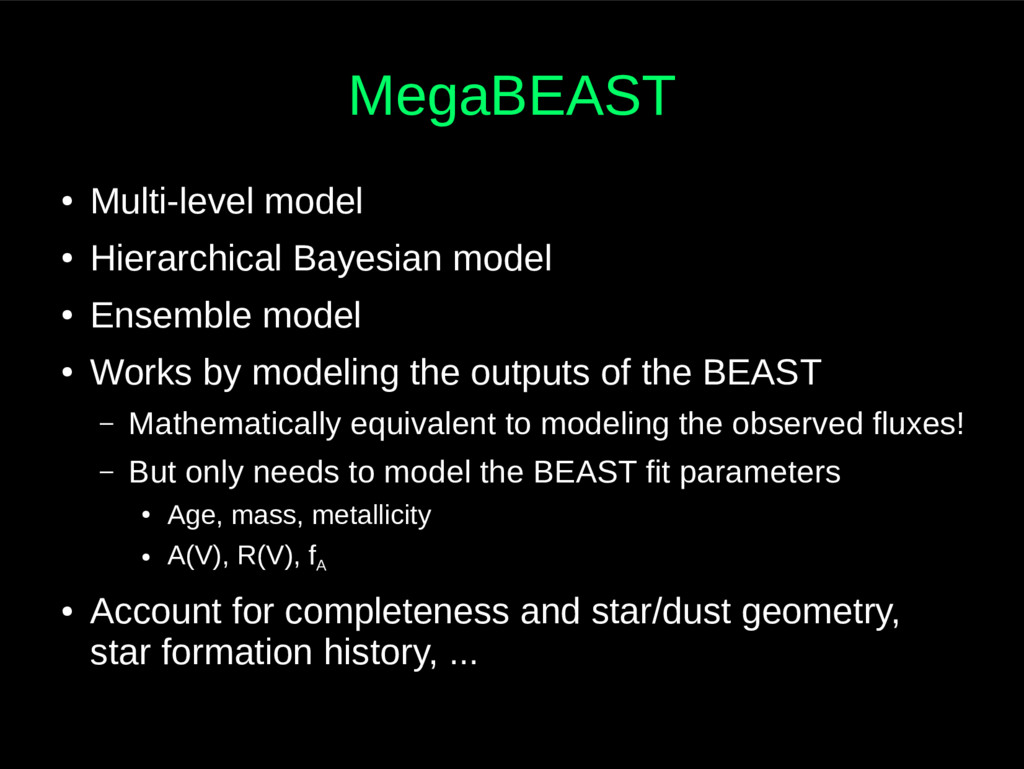
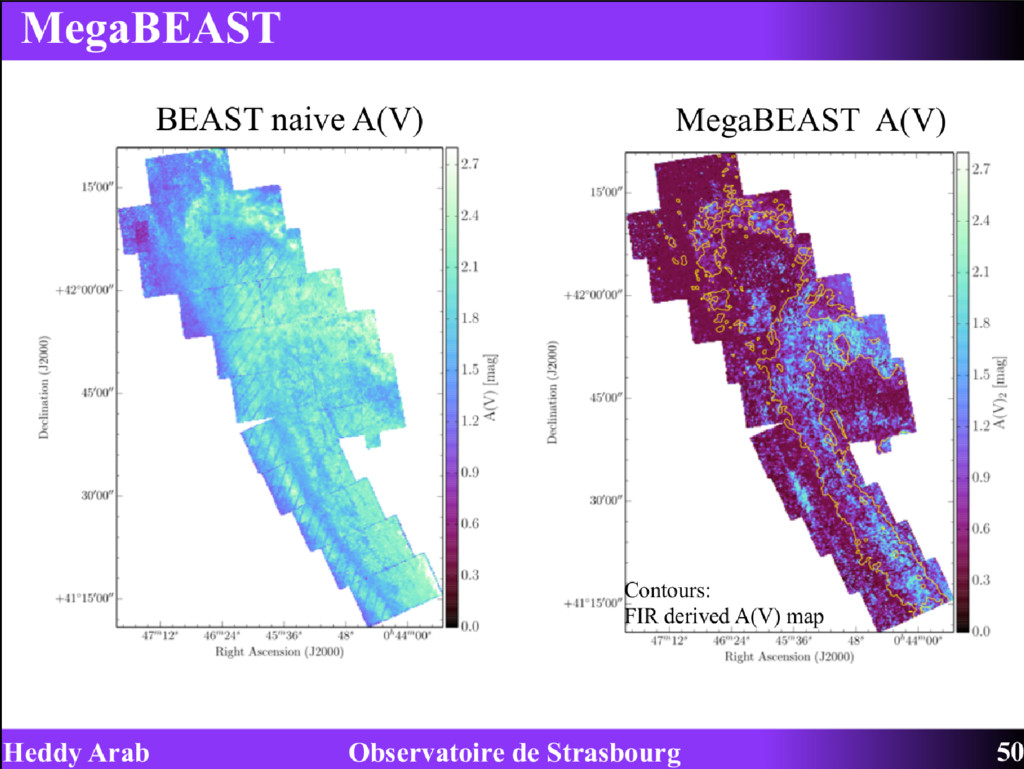
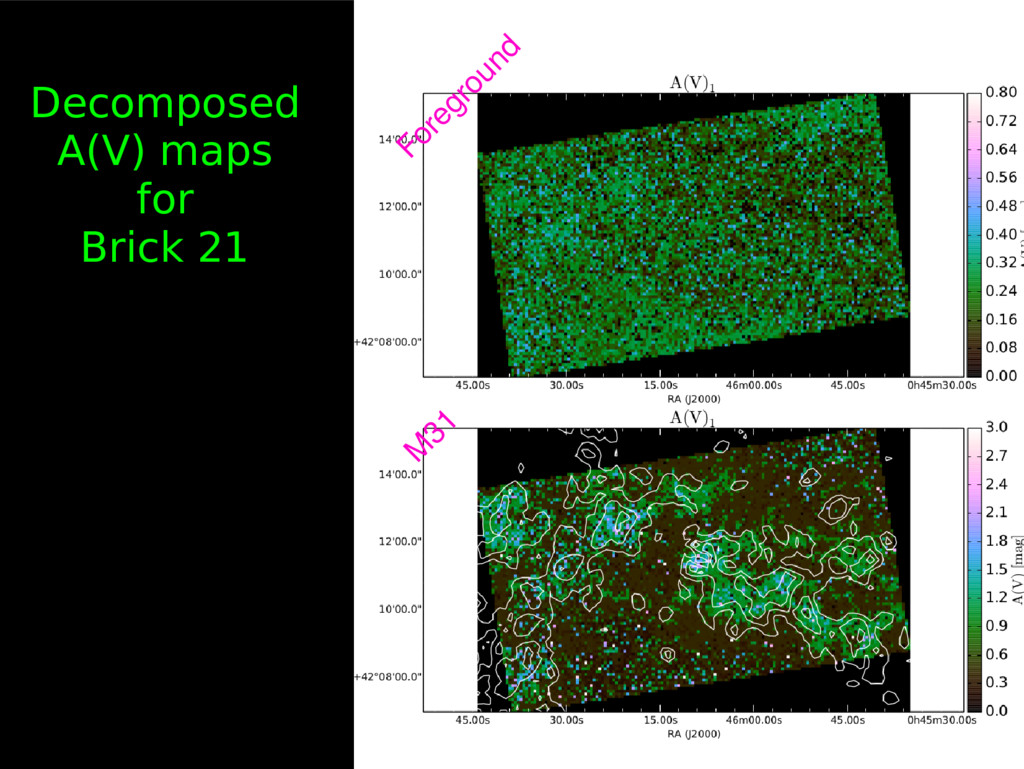
model • Works by modeling the outputs of the BEAST – Mathematically equivalent to modeling the observed fluxes! – But only needs to model the BEAST fit parameters • Age, mass, metallicity • A(V), R(V), f A • Account for completeness and star/dust geometry, star formation history, ...
ApJ, 826, 104) • Active team – Gordon, Arab, Boyer, Choi, Durbin, Fouesneau, Johnson, Kapala, Kahn, Sandstrom, Weisz, Williams, Yanchulova Merica-Jones • BEAST hack week (20-24 Feb 2017, UCSD) – Code development, testing code, documentation, etc. – Using astropy affiliated package template – Extensions for AGB and YSOs in dicussion • BEAST is fairly mature – public on github at the end of Feb 2017 – Setup for distributed development of code, documentation, etc. • MegaBEAST in development


 karllark
 signer
 kobayashi31
 sokikatayama
 rikkabotan7
 kentaitakura
 eumesy
 imai448
 yukiar
 junkashihara
 institutdelelevage
 recsyslab
 tammyeverts
 kneath
 codingconduct
 csswizardry
 62gerente
 trishagee
 jdejongh
 honnibal
 wayneb77
 wjessup
 tessaabrams