things that will happen in the future. • We use it when one action depends on another action. • A first conditional sentence has two parts (clauses). We use present simple in (if-clause) and will or won’t + verb base. In (will/won’t-clause).
we add comma. When the (will-clause) is first, we don’t add a comma. , • E.g. If you cook for dinner I will bake a cake. • E.g. I will bake a cake if you cook for dinner.
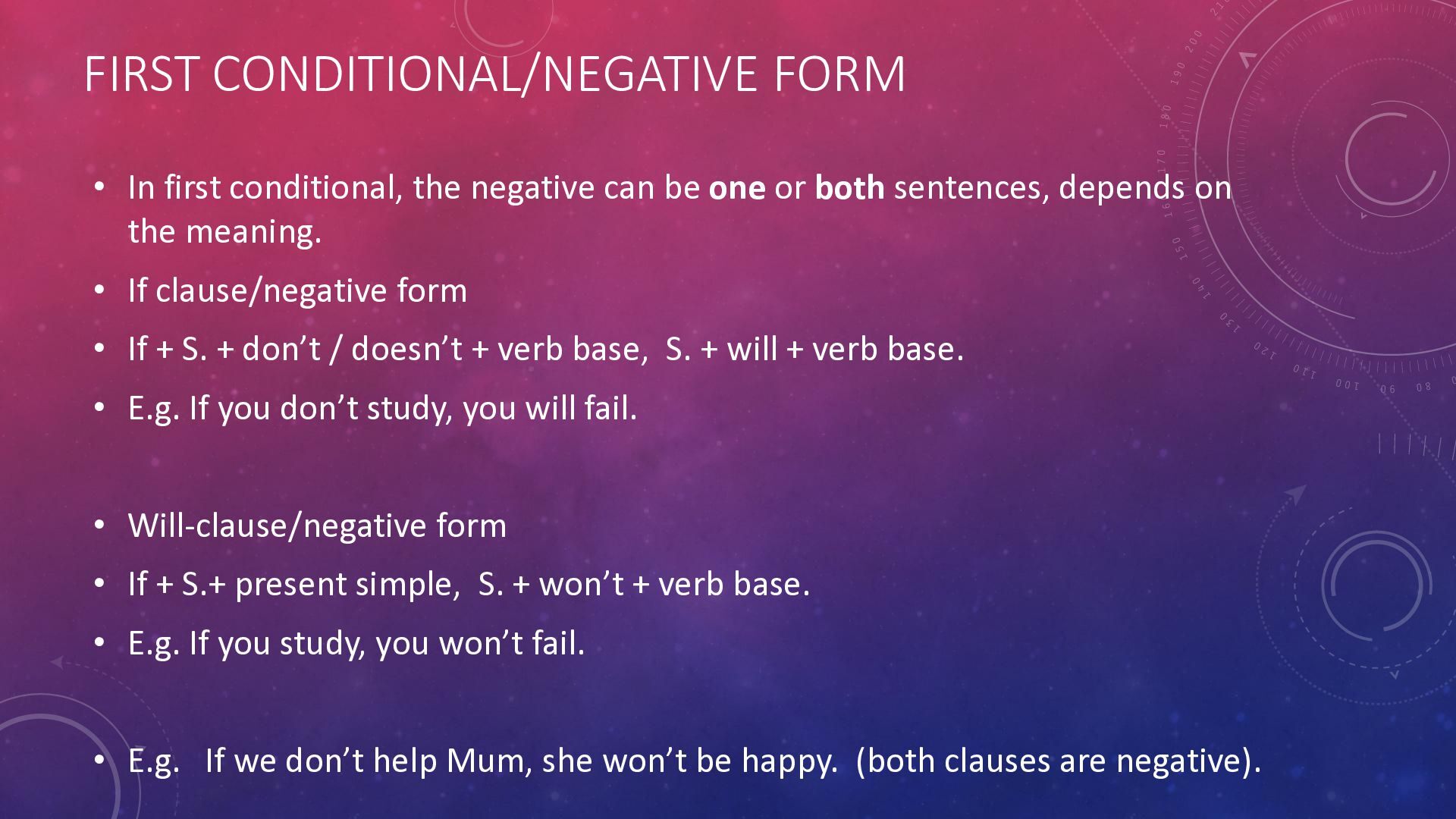
be one or both sentences, depends on the meaning. • If clause/negative form • If + S. + don’t / doesn’t + verb base, S. + will + verb base. • E.g. If you don’t study, you will fail. • Will-clause/negative form • If + S.+ present simple, S. + won’t + verb base. • E.g. If you study, you won’t fail. • E.g. If we don’t help Mum, she won’t be happy. (both clauses are negative).
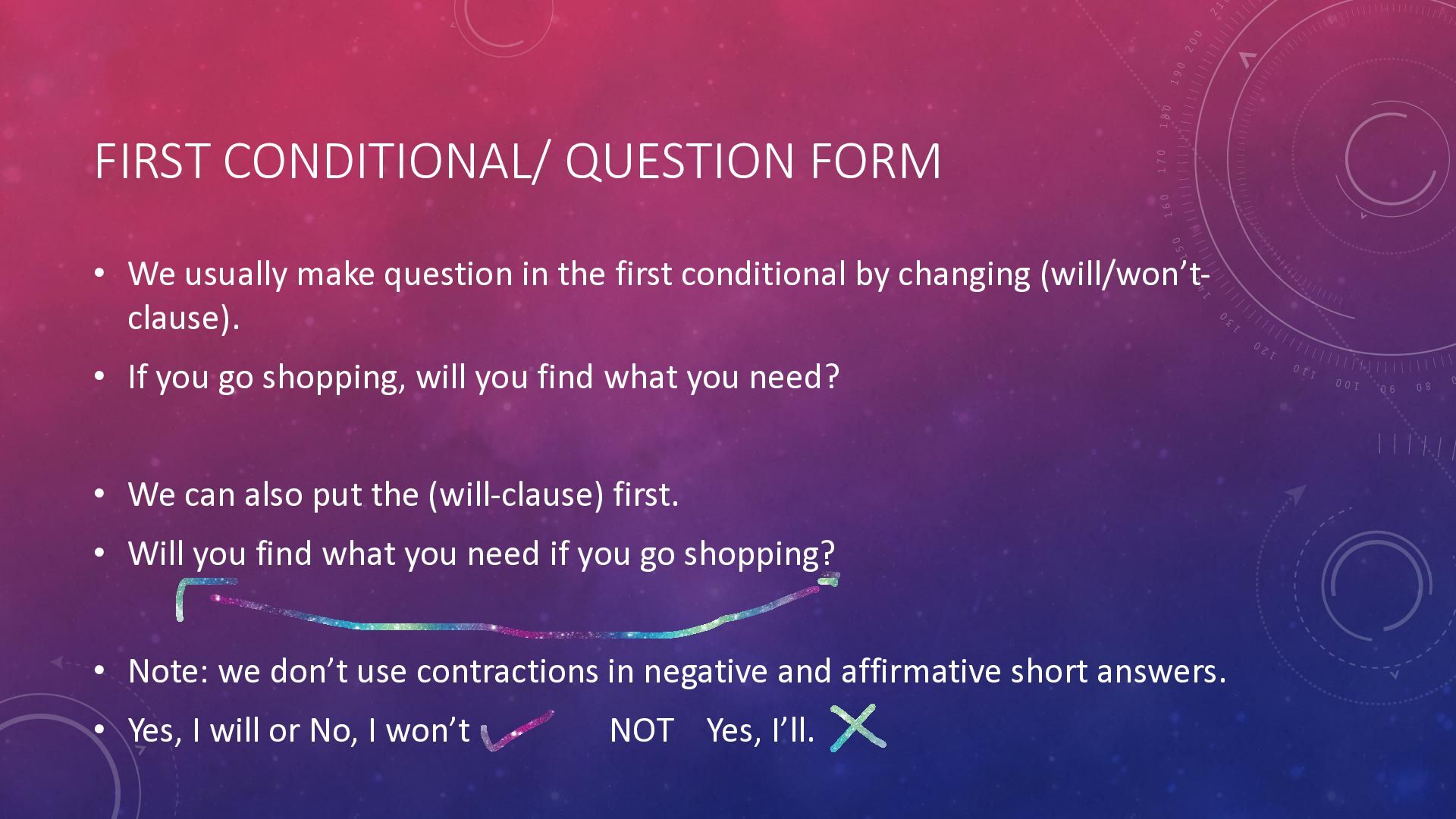
the first conditional by changing (will/won’tclause). • If you go shopping, will you find what you need? • We can also put the (will-clause) first. • Will you find what you need if you go shopping? • Note: we don’t use contractions in negative and affirmative short answers. • Yes, I will or No, I won’t NOT Yes, I’ll.


 lavin_aziz
 sciencetokyo
 ainischool
 mutomasa
 pawan_pharm
 juanmartin2026
 cbtlibrary
 suisan
 yasslab
 arnoknobbe
 auctria
 akosma
 reverentgeek
 csswizardry
 palkan
 cassininazir
 soysaucechin
 jacobian
 aleyda
 lemiorhan
 brettharned
 katarinadahlin
 ivargrimstad