A simple presentation about modal verbs, inspired by Family and Friends 5.
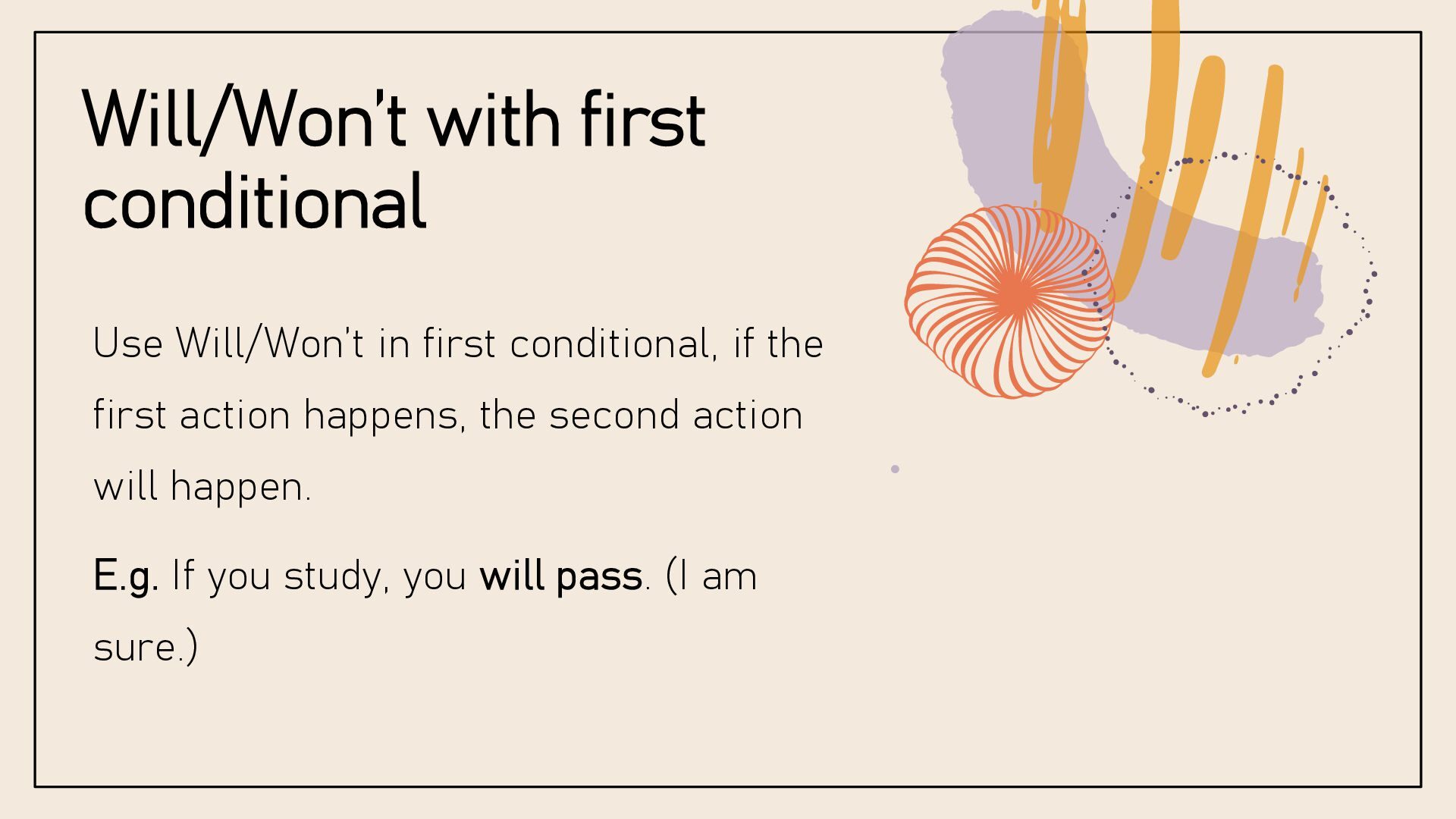
This presentation only covers: may, might, could, have to, had to, and will.
We use them to talk about something that is possible now or in the future. (maybe yes, maybe no). E.g. It may rain, It might rain It could rain. (all three mean the same).
base. Note: we do not add ‘’s’’ to the verb for he/she/it. E.g. She might be a doctor. Negative: Subject + may/might/could + not + verb base. E.g. I may not go to the party.
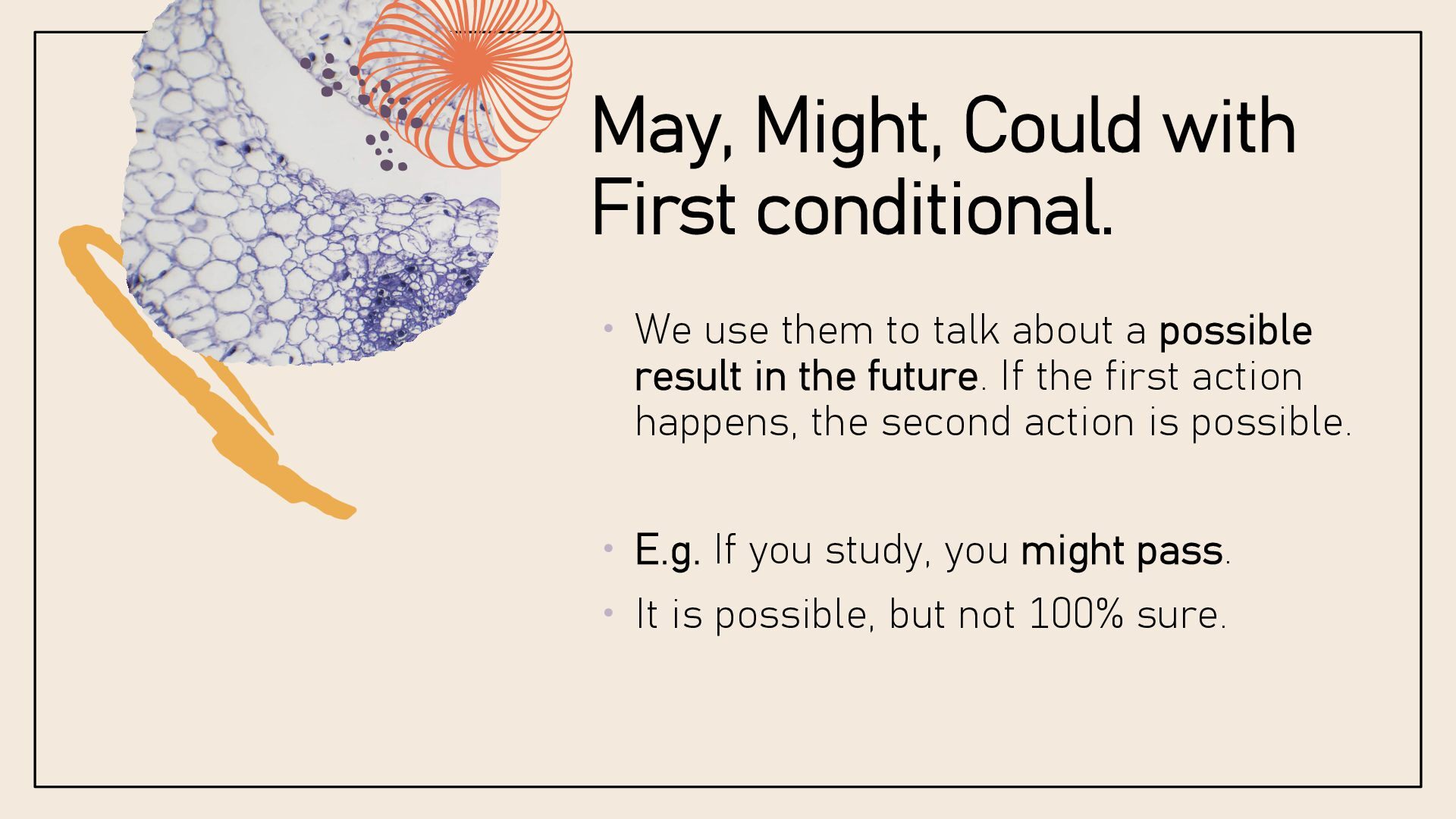
to talk about a possible result in the future. If the first action happens, the second action is possible. E.g. If you study, you might pass. It is possible, but not 100% sure.
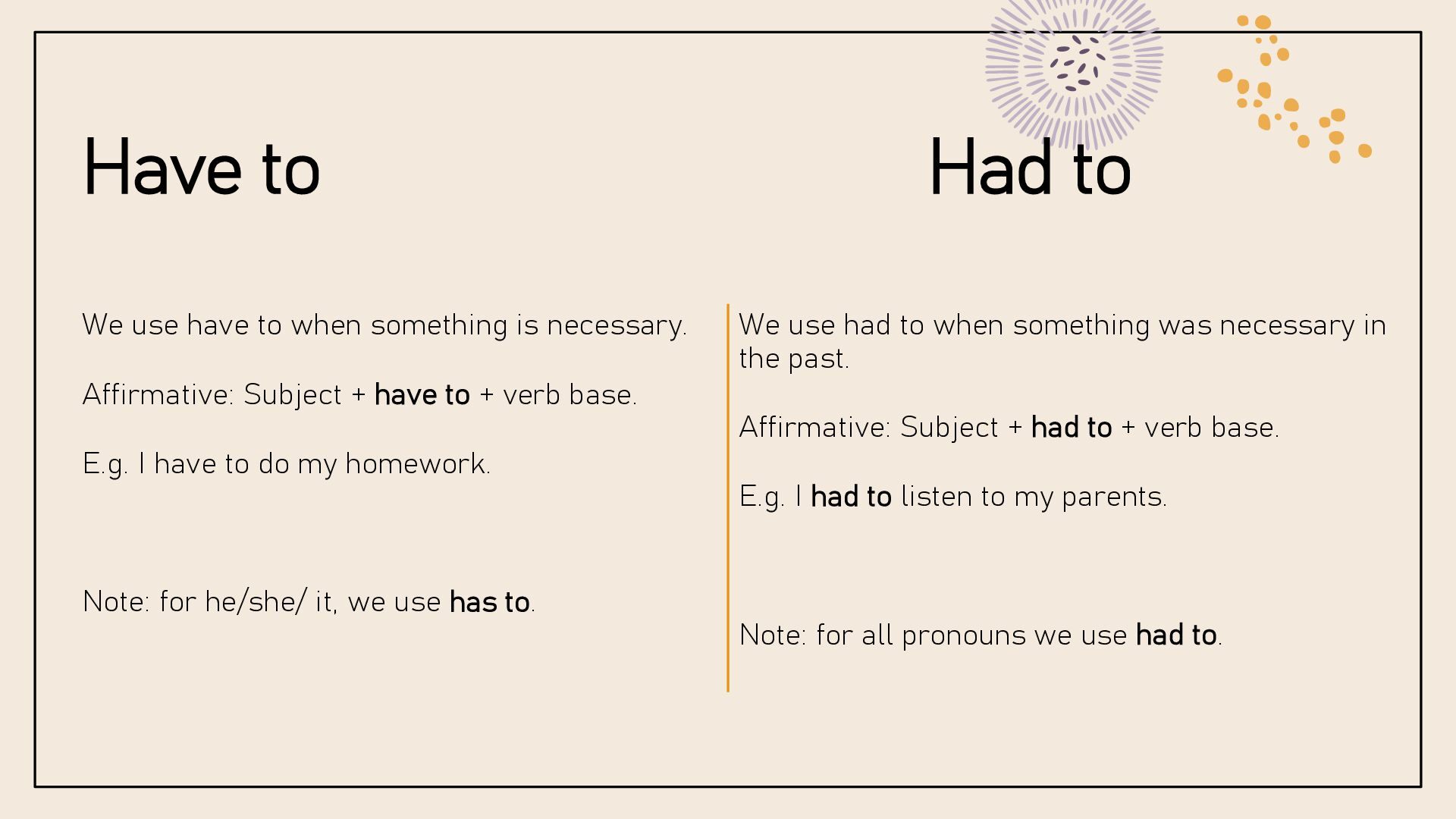
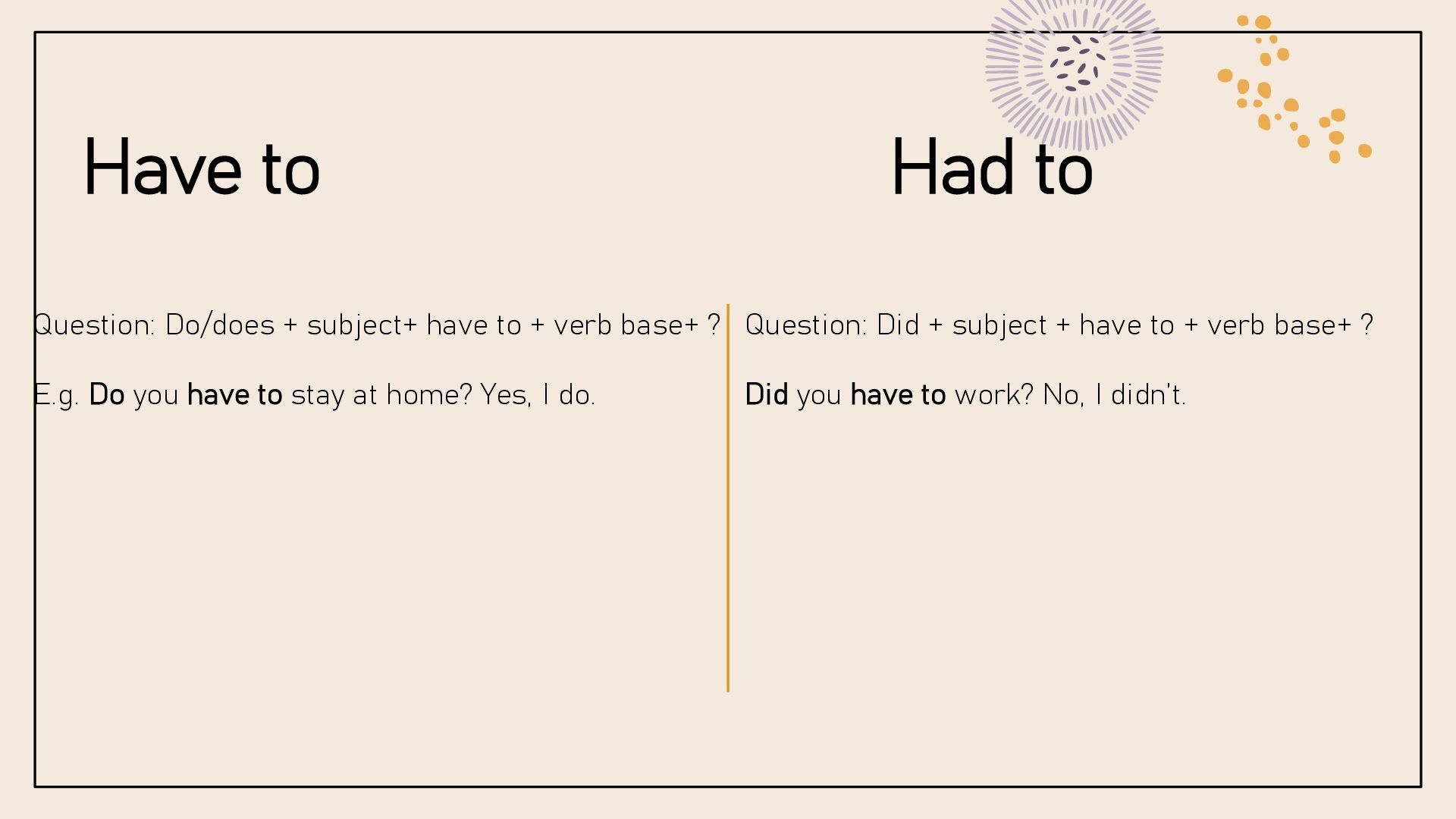
Affirmative: Subject + have to + verb base. E.g. I have to do my homework. Note: for he/she/ it, we use has to. Had to We use had to when something was necessary in the past. Affirmative: Subject + had to + verb base. E.g. I had to listen to my parents. Note: for all pronouns we use had to.
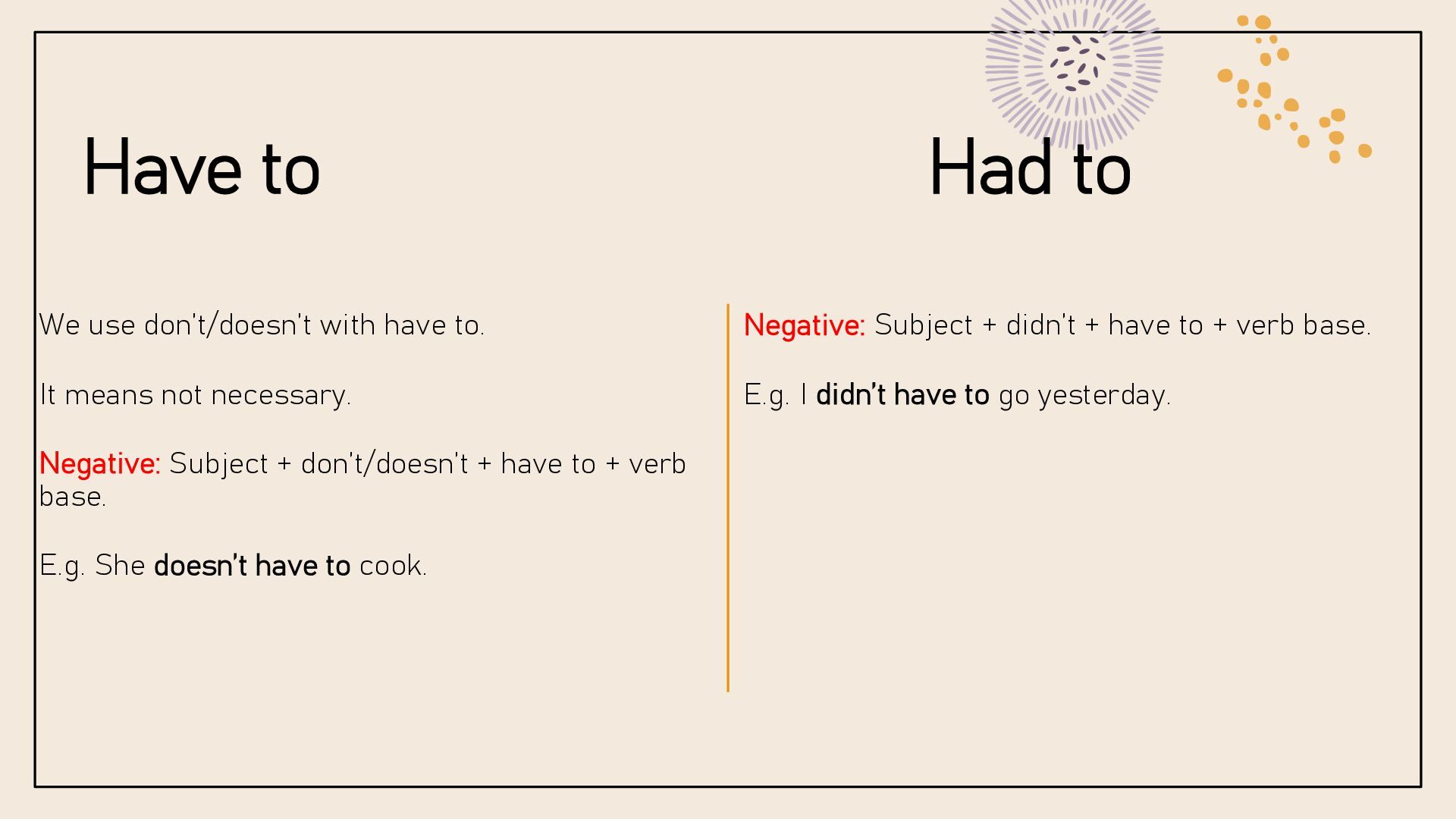
Negative: Subject + didn’t + have to + verb base. It means not necessary. E.g. I didn’t have to go yesterday. Negative: Subject + don’t/doesn’t + have to + verb base. E.g. She doesn’t have to cook.


 lavin_aziz
 hiola
 juanmartin2026
 akiraasano
 matleenalaakso
 pawan_pharm
 signer
 robintux
 eller86
 terazawa
 inesmontani
 destraynor
 jdejongh
 aleyda
 csswizardry
 eileencodes
 honnibal
 michielstock
 techseoconnect
 cassininazir
 ks91
 dougneiner