Golf Cart Transportation is a growing trend used for short-distance travel across various settings, including golf courses, resorts, gated communities, and even commercial complexes.
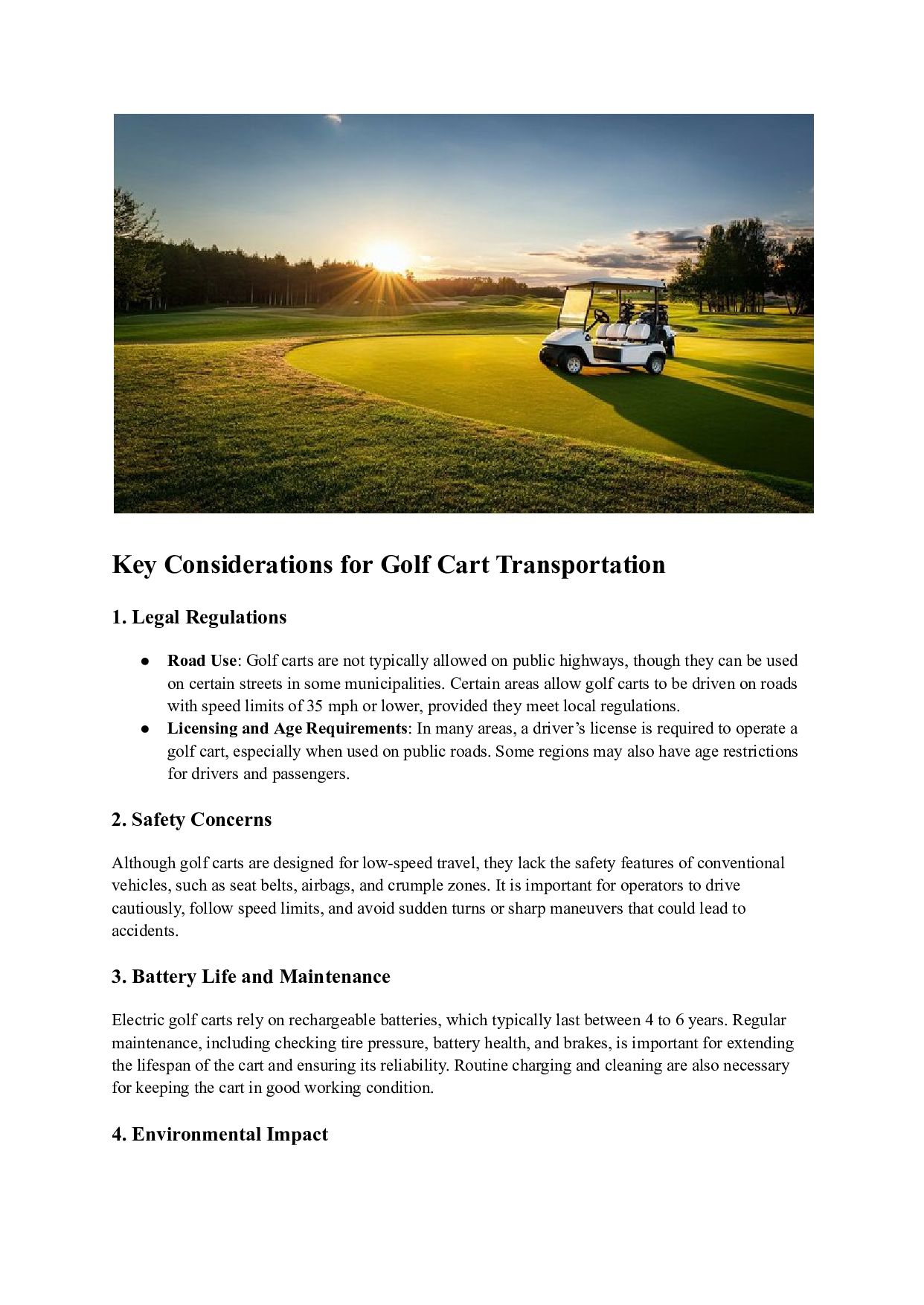
Cart Transportation is a growing trend used for short-distance travel across various settings, including golf courses, resorts, gated communities, and even commercial complexes. These compact vehicles are typically electric, although gas-powered versions also exist. Originally designed to transport golfers between holes, golf carts are now widely used in different industries and residential areas, thanks to their efficiency, eco-friendliness, and versatility. This article explores the uses, benefits, and considerations of golf cart transportation, along with some frequently asked questions. What is Golf Cart Transportation? Golf cart transportation refers to the use of golf carts for moving people or goods over short distances. These vehicles are ideal for environments where traditional cars are too large, impractical, or inefficient. Golf carts are primarily electric but are also available in gas-powered models. They are typically used in places like golf courses, resorts, and private communities, though they can also be seen in industrial settings and even at events and festivals. Key Features of Golf Carts 1. Compact Design: Golf carts are small, lightweight, and easy to maneuver, making them ideal for navigating narrow pathways and crowded areas.
common and environmentally friendly option, while gas-powered carts offer longer ranges and are often preferred for more demanding uses. 3. Simple Operation: Most golf carts are easy to drive, with basic controls for acceleration, braking, and steering. 4. Limited Speed: Golf carts are designed for slower speeds, usually between 15 to 25 mph, making them safer for use in environments like golf courses and residential communities. Common Uses of Golf Cart Transportation 1. Golf Courses The most traditional use of golf carts is to shuttle players between holes on a golf course. As courses have become larger, walking from hole to hole has become more time-consuming and exhausting. Golf carts help golfers move efficiently from one area to another, ensuring a smoother and faster game. 2. Resorts and Hotels Large resorts and hotels often rely on golf carts to transport guests around expansive properties. Whether it's to take visitors to different amenities, such as pools, restaurants, or spas, or to assist with luggage delivery, golf carts provide an efficient and comfortable solution. 3. Gated Communities In gated communities, golf carts have become a popular mode of transportation. Residents use them to navigate through the neighborhood to local shops, parks, or community centers. They provide an easy, cost-effective alternative to cars for short trips within the community. 4. Commercial and Industrial Settings Businesses with large campuses or industrial facilities also use golf carts to move employees and goods across the property. Golf carts can transport workers to different sections of a factory or deliver materials to various areas within large warehouses. Their small size and ease of maneuvering make them ideal for busy or crowded environments. 5. Public Events and Festivals Golf carts are frequently used at large public events, such as festivals, concerts, and sports games. They transport staff, VIPs, and equipment across large event spaces where walking would be impractical. Their ability to maneuver in tight spaces is particularly useful in such crowded environments. 6. Personal Use In some suburban areas or vacation communities, people use golf carts as an alternative mode of transport for short trips, such as going to the local store or visiting neighbors. For those living in areas
a golf cart provides a convenient and eco-friendly option. Benefits of Golf Cart Transportation 1. Eco-Friendly Golf carts, especially electric ones, are an environmentally friendly alternative to traditional vehicles. They produce no emissions, contributing to cleaner air and a smaller carbon footprint. In areas like golf courses or private communities, golf carts are an effective way to reduce overall environmental impact. 2. Cost-Effective The cost of operating a golf cart is significantly lower than that of a full-sized vehicle. Electric carts are cheaper to maintain since they require less fuel and have fewer moving parts than traditional cars. Additionally, electric carts are cheaper to recharge than refueling a gas-powered vehicle. 3. Convenience Golf carts are designed to be easy to use. They are smaller and more maneuverable than cars, making them ideal for navigating narrow pathways, crowded areas, or places where parking is limited. The ability to park a golf cart in small spaces adds to its overall convenience. 4. Versatility In addition to transporting people, many golf carts are equipped with flatbeds or cargo space, allowing them to be used for hauling goods or equipment. This versatility makes them a popular choice for commercial, industrial, and recreational settings. 5. Low-Speed Safety Golf carts are designed for low-speed environments, making them safer in settings where high speeds are unnecessary. The slow speeds reduce the risk of accidents, especially in busy areas like golf courses, resorts, and private communities.
Road Use: Golf carts are not typically allowed on public highways, though they can be used on certain streets in some municipalities. Certain areas allow golf carts to be driven on roads with speed limits of 35 mph or lower, provided they meet local regulations. • Licensing and Age Requirements: In many areas, a driver’s license is required to operate a golf cart, especially when used on public roads. Some regions may also have age restrictions for drivers and passengers. 2. Safety Concerns Although golf carts are designed for low-speed travel, they lack the safety features of conventional vehicles, such as seat belts, airbags, and crumple zones. It is important for operators to drive cautiously, follow speed limits, and avoid sudden turns or sharp maneuvers that could lead to accidents. 3. Battery Life and Maintenance Electric golf carts rely on rechargeable batteries, which typically last between 4 to 6 years. Regular maintenance, including checking tire pressure, battery health, and brakes, is important for extending the lifespan of the cart and ensuring its reliability. Routine charging and cleaning are also necessary for keeping the cart in good working condition. 4. Environmental Impact
their environmental footprint can still be affected by how electricity is sourced for recharging and the materials used to build the carts. Electric carts are a step toward sustainability, but their environmental benefits are greater when coupled with renewable energy sources. Frequently Asked Questions 1. Can I drive a golf cart on public roads? In most cases, golf carts are not allowed on public roads unless local laws permit it. Some municipalities allow golf carts on roads with speed limits of 35 mph or lower. Always check local regulations before driving a golf cart on public streets. 2. Do I need a driver’s license to operate a golf cart? A driver’s license is typically required if the golf cart is used on public roads. However, many private areas, such as golf courses or gated communities, may not require a license for golf cart operation within their boundaries. 3. How far can a golf cart go on a single charge? Electric golf carts can travel between 25 to 40 miles on a full charge, depending on the model, battery size, and terrain. It’s important to consider the cart’s range when planning longer trips. 4. Are golf carts safe? Golf carts are safe for use in low-speed environments. However, they lack certain safety features, such as seat belts, so operators should exercise caution, drive within speed limits, and be mindful of pedestrians and other vehicles. 5. How much do golf carts cost? The cost of a new golf cart typically ranges from $5,000 to $15,000, depending on the model, features, and customizations. Used golf carts are available for a lower price but may require additional repairs or upgrades. 6. Can golf carts be used for transporting goods? Yes, many Golf Cart Shipping are designed to transport goods. Some models have cargo beds, which make them ideal for moving equipment, supplies, or materials in settings like warehouses, resorts, and golf courses. 7. How long do golf cart batteries last? A well-maintained golf cart battery can last between 4 to 6 years. Regular charging, cleaning, and maintenance are necessary to prolong battery life.
gated communities? Each gated community has its own set of rules regarding golf carts. While many allow golf carts for personal transportation, there may be regulations on where they can go, speed limits, and whether they can be used on community roads.

 Your Podcast. Everywhere. Effortlessly.


 caddireat
 kawanotron
 reiwatravel_0405
 kintotechdev
 kamadamakoto
 so_kotani
 noritaka88tax
 e5ua
 ozakiomumkj
 ikuodanaka
 xinghr
 arid2
 inesmontani
 dugsong
 addyosmani
 helenjbeal
 soudai
 baasie
 eileencodes
 kimpetersen
 mlcsv
 skipperchong
 tammyeverts
 chrislema