How Modern Welding Machines Are Revolutionizing Industrial Fabrication
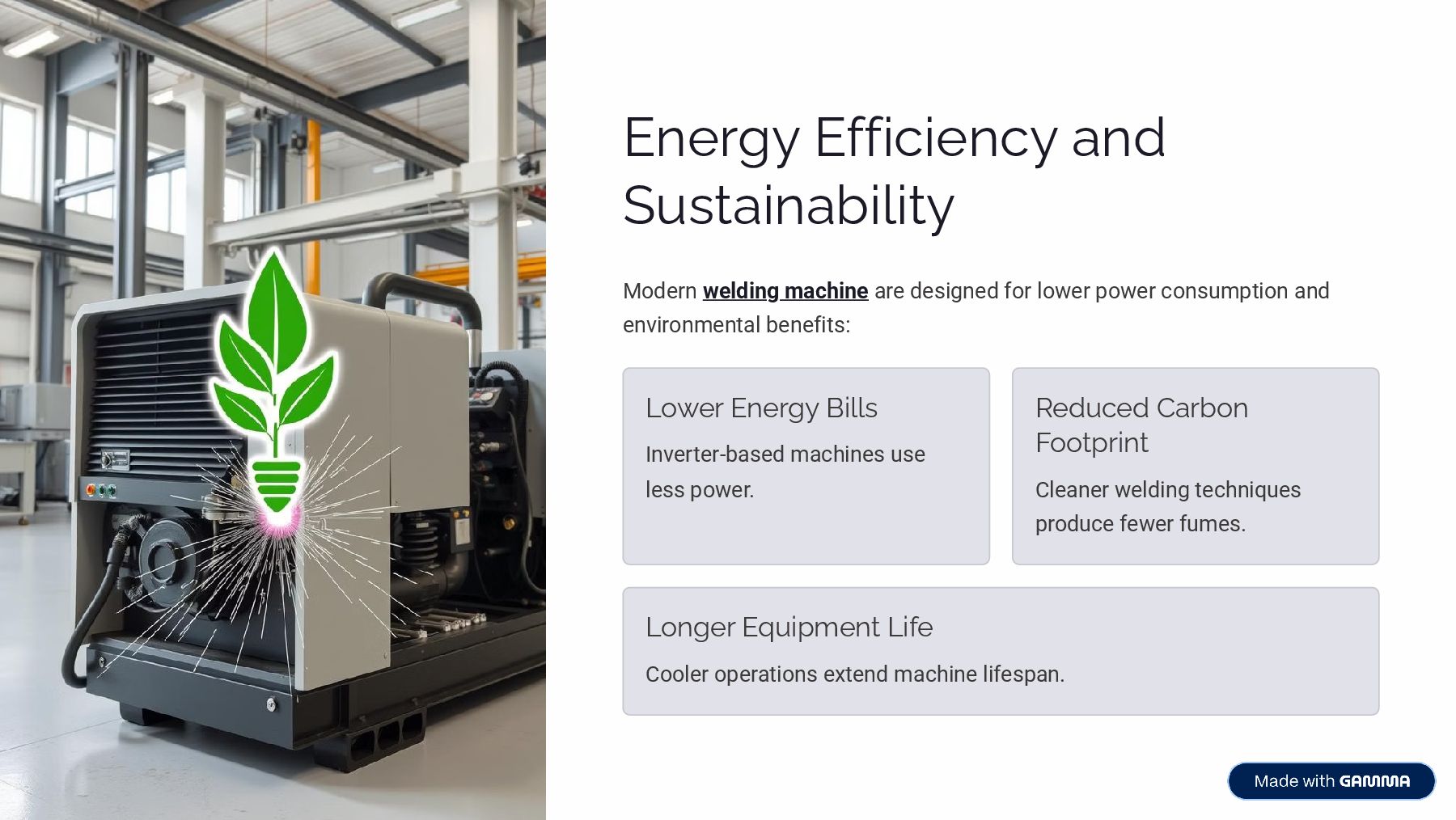
Modern welding machines are designed to consume less power without compromising on performance. Inverter-based welding machines, for example, use advanced circuitry to deliver more consistent energy with less heat waste.
manual, labor-intensive process to a high-precision, automated operation. Key advancements include: Iµėpäøpä Tpcµ¾«¾Ğ Compact, energy-efficient machines. Døa« Iµøpäacpì Enhanced control and programmability. R¾b¾øcì & AĀø¾³aø¾µ Increased speed and repeatability. AI & Rpa«-ø³p M¾µø¾äµ Improved precision and productivity.
and IoT enables welding systems to: Rpa«-ø³p M¾µø¾äµ Monitor welding parameters instantly. AĀø¾-Aj¥Āìø³pµøì Automatically adjust voltage, amperage, and speed. Eää¾ä C¾ääpcø¾µ Detect and correct errors on-the-fly. Päpjcøėp Maµøpµaµcp Provide alerts for proactive maintenance. This intelligent feedback loop ensures consistent weld quality and reduces downtime.
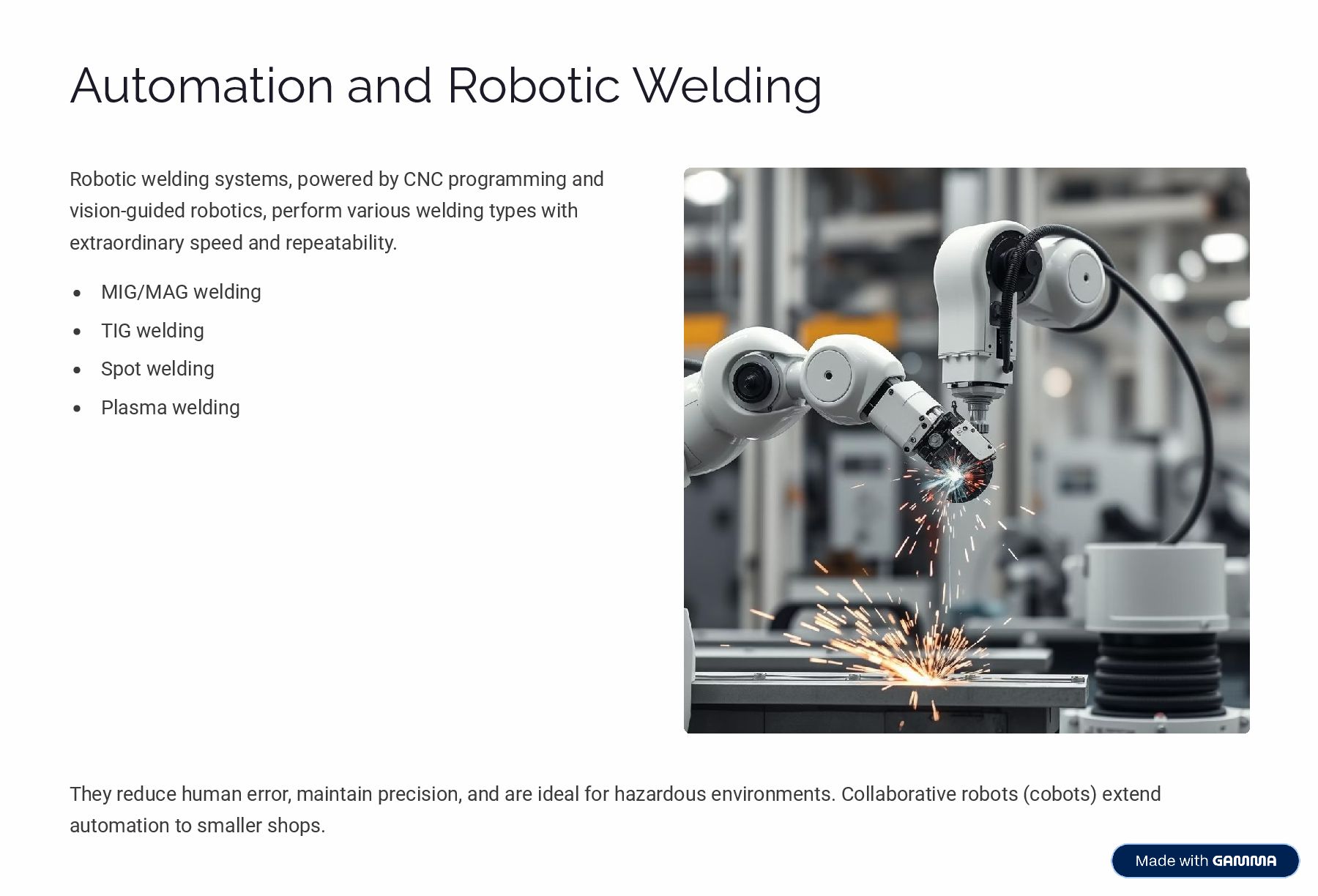
programming and vision-guided robotics, perform various welding types with extraordinary speed and repeatability. MIG/MAG welding TIG welding Spot welding Plasma welding They reduce human error, maintain precision, and are ideal for hazardous environments. Collaborative robots (cobots) extend automation to smaller shops.
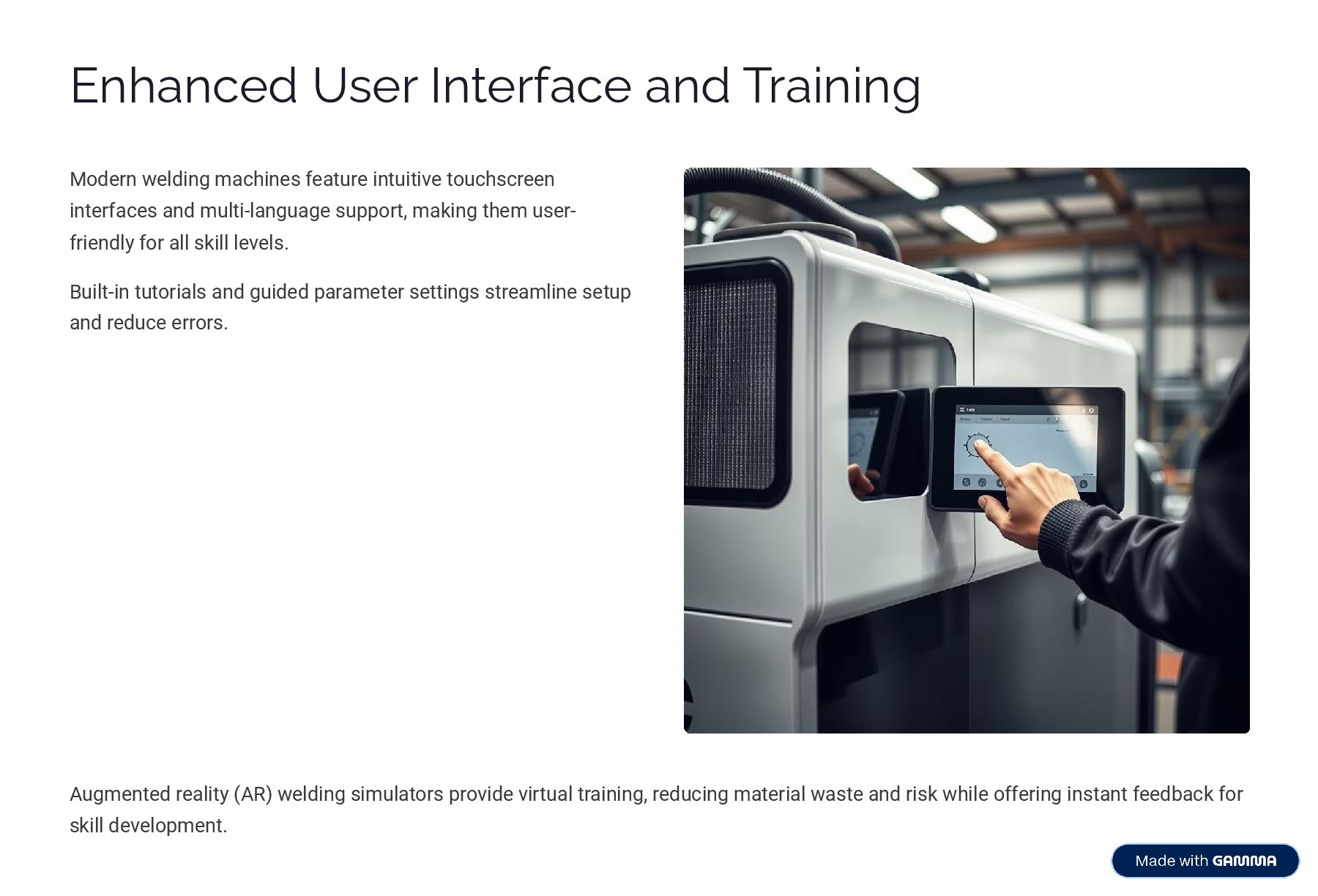
touchscreen interfaces and multi-language support, making them user- friendly for all skill levels. Built-in tutorials and guided parameter settings streamline setup and reduce errors. Augmented reality (AR) welding simulators provide virtual training, reducing material waste and risk while offering instant feedback for skill development.
switch between MIG, TIG, Stick/Arc, and Flux-Cored Arc Welding, offering versatility and cost- effectiveness for diverse projects. QĀa«øĞ C¾µø侫 Advanced machines log real-time data (voltage, current, speed, gas flow) for compliance and consistency, integrating with quality management systems.
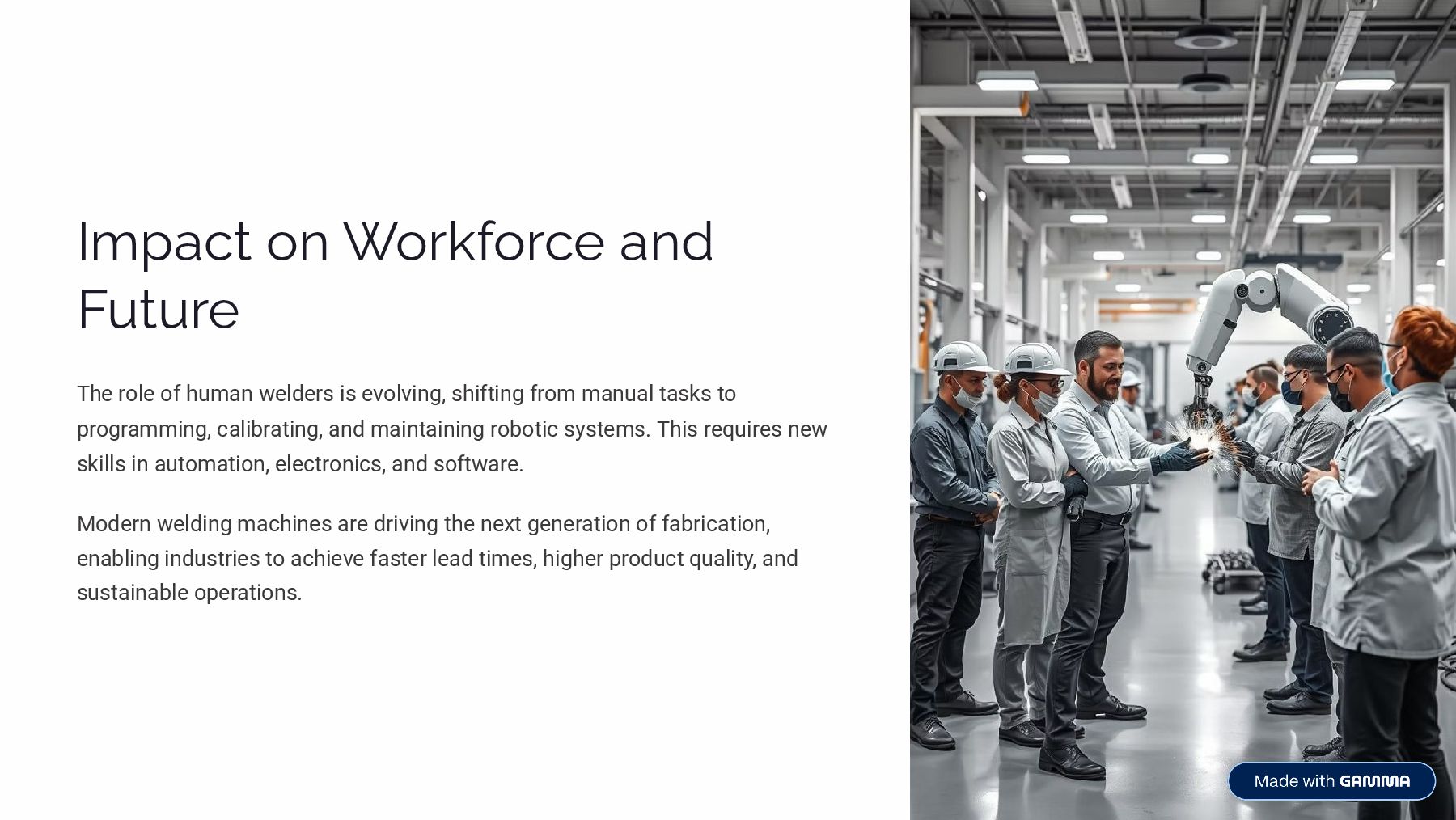
is evolving, shifting from manual tasks to programming, calibrating, and maintaining robotic systems. This requires new skills in automation, electronics, and software. Modern welding machines are driving the next generation of fabrication, enabling industries to achieve faster lead times, higher product quality, and sustainable operations.


 machineryonsale
 kimpachi_d
 stanby_inc
 mj6237
 canvasedge
 advalistar
 makaibito
 thomaspeham
 ikuodanaka
 nishika_kae
 kinsofficial
 fullkaiten
 noritaka88tax
 uxyall
 honnibal
 scottboms
 soysaucechin
 raygrieselhuber
 ivargrimstad
 szymonslowik
 aleyda
 nikkihalliwell
 jonoalderson
 akosma
 smashingmag