Upgrade to Pro — share decks privately, control downloads, hide ads and more …

Farhan Ahmed Hazarika: Redefining HR Advisory f...

Sponsored · Your Podcast. Everywhere. Effortlessly. Share. Educate. Inspire. Entertain. You do you. We'll handle the rest. →
Avatar for bvp bvp
October 13, 2025

Farhan Ahmed Hazarika: Redefining HR Advisory for the Modern Workplace

Farhan Ahmed Hazarika: Redefining HR Advisory for the Modern Workplace

Avatar for bvp

bvp

October 13, 2025

More Decks by bvp

Other Decks in Business

Transcript

  1. Top Business Visionaries To Watch In 2025 w w w

    . b u s i n e s s v i e w p o i n t m a g a z i n e . c o m AHMED HAZARIKA FARHAN Partner & India Head Global HR Advisory & Executive Redefining for the Modern Workplace HR Advisory
  2. Business Viewpoint Magazine PUBLISHER Suchita P. MARKETING COORDINATOR Sohan P.

    PR & MARKETING COORDINATOR Meghana P. BUSINESS DEVELOPMENT EXECUTIVE Sankalp K. CREATIVE DESIGN HEAD Mangirish K. SOCIAL MEDIA MANAGER Narendra S. DIGITAL CIRCULATION MANAGER CREATIVE CONTENT EDITOR Utkarsh D. Siya S. GRAPHIC DESIGNER Office No. 102, Bhakti Genesis, S. No. 245, H. No. 2B,Wakad Aundh Main Road, Pune. 411057 BUSINESS VIEWPOINT MAGAZINE [email protected] For Editorial Concerns [email protected] For Sales & Branding Enquiries [email protected] For Subscription Follow Us On This list is NOT a ranking. The companies on listed in magazine serve different aspects of the market, making ranking them in any order except revenue impossible and unfair. We try to bring a perfect platform for business organization to showcase their valued products/ services. Copyrights © Business Viewpoint Magazine | 2024. All Rights Reserved. The images and content included in this magazine should not be copied, transferred or reproduced in any form or by any means, electronics, mechanical, photocopying, recording, otherwise, without proper permission from Business Viewpoint Magazine. Business Viewpoint Magazine solely owns all the reprint rights.
  3. Farhan Ahmed Hazarika is at the forefront of a transformative

    era in HR advisory, strategically addressing the evolving needs of modern businesses. With a keen focus on streamlining workforce strategies, Hazarika is driving compliance, efficiency, and employee satisfaction, positioning himself as a pivotal figure in the industry. Hazarika's vision is rooted in a deep understanding of the global HR advisory market, estimated at $28 billion annually and growing at an 8% CAGR, indicating substantial growth potential. His approach, tailored to the Indian market with global expansion plans, emphasizes digital transformation and aligning HR strategies with contemporary workplace dynamics. His journey, from Assam to industry leadership, is marked by diverse experiences with organizations like Aditya Birla, Toyota Group, Meesho, and Teachmint, honing his skills in HR operations and strategic development. This versatility has made him a sought-after advisor, particularly for startups and SMEs, where fractional HR leadership is increasingly valued. The demand for HR advisory services in India is surging, driven by the need for specialized solutions in regulatory compliance, compensation, workplace planning, employee engagement, and digital transformation. Hazarika is instrumental in meeting this demand, offering research-driven insights and forward-thinking strategies. Hazarika's perspective on the evolving role of HR leaders—from transitioning managers to strategic thought and revenue leaders—reflects the dynamic nature of the industry. His ability to navigate cultural complexities and implement effective HR strategies positions him as a visionary leader, shaping the future of HR in India. Utkarsh D.
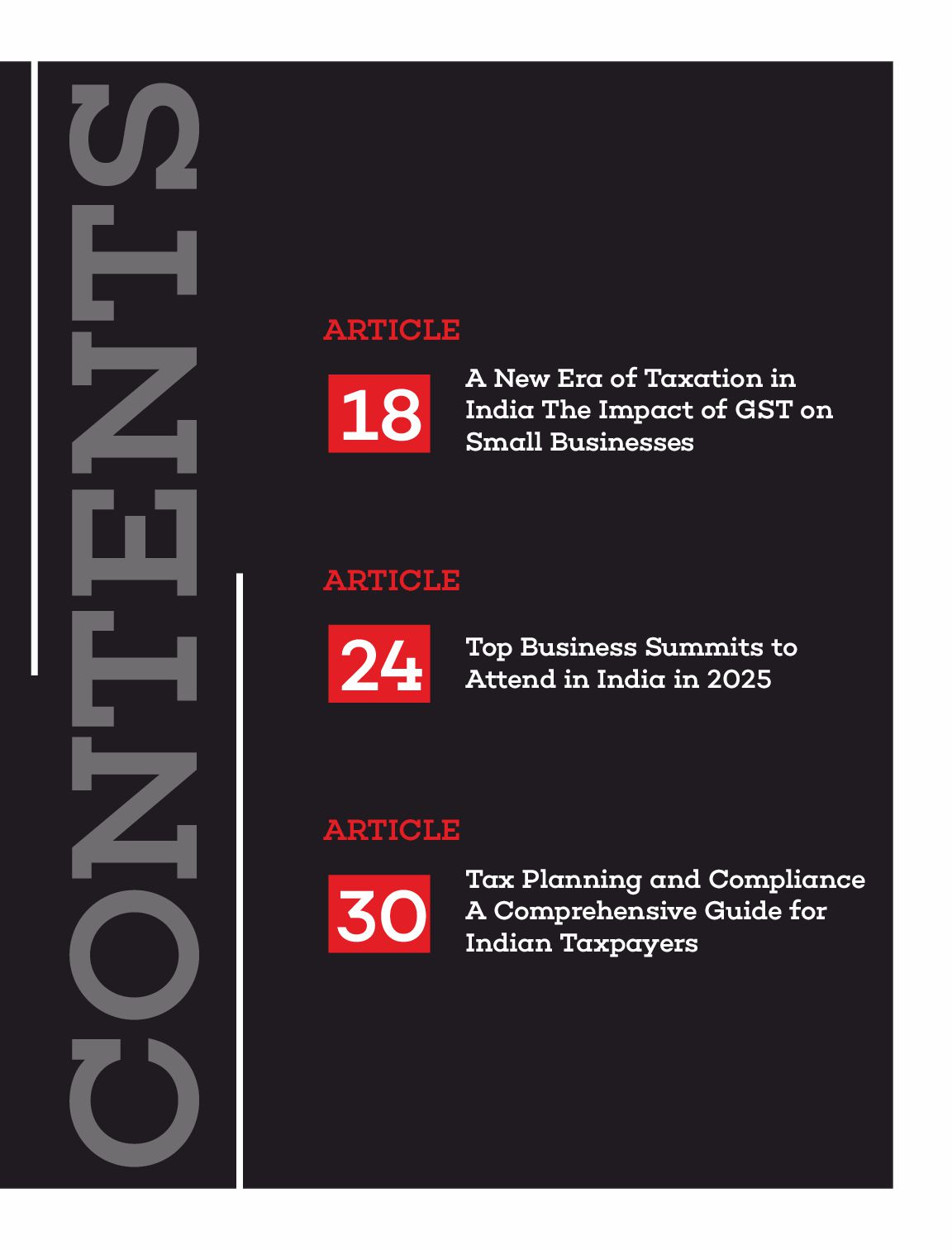
  4. CONTENTS ARTICLE 30 ARTICLE ARTICLE 24 18 A New Era

    of Taxation in India The Impact of GST on Small Businesses Tax Planning and Compliance A Comprehensive Guide for Indian Taxpayers Top Business Summits to Attend in India in 2025
  5. Redening HR Advisory for the Modern Workplace FARHAN AHMED HAZARIKA

    Partner & India Head (Global HR Advisory & Executive) HR functions have traditionally focused on internal support—handling hiring, payroll, and compliance. However, its role has changed significantly in the context of the modern workplace, requiring a more strategic and adaptable approach. With the increasing complexities of employment laws, DEI initiatives, talent mobility, and workforce engagement have elevated the need for external HR advisory to provide specialized guidance. As a result, HR Advisory has transformed from a secondary service to a critical business function, where expert guidance can make or break a company’s ability to attract, retain, and manage top-tier talent. Farhan Ahmed Hazarika, Global HR Advisor is leading this transformation. With a model focusing on helping businesses streamline workforce strategies, he ensures businesses achieve compliance, efficiency, and high employee satisfaction—emerging as one of the Top Business Visionaries to watch in 2025. | 2025 10
  6. As per market research, the global HR advisory industry is

    estimated at $28 billion annually, growing at 8% CAGR. This signals immense opportunities for HR advisory firms and independent consultants to establish a market-leading presence. Pioneering the Future of HR Advisory Focusing on India as the primary market, with plans for global expansion, Farhan envisions a new era of HR advisory—one that aligns with the modern workplace, digital transformation, and evolving talent needs. Through research-driven insights and a forward-thinking approach, Farhan and Eunity Partners are shaping HR advisory into an indispensable function, ensuring organizations stay agile, competitive, and future-ready in the constantly changing corporate world. From Assam to Industry Leadership Born and raised in Assam, Farhan’s journey to becoming a leading HR strategist is a testament to his perseverance. His career began in traditional corporate environments, working with renowned organizations such as Aditya Birla and the Toyota Group, where he honed his skills in HR operations, compliance, and leadership development. Recognizing the evolving needs of businesses, he transitioned into the world of startups and took on key HR leadership roles at CoWorks, Meesho, and Teachmint. These experiences allowed him to blend corporate HR strategies with the agility required in fast-paced, high-growth environments. His work in EdTech, manufacturing, IT, and product-based companies further solidified his reputation as a versatile and forward-thinking HR leader. The Growing Demand for HR Advisory Services in India India's business ecosystem is experiencing a surge in HR advisory services, driven by the increasing need for specialized, cost- effective solutions. Companies, especially startups and SMEs, are recognizing the value of strategic HR leadership without the overhead of a full-time CHRO. Farhan has been instrumental in shaping this trend, offering fractional HR leadership to businesses seeking expert guidance. Did You Know? | 2025 12
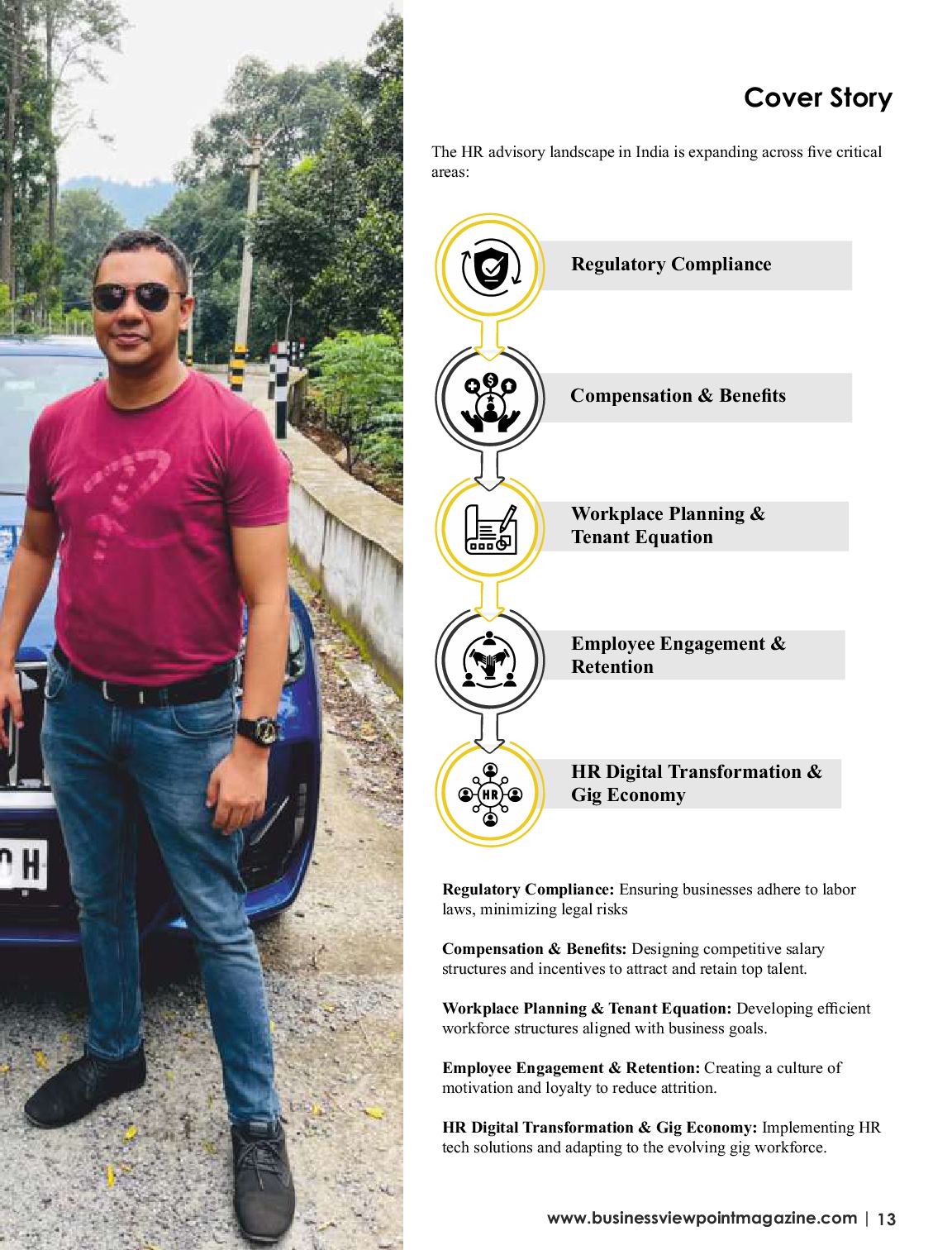
  7. The HR advisory landscape in India is expanding across five

    critical areas: Regulatory Compliance: Ensuring businesses adhere to labor laws, minimizing legal risks Compensation & Benefits: Designing competitive salary structures and incentives to attract and retain top talent. Workplace Planning & Tenant Equation: Developing efficient workforce structures aligned with business goals. Employee Engagement & Retention: Creating a culture of motivation and loyalty to reduce attrition. HR Digital Transformation & Gig Economy: Implementing HR tech solutions and adapting to the evolving gig workforce. Regulatory Compliance Compensation & Benefits Workplace Planning & Tenant Equation Employee Engagement & Retention HR Digital Transformation & Gig Economy Cover Story www.businessviewpointmagazine.com | 13
  8. The Role of Mentorship in HR Leadership For Farhan, mentorship

    is a natural and continuous process that influences careers and industries. He believes that people often find mentors organically, whether in their personal lives, among friends, or in the workplace. He emphasizes that mentorship is not confined to hierarchical relationships. While managers can act as mentors, valuable learning often comes from diverse interactions. It’s not necessarily important that only your manager can be your mentor. You could just pick up the phone and talk to someone—even from another company—and gain valuable insights, he adds. As businesses continue to evolve, so does the need for knowledge- sharing. The mentor-mentee model is not just relevant today—it is timeless. Mentorship will exist not only in this industry but as long as the human race continues. The model will keep continuing. And yes, it's super critical, Farhan affirms, highlighting the model’s lasting impact on professional growth and organizational success. Mentorship is a natural process. We knowingly or unknowingly end up getting mentored or we choose our mentors by ourselves. It could be in personal life, within family, among friends, or at the workplace—100%," says Farhan. “ | 2025 14
  9. The Evolving Role of HR Leaders Farhan believes that HR

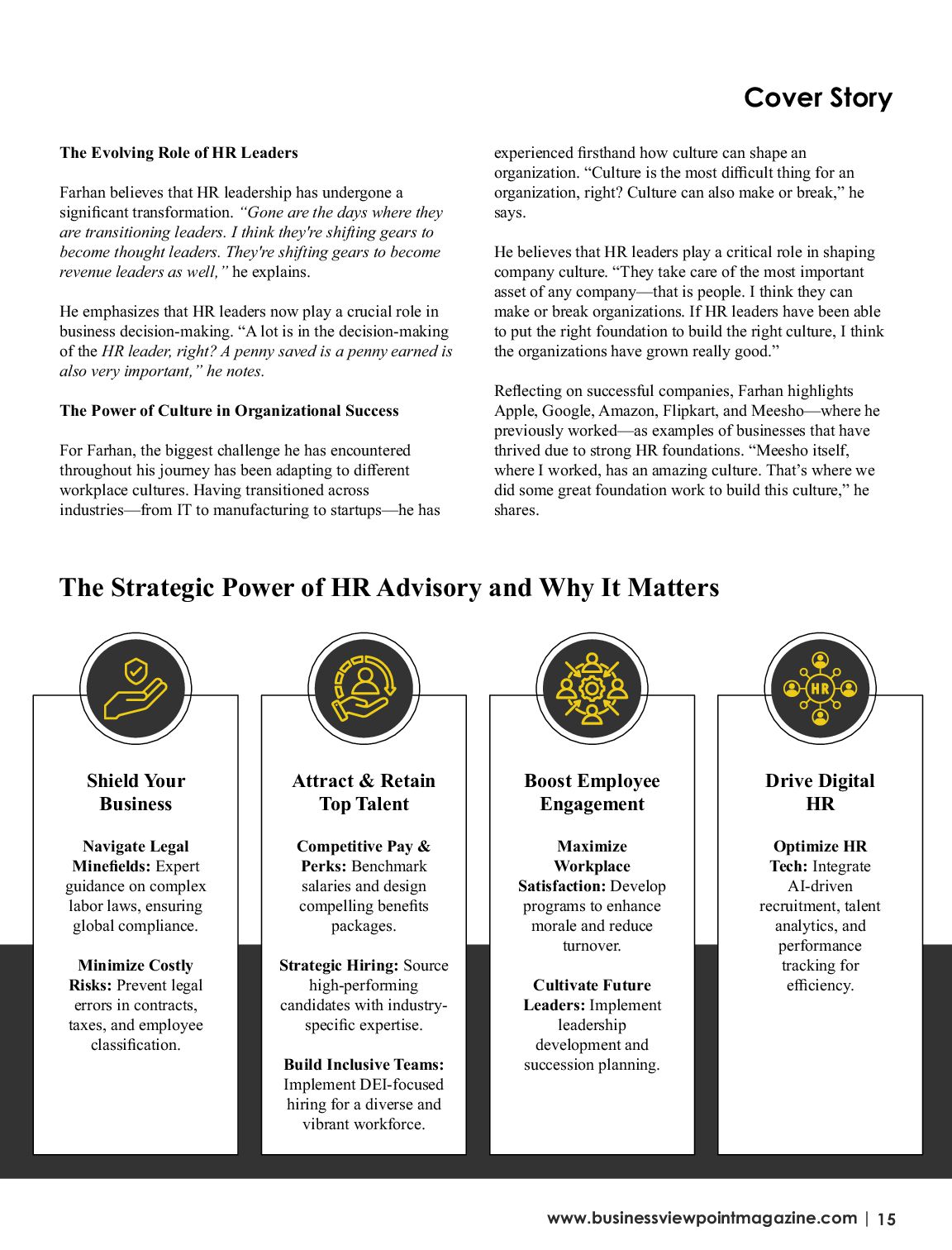
    leadership has undergone a significant transformation. “Gone are the days where they are transitioning leaders. I think they're shifting gears to become thought leaders. They're shifting gears to become revenue leaders as well,” he explains. He emphasizes that HR leaders now play a crucial role in business decision-making. “A lot is in the decision-making of the HR leader, right? A penny saved is a penny earned is also very important,” he notes. The Power of Culture in Organizational Success For Farhan, the biggest challenge he has encountered throughout his journey has been adapting to different workplace cultures. Having transitioned across industries—from IT to manufacturing to startups—he has experienced firsthand how culture can shape an organization. “Culture is the most difficult thing for an organization, right? Culture can also make or break,” he says. He believes that HR leaders play a critical role in shaping company culture. “They take care of the most important asset of any company—that is people. I think they can make or break organizations. If HR leaders have been able to put the right foundation to build the right culture, I think the organizations have grown really good.” Reflecting on successful companies, Farhan highlights Apple, Google, Amazon, Flipkart, and Meesho—where he previously worked—as examples of businesses that have thrived due to strong HR foundations. “Meesho itself, where I worked, has an amazing culture. That’s where we did some great foundation work to build this culture,” he shares. The Strategic Power of HR Advisory and Why It Matters Navigate Legal Minefields: Expert guidance on complex labor laws, ensuring global compliance. Minimize Costly Risks: Prevent legal errors in contracts, taxes, and employee classification. Shield Your Business Competitive Pay & Perks: Benchmark salaries and design compelling benefits packages. Strategic Hiring: Source high-performing candidates with industry- specific expertise. Build Inclusive Teams: Implement DEI-focused hiring for a diverse and vibrant workforce. Attract & Retain Top Talent Maximize Workplace Satisfaction: Develop programs to enhance morale and reduce turnover. Cultivate Future Leaders: Implement leadership development and succession planning. Boost Employee Engagement Optimize HR Tech: Integrate AI-driven recruitment, talent analytics, and performance tracking for efficiency. Drive Digital HR Cover Story www.businessviewpointmagazine.com | 15
  10. The Future of HR Leadership in India As businesses continue

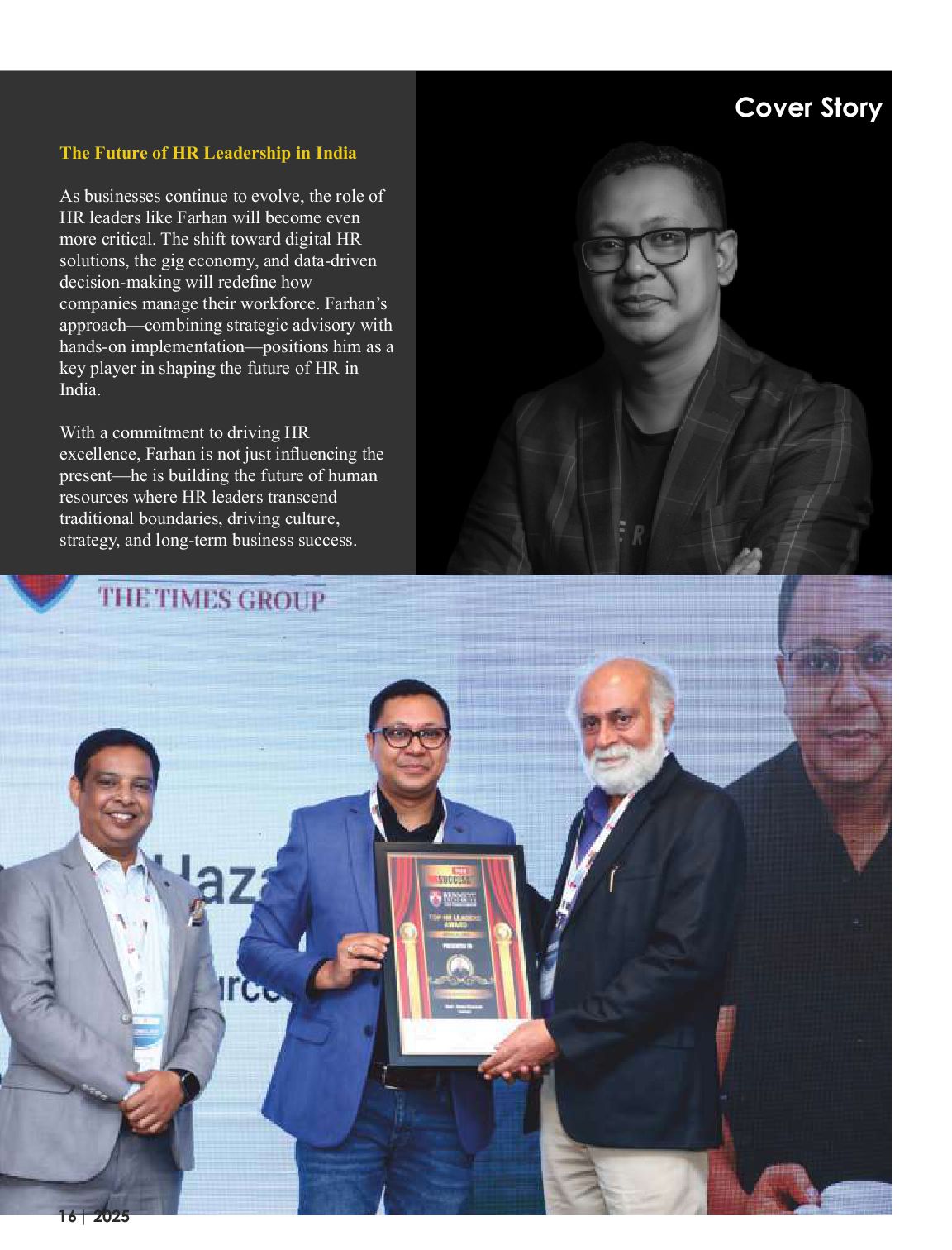
    to evolve, the role of HR leaders like Farhan will become even more critical. The shift toward digital HR solutions, the gig economy, and data-driven decision-making will redefine how companies manage their workforce. Farhan’s approach—combining strategic advisory with hands-on implementation—positions him as a key player in shaping the future of HR in India. With a commitment to driving HR excellence, Farhan is not just influencing the present—he is building the future of human resources where HR leaders transcend traditional boundaries, driving culture, strategy, and long-term business success. Cover Story | 2025 16
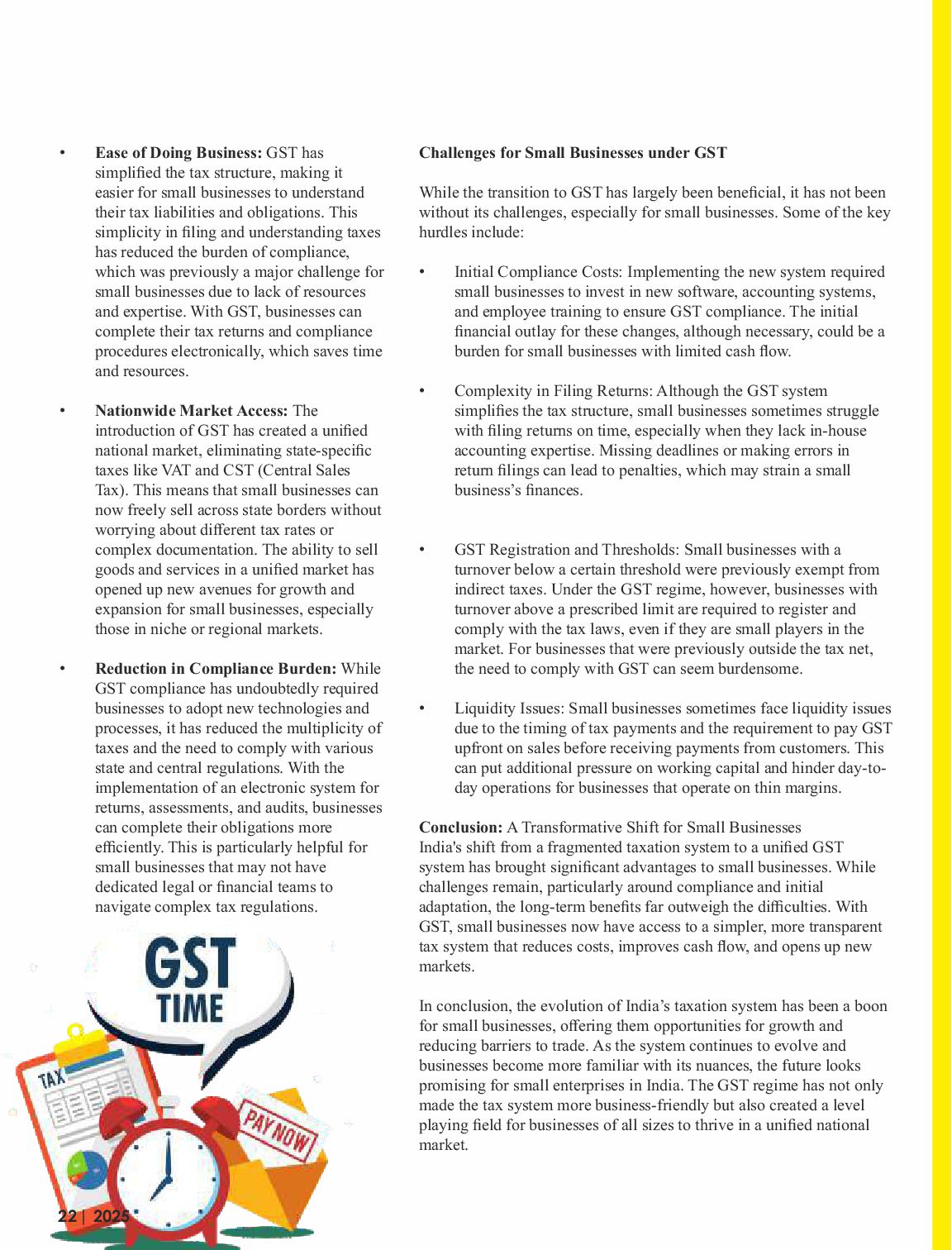
  11. India's taxation system underwent a monumental transformation with the introduction

    of the Goods and Services Tax (GST) in 2017. Prior to GST, businesses in India were faced with a complex, multi- layered tax regime that included various indirect taxes such as the Value Added Tax (VAT), Service Tax, Central Excise Duty, and Customs Duty, among others. This fragmented tax system not only created confusion and inefficiencies but also imposed significant compliance costs on businesses, especially small and medium enterprises (SMEs). With the advent of GST, India moved towards a more unified and transparent taxation system, fundamentally altering the business environment, particularly for small businesses. Taxation in India mpact of GST on Small Businesses ANewEraof www.businessviewpointmagazine.com | 19
  12. Pre-GST Era: A Fragmented Tax System Before the GST regime,

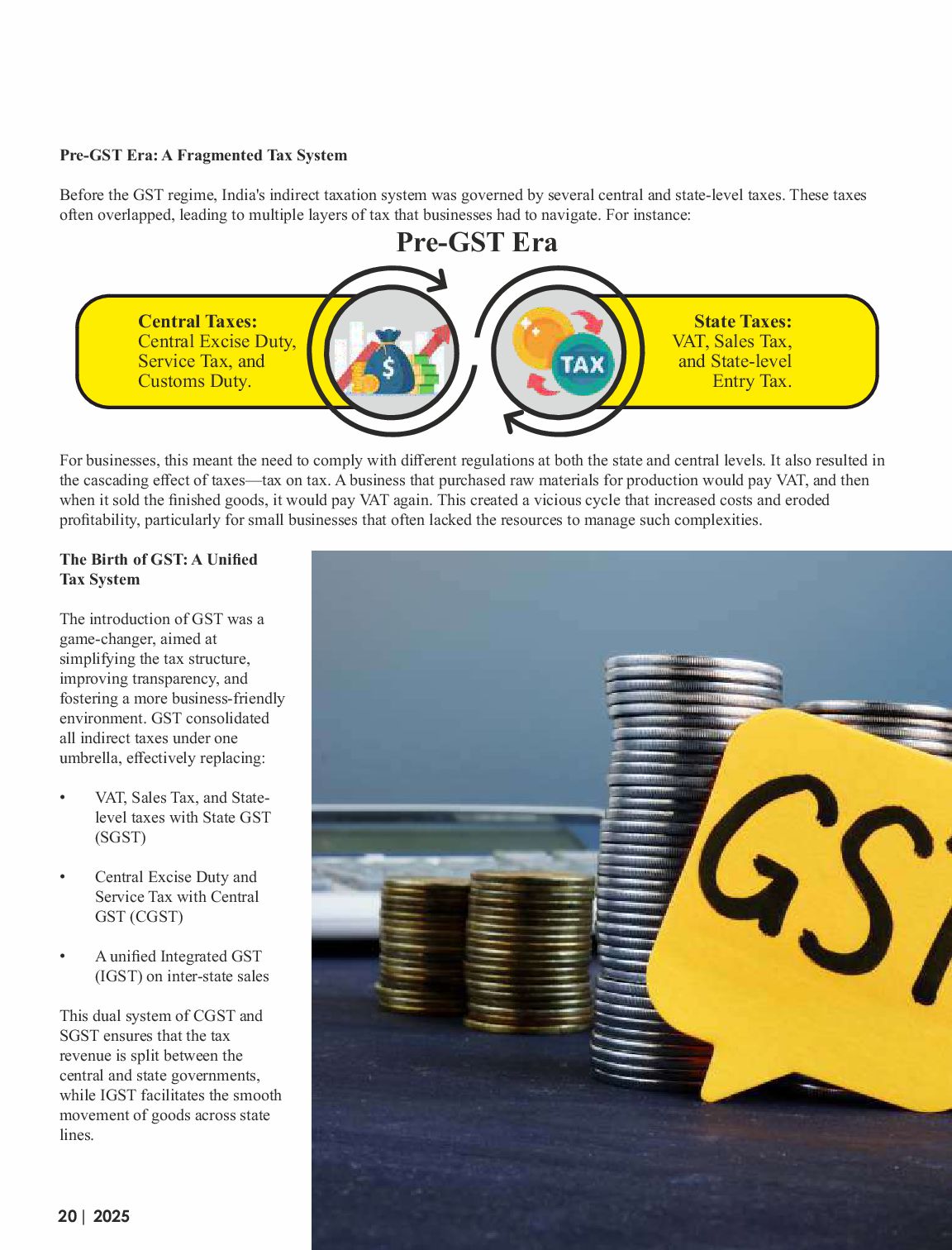
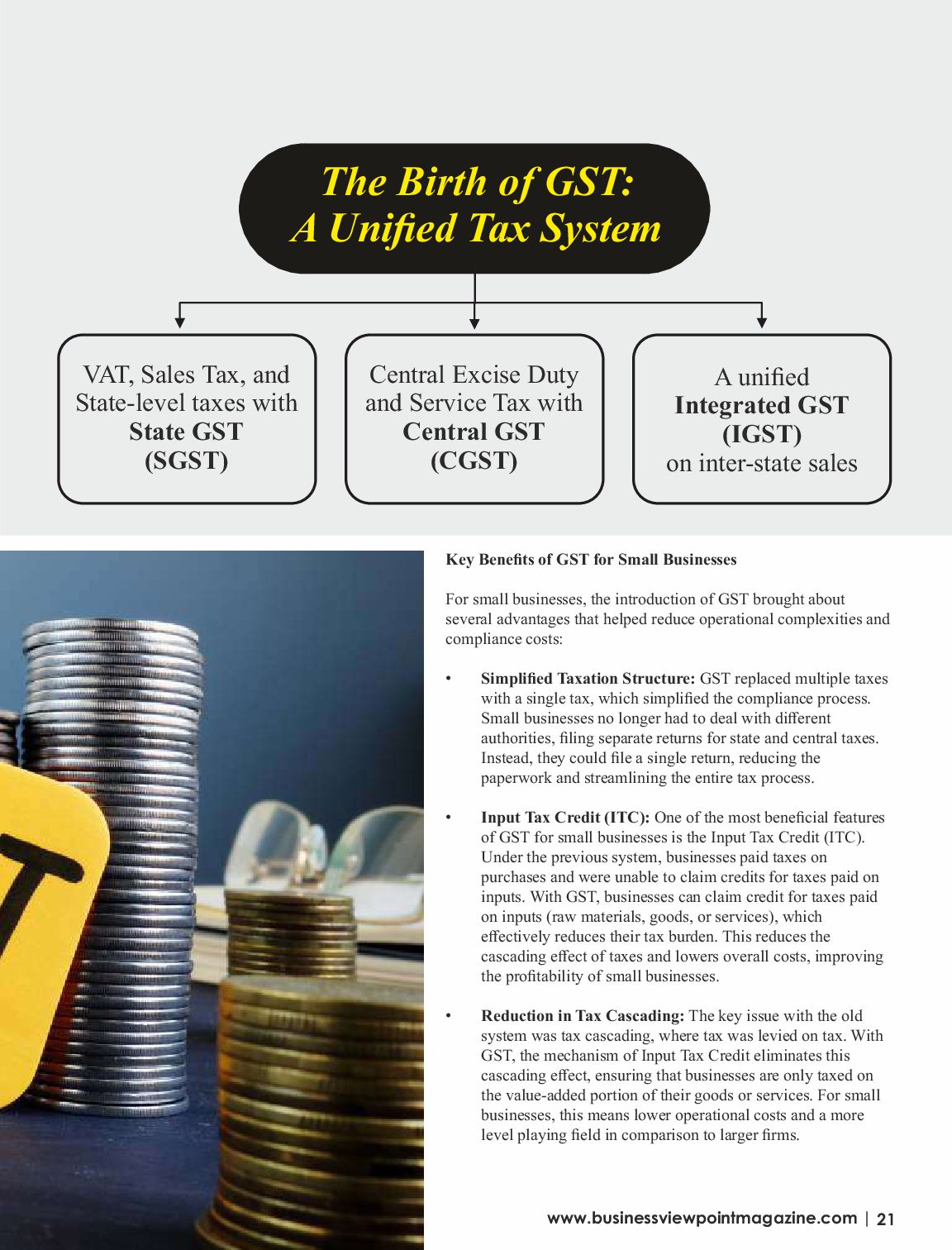
    India's indirect taxation system was governed by several central and state-level taxes. These taxes often overlapped, leading to multiple layers of tax that businesses had to navigate. For instance: Pre-GST Era Central Taxes: Central Excise Duty, Service Tax, and Customs Duty. State Taxes: VAT, Sales Tax, and State-level Entry Tax. For businesses, this meant the need to comply with different regulations at both the state and central levels. It also resulted in the cascading effect of taxes—tax on tax. A business that purchased raw materials for production would pay VAT, and then when it sold the finished goods, it would pay VAT again. This created a vicious cycle that increased costs and eroded profitability, particularly for small businesses that often lacked the resources to manage such complexities. The Birth of GST: A Unified Tax System The introduction of GST was a game-changer, aimed at simplifying the tax structure, improving transparency, and fostering a more business-friendly environment. GST consolidated all indirect taxes under one umbrella, effectively replacing: • VAT, Sales Tax, and State- level taxes with State GST (SGST) • Central Excise Duty and Service Tax with Central GST (CGST) • A unified Integrated GST (IGST) on inter-state sales This dual system of CGST and SGST ensures that the tax revenue is split between the central and state governments, while IGST facilitates the smooth movement of goods across state lines. | 2025 20
  13. VAT, Sales Tax, and State-level taxes with State GST (SGST)

    Central Excise Duty and Service Tax with Central GST (CGST) The Birth of GST: A Unified Tax System A unified Integrated GST (IGST) on inter-state sales Key Benefits of GST for Small Businesses For small businesses, the introduction of GST brought about several advantages that helped reduce operational complexities and compliance costs: • Simplified Taxation Structure: GST replaced multiple taxes with a single tax, which simplified the compliance process. Small businesses no longer had to deal with different authorities, filing separate returns for state and central taxes. Instead, they could file a single return, reducing the paperwork and streamlining the entire tax process. • Input Tax Credit (ITC): One of the most beneficial features of GST for small businesses is the Input Tax Credit (ITC). Under the previous system, businesses paid taxes on purchases and were unable to claim credits for taxes paid on inputs. With GST, businesses can claim credit for taxes paid on inputs (raw materials, goods, or services), which effectively reduces their tax burden. This reduces the cascading effect of taxes and lowers overall costs, improving the profitability of small businesses. • Reduction in Tax Cascading: The key issue with the old system was tax cascading, where tax was levied on tax. With GST, the mechanism of Input Tax Credit eliminates this cascading effect, ensuring that businesses are only taxed on the value-added portion of their goods or services. For small businesses, this means lower operational costs and a more level playing field in comparison to larger firms. www.businessviewpointmagazine.com | 21
  14. • Ease of Doing Business: GST has simplified the tax

    structure, making it easier for small businesses to understand their tax liabilities and obligations. This simplicity in filing and understanding taxes has reduced the burden of compliance, which was previously a major challenge for small businesses due to lack of resources and expertise. With GST, businesses can complete their tax returns and compliance procedures electronically, which saves time and resources. • Nationwide Market Access: The introduction of GST has created a unified national market, eliminating state-specific taxes like VAT and CST (Central Sales Tax). This means that small businesses can now freely sell across state borders without worrying about different tax rates or complex documentation. The ability to sell goods and services in a unified market has opened up new avenues for growth and expansion for small businesses, especially those in niche or regional markets. • Reduction in Compliance Burden: While GST compliance has undoubtedly required businesses to adopt new technologies and processes, it has reduced the multiplicity of taxes and the need to comply with various state and central regulations. With the implementation of an electronic system for returns, assessments, and audits, businesses can complete their obligations more efficiently. This is particularly helpful for small businesses that may not have dedicated legal or financial teams to navigate complex tax regulations. Challenges for Small Businesses under GST While the transition to GST has largely been beneficial, it has not been without its challenges, especially for small businesses. Some of the key hurdles include: • Initial Compliance Costs: Implementing the new system required small businesses to invest in new software, accounting systems, and employee training to ensure GST compliance. The initial financial outlay for these changes, although necessary, could be a burden for small businesses with limited cash flow. • Complexity in Filing Returns: Although the GST system simplifies the tax structure, small businesses sometimes struggle with filing returns on time, especially when they lack in-house accounting expertise. Missing deadlines or making errors in return filings can lead to penalties, which may strain a small business’s finances. • GST Registration and Thresholds: Small businesses with a turnover below a certain threshold were previously exempt from indirect taxes. Under the GST regime, however, businesses with turnover above a prescribed limit are required to register and comply with the tax laws, even if they are small players in the market. For businesses that were previously outside the tax net, the need to comply with GST can seem burdensome. • Liquidity Issues: Small businesses sometimes face liquidity issues due to the timing of tax payments and the requirement to pay GST upfront on sales before receiving payments from customers. This can put additional pressure on working capital and hinder day-to- day operations for businesses that operate on thin margins. Conclusion: A Transformative Shift for Small Businesses India's shift from a fragmented taxation system to a unified GST system has brought significant advantages to small businesses. While challenges remain, particularly around compliance and initial adaptation, the long-term benefits far outweigh the difficulties. With GST, small businesses now have access to a simpler, more transparent tax system that reduces costs, improves cash flow, and opens up new markets. In conclusion, the evolution of India’s taxation system has been a boon for small businesses, offering them opportunities for growth and reducing barriers to trade. As the system continues to evolve and businesses become more familiar with its nuances, the future looks promising for small enterprises in India. The GST regime has not only made the tax system more business-friendly but also created a level playing field for businesses of all sizes to thrive in a unified national market. | 2025 22
  15. Business Summits to Attend in India in 2025 TOP Business

    summits have become integral to the B2B ecosystem, serving as dynamic platforms where companies come together to connect, collaborate, and catalyze growth. These high-impact events offer unparalleled opportunities for networking with key decision-makers, industry leaders, and potential clients, laying the foundation for partnerships that drive business success. Furthermore, business summits are hubs of knowledge exchange, where participants gain valuable insights into emerging trends, innovative solutions, and market challenges, positioning themselves as thought leaders in their industries. For brands and marketers, business summits offer invaluable chances to enhance visibility, establish trust, and showcase expertise. Through speaking engagements, sponsorships, and exhibits, companies can reinforce their market positioning and engage directly with a highly relevant audience. Moreover, summits serve as gold mines for content marketing, allowing marketers to create and share valuable content while nurturing leads with event-specific campaigns. In today’s competitive business environment, these events empower companies to gather critical market intelligence, build strategic connections, and elevate their industry presence. | 2025 24
  16. How Marketers Can Maximize the Impact of Business Summits 1.

    Boosting Brand Positioning: Business summits provide a prime opportunity for brands to showcase their expertise and differentiate themselves from the competition. Speaking opportunities, sponsorships, and exhibits allow companies to reinforce their identity and engage with key industry players. 2. Content Marketing Powerhouse: These events are goldmines for marketers looking to create valuable content. From live coverage and interviews to panel discussions and insights, marketers can repurpose content for blogs, social media, and email campaigns—driving brand engagement and positioning their organization as an industry authority. 3. Building Trust and Credibility: Aligning with a reputable business summit enhances a brand’s credibility. By participating in these high-profile events, brands earn trust among attendees, reinforcing their reputation as reliable, influential industry players. 4. Direct Engagement with Decision-Makers: Summits provide rare, face-to-face opportunities with top decision-makers, enabling marketers to directly present their value propositions and forge lasting business relationships that can yield significant results. 5. Event-Specific Campaigns: Marketers can design customized campaigns around summit participation, offering exclusive deals, personalized invites, or post-event follow-ups to enhance brand visibility and maximize ROI. 6. Community Building: Business summits foster a sense of community among industry peers. For marketers, this is an opportunity to build and nurture relationships with customers, partners, and influencers, which can lead to long-term business collaborations. Upcoming Business Summits in India in 2025 1. The BFSI Summit What is the BFSI Summit? The BFSI Summit is a premier event dedicated to exploring innovations within the Banking, Financial Services, and Insurance sectors. As one of the largest forums for industry professionals, the summit provides valuable insights into advancements, policy updates, and emerging trends shaping the BFSI landscape. With its rich history, the event offers a platform for industry stakeholders to share experiences, collaborate, and address the challenges facing the sector. The Role of Business Summits in Fostering Innovation and Networking Business summits are far more than just keynote speeches and panel discussions—they are ecosystems of growth and opportunity. These events bring together like-minded individuals, encourage collaboration, and present cutting-edge solutions to pressing industry challenges. By participating in such summits, businesses can stay ahead of trends, enhance their strategies, and build networks that drive long-term success. India has quickly become a global hub for business and technology events, with its booming economy, innovation-driven policies, and commitment to digital transformation. As a result, business summits in India are gaining international attention and prominence, offering valuable exposure to global participants. www.businessviewpointmagazine.com | 25
  17. Key Highlights of the BFSI Summit: This summit focuses on

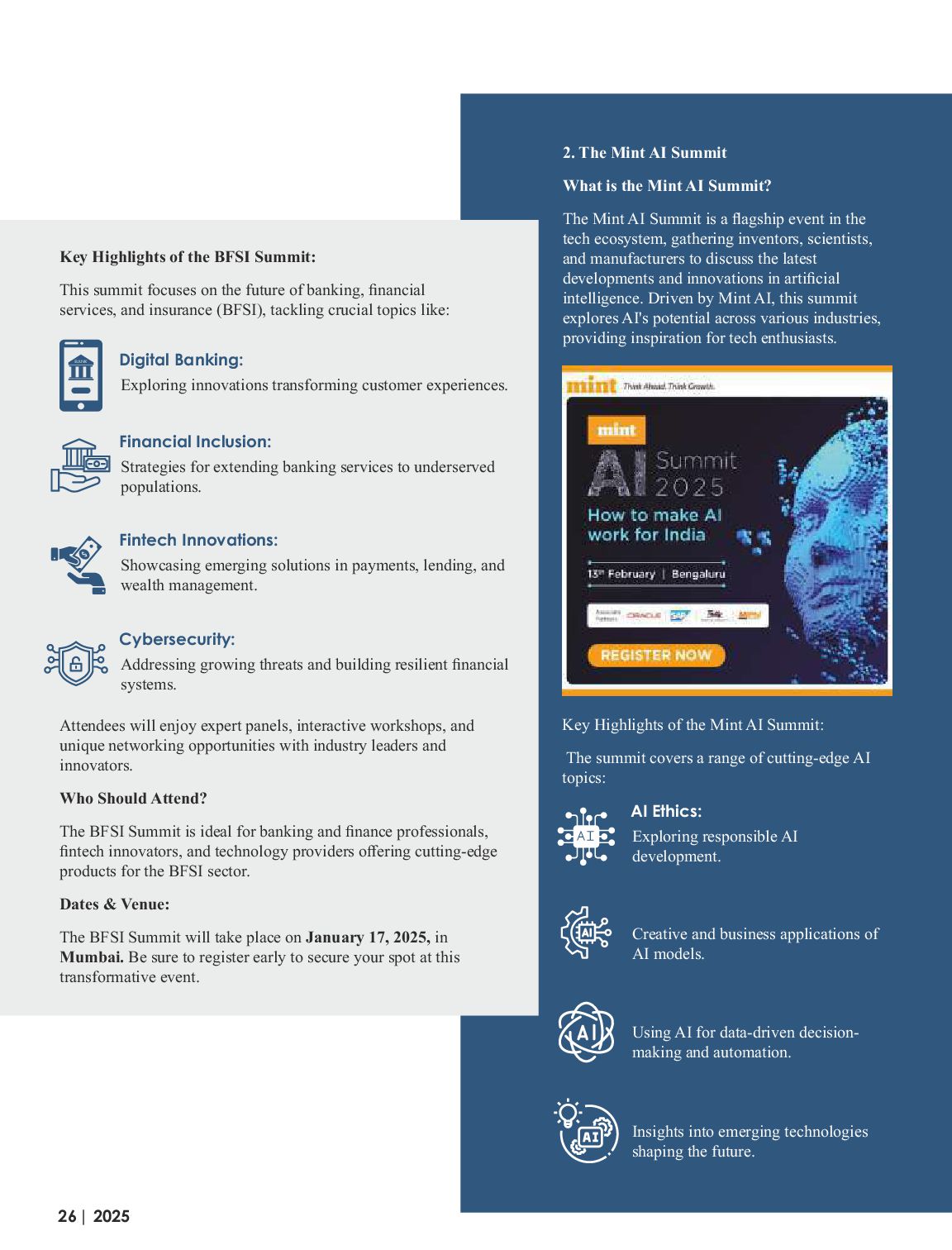
    the future of banking, financial services, and insurance (BFSI), tackling crucial topics like: Attendees will enjoy expert panels, interactive workshops, and unique networking opportunities with industry leaders and innovators. Who Should Attend? The BFSI Summit is ideal for banking and finance professionals, fintech innovators, and technology providers offering cutting-edge products for the BFSI sector. Dates & Venue: The BFSI Summit will take place on January 17, 2025, in Mumbai. Be sure to register early to secure your spot at this transformative event. Digital Banking: Exploring innovations transforming customer experiences. Financial Inclusion: Strategies for extending banking services to underserved populations. Fintech Innovations: Showcasing emerging solutions in payments, lending, and wealth management. Cybersecurity: Addressing growing threats and building resilient financial systems. 2. The Mint AI Summit What is the Mint AI Summit? The Mint AI Summit is a flagship event in the tech ecosystem, gathering inventors, scientists, and manufacturers to discuss the latest developments and innovations in artificial intelligence. Driven by Mint AI, this summit explores AI's potential across various industries, providing inspiration for tech enthusiasts. AI Ethics: Exploring responsible AI development. Generative AI: Creative and business applications of AI models. Machine Learning in Business: Using AI for data-driven decision- making and automation. Future AI Trends: Insights into emerging technologies shaping the future. Key Highlights of the Mint AI Summit: The summit covers a range of cutting-edge AI topics: | 2025 26
  18. Who Should Attend? The Mint AI Summit is designed for

    AI enthusiasts, business leaders seeking AI integration strategies, data scientists, and tech startups showcasing AI-driven solutions. Dates & Venue: The Mint AI Summit will take place in February 2025, in Delhi NCR. Register early to be part of this exciting tech event. Key Highlights of the She Slays Awards: Recognition of Excellence: Honoring women leaders from diverse fields. 3. She Slays Awards Summit What is the She Slays Awards? The She Slays Awards Summit celebrates the achievements of powerful women across various disciplines, recognizing their leadership in business, technology, and social justice. This event empowers women and highlights their significant contributions to society. Who Should Attend? The She Slays Awards Summit is perfect for women leaders, aspiring entrepreneurs, diversity advocates, and corporate professionals. Dates & Venue: The She Slays Awards Summit will take place in March 2025, in New Delhi. Early registration is open, so be sure to secure your place. Recognition of Excellence: Honoring women leaders from diverse fields. Empowering Conversations: Panel discussions on leadership, entrepreneurship, and gender equality. Networking Opportunities: Connecting with influential women leaders, investors, and organizations. Workshops & Masterclasses: Practical sessions to inspire and empower attendees. www.businessviewpointmagazine.com | 27
  19. How Brands Can Leverage HT Media Business Summits in 2025

    She Slays: Empowering Women in Leadership For brands supporting diversity, equity, and inclusion, the She Slays Summit offers a powerful platform for visibility. Through sponsorships, speaking opportunities, and workshops, marketers can align their brand with the values of gender equality and workplace empowerment. Mint AI: Driving Innovation with Artificial Intelligence At Mint AI, brands can demonstrate their expertise in AI solutions through product demos, keynotes, and panel discussions. This summit offers an unparalleled opportunity to showcase innovation and generate leads from a highly engaged tech audience. BFSI Summit: Targeting Financial Services Innovators The BFSI Summit presents a unique opportunity for brands in the fintech space to position themselves as trusted partners in digital transformation, compliance, and customer acquisition. Sponsorships and expert-led sessions provide valuable visibility among key decision-makers in the BFSI sector. Why These Summits Are Must- Attend Events Ÿ Stay Ahead of Industry Trends: Both the BFSI Summit and Mint AI Summit offer a prime opportunity to stay up-to-date with the latest trends and technological advancements in digital banking, fintech, and AI. Ÿ Platforms for Knowledge- Sharing and Networking: These summits foster growth by connecting industry leaders and innovators. Attendees can exchange knowledge, experiences, and form valuable partnerships through expert panels, workshops, and informal networking sessions. Ÿ Insights into Latest Technologies and Market Strategies: Attendees gain access to cutting-edge technologies and business strategies that can shape the future of their industries. Whether it's digital transformation in banking or the use of AI in business, summits provide the tools and insights needed to stay relevant and innovative. Conclusion: India's business summits in 2025 provide unparalleled opportunities for companies to showcase innovations, forge strategic partnerships, and position themselves as leaders in their respective industries. Whether focusing on fintech, AI, or empowering women in leadership, these events offer platforms to engage with key decision-makers, build brand visibility, and stay ahead of emerging trends. Attending or sponsoring these summits will provide businesses with the insights and connections needed to thrive in an ever-evolving and competitive market. | 2025 28

  20. Tax planning and compliance are essential components of effective financial

    management in India. With the complex landscape of tax laws and regulations, individuals and businesses must navigate these intricacies to optimize their tax liabilities while adhering to legal requirements. This article delves into the significance of tax planning and compliance, exploring strategies to maximize savings and ensure adherence to the ever-evolving tax regulations in India. Understanding Tax Planning and Compliance Tax planning involves strategizing financial affairs to minimize tax liabilities within the legal framework. It encompasses a range of activities, including the timing of income, choosing the right investment avenues, and utilizing deductions and exemptions effectively. On the other hand, tax compliance refers to the adherence to tax laws, including timely filing of returns, payment of taxes, and maintaining accurate financial records. Together, tax planning and compliance ensure that individuals and businesses can make informed decisions regarding their finances while fulfilling their legal obligations. A Comprehensive Guide for | 2025 30
  21. The Importance of Tax Planning and Compliance • Minimizing Tax

    Liability: Through effective tax planning, taxpayers can identify legitimate ways to reduce their tax burden. This can include investing in tax-saving instruments, making use of available deductions, and planning capital gains strategically. • Avoiding Penalties: Non-compliance with tax regulations can result in significant penalties, interest on delayed payments, and even legal consequences. Ensuring tax compliance protects taxpayers from such financial pitfalls. • Financial Security: Proper tax planning allows individuals and businesses to allocate their resources more effectively, contributing to long-term financial stability. Understanding the tax implications of various financial decisions empowers taxpayers to make informed choices. • Future Planning: Tax planning is not just about the current financial year; it also involves forecasting future income and expenses. This foresight enables taxpayers to plan for retirement, education, and other significant life events. • Enhanced Cash Flow Management: Effective tax planning can lead to improved cash flow. By strategically timing income and expenses, taxpayers can retain more capital for reinvestment or personal use. | 2025 32
  22. Tax Compliance: Best Practices • File Returns on Time: Timely

    filing of income tax returns is essential to avoid penalties and interest charges. The due date for individual taxpayers is usually July 31 of the assessment year. • Pay Advance Tax: For taxpayers whose tax liability exceeds ₹10,000, advance tax must be paid in installments throughout the year. Proper calculation and timely payment can prevent a hefty tax burden at the end of the financial year. • Stay Updated with Tax Regulations: The Indian tax landscape is dynamic, with frequent changes in laws and regulations. Taxpayers should stay informed about the latest updates to ensure compliance. • Seek Professional Guidance: Engaging a tax consultant or financial advisor can provide valuable insights into tax planning and compliance. Professionals can help navigate complex tax laws and develop tailored strategies to optimize tax positions. • Review and Revise Regularly: Tax planning is an ongoing process. Regularly reviewing financial plans and tax strategies allows taxpayers to adapt to changing circumstances and optimize their tax positions. The Role of Technology in Tax Planning and Compliance The digital age has transformed the way taxpayers approach tax planning and compliance. With various software and online platforms available, individuals and businesses can now manage their finances more effectively. Tax preparation software can simplify the process of filing returns, tracking deductions, and managing compliance. Additionally, e-filing options provide a convenient way to submit tax returns and receive refunds promptly. Conclusion In conclusion, tax planning and compliance are vital for achieving financial success in India. By understanding the importance of effective tax strategies and adhering to legal obligations, taxpayers can minimize their tax liabilities and avoid potential pitfalls. With careful planning and the right resources, individuals and businesses can navigate the complexities of the tax system, ultimately contributing to their overall financial well-being. Embracing proactive tax planning and ensuring strict compliance will empower taxpayers to make informed financial decisions and secure a prosperous future. Tax planning and compliance should not be viewed merely as annual chores but as integral parts of financial management. By adopting a strategic approach, Indian taxpayers can harness the full potential of their finances while fulfilling their tax obligations. Key Strategies for Effective Tax Planning Utilize Deductions and Exemptions: The Indian tax system provides various deductions under sections such as 80C (investments in specified savings schemes), 80D (health insurance premiums), and others. Taxpayers should take full advantage of these provisions to reduce their taxable income. Invest in Tax-Saving Instruments: Instruments like the Public Provident Fund (PPF), Equity-Linked Saving Schemes (ELSS), and National Pension Scheme (NPS) not only help in tax planning but also contribute to long-term wealth creation. Maintain Accurate Financial Records: Keeping detailed records of income, expenses, and investments is crucial for ensuring tax compliance. This practice aids in accurate tax filing and provides a clear picture of one’s financial health. Plan for Capital Gains: Taxpayers should be aware of the capital gains tax implications when selling assets. Strategic planning can help minimize tax liability on these gains, especially if losses from other investments can be offset. Consider the Timing of Income: Taxpayers should assess the timing of income realization. For instance, deferring income to the next financial year may be beneficial if it results in a lower tax bracket. www.businessviewpointmagazine.com | 33
  23. w w w . b u s i n e

    s s v i e w p o i n t m a g a z i n e . c o m