Designing a Robot-based Customer Feedback Gathering Service for Hospitality Industry ... and what are the HRI community’s recommendations on designing robotic services?
from guests? 2. How should we design robot behaviors to gather guest feedback effectively? "How was your stay?": Exploring the Use of Robots for Gathering Customer Feedback in the Hospitality Industry (Chung & Cakmak, 2018)
guest scenario survey (n=60) 3. Comparison study of 3 different behaviors 4. Deployment study at 3 hotels (~4 months) A method inspired by sequential exploratory method (creswell, 2003) but wasn’t as (academically) rigorous User Research Evaluation "How was your stay?": Exploring the Use of Robots for Gathering Customer Feedback in the Hospitality Industry (Chung & Cakmak, 2018)
design tool Semi-structured interview & observations at interviewees’ workplace See Pantofaru and Takayama 2011 for more Participants 5 hotel employees Had administrative jobs, used Relay 4 San Francisco Bay area, 1 LA hotels Median # of rooms: 175 [62, 304]
3. Current Practices for Collecting Guest Feedback 4. Your Experiences with Relay 5. Your Opinions on Collecting Guest Feedback with Relay 6. Tour 7. Wrap-up
kind of cool.” “It is too rude to not respond to this cute robot.” “A feedback robot? That's just weird, the world isn't ready for that.” “I wouldn't trust the robot.”
solicitations (In)convenience Privacy issues “Less likely, but I’d feel the staff might be watching over my shoulder.” “Checking out. I just want to leave and get home.”
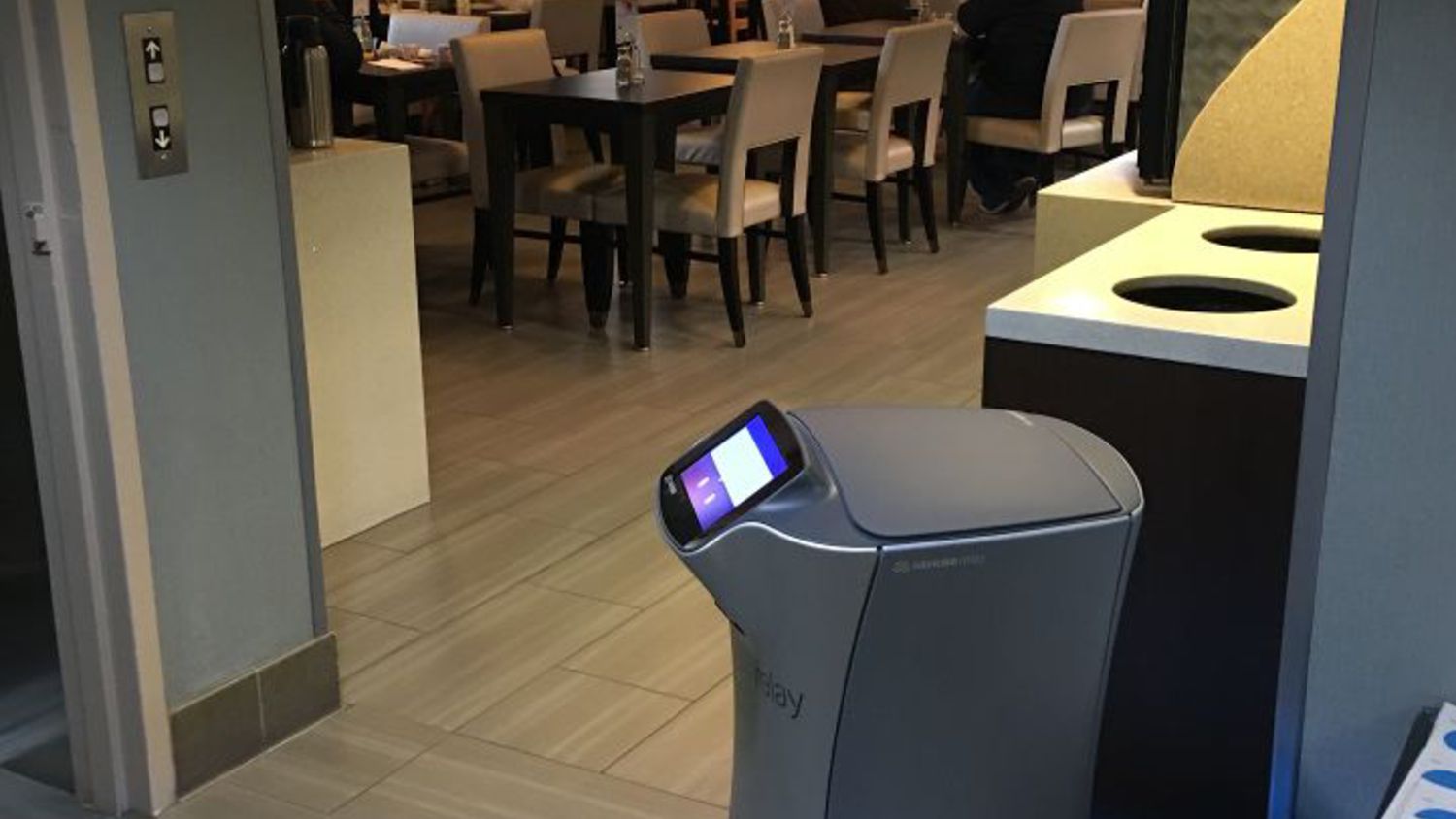
robot added, interaction patterns, and real-world challenges in gathering feedback from customers with robots Field Study Design Prototyped with UX designer & hotel manager Passive observations & follow-up interviews during 2 visit days
and fun” UI for customizing behavior by the hotel Follow-up or explain • but respect the guest privacy first Consider the existing workflow & overall changes introduced by a robot
honest Leverage user research, product design tools properly • e.g., need to asking right questions to right people Do cheaper, lighter design iterations as much as possible • e.g., storyboarding, WoZ, HRI literature search Do scoping, setting/leveraging the context, defining variables as much as possible • e.g., might be the factor that distinguishes a robot-based service from others
from human-computer interaction (HCI)? • HCI involving robots? ◦ What is robots? ◦ Agency & intentionality? • What does that imply for studying HRI? ◦ Should robots exploit being perceived as agents? From https://homes.cs.washington.edu/~todorov/courses/cseP590/07_HRI.pdf
framework • Exploring the role of robots in home organization Take a look at findings • Robots in organizations: the role of workflow, social, and environmental factors in human-robot interaction • "Now, I Have a Body": Uses and Social Norms for Mobile Remote Presence in the Workplace • Most HRI papers focus on specific questions, contexts, … be adaptive!
HRI: A Field Study of a Commercial Social Robot at an Airport • Enabling building service robots to guide blind people a participatory design approach • Mechanical ottoman: how robotic furniture offers and withdraws support • Which robot behavior can motivate children to tidy up their toys? Design and Evaluation of "Ranger" • … How to use HRI research in industry
take the framework, methodology • take findings adoptively • mix with industry standard user research, product design, project management, and startup tools & methodologies Now what? • Check out awesome HRI papers! • Tell me about your project! Teach me your/your client’s method! Summary


 mikechung
 toy1618
 abokadotyann
 ajstarks
 kimichan
 rezaline
 ishii_mit
 a2k
 0b1tk
 hcrane
 omy
 uto
 chiemitaki
 iamctodd
 chrislema
 bluesmoon
 addyosmani
 mfonobong
 akademiya2063
 productmarketing
 mongodb
 szymonslowik
 skipperchong
 tammyeverts
 lara