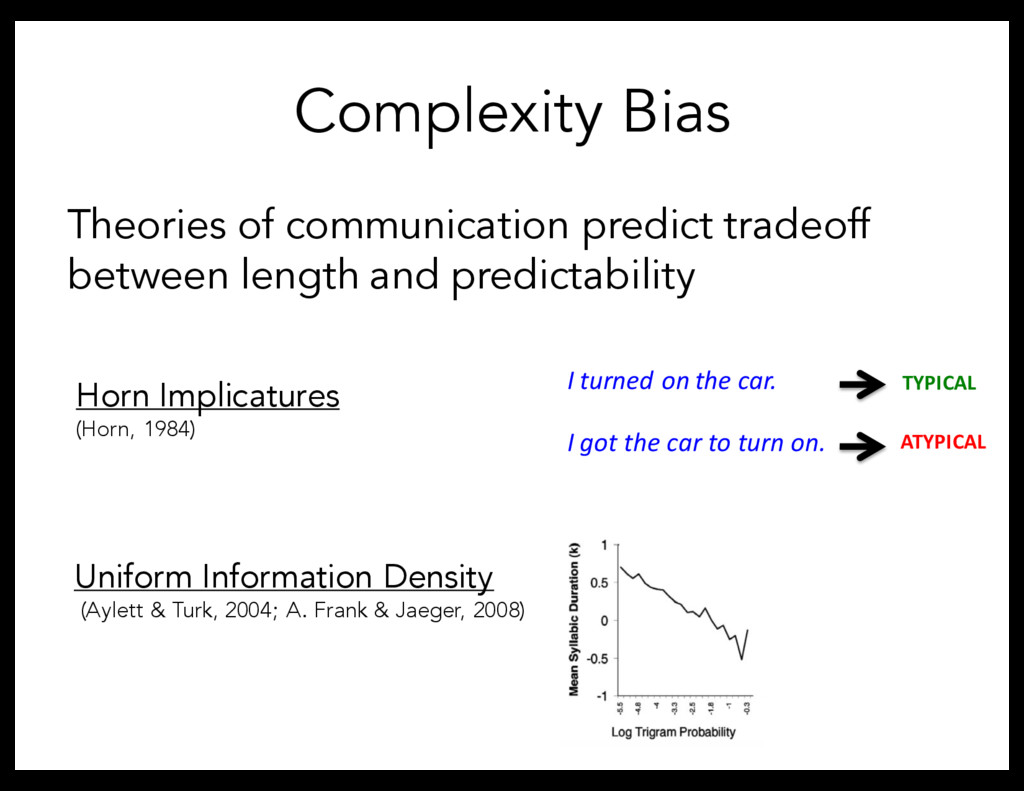
predictability Horn Implicatures (Horn, 1984) I turned on the car. I got the car to turn on. TYPICAL ATYPICAL Uniform Information Density (Aylett & Turk, 2004; A. Frank & Jaeger, 2008)
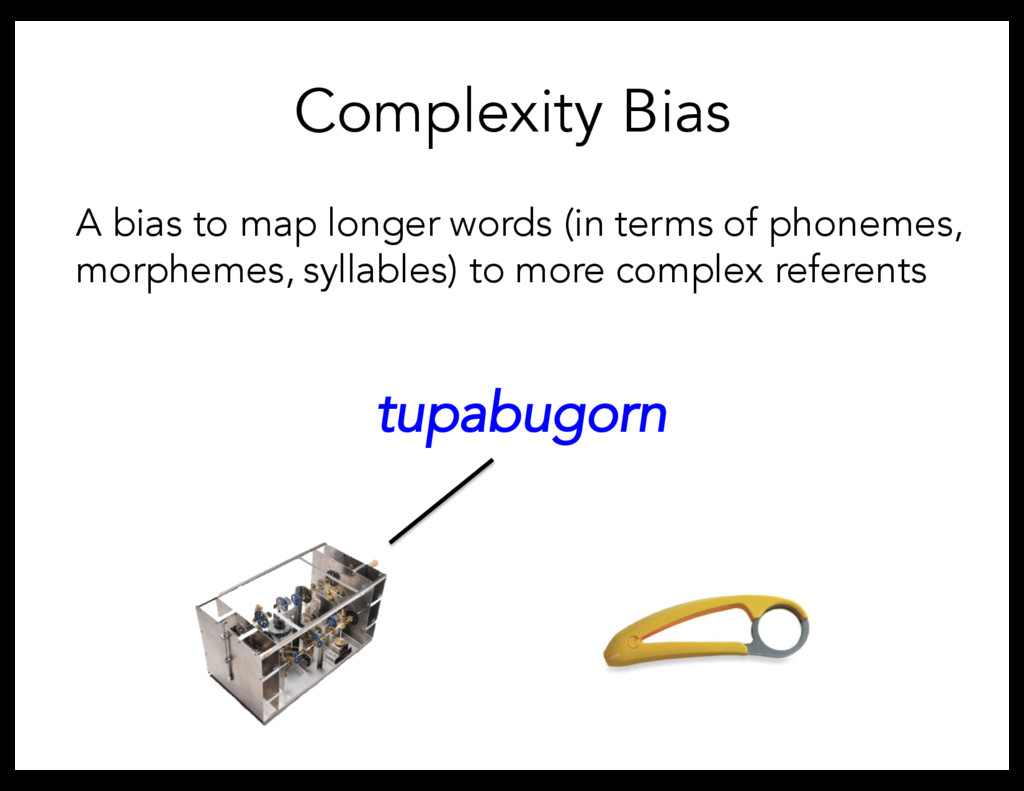
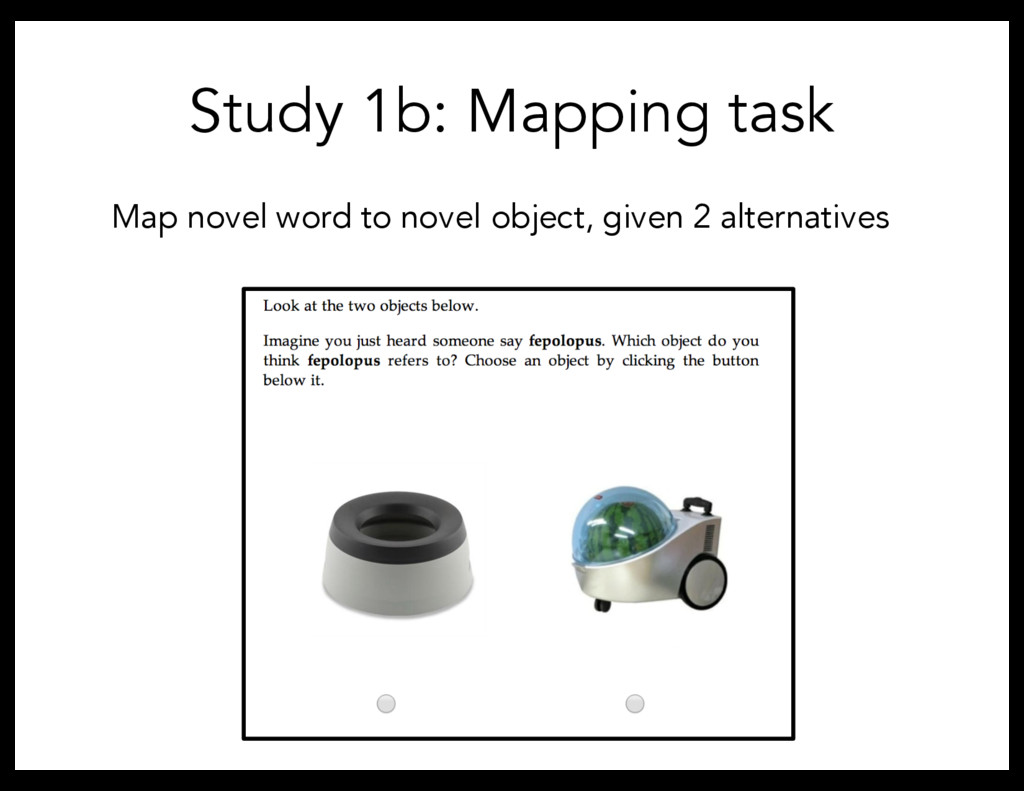
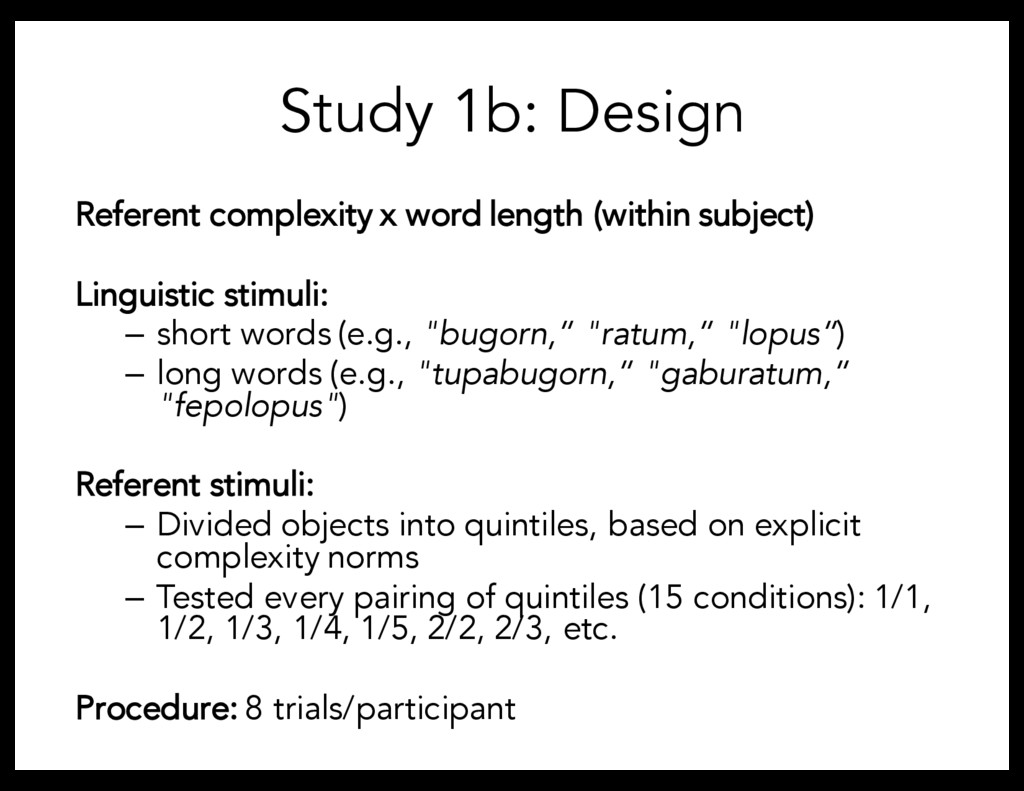
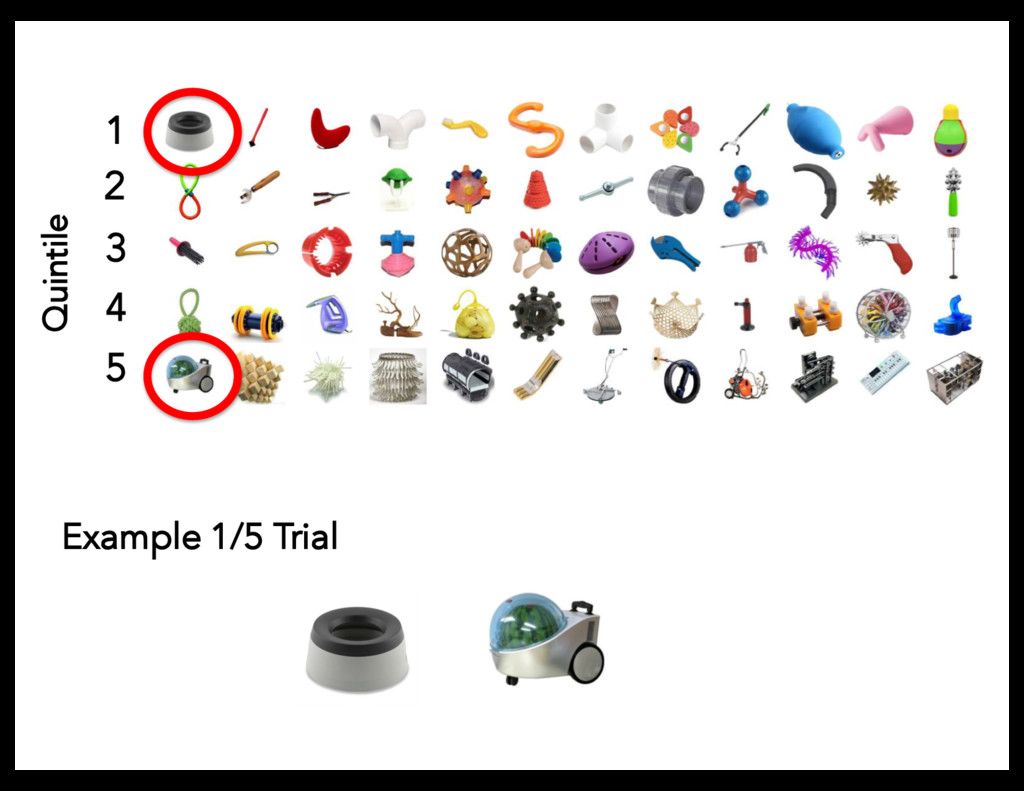
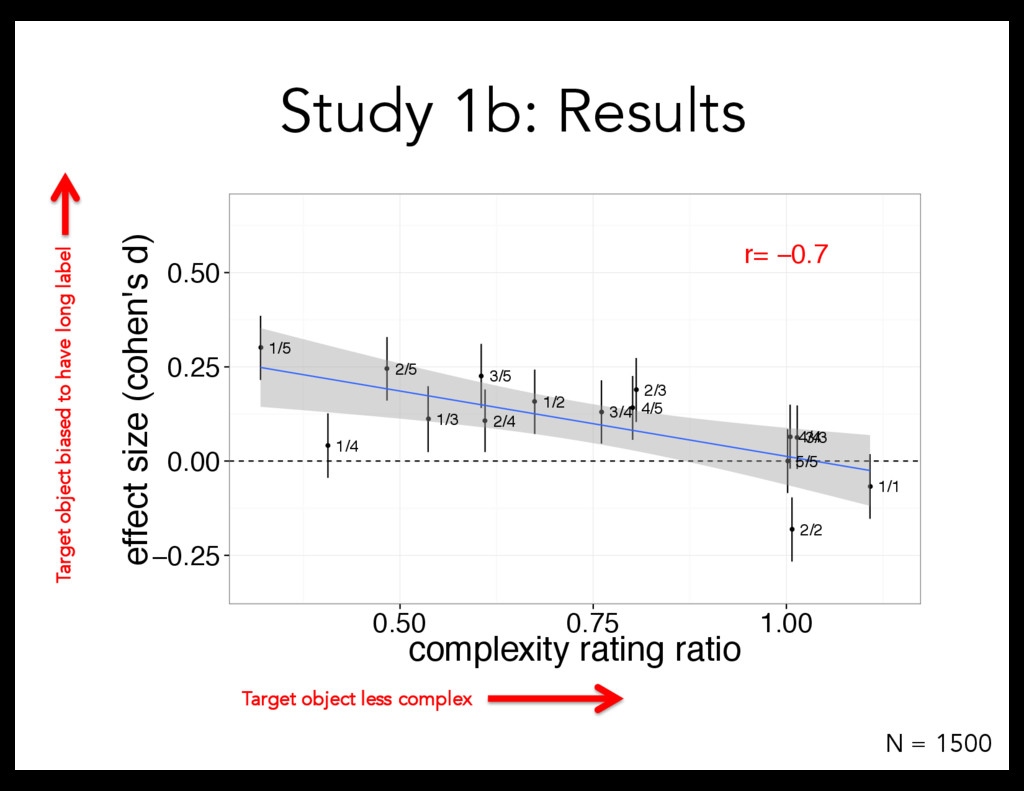
Linguistic stimuli: – short words (e.g., "bugorn,” "ratum,” "lopus”) – long words (e.g., "tupabugorn,” "gaburatum,” "fepolopus") Referent stimuli: – Divided objects into quintiles, based on explicit complexity norms – Tested every pairing of quintiles (15 conditions): 1/1, 1/2, 1/3, 1/4, 1/5, 2/2, 2/3, etc. Procedure: 8 trials/participant
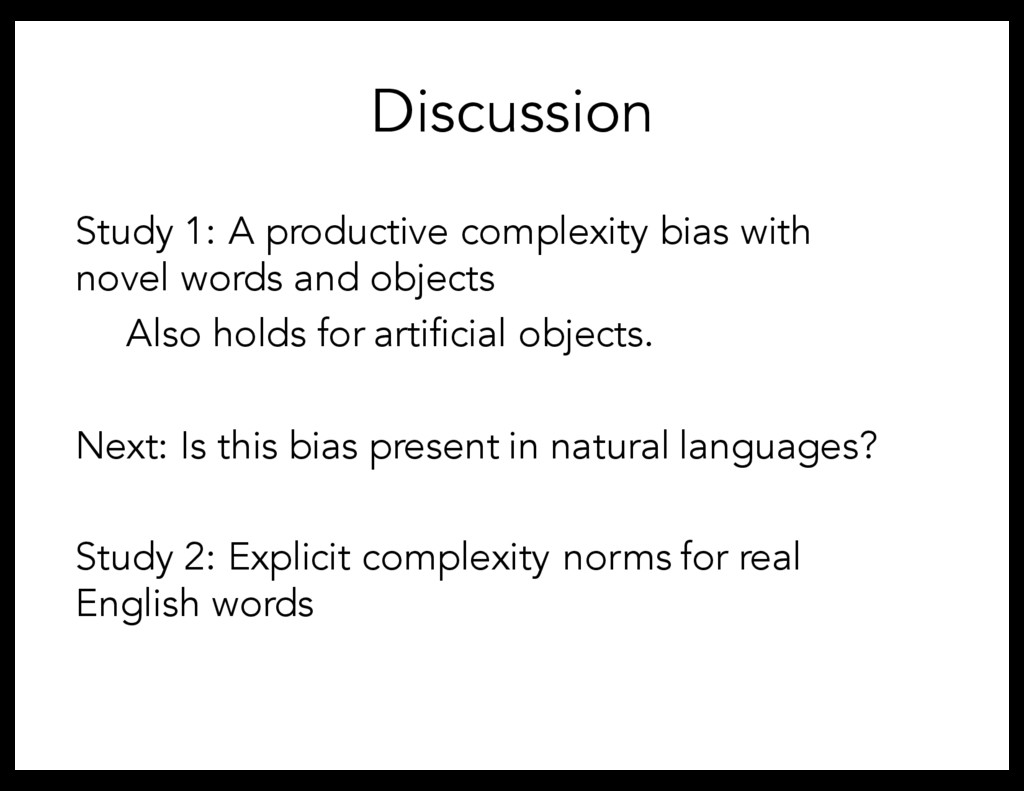
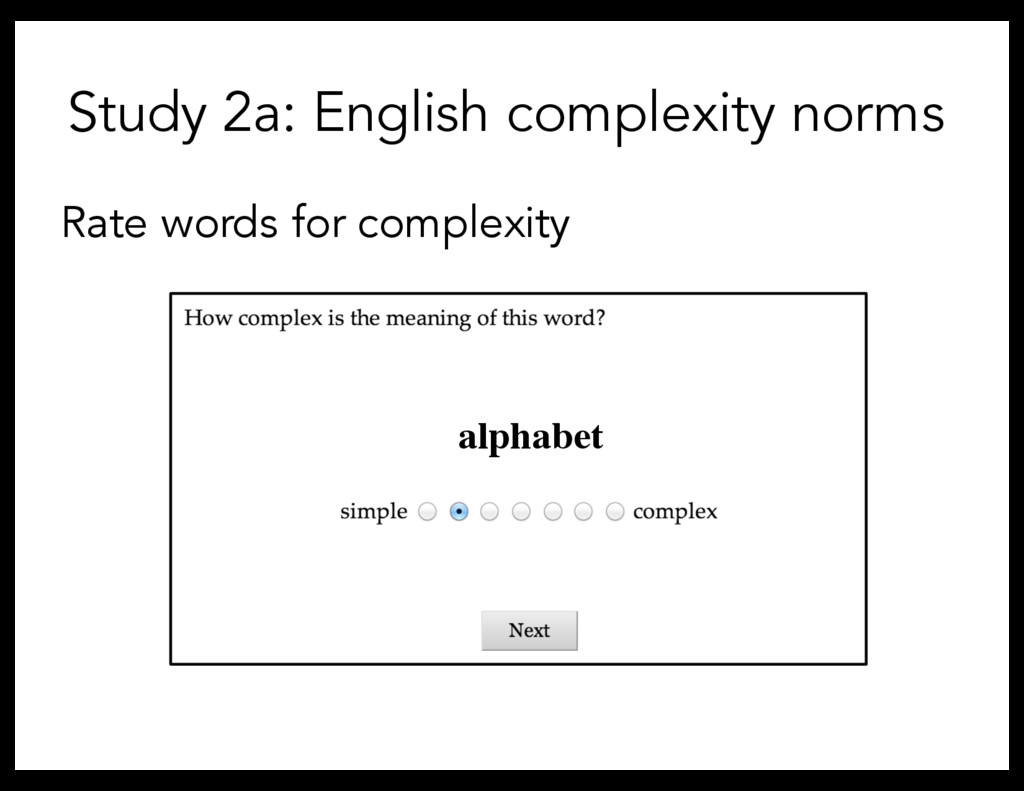
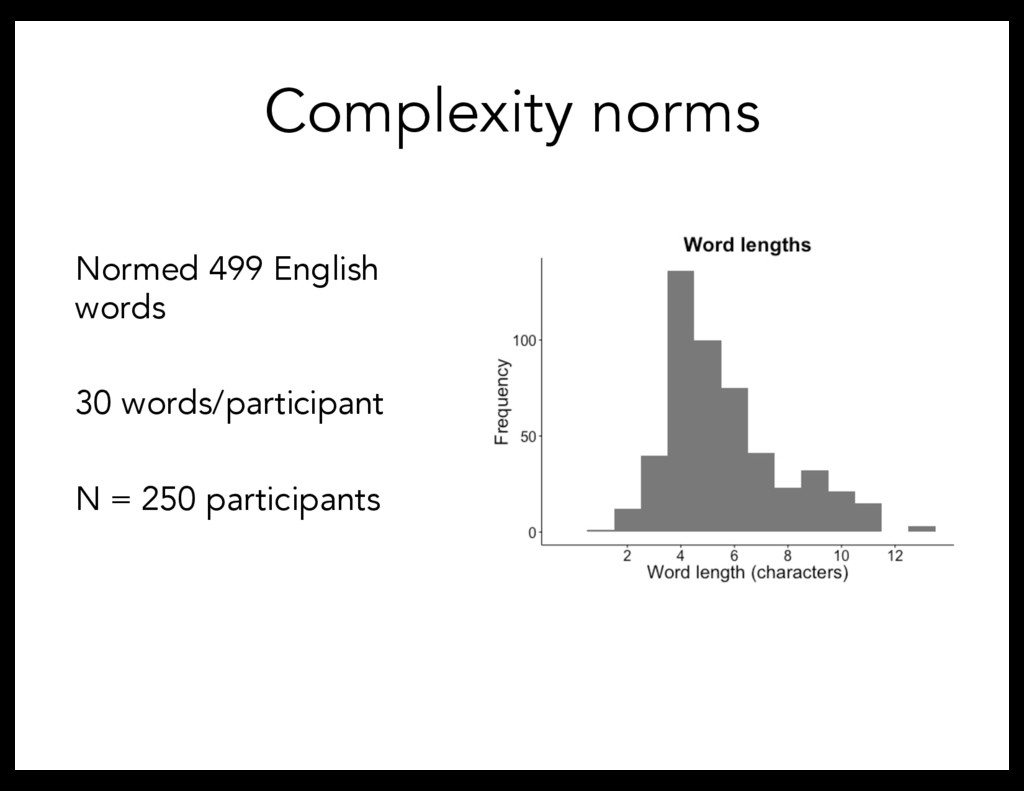
objects Also holds for artificial objects. Next: Is this bias present in natural languages? Study 2: Explicit complexity norms for real English words Discussion
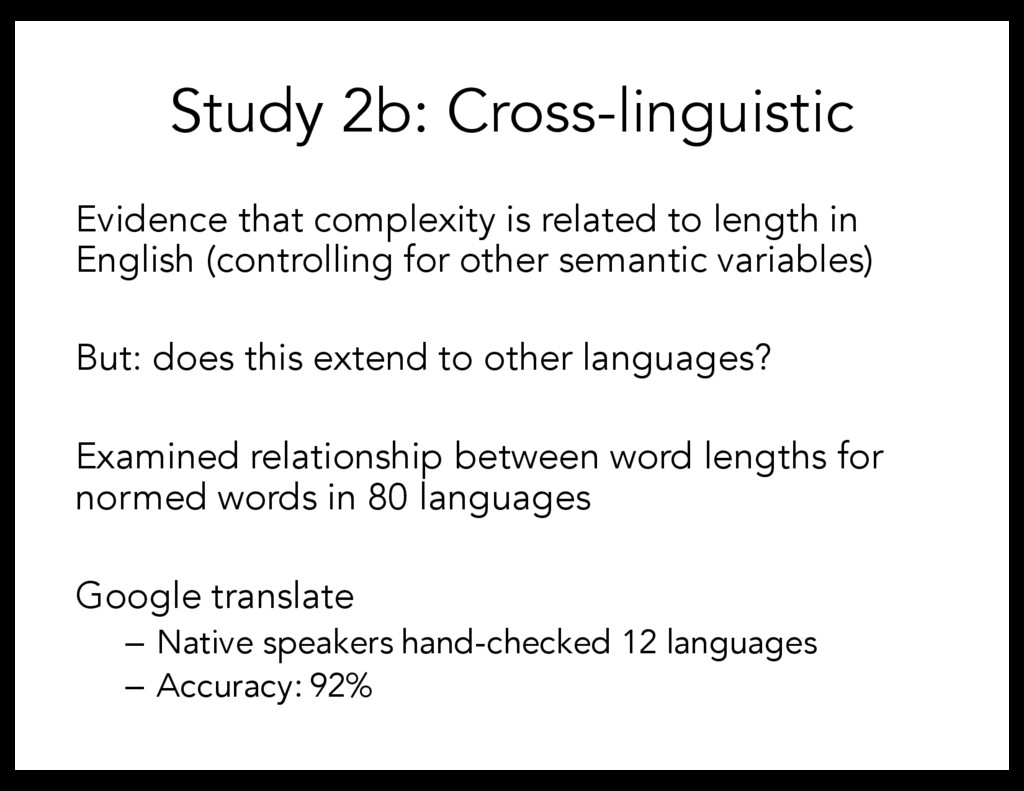
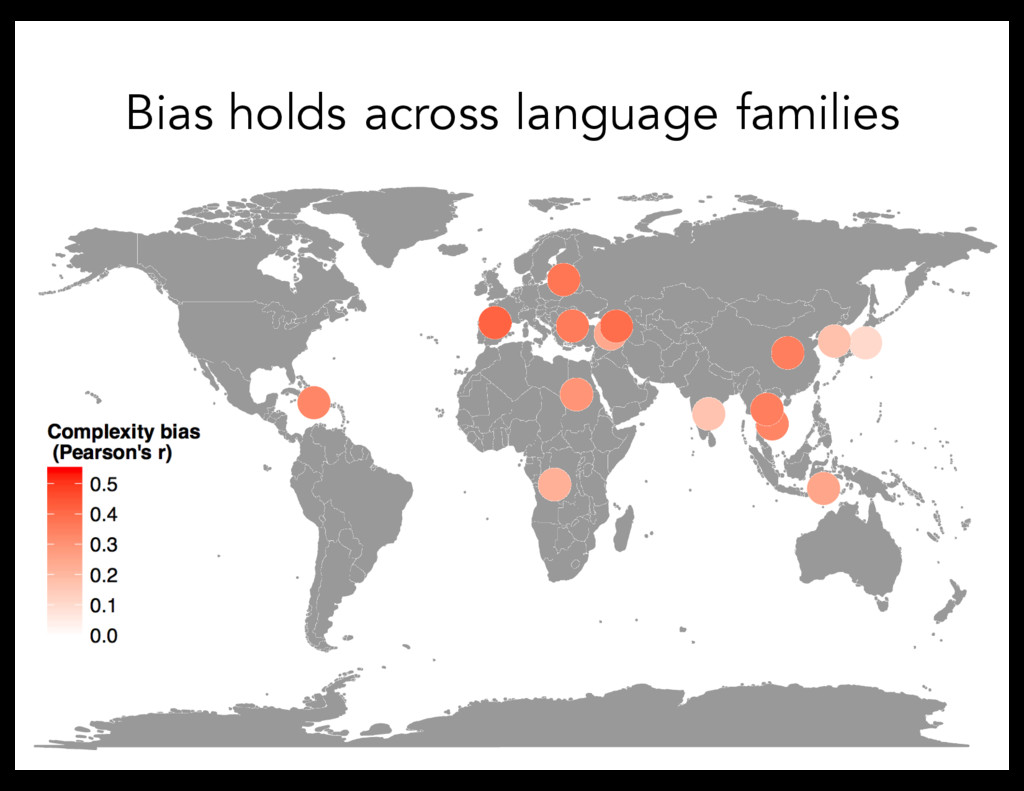
in English (controlling for other semantic variables) But: does this extend to other languages? Examined relationship between word lengths for normed words in 80 languages Google translate – Native speakers hand-checked 12 languages – Accuracy: 92%
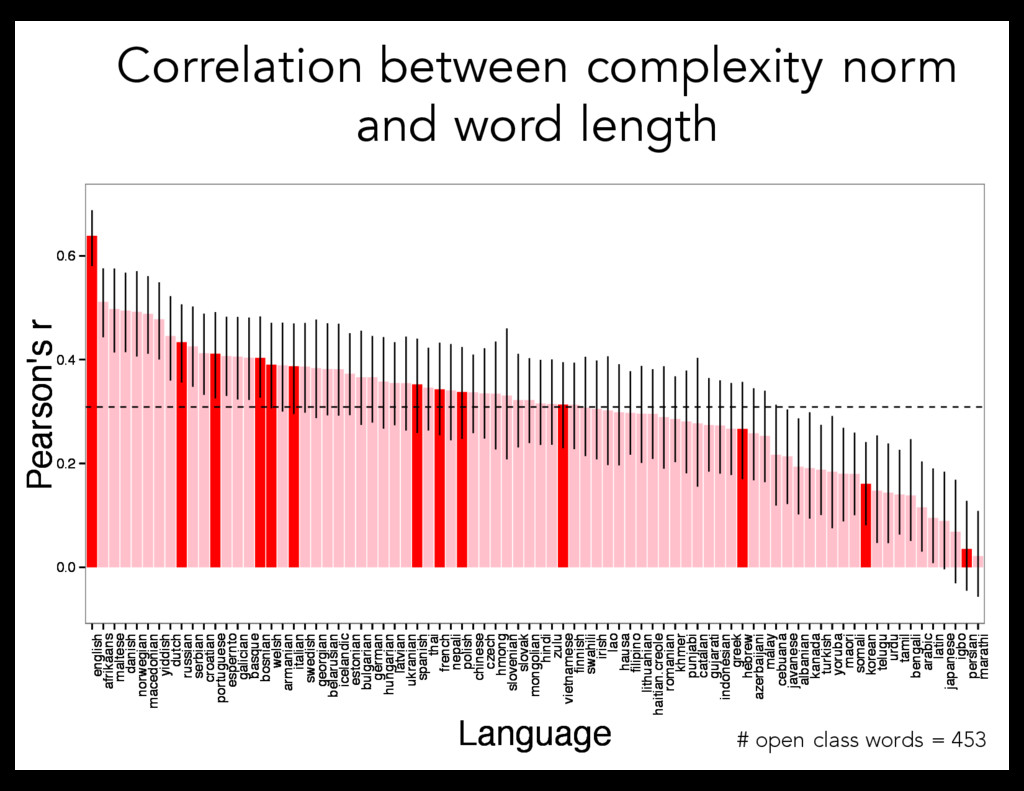
yiddish dutch russian serbian croatian portuguese espernto galician basque bosnian welsh armanian italian swedish georgian belarusian icelandic estonian bulgarian german hungarian latvian ukranian spanish thai french nepali polish chinese czech hmong slovenian slovak mongolian hindi zulu vietnamese finnish swahili irish lao hausa filipino lithuanian haitian.creole romanian khmer punjabi catalan gujarati indonesian greek hebrew azerbaijani malay cebuana javanese albanian kanada turkish yoruba maori somali korean telugu urdu tamil bengali arabic latin japanese igbo persian marathi Language Pearson's r 0.0 0.2 0.4 0.6 english afrikaans maltese danish norwegian macedonian yiddish dutch russian serbian croatian portuguese espernto galician basque bosnian welsh armanian italian swedish georgian belarusian icelandic estonian bulgarian german hungarian latvian ukranian spanish thai french nepali polish chinese czech hmong slovenian slovak mongolian hindi zulu vietnamese finnish swahili irish lao hausa filipino lithuanian haitian.creole romanian khmer punjabi catalan gujarati indonesian greek hebrew azerbaijani malay cebuana javanese albanian kanada turkish yoruba maori somali korean telugu urdu tamil bengali arabic latin japanese igbo persian marathi Language Pearson's r 0.0 0.2 0.4 0.6 english afrikaans maltese danish norwegian macedonian yiddish dutch russian serbian croatian portuguese espernto galician basque bosnian welsh armanian italian swedish georgian belarusian icelandic estonian bulgarian german hungarian latvian ukranian spanish thai french nepali polish chinese czech hmong slovenian slovak mongolian hindi zulu vietnamese finnish swahili irish lao hausa filipino lithuanian haitian.creole romanian khmer punjabi catalan gujarati indonesian greek hebrew azerbaijani malay cebuana javanese albanian kanada turkish yoruba maori somali korean telugu urdu tamil bengali arabic latin japanese igbo persian marathi Language Pearson's r # open class words = 453 Correlation between complexity norm and word length
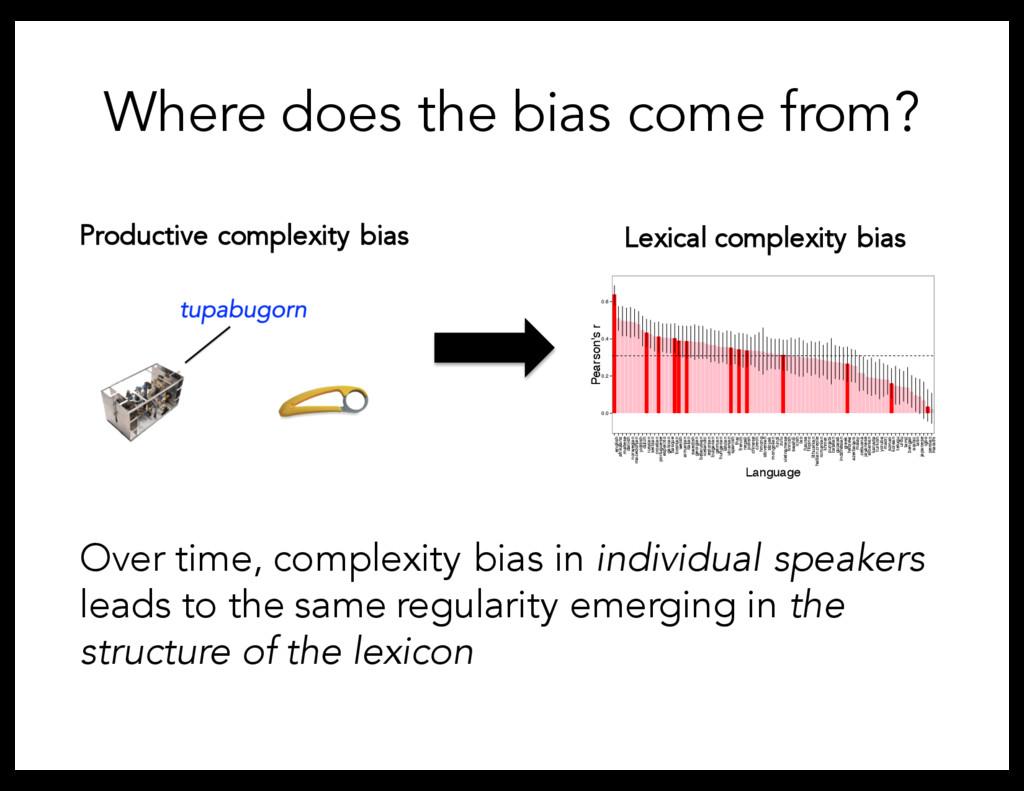
yiddish dutch russian serbian croatian portuguese espernto galician basque bosnian welsh armanian italian swedish georgian belarusian icelandic estonian bulgarian german hungarian latvian ukranian spanish thai french nepali polish chinese czech hmong slovenian slovak mongolian hindi zulu vietnamese finnish swahili irish lao hausa filipino lithuanian haitian.creole romanian khmer punjabi catalan gujarati indonesian greek hebrew azerbaijani malay cebuana javanese albanian kanada turkish yoruba maori somali korean telugu urdu tamil bengali arabic latin japanese igbo persian marathi Language Pearson's r Where does the bias come from? Over time, complexity bias in individual speakers leads to the same regularity emerging in the structure of the lexicon Productive complexity bias Lexical complexity bias
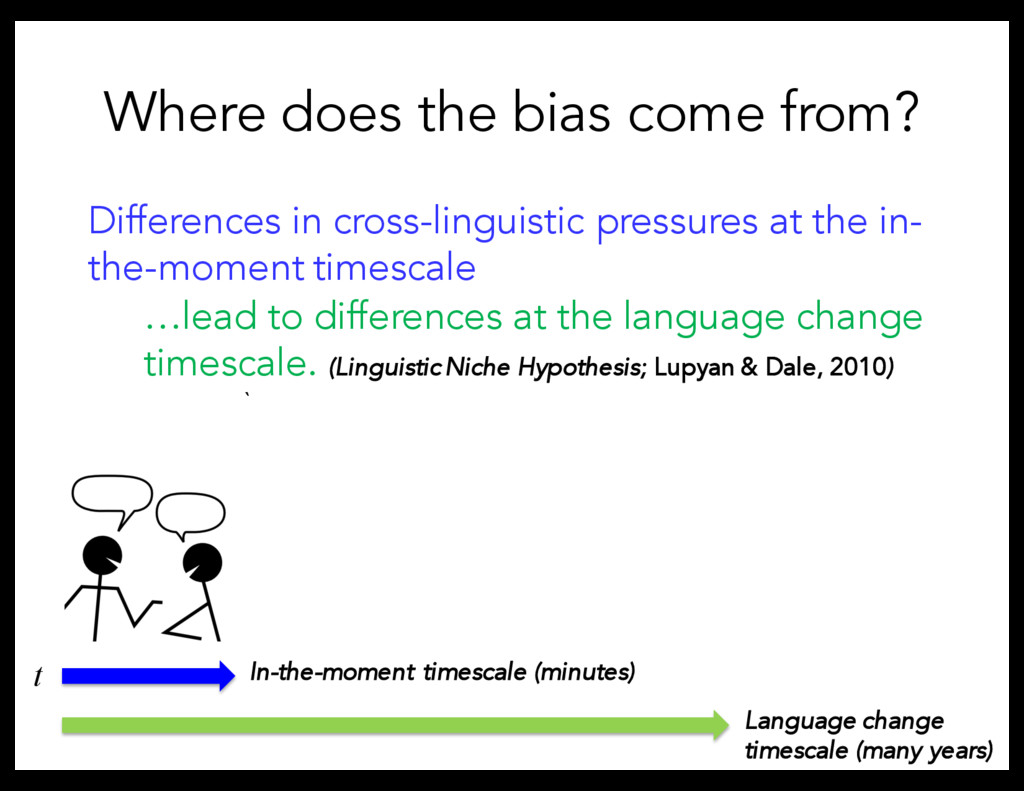
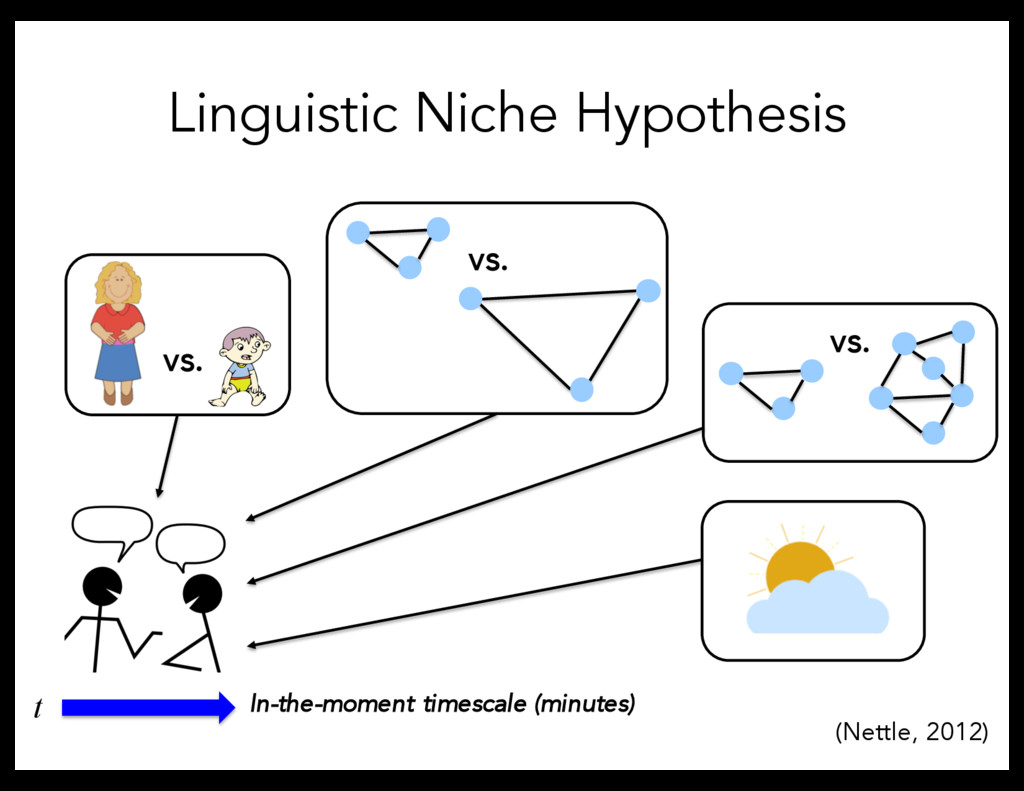
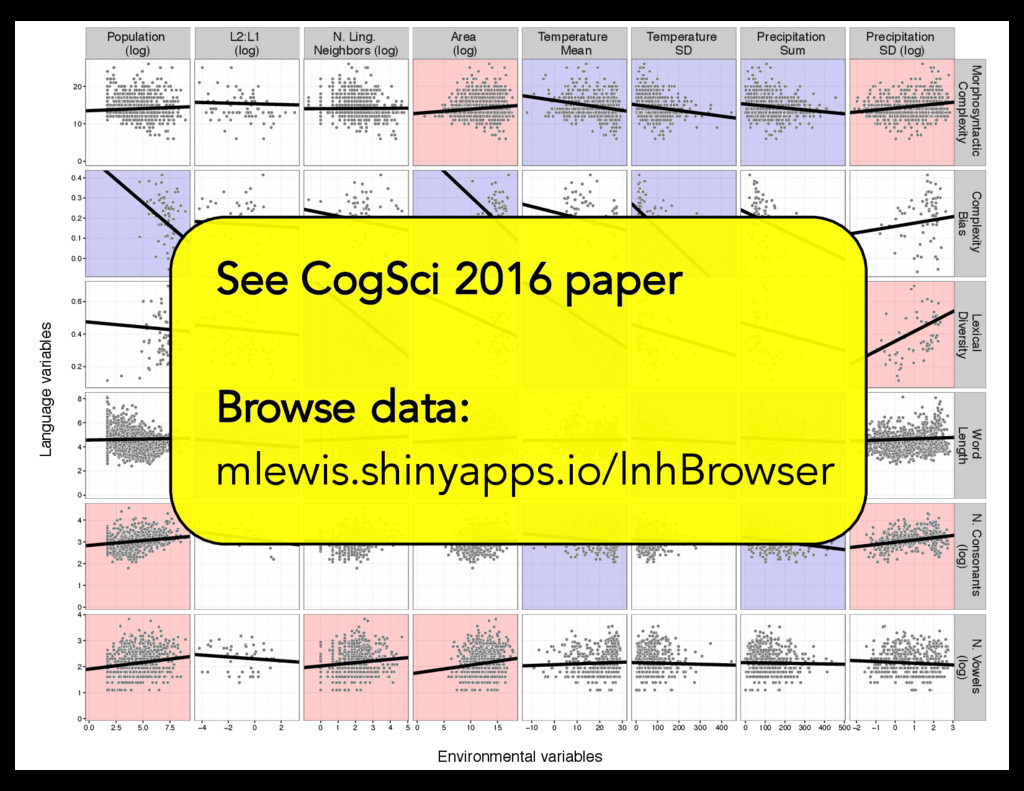
change timescale (many years) t Differences in cross-linguistic pressures at the in- the-moment timescale …lead to differences at the language change timescale. (Linguistic Niche Hypothesis; Lupyan & Dale, 2010) `
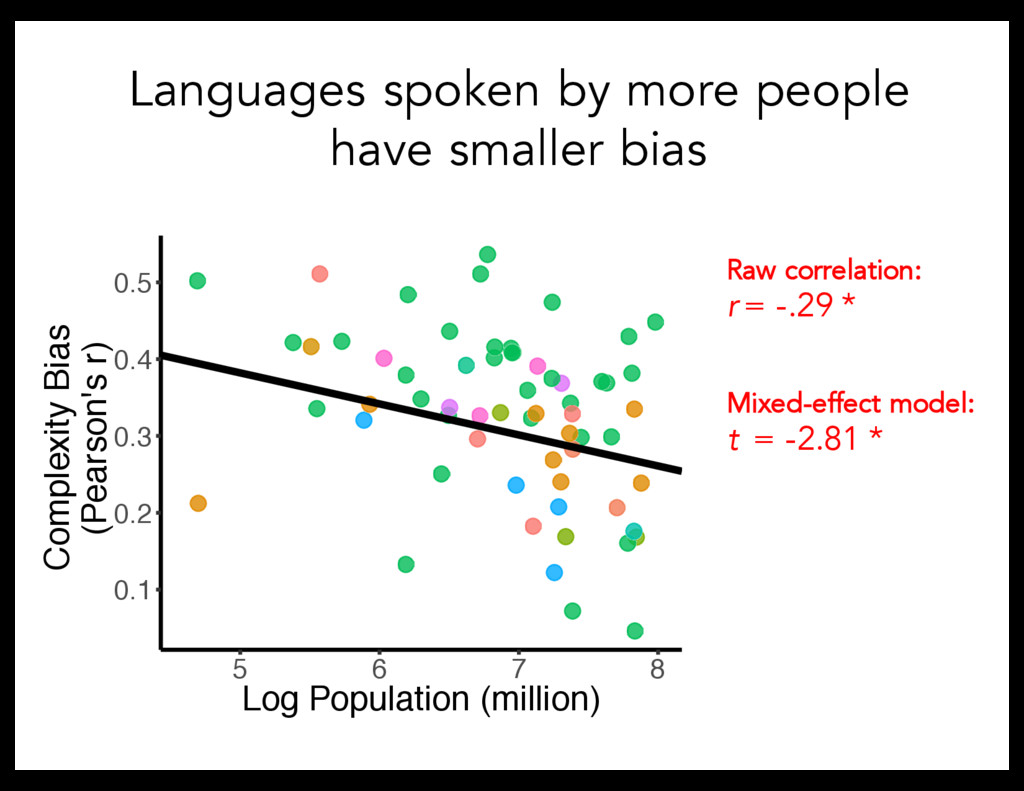
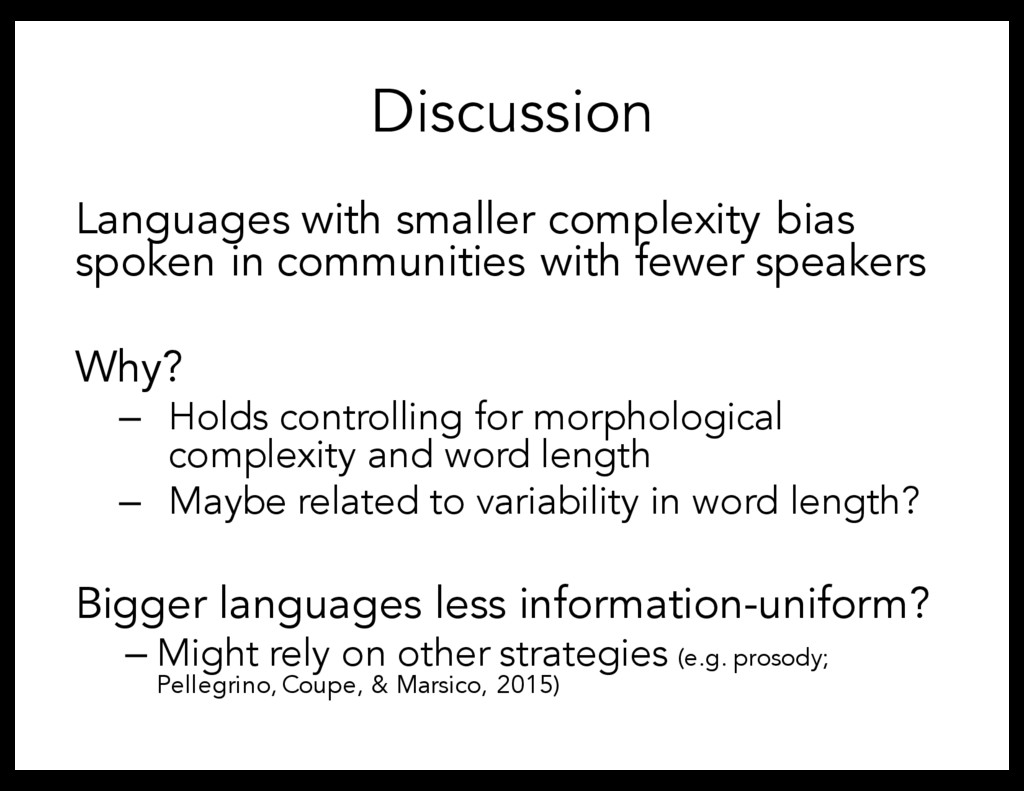
fewer speakers Why? – Holds controlling for morphological complexity and word length – Maybe related to variability in word length? Bigger languages less information-uniform? – Might rely on other strategies (e.g. prosody; Pellegrino, Coupe, & Marsico, 2015)
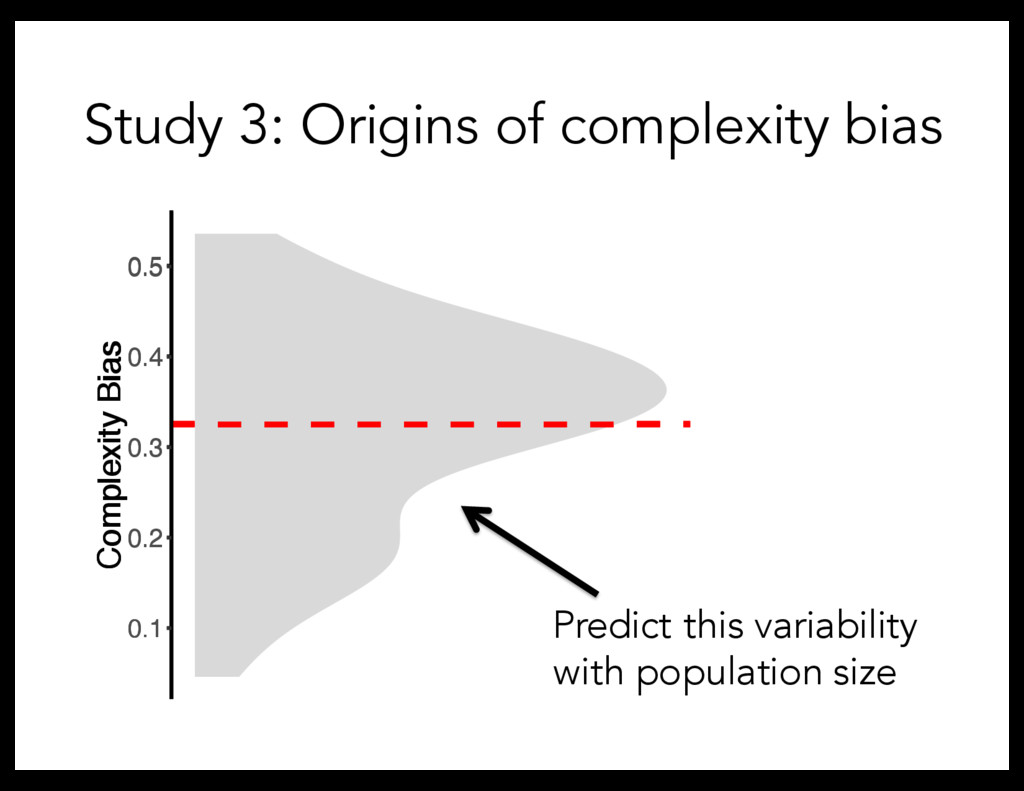
2: This bias is present in the lexicon of natural language. Study 3: Learnability pressures shape the bias. 0.0 0.2 0.4 0.6 english afrikaans maltese danish norwegian macedonian yiddish dutch russian serbian croatian portuguese espernto galician basque bosnian welsh armanian italian swedish georgian belarusian icelandic estonian bulgarian german hungarian latvian ukranian spanish thai french nepali polish chinese czech hmong slovenian slovak mongolian hindi zulu vietnamese finnish swahili irish lao hausa filipino lithuanian haitian.creole romanian khmer punjabi catalan gujarati indonesian greek hebrew azerbaijani malay cebuana javanese albanian kanada turkish yoruba maori somali korean telugu urdu tamil bengali arabic latin japanese igbo persian marathi Language Pearson's r 0.1 0.2 0.3 0.4 0.5 5 6 7 8 Log Population (million) Complexity Bias (Pearson's r)

 Your Podcast. Everywhere. Effortlessly.


 mllewis
 ykiyota
 syuchimu
 takusamar
 tasusu
 shucho0103
 mickey_0226
 neutron63zf
 trycycle
 tagtag
 voginip
 salt2
salt2
 gurzu
gurzu
 soudai
 chrisshort
 watany
 jnunemaker
 jonrohan
 apolaine
 eileencodes
 zakiyama
 ryanjones
 tenderlove
 retrage