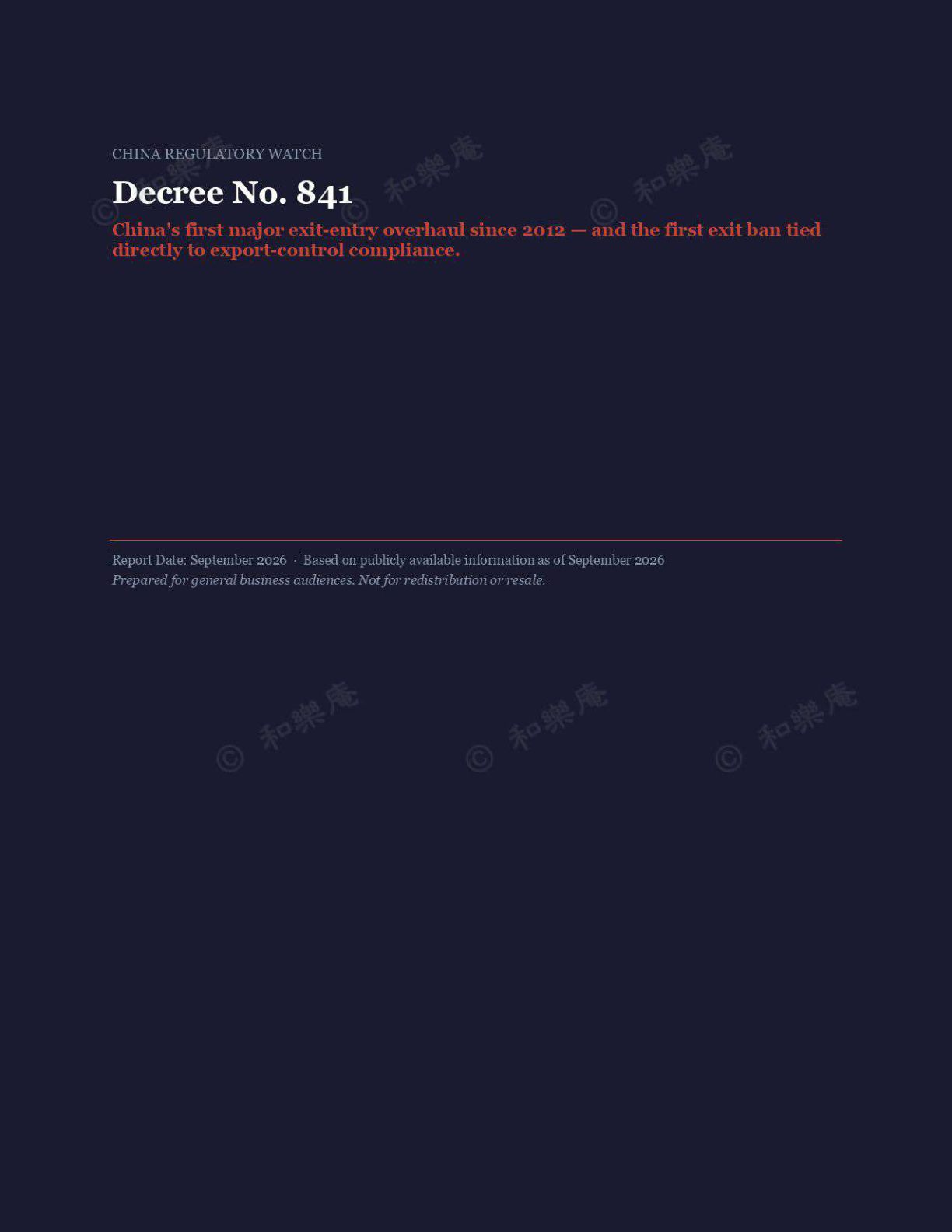
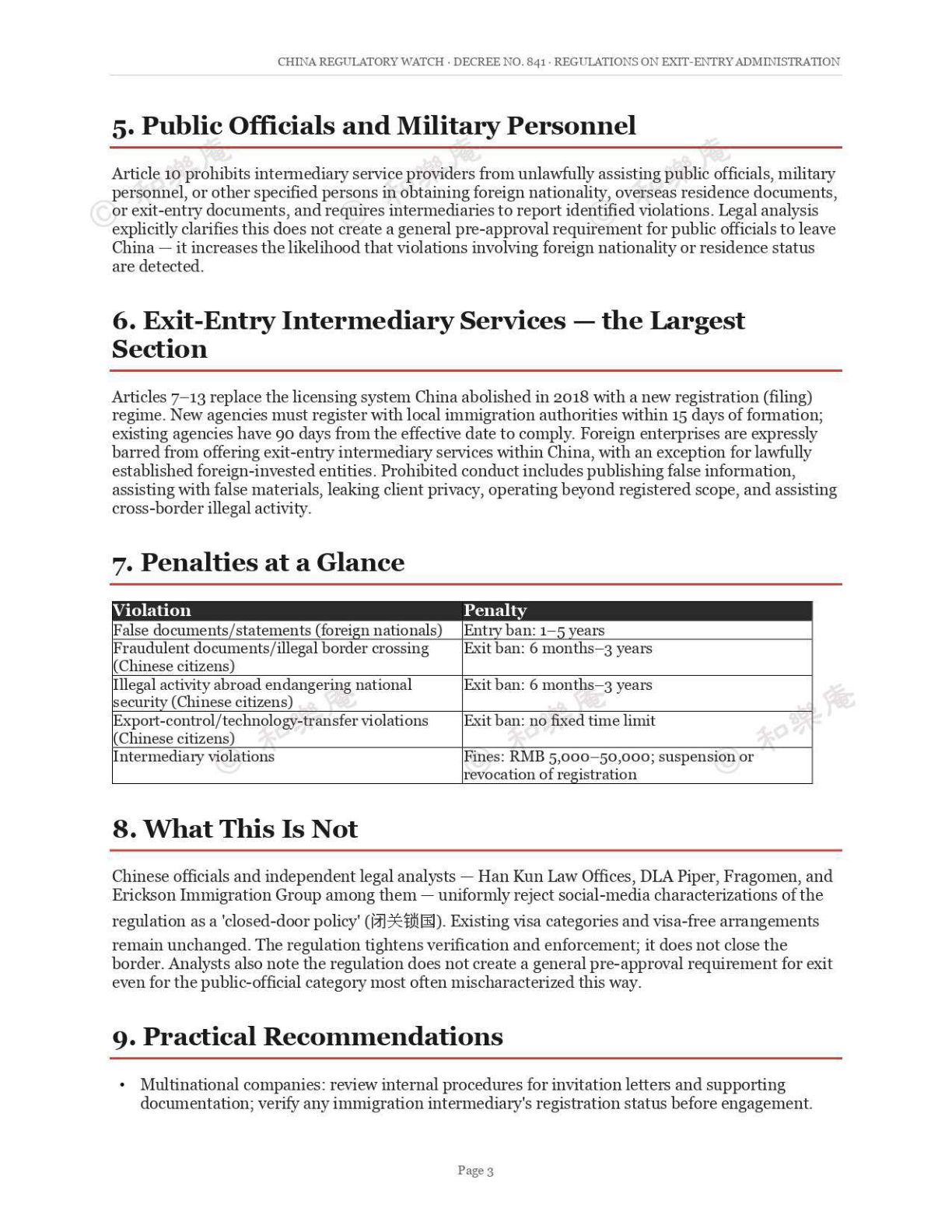
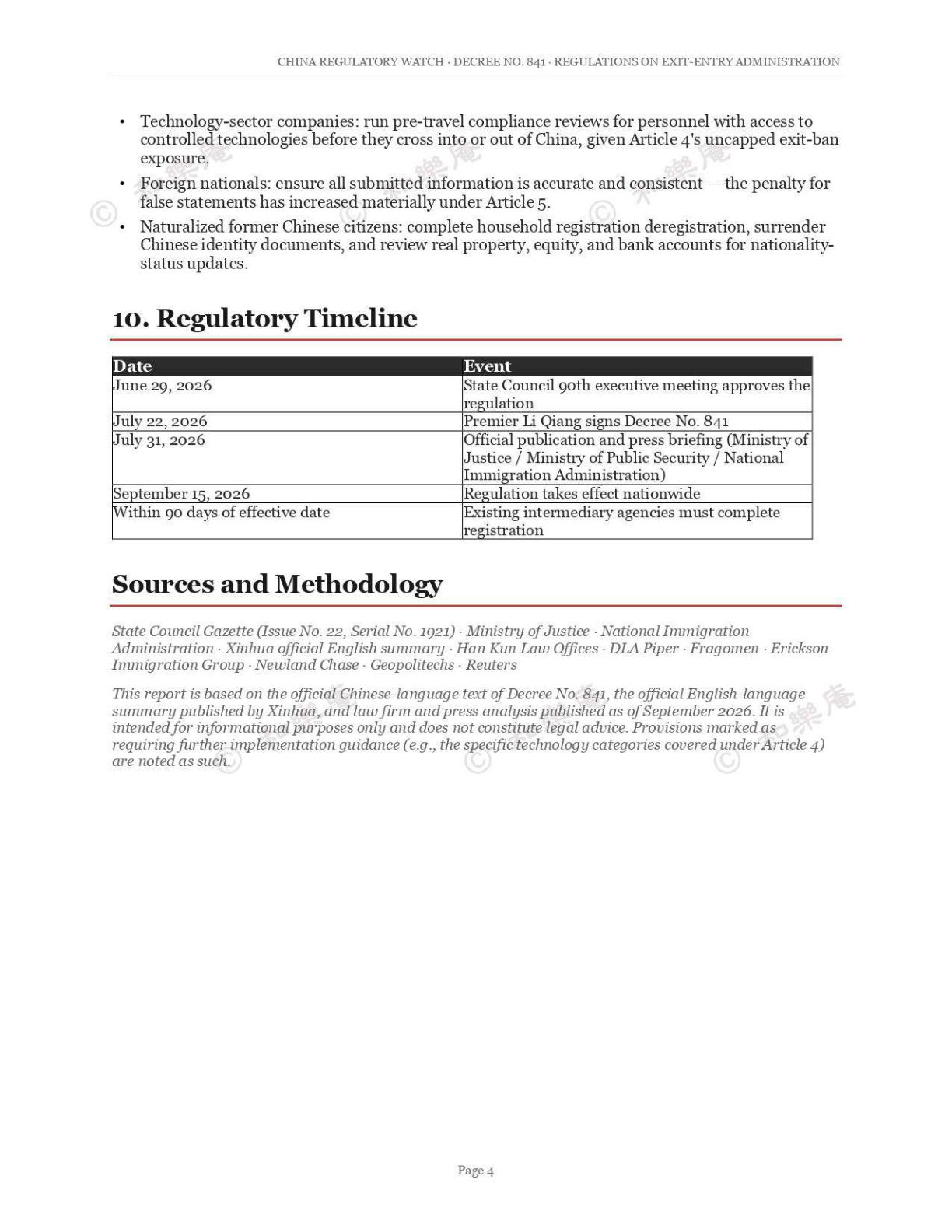
China's State Council just published its first major exit-entry overhaul since 2012 — Decree No. 841, effective today, September 15.
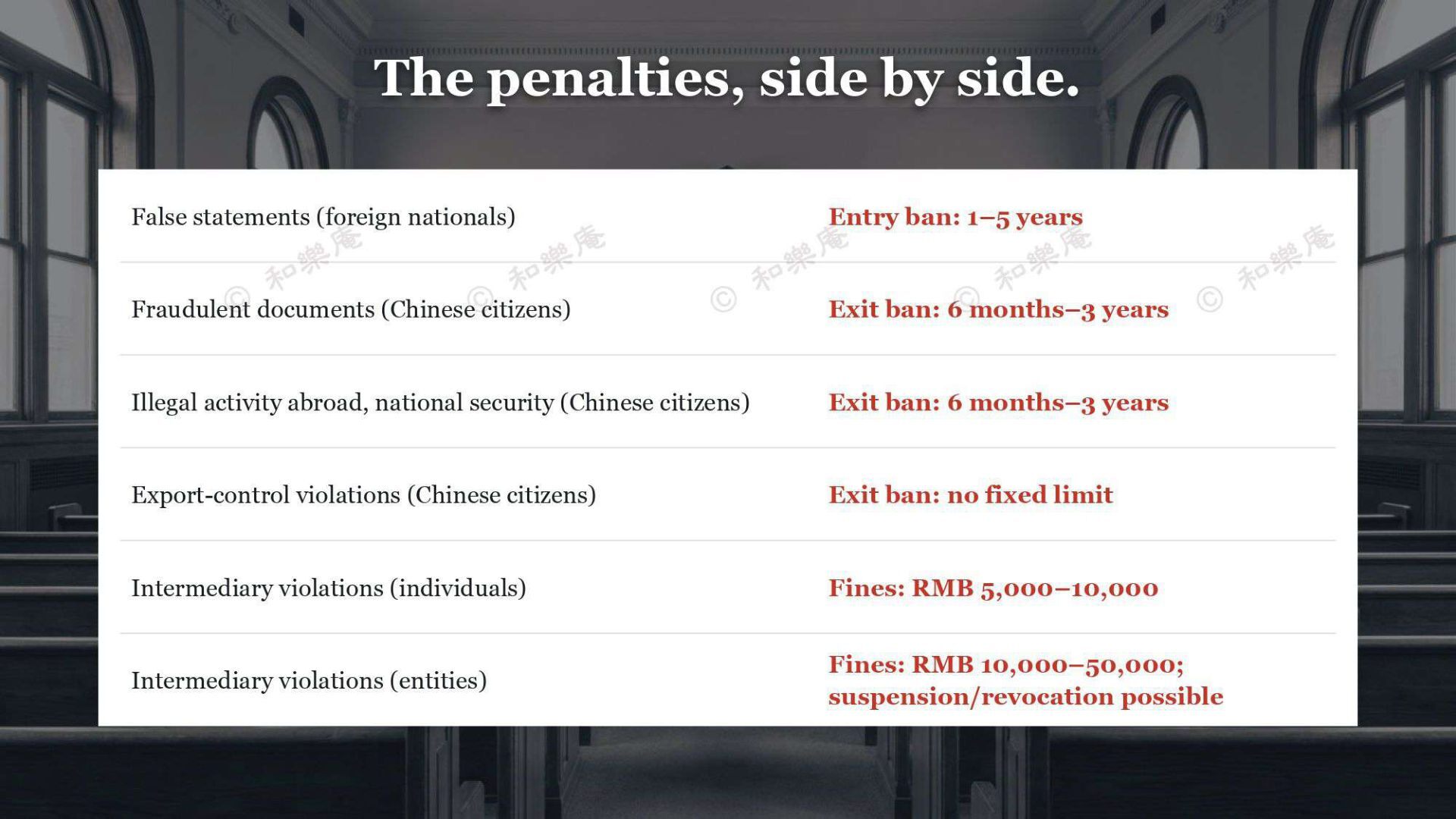
Most of it is procedural tightening: authenticity checks on entry/exit applications, a new registration regime replacing the intermediary licensing system China abolished in 2018, harsher penalties for false documentation. Officials and legal analysts are unanimous that this isn't a "closed-door" policy — existing visas and visa-free arrangements are untouched.
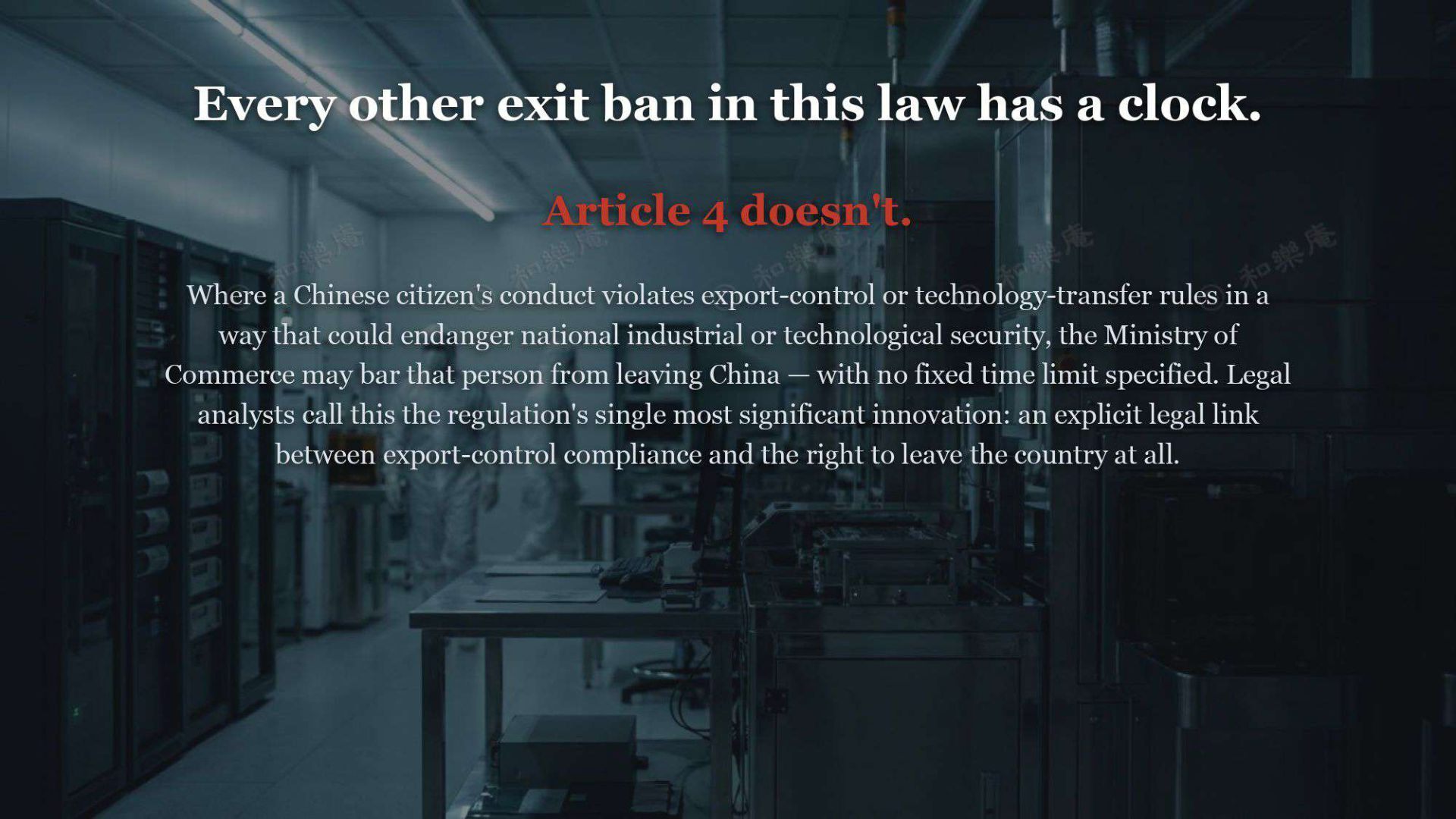
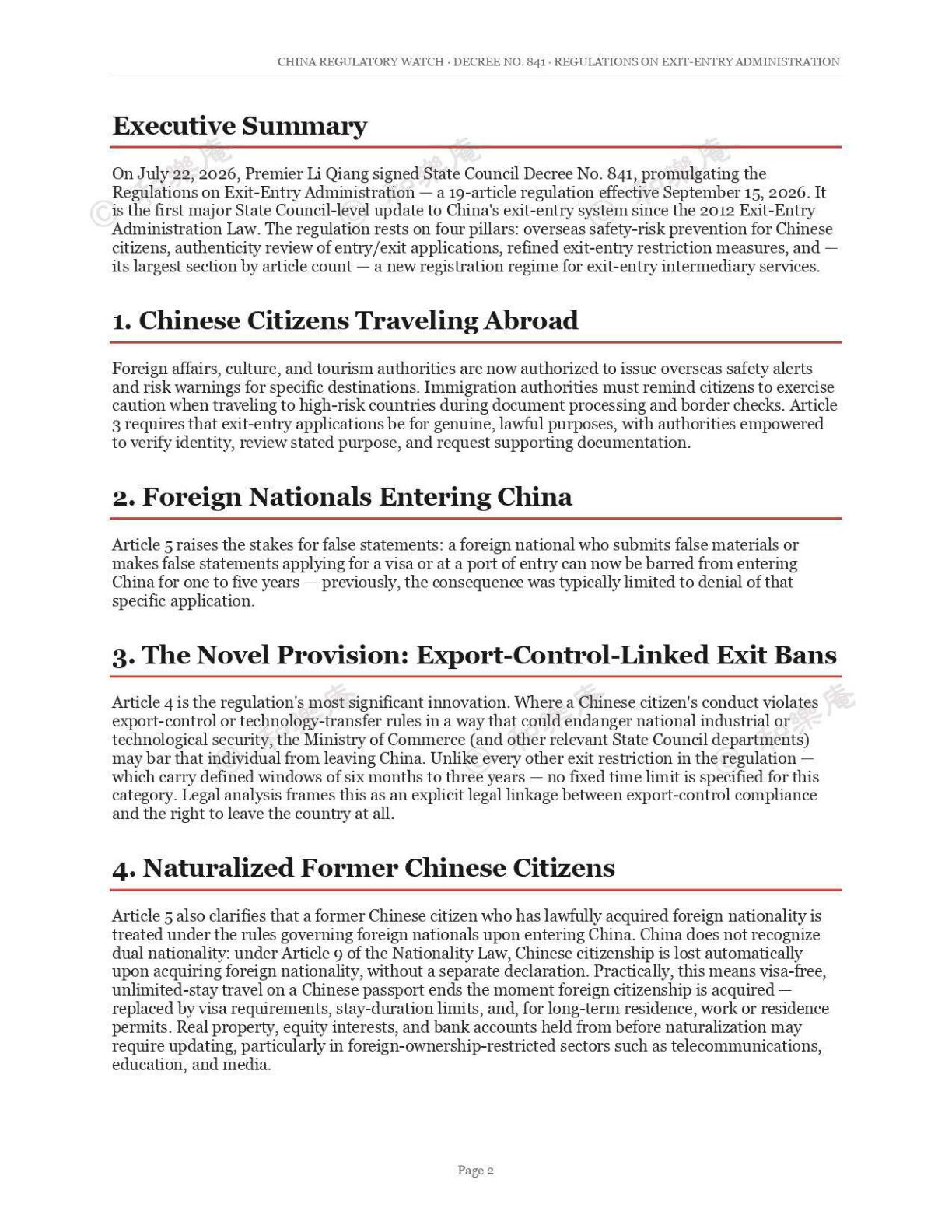
One provision breaks that pattern. Every other exit restriction in the regulation carries a defined window — six months to five years. Article 4 doesn't. If a Chinese citizen's conduct violates export-control or technology-transfer rules in a way that could endanger national industrial or technological security, the Ministry of Commerce can bar that person from leaving China indefinitely.
There's also a quieter provision worth flagging for anyone with China-linked staff: individuals who were Chinese citizens and later naturalized elsewhere now travel and reside under ordinary foreign-national rules — visas, stay limits, work permits — not the exemptions they held as Chinese passport holders. China doesn't recognize dual nationality, so this triggers automatically the moment foreign citizenship is acquired.
For readers who want the complete article-by-article breakdown with full sourcing, there's a deeper report on this — and on Japan's regulatory environment more broadly (hiring, compliance, immigration, cybersecurity) — available on Gumroad: monkeybridgecorp.gumroad.com.


 takemura_yuto
 noritaka88tax
 nakahara
 canvasedge
 advalistar
 shunsuke_takeuchi
 kawanotron
 cyberlinks
 hansodeeeeee
 uemura2024
 auditech2022
 arnekittler
 sferik
 nikkihalliwell
 codingconduct
 trishagee
 sarafernandez
 addyosmani
 aleyda
 thoeni
 bluesmoon
 davidcarrasco
 wjessup
 skoyamalab