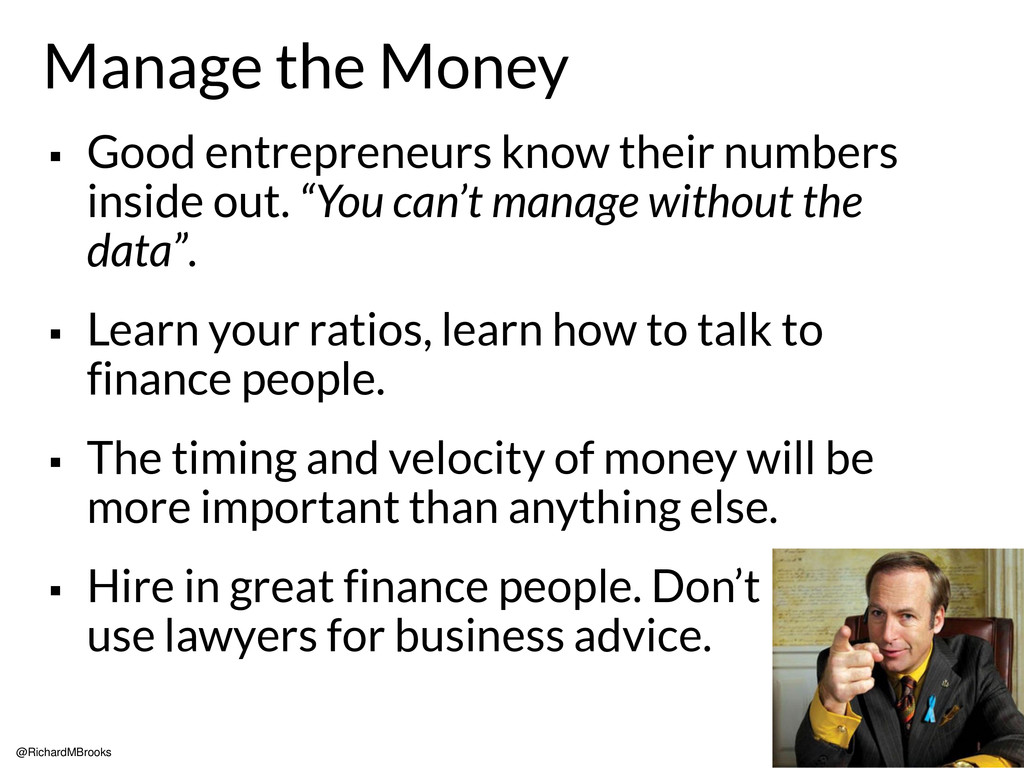
inside out. “You can’t manage without the data”. Learn your ratios, learn how to talk to finance people. The timing and velocity of money will be more important than anything else. Hire in great finance people. Don’t use lawyers for business advice.
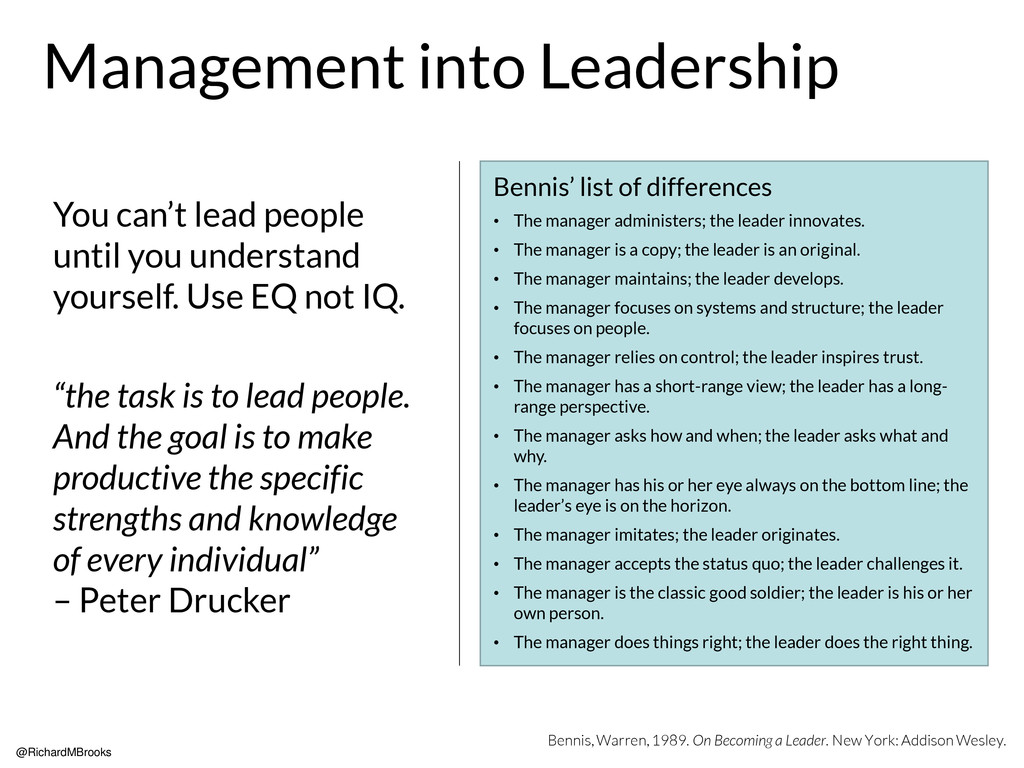
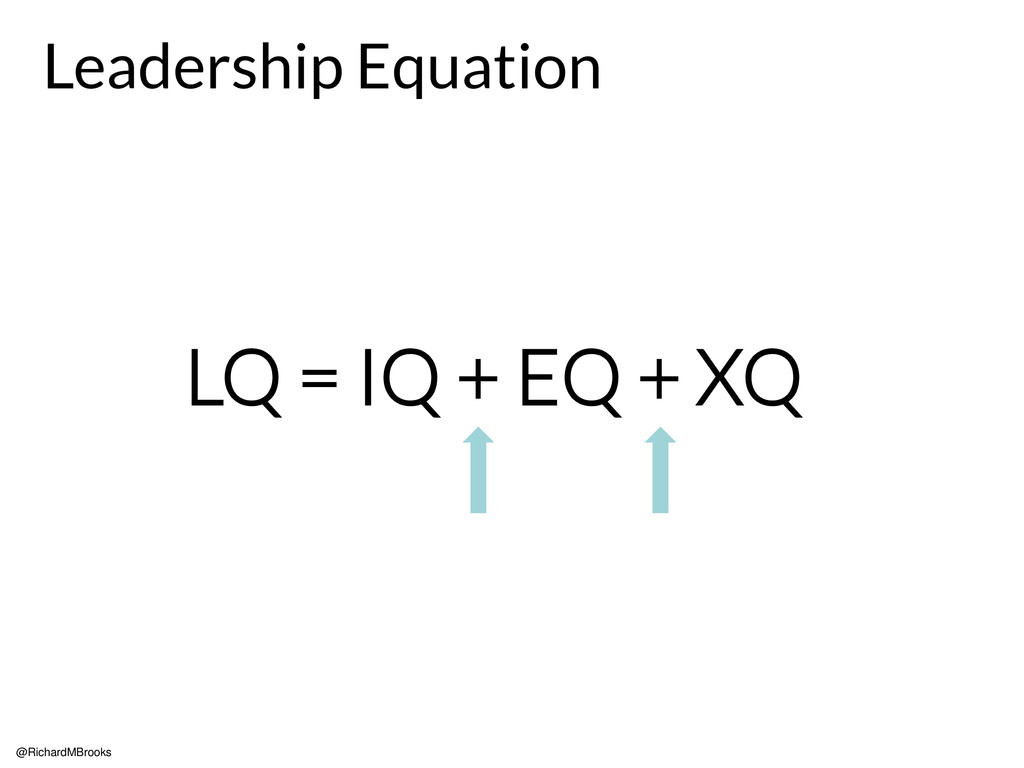
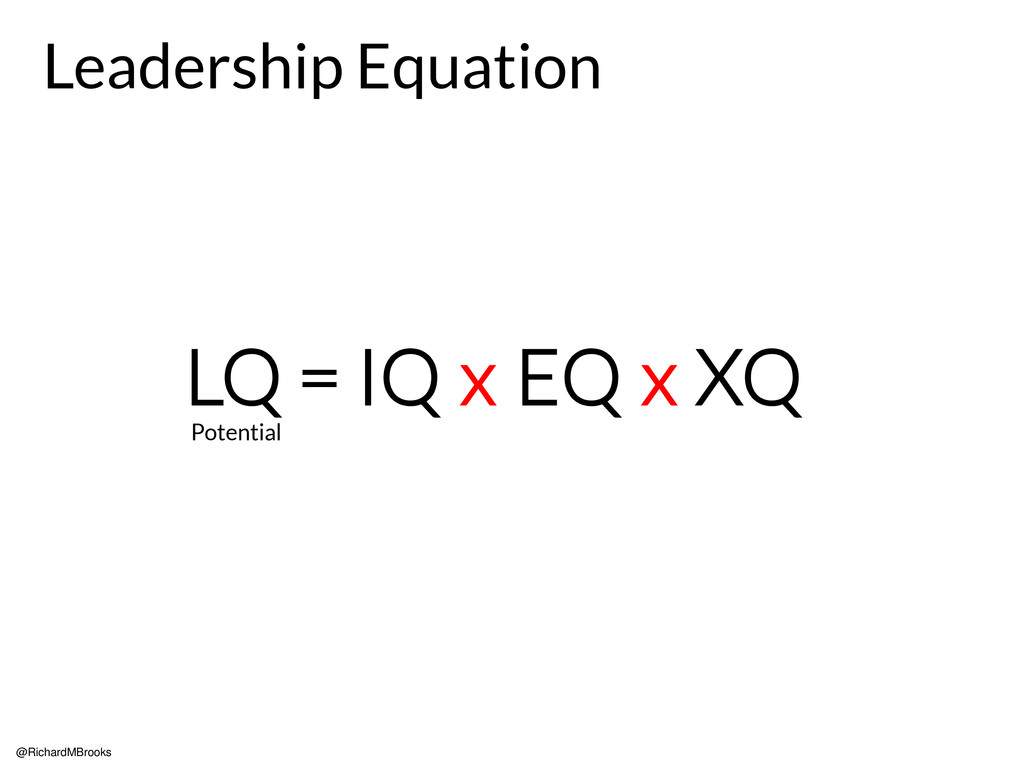
Leader. New York: Addison Wesley. Bennis’ list of differences • The manager administers; the leader innovates. • The manager is a copy; the leader is an original. • The manager maintains; the leader develops. • The manager focuses on systems and structure; the leader focuses on people. • The manager relies on control; the leader inspires trust. • The manager has a short-range view; the leader has a long- range perspective. • The manager asks how and when; the leader asks what and why. • The manager has his or her eye always on the bottom line; the leader’s eye is on the horizon. • The manager imitates; the leader originates. • The manager accepts the status quo; the leader challenges it. • The manager is the classic good soldier; the leader is his or her own person. • The manager does things right; the leader does the right thing. You can’t lead people until you understand yourself. Use EQ not IQ. “the task is to lead people. And the goal is to make productive the specific strengths and knowledge of every individual” – Peter Drucker
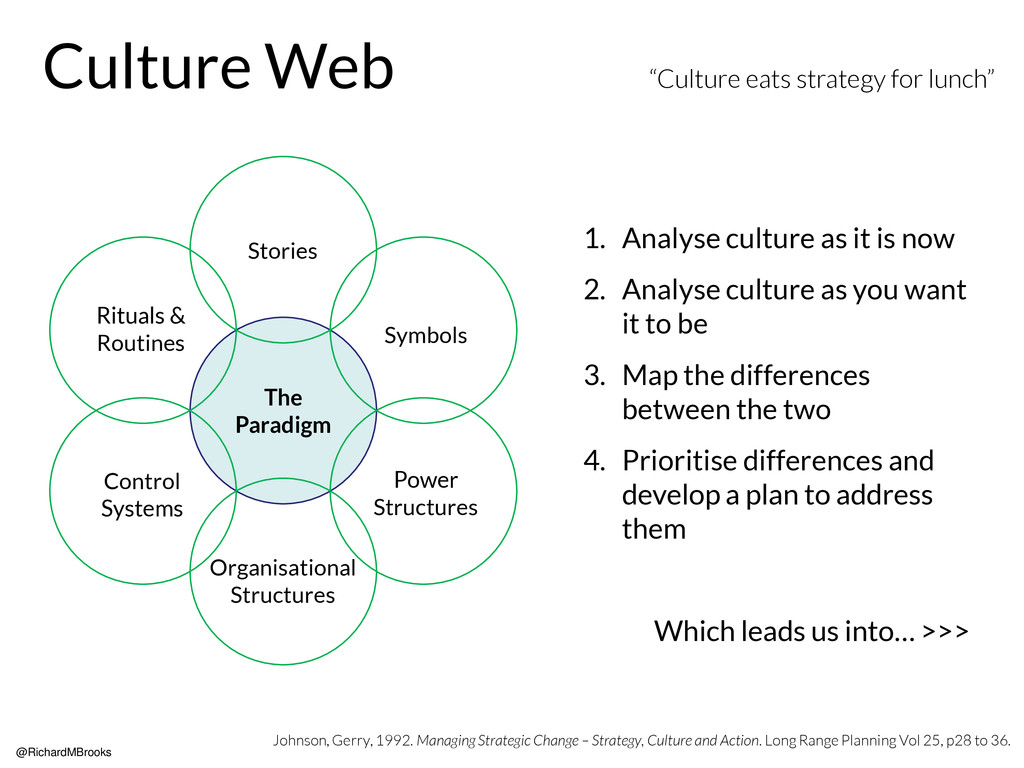
& Routines Control Systems The Paradigm 1. Analyse culture as it is now 2. Analyse culture as you want it to be 3. Map the differences between the two 4. Prioritise differences and develop a plan to address them Which leads us into… >>> Johnson, Gerry, 1992. Managing Strategic Change – Strategy, Culture and Action. Long Range Planning Vol 25, p28 to 36. “Culture eats strategy for lunch”
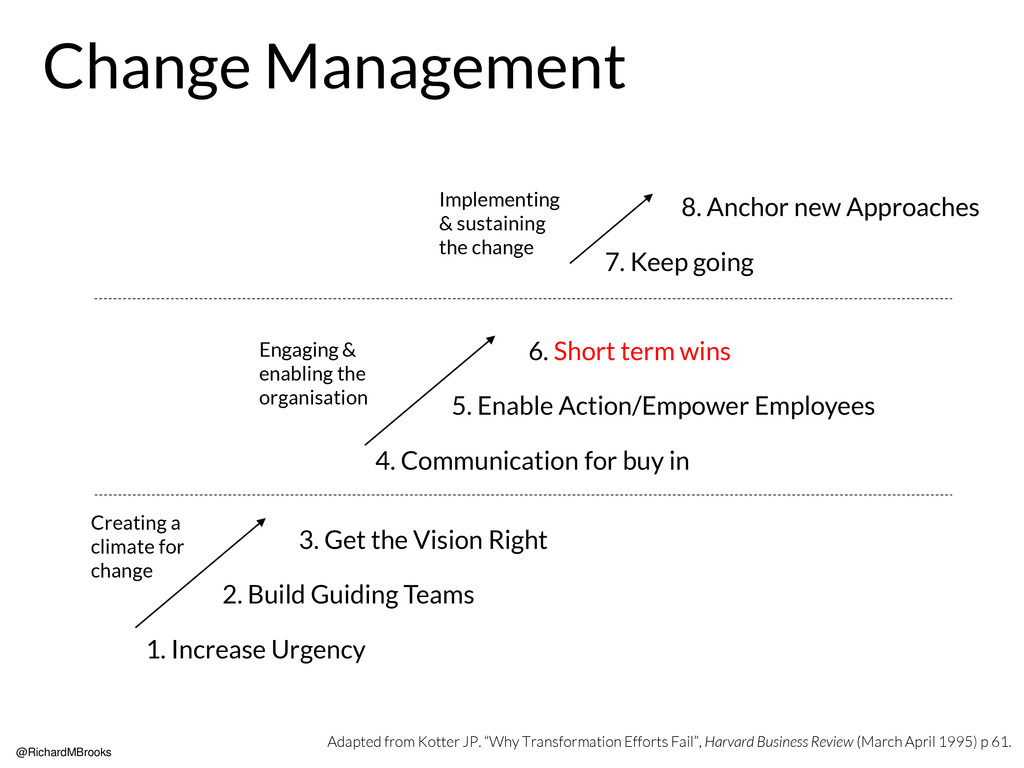
Fail”, Harvard Business Review (March April 1995) p 61. 7. Keep going 8. Anchor new Approaches Implementing & sustaining the change 1. Increase Urgency 2. Build Guiding Teams 3. Get the Vision Right Creating a climate for change 4. Communication for buy in 5. Enable Action/Empower Employees 6. Short term wins Engaging & enabling the organisation
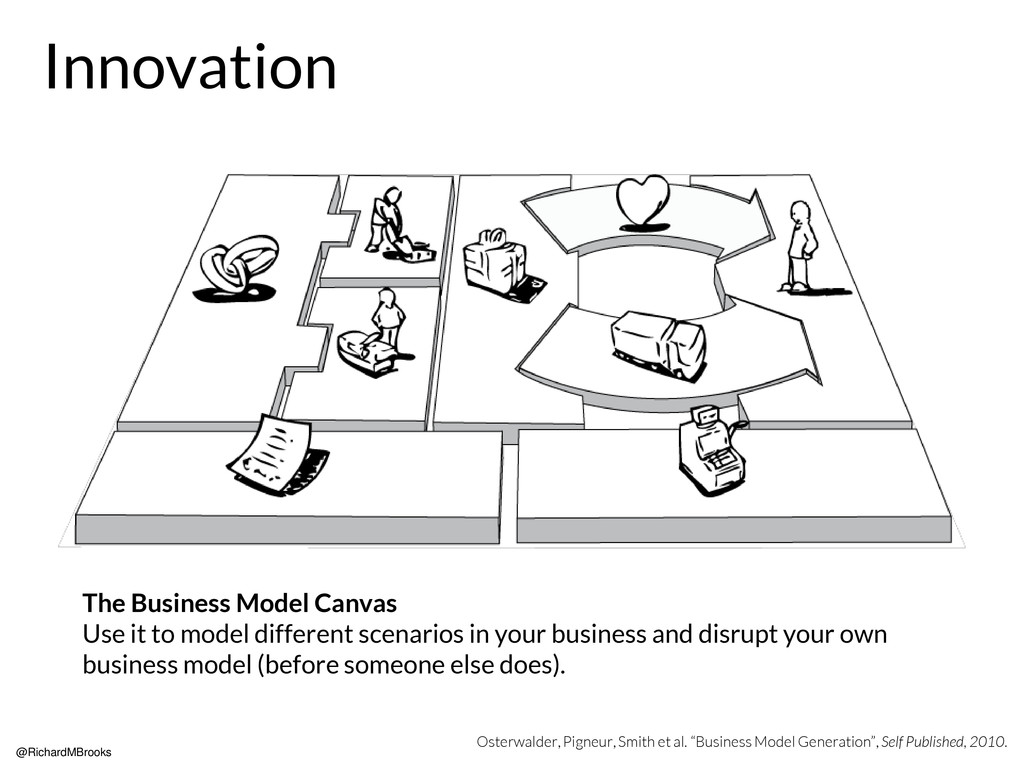
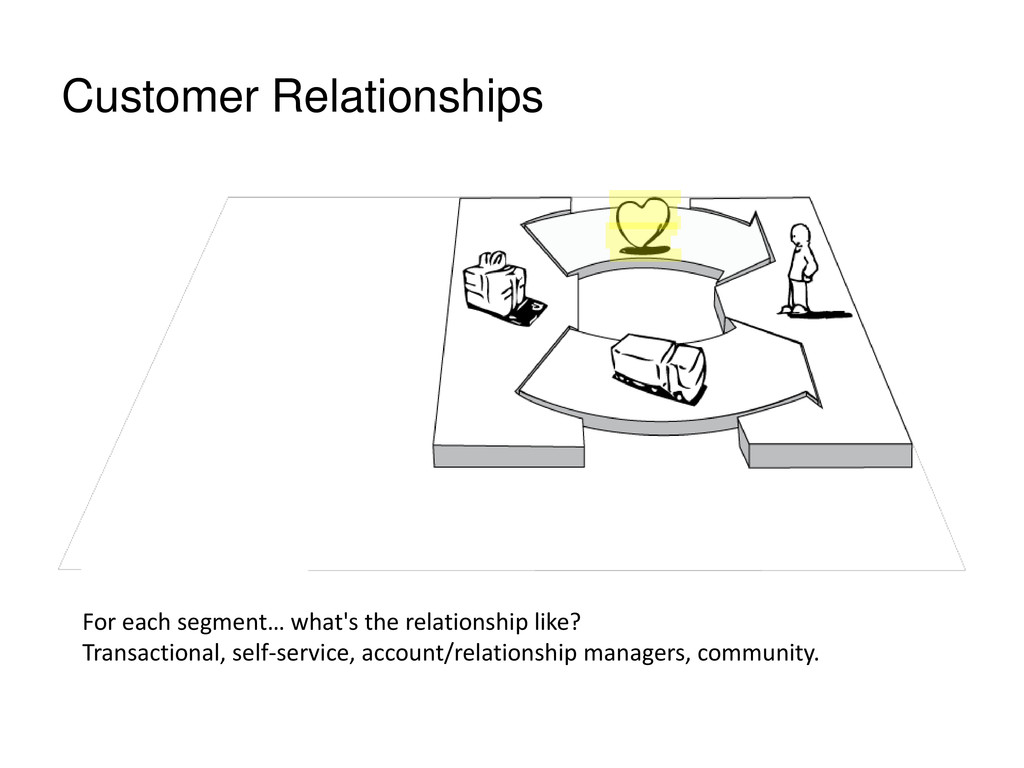
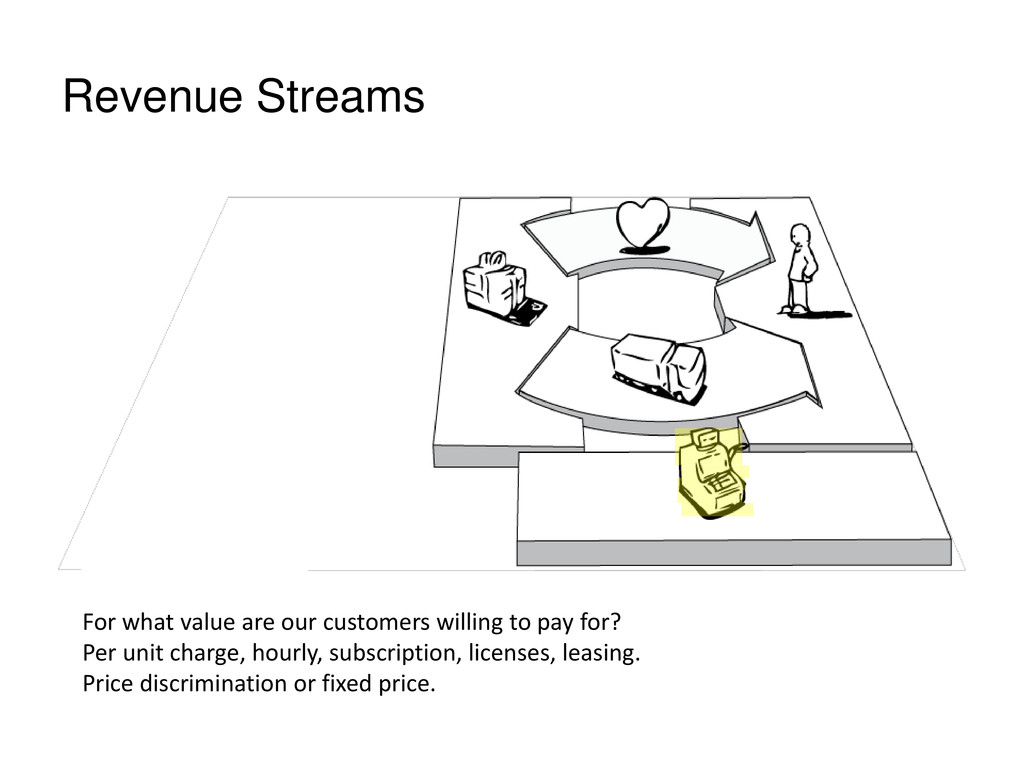
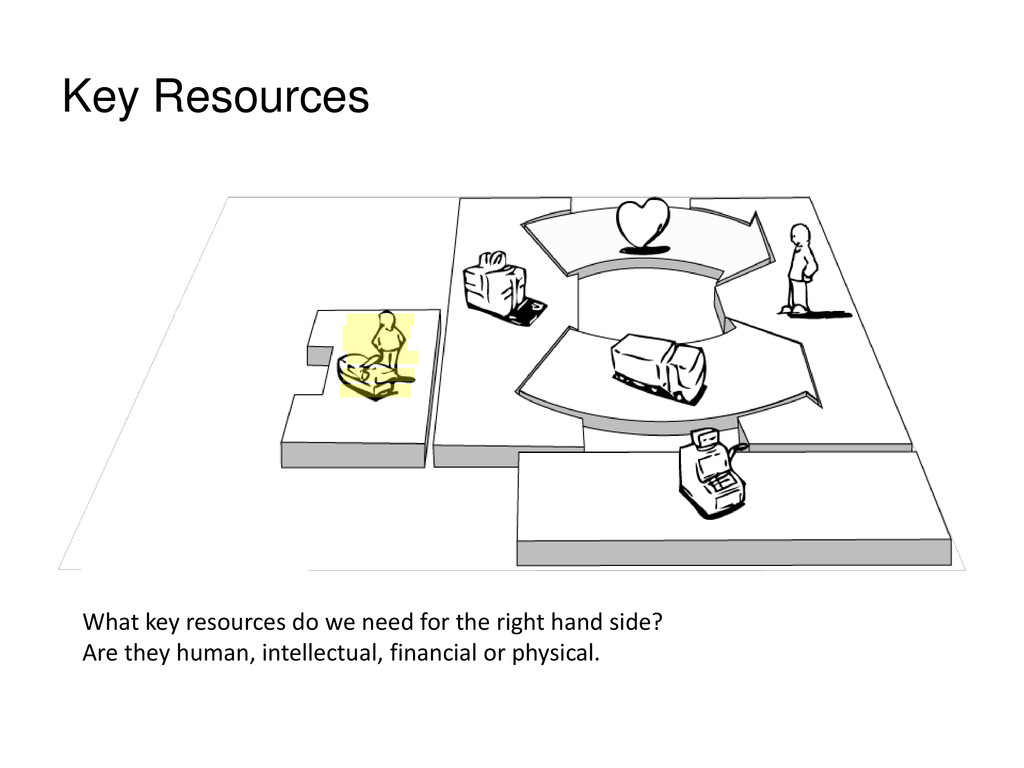
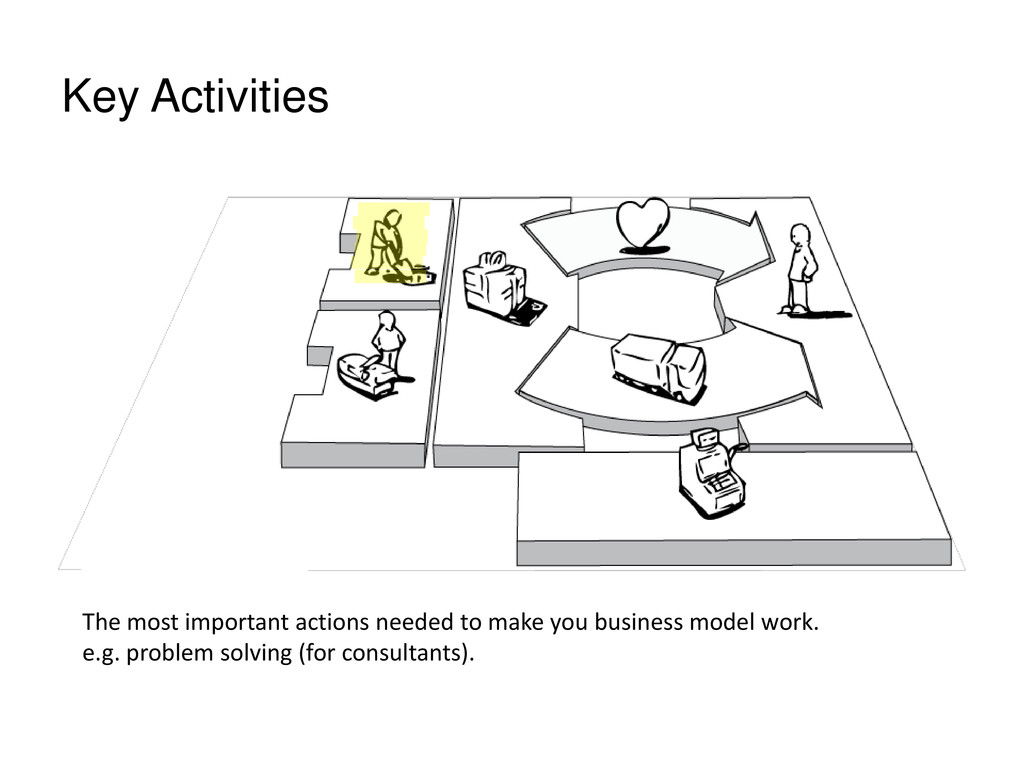
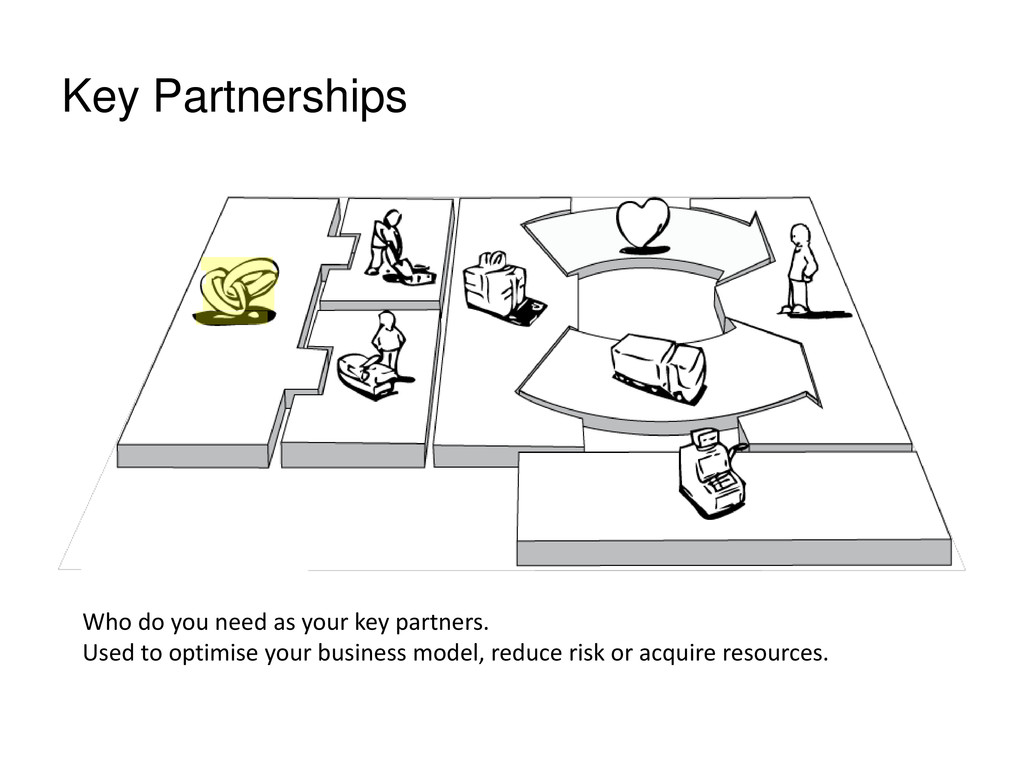
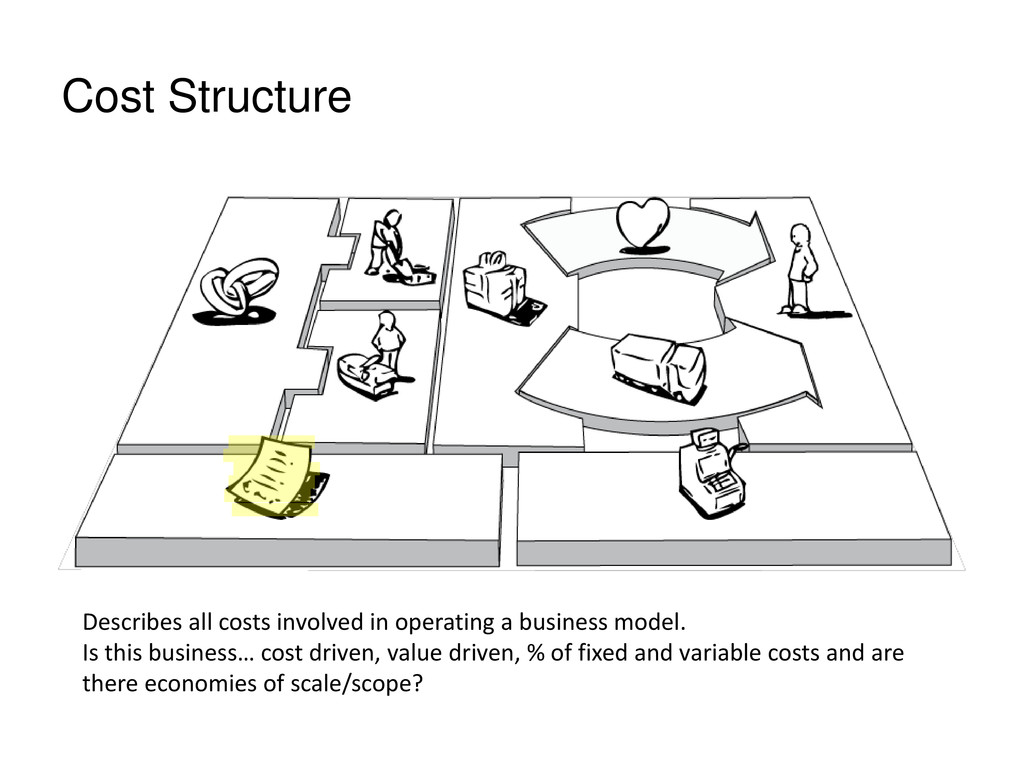
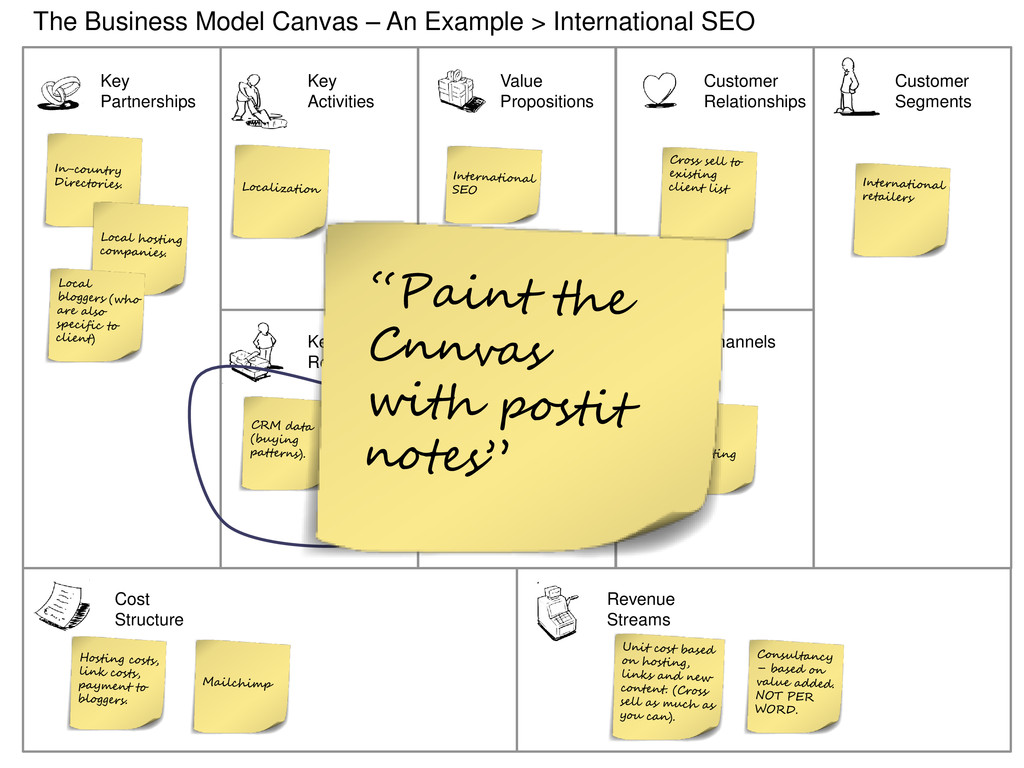
Self Published, 2010. The Business Model Canvas Use it to model different scenarios in your business and disrupt your own business model (before someone else does).
remains predominantly financial in nature. Without (additional) information on value- creating activities management are flying blind – when financials tell them there is a problem management have already missed the optimal point for taking appropriate corrective action.” PriceWaterhouseCoopers – ValueReporting Review 2003. Transparency in Corporate Reporting, p25.
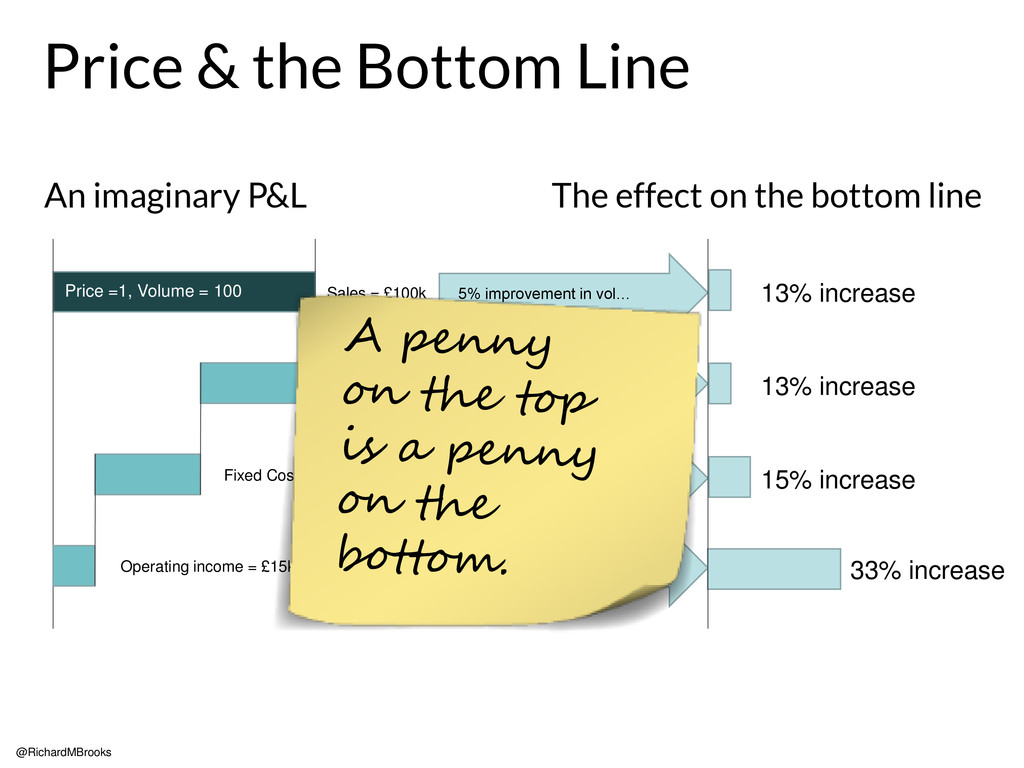
= £100k Var Cost = £40k Fixed Cost = £45k Operating income = £15k The effect on the bottom line 5% improvement in vol… 5% improvement in price… 5% improvement in fixed cost… 5% improvement in var cost… Price =1, Volume = 100 33% increase 13% increase 13% increase 15% increase
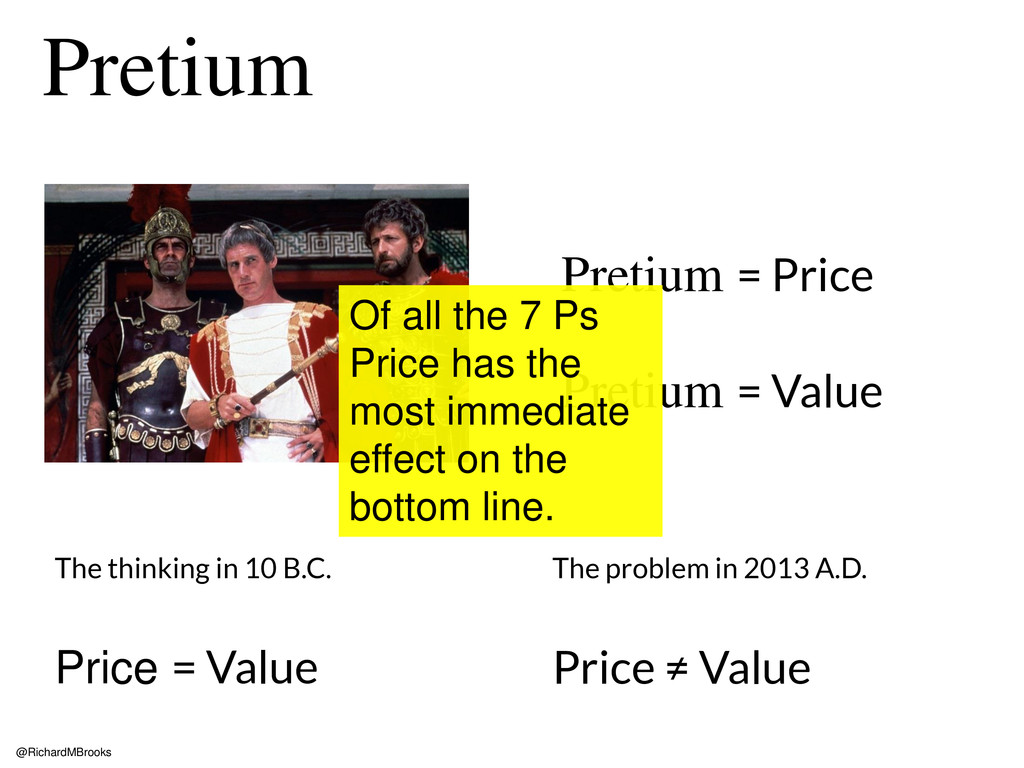
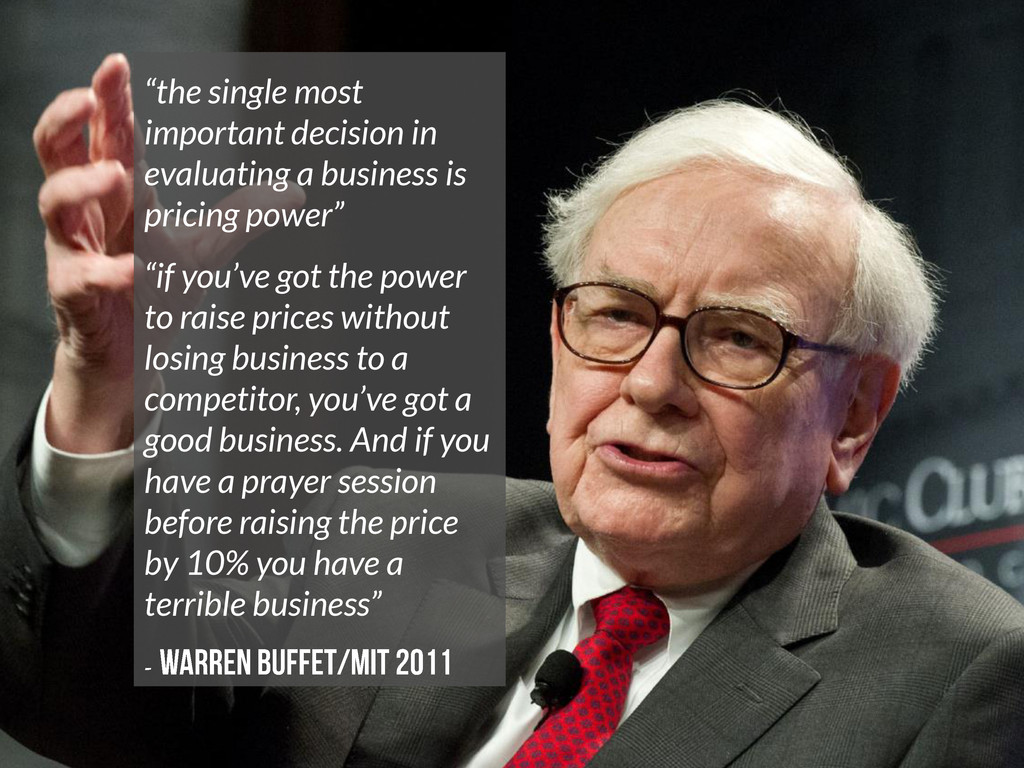
is pricing power” “if you’ve got the power to raise prices without losing business to a competitor, you’ve got a good business. And if you have a prayer session before raising the price by 10% you have a terrible business”
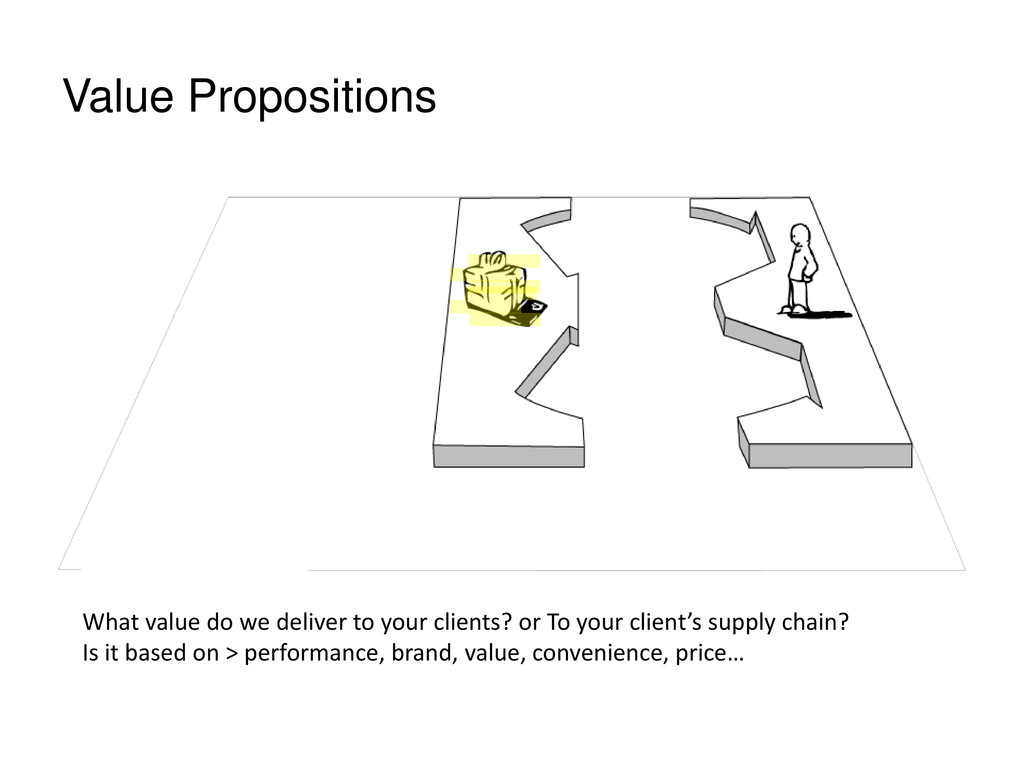
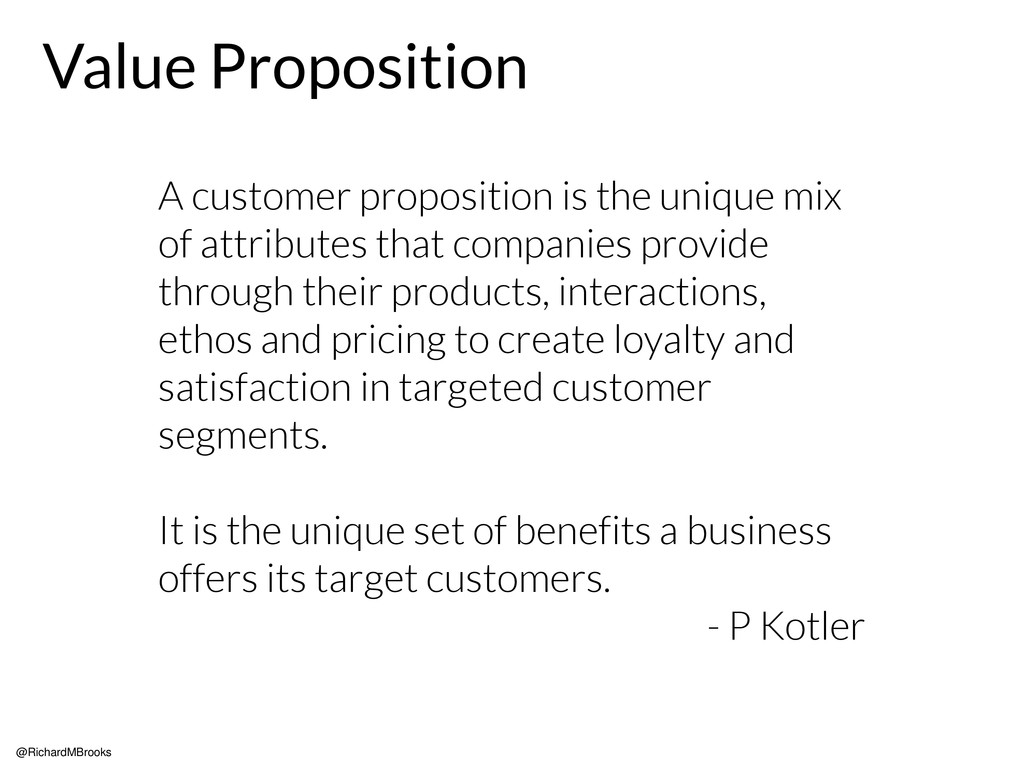
of attributes that companies provide through their products, interactions, ethos and pricing to create loyalty and satisfaction in targeted customer segments. It is the unique set of benefits a business offers its target customers. - P Kotler
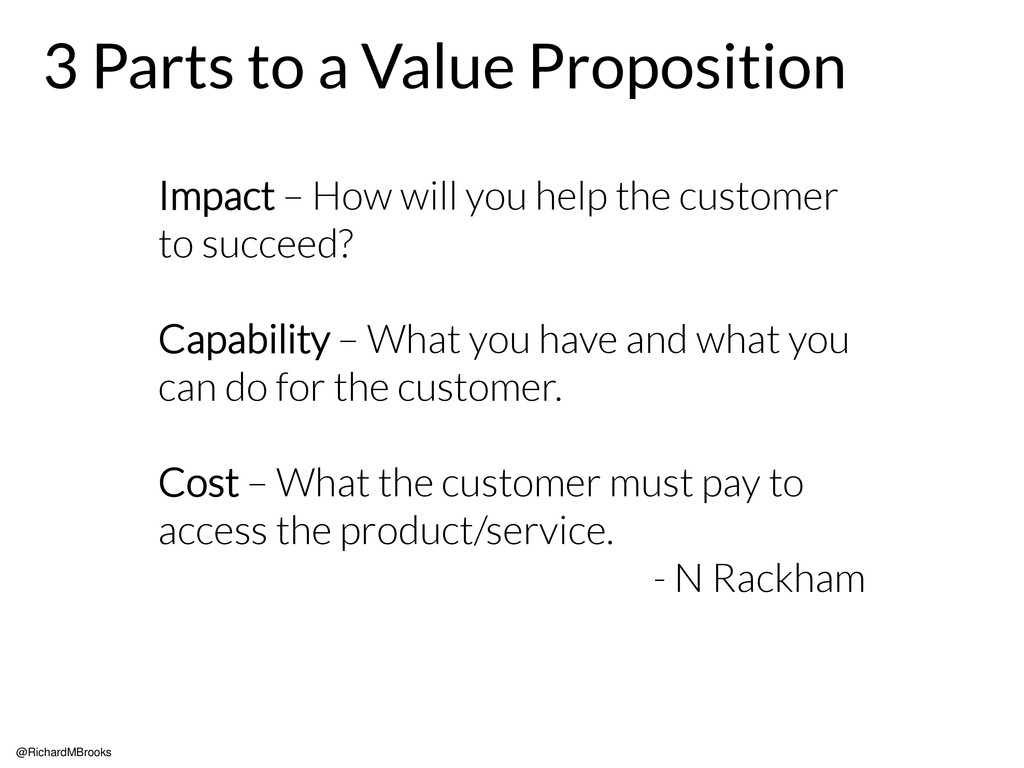
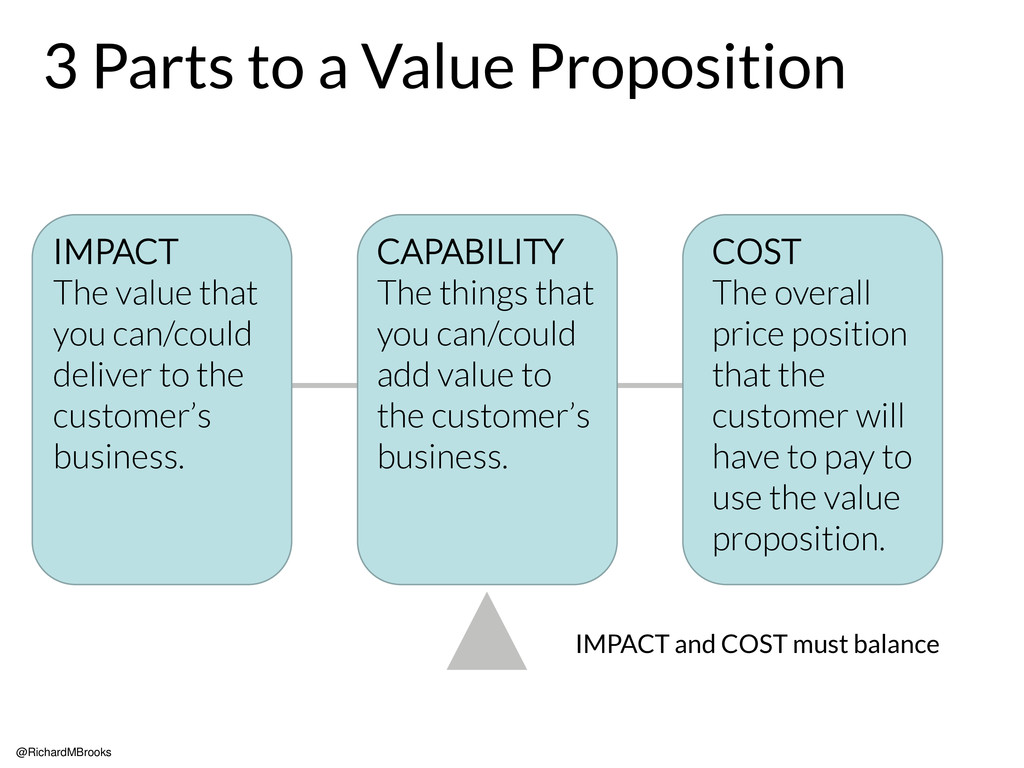
will you help the customer to succeed? Capability – What you have and what you can do for the customer. Cost – What the customer must pay to access the product/service. - N Rackham
that you can/could deliver to the customer’s business. CAPABILITY The things that you can/could add value to the customer’s business. COST The overall price position that the customer will have to pay to use the value proposition. IMPACT and COST must balance
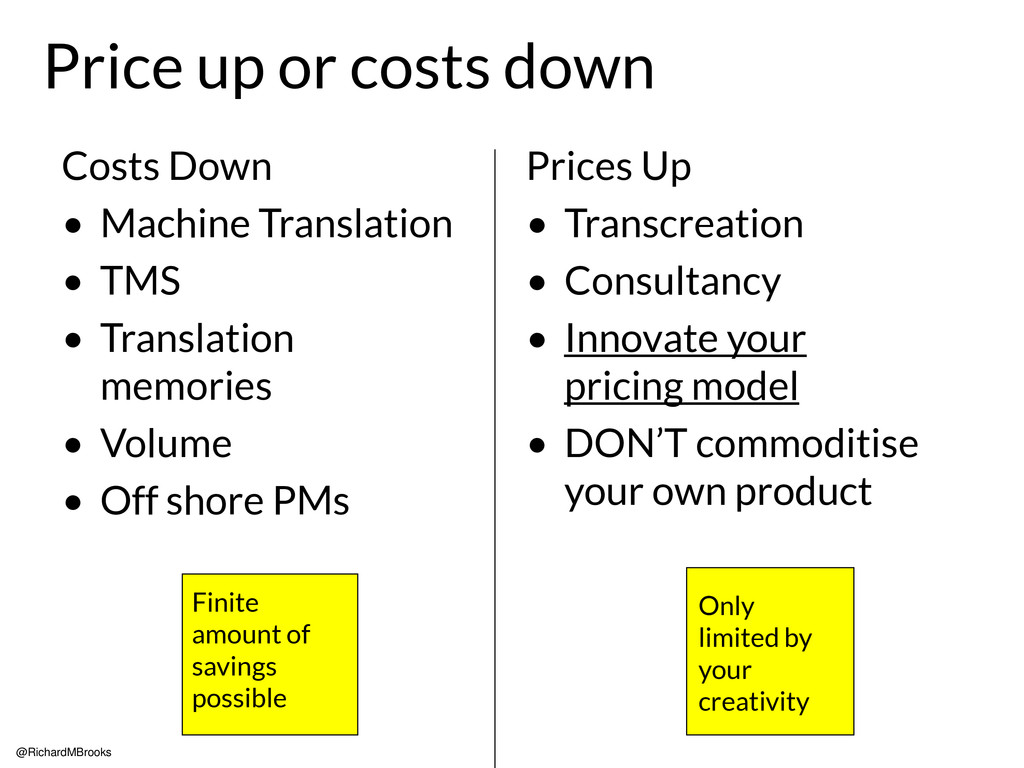
Translation • TMS • Translation memories • Volume • Off shore PMs Prices Up • Transcreation • Consultancy • Innovate your pricing model • DON’T commoditise your own product Finite amount of savings possible Only limited by your creativity
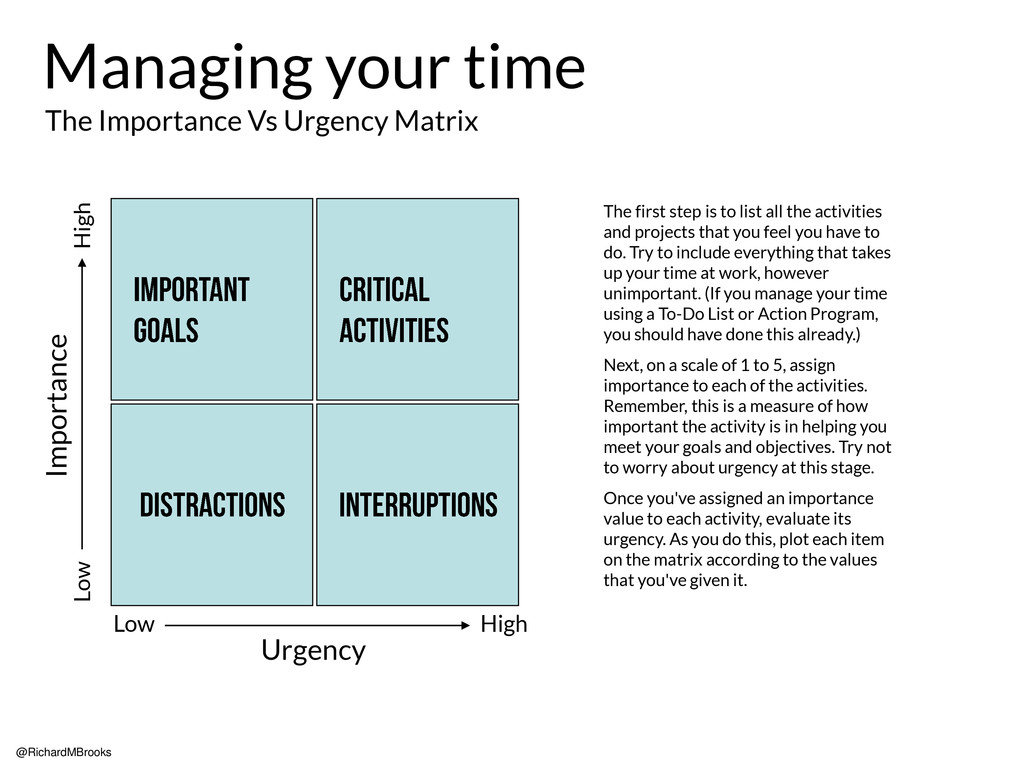
Matrix High Low Low High The first step is to list all the activities and projects that you feel you have to do. Try to include everything that takes up your time at work, however unimportant. (If you manage your time using a To-Do List or Action Program, you should have done this already.) Next, on a scale of 1 to 5, assign importance to each of the activities. Remember, this is a measure of how important the activity is in helping you meet your goals and objectives. Try not to worry about urgency at this stage. Once you've assigned an importance value to each activity, evaluate its urgency. As you do this, plot each item on the matrix according to the values that you've given it.


 reiwatravel_0405
 sasukefinanciallab
 nakahara
 xinghr
 kawanotron
.jpg) ikuodanaka
ikuodanaka
 ggfs
ggfs
 openwork
 ikmwatanabe
 takemura_yuto
 tamosan01
 sukatsu1222
 aleyda
 reverentgeek
 soudai
 frankvandijk
 addyosmani
 katarinadahlin
 sergeychernyshev
 destraynor
 ryanjones
 honnibal





![Thank you! Look after yourselves. Tweet me @RichardMBrooks [email protected]](https://files.speakerdeck.com/presentations/1fb428c0d5cd01304ece6a76166c17fe/slide_48.jpg)