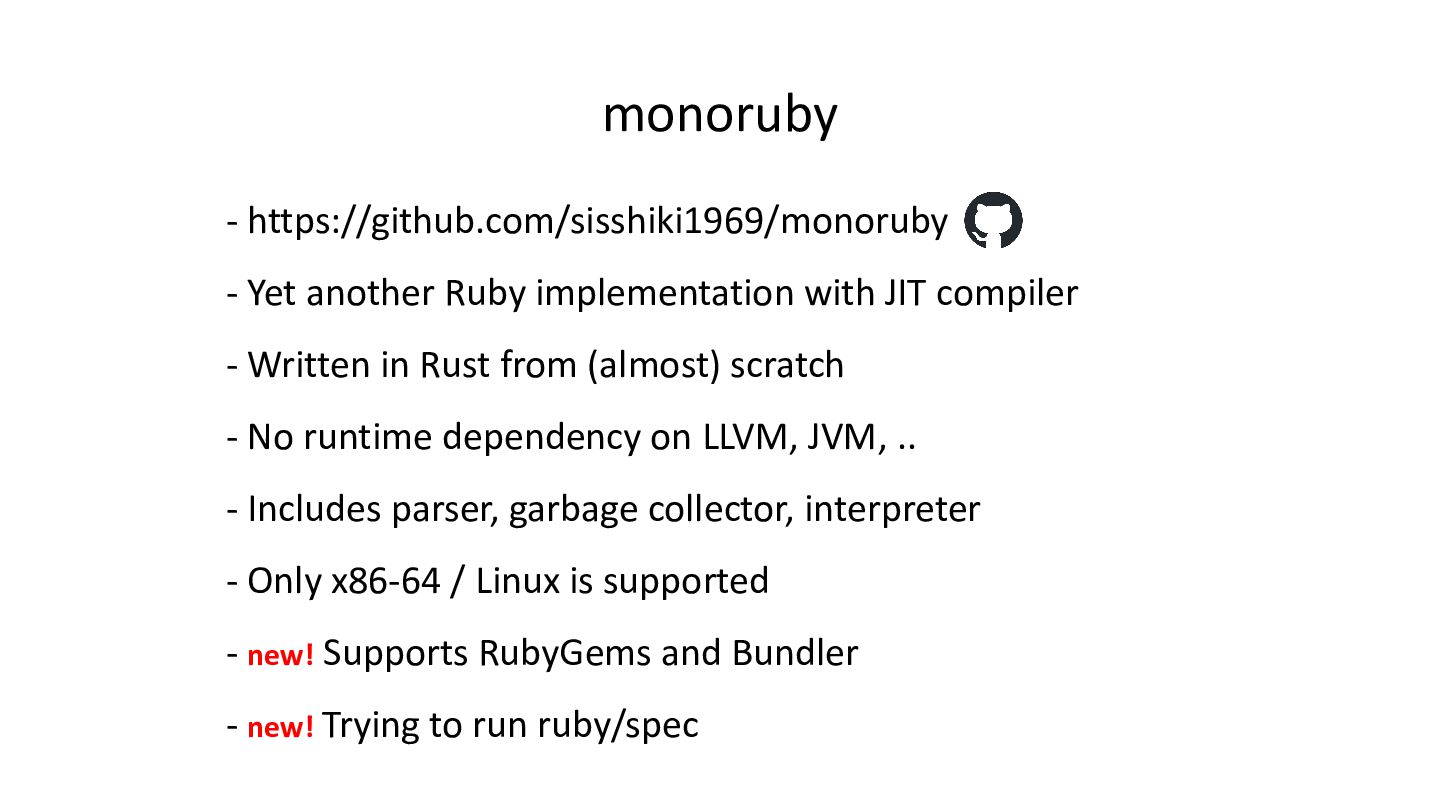
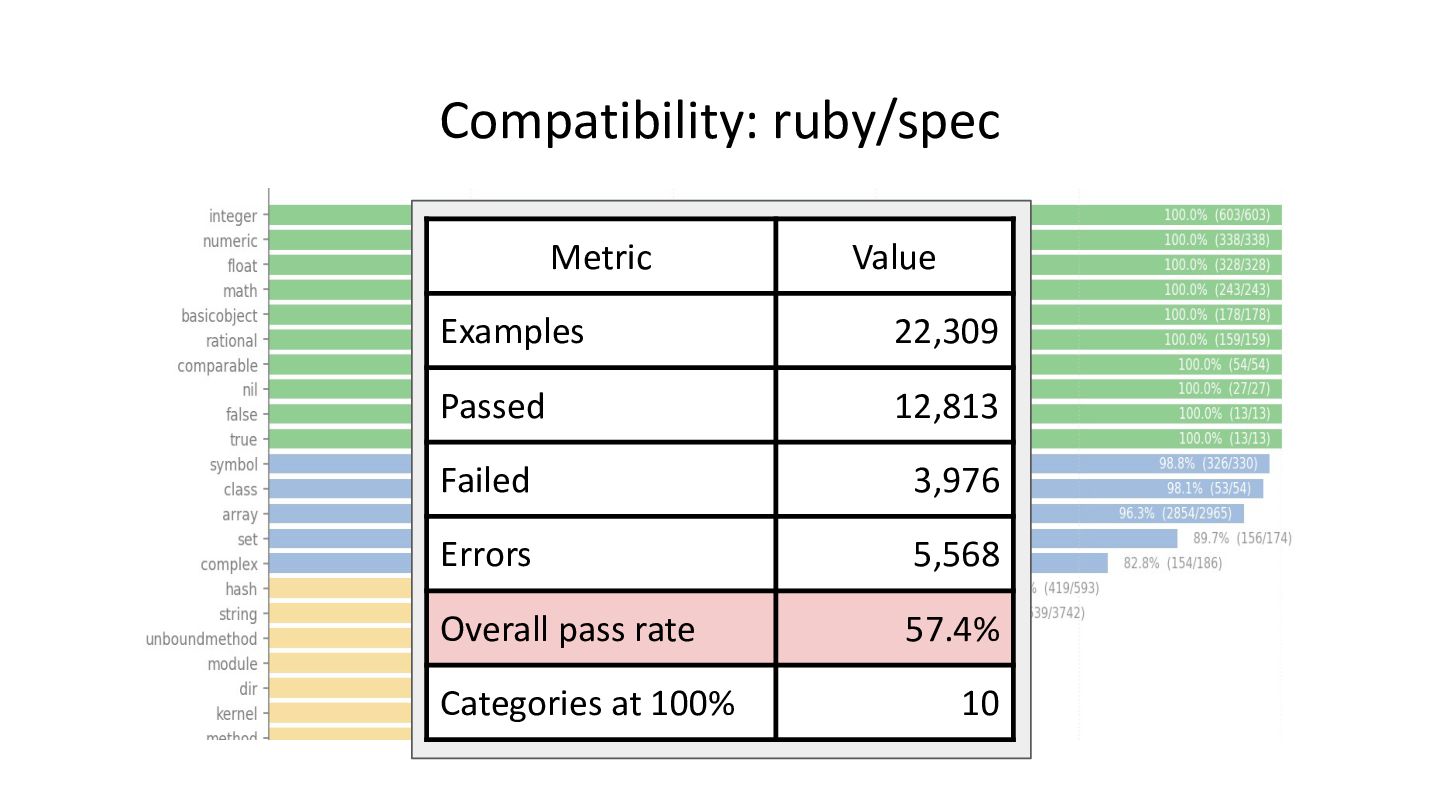
compiler - Written in Rust from (almost) scratch - No runtime dependency on LLVM, JVM, .. - Includes parser, garbage collector, interpreter - Only x86-64 / Linux is supported - new! Supports RubyGems and Bundler - new! Trying to run ruby/spec
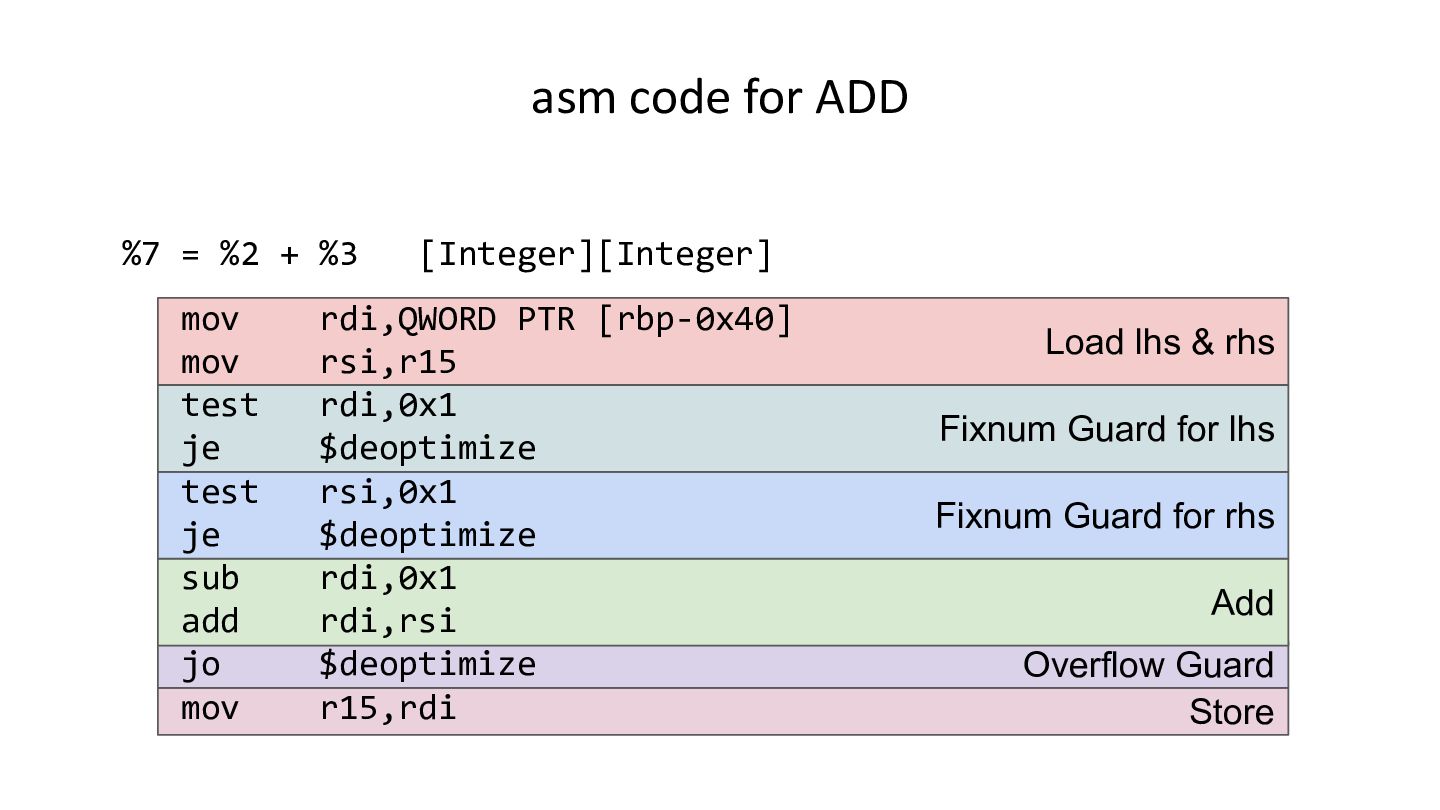
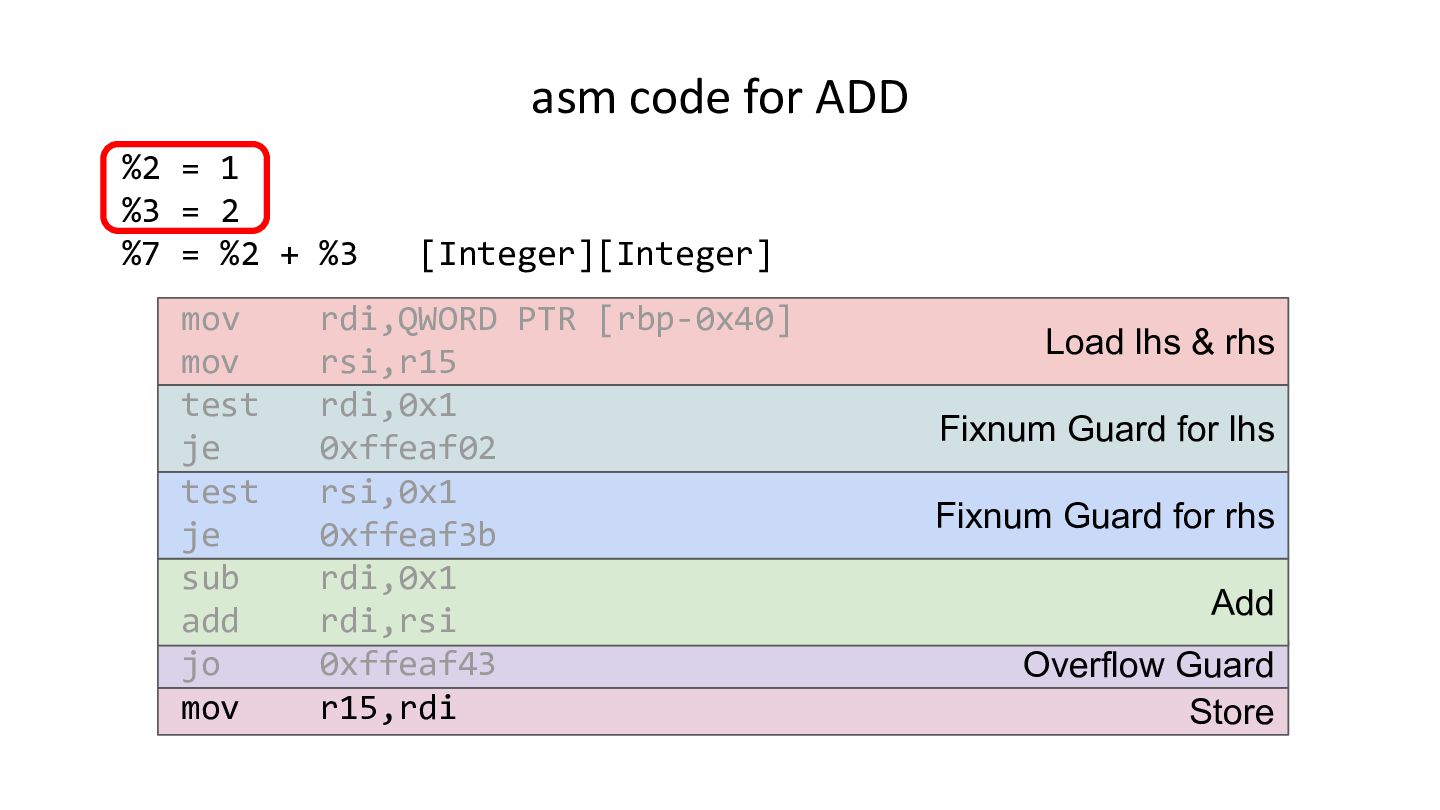
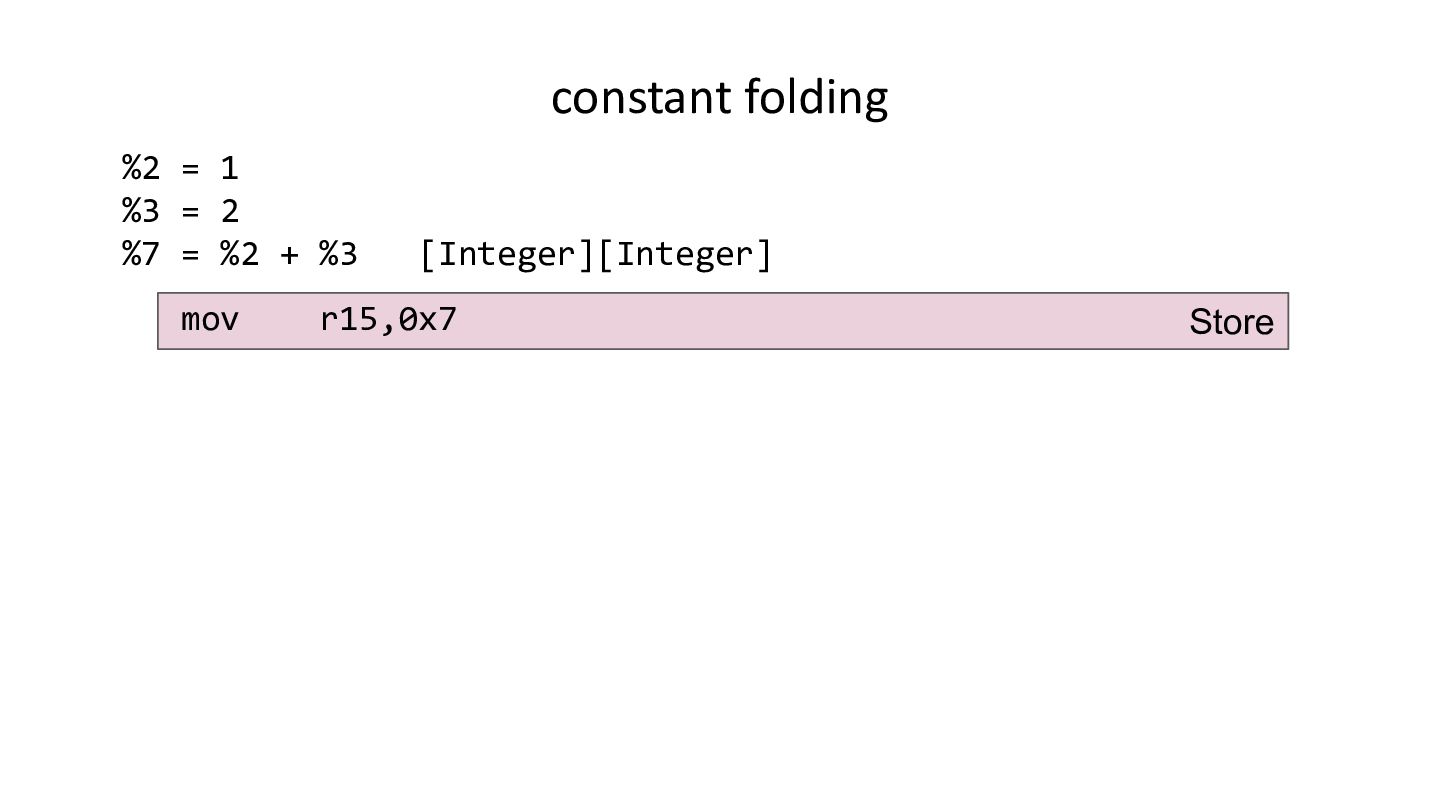
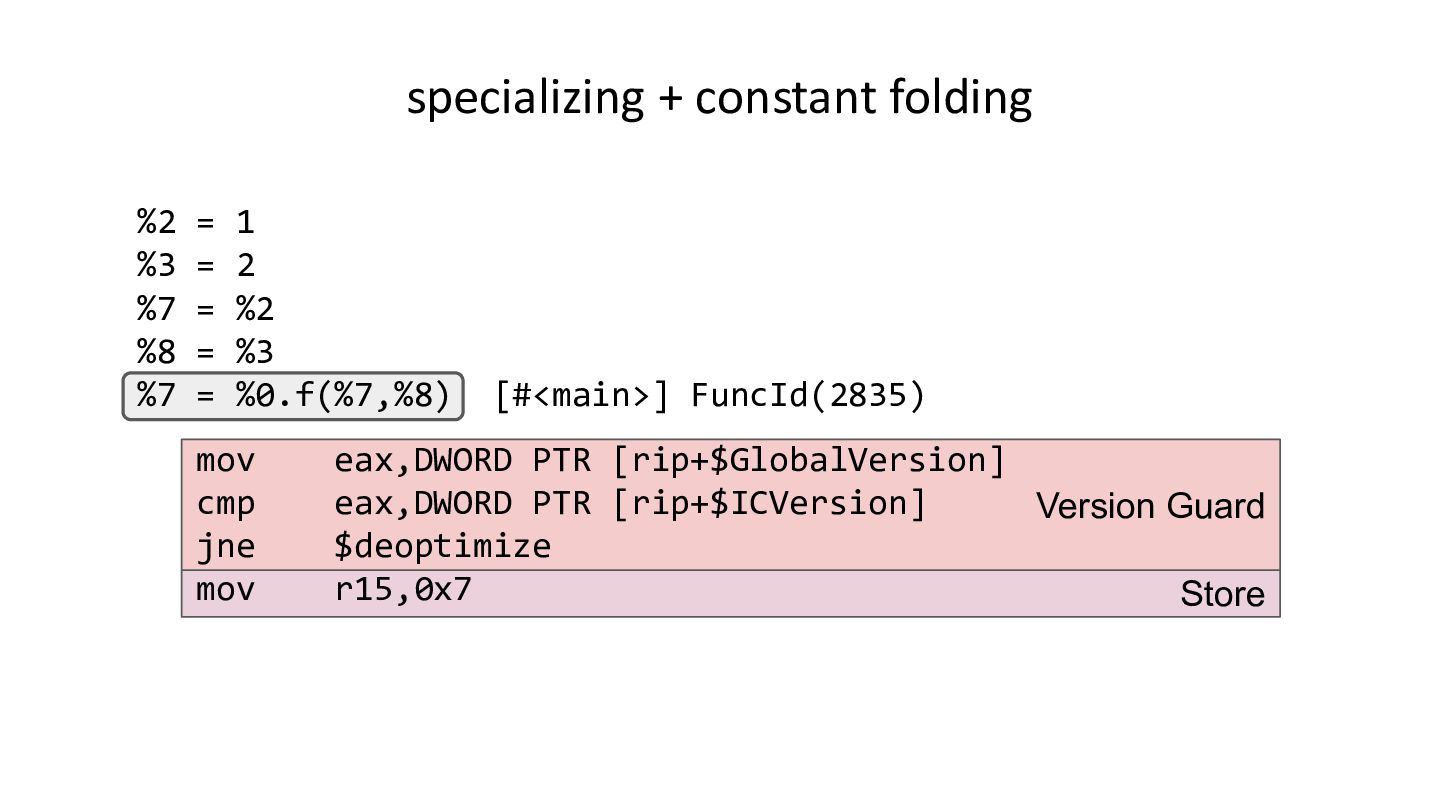
for lhs Load lhs & rhs %7 = %2 + %3 [Integer][Integer] mov rdi,QWORD PTR [rbp-0x40] mov rsi,r15 test rdi,0x1 je $deoptimize test rsi,0x1 je $deoptimize sub rdi,0x1 add rdi,rsi jo $deoptimize mov r15,rdi asm code for ADD
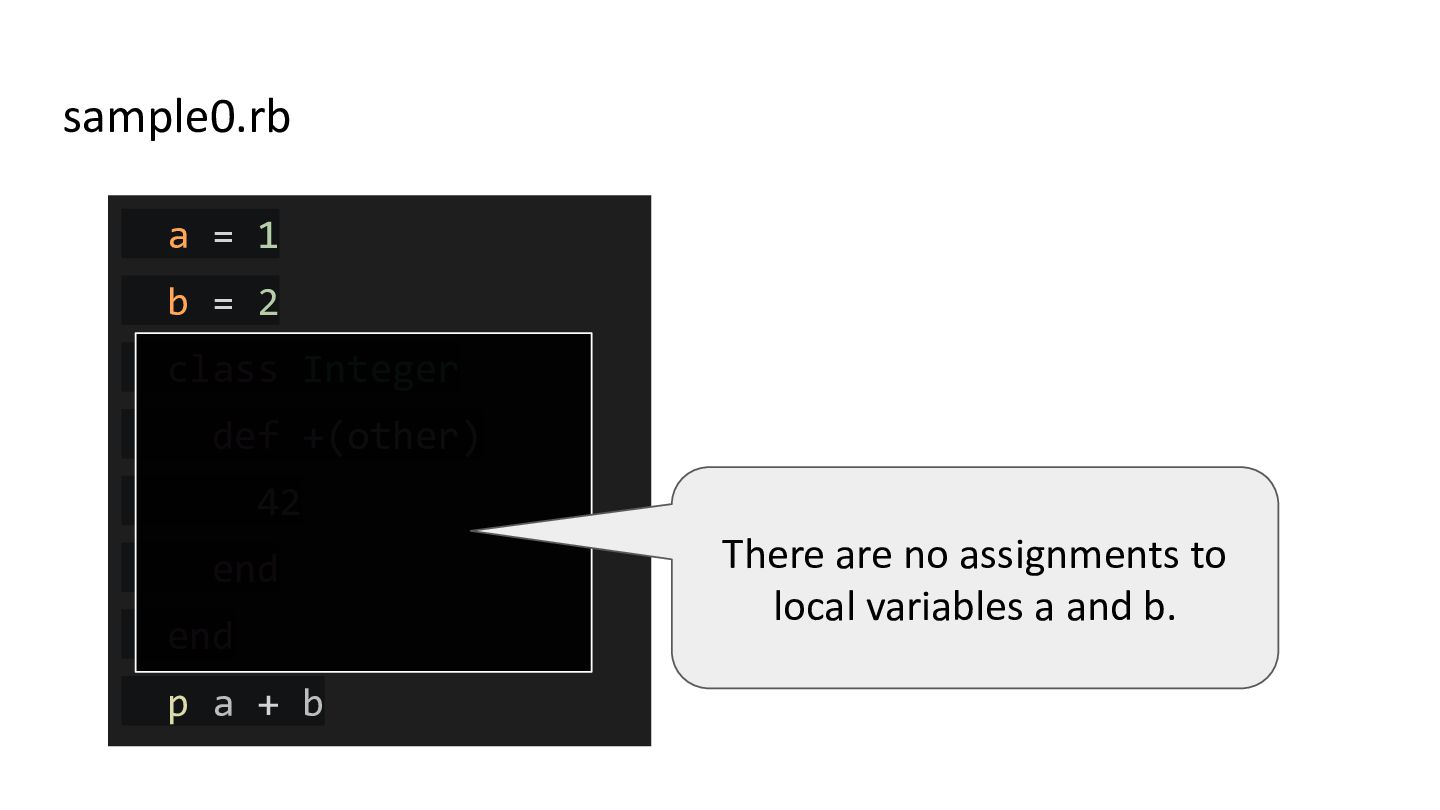
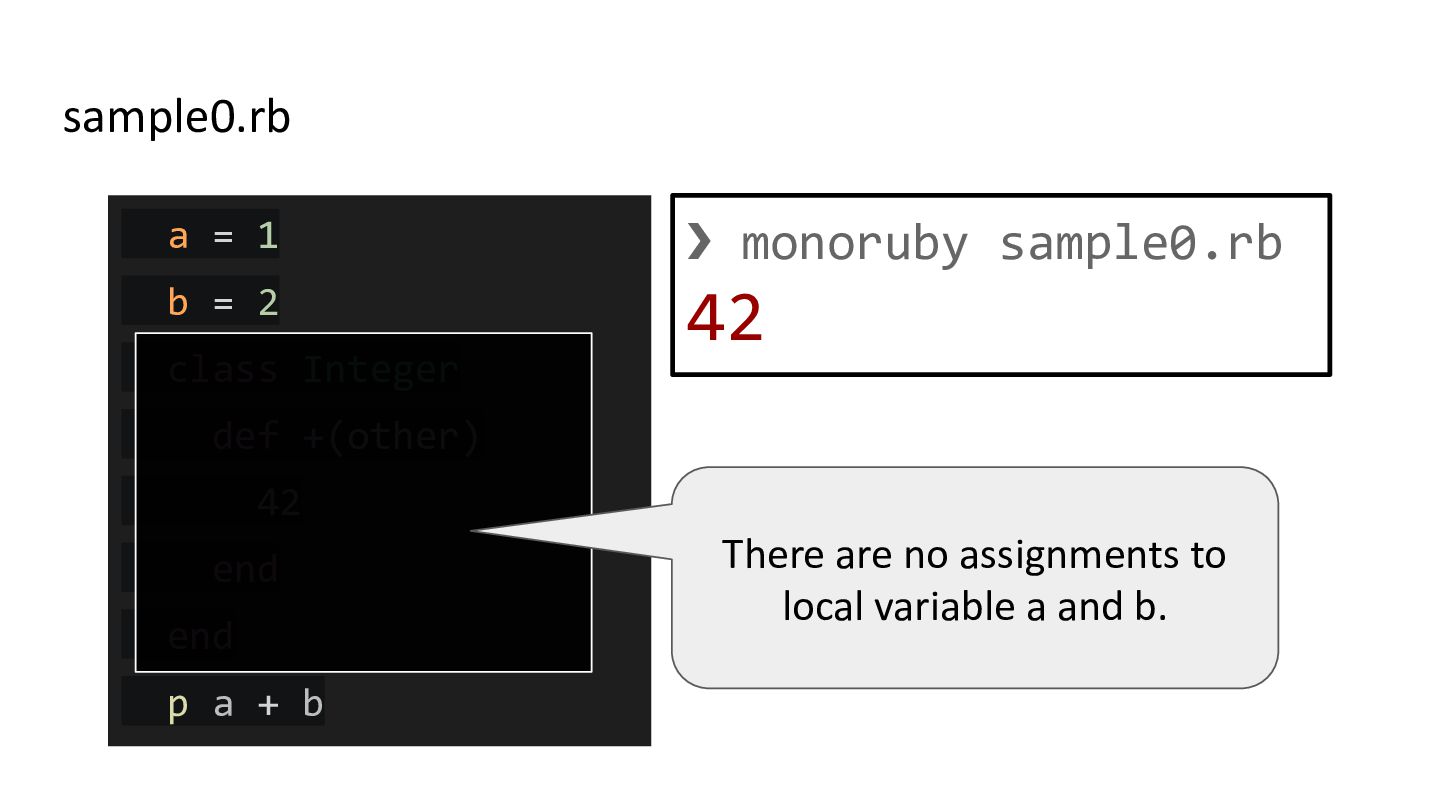
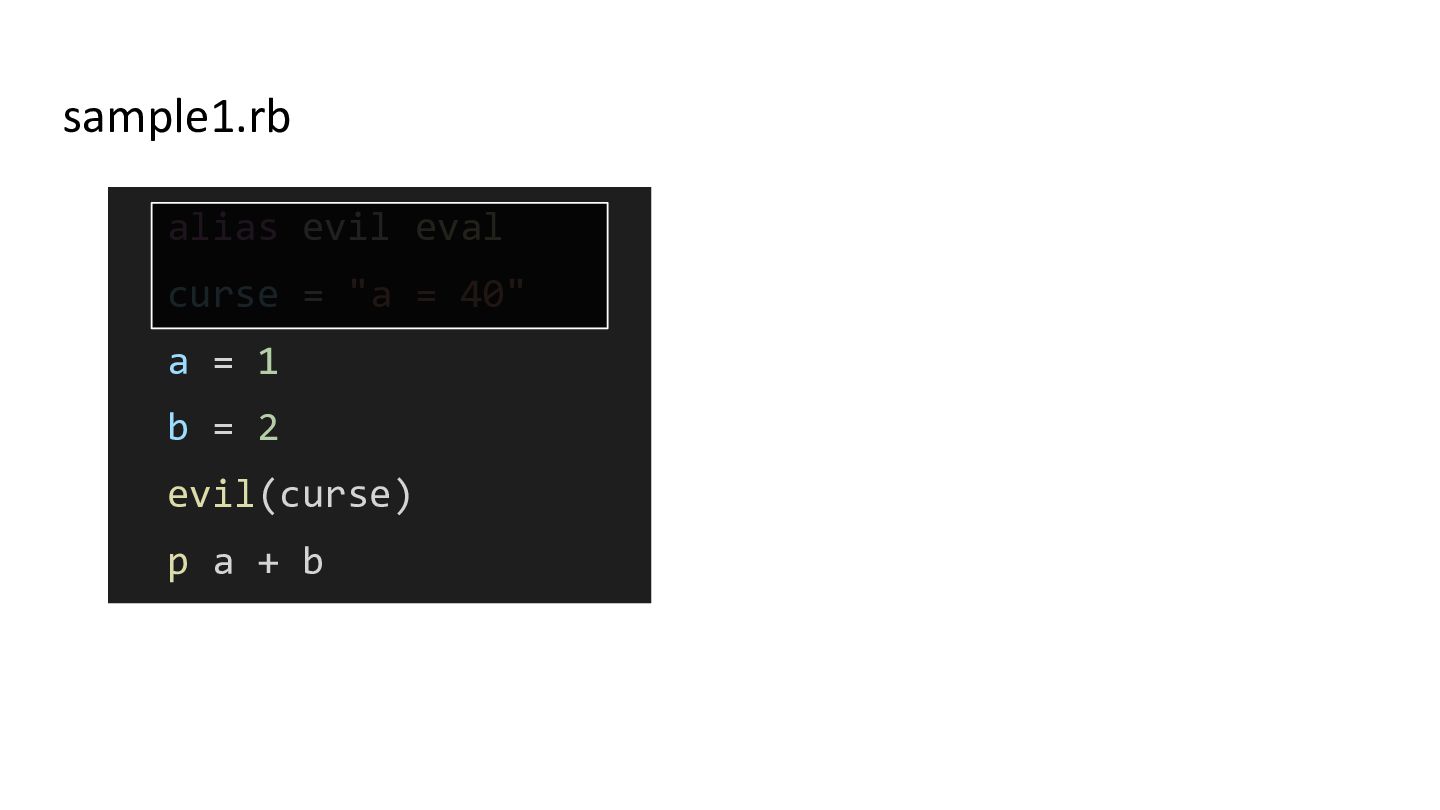
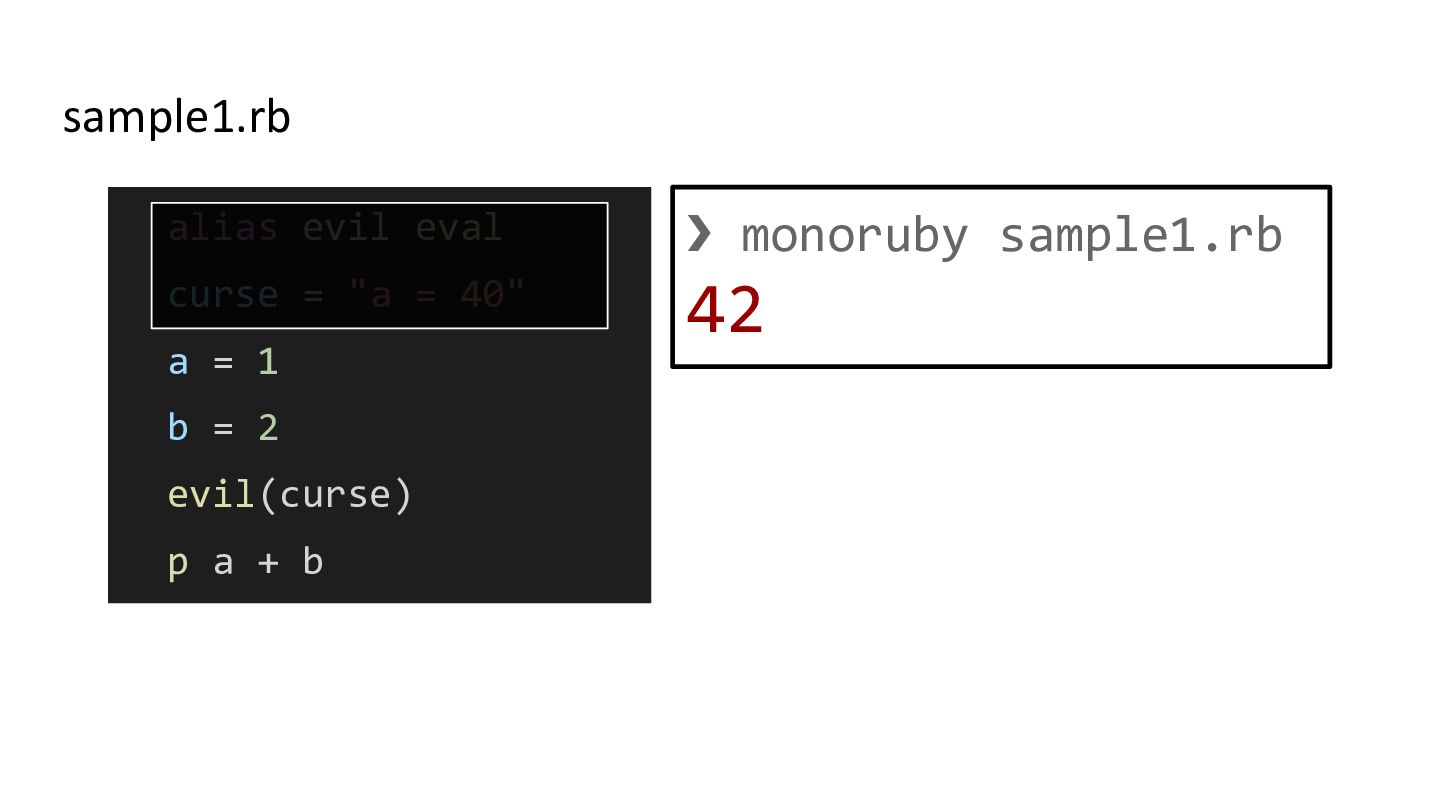
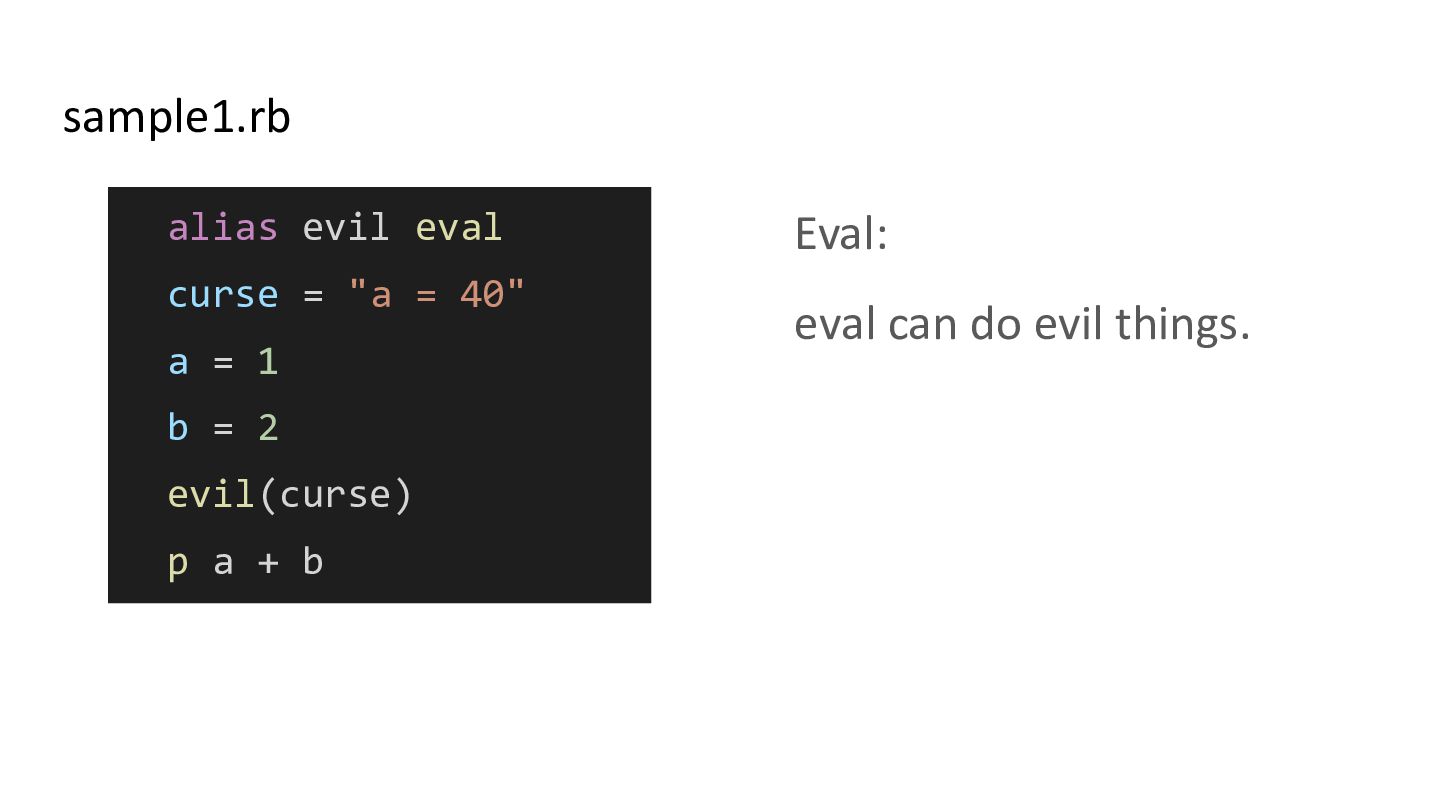
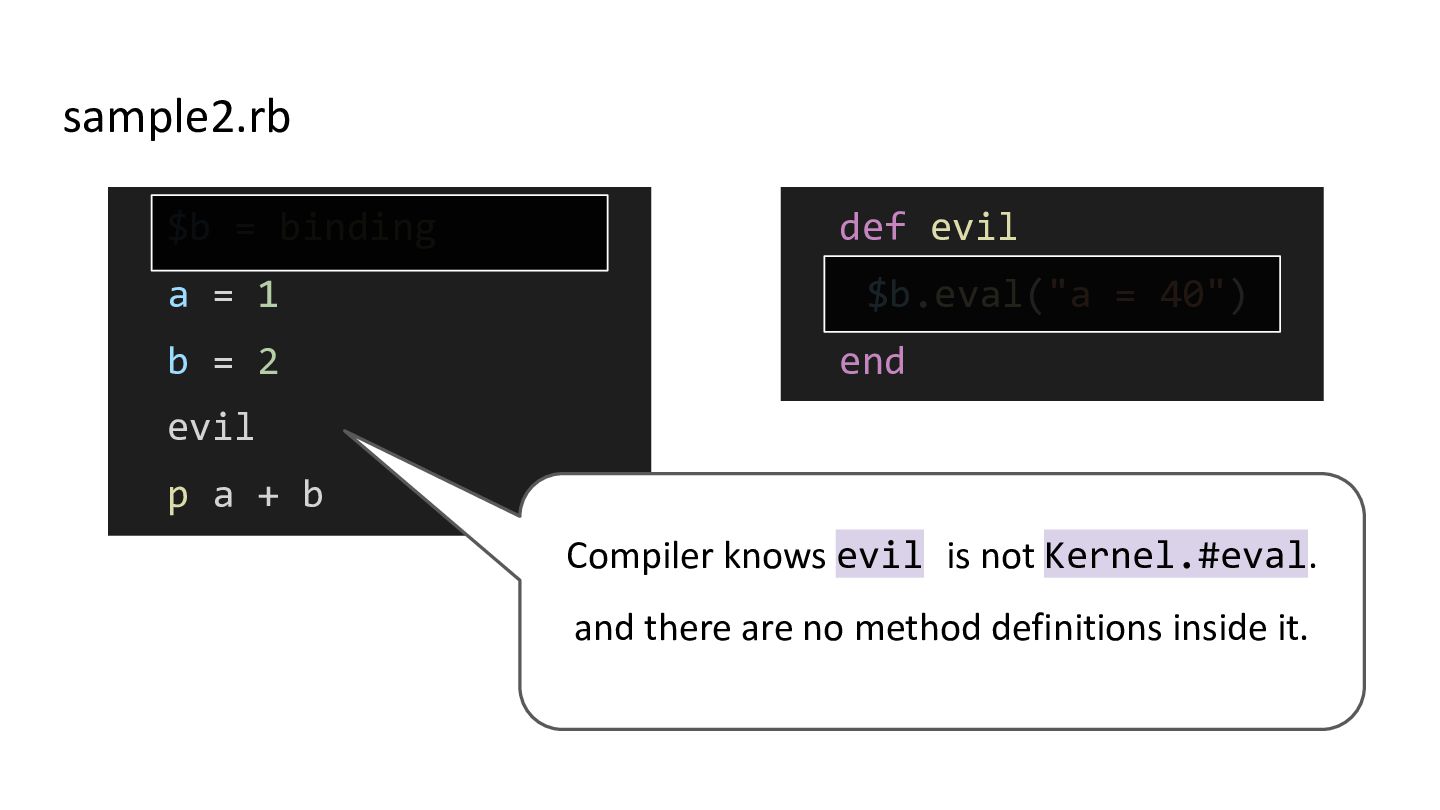
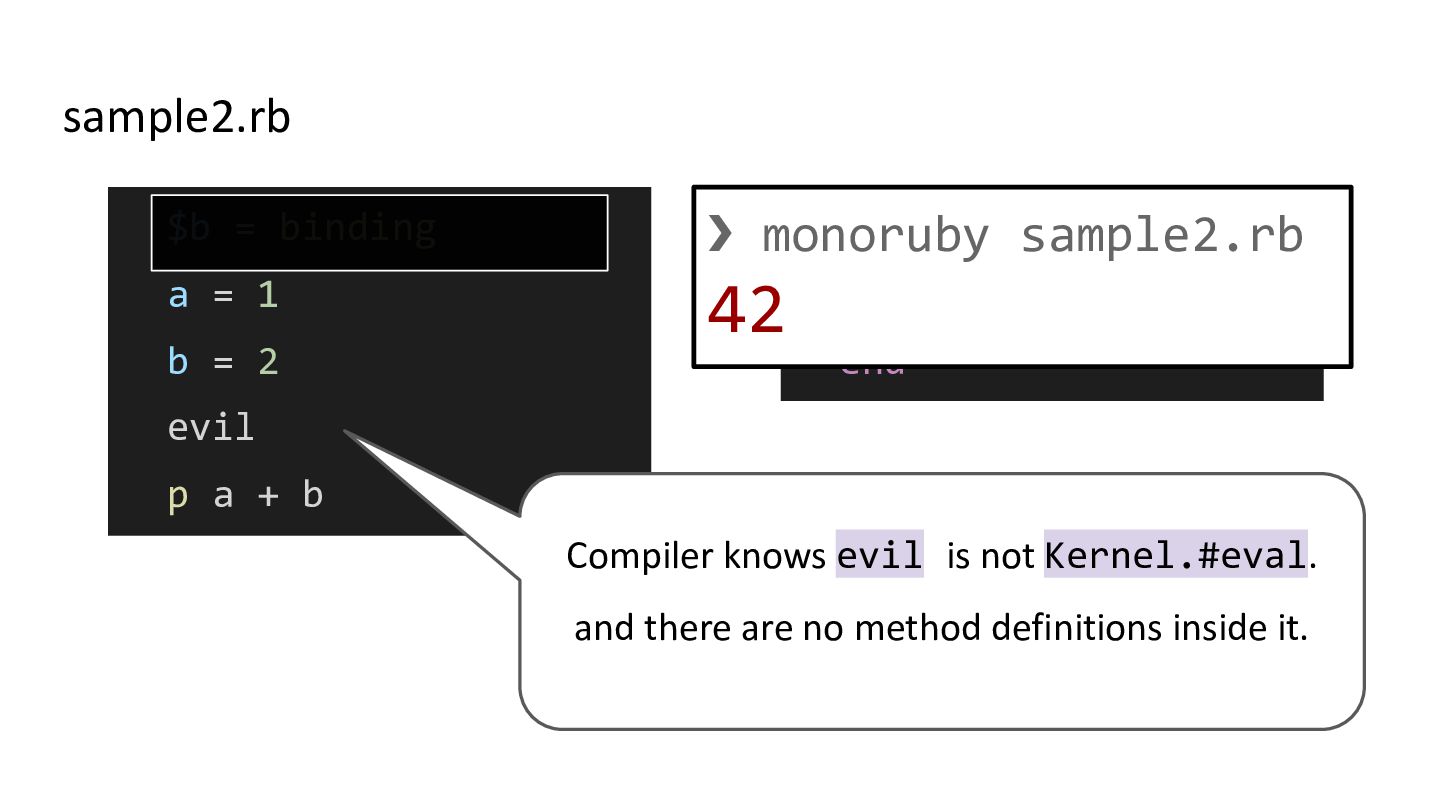
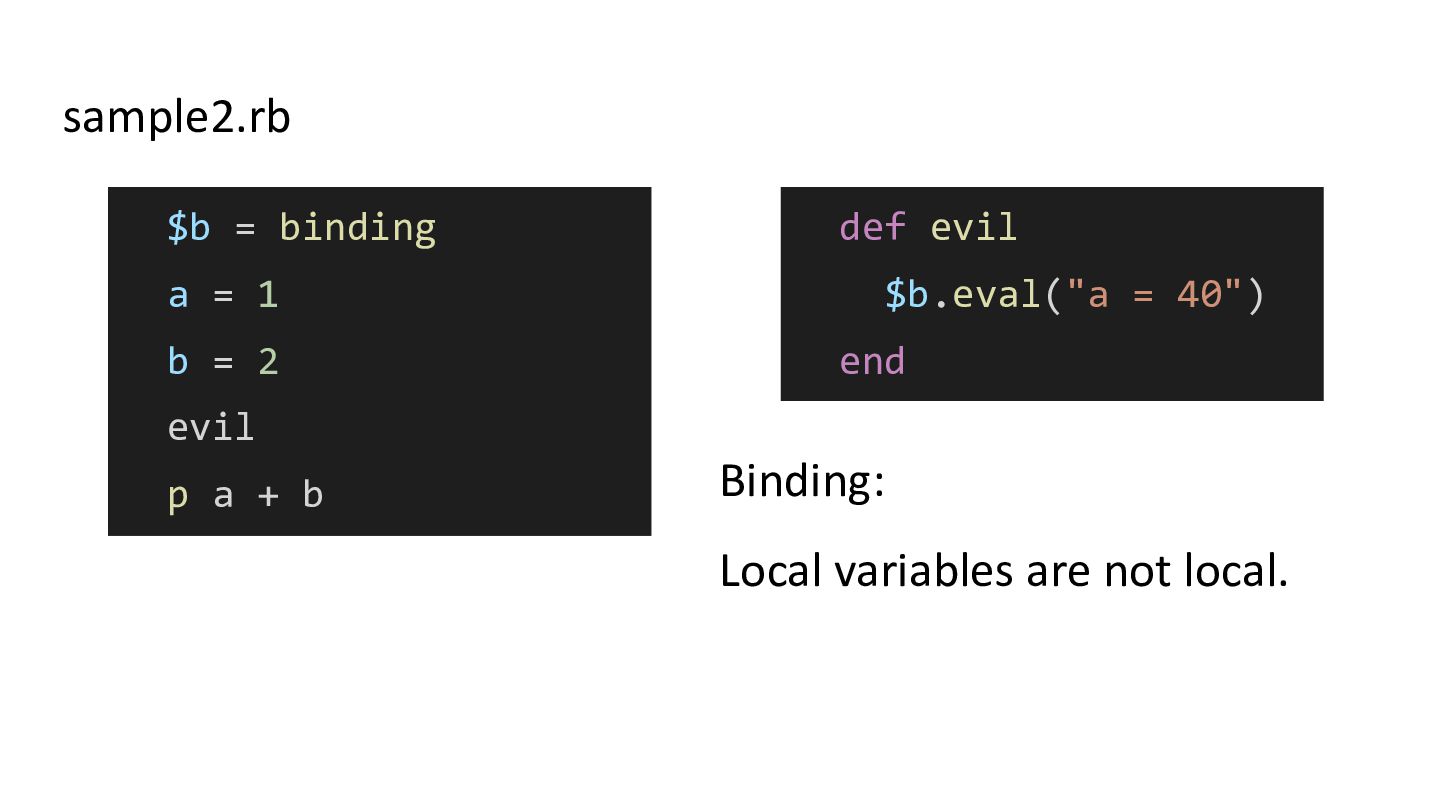
evil p a + b def evil $b.eval("a = 40") end ❯ monoruby sample2.rb 42 Compiler knows evil is not Kernel.#eval. and there are no method definitions inside it.
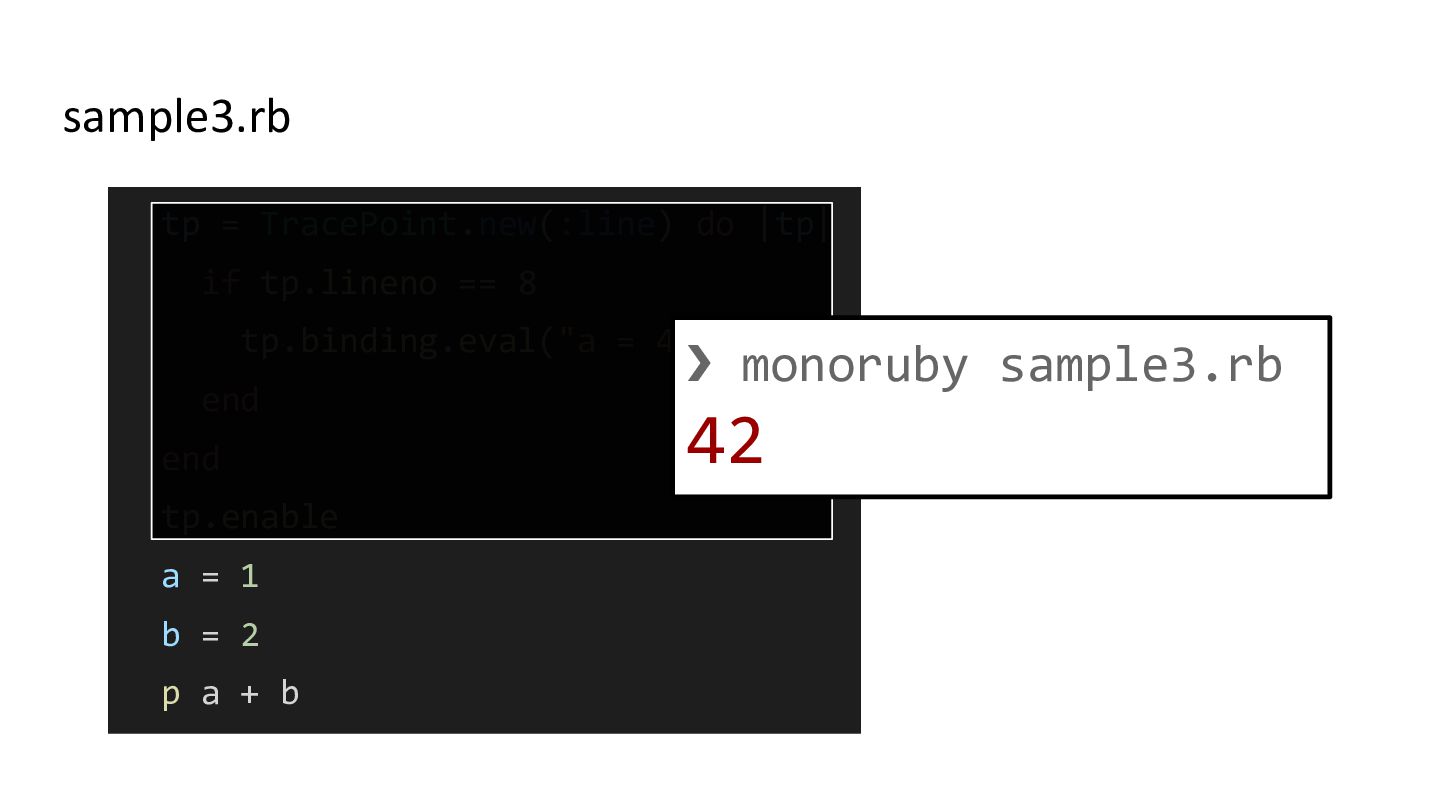
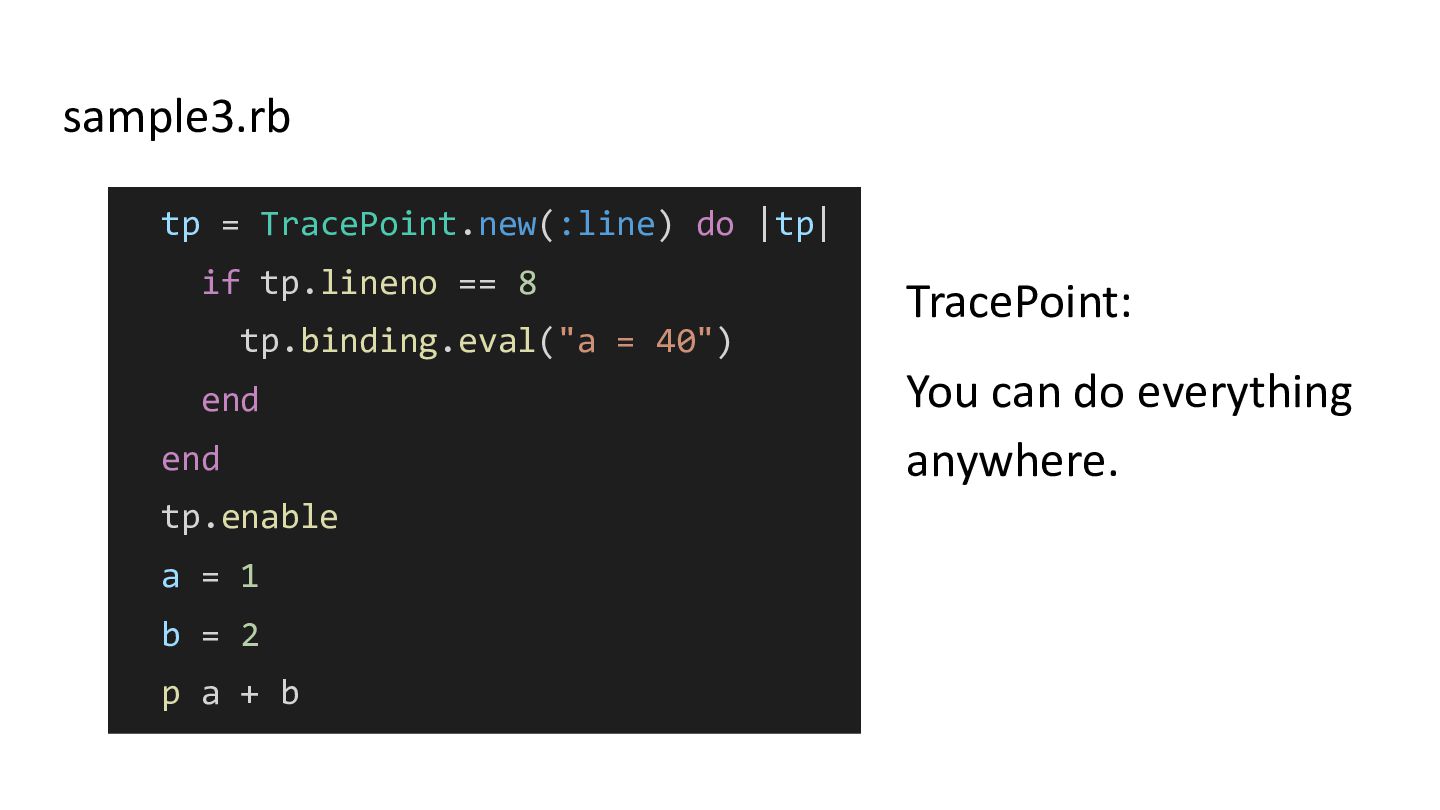
= 1 b = 2 evil(curse) p(a + b) tp = TracePoint.new(:line) do |tp| if tp.lineno == 8 tp.binding.eval("a = 40") end end tp.enable a = 1 b = 2 p a + b ❯ monoruby sample3.rb 42
= 1 b = 2 evil(curse) p(a + b) tp = TracePoint.new(:line) do |tp| if tp.lineno == 8 tp.binding.eval("a = 40") end end tp.enable a = 1 b = 2 p a + b TracePoint: You can do everything anywhere.
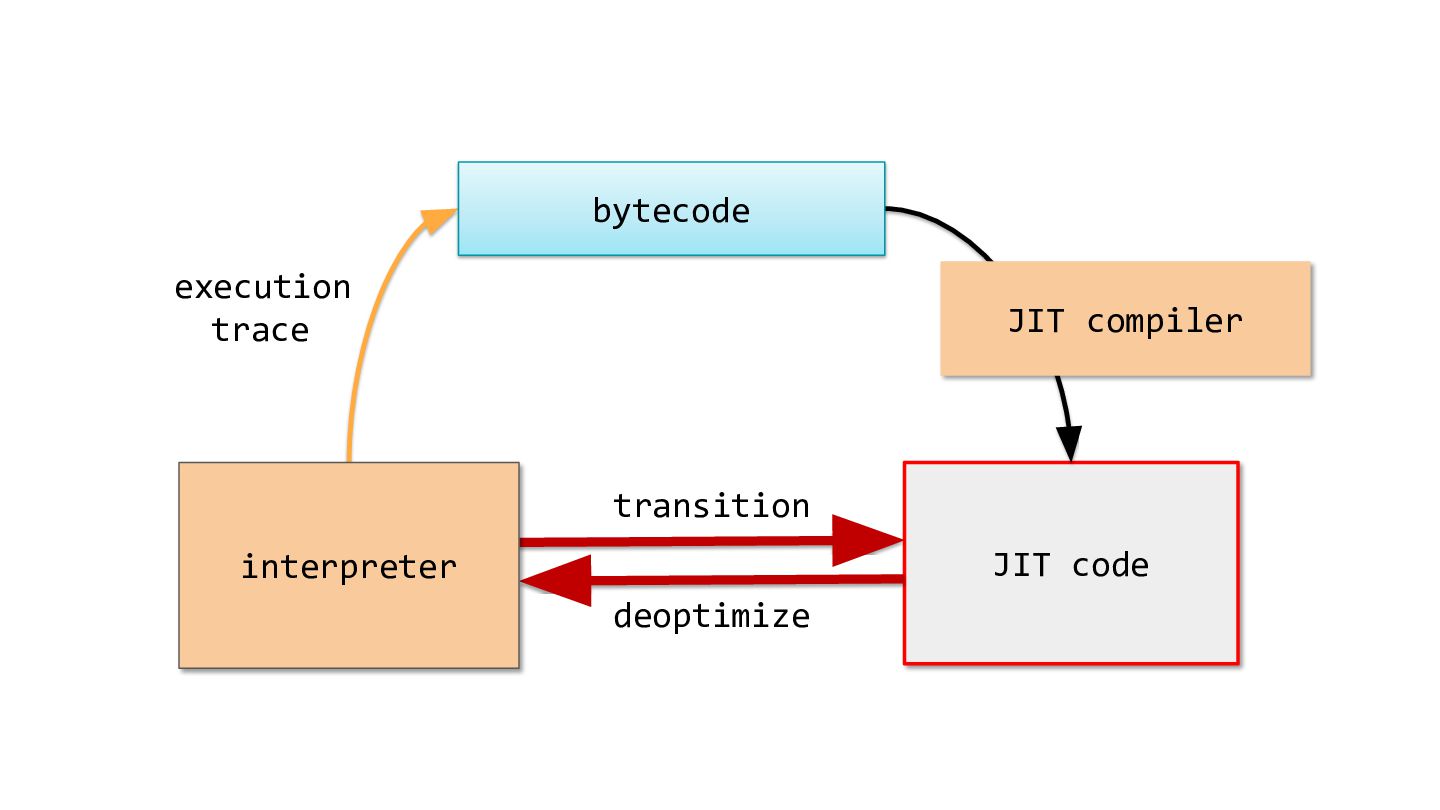
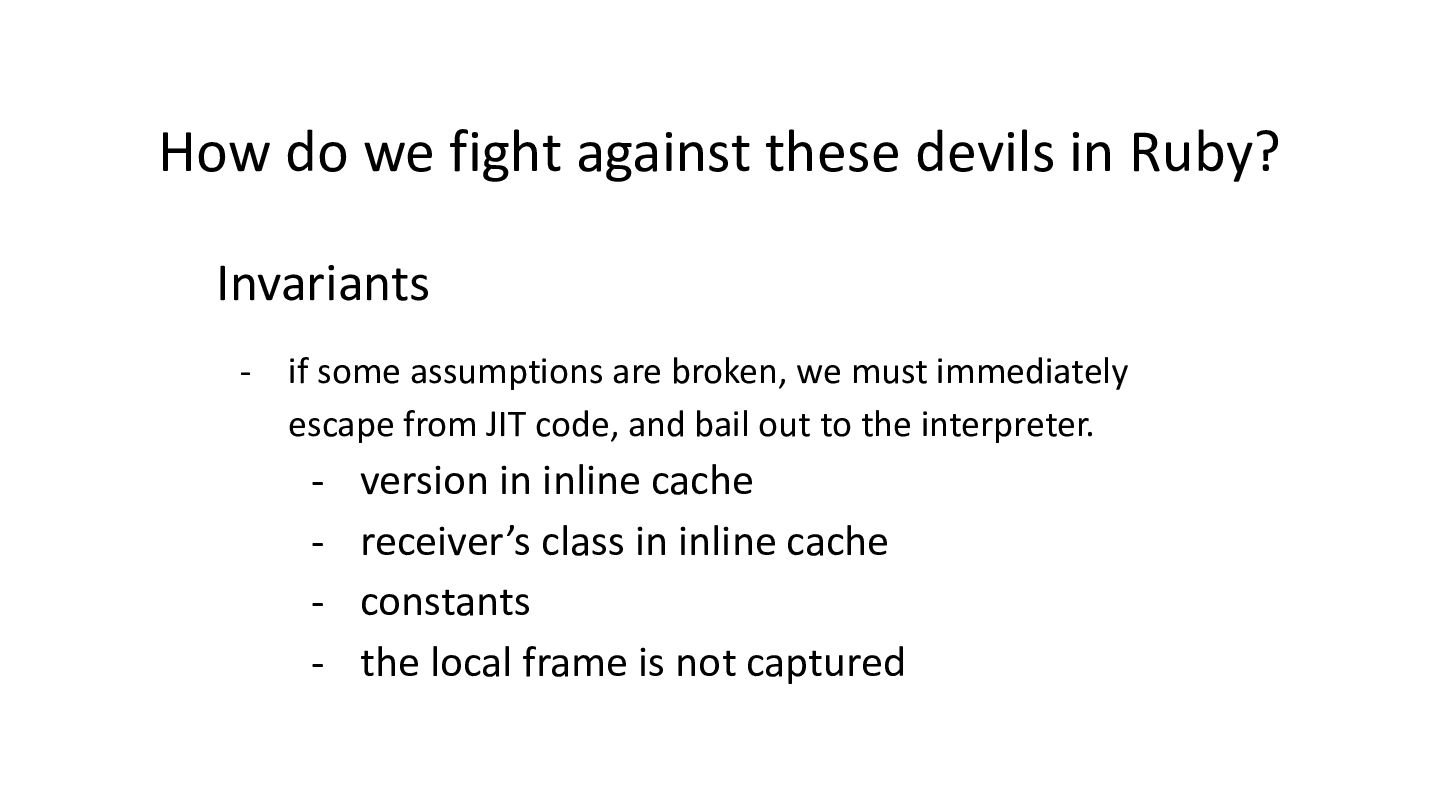
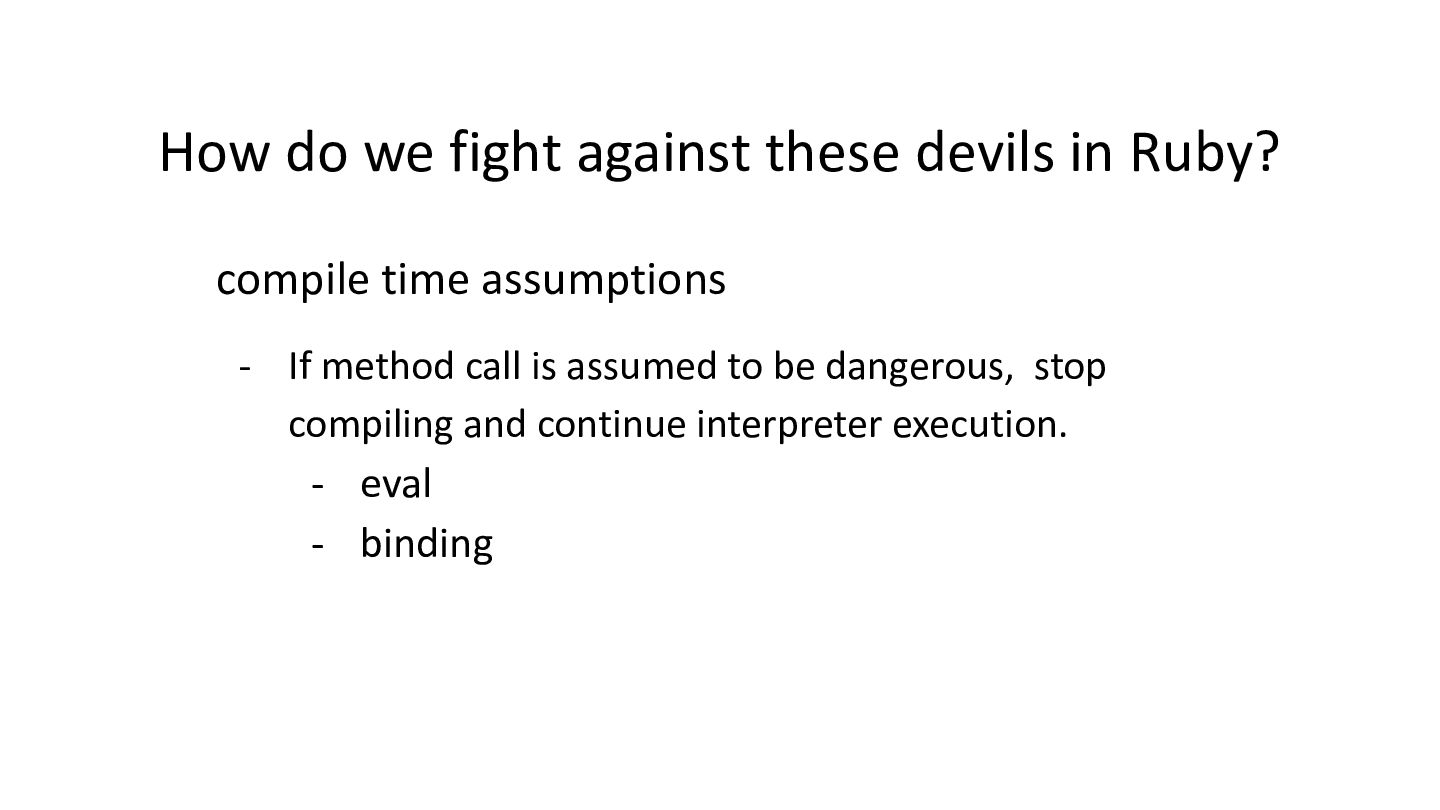
- if some assumptions are broken, we must immediately escape from JIT code, and bail out to the interpreter. - version in inline cache - receiver’s class in inline cache - constants - the local frame is not captured
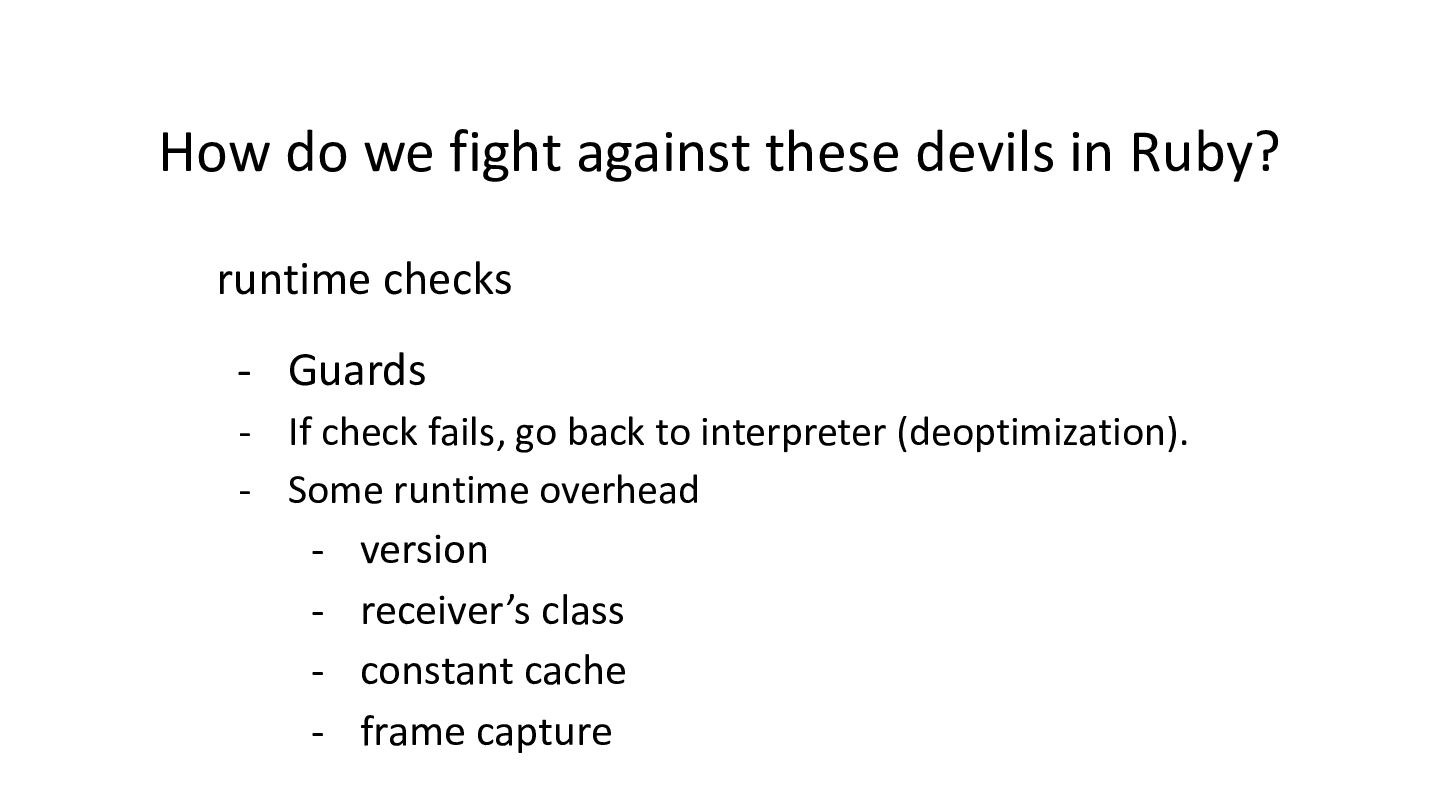
checks - Guards - If check fails, go back to interpreter (deoptimization). - Some runtime overhead - version - receiver’s class - constant cache - frame capture
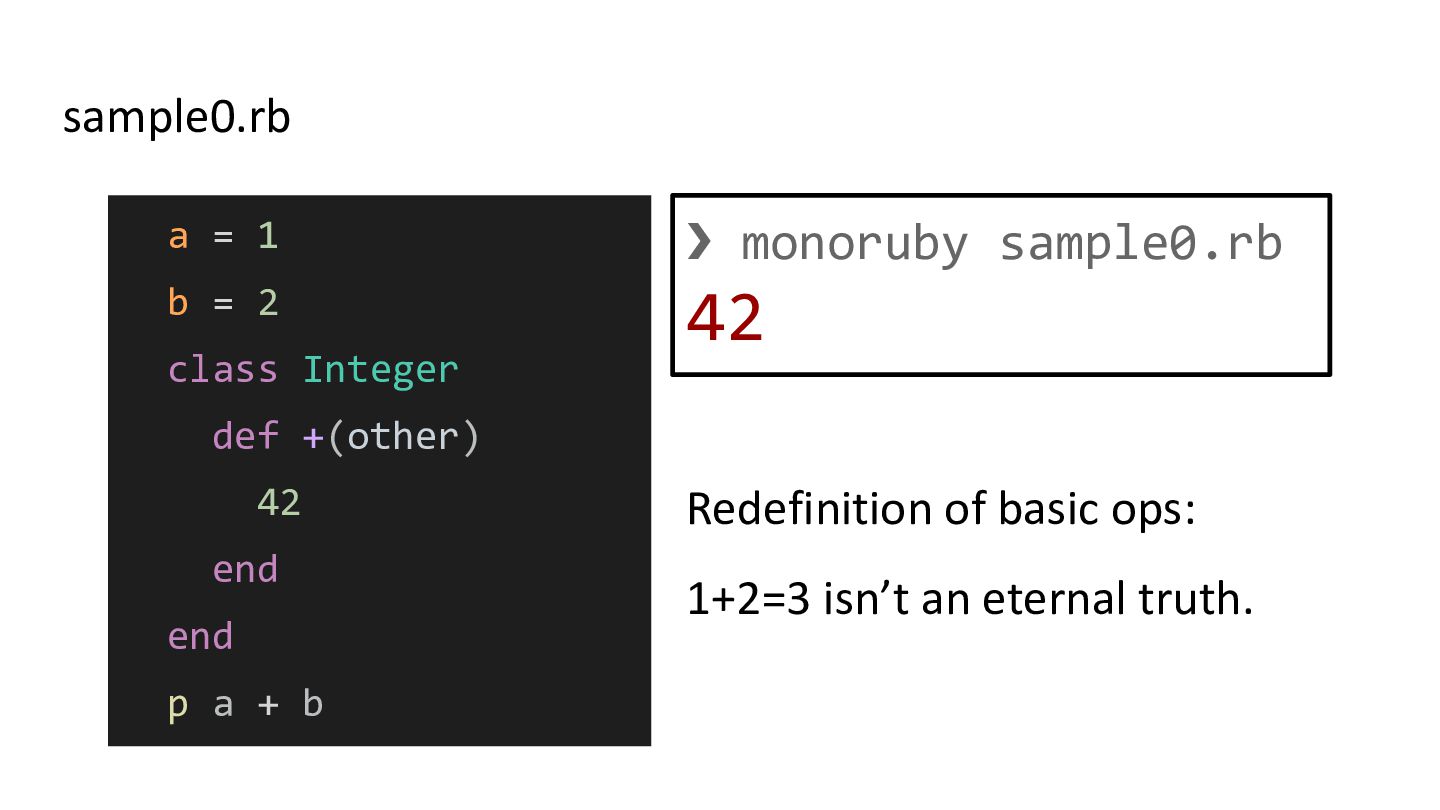
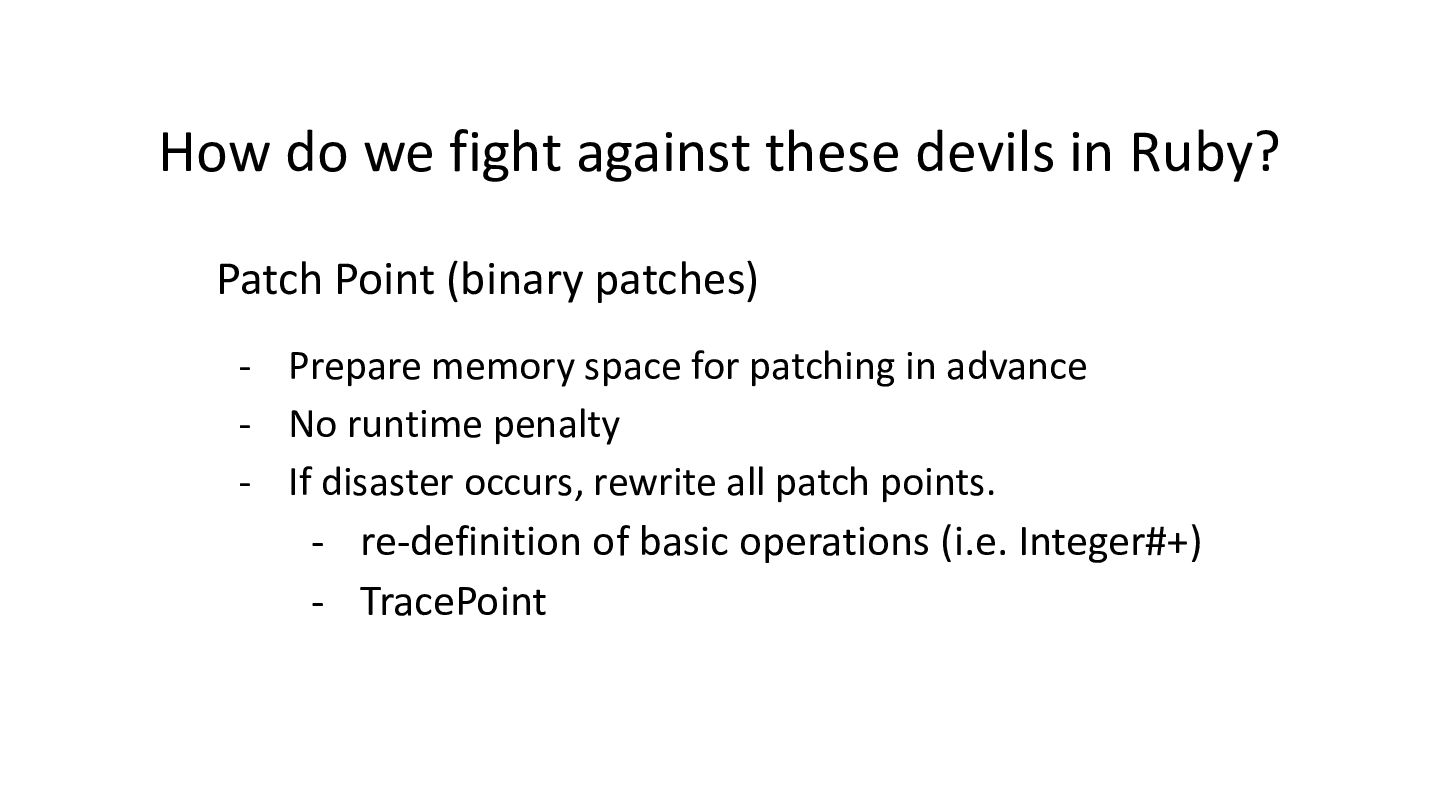
Point (binary patches) - Prepare memory space for patching in advance - No runtime penalty - If disaster occurs, rewrite all patch points. - re-definition of basic operations (i.e. Integer#+) - TracePoint


 sisshiki1969
 minodriven
 448jp
448jp
 findyinc
 bells17
 prota
prota
 panda728
 kishida
 tmikov2023
 oku053
 tanahiro2010
 uyuki234
 asonas
 lara
lara
 moore
moore
 marktimemedia
 badams
 kneath
 katarinadahlin
 tenderlove
 mfonobong
 inesmontani
 baasie
.png) helenjbeal
helenjbeal