Upgrade to Pro — share decks privately, control downloads, hide ads and more …

Combatting Global Warming: Unveiling Causes and...

Sponsored · Your Podcast. Everywhere. Effortlessly. Share. Educate. Inspire. Entertain. You do you. We'll handle the rest.

Combatting Global Warming: Unveiling Causes and Solutions

Dive into the intricate web of global warming and its underlying causes, from industrial emissions to overconsumption. Explore practical solutions—like reforestation, conscious fossil fuel consumption, and the transition to renewable energy—that hold the key to a sustainable future. Let's be stewards of change and paint a masterpiece of sustainability for generations to come.

#CombatGlobalWarming #SustainableFuture #ClimateAction

Avatar for Texas International Academy

Texas International Academy

November 29, 2023
Tweet

Other Decks in Education

Transcript

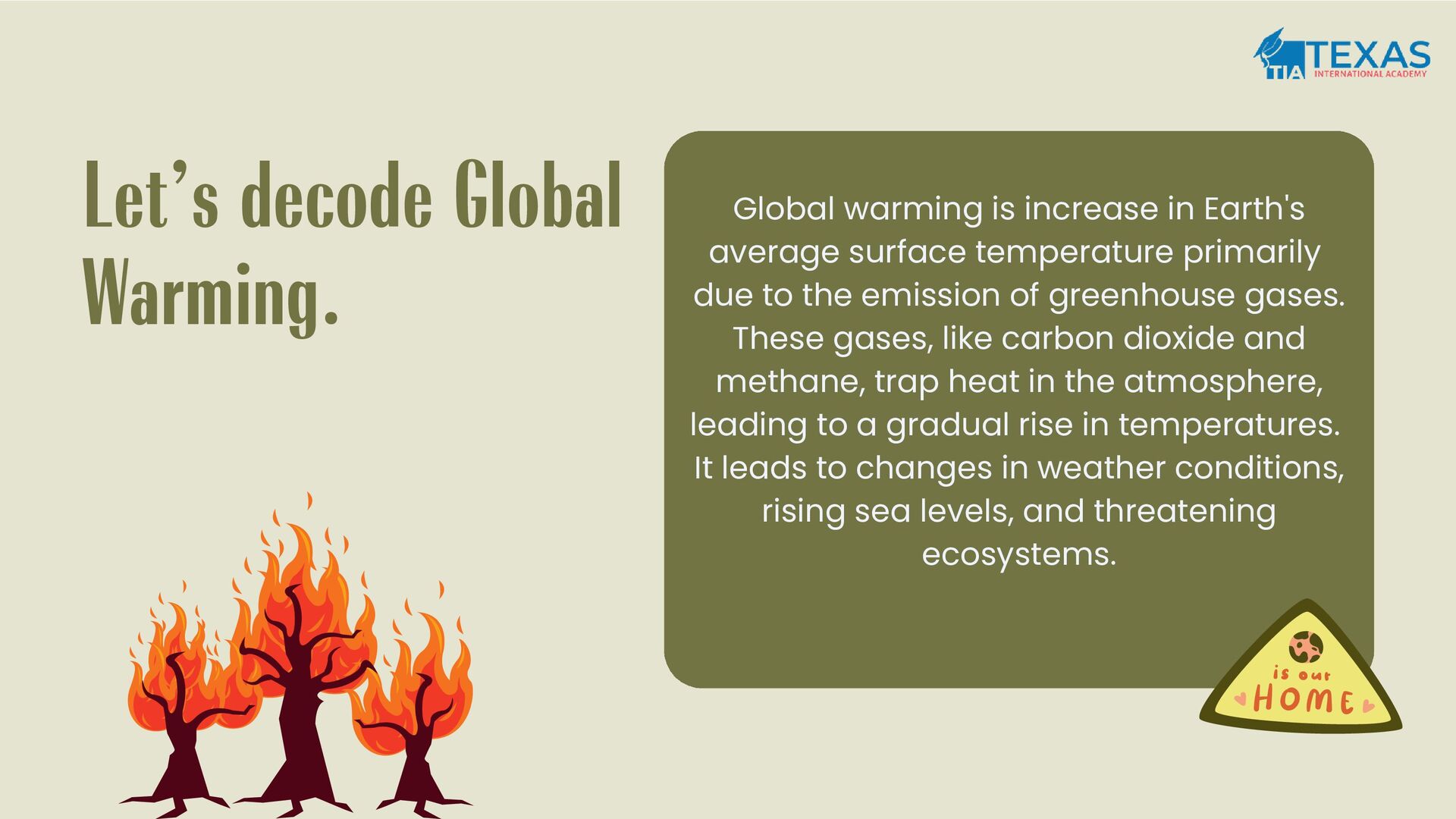
  1. Let’s decode Global Warming. Global warming is increase in Earth's

    average surface temperature primarily due to the emission of greenhouse gases. These gases, like carbon dioxide and methane, trap heat in the atmosphere, leading to a gradual rise in temperatures. It leads to changes in weather conditions, rising sea levels, and threatening ecosystems.
  2. Industrial Emissions Overview: Industrial activities contribute to global warming through

    the release of greenhouse gases. Key Points: Combustion of fossil fuels in factories releases large amounts of carbon dioxide (CO2). Industrial processes like manufacturing and chemical production emit methane (CH4) and nitrous oxide (N2O). Impact: Accelerates the greenhouse effect, trapping heat in the atmosphere and warming the planet.
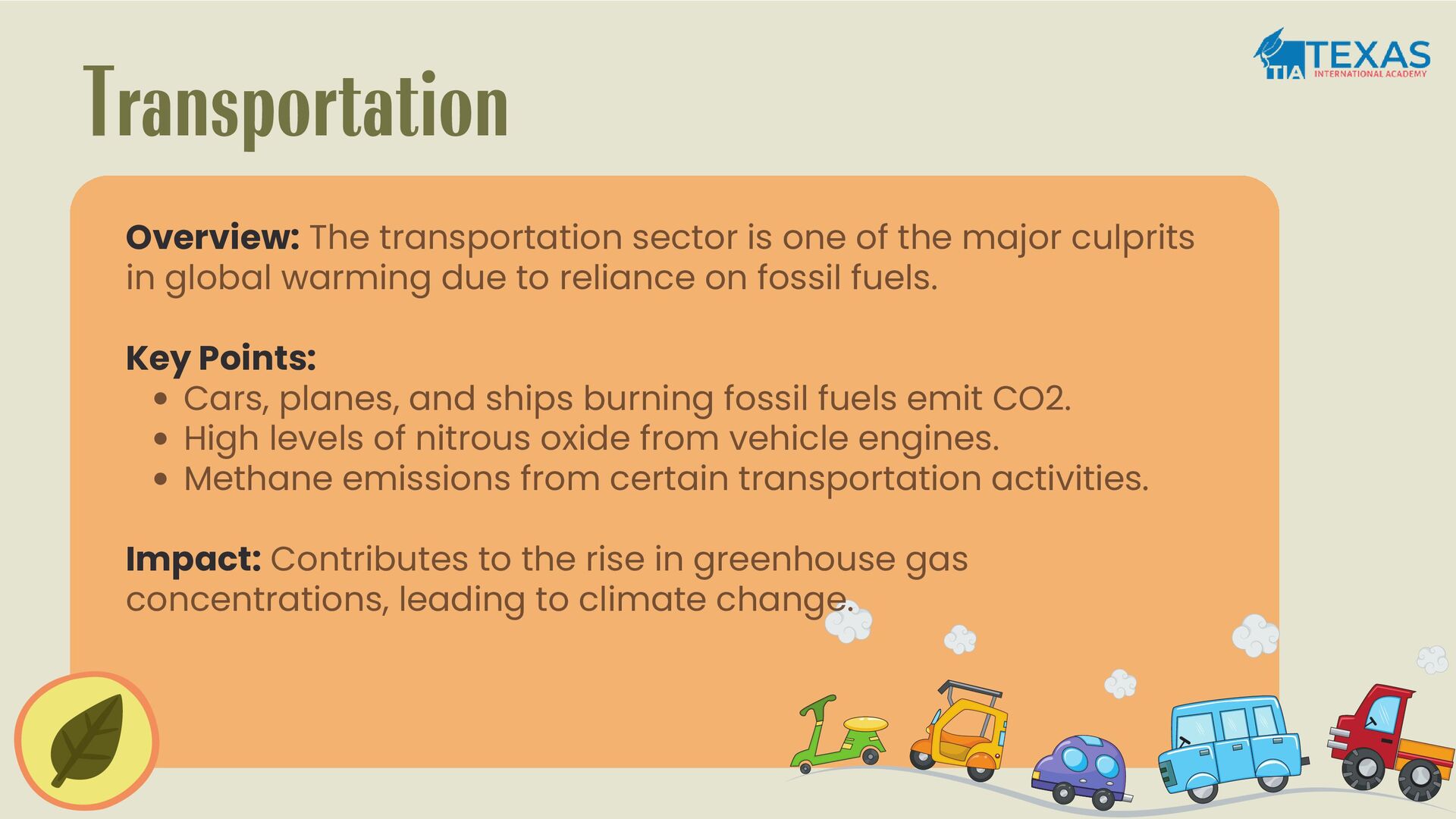
  3. Cars, planes, and ships burning fossil fuels emit CO2. High

    levels of nitrous oxide from vehicle engines. Methane emissions from certain transportation activities. Overview: The transportation sector is one of the major culprits in global warming due to reliance on fossil fuels. Key Points: Impact: Contributes to the rise in greenhouse gas concentrations, leading to climate change. Transportation
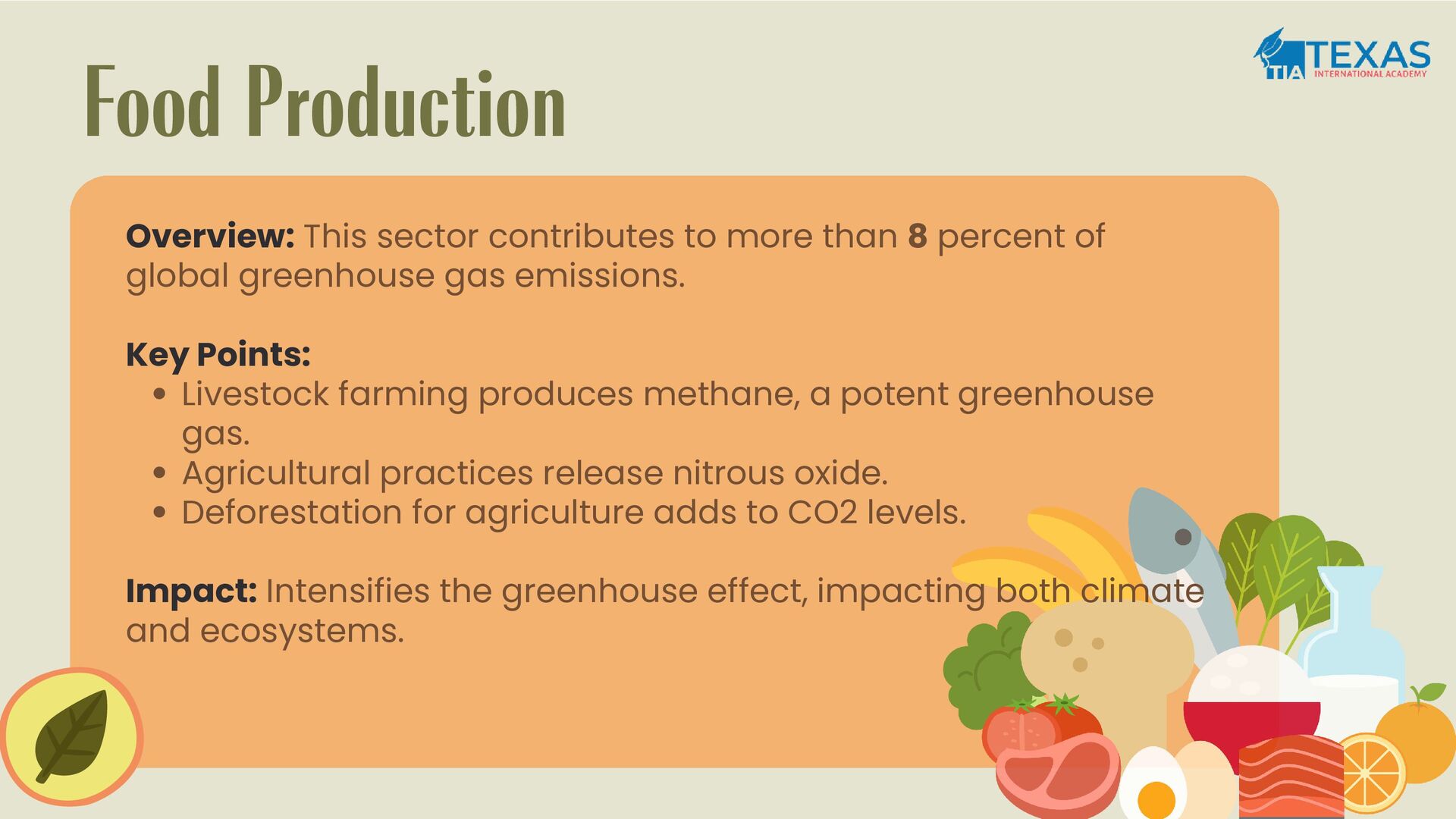
  4. Livestock farming produces methane, a potent greenhouse gas. Agricultural practices

    release nitrous oxide. Deforestation for agriculture adds to CO2 levels. Impact: Intensifies the greenhouse effect, impacting both climate and ecosystems. Overview: This sector contributes to more than 8 percent of global greenhouse gas emissions. Key Points: Food Production
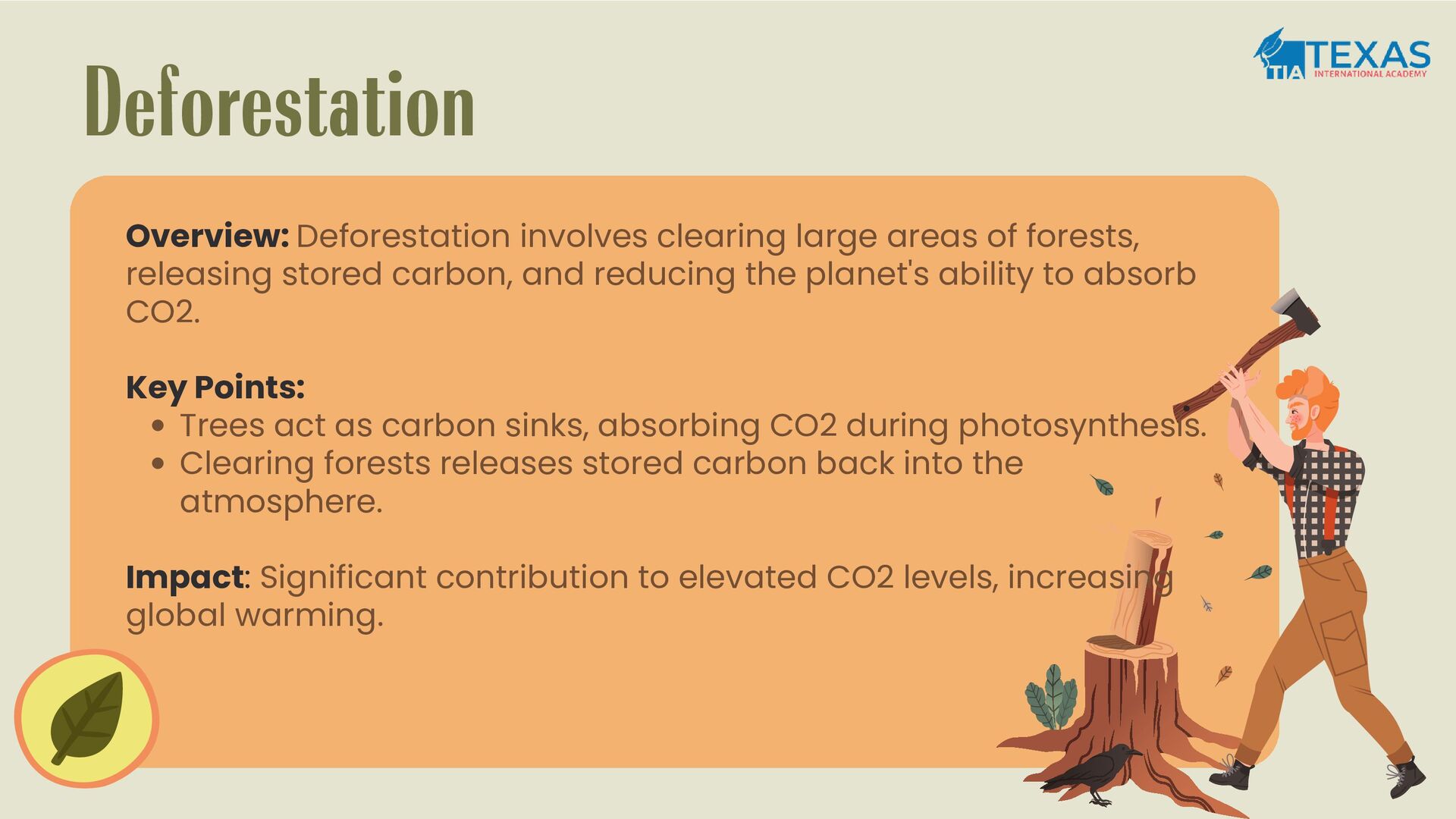
  5. Trees act as carbon sinks, absorbing CO2 during photosynthesis. Clearing

    forests releases stored carbon back into the atmosphere. Overview: Deforestation involves clearing large areas of forests, releasing stored carbon, and reducing the planet's ability to absorb CO2. Key Points: Impact: Significant contribution to elevated CO2 levels, increasing global warming. Deforestation
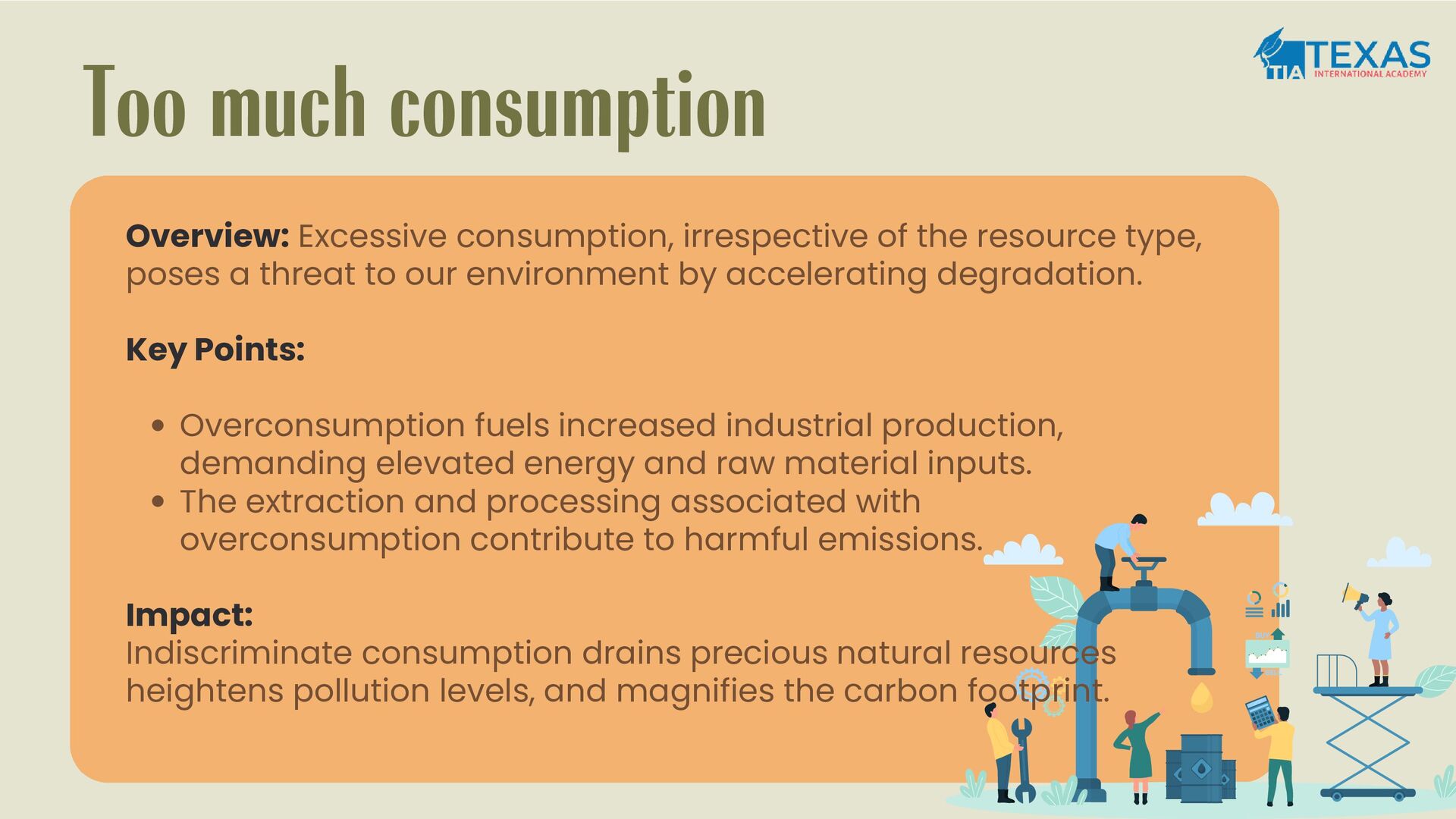
  6. Overconsumption fuels increased industrial production, demanding elevated energy and raw

    material inputs. The extraction and processing associated with overconsumption contribute to harmful emissions. Indiscriminate consumption drains precious natural resources heightens pollution levels, and magnifies the carbon footprint. Overview: Excessive consumption, irrespective of the resource type, poses a threat to our environment by accelerating degradation. Key Points: Impact: Too much consumption
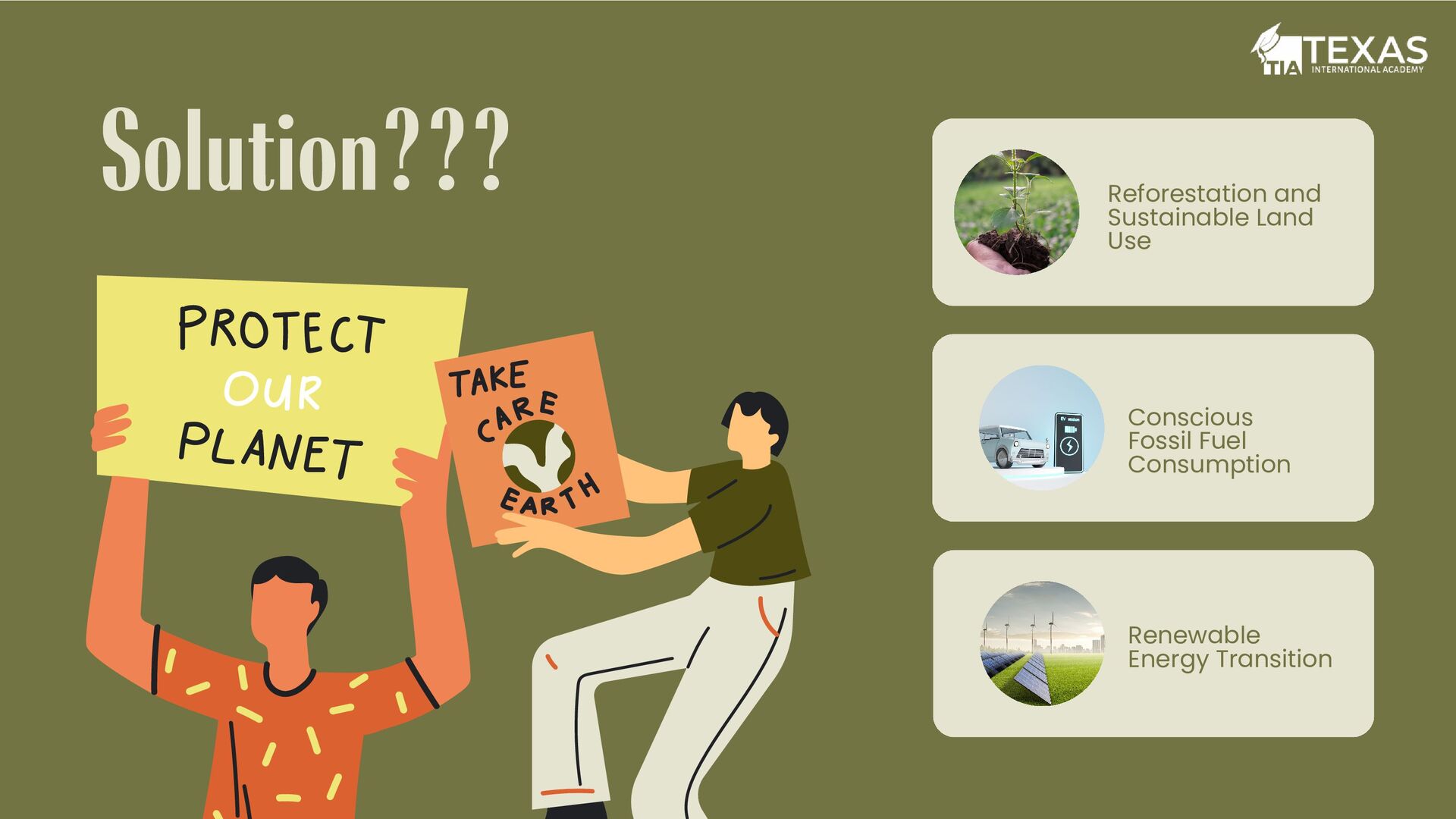
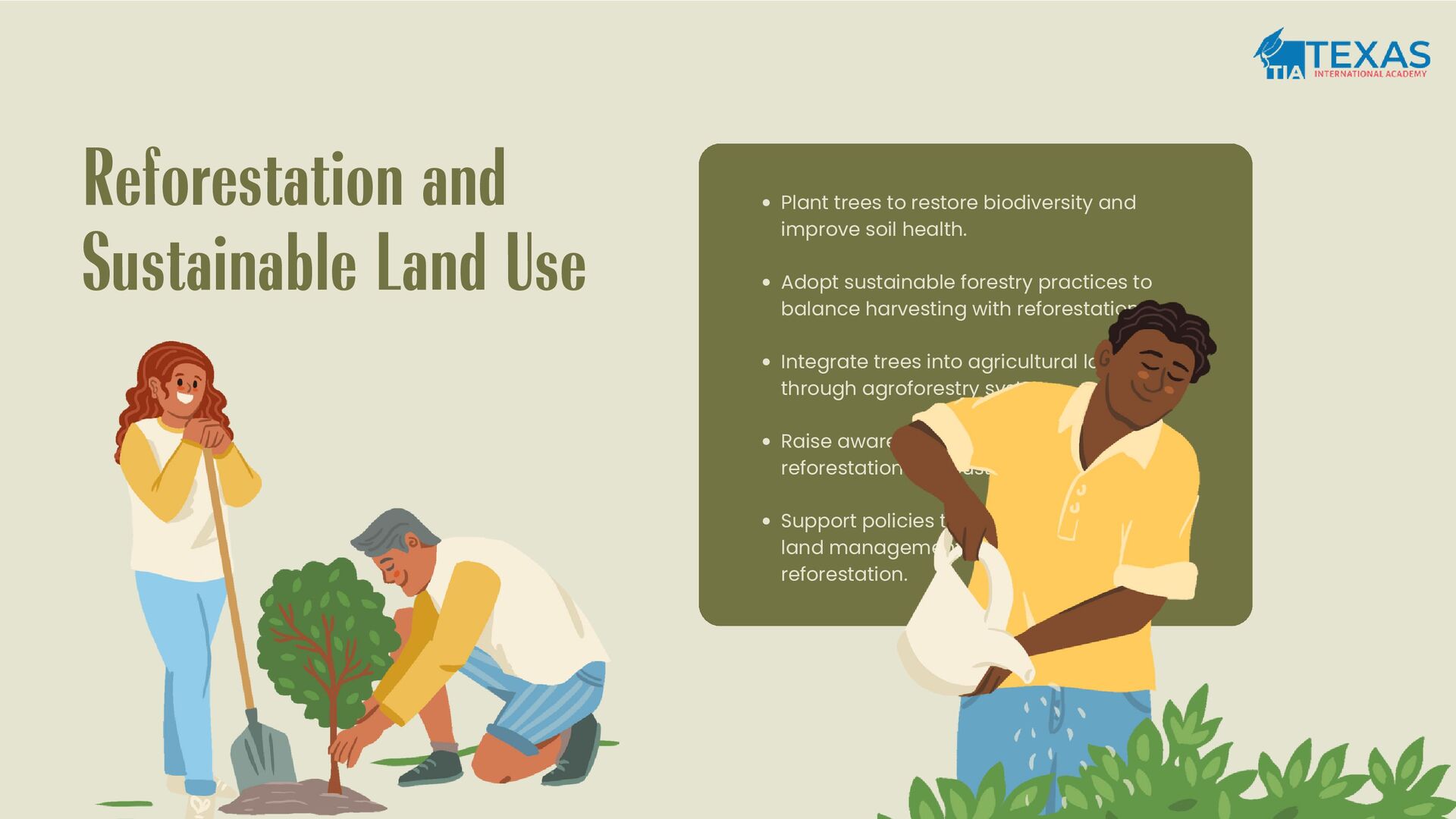
  7. Reforestation and Sustainable Land Use Plant trees to restore biodiversity

    and improve soil health. Adopt sustainable forestry practices to balance harvesting with reforestation. Integrate trees into agricultural landscapes through agroforestry systems. Raise awareness about the importance of reforestation and sustainable land use. Support policies that promote sustainable land management and incentivize reforestation.
  8. Reduce overall dependency on fossil fuels by promoting energy efficiency

    and renewable energy. Adopt energy-efficient practices and reduce reliance on fossil fuel-based products as a consumer. Support transparency and accountability in fossil fuel operations and environmental impact assessments. Optimize fossil fuel utilization through advanced technologies and practices. Encourage sustainable alternatives to fossil fuels, such as renewable energy sources and energy storage technologies. Conscious Fossil Fuel Consumption
  9. Renewable Energy Transition Accelerate renewable energy deployment to reduce reliance

    on fossil fuels and achieve carbon emission reduction targets. Upgrade and modernize the electricity grid to accommodate the increasing integration of renewable energy sources. Support research and development in energy storage technologies for excess renewable energy utilization. Facilitate the adoption of rooftop solar, community solar projects, and small-scale renewable energy installations. Promote international partnerships, knowledge sharing, and technology transfer to accelerate the global transition to renewable energy.
  10. Thank You Texas International Academy +91 8340 010 010 tiascholar.com

    H.N 2 Kavuri Hills Phase 2 Rd, Madhapur, TS "As caretakers of this planet, let our choices be the brushstrokes that paint a sustainable future—a masterpiece for generations yet to unfold."