Upgrade to Pro — share decks privately, control downloads, hide ads and more …

Virus and Bacteria

Sponsored · Your Podcast. Everywhere. Effortlessly. Share. Educate. Inspire. Entertain. You do you. We'll handle the rest. →

Virus and Bacteria

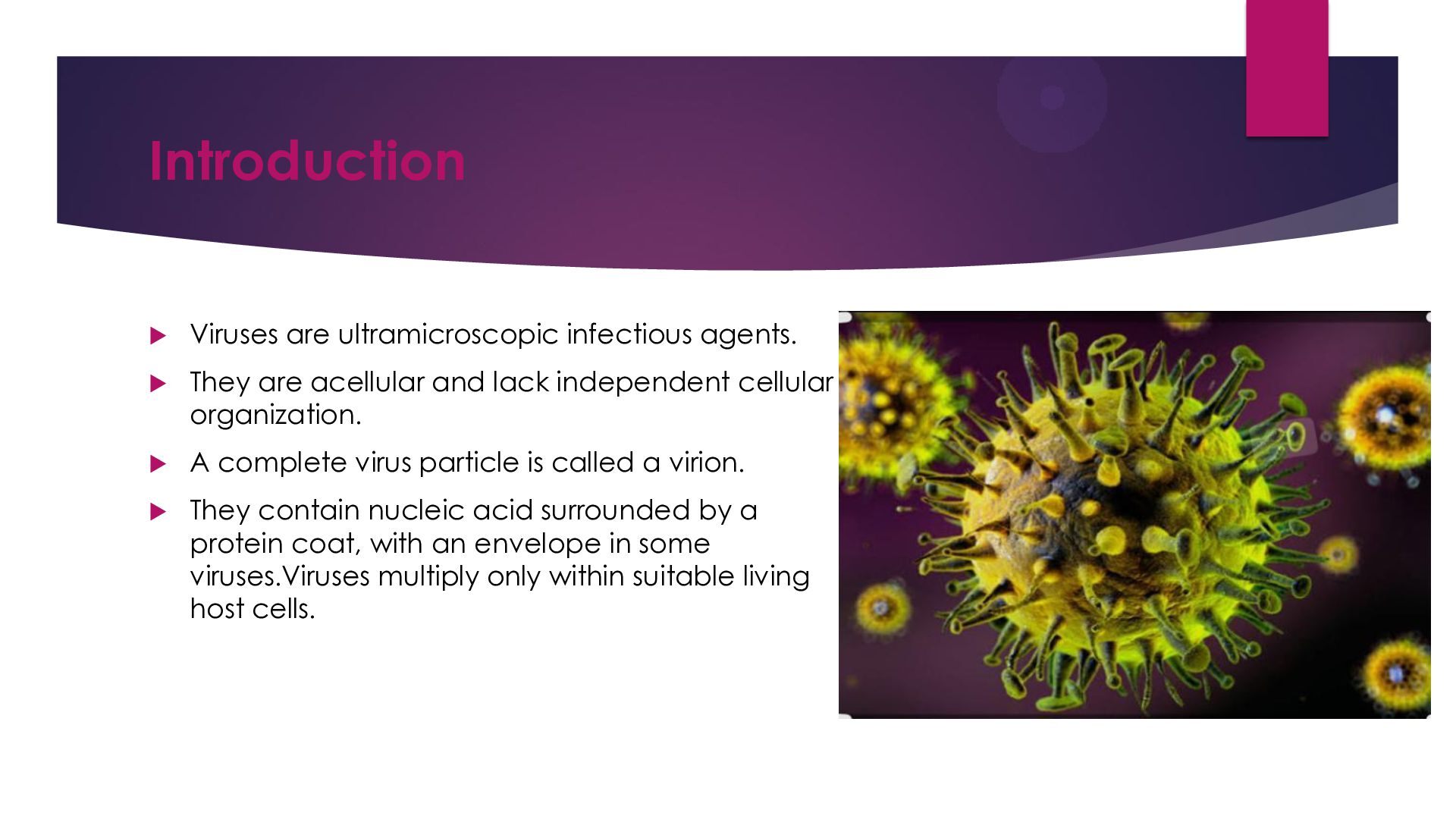
Viruses are ultramicroscopic infectious agents.
They are acellular and lack independent cellular organization.
A complete virus particle is called a virion.
They contain nucleic acid surrounded by a protein coat, with an envelope in some viruses.Viruses multiply only within suitable living host cells.

Avatar for Dr. Vimal Priya Subramanian

Dr. Vimal Priya Subramanian

October 12, 2026

More Decks by Dr. Vimal Priya Subramanian

Other Decks in Education

Transcript

  1. VIRUS AND BACTERIOPHAGE Submitted by NAME: K . GOPIKA ROLL

    NUMBER:P26BOT6 CLASS : I M.Sc Botany Submitted to Dr. S.VIMAL PRIYA M.Sc.,PGDBD., Ph.D Assistant Professor, Department of Botany BHARATHIYAR ARTS AND SCIENCE COLLEGE FOR WOMEN (AUTONOMOUS), DEVIYAKURICHI, SALEM.
  2. Introduction  Viruses are ultramicroscopic infectious agents.  They are

    acellular and lack independent cellular organization.  A complete virus particle is called a virion.  They contain nucleic acid surrounded by a protein coat, with an envelope in some viruses.Viruses multiply only within suitable living host cells.
  3. History of virus  1892 – Ivanovsky: Discovered a filterable

    infectious agent causing tobacco mosaic disease.  1898 – Beijerinck: Recognized it as a new infectious agent and called it a “contagium vivum fluidum.”  1915–1917: Twort and d‟Hérelle discovered bacteriophages.  1935 – Stanley: Crystallized Tobacco Mosaic Virus (TMV).  1930s: Electron microscope enabled visualization of viruses.
  4. General classification of virus  Viruses may be classified using

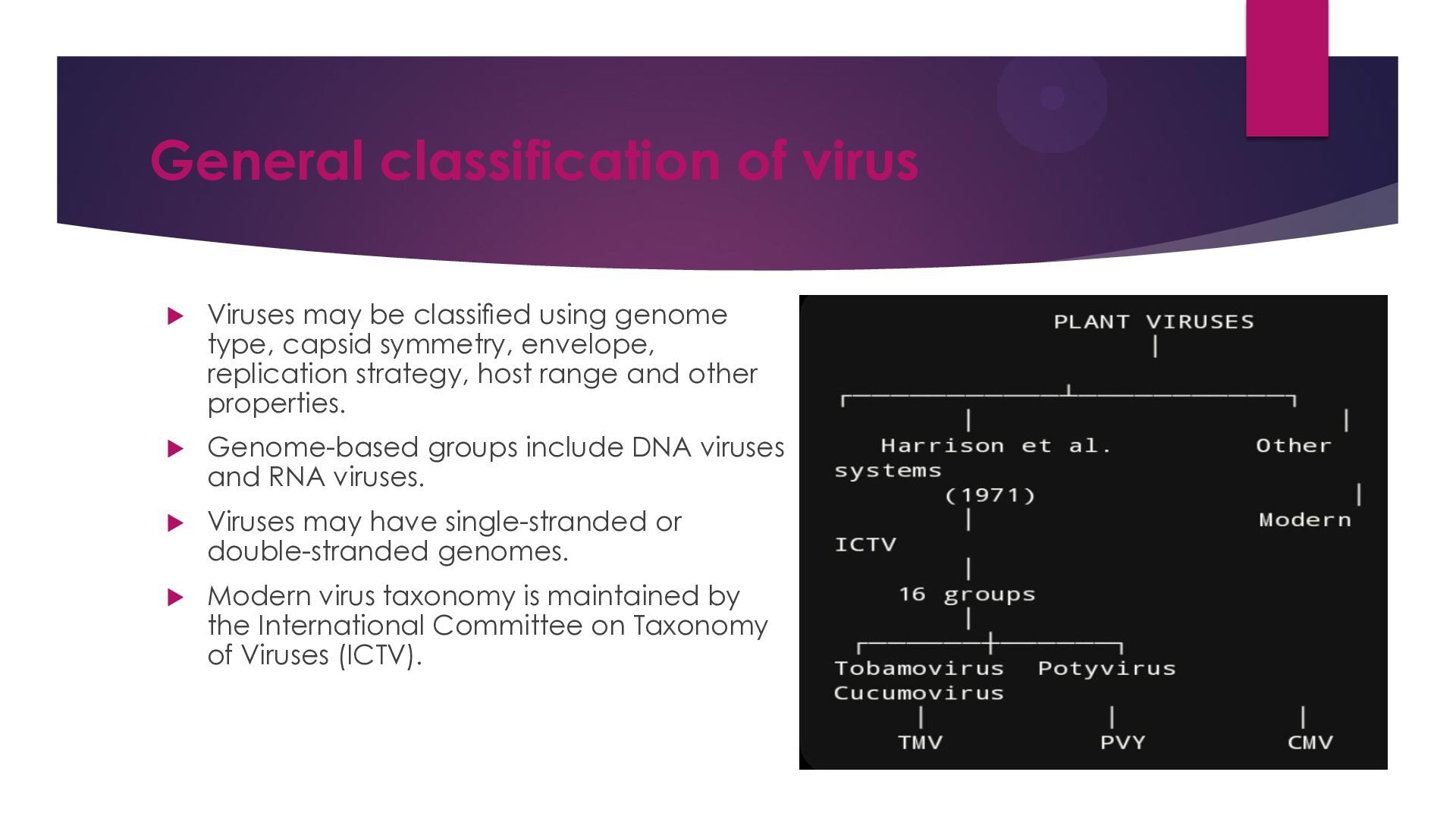
    genome type, capsid symmetry, envelope, replication strategy, host range and other properties.  Genome-based groups include DNA viruses and RNA viruses.  Viruses may have single-stranded or double-stranded genomes.  Modern virus taxonomy is maintained by the International Committee on Taxonomy of Viruses (ICTV).
  5. Basis of classification Harrison et al. Considered: 1. Morphology and

    size of virus particles 2. Type of nucleic acid 3. Chemical composition 4. Host range 5. Mode of transmission 6. Vector relationships 7. Serological properties
  6. Harrison et al. (1971) Classification  Harrison and co-workers proposed

    an early practical grouping of plant viruses in 1971.  The systemconsidered particle properties, particle composition, host relationships and vector relationships.It recognized 16 major groups of plant viruses.  The scheme is historically important and predates modern molecular virus taxonomy.
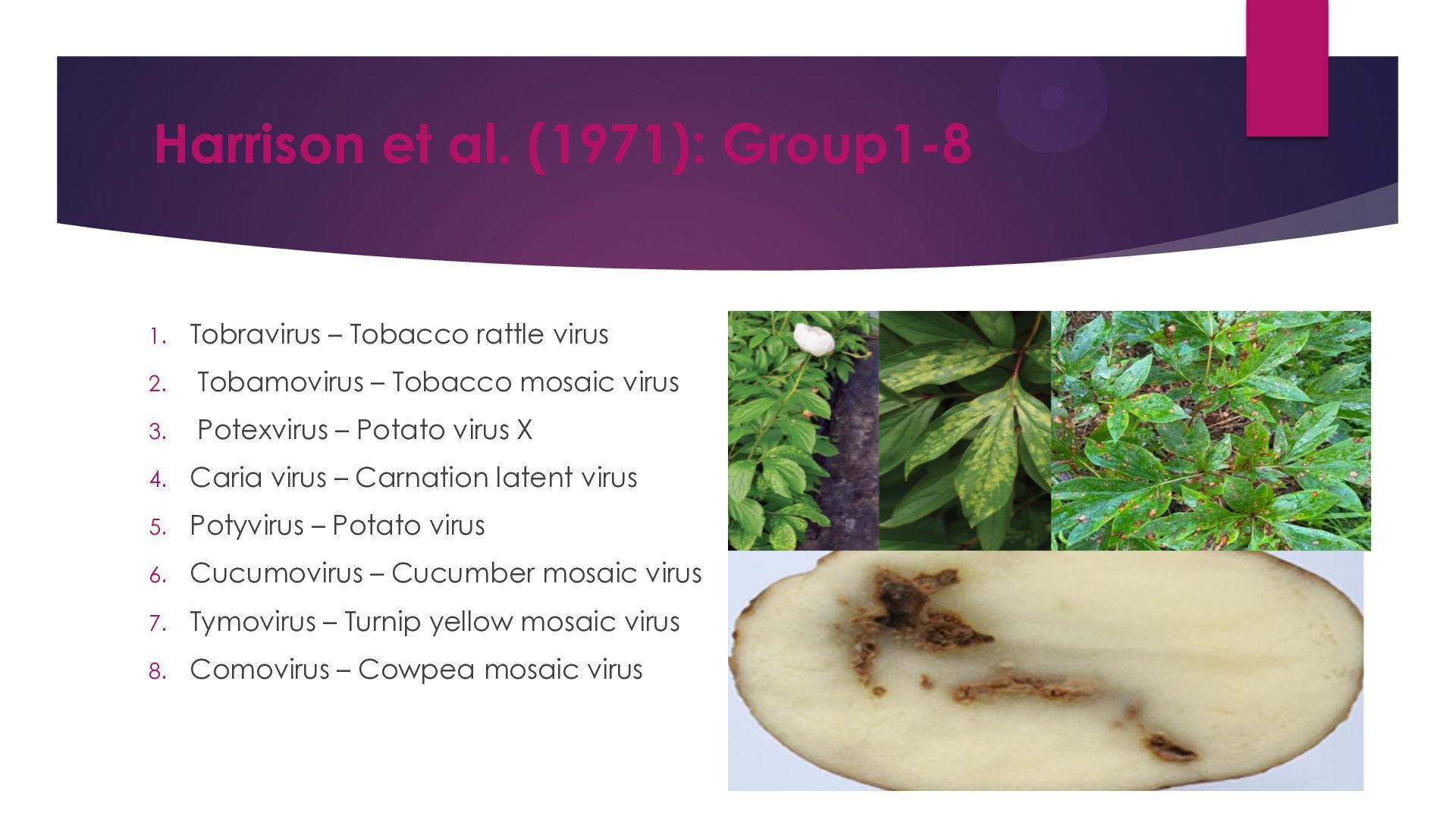
  7. Harrison et al. (1971): Group1-8 1. Tobravirus – Tobacco rattle

    virus 2. Tobamovirus – Tobacco mosaic virus 3. Potexvirus – Potato virus X 4. Caria virus – Carnation latent virus 5. Potyvirus – Potato virus 6. Cucumovirus – Cucumber mosaic virus 7. Tymovirus – Turnip yellow mosaic virus 8. Comovirus – Cowpea mosaic virus
  8. Harrison et al. (1971): Groups 9-16 9. Nepovirus – Tobacco

    ringspot virus 10. Bromovirus – Brome mosaic virus 11. Tombusvirus – Tomato bushy stunt virus 12. Caulimovirus – Cauliflower mosaic virus 13. Alfalfa mosaic virus group 14.Pea enation mosaic virus group 15. Tobacco necrosis virus group 16. Tomato spotted wilt virus group
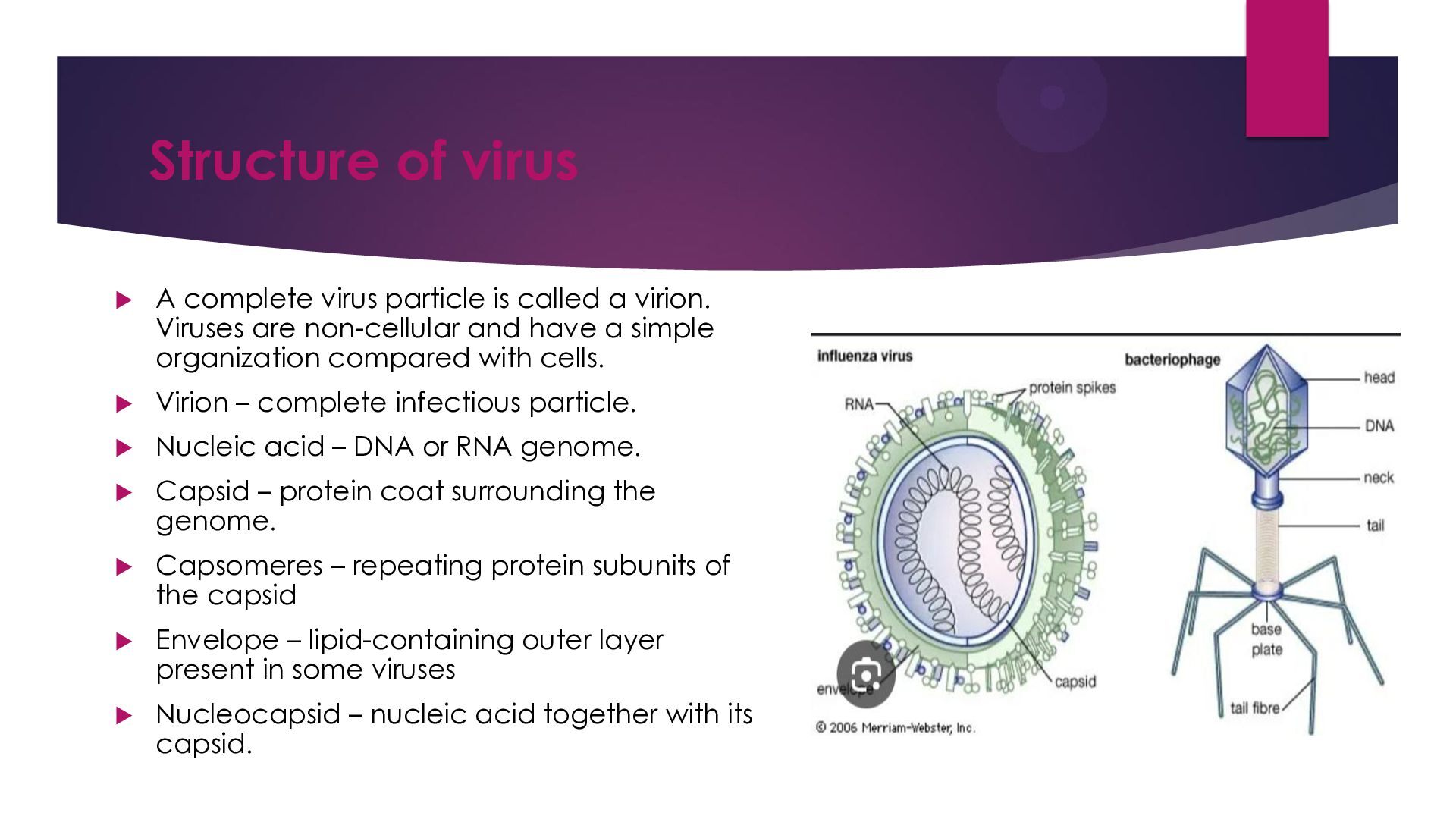
  9. Structure of virus  A complete virus particle is called

    a virion. Viruses are non-cellular and have a simple organization compared with cells.  Virion – complete infectious particle.  Nucleic acid – DNA or RNA genome.  Capsid – protein coat surrounding the genome.  Capsomeres – repeating protein subunits of the capsid  Envelope – lipid-containing outer layer present in some viruses  Nucleocapsid – nucleic acid together with its capsid.
  10. Chemical Composition of Viruses  Nucleic acids – DNA or

    RNA; carry genetic information.  Proteins – formcapsid and may have attachment, enzymatic or other functions.Lipids – mainly occur in viral envelopes.  Carbohydrates – occur in glycoproteins and some envelope components.  Some virions contain enzymes required for infection or replication.
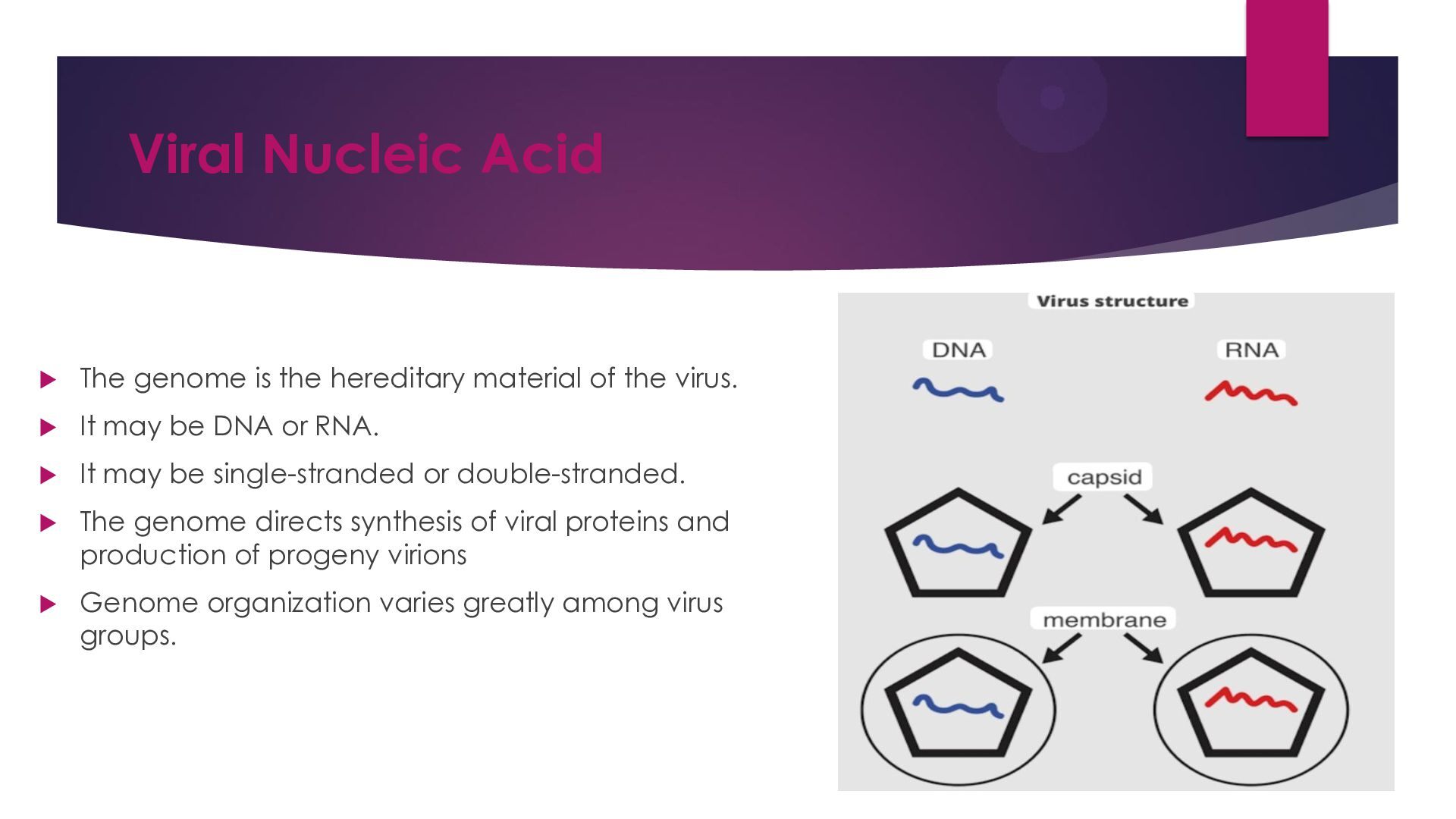
  11. Viral Nucleic Acid  The genome is the hereditary material

    of the virus.  It may be DNA or RNA.  It may be single-stranded or double-stranded.  The genome directs synthesis of viral proteins and production of progeny virions  Genome organization varies greatly among virus groups.
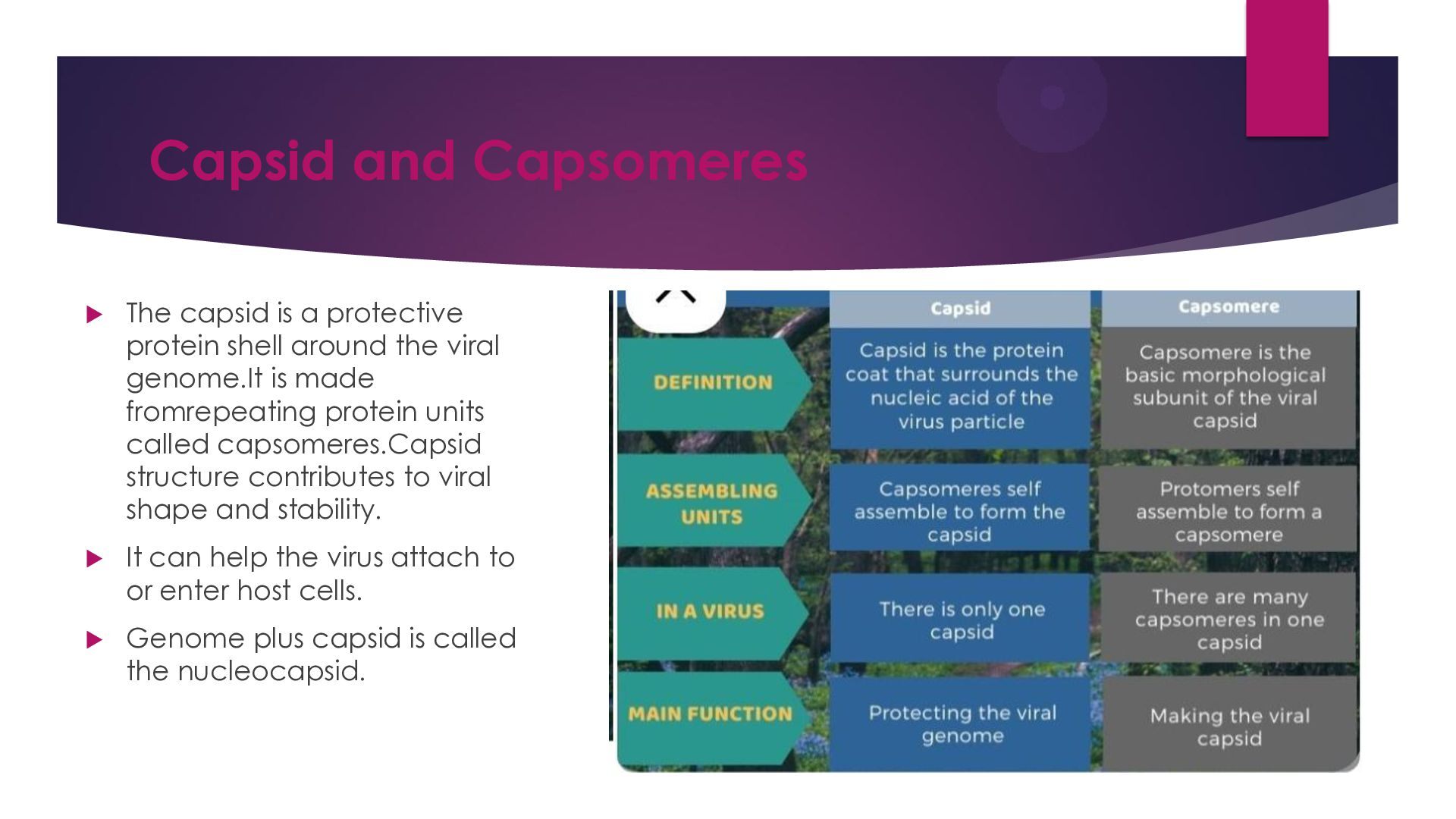
  12. Capsid and Capsomeres  The capsid is a protective protein

    shell around the viral genome.It is made fromrepeating protein units called capsomeres.Capsid structure contributes to viral shape and stability.  It can help the virus attach to or enter host cells.  Genome plus capsid is called the nucleocapsid.
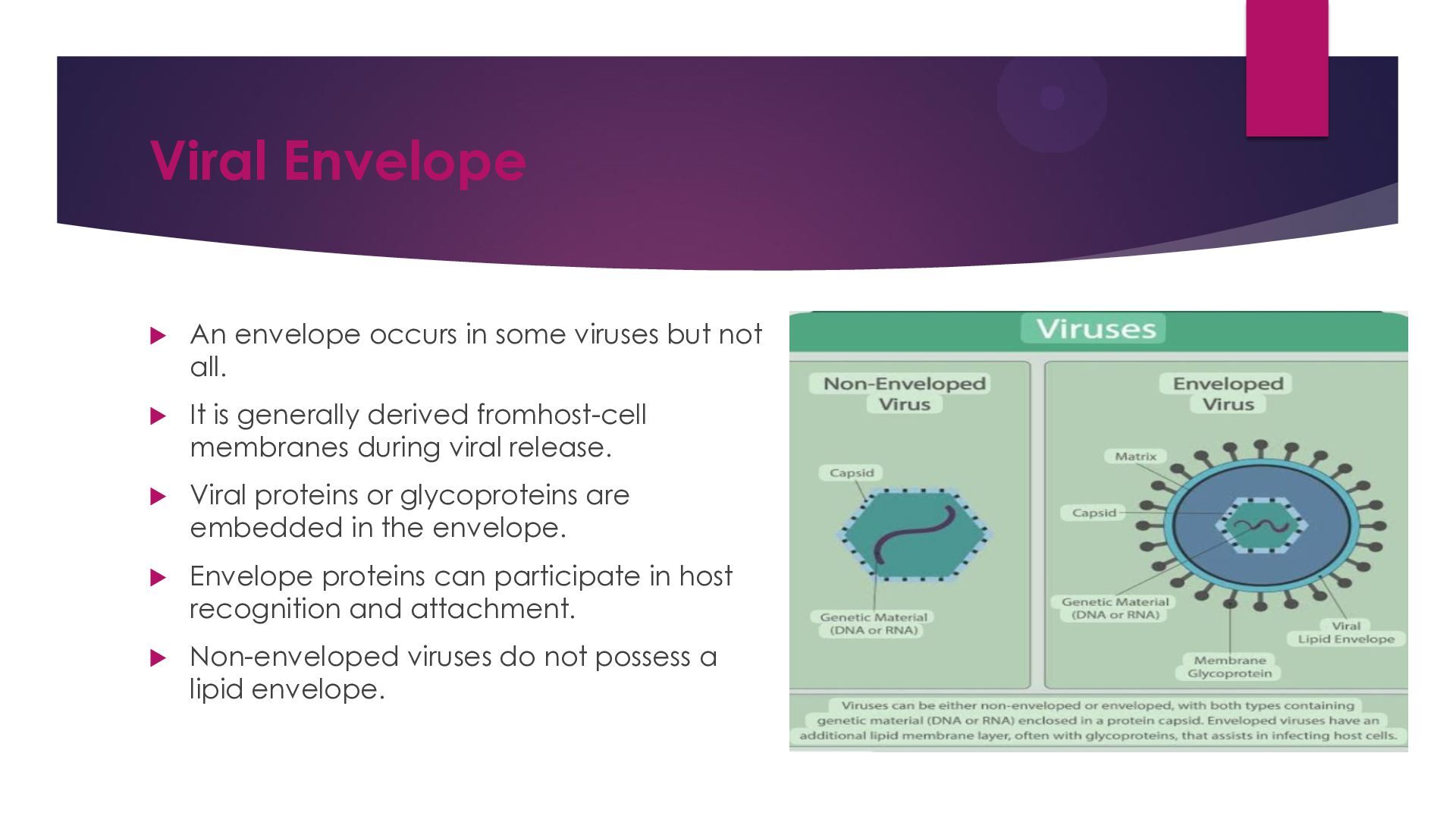
  13. Viral Envelope  An envelope occurs in some viruses but

    not all.  It is generally derived fromhost-cell membranes during viral release.  Viral proteins or glycoproteins are embedded in the envelope.  Envelope proteins can participate in host recognition and attachment.  Non-enveloped viruses do not possess a lipid envelope.
  14. Bacteriophage – Introduction  A bacteriophage, or phage, is a

    virus that infects bacteria.  The word bacteriophage means „bacteria eater‟.  Phages are highly specific for their bacterial hosts.  They may reproduce by lytic or lysogenic pathways.  Bacteriophages are important in molecular biology and microbiology.
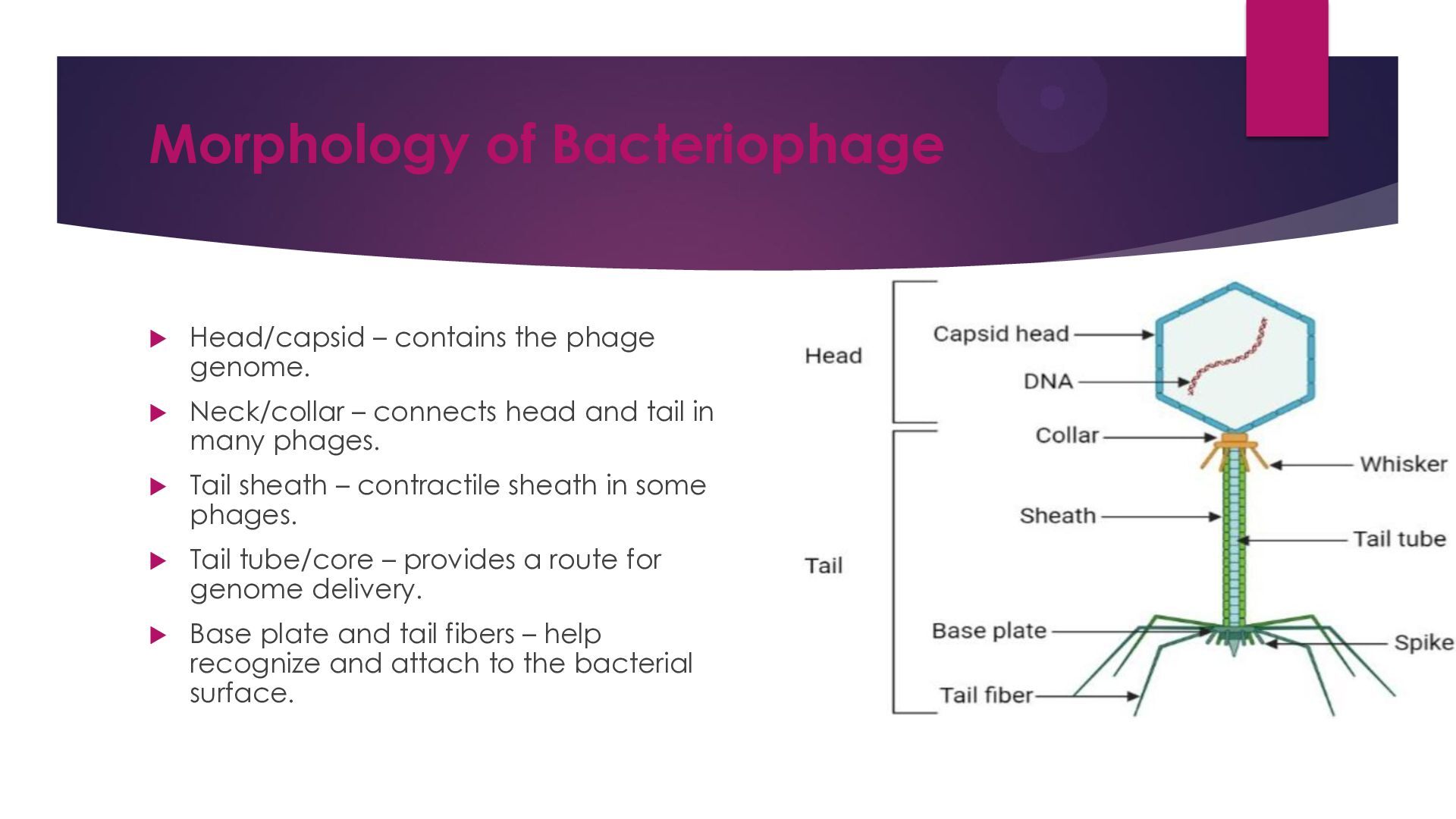
  15. Morphology of Bacteriophage  Head/capsid – contains the phage genome.

     Neck/collar – connects head and tail in many phages.  Tail sheath – contractile sheath in some phages.  Tail tube/core – provides a route for genome delivery.  Base plate and tail fibers – help recognize and attach to the bacterial surface.
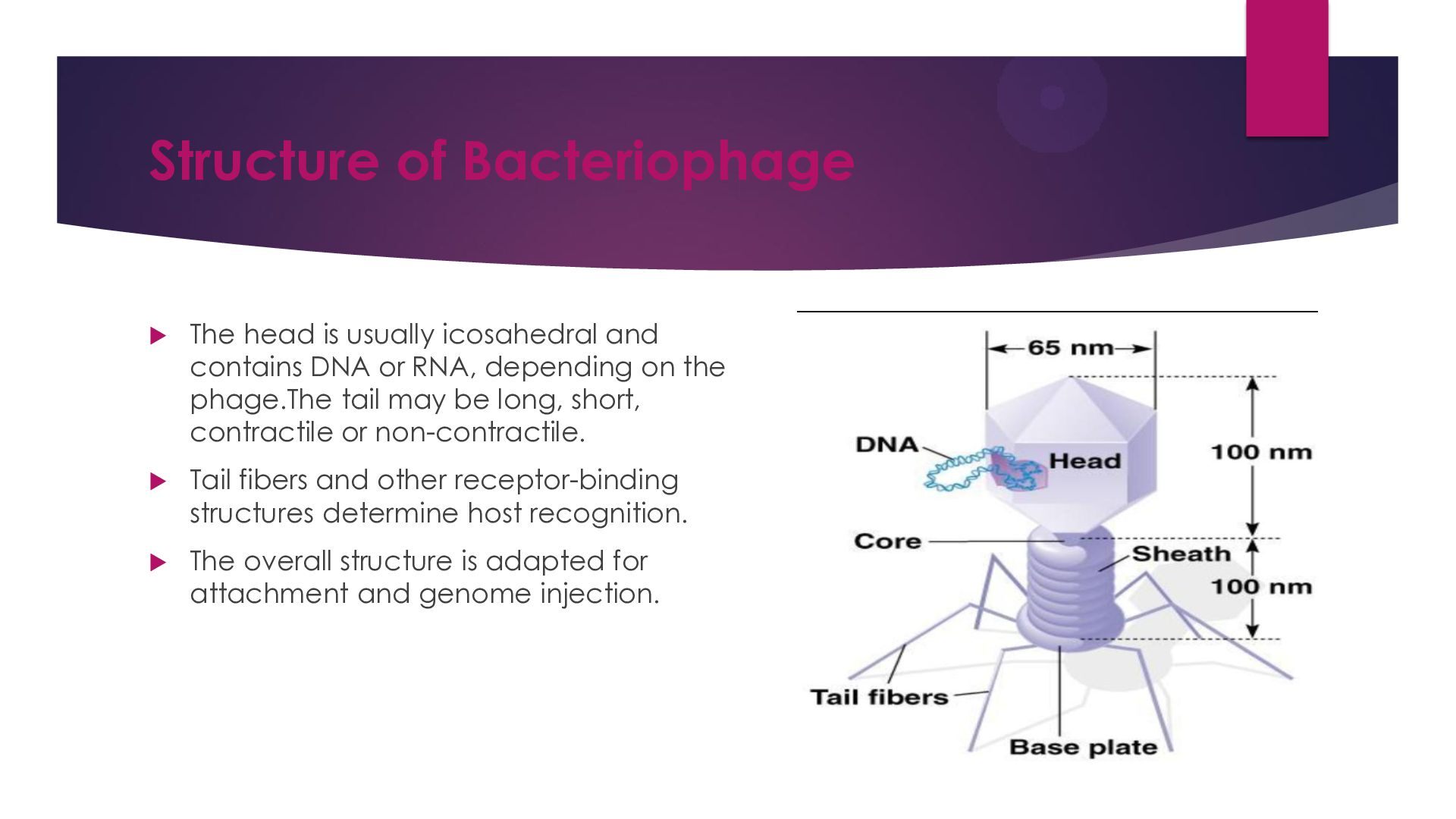
  16. Structure of Bacteriophage  The head is usually icosahedral and

    contains DNA or RNA, depending on the phage.The tail may be long, short, contractile or non-contractile.  Tail fibers and other receptor-binding structures determine host recognition.  The overall structure is adapted for attachment and genome injection.
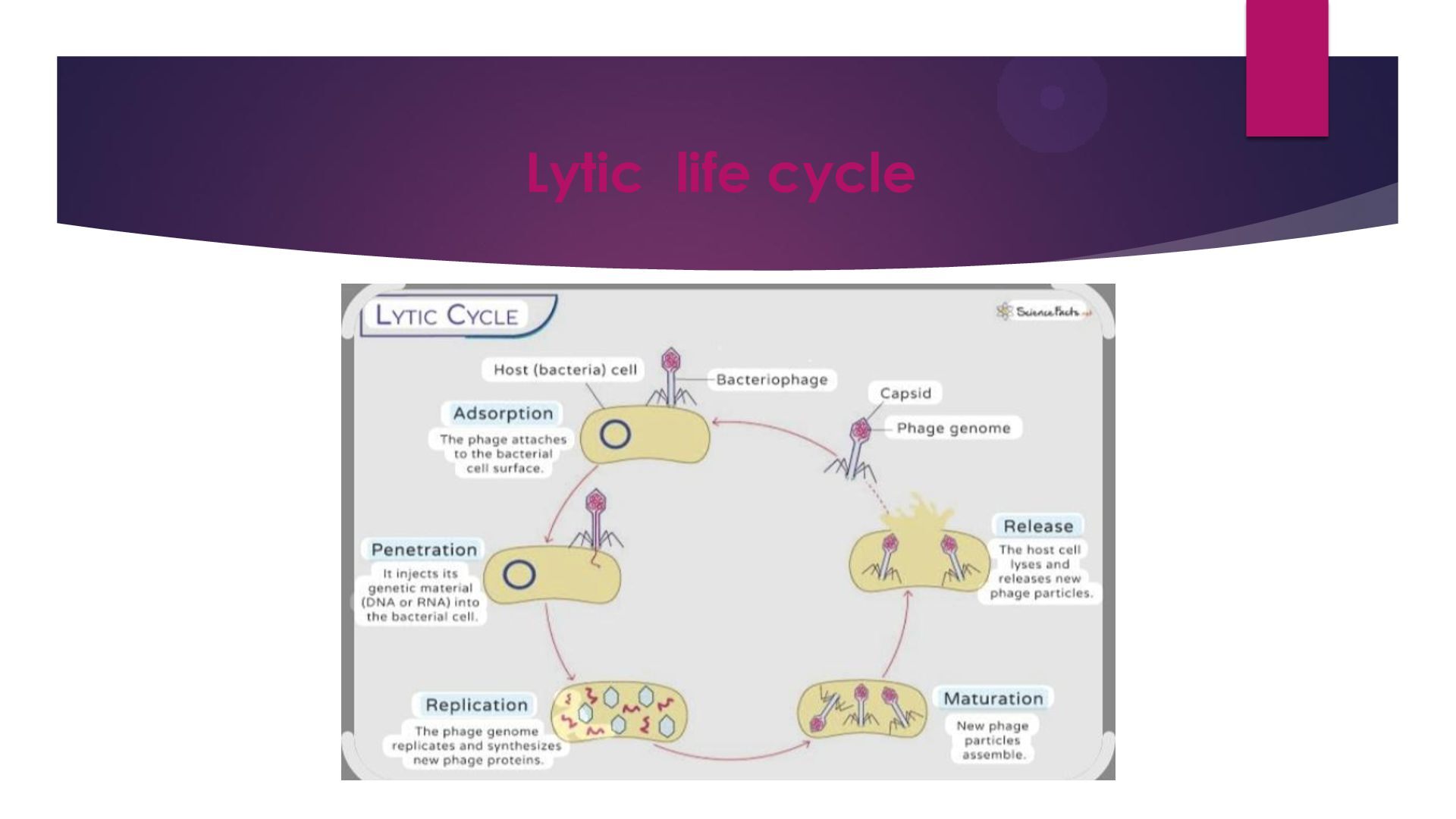
  17. Lytic Reproduction of Bacteriophage  1. Adsorption – phage attaches

    to specific receptors on the bacterial cell.  2. Penetration – phage genome enters the bacterial cell.  3. Biosynthesis – viral nucleic acid and proteins are produced.  4. Assembly – new phage particles are assembled.  5. Release – the bacterial cell is lysed and progeny phages are released.
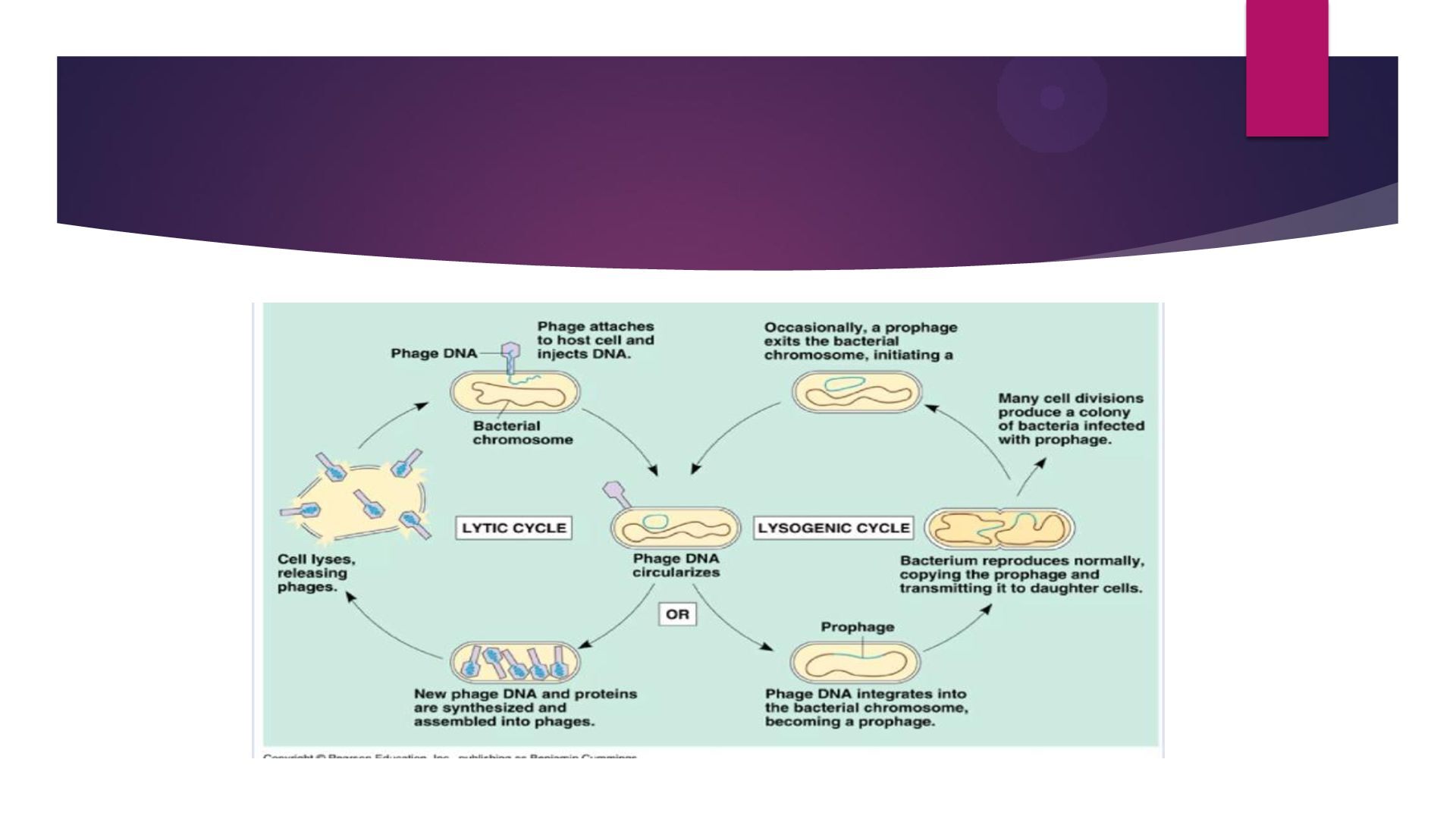
  18. Lysogenic Cycle  A temperate phage can integrate its genome

    into the bacterial chromosome.The integrated phage DNA is called a prophage.  The prophage can replicate along with the bacterial chromosome.  Under suitable conditions, it may be induced to enter the lytic cycle.Lambda (λ) phage is a classic example of a temperate phage.
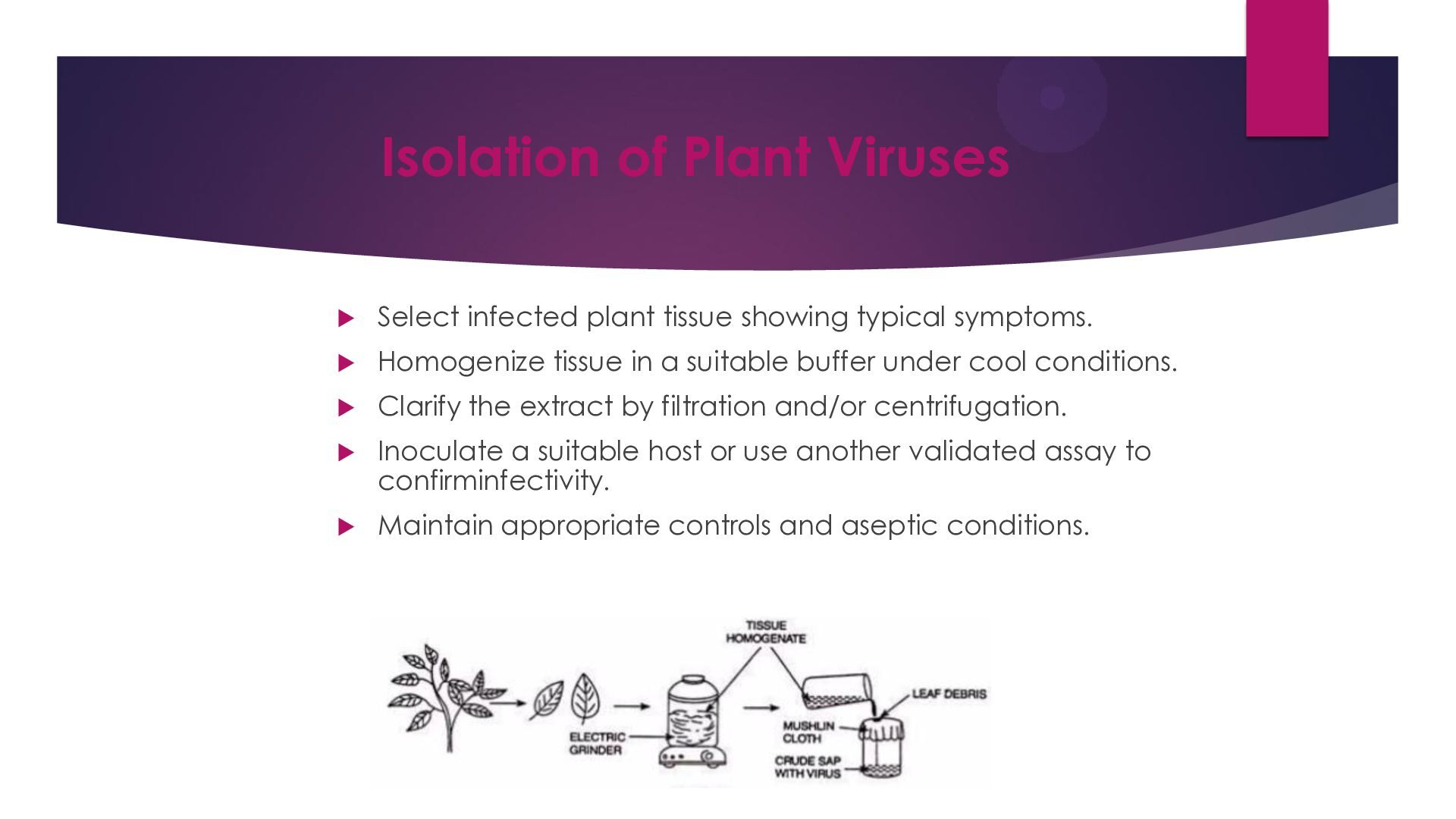
  19. Isolation of Plant Viruses  Select infected plant tissue showing

    typical symptoms.  Homogenize tissue in a suitable buffer under cool conditions.  Clarify the extract by filtration and/or centrifugation.  Inoculate a suitable host or use another validated assay to confirminfectivity.  Maintain appropriate controls and aseptic conditions.
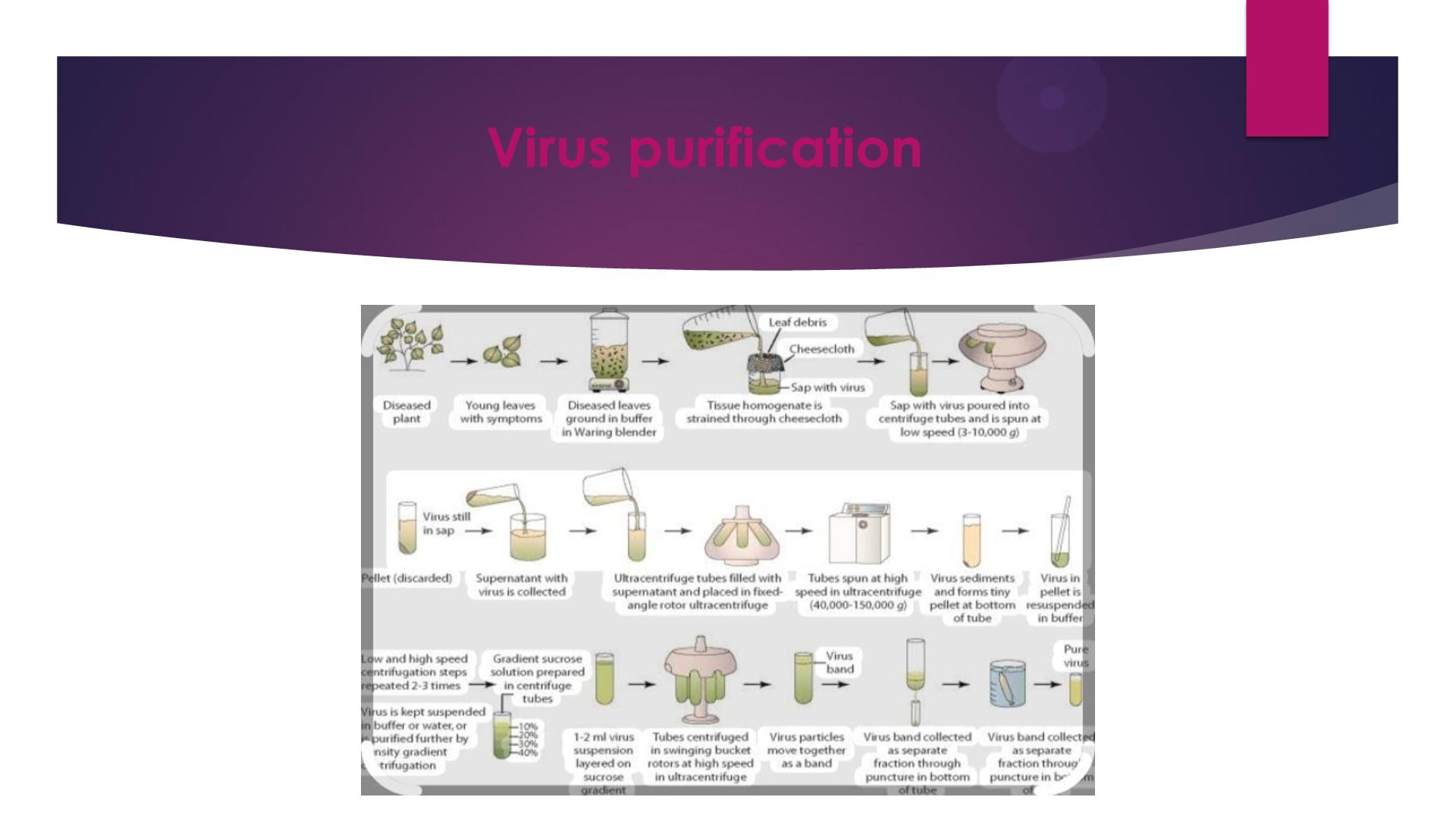
  20. Purification of Plant Viruses  Clarification removes large cell debris

    and organelles.  Differential centrifugation can separate virus particles fromcellular components.  Density-gradient centrifugation may further separate and concentrate virions.  Precipitation methods can be used as an additional concentration step.  Purity can be assessed using infectivity, protein/nucleic-acid analysis and microscopy where appropriate.
  21. Applications and Importance  Virus studies help explain plant diseases

    and their transmission.  Bacteriophages are useful tools in genetics and molecular biology.  Virus purification enables structural and biochemical studies.  Understanding virus composition supports diagnosis and disease management.  Modern genomics has greatly improved virus identification and classification.
  22. Conclusion  Viruses are acellular infectious agents dependent on host

    cells for multiplication.  The history of virology began with studies of filterable plant pathogens.  Harrison et al. (1971) provided an important historical 16-group classification of plant viruses.  Virions mainly contain nucleic acid and protein, with lipids and carbohydrates in enveloped forms.  Bacteriophages have specialized structures and reproduce through lytic or lysogenic pathways.  Plant viruses can be isolated and purified using controlled extraction, clarification and separation methods.