Upgrade to Pro — share decks privately, control downloads, hide ads and more …

A few thoughts on work-life balance

Sponsored · Ship Features Fearlessly Turn features on and off without deploys. Used by thousands of Ruby developers. →

A few thoughts on work-life balance

Many people working in academia find it difficult to achieve or maintain a good work-life balance. This talk goes into the reasons for this, the consequences of working too much, the benefits of having the right balance, and ways of achieving a better balance. The talk is very much based on my personal views and experiences, but I hope there is some interest in sharing these.

Avatar for Wim Vanderbauwhede

Wim Vanderbauwhede

January 23, 2020

More Decks by Wim Vanderbauwhede

Other Decks in Business

Transcript

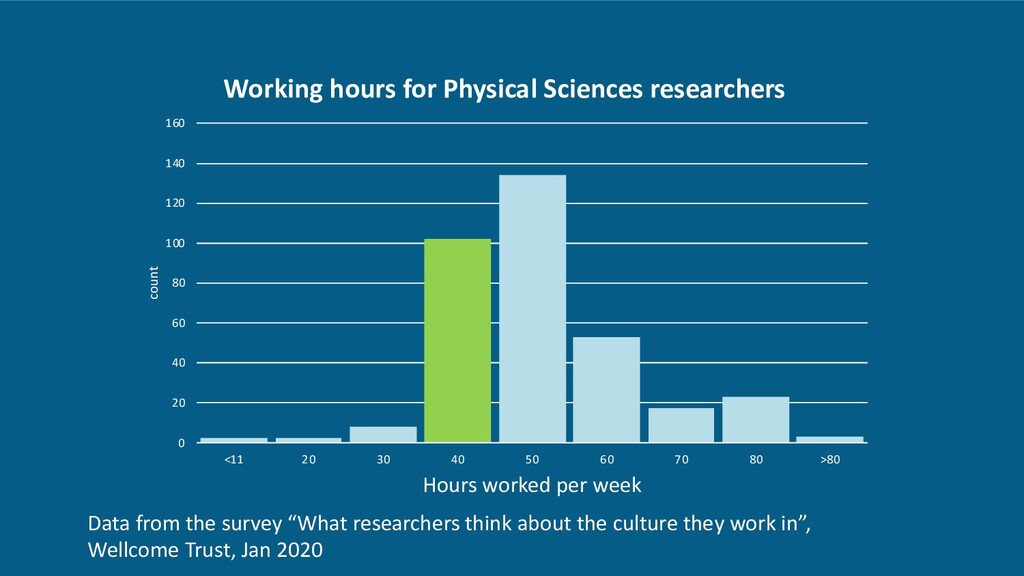
  1. 0 20 40 60 80 100 120 140 160 <11

    20 30 40 50 60 70 80 >80 count Hours worked per week Working hours for Physical Sciences researchers Data from the survey “What researchers think about the culture they work in”, Wellcome Trust, Jan 2020
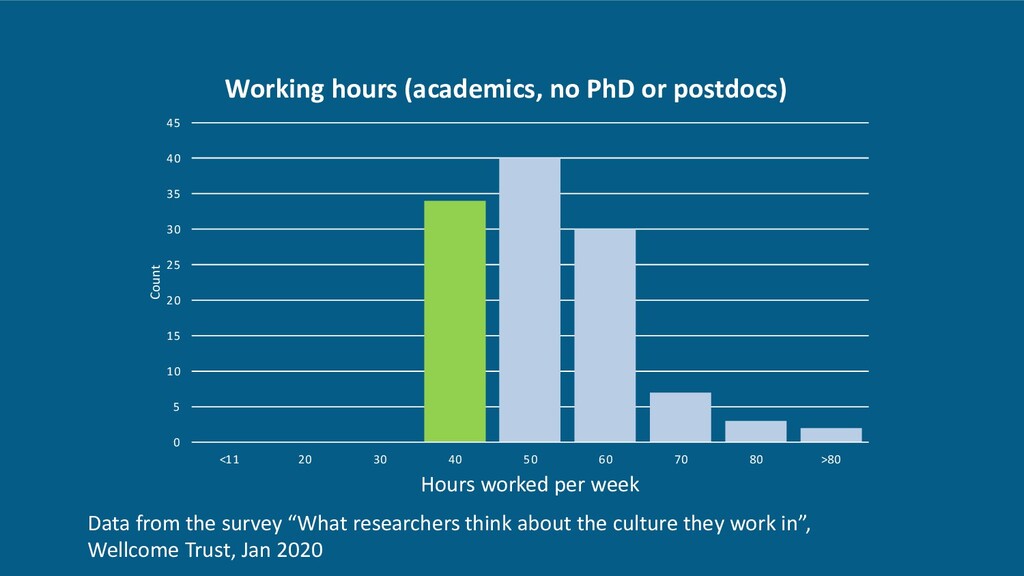
  2. 0 5 10 15 20 25 30 35 40 45

    <11 20 30 40 50 60 70 80 >80 Count Hours worked per week Working hours (academics, no PhD or postdocs) Data from the survey “What researchers think about the culture they work in”, Wellcome Trust, Jan 2020
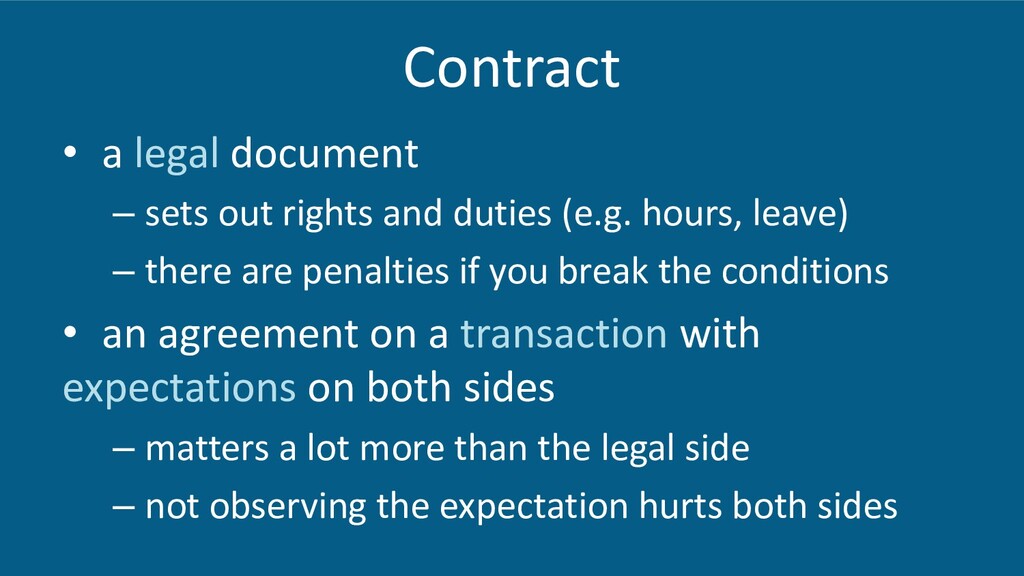
  3. Contract • a legal document – sets out rights and

    duties (e.g. hours, leave) – there are penalties if you break the conditions • an agreement on a transaction with expectations on both sides – matters a lot more than the legal side – not observing the expectation hurts both sides
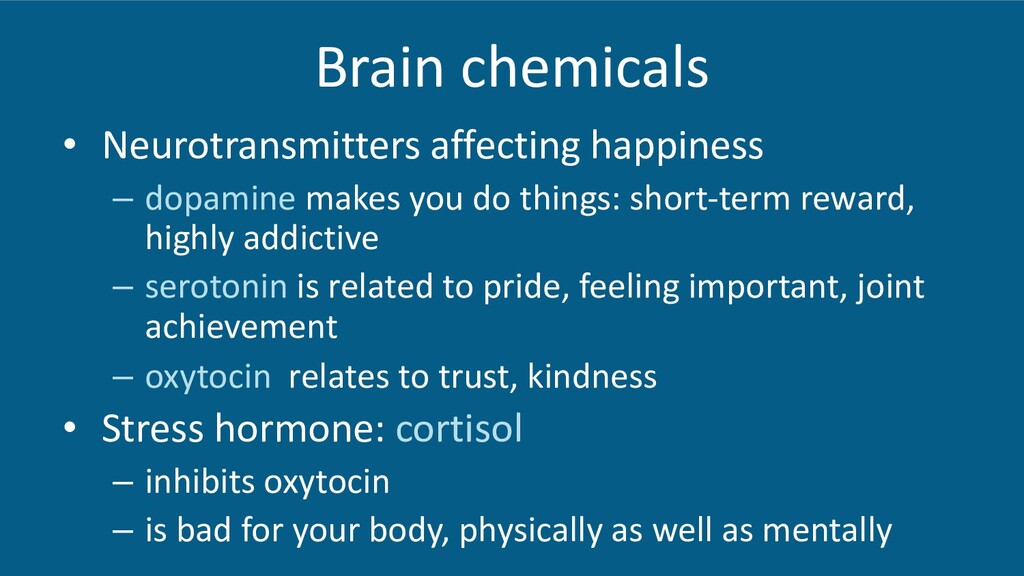
  4. Brain chemicals • Neurotransmitters affecting happiness – dopamine makes you

    do things: short-term reward, highly addictive – serotonin is related to pride, feeling important, joint achievement – oxytocin relates to trust, kindness • Stress hormone: cortisol – inhibits oxytocin – is bad for your body, physically as well as mentally
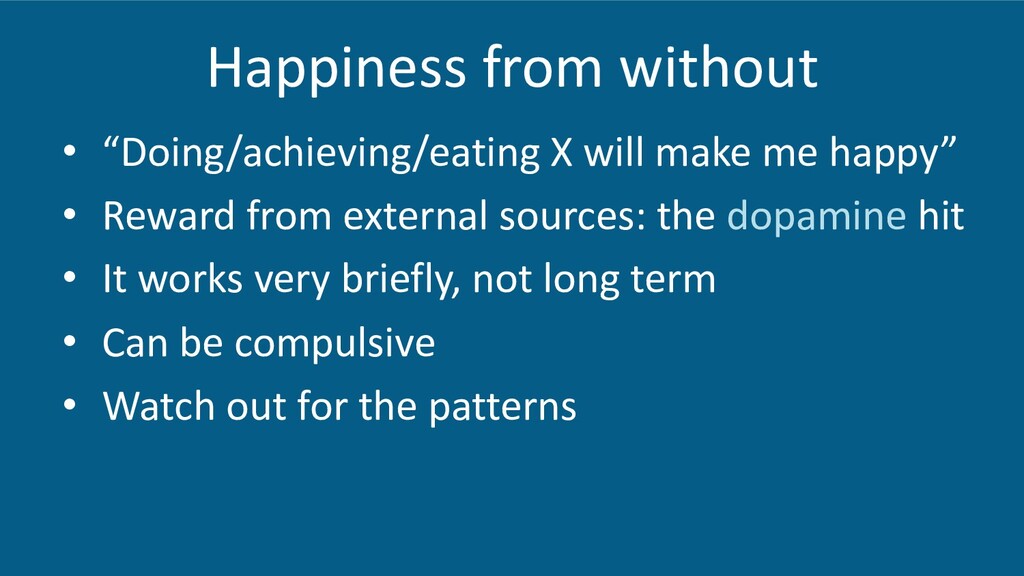
  5. Happiness from without • “Doing/achieving/eating X will make me happy”

    • Reward from external sources: the dopamine hit • It works very briefly, not long term • Can be compulsive • Watch out for the patterns
  6. Goals, ambition, success • Goals and ambition are positive. •

    But you need to ask yourself why: – Why do I pursue this particular goal/ambition? – What does success mean to me? – And what will it bring me? • If you don’t define success, then success will not make you happy
  7. Respect • Everybody wants to be respected – But the

    people who know you and like you already respect you. – Why does the respect of strangers matter to you? – It’s an imposed model of success: social hierarchy – Careful, it’s a trap! “Those who matter don’t mind and those who mind don’t matter”
  8. Happiness from within • It’s your reaction to a situation

    that determines your state of mind • Self-awareness, mindfulness • Calm and fulfillment: serotonin • Practicing kindness: oxytocin (social reward)
  9. Pressure • You feel under pressure to work long hours

    – Why is that? – Remember the contract!
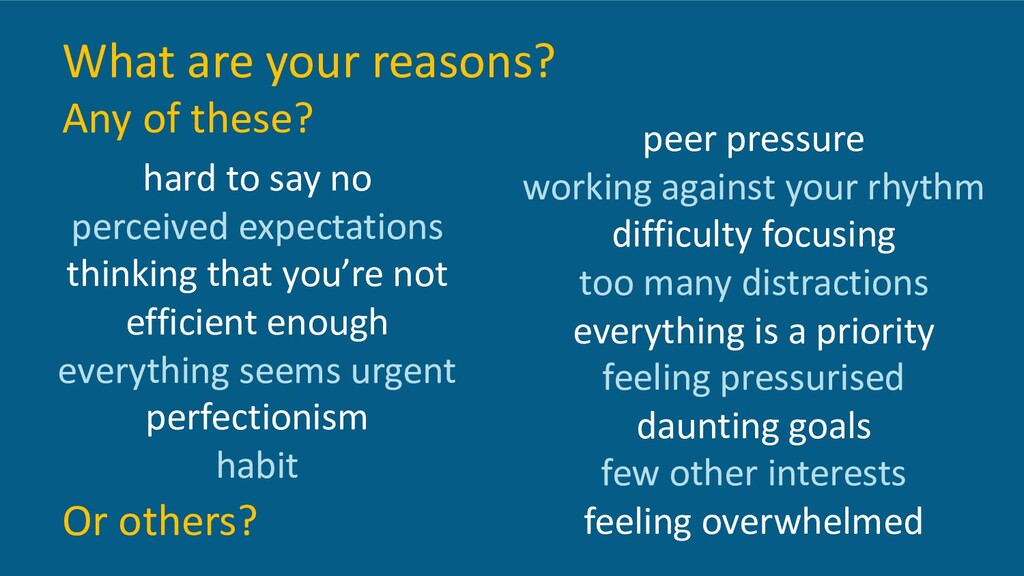
  10. What are your reasons? Any of these? hard to say

    no perceived expectations thinking that you’re not efficient enough everything seems urgent perfectionism habit peer pressure working against your rhythm difficulty focusing too many distractions everything is a priority feeling pressurised daunting goals few other interests feeling overwhelmed Or others?
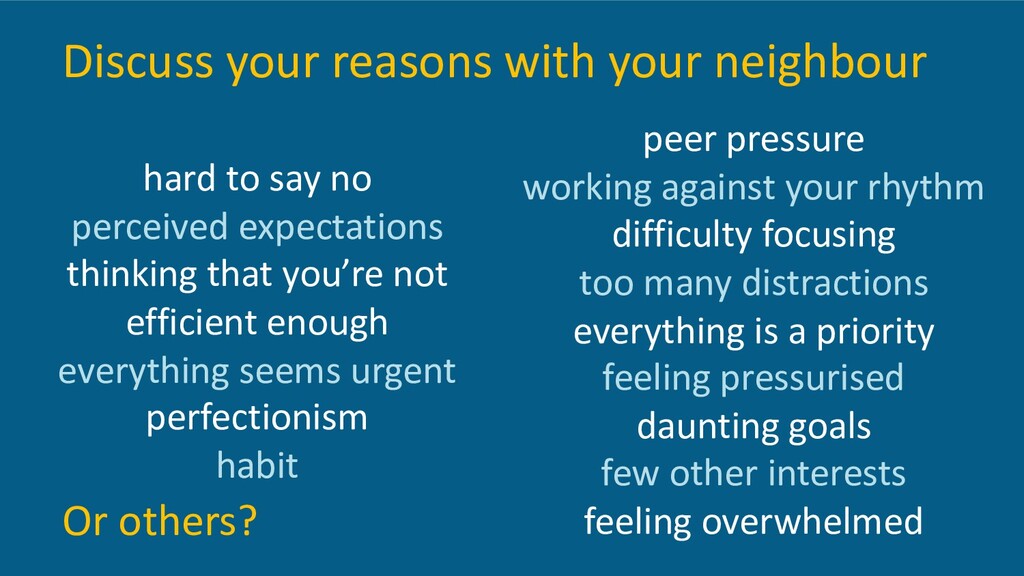
  11. hard to say no perceived expectations thinking that you’re not

    efficient enough everything seems urgent perfectionism habit peer pressure working against your rhythm difficulty focusing too many distractions everything is a priority feeling pressurised daunting goals few other interests feeling overwhelmed Or others? Discuss your reasons with your neighbour
  12. Resilience • Resilience is a key characteristic for academics •

    To be resilient you need to recharge • To recharge you need downtime
  13. Productivity • Working long hours is not productive – Long

    hours destroy concentration – Need for unconscious processing time, essential for problem solving and creativity
  14. Mental health • Working all the time is dangerous: –

    If you live for your work and your work goes badly, it is very hard to keep your peace of mind. – Risk of burnout – Karōshi
  15. Asking for help • Help with a task or help

    with your situation • Helps you • Makes the person asked feel good! (oxytocin!) • Provides opportunity for development
  16. Planning • Medium term (semester) • Short term (week) •

    E.g. ”7 habits of highly effective people”
  17. Taking stock • How’s my life going? • How’s my

    work going? • E.g. ”Wheel of life” tool
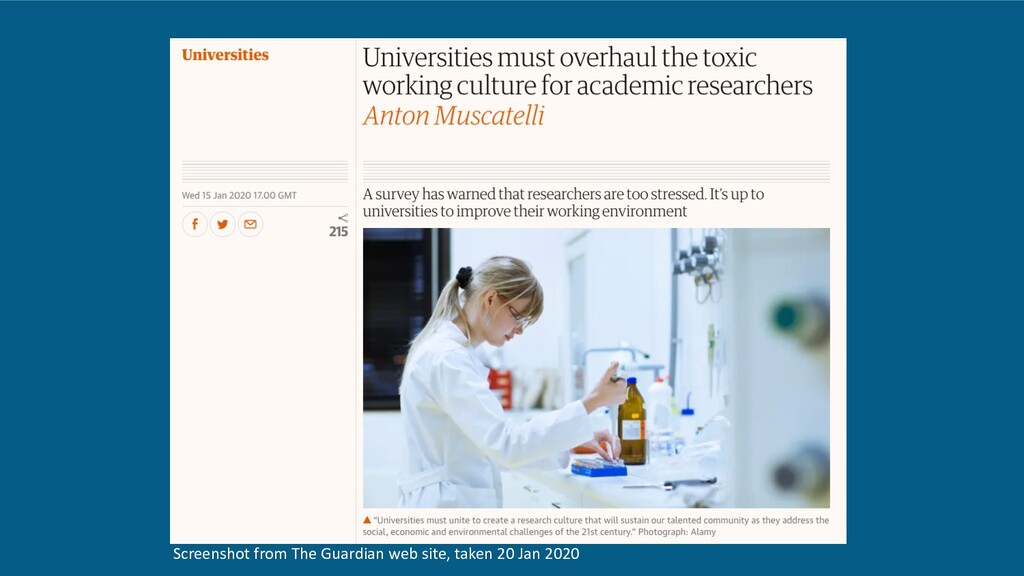
  18. Resources • Anton Muscatelli’s article “Universities must overhaul the toxic

    working culture for academic researchers” • Wellcome Trust survey “What researchers think about the culture they work in” • Simon Sinek’s talk “Why leaders eat last”, about dopamine/serotonin/oxytocin/cortisol • Franklin Covey’s “The 7 habits of effective people” • The “Wheel of life” tool