Upgrade to Pro
— share decks privately, control downloads, hide ads and more …
Speaker Deck
Sign up for free
Menu
Search
Features
All features
Private URLs
Password Protection
Custom URLS
Scheduled publishing
Remove Branding
Restrict embedding
Deck Collections
Notes
Features
All features
Private URLs
Password Protection
Custom URLS
Scheduled publishing
Remove Branding
Restrict embedding
Deck Collections
Notes
Explore
Featured decks
Featured speakers
Programming
Technology
Storyboards
Explore
Featured decks
Featured speakers
Programming
Technology
Storyboards
Pricing
Search
Sign in
Sign up for free
Determine the Computer Network type
Search
Andreas Apostolopoulos
January 06, 2013
Education
36
0
Share
Embed
Copy iframe code
Copy JS code
Copy link
Start on current slide
Determine the Computer Network type
Andreas Apostolopoulos
January 06, 2013
Transcript
32 slides
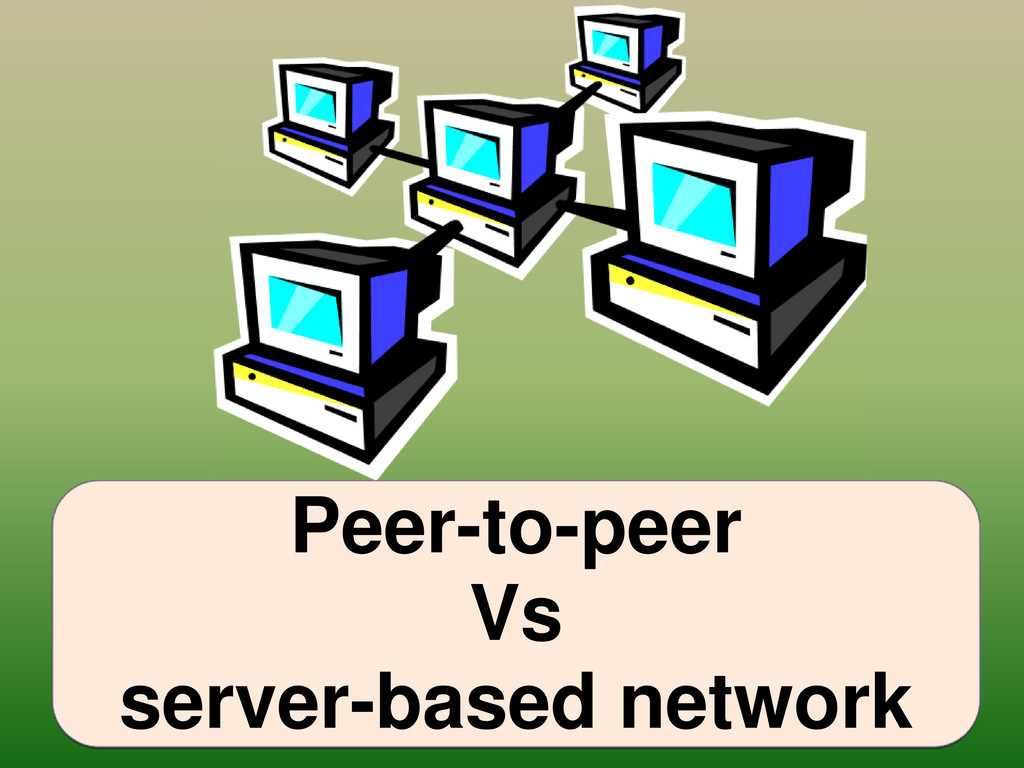
Peer-to-peer Vs server-based network
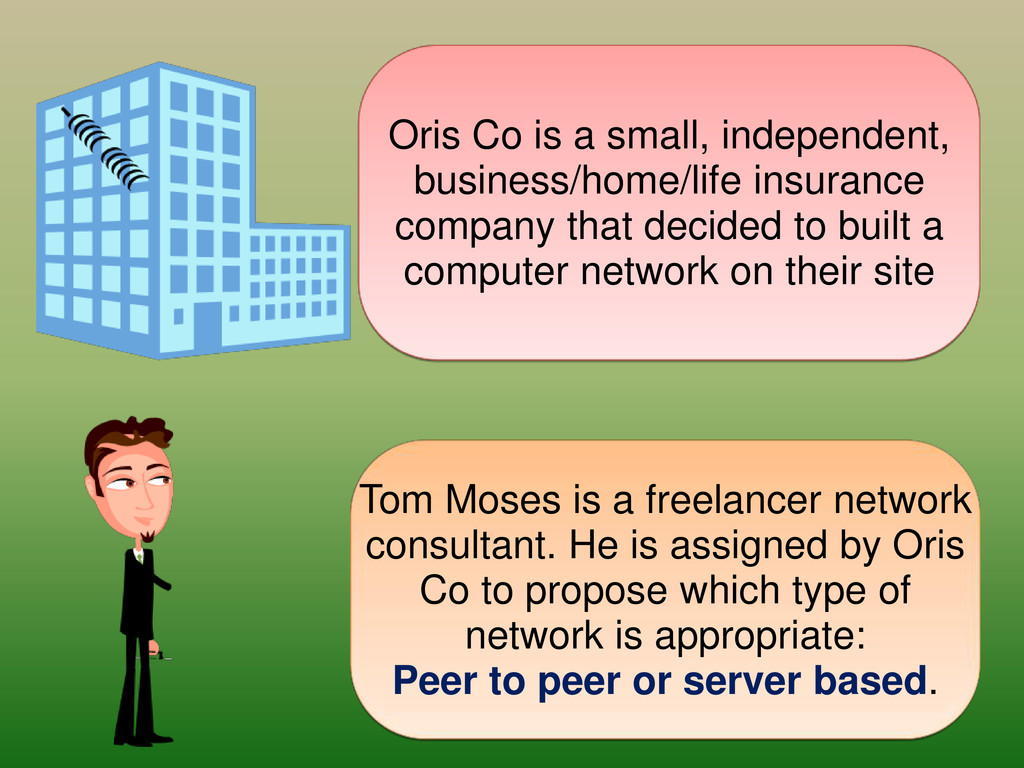
Oris Co is a small, independent, business/home/life insurance company that
decided to built a computer network on their site Tom Moses is a freelancer network consultant. He is assigned by Oris Co to propose which type of network is appropriate: Peer to peer or server based.
To propose to his client which type of network is
appropriate: Peer to peer or server based. Help Tom to fulfill TASK
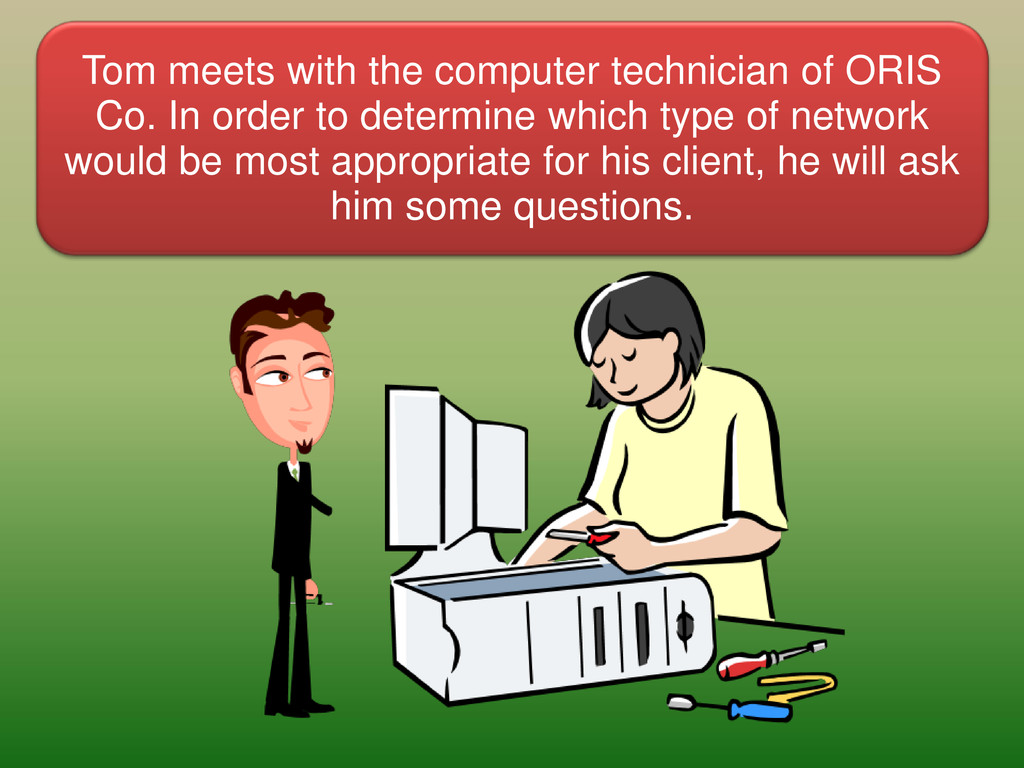
Tom meets with the computer technician of ORIS Co. In
order to determine which type of network would be most appropriate for his client, he will ask him some questions.
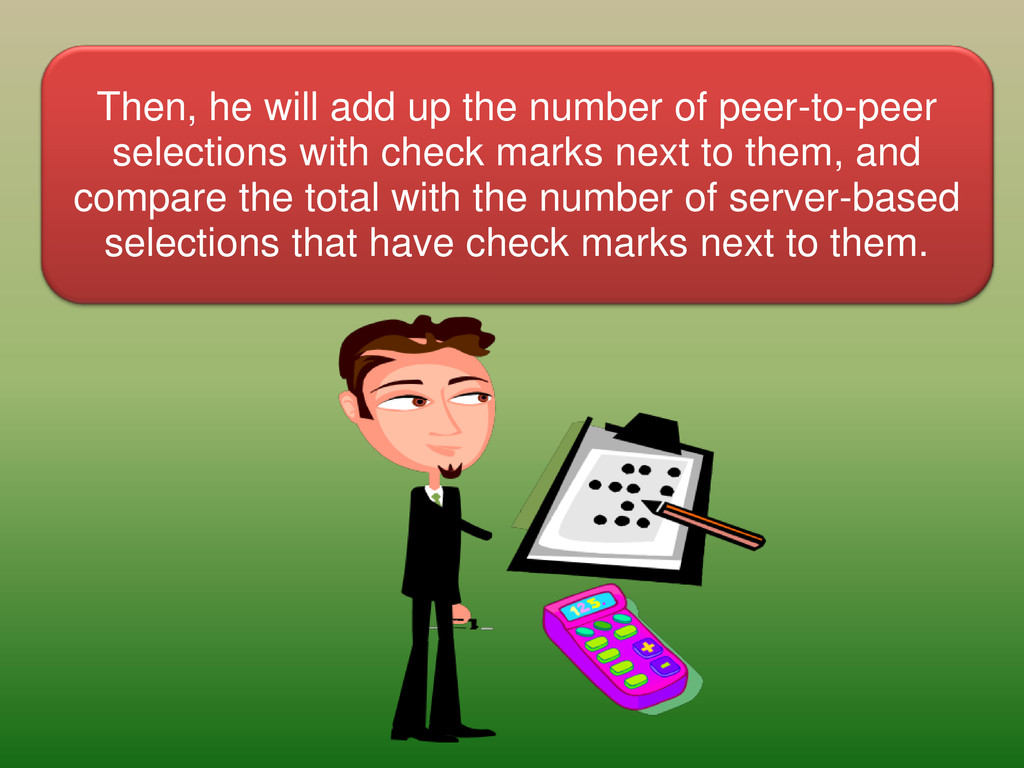
Then, he will add up the number of peer-to-peer selections
with check marks next to them, and compare the total with the number of server-based selections that have check marks next to them.
The network type with the most check marks should be
the first network option that Tom will consider.
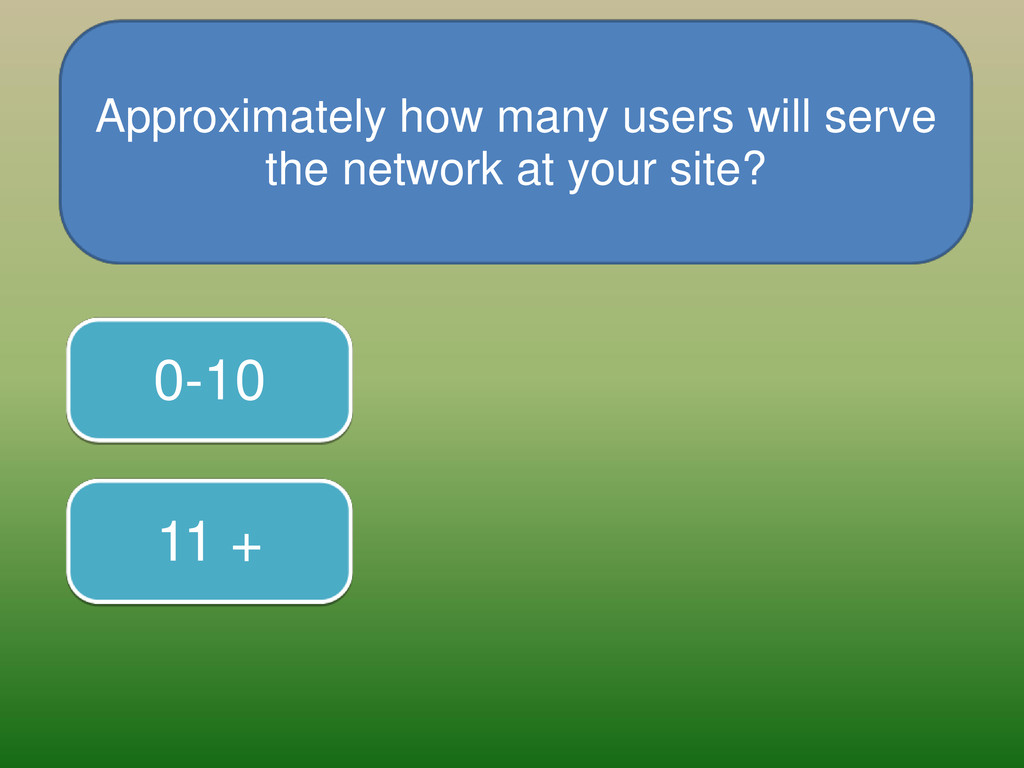
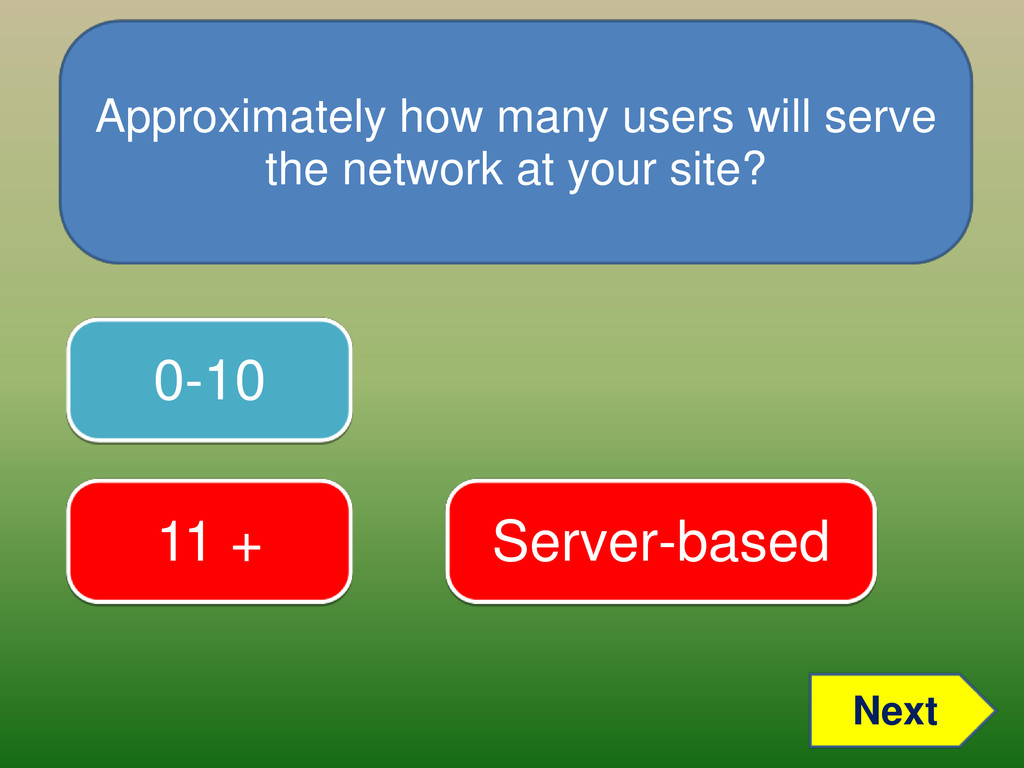
Approximately how many users will serve the network at your
site? 0-10 11 +
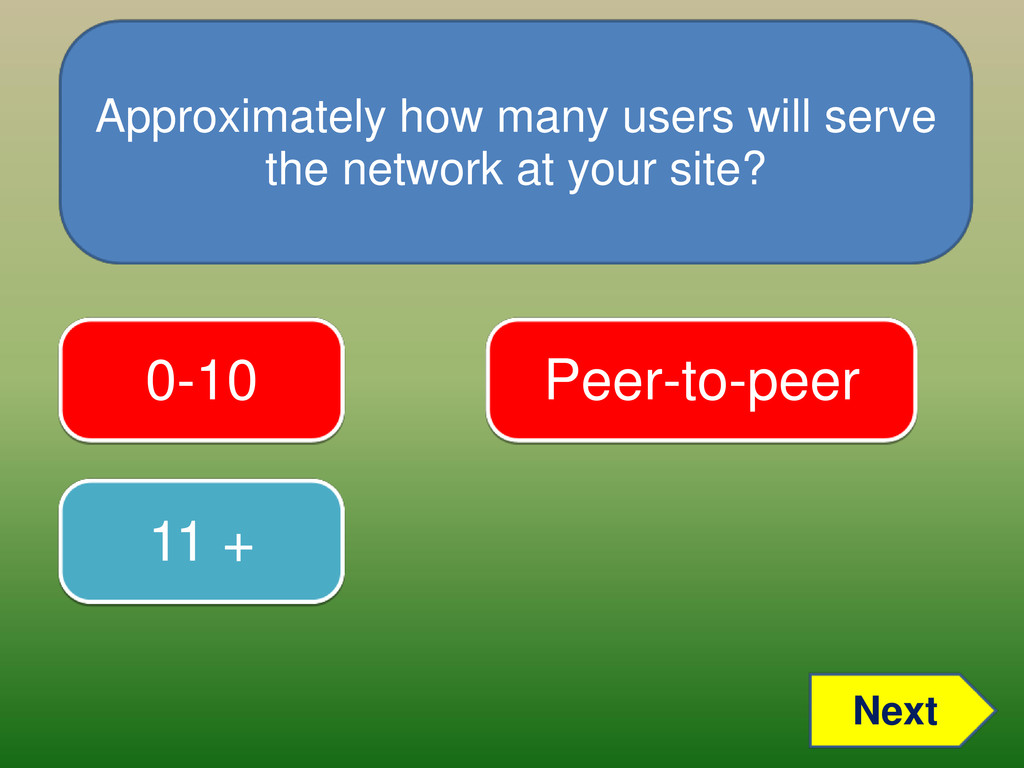
Approximately how many users will serve the network at your
site? Next Peer-to-peer 0-10 11 +
Approximately how many users will serve the network at your
site? Server-based 0-10 11 + Next
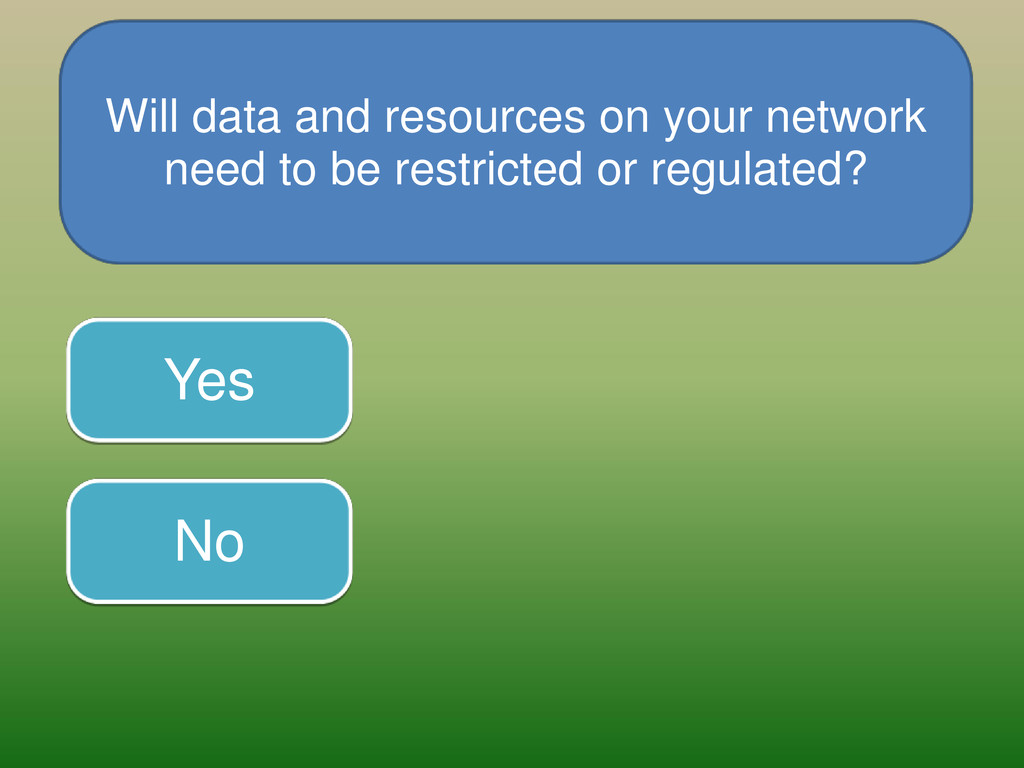
Will data and resources on your network need to be
restricted or regulated? Yes No
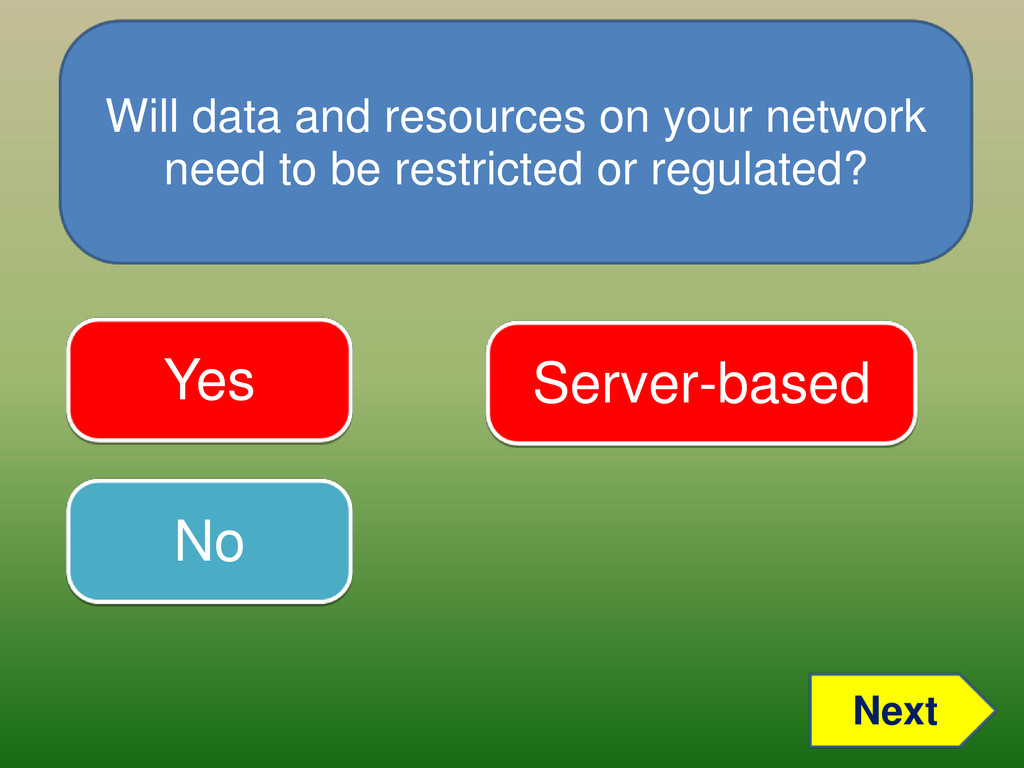
Will data and resources on your network need to be
restricted or regulated? Yes No Next Server-based
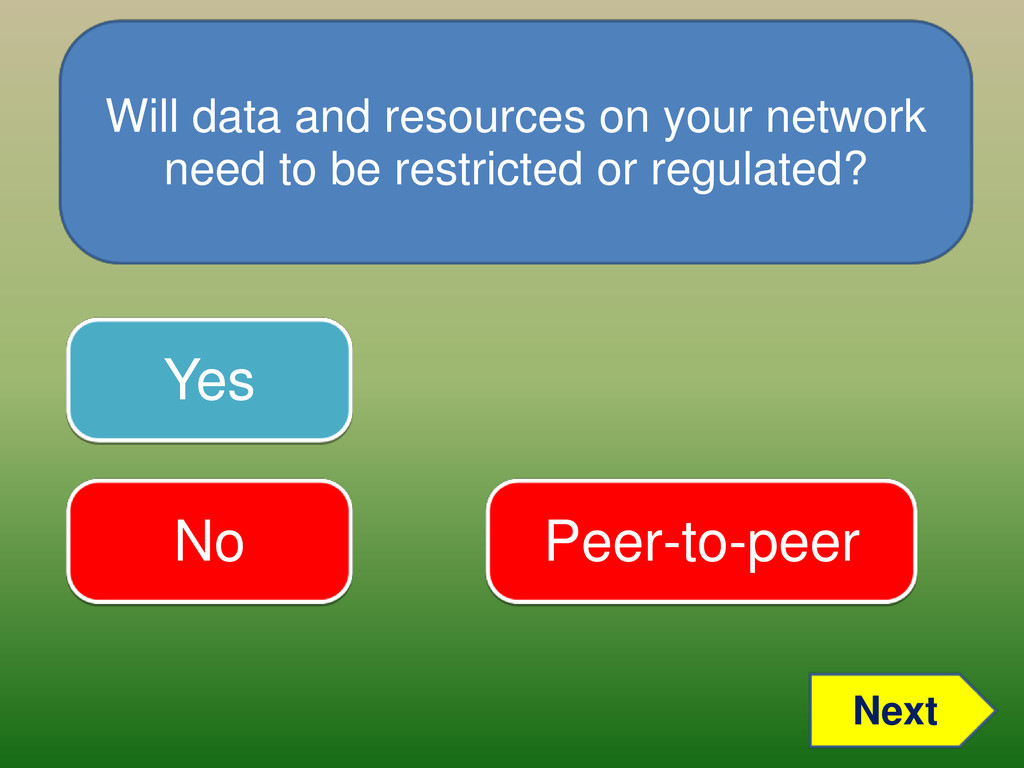
Will data and resources on your network need to be
restricted or regulated? Yes No Peer-to-peer Next
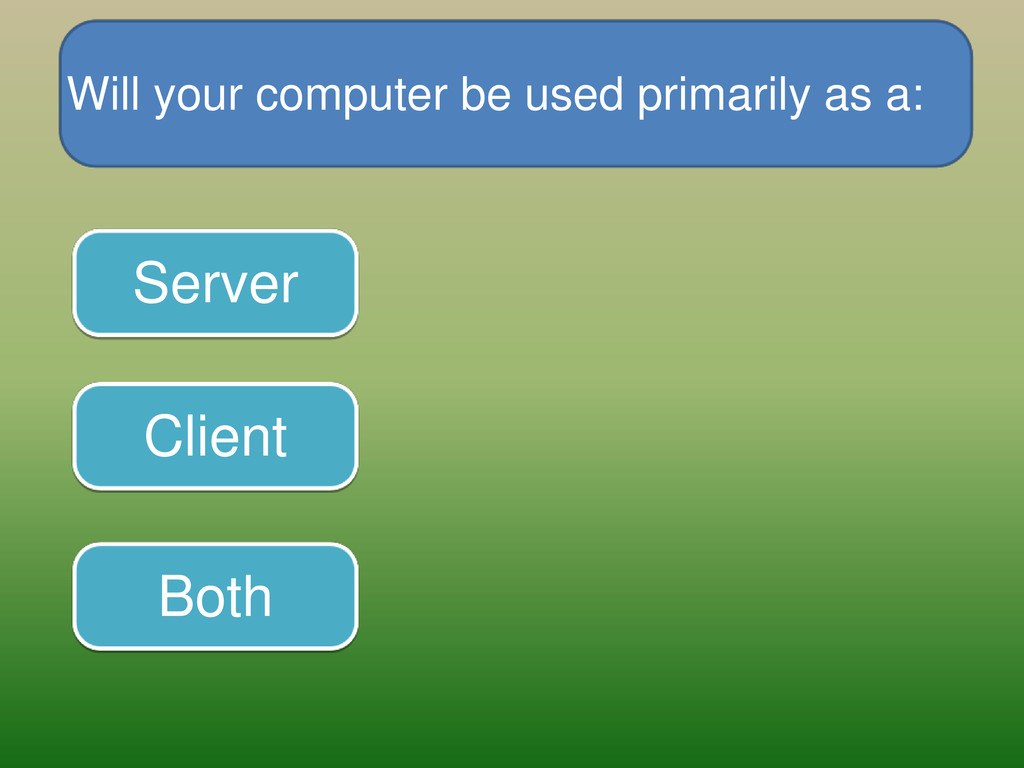
Will your computer be used primarily as a: Server Client
Both
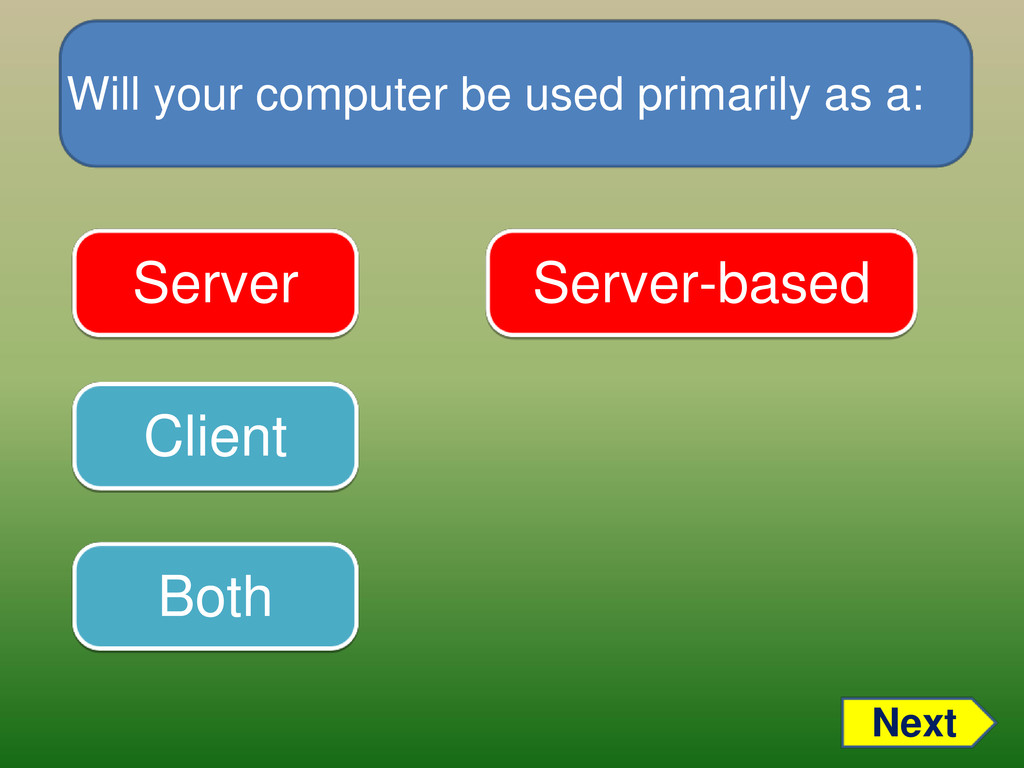
Will your computer be used primarily as a: Server Client
Next Both Server-based
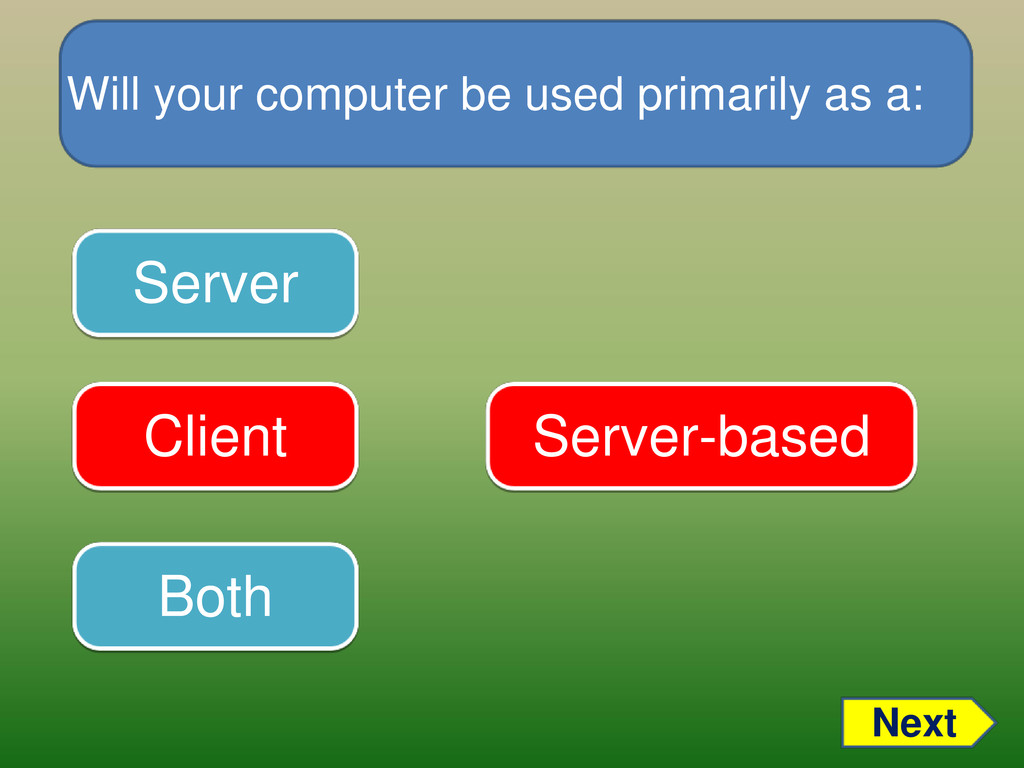
Will your computer be used primarily as a: Server Client
Both Server-based Next
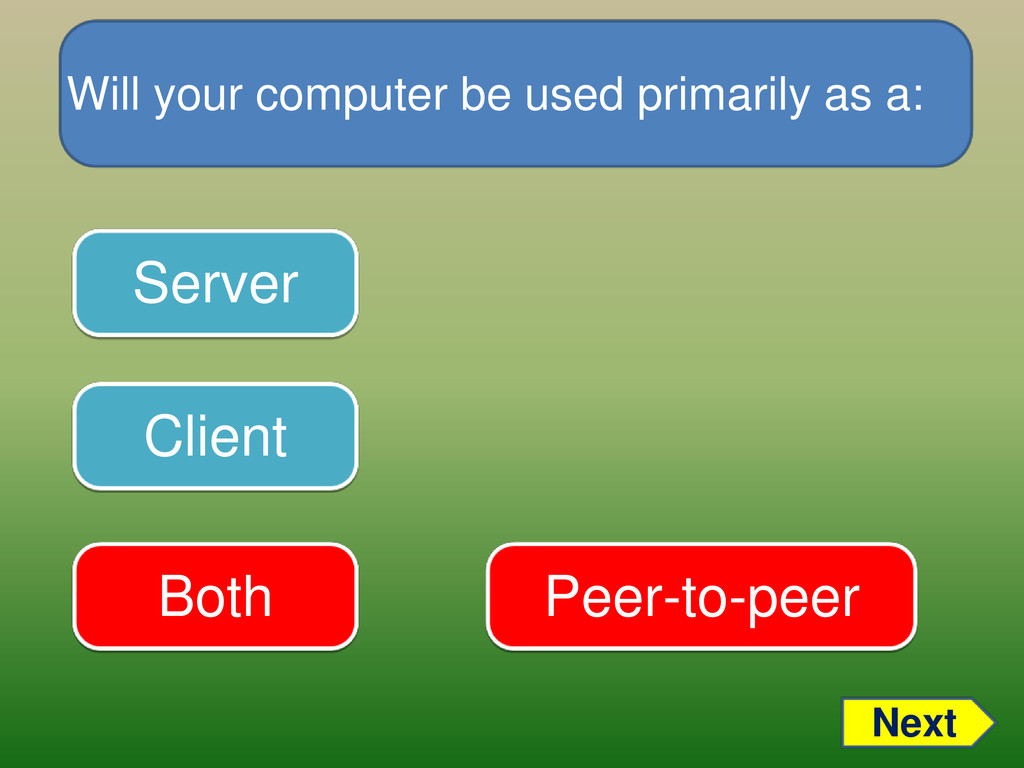
Will your computer be used primarily as a: Server Client
Both Peer-to-peer Next
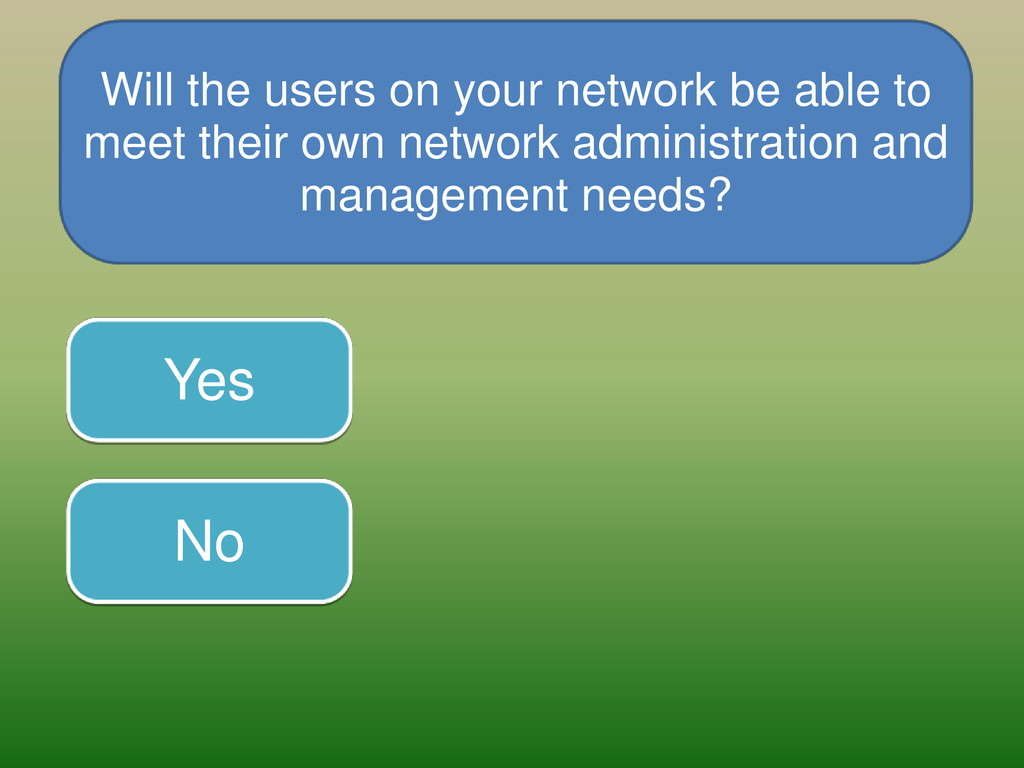
Will the users on your network be able to meet
their own network administration and management needs? Yes No
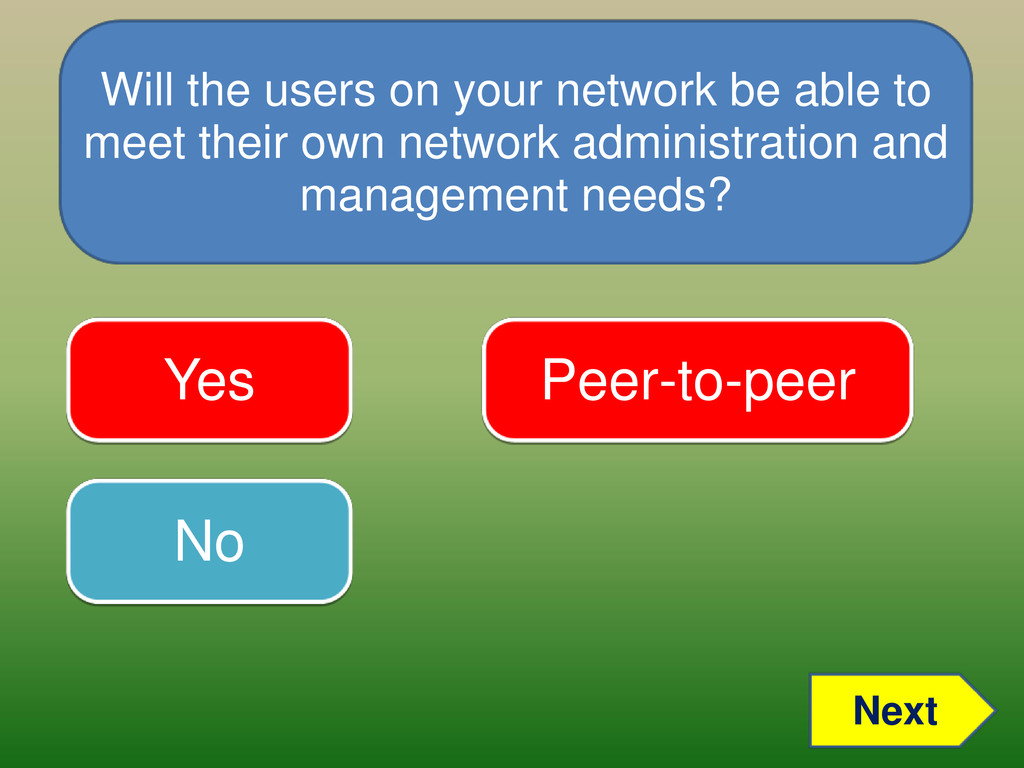
Will the users on your network be able to meet
their own network administration and management needs? Yes No Next Peer-to-peer
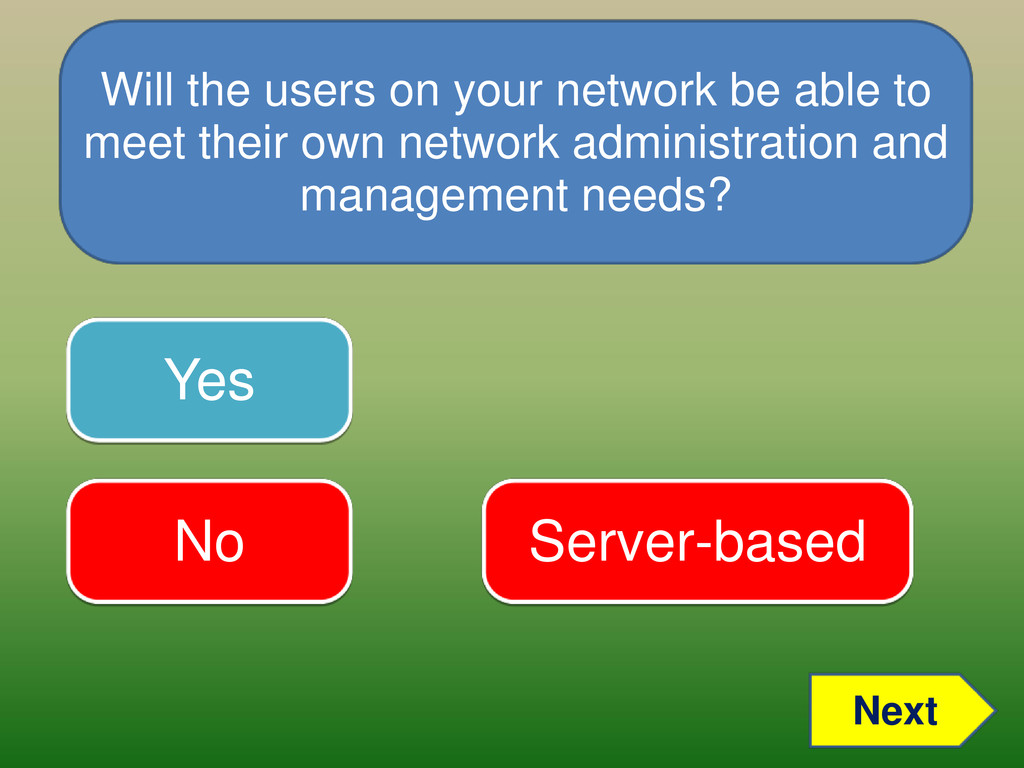
Will the users on your network be able to meet
their own network administration and management needs? Yes No Server-based Next
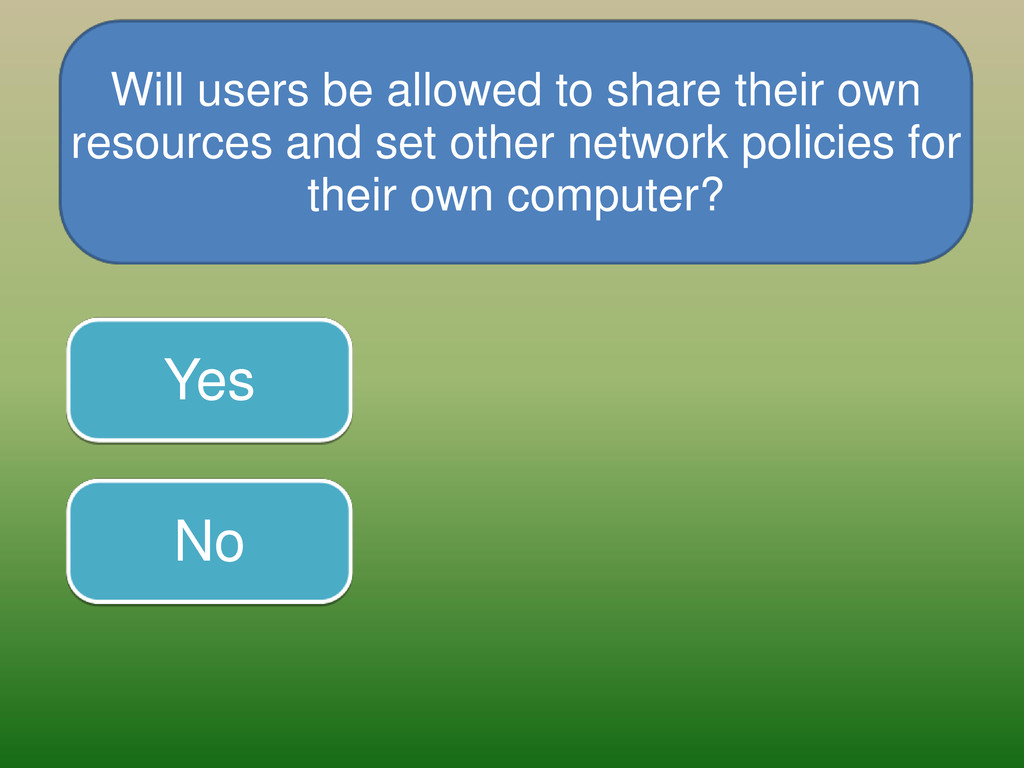
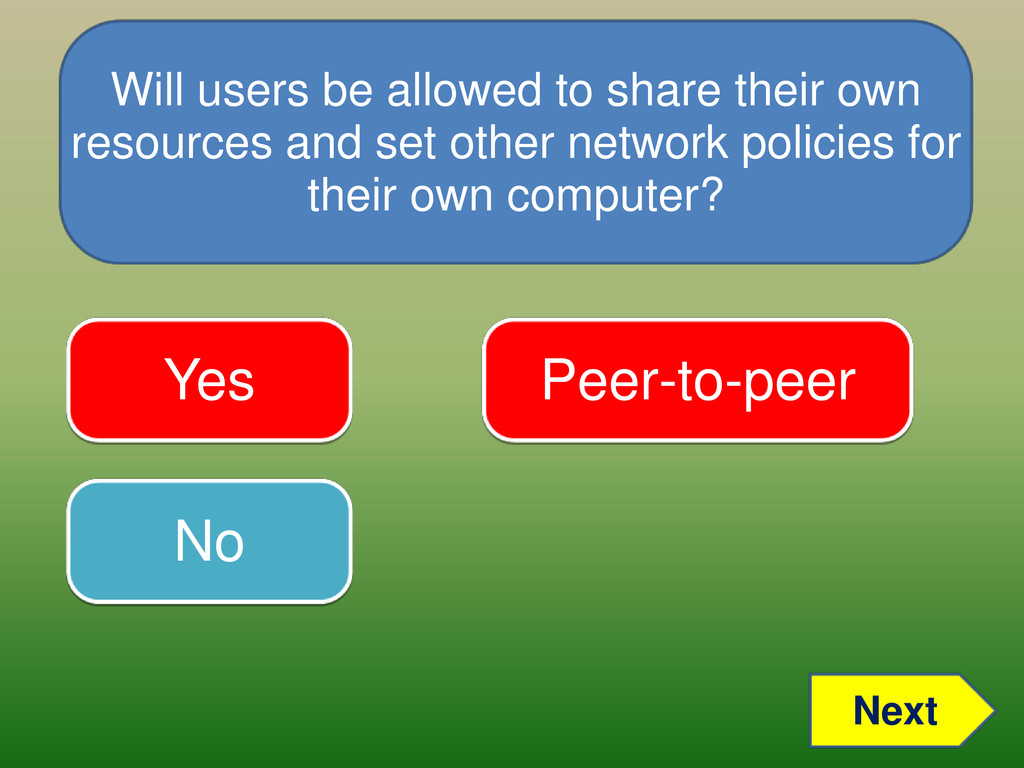
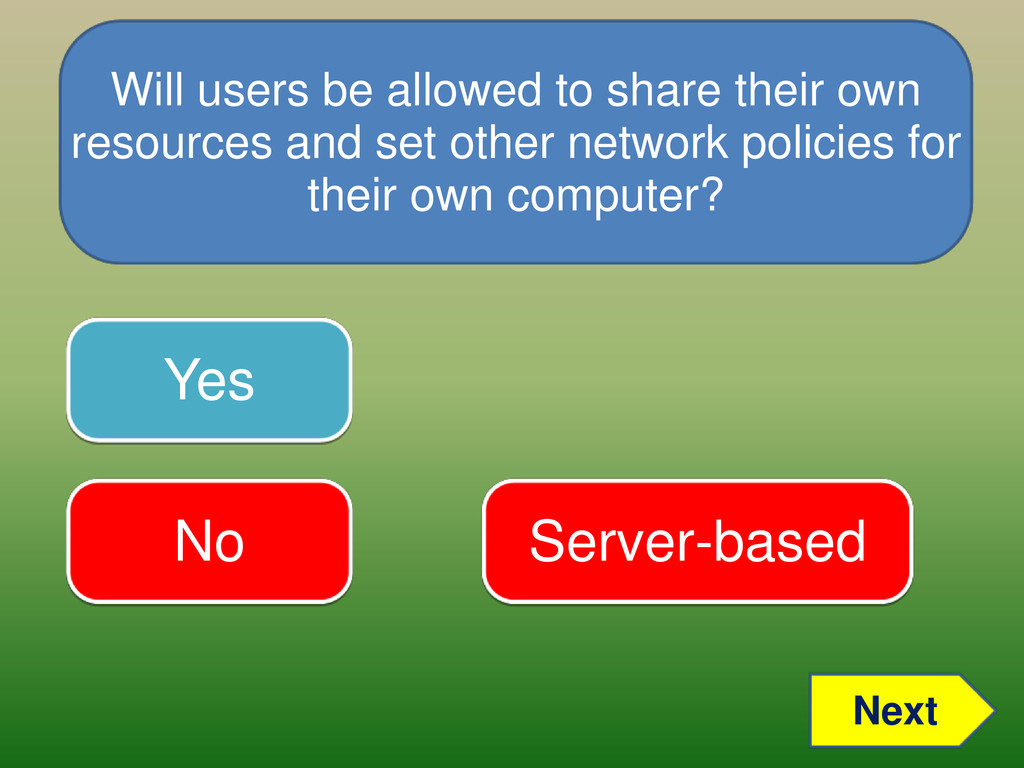
Will users be allowed to share their own resources and
set other network policies for their own computer? Yes No
Will users be allowed to share their own resources and
set other network policies for their own computer? Yes No Next Peer-to-peer
Will users be allowed to share their own resources and
set other network policies for their own computer? Yes No Server-based Next
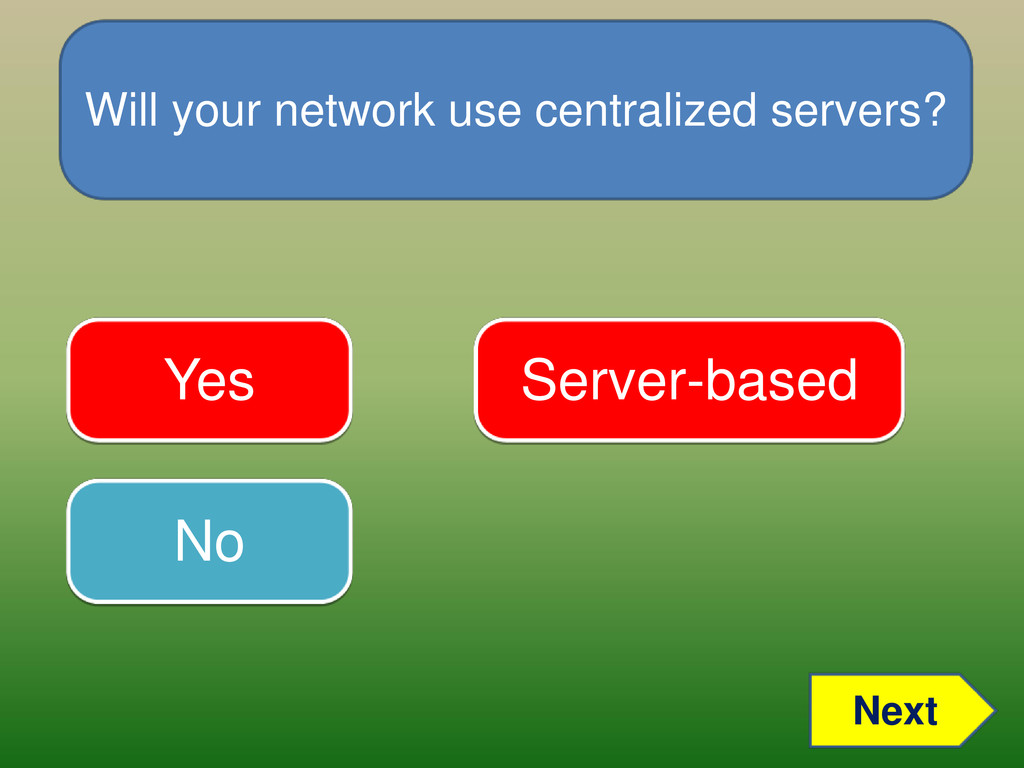
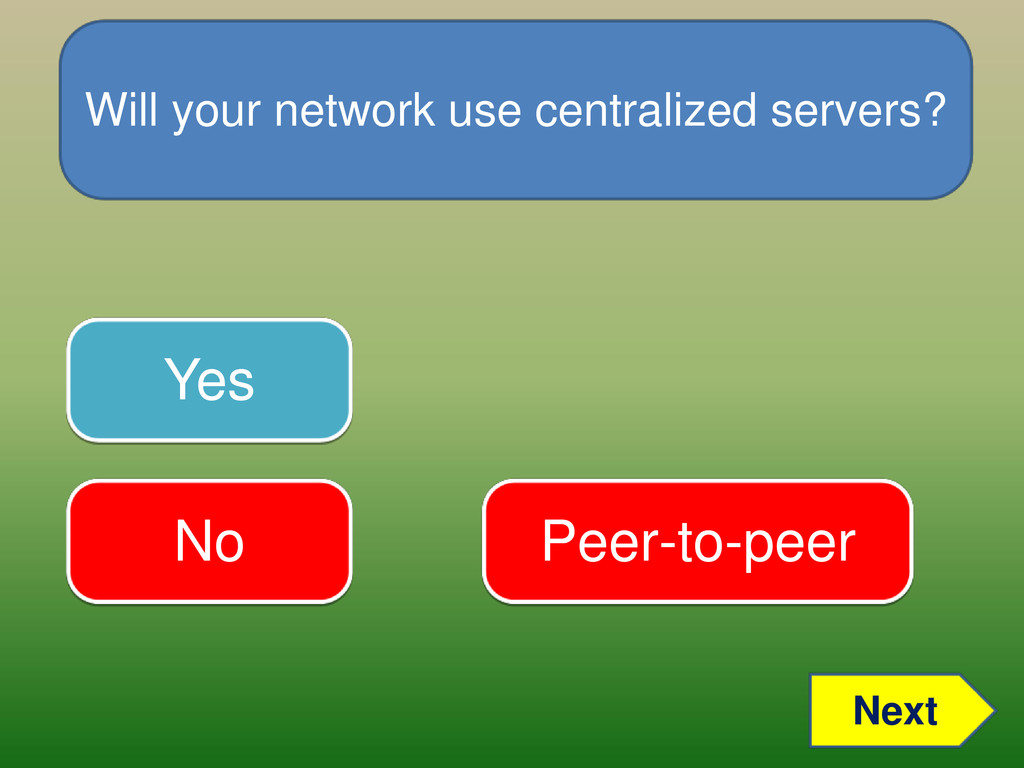
Will your network use centralized servers? Yes No
Will your network use centralized servers? Yes No Next Server-based
Will your network use centralized servers? Yes No Peer-to-peer Next
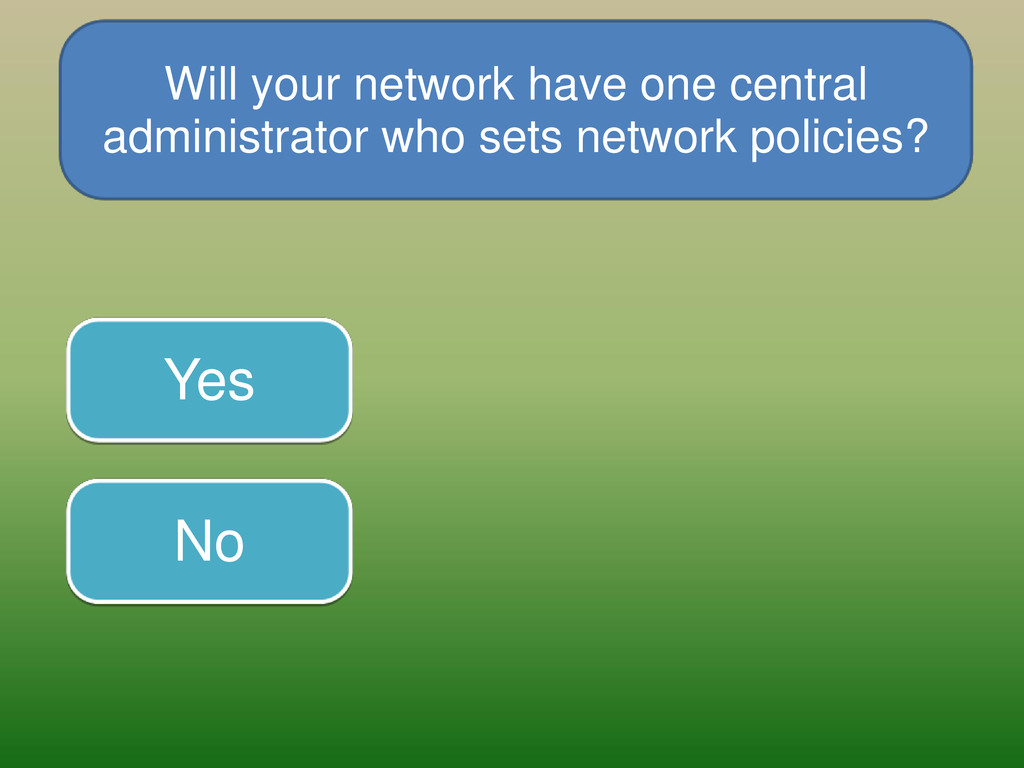
Will your network have one central administrator who sets network
policies? Yes No
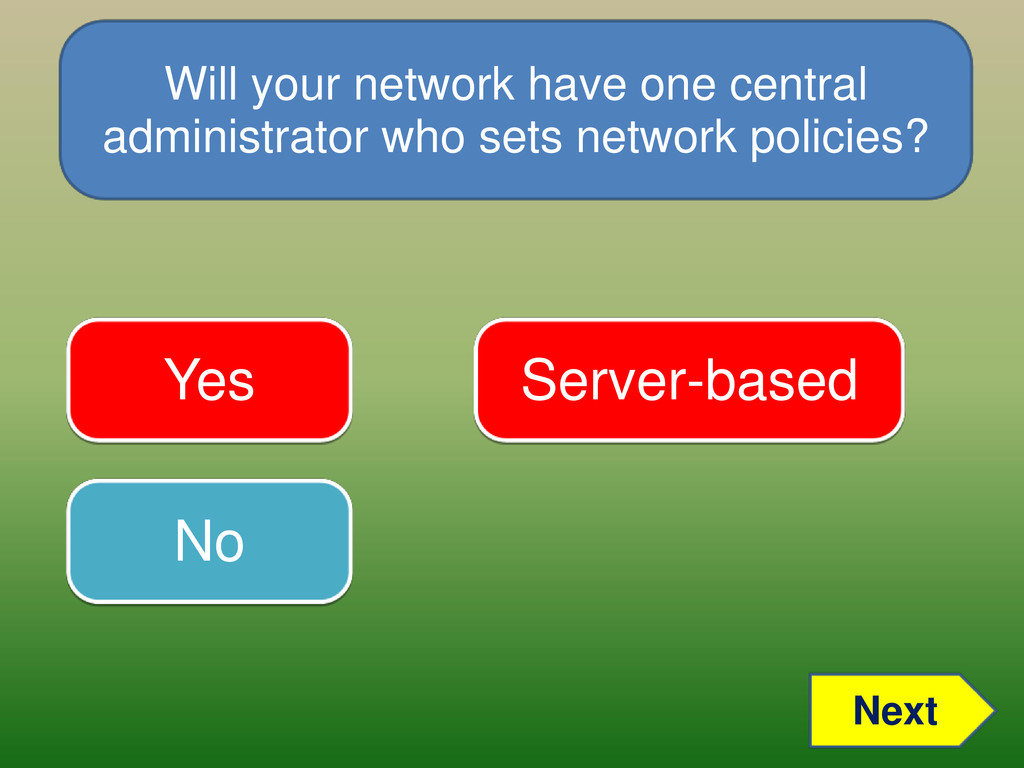
Will your network have one central administrator who sets network
policies? Yes No Next Server-based
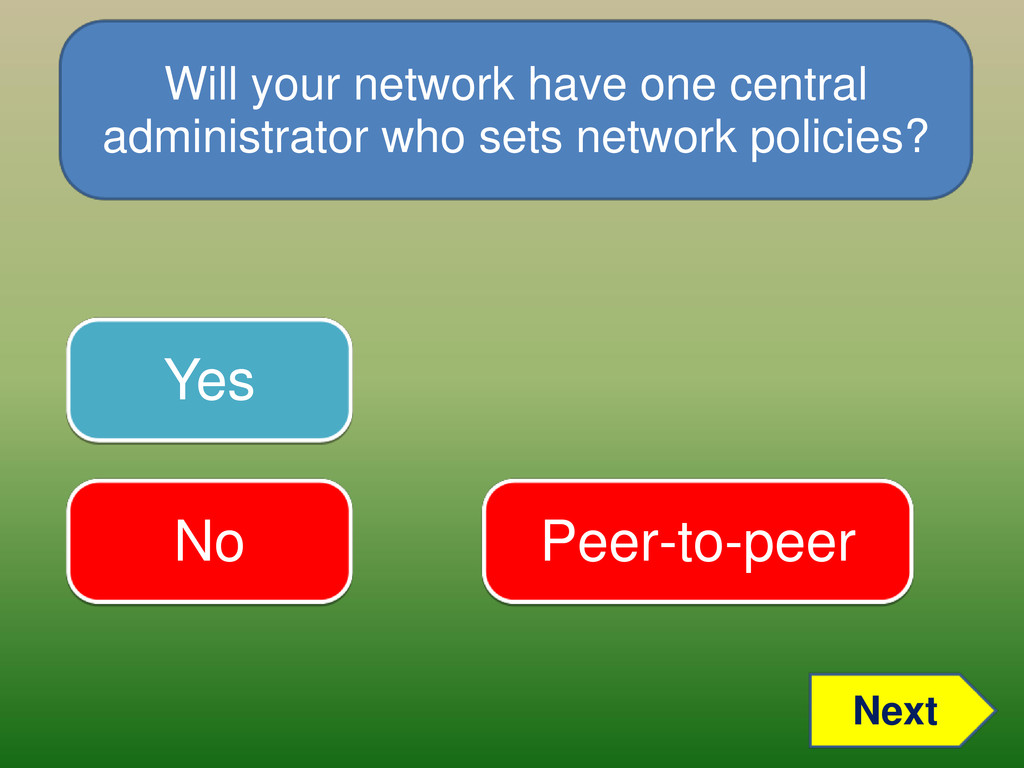
Will your network have one central administrator who sets network
policies? Yes No Peer-to-peer Next
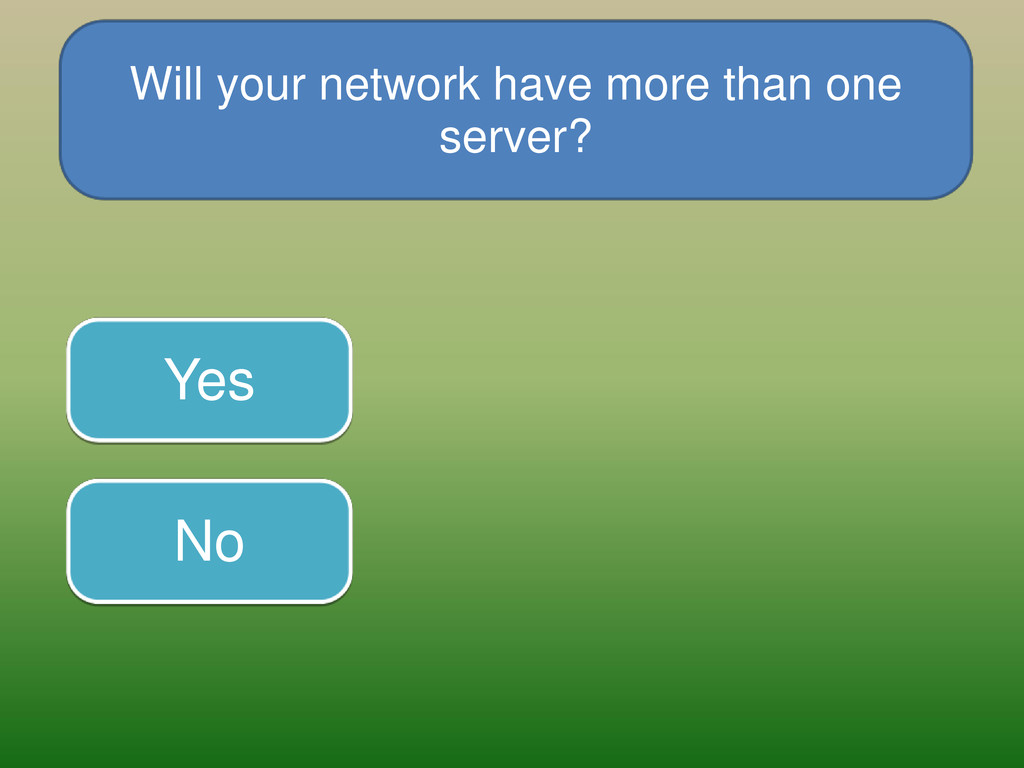
Will your network have more than one server? Yes No
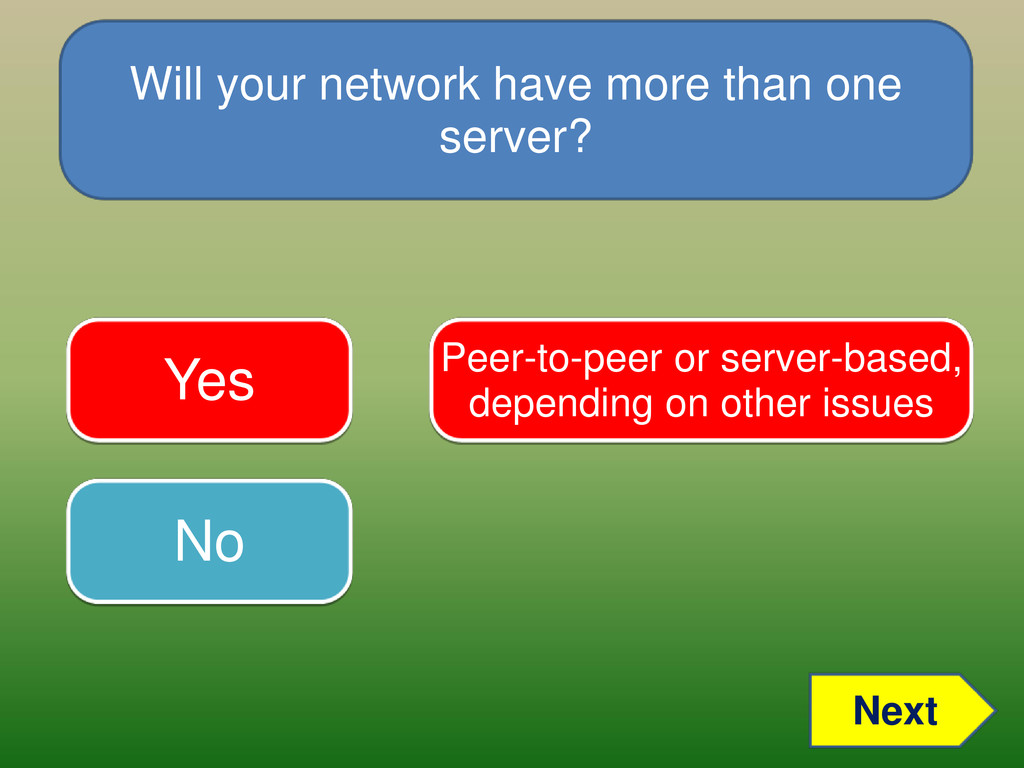
Will your network have more than one server? Yes No
Next Peer-to-peer or server-based, depending on other issues
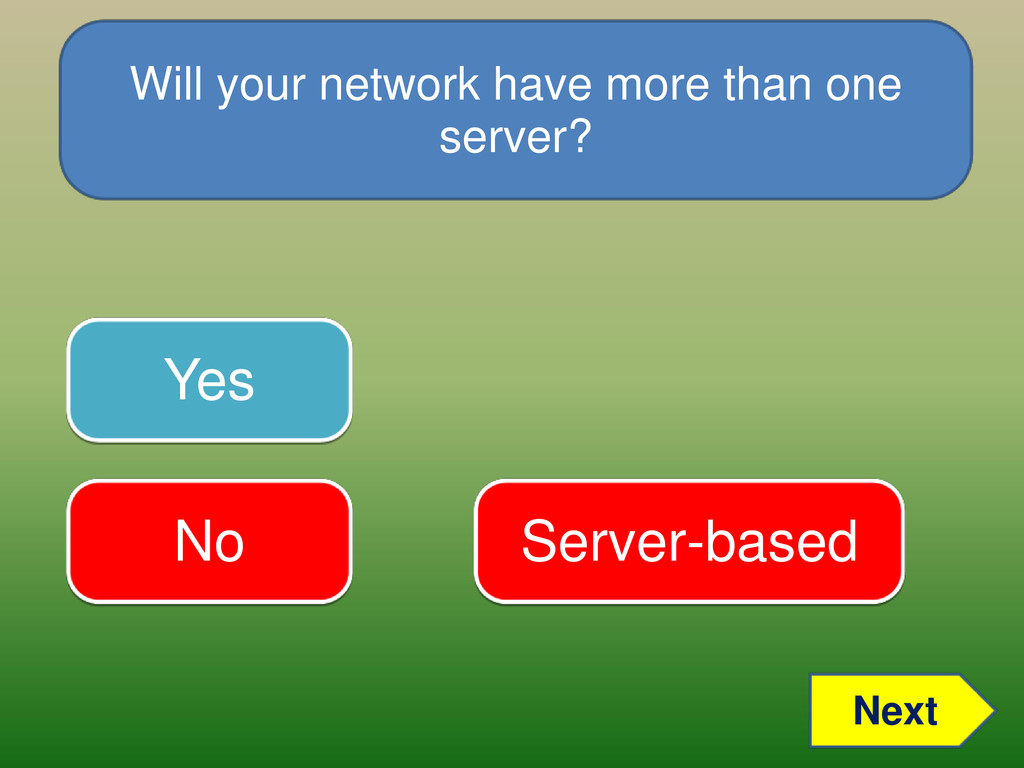
Will your network have more than one server? Yes No
Server-based Next
Now, add up the number of peer-to- peer selections with
check marks next to them, and compare the total with the number of server-based selections that have check marks next to them. Start over
More Decks by Andreas Apostolopoulos
See All by Andreas Apostolopoulos
Network Planning Scenario
aaposto
0
48
Other Decks in Education
See All in Education
Liburd and Stoll Farrell "Copyright Essentials From A to AI: A 2026 NISO Training Series, Session Two: Fair Use and the Public Domain"
baltimoreniso
0
250
Padlet opetuksessa
matleenalaakso
12
16k
AI活用の基礎体験ハンズオン(松尾研 AXエバンジェリスト講座)
minorun365
PRO
13
16k
[2026後期火5] 論理学(京都大学文学部 後期 第5回)「問題演習と ε-δ 論法」
yatabe
0
110
[2026後期火5] 論理学(京都大学文学部 後期 第1回)「名前はあるのに、誰なのかわからない」
yatabe
0
210
Longitudinal research
aisw77
0
440
吉岡研究室紹介(2026年度)
kentaroy47
0
710
1104
cbtlibrary
0
210
Sekolah Sabat - Triwulan 4 2026 - Pelajaran 5
hiola
0
12k
[2026後期火5] 論理学(京都大学文学部 後期 第4回)「∃ の規則と存在具体性」
yatabe
0
140
GOVERNOR ADDRESS 2 :延岡 研一 氏(国際ロータリー第2720地区:2026-2027年度 地区ガバナー・人吉ロータリークラブ ・人吉電気工事株式会社 会長)卓話 : 2026.10.26例会・卓話
2720japanoke
0
700
Unit 5: Valuation of Securities
bvr7352
0
340
Featured
See All Featured
Collaborative Software Design: How to facilitate domain modelling decisions
baasie
1
390
Being A Developer After 40
akosma
PRO
92
590k
HTML-Aware ERB: The Path to Reactive Rendering @ RubyCon 2026, Rimini, Italy
marcoroth
6
970
Designing for humans not robots
tammielis
254
26k
WENDY [Excerpt]
tessaabrams
15
41k
Game over? The fight for quality and originality in the time of robots
wayneb77
1
340
Typedesign – Prime Four
hannesfritz
42
3.2k
Web Performance Is a Journey [PerfNow 2026]
tammyeverts
2
160
Heart Work Chapter 1 - Part 1
lfama
PRO
11
37k
Avoiding the “Bad Training, Faster” Trap in the Age of AI
tmiket
1
320
The Organizational Zoo: Understanding Human Behavior Agility Through Metaphoric Constructive Conversations (based on the works of Arthur Shelley, Ph.D)
kimpetersen
PRO
0
550
Chasing Engaging Ingredients in Design
codingconduct
0
410


 aaposto
 baltimoreniso
 matleenalaakso
 minorun365
 yatabe
 aisw77
 kentaroy47
 cbtlibrary
 hiola
 2720japanoke
 bvr7352
 baasie
 akosma
 marcoroth
 tammielis
 tessaabrams
 wayneb77
 hannesfritz
 tammyeverts
 lfama
 tmiket
 kimpetersen
 codingconduct