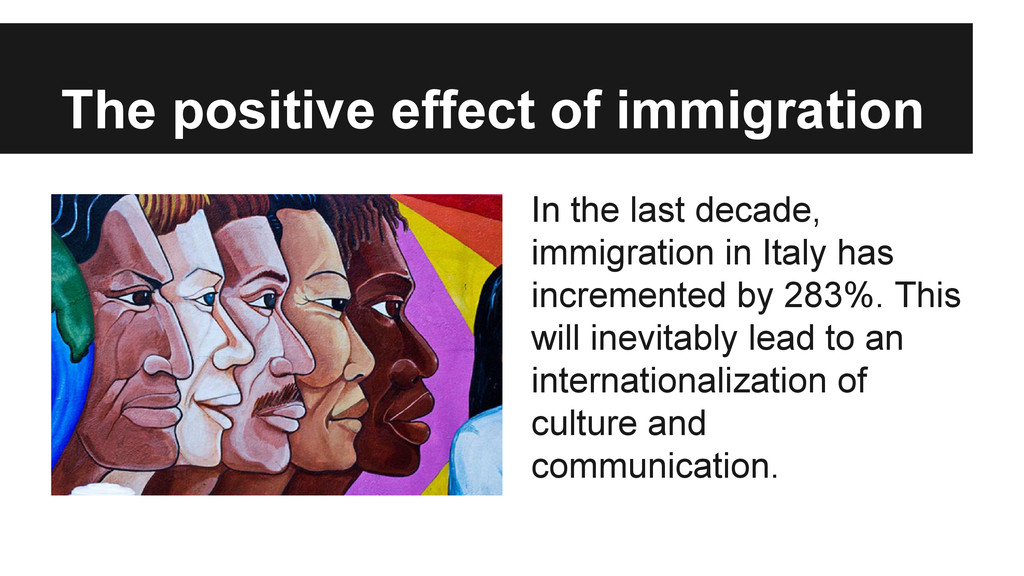
sounds, its modulation, its rhythm. But try to march together with men of different languages, remote from your own, who wish like you for a more just and human world.” ― Hélder Câmara, Spiral Of Violence
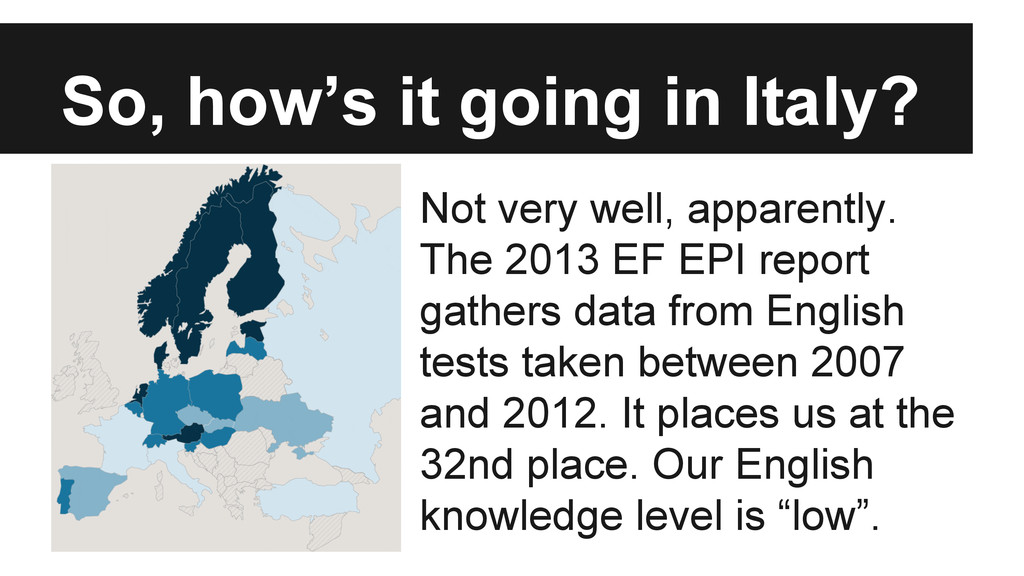
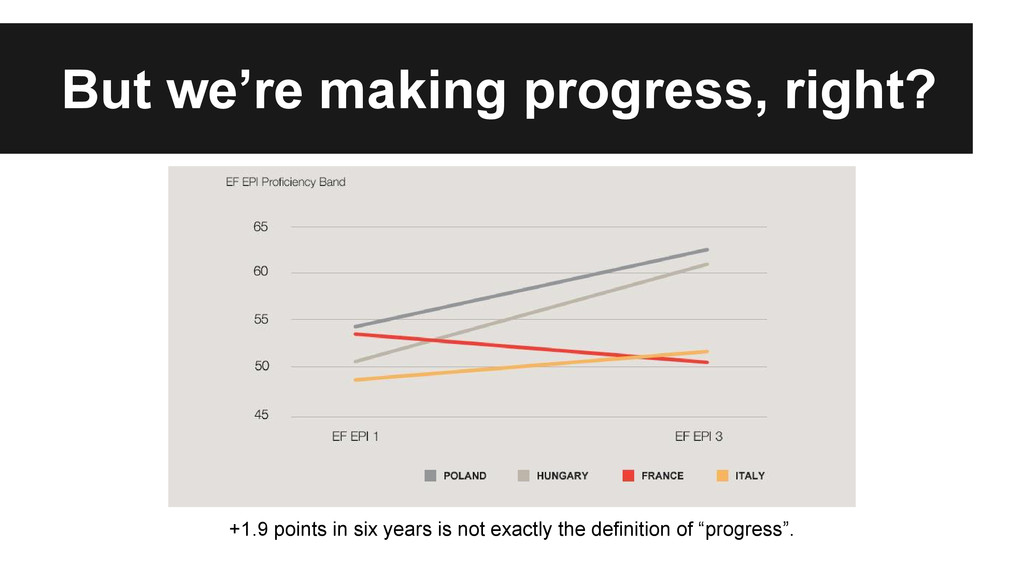
The 2013 EF EPI report gathers data from English tests taken between 2007 and 2012. It places us at the 32nd place. Our English knowledge level is “low”.
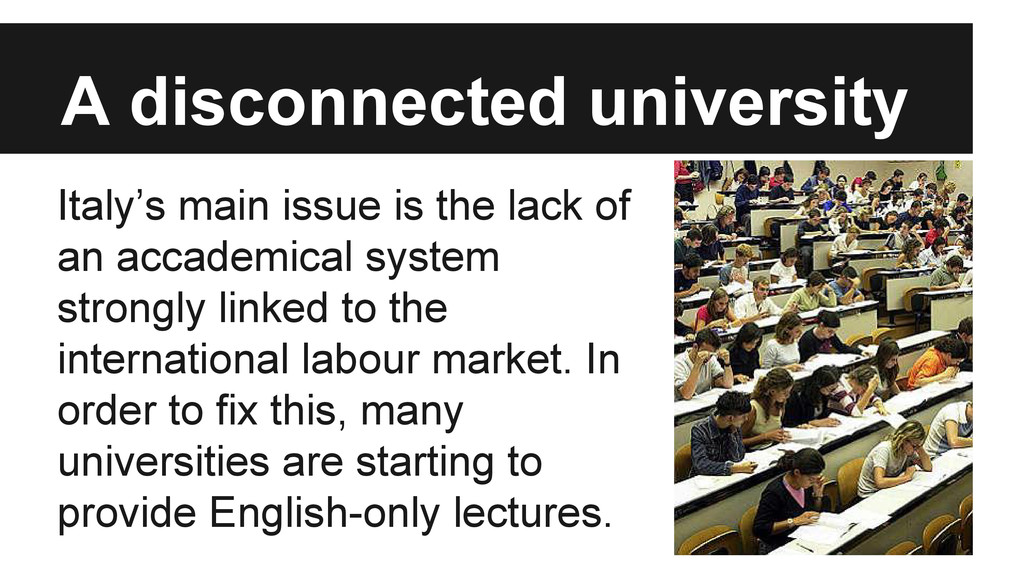
an accademical system strongly linked to the international labour market. In order to fix this, many universities are starting to provide English-only lectures.
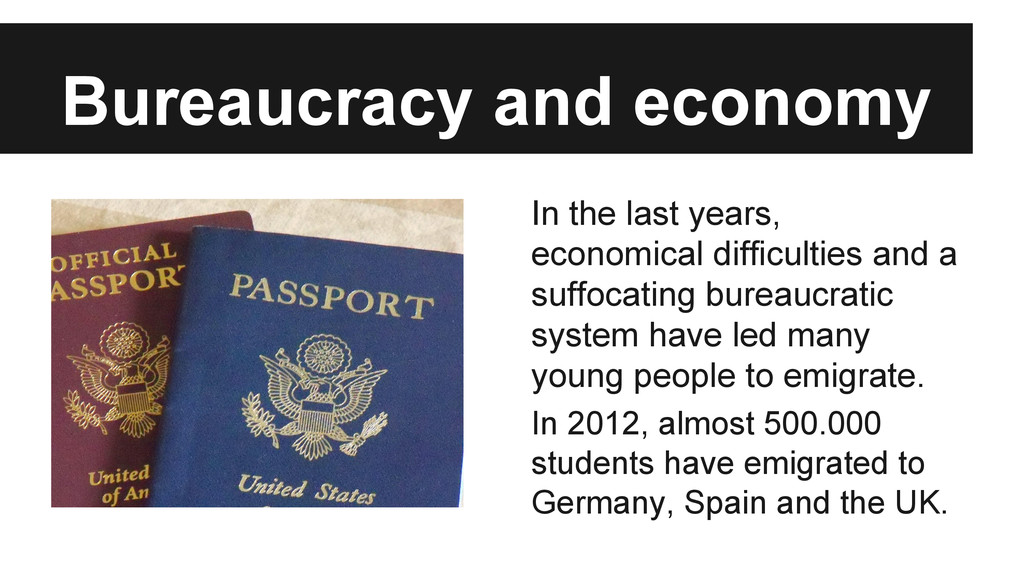
a suffocating bureaucratic system have led many young people to emigrate. In 2012, almost 500.000 students have emigrated to Germany, Spain and the UK.
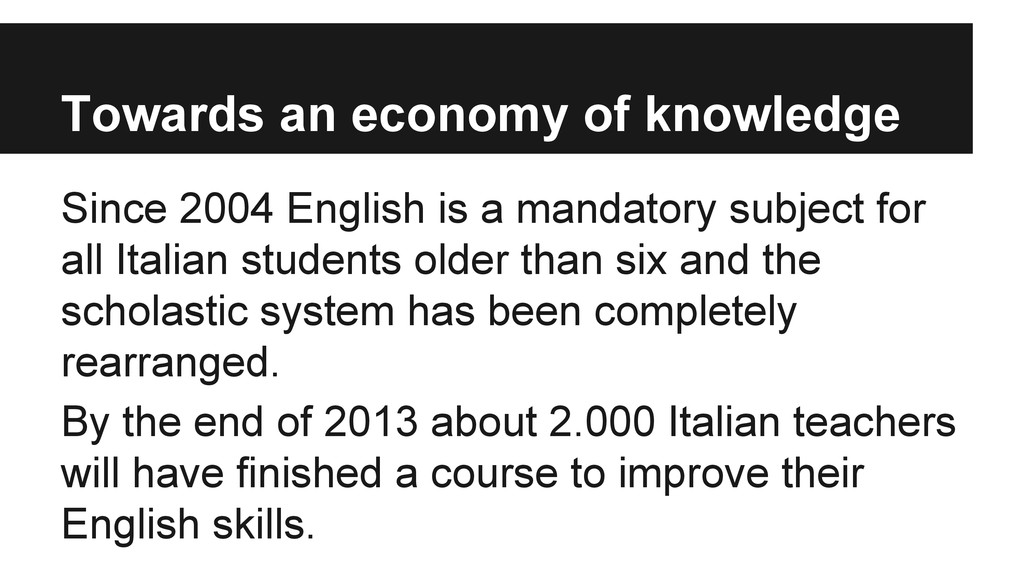
students older than six and the scholastic system has been completely rearranged. By the end of 2013 about 2.000 Italian teachers will have finished a course to improve their English skills. Towards an economy of knowledge
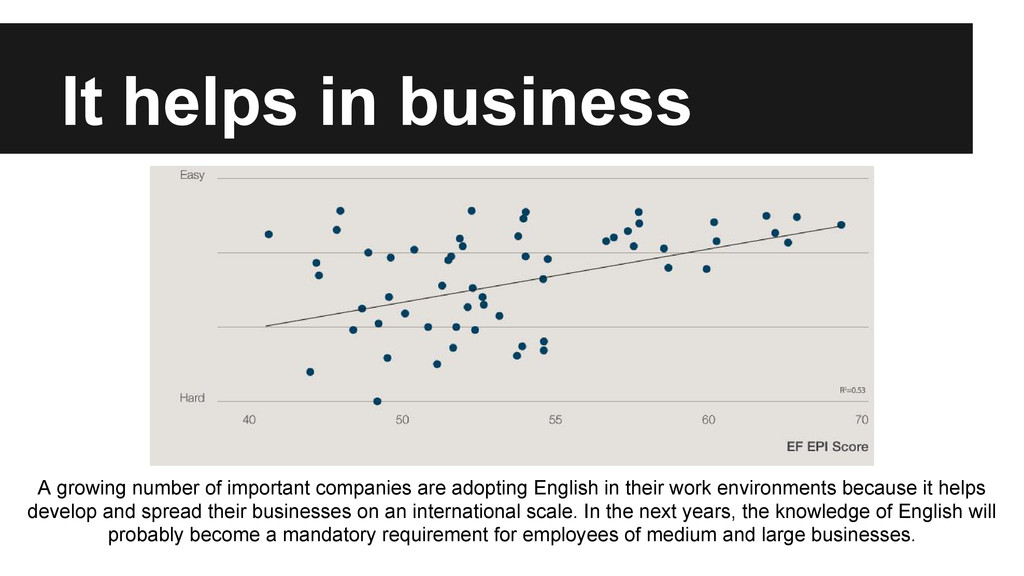
are adopting English in their work environments because it helps develop and spread their businesses on an international scale. In the next years, the knowledge of English will probably become a mandatory requirement for employees of medium and large businesses.
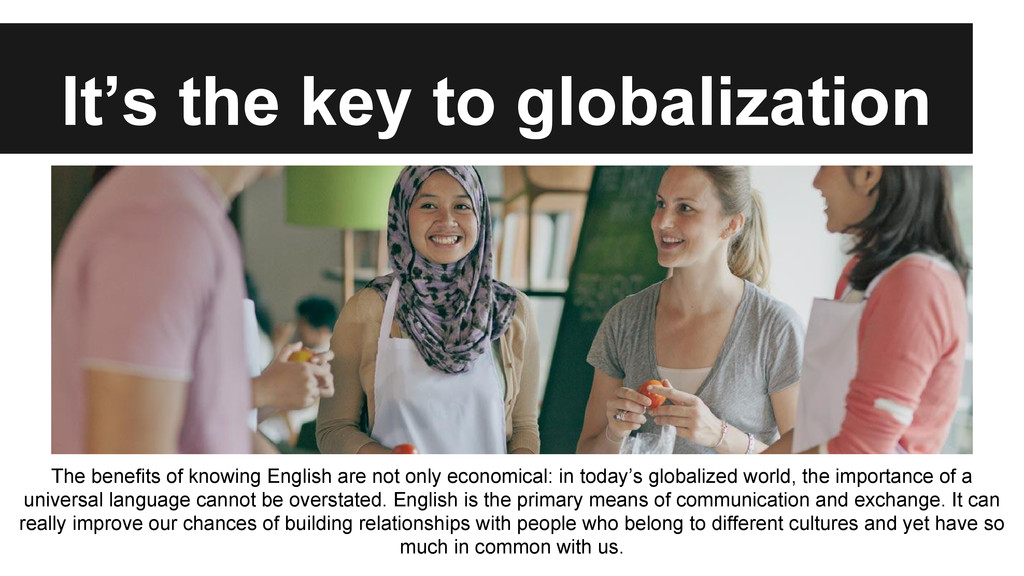
are not only economical: in today’s globalized world, the importance of a universal language cannot be overstated. English is the primary means of communication and exchange. It can really improve our chances of building relationships with people who belong to different cultures and yet have so much in common with us.
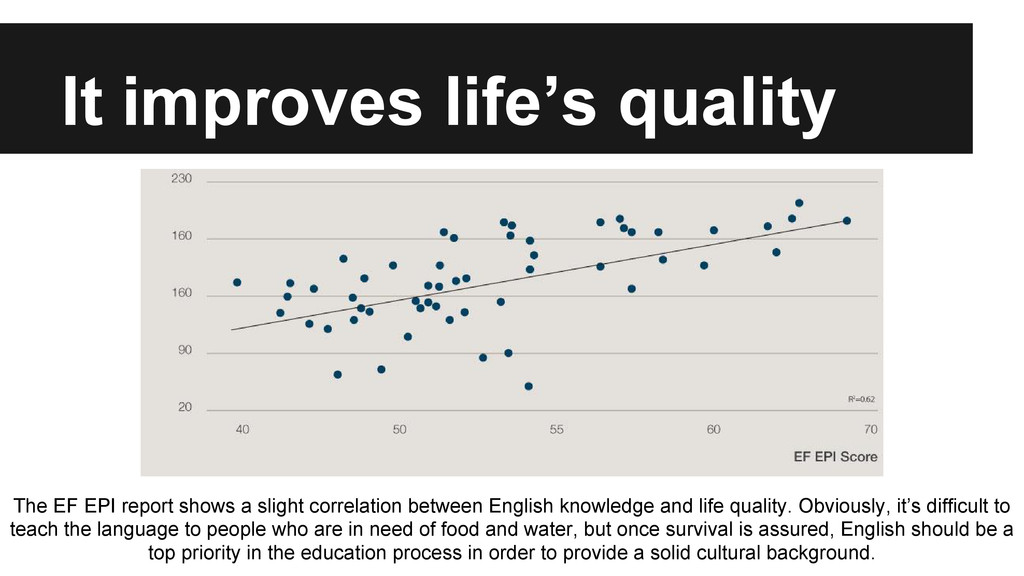
slight correlation between English knowledge and life quality. Obviously, it’s difficult to teach the language to people who are in need of food and water, but once survival is assured, English should be a top priority in the education process in order to provide a solid cultural background.
it can help us improve the economy, build stronger relationships and live a better life. Our country should adapt to its European and international fellows and create an educational system which is able to teach English as a practical skill, thus creating workers ready to be inserted in the labour market.


 aldesantis
 spring_aki
 pawan_pharm
 hiola
 dragon2
 camel_404
 frievea
 matleenalaakso
 eller86
 ainischool
 rashwhitman
 cbtlibrary
 ks91
 coloredviolet
 ryanjones
 lindahogenes
 techseoconnect
 elsirapls
 sabderemane
 akosma
 marktimemedia
 aleyda
 kimpetersen
 moore