Reinventing Mid Sized Cities Takes a Multipronged Approach
Cities evolve through the activities of industry, finance, culture, and resources. Mid-sized cities depend on industry, which requires them to reinvent themselves to remain attractive places to live and work.
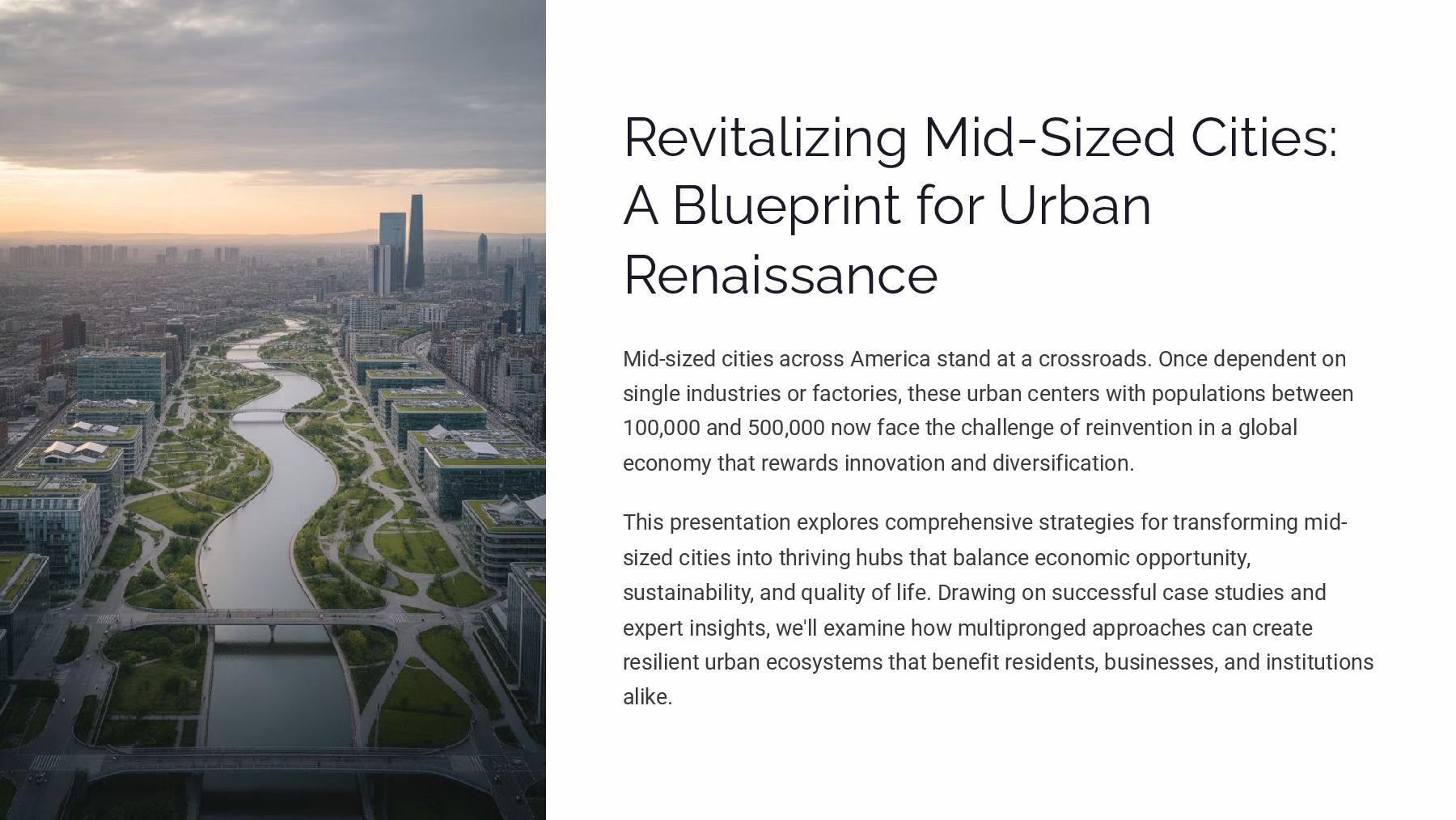
across America stand at a crossroads. Once dependent on single industries or factories, these urban centers with populations between 100,000 and 500,000 now face the challenge of reinvention in a global economy that rewards innovation and diversification. This presentation explores comprehensive strategies for transforming mid- sized cities into thriving hubs that balance economic opportunity, sustainability, and quality of life. Drawing on successful case studies and expert insights, we'll examine how multipronged approaches can create resilient urban ecosystems that benefit residents, businesses, and institutions alike.
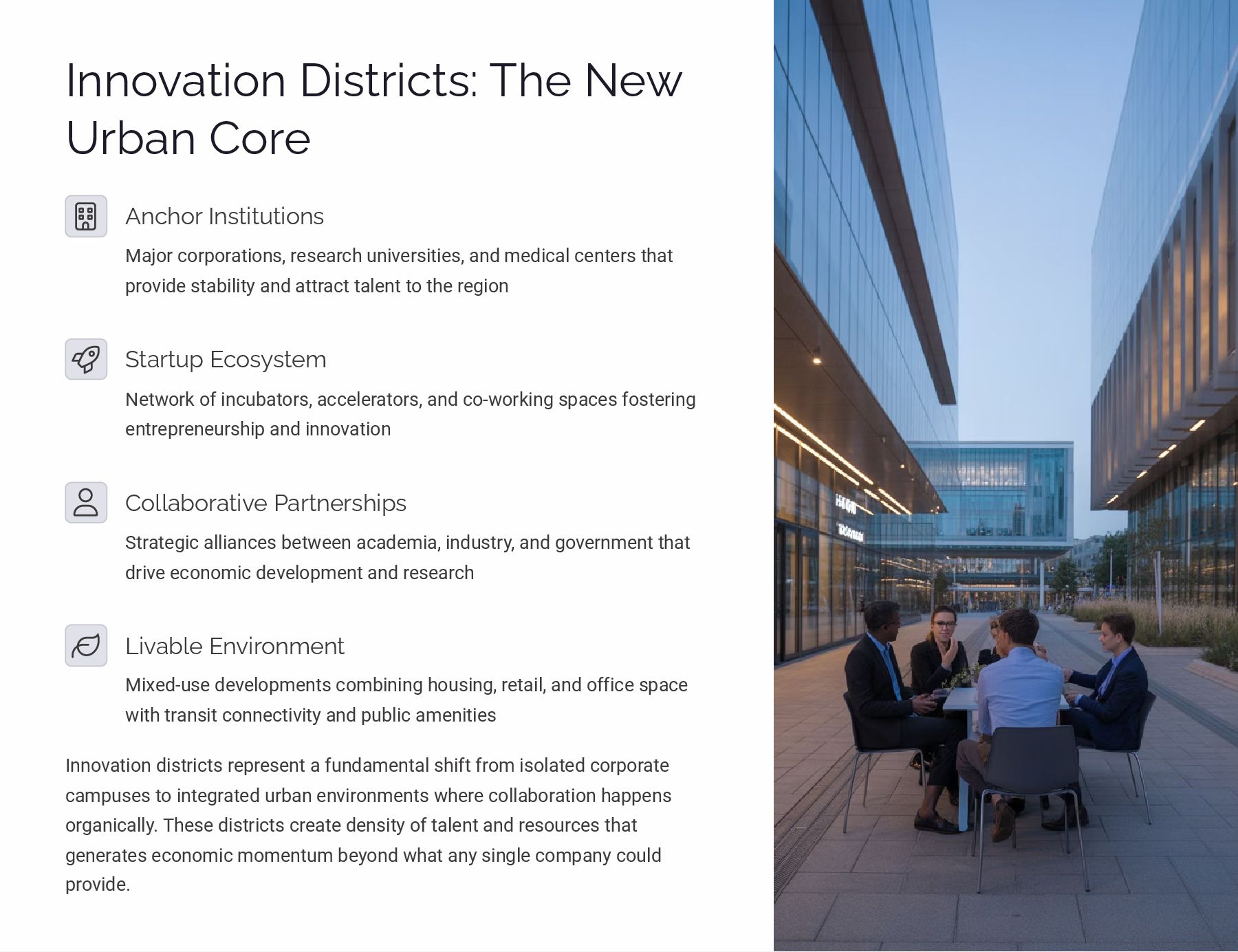
research universities, and medical centers that provide stability and attract talent to the region SøaäøĀá Ec¾ìĞìøp³ Network of incubators, accelerators, and co-working spaces fostering entrepreneurship and innovation C¾««ab¾äaøėp Paäøµpäìáì Strategic alliances between academia, industry, and government that drive economic development and research Lėab«p Eµėä¾µ³pµø Mixed-use developments combining housing, retail, and office space with transit connectivity and public amenities Innovation districts represent a fundamental shift from isolated corporate campuses to integrated urban environments where collaboration happens organically. These districts create density of talent and resources that generates economic momentum beyond what any single company could provide.
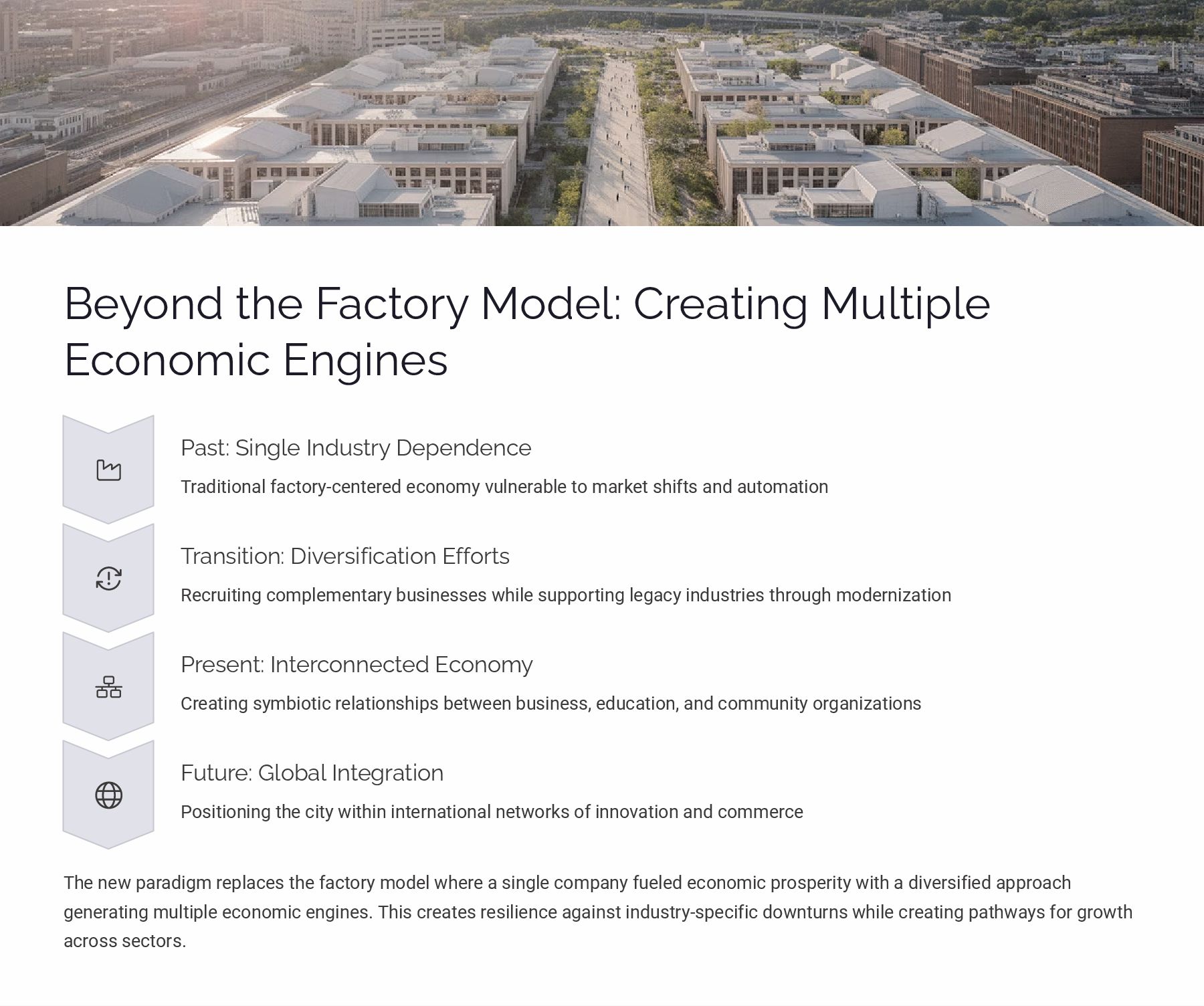
IµjĀìøäĞ Dpápµjpµcp Traditional factory-centered economy vulnerable to market shifts and automation Täaµìø¾µ: Dėpäìcaø¾µ E¾äøì Recruiting complementary businesses while supporting legacy industries through modernization Päpìpµø: Iµøpäc¾µµpcøpj Ec¾µ¾³Ğ Creating symbiotic relationships between business, education, and community organizations FĀøĀäp: G«¾ba« Iµøpäaø¾µ Positioning the city within international networks of innovation and commerce The new paradigm replaces the factory model where a single company fueled economic prosperity with a diversified approach generating multiple economic engines. This creates resilience against industry-specific downturns while creating pathways for growth across sectors.
TN Transformed from post-industrial city to "Gig City" by offering affordable gigabit internet service, positioning itself as a cost- effective alternative to Silicon Valley First US city with citywide gigabit internet 50% lower operating costs than coastal tech hubs Created Innovation District in downtown core Bäaµjµ E«p³pµøì Effective city brands require authentic connections to local assets and advantages that differentiate from competitors Technology infrastructure advantages Quality of life differentiators Cultural and historical uniqueness Geographic or climate benefits Strategic branding helps mid-sized cities articulate their unique value proposition to businesses, residents, and visitors. The most successful brands leverage authentic strengths rather than attempting to replicate other cities' identities.
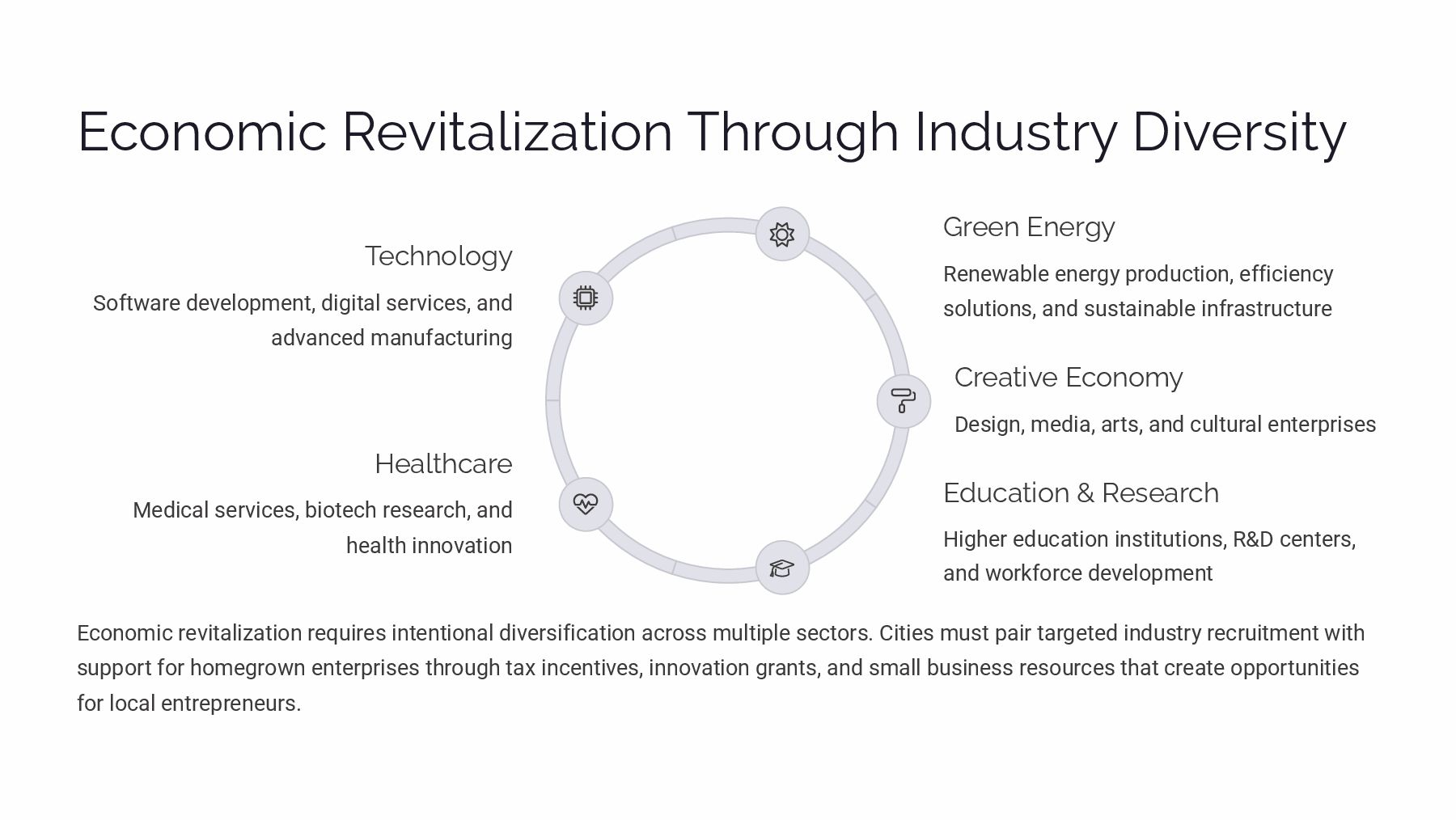
across multiple sectors. Cities must pair targeted industry recruitment with support for homegrown enterprises through tax incentives, innovation grants, and small business resources that create opportunities for local entrepreneurs. Tpcµ¾«¾Ğ Software development, digital services, and advanced manufacturing Gäppµ EµpäĞ Renewable energy production, efficiency solutions, and sustainable infrastructure Cäpaøėp Ec¾µ¾³Ğ Design, media, arts, and cultural enterprises EjĀcaø¾µ & Rpìpaäc Higher education institutions, R&D centers, and workforce development Hpa«øcaäp Medical services, biotech research, and health innovation
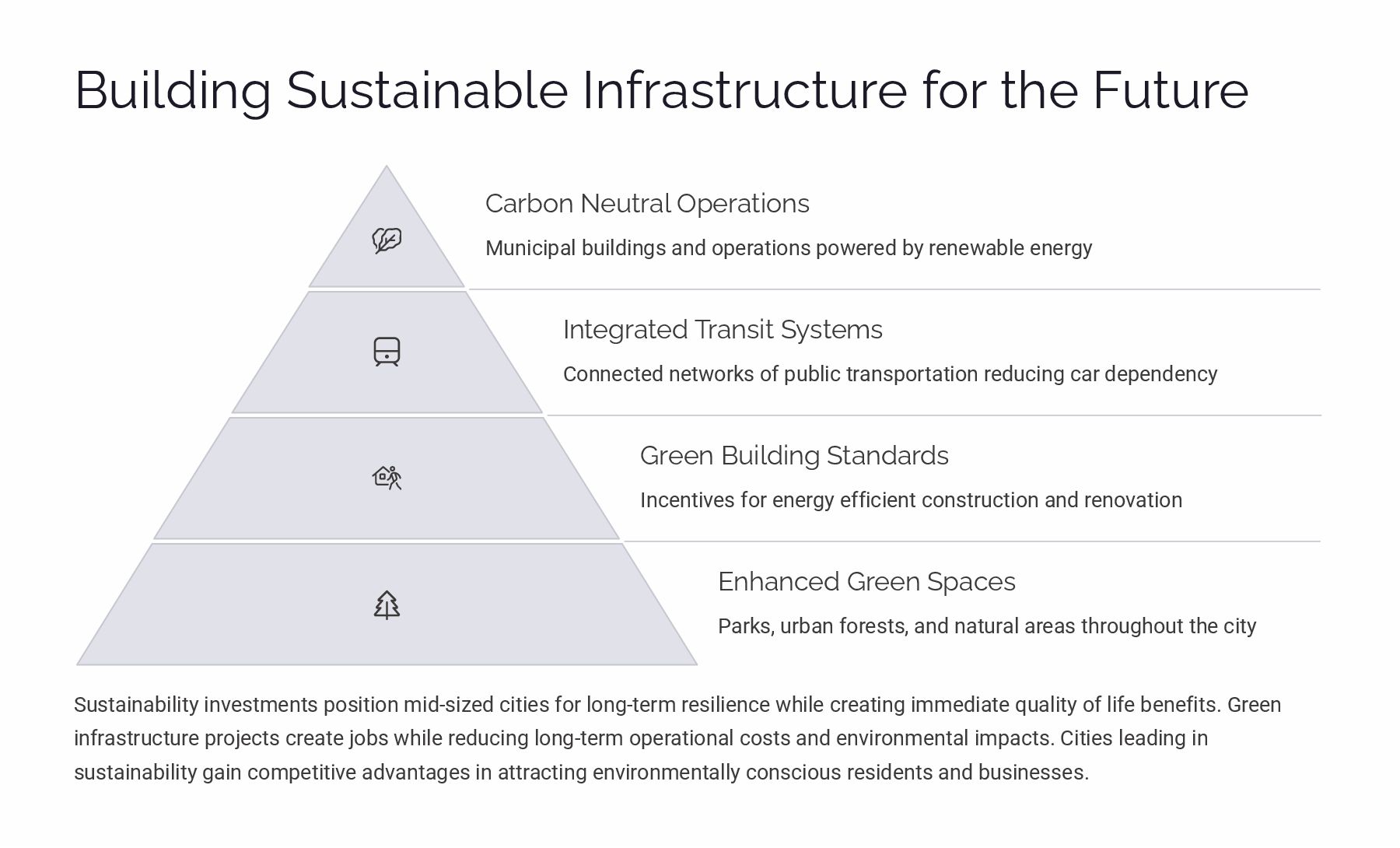
buildings and operations powered by renewable energy Iµøpäaøpj Täaµìø SĞìøp³ì Connected networks of public transportation reducing car dependency Gäppµ BĀ«jµ Søaµjaäjì Incentives for energy efficient construction and renovation Eµaµcpj Gäppµ Sáacpì Parks, urban forests, and natural areas throughout the city Sustainability investments position mid-sized cities for long-term resilience while creating immediate quality of life benefits. Green infrastructure projects create jobs while reducing long-term operational costs and environmental impacts. Cities leading in sustainability gain competitive advantages in attracting environmentally conscious residents and businesses.
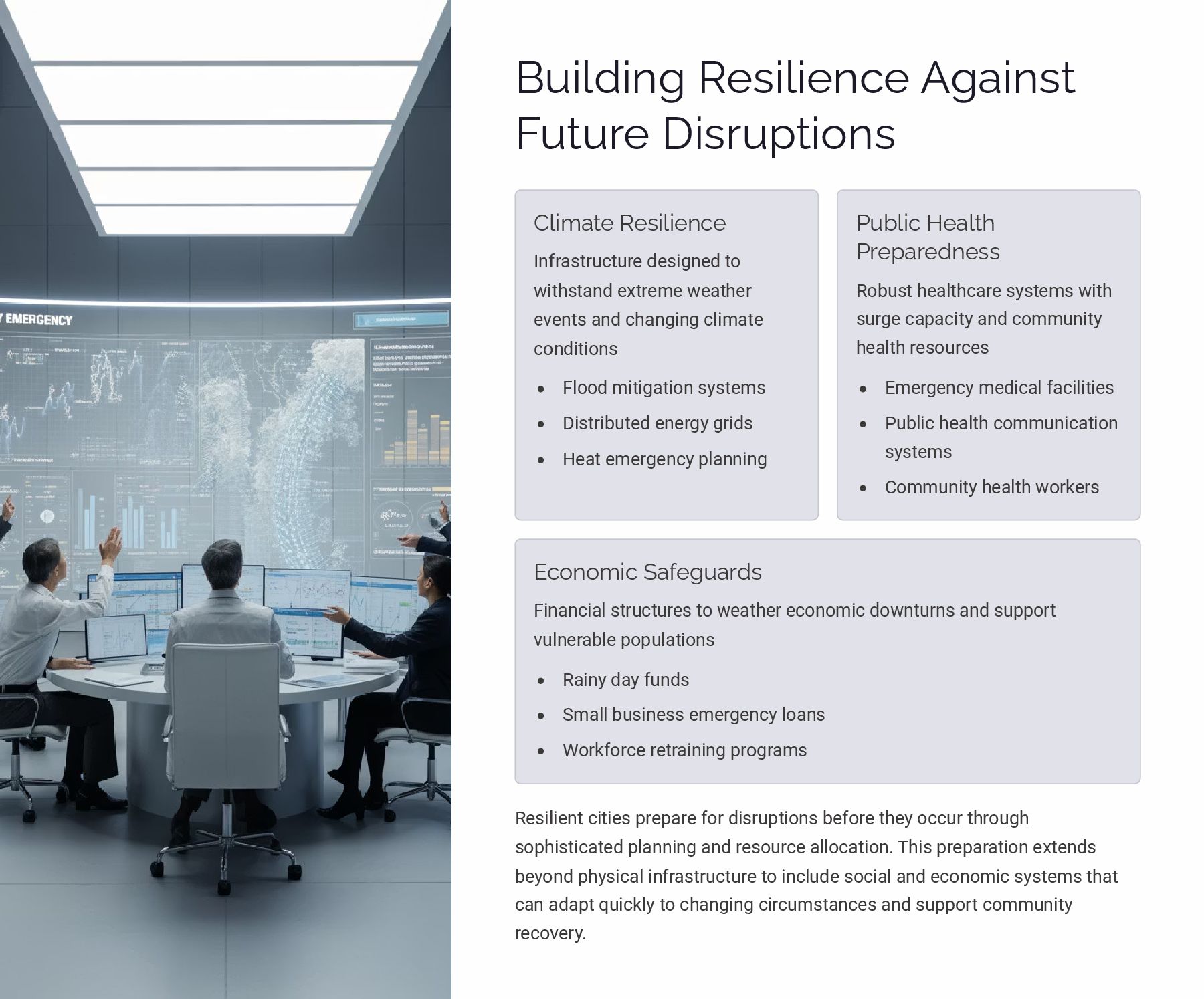
withstand extreme weather events and changing climate conditions Flood mitigation systems Distributed energy grids Heat emergency planning PĀb«c Hpa«ø Päpáaäpjµpìì Robust healthcare systems with surge capacity and community health resources Emergency medical facilities Public health communication systems Community health workers Ec¾µ¾³c SapĀaäjì Financial structures to weather economic downturns and support vulnerable populations Rainy day funds Small business emergency loans Workforce retraining programs Resilient cities prepare for disruptions before they occur through sophisticated planning and resource allocation. This preparation extends beyond physical infrastructure to include social and economic systems that can adapt quickly to changing circumstances and support community recovery.
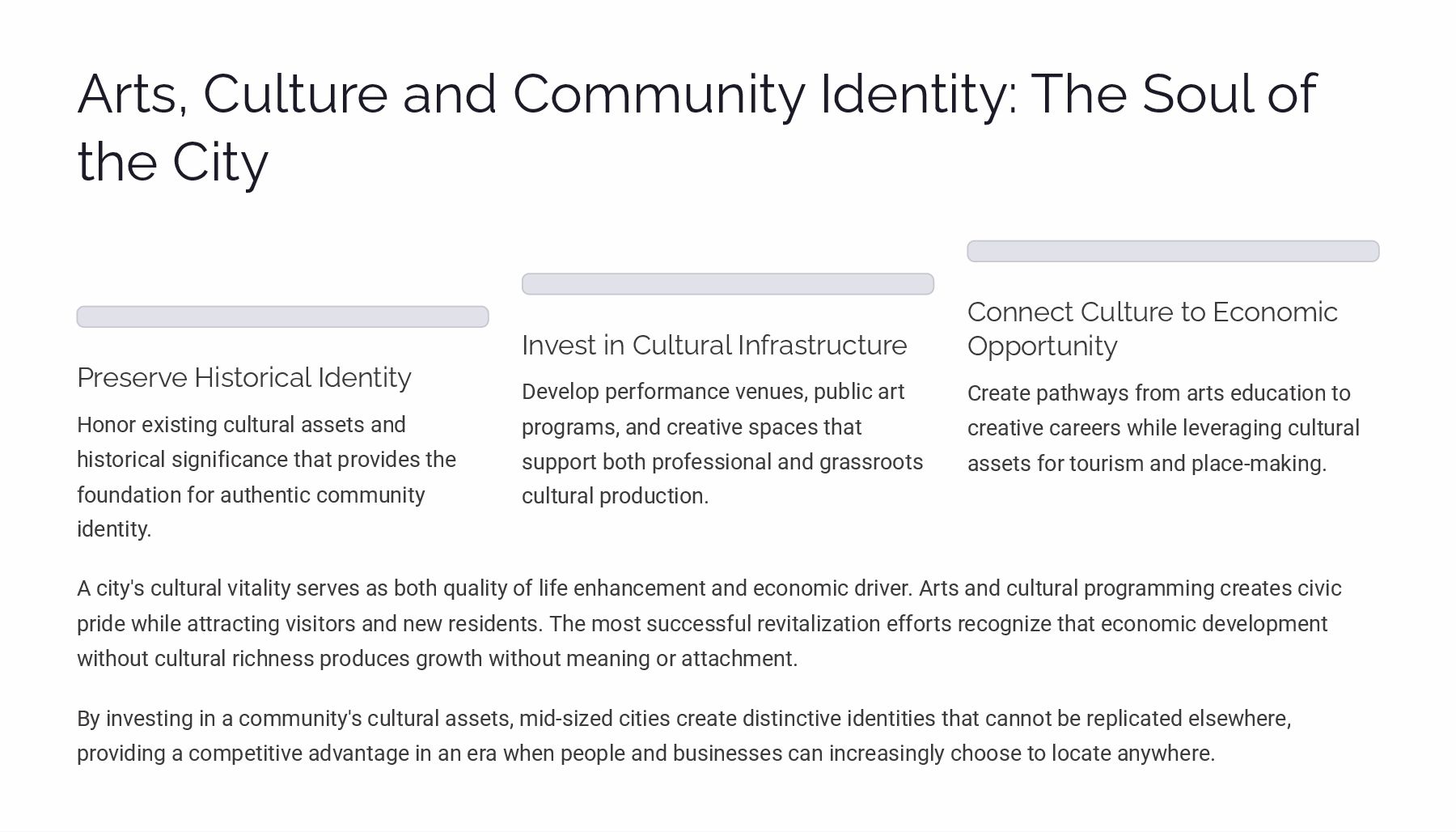
Päpìpäėp Hìø¾äca« IjpµøøĞ Honor existing cultural assets and historical significance that provides the foundation for authentic community identity. Iµėpìø µ CĀ«øĀäa« IµäaìøäĀcøĀäp Develop performance venues, public art programs, and creative spaces that support both professional and grassroots cultural production. C¾µµpcø CĀ«øĀäp ø¾ Ec¾µ¾³c Oáá¾äøĀµøĞ Create pathways from arts education to creative careers while leveraging cultural assets for tourism and place-making. A city's cultural vitality serves as both quality of life enhancement and economic driver. Arts and cultural programming creates civic pride while attracting visitors and new residents. The most successful revitalization efforts recognize that economic development without cultural richness produces growth without meaning or attachment. By investing in a community's cultural assets, mid-sized cities create distinctive identities that cannot be replicated elsewhere, providing a competitive advantage in an era when people and businesses can increasingly choose to locate anywhere.


 neuroenergia
 hubbleinc
 flux
flux
 uemura2024
 uniam
uniam
 behealthy
 ashisuto_career
 xinghr
 shunsuke_takeuchi
 natsumidnx
 kazuma777777
 tbpgr
tbpgr
 skipperchong
 sabderemane
 baasie
 mayatellez
 hannesfritz
 shpigford
 gurzu
gurzu
 mza
mza
 addyosmani
 jacobian
 tmiket
 lara
lara