Upgrade to Pro — share decks privately, control downloads, hide ads and more …

Couples Therapy for Conflict Resolution Guide |...

Couples Therapy for Conflict Resolution Guide | Dr. Joe

Constant fights draining your relationship? Couples therapy for conflict resolution teaches you to manage disagreements calmly, understand each other’s needs, and break negative patterns. Dr. Joe D’Ambrosio offers proven, compassionate guidance to help you reconnect.
Read More : https://www.drjoedee.com/couples-therapy

More Decks by Dr. Joe D'Ambrosio, PhD, LCSW, LMFT

Other Decks in Business

Transcript

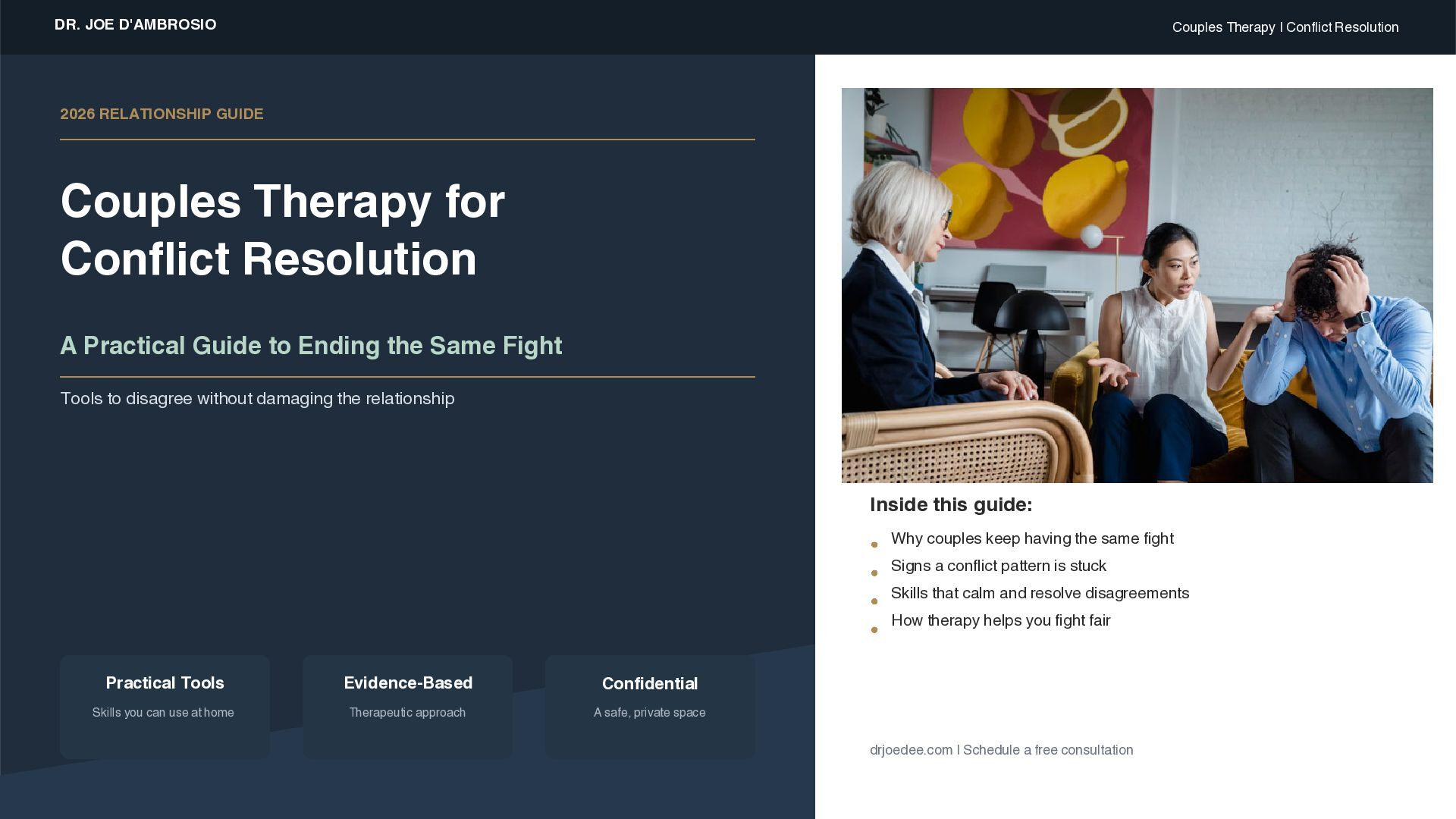
  1. DR. JOE D'AMBROSIO Couples Therapy | Conflict Resolution 2026 RELATIONSHIP

    GUIDE Couples Therapy for Conflict Resolution A Practical Guide to Ending the Same Fight Tools to disagree without damaging the relationship Inside this guide: Why couples keep having the same fight Signs a conflict pattern is stuck Skills that calm and resolve disagreements How therapy helps you fight fair Practical Tools Evidence-Based Confidential Skills you can use at home Therapeutic approach A safe, private space drjoedee.com | Schedule a free consultation
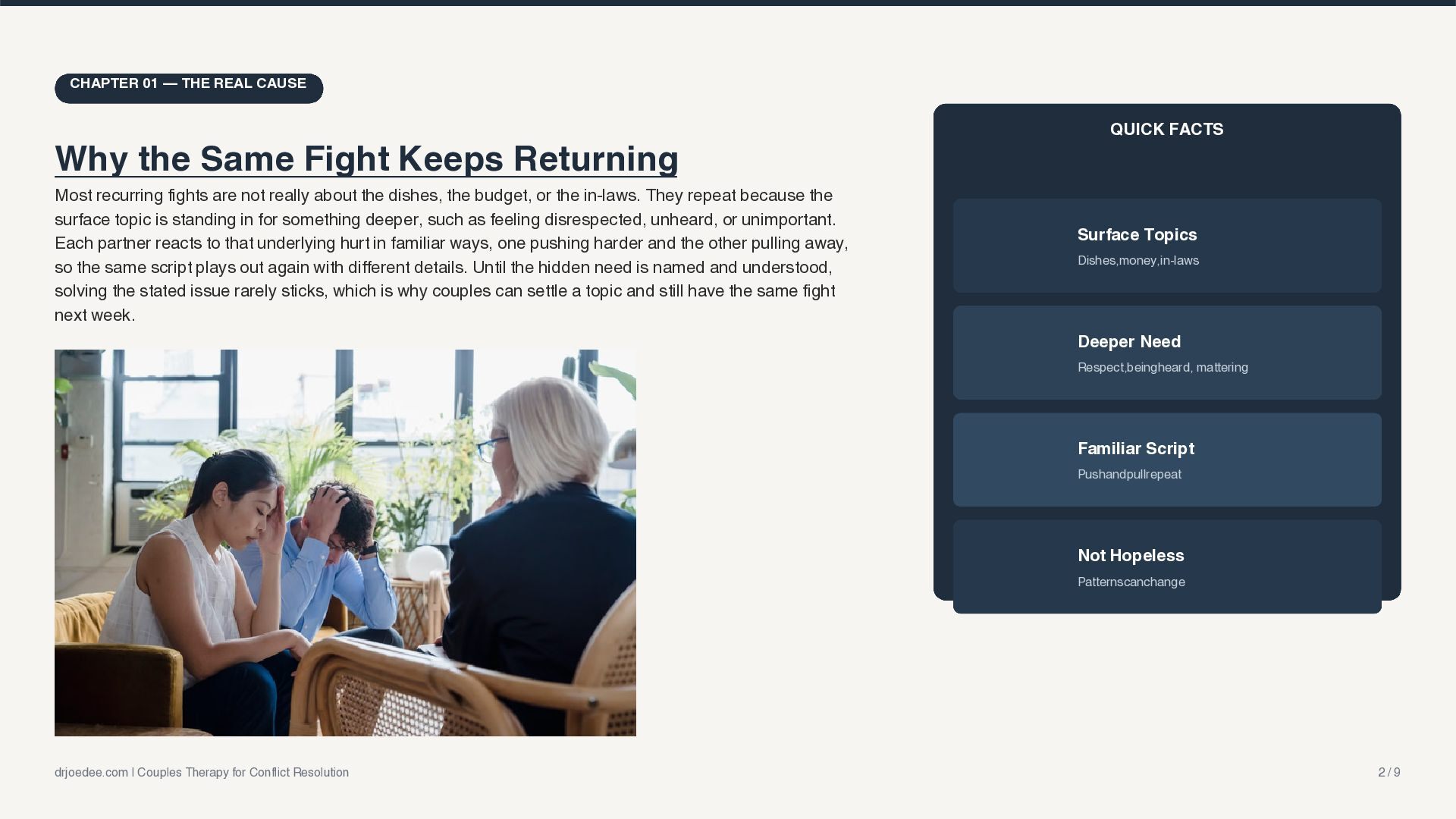
  2. CHAPTER 01 — THE REAL CAUSE Why the Same Fight

    Keeps Returning Most recurring fights are not really about the dishes, the budget, or the in-laws. They repeat because the surface topic is standing in for something deeper, such as feeling disrespected, unheard, or unimportant. Each partner reacts to that underlying hurt in familiar ways, one pushing harder and the other pulling away, so the same script plays out again with different details. Until the hidden need is named and understood, solving the stated issue rarely sticks, which is why couples can settle a topic and still have the same fight next week. QUICK FACTS Surface Topics Dishes,money,in-laws Deeper Need Respect,beingheard, mattering Familiar Script Pushandpullrepeat Not Hopeless Patternscanchange drjoedee.com | Couples Therapy for Conflict Resolution 2/9
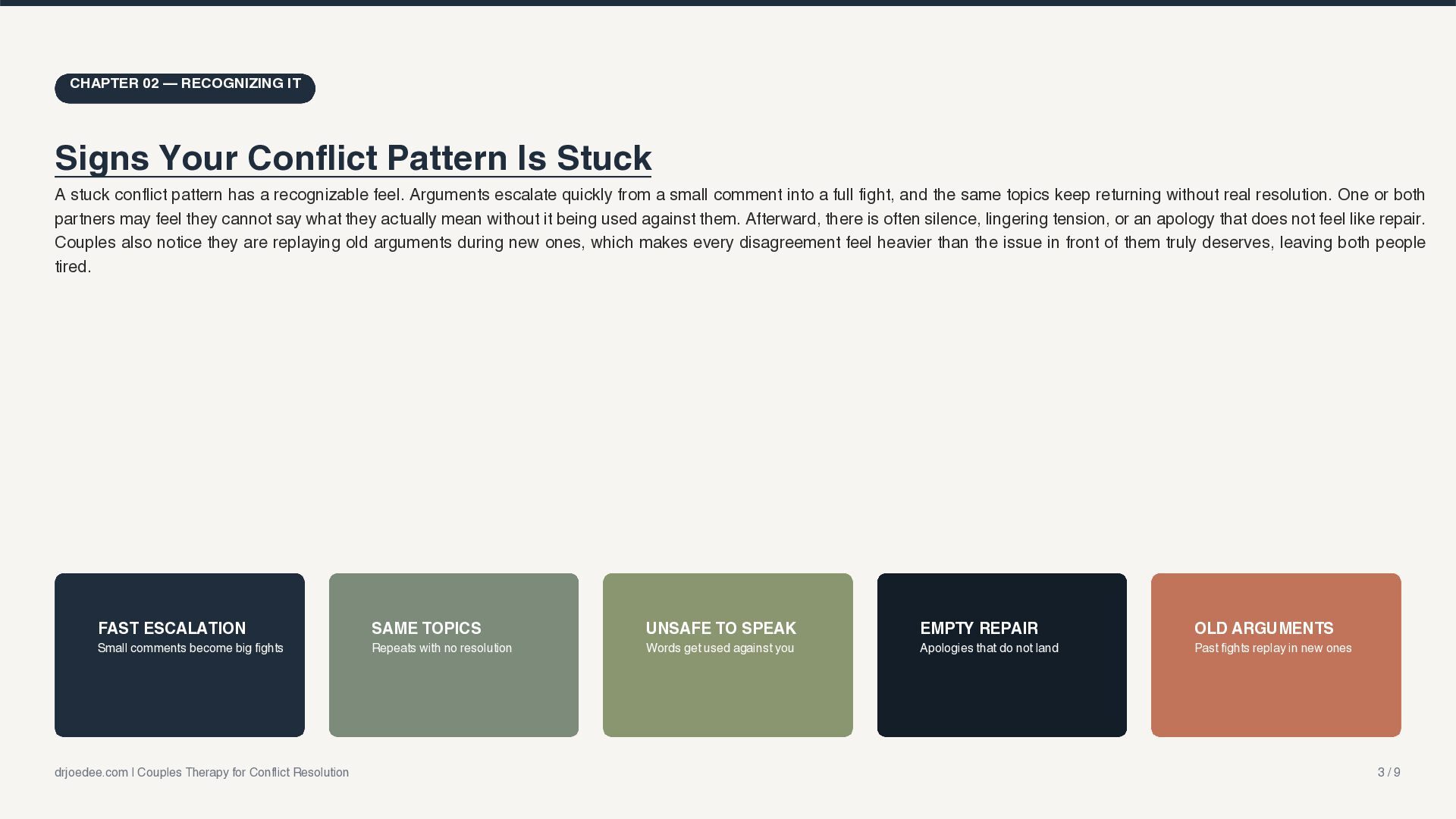
  3. CHAPTER 02 — RECOGNIZING IT Signs Your Conflict Pattern Is

    Stuck A stuck conflict pattern has a recognizable feel. Arguments escalate quickly from a small comment into a full fight, and the same topics keep returning without real resolution. One or both partners may feel they cannot say what they actually mean without it being used against them. Afterward, there is often silence, lingering tension, or an apology that does not feel like repair. Couples also notice they are replaying old arguments during new ones, which makes every disagreement feel heavier than the issue in front of them truly deserves, leaving both people tired. FAST ESCALATION SAME TOPICS UNSAFE TO SPEAK EMPTY REPAIR OLD ARGUMENTS Small comments become big fights Repeats with no resolution Words get used against you Apologies that do not land Past fights replay in new ones drjoedee.com | Couples Therapy for Conflict Resolution 3/9
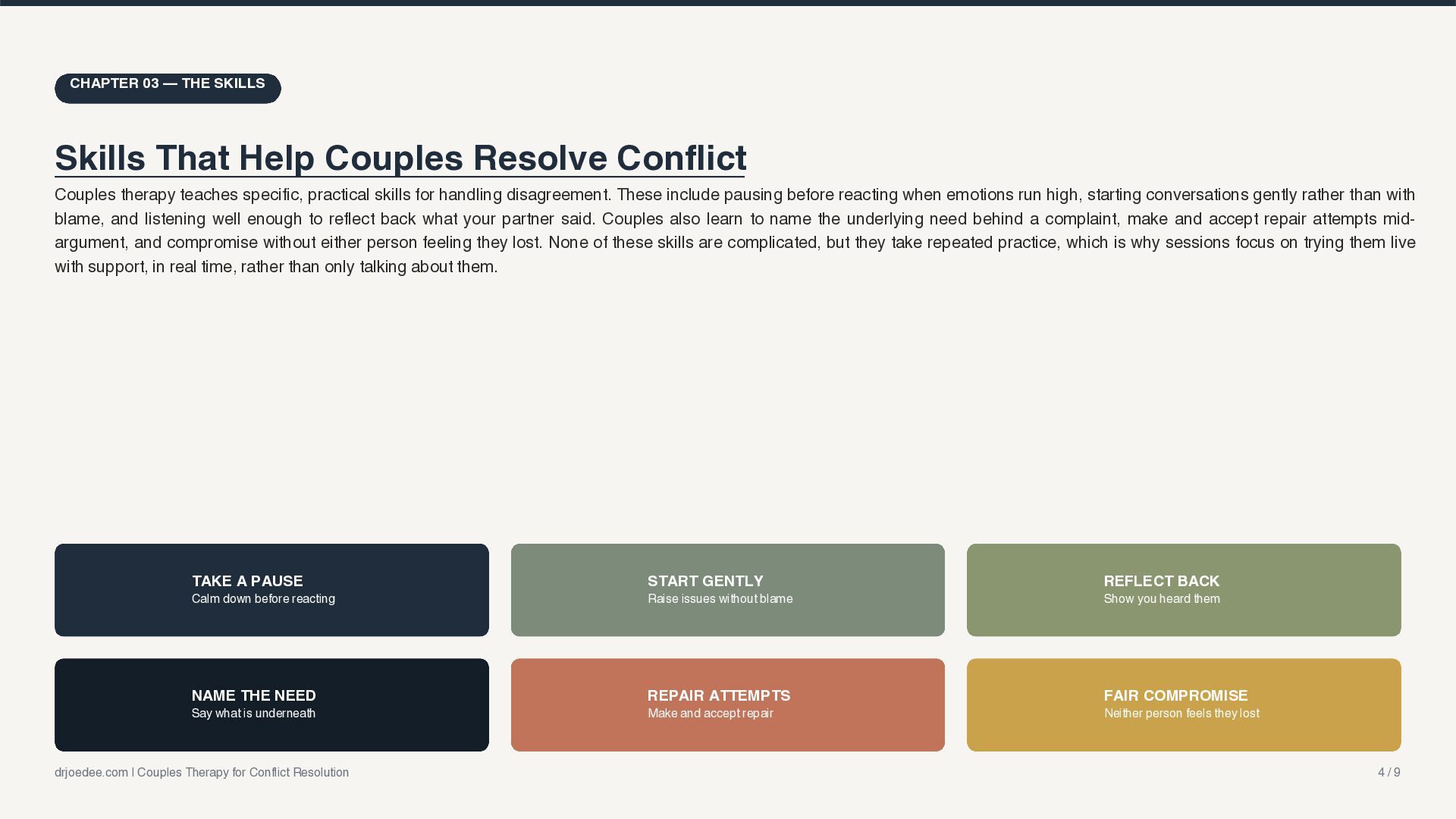
  4. CHAPTER 03 — THE SKILLS Skills That Help Couples Resolve

    Conflict Couples therapy teaches specific, practical skills for handling disagreement. These include pausing before reacting when emotions run high, starting conversations gently rather than with blame, and listening well enough to reflect back what your partner said. Couples also learn to name the underlying need behind a complaint, make and accept repair attempts midargument, and compromise without either person feeling they lost. None of these skills are complicated, but they take repeated practice, which is why sessions focus on trying them live with support, in real time, rather than only talking about them. TAKE A PAUSE START GENTLY REFLECT BACK Calm down before reacting Raise issues without blame Show you heard them NAME THE NEED REPAIR ATTEMPTS FAIR COMPROMISE Say what is underneath Make and accept repair Neither person feels they lost drjoedee.com | Couples Therapy for Conflict Resolution 4/9
  5. CHAPTER 04 — HOW THERAPY HELPS How Therapy Helps You

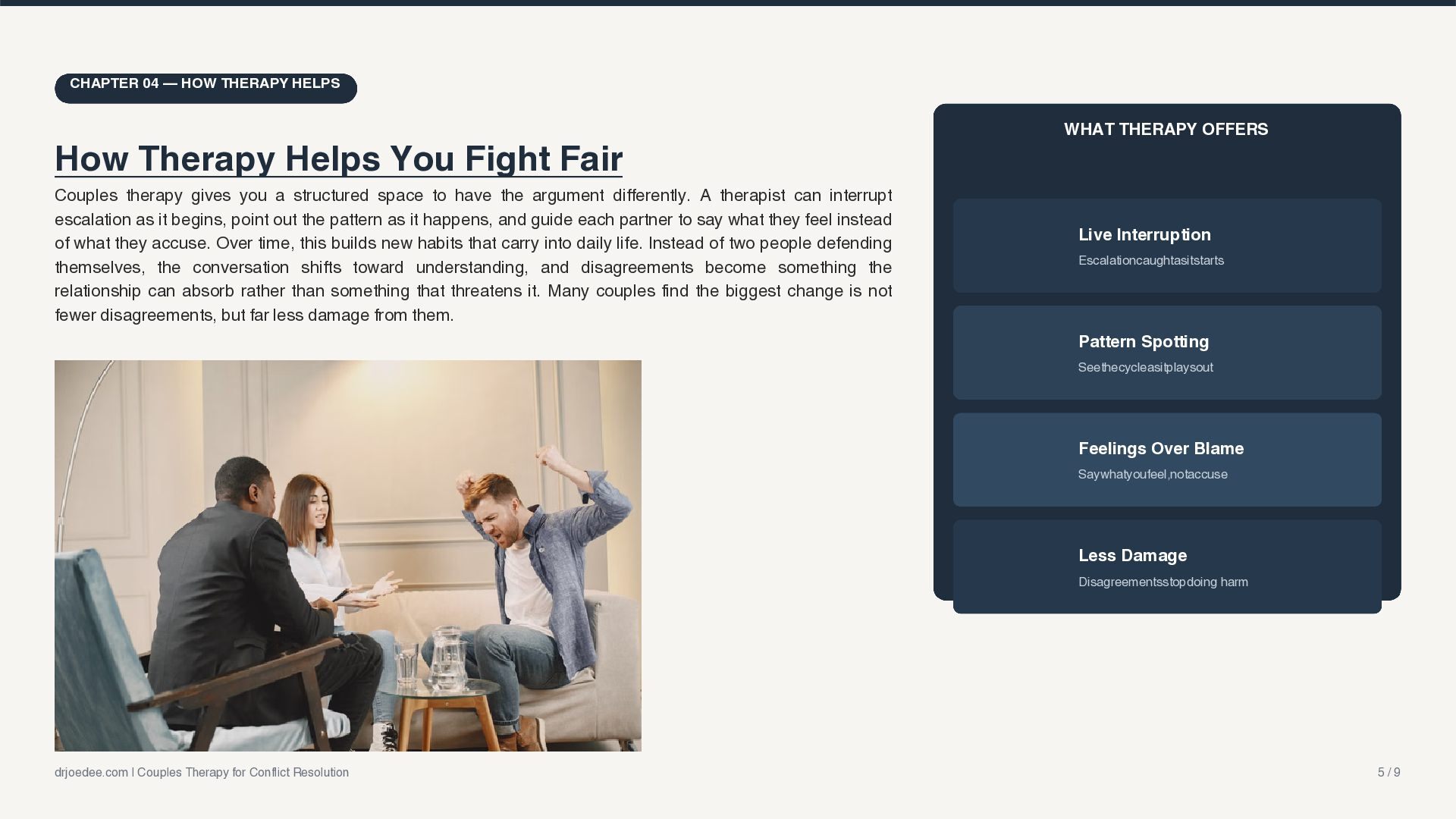
    Fight Fair Couples therapy gives you a structured space to have the argument differently. A therapist can interrupt escalation as it begins, point out the pattern as it happens, and guide each partner to say what they feel instead of what they accuse. Over time, this builds new habits that carry into daily life. Instead of two people defending themselves, the conversation shifts toward understanding, and disagreements become something the relationship can absorb rather than something that threatens it. Many couples find the biggest change is not fewer disagreements, but far less damage from them. WHAT THERAPY OFFERS Live Interruption Escalationcaughtasitstarts Pattern Spotting Seethecycleasitplaysout Feelings Over Blame Saywhatyoufeel,notaccuse Less Damage Disagreementsstopdoing harm drjoedee.com | Couples Therapy for Conflict Resolution 5/9
  6. What Happens in a Conflict Session In a session focused

    on conflict, your therapist will usually begin by asking about a recent disagreement, since real examples reveal the pattern better than summaries do. You may be guided to talk through it slowly, with the therapist pausing you to slow the pace, reflect feelings, or try a different phrasing. The goal is not to decide who was right, but to understand what each of you experienced. You will leave with one or two simple skills to practice at home before the next session, so progress builds steadily. 05IN SESSION DO: Bring a recent, real disagreement to work through together drjoedee.com AVOID: Using the session to prove who was right 6/9
  7. CHAPTER 06 — AT HOME Between Sessions: Fighting Better at

    Home Progress happens between sessions, in the ordinary moments when tension rises. When you feel yourself heating up, agree on a signal to pause and return to the conversation after about twenty minutes, long enough to calm your body but not so long that the issue is avoided. Start with how you feel rather than what your partner did wrong, and acknowledge any part of their point that you can honestly accept. Small repair gestures, like a touch or a sincere apology, matter more than winning the argument or delivering the perfect point. DO: Pause, return to the talk, and start with how you feel drjoedee.com | Couples Therapy for Conflict Resolution AVOID: Name-calling, old grievances, and walking out with no plan to return 7/9
  8. CHAPTER 07 — NEXT STEPS Steps to Start Resolving Conflict

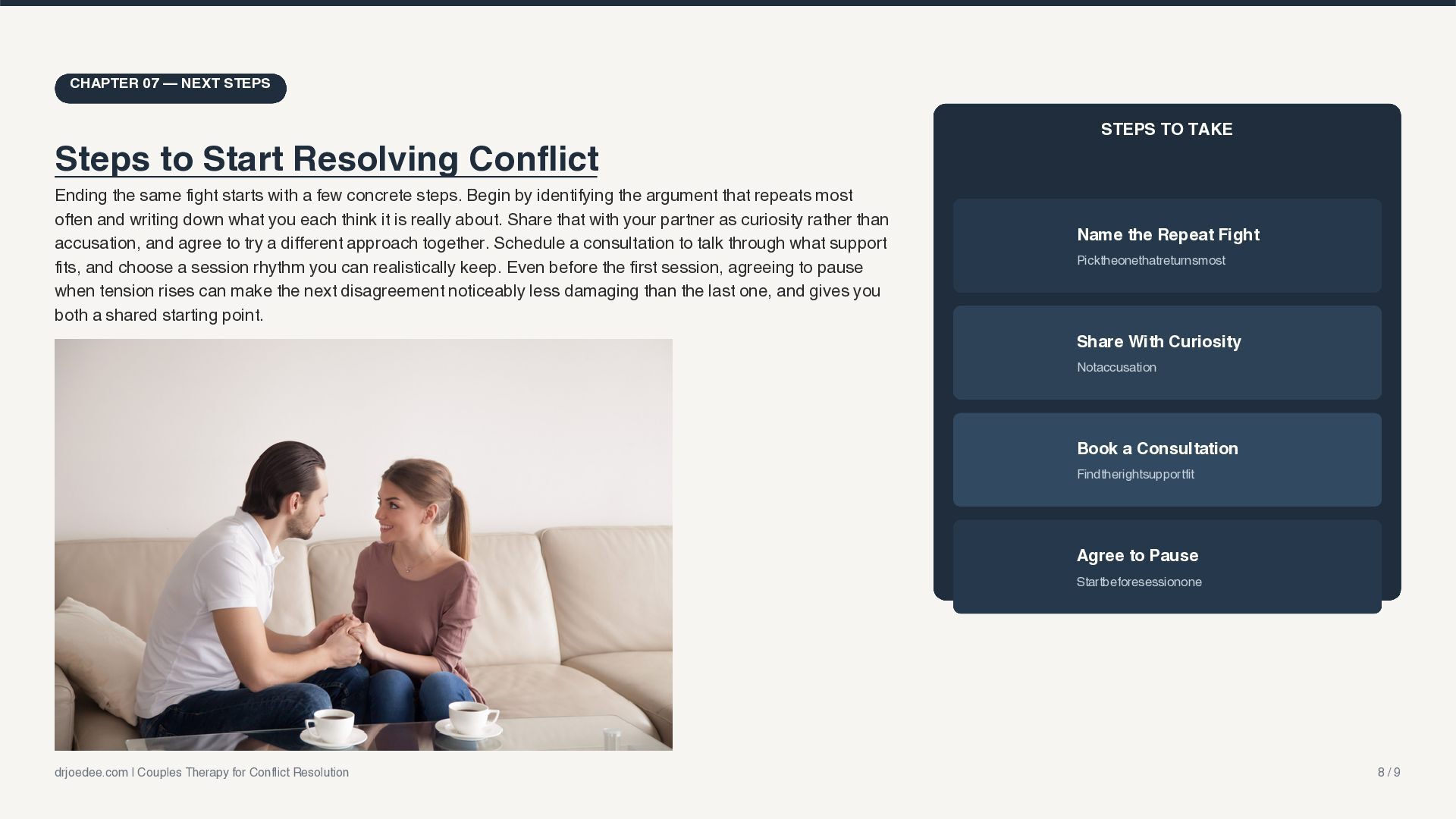
    Ending the same fight starts with a few concrete steps. Begin by identifying the argument that repeats most often and writing down what you each think it is really about. Share that with your partner as curiosity rather than accusation, and agree to try a different approach together. Schedule a consultation to talk through what support fits, and choose a session rhythm you can realistically keep. Even before the first session, agreeing to pause when tension rises can make the next disagreement noticeably less damaging than the last one, and gives you both a shared starting point. STEPS TO TAKE Name the Repeat Fight Picktheonethatreturnsmost Share With Curiosity Notaccusation Book a Consultation Findtherightsupportfit Agree to Pause Startbeforesessionone drjoedee.com | Couples Therapy for Conflict Resolution 8/9
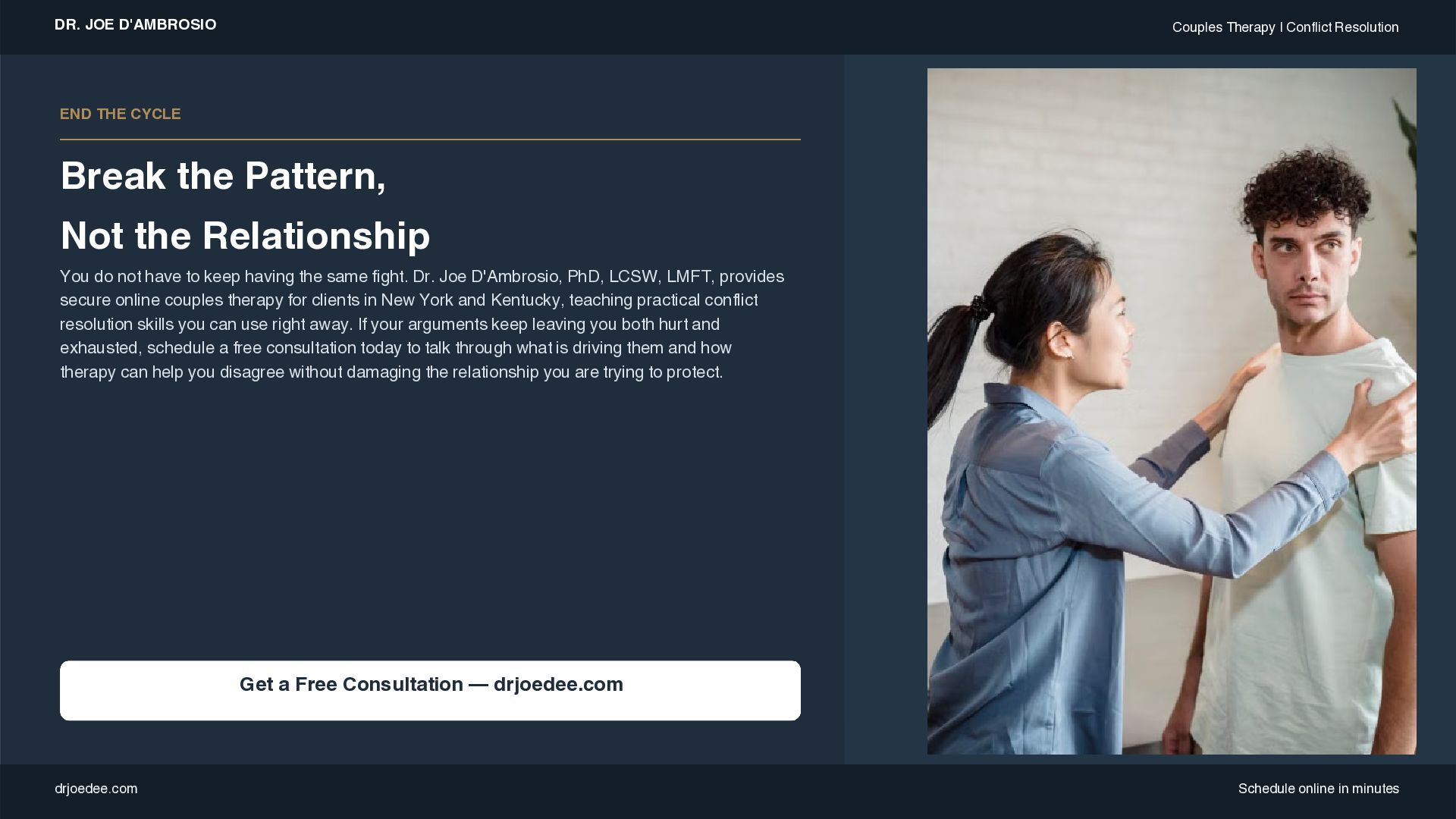
  9. DR. JOE D'AMBROSIO Couples Therapy | Conflict Resolution END THE

    CYCLE Break the Pattern, Not the Relationship You do not have to keep having the same fight. Dr. Joe D'Ambrosio, PhD, LCSW, LMFT, provides secure online couples therapy for clients in New York and Kentucky, teaching practical conflict resolution skills you can use right away. If your arguments keep leaving you both hurt and exhausted, schedule a free consultation today to talk through what is driving them and how therapy can help you disagree without damaging the relationship you are trying to protect. Get a Free Consultation — drjoedee.com drjoedee.com Schedule online in minutes