Upgrade to Pro — share decks privately, control downloads, hide ads and more …

Humans, Machines, and the Dimensions of Microwork

Humans, Machines, and the Dimensions of Microwork

This Strata 2012 presentation discusses dimensions of microwork and how microworkers can help data scientists. It notes that microworkers can assist with data collection, providing human judgments as training data, and evaluating data. However, while independent judgments may increase accuracy, it also prevents collaboration between workers. The presentation recommends keeping microwork tasks simple by providing clear instructions, being transparent about goals, and managing tradeoffs between task difficulty and value. It also advises watching out for potential systematic biases.

Avatar for Daniel Tunkelang

Daniel Tunkelang

May 21, 2026

More Decks by Daniel Tunkelang

Other Decks in Technology

Transcript

  1. 1 Recruiting Solutions Recruiting Solutions Recruiting Solutions Humans, Machines, and

    the Dimensions of Microwork Daniel Tunkelang, LinkedIn Claire Hunsaker, Samasource
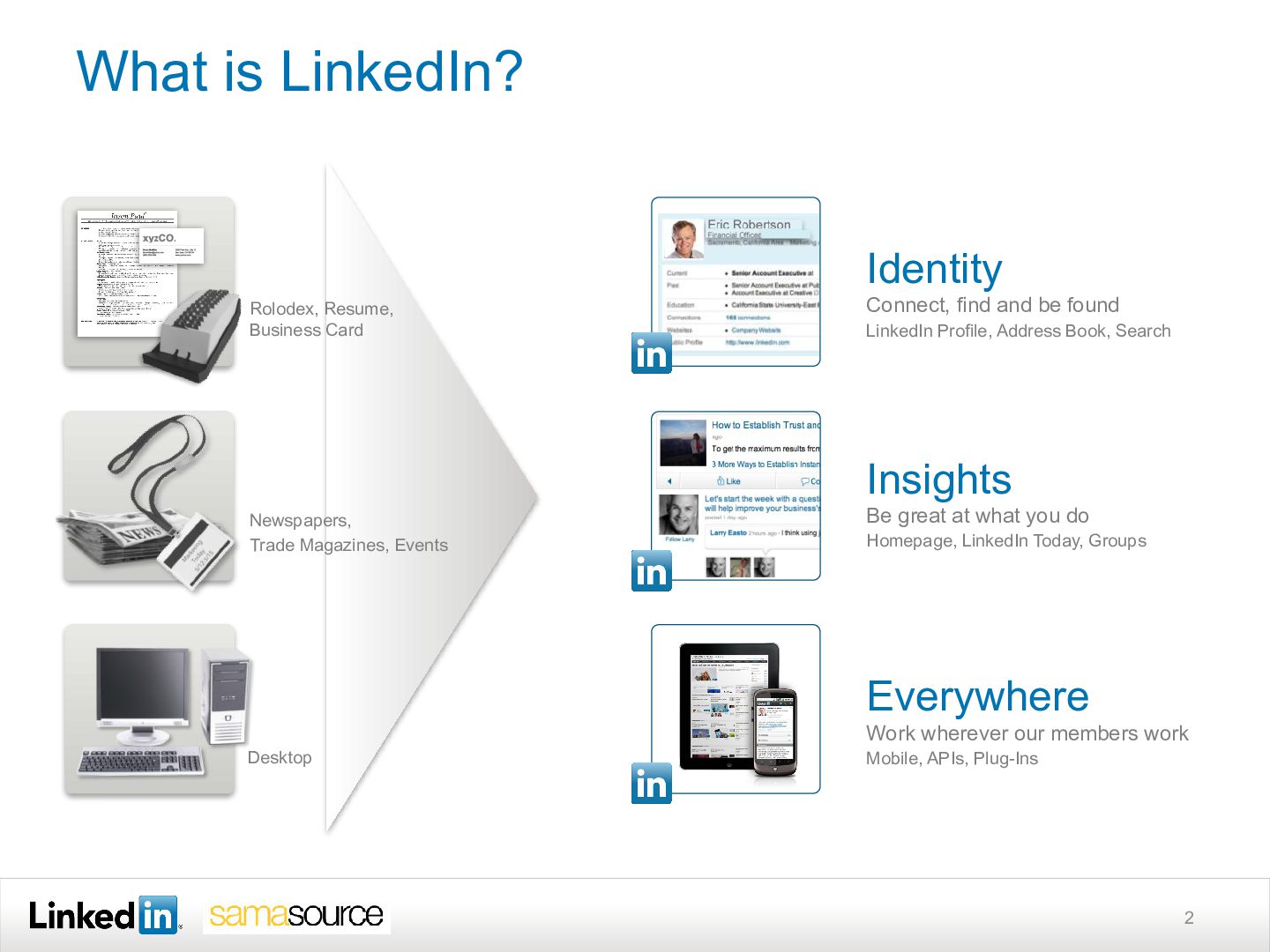
  2. Identity Connect, find and be found LinkedIn Profile, Address Book,

    Search Insights Be great at what you do Homepage, LinkedIn Today, Groups Work wherever our members work Everywhere Mobile, APIs, Plug-Ins Desktop Rolodex, Resume, Business Card Newspapers, Trade Magazines, Events What is LinkedIn? 2
  3. 3

  4. 4

  5. 5

  6. 6

  7. 7

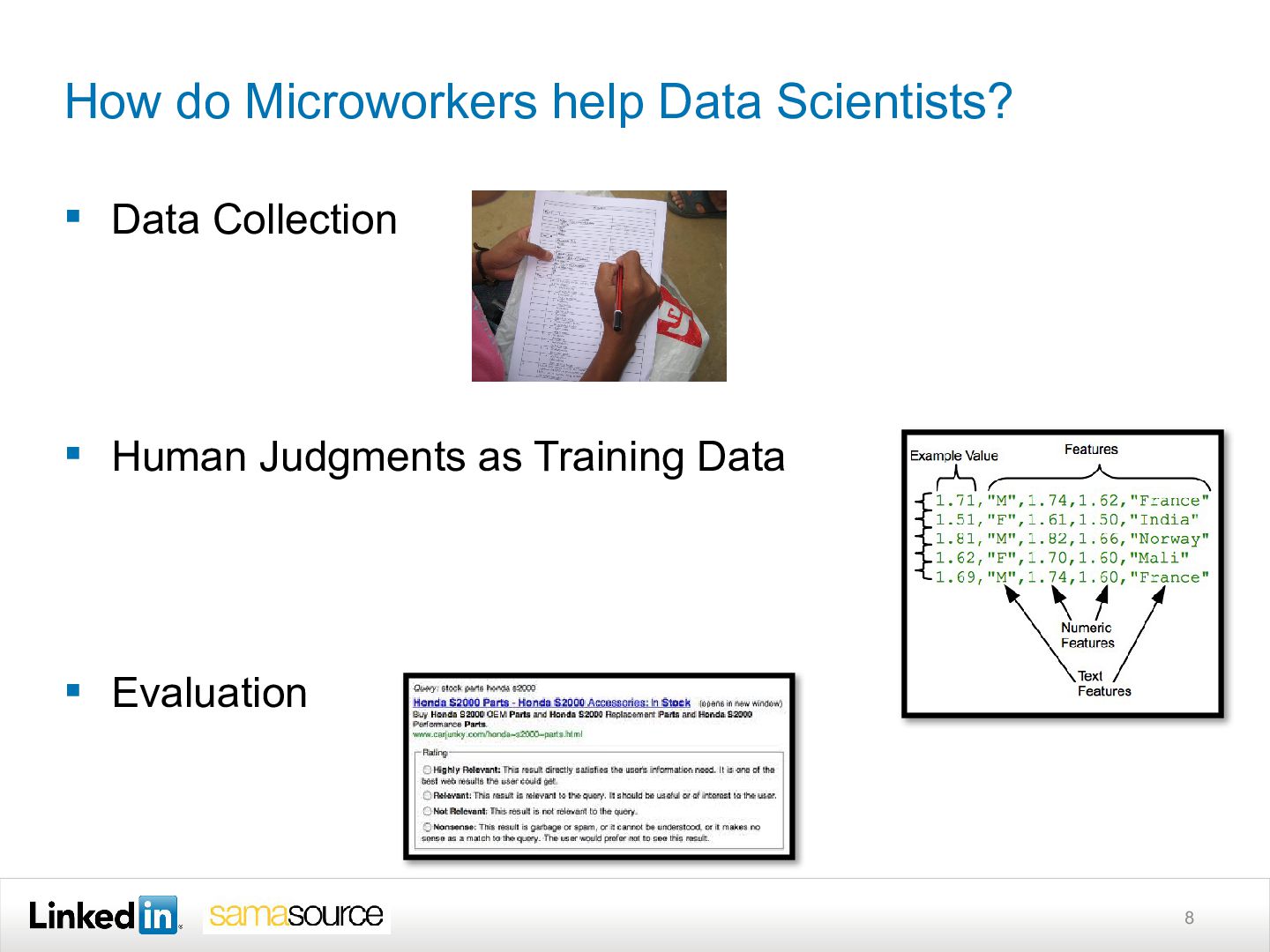
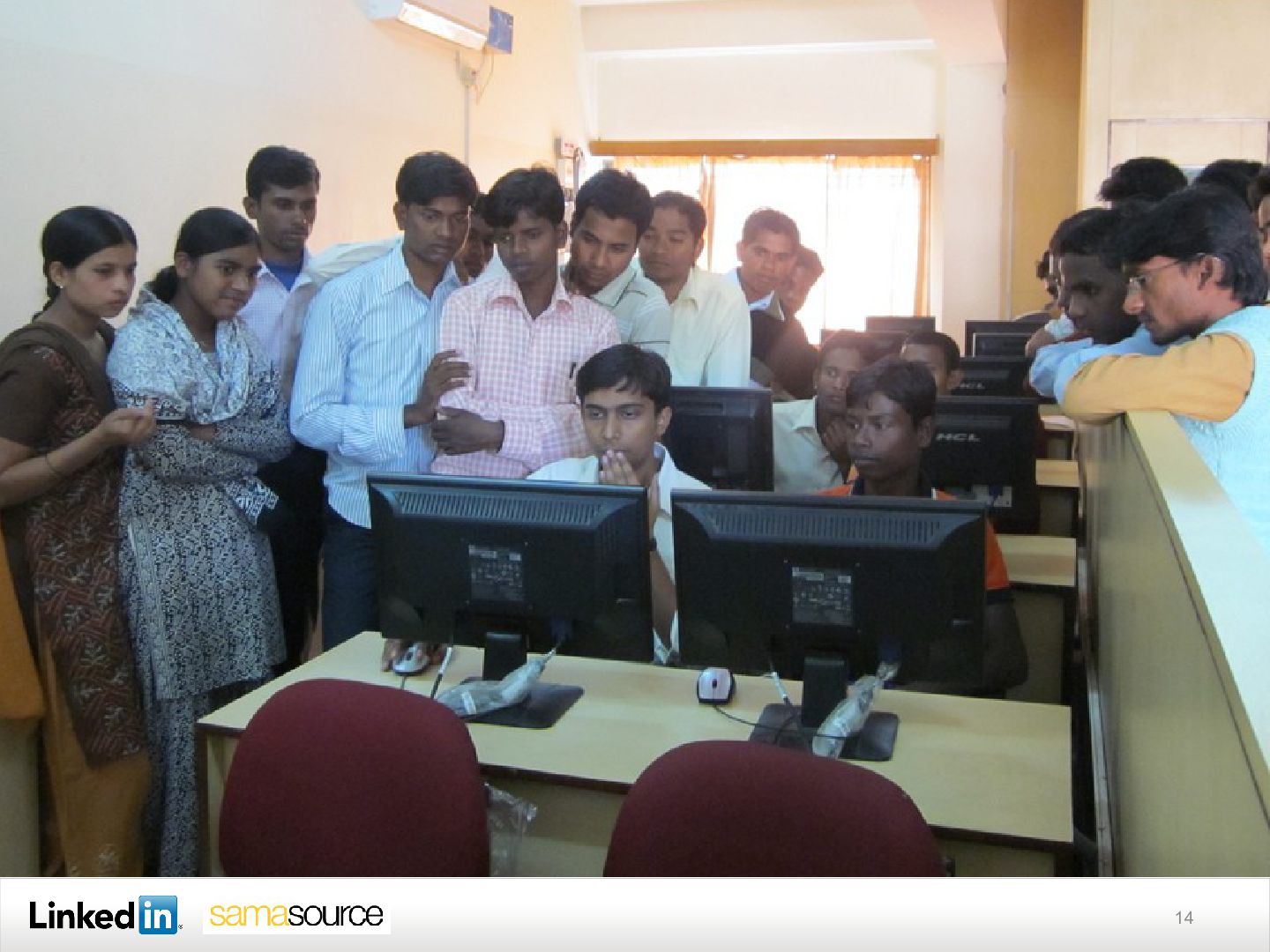
  8. 8 How do Microworkers help Data Scientists?  Data Collection

     Human Judgments as Training Data  Evaluation
  9. 12 At What Price Independence?  Independent judgments enable statistical

    reasoning. – Can increase accuracy by requiring agreement of independent workers on the same task.
  10. 13 At What Price Independence?  Independent judgments enable statistical

    reasoning. – Can increase accuracy by requiring agreement of independent workers on the same task.  But independent workers can’t help each other out. – No benefit from collaboration = less accurate workers. – Number of workers becomes bottleneck, and workers may be incented to create fake alter egos.
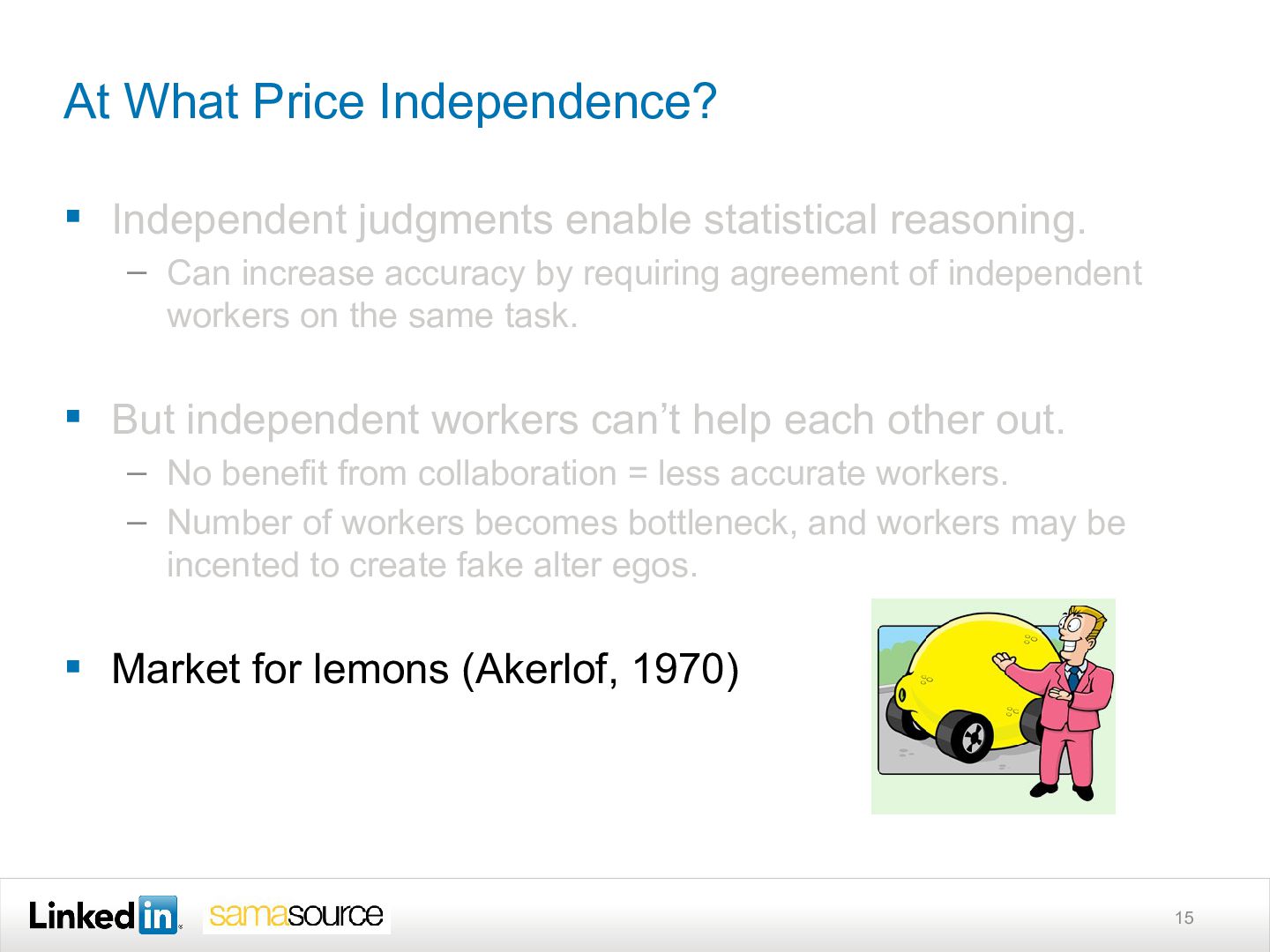
  11. 15 At What Price Independence?  Independent judgments enable statistical

    reasoning. – Can increase accuracy by requiring agreement of independent workers on the same task.  But independent workers can’t help each other out. – No benefit from collaboration = less accurate workers. – Number of workers becomes bottleneck, and workers may be incented to create fake alter egos.  Market for lemons (Akerlof, 1970)
  12. 16

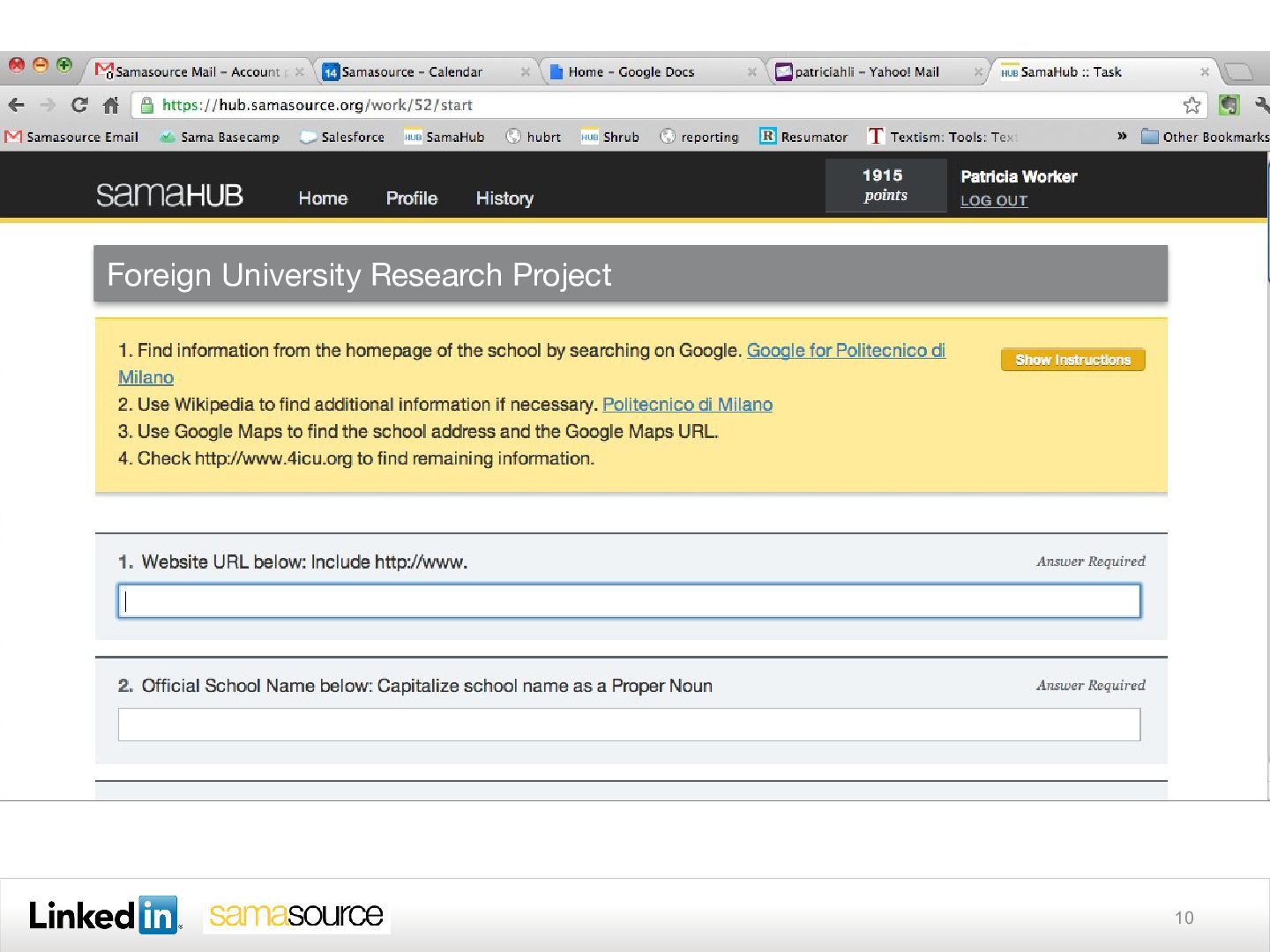
  13. 17 Keep It Simple  Avoid unnecessary difficulty. – Provide

    clear instructions with examples. – Be transparent about what you’re trying to achieve. – Check an early sample of the work closely. – Set expectations on quality and accuracy and manage to those.
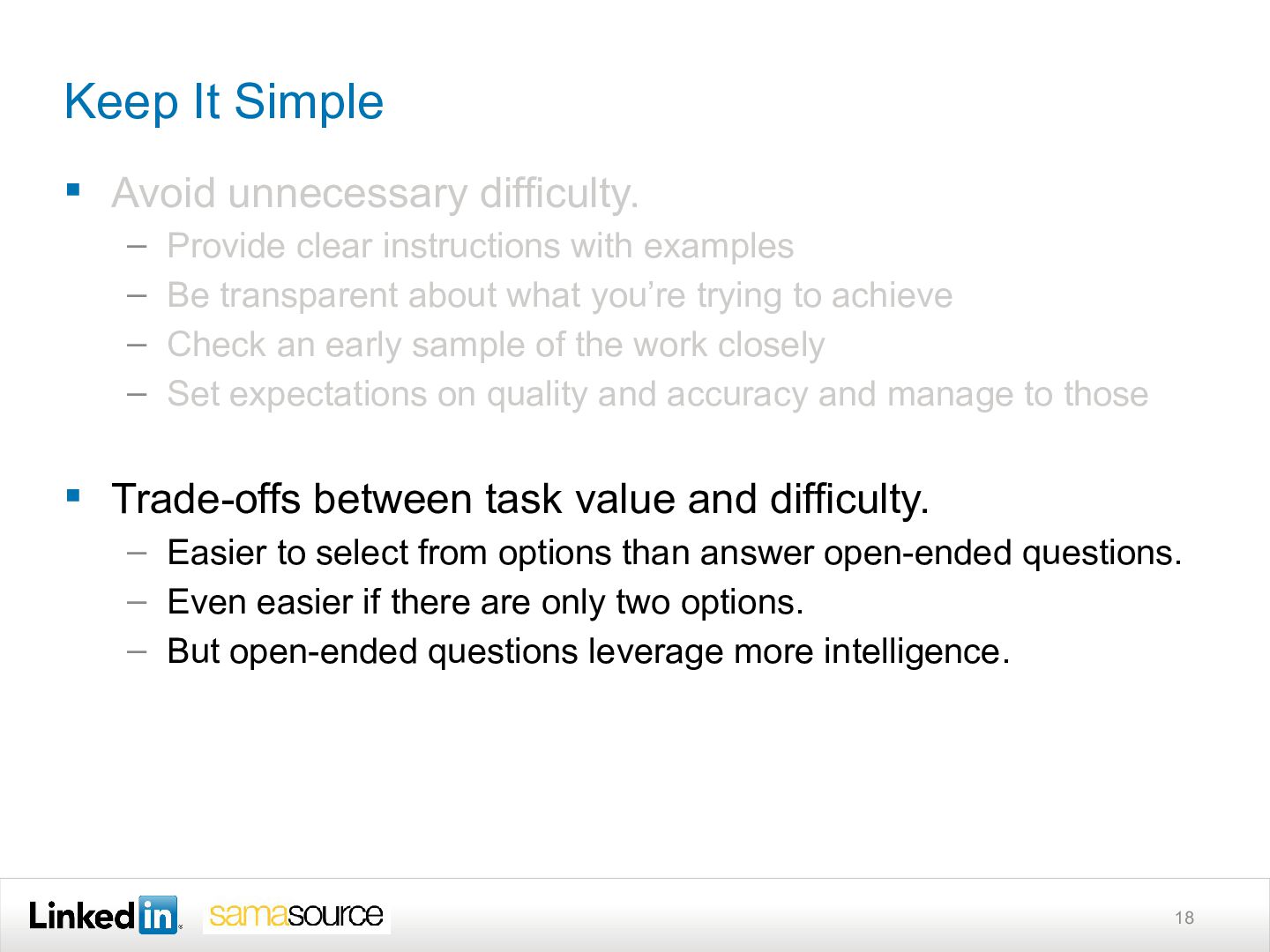
  14. 18 Keep It Simple  Avoid unnecessary difficulty. – Provide

    clear instructions with examples – Be transparent about what you’re trying to achieve – Check an early sample of the work closely – Set expectations on quality and accuracy and manage to those  Trade-offs between task value and difficulty. – Easier to select from options than answer open-ended questions. – Even easier if there are only two options. – But open-ended questions leverage more intelligence.
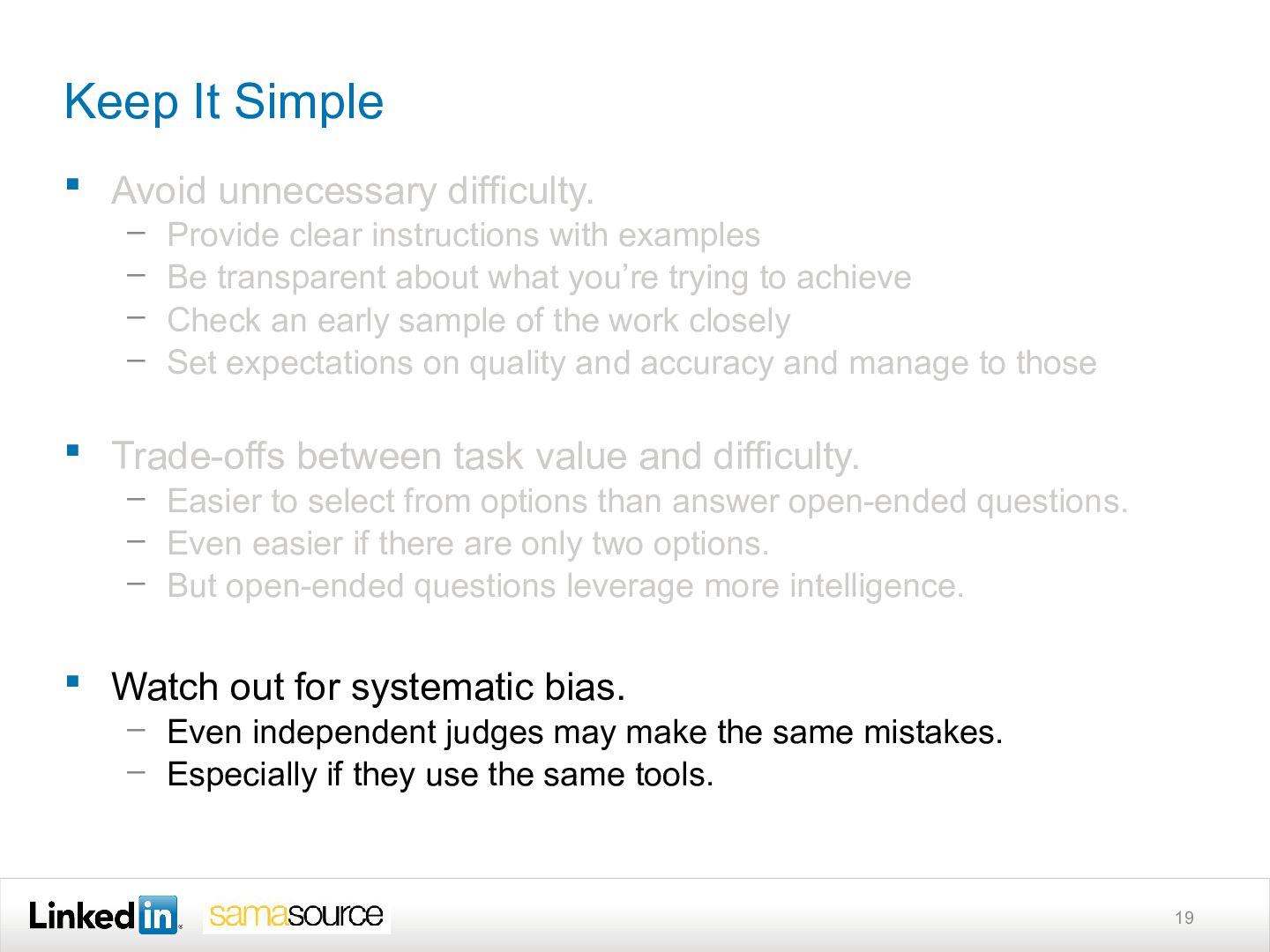
  15. 19 Keep It Simple  Avoid unnecessary difficulty. – Provide

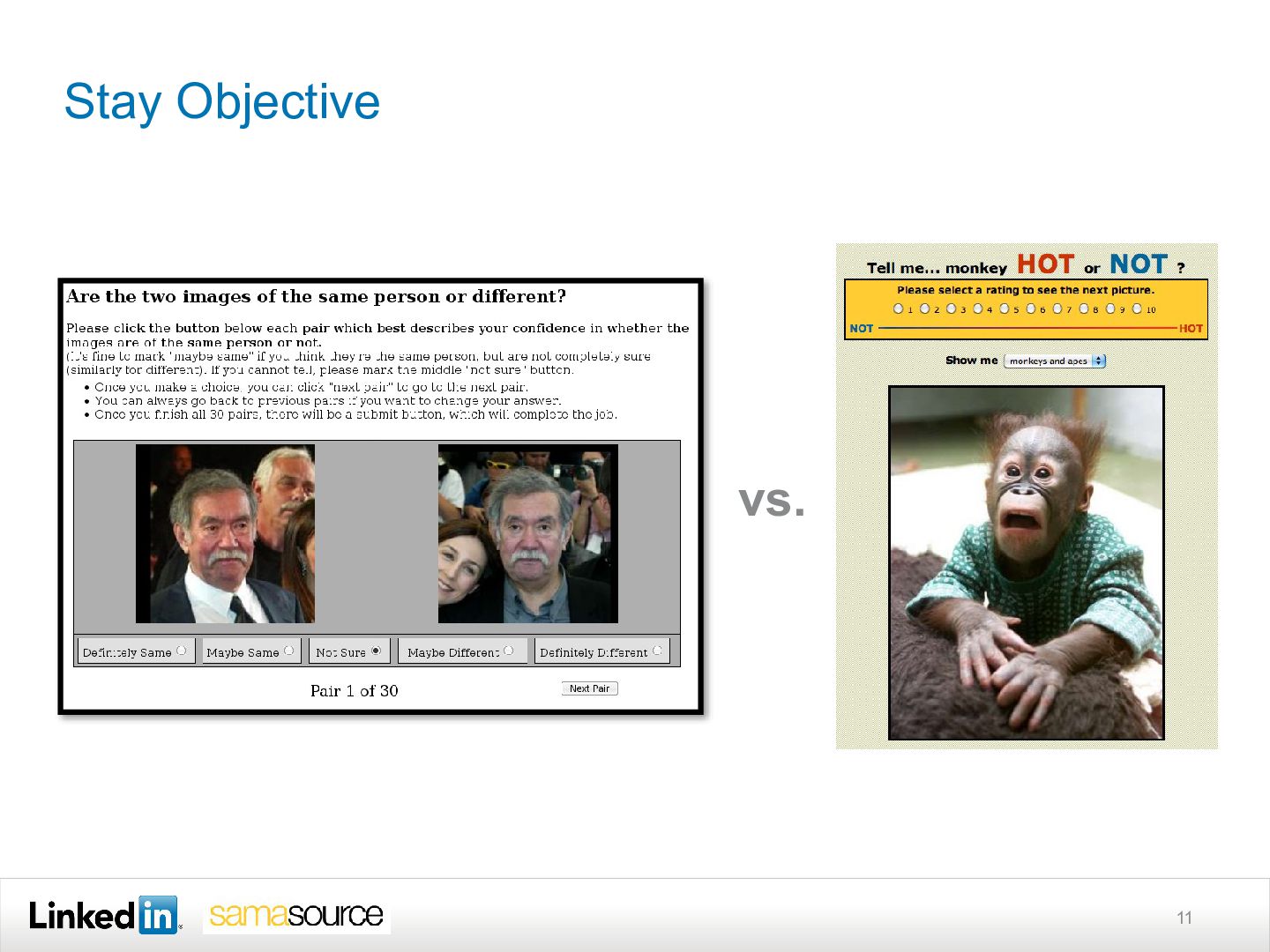
    clear instructions with examples – Be transparent about what you’re trying to achieve – Check an early sample of the work closely – Set expectations on quality and accuracy and manage to those  Trade-offs between task value and difficulty. – Easier to select from options than answer open-ended questions. – Even easier if there are only two options. – But open-ended questions leverage more intelligence.  Watch out for systematic bias. – Even independent judges may make the same mistakes. – Especially if they use the same tools.
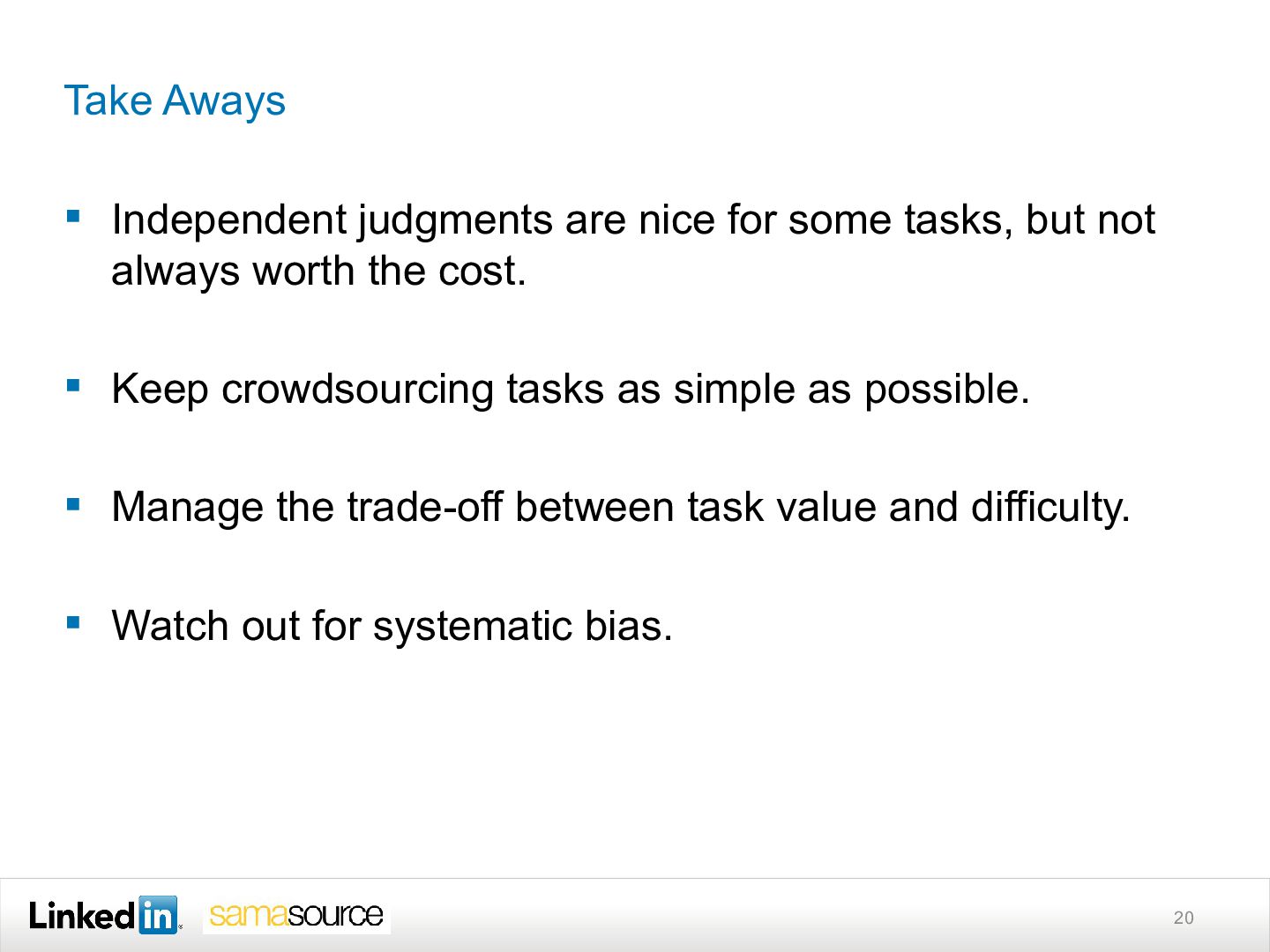
  16. 20 Take Aways  Independent judgments are nice for some

    tasks, but not always worth the cost.  Keep crowdsourcing tasks as simple as possible.  Manage the trade-off between task value and difficulty.  Watch out for systematic bias.