Upgrade to Pro — share decks privately, control downloads, hide ads and more …

Усе терміново, але ресурси обмежені: як PO визн...

Avatar for E5 Training E5 Training
October 28, 2026

Усе терміново, але ресурси обмежені: як PO визначає пріоритети | Презентація вебінару з Альоною Лубчак

Запис вебінару: https://youtu.be/jwFySi6znKo
📌 Як ухвалювати продуктові рішення системно, а не ситуативно? Розбираємо на навчанні Certified Product Owner / Product Manager with SAFe: https://e5.ua/uk/trainings/certified-product-owner-product-manager-with-safe-online/

Бізнес очікує швидких результатів, стейкхолдери наполягають на своїх запитах, а команда має обмежені ресурси. У таких умовах Product Owner постійно стикається з питанням: що справді варто робити насамперед, а що може зачекати?

Коли кожне завдання позначене як термінове, пріоритизація ризикує перетворитися на боротьбу за увагу команди. Щоб цього уникнути, важливо не просто впорядковувати беклог, а розуміти цінність ініціатив, враховувати залежності та вміти аргументувати продуктові рішення.

На безкоштовному вебінарі розберемо, як підходити до визначення пріоритетів, узгоджувати очікування бізнесу з можливостями команд і зберігати фокус на створенні цінності продукту.

Про що поговоримо?

- Чому все стає пріоритетом №1? Як виникають конфлікти між запитами стейкхолдерів, бізнес-цілями та можливостями команди.
- Як визначати, що робити насамперед? Які критерії враховувати під час пріоритизації: бізнес-цінність, терміновість, ризики, залежності та обсяг роботи.
- Як аргументувати продуктові рішення? Що допомагає узгоджувати пріоритети зі стейкхолдерами та пояснювати, чому одні ініціативи потрапляють у роботу раніше за інші.
- Що змінюється, коли над продуктом працюють кілька команд? Як враховувати спільні цілі, міжкомандні залежності та підходи SAFe до пріоритизації.
- Практичний приклад. Розглянемо ситуацію, у якій потрібно обрати між кількома конкуруючими ініціативами за обмежених ресурсів.

Avatar for E5 Training

E5 Training

October 28, 2026

More Decks by E5 Training

Other Decks in Business

Transcript

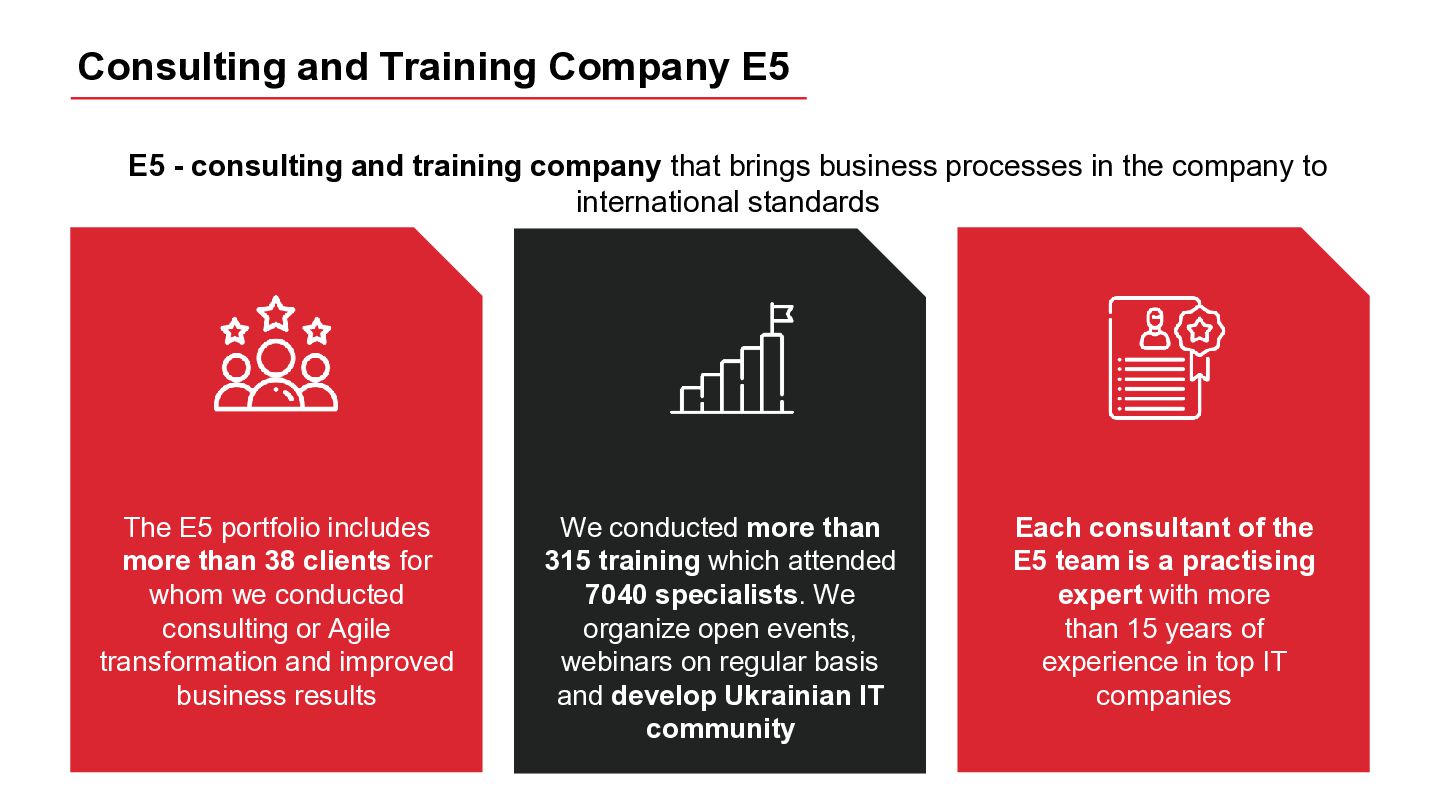
  1. Consulting and Training Company E5 E5 - consulting and training

    company that brings business processes in the company to international standards The E5 portfolio includes more than 38 clients for whom we conducted consulting or Agile transformation and improved business results We conducted more than 315 training which attended 7040 specialists. We organize open events, webinars on regular basis and develop Ukrainian IT community Each consultant of the E5 team is a practising expert with more than 15 years of experience in top IT companies
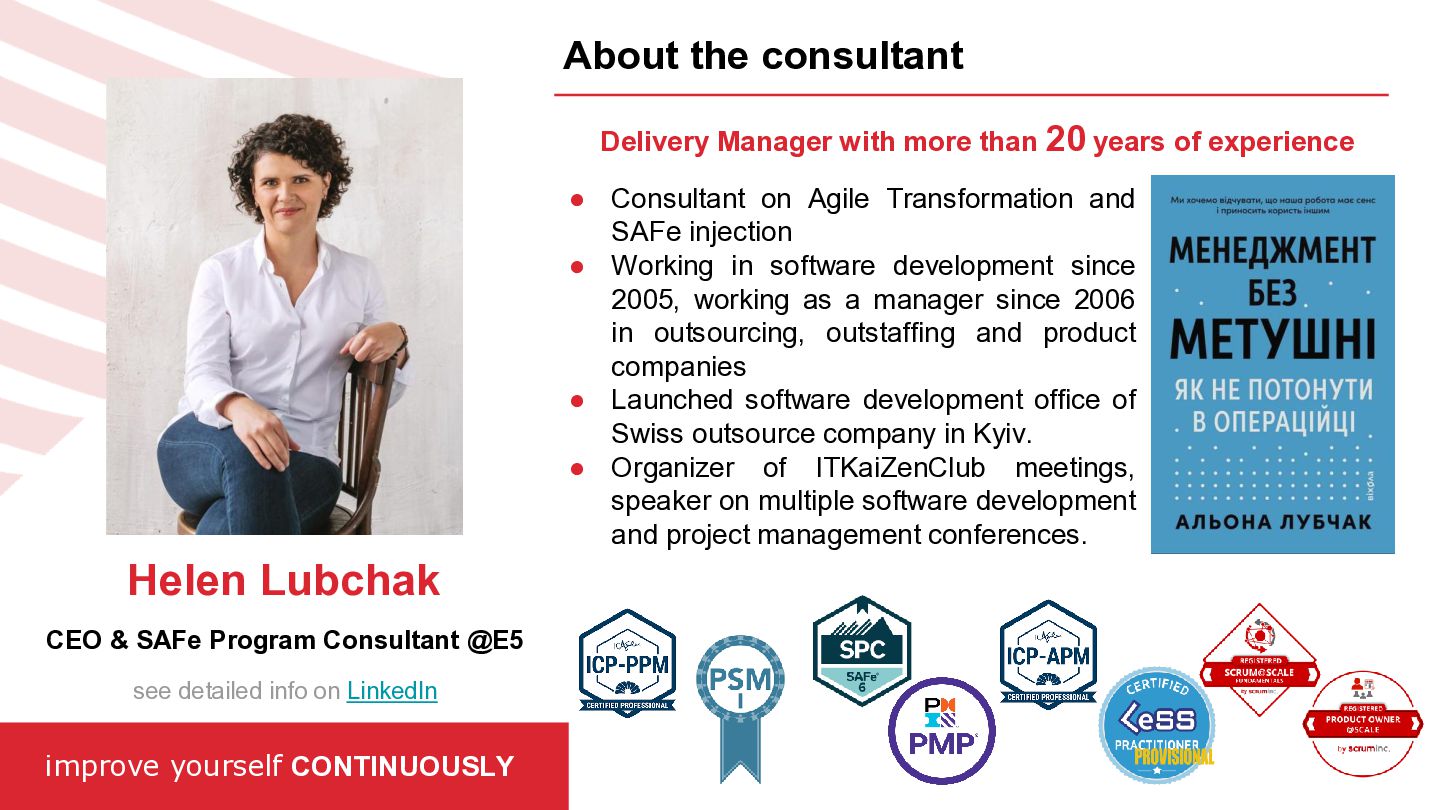
  2. About the consultant Delivery Manager with more than 20 years

    of experience • Consultant on Agile Transformation and SAFe injection • Working in software development since 2005, working as a manager since 2006 in outsourcing, outstaffing and product companies • Launched software development office of Swiss outsource company in Kyiv. • Organizer of ITKaiZenClub meetings, speaker on multiple software development and project management conferences. Helen Lubchak CEO & SAFe Program Consultant @E5 see detailed info on LinkedIn improve yourself CONTINUOUSLY
  3. The decision behind every priority What value should we deliver

    next? Every choice also determines what waits
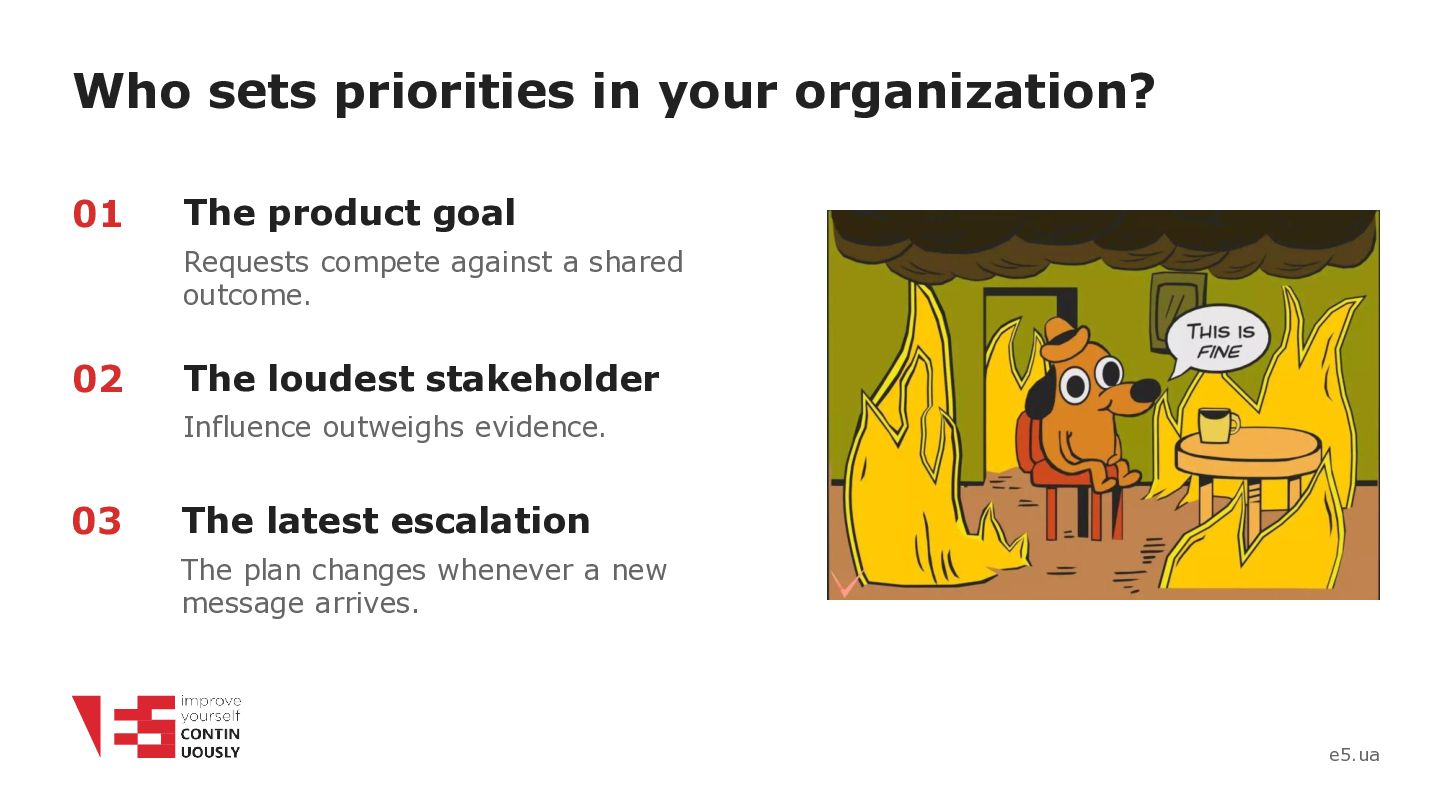
  4. Who sets priorities in your organization? 01 The product goal

    Requests compete against a shared outcome. 02 The loudest stakeholder Influence outweighs evidence. 03 The latest escalation The plan changes whenever a new message arrives. e5.ua
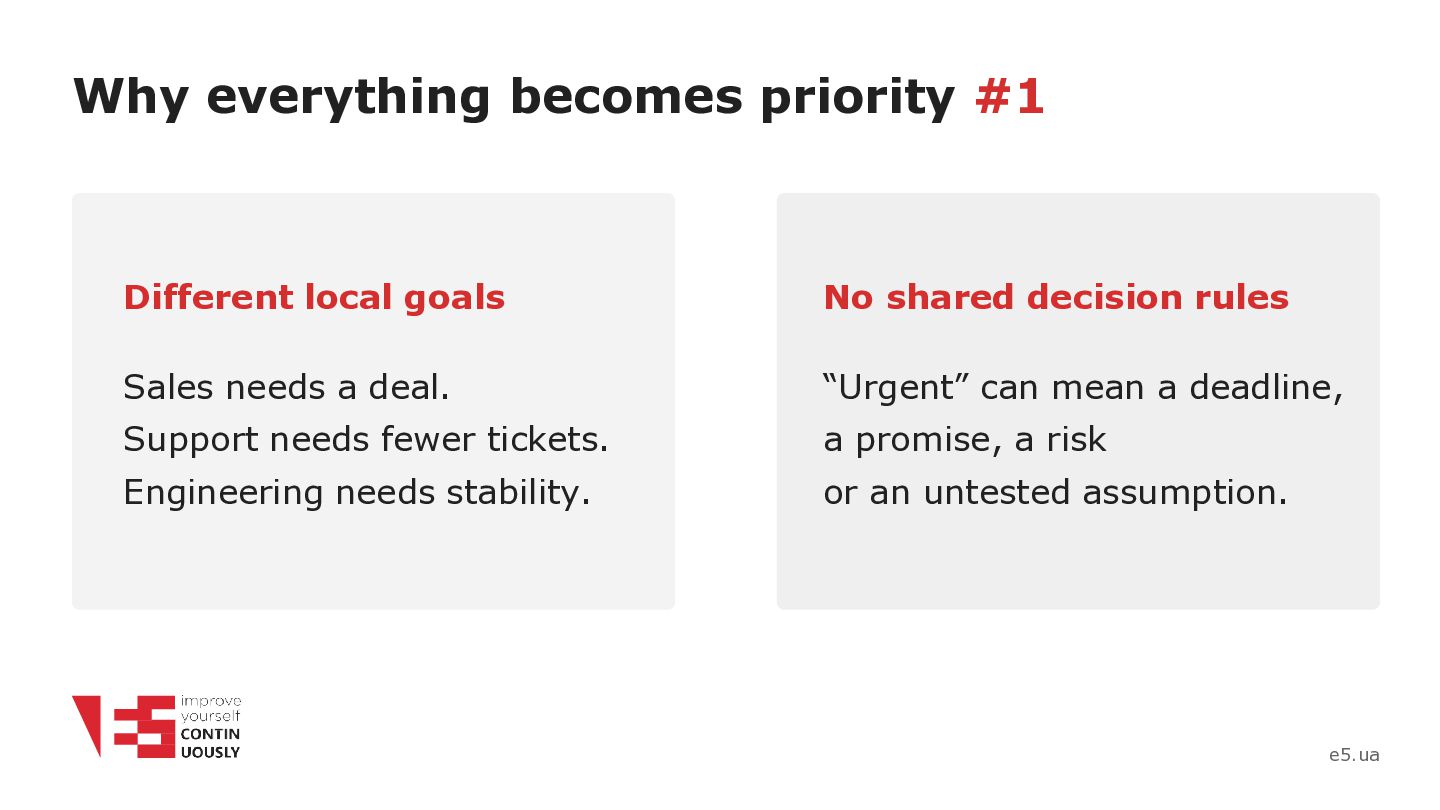
  5. Why everything becomes priority #1 Different local goals No shared

    decision rules Sales needs a deal. “Urgent” can mean a deadline, Support needs fewer tickets. a promise, a risk Engineering needs stability. or an untested assumption. e5.ua
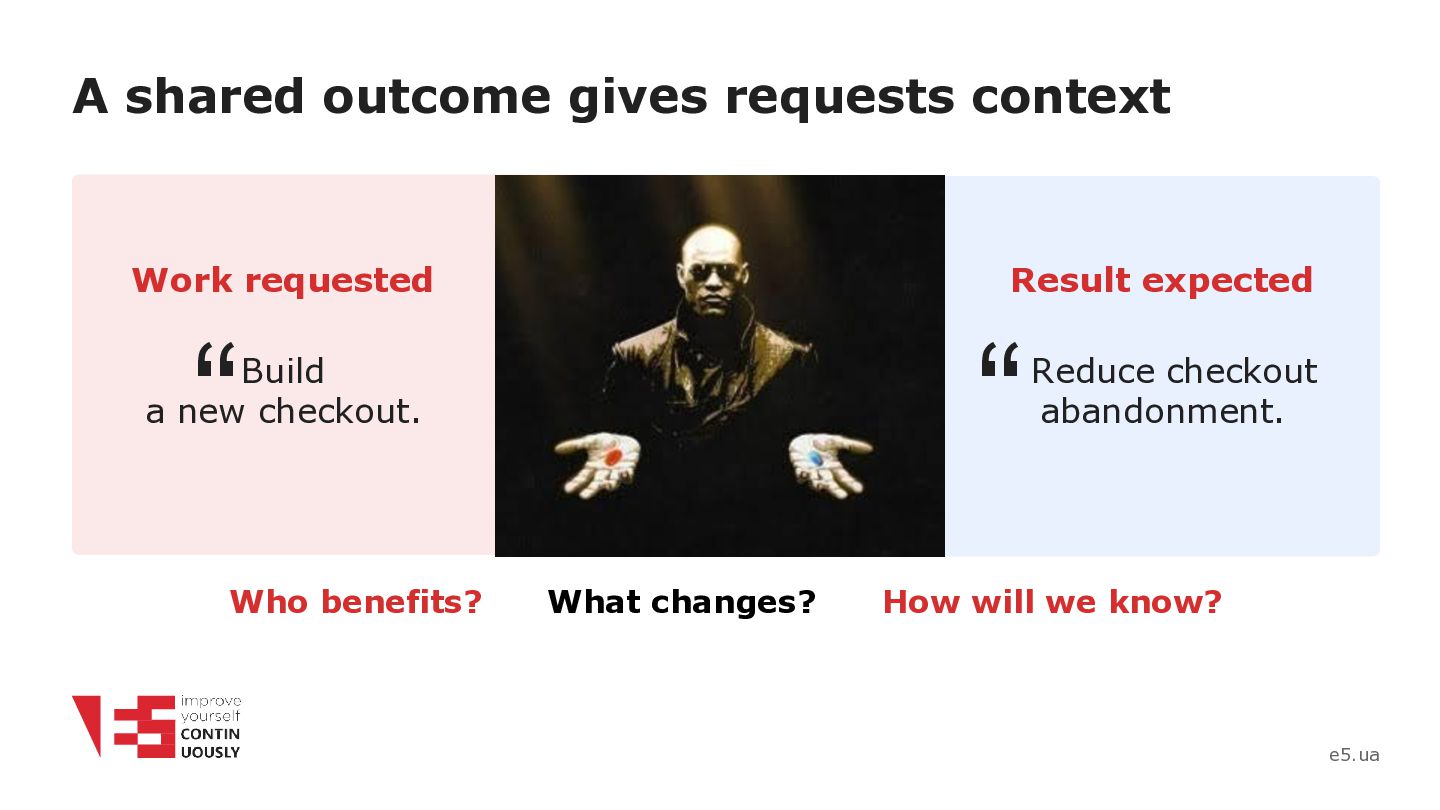
  6. A shared outcome gives requests context Work requested Result expected

    “ “ Build a new checkout. Who benefits? What changes? Reduce checkout abandonment. How will we know? e5.ua
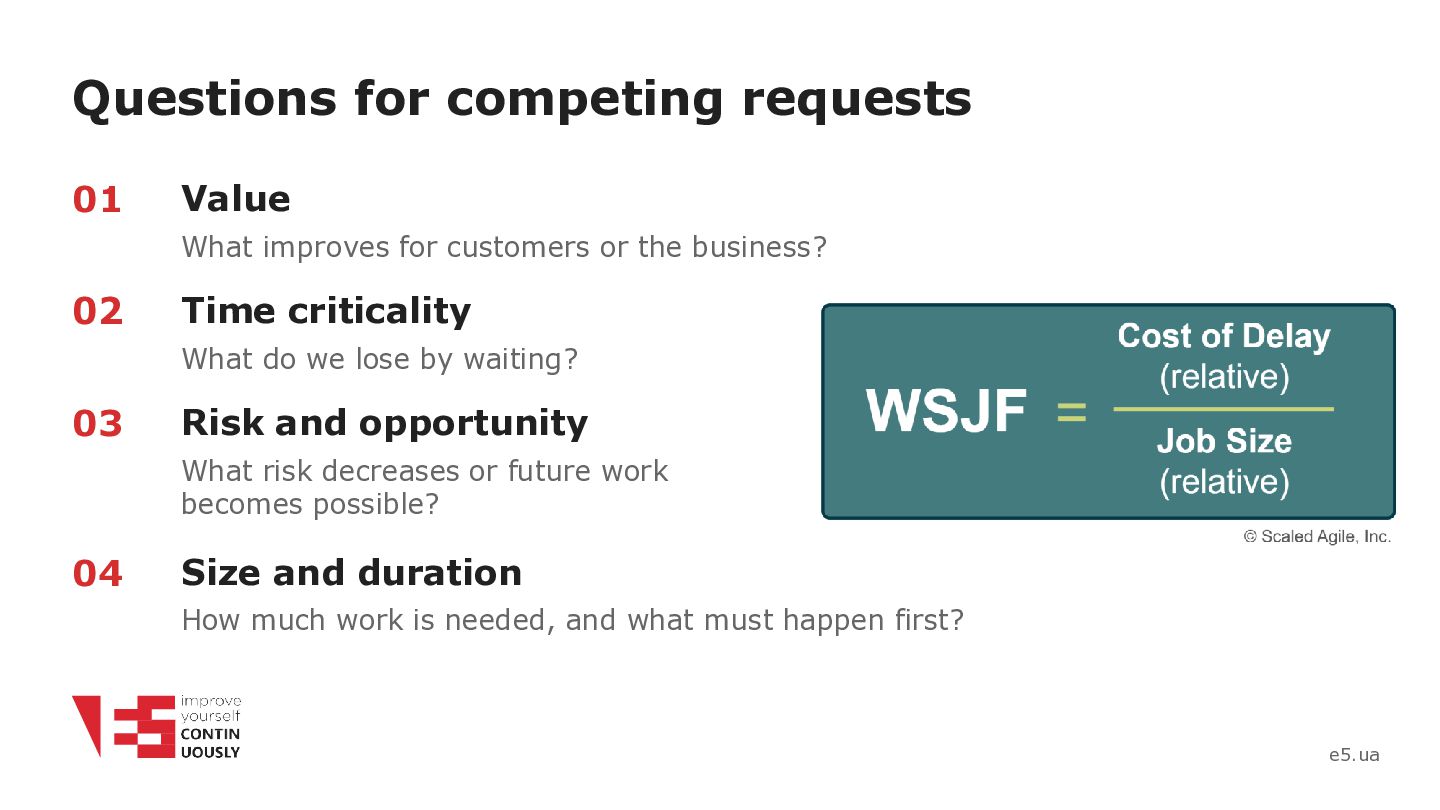
  7. Questions for competing requests 01 Value What improves for customers

    or the business? 02 Time criticality What do we lose by waiting? 03 Risk and opportunity What risk decreases or future work becomes possible? 04 Size and duration How much work is needed, and what must happen first? e5.ua
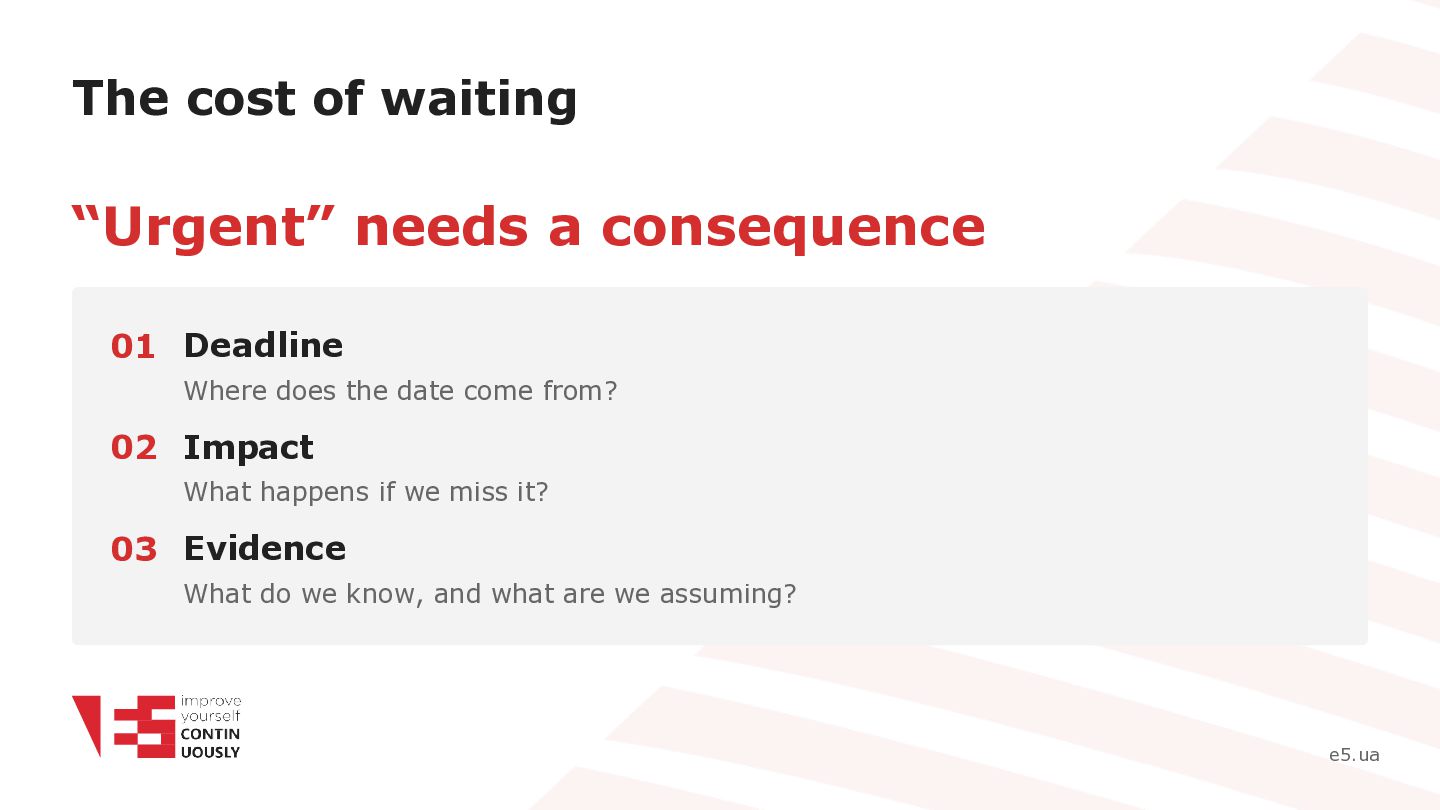
  8. The cost of waiting “Urgent” needs a consequence 01 Deadline

    Where does the date come from? 02 Impact What happens if we miss it? 03 Evidence What do we know, and what are we assuming? e5.ua
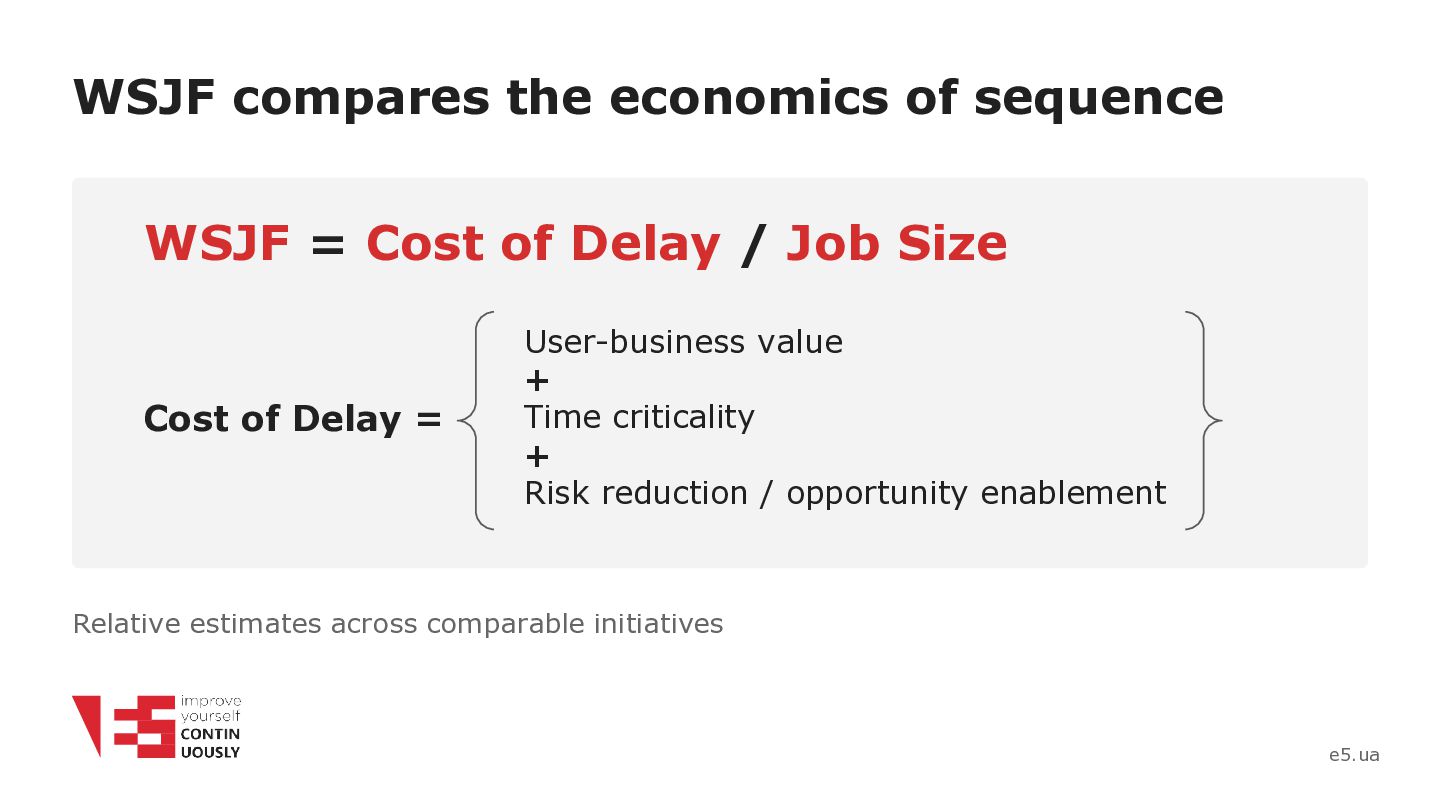
  9. WSJF compares the economics of sequence WSJF = Cost of

    Delay / Job Size Cost of Delay = User-business value + Time criticality + Risk reduction / opportunity enablement Relative estimates across comparable initiatives e5.ua
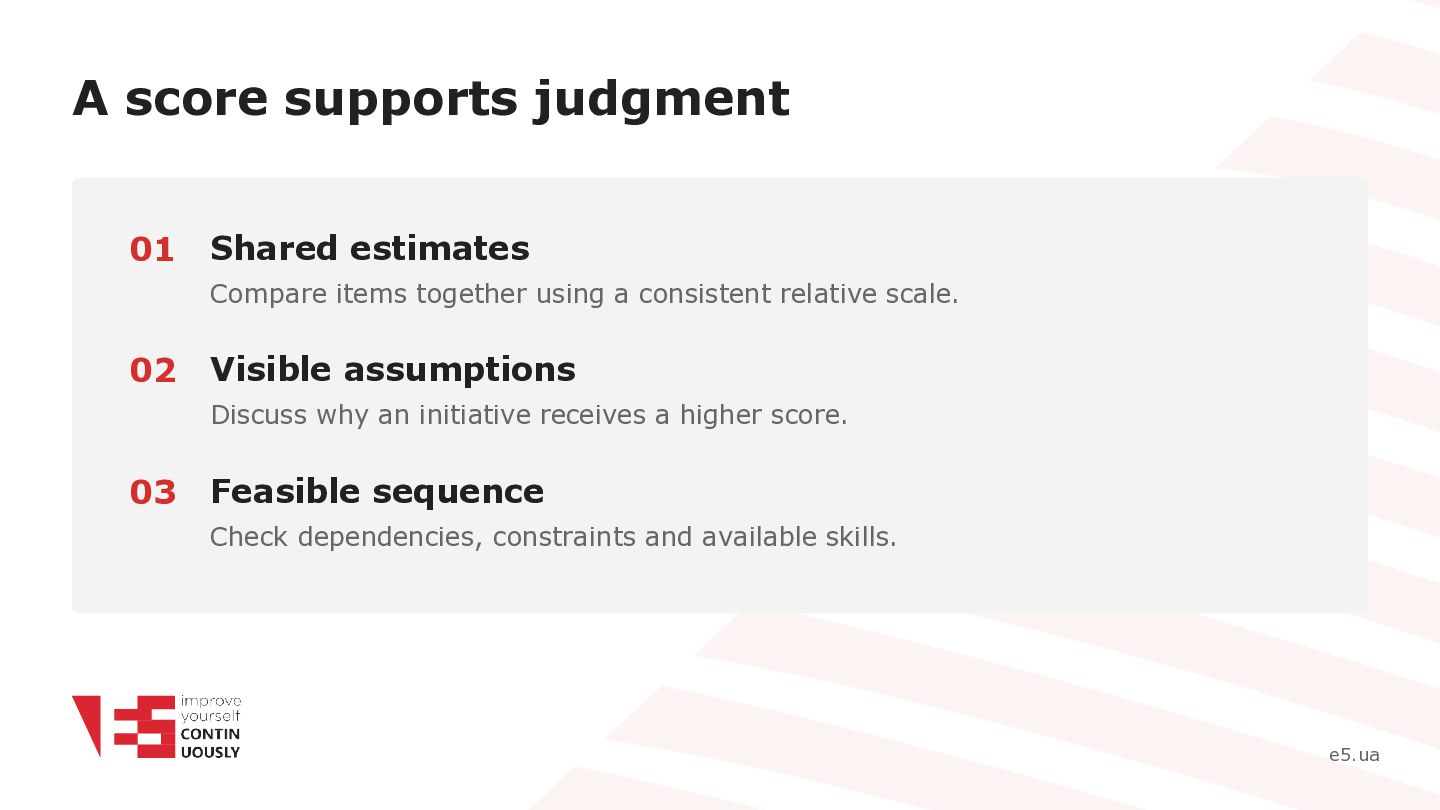
  10. A score supports judgment 01 Shared estimates Compare items together

    using a consistent relative scale. 02 Visible assumptions Discuss why an initiative receives a higher score. 03 Feasible sequence Check dependencies, constraints and available skills. e5.ua
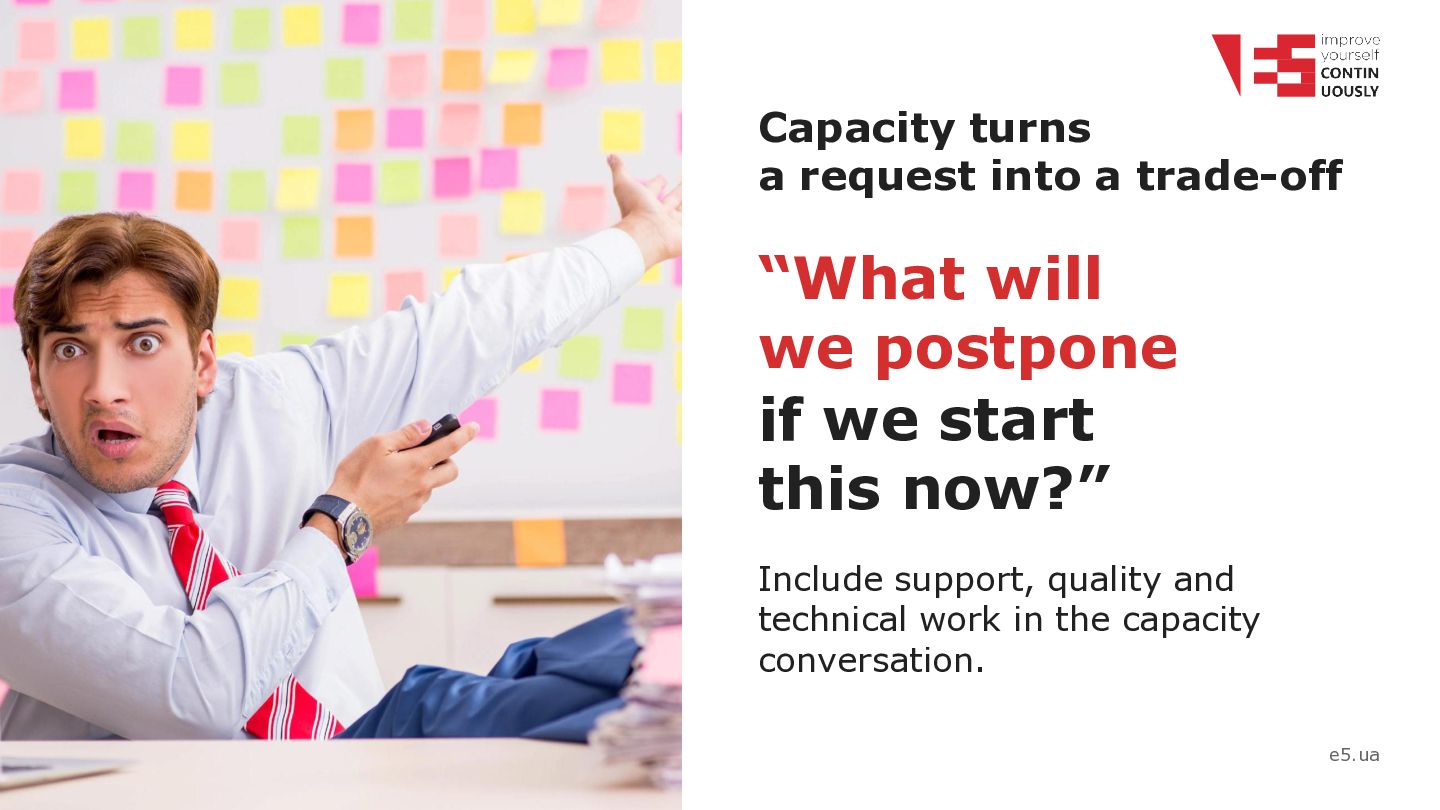
  11. Capacity turns a request into a trade-off “What will we

    postpone if we start this now?” Include support, quality and technical work in the capacity conversation. e5.ua e5.ua
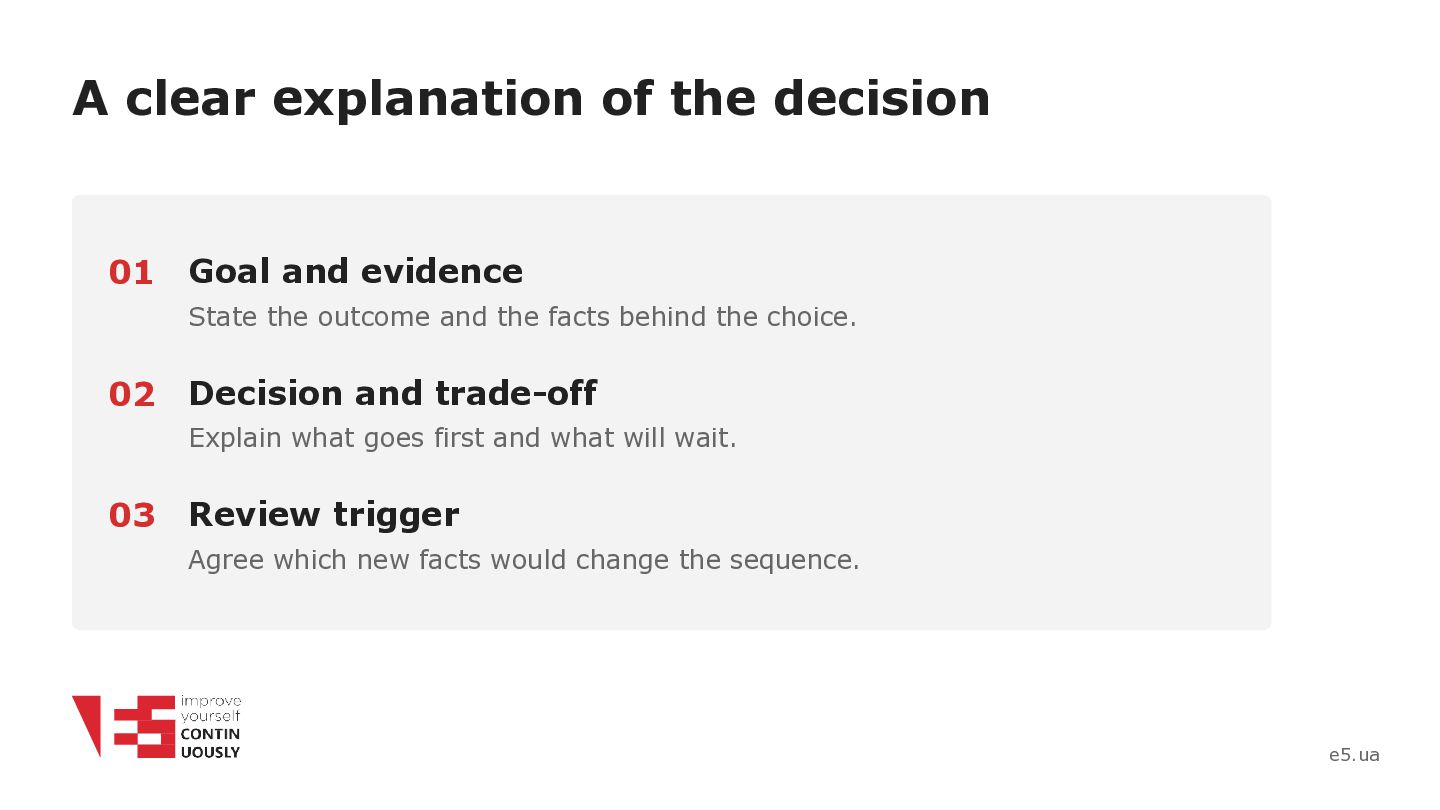
  12. A clear explanation of the decision 01 Goal and evidence

    State the outcome and the facts behind the choice. 02 Decision and trade-off Explain what goes first and what will wait. 03 Review trigger Agree which new facts would change the sequence. e5.ua
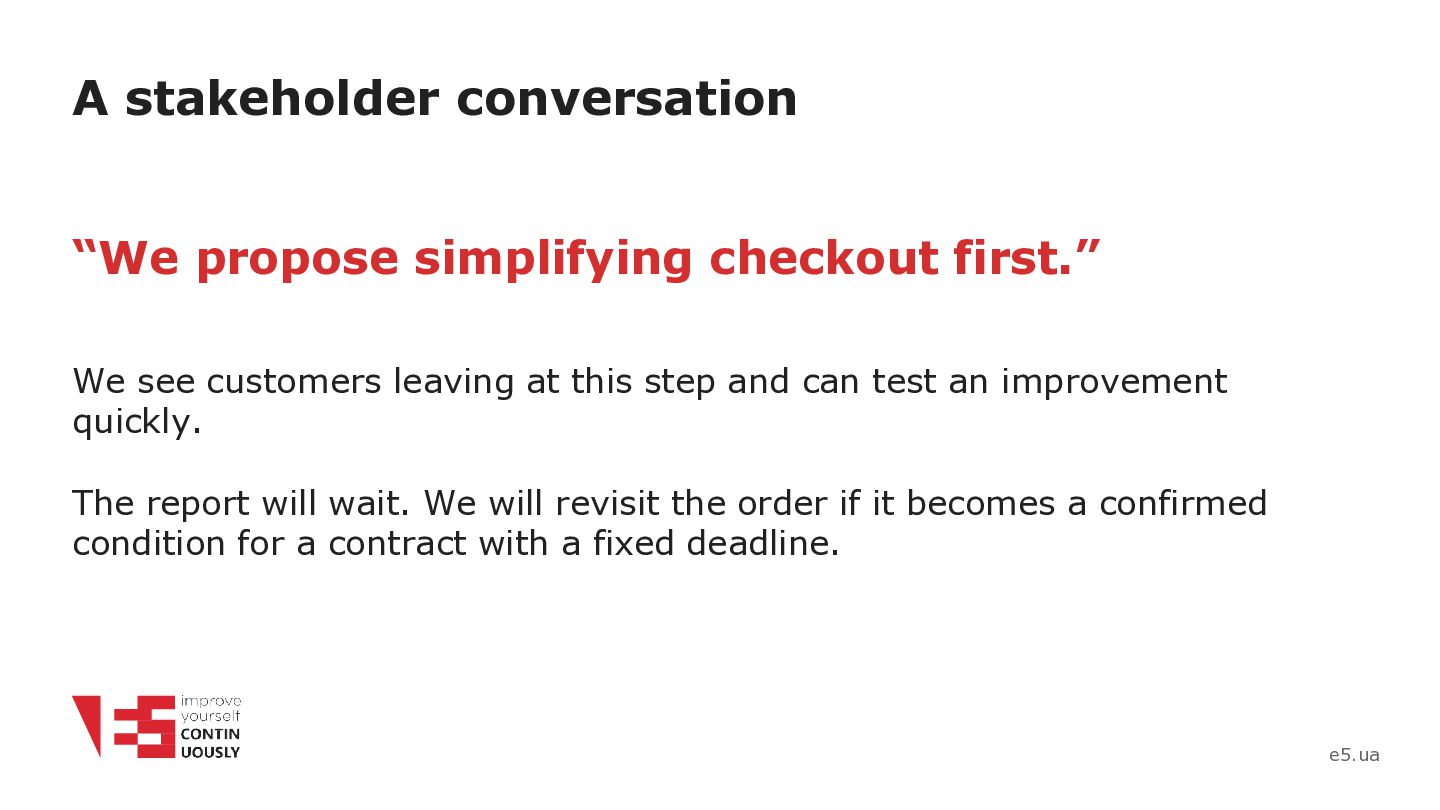
  13. A stakeholder conversation “We propose simplifying checkout first.” We see

    customers leaving at this step and can test an improvement quickly. The report will wait. We will revisit the order if it becomes a confirmed condition for a contract with a fixed deadline. e5.ua
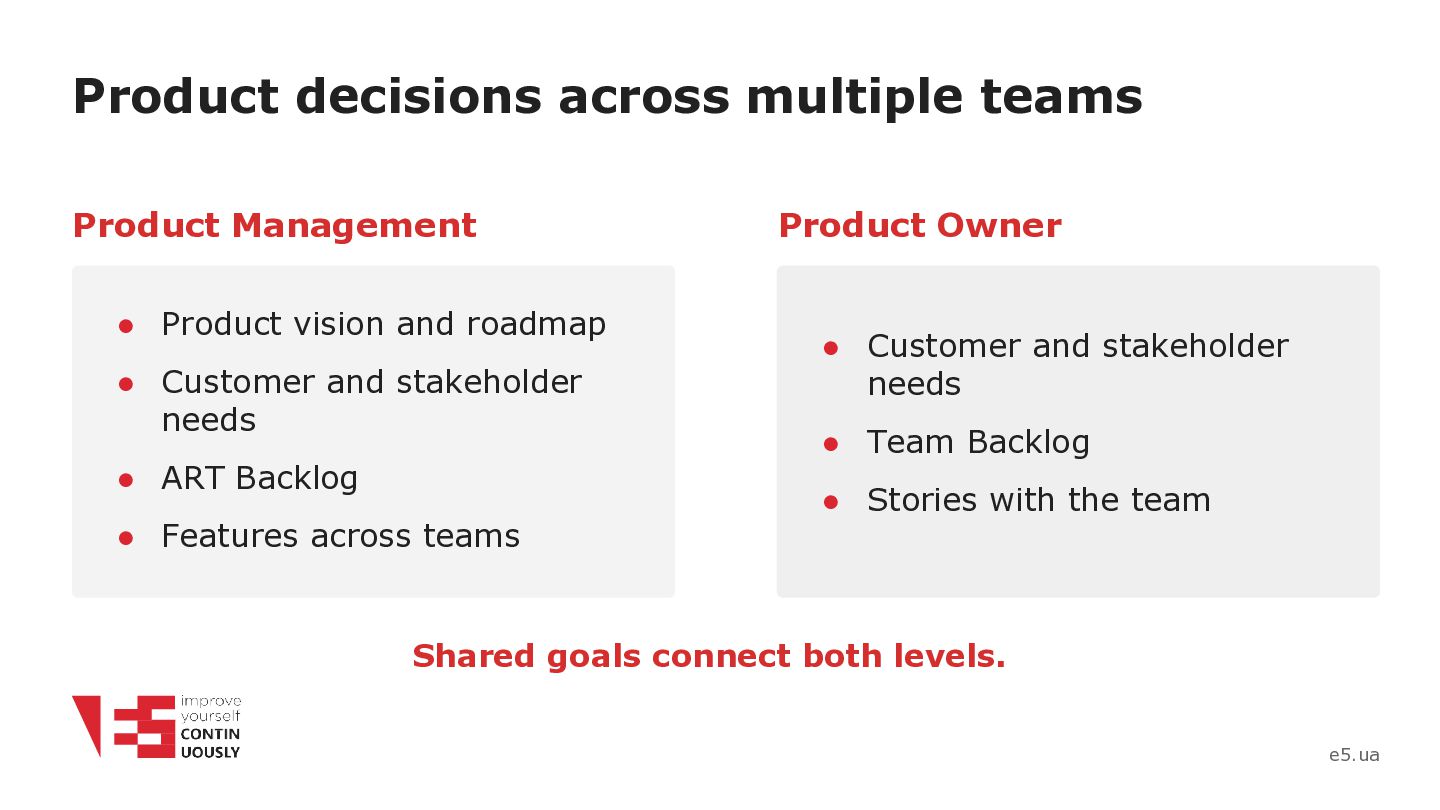
  14. Product decisions across multiple teams Product Management • Product vision

    and roadmap • Customer and stakeholder needs • ART Backlog • Features across teams Product Owner • Customer and stakeholder needs • Team Backlog • Stories with the team Shared goals connect both levels. e5.ua
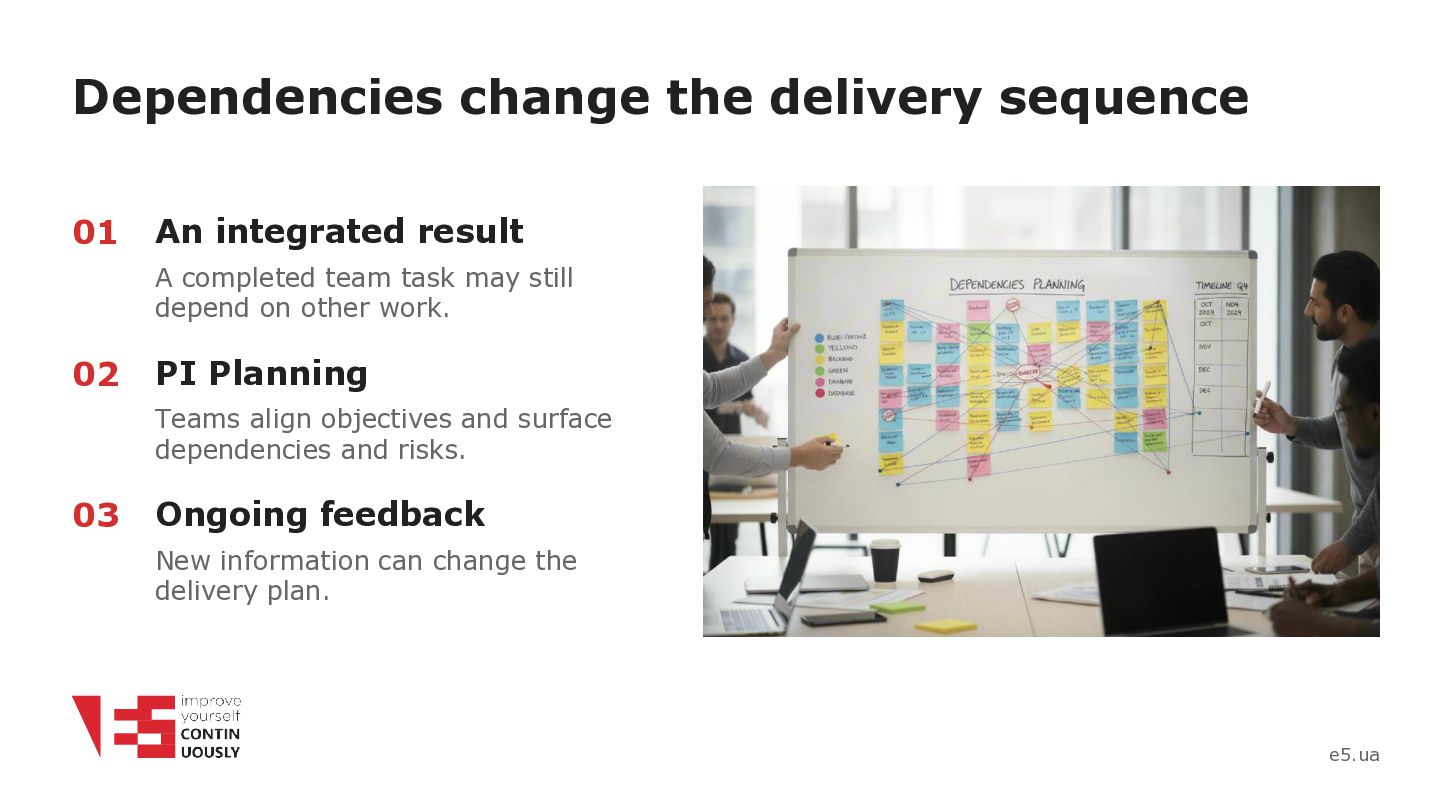
  15. Dependencies change the delivery sequence 01 An integrated result A

    completed team task may still depend on other work. 02 PI Planning Teams align objectives and surface dependencies and risks. 03 Ongoing feedback New information can change the delivery plan. e5.ua
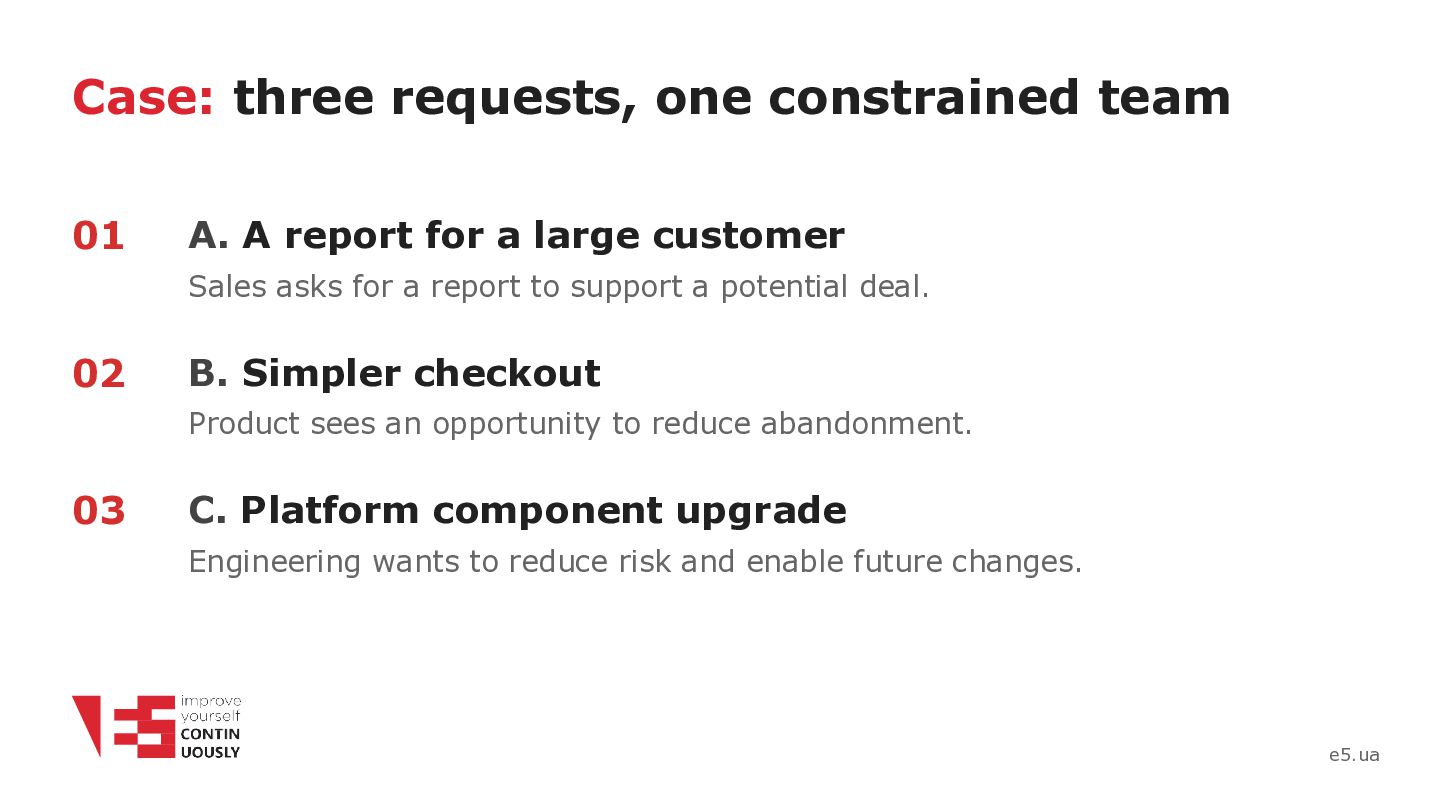
  16. Case: three requests, one constrained team 01 A. A report

    for a large customer Sales asks for a report to support a potential deal. 02 B. Simpler checkout Product sees an opportunity to reduce abandonment. 03 C. Platform component upgrade Engineering wants to reduce risk and enable future changes. e5.ua
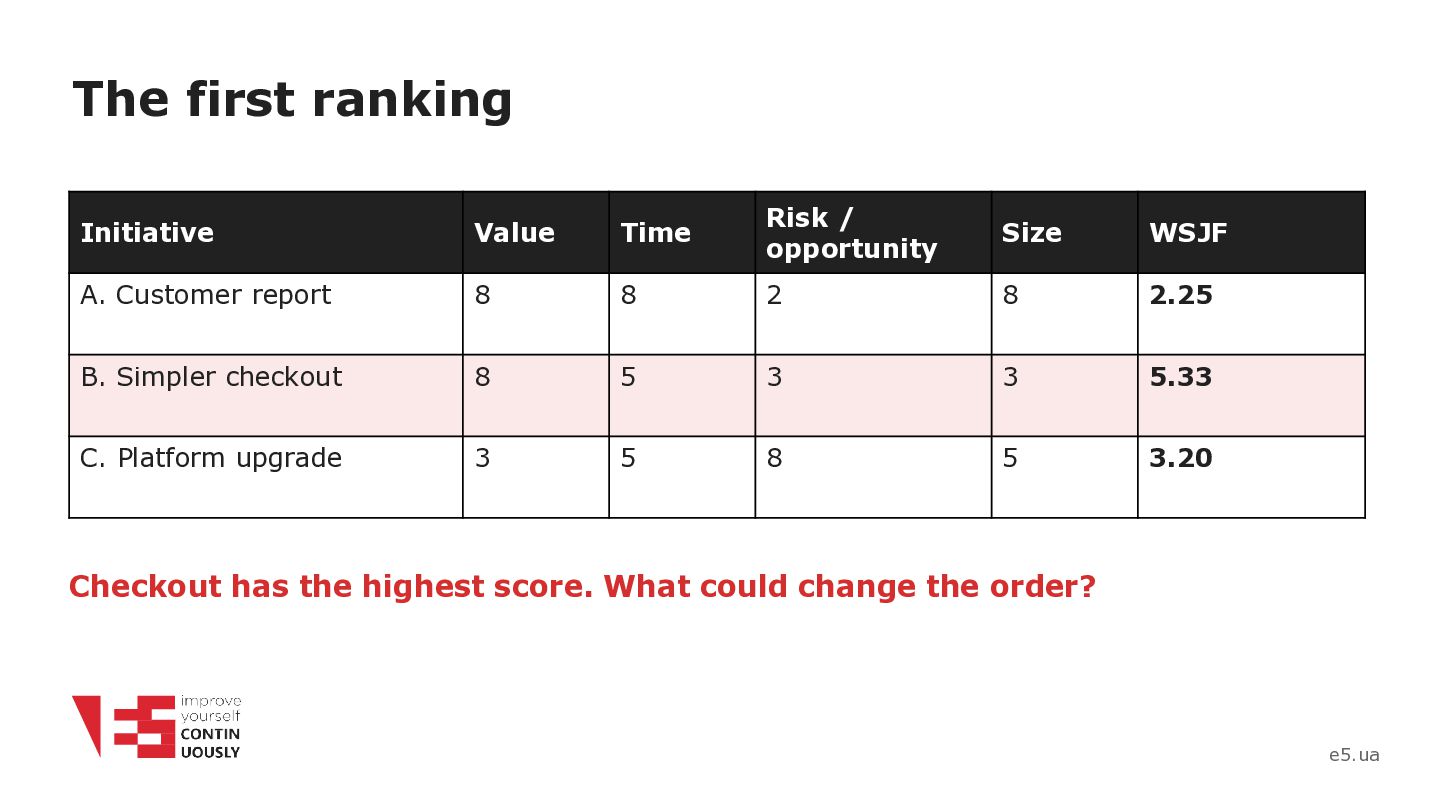
  17. The first ranking Initiative Value Time Risk / opportunity Size

    WSJF A. Customer report 8 8 2 8 2.25 B. Simpler checkout 8 5 3 3 5.33 C. Platform upgrade 3 5 8 5 3.20 Checkout has the highest score. What could change the order? e5.ua
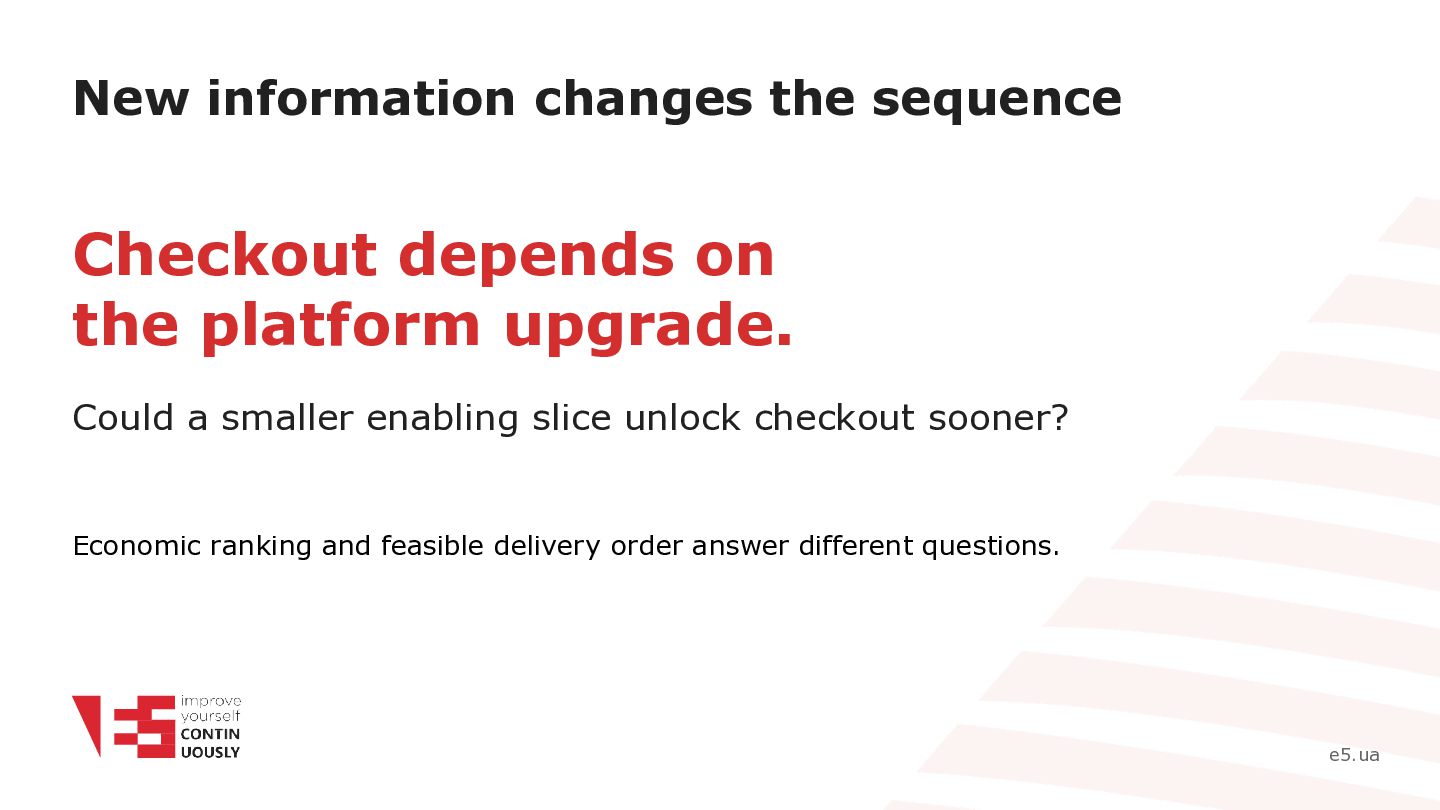
  18. New information changes the sequence Checkout depends on the platform

    upgrade. Could a smaller enabling slice unlock checkout sooner? Economic ranking and feasible delivery order answer different questions. e5.ua
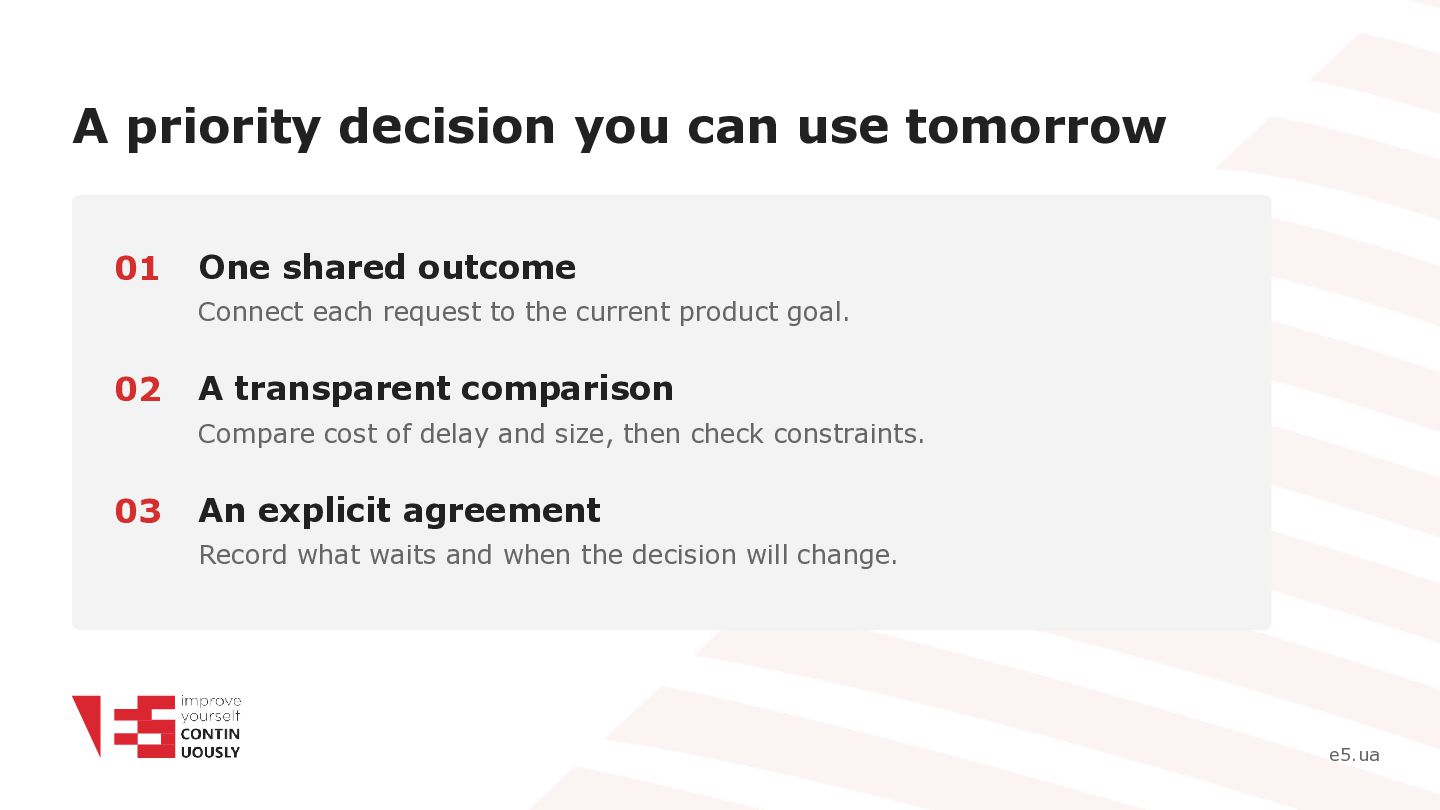
  19. A priority decision you can use tomorrow 01 One shared

    outcome Connect each request to the current product goal. 02 A transparent comparison Compare cost of delay and size, then check constraints. 03 An explicit agreement Record what waits and when the decision will change. e5.ua
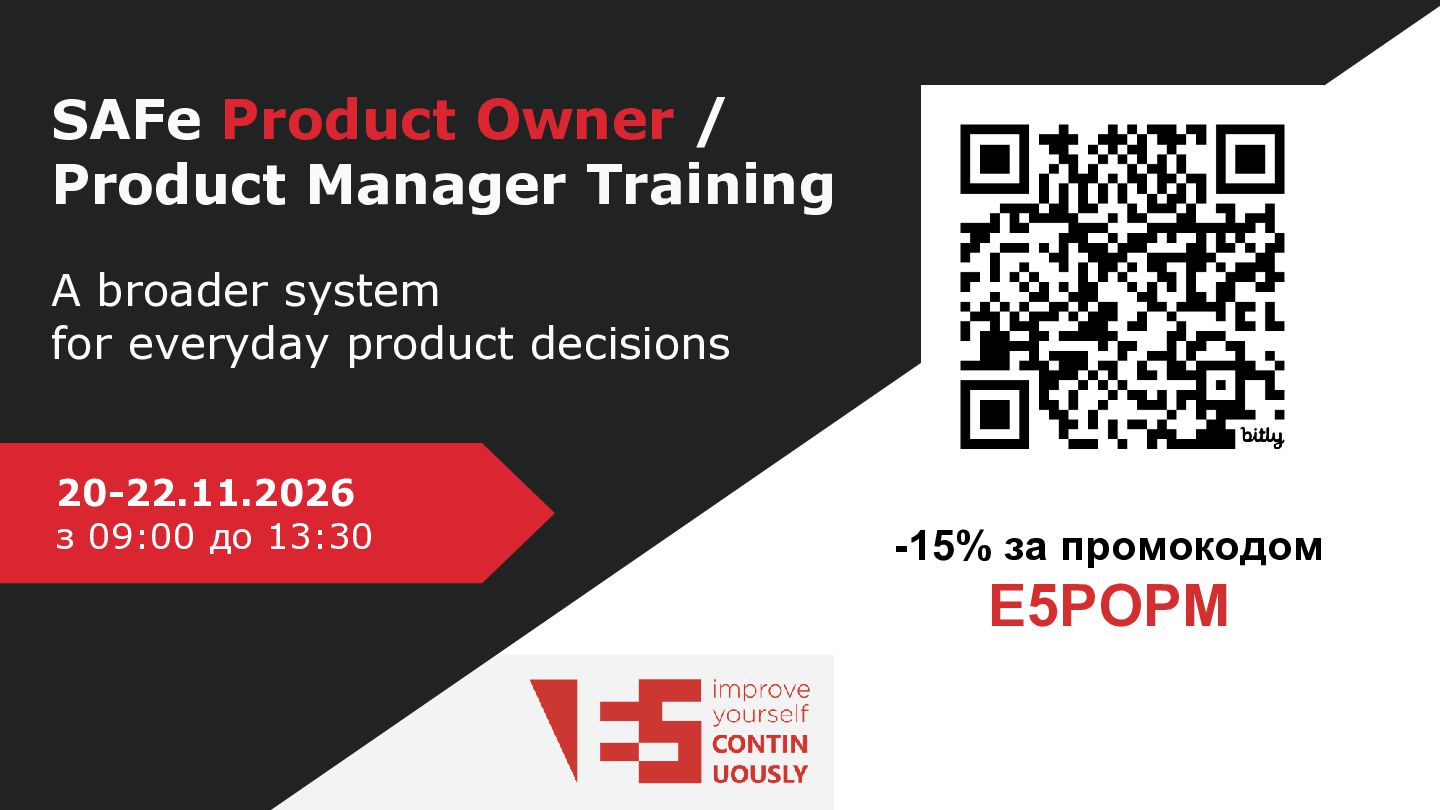
  20. SAFe Product Owner / Product Manager Training A broader system

    for everyday product decisions 20-22.11.2026 з 09:00 до 13:30 -15% за промокодом E5POPM