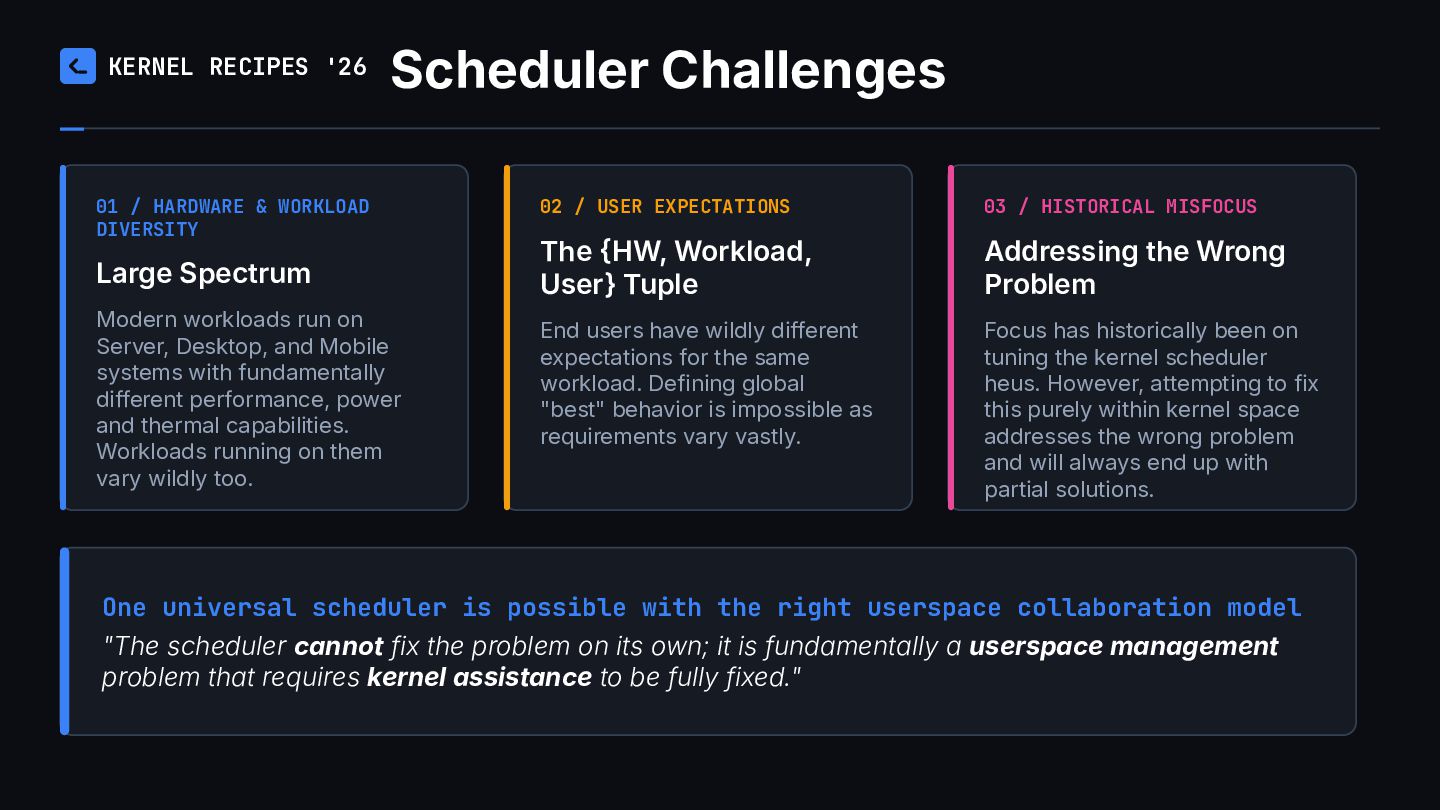
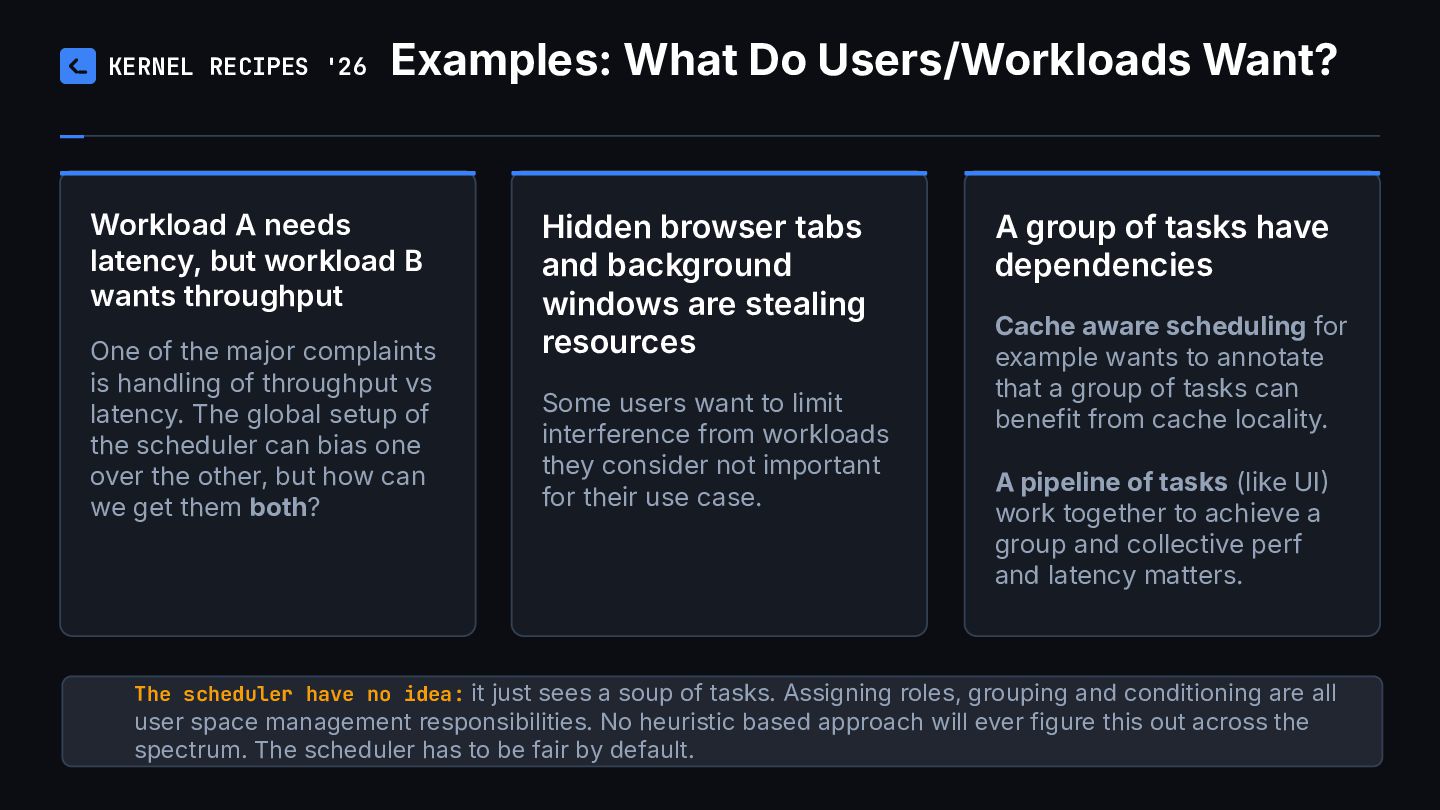
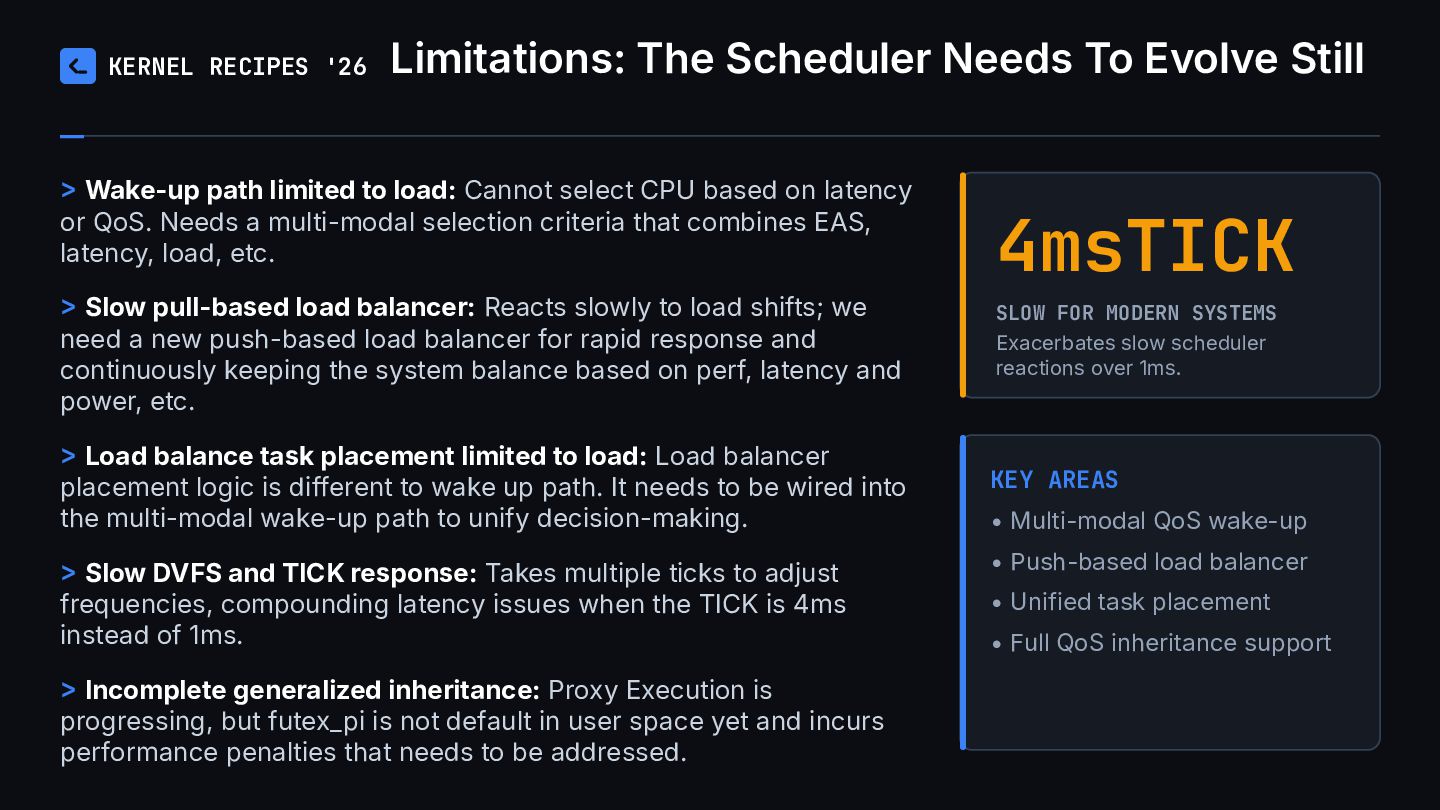
At LPC we layed out a plan on how a single scheduler can be used to manage the conflicting and diverse requirements of workloads that can run on a single machine, and how we can make this be portable to hopefully Just Work on all other machines.
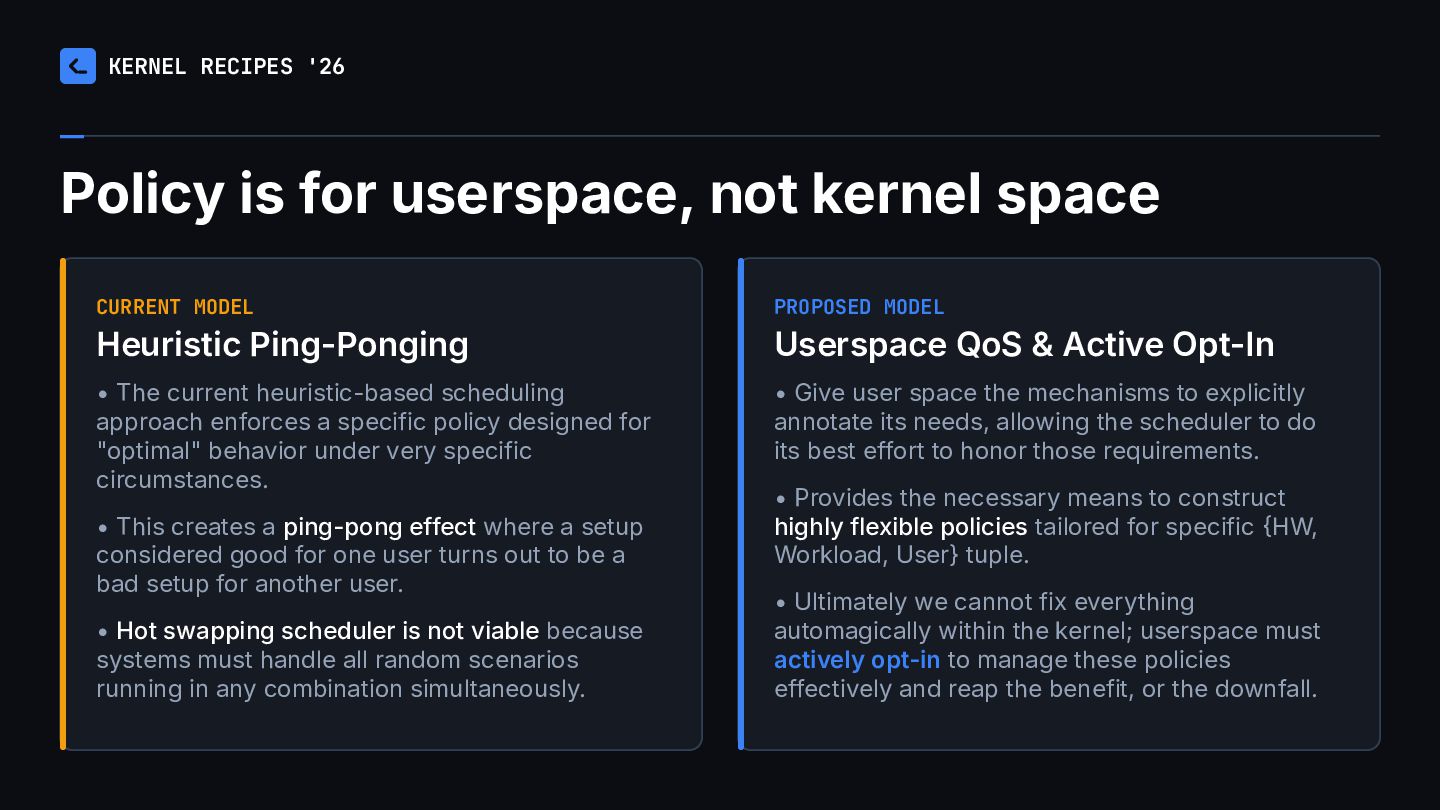
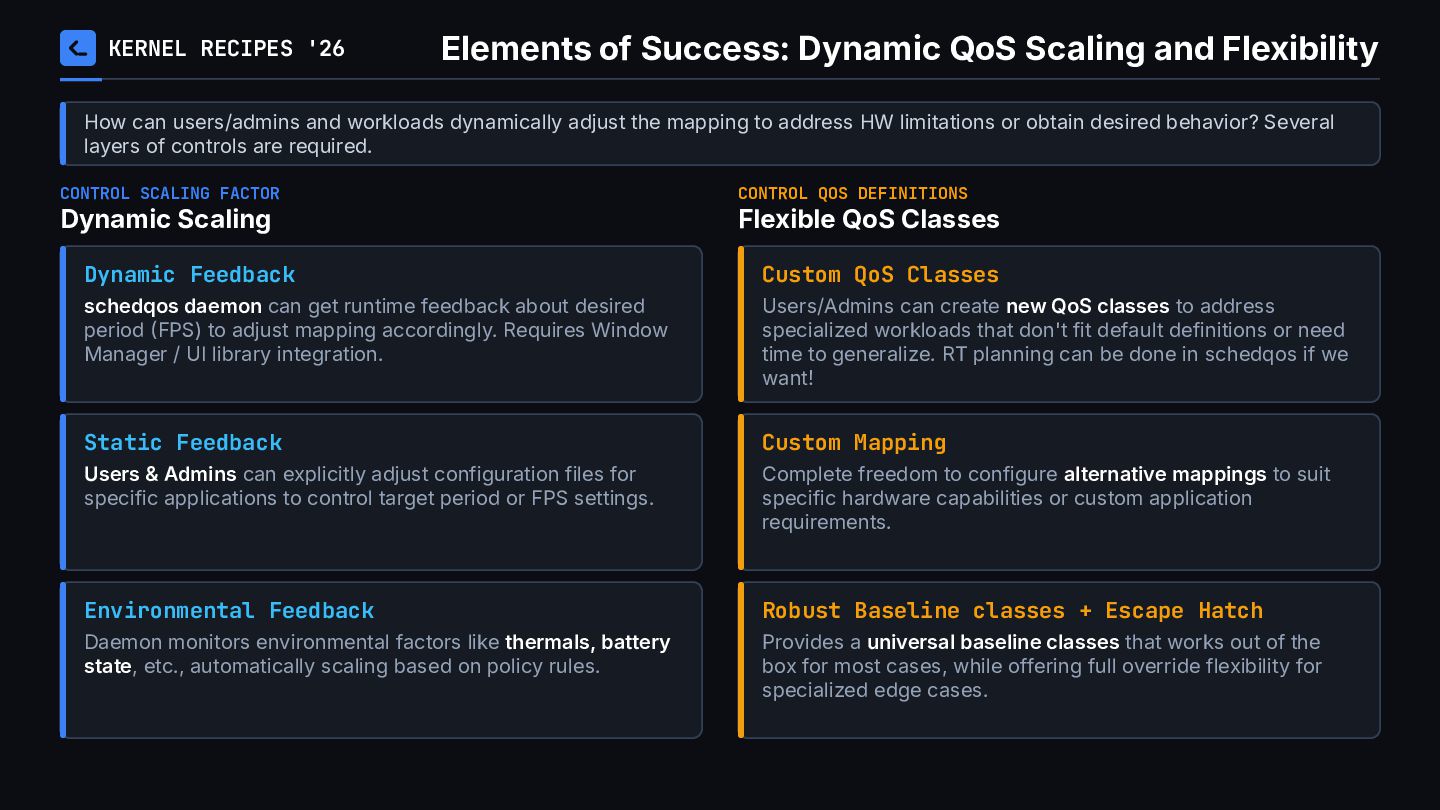
The major problem is that heuristics can’t be used to fix this. We need to provide mechanisms to allow for smarter management of system resources.
But how this should look like?
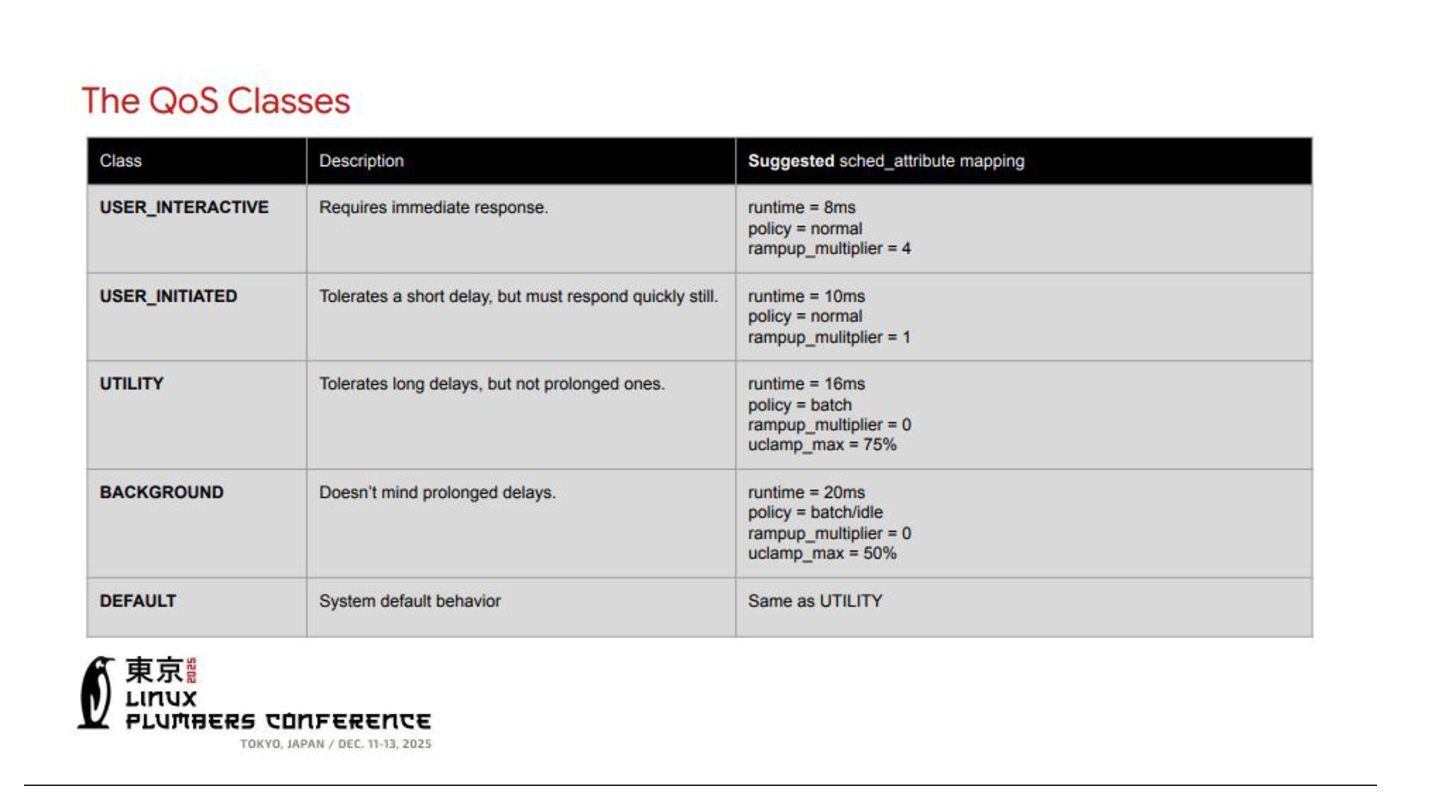
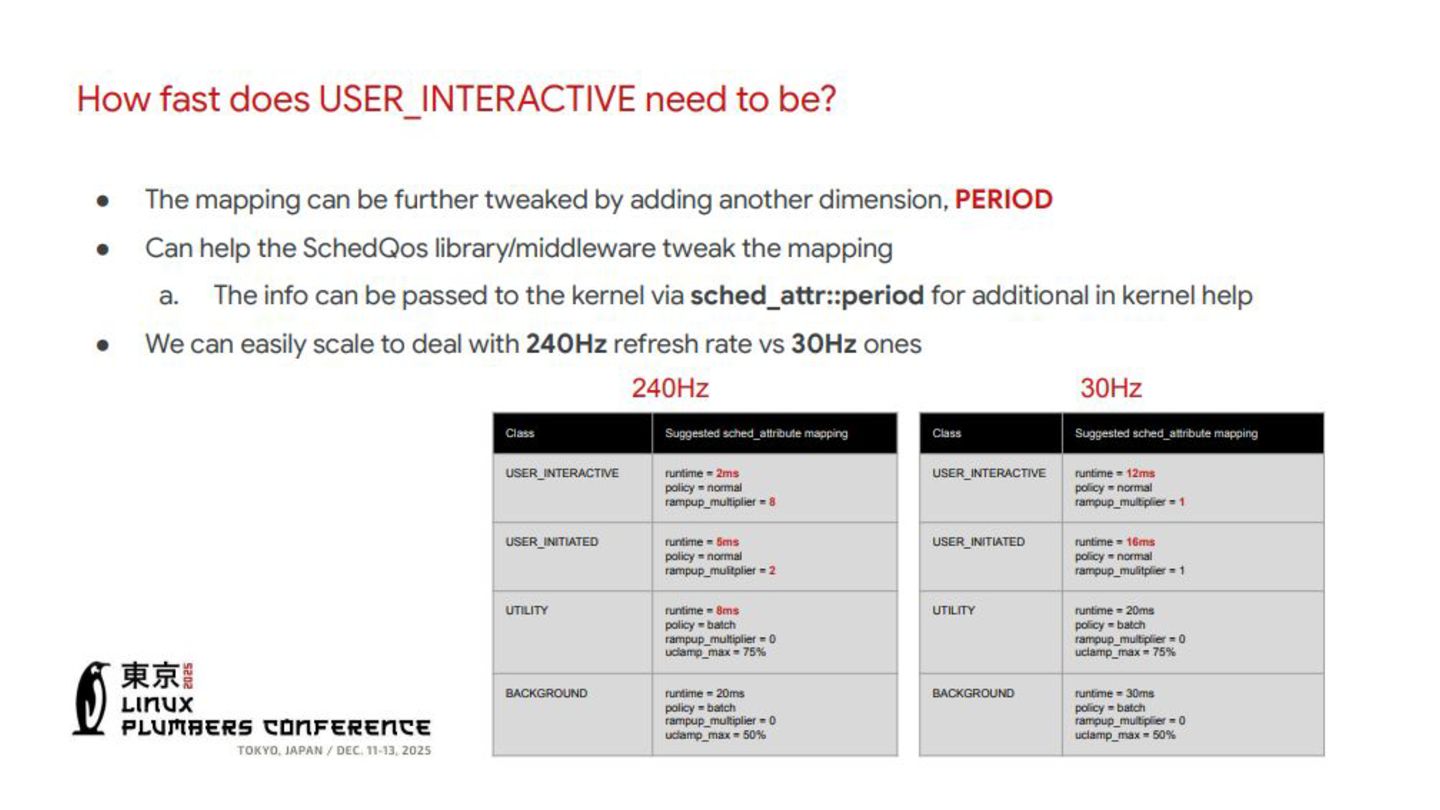
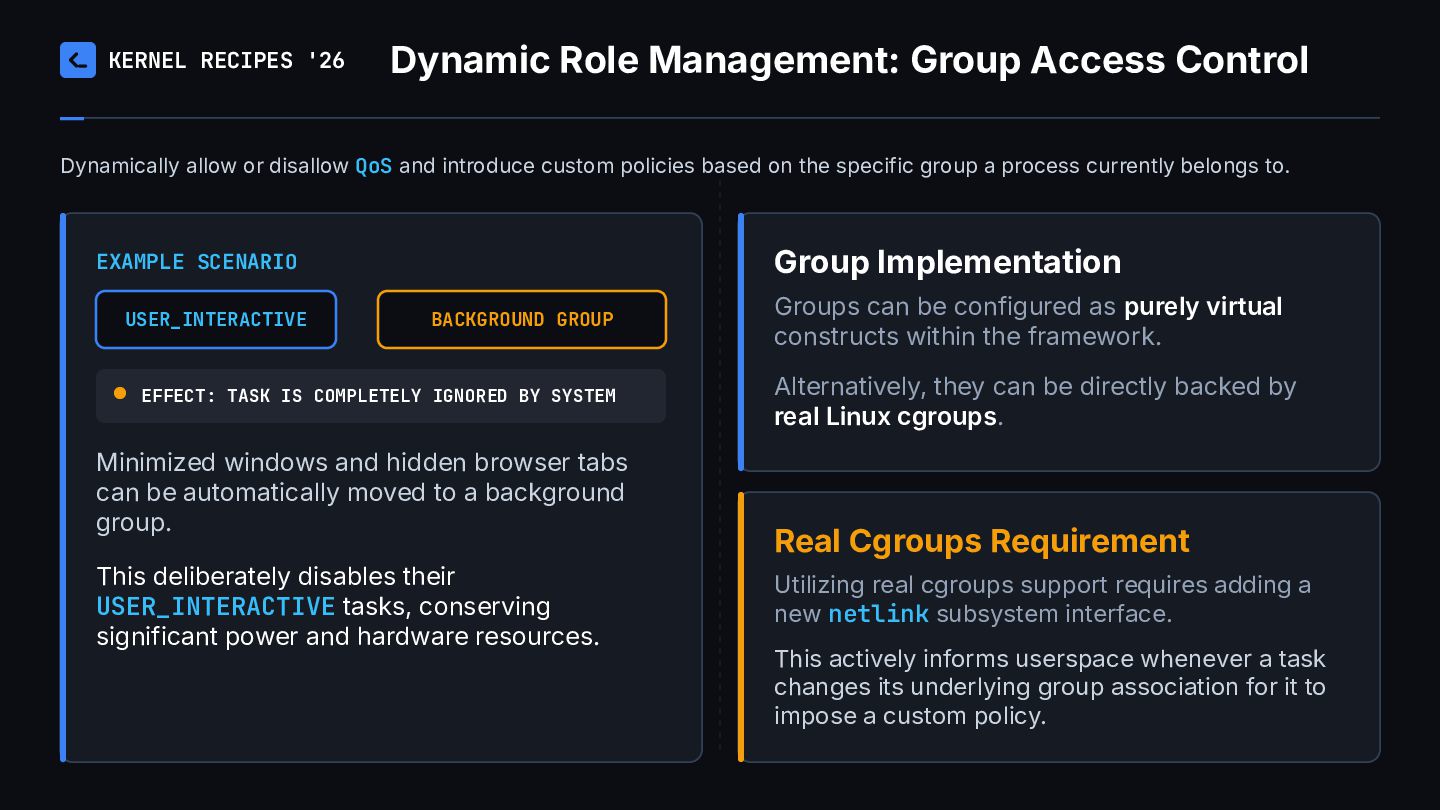
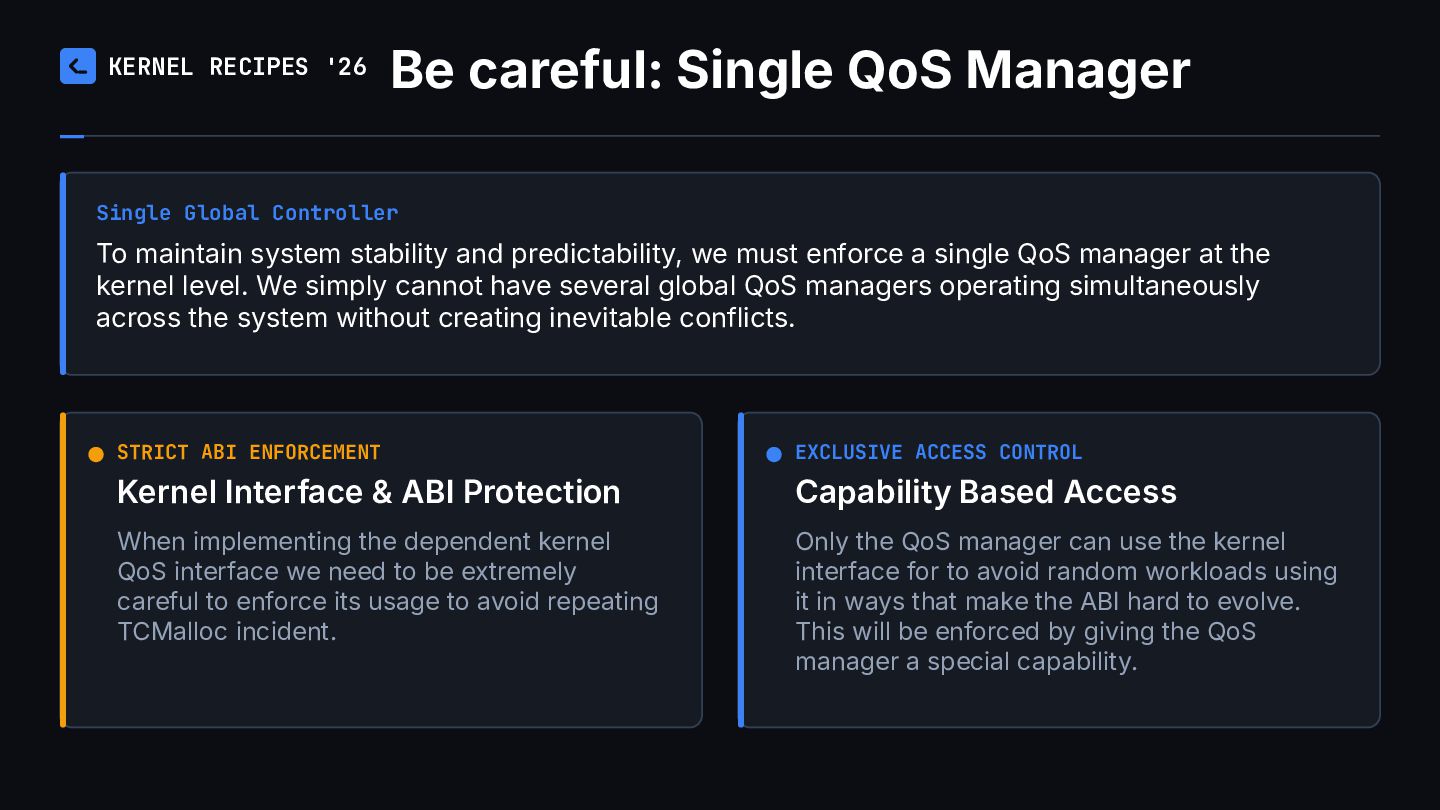
First pitfall is that this is NOT a kernel space interface problem. It is a userspace management problem. We need a higher level description of tasks behavior that with the help of an all knowing Perf Manager can be translated into the right attributes at kernel level.
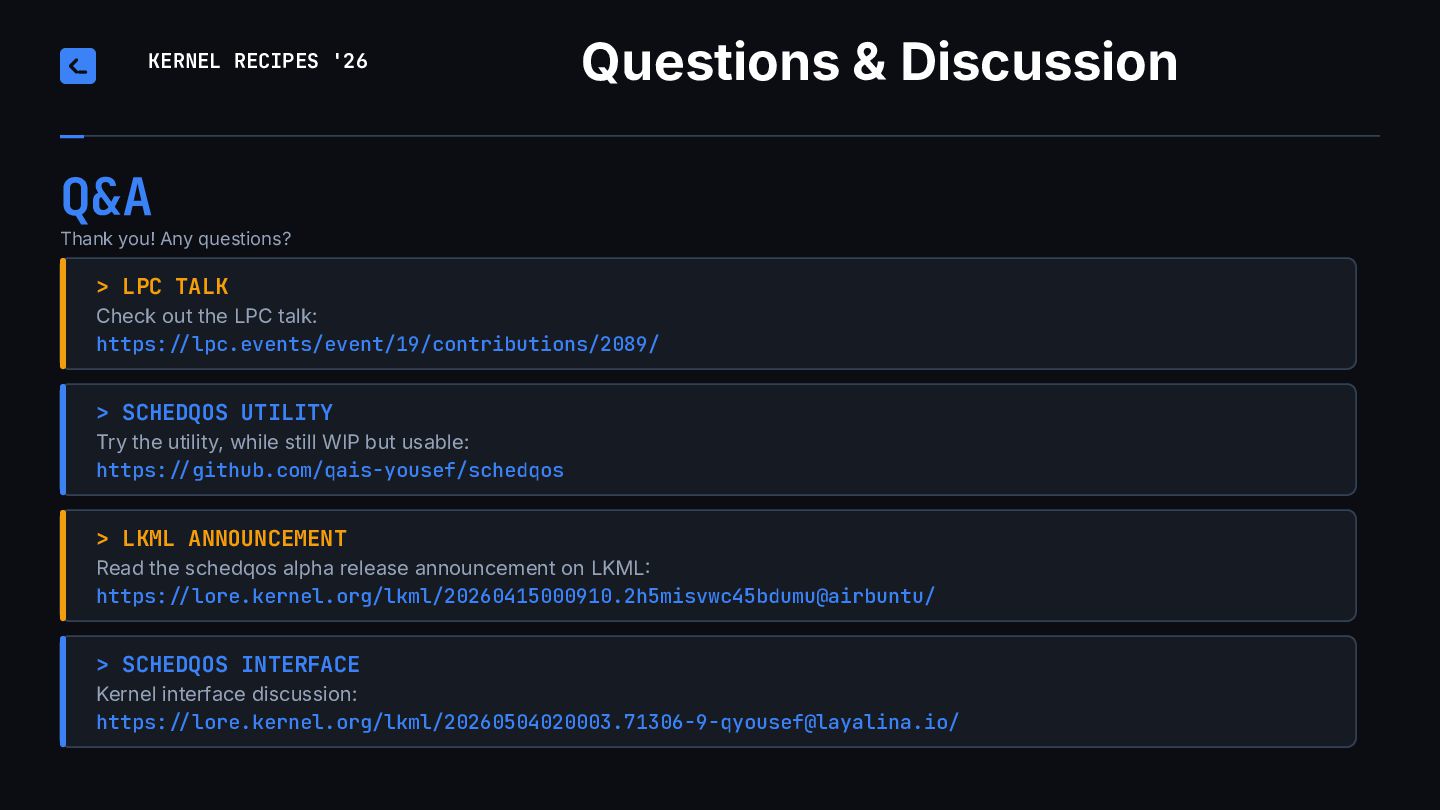
schedqos utility was created to execute on this plan. It is in alpha stage, but pretty much usable for power users and to help iterate and develop the concepts further.
We picked an existing industry high level description that is successful in practice as initial guide to grow (if needed) on.
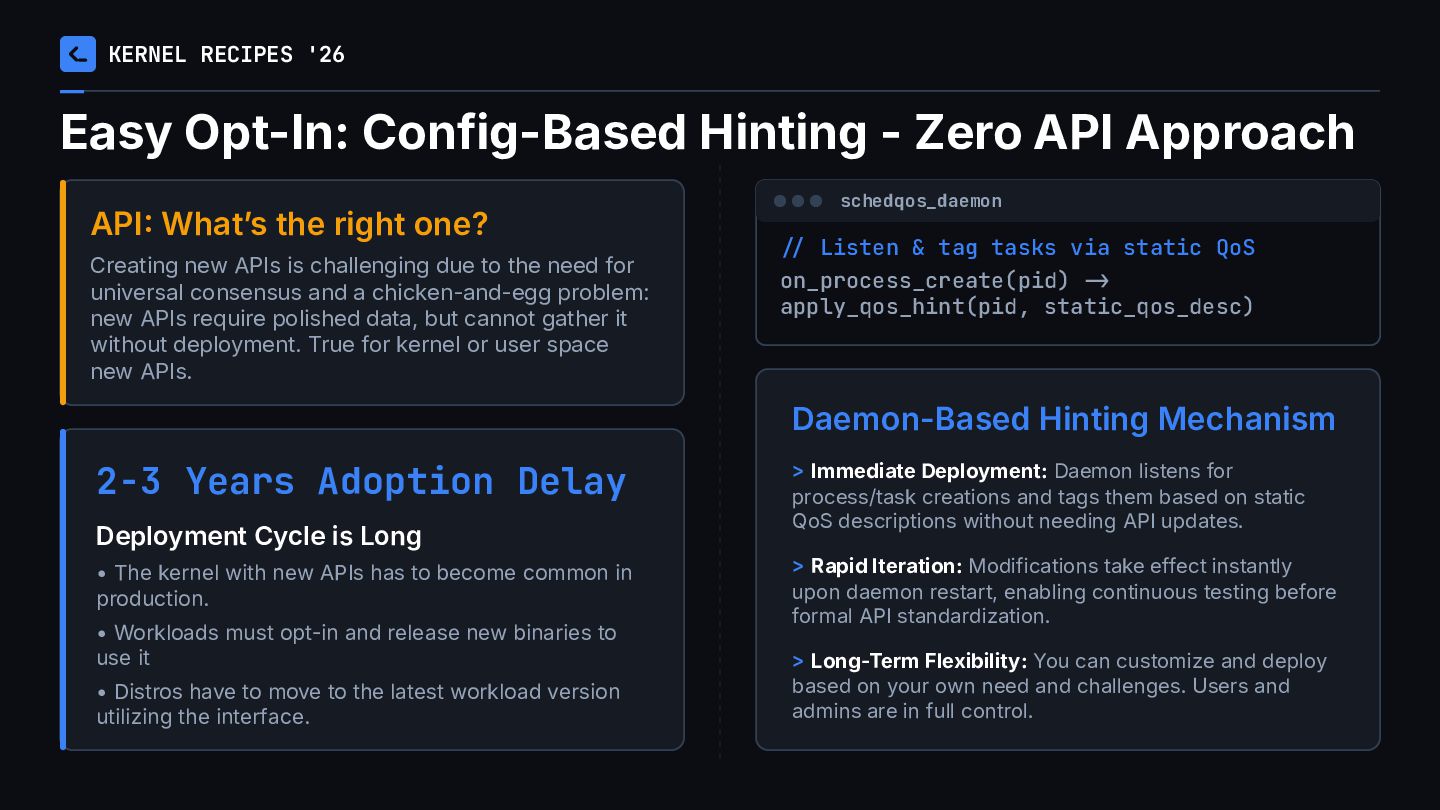
To counter the adoption problem of introducing new APIs and circumvent the ABI issue of having to support potentially kernel interfaces forever, we propose a zero API approach. No binary has to ship to take advantage of the proposal. Apps are described in config files which the Perf Manager reads and apply immediately for all instances of an application that are running, and any new one when executed.
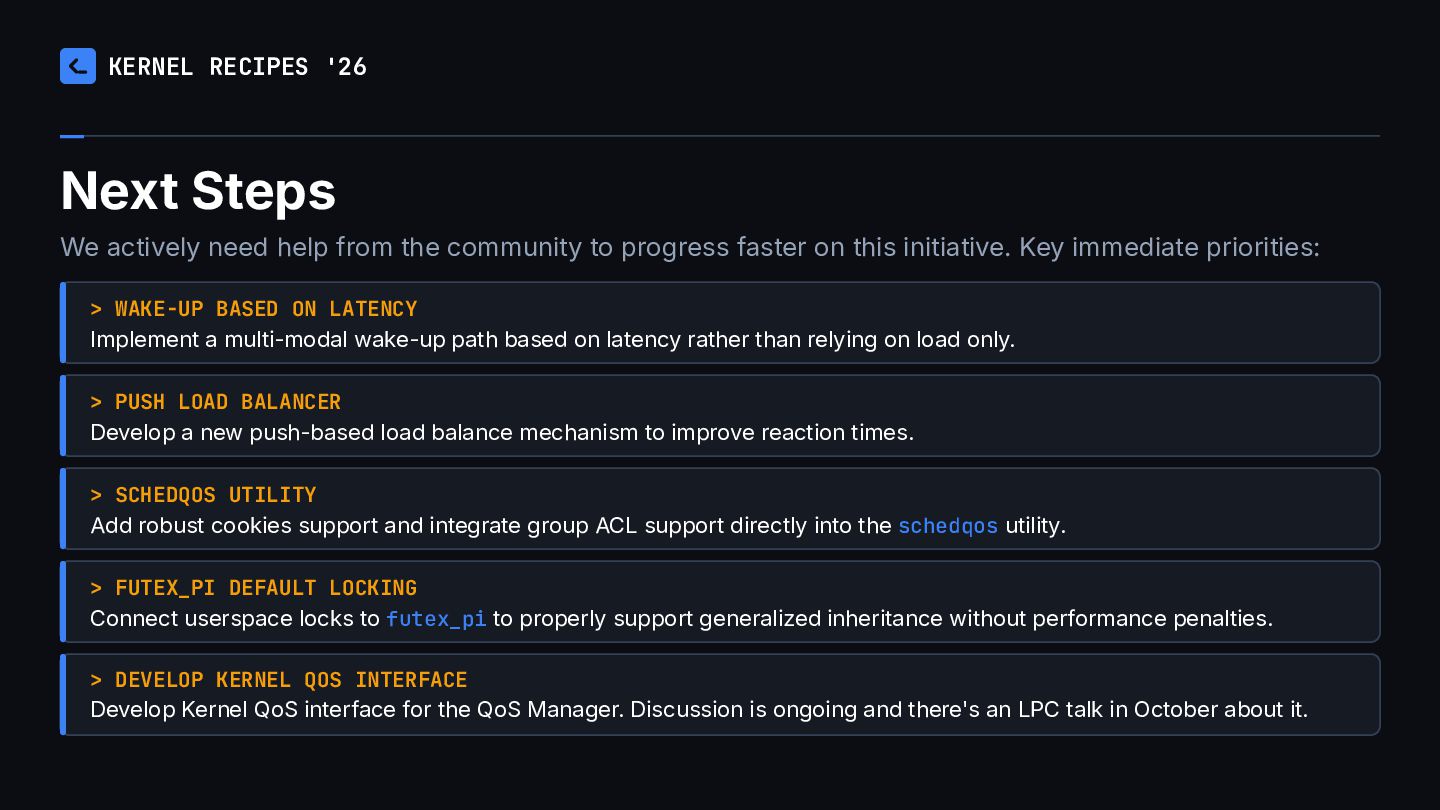
The devil is in many details though. This talk will provide a quick overview of what was proposed and discussed, what is next and how can we cultivate help to grow this to become The Way to manage performance and power on all systems and workloads. We will cover use cases and examples of how it should all ultimately fit together.


 ennael
 yu23ki14
 pfn
pfn
 yut0naga1_fa
 grimoh
 kenichiodo
 kworkdev
 yamanoku
 kakehashi
 tomokusaba
 sansantech
 kentapapa
 puhitaku
 samlambert
 deanohume
 mongodb
 tapps
tapps
 aleyda
 tmiket
 aki_iinuma
 jlugia
 kimpetersen
 chriscoyier
 rkendrick25