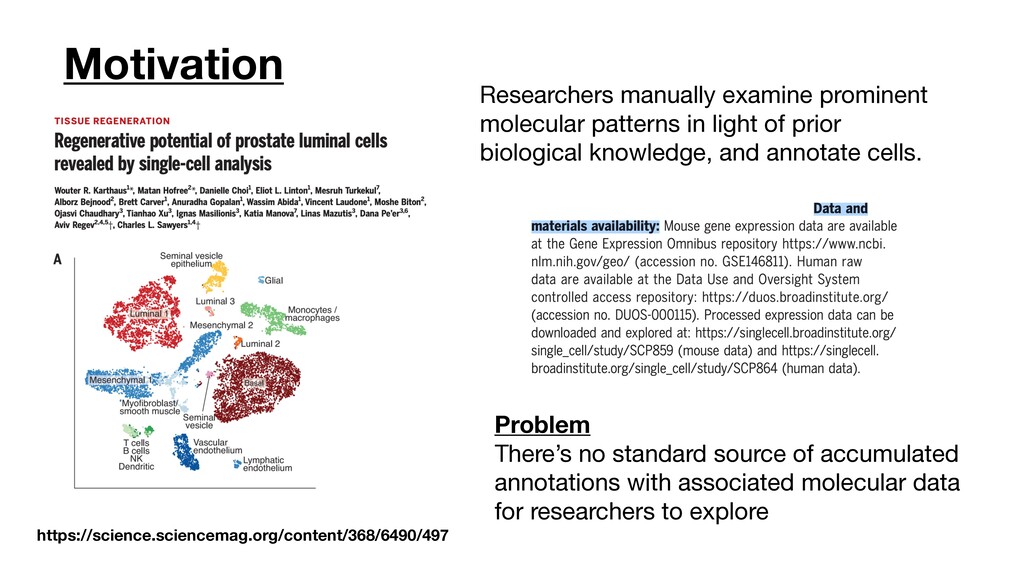
of prior biological knowledge, and annotate cells. Problem There’s no standard source of accumulated annotations with associated molecular data for researchers to explore
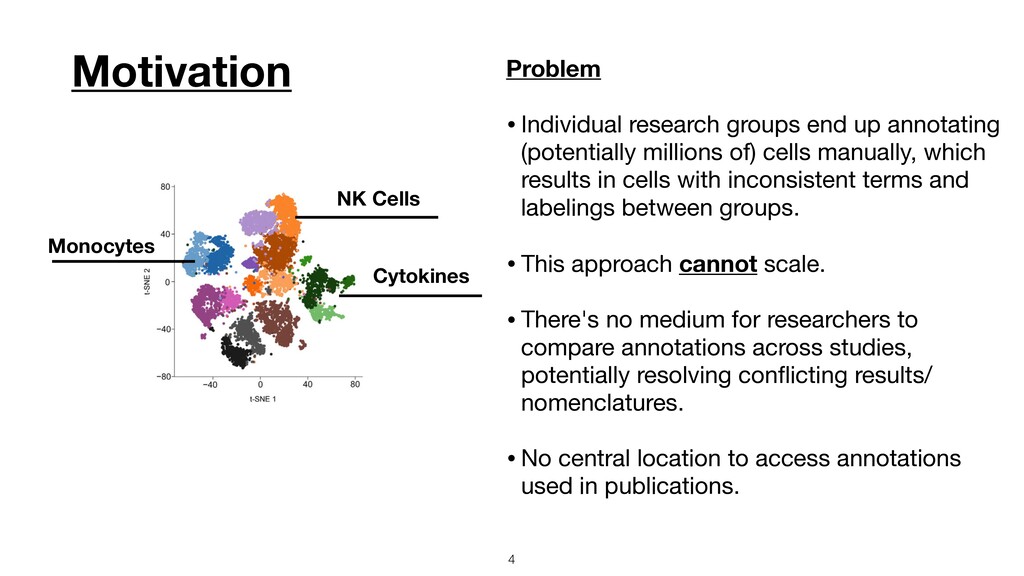
groups end up annotating (potentially millions of) cells manually, which results in cells with inconsistent terms and labelings between groups. • This approach cannot scale. • There's no medium for researchers to compare annotations across studies, potentially resolving con f l icting results/ nomenclatures. • No central location to access annotations used in publications.
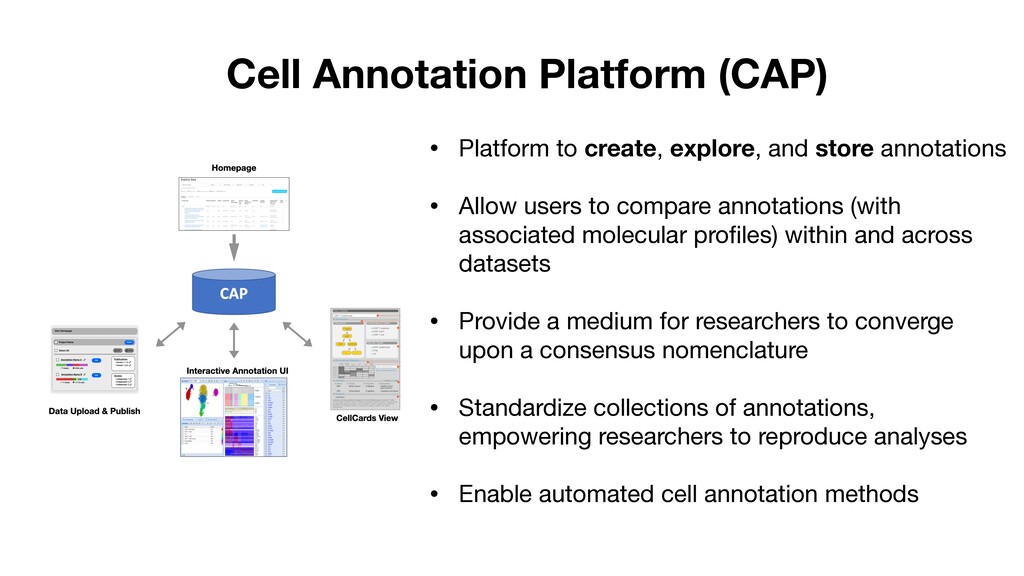
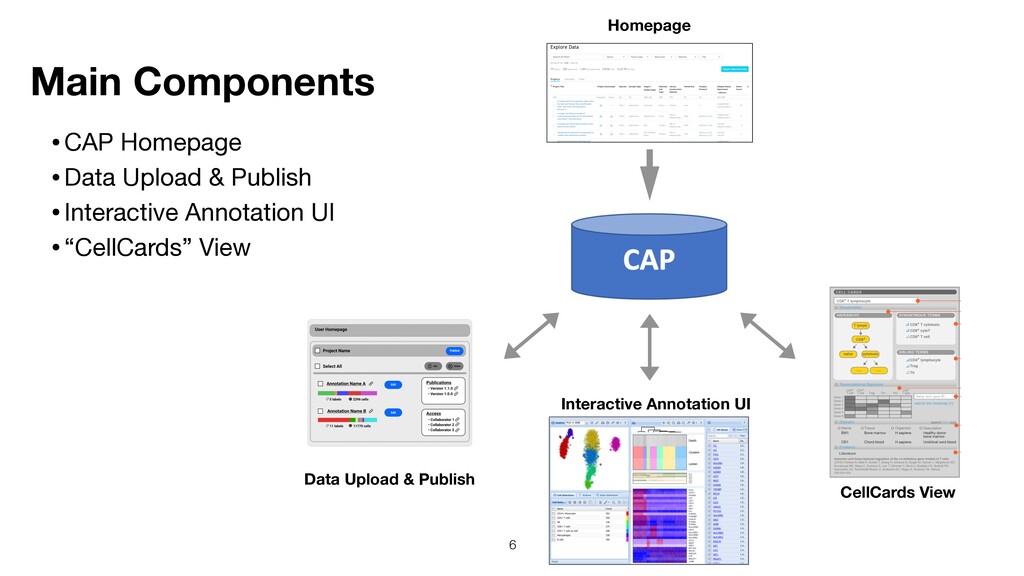
store annotations • Allow users to compare annotations (with associated molecular pro f i les) within and across datasets • Provide a medium for researchers to converge upon a consensus nomenclature • Standardize collections of annotations, empowering researchers to reproduce analyses • Enable automated cell annotation methods
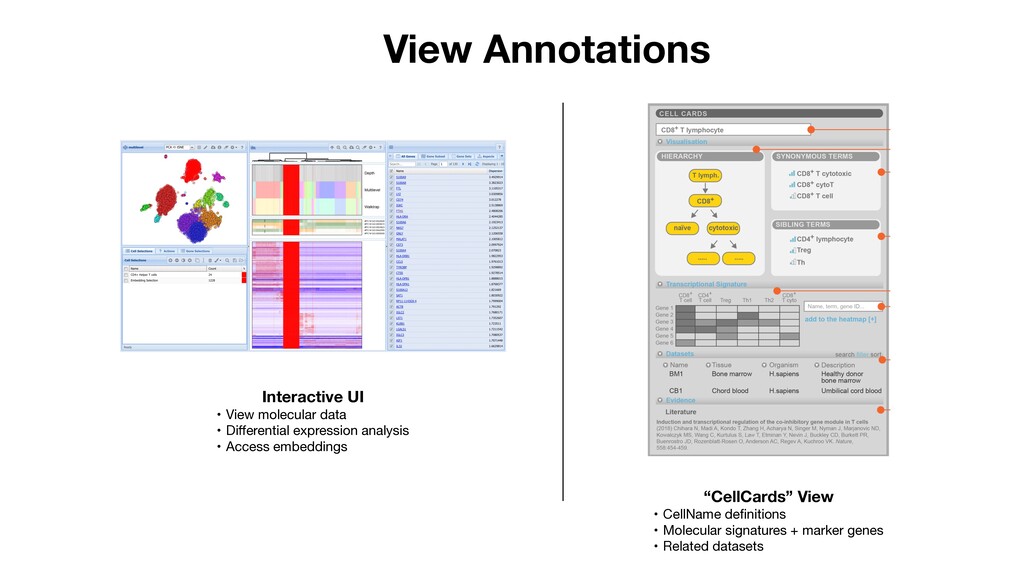
f f erential expression analysis • Access embeddings “CellCards” View • CellName de f i nitions • Molecular signatures + marker genes • Related datasets
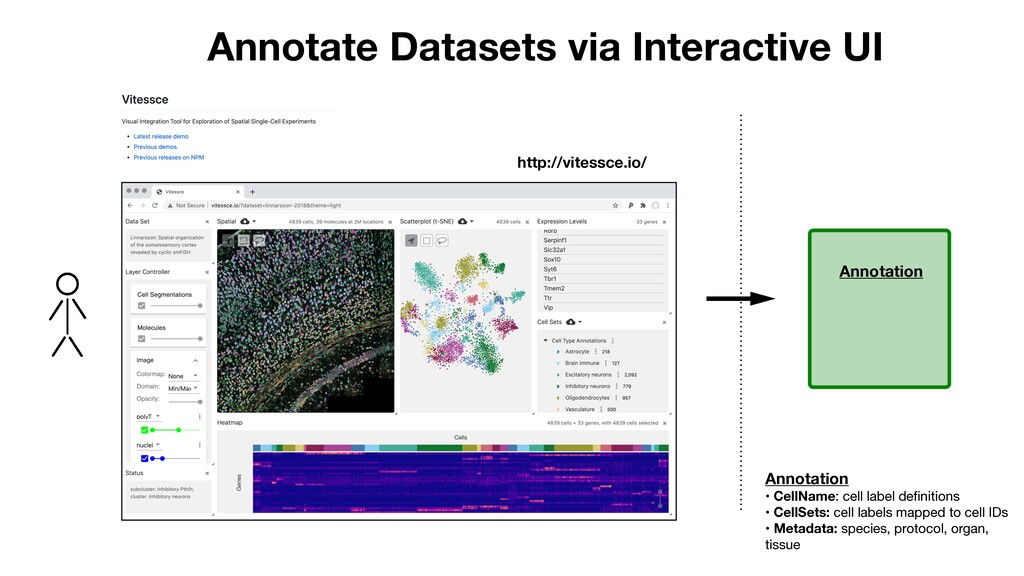
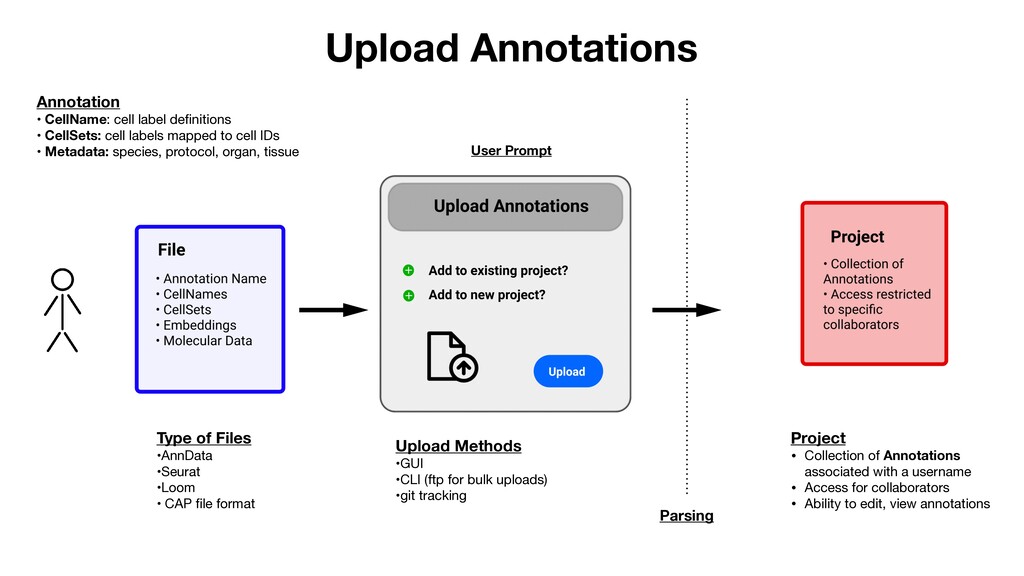
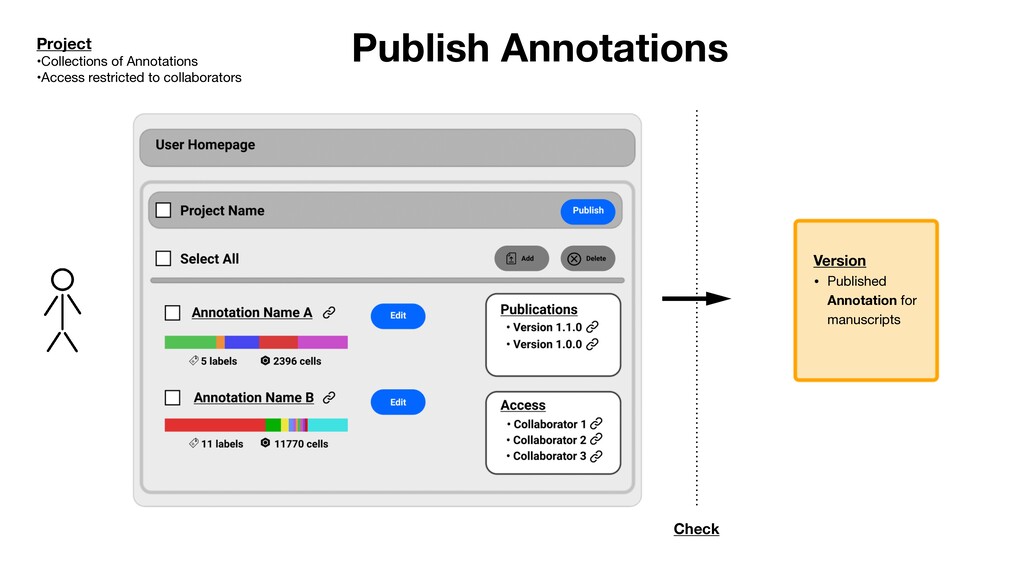
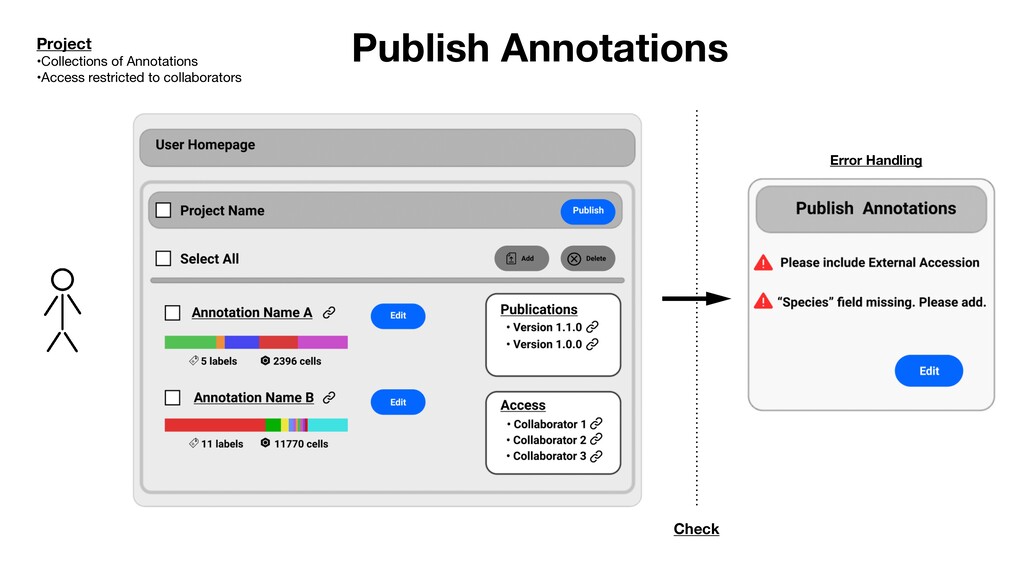
nitions • CellSets: cell labels mapped to cell IDs • Metadata: species, protocol, organ, tissue Parsing User Prompt Type of Files •AnnData •Seurat •Loom • CAP f i le format Project • Collection of Annotations associated with a username • Access for collaborators • Ability to edit, view annotations Upload Methods •GUI •CLI (ftp for bulk uploads) •git tracking
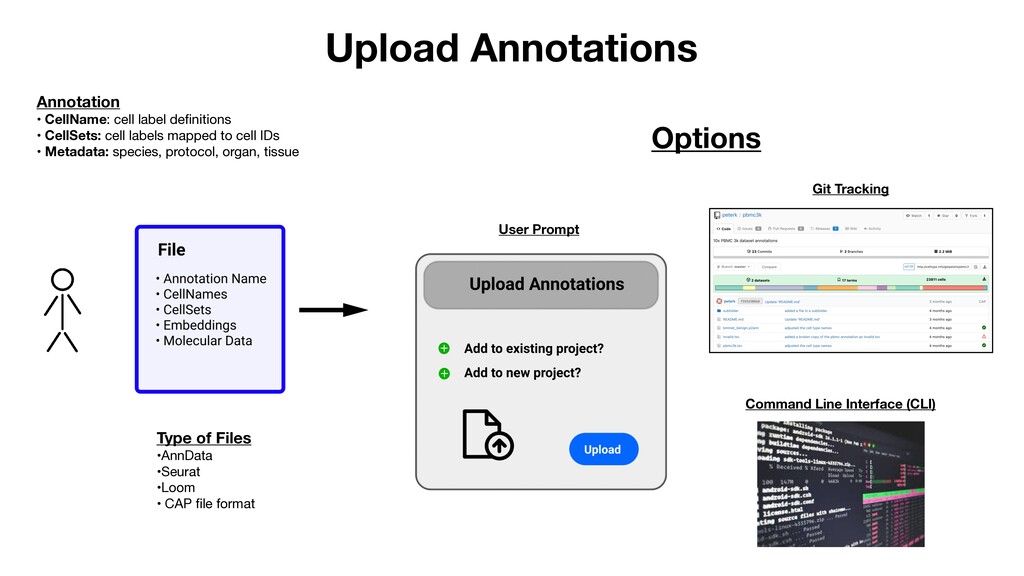
nitions • CellSets: cell labels mapped to cell IDs • Metadata: species, protocol, organ, tissue User Prompt Type of Files •AnnData •Seurat •Loom • CAP f i le format Git Tracking Command Line Interface (CLI) Options
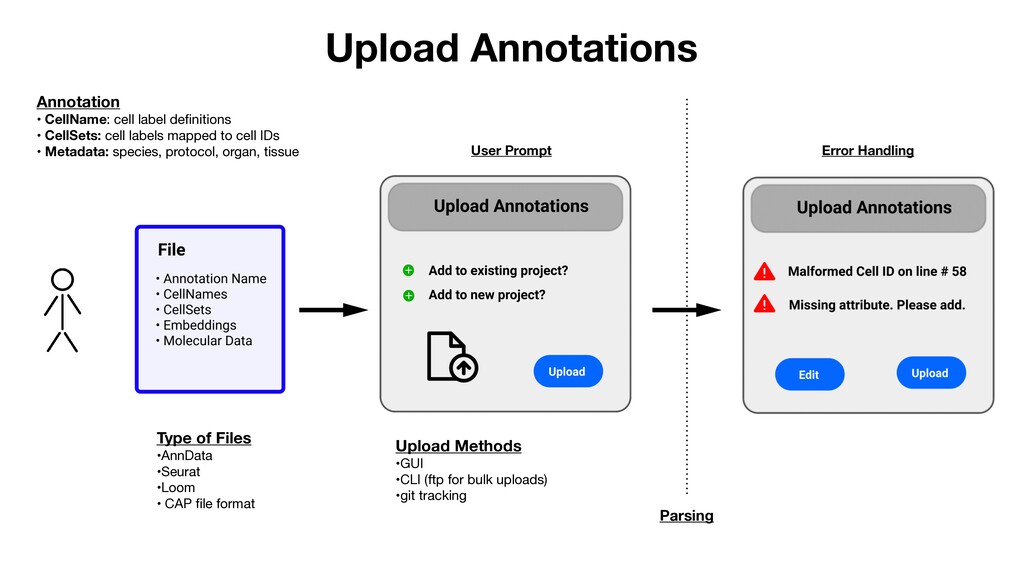
nitions • CellSets: cell labels mapped to cell IDs • Metadata: species, protocol, organ, tissue Parsing User Prompt Type of Files •AnnData •Seurat •Loom • CAP f i le format Error Handling Upload Methods •GUI •CLI (ftp for bulk uploads) •git tracking


 evanbiederstedt
 shunk031
 upura
upura
 hisaokatsumi
 kento1109
 ept
ept
 sishi2026
 recsyslab
 sishi
sishi
 hotchpotch
 nzw0301
 izumiyama_lab
 shiell
 carmenintech
 rkaga
rkaga
 kneath
 tmiket
 aleyda
 axbom
axbom
 lara
lara
 khoart
 frankvandijk
 samanthasiow
![Cell Annotation Platform Feedback Session Evan Biederstedt [email protected] Peter Kharchenko](https://files.speakerdeck.com/presentations/20389f24f83a47c9b07e95cf7cece0a9/slide_0.jpg)

![Feedback? Questions? Feedback Session Please send further feedback to: [email protected]](https://files.speakerdeck.com/presentations/20389f24f83a47c9b07e95cf7cece0a9/slide_14.jpg)