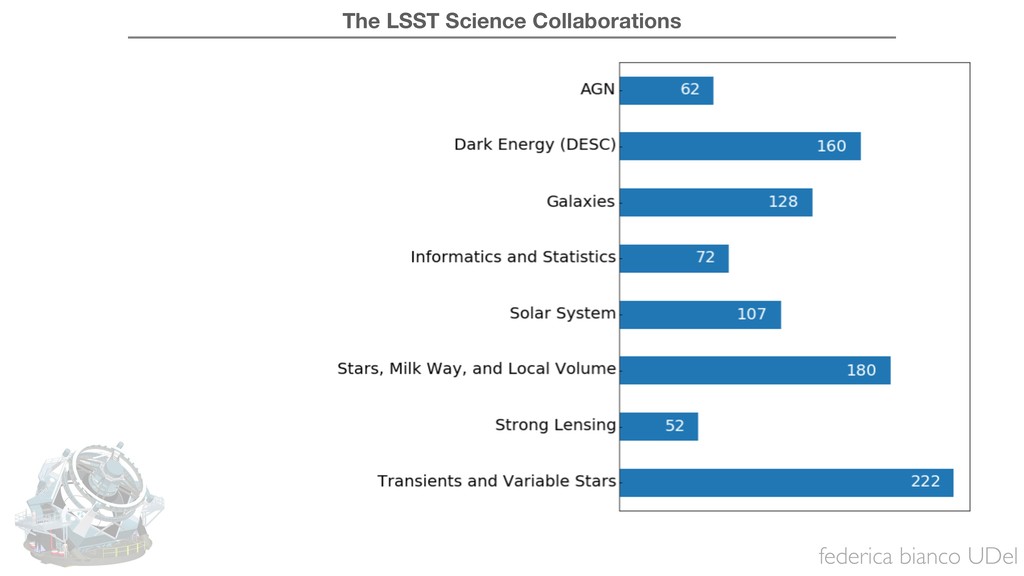
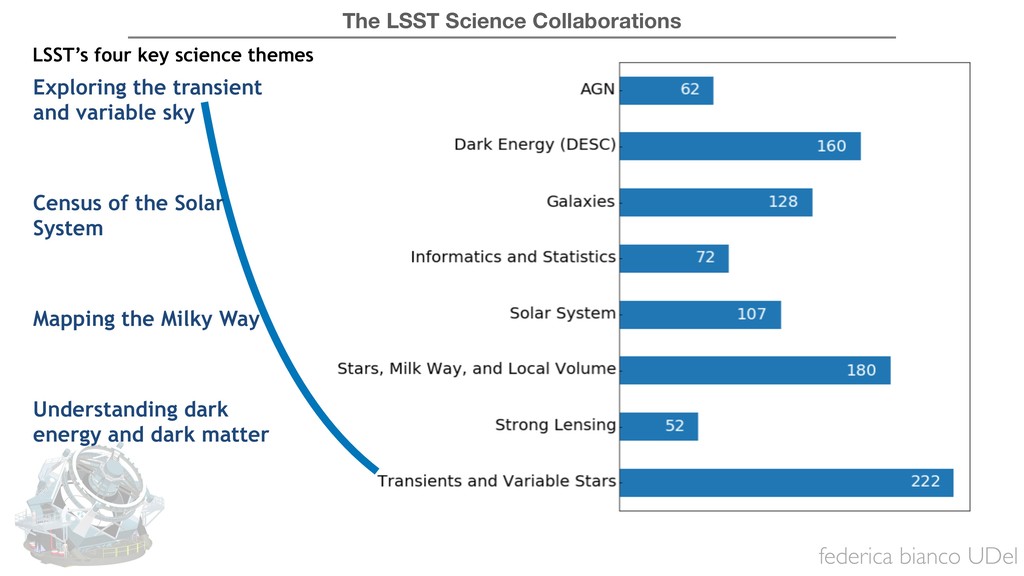
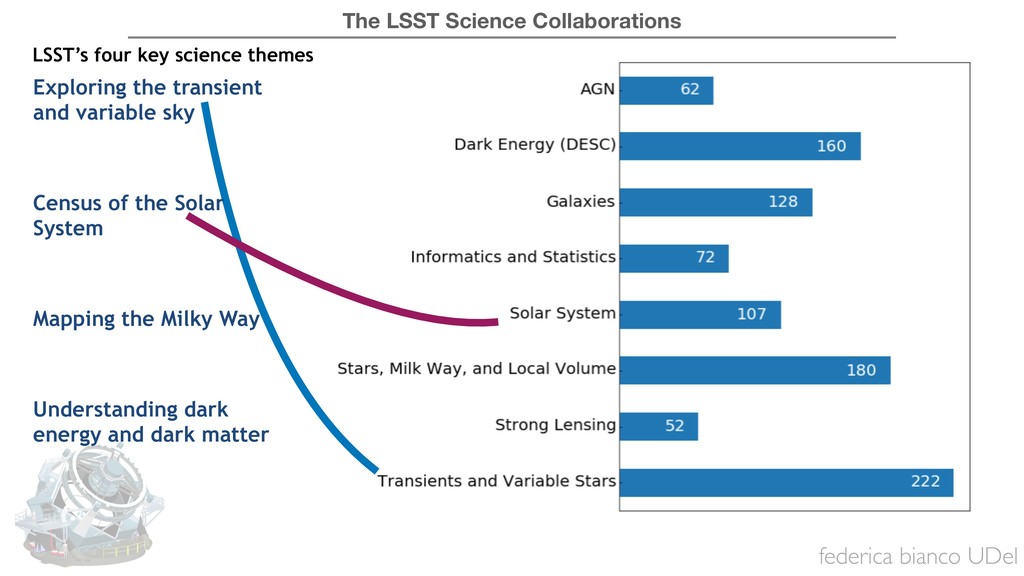
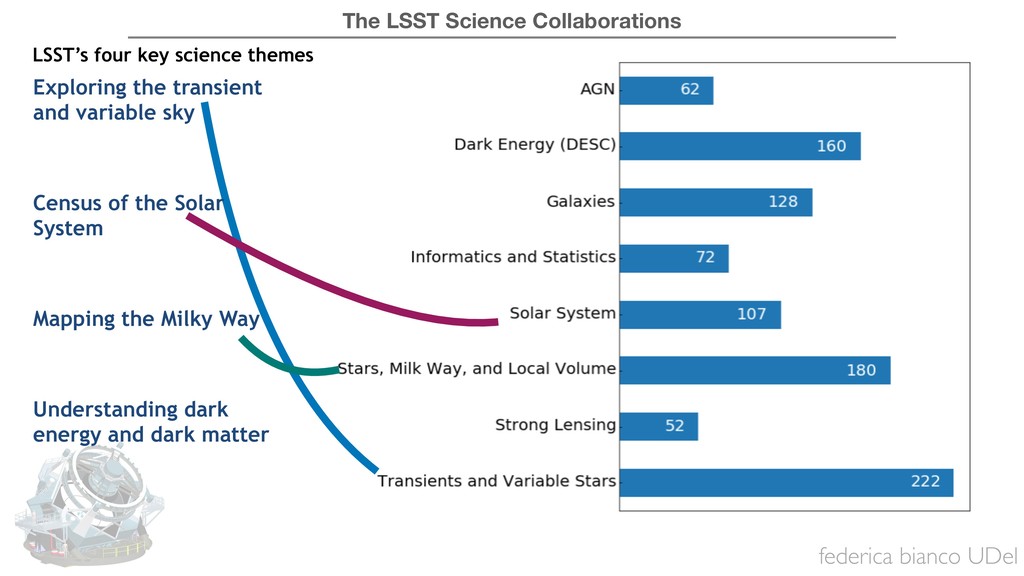
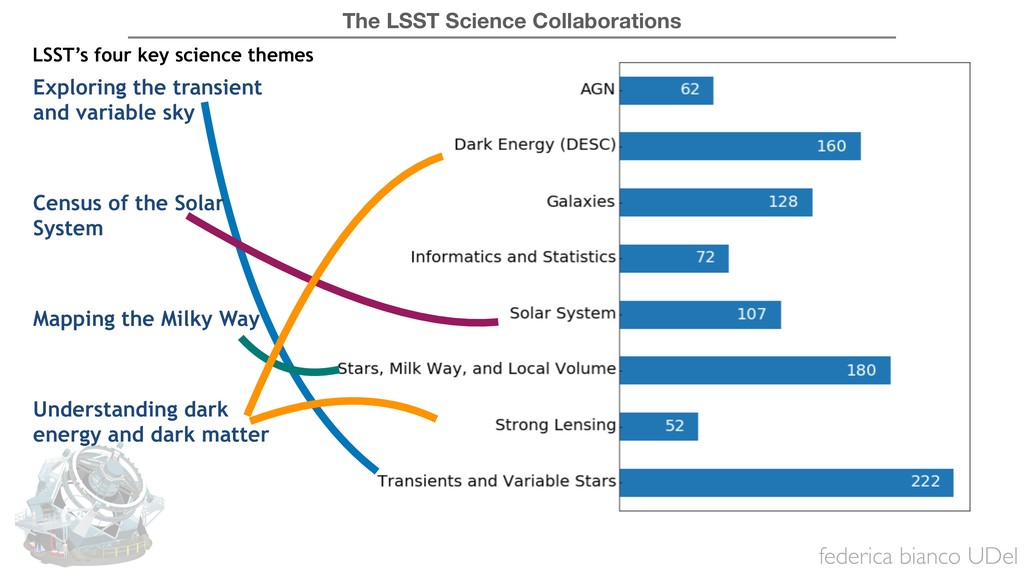
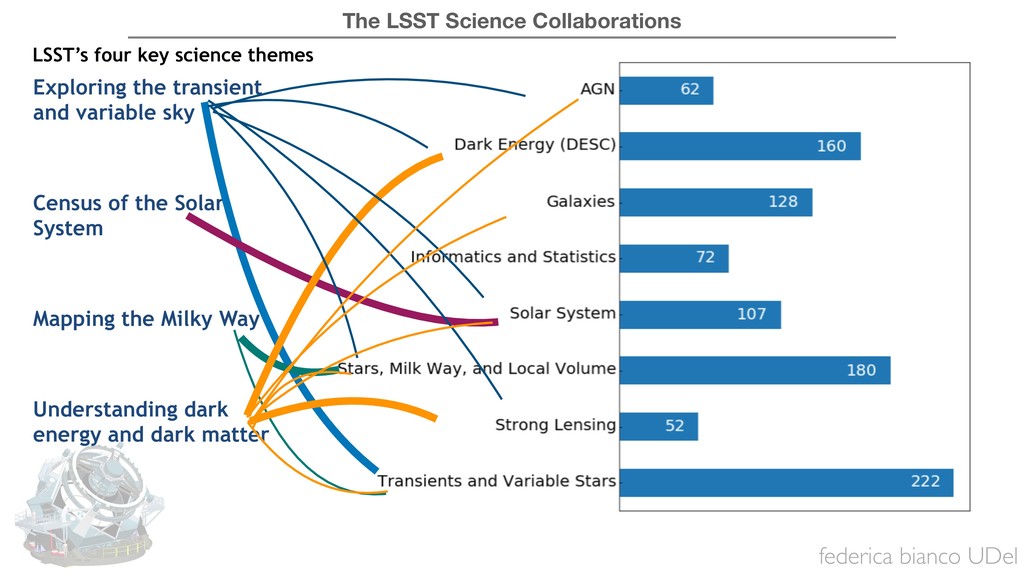
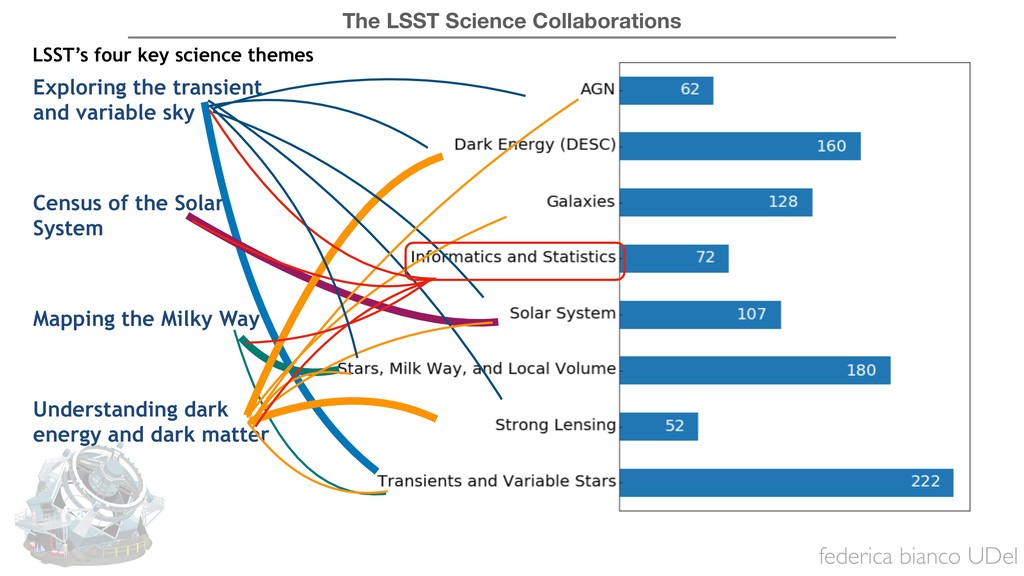
b. bianco University of Delaware Department of Physics and Astronomy - Biden School for Public Policy Data Science Institute LSST Science Collaborations Coordinator, LSSTC LSST Transient and Variable Stars Science Collaborations Co-Chair
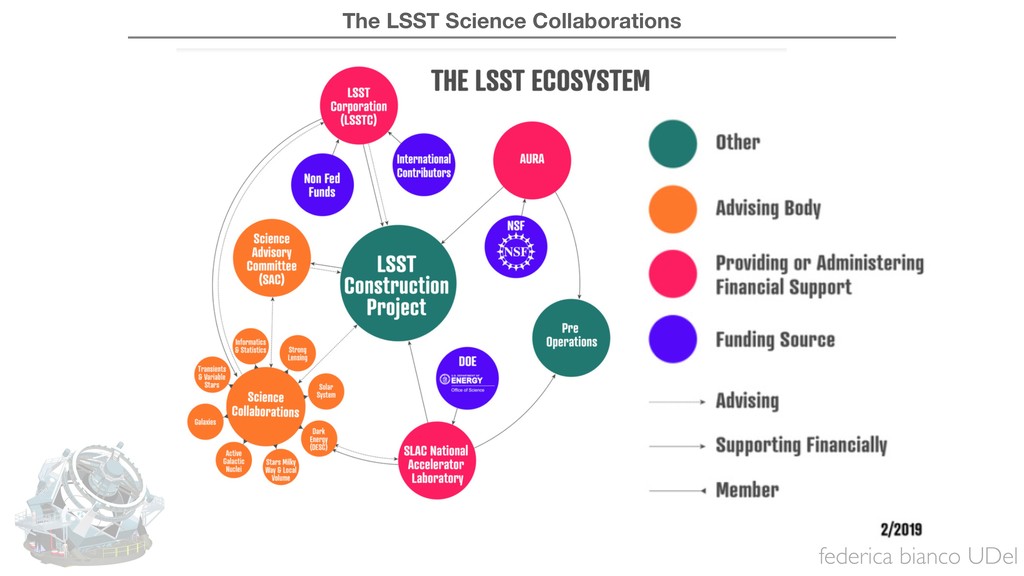
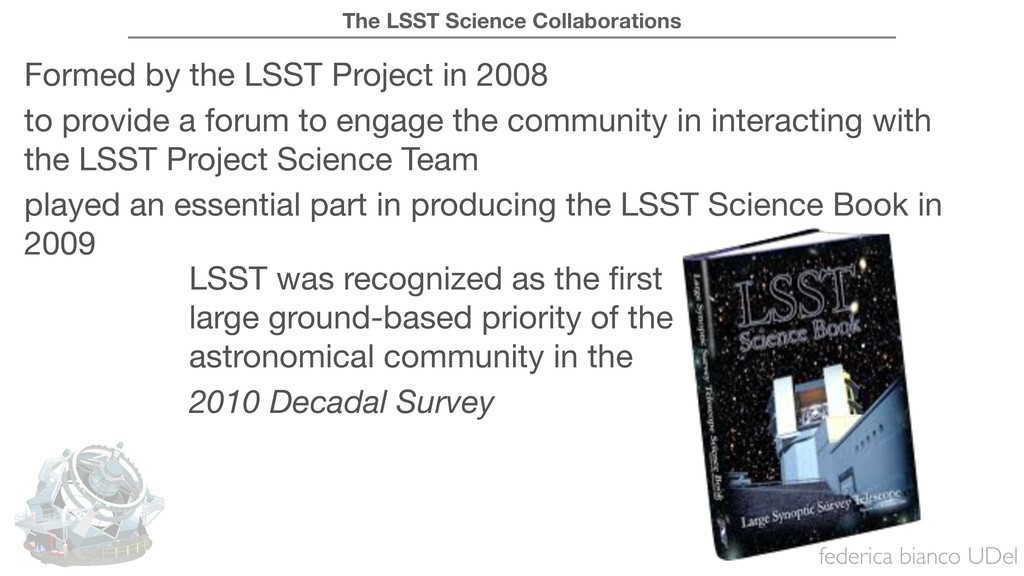
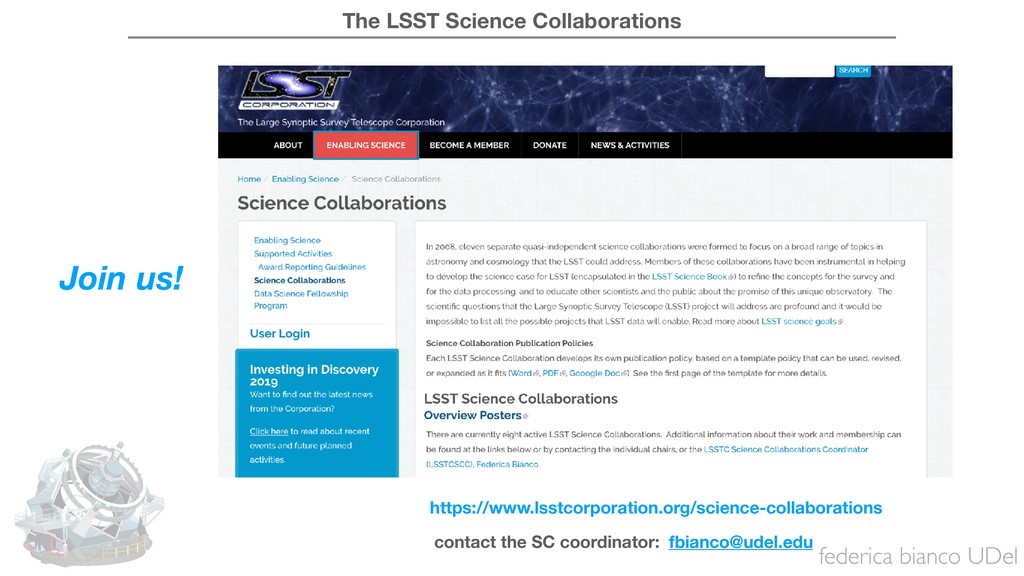
LSST Project in 2008 to provide a forum to engage the community in interacting with the LSST Project Science Team played an essential part in producing the LSST Science Book in 2009 LSST was recognized as the first large ground-based priority of the astronomical community in the 2010 Decadal Survey
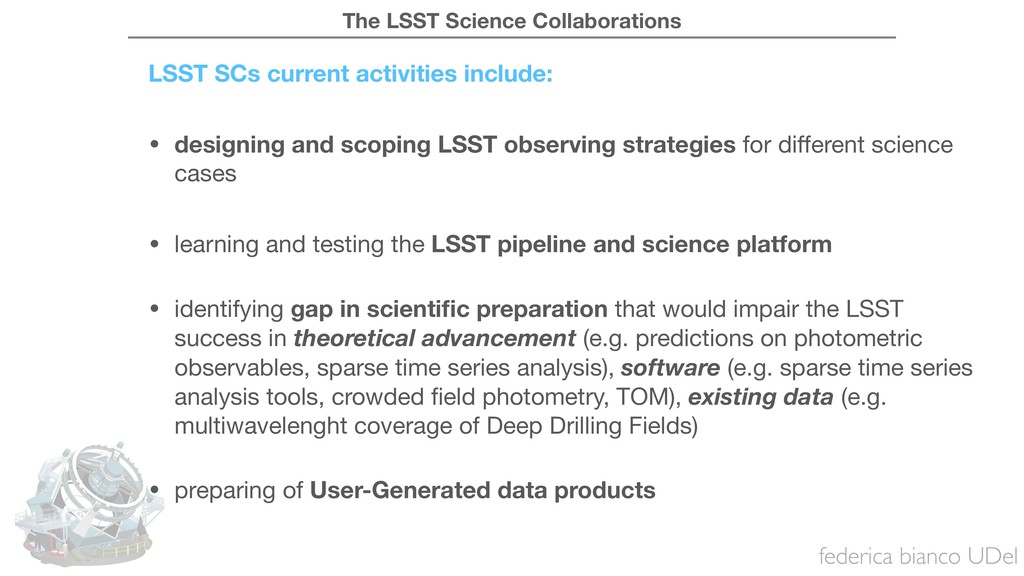
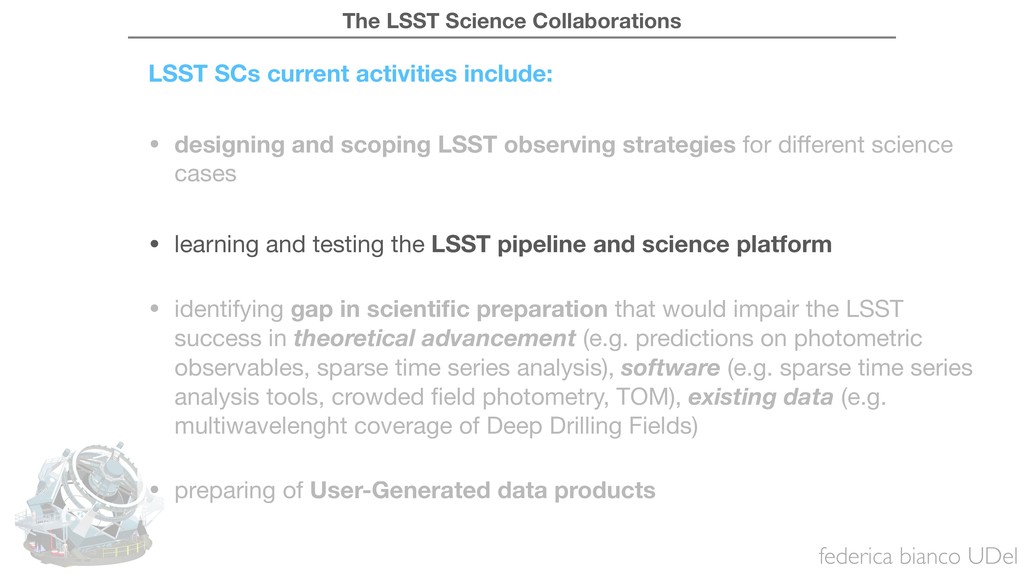
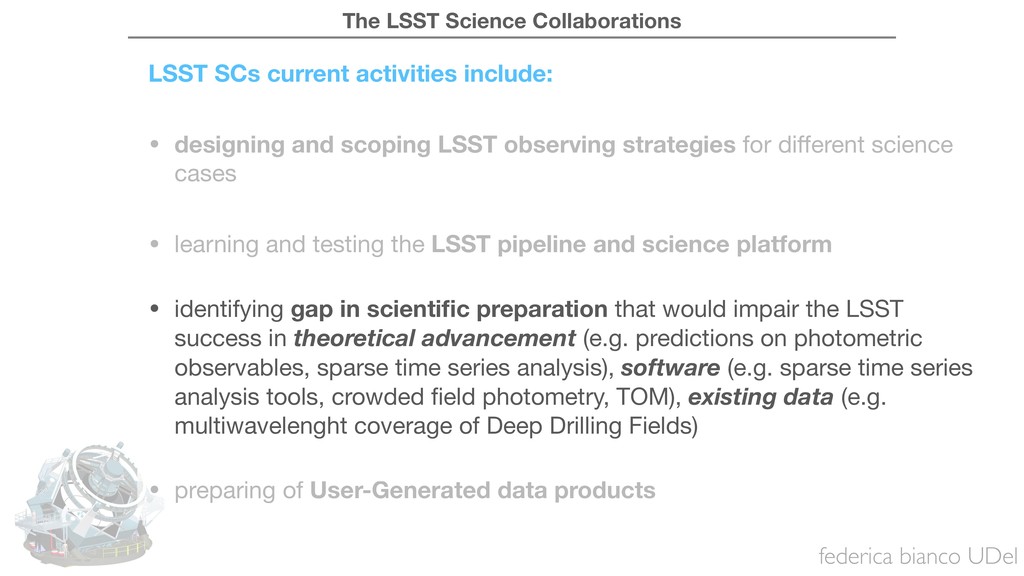
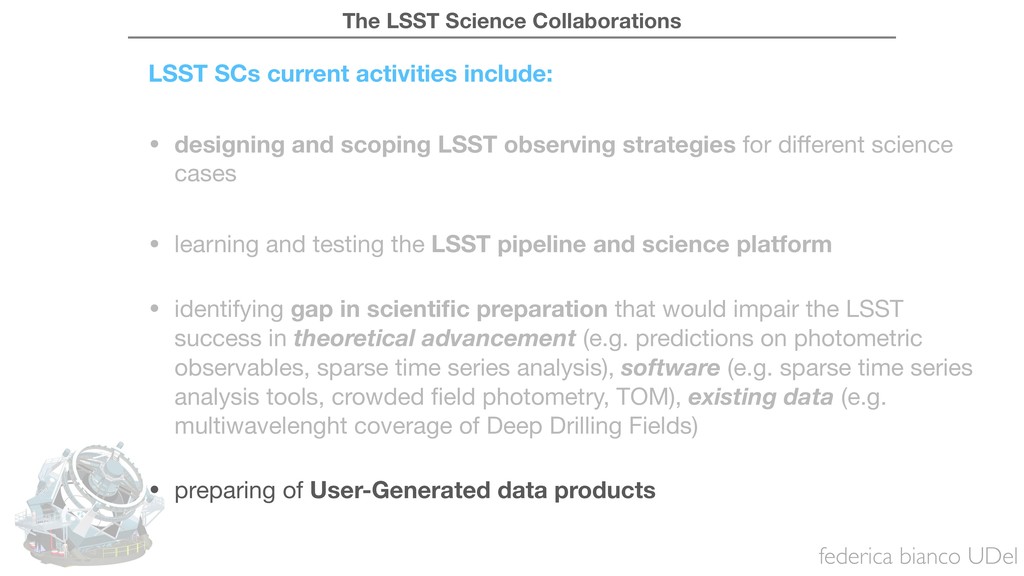
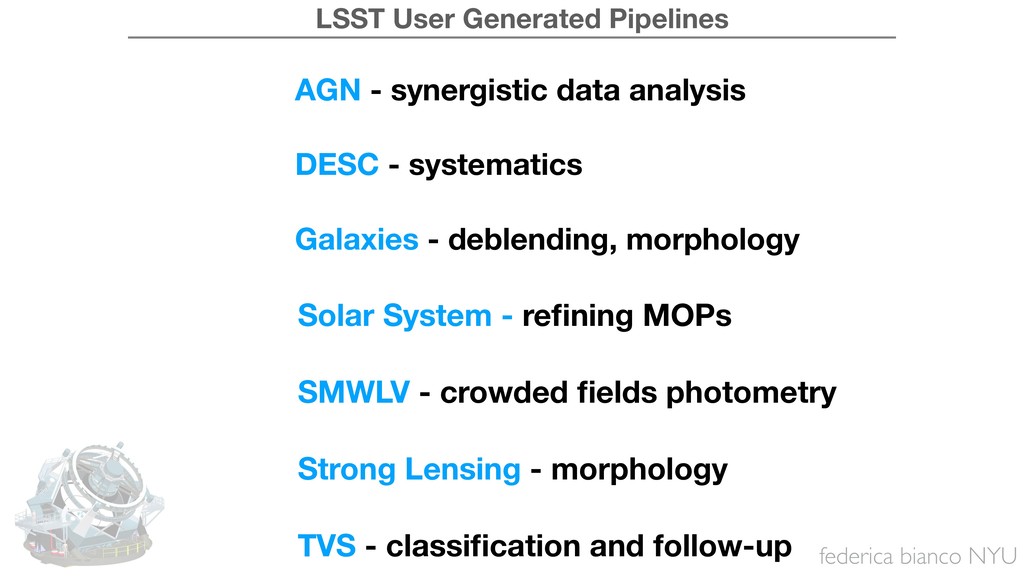
activities include: • designing and scoping LSST observing strategies for different science cases • learning and testing the LSST pipeline and science platform • identifying gap in scientific preparation that would impair the LSST success in theoretical advancement (e.g. predictions on photometric observables, sparse time series analysis), software (e.g. sparse time series analysis tools, crowded field photometry, TOM), existing data (e.g. multiwavelenght coverage of Deep Drilling Fields) • preparing of User-Generated data products
activities include: • designing and scoping LSST observing strategies for different science cases • learning and testing the LSST pipeline and science platform • identifying gap in scientific preparation that would impair the LSST success in theoretical advancement (e.g. predictions on photometric observables, sparse time series analysis), software (e.g. sparse time series analysis tools, crowded field photometry, TOM), existing data (e.g. multiwavelenght coverage of Deep Drilling Fields) • preparing of User-Generated data products
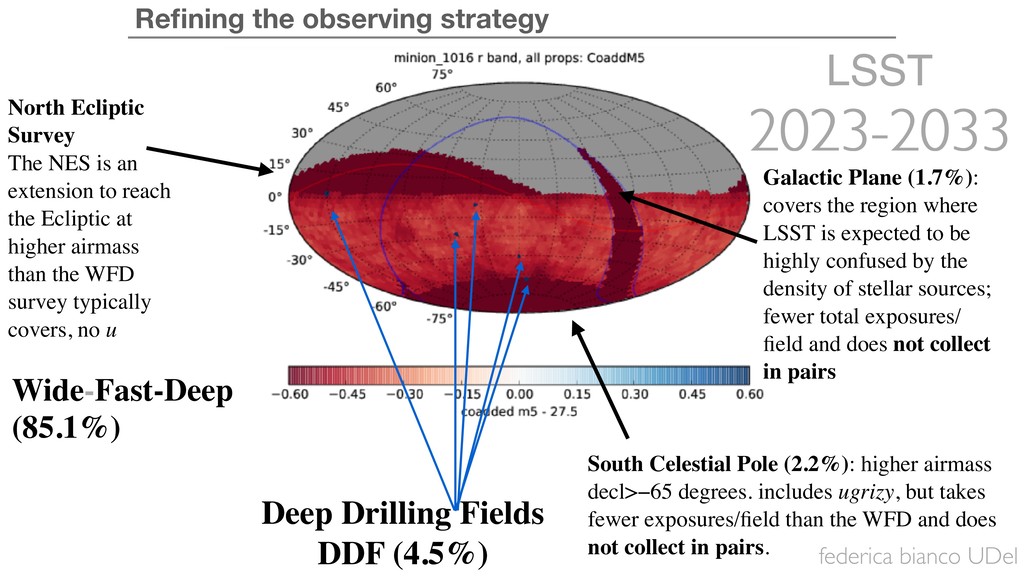
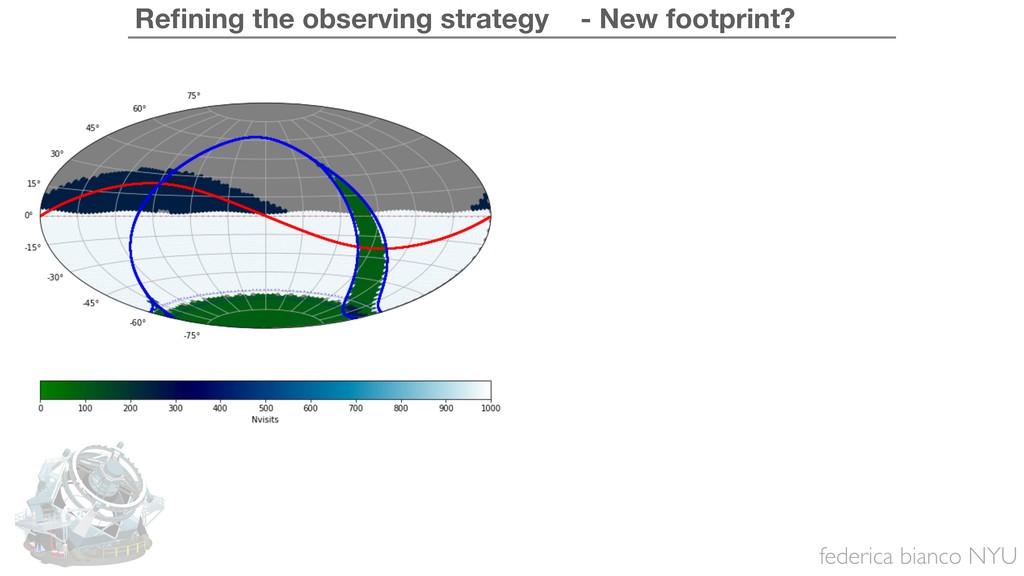
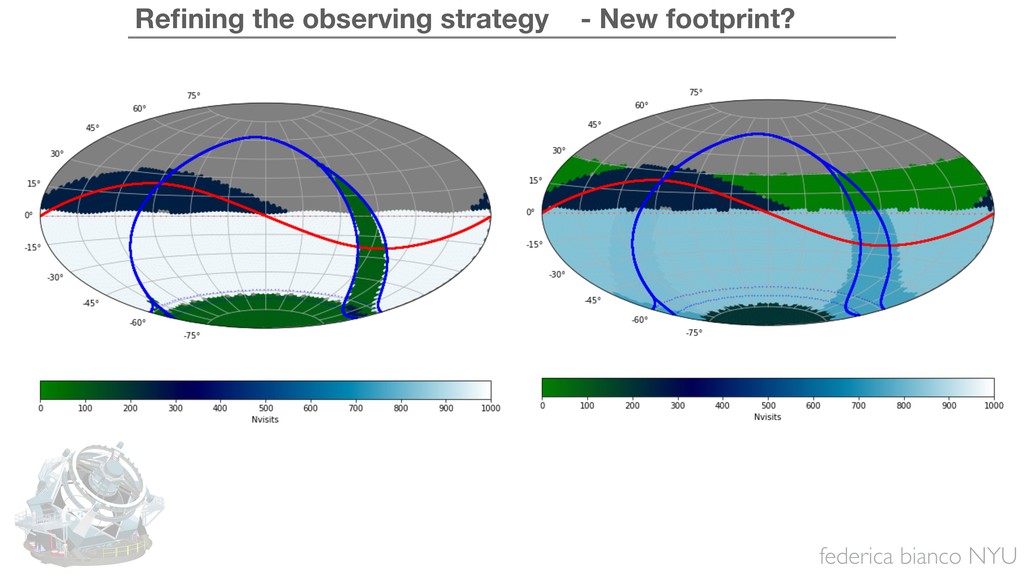
North Ecliptic Survey The NES is an extension to reach the Ecliptic at higher airmass than the WFD survey typically covers, no u Galactic Plane (1.7%): covers the region where LSST is expected to be highly confused by the density of stellar sources; fewer total exposures/ field and does not collect in pairs South Celestial Pole (2.2%): higher airmass decl>−65 degrees. includes ugrizy, but takes fewer exposures/field than the WFD and does not collect in pairs. Wide-Fast-Deep (85.1%) Refining the observing strategy 2023-2033 2023-2033 2023-2033
• u-band • more g-band • specific filter pairs • filters for triplets (smaless plug… ) Bianco et al. 2019 PASP, Special issue on Time Domain Astronomy, in publication
activities include: • designing and scoping LSST observing strategies for different science cases • learning and testing the LSST pipeline and science platform • identifying gap in scientific preparation that would impair the LSST success in theoretical advancement (e.g. predictions on photometric observables, sparse time series analysis), software (e.g. sparse time series analysis tools, crowded field photometry, TOM), existing data (e.g. multiwavelenght coverage of Deep Drilling Fields) • preparing of User-Generated data products
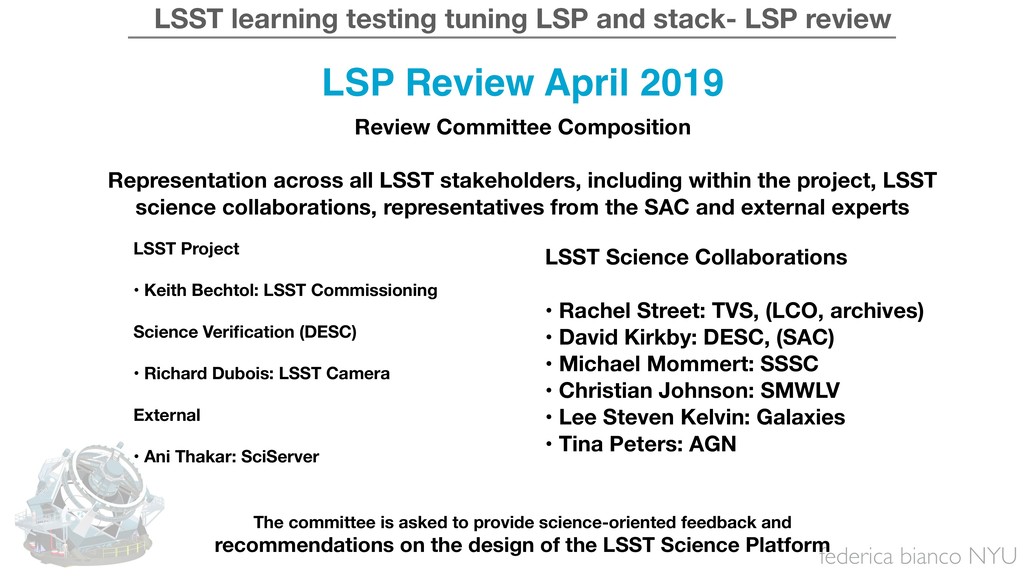
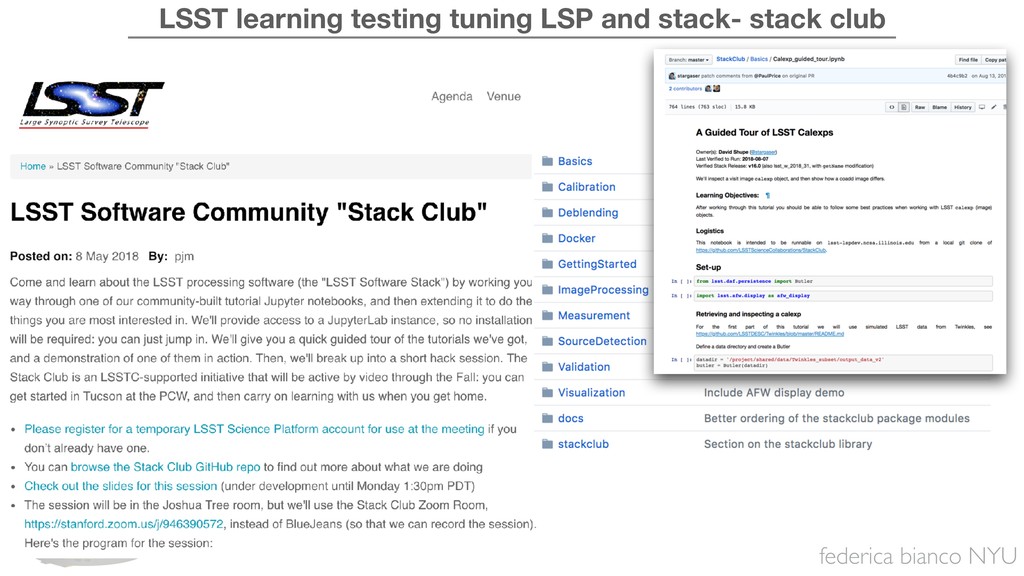
stakeholders, including within the project, LSST science collaborations, representatives from the SAC and external experts The committee is asked to provide science-oriented feedback and recommendations on the design of the LSST Science Platform LSST Project • Keith Bechtol: LSST Commissioning Science Verification (DESC) • Richard Dubois: LSST Camera External • Ani Thakar: SciServer LSST Science Collaborations • Rachel Street: TVS, (LCO, archives) • David Kirkby: DESC, (SAC) • Michael Mommert: SSSC • Christian Johnson: SMWLV • Lee Steven Kelvin: Galaxies • Tina Peters: AGN LSP Review April 2019 LSST learning testing tuning LSP and stack- LSP review
activities include: • designing and scoping LSST observing strategies for different science cases • learning and testing the LSST pipeline and science platform • identifying gap in scientific preparation that would impair the LSST success in theoretical advancement (e.g. predictions on photometric observables, sparse time series analysis), software (e.g. sparse time series analysis tools, crowded field photometry, TOM), existing data (e.g. multiwavelenght coverage of Deep Drilling Fields) • preparing of User-Generated data products
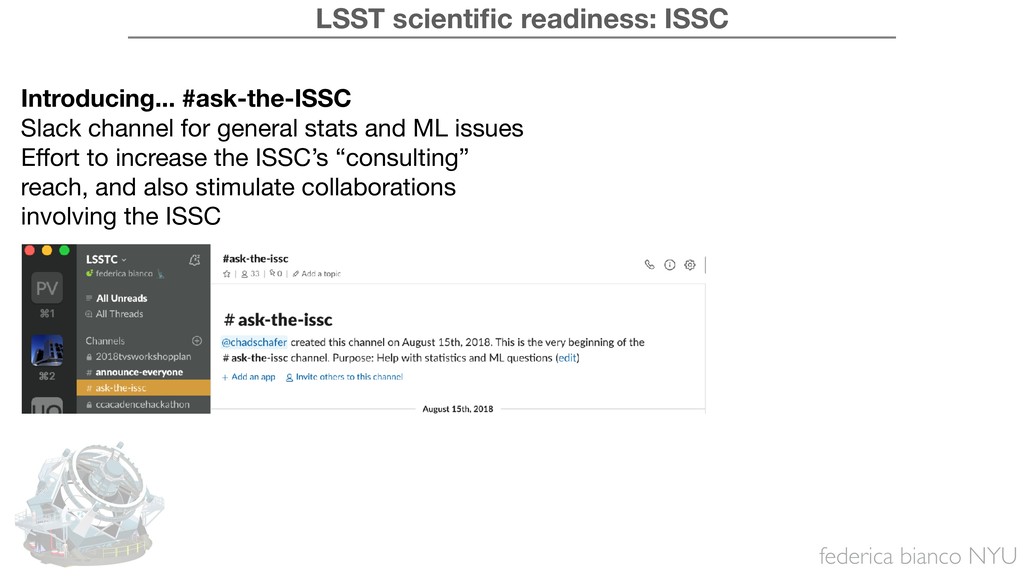
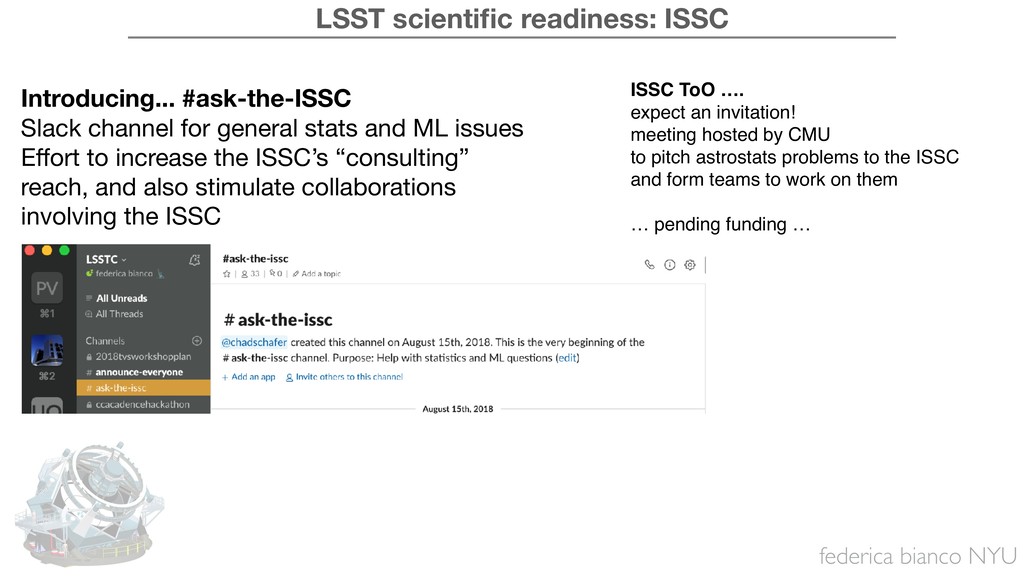
channel for general stats and ML issues Effort to increase the ISSC’s “consulting” reach, and also stimulate collaborations involving the ISSC ISSC ToO …. expect an invitation! meeting hosted by CMU to pitch astrostats problems to the ISSC and form teams to work on them … pending funding …
activities include: • designing and scoping LSST observing strategies for different science cases • learning and testing the LSST pipeline and science platform • identifying gap in scientific preparation that would impair the LSST success in theoretical advancement (e.g. predictions on photometric observables, sparse time series analysis), software (e.g. sparse time series analysis tools, crowded field photometry, TOM), existing data (e.g. multiwavelenght coverage of Deep Drilling Fields) • preparing of User-Generated data products


 fedhere
 kiyoshi
 trycycle
 institutdelelevage
 arfon
arfon
 analokmaus
 hanbao
 tagtag
 martinlippert
 taka88
 akasan
 sonatard
 jonrohan
 rkaga
rkaga
 eitanlees
 sabderemane
 baasie
 chriscoyier
 eileencodes
 pedronauck
 pauljervisheath
 vanstee