Upgrade to Pro — share decks privately, control downloads, hide ads and more …

Additional Support Needs in Scotland – Findings...

Additional Support Needs in Scotland – Findings from HM Inspectors

This HM Inspectors of Education (HMIE) presentation, delivered by Steven McPherson, Head of Inspection, explores inspection findings on Additional Support Needs (ASN) provision in Scotland's schools.

It highlights strengths in inclusive practice, personalised support and positive relationships, alongside challenges faced by schools in meeting the increasingly diverse and complex needs of children and young people.

Key areas covered include:
- Inclusive practice and personalised learning
- Identification, planning and monitoring of additional support needs
- Supporting wellbeing, engagement and attainment
- Staffing pressures and access to specialist support
- Improving learner participation and targeted interventions
- Professional learning and inclusive classroom approaches
The presentation also includes reflective questions to support professional discussion and improvement planning.

Find out more at https://educationinspectorate.gov.scot/

HMIE Scotland

November 12, 2026

Transcript

10 slides
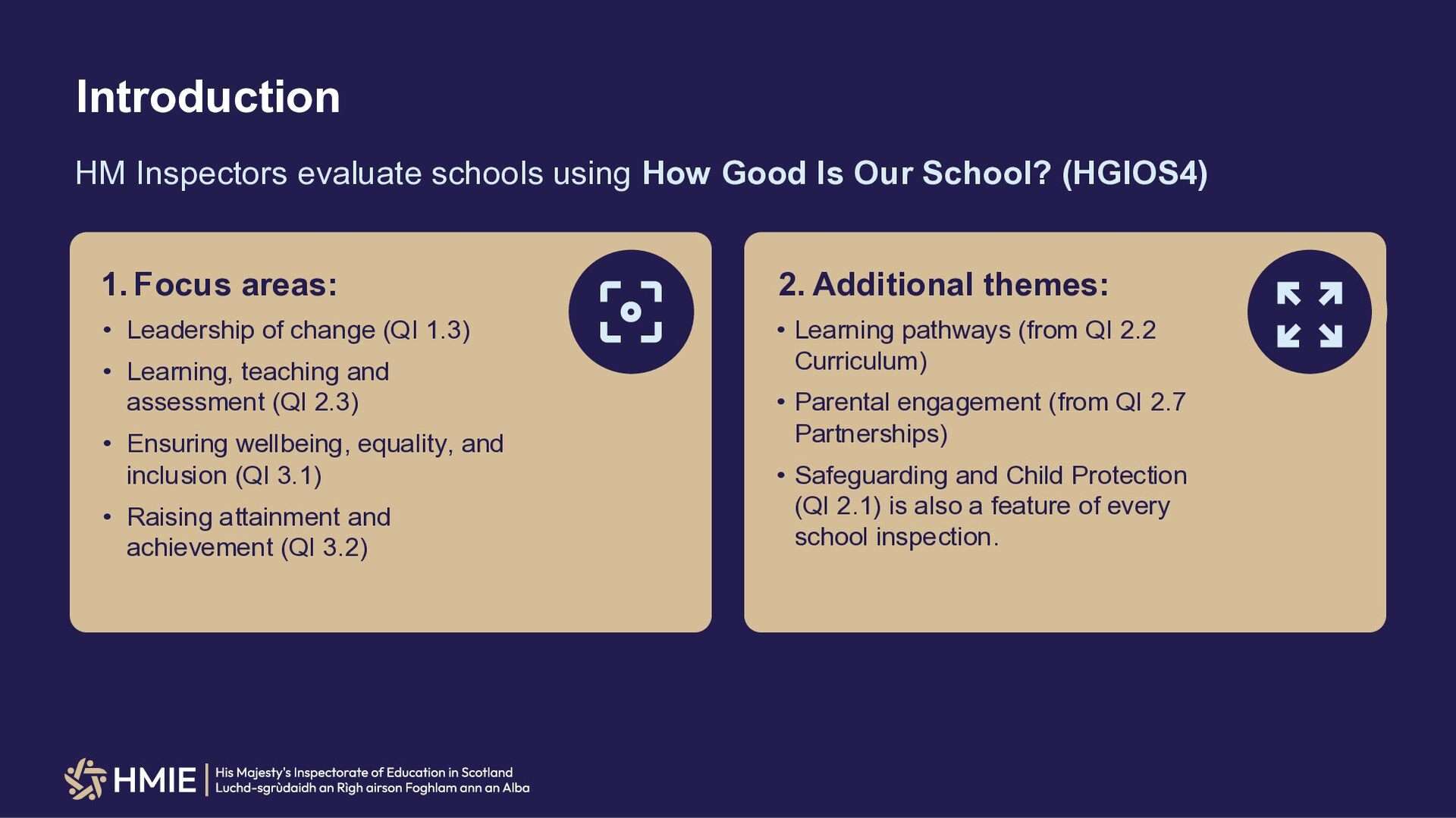
  1. Introduction HM Inspectors evaluate schools using How Good Is Our

    School? (HGIOS4) 1. Focus areas: 2. Additional themes: • Leadership of change (QI 1.3) • Learning pathways (from QI 2.2 Curriculum) • Learning, teaching and assessment (QI 2.3) • Ensuring wellbeing, equality, and inclusion (QI 3.1) • Raising attainment and achievement (QI 3.2) • Parental engagement (from QI 2.7 Partnerships) • Safeguarding and Child Protection (QI 2.1) is also a feature of every school inspection.
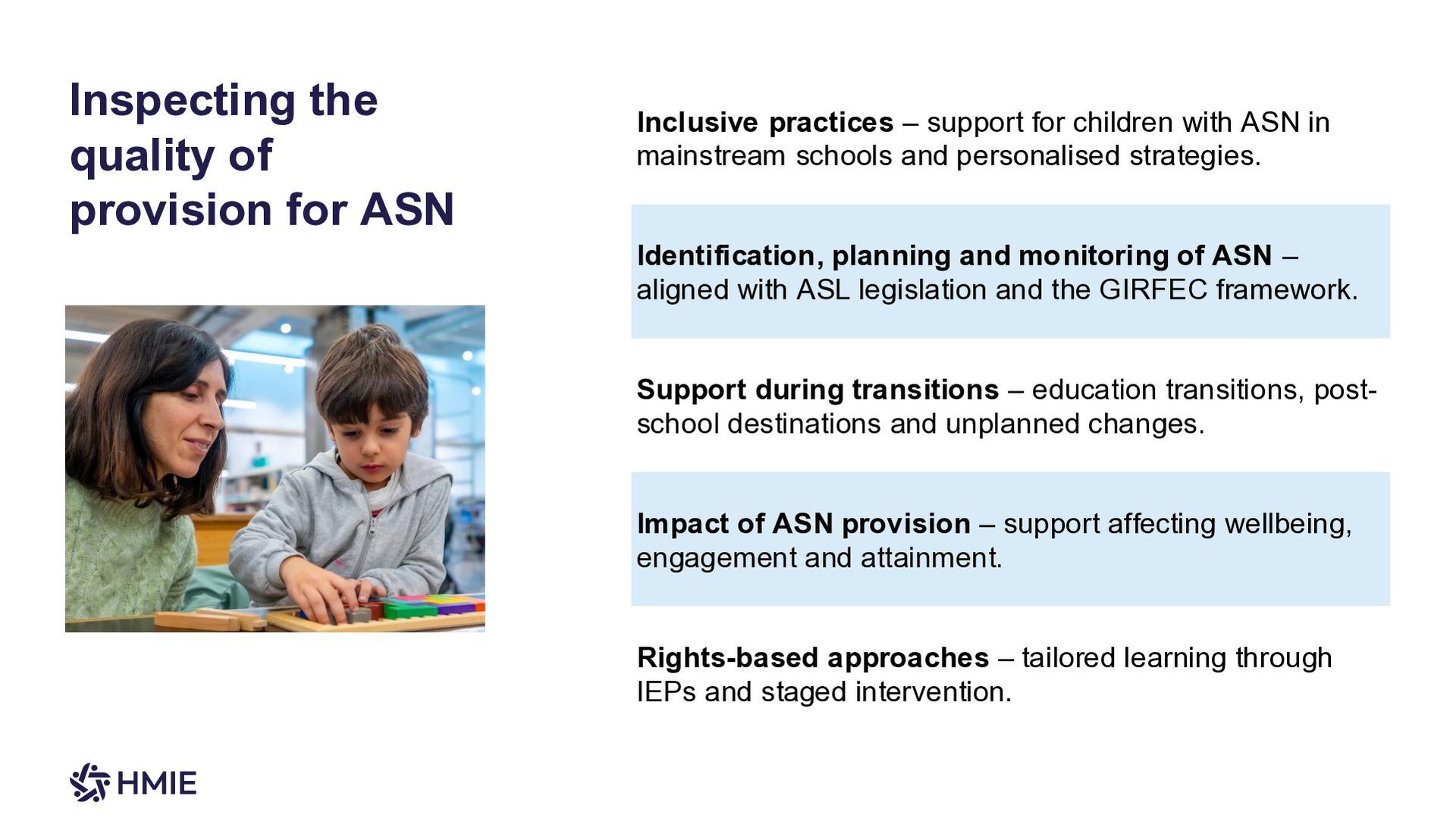
  2. Inspecting the quality of provision for ASN Inclusive practices –

    support for children with ASN in mainstream schools and personalised strategies. Identification, planning and monitoring of ASN – aligned with ASL legislation and the GIRFEC framework. Support during transitions – education transitions, postschool destinations and unplanned changes. Impact of ASN provision – support affecting wellbeing, engagement and attainment. Rights-based approaches – tailored learning through IEPs and staged intervention.
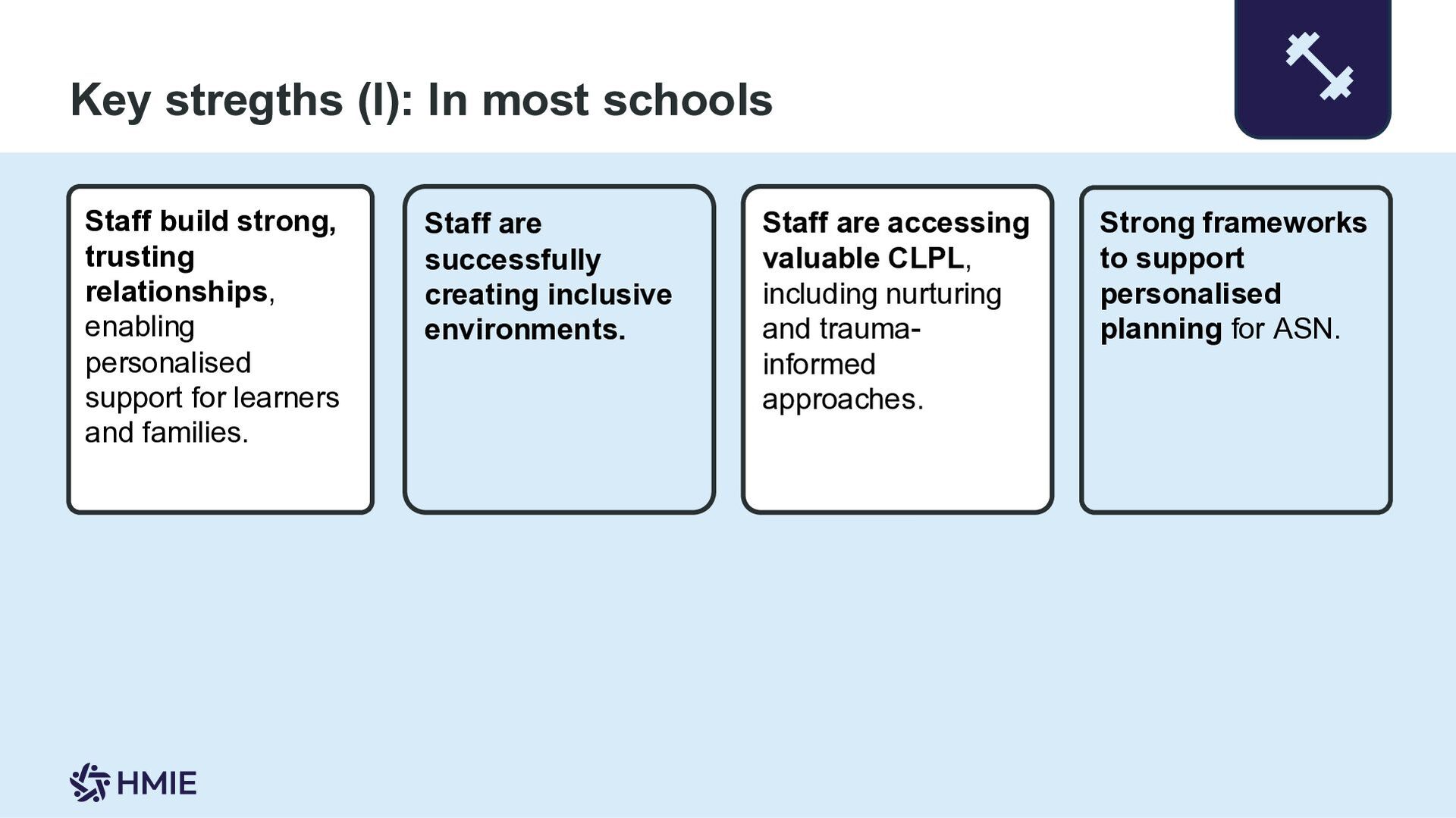
  3. Key stregths (I): In most schools Staff build strong, trusting

    relationships, enabling personalised support for learners and families. Staff are successfully creating inclusive environments. Staff are accessing valuable CLPL, including nurturing and traumainformed approaches. Strong frameworks to support personalised planning for ASN.
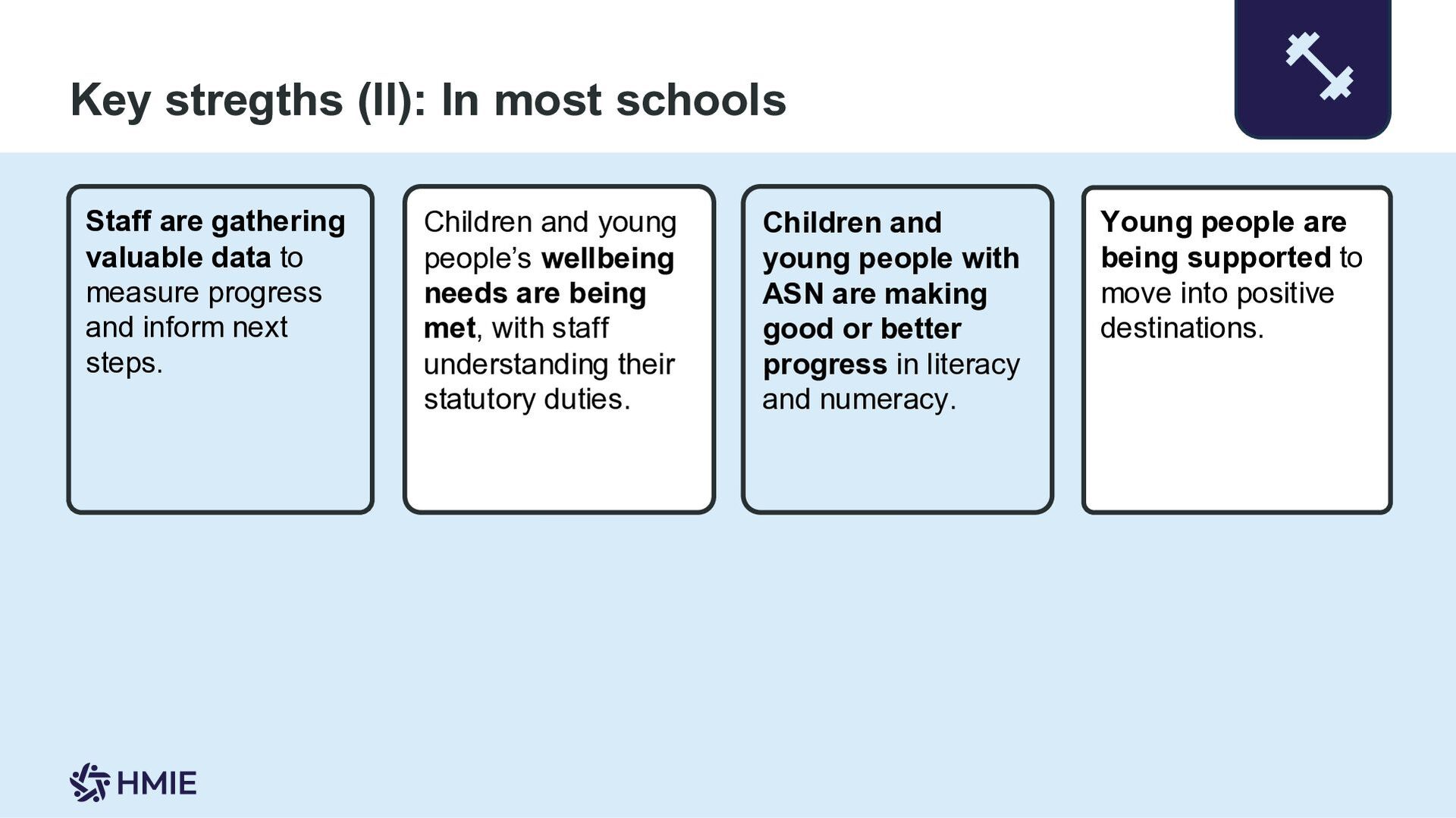
  4. Key stregths (II): In most schools Staff are gathering valuable

    data to measure progress and inform next steps. Children and young people’s wellbeing needs are being met, with staff understanding their statutory duties. Children and young people with ASN are making good or better progress in literacy and numeracy. Young people are being supported to move into positive destinations.
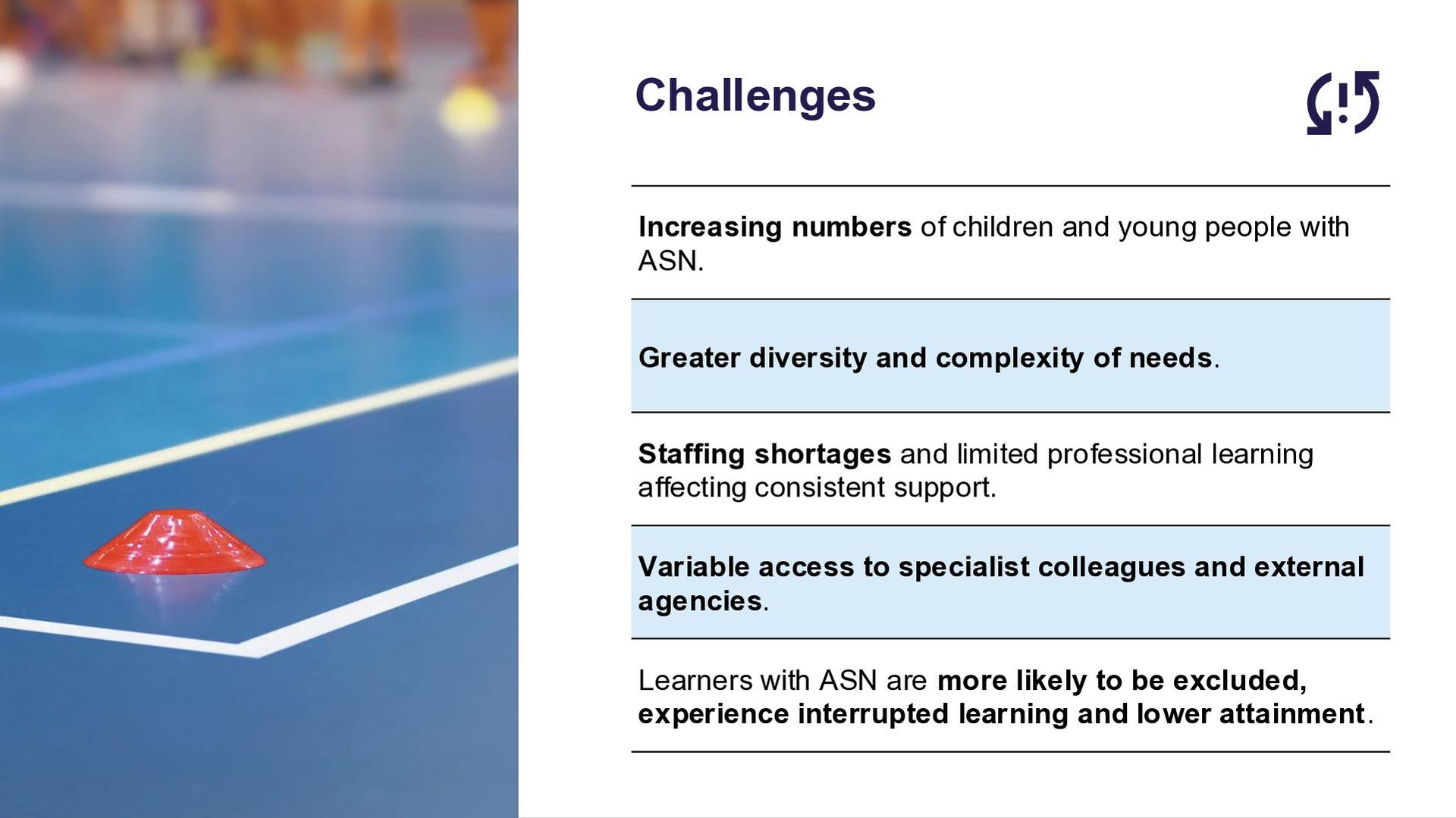
  5. Challenges Increasing numbers of children and young people with ASN.

    Greater diversity and complexity of needs. Staffing shortages and limited professional learning affecting consistent support. Variable access to specialist colleagues and external agencies. Learners with ASN are more likely to be excluded, experience interrupted learning and lower attainment.
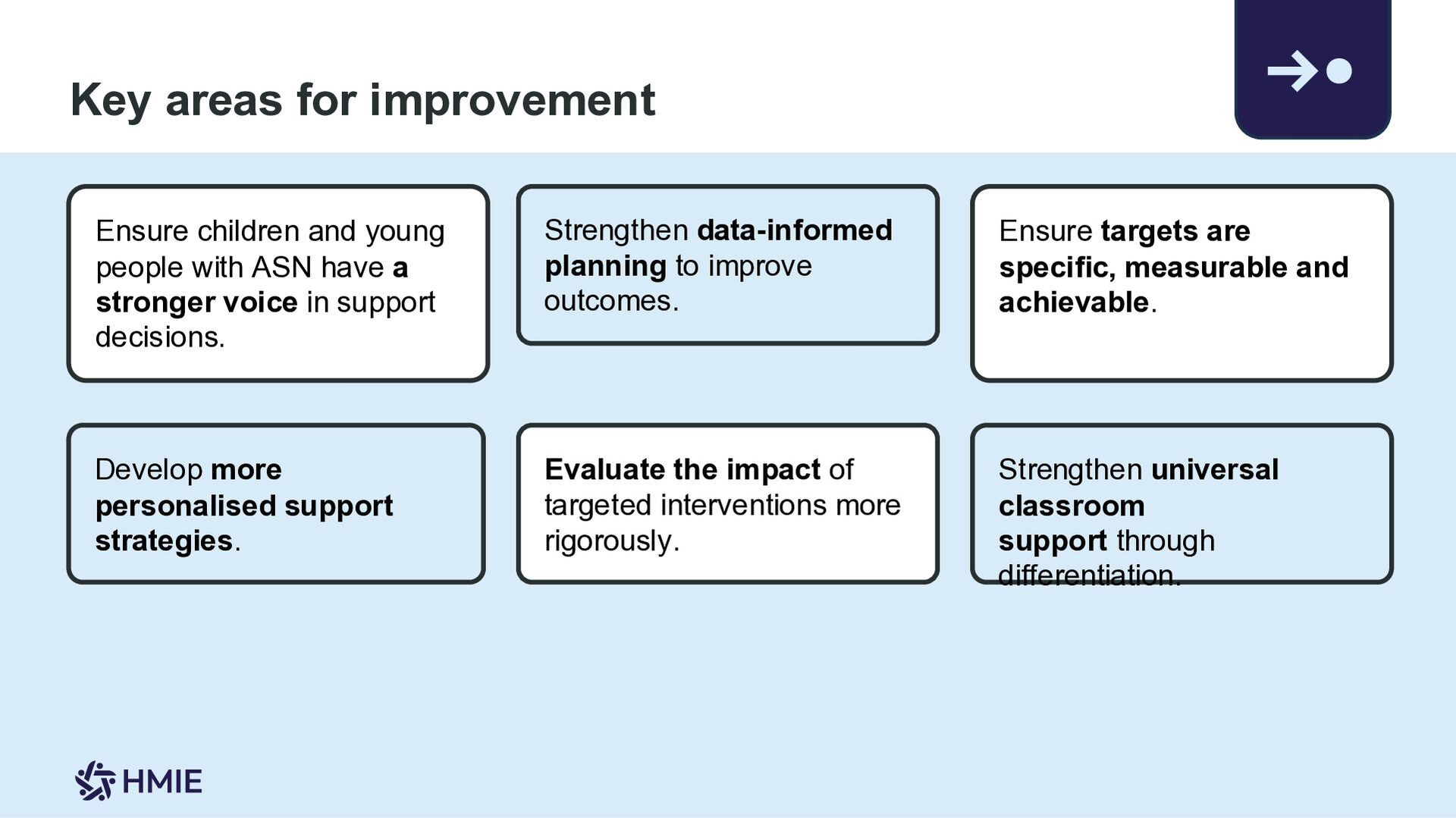
  6. Key areas for improvement Ensure children and young people with

    ASN have a stronger voice in support decisions. Strengthen data-informed planning to improve outcomes. Ensure targets are specific, measurable and achievable. Develop more personalised support strategies. Evaluate the impact of targeted interventions more rigorously. Strengthen universal classroom support through differentiation.
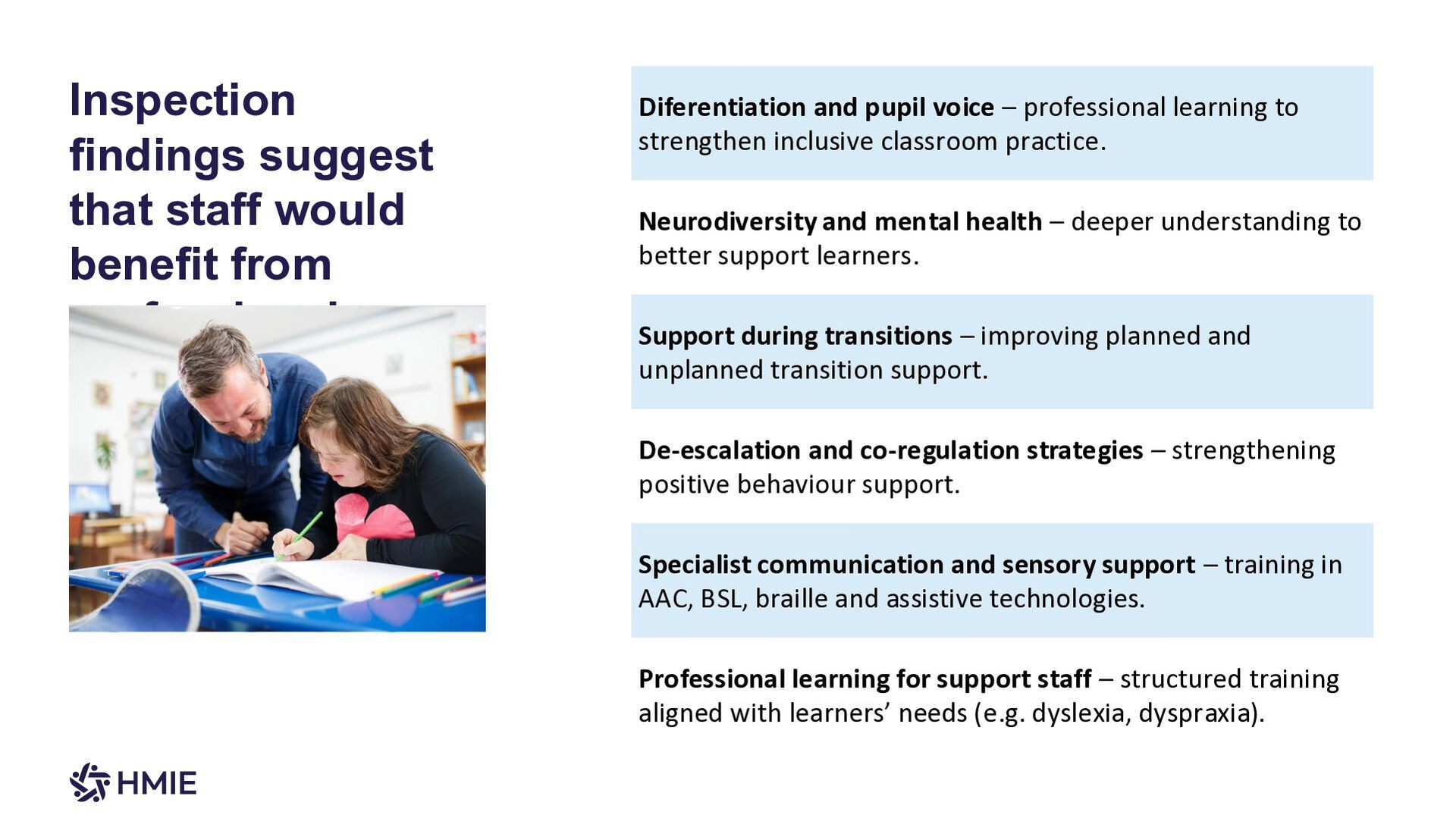
  7. Inspection findings suggest that staff would benefit from professional learning

    in: Diferentiation and pupil voice – professional learning to strengthen inclusive classroom practice. Neurodiversity and mental health – deeper understanding to better support learners. Support during transitions – improving planned and unplanned transition support. De-escalation and co-regulation strategies – strengthening positive behaviour support. Specialist communication and sensory support – training in AAC, BSL, braille and assistive technologies. Professional learning for support staff – structured training aligned with learners’ needs (e.g. dyslexia, dyspraxia).
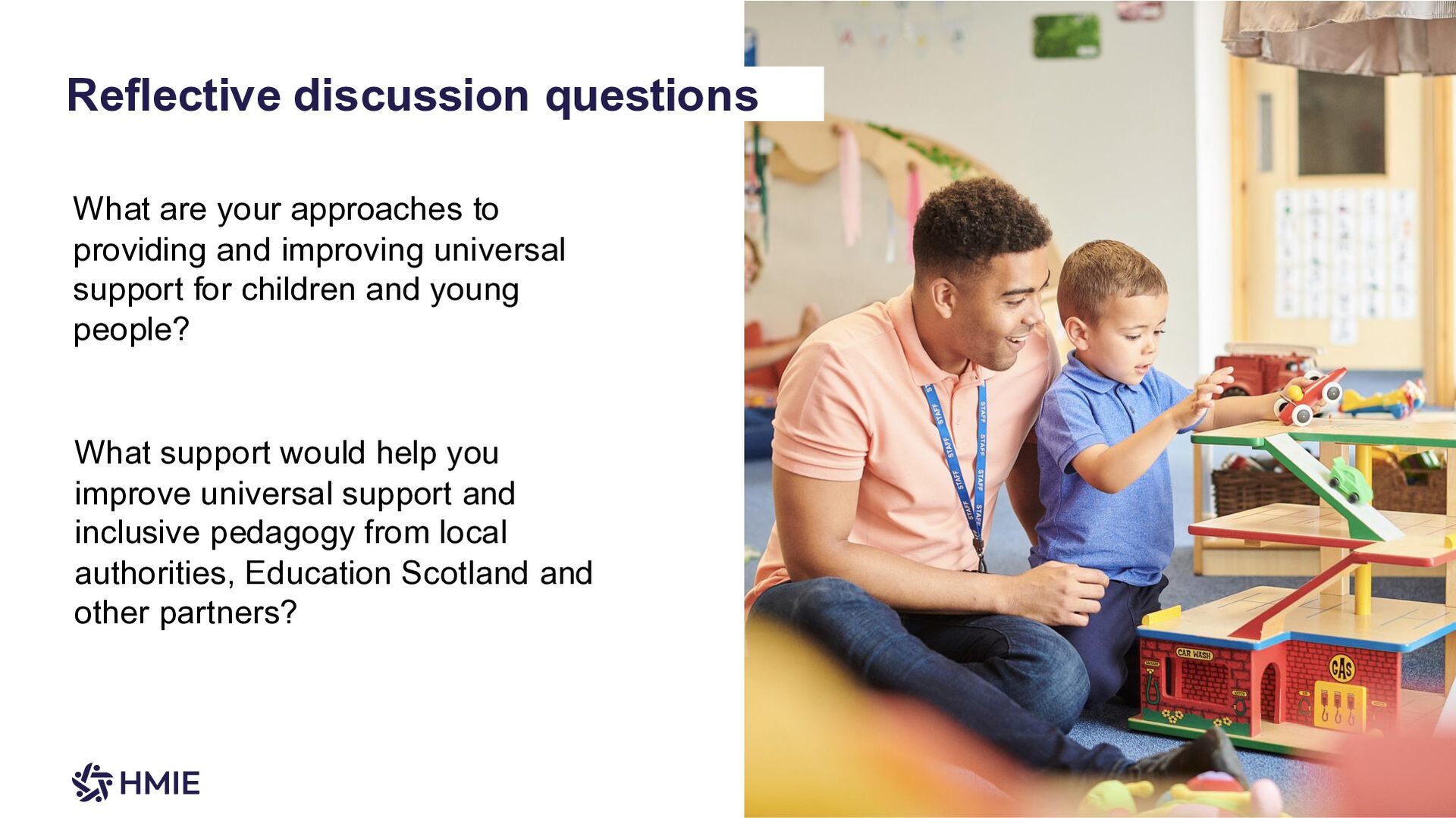
  8. Reflective discussion questions What are your approaches to providing and

    improving universal support for children and young people? What support would help you improve universal support and inclusive pedagogy from local authorities, Education Scotland and other partners?
  9. Literacy and English within Scotland’s curriculum Find more information and

    resources on our Speakerdeck, YouTube channel and website.

More Decks by HMIE Scotland

Other Decks in Education