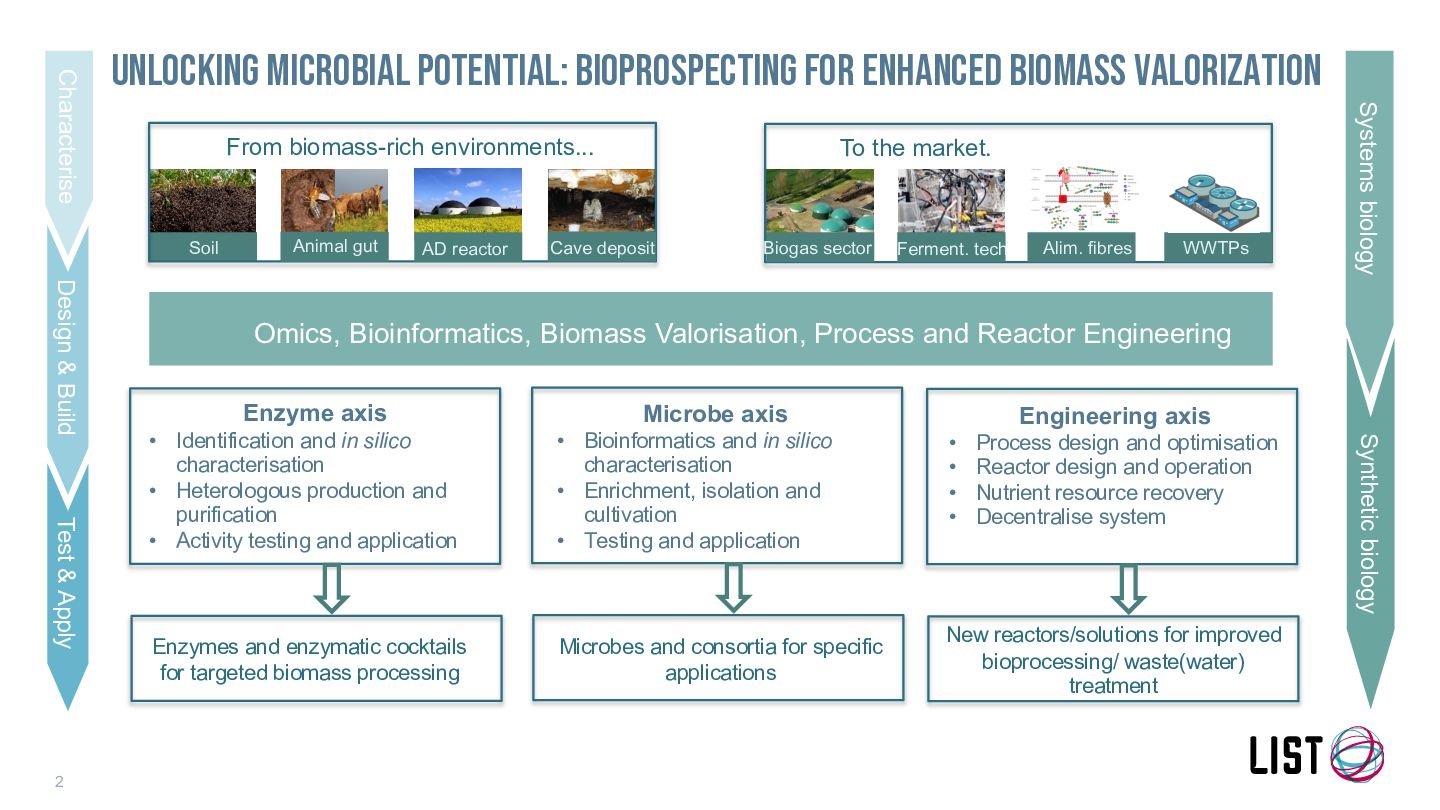
biology Unlocking Microbial potential: Bioprospecting for Enhanced Biomass Valorization From biomass-rich environments... Soil Animal gut AD reactor Cave deposit To the market. Biogas sector Ferment. tech Alim. fibres WWTPs Omics, Bioinformatics, Biomass Valorisation, Process and Reactor Engineering Enzymes and enzymatic cocktails for targeted biomass processing Enzyme axis • Identification and in silico characterisation • Heterologous production and purification • Activity testing and application Microbes and consortia for specific applications Microbe axis • Bioinformatics and in silico characterisation • Enrichment, isolation and cultivation • Testing and application Engineering axis • Process design and optimisation • Reactor design and operation • Nutrient resource recovery • Decentralise system New reactors/solutions for improved bioprocessing/ waste(water) treatment 2
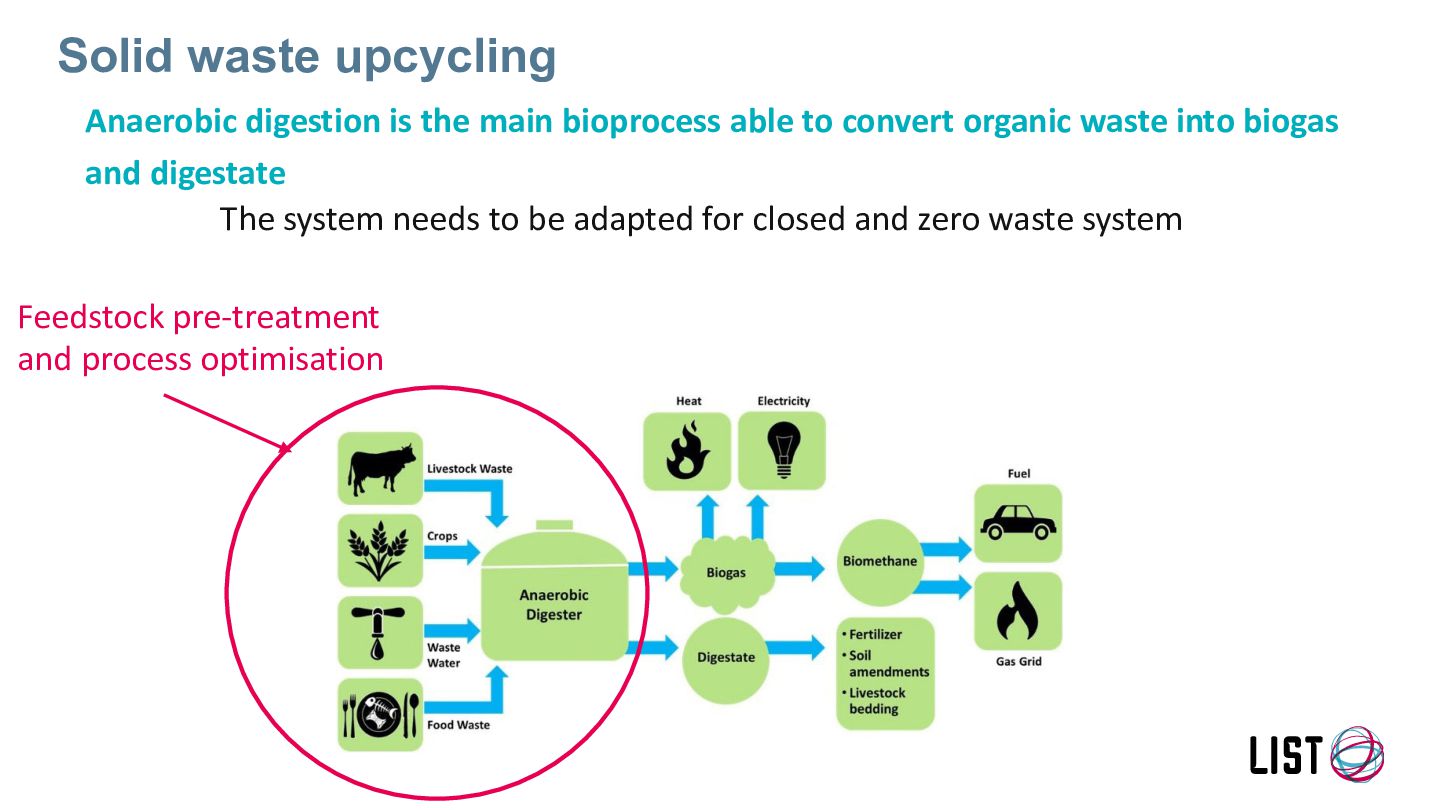
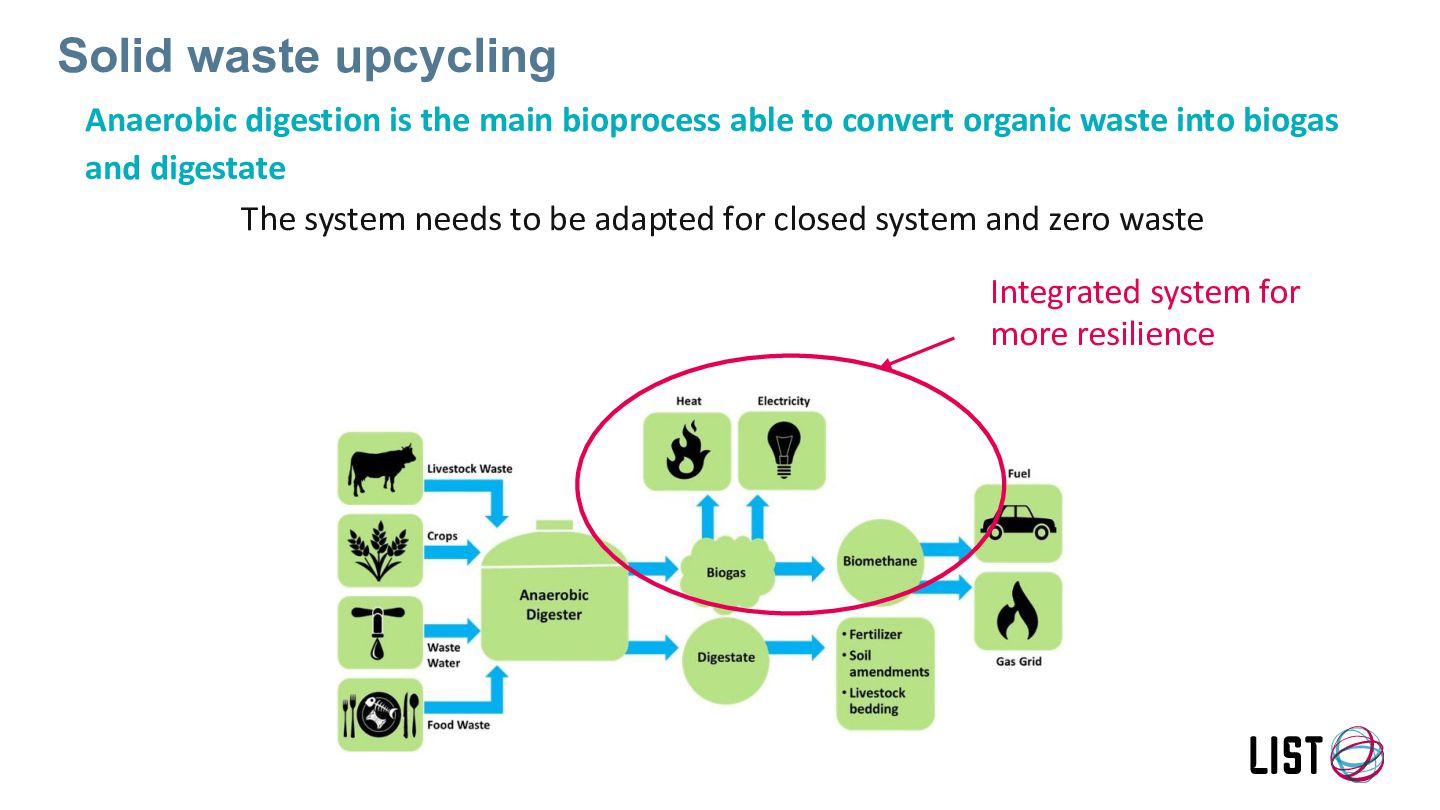
bioprocess able to convert organic waste into biogas and digestate The system needs to be adapted for closed and zero waste system Solid waste upcycling
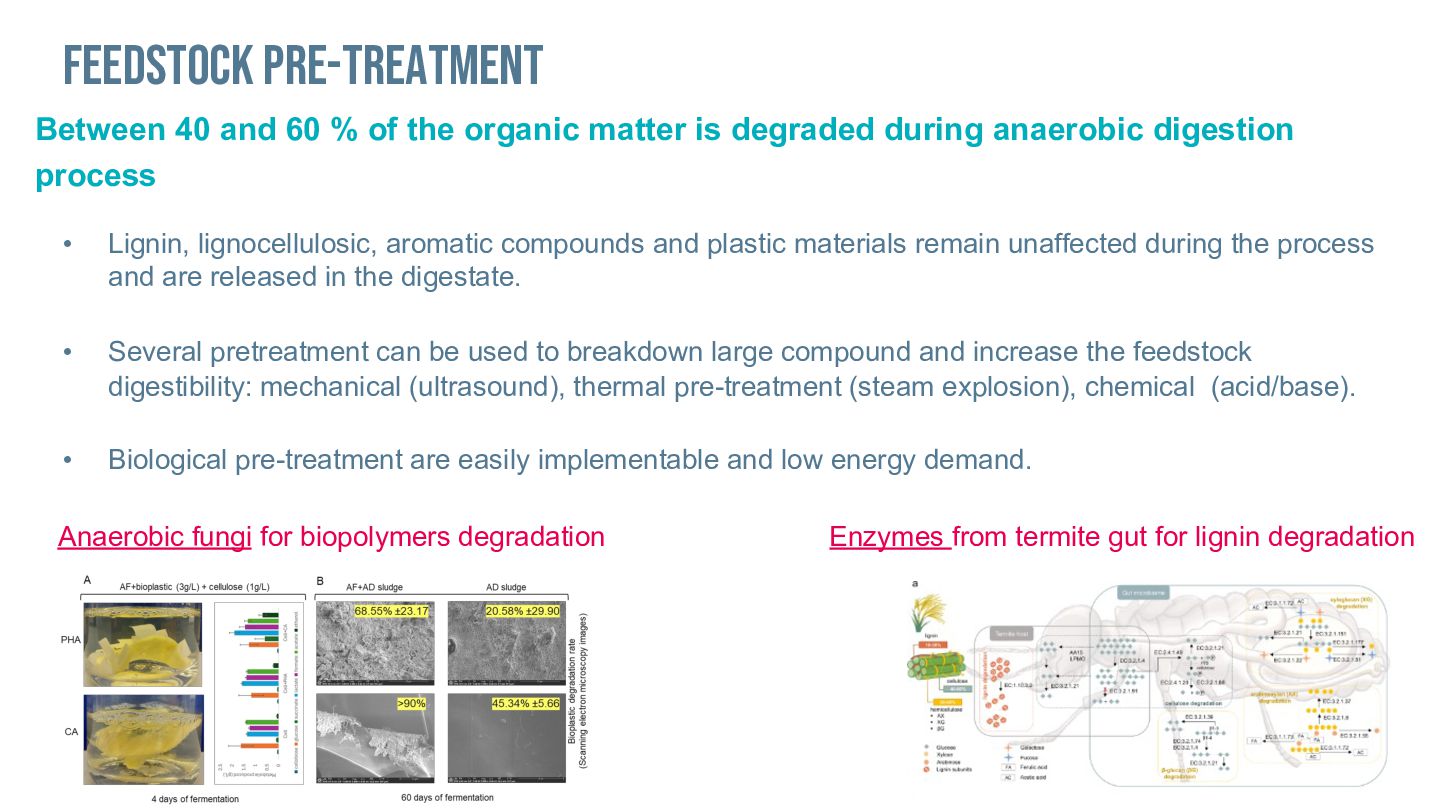
during the process and are released in the digestate. • Several pretreatment can be used to breakdown large compound and increase the feedstock digestibility: mechanical (ultrasound), thermal pre-treatment (steam explosion), chemical (acid/base). • Biological pre-treatment are easily implementable and low energy demand. Feedstock pre-treatment Between 40 and 60 % of the organic matter is degraded during anaerobic digestion process Anaerobic fungi for biopolymers degradation Enzymes from termite gut for lignin degradation
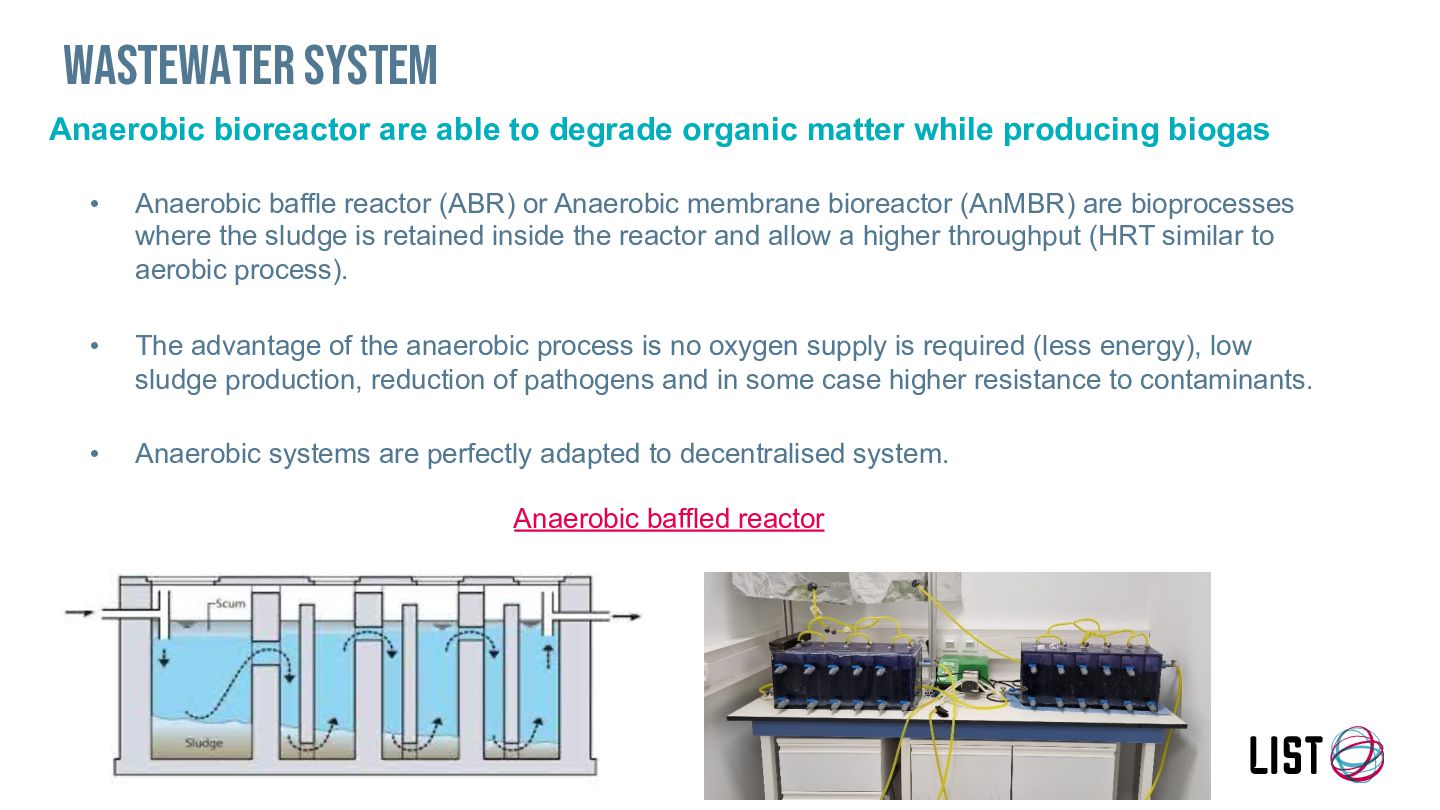
are bioprocesses where the sludge is retained inside the reactor and allow a higher throughput (HRT similar to aerobic process). • The advantage of the anaerobic process is no oxygen supply is required (less energy), low sludge production, reduction of pathogens and in some case higher resistance to contaminants. • Anaerobic systems are perfectly adapted to decentralised system. Wastewater system Anaerobic bioreactor are able to degrade organic matter while producing biogas Anaerobic baffled reactor
zero waste Integrated system for more resilience Anaerobic digestion is the main bioprocess able to convert organic waste into biogas and digestate Solid waste upcycling
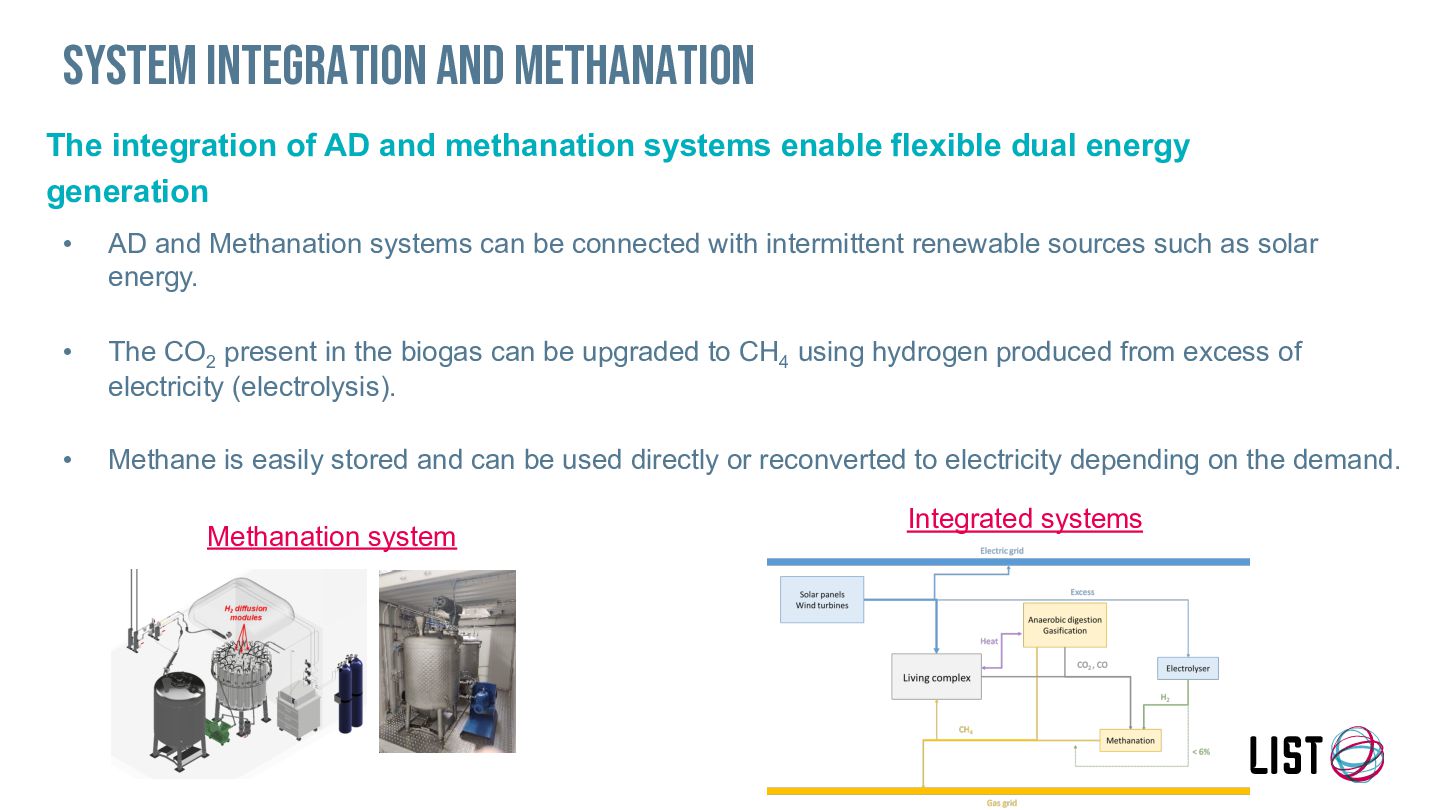
renewable sources such as solar energy. • The CO2 present in the biogas can be upgraded to CH4 using hydrogen produced from excess of electricity (electrolysis). • Methane is easily stored and can be used directly or reconverted to electricity depending on the demand. System integration and methanation The integration of AD and methanation systems enable flexible dual energy generation Methanation system Integrated systems
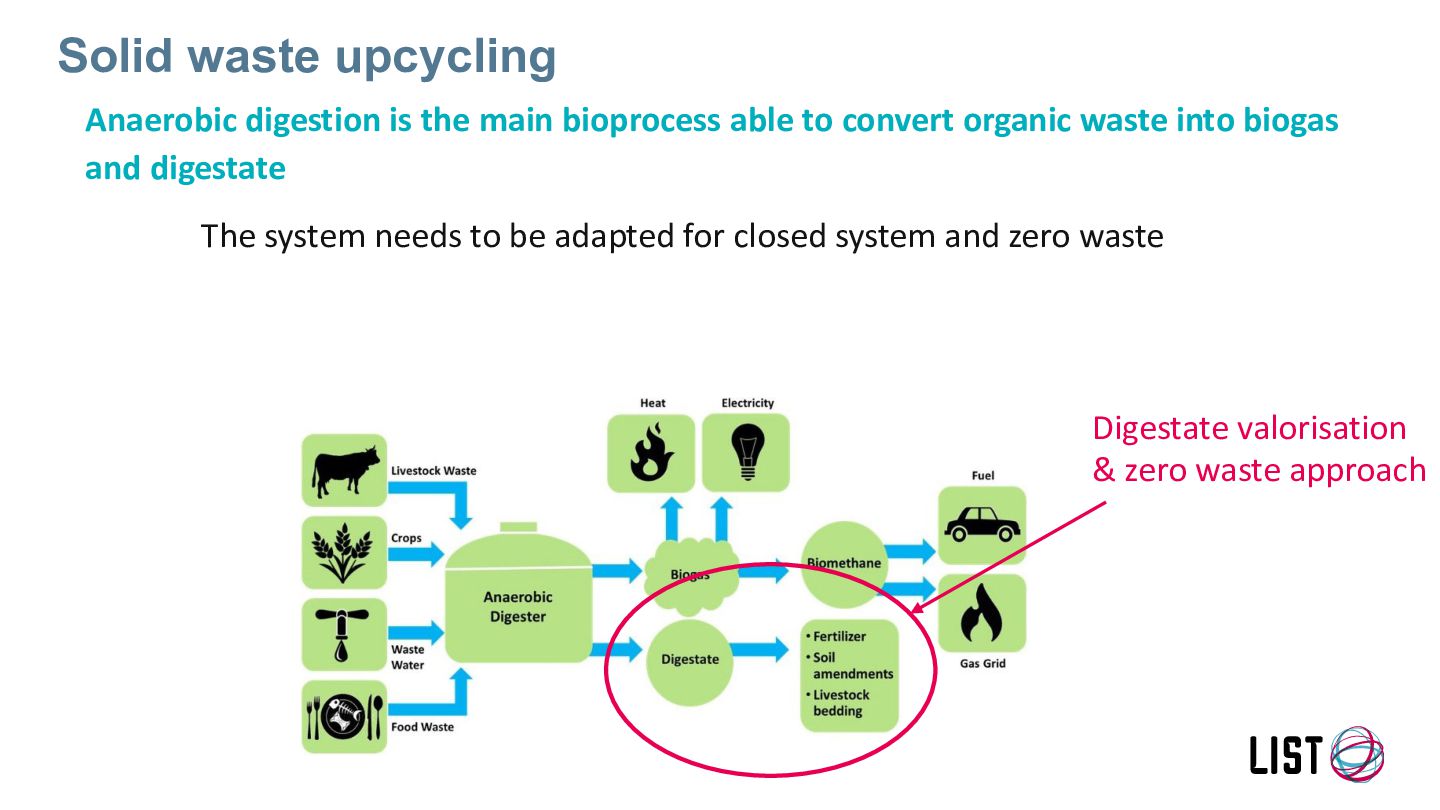
main bioprocess able to convert organic waste into biogas and digestate The system needs to be adapted for closed system and zero waste Solid waste upcycling
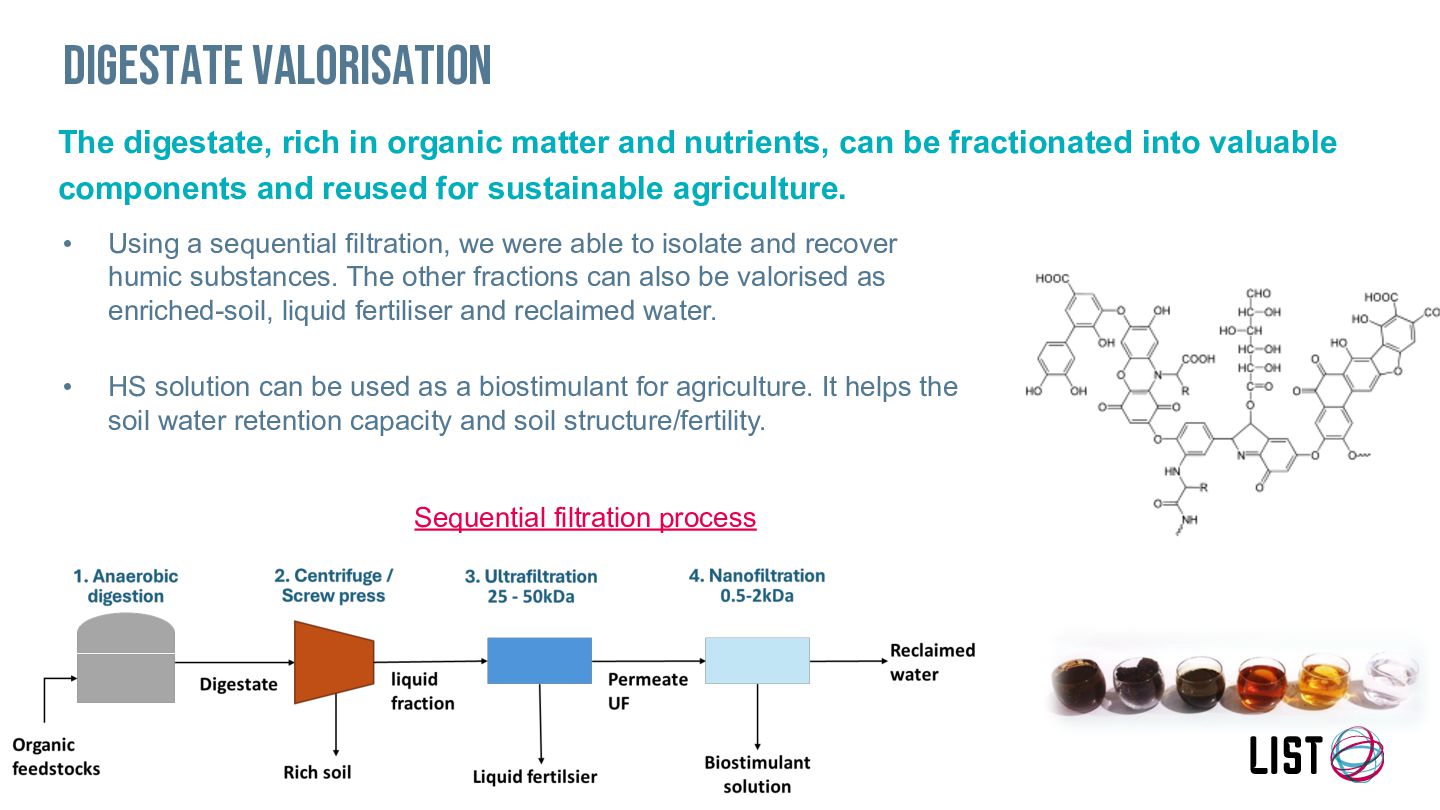
and recover humic substances. The other fractions can also be valorised as enriched-soil, liquid fertiliser and reclaimed water. • HS solution can be used as a biostimulant for agriculture. It helps the soil water retention capacity and soil structure/fertility. Digestate valorisation The digestate, rich in organic matter and nutrients, can be fractionated into valuable components and reused for sustainable agriculture. Sequential filtration process
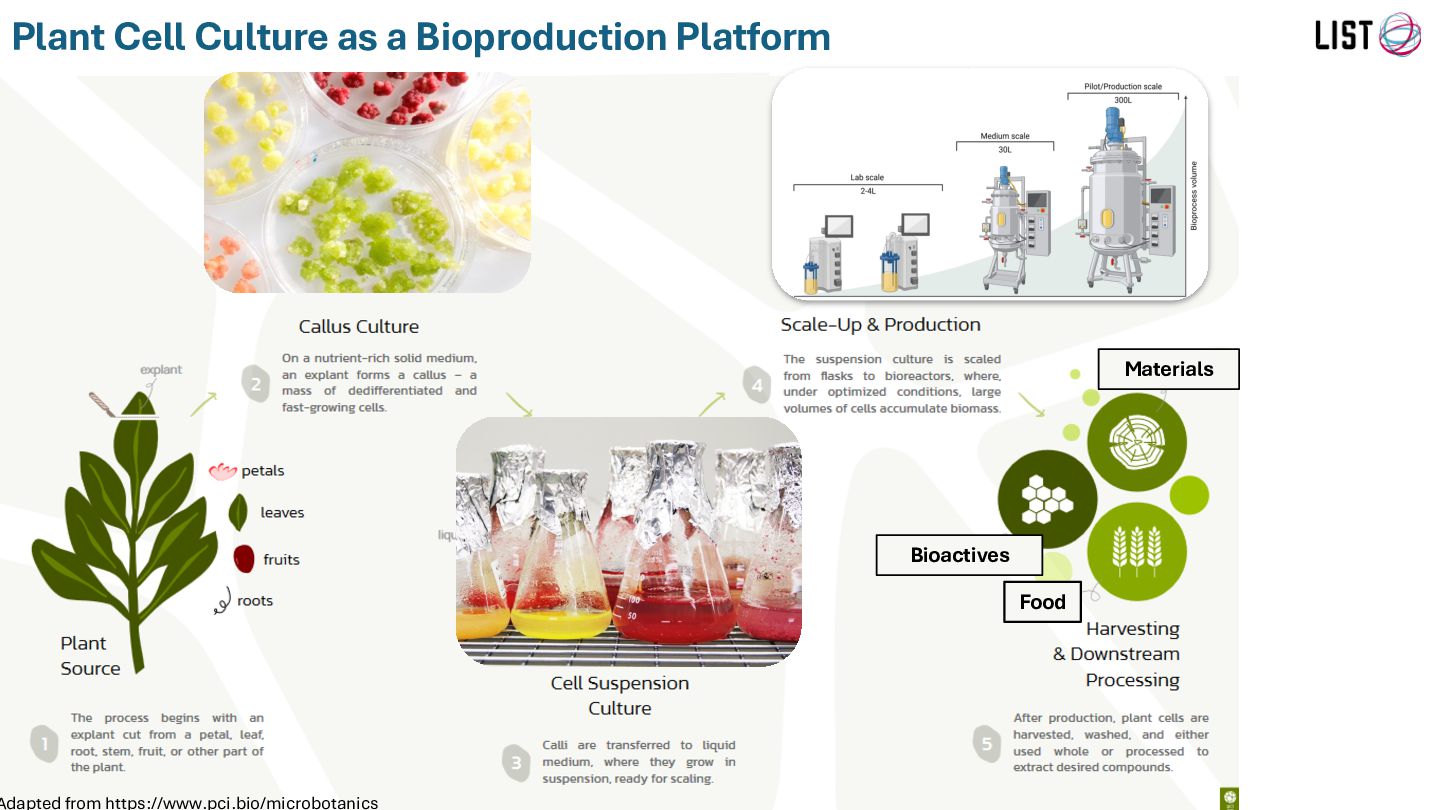
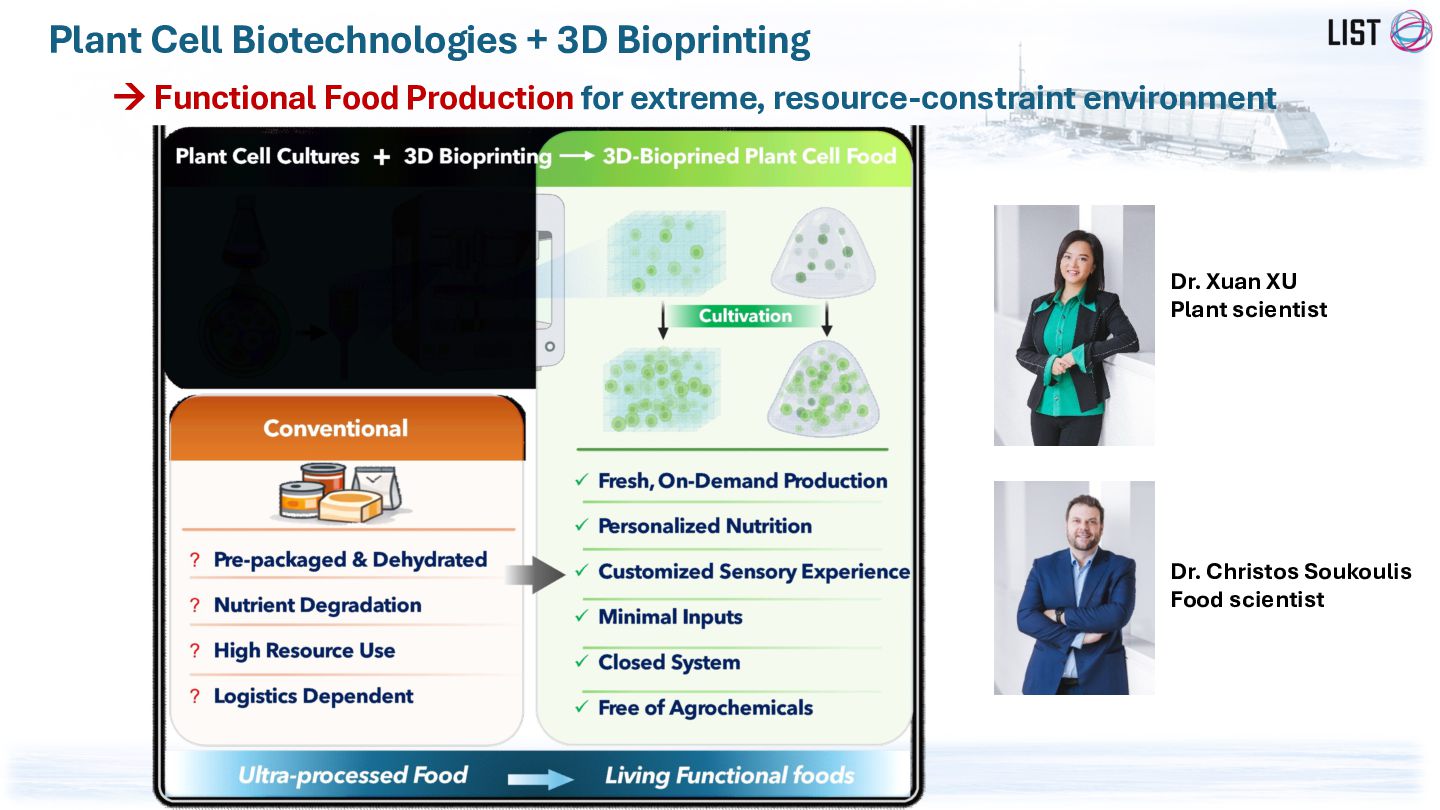
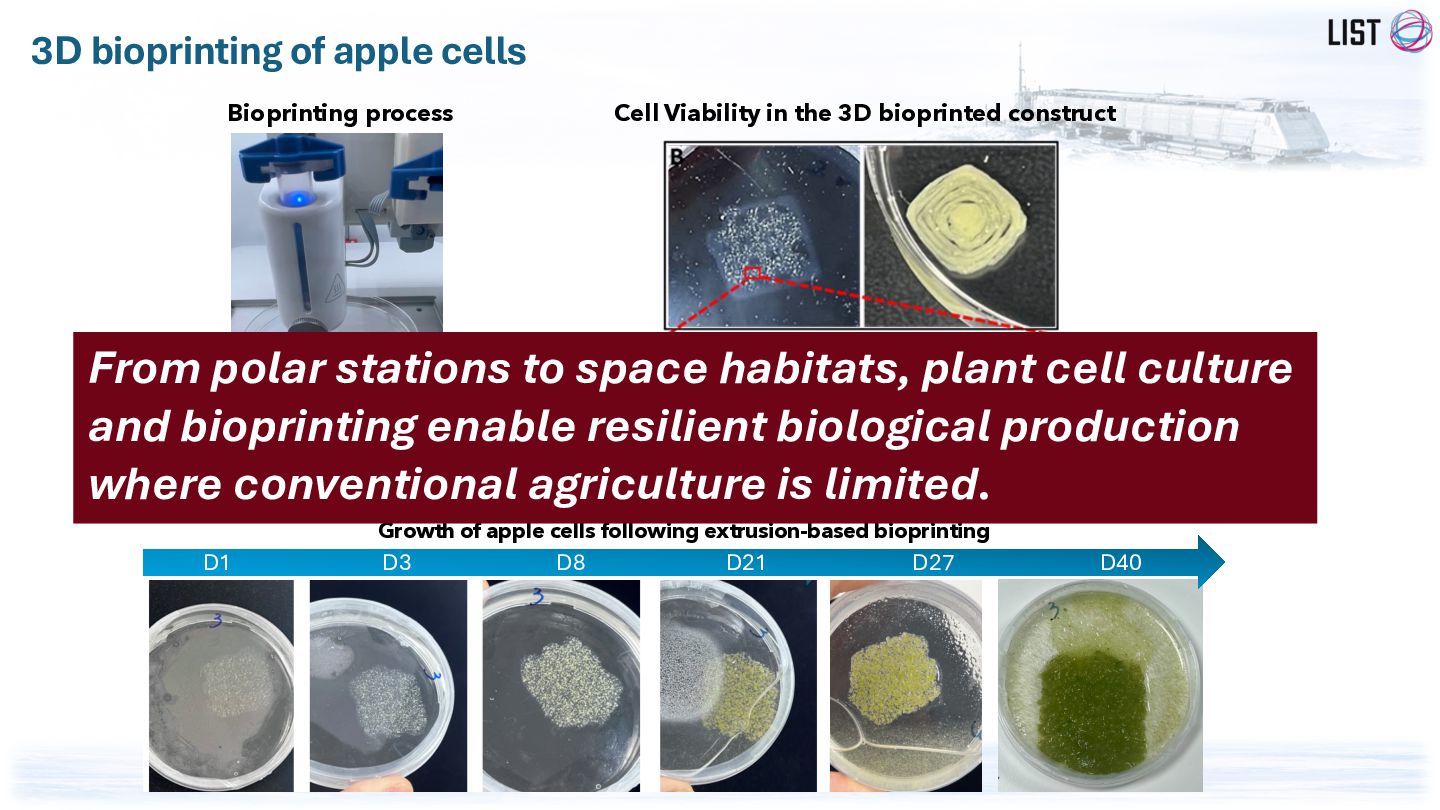
extrusion-based bioprinting D1 D3 D8 D21 D27 D40 Cell Viability in the 3D bioprinted construct Bioprinting process From polar stations to space habitats, plant cell culture and bioprinting enable resilient biological production where conventional agriculture is limited.


 ipfevents
%20square.jpg) baggiponte
baggiponte
 peterdesmet
 konakalab
 voginip
 brainpadpr
 trycycle
 ianozsvald
 shucho0103
 hayashiyus884
 kiyoshi
 sshimizu2006
 jarvist
 ipullrank
 trallard
 jonyablonski
 62gerente
 raygrieselhuber
 kevinliebholz
 honnibal
 brettharned
 gurzu
gurzu
 reverentgeek
 khoart
 smashingmag
![Thank you for your attention [email protected] https://researchportal.list.lu/scientific-community/detail/roussel-jimmy [email protected]](https://files.speakerdeck.com/presentations/9d95d9604b85449e94463b2541852f57/slide_14.jpg)