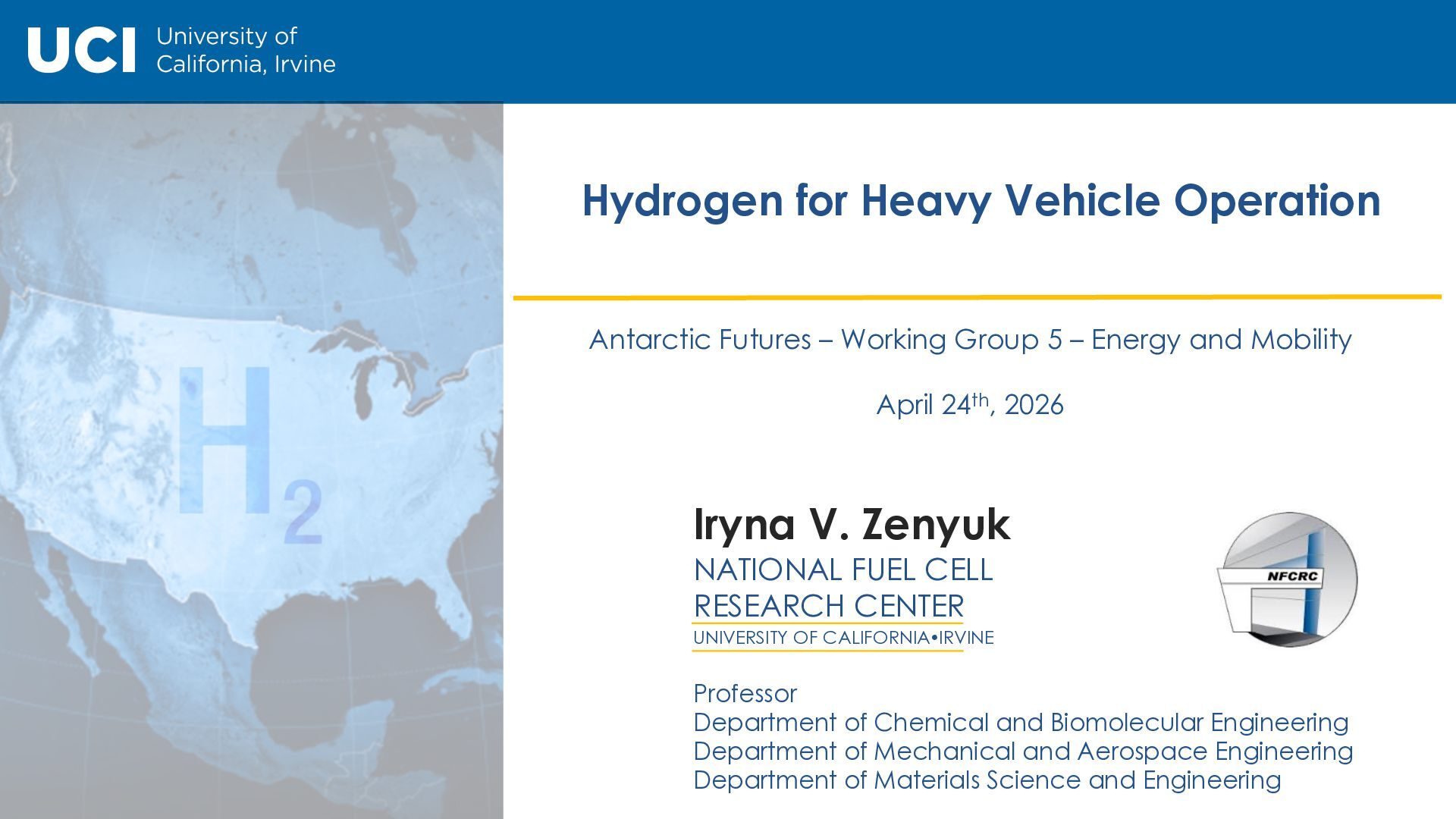
of Chemical and Biomolecular Engineering Department of Mechanical and Aerospace Engineering Department of Materials Science and Engineering Hydrogen for Heavy Vehicle Operation Iryna V. Zenyuk Antarctic Futures – Working Group 5 – Energy and Mobility April 24th, 2026
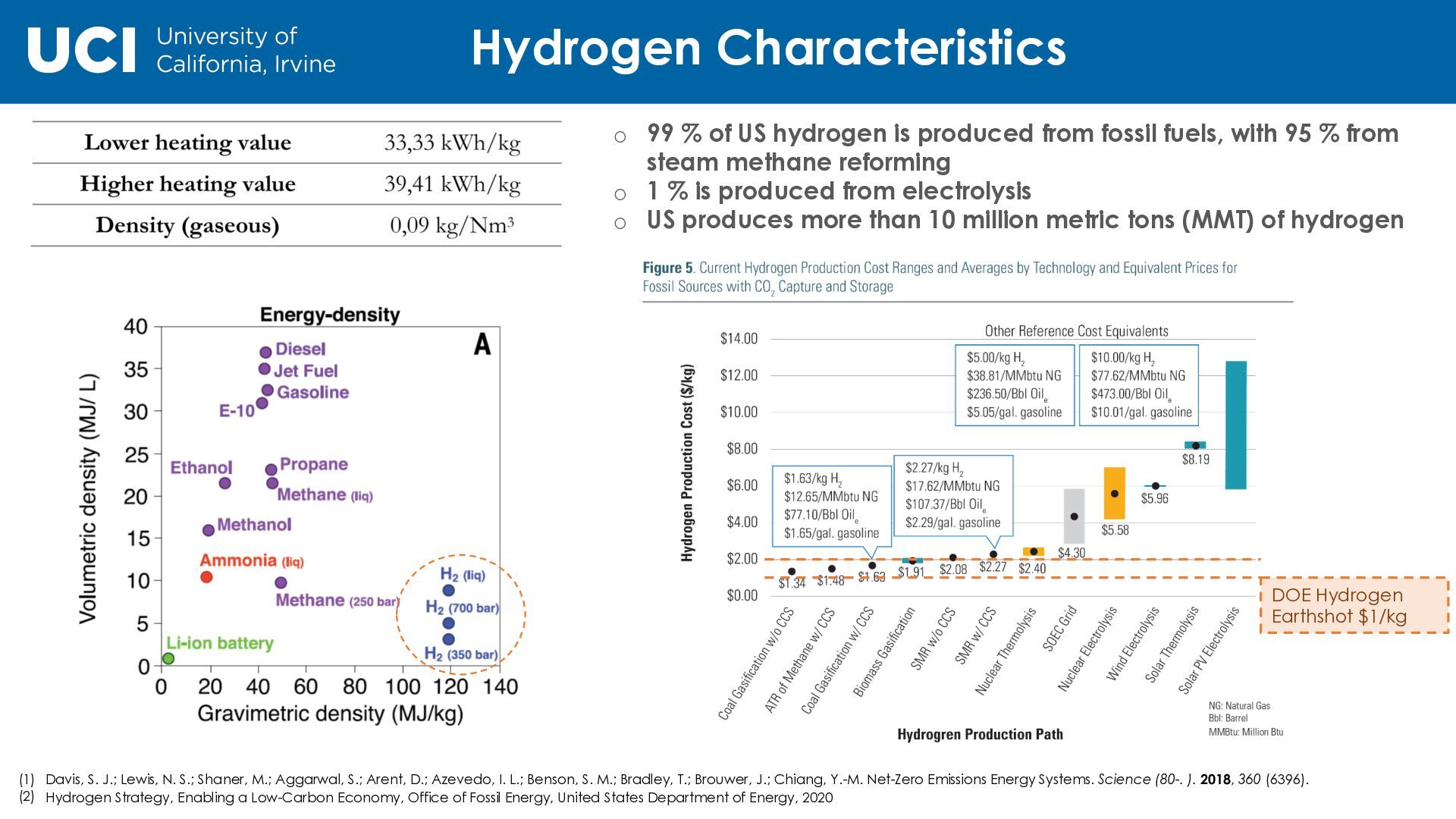
M.; Aggarwal, S.; Arent, D.; Azevedo, I. L.; Benson, S. M.; Bradley, T.; Brouwer, J.; Chiang, Y.-M. Net-Zero Emissions Energy Systems. Science (80-. ). 2018, 360 (6396). (2) o 99 % of US hydrogen is produced from fossil fuels, with 95 % from steam methane reforming o 1 % is produced from electrolysis o US produces more than 10 million metric tons (MMT) of hydrogen Hydrogen Strategy, Enabling a Low-Carbon Economy, Office of Fossil Energy, United States Department of Energy, 2020 DOE Hydrogen Earthshot $1/kg
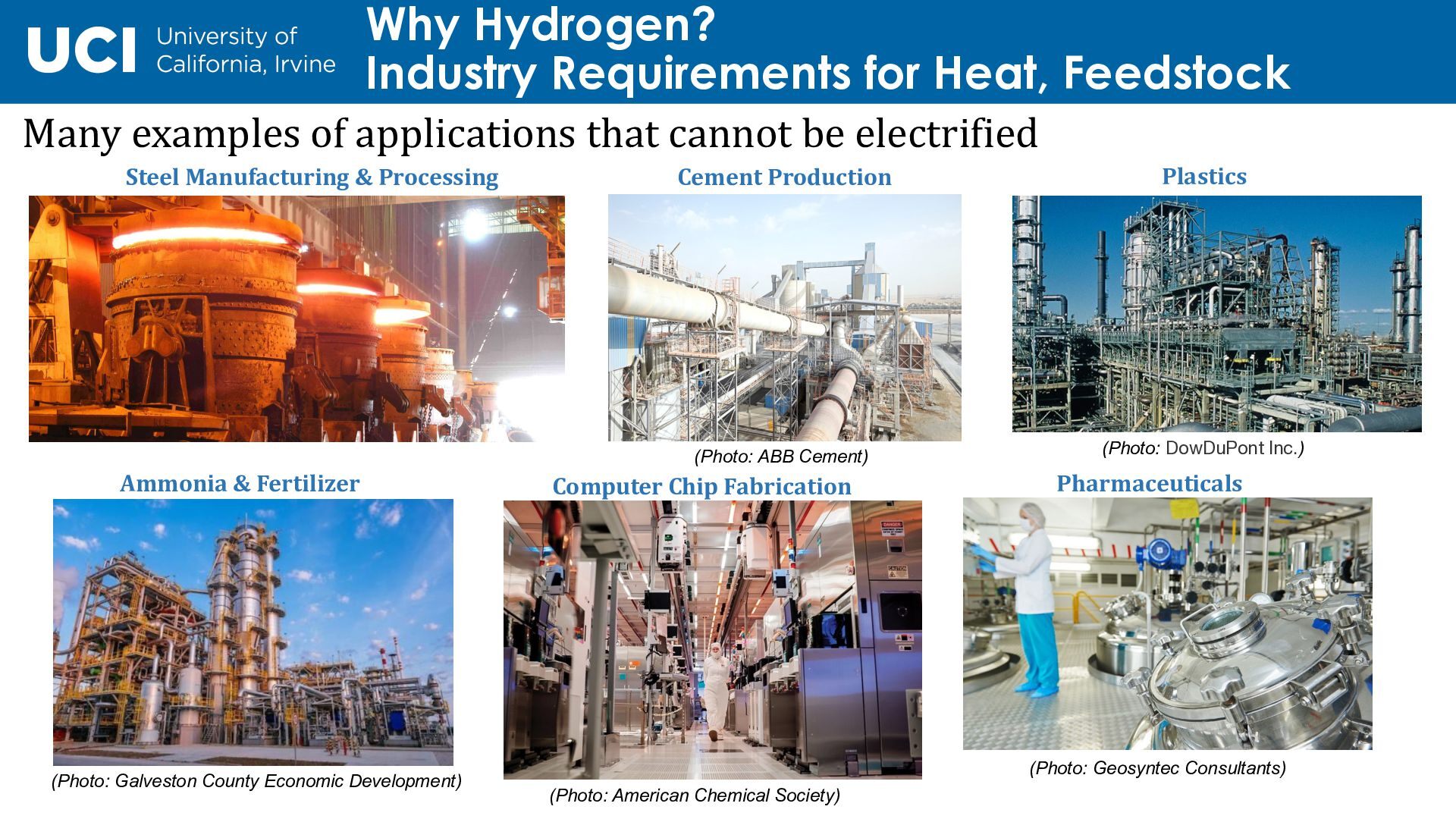
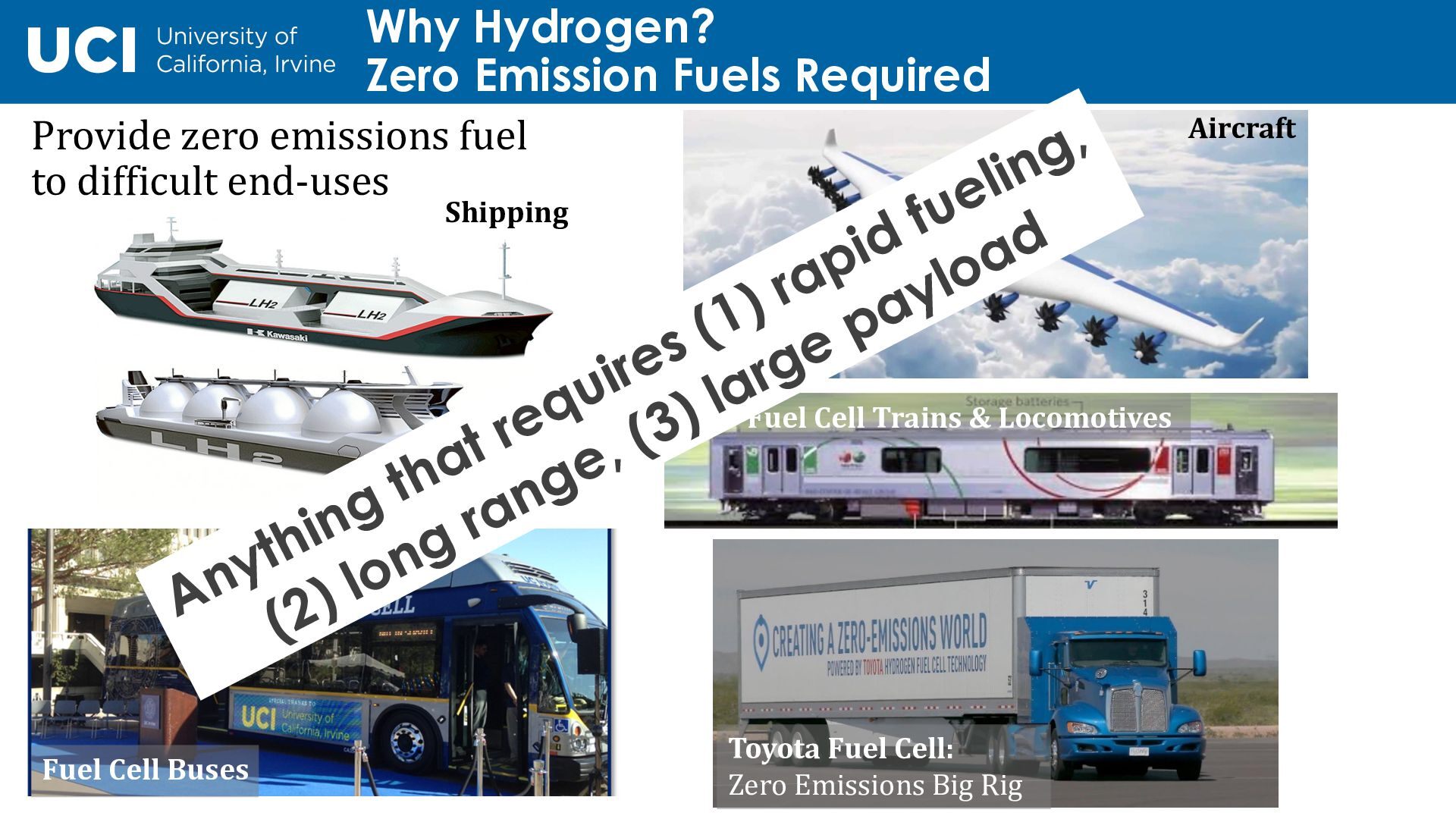
& Locomotives Aircraft Fuel Cell Buses Why Hydrogen? Zero Emission Fuels Required Provide zero emissions fuel to difficult end-uses Shipping Anything that requires (1) rapid fueling, (2) long range, (3) large payload
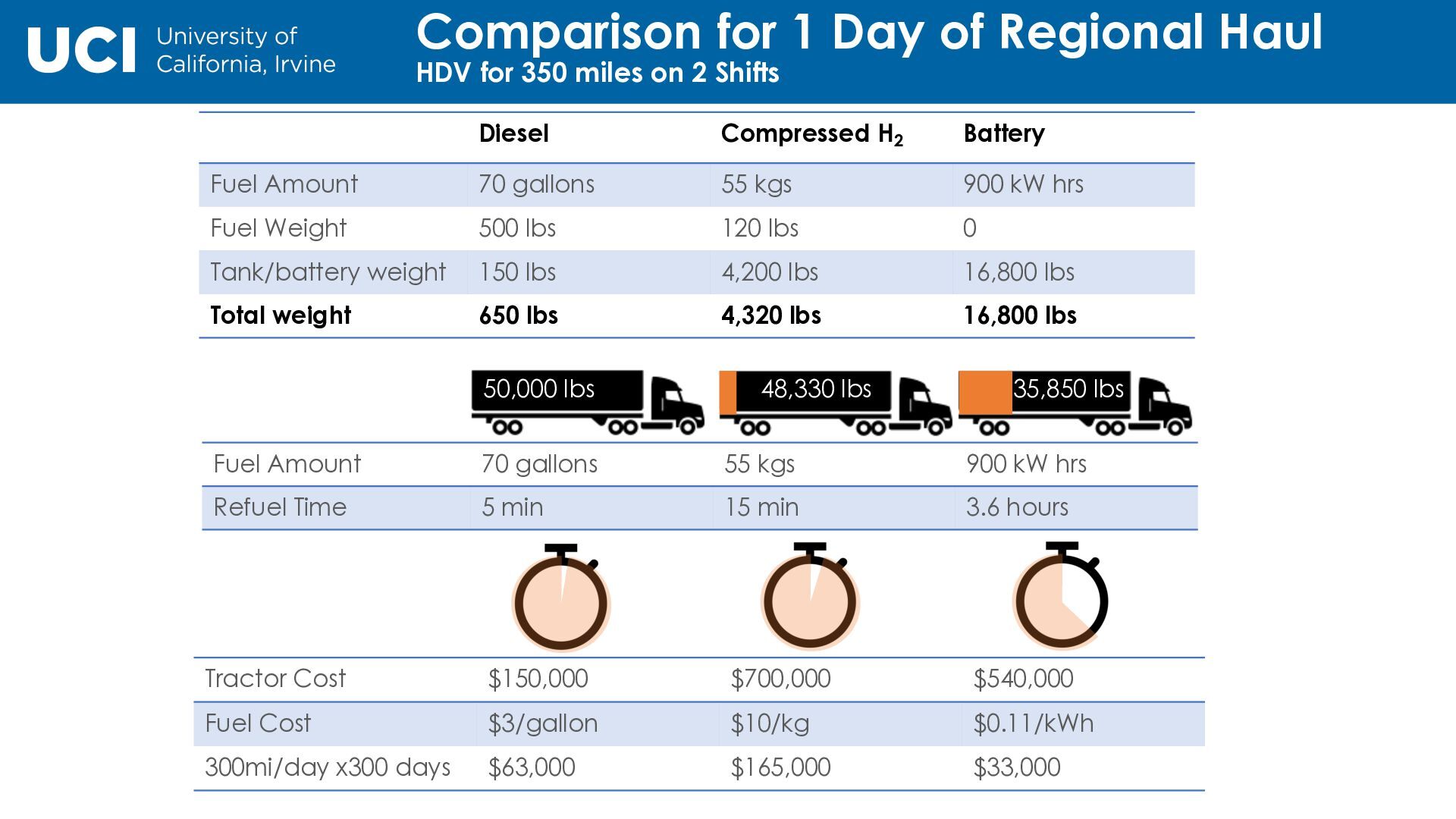
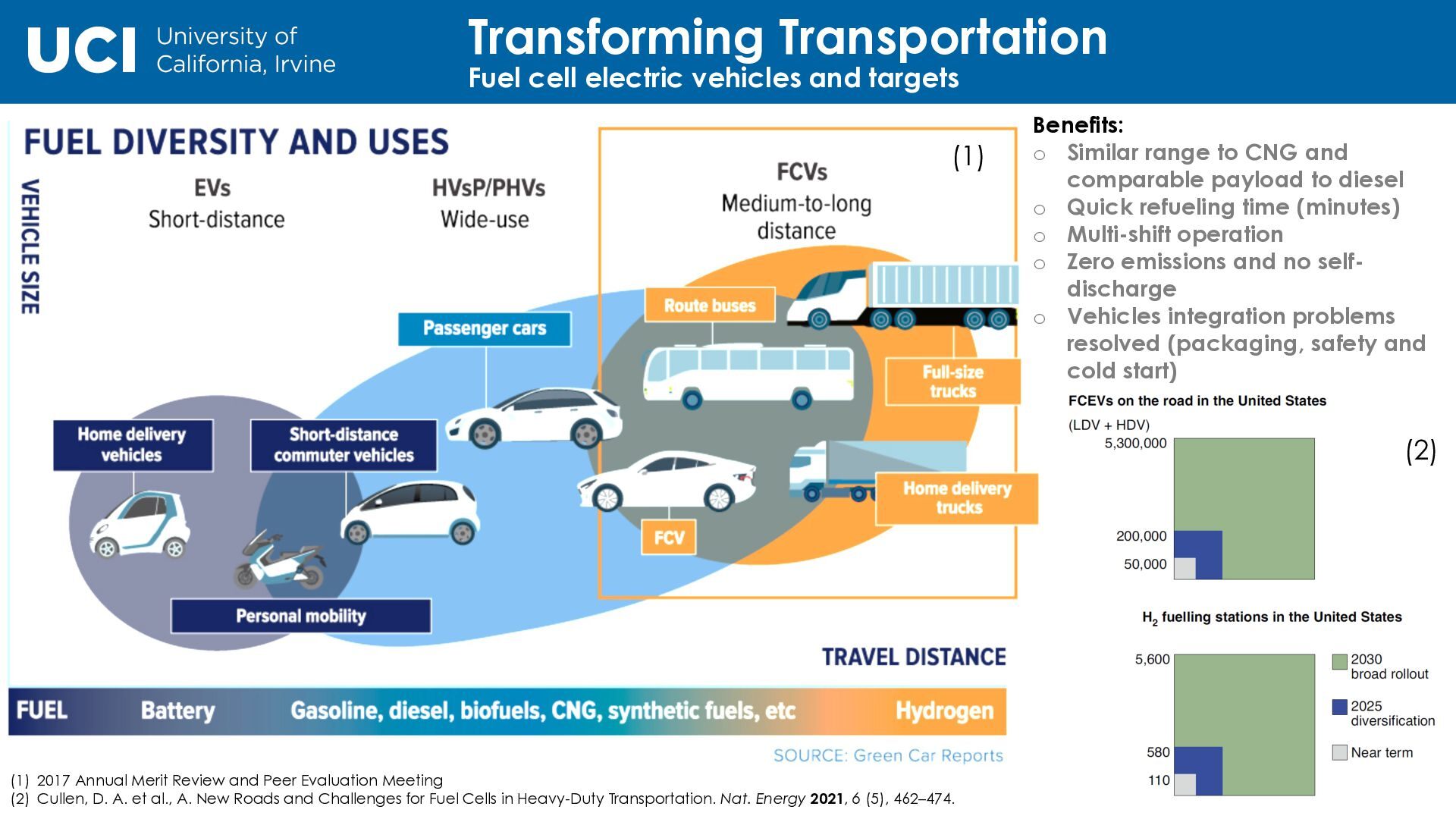
Similar range to CNG and comparable payload to diesel o Quick refueling time (minutes) o Multi-shift operation o Zero emissions and no self- discharge o Vehicles integration problems resolved (packaging, safety and cold start) (1) 2017 Annual Merit Review and Peer Evaluation Meeting (2) Cullen, D. A. et al., A. New Roads and Challenges for Fuel Cells in Heavy-Duty Transportation. Nat. Energy 2021, 6 (5), 462–474. 5/34 (1) (2)
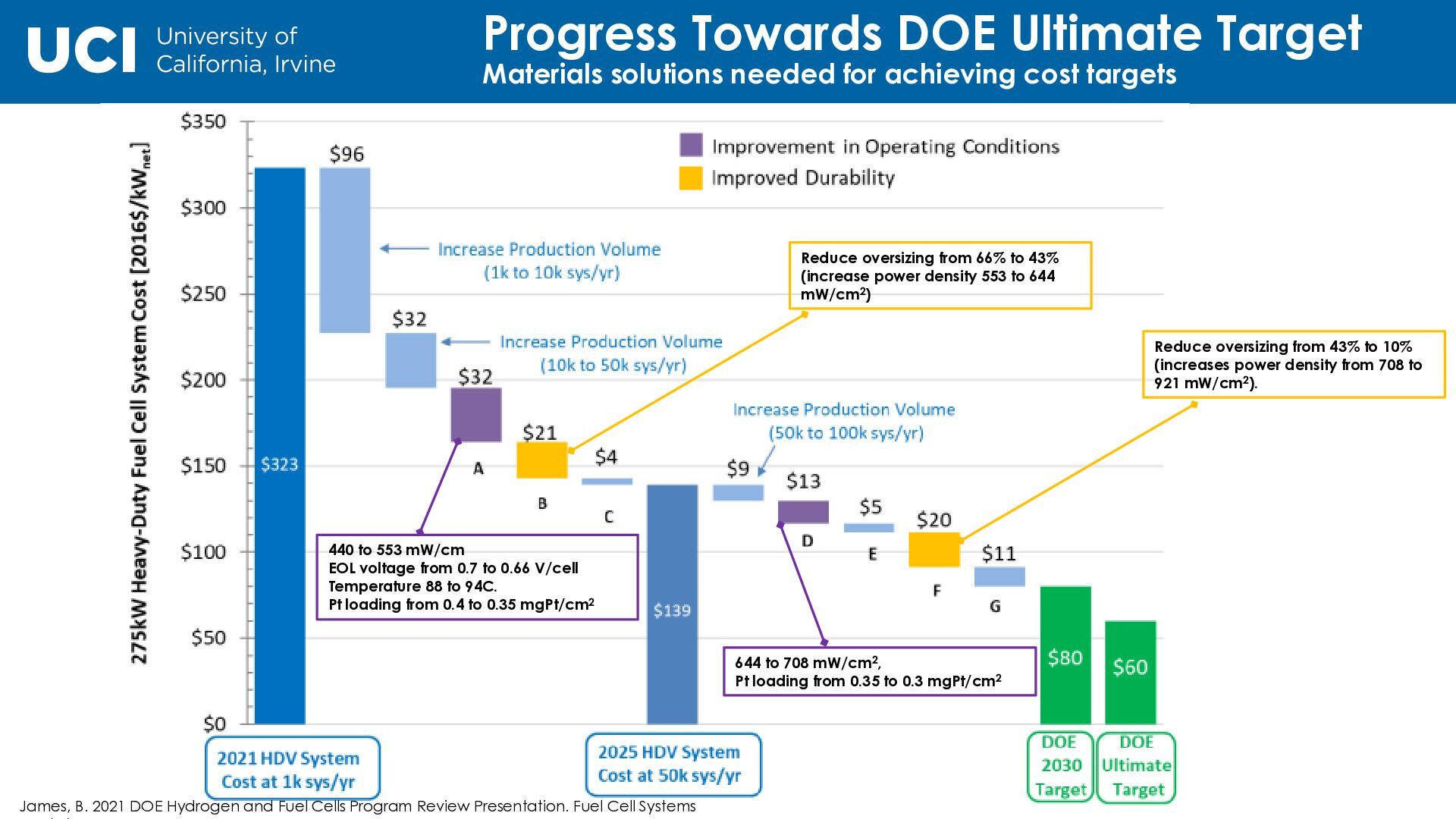
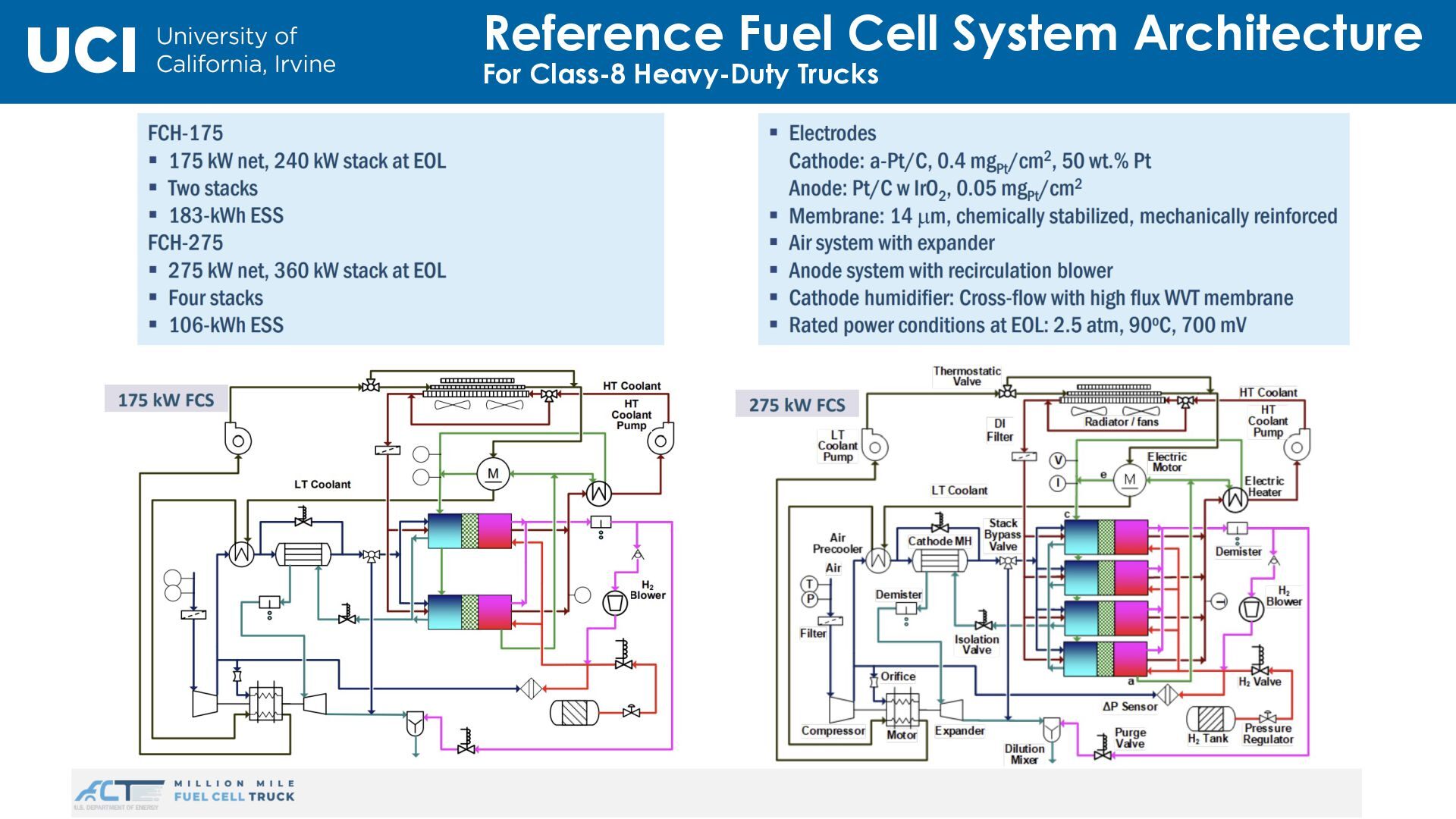
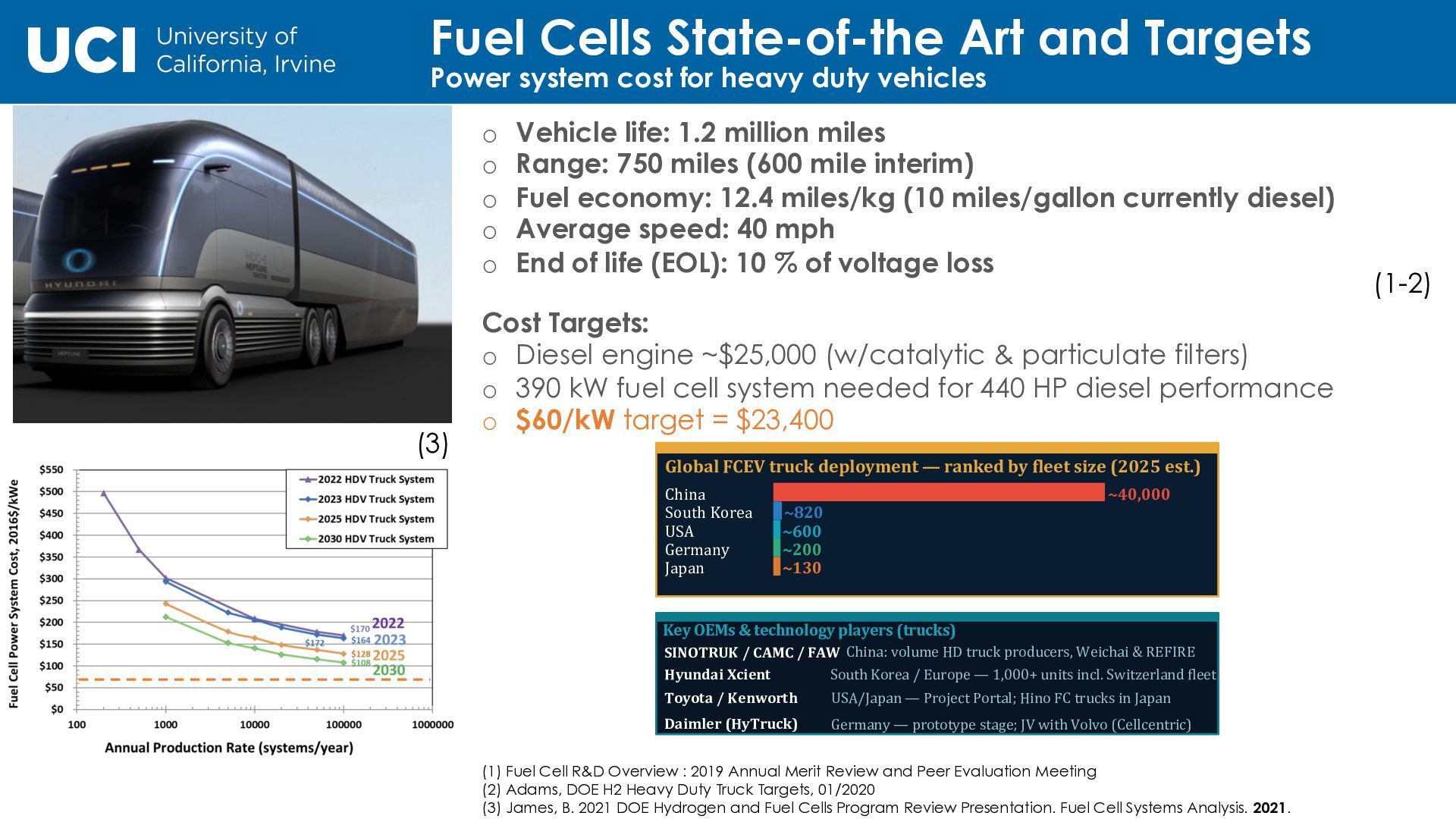
and Peer Evaluation Meeting (2) Adams, DOE H2 Heavy Duty Truck Targets, 01/2020 (3) James, B. 2021 DOE Hydrogen and Fuel Cells Program Review Presentation. Fuel Cell Systems Analysis. 2021. o Vehicle life: 1.2 million miles o Range: 750 miles (600 mile interim) o Fuel economy: 12.4 miles/kg (10 miles/gallon currently diesel) o Average speed: 40 mph o End of life (EOL): 10 % of voltage loss Cost Targets: o Diesel engine ~$25,000 (w/catalytic & particulate filters) o 390 kW fuel cell system needed for 440 HP diesel performance o $60/kW target = $23,400 (1-2) (3) Fuel Cells State-of-the Art and Targets Power system cost for heavy duty vehicles G L O B A L C O N T E X T & O U T L O O K Global FCEV truck deployment — ranked by fleet size (2025 est.) China ~40,000 South Korea ~820 USA ~600 Germany ~200 Japan ~130 Key OEMs & technology players (trucks) SINOTRUK / CAMC / FAW China: volume HD truck producers, Weichai & REFIRE Hyundai Xcient South Korea / Europe — 1,000+ units incl. Switzerland fleet Toyota / Kenworth USA/Japan — Project Portal; Hino FC trucks in Japan Daimler (HyTruck) Germany — prototype stage; JV with Volvo (Cellcentric)
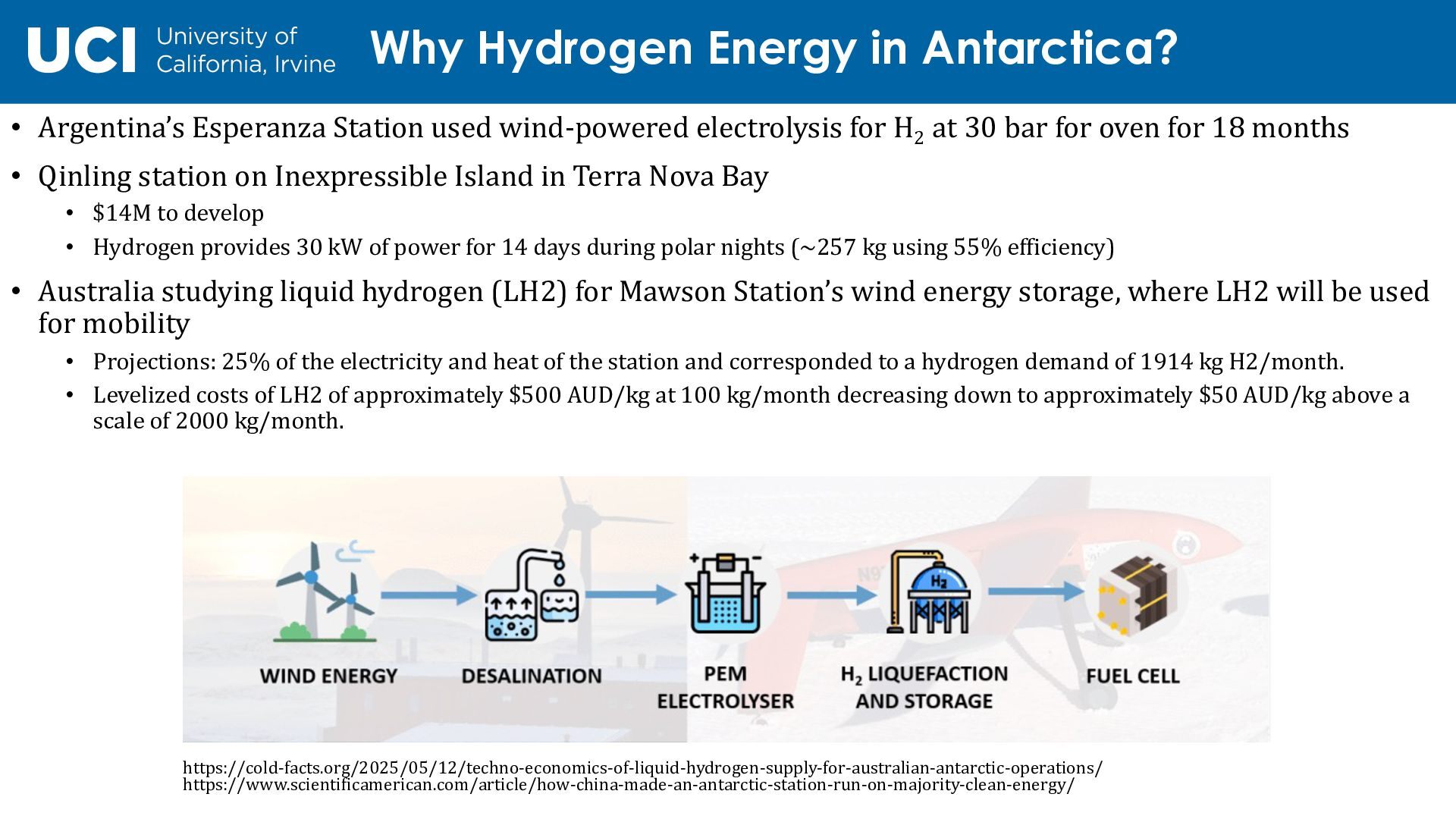
wind-powered electrolysis for H2 at 30 bar for oven for 18 months • Qinling station on Inexpressible Island in Terra Nova Bay • $14M to develop • Hydrogen provides 30 kW of power for 14 days during polar nights (~257 kg using 55% efficiency) • Australia studying liquid hydrogen (LH2) for Mawson Station’s wind energy storage, where LH2 will be used for mobility • Projections: 25% of the electricity and heat of the station and corresponded to a hydrogen demand of 1914 kg H2/month. • Levelized costs of LH2 of approximately $500 AUD/kg at 100 kg/month decreasing down to approximately $50 AUD/kg above a scale of 2000 kg/month. https://www.scientificamerican.com/article/how-china-made-an-antarctic-station-run-on-majority-clean-energy/ https://cold-facts.org/2025/05/12/techno-economics-of-liquid-hydrogen-supply-for-australian-antarctic-operations/
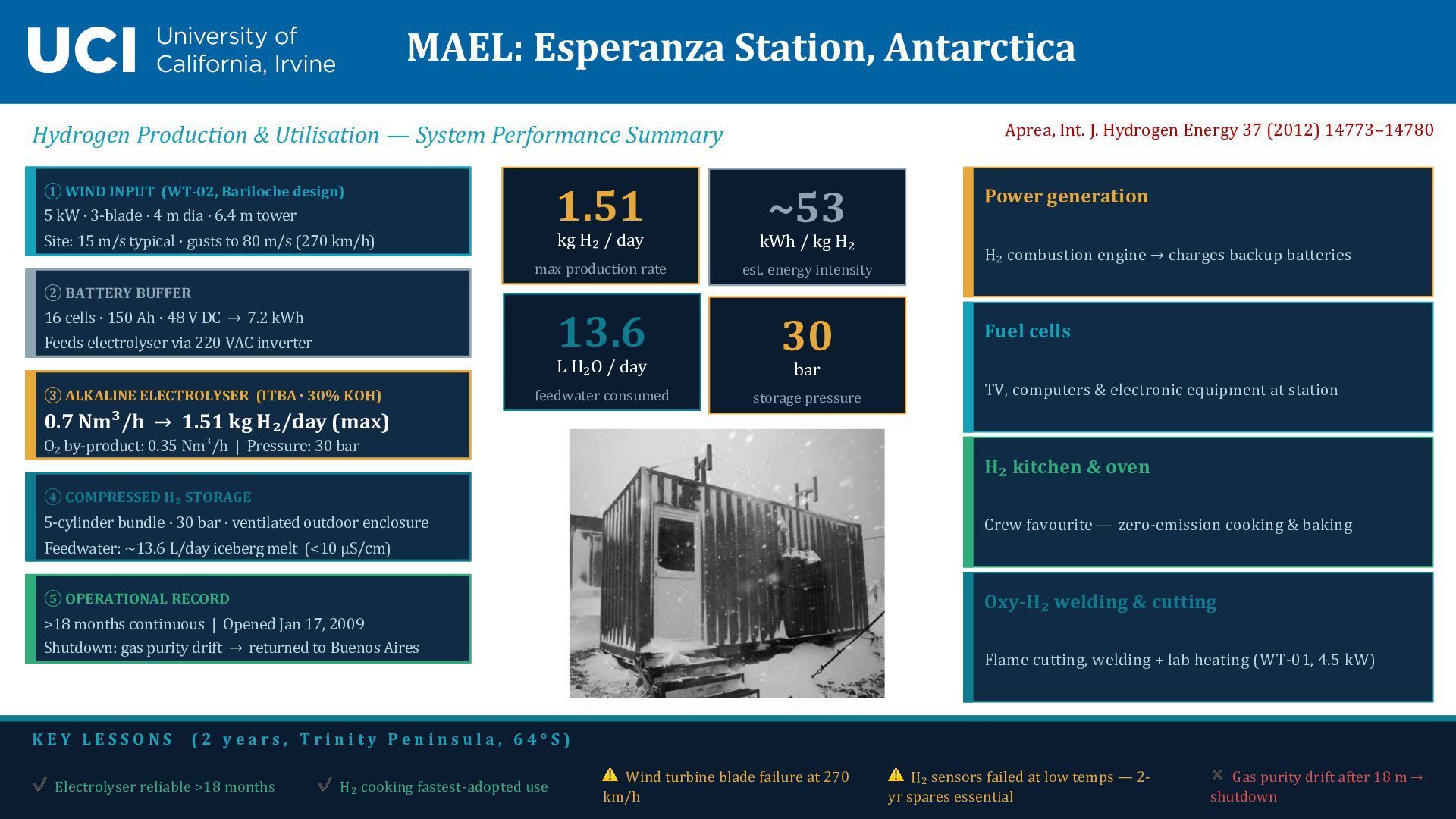
(2012) 14773–14780 Hydrogen Production & Utilisation — System Performance Summary ① WIND INPUT (WT-02, Bariloche design) 5 kW · 3-blade · 4 m dia · 6.4 m tower Site: 15 m/s typical · gusts to 80 m/s (270 km/h) ② BATTERY BUFFER 16 cells · 150 Ah · 48 V DC → 7.2 kWh Feeds electrolyser via 220 VAC inverter ③ ALKALINE ELECTROLYSER (ITBA · 30% KOH) 0.7 Nm³/h → 1.51 kg H₂/day (max) O₂ by-product: 0.35 Nm³/h | Pressure: 30 bar ④ COMPRESSED H₂ STORAGE 5-cylinder bundle · 30 bar · ventilated outdoor enclosure Feedwater: ~13.6 L/day iceberg melt (<10 µS/cm) ⑤ OPERATIONAL RECORD >18 months continuous | Opened Jan 17, 2009 Shutdown: gas purity drift → returned to Buenos Aires K E Y M E T R I C S 1.51 kg H₂ / day max production rate Nm³ H₂ / day kg H₂ / h ~53 kWh / kg H₂ est. energy intensity 13.6 L H₂O / day feedwater consumed 30 bar storage pressure H ₂ A P P L I C A T I O N S Power generation H₂ combustion engine → charges backup batteries Fuel cells TV, computers & electronic equipment at station H₂ kitchen & oven Crew favourite — zero-emission cooking & baking Oxy-H₂ welding & cutting Flame cutting, welding + lab heating (WT-01, 4.5 kW) K E Y L E S S O N S ( 2 y e a r s , T r i n i t y P e n i n s u l a , 6 4 ° S ) ✔ Electrolyser reliable >18 months ✔ H₂ cooking fastest-adopted use ⚠ Wind turbine blade failure at 270 km/h ⚠ H₂ sensors failed at low temps — 2- yr spares essential ✖ Gas purity drift after 18 m → shutdown
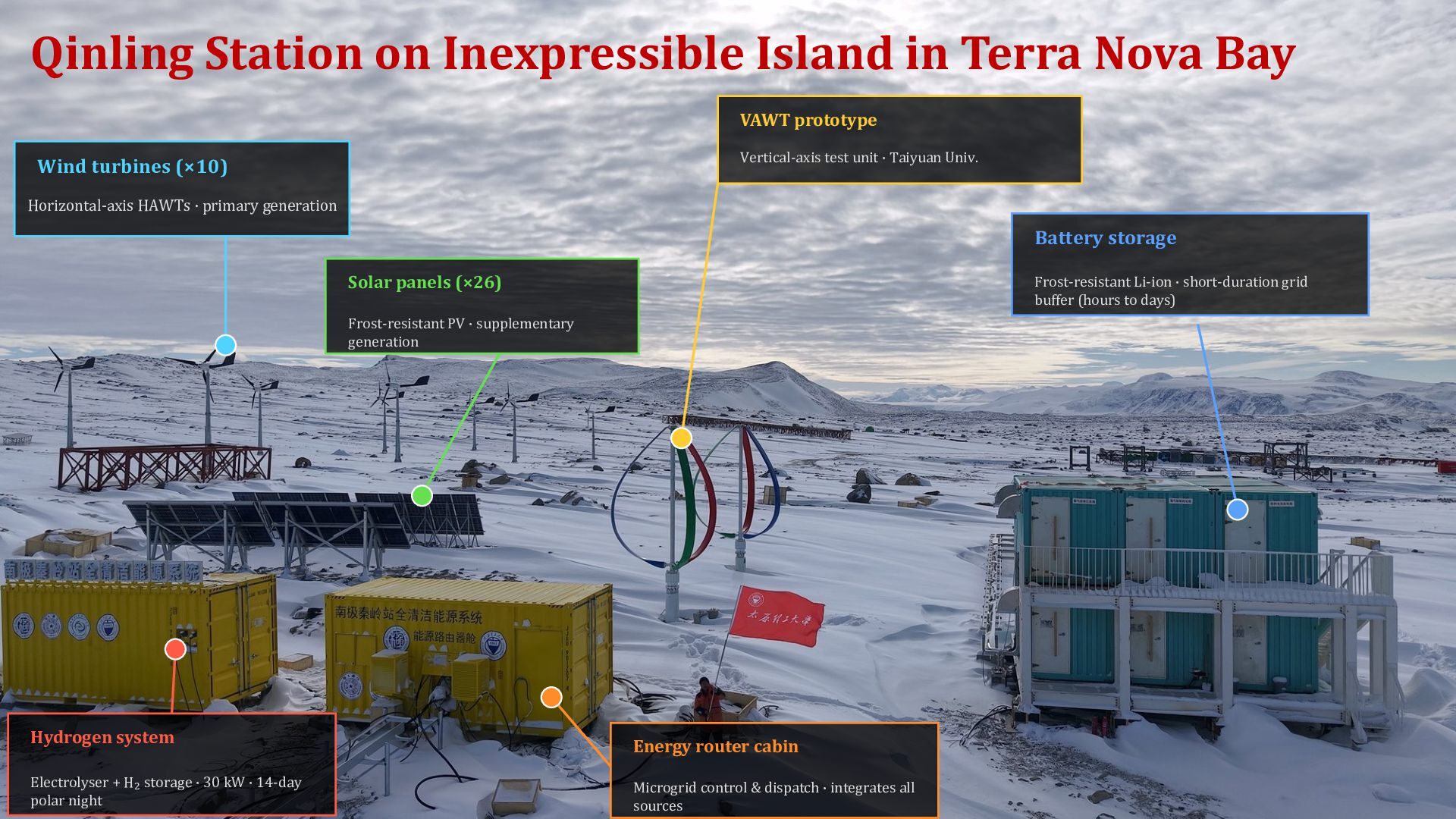
Vertical-axis test unit · Taiyuan Univ. Solar panels (×26) Frost-resistant PV · supplementary generation Hydrogen system Electrolyser + H₂ storage · 30 kW · 14-day polar night Energy router cabin Microgrid control & dispatch · integrates all sources Battery storage Frost-resistant Li-ion · short-duration grid buffer (hours to days) Qinling Station on Inexpressible Island in Terra Nova Bay
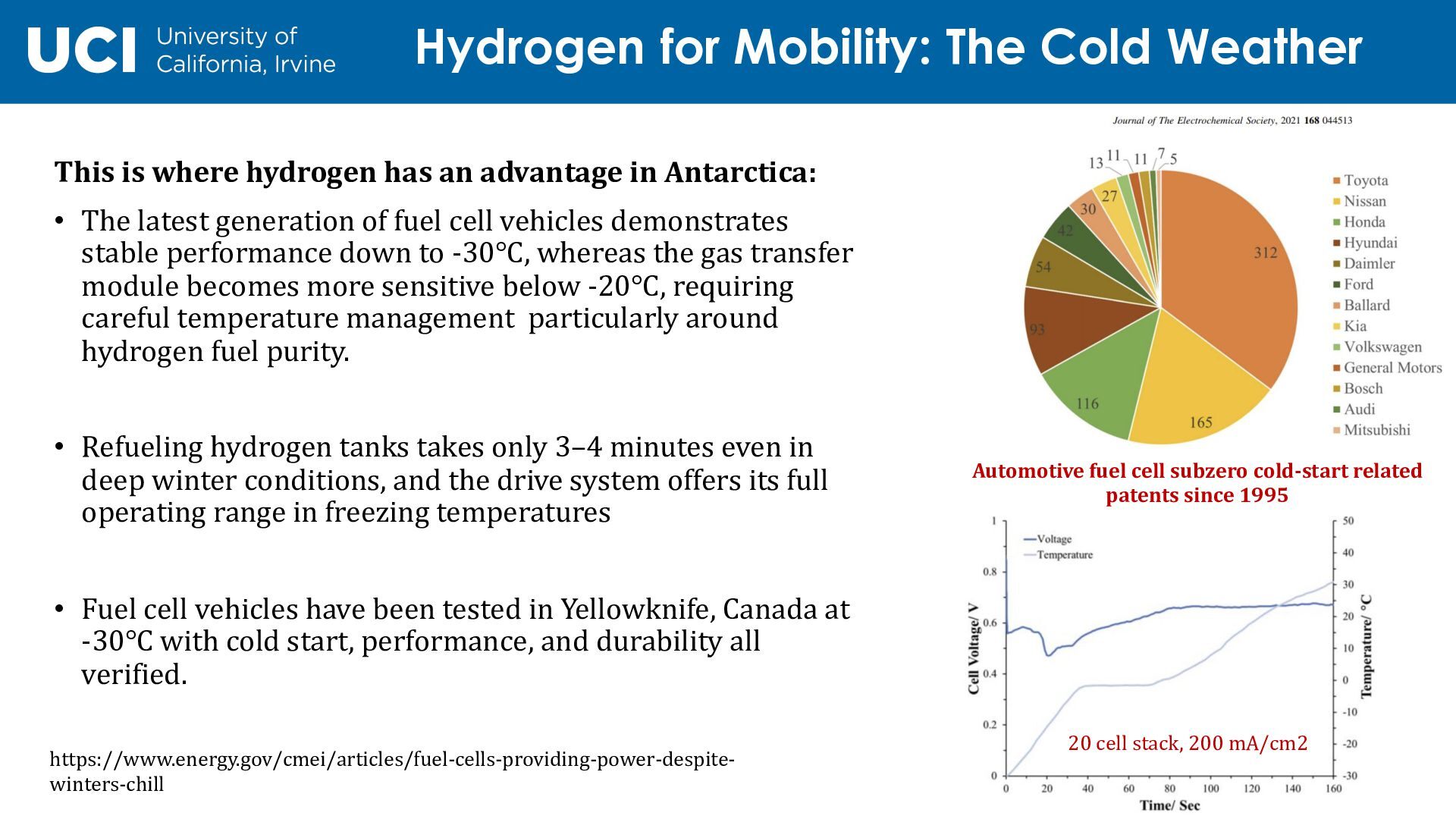
The latest generation of fuel cell vehicles demonstrates stable performance down to -30°C, whereas the gas transfer module becomes more sensitive below -20°C, requiring careful temperature management particularly around hydrogen fuel purity. • Refueling hydrogen tanks takes only 3–4 minutes even in deep winter conditions, and the drive system offers its full operating range in freezing temperatures • Fuel cell vehicles have been tested in Yellowknife, Canada at -30°C with cold start, performance, and durability all verified. Hydrogen for Mobility: The Cold Weather 20 cell stack, 200 mA/cm2 https://www.energy.gov/cmei/articles/fuel-cells-providing-power-despite- winters-chill Automotive fuel cell subzero cold-start related patents since 1995
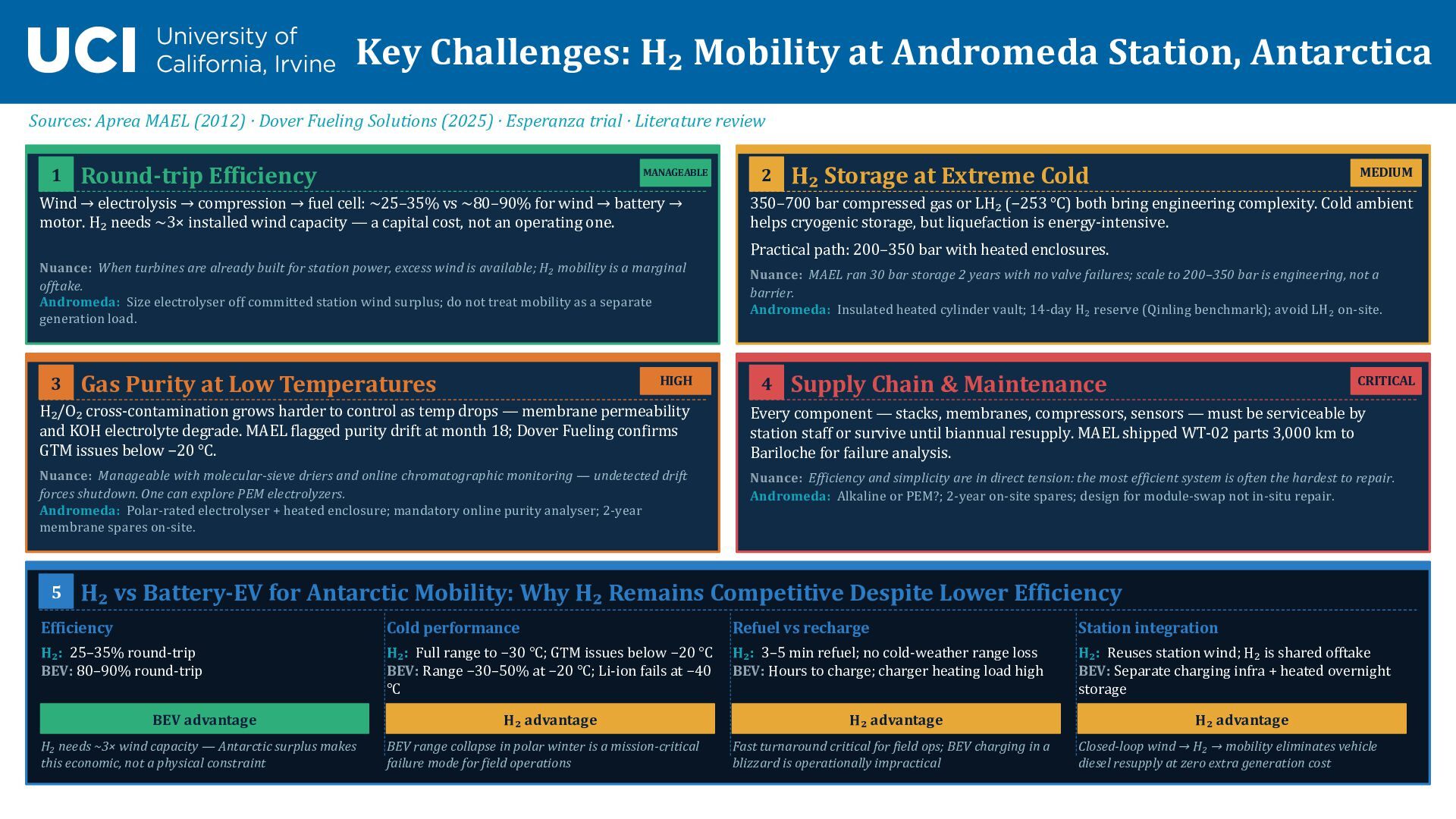
MAEL (2012) · Dover Fueling Solutions (2025) · Esperanza trial · Literature review 1 Round-trip Efficiency MANAGEABLE Wind → electrolysis → compression → fuel cell: ~25–35% vs ~80–90% for wind → battery → motor. H₂ needs ~3× installed wind capacity — a capital cost, not an operating one. Nuance: When turbines are already built for station power, excess wind is available; H₂ mobility is a marginal offtake. Andromeda: Size electrolyser off committed station wind surplus; do not treat mobility as a separate generation load. 2 H₂ Storage at Extreme Cold MEDIUM 350–700 bar compressed gas or LH₂ (−253 °C) both bring engineering complexity. Cold ambient helps cryogenic storage, but liquefaction is energy-intensive. Practical path: 200–350 bar with heated enclosures. Nuance: MAEL ran 30 bar storage 2 years with no valve failures; scale to 200–350 bar is engineering, not a barrier. Andromeda: Insulated heated cylinder vault; 14-day H₂ reserve (Qinling benchmark); avoid LH₂ on-site. 3 Gas Purity at Low Temperatures HIGH H₂/O₂ cross-contamination grows harder to control as temp drops — membrane permeability and KOH electrolyte degrade. MAEL flagged purity drift at month 18; Dover Fueling confirms GTM issues below −20 °C. Nuance: Manageable with molecular-sieve driers and online chromatographic monitoring — undetected drift forces shutdown. One can explore PEM electrolyzers. Andromeda: Polar-rated electrolyser + heated enclosure; mandatory online purity analyser; 2-year membrane spares on-site. 4 Supply Chain & Maintenance CRITICAL Every component — stacks, membranes, compressors, sensors — must be serviceable by station staff or survive until biannual resupply. MAEL shipped WT-02 parts 3,000 km to Bariloche for failure analysis. Nuance: Efficiency and simplicity are in direct tension: the most efficient system is often the hardest to repair. Andromeda: Alkaline or PEM?; 2-year on-site spares; design for module-swap not in-situ repair. 5 H₂ vs Battery-EV for Antarctic Mobility: Why H₂ Remains Competitive Despite Lower Efficiency Efficiency H₂: 25–35% round-trip BEV: 80–90% round-trip BEV advantage H₂ needs ~3× wind capacity — Antarctic surplus makes this economic, not a physical constraint Cold performance H₂: Full range to −30 °C; GTM issues below −20 °C BEV: Range −30–50% at −20 °C; Li-ion fails at −40 °C H₂ advantage BEV range collapse in polar winter is a mission-critical failure mode for field operations Refuel vs recharge H₂: 3–5 min refuel; no cold-weather range loss BEV: Hours to charge; charger heating load high H₂ advantage Fast turnaround critical for field ops; BEV charging in a blizzard is operationally impractical Station integration H₂: Reuses station wind; H₂ is shared offtake BEV: Separate charging infra + heated overnight storage H₂ advantage Closed-loop wind → H₂ → mobility eliminates vehicle diesel resupply at zero extra generation cost
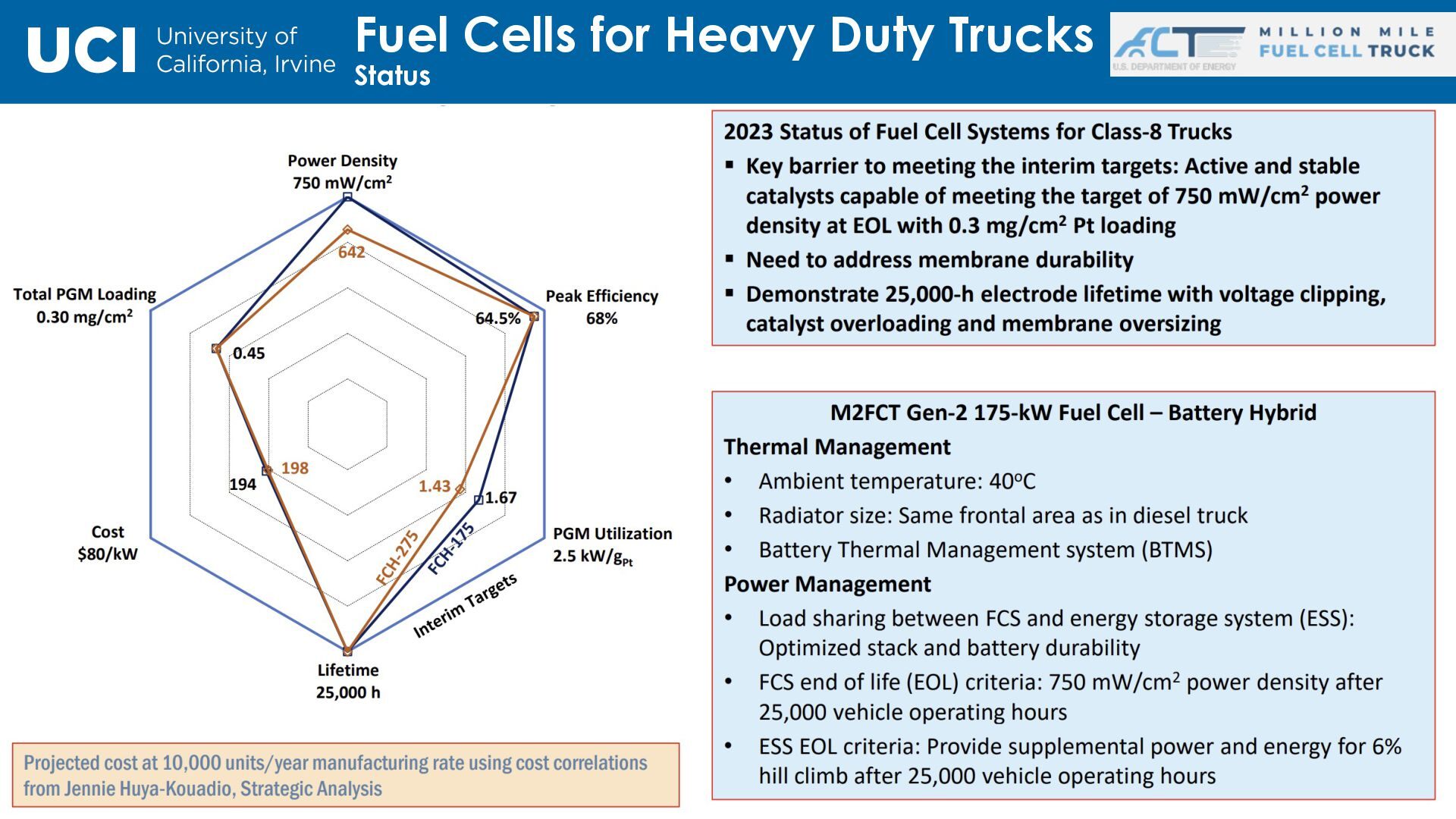
V/cell Temperature 88 to 94C. Pt loading from 0.4 to 0.35 mgPt/cm2 Reduce oversizing from 66% to 43% (increase power density 553 to 644 mW/cm2) Reduce oversizing from 43% to 10% (increases power density from 708 to 921 mW/cm2). 644 to 708 mW/cm2, Pt loading from 0.35 to 0.3 mgPt/cm2 James, B. 2021 DOE Hydrogen and Fuel Cells Program Review Presentation. Fuel Cell Systems Progress Towards DOE Ultimate Target Materials solutions needed for achieving cost targets
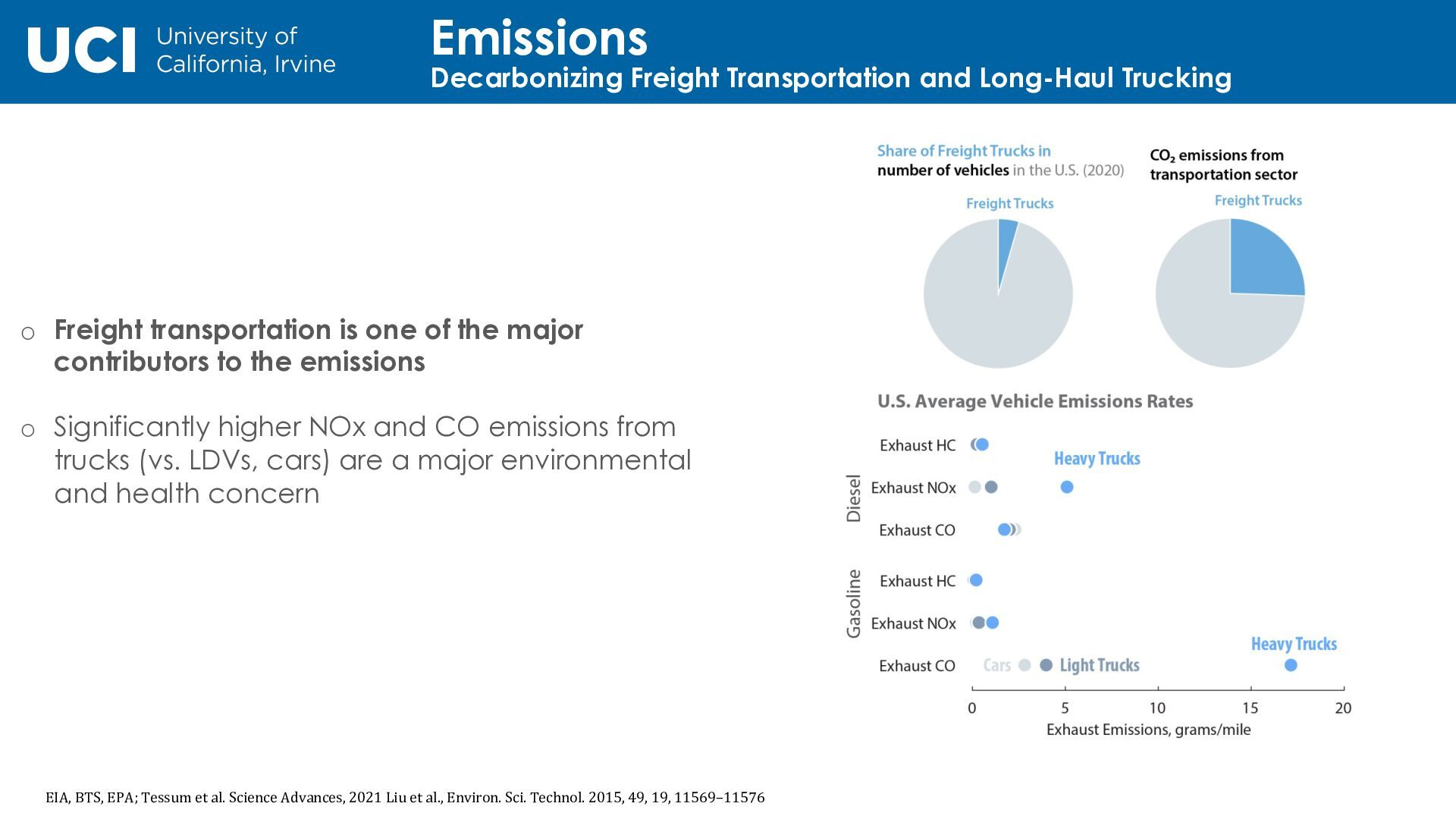
et al., Environ. Sci. Technol. 2015, 49, 19, 11569–11576 o Freight transportation is one of the major contributors to the emissions o Significantly higher NOx and CO emissions from trucks (vs. LDVs, cars) are a major environmental and health concern Emissions Decarbonizing Freight Transportation and Long-Haul Trucking

 Your Podcast. Everywhere. Effortlessly.


 ipfevents
 estie
estie
 hanbao
 naokimuroki
 sshimizu2006
 jagupath
 peterdesmet
.jpg) ktatsuya
ktatsuya
 shumpei777
 trycycle
 mickey_kubo
 takusamar
%20square.jpg) baggiponte
baggiponte
 kneath
 uxyall
 panda_program
 addyosmani
 tammyeverts
 rabernat
 wayneb77
 malarkey
 iamctodd
 oripsolob
 nmsamuel
 baasie
![Thank you! [email protected]](https://files.speakerdeck.com/presentations/e289e1f4202d4cf7b0ed72a0a431acb3/slide_11.jpg)