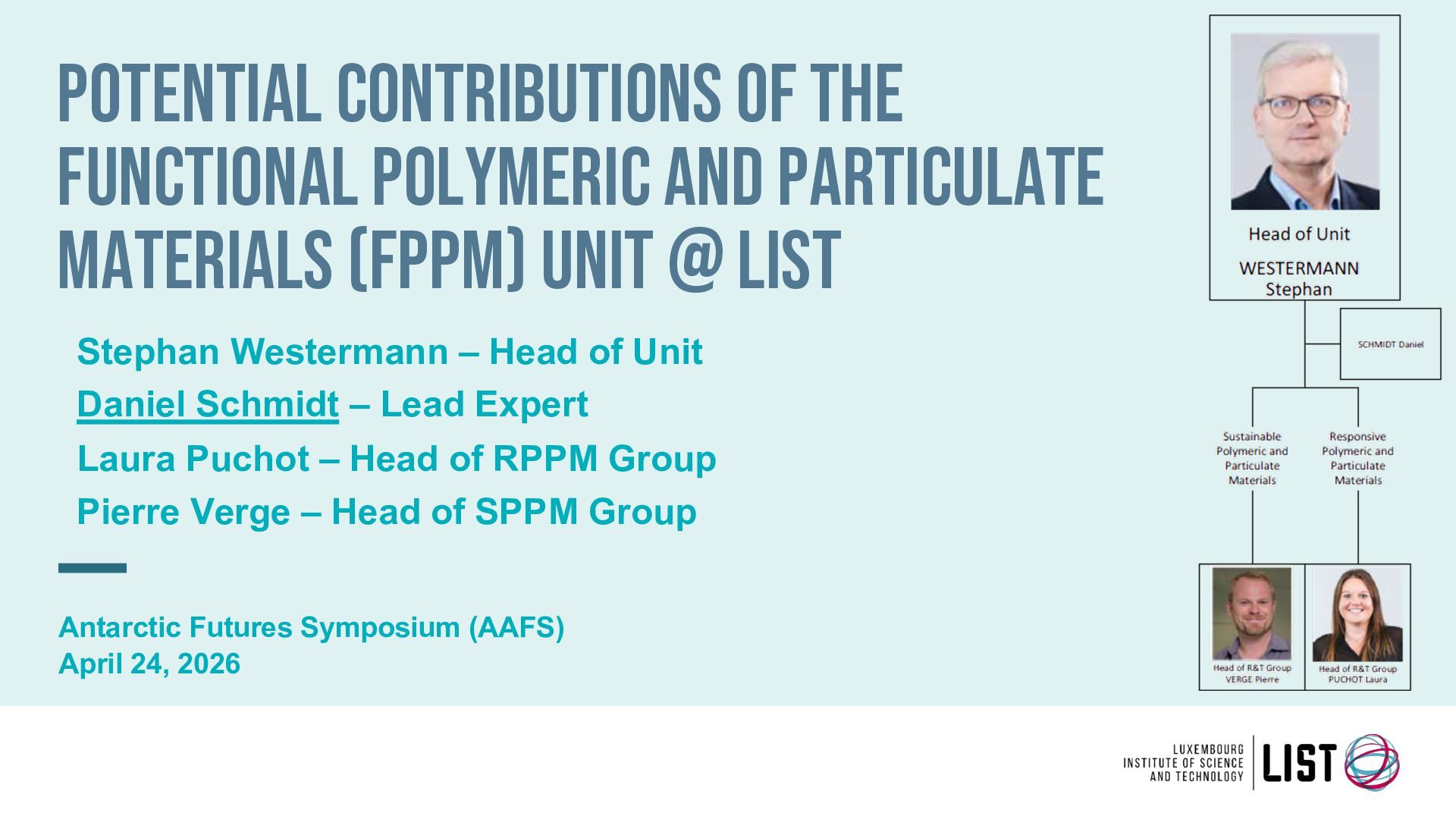
Unit @ LIST Stephan Westermann – Head of Unit Daniel Schmidt – Lead Expert Laura Puchot – Head of RPPM Group Pierre Verge – Head of SPPM Group Antarctic Futures Symposium (AAFS) April 24, 2026
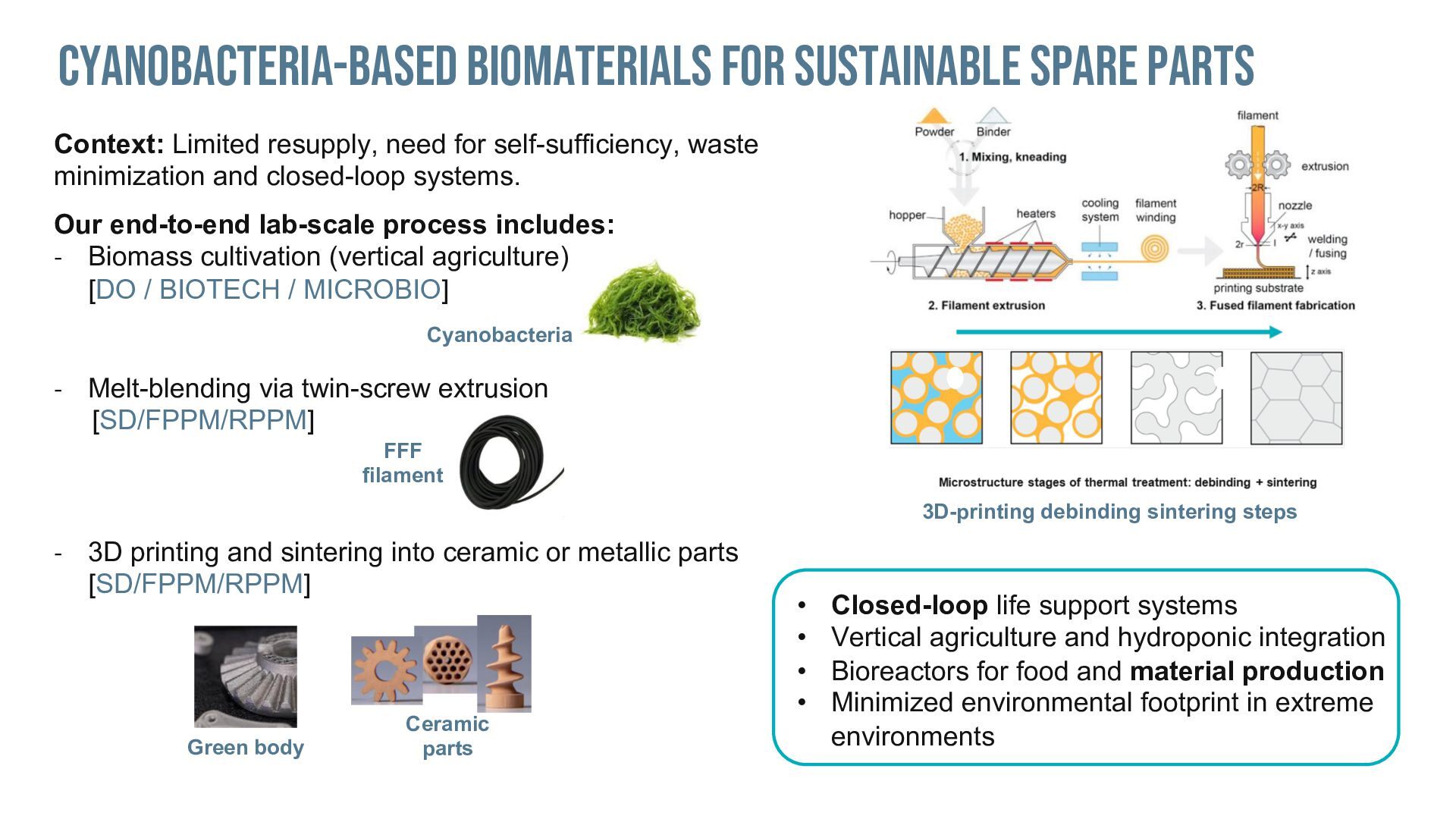
systems • Vertical agriculture and hydroponic integration • Bioreactors for food and material production • Minimized environmental footprint in extreme environments Context: Limited resupply, need for self-sufficiency, waste minimization and closed-loop systems. Our end-to-end lab-scale process includes: - Biomass cultivation (vertical agriculture) [DO / BIOTECH / MICROBIO] - Melt-blending via twin-screw extrusion [SD/FPPM/RPPM] - 3D printing and sintering into ceramic or metallic parts [SD/FPPM/RPPM] Cyanobacteria FFF filament Green body Ceramic parts 3D-printing debinding sintering steps
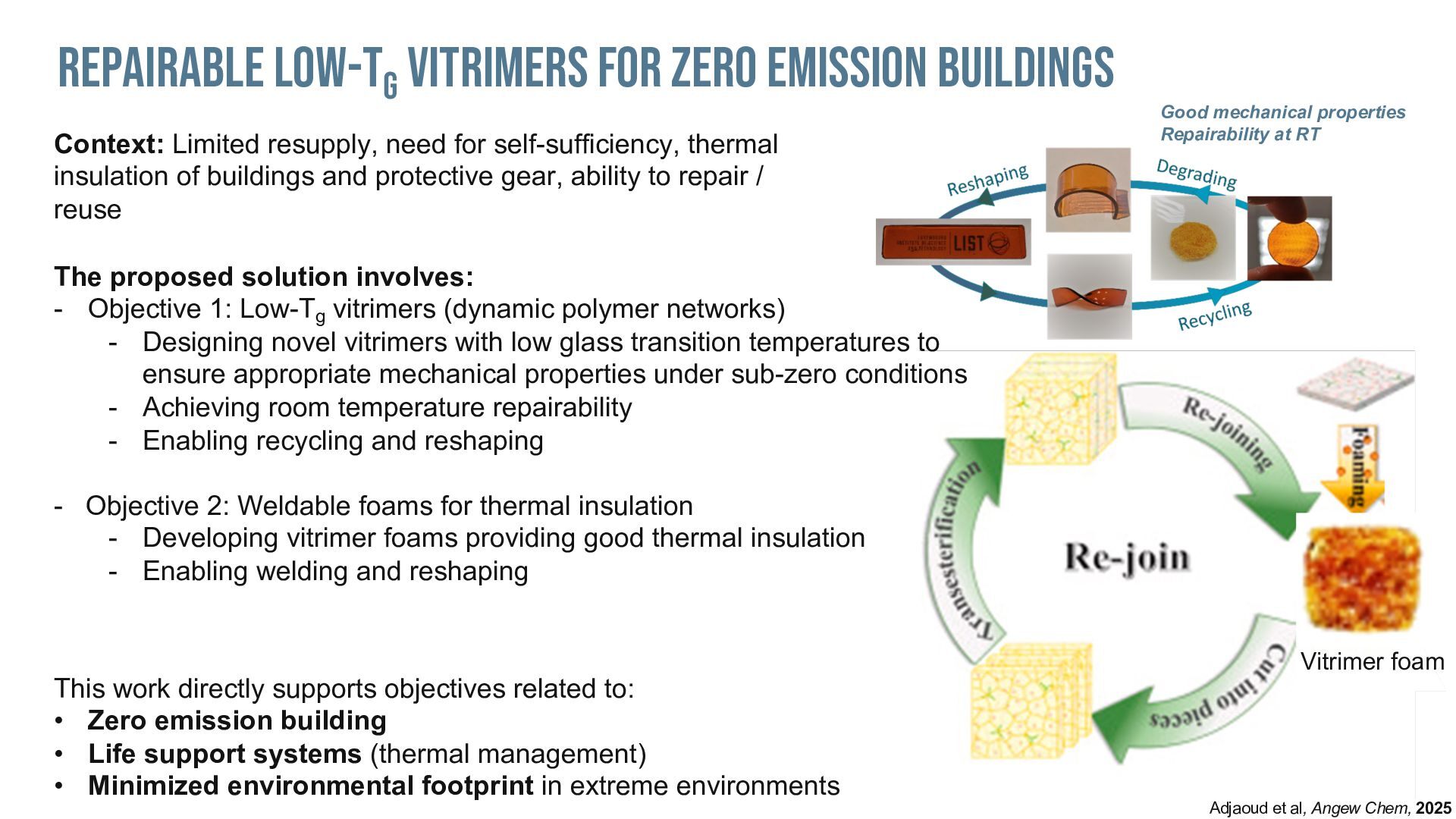
supports objectives related to: • Zero emission building • Life support systems (thermal management) • Minimized environmental footprint in extreme environments Context: Limited resupply, need for self-sufficiency, thermal insulation of buildings and protective gear, ability to repair / reuse Good mechanical properties Repairability at RT Vitrimer foam Adjaoud et al, Angew Chem, 2025 The proposed solution involves: - Objective 1: Low-Tg vitrimers (dynamic polymer networks) - Designing novel vitrimers with low glass transition temperatures to ensure appropriate mechanical properties under sub-zero conditions - Achieving room temperature repairability - Enabling recycling and reshaping - Objective 2: Weldable foams for thermal insulation - Developing vitrimer foams providing good thermal insulation - Enabling welding and reshaping
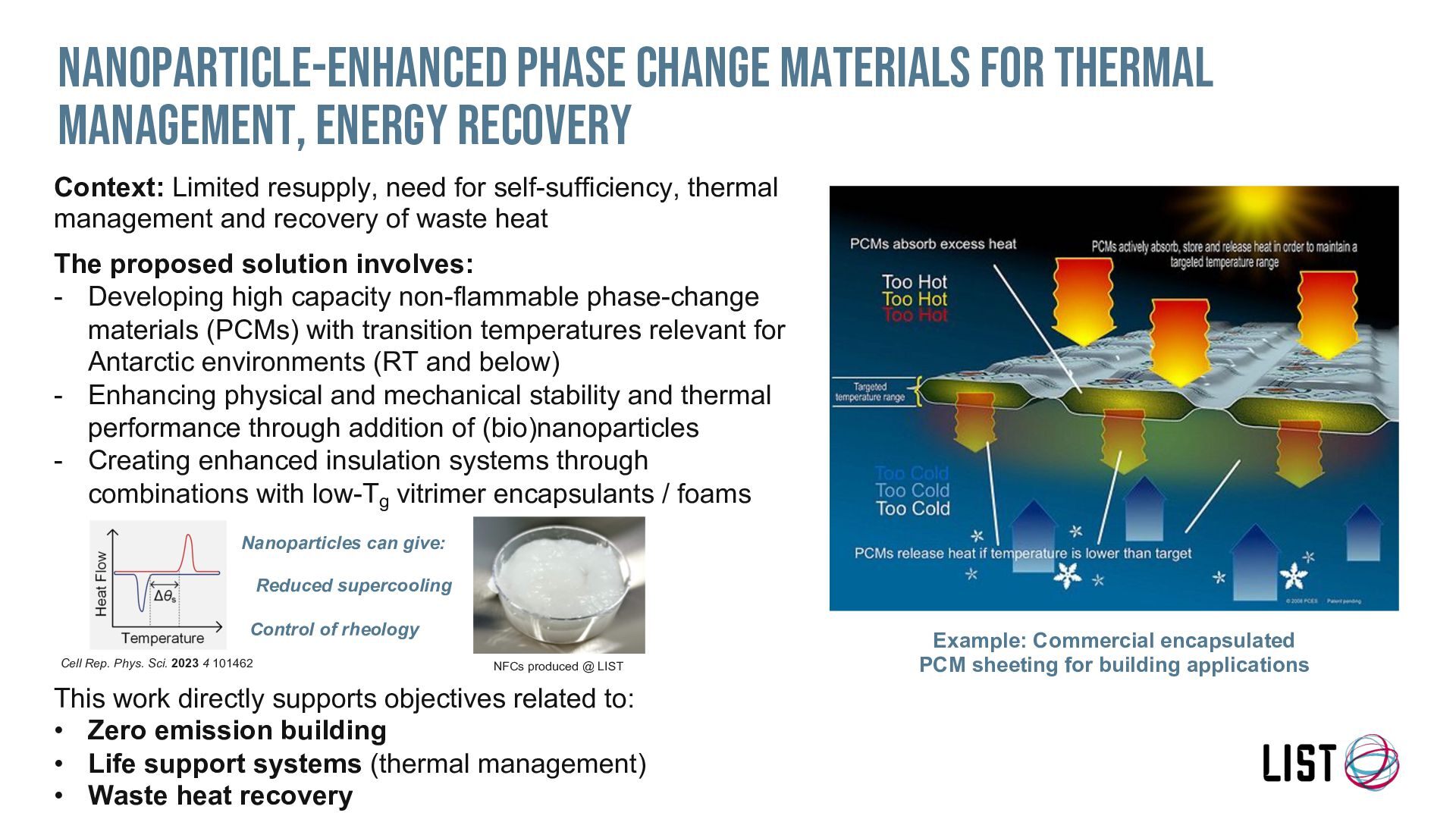
work directly supports objectives related to: • Zero emission building • Life support systems (thermal management) • Waste heat recovery Context: Limited resupply, need for self-sufficiency, thermal management and recovery of waste heat The proposed solution involves: - Developing high capacity non-flammable phase-change materials (PCMs) with transition temperatures relevant for Antarctic environments (RT and below) - Enhancing physical and mechanical stability and thermal performance through addition of (bio)nanoparticles - Creating enhanced insulation systems through combinations with low-Tg vitrimer encapsulants / foams Example: Commercial encapsulated PCM sheeting for building applications Nanoparticles can give: Reduced supercooling Control of rheology Cell Rep. Phys. Sci. 2023 4 101462 NFCs produced @ LIST
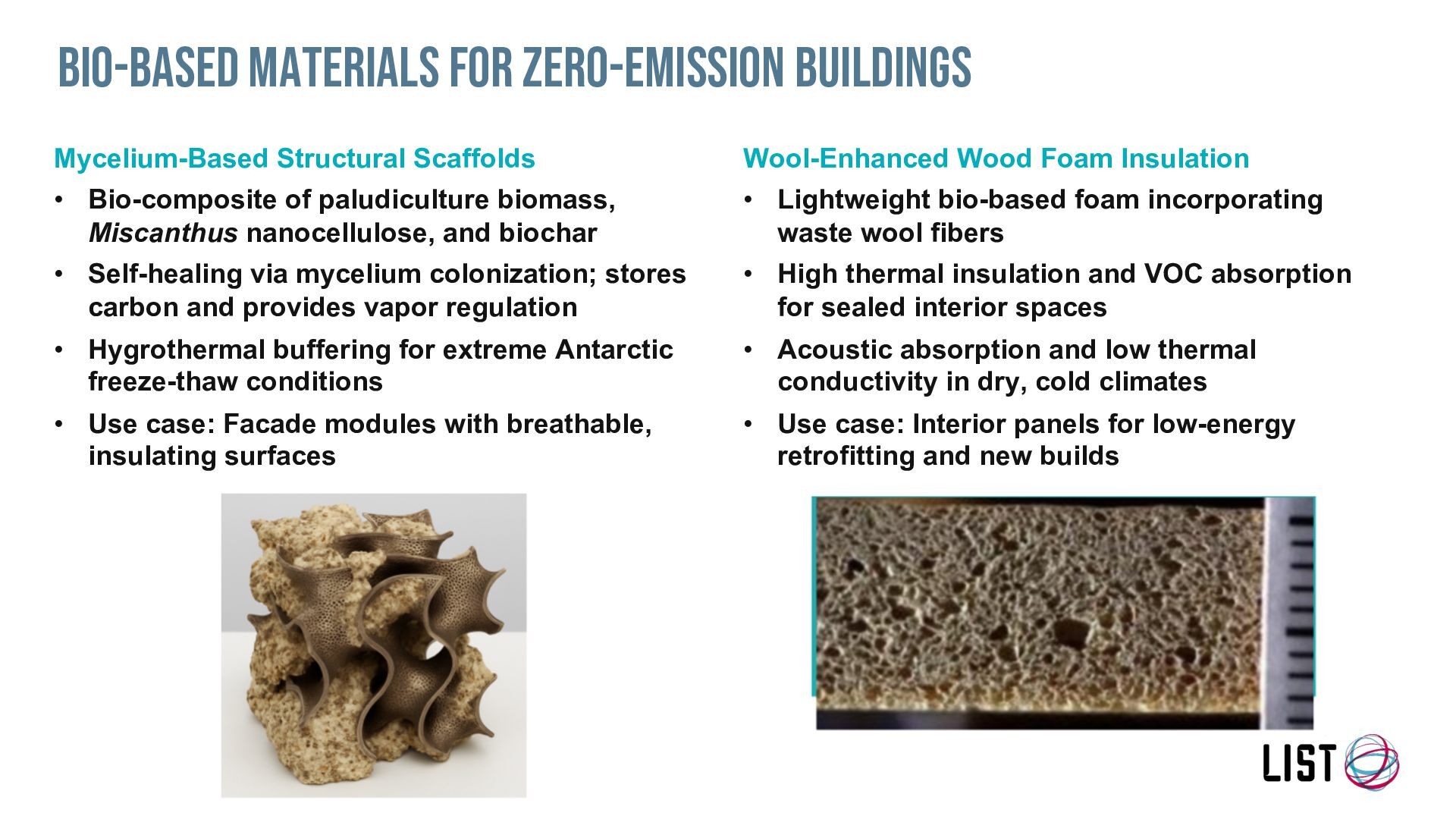
of paludiculture biomass, Miscanthus nanocellulose, and biochar • Self-healing via mycelium colonization; stores carbon and provides vapor regulation • Hygrothermal buffering for extreme Antarctic freeze-thaw conditions • Use case: Facade modules with breathable, insulating surfaces Wool-Enhanced Wood Foam Insulation • Lightweight bio-based foam incorporating waste wool fibers • High thermal insulation and VOC absorption for sealed interior spaces • Acoustic absorption and low thermal conductivity in dry, cold climates • Use case: Interior panels for low-energy retrofitting and new builds


 ipfevents
 tagtag
 trycycle
.jpg) lychee1223
lychee1223
 gkazunii
 konakalab
 satocos135
 hanbao
 institutdelelevage
 baasie
 aleyda
 marcduiker
 mza
mza
 mkilby
 erikaheidi
 tamaranovitovic
 thekraken
 techseoconnect
 twada
twada
 nonsquared