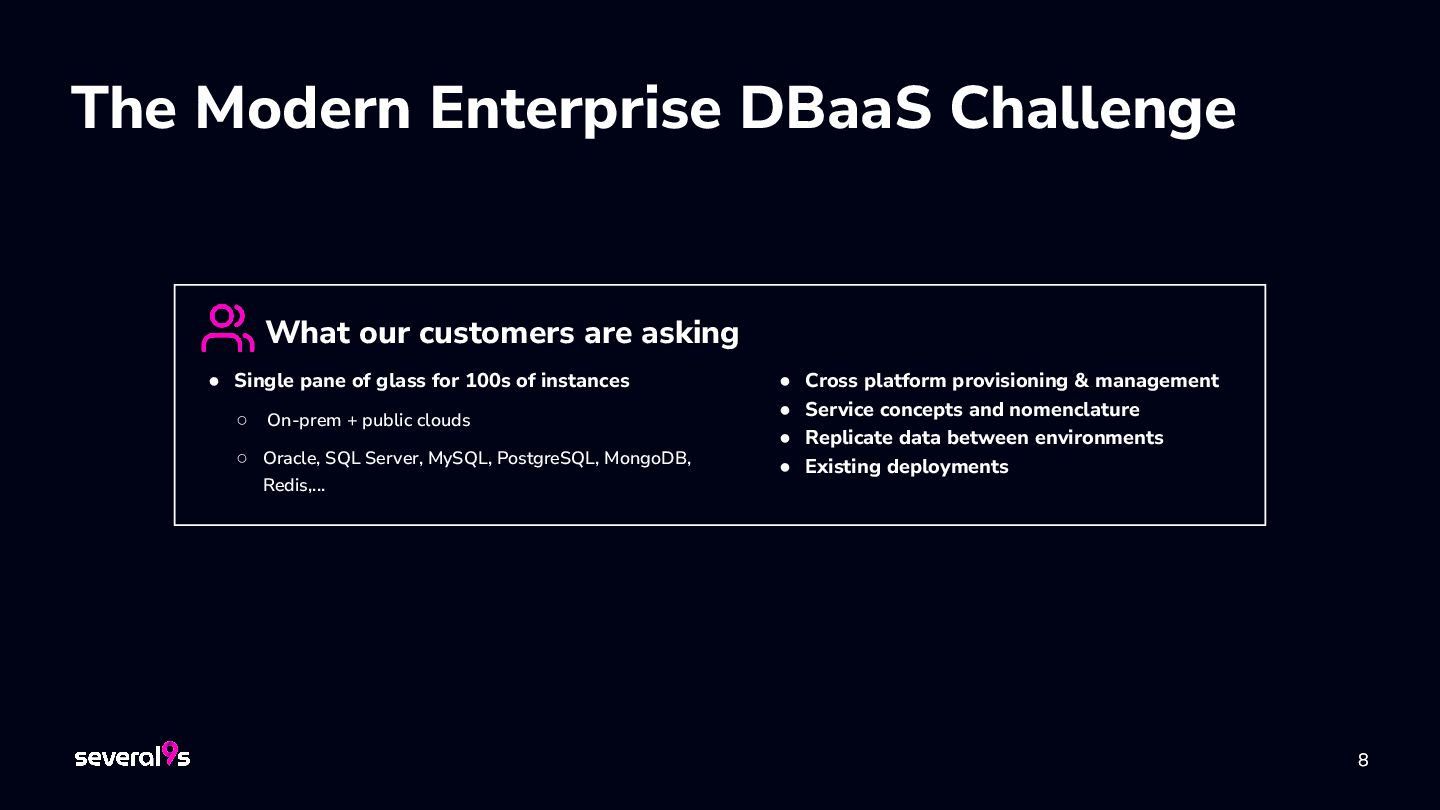
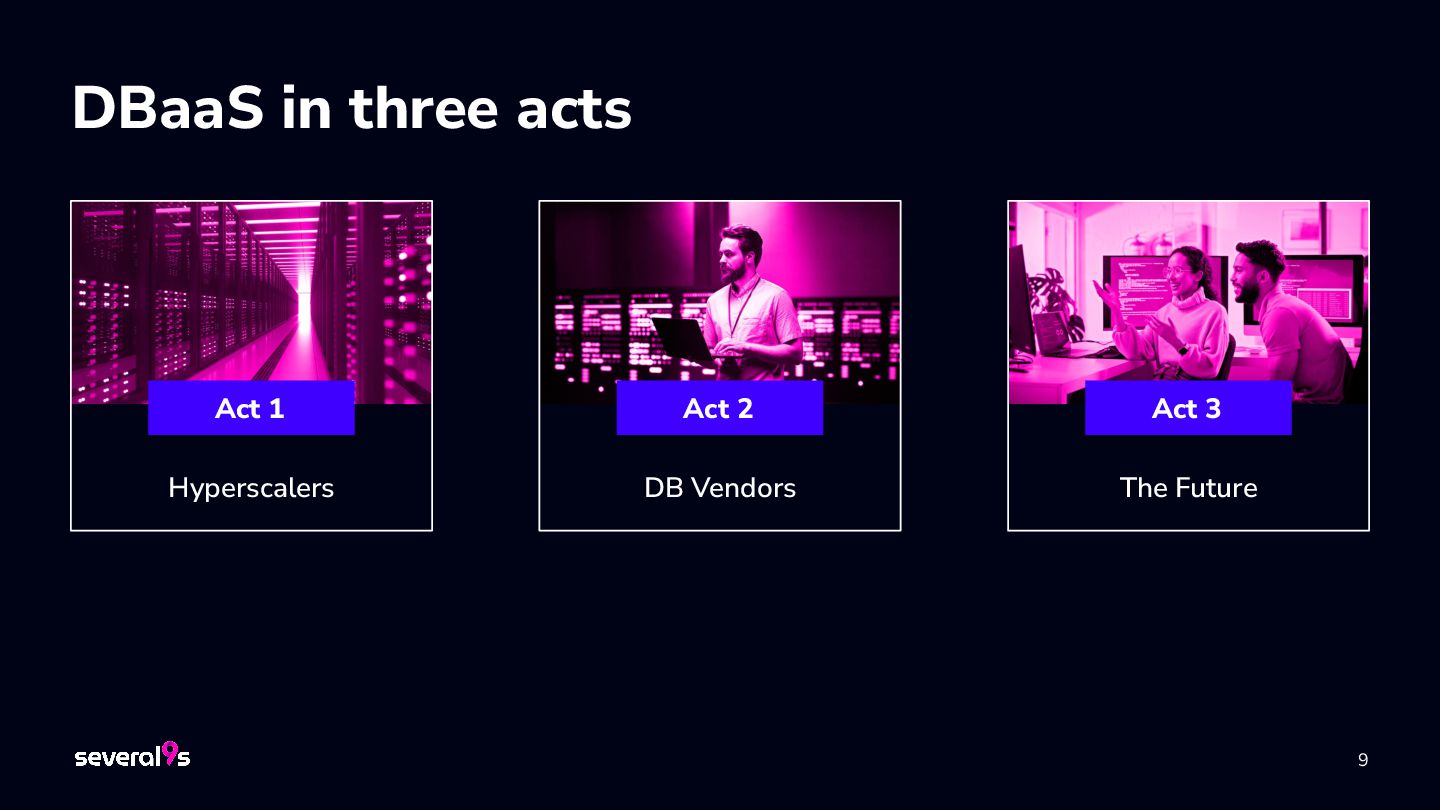
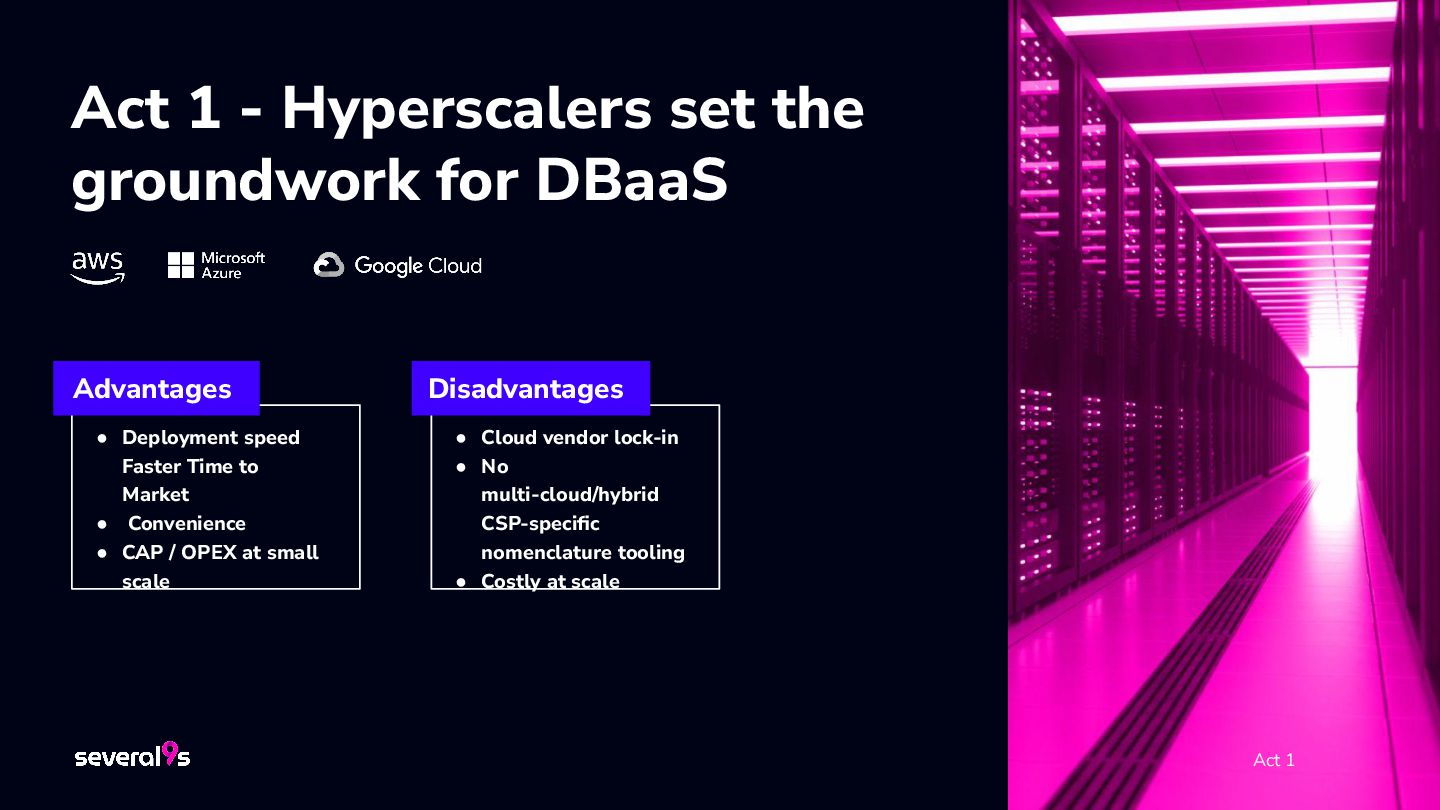
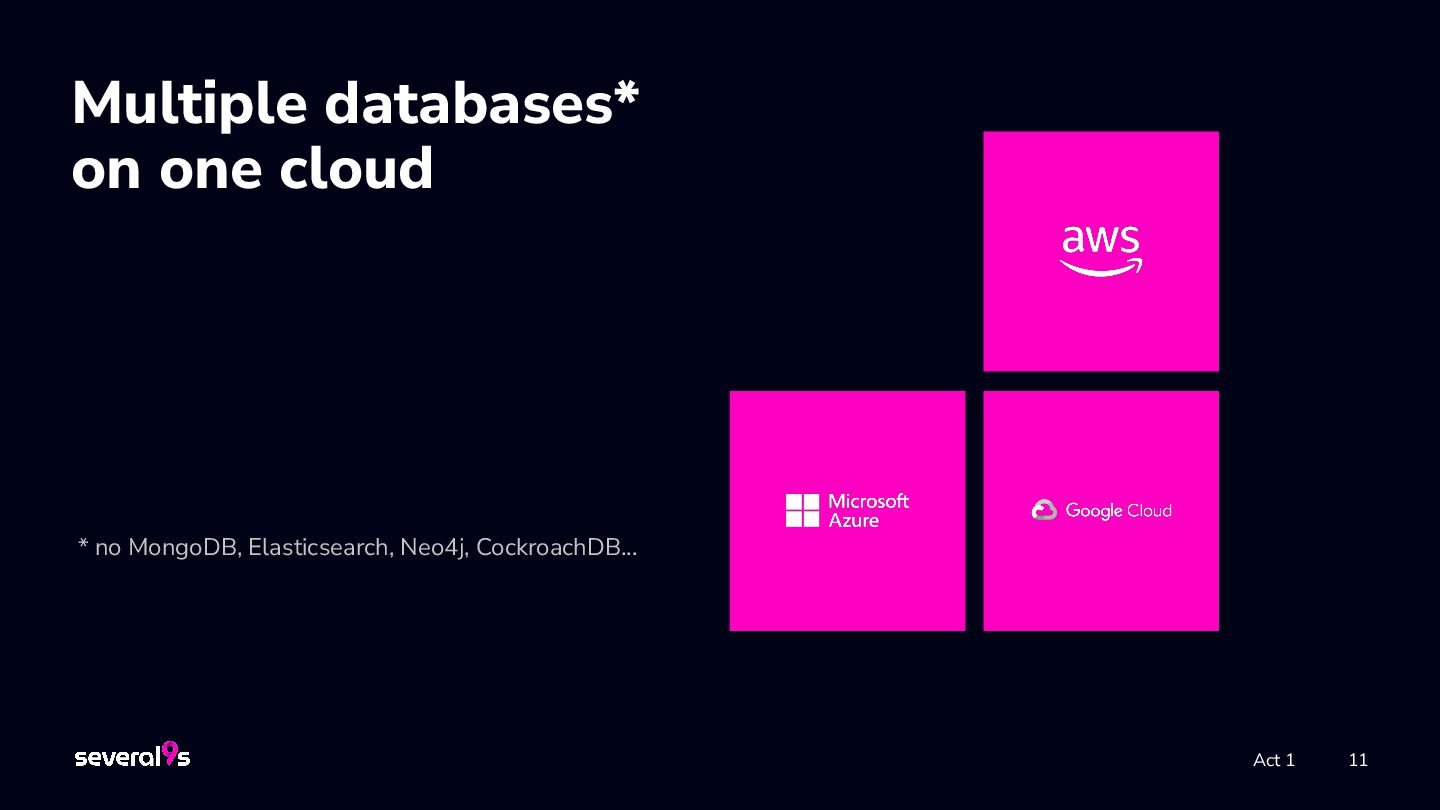
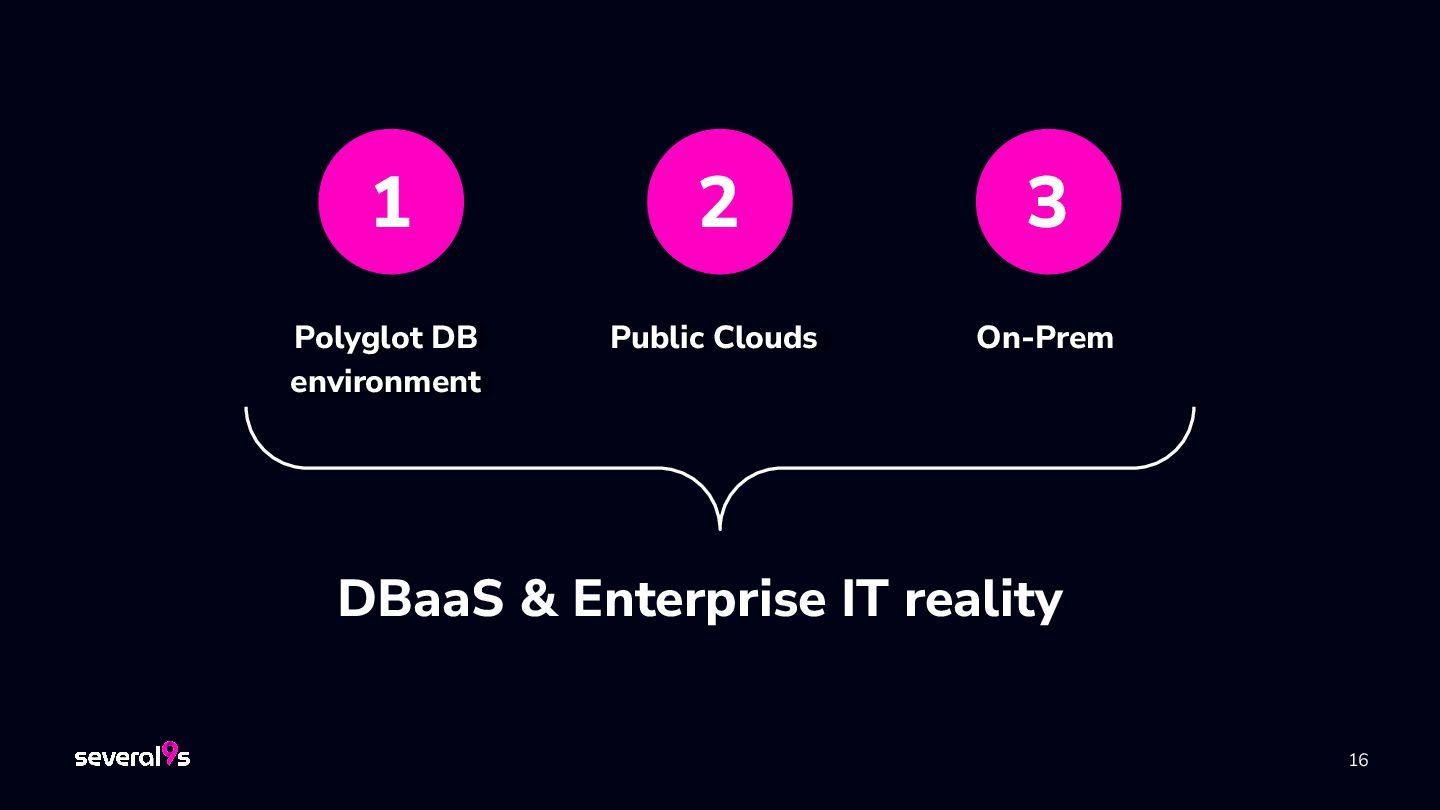
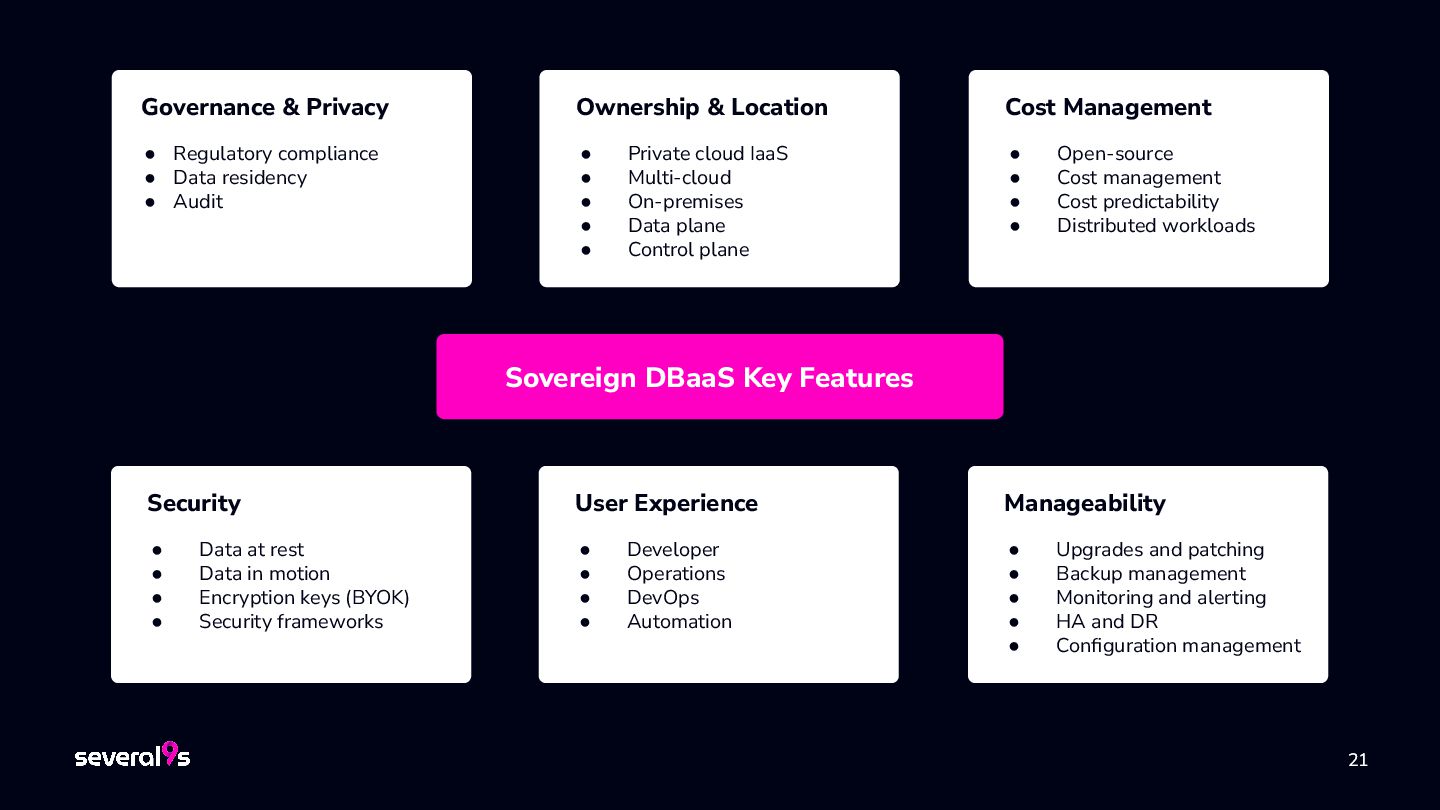
asking The Modern Enterprise DBaaS Challenge • Single pane of glass for 100s of instances ◦ On-prem + public clouds ◦ Oracle, SQL Server, MySQL, PostgreSQL, MongoDB, Redis,... • Cross platform provisioning & management • Service concepts and nomenclature • Replicate data between environments • Existing deployments
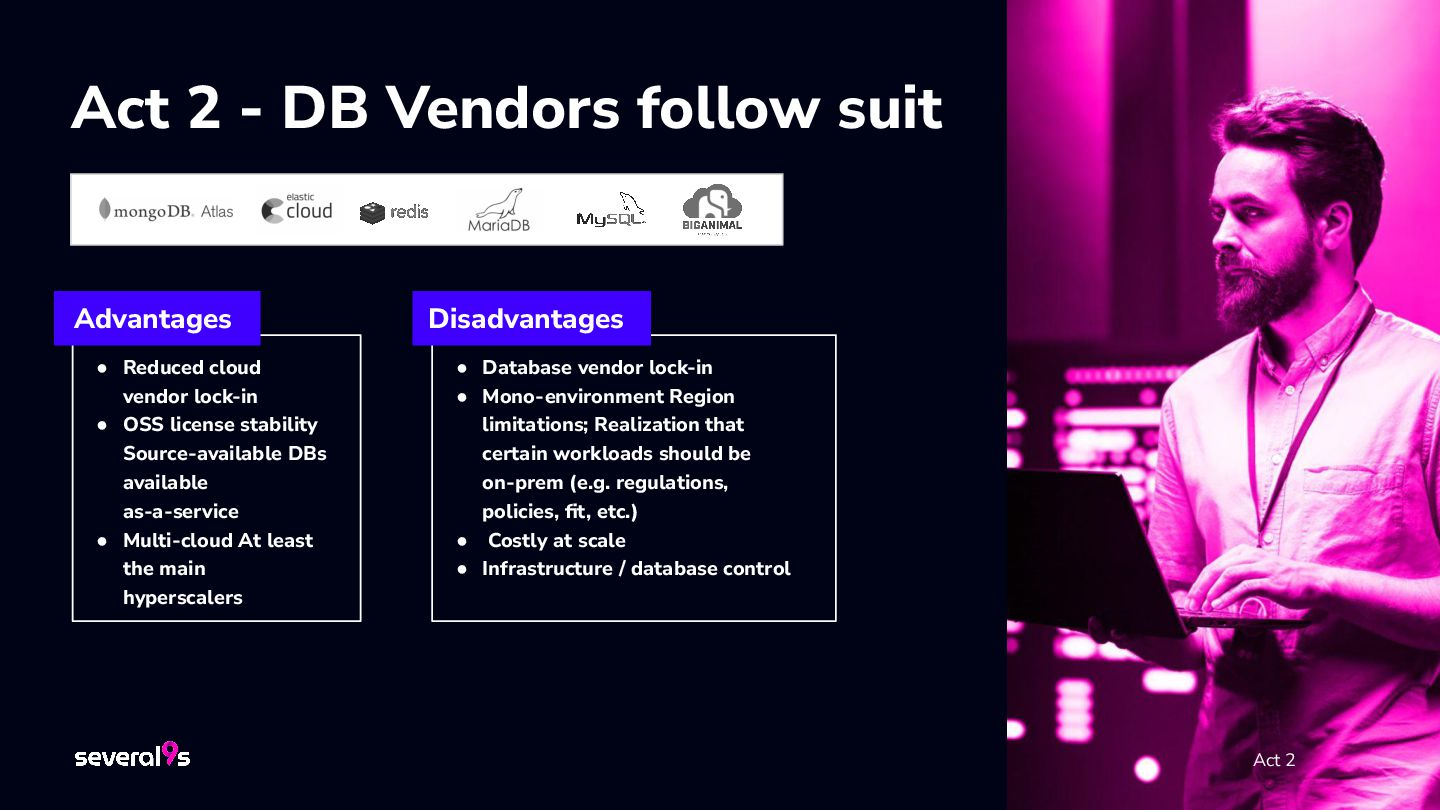
• Reduced cloud vendor lock-in • OSS license stability Source-available DBs available as-a-service • Multi-cloud At least the main hyperscalers Advantages • Database vendor lock-in • Mono-environment Region limitations; Realization that certain workloads should be on-prem (e.g. regulations, policies, fit, etc.) • Costly at scale • Infrastructure / database control Disadvantages Act 2
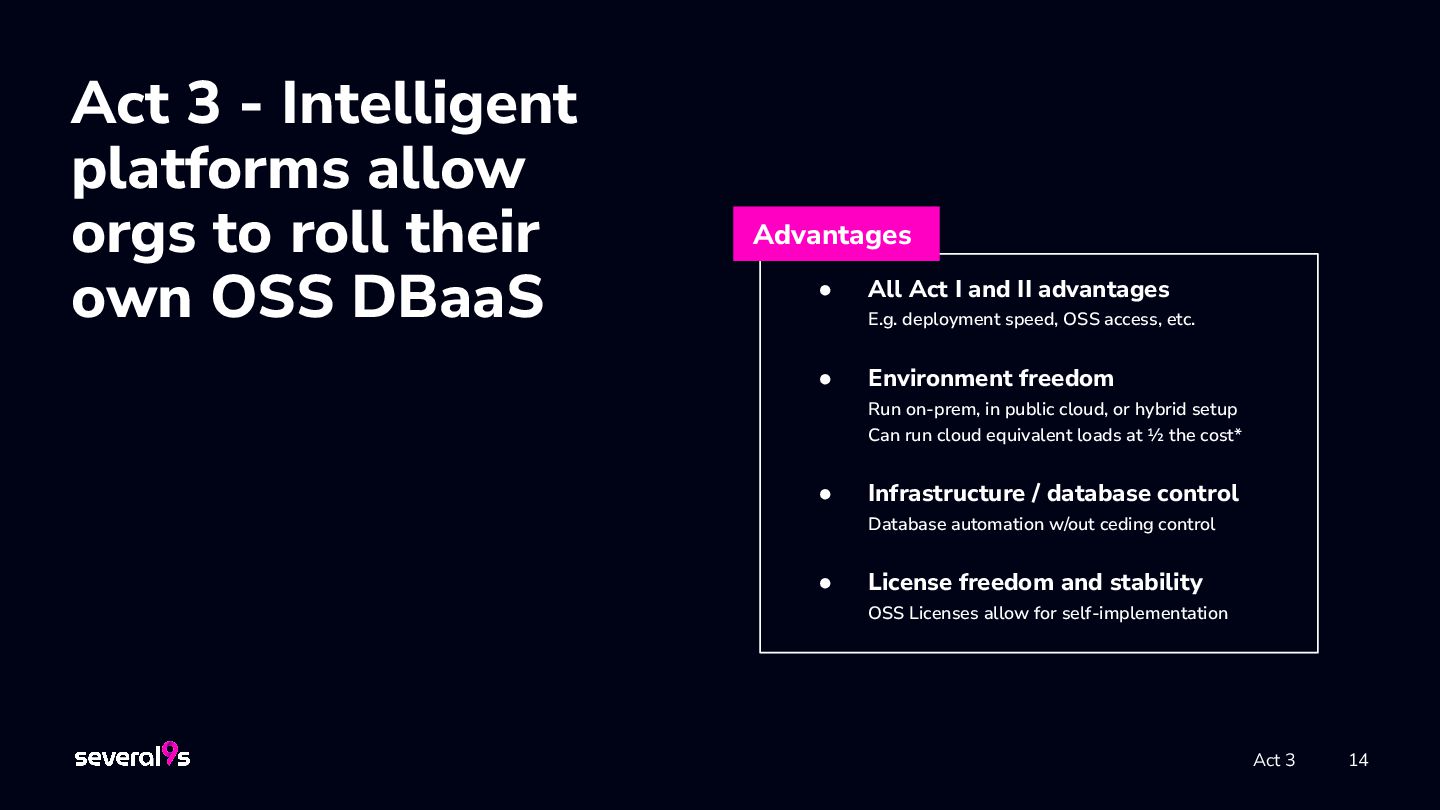
their own OSS DBaaS Act 3 • All Act I and II advantages E.g. deployment speed, OSS access, etc. • Environment freedom Run on-prem, in public cloud, or hybrid setup Can run cloud equivalent loads at ½ the cost* • Infrastructure / database control Database automation w/out ceding control • License freedom and stability OSS Licenses allow for self-implementation Advantages
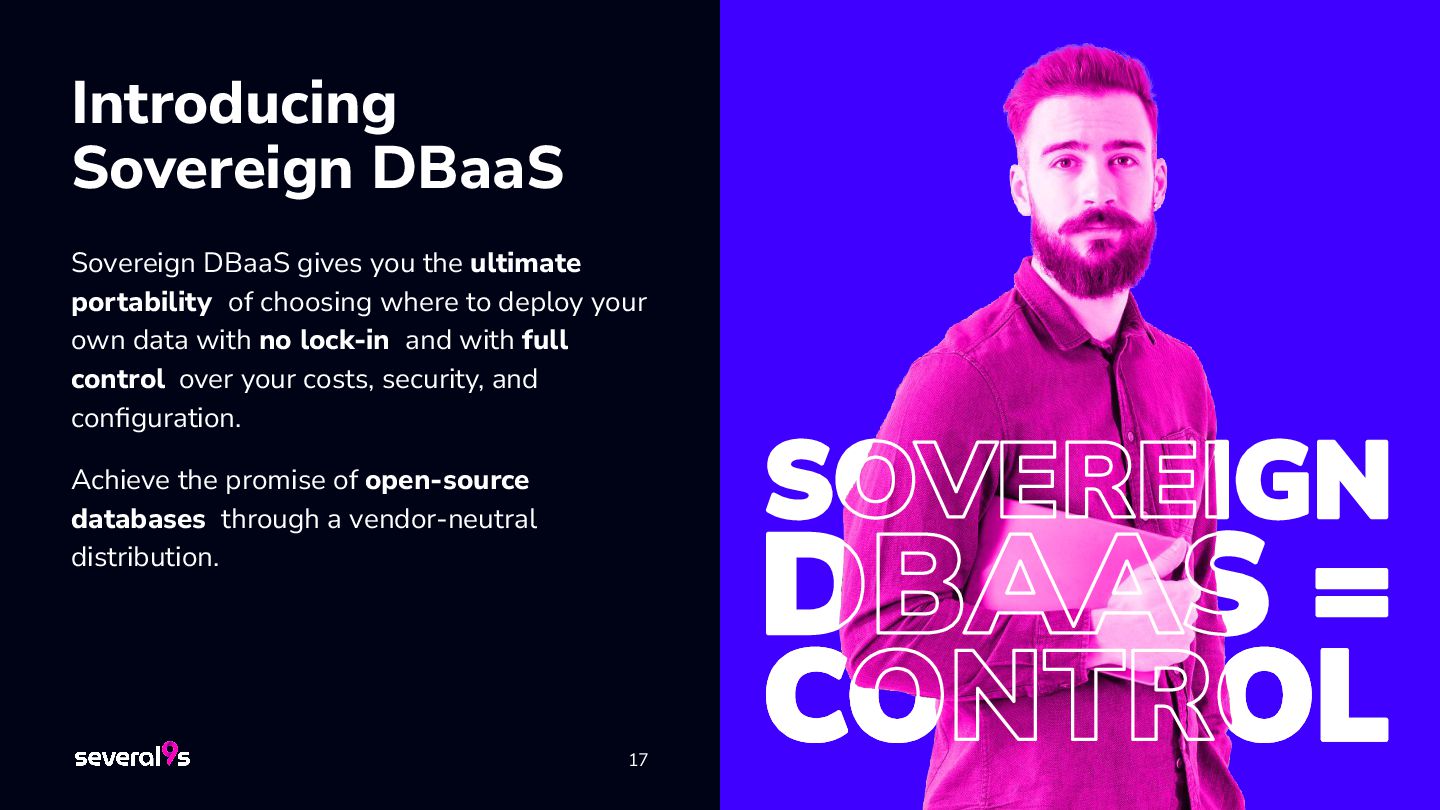
ultimate portability of choosing where to deploy your own data with no lock-in and with full control over your costs, security, and configuration. Achieve the promise of open-source databases through a vendor-neutral distribution.
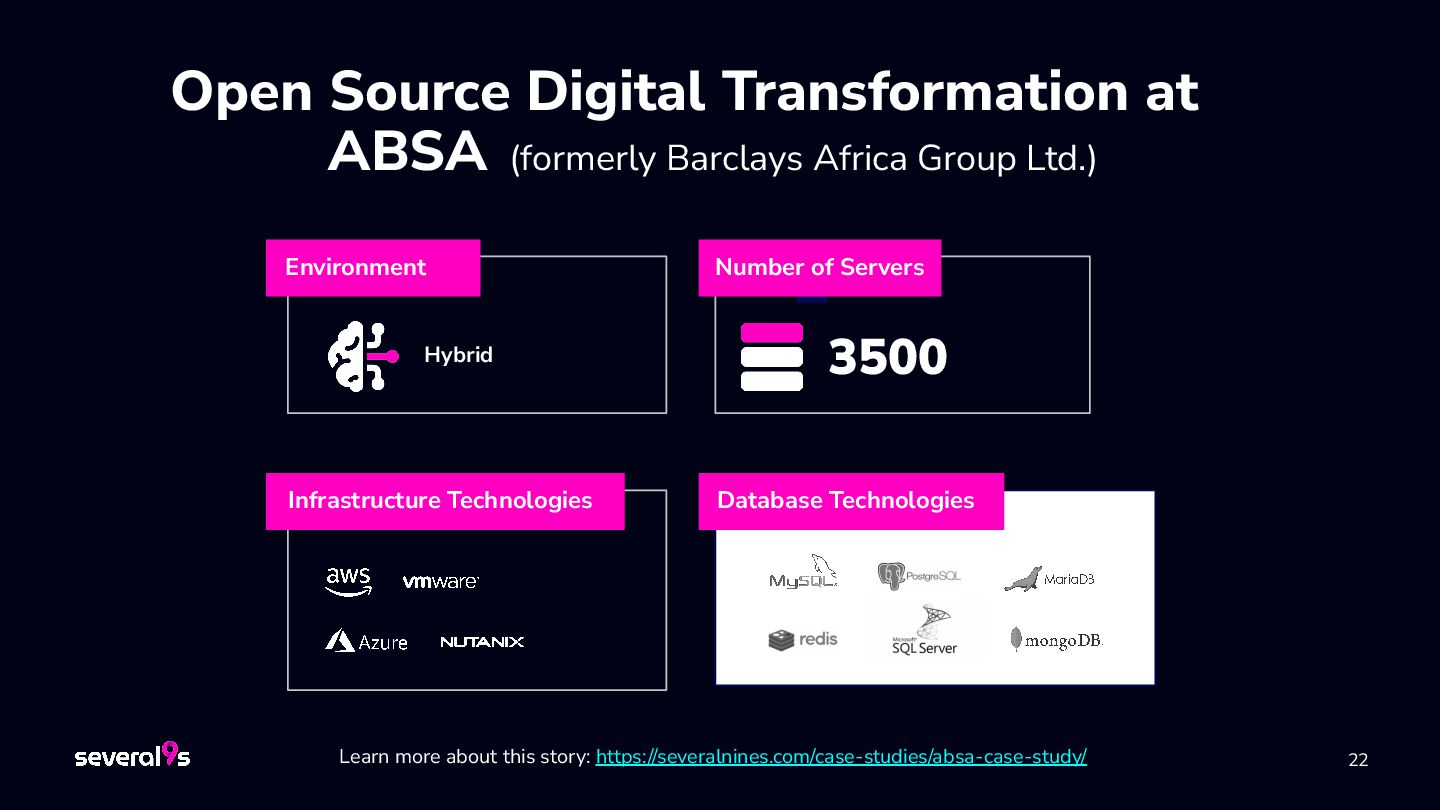
Group Ltd.) Learn more about this story: https://severalnines.com/case-studies/absa-case-study/ Environment Hybrid Infrastructure Technologies 3500 Database Technologies Number of Servers
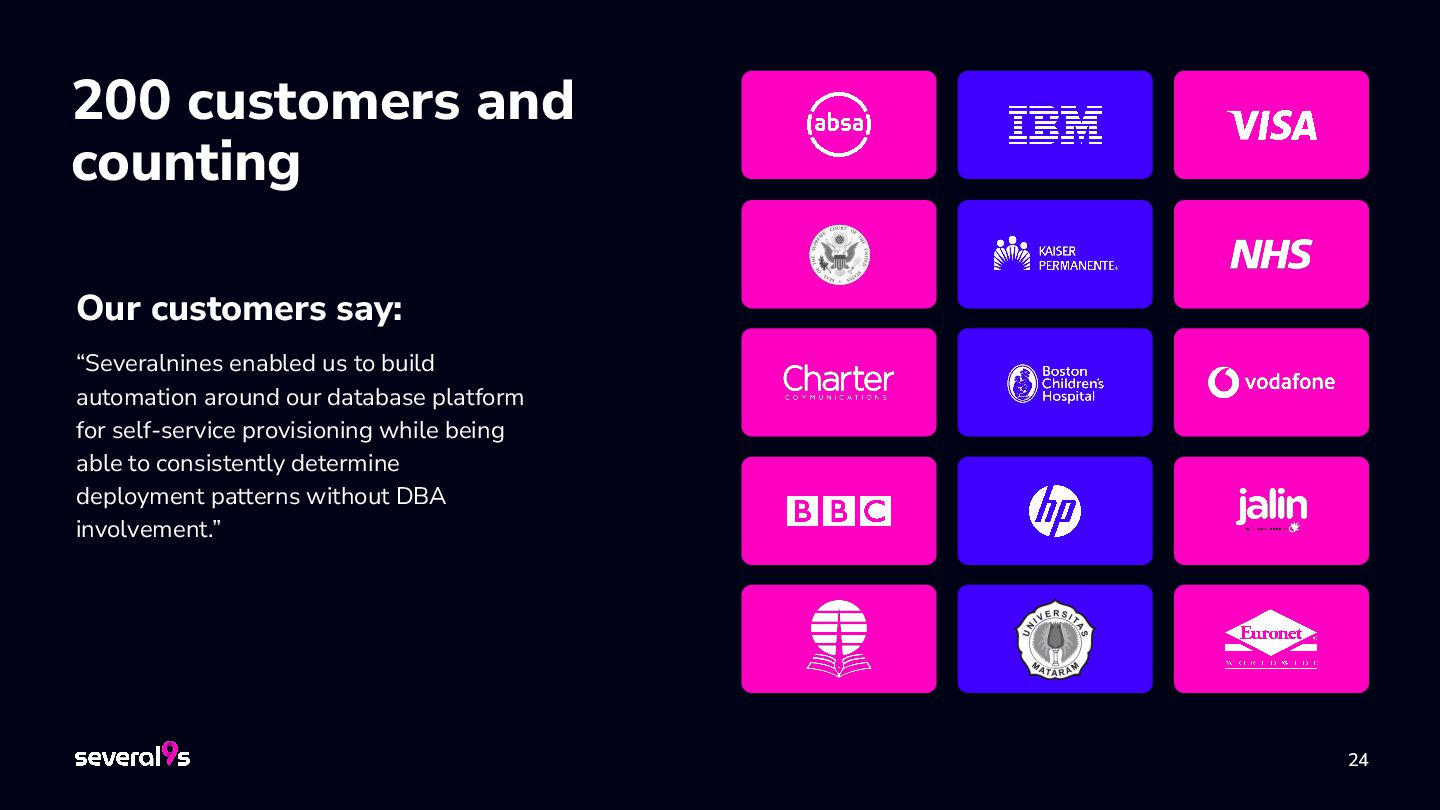
automation around our database platform for self-service provisioning while being able to consistently determine deployment patterns without DBA involvement.” 200 customers and counting


 itpresstour
 kairim0
 tatamiya
 torumakabe
 occhi
occhi
 masakane55
 vivion
 moznion
 ueponx
 sansantech
 kmiya84377
 athug
athug
 baasie
 bermonpainter
 aki_iinuma
 uxyall
 notwaldorf
 addyosmani
 reverentgeek
 ipullrank
 cassininazir
 retrage
 portentint
 akosma