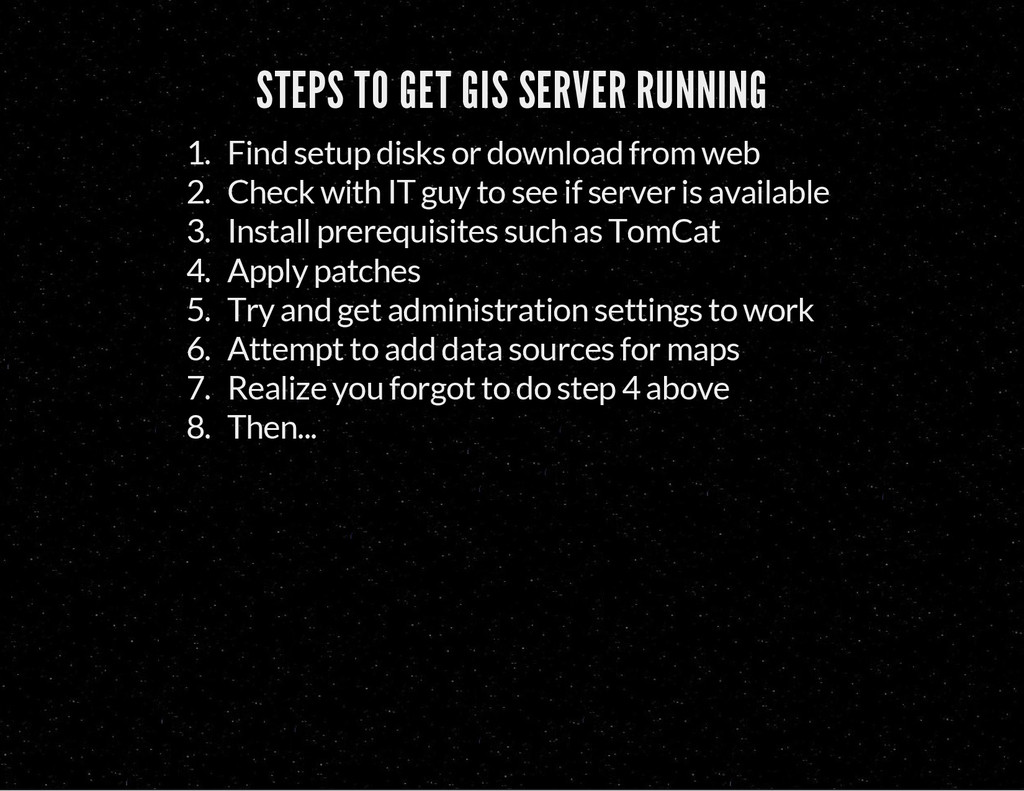
or download from web 2. Check with IT guy to see if server is available 3. Install prerequisites such as TomCat 4. Apply patches 5. Try and get administration settings to work 6. Attempt to add data sources for maps 7. Realize you forgot to do step 4 above 8. Then...
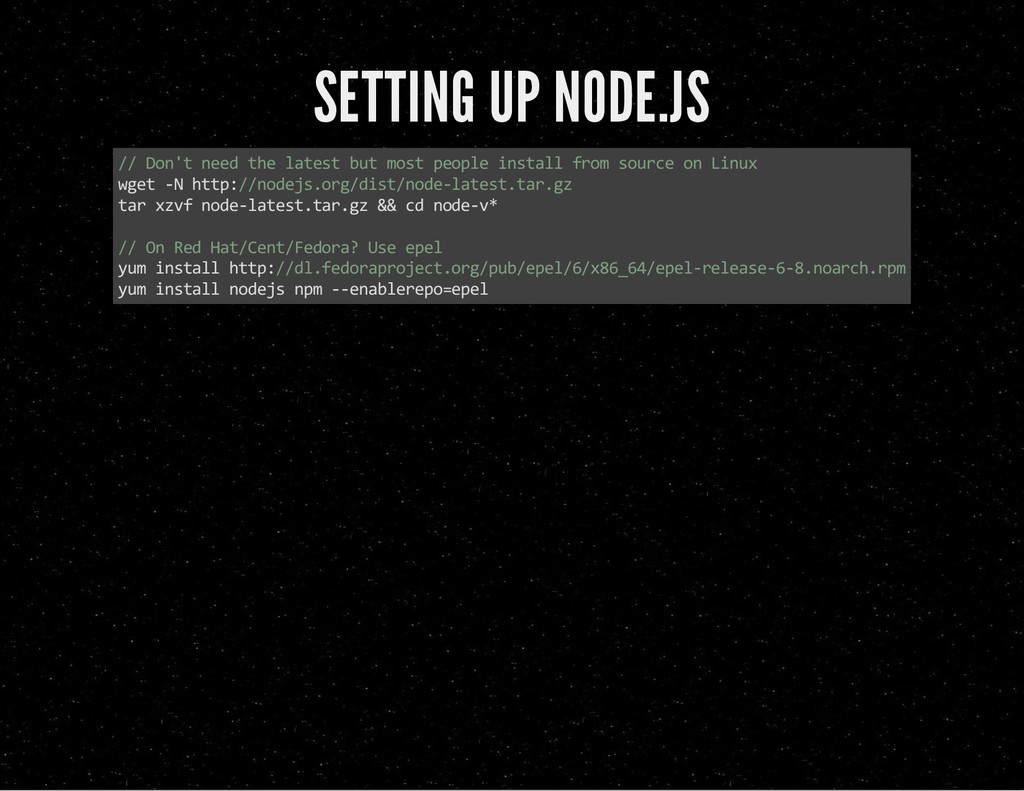
people install from source on Linux wget ‐N http://nodejs.org/dist/node‐latest.tar.gz tar xzvf node‐latest.tar.gz && cd node‐v* // On Red Hat/Cent/Fedora? Use epel yum install http://dl.fedoraproject.org/pub/epel/6/x86_64/epel‐release‐6‐8.noarch.rpm yum install nodejs npm ‐‐enablerepo=epel
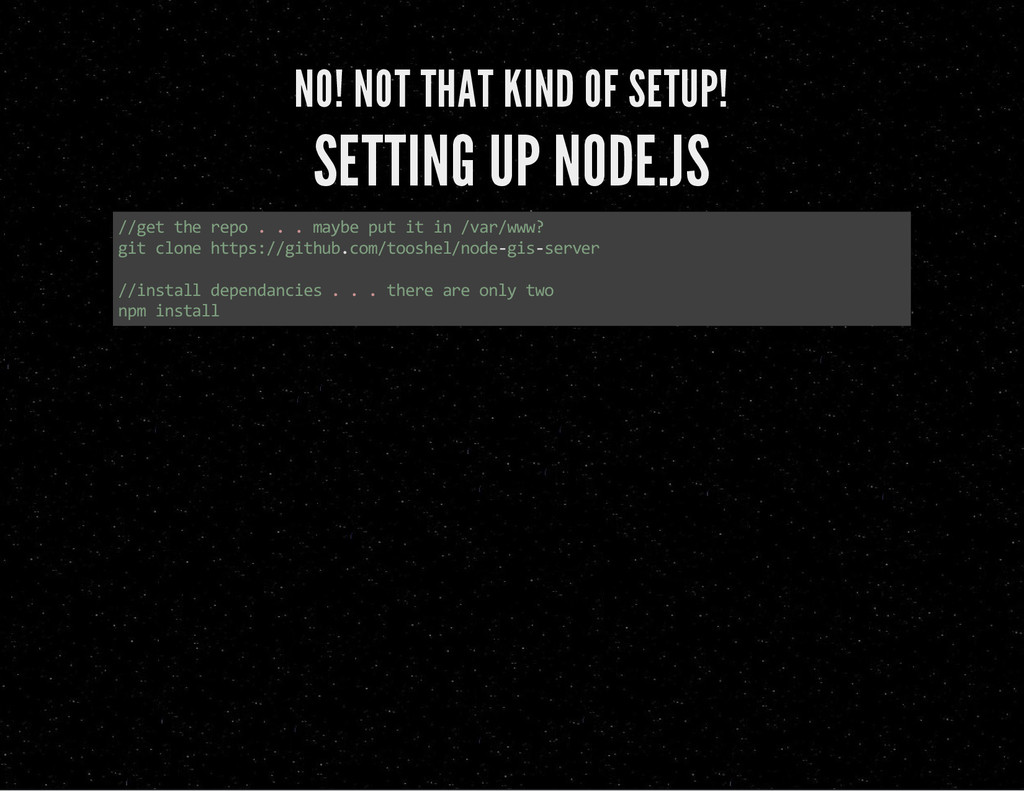
the repo . . . maybe put it in /var/www? git clone https://github.com/tooshel/node‐gis‐server //install dependancies . . . there are only two npm install
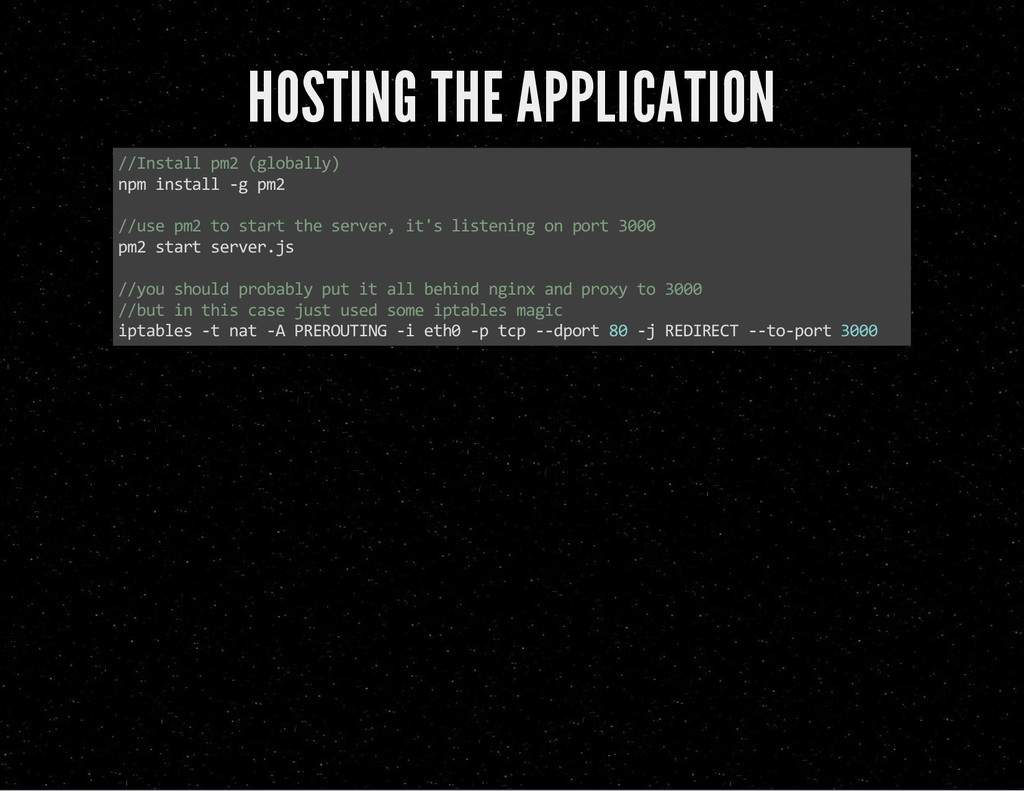
//use pm2 to start the server, it's listening on port 3000 pm2 start server.js //you should probably put it all behind nginx and proxy to 3000 //but in this case just used some iptables magic iptables ‐t nat ‐A PREROUTING ‐i eth0 ‐p tcp ‐‐dport 80 ‐j REDIRECT ‐‐to‐port 3000
FORK IT ON GITHUB https://github.com/tooshel/node-gis-server/ https://github.com/ManoMarks/node-gis-server/ https://github.com/geobabbler/node-gis-server/ SHARING IS CARING


 jamesfee
 occhi
occhi
 ykanoh
 tokuty
 pfn
pfn
 tetsuya28
 ueponx
 glaforge
 takuroabe
 4o1sobblue
 ivry_presentationmaterials
 katarinadahlin
 uxyall
 mraible
 popppiees
 csswizardry
 kastner
 ks91
ks91
 destraynor
 marktimemedia
 lauravandoore
 bkeepers
 chrisshort