Upgrade to Pro — share decks privately, control downloads, hide ads and more …

Restaurant Equipment Maintenance Guide: Best Pr...

Avatar for riddhi riddhi
July 02, 2026

Restaurant Equipment Maintenance Guide: Best Practices for Commercial Kitchens

Learn practical maintenance tips to improve the performance, safety, and lifespan of commercial kitchen equipment. This guide covers preventive maintenance for refrigeration, ovens, fryers, dishwashers, food preparation equipment, and more. Ideal for restaurants, hotels, cafés, bakeries, catering businesses, and other foodservice operations. Explore quality commercial kitchen equipment and restaurant supplies at https://www.thehorecastore.com/

Avatar for riddhi

riddhi

July 02, 2026

Other Decks in Business

Transcript

  1. P R E V E N T I V E

    C A R E F O R C O M M E R C I A L K I T C H E N S Restaurant Equipment Maintenance Guide Maintain Today. Perform Better Tomorrow. From refrigeration to cooking equipment, invest in dependable products that keep your kitchen operating smoothly. Visit
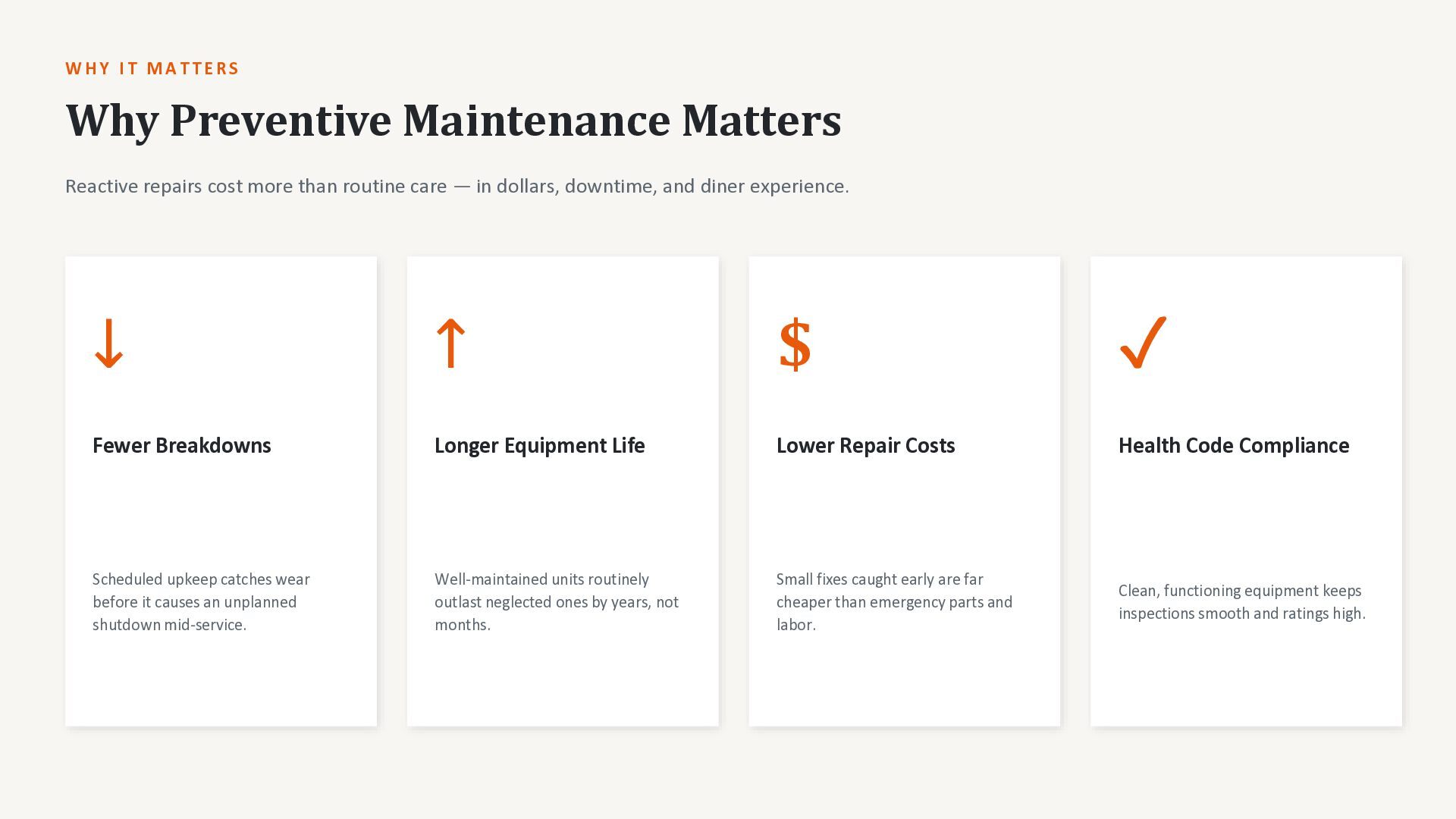
  2. W H Y I T M A T T E

    R S Why Preventive Maintenance Matters Reactive repairs cost more than routine care — in dollars, downtime, and diner experience. ↓ Fewer Breakdowns Scheduled upkeep catches wear before it causes an unplanned shutdown mid-service. ↑ Longer Equipment Life Well-maintained units routinely outlast neglected ones by years, not months. $ Lower Repair Costs Small fixes caught early are far cheaper than emergency parts and labor. ✓ Health Code Compliance Clean, functioning equipment keeps inspections smooth and ratings high.
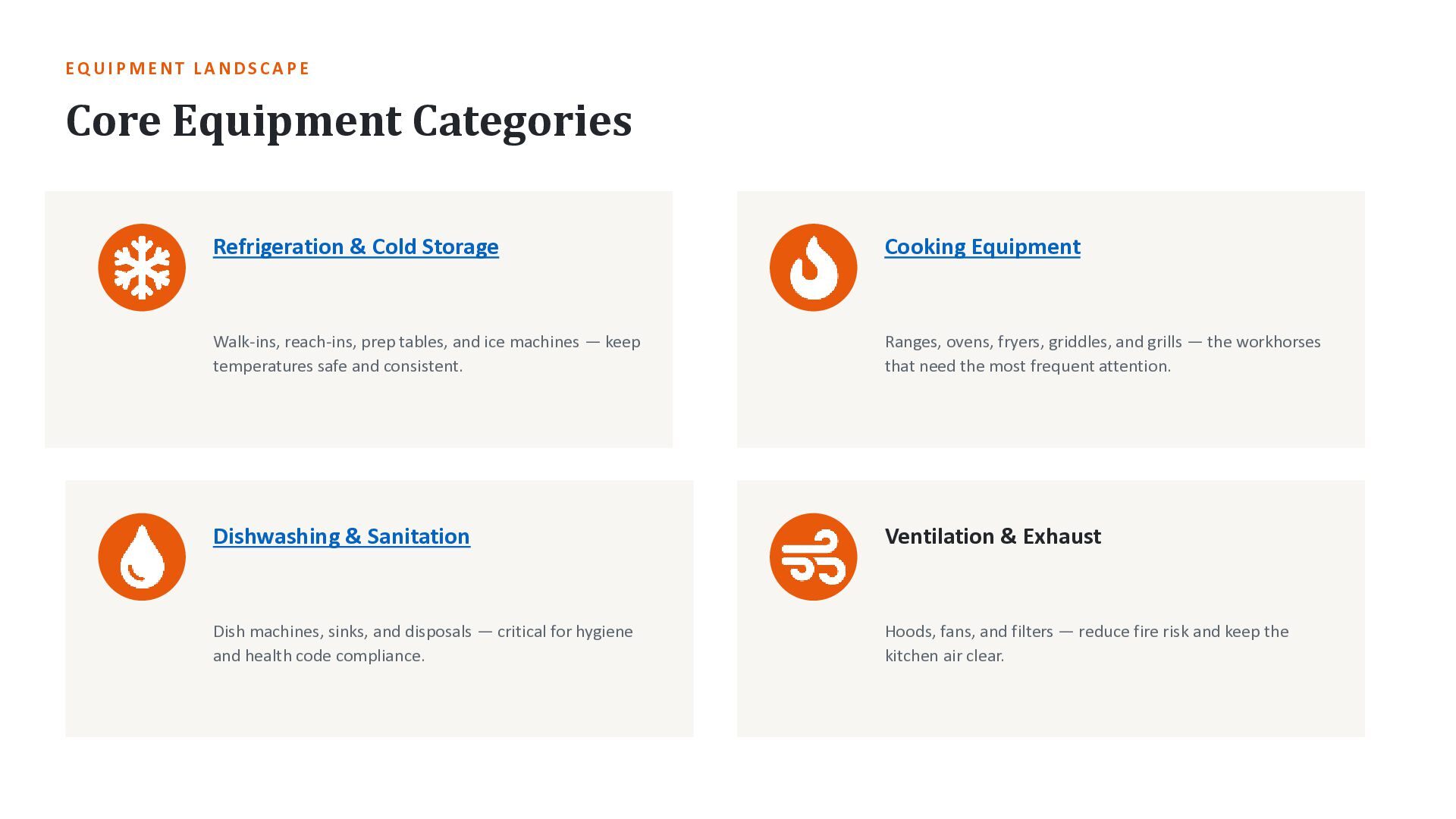
  3. E Q U I P M E N T L

    A N D S C A P E Core Equipment Categories Refrigeration & Cold Storage Walk-ins, reach-ins, prep tables, and ice machines — keep temperatures safe and consistent. Cooking Equipment Ranges, ovens, fryers, griddles, and grills — the workhorses that need the most frequent attention. Dishwashing & Sanitation Dish machines, sinks, and disposals — critical for hygiene and health code compliance. Ventilation & Exhaust Hoods, fans, and filters — reduce fire risk and keep the kitchen air clear.
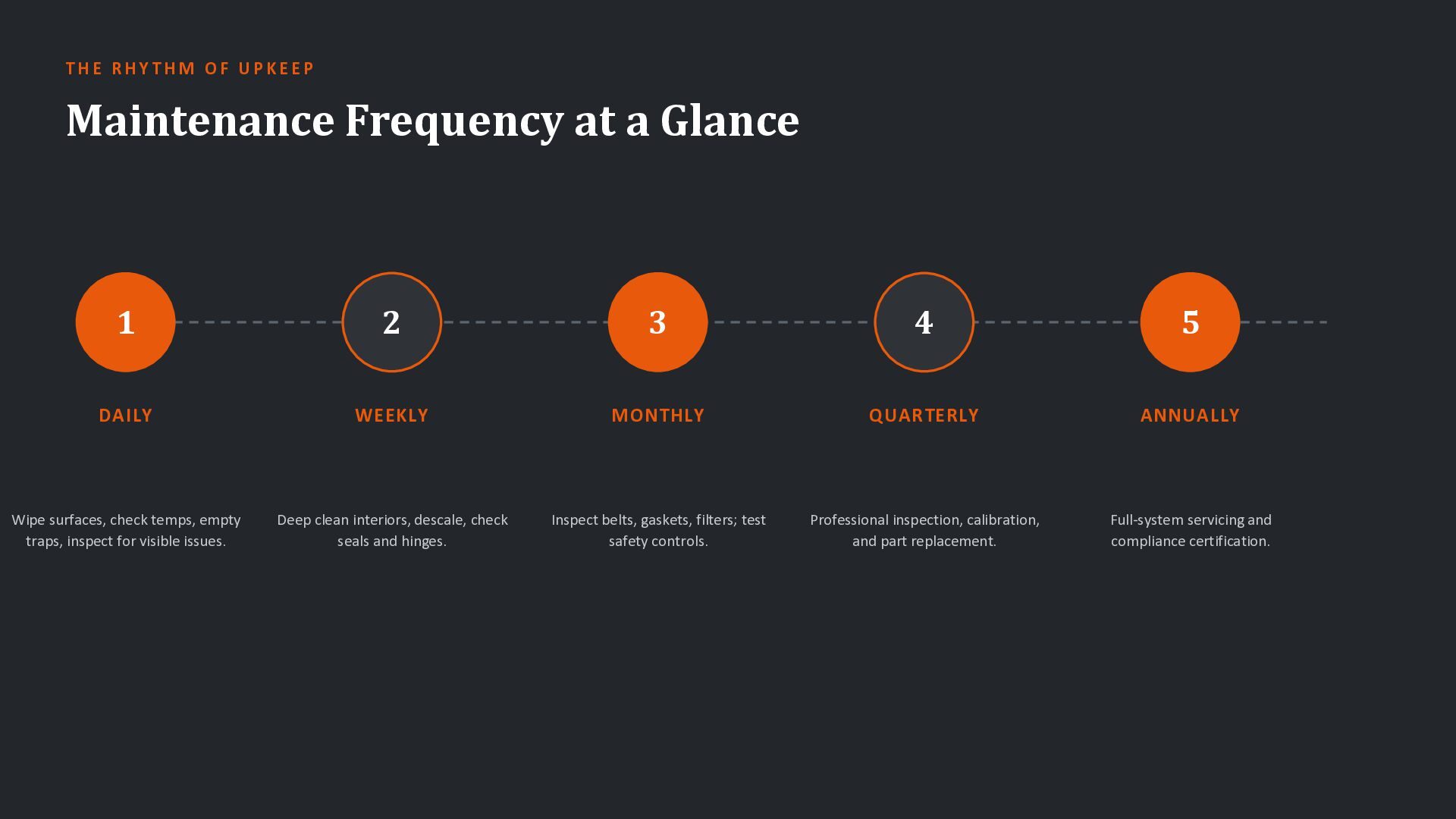
  4. T H E R H Y T H M O

    F U P K E E P Maintenance Frequency at a Glance 1 DAILY Wipe surfaces, check temps, empty traps, inspect for visible issues. 2 WEEKLY Deep clean interiors, descale, check seals and hinges. 3 MONTHLY Inspect belts, gaskets, filters; test safety controls. 4 QUARTERLY Professional inspection, calibration, and part replacement. 5 ANNUALLY Full-system servicing and compliance certification.
  5. E V E R Y S H I F T

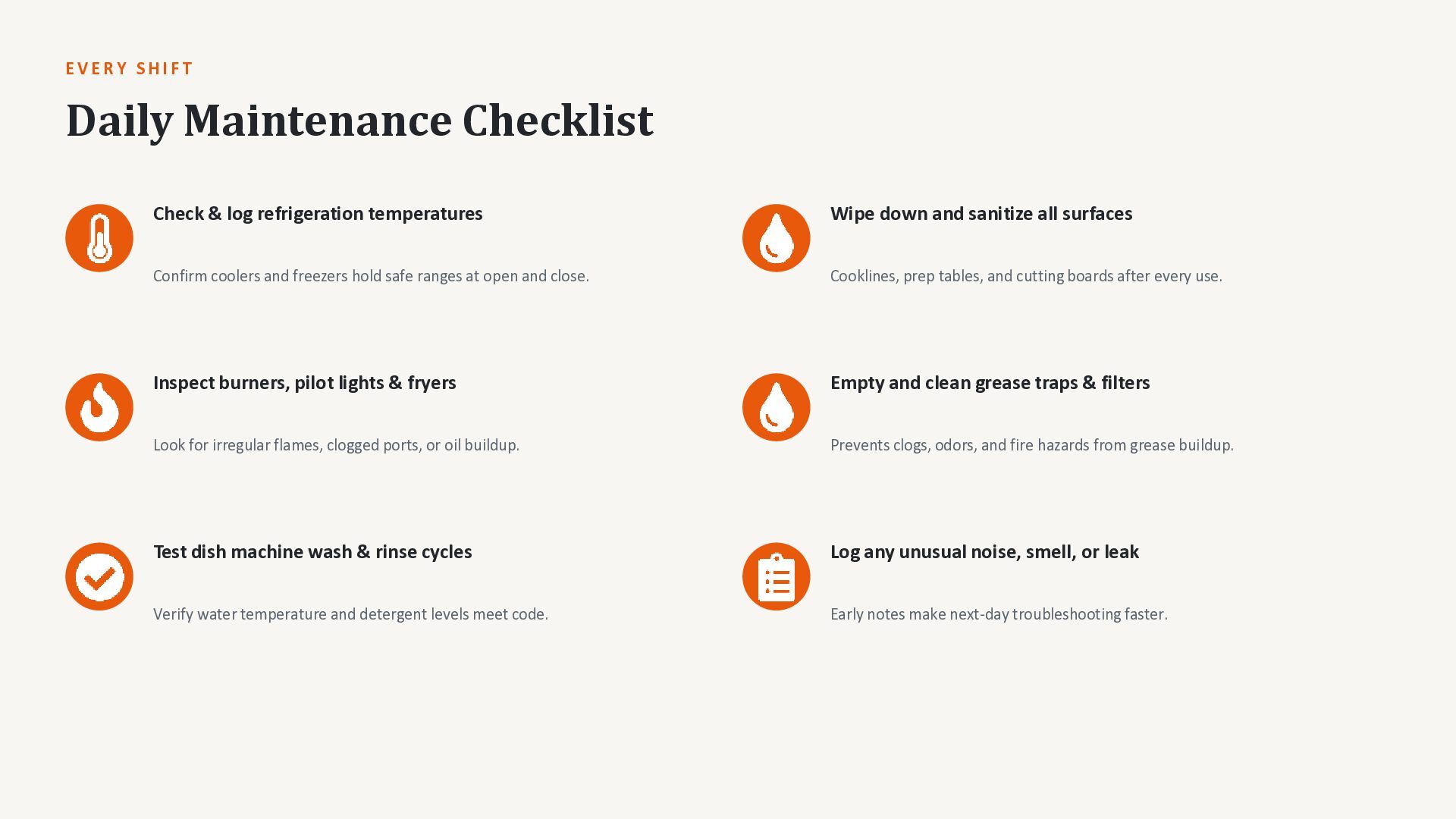
    Daily Maintenance Checklist Check & log refrigeration temperatures Confirm coolers and freezers hold safe ranges at open and close. Wipe down and sanitize all surfaces Cooklines, prep tables, and cutting boards after every use. Inspect burners, pilot lights & fryers Look for irregular flames, clogged ports, or oil buildup. Empty and clean grease traps & filters Prevents clogs, odors, and fire hazards from grease buildup. Test dish machine wash & rinse cycles Verify water temperature and detergent levels meet code. Log any unusual noise, smell, or leak Early notes make next-day troubleshooting faster.
  6. B E Y O N D T H E S

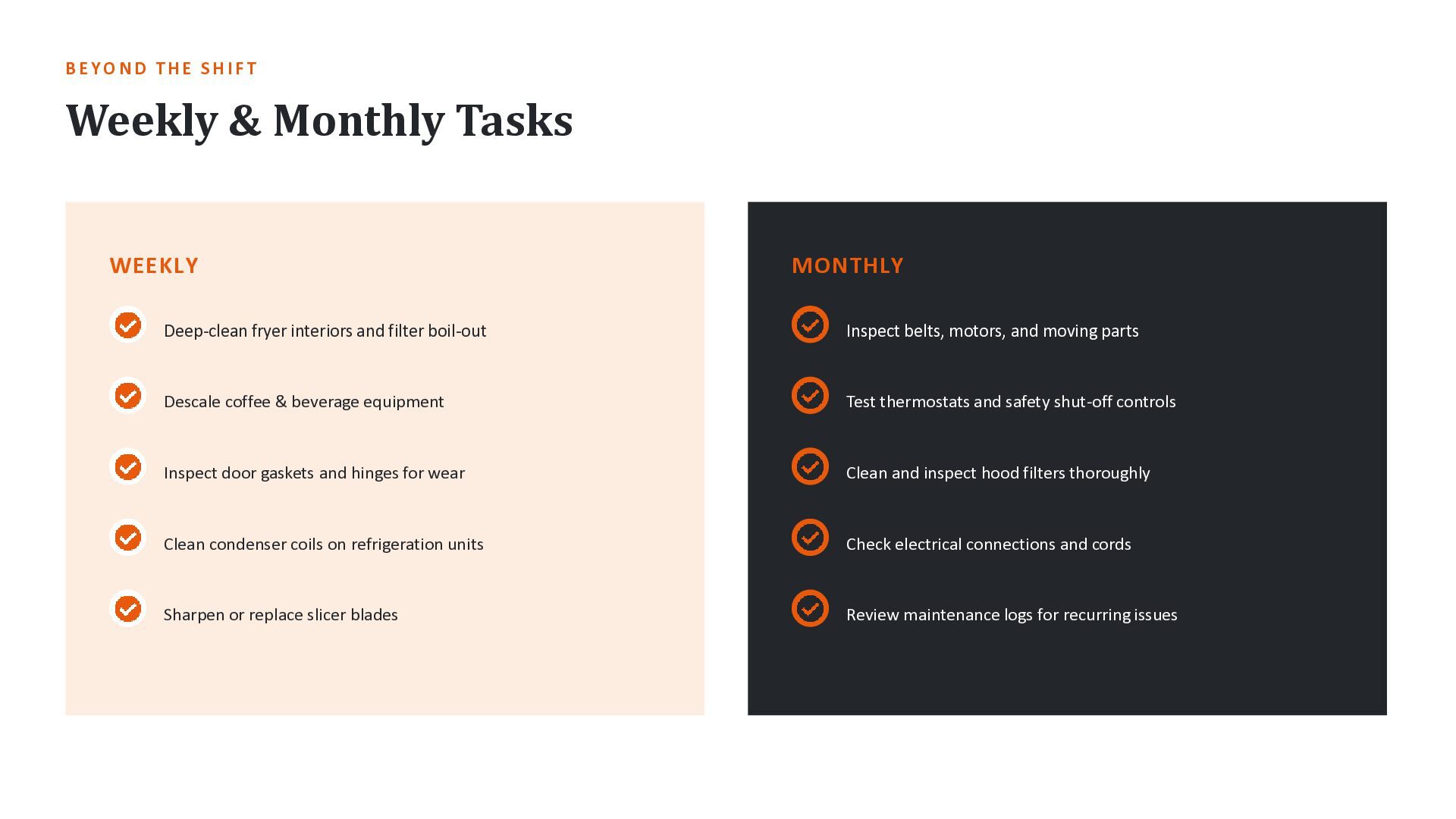
    H I F T Weekly & Monthly Tasks WEEKLY Deep-clean fryer interiors and filter boil-out Descale coffee & beverage equipment Inspect door gaskets and hinges for wear Clean condenser coils on refrigeration units Sharpen or replace slicer blades MONTHLY Inspect belts, motors, and moving parts Test thermostats and safety shut-off controls Clean and inspect hood filters thoroughly Check electrical connections and cords Review maintenance logs for recurring issues
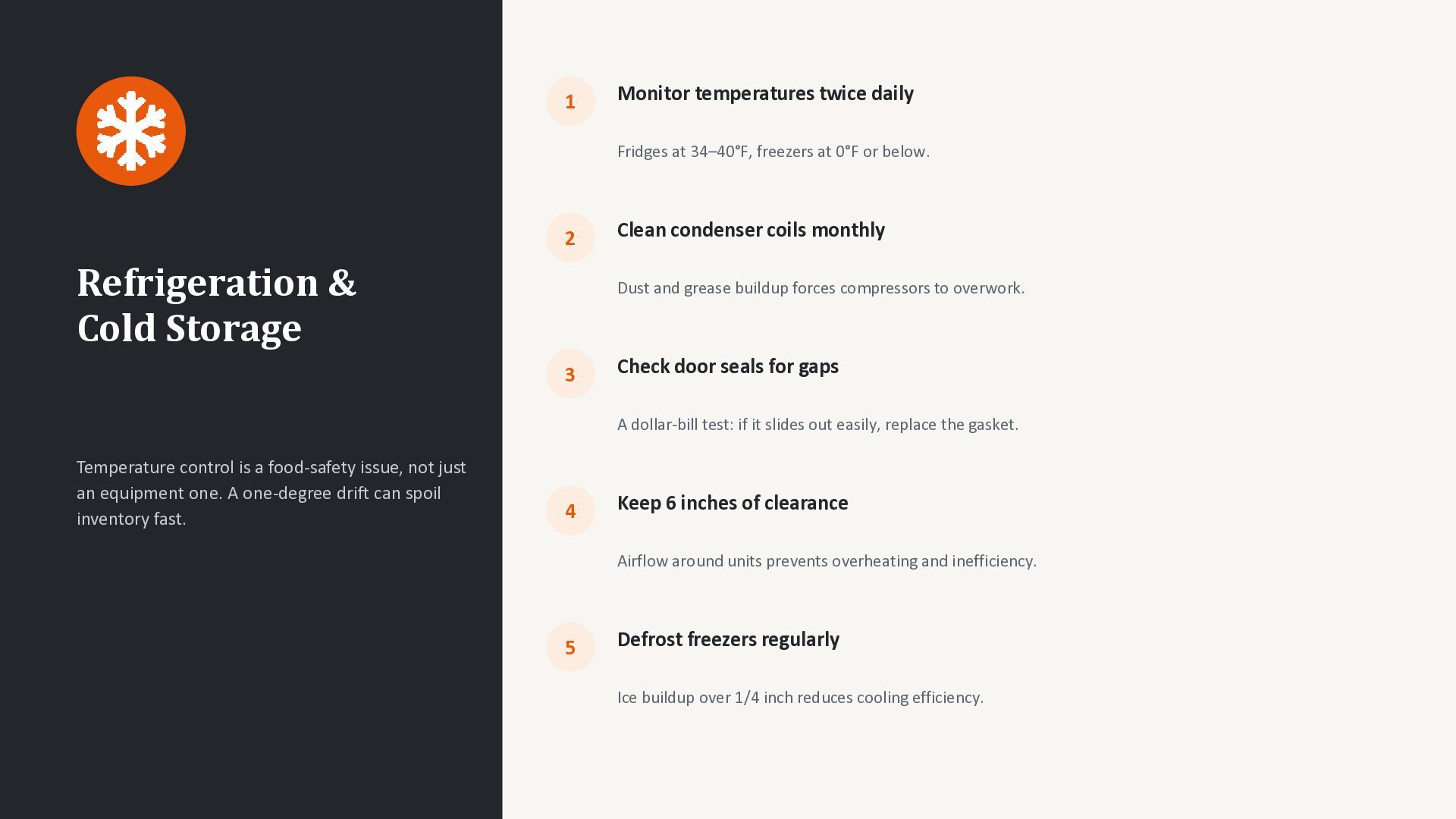
  7. Refrigeration & Cold Storage Temperature control is a food-safety issue,

    not just an equipment one. A one-degree drift can spoil inventory fast. 1 Monitor temperatures twice daily Fridges at 34–40°F, freezers at 0°F or below. 2 Clean condenser coils monthly Dust and grease buildup forces compressors to overwork. 3 Check door seals for gaps A dollar-bill test: if it slides out easily, replace the gasket. 4 Keep 6 inches of clearance Airflow around units prevents overheating and inefficiency. 5 Defrost freezers regularly Ice buildup over 1/4 inch reduces cooling efficiency.
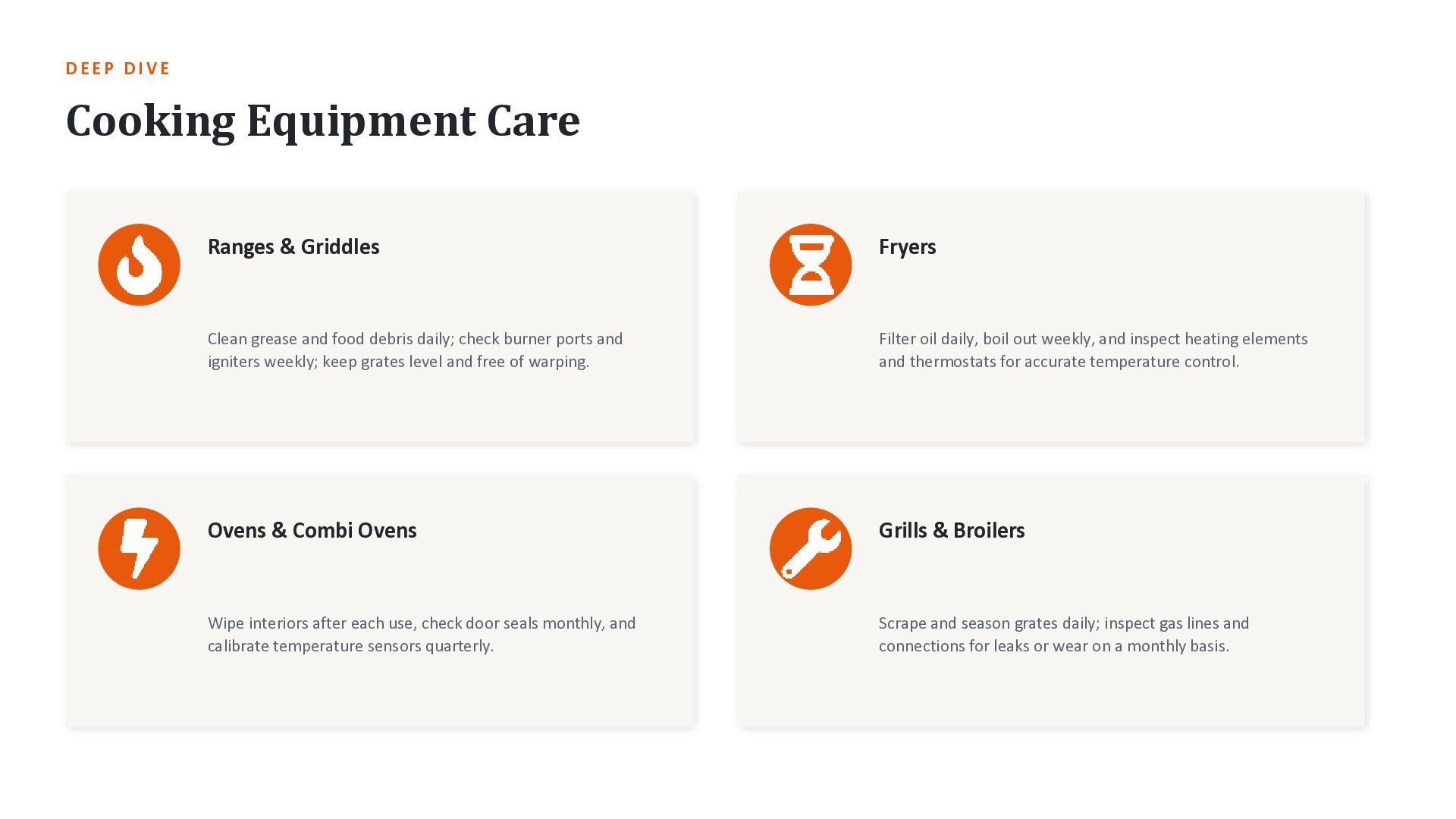
  8. D E E P D I V E Cooking Equipment

    Care Ranges & Griddles Clean grease and food debris daily; check burner ports and igniters weekly; keep grates level and free of warping. Fryers Filter oil daily, boil out weekly, and inspect heating elements and thermostats for accurate temperature control. Ovens & Combi Ovens Wipe interiors after each use, check door seals monthly, and calibrate temperature sensors quarterly. Grills & Broilers Scrape and season grates daily; inspect gas lines and connections for leaks or wear on a monthly basis.
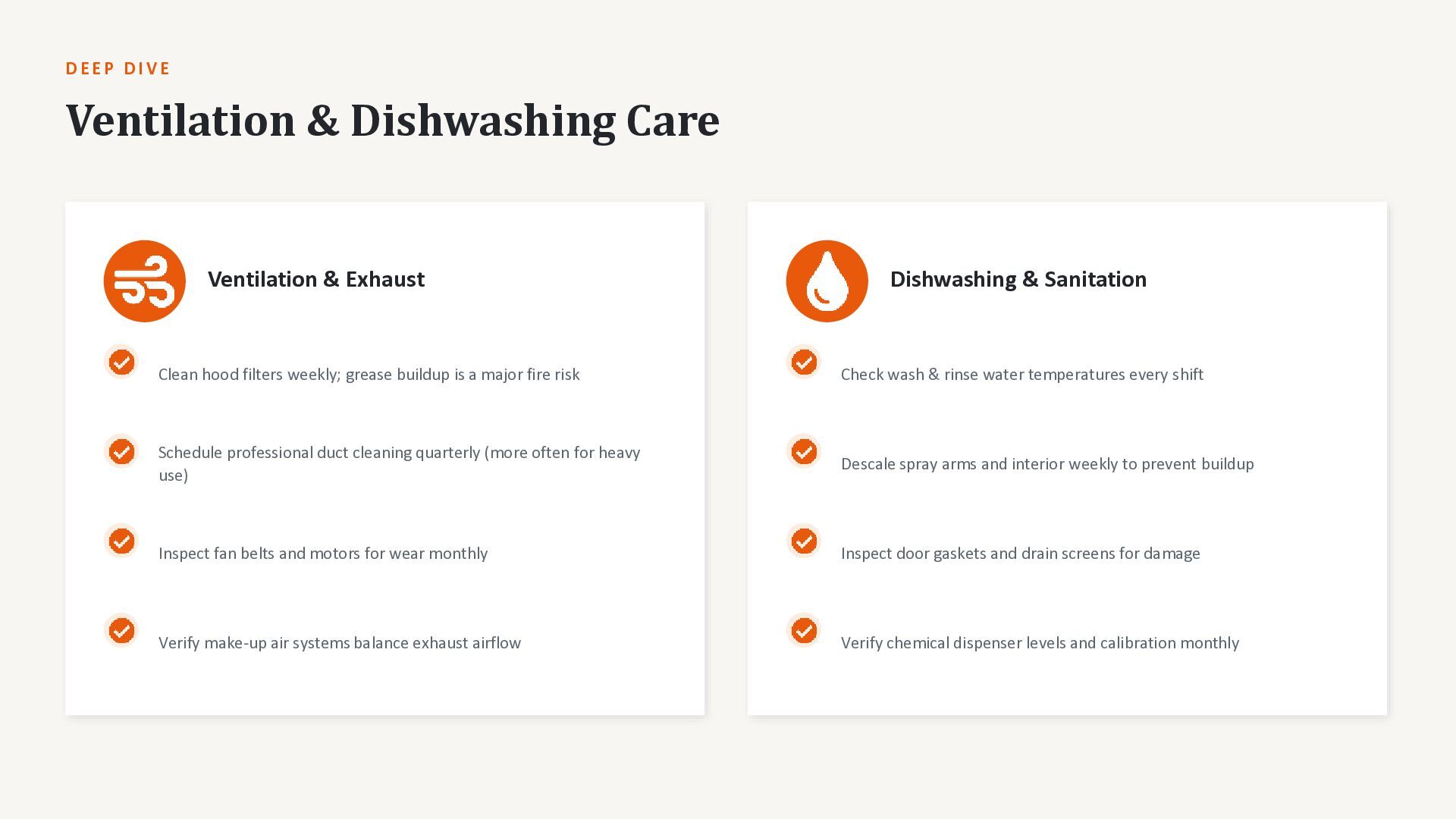
  9. D E E P D I V E Ventilation &

    Dishwashing Care Ventilation & Exhaust Clean hood filters weekly; grease buildup is a major fire risk Schedule professional duct cleaning quarterly (more often for heavy use) Inspect fan belts and motors for wear monthly Verify make-up air systems balance exhaust airflow Dishwashing & Sanitation Check wash & rinse water temperatures every shift Descale spray arms and interior weekly to prevent buildup Inspect door gaskets and drain screens for damage Verify chemical dispenser levels and calibration monthly
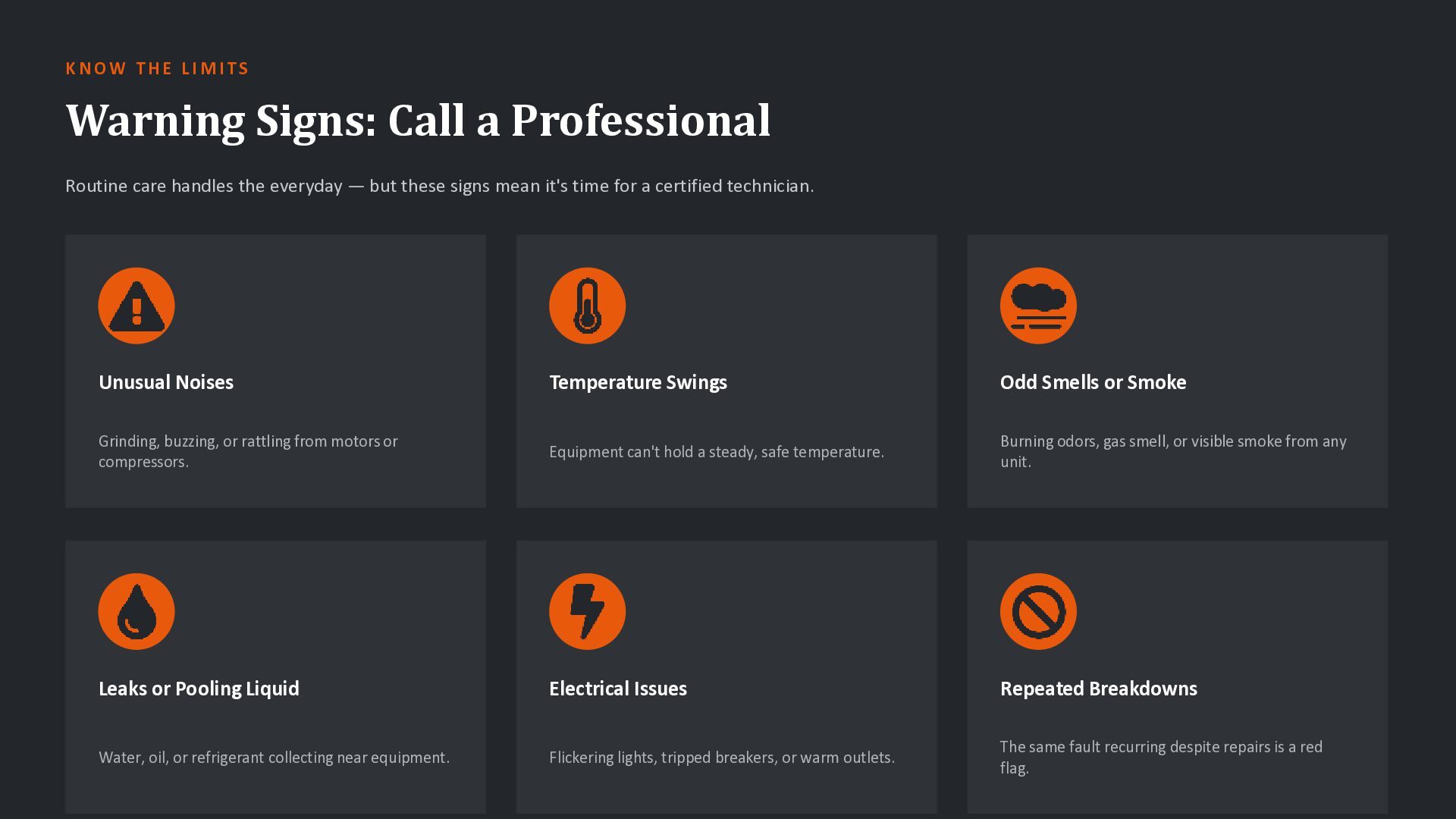
  10. K N O W T H E L I M

    I T S Warning Signs: Call a Professional Routine care handles the everyday — but these signs mean it's time for a certified technician. Unusual Noises Grinding, buzzing, or rattling from motors or compressors. Temperature Swings Equipment can't hold a steady, safe temperature. Odd Smells or Smoke Burning odors, gas smell, or visible smoke from any unit. Leaks or Pooling Liquid Water, oil, or refrigerant collecting near equipment. Electrical Issues Flickering lights, tripped breakers, or warm outlets. Repeated Breakdowns The same fault recurring despite repairs is a red flag.
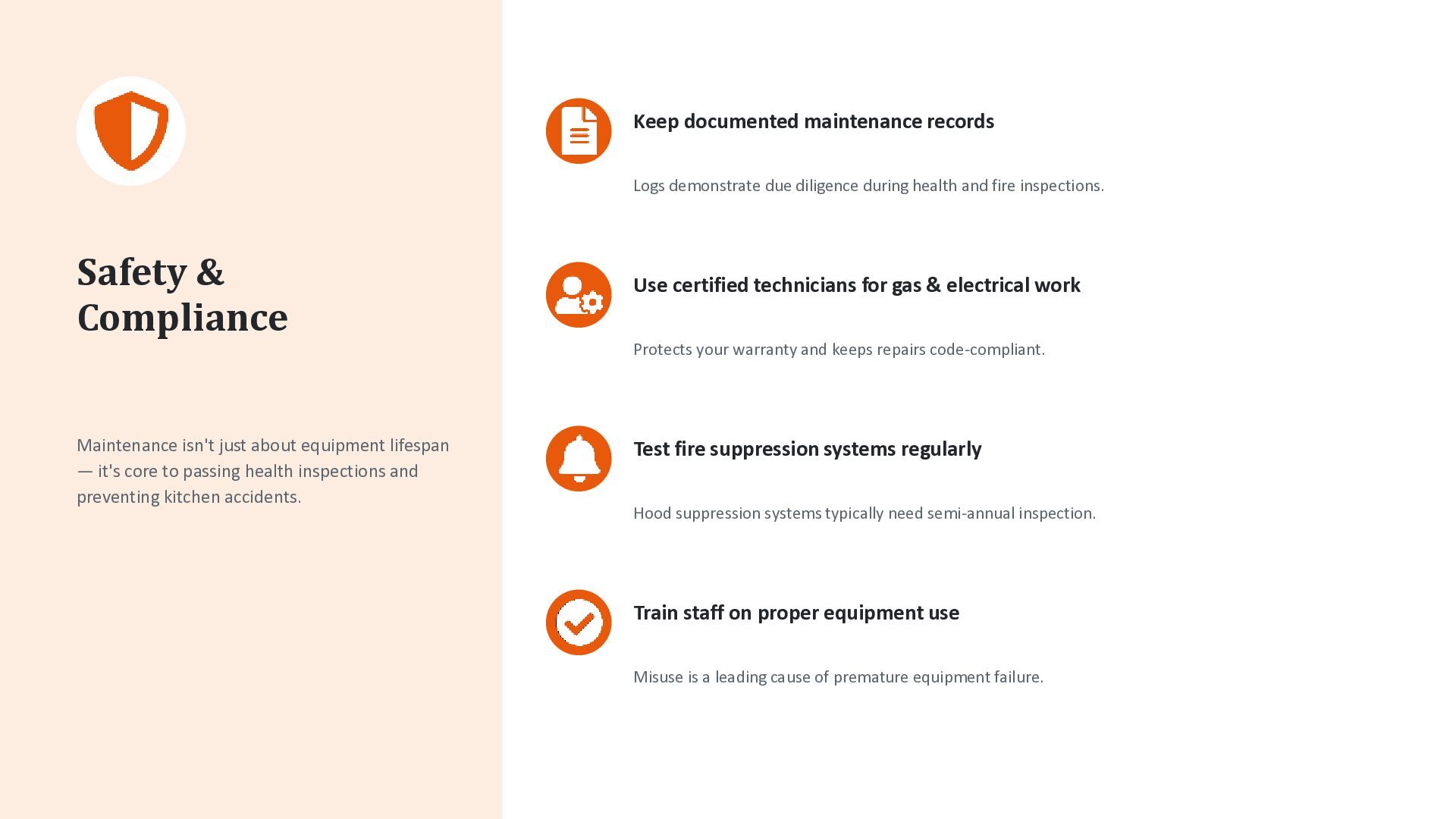
  11. Safety & Compliance Maintenance isn't just about equipment lifespan —

    it's core to passing health inspections and preventing kitchen accidents. Keep documented maintenance records Logs demonstrate due diligence during health and fire inspections. Use certified technicians for gas & electrical work Protects your warranty and keeps repairs code-compliant. Test fire suppression systems regularly Hood suppression systems typically need semi-annual inspection. Train staff on proper equipment use Misuse is a leading cause of premature equipment failure.
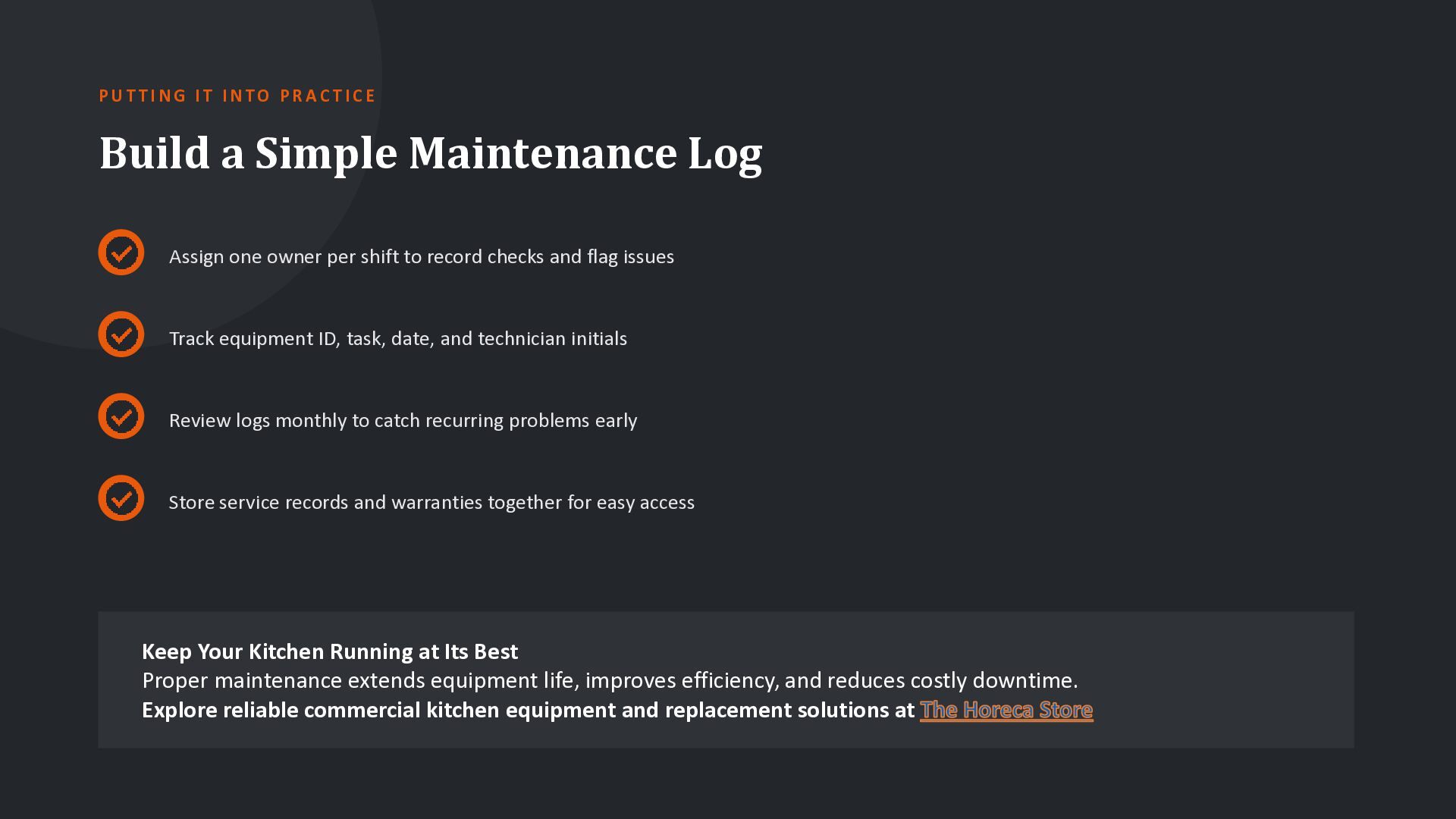
  12. P U T T I N G I T I

    N T O P R A C T I C E Build a Simple Maintenance Log Assign one owner per shift to record checks and flag issues Track equipment ID, task, date, and technician initials Review logs monthly to catch recurring problems early Store service records and warranties together for easy access Keep Your Kitchen Running at Its Best Proper maintenance extends equipment life, improves efficiency, and reduces costly downtime. Explore reliable commercial kitchen equipment and replacement solutions at