Upgrade to Pro — share decks privately, control downloads, hide ads and more …

Build a Pizza Ordering Agent with Microsoft Fou...

Build a Pizza Ordering Agent with Microsoft Foundry and MCP

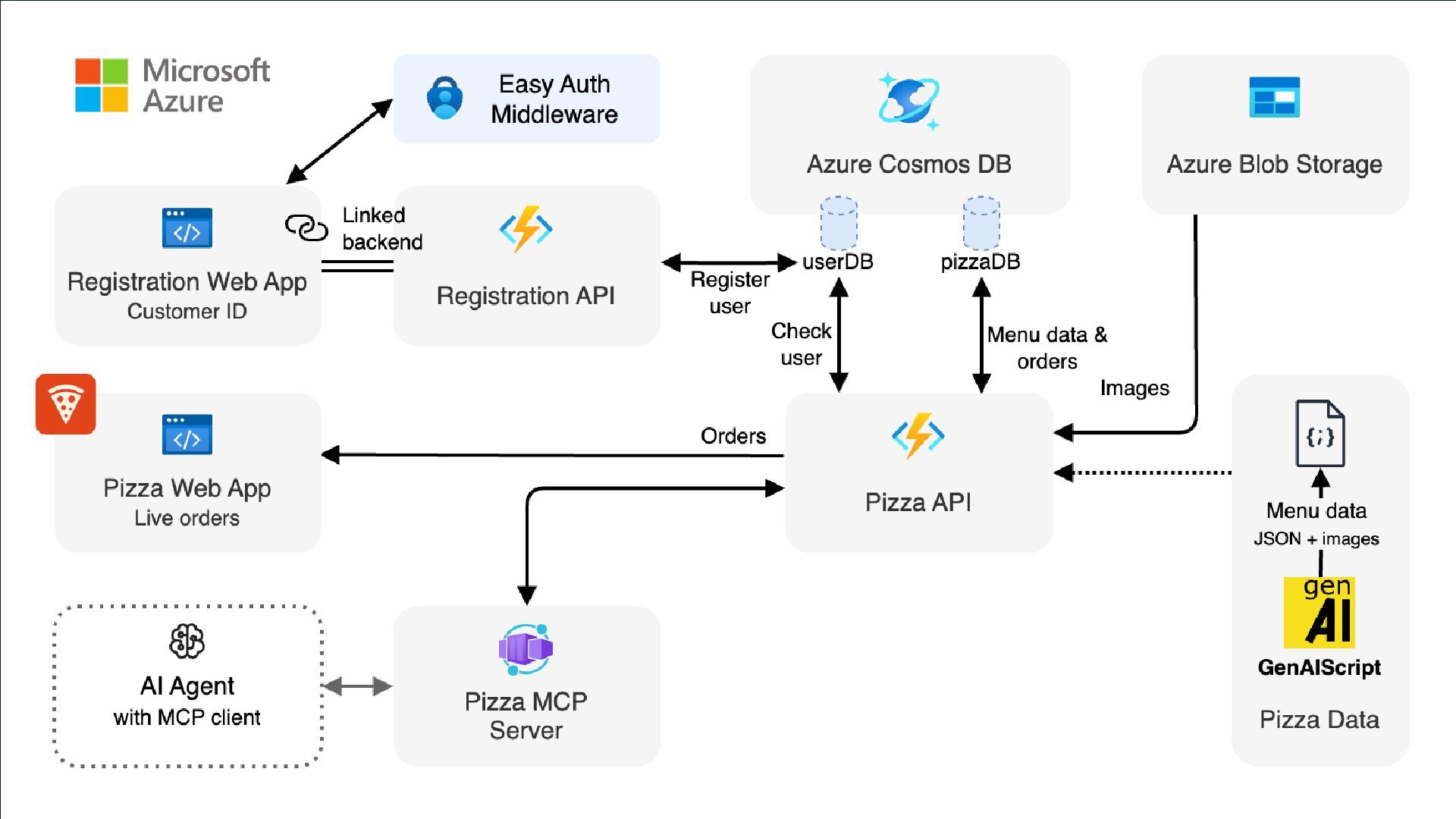
In this hands-on session, you'll learn how to build intelligent, domain-specific AI agents using Foundry Agent Service. We’ll go step by step—from creating a basic agent to extending it with custom tools, external data, and live integrations. By the end of the workshop, you’ll have built your own Contoso PizzaBot, an AI assistant capable of: (1) Following tailored system prompts (2) Using retrieval-augmented generation (RAG) to answer questions from custom documents (3) Calling custom tools like a pizza calculator (4) Integrating with an MCP server for live menu and order management.

More Decks by Korkrid Kyle Akepanidtaworn

Other Decks in Technology

Transcript

  1. Korkrid Akepanidtaworn (Kyle) AI Apps & Agents Factory Lead @

    Microsoft LinkedIn linkedin.com/in/korkridakepan GitHub github.com/korkridake
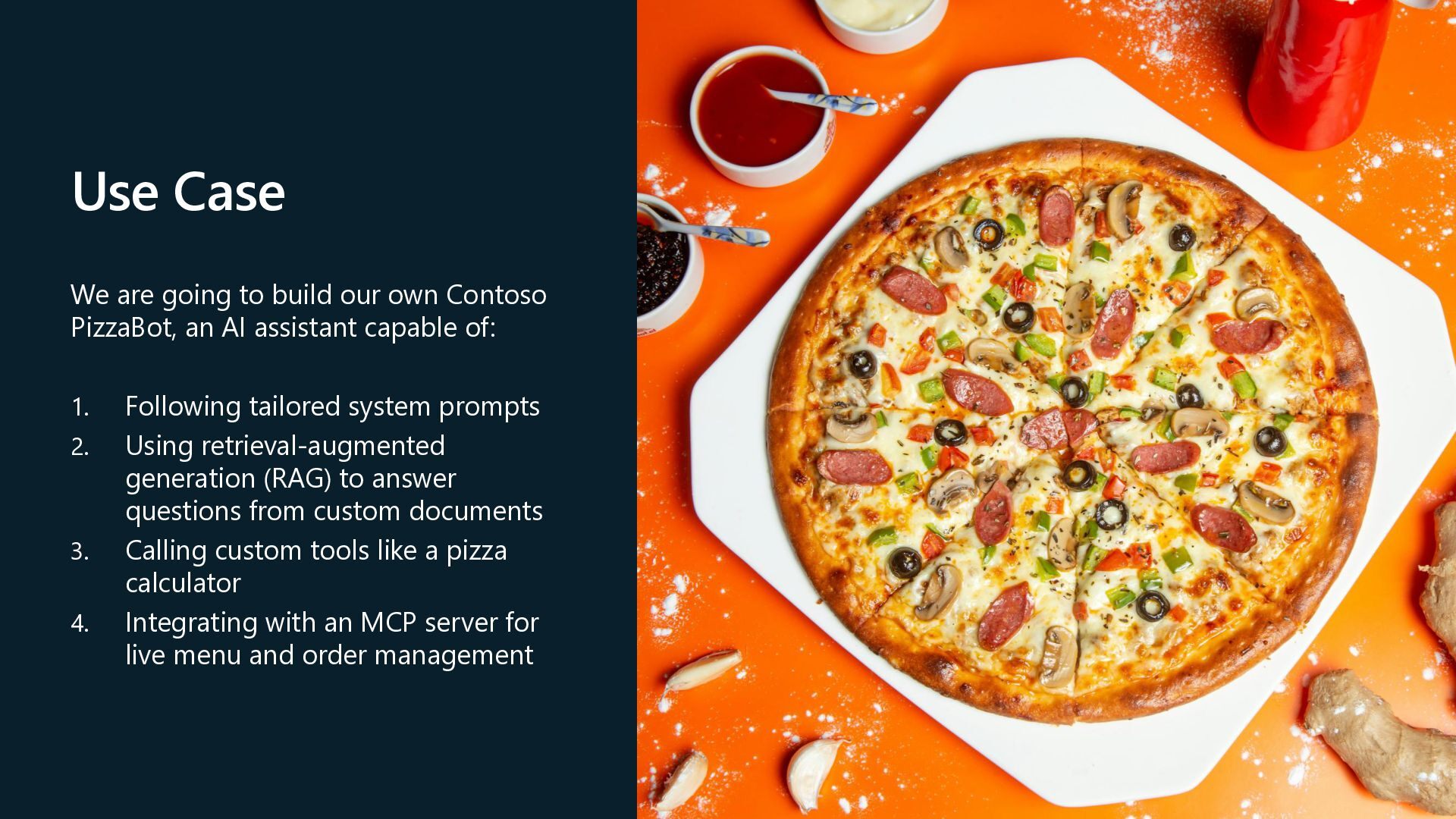
  2. Use Case We are going to build our own Contoso

    PizzaBot, an AI assistant capable of: 1. Following tailored system prompts 2. Using retrieval-augmented generation (RAG) to answer questions from custom documents 3. Calling custom tools like a pizza calculator 4. Integrating with an MCP server for live menu and order management
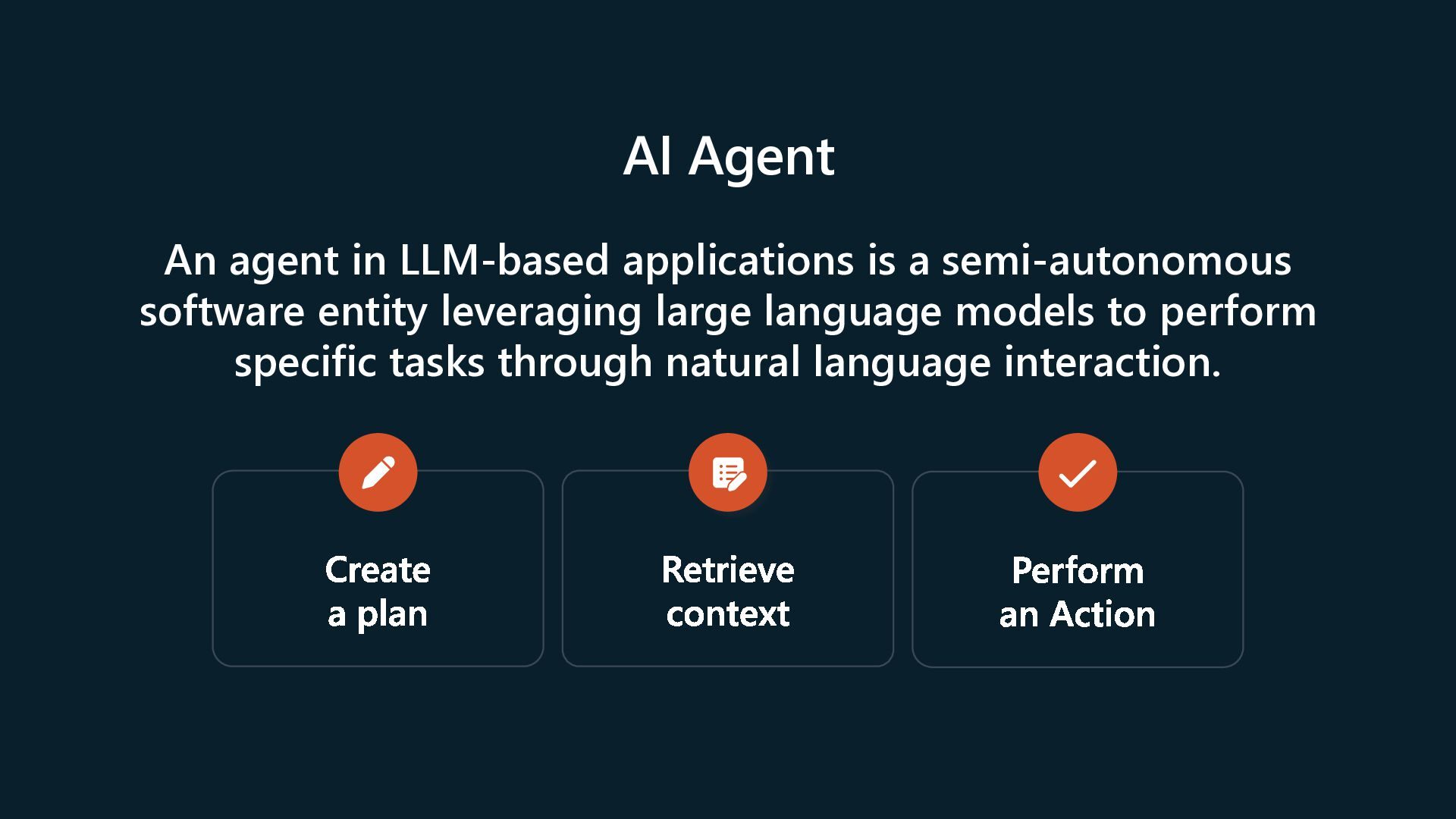
  3. AI Agent An agent in LLM-based applications is a semi-autonomous

    software entity leveraging large language models to perform specific tasks through natural language interaction. Create a plan Retrieve context Perform an Action
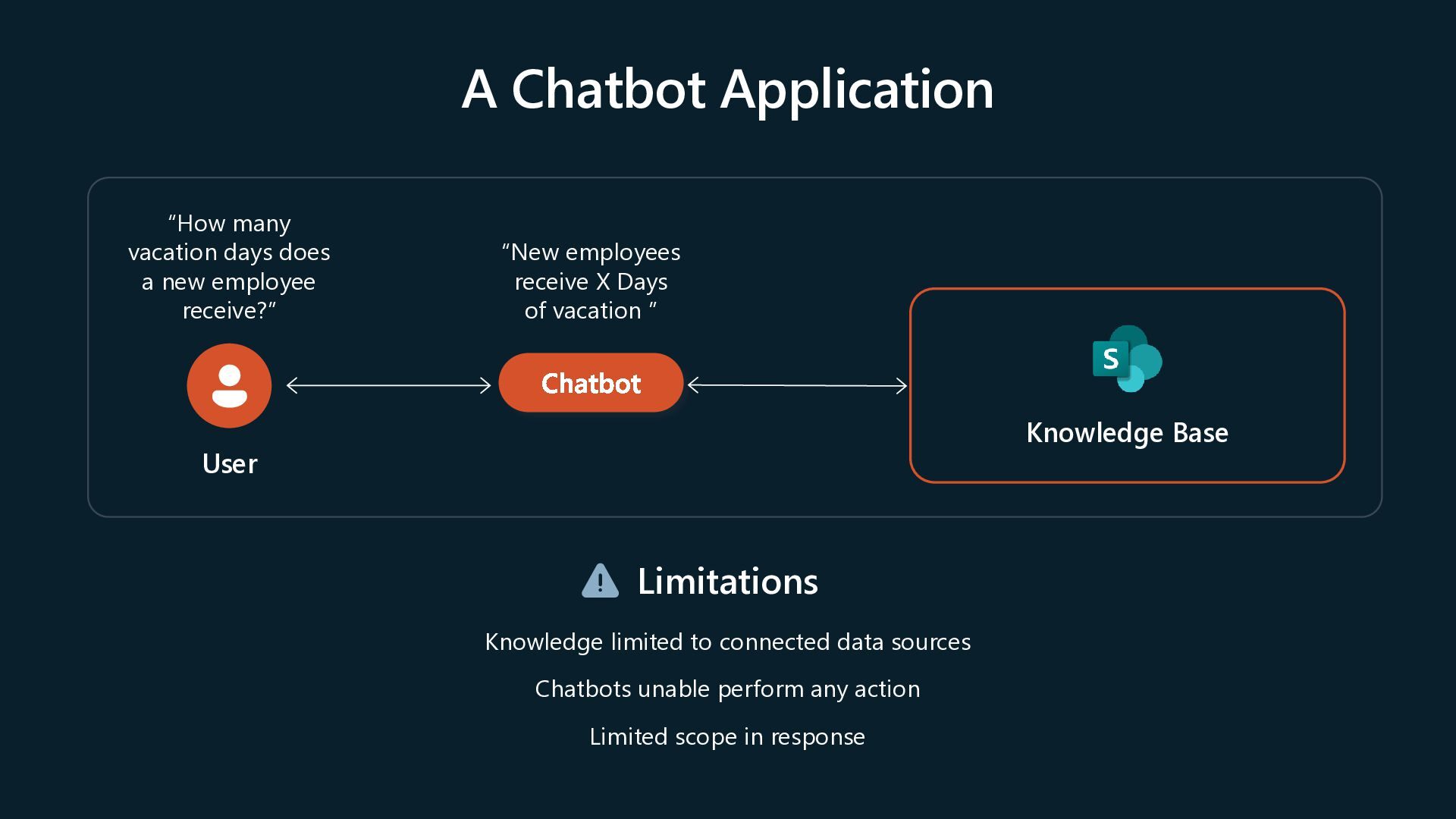
  4. A Chatbot Application “How many vacation days does a new

    employee receive?” User “New employees receive X Days of vacation ” Chatbot Knowledge Base Knowledge limited to connected data sources Chatbots unable perform any action Limited scope in response Limitations
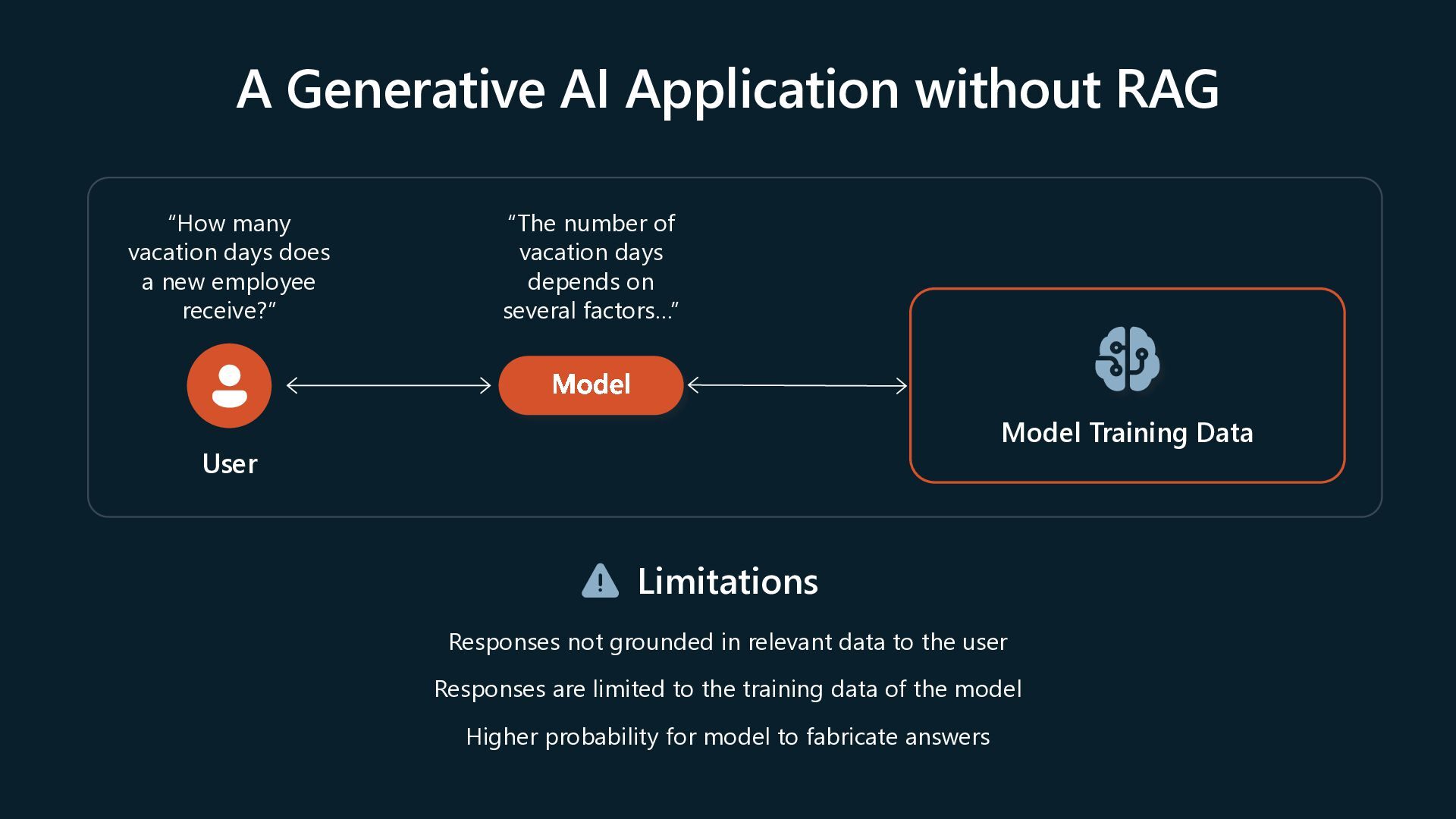
  5. A Generative AI Application without RAG “How many vacation days

    does a new employee receive?” User “The number of vacation days depends on several factors…” Model Model Training Data Responses not grounded in relevant data to the user Responses are limited to the training data of the model Higher probability for model to fabricate answers Limitations
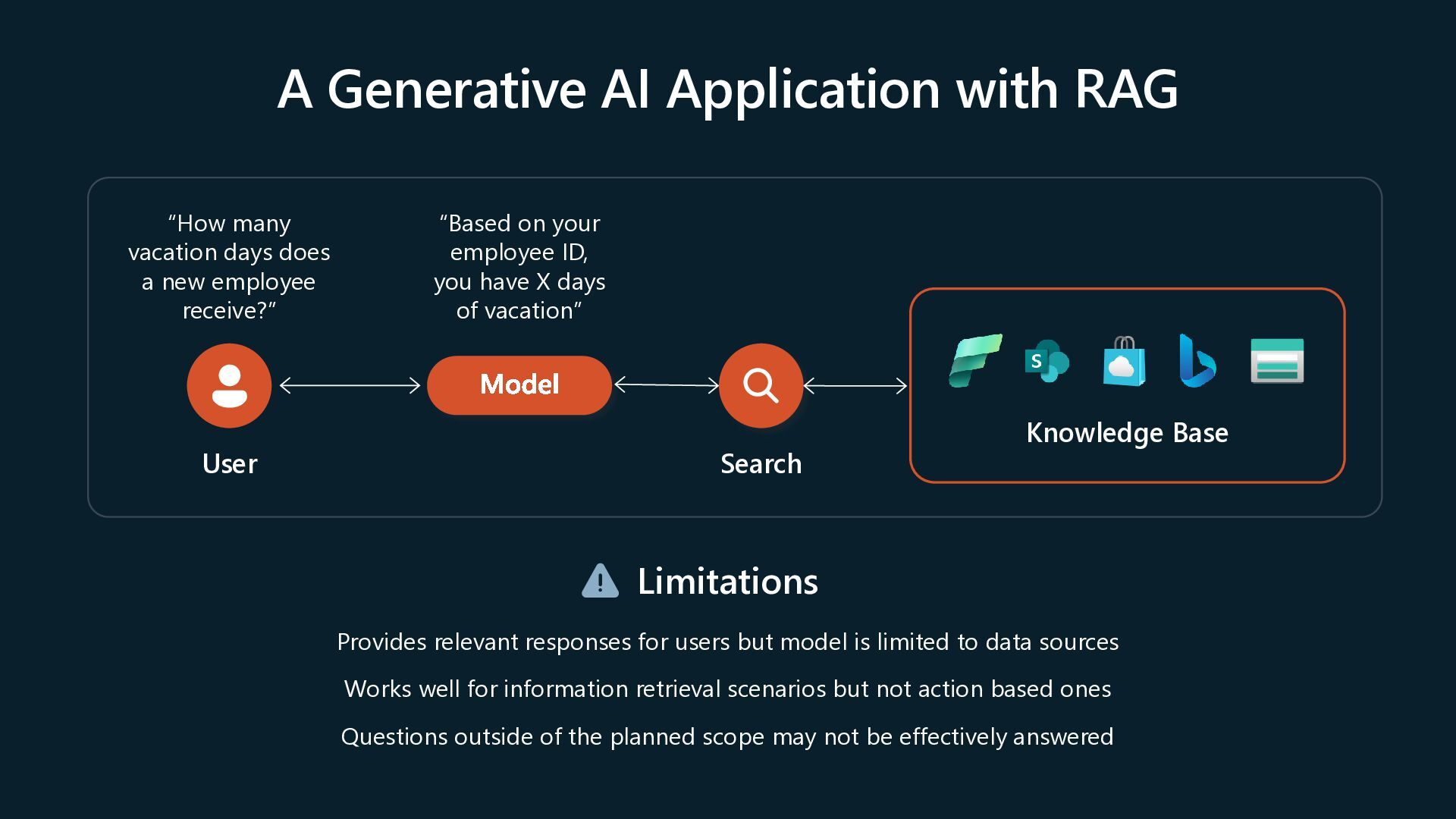
  6. A Generative AI Application with RAG “How many vacation days

    does a new employee receive?” User “Based on your employee ID, you have X days of vacation” Model Knowledge Base Provides relevant responses for users but model is limited to data sources Works well for information retrieval scenarios but not action based ones Questions outside of the planned scope may not be effectively answered Limitations Search
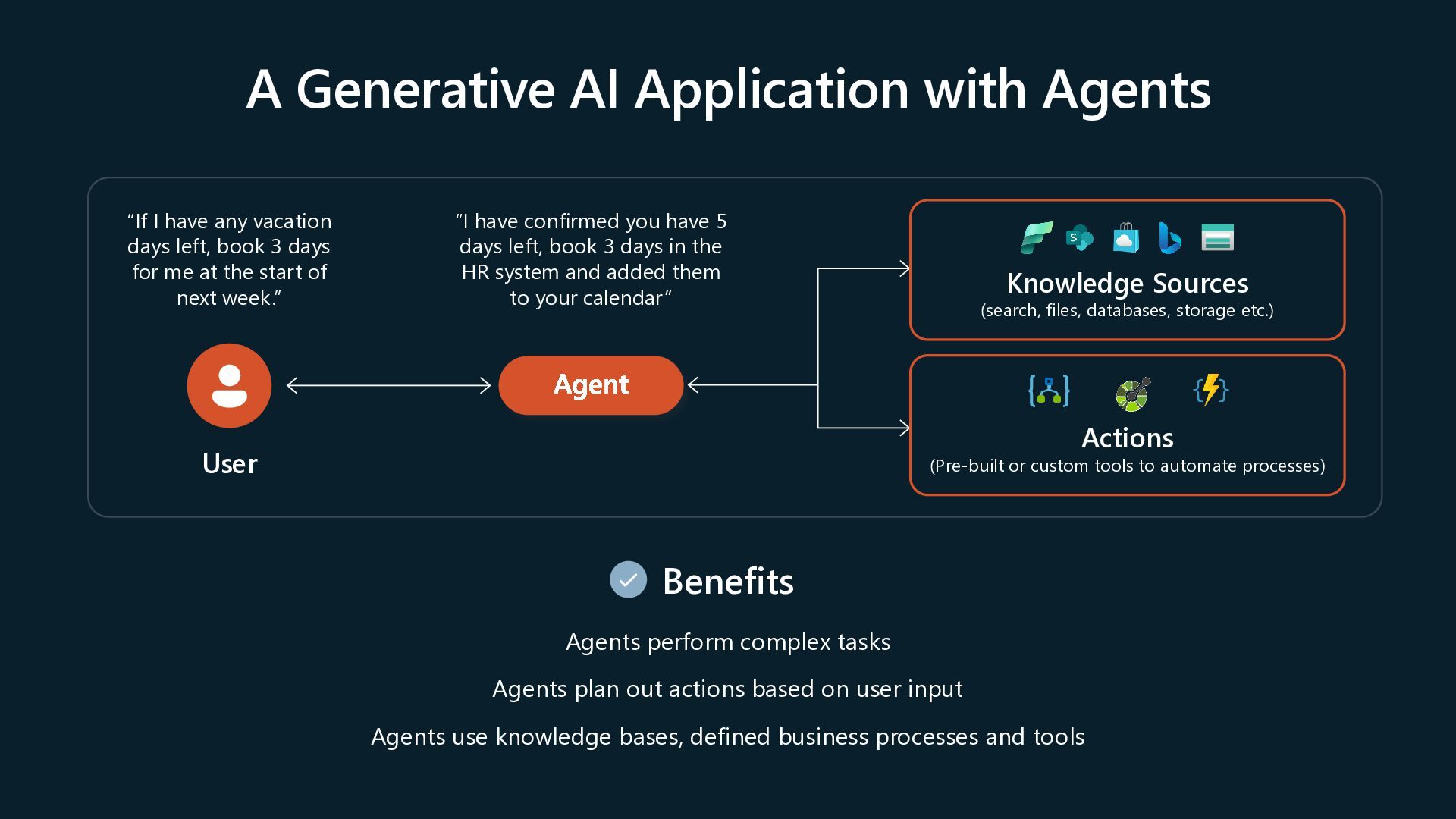
  7. A Generative AI Application with Agents “If I have any

    vacation days left, book 3 days for me at the start of next week.” User “I have confirmed you have 5 days left, book 3 days in the HR system and added them to your calendar” Agent Knowledge Sources (search, files, databases, storage etc.) Actions (Pre-built or custom tools to automate processes) Agents perform complex tasks Agents plan out actions based on user input Agents use knowledge bases, defined business processes and tools Benefits
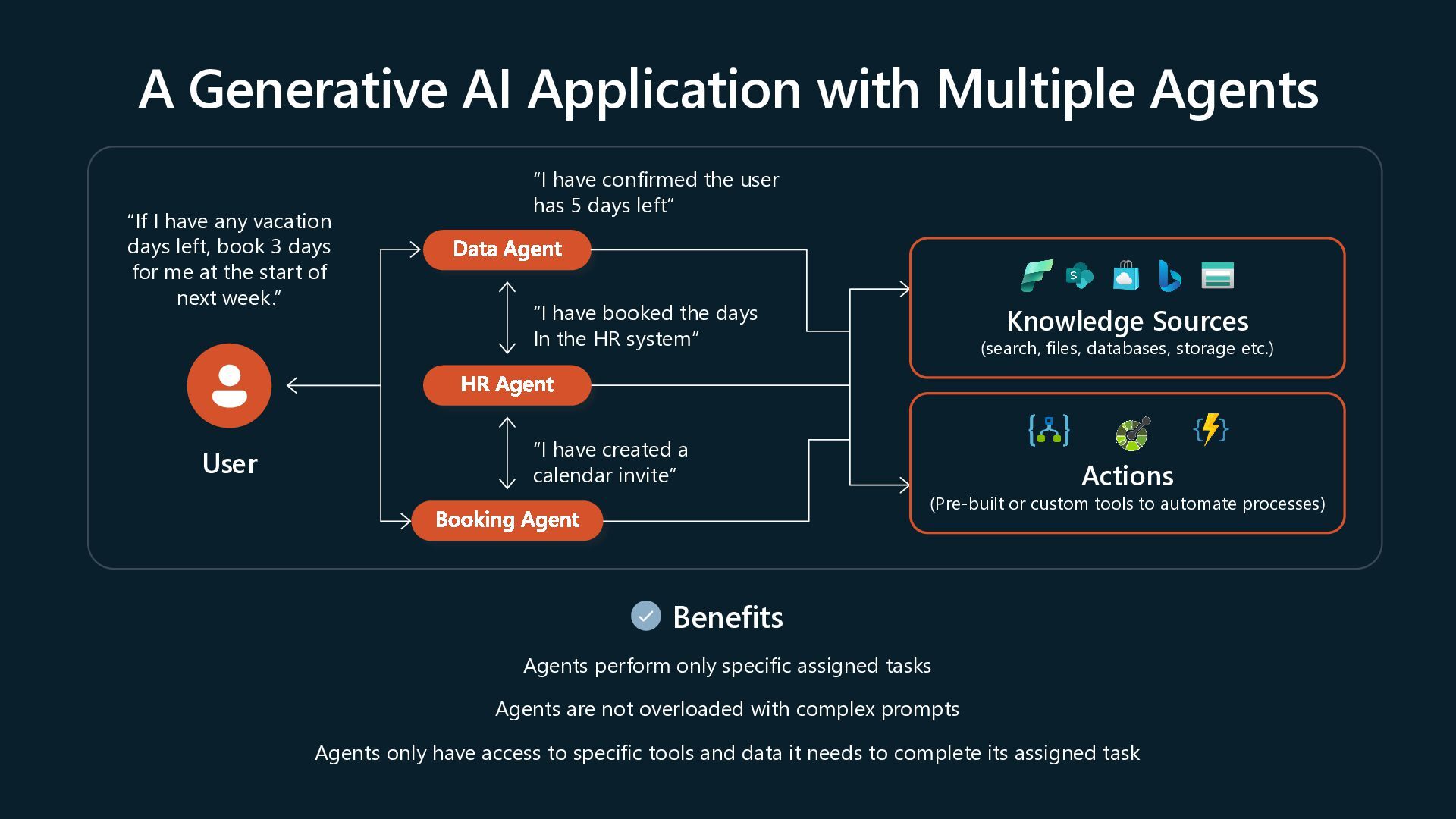
  8. A Generative AI Application with Multiple Agents “If I have

    any vacation days left, book 3 days for me at the start of next week.” User “I have confirmed the user has 5 days left” Data Agent “I have booked the days In the HR system” HR Agent “I have created a calendar invite” Booking Agent Knowledge Sources (search, files, databases, storage etc.) Actions (Pre-built or custom tools to automate processes) Agents perform only specific assigned tasks Agents are not overloaded with complex prompts Agents only have access to specific tools and data it needs to complete its assigned task Benefits
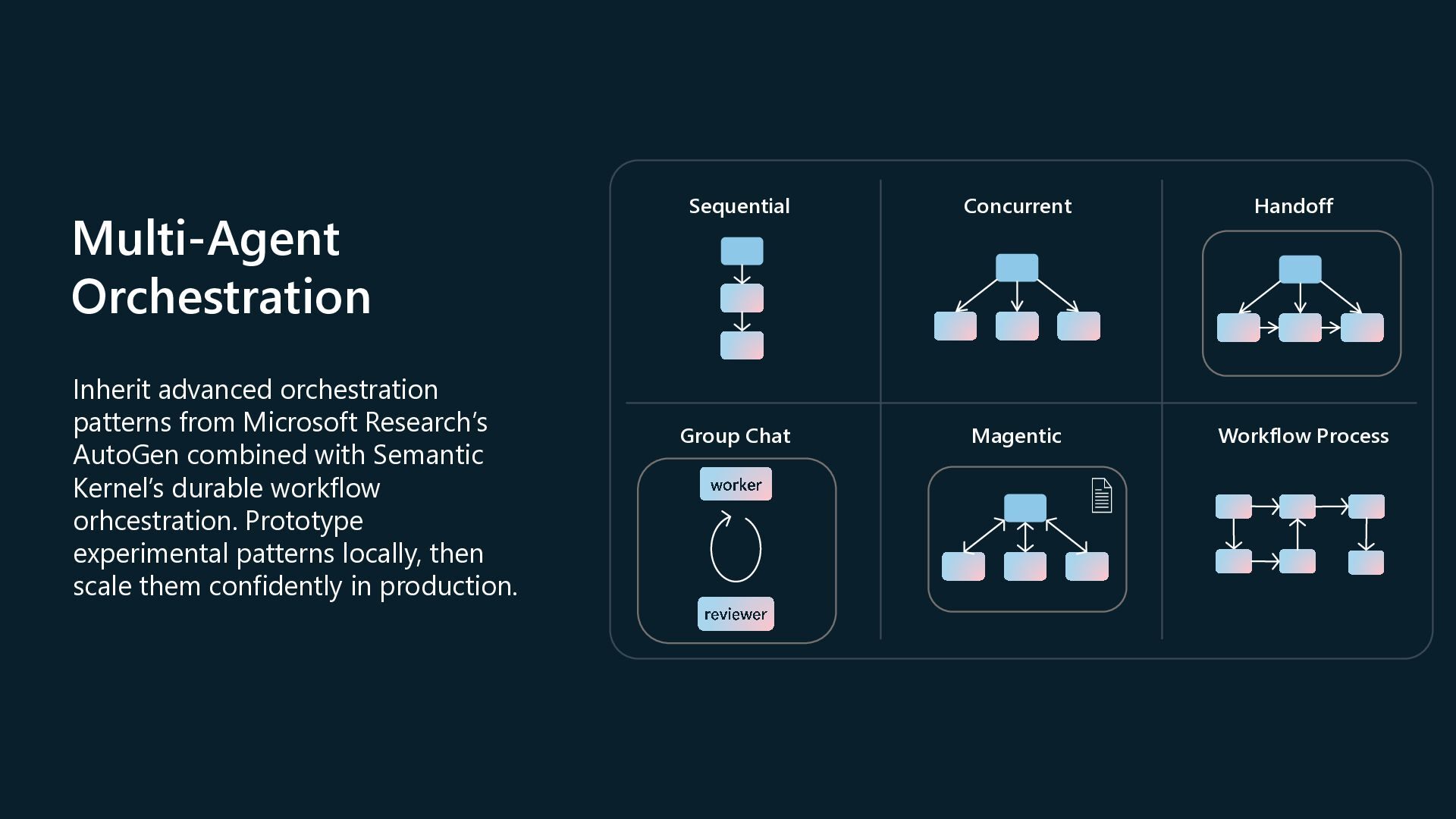
  9. Multi-Agent Orchestration Inherit advanced orchestration patterns from Microsoft Research’s AutoGen

    combined with Semantic Kernel’s durable workflow orhcestration. Prototype experimental patterns locally, then scale them confidently in production. Workflow Process Concurrent Sequential Handoff Group Chat worker reviewer Magentic
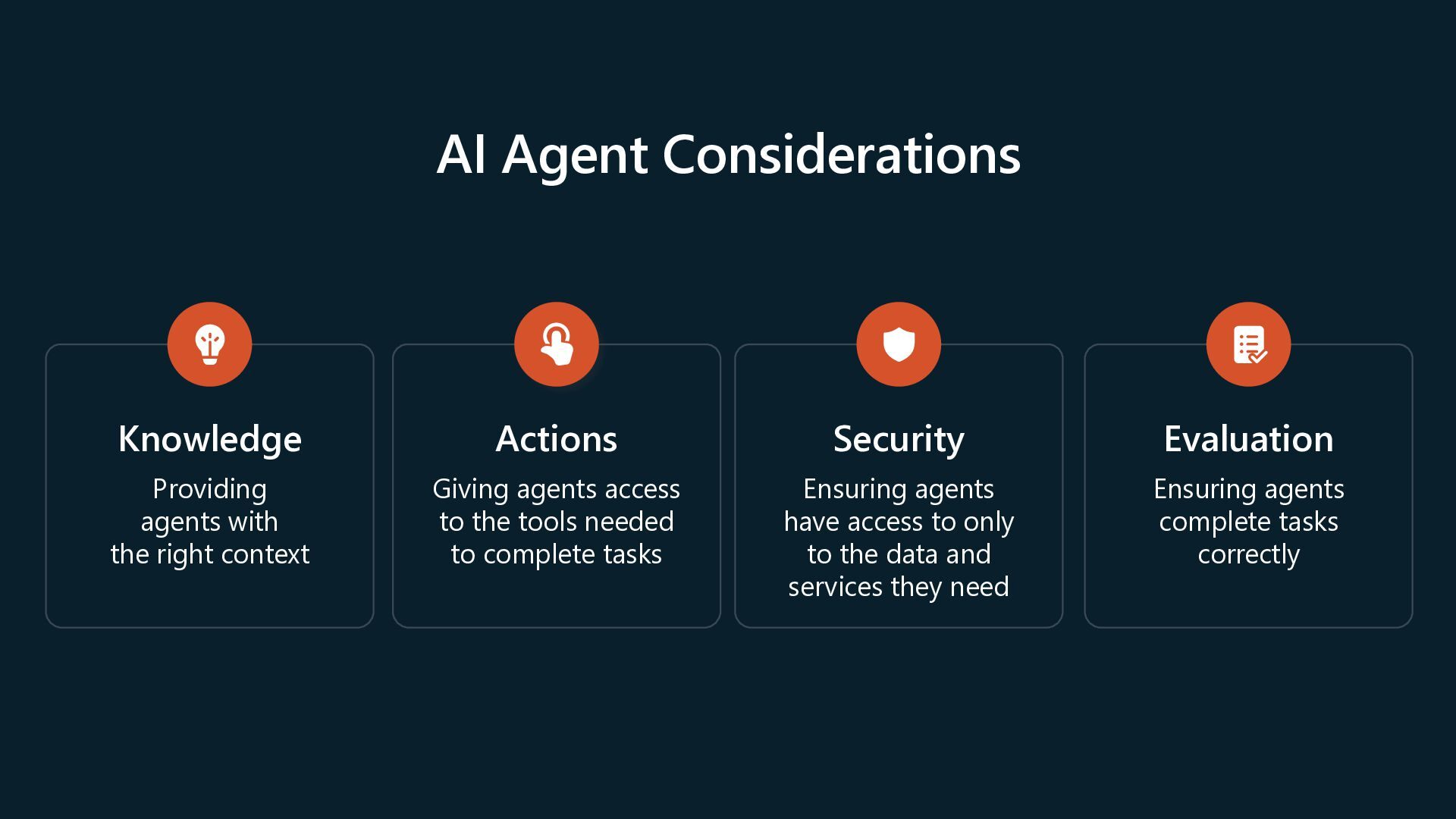
  10. AI Agent Considerations Providing agents with the right context Knowledge

    Giving agents access to the tools needed to complete tasks Actions Ensuring agents have access to only to the data and services they need Security Ensuring agents complete tasks correctly Evaluation
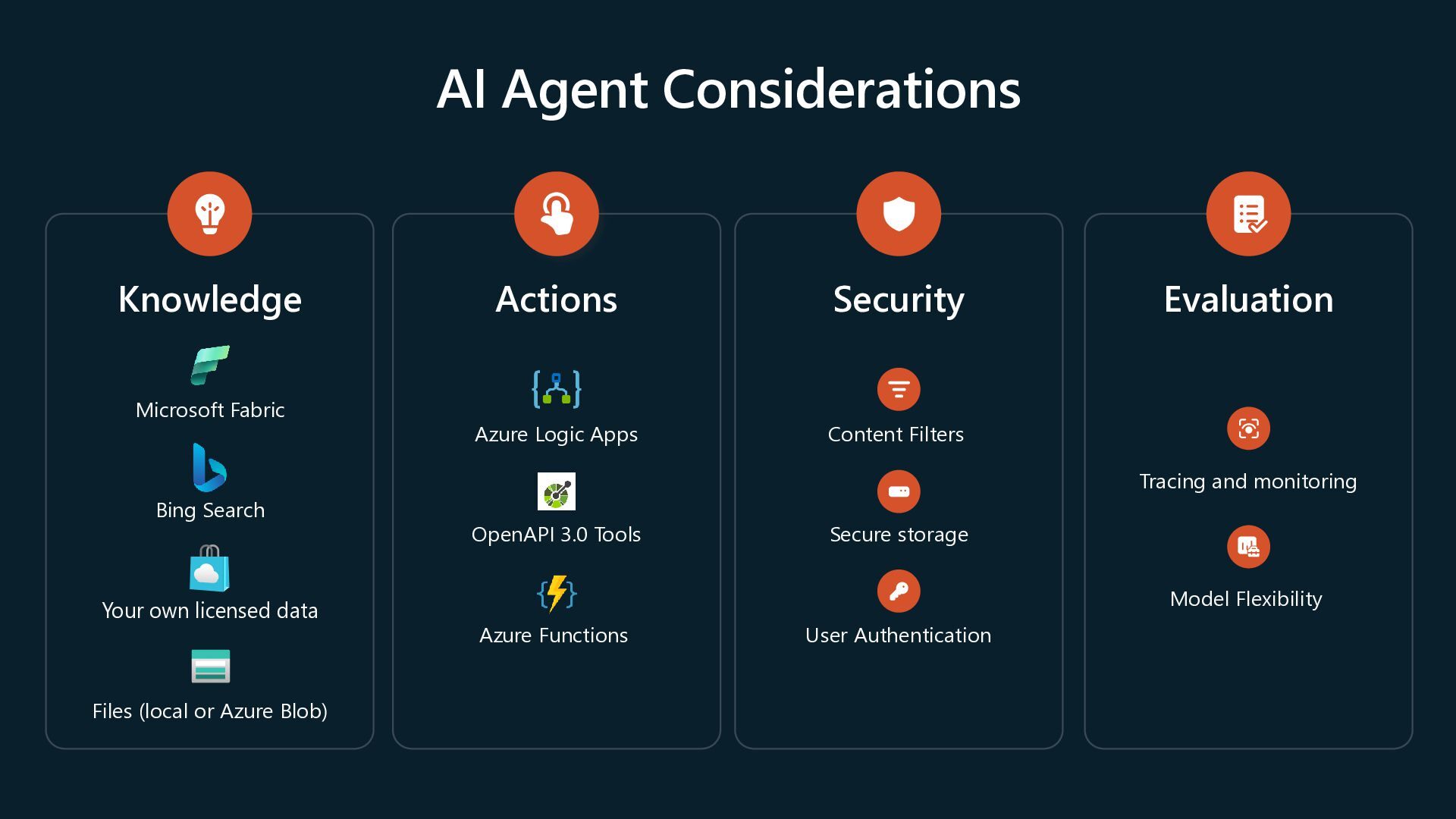
  11. AI Agent Considerations Knowledge Actions Security Evaluation Microsoft Fabric Bing

    Search Your own licensed data Files (local or Azure Blob) Azure Logic Apps OpenAPI 3.0 Tools Azure Functions Content Filters Secure storage User Authentication Tracing and monitoring Model Flexibility
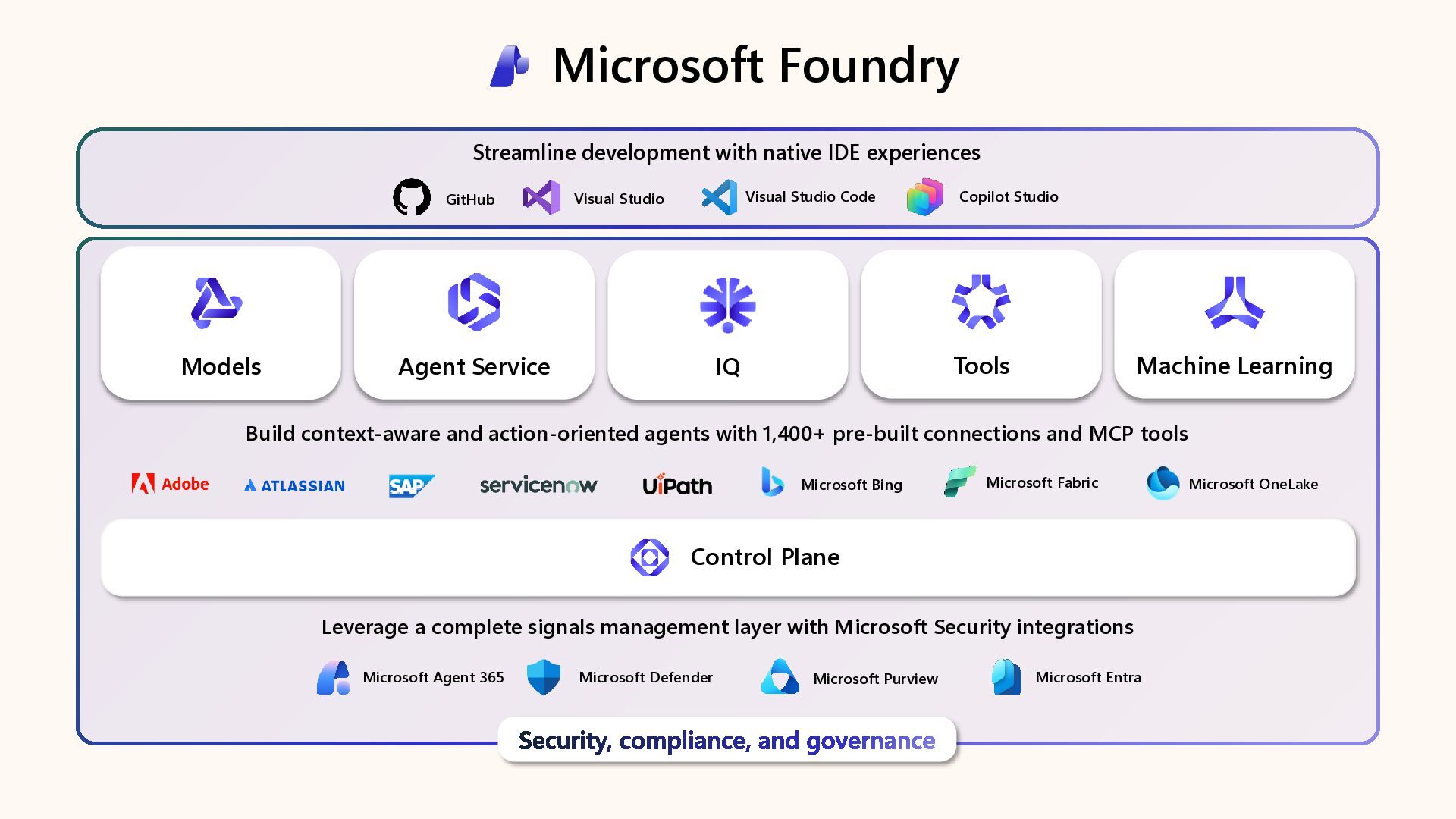
  12. Control Plane Security, compliance, and governance GitHub Visual Studio Visual

    Studio Code Copilot Studio Build context-aware and action-oriented agents with 1,400+ pre-built connections and MCP tools Streamline development with native IDE experiences Leverage a complete signals management layer with Microsoft Security integrations Microsoft Agent 365 Microsoft Defender Microsoft Purview Microsoft Entra Microsoft Fabric Microsoft OneLake Microsoft Bing Agent Service IQ Tools Machine Learning Models Microsoft Foundry
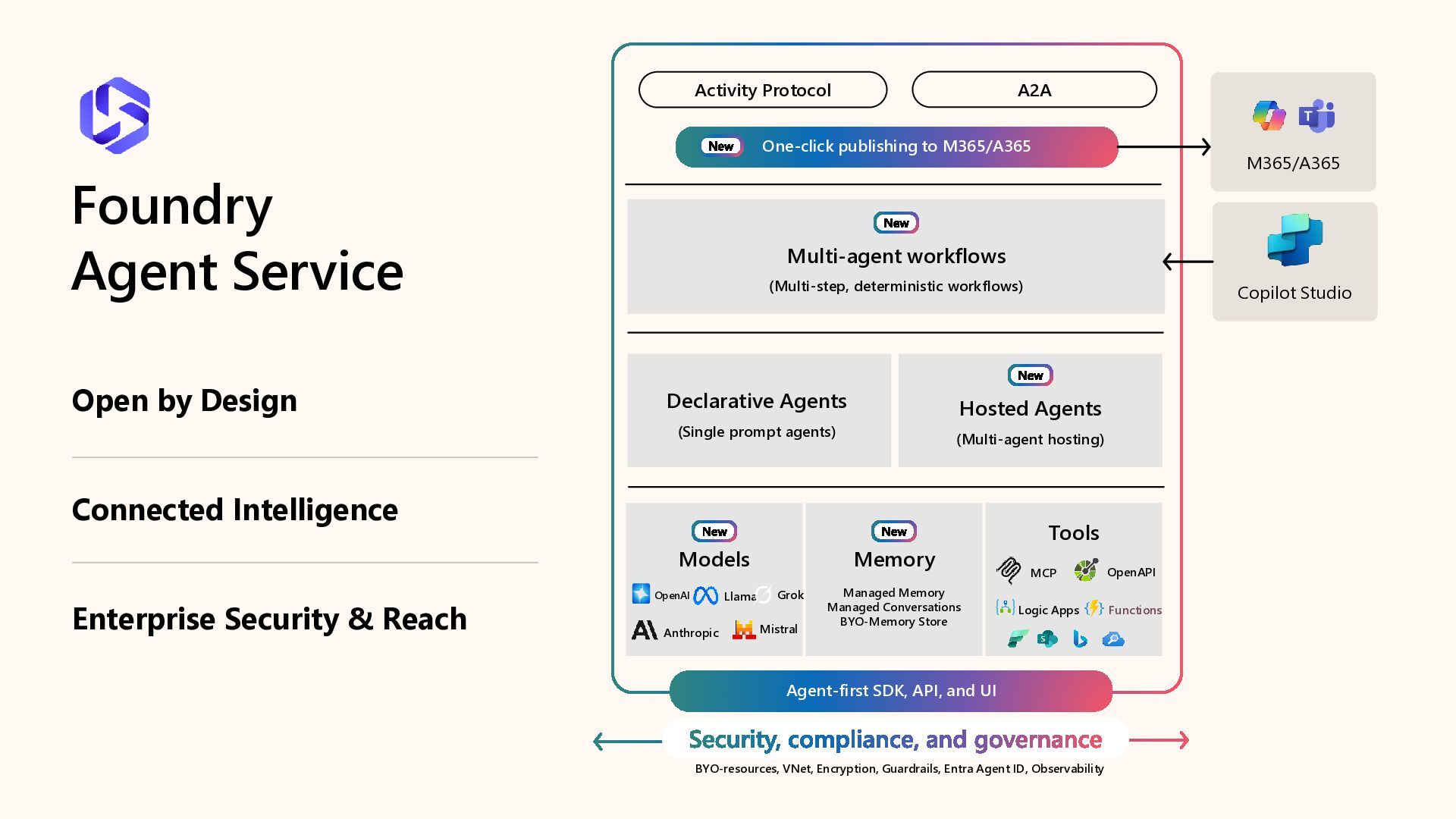
  13. Foundry Agent Service Activity Protocol Agent-first SDK, API, and UI

    A2A One-click publishing to M365/A365 Copilot Studio M365/A365 Models Memory Tools OpenAI Llama Mistral Grok Anthropic MCP OpenAPI Managed Memory Managed Conversations BYO-Memory Store Logic Apps Functions Declarative Agents (Single prompt agents) Hosted Agents (Multi-agent hosting) Multi-agent workflows (Multi-step, deterministic workflows) Security, compliance, and governance Open by Design Connected Intelligence Enterprise Security & Reach New New New New New BYO-resources, VNet, Encryption, Guardrails, Entra Agent ID, Observability
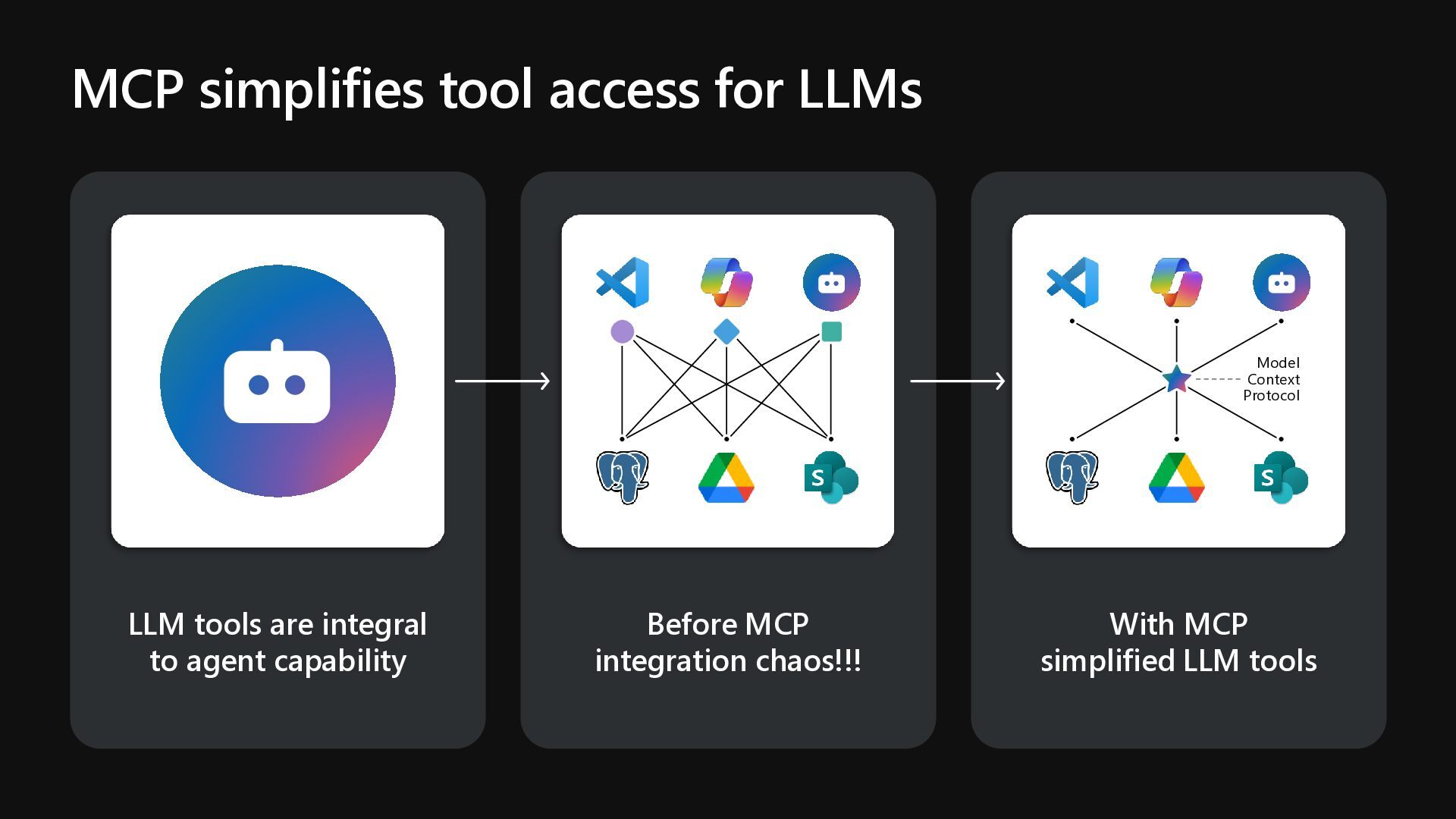
  14. MCP simplifies tool access for LLMs LLM tools are integral

    to agent capability Before MCP integration chaos!!! Model Context Protocol With MCP simplified LLM tools
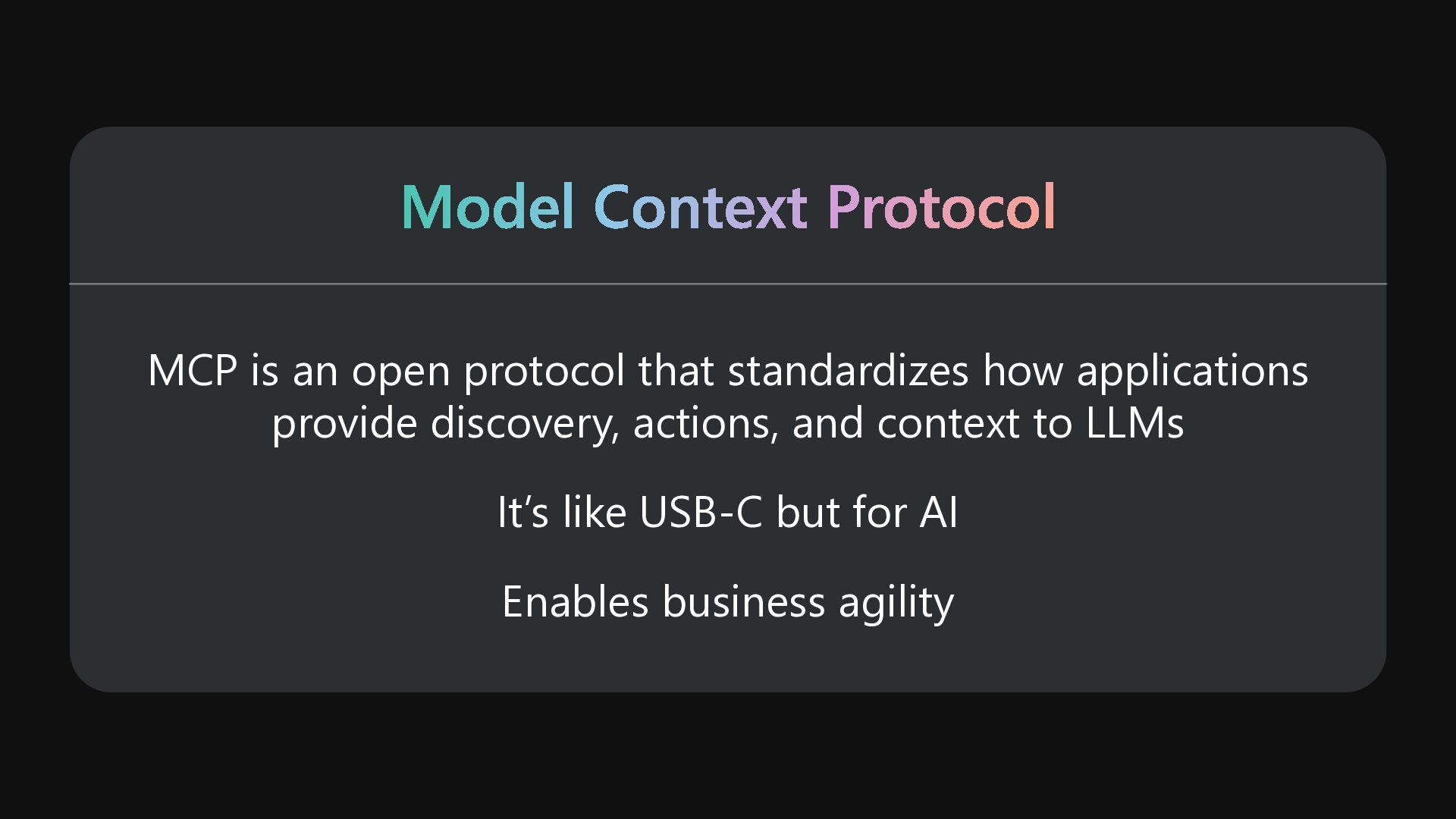
  15. Model Context Protocol MCP is an open protocol that standardizes

    how applications provide discovery, actions, and context to LLMs It’s like USB-C but for AI Enables business agility