Upgrade to Pro — share decks privately, control downloads, hide ads and more …

BSEO - Designing for decisions - Combining beha...

BSEO - Designing for decisions - Combining behavioural science with content strategy

In this talk Lottie explores how behavioural science principles, such as understanding cognitive load, choice architecture, and heuristics, fundamentally influence user decisions and journeys. Lottie advocates for combining behavioural science with content strategy to create a user experience that not only informs, but also persuades users through their journey.

Avatar for Lottie Namakando

Lottie Namakando

May 01, 2026

More Decks by Lottie Namakando

Other Decks in Business

Transcript

  1. Designing For Decisions - Combining Behavioural Science With Content Strategy.

    Lottie Namakando Human First Collective | Speakerdeck.com/lottienamakando
  2. The search bar returned irrelevant content. The content was TL;DR.

    The answer to the question wasn’t on the site. 1 2 3
  3. Because AI is so efficient, any delays like page load

    are disproportionately long. Users are offloading cognitive responsibility, expecting more to be done for them. Users expect the platforms to adapt to their context and needs. 1 2 3 Source 1, Source 2, Source 3, RESEARCH SUGGESTS THAT USING AI IS CHANGING HOW WE BEHAVE.
  4. £1.5m Source 1, Source 2, Source 3 The average marketing

    spend of a £20m business. MEDIA INVESTMENT
  5. Source 1, Source 2, Source 3 £1.5m 81% Of customers

    prefer companies that offer personalised experiences. BESPOKE EXPERIENCE MEDIA INVESTMENT
  6. Source 1, Source 2, Source 3 £1.5m 81% Of marketers

    feel their CMS supports the journey their customers need. £1.5m 5% 81% TECH FIT FOR PURPOSE BESPOKE EXPERIENCE MEDIA INVESTMENT
  7. STRUCTURED CRO Source 1, Source 2, Source 3 £1.5m <40%

    5% 81% Less than 40% of brands have a structured CRO program. TECH FIT FOR PURPOSE BESPOKE EXPERIENCE MEDIA INVESTMENT
  8. Targeting the right audience With the right message On the

    right channel Lose the customer due to - User Experience - User Expectations - Content Structure - Website functionality
  9. THE REASONS FOR ABANDONING? 19% 39% 19% 18% Source Due

    to account creation Extra costs and fees Didn’t trust the site Complicated checkout
  10. WHAT DOES THIS MEAN IN NUMBERS? 1000 Customers visited the

    site with the intention to book a holiday.
  11. 1000 Customers visited 18% Dropped out due to a complicated

    checkout process. WHAT DOES THIS MEAN IN NUMBERS?
  12. 1000 Customers visited 18% Dropped out 180 We lose 180

    customers from the purchase journey. WHAT DOES THIS MEAN IN NUMBERS?
  13. 180 We lost customers £4k Who on average may have

    spent £4k per family on a holiday. 1000 18% Customers visited Dropped out WHAT DOES THIS MEAN IN NUMBERS?
  14. 1000 18% 180 £720k At risk revenue if the onsite

    journey is not optimised. £4k Each may have spent £4k 180 We lost customers Customers visited Dropped out WHAT DOES THIS MEAN IN NUMBERS?
  15. FAST Emotive, effortless, unconscious SLOW Rational, demanding, conscious 95% 5%

    …BUT YOUR CONTENT MUST ALSO REASSURE SLOW THINKING. MOST DECISIONS ARE FAST THINKING.
  16. The Holiday Dreamer (Fast) The Guardian (Slow) The Mindset They

    are looking for a holiday to solve an emotional need (stress, connection, status). The Feeling Anticipation and excitement. They feel a sense of their future selves experience. The Mindset They are vigilant and looking for reasons to retreat to safety. The Feeling Tension. They feel the weight of £4,000 from their pocket. SO LET’S MEET OUR AUDIENCE…. MWIYA.
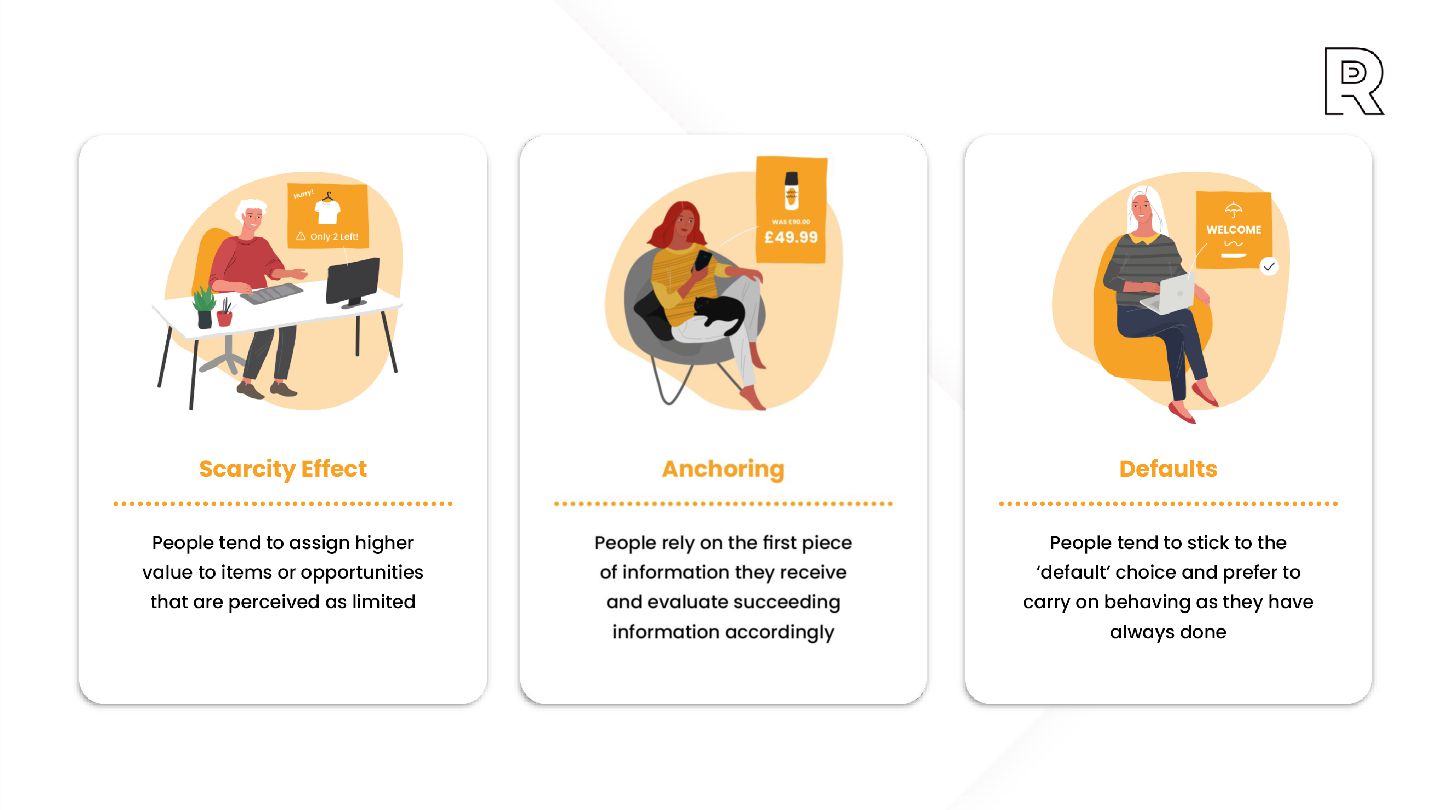
  17. Mental shortcuts which allow people to solve problems quickly and

    efficiently to limit cognitive effort. OUR DECISION MAKING IS IMPACTED BY A COMBINATION OF HEURISTICS.
  18. A systematic error in the way that we think and

    process information that leads to flawed thoughts and decision making. …AND COGNITIVE BIASES.
  19. Germane Load Mental effort a learner uses to process and

    integrate new information with their existing knowledge. Intrinsic Load The inherent difficulty and complexity of the content or task itself. Extraneous Load The mental effort required to process poor instructional design or unnecessary information. COGNITIVE LOAD
  20. Intrinsic Load Extraneous Load Germane Load Make the information easier

    to digest. 1. Progressive disclosure 2. Chunking 3. Different mediums Reduce distractions. 1. Remove pop ups 2. Streamline nav 3. Limit information Make learning accessible. 1. Interactivity 2. Worked examples 3. Micro learning HOW CAN WE DESIGN FOR LOAD?
  21. DESIGNED FOR EXTRANEOUS LOAD. Limit information Streamlined the process by

    limiting search options to only available residences.
  22. DESIGNED FOR GERMANE LOAD. Interactive Interactive 3D digital experience, provide

    users with a more engaging way to explore content and products.
  23. Intentional Accidental Safety Check Using a Review your details screen

    for high value bookings to prevent buyer’s remorse. Comparison Provide insurance option comparisons for each review. IKEA Effect Make it easy for them to build their own itinerary. Data Wall Asking for too much information too early on. Trust Breach Not being upfront with fees and taxes. Journey Disconnect The offsite promise jars with the onsite experience. MOVING INTO SLOW THINKING CAN BE INTENTIONAL OR ACCIDENTAL.
  24. What is going on? A high ranking ‘Best SEO Tools

    2026’ guide that lists features and offers a ‘Start Free Trial’ button.
  25. What is killing that last click? The content focuses on

    what the user will gain, it’s less risky to stick with what they already have.
  26. What is their slow brain telling them? “Changing my workflow

    is a massive risk. It is safer to stick with my current ‘okay’ tool, rather than risk losing time on a better one.”
  27. CONTENT CONTENT UX Use Anti Loss Headline, frame the current

    state as the issue. Stop spending £xx on features you don’t use. Don't lose your historical data. Compare to your current tool. Risk Reversal focus, address the points that concern them most. Interactive Tools making the loss visible through simple comparison. WAYS TO ADDRESS THE BARRIERS.
  28. What is going on? A high intent service page guide

    that uses ‘Price on Request’ or ‘Starting from £XXX’ with no further breakdown.
  29. What is killing that last click? The user lacks a

    ‘mental anchor’. They can’t categorise the service as either affordable or premium, so they feel a sense of unease.
  30. What is their slow brain telling them? “If they aren't

    showing the price, it’s probably because it's too expensive or they change the price based on who is asking.
  31. CONTENT CONTENT UX What is included checklist, or inclusion/ exclusion

    table. Stop spending £xx on features you don’t use. We price based on number of pages not size. Used by scale-ups. Price Logic, if you can’t give the precise numbers explain how you price. Provide tiered anchor, make the names relevant to the audience. WAYS TO ADDRESS THE BARRIERS.
  32. What is going on? A new in page shows 200+

    items on a single scroll page with poor or no sorting or filtering.
  33. What is killing that last click? User needs to try

    and evaluate each of the options. They have no easy way to reduce the options.
  34. What is their slow brain telling them? “There is too

    much to look at. What if you buy this one and then find a better one five rows down.
  35. CONTENT CONTENT UX Curated collection approach for them. Top picks

    tailored to you. Transform from school run to working mum. Best items for small spaces. Editorial blocks, to provide context and direction. Feature first filtering, think about the motivations and benefits. WAYS TO ADDRESS THE BARRIERS.
  36. Choose one page of your website: Select a high impact

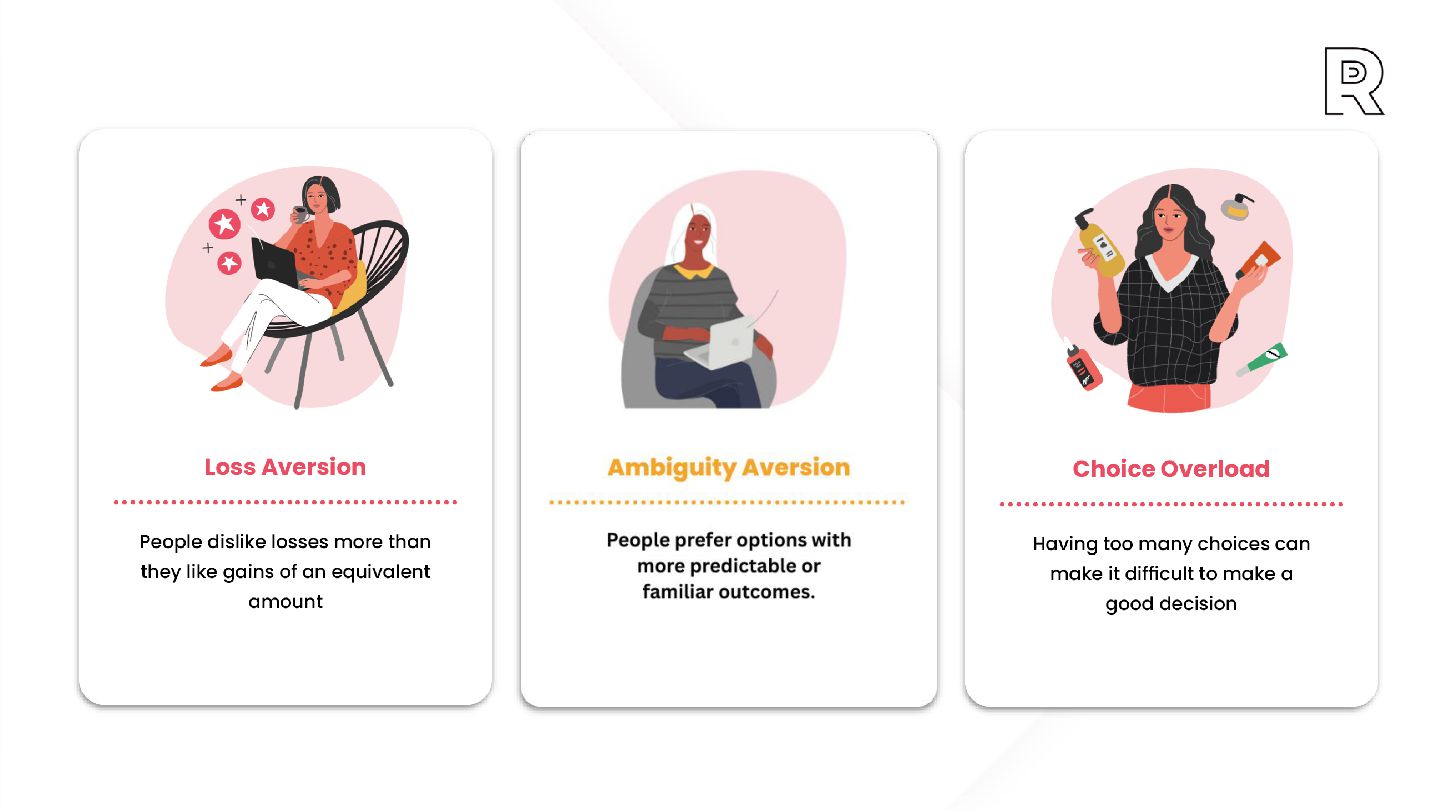
    page. • Are our prices transparent? • Do we clearly list what is included (and excluded) so the user knows exactly what to expect? Ambiguity Aversion • Is the headline clear and benefit driven or full of jargon? • Does the copy have long dense paragraphs or is it in digestible chunks? Cognitive Load • Are there multiple competing CTAs? • Do we offer too many options or journeys on one page? Choice Overload • Are we using anti-loss or risk-reversal headlines? • Do we offer interactive tools or clear comparisons? Loss Aversion WEBSITE CHECKLIST: AUDIT
  37. 1. CMS functionality 2. What is easiest to build 3.

    What we think users want THE WEBSITES WE DRIVE TRAFFIC TO AREN’T BUILT FOR THE USER.
  38. IA & Journey Mapping Content Entry User Research Content Modelling

    Website Build Wireframes and HiFi Live Website WE NEED TO PUT USERS AT THE HEART OF THE WHOLE DESIGN.
  39. CONTENT What users want to see. BEHAVIOUR What users want

    to do. CONVERSION The action users take. CMS ALLOWING US TO REINFORCE THE CONNECTION BETWEEN…
  40. Map key customer journey on site Cognitive friction audit Identify

    1 test and learn opportunity IF YOU DO NOTHING ELSE THIS MONTH…