and its audience. In other words, an Intermediary. They focus on building trust, relationships, and engagement within the community. Their role ensures a strong brand presence, loyal followers, and an active community both online and offline. Who is a Community Manager?
or members. Audience Engagement: Encourages meaningful interactions, making the audience feel heard and valued. Reputation Management: Handles both praise and criticism professionally to maintain a positive image. Feedback Loop: Acts as a two-way communication channel between the organization and the audience, providing valuable insights for growth. The Importance of a Community Manager
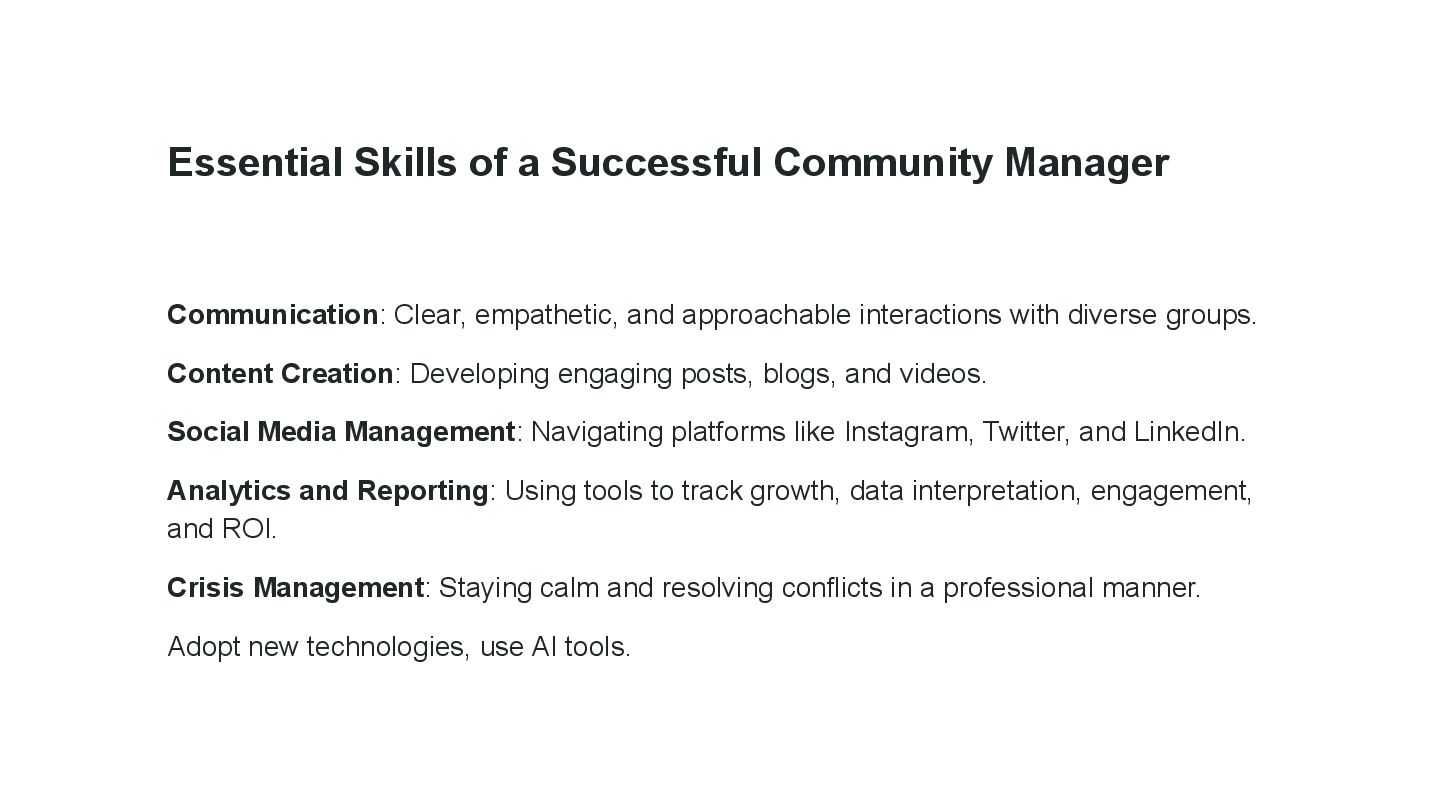
and approachable interactions with diverse groups. Content Creation: Developing engaging posts, blogs, and videos. Social Media Management: Navigating platforms like Instagram, Twitter, and LinkedIn. Analytics and Reporting: Using tools to track growth, data interpretation, engagement, and ROI. Crisis Management: Staying calm and resolving conflicts in a professional manner. Adopt new technologies, use AI tools.
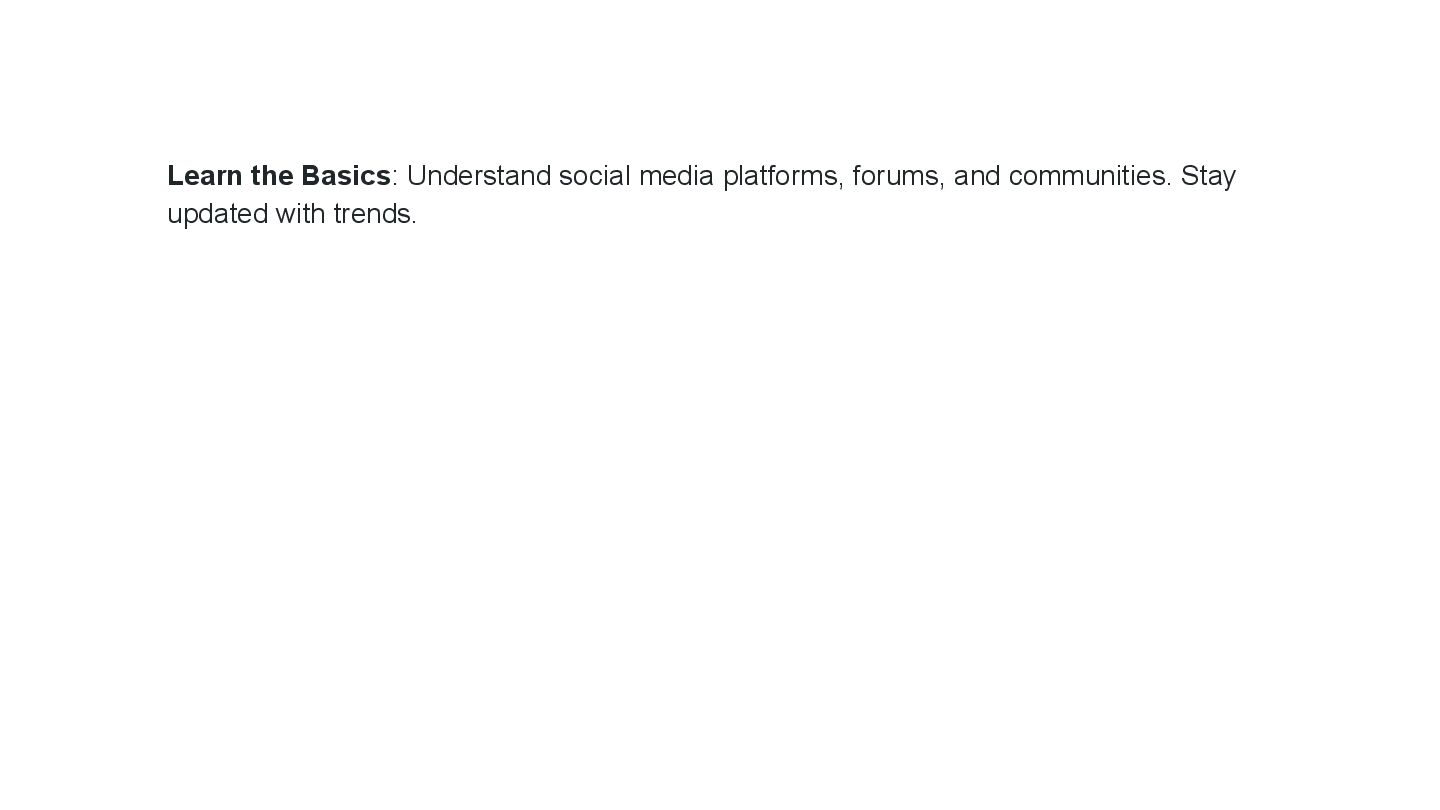
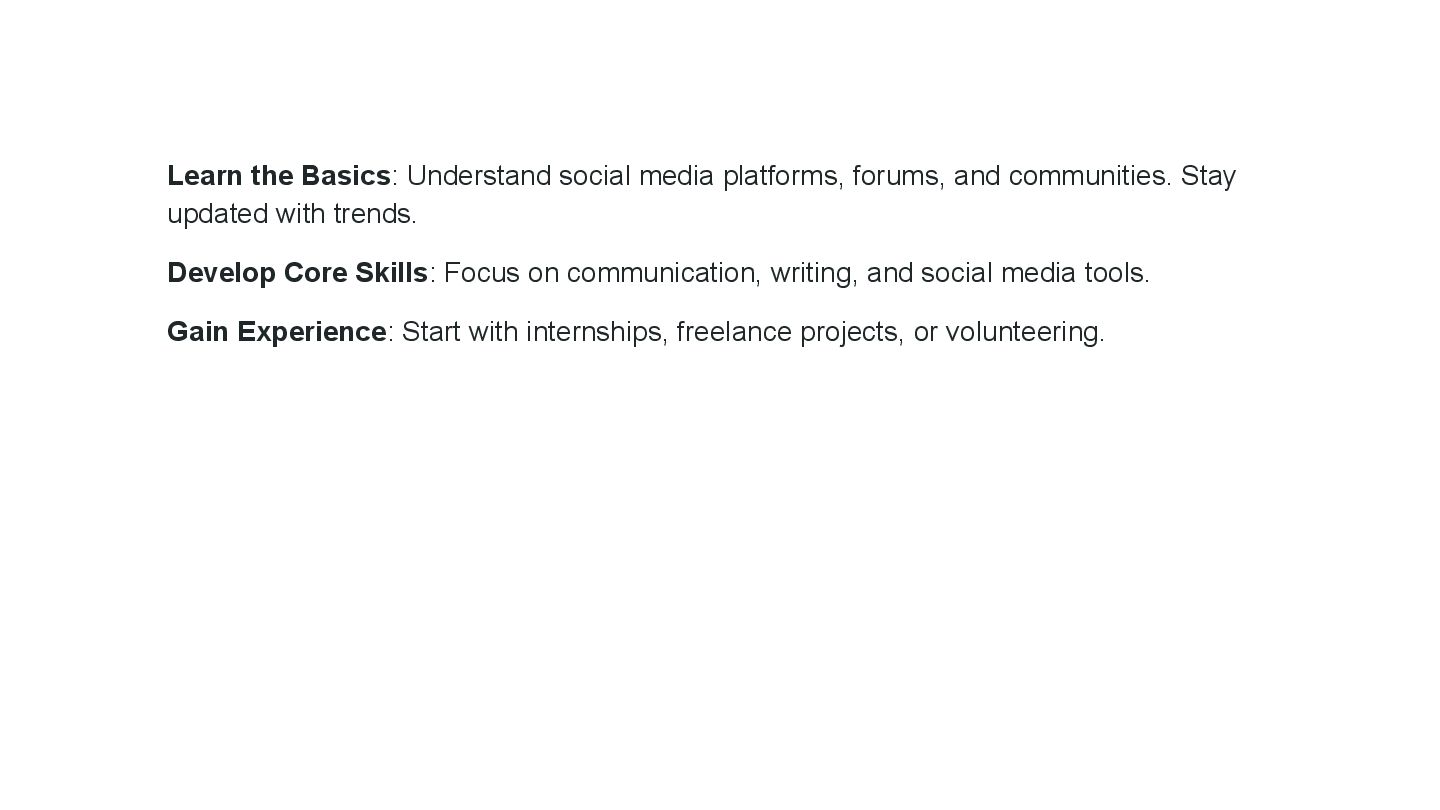
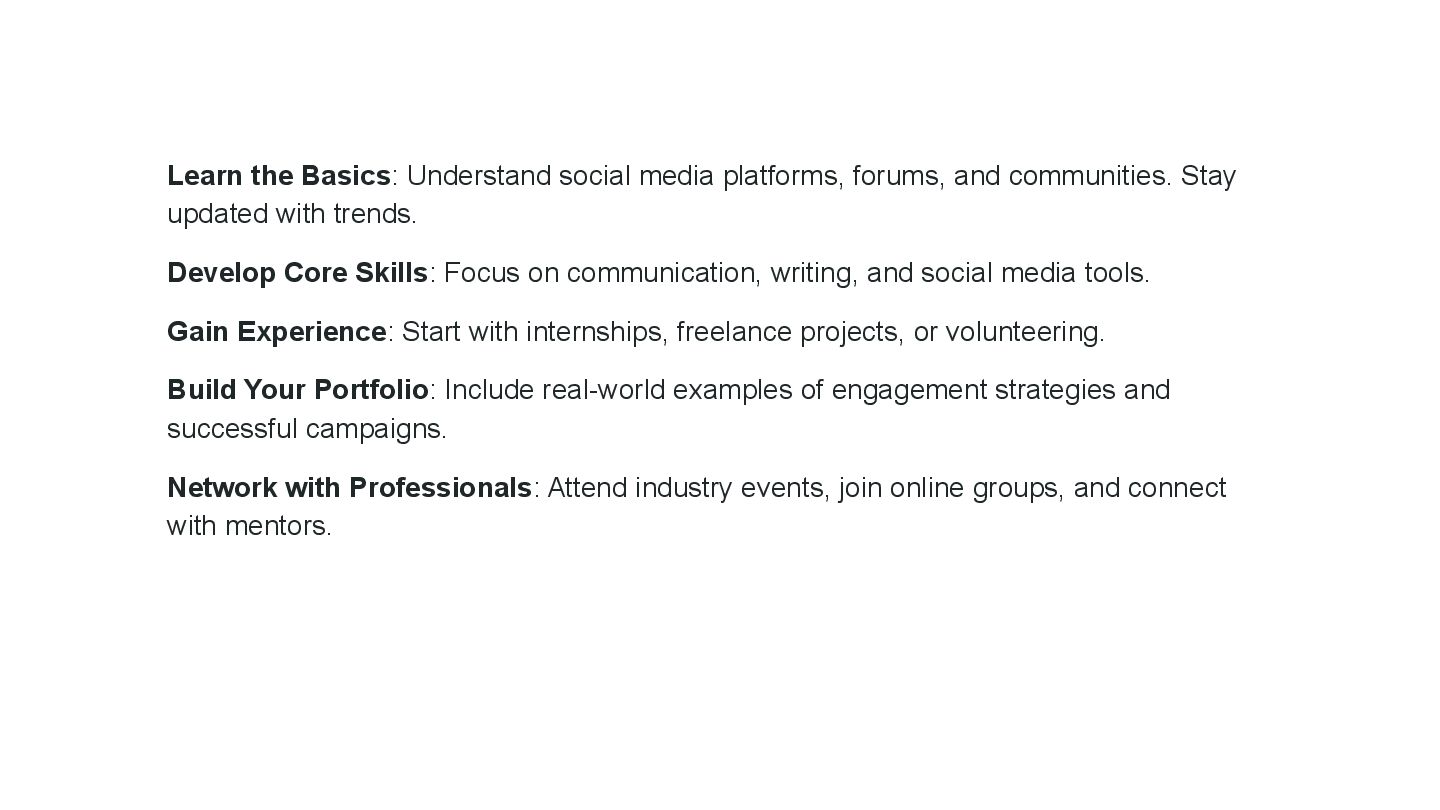
Stay updated with trends. Develop Core Skills: Focus on communication, writing, and social media tools. Gain Experience: Start with internships, freelance projects, or volunteering.
Stay updated with trends. Develop Core Skills: Focus on communication, writing, and social media tools. Gain Experience: Start with internships, freelance projects, or volunteering. Build Your Portfolio: Include real-world examples of engagement strategies and successful campaigns.
Stay updated with trends. Develop Core Skills: Focus on communication, writing, and social media tools. Gain Experience: Start with internships, freelance projects, or volunteering. Build Your Portfolio: Include real-world examples of engagement strategies and successful campaigns. Network with Professionals: Attend industry events, join online groups, and connect with mentors.
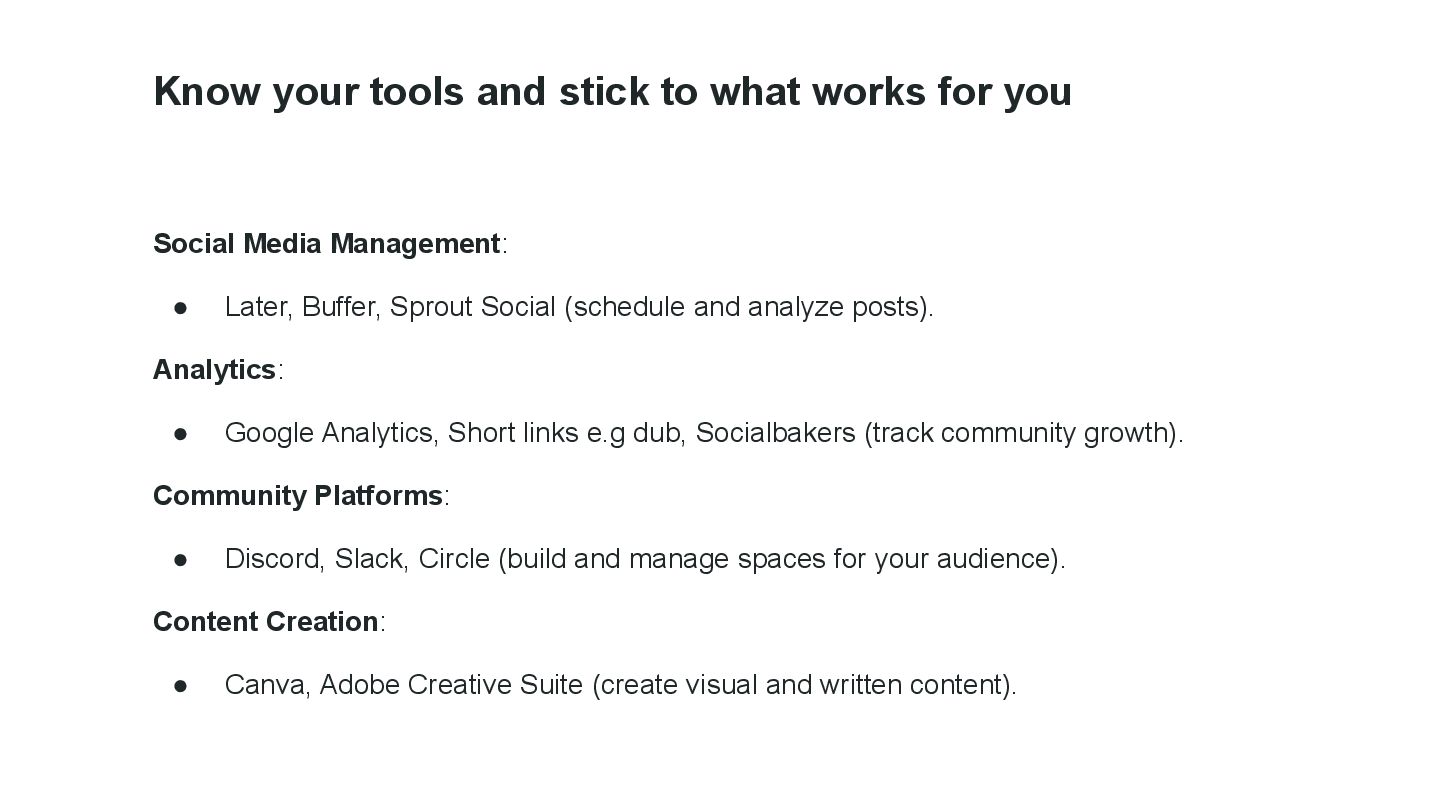
Social Media Management: • Later, Buffer, Sprout Social (schedule and analyze posts). Analytics: • Google Analytics, Short links e.g dub, Socialbakers (track community growth). Community Platforms: • Discord, Slack, Circle (build and manage spaces for your audience). Content Creation: • Canva, Adobe Creative Suite (create visual and written content).
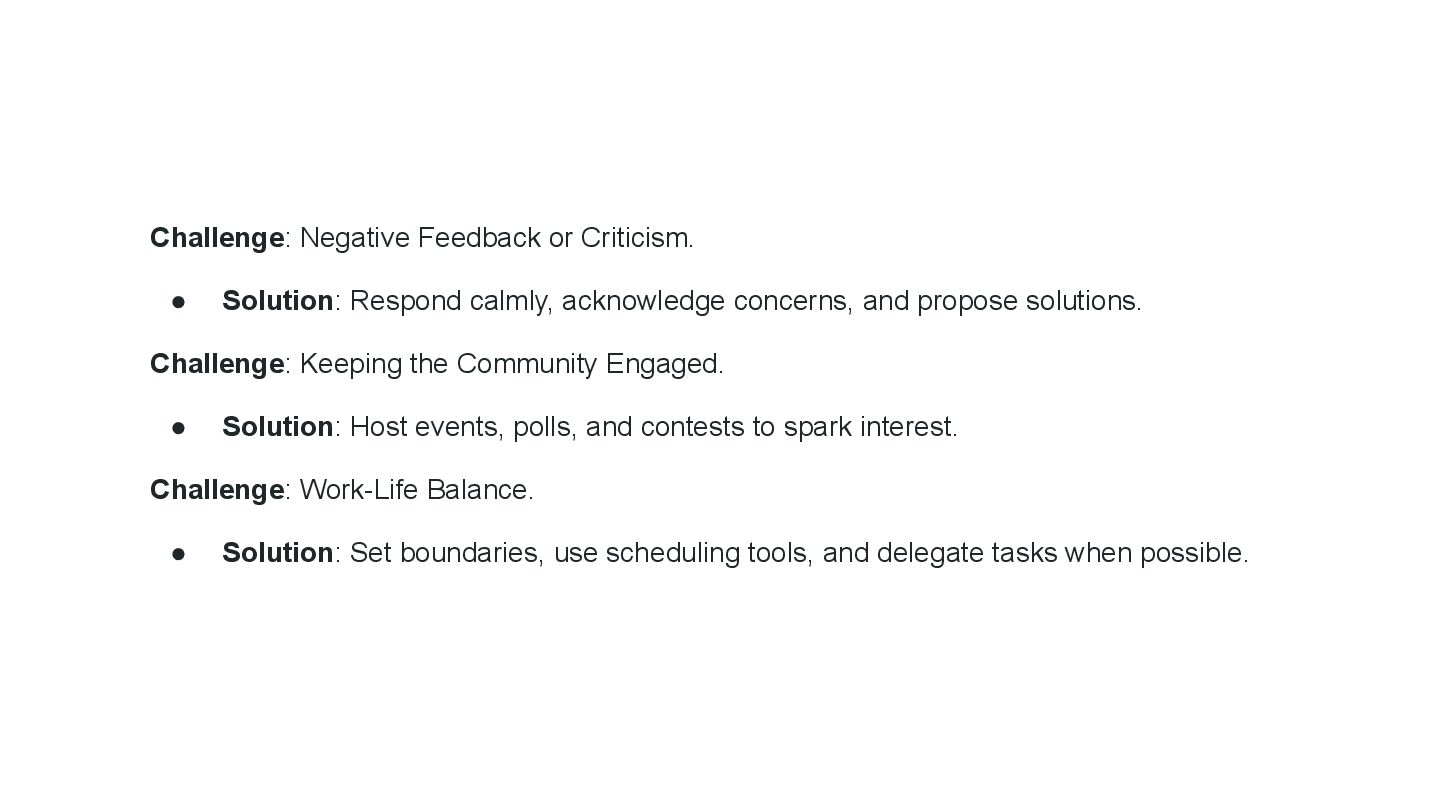
concerns, and propose solutions. Challenge: Keeping the Community Engaged. • Solution: Host events, polls, and contests to spark interest. Challenge: Work-Life Balance. • Solution: Set boundaries, use scheduling tools, and delegate tasks when possible.


 mfonobong
 sansantech
 riyaamemiya
 csswizardry
 daitak
 jackojacko_
 manabuseki
 gokken
 nealle
 ryutakondo
 staka121
 hatahata021
 inesmontani
 keithpitt
 samanthasiow
 lindahogenes
 soudai
 tamaranovitovic
 axbom
 michielstock
 sugarenia
 joshbly
 cargoodrich
 reverentgeek