Upgrade to Pro — share decks privately, control downloads, hide ads and more …

Failure Analysis of Lab Furnace Heating Element...

Failure Analysis of Lab Furnace Heating Elements: From Observation to Optimization

Discover how lab furnace heating elements fail, how to identify root causes, and practical ways to optimize performance. This PPT covers observation methods, failure patterns, diagnostics, and strategies to improve furnace efficiency and element lifespan.

Avatar for Mkube Enterprise Pty Ltd

Mkube Enterprise Pty Ltd

April 16, 2026

More Decks by Mkube Enterprise Pty Ltd

Transcript

  1. Failure Analysis of Lab Furnace Heating Elements: From Observation to

    Optimization Submitted By: M-Kube Enterprise Pty Ltd
  2. Introduction Lab furnaces rely heavily on MoSi₂ heating elements for

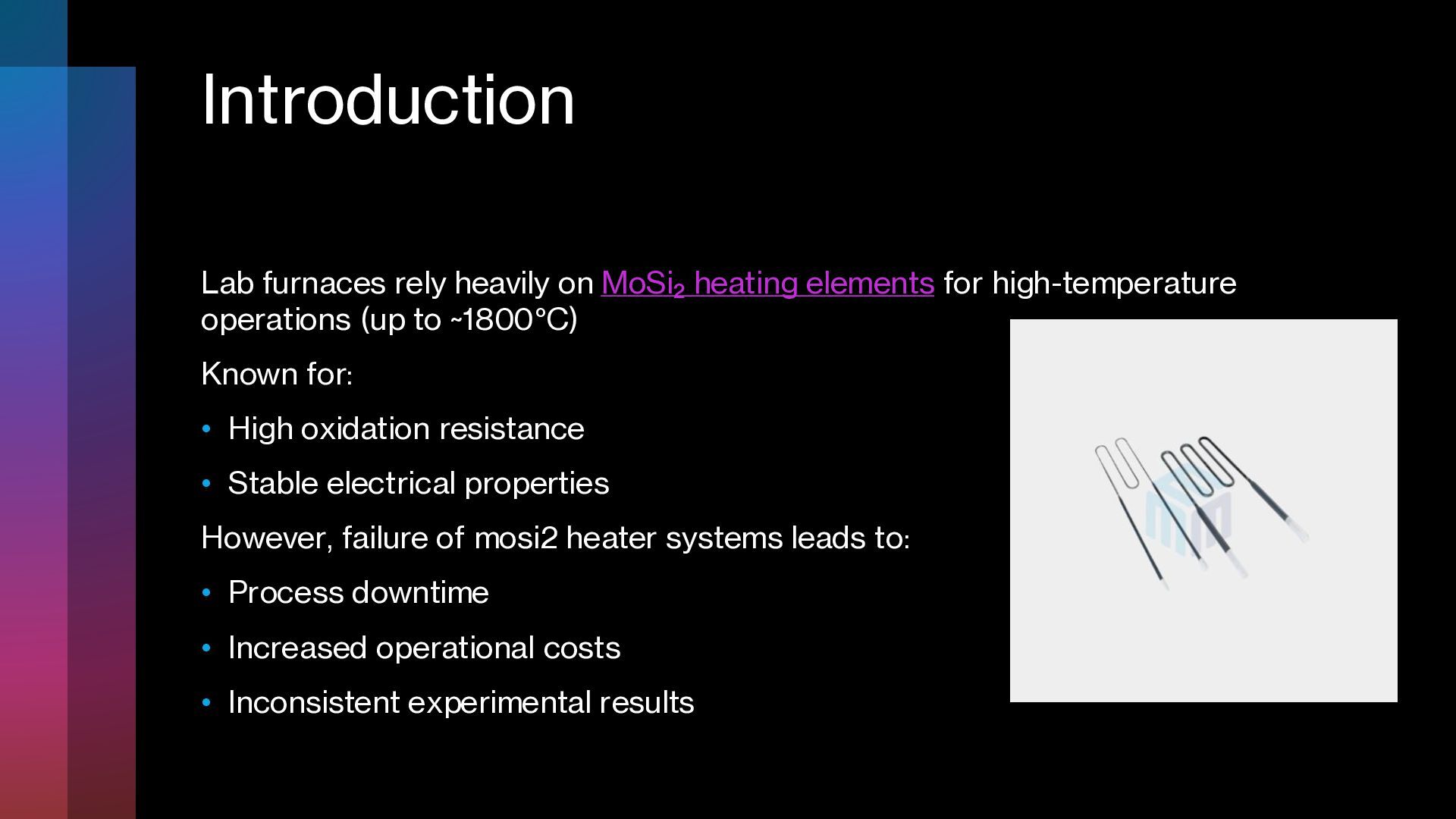
    high-temperature operations (up to ~1800°C) Known for: • High oxidation resistance • Stable electrical properties However, failure of mosi2 heater systems leads to: • Process downtime • Increased operational costs • Inconsistent experimental results
  3. Overview of MoSi₂ Heating Elements Also called: • molybdenum disilicide

    heating element • moly disilicide heating elements • mosi2 element Key properties: • High melting point (~2030°C) • Protective SiO₂ oxide layer • Good electrical conductivity at high temperature Common forms: • U-shape, W-shape, straight rods
  4. Working Principle • Joule heating mechanism: • Electrical resistance →

    Heat generation • Resistance increases with temperature • Stable operation in oxidizing atmospheres due to silica layer formation
  5. Applications of MoSi₂ Heater • Laboratory furnaces • Sintering processes

    • Glass melting • Heat treatment furnaces • Ceramic processing
  6. Common Failure Modes • Oxidation-related degradation • Thermal shock cracking

    • Mechanical breakage • Grain growth and embrittlement • Electrical resistance drift
  7. Visual Observations of Failure • Surface discoloration • Cracks or

    fractures • Swelling or deformation • Uneven heating zones • Broken terminals in mosi2 heating element
  8. Root Causes of Failure Thermal Stress • Rapid heating/cooling cycles

    Atmosphere Effects • Reducing environments damage oxide layer Contamination • Dust, vapors, or chemicals reacting with element Overloading • Excess voltage/current beyond design limits
  9. Oxidation Mechanism Formation of protective SiO₂ layer: • Si +

    O₂ → SiO₂ Failure occurs when: • Layer cracks or spalls • Exposure to reducing gases (H₂, CO)
  10. Thermal Shock Failure Rapid temperature gradients cause: • Internal stress

    • Crack initiation More common during: • Start-up and shutdown cycles
  11. Electrical Degradation • Increase in resistance over time Leads to:

    • Reduced heating efficiency • Need for higher voltage Eventually causes burnout of mosi2 heater
  12. Diagnostic Techniques • Visual inspection • Resistance measurement • Infrared

    thermography • Microscopic analysis (SEM) • Chemical composition analysis
  13. Preventive Measures • Controlled heating and cooling rates • Proper

    installation alignment • Clean furnace environment • Avoid reducing atmospheres • Regular inspection schedule
  14. Optimization Strategies • Use high-quality moly disilicide heating elements •

    Optimize power supply settings • Ensure uniform temperature distribution • Use protective coatings (if required)
  15. Design Improvements • Improved element geometry (U/W shape optimization) •

    Better insulation materials • Enhanced terminal connections • Smart control systems for temperature regulation
  16. Economic Considerations Factors affecting mosi2 heating element price: • Material

    purity • Size and geometry • Manufacturer quality Cost vs lifespan trade-off: • Cheaper elements → higher failure rate • Premium elements → longer service life
  17. Maintenance Best Practices • Routine resistance checks • Replace elements

    in pairs/sets • Monitor voltage/current trends • Keep spare mosi2 heater inventory
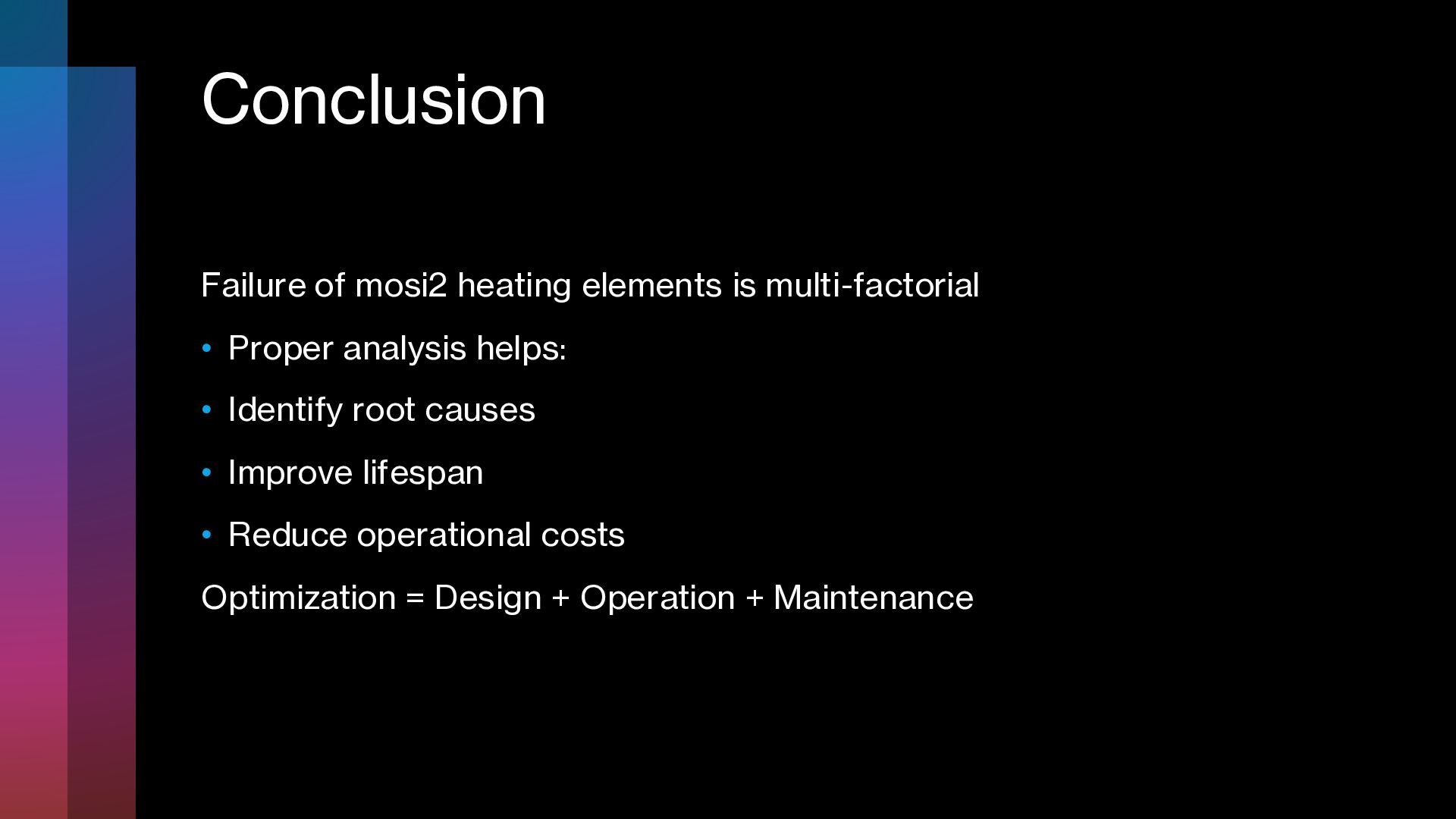
  18. Conclusion Failure of mosi2 heating elements is multi-factorial • Proper

    analysis helps: • Identify root causes • Improve lifespan • Reduce operational costs Optimization = Design + Operation + Maintenance