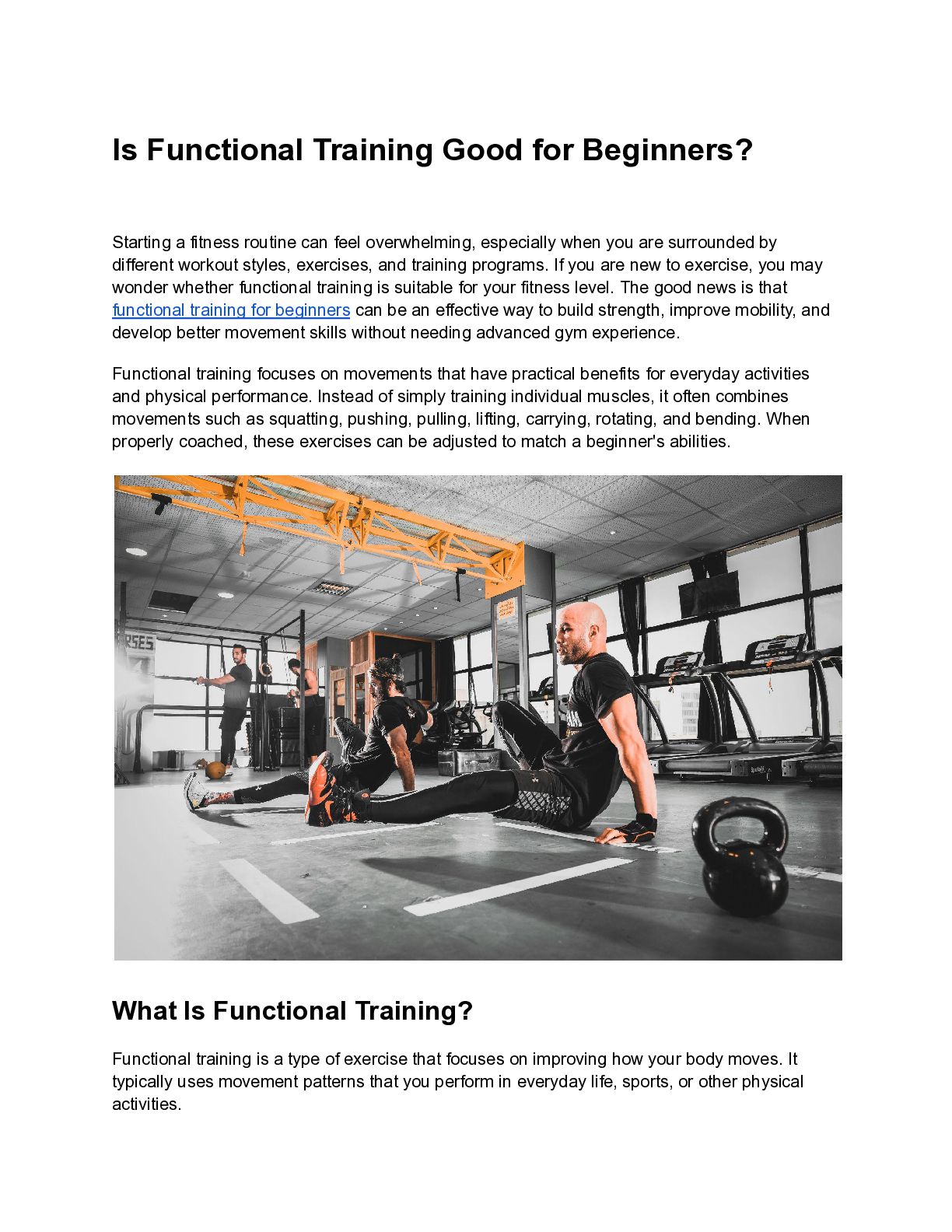
can feel overwhelming, especially when you are surrounded by different workout styles, exercises, and training programs. If you are new to exercise, you may wonder whether functional training is suitable for your fitness level. The good news is that functional training for beginners can be an effective way to build strength, improve mobility, and develop better movement skills without needing advanced gym experience. Functional training focuses on movements that have practical benefits for everyday activities and physical performance. Instead of simply training individual muscles, it often combines movements such as squatting, pushing, pulling, lifting, carrying, rotating, and bending. When properly coached, these exercises can be adjusted to match a beginner's abilities. What Is Functional Training? Functional training is a type of exercise that focuses on improving how your body moves. It typically uses movement patterns that you perform in everyday life, sports, or other physical activities.
pattern. Carrying groceries requires strength and stability. Reaching overhead involves mobility and coordination. Functional fitness training uses exercises that can help develop these physical qualities. The goal is not necessarily to make every exercise look like an everyday activity. Instead, functional training develops strength, balance, coordination, mobility, stability, and control that can transfer to different activities. Why Is Functional Training Good for Beginners? One of the main benefits of functional training is that exercises can be scaled to different fitness levels. A beginner does not need to start with heavy weights or complicated movements. A qualified coach can modify an exercise by reducing resistance, changing the range of motion, slowing the movement down, or using a simpler variation. As your strength and confidence improve, the exercise can gradually become more challenging. This makes functional training for beginners a practical starting point for people who want to become stronger without immediately following an advanced workout program. Benefits of Functional Training for Beginners 1. Builds Practical Strength Functional strength training can help beginners develop strength that supports everyday activities. Exercises such as squats, rows, presses, carries, and deadlift variations can train multiple muscle groups while improving coordination. Building this foundation can make daily physical activities feel easier and help prepare you for more challenging forms of exercise. 2. Improves Mobility and Movement Strength is only one part of physical fitness. Good movement also requires adequate mobility and control. Beginner functional workouts can include mobility exercises and controlled movement patterns that help you become more comfortable using your joints through appropriate ranges of motion. Improved mobility can support better exercise technique and make it easier to perform common movements. 3. Develops Balance and Coordination
work together. This can help beginners develop coordination and body awareness. Exercises involving single leg movements, carries, controlled resistance, and changes in position can challenge balance while still being modified to suit the individual. 4. Supports Better Exercise Technique Beginners often need time to learn how their body should move during strength exercises. Working with a functional fitness coach can provide valuable feedback. A coach can demonstrate movements, correct technique, adjust exercises, and help you understand how to control your body throughout each repetition. Learning good movement habits early can create a stronger foundation for future training. 5. Makes Workouts More Adaptable Functional training does not require one specific piece of equipment. Depending on the program, you may use bodyweight exercises, dumbbells, kettlebells, cables, resistance bands, or other training tools. This flexibility allows workouts to be adapted based on your fitness level, available equipment, goals, and physical abilities. What Does a Beginner Functional Workout Look Like? A beginner functional workout should focus on learning fundamental movement patterns rather than trying to complete the most difficult exercises possible. A session might include a warm up followed by basic squat, hinge, push, pull, carry, and core exercises. The exact movements should depend on the individual's fitness level and goals. For example, a beginner might start with a bodyweight squat before progressing to a goblet squat. Similarly, they may learn a basic hip hinge before moving toward a loaded deadlift variation. The emphasis should be on proper exercise technique, controlled movement, and gradual progression. How Often Should Beginners Do Functional Training?
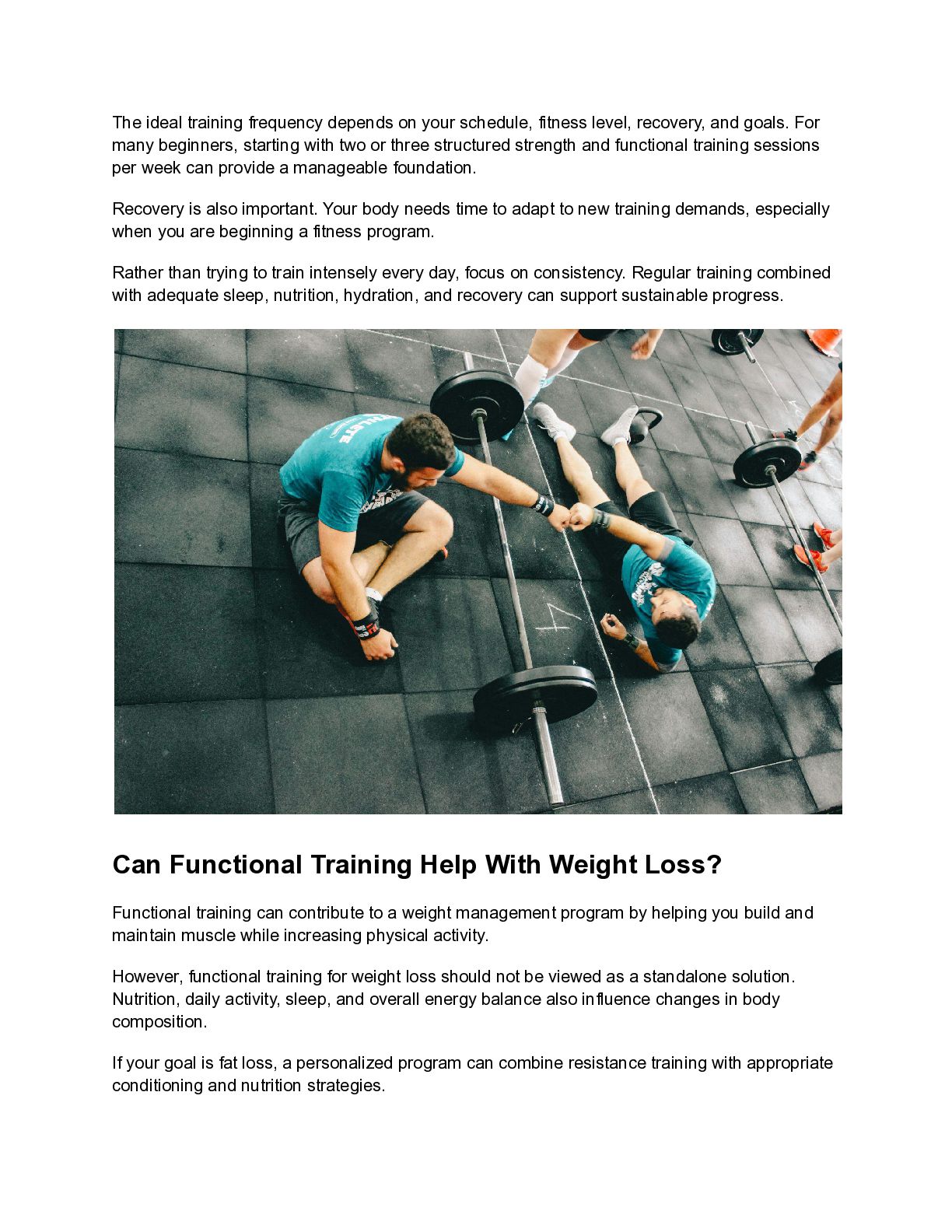
recovery, and goals. For many beginners, starting with two or three structured strength and functional training sessions per week can provide a manageable foundation. Recovery is also important. Your body needs time to adapt to new training demands, especially when you are beginning a fitness program. Rather than trying to train intensely every day, focus on consistency. Regular training combined with adequate sleep, nutrition, hydration, and recovery can support sustainable progress. Can Functional Training Help With Weight Loss? Functional training can contribute to a weight management program by helping you build and maintain muscle while increasing physical activity. However, functional training for weight loss should not be viewed as a standalone solution. Nutrition, daily activity, sleep, and overall energy balance also influence changes in body composition. If your goal is fat loss, a personalized program can combine resistance training with appropriate conditioning and nutrition strategies.
to exercise, begin with movements that match your current abilities. Do not feel pressured to perform advanced exercises simply because they are popular online. Start with manageable resistance, learn proper technique, and increase the challenge gradually. If you have pain, a previous injury, or specific physical limitations, getting appropriate professional guidance before beginning a new training program is important. A qualified functional training coach in Brooklyn can help you establish a program based on your starting point and gradually develop your strength, mobility, and movement skills. Final Thoughts So, is functional training good for beginners? Yes, when it is appropriately programmed and coached. Functional training can provide beginners with a strong foundation by developing practical strength, mobility, balance, coordination, and movement control. The key is not how advanced an exercise looks. The key is whether the exercise is appropriate for your current ability and whether you can progress safely over time. At Physical Culture Brooklyn, functional training is designed around individual goals, abilities, and training experience. With personalized coaching, beginners can learn fundamental movements, build confidence, and develop the physical capacity needed to become stronger and more capable both inside and outside the gym.


 pokotyamu
 kgmotors
 m3c
 hubbleinc
 maruishi
 ikuodanaka
 gatechnologies
 kuradashi
 ashisuto_career
 neuroenergia
 behealthy
 tsogo817421
 ryanjones
 jonoalderson
 tammyeverts
 tomoyanonymous
 techseoconnect
 quramy
 leimatthew05
 destraynor
 signer
 maltzj
 sarafernandez
 afnizarnur