Upgrade to Pro — share decks privately, control downloads, hide ads and more …

Real-World Asset (RWA) Tokenization: From Asset...

Avatar for Robert Victor Robert Victor
September 09, 2026

Real-World Asset (RWA) Tokenization: From Assets to Digital Ownership

Avatar for Robert Victor

Robert Victor

September 09, 2026

More Decks by Robert Victor

Other Decks in Business

Transcript

  1. WHAT IS RWA TOKENIZATION? The process of issuing a digital

    token on a blockchain that digitally represents a realworld, tangible, or intangible asset. HOW IT WORKS: L E G A L A S S E T O W N E R S H I P E S TA B L I S H E D I N T H E P HY S I C A L W O R L D. S M A RT C O NT R ACTS M A P P E D TO A S S E T VA LUAT I O N AND RIGHTS. TOKENS MINTED AND DISTRIBUTED TO INVESTORS.
  2. KEY BENEFITS OF TOKENIZING RWAS Fractional Ownership: Lowering minimum investment

    tickets, enabling retail access to high-value assets like commercial real estate or fine art. Enhanced Liquidity: Trading traditionally illiquid assets 24/7 on secondary digital markets. Automation & Efficiency: Eliminating intermediaries using programmable smart contracts. Transparency & Security: Immutable record-keeping via distributed ledgers.
  3. PLATFORM DEVELOPMENT MODULES Asset Onboarding & Registry: Modeling asset metadata,

    legal documents, valuation inputs, and ownership rules. Investor Onboarding (KYC/AML): Integrating identity verification, investor accreditation, and permissioned access control. Token Issuance & Lifecycle Logic: Deploying smart contracts for minting, transfers, corporate actions, and pause/freeze controls. Custody & Wallet Integration: Multi-party computation (MPC) wallets, multisig security, and institutional custody connectors.
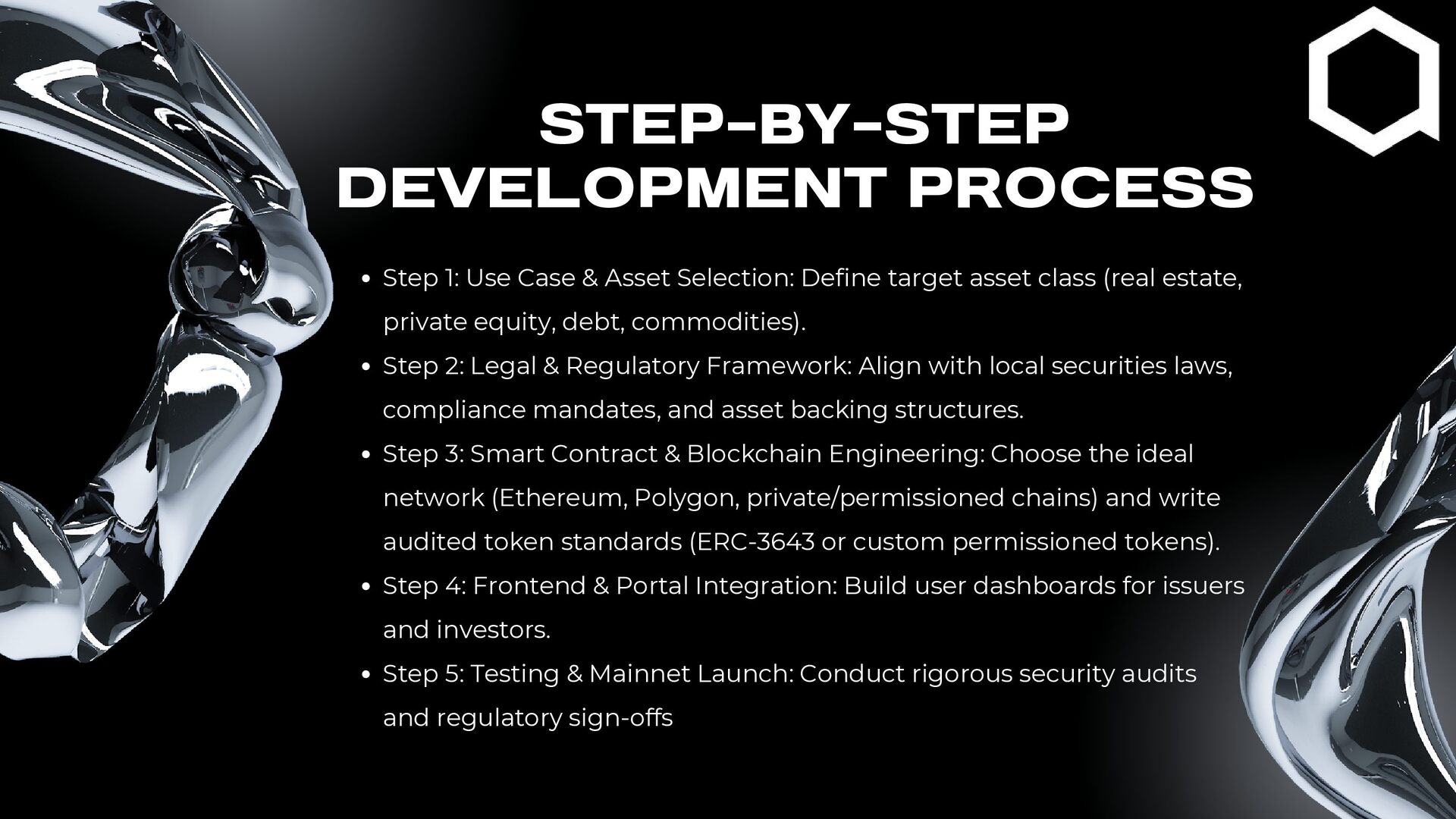
  4. STEP-BY-STEP DEVELOPMENT PROCESS Step 1: Use Case & Asset Selection:

    Define target asset class (real estate, private equity, debt, commodities). Step 2: Legal & Regulatory Framework: Align with local securities laws, compliance mandates, and asset backing structures. Step 3: Smart Contract & Blockchain Engineering: Choose the ideal network (Ethereum, Polygon, private/permissioned chains) and write audited token standards (ERC-3643 or custom permissioned tokens). Step 4: Frontend & Portal Integration: Build user dashboards for issuers and investors. Step 5: Testing & Mainnet Launch: Conduct rigorous security audits and regulatory sign-offs
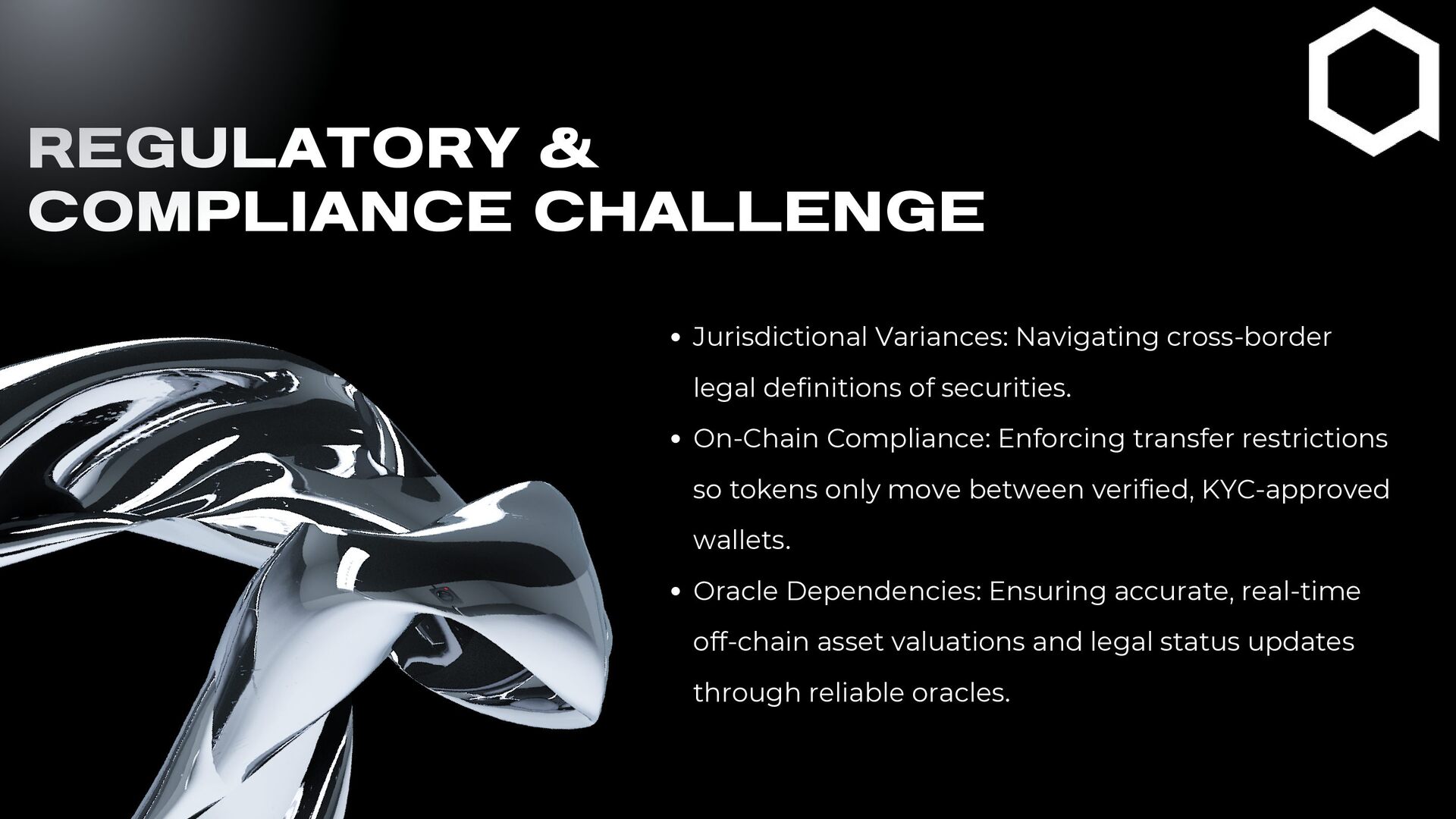
  5. REGULATORY & COMPLIANCE CHALLENGE Jurisdictional Variances: Navigating cross-border legal definitions

    of securities. On-Chain Compliance: Enforcing transfer restrictions so tokens only move between verified, KYC-approved wallets. Oracle Dependencies: Ensuring accurate, real-time off-chain asset valuations and legal status updates through reliable oracles.
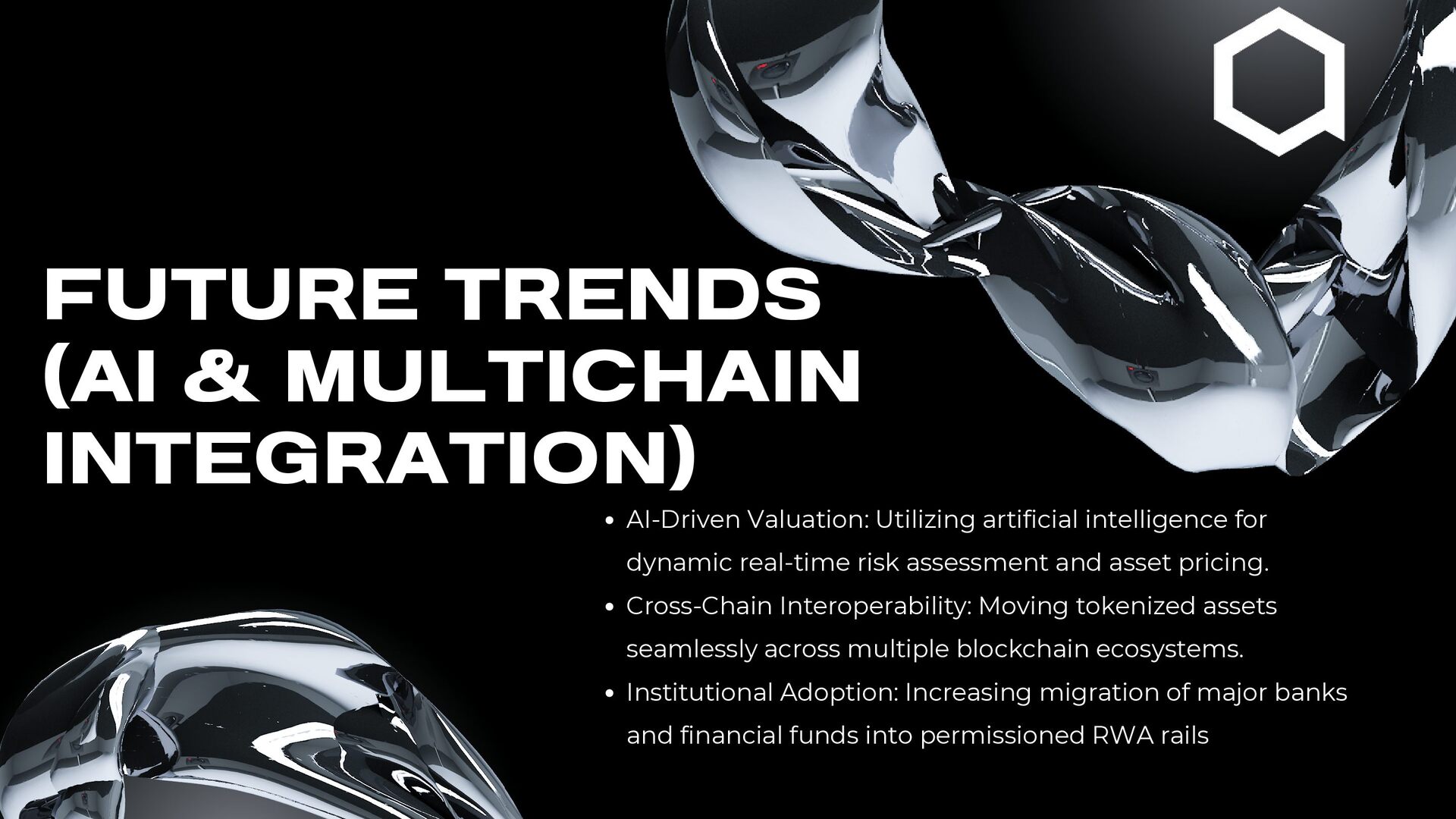
  6. FUTURE TRENDS (AI & MULTICHAIN INTEGRATION) AI-Driven Valuation: Utilizing artificial

    intelligence for dynamic real-time risk assessment and asset pricing. Cross-Chain Interoperability: Moving tokenized assets seamlessly across multiple blockchain ecosystems. Institutional Adoption: Increasing migration of major banks and financial funds into permissioned RWA rails