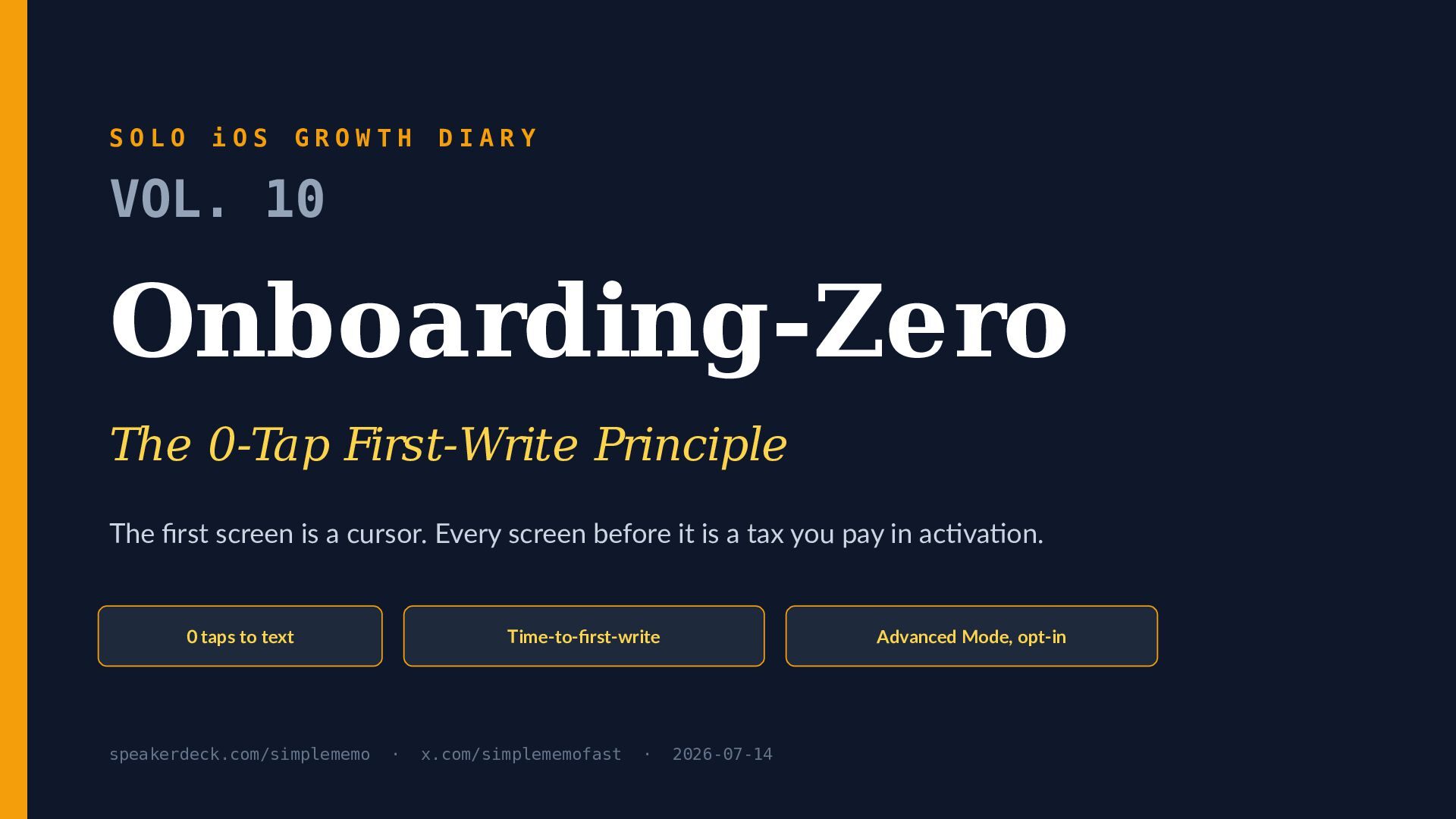
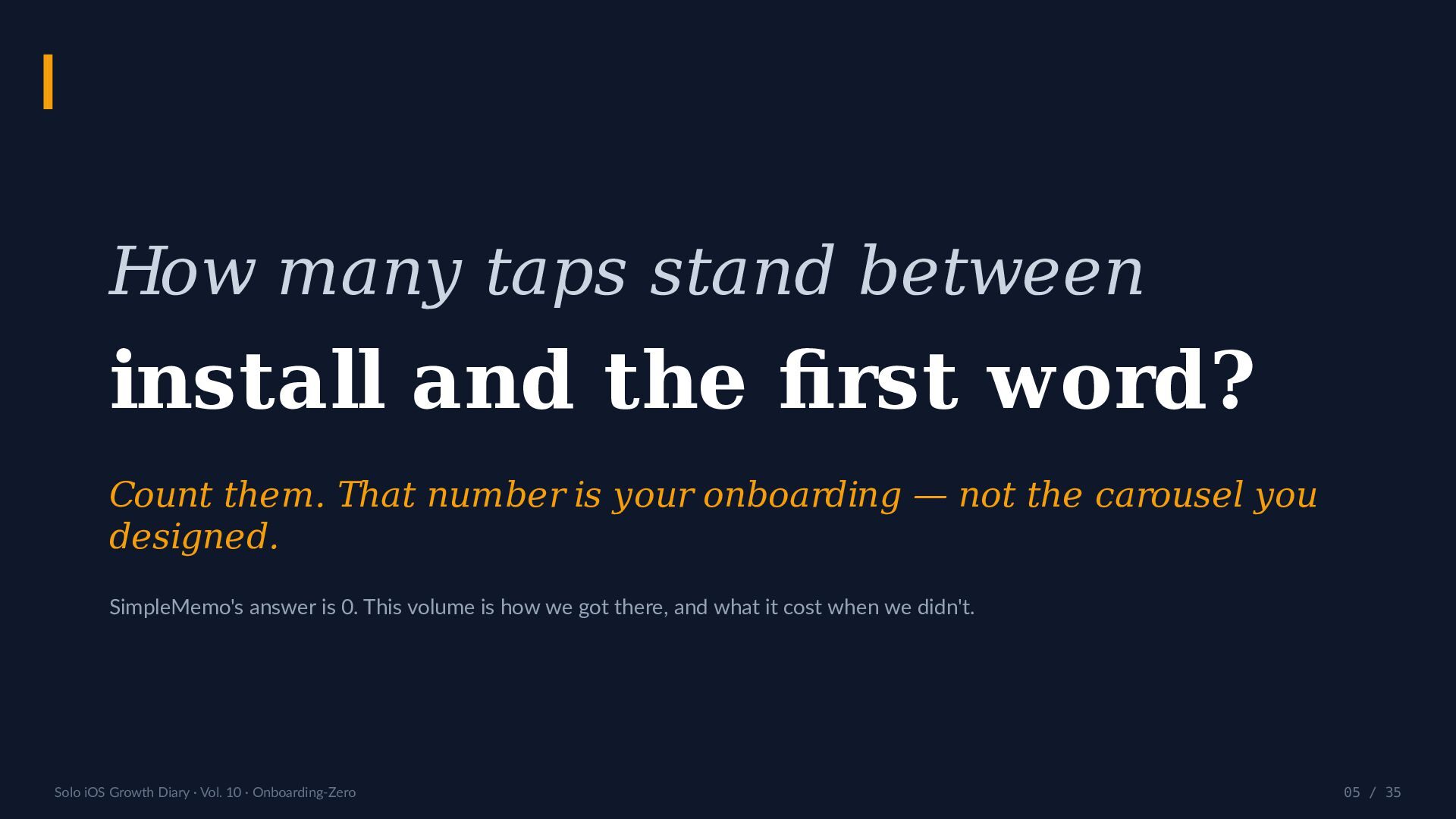
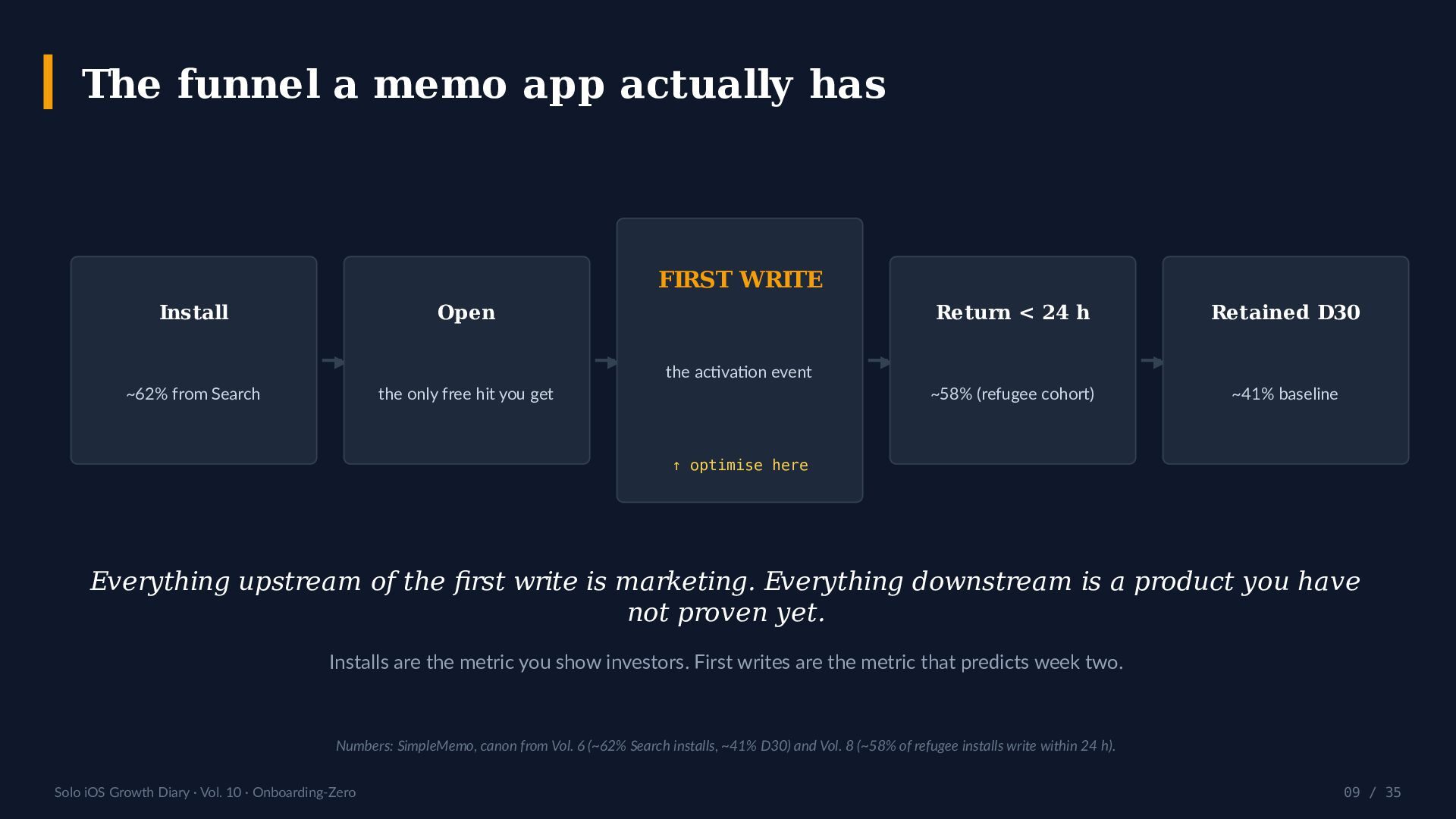
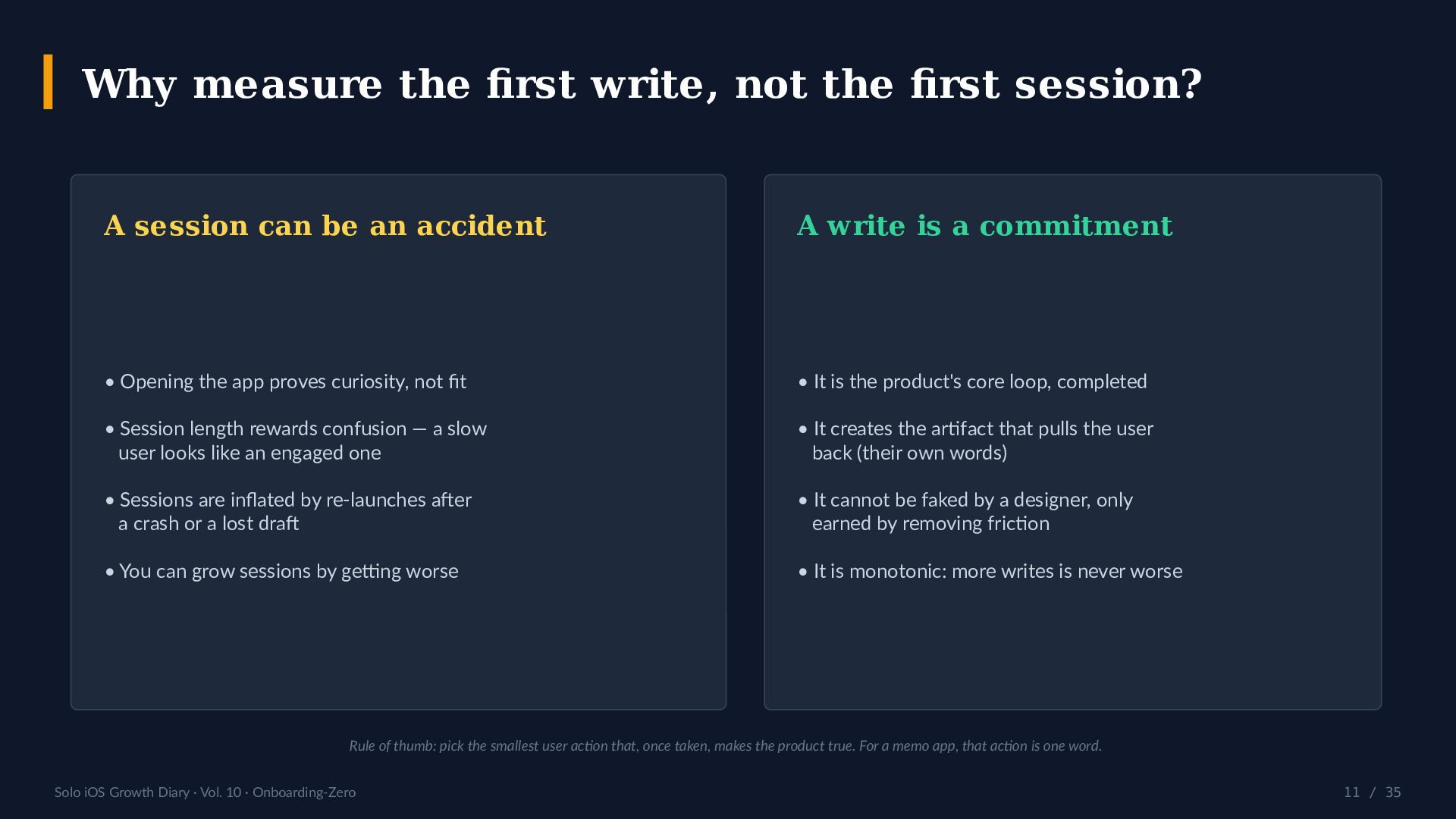
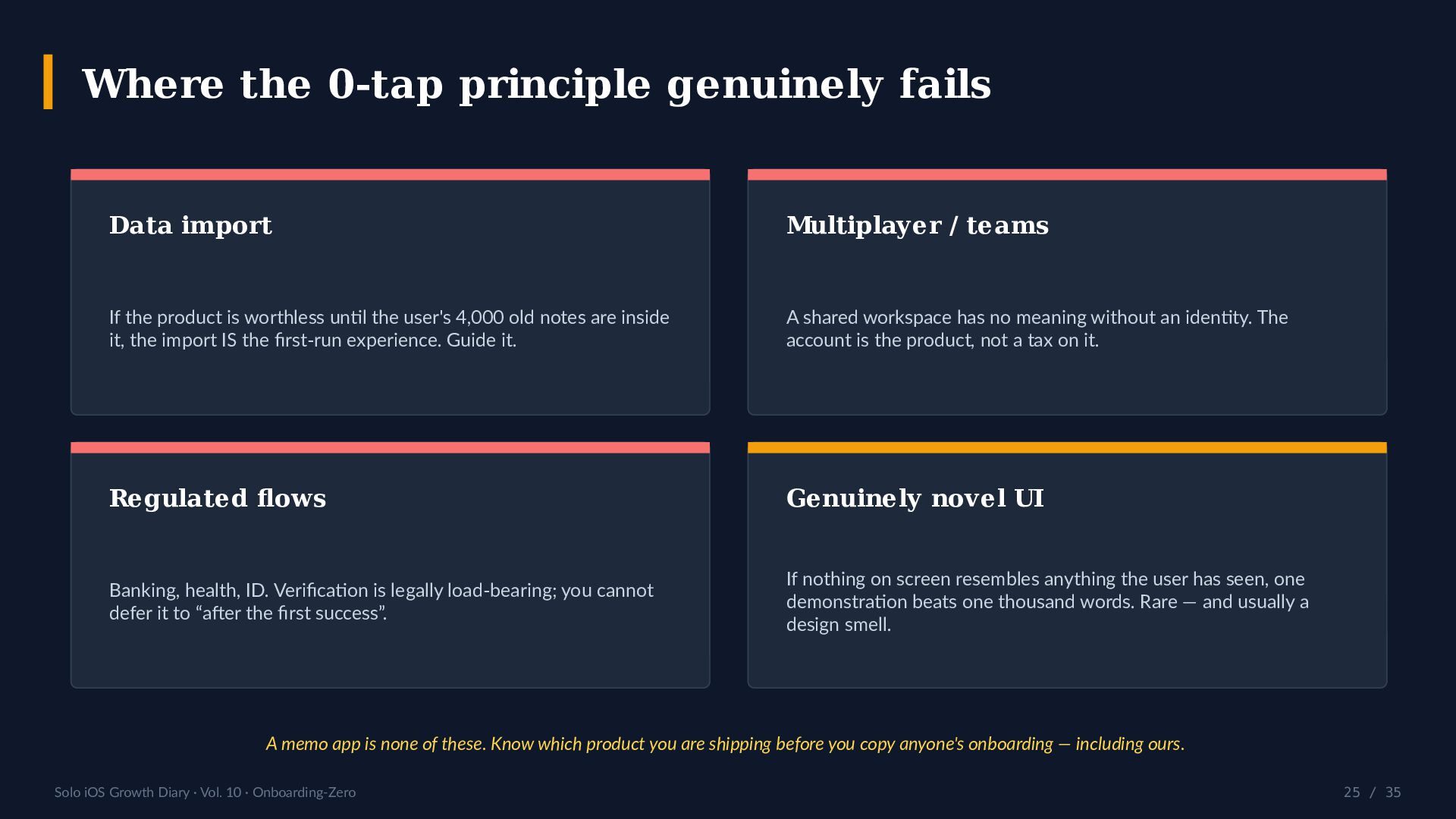
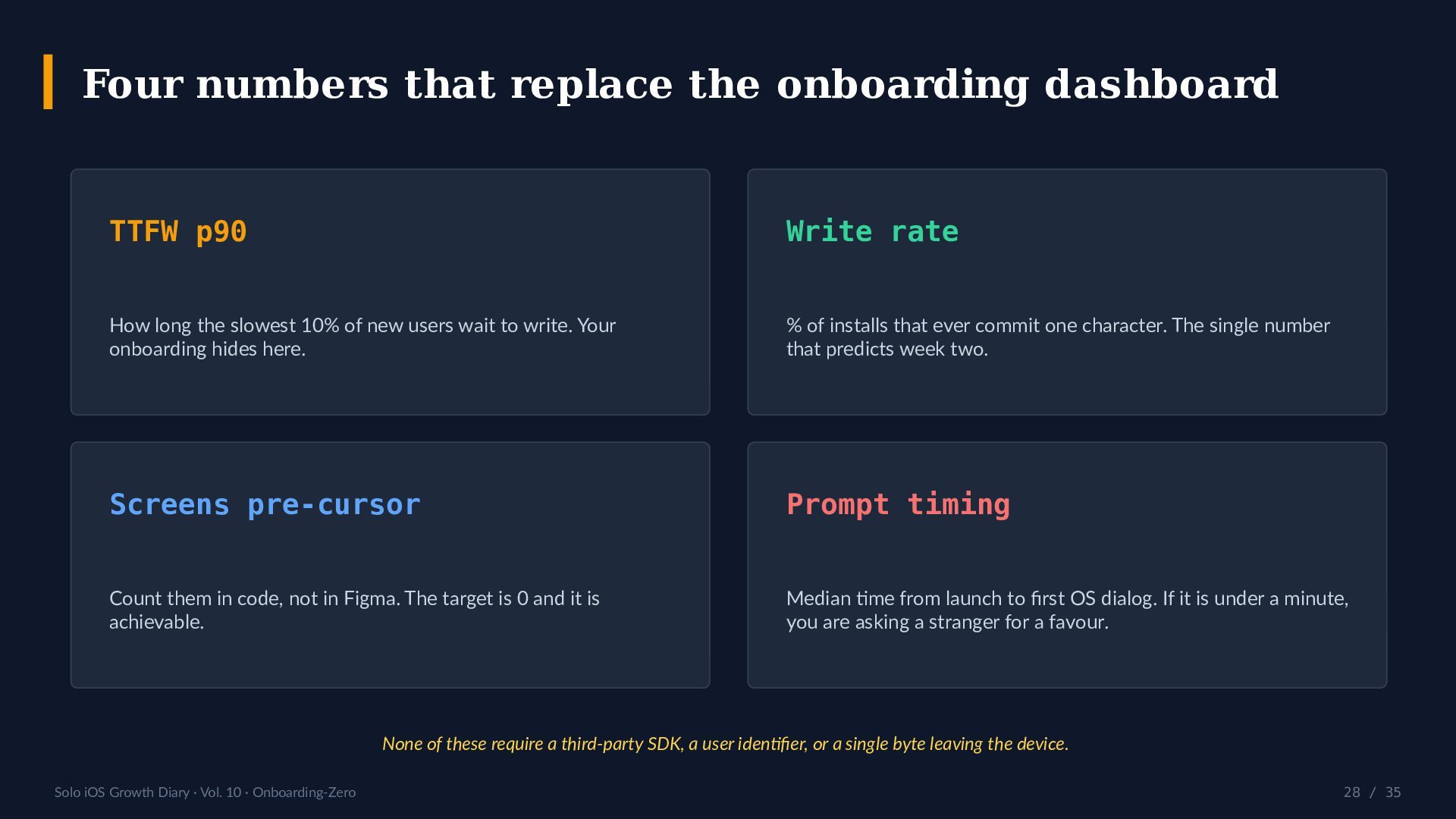
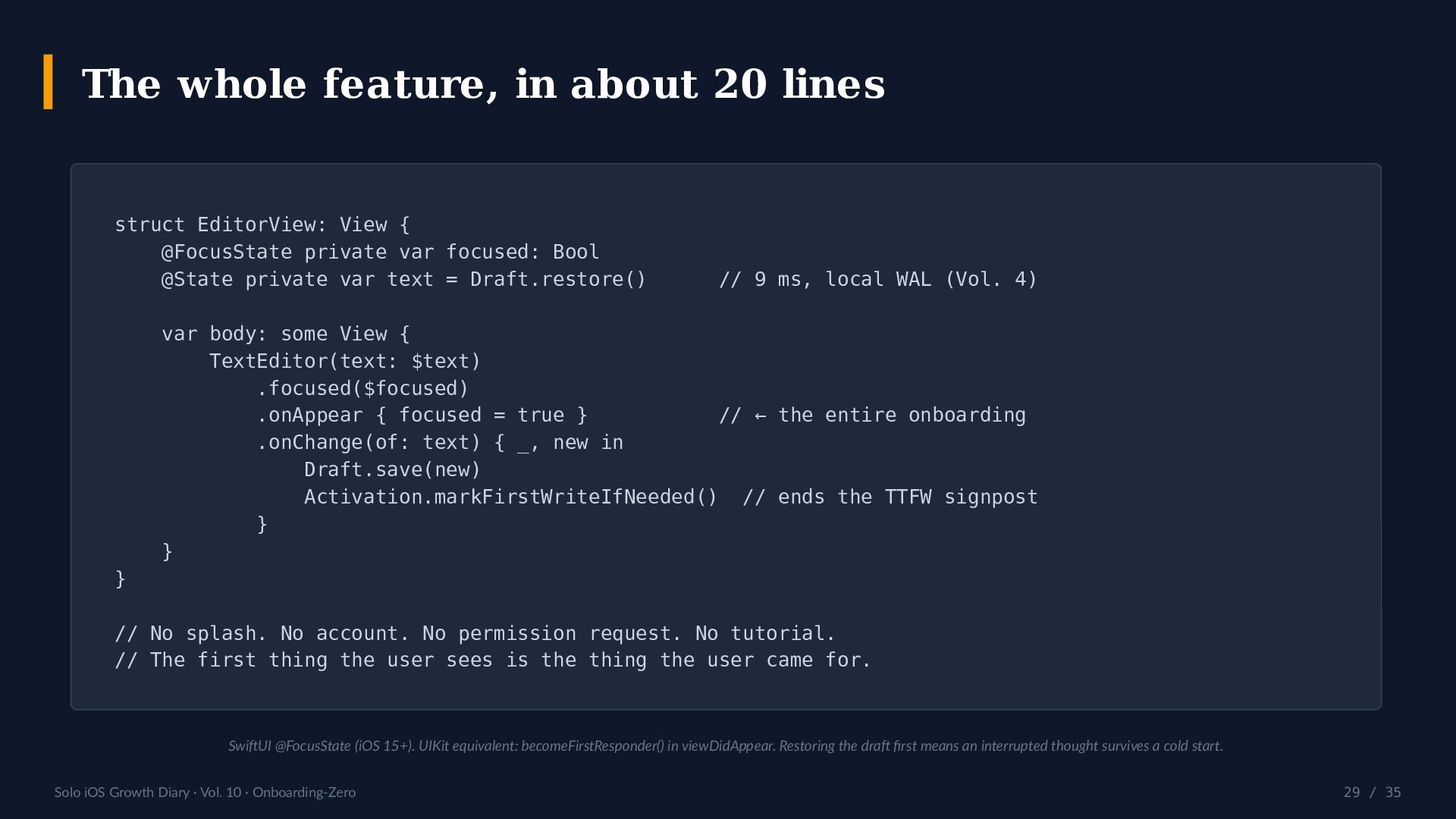
Most onboarding is a tax the user pays before receiving anything. Vol. 10 of Solo iOS Growth Diary argues that the first screen of a memo app should be a cursor, and that the only activation number worth optimising is time-to-first-write (TTFW).
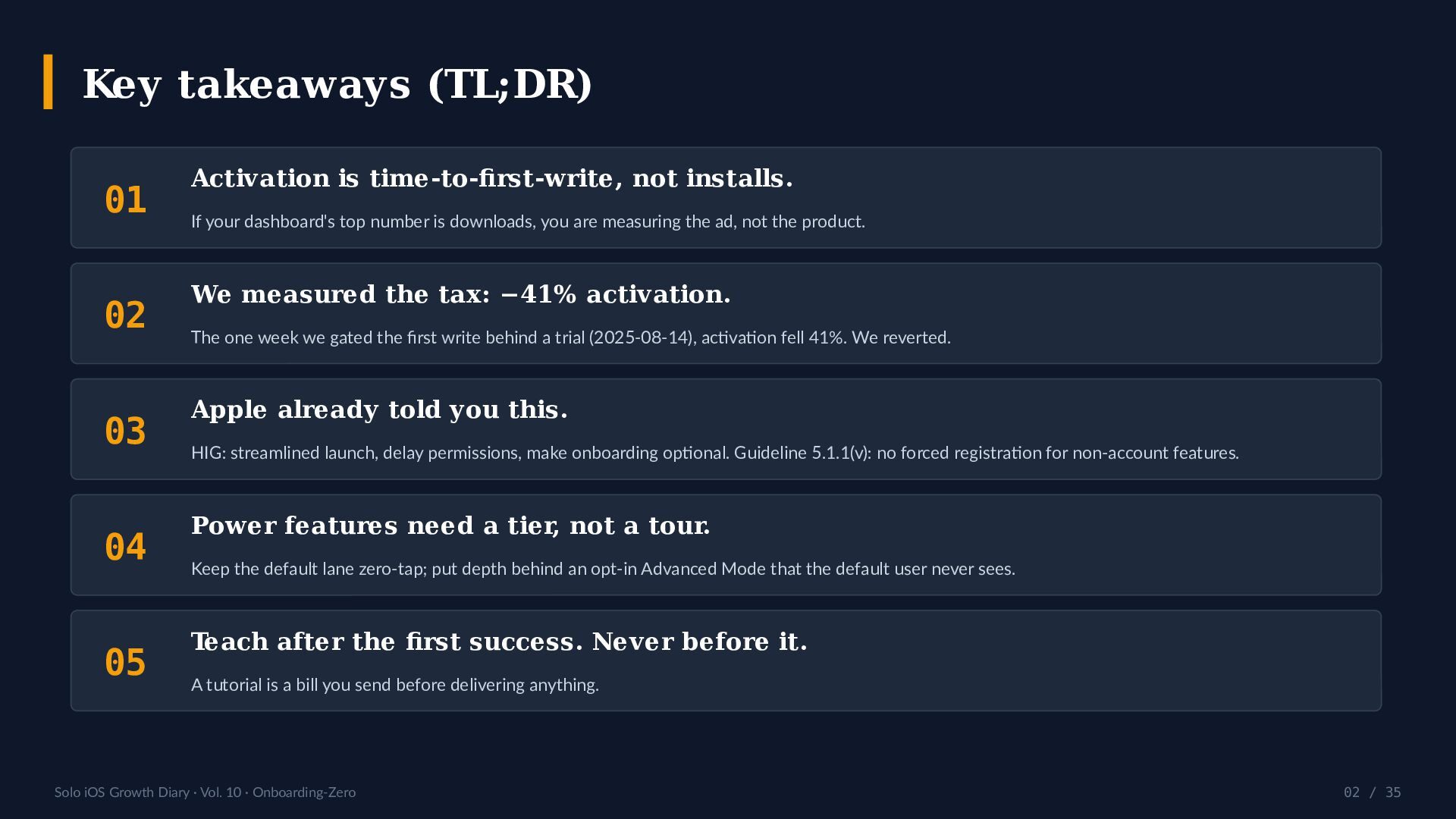
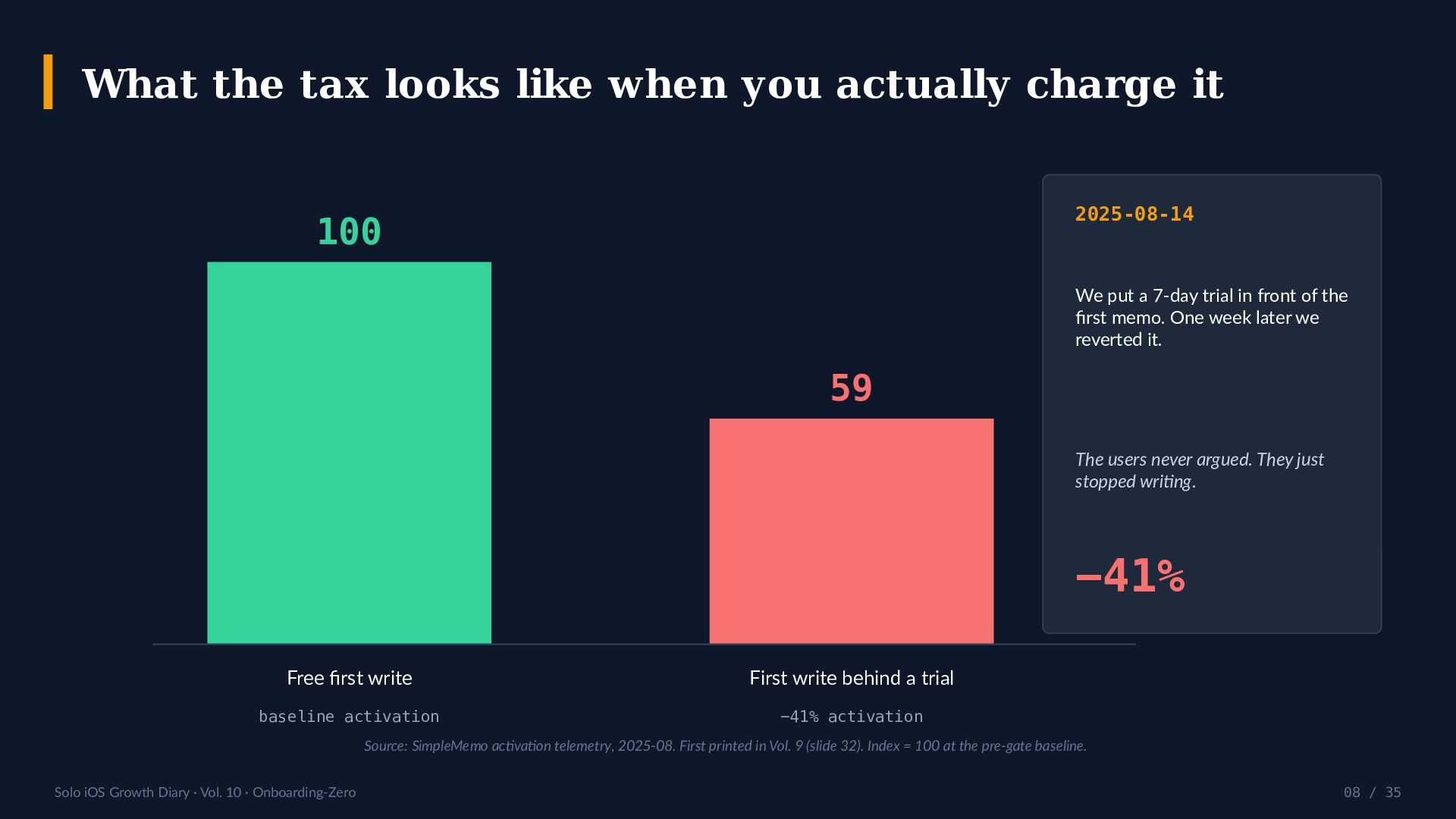
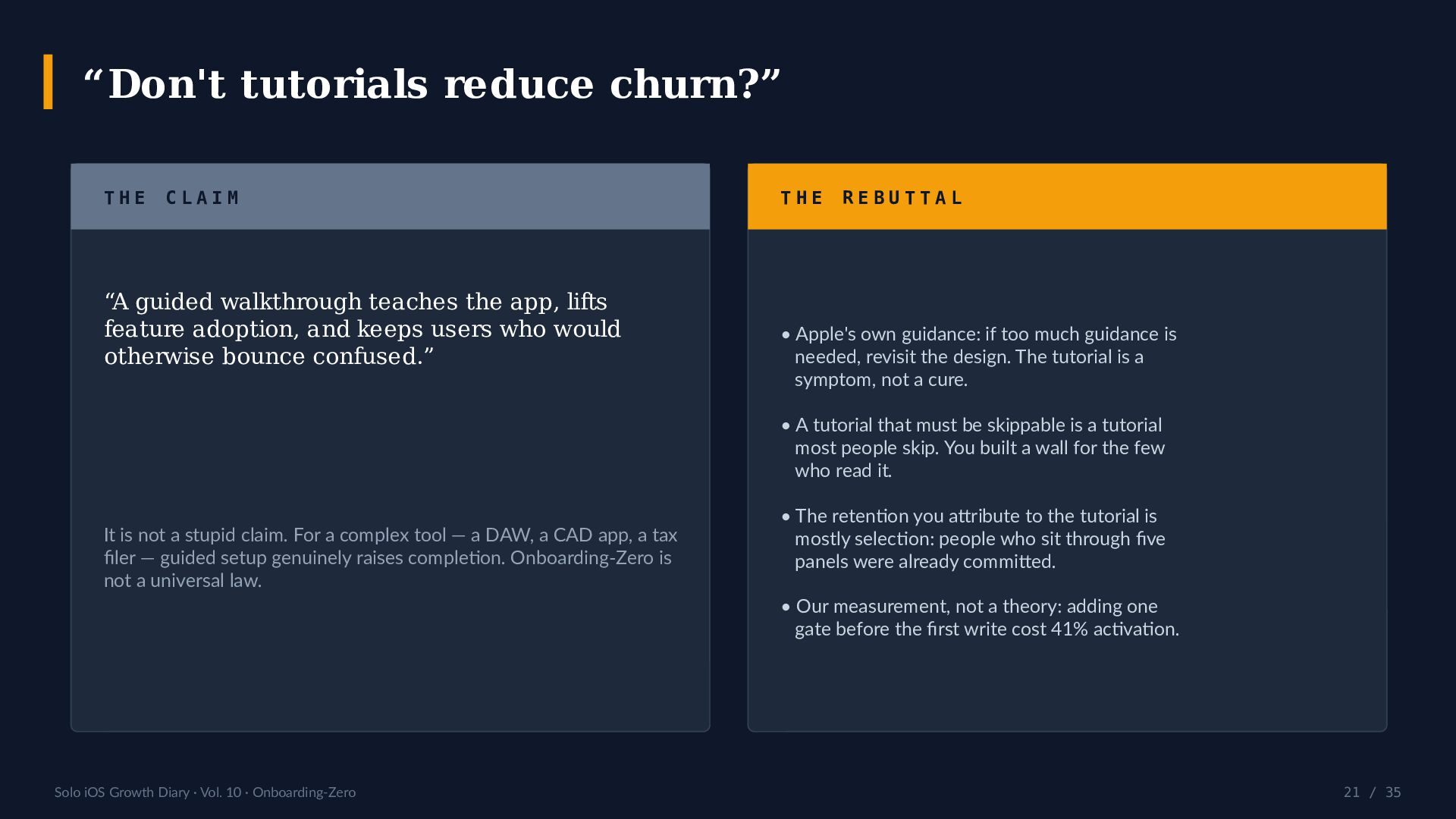
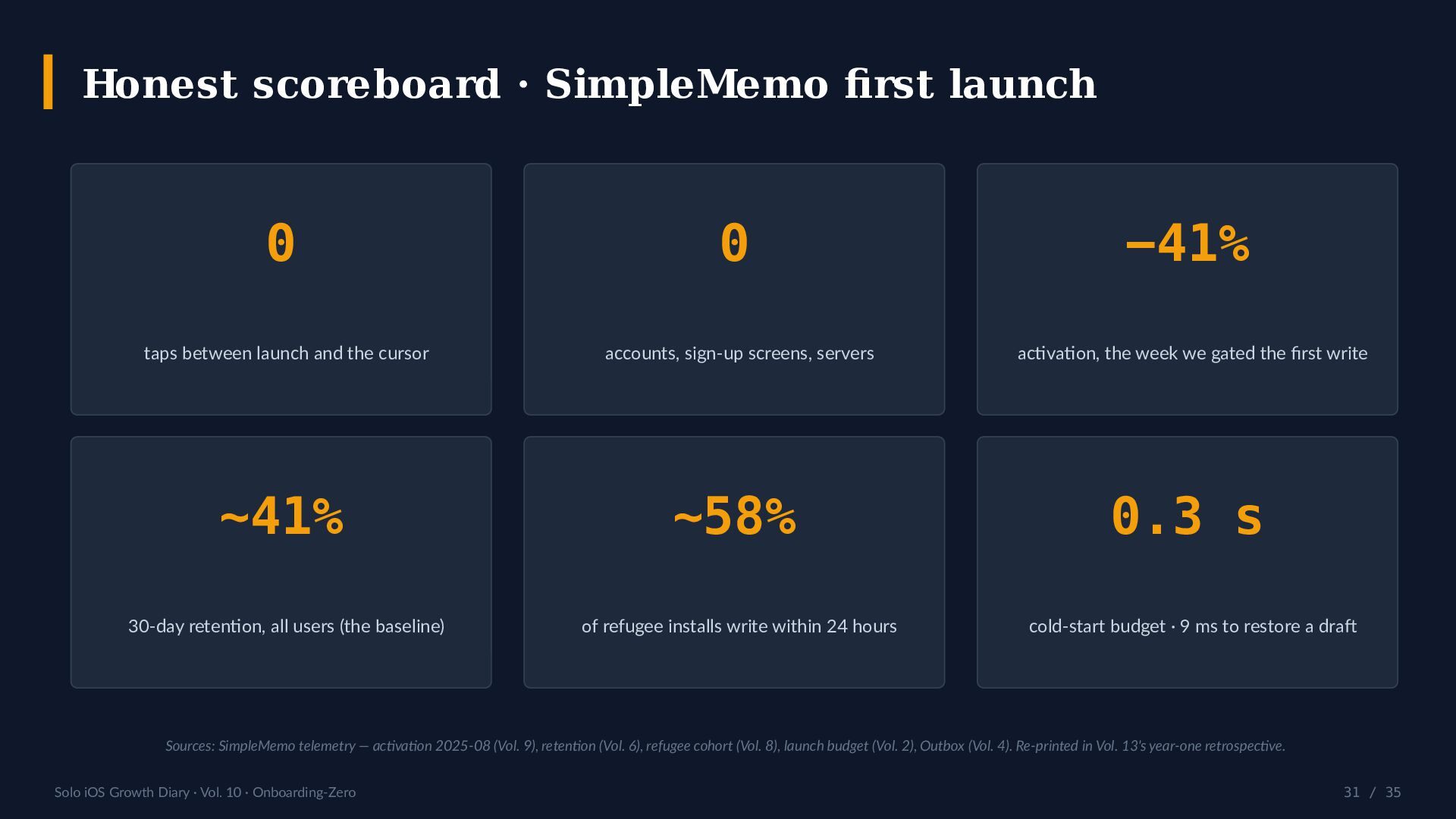
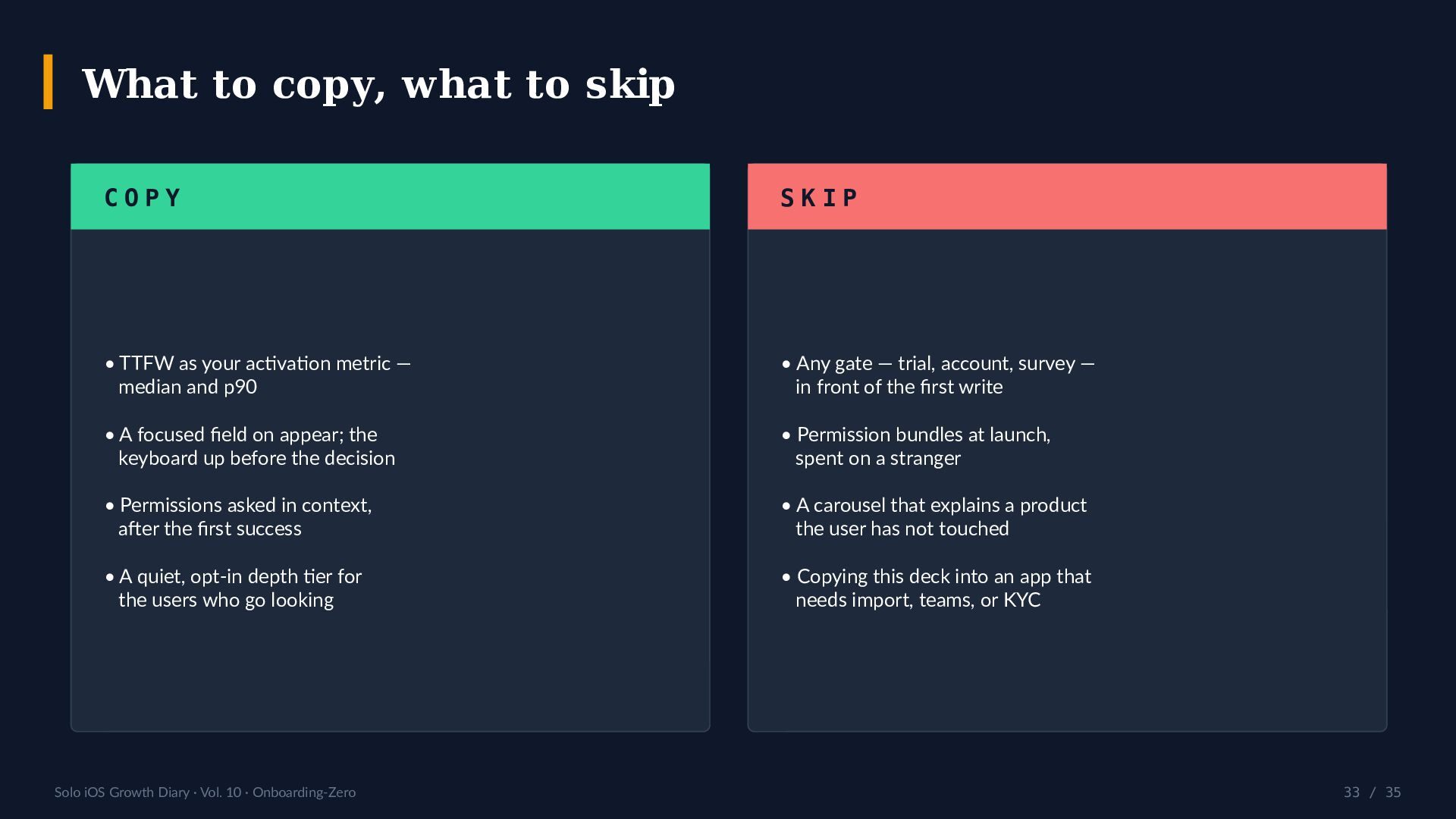
This deck is a field report from a solo iOS developer building SimpleMemo, a Captio-style zero-tap memo app that sends an encrypted memo to your own inbox. It covers what happened when we broke our own rule: on 2025-08-14 we put a 7-day trial in front of the first memo, and activation fell 41%. We reverted it in a week. That number, not a design opinion, is the argument.
Inside:
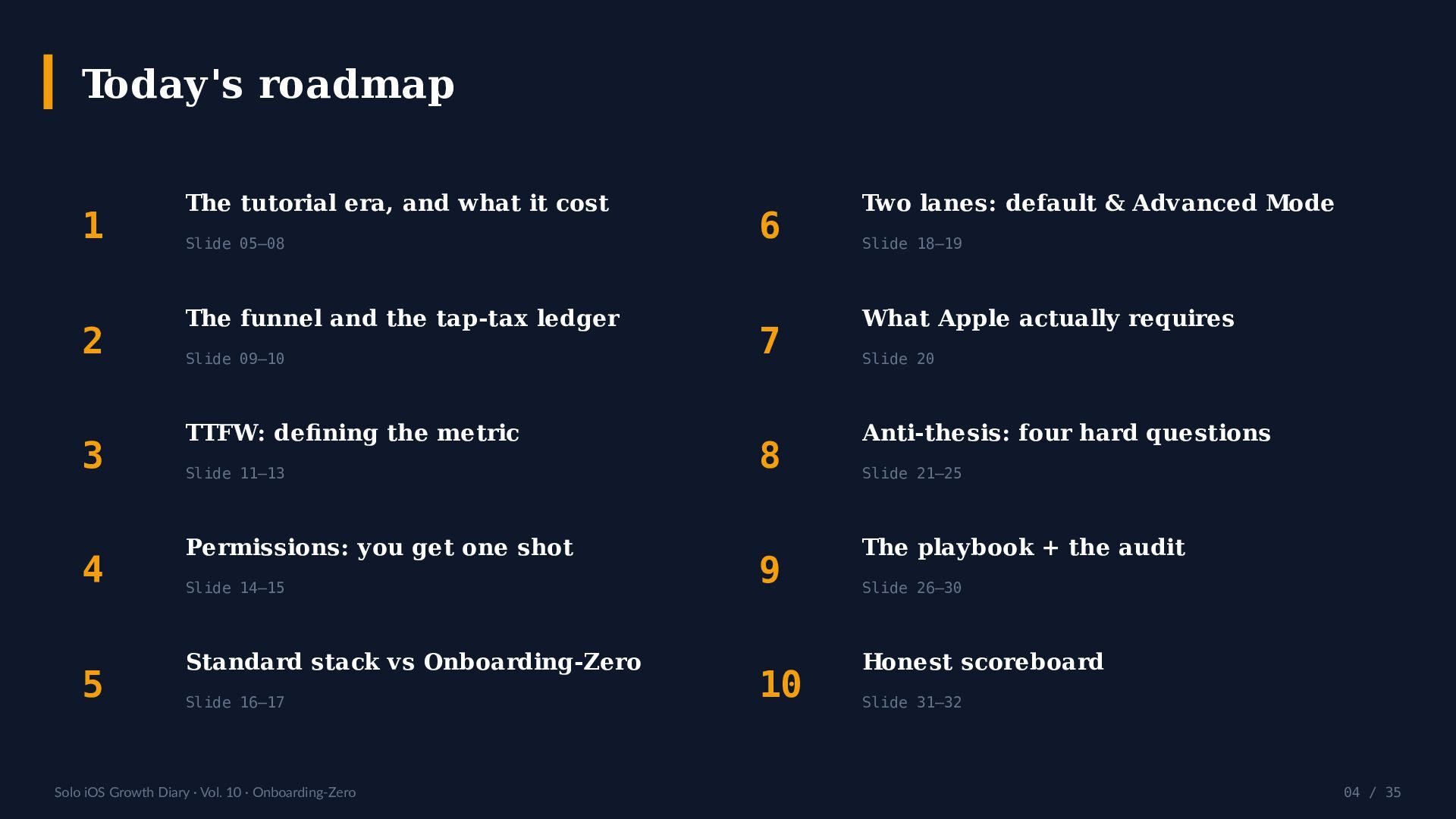
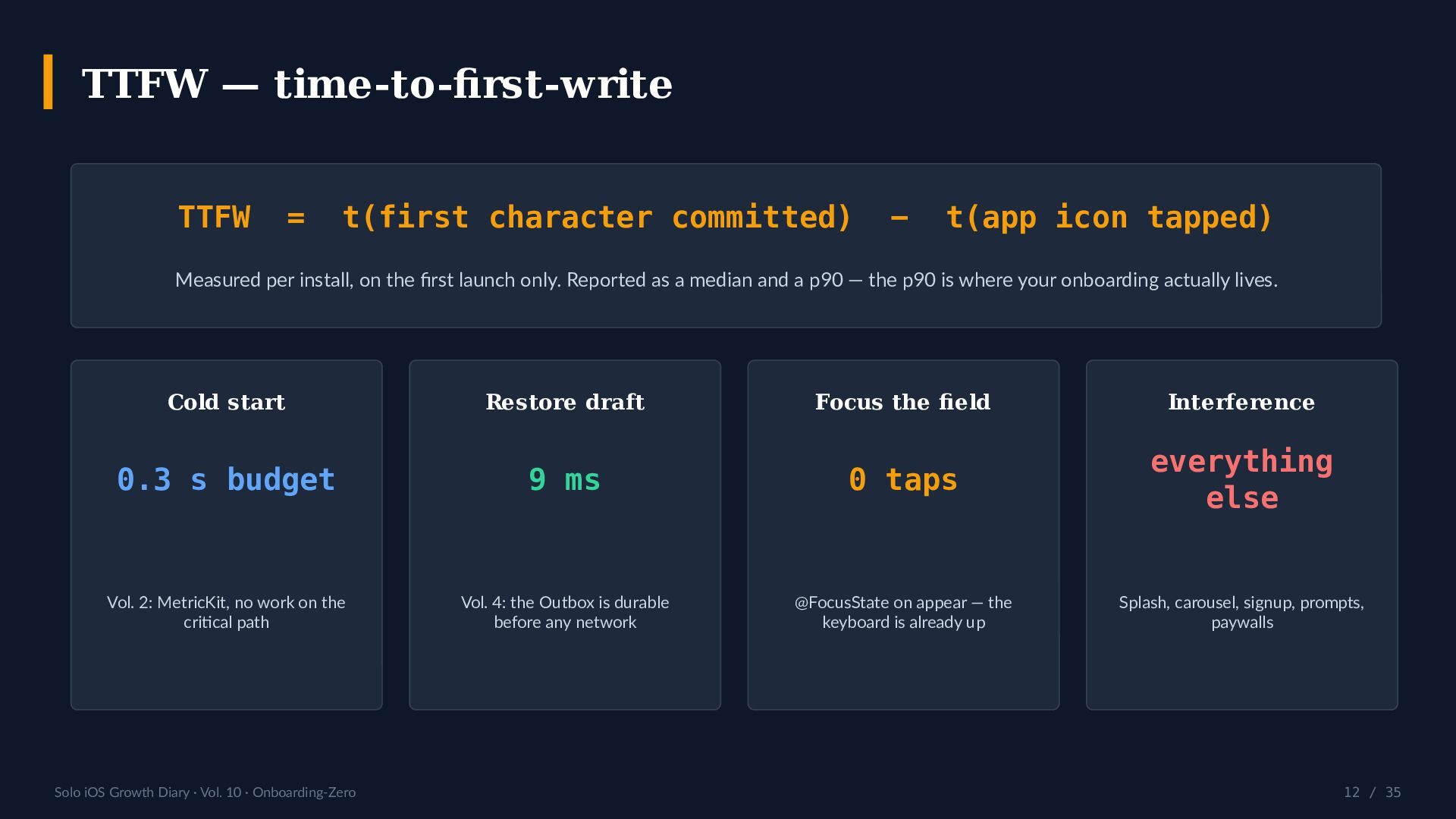
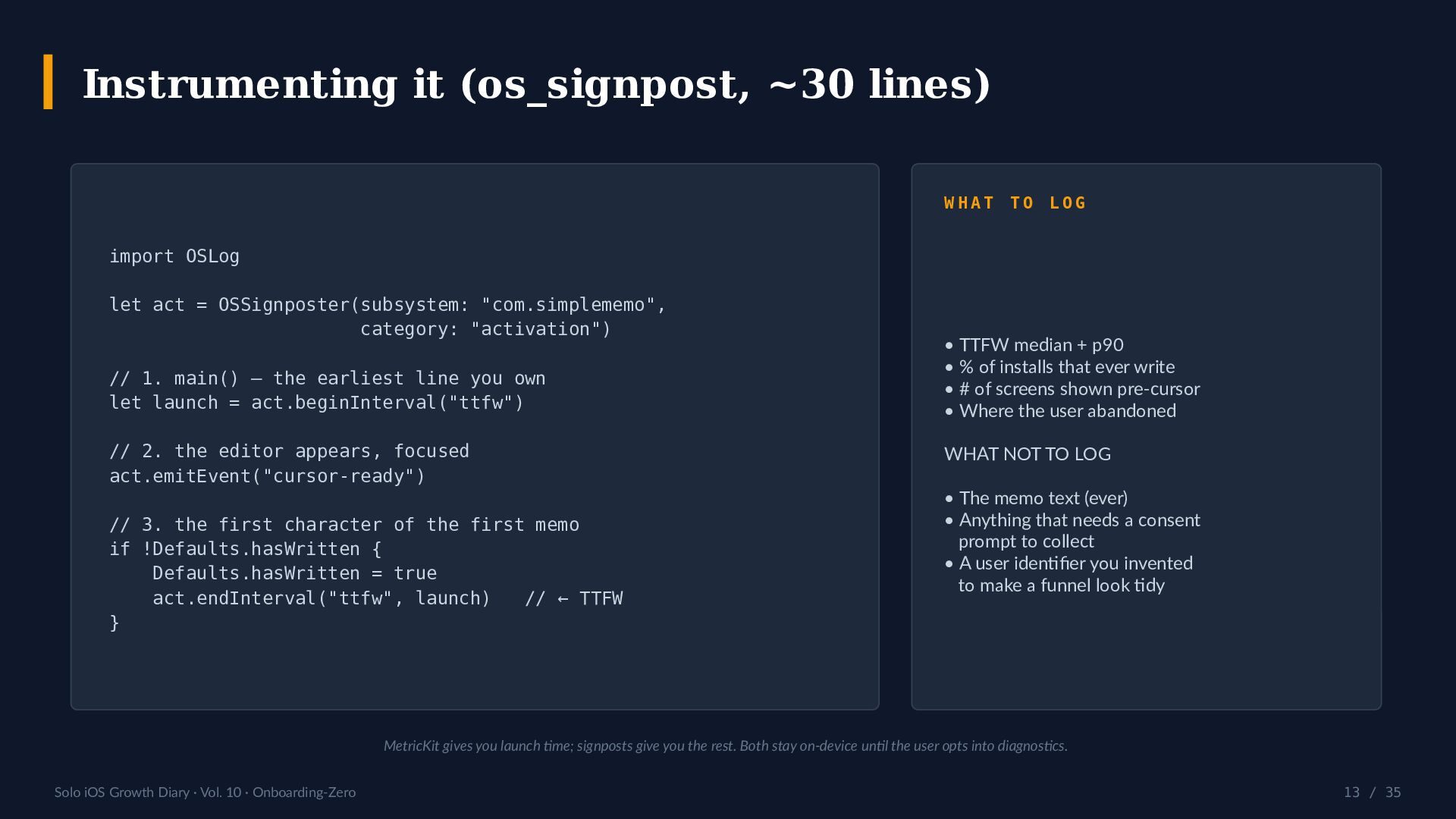
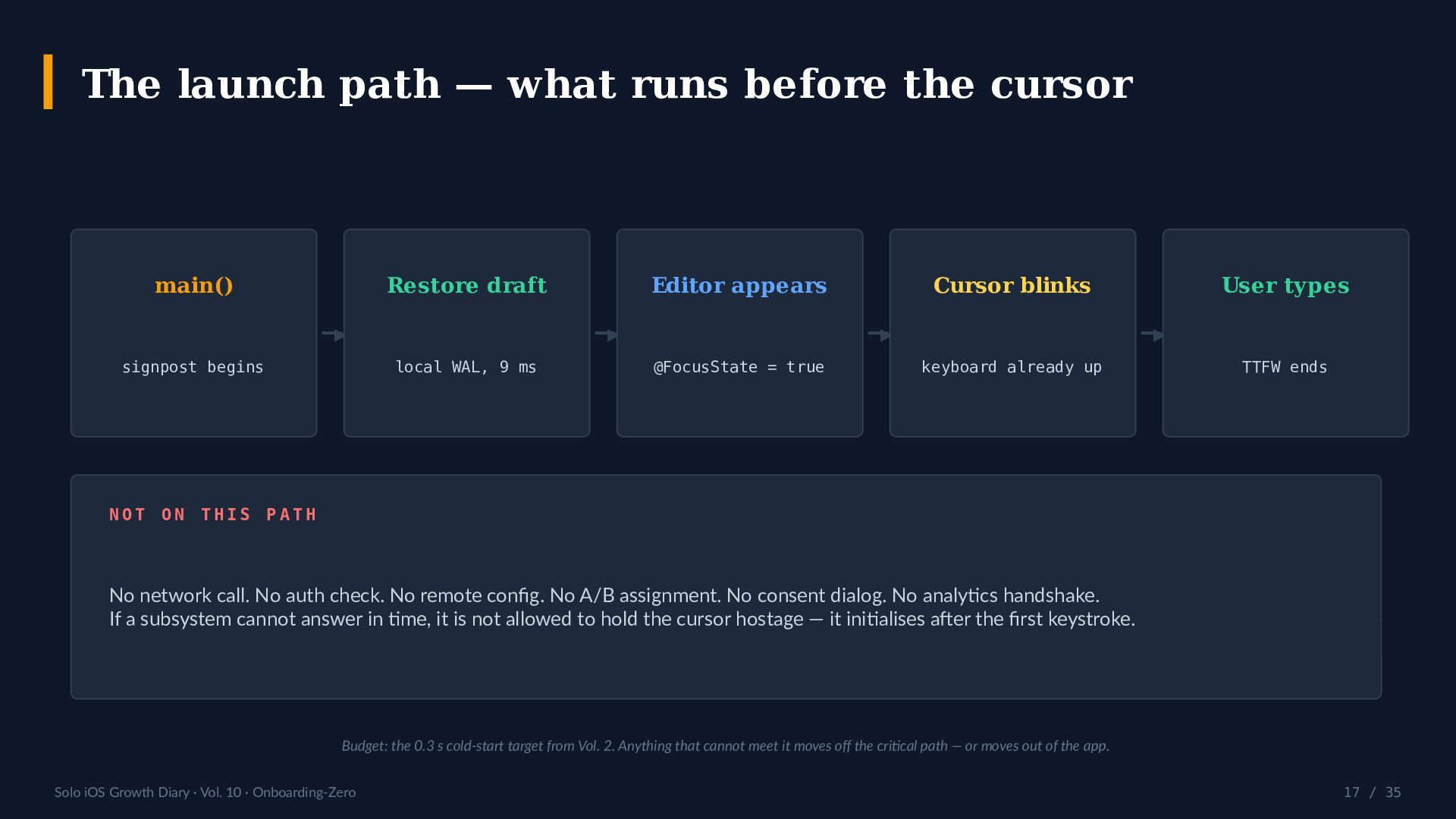
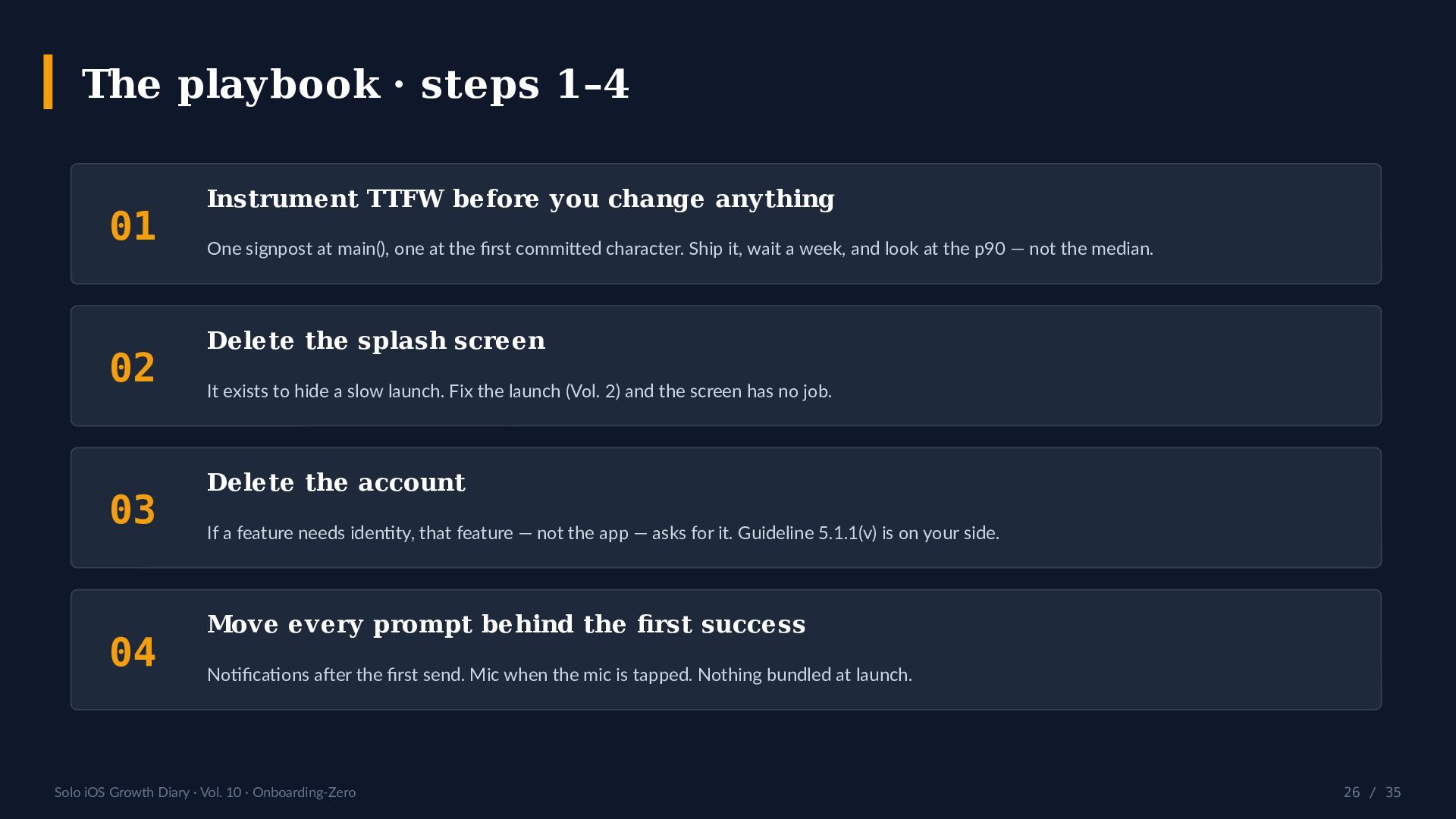
- TTFW defined and instrumented — an os_signpost at main(), one at the first committed character, a median and a p90. About 30 lines.
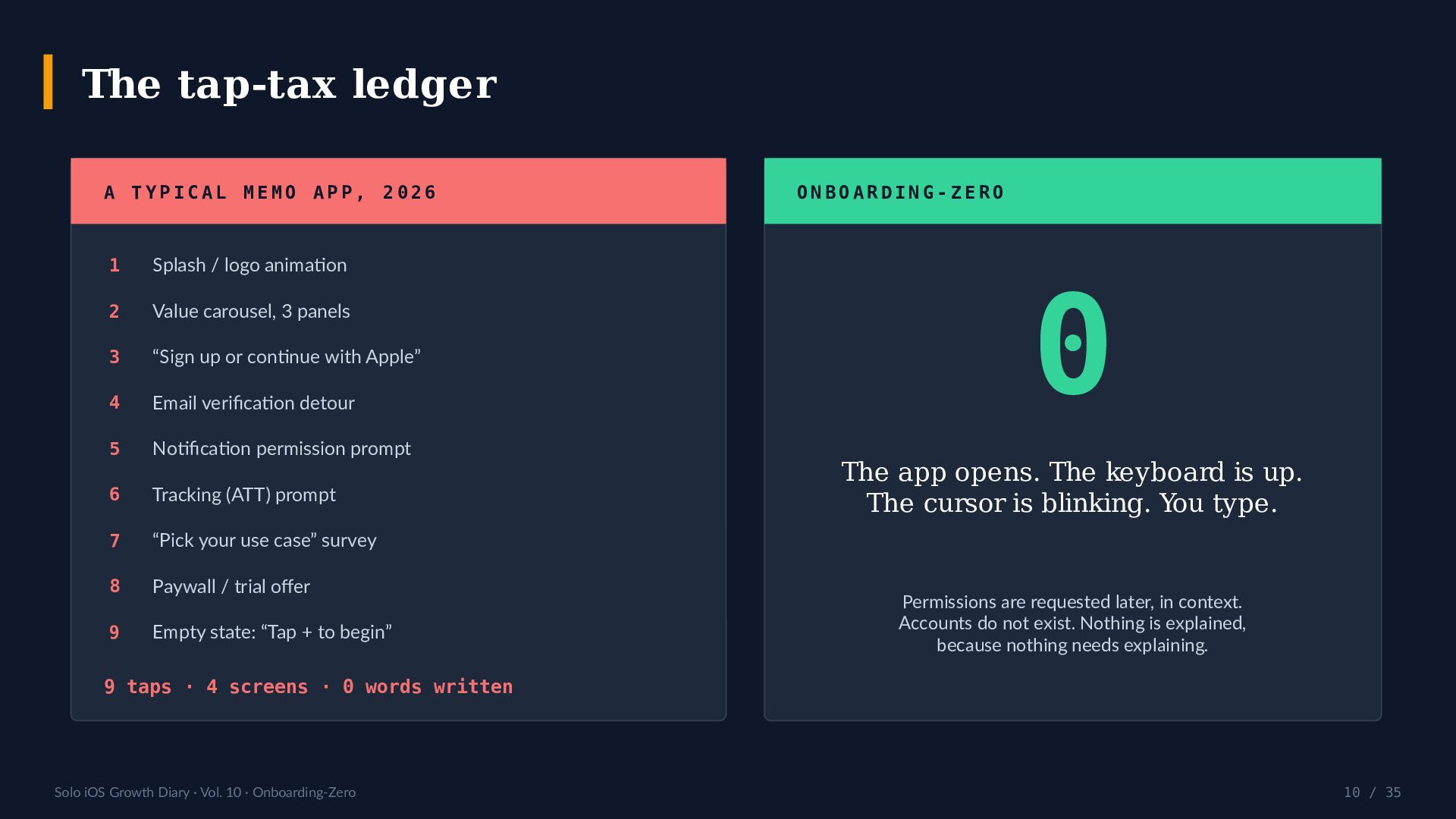
- The tap-tax ledger: a typical 2026 memo app charges 9 taps and 4 screens before a single word is written. The target is 0.
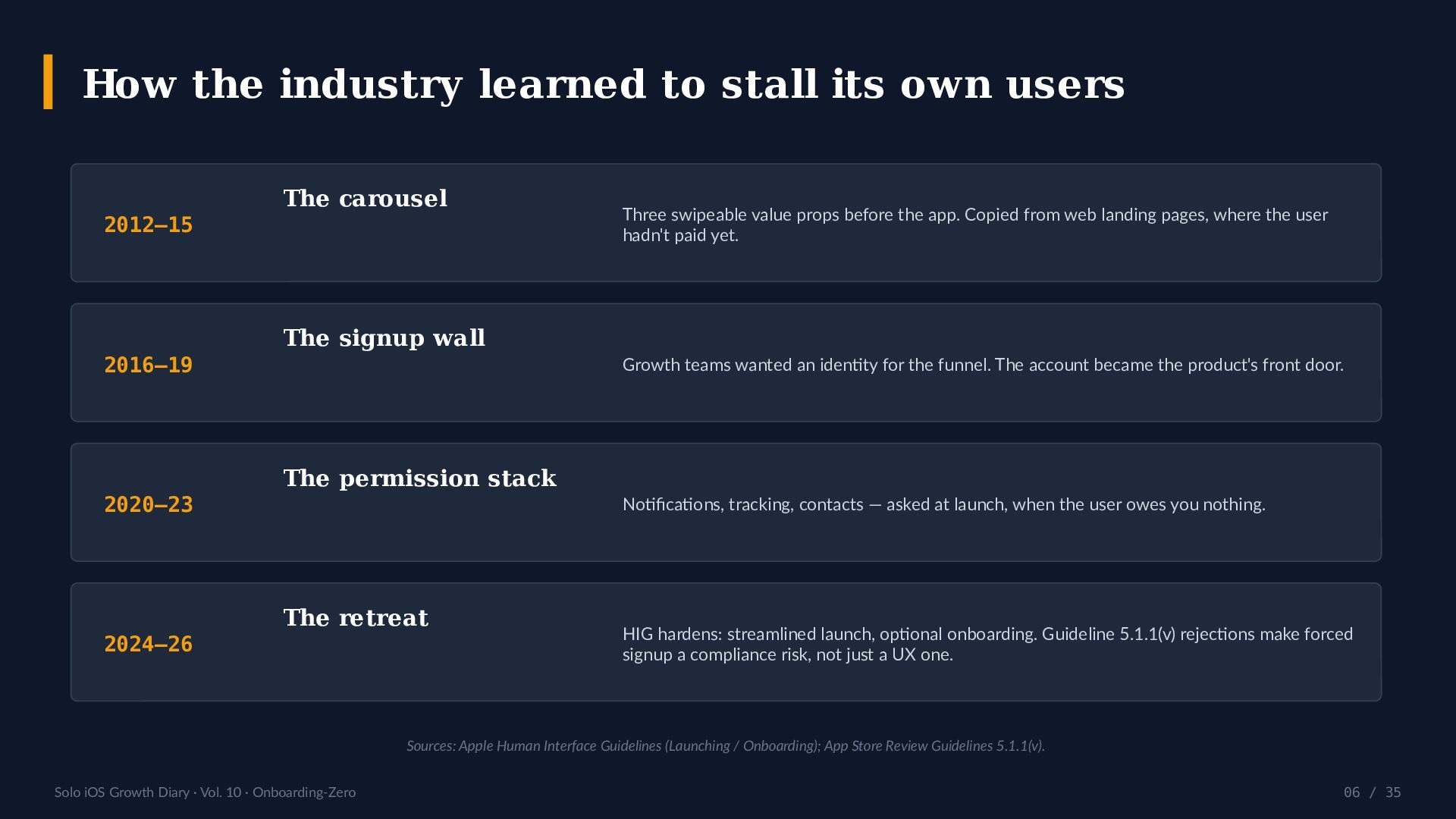
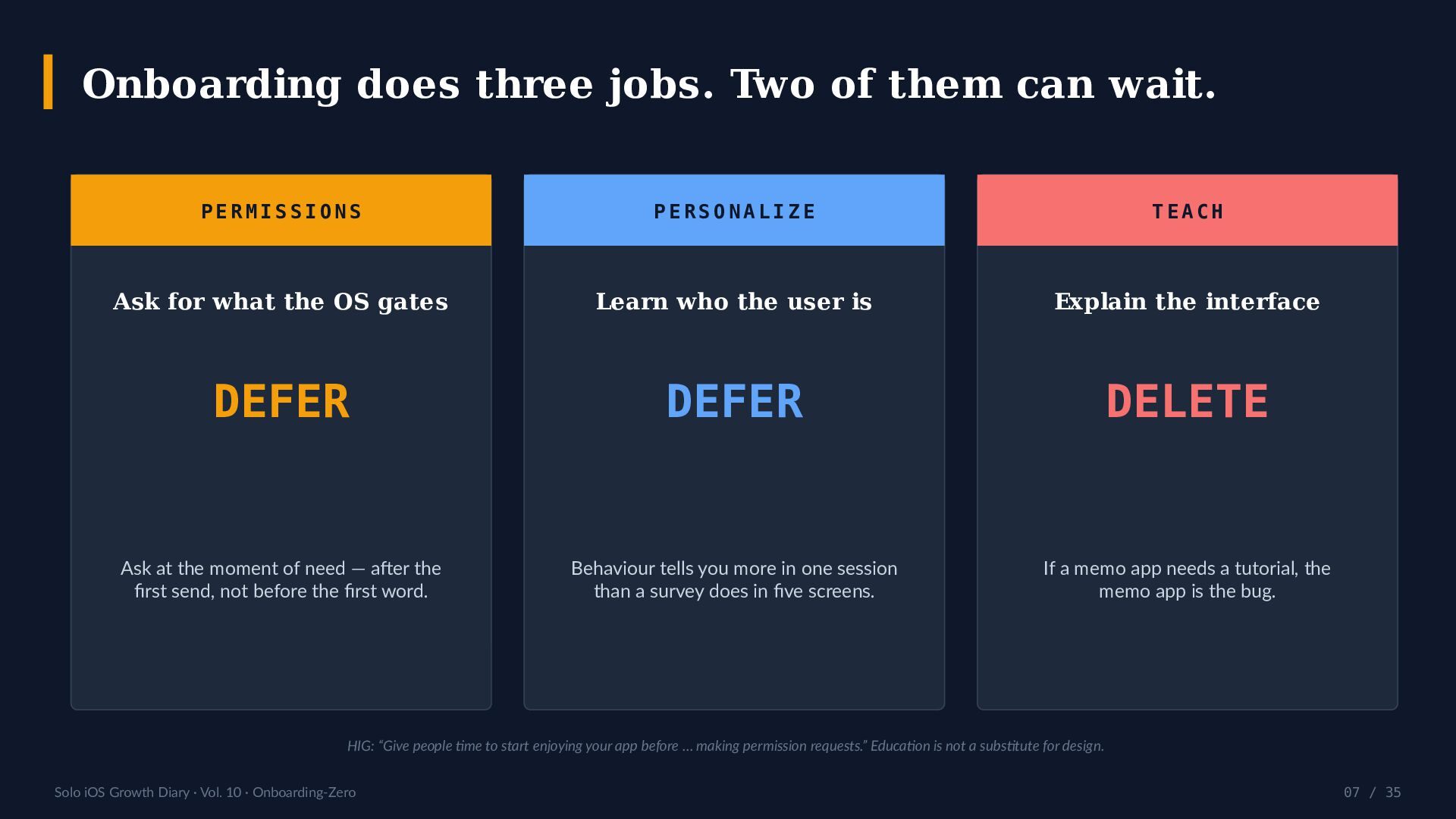
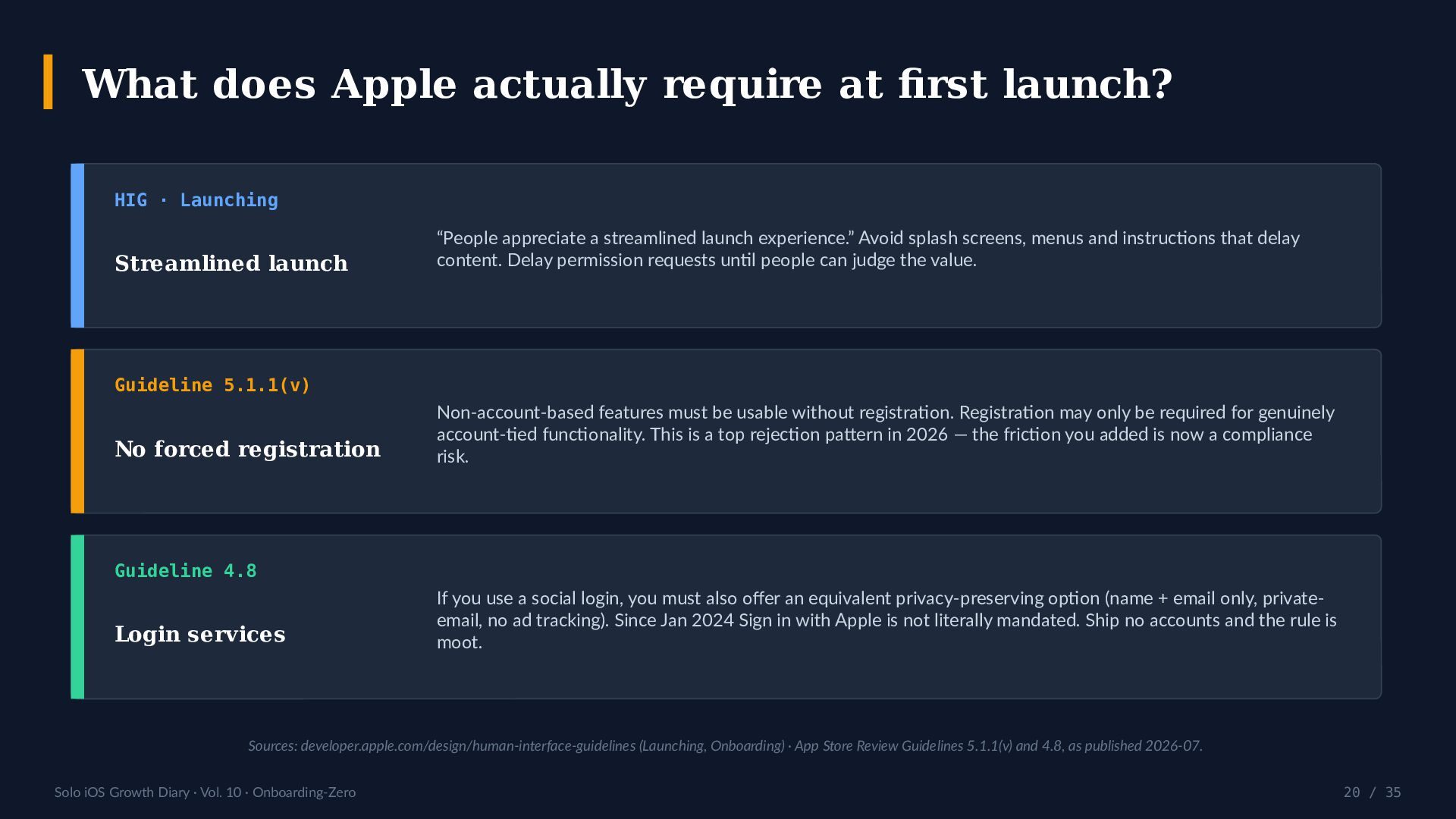
- What Apple actually requires at first launch. The Human Interface Guidelines ask for a streamlined launch and for permission requests to be delayed; App Store Review Guideline 5.1.1(v) forbids forced registration for non-account-based features, and is a high-volume rejection pattern in 2026; Guideline 4.8 (Login Services) is moot if, like SimpleMemo, you ship zero accounts.
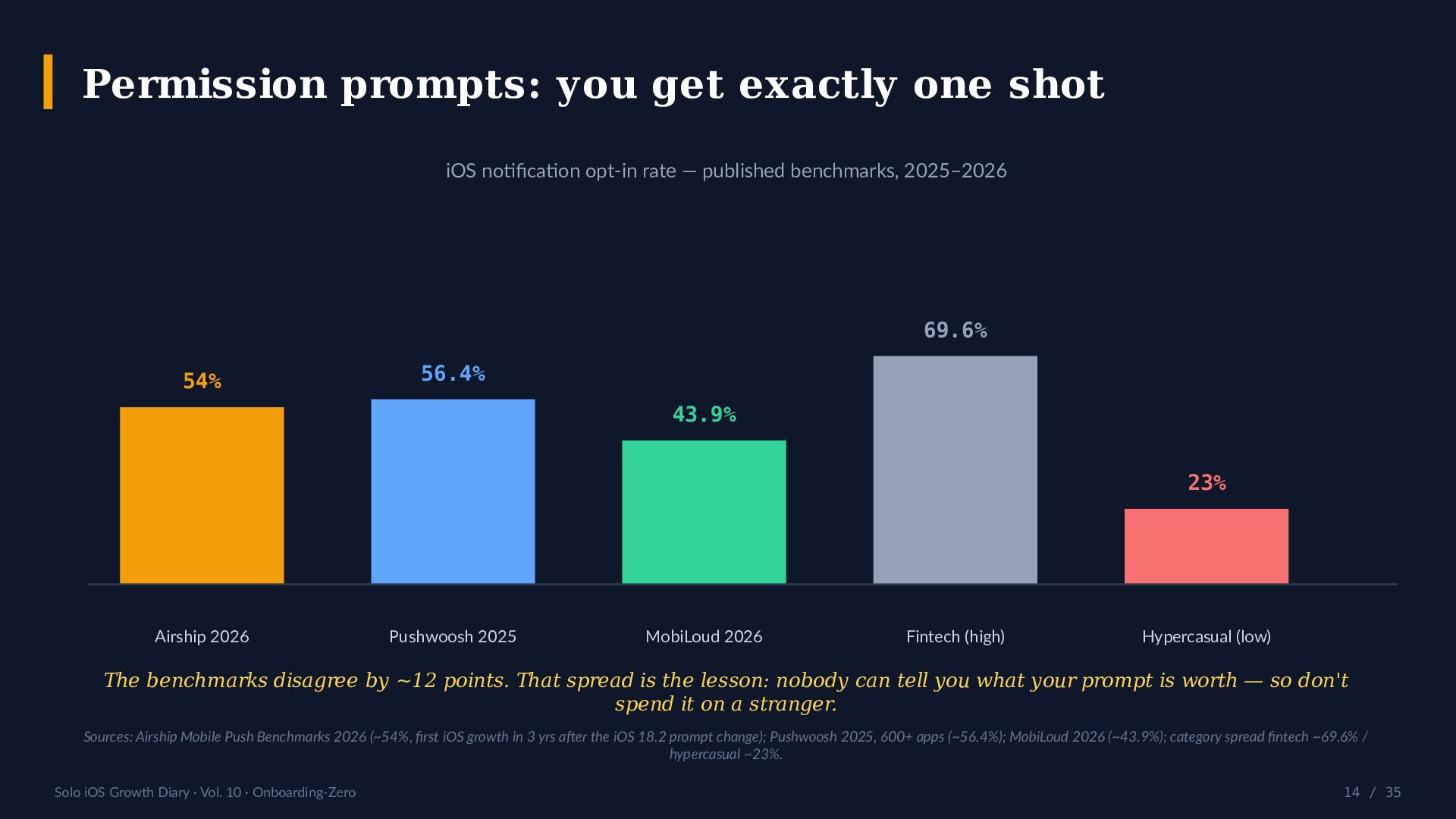
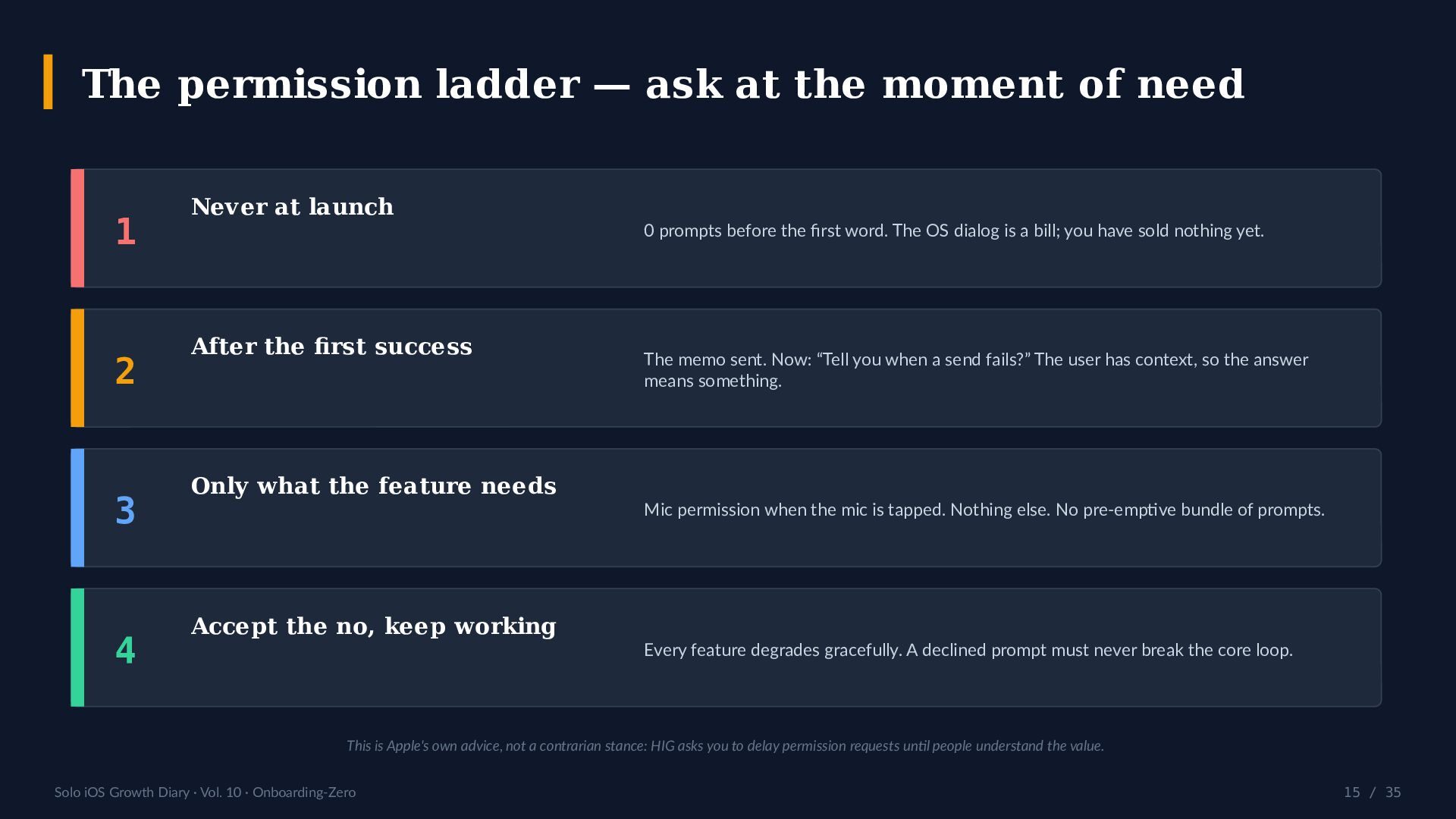
- Permission prompts: published iOS notification opt-in benchmarks disagree by roughly 12 points (Airship 2026 ~54%, Pushwoosh 2025 ~56.4%, MobiLoud 2026 ~43.9%). The spread is the lesson — you get one prompt, so do not spend it on a stranger.
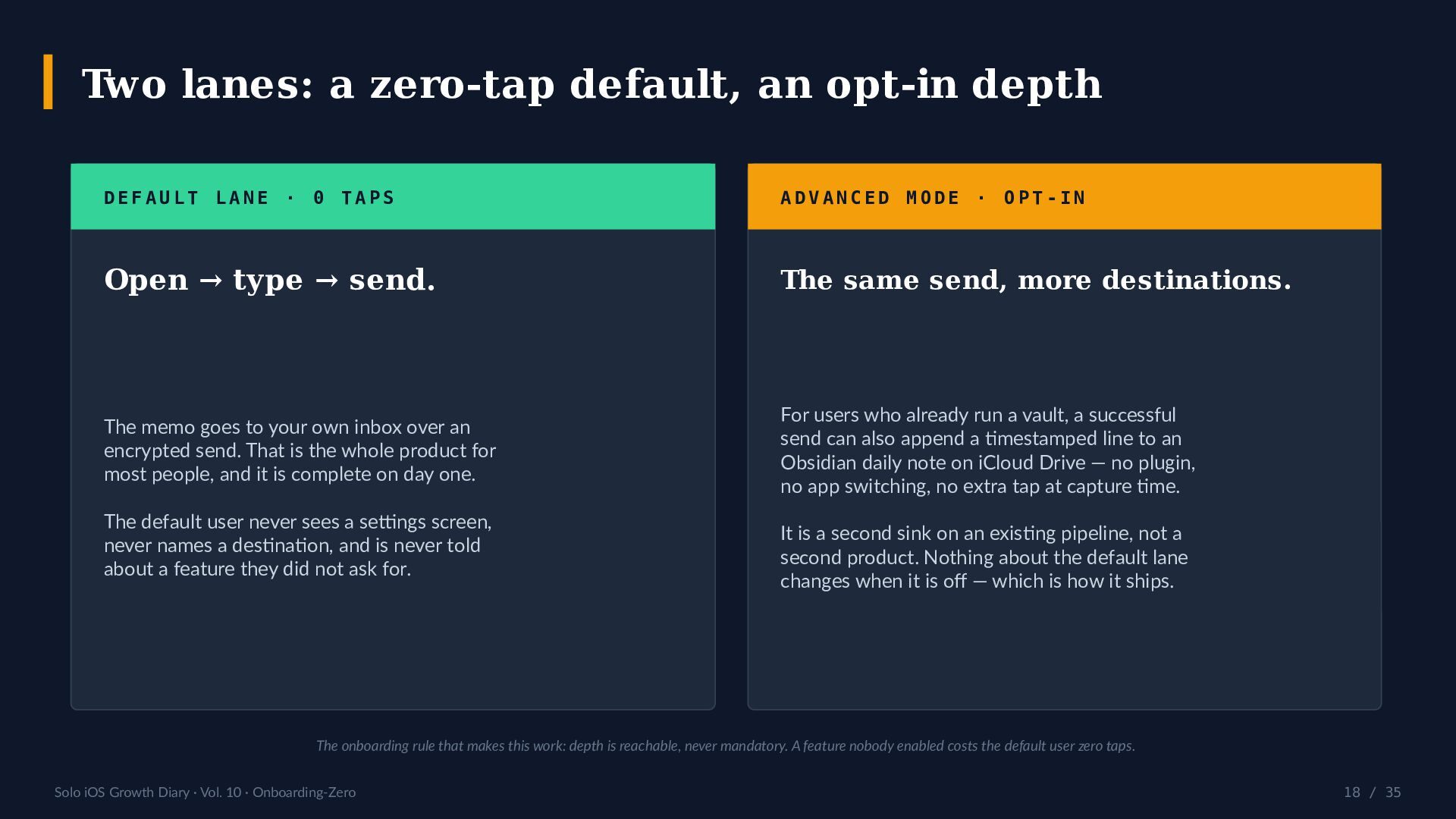
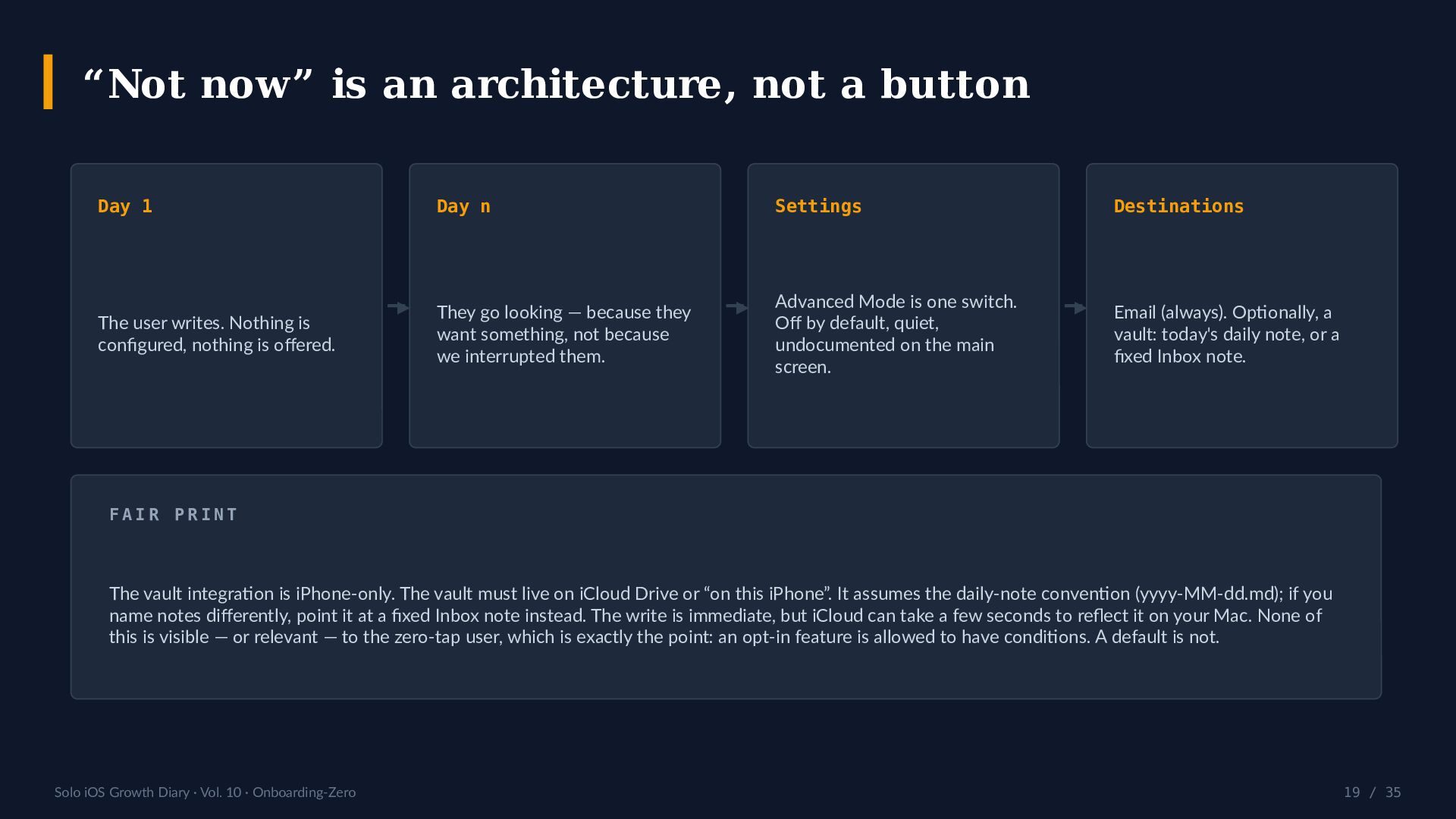
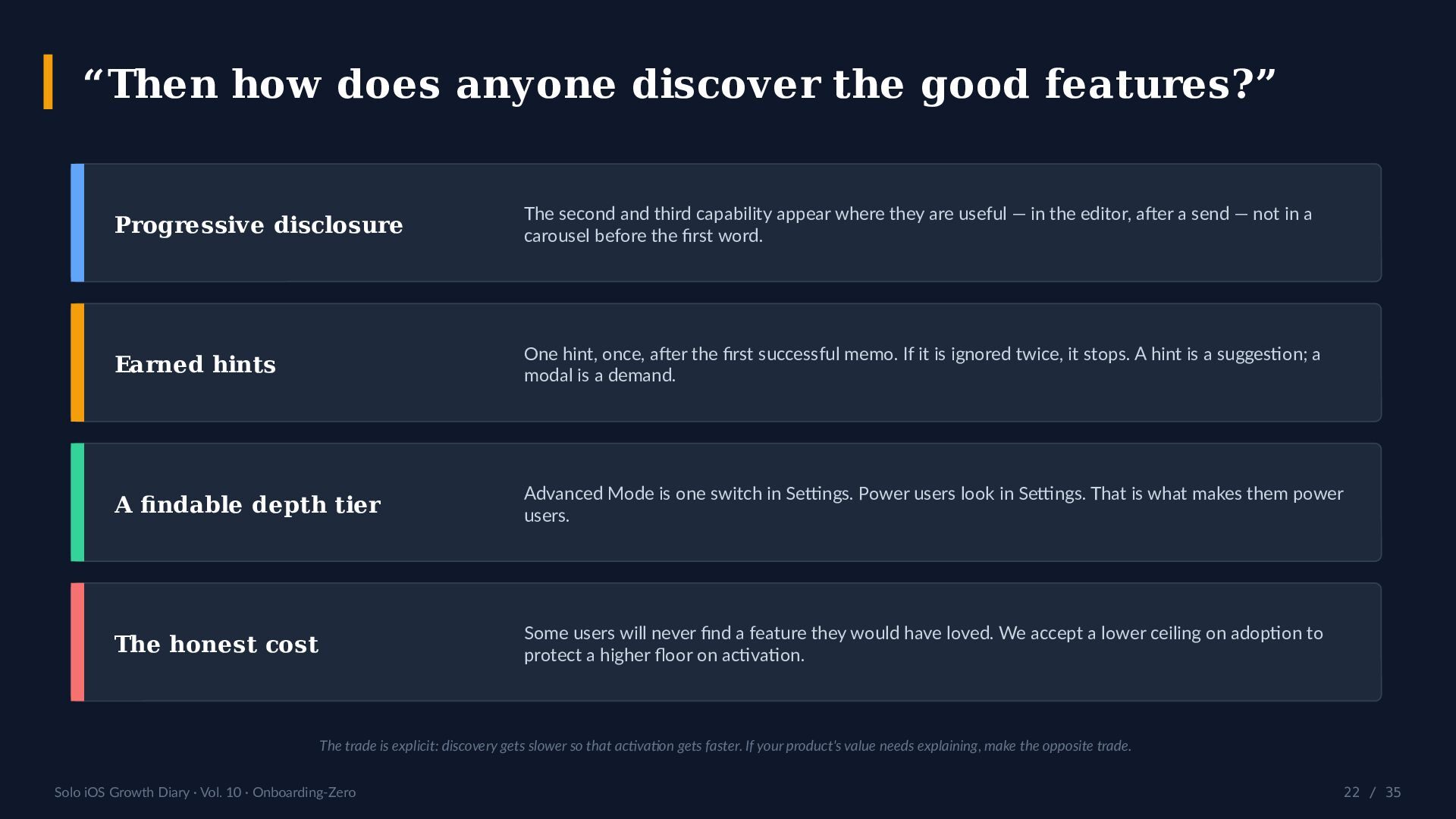
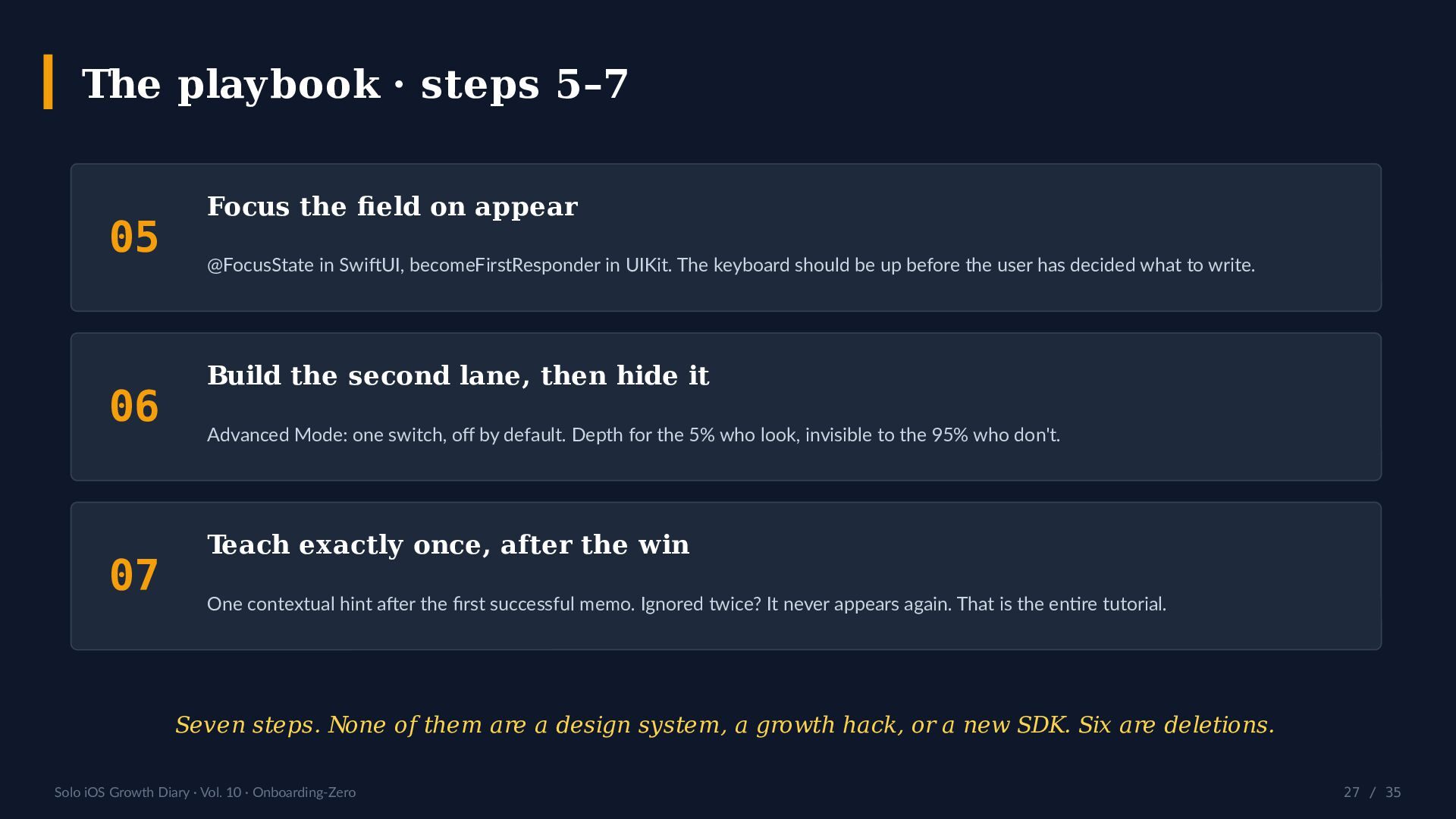
- Two lanes: a zero-tap default plus an Advanced Mode / opt-in tier, where depth (including an optional append to an Obsidian daily note on iCloud Drive) stays invisible to the user who never asked for it. Fair print included: iPhone-only, iCloud reflection lag, daily-note naming assumptions.
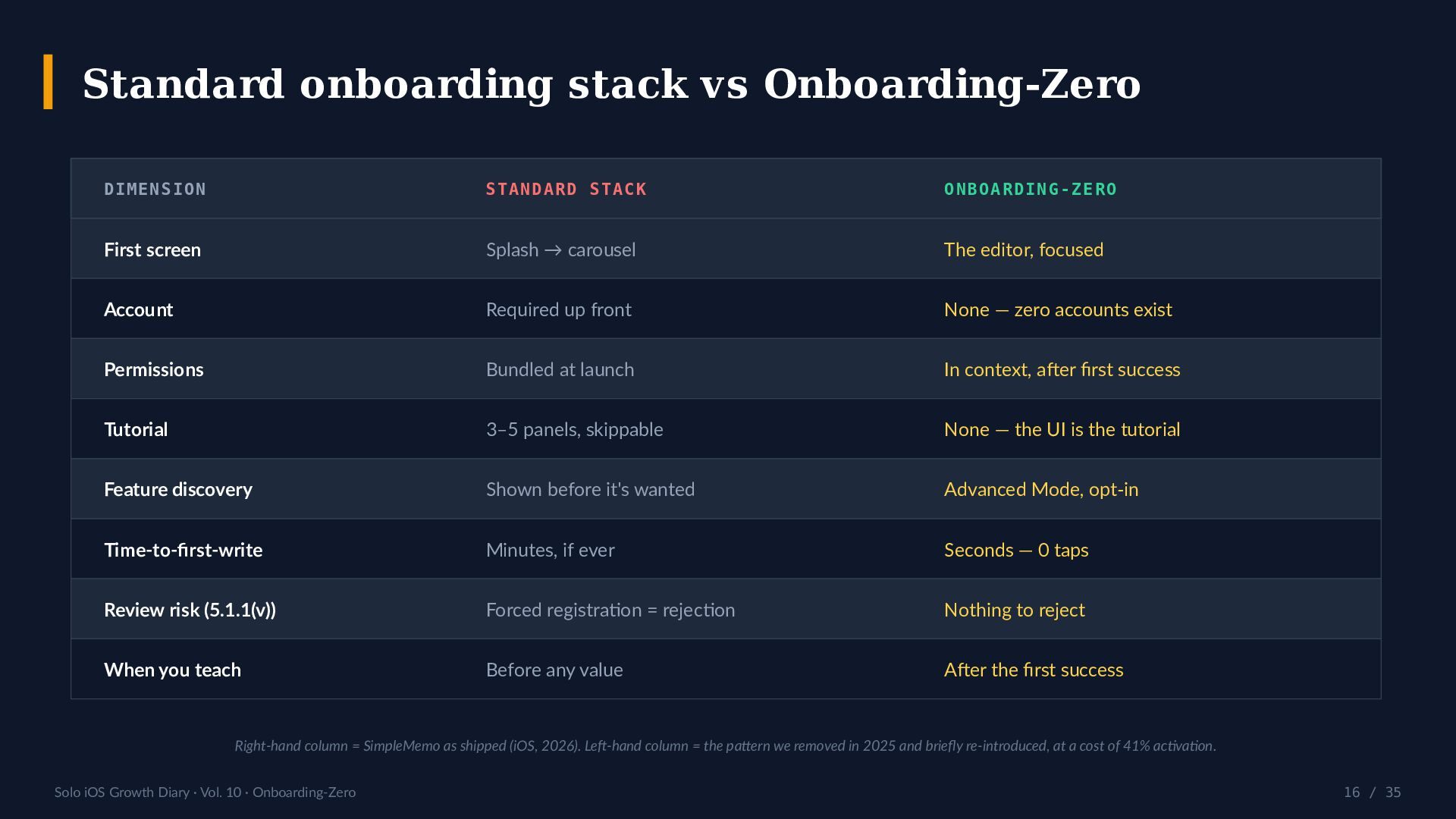
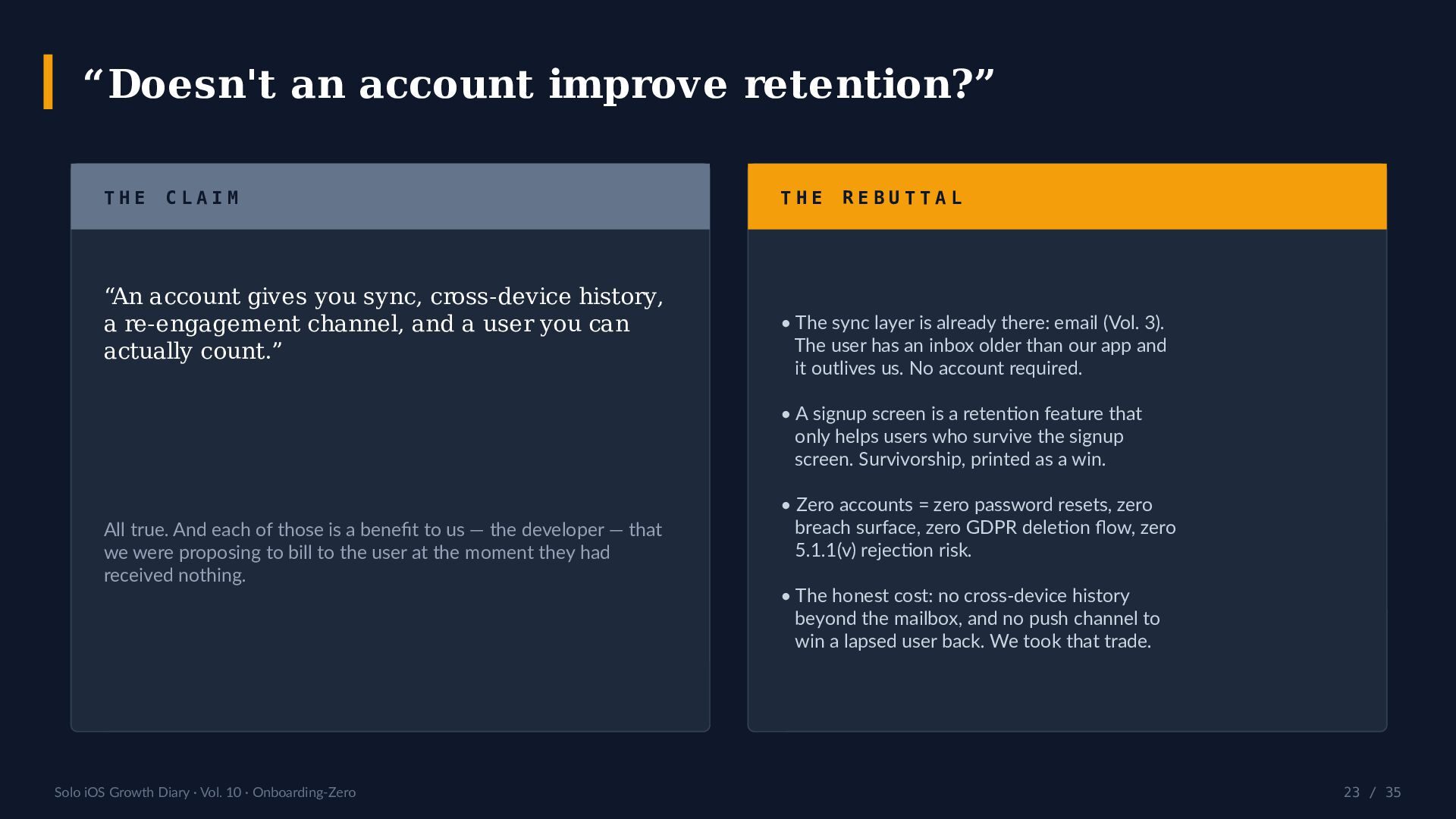
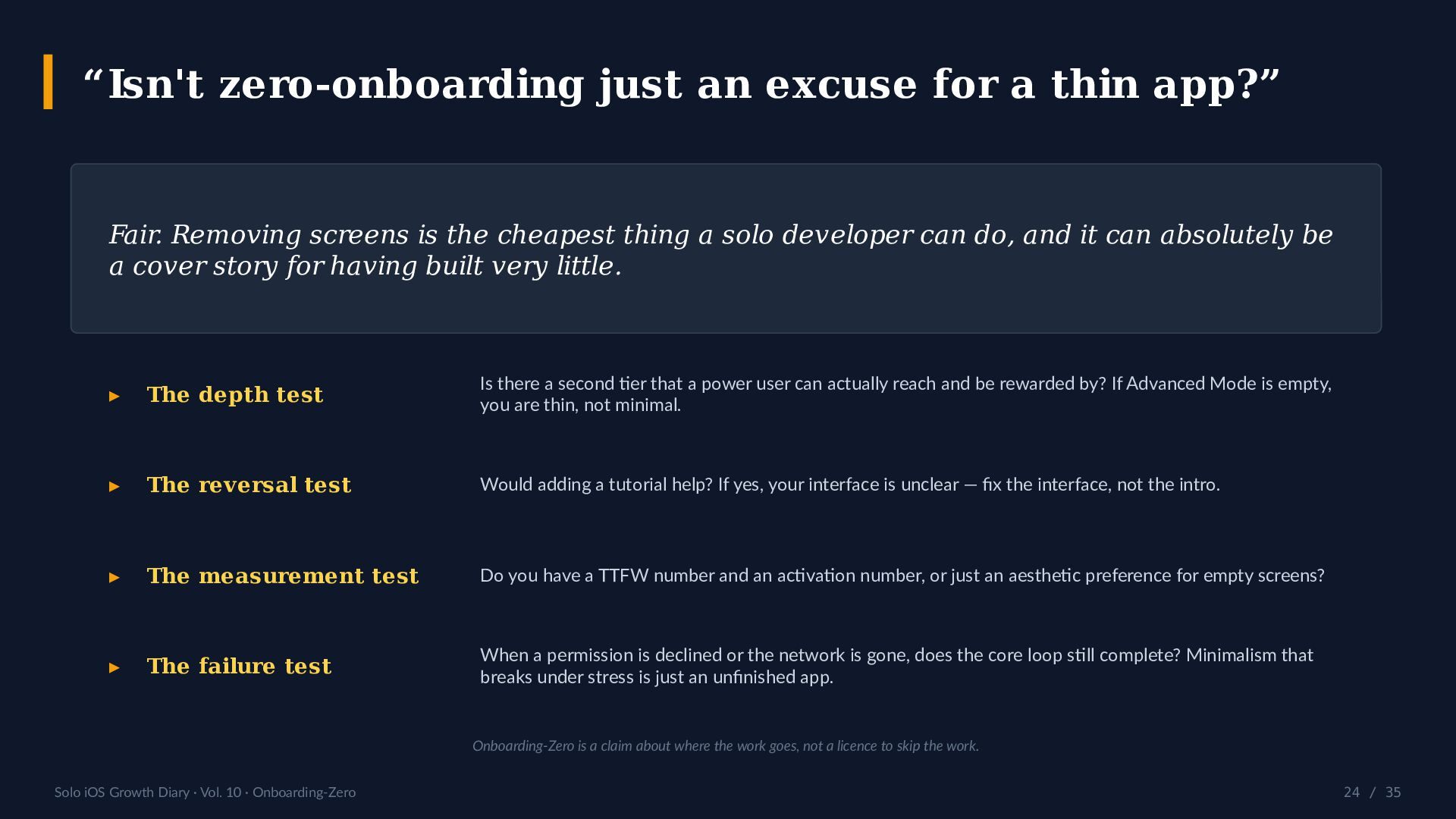
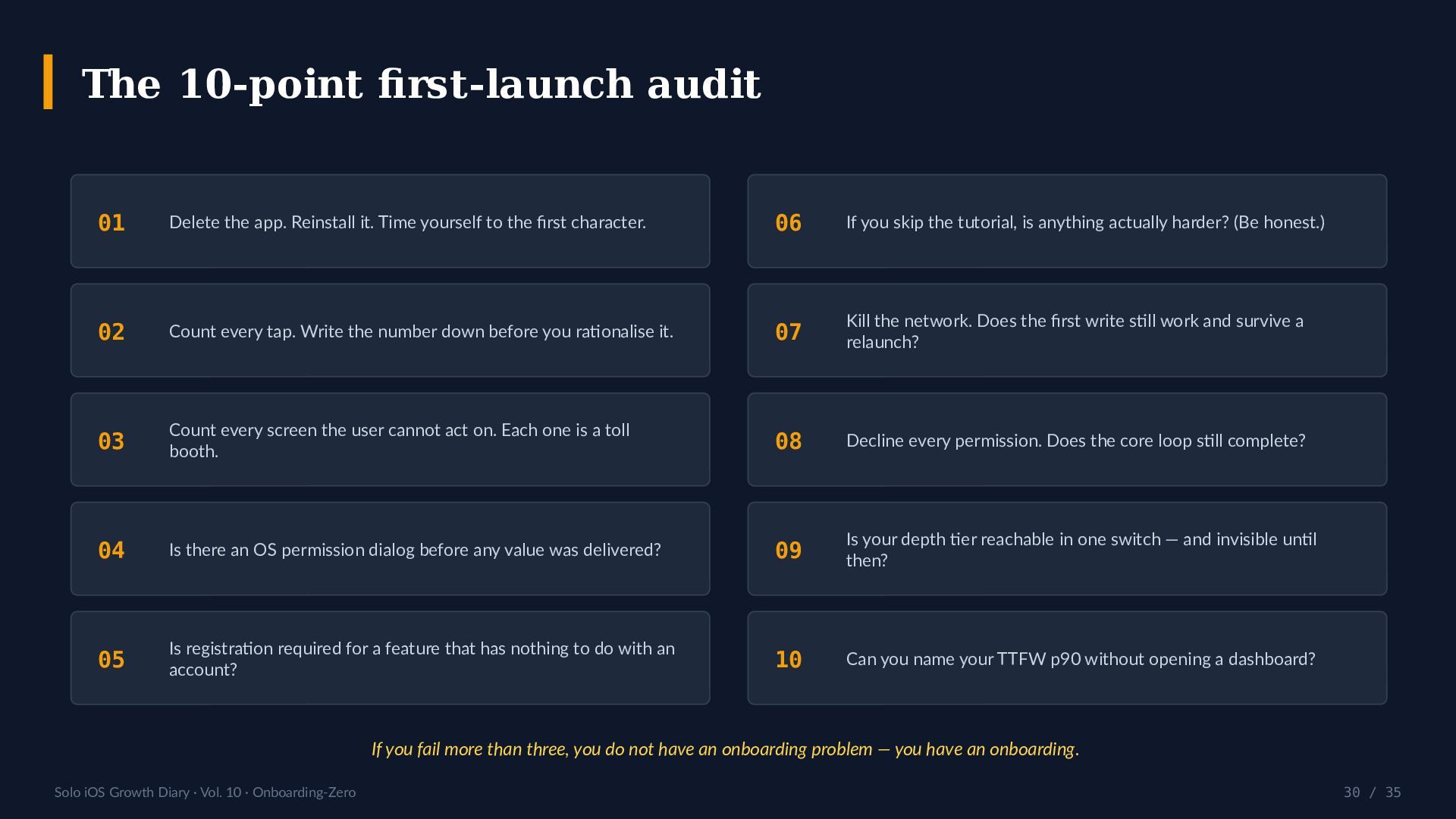
- A comparison table (standard onboarding stack vs Onboarding-Zero), a 7-step playbook, a 10-point first-launch audit, and four counter-arguments answered in the open, including "don't tutorials reduce churn?" and "doesn't an account improve retention?".
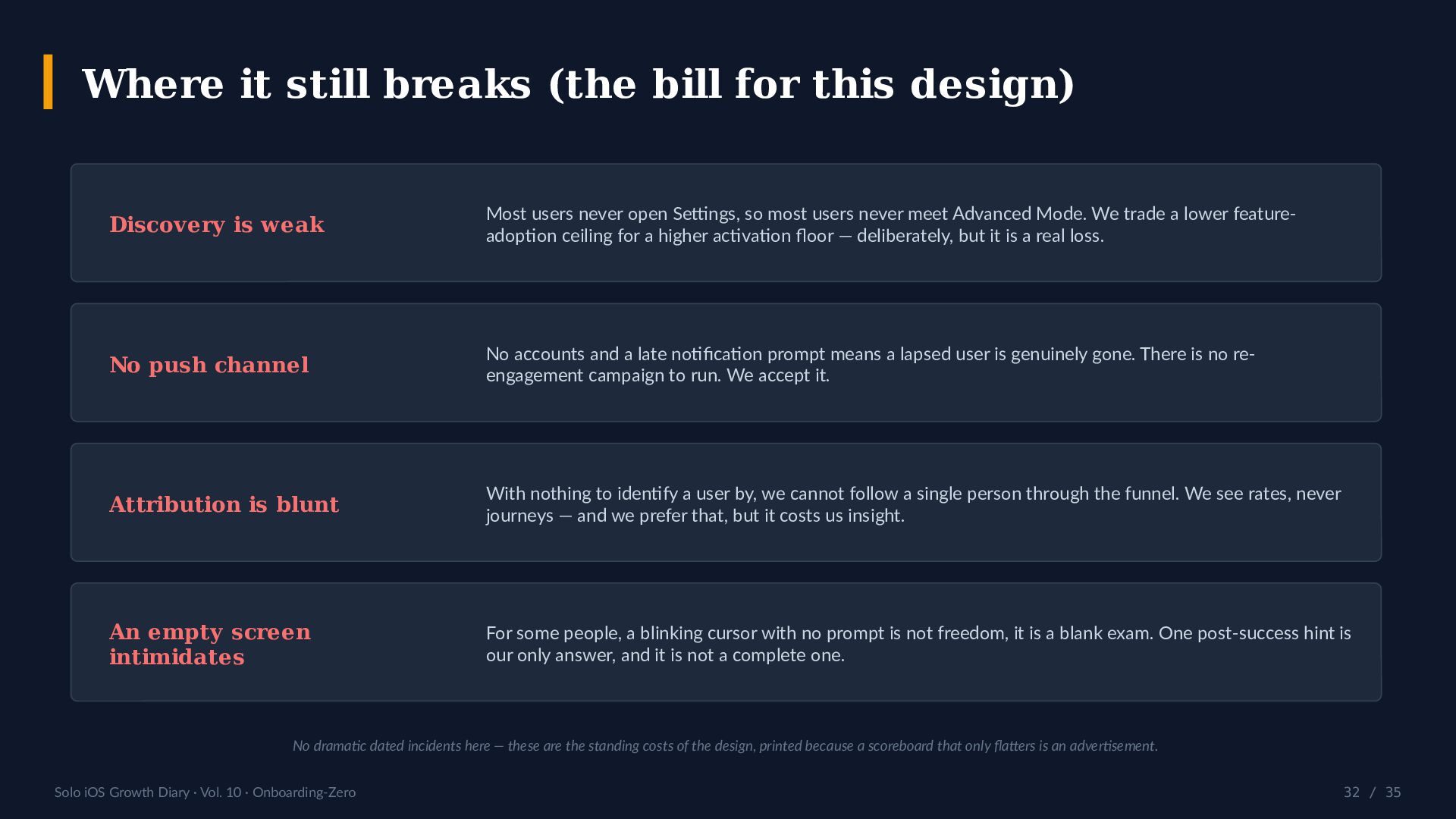
- An honest scoreboard, including where this design still costs us: weak feature discovery, no push channel, blunt attribution, and an empty screen that intimidates some people.
Keywords: iOS onboarding UX, friction-free signup, time to first value, app activation metric, SwiftUI FocusState, os_signpost, permission priming, App Store Review Guideline 5.1.1(v).
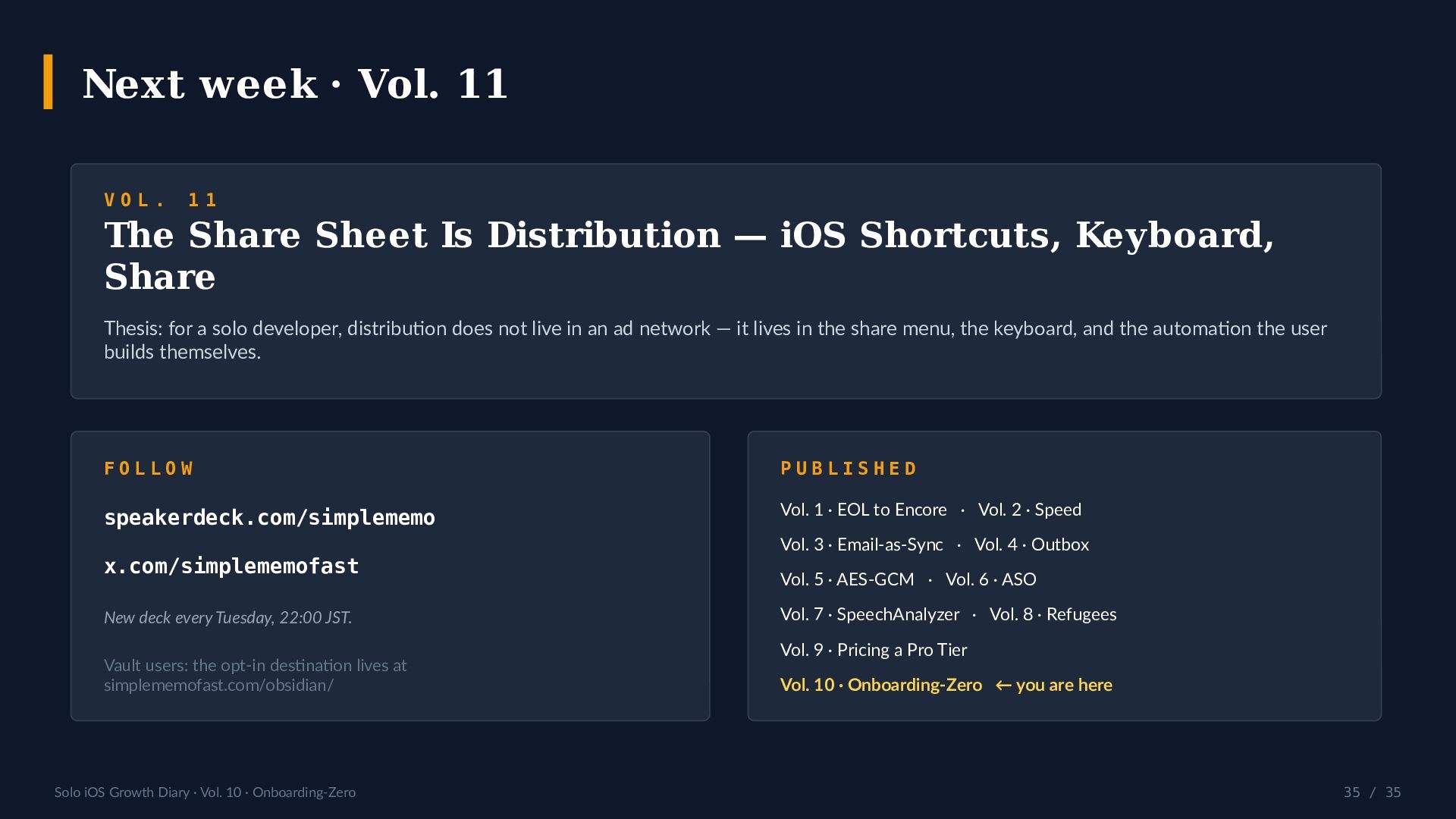
Next week, Vol. 11: The Share Sheet Is Distribution.
Follow the series: https://speakerdeck.com/simplememo and https://x.com/simplememofast
References: Apple Human Interface Guidelines (Launching, Onboarding) — https://developer.apple.com/design/human-interface-guidelines/launching · App Store Review Guidelines — https://developer.apple.com/app-store/review/guidelines/ · Airship Mobile Push Benchmarks 2026 · Pushwoosh 2025 benchmark (600+ apps) · The opt-in vault destination described on slide 18 — https://simplememofast.com/obsidian/


 simplememo
 drumath2237
 oku053
 tanahiro2010
 nabondance
 mofurune
 yutobara
 hschwentner
 panda728
 satoshi256kbyte
 y0hgi
y0hgi
 guaca
guaca
 prota
prota
 kimpetersen
 addyosmani
 garrettdimon
 michaelherold
 ianozsvald
 aleyda
 mfonobong
 chrislema
 deanohume
 geoffreycrofte
 oripsolob
 eileencodes