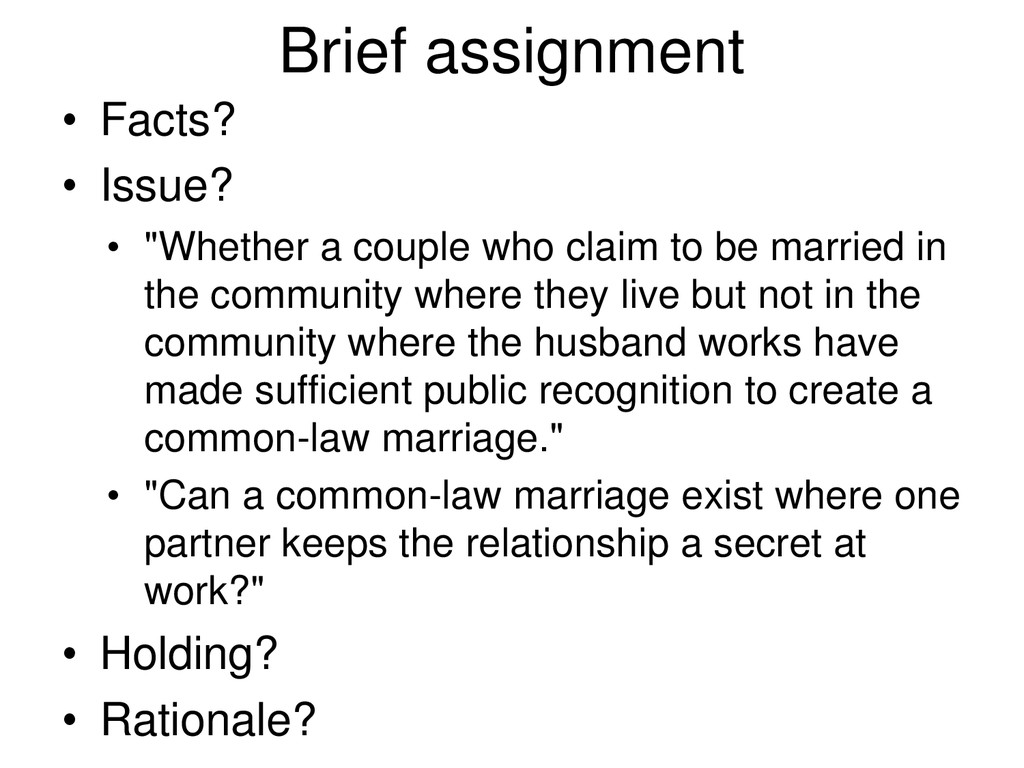
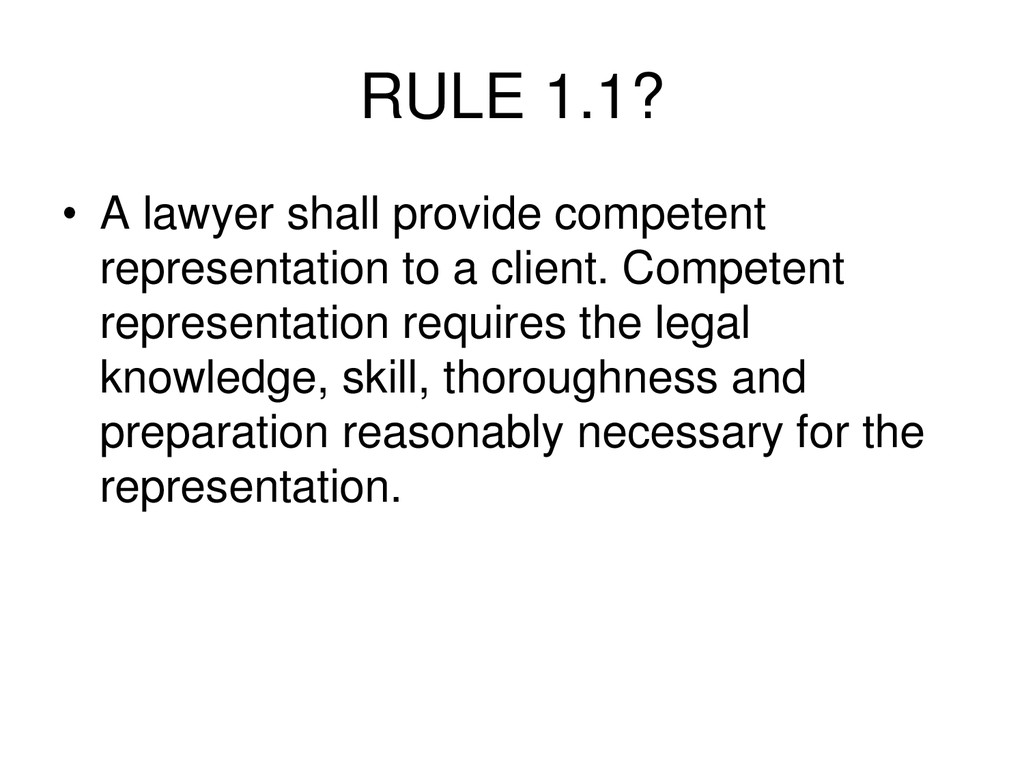
who claim to be married in the community where they live but not in the community where the husband works have made sufficient public recognition to create a common-law marriage." • "Can a common-law marriage exist where one partner keeps the relationship a secret at work?" • Holding? • Rationale?
humans ought to do, usually in terms of rights, obligations, benefits to society, fairness, or specific virtues." http://www.scu.edu/ethics/practicing/decision/whatisethics.html
. before a court; or • For a consideration . . . advise another as to law, or draw a . . . document . . . affecting or relating to secular rights; or • For a consideration. . . does any act in a representative capacity in behalf of another to enforce or establish a right; or • As a vocation, enforces, secures, settles, adjusts or compromises . . . disputed accounts
can get your divorce WITHOUT ATTORNEY'S FEE. The whole cost will be only $100.00. You pay court costs of $36.00. WRITE: TOWNLEY SERVICES P.O. Box 317 Kent, AL 36045 CONFIDENTIAL AND GUARANTEED
daughter. He files a complaint in the Circuit Court. One of the counts in Mr. Godwin's complaint stated claims on behalf of the daughter's estate for the recovery of money and for specific performance of a contract.
the driver of the other car was uninsured. She asks you to help fill out the complaint form for small claims court to sue for $500 to fix the dent in her fender.
Carolina. He helped a fellow inmate appeal his conviction for possession of crack cocaine with the intent to distribute, and the U.S. Supreme Court has granted certiorari.
for other prisoners because there is no “reasonable alternative” to their services. • But in a dissenting opinion, a justice wrote that, without law degrees, prison clerks may not dispense legal advice.
Alabama Lawyer July 2015 Turn to "Disciplinary Notices," p. 280 Law Abiding Citizens: Jennifer Dawn Gray Daisies: Arnold Bush, Jr. What rules were violated? What was the penalty?
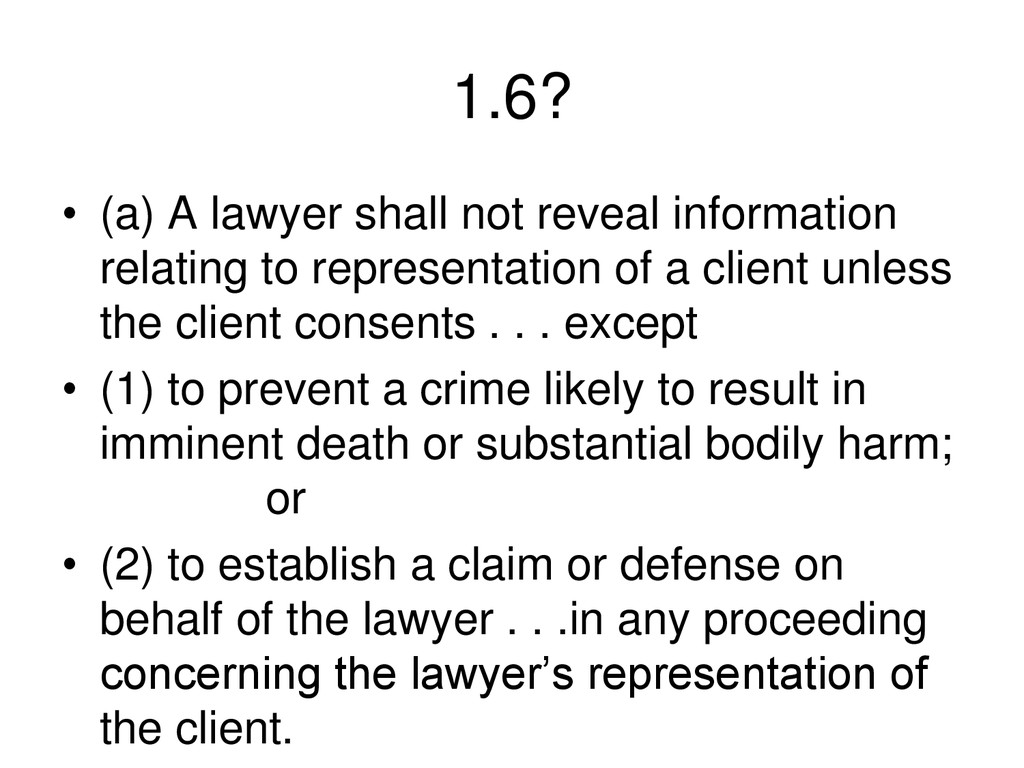
to representation of a client unless the client consents . . . except • (1) to prevent a crime likely to result in imminent death or substantial bodily harm; or • (2) to establish a claim or defense on behalf of the lawyer . . .in any proceeding concerning the lawyer’s representation of the client.
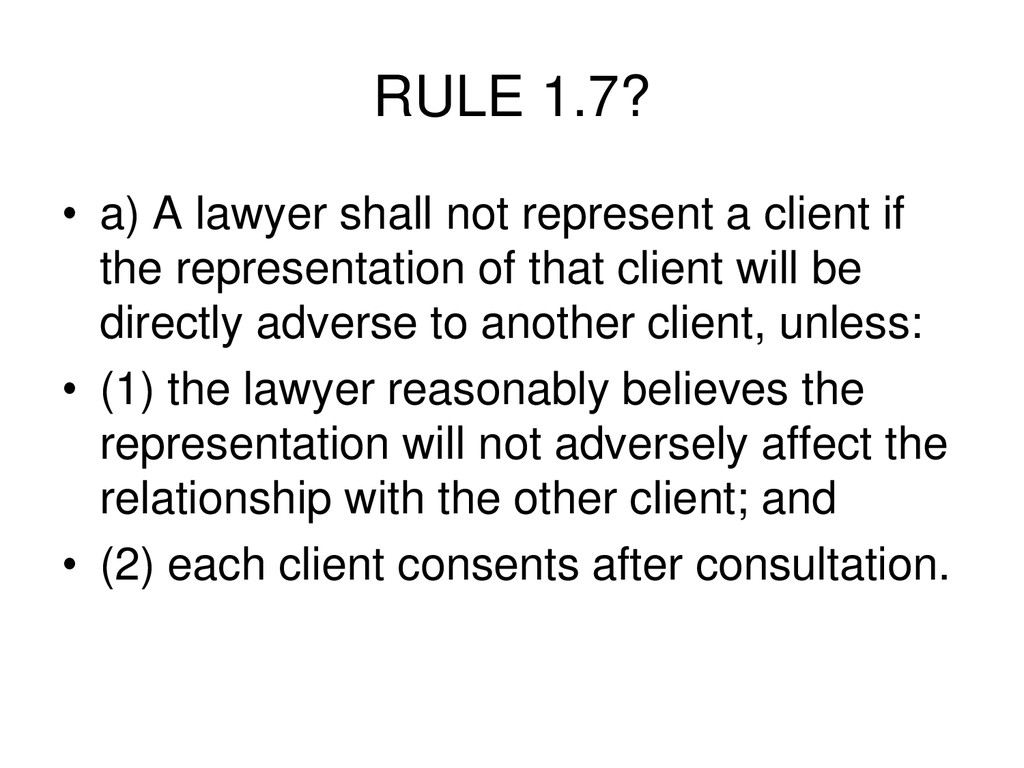
client if the representation of that client will be directly adverse to another client, unless: • (1) the lawyer reasonably believes the representation will not adversely affect the relationship with the other client; and • (2) each client consents after consultation.
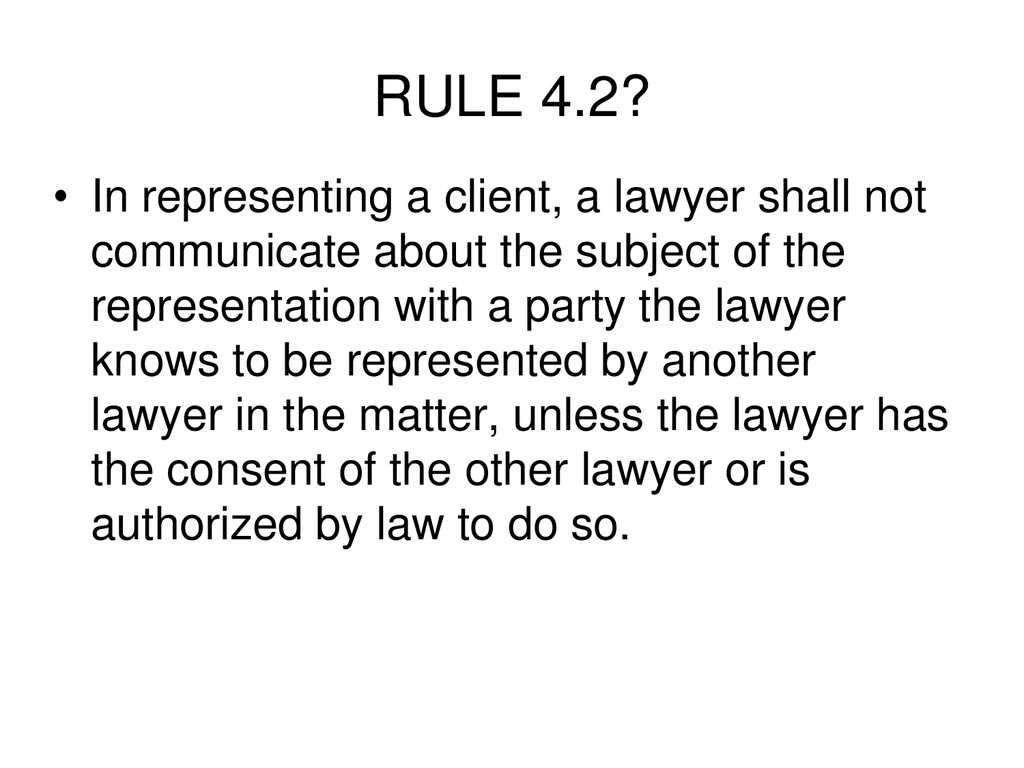
not communicate about the subject of the representation with a party the lawyer knows to be represented by another lawyer in the matter, unless the lawyer has the consent of the other lawyer or is authorized by law to do so.
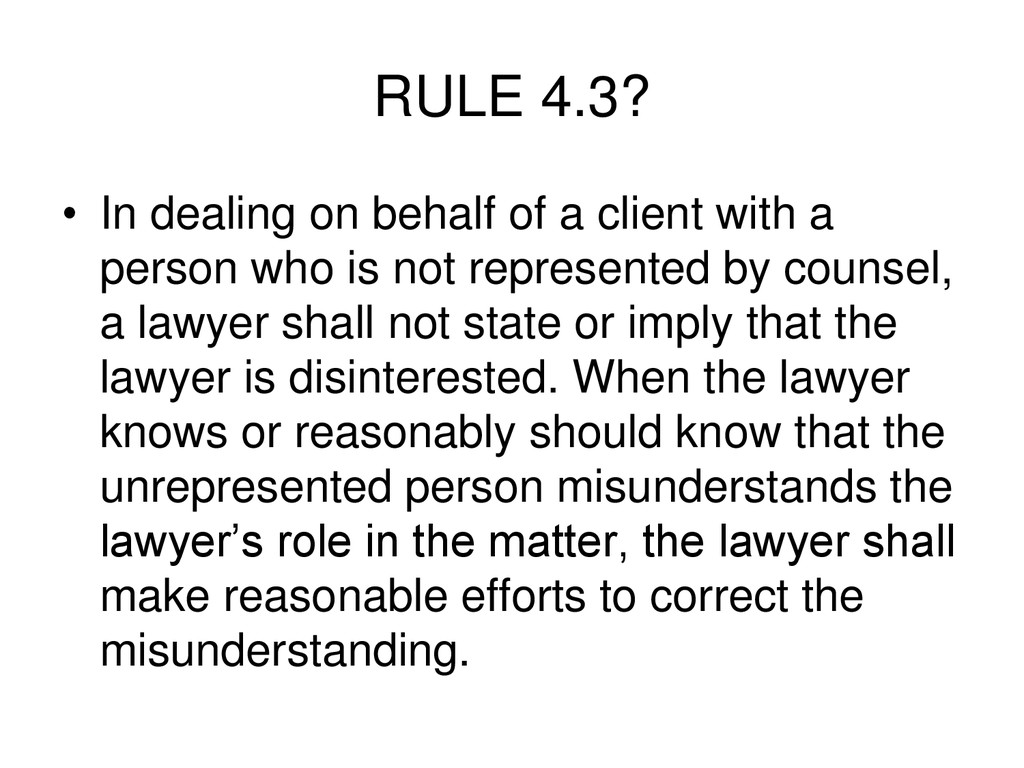
with a person who is not represented by counsel, a lawyer shall not state or imply that the lawyer is disinterested. When the lawyer knows or reasonably should know that the unrepresented person misunderstands the lawyer’s role in the matter, the lawyer shall make reasonable efforts to correct the misunderstanding.
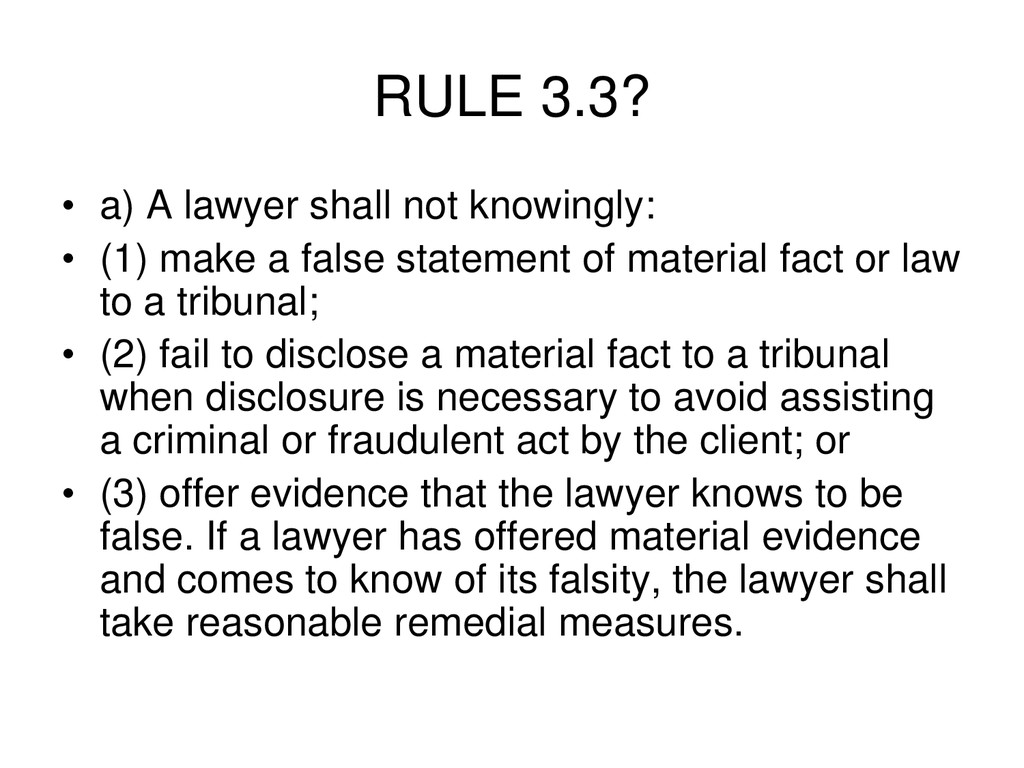
(1) make a false statement of material fact or law to a tribunal; • (2) fail to disclose a material fact to a tribunal when disclosure is necessary to avoid assisting a criminal or fraudulent act by the client; or • (3) offer evidence that the lawyer knows to be false. If a lawyer has offered material evidence and comes to know of its falsity, the lawyer shall take reasonable remedial measures.
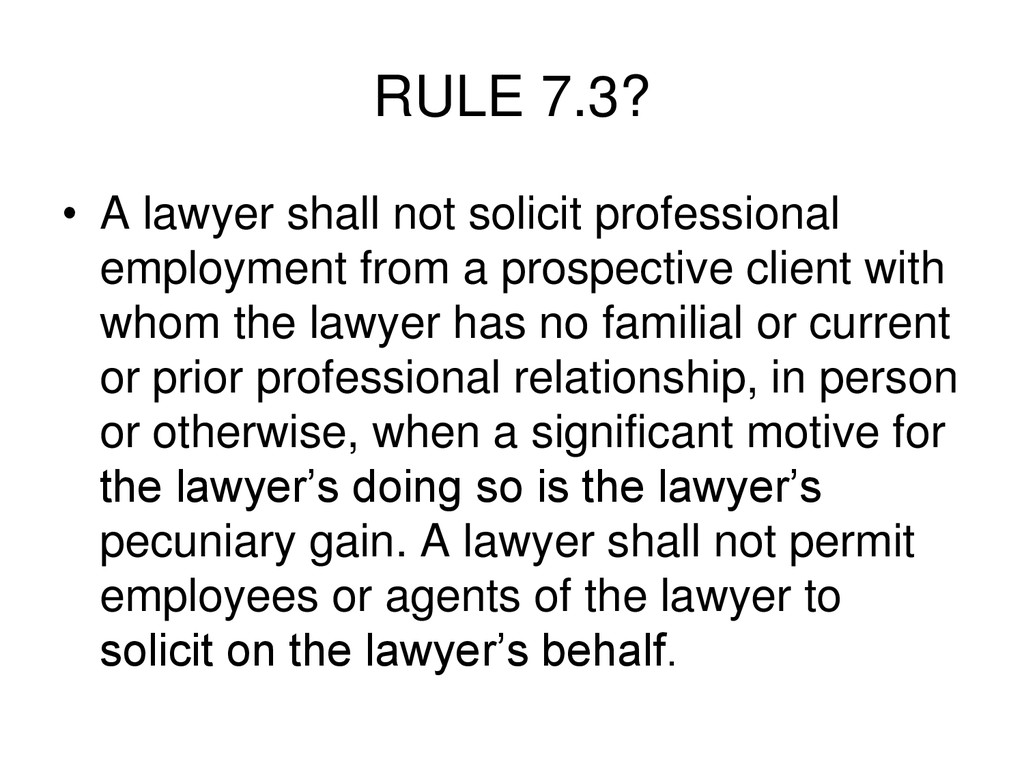
from a prospective client with whom the lawyer has no familial or current or prior professional relationship, in person or otherwise, when a significant motive for the lawyer’s doing so is the lawyer’s pecuniary gain. A lawyer shall not permit employees or agents of the lawyer to solicit on the lawyer’s behalf.
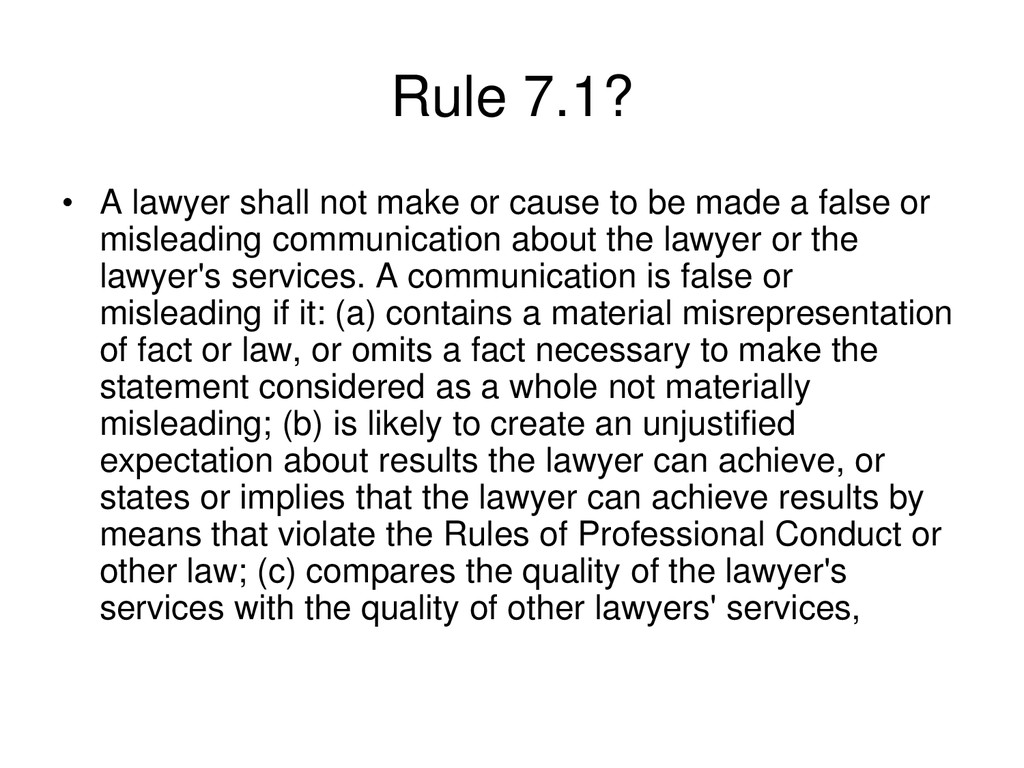
to be made a false or misleading communication about the lawyer or the lawyer's services. A communication is false or misleading if it: (a) contains a material misrepresentation of fact or law, or omits a fact necessary to make the statement considered as a whole not materially misleading; (b) is likely to create an unjustified expectation about results the lawyer can achieve, or states or implies that the lawyer can achieve results by means that violate the Rules of Professional Conduct or other law; (c) compares the quality of the lawyer's services with the quality of other lawyers' services,


 tedmajor
 tomit3
 hiola
hiola
 yatabe
 koheihasebe
 jdbedics
 coderdojojapan
 bunnchinn3
 ezefranca
 ishii_mit
 ytapples613
 kenichiota0711
 ichiroc
 afnizarnur
 soudai
 seathinner
 kimpetersen
 greggifford
 jonoalderson
 tmiket
 lara
lara
 moore
moore
 portentint
 kastner
 ipullrank

![Brief format Memo form To: From: Date: RE: [case citation]](https://files.speakerdeck.com/presentations/d1170141128c4191b522e815e9f44b4b/slide_1.jpg)