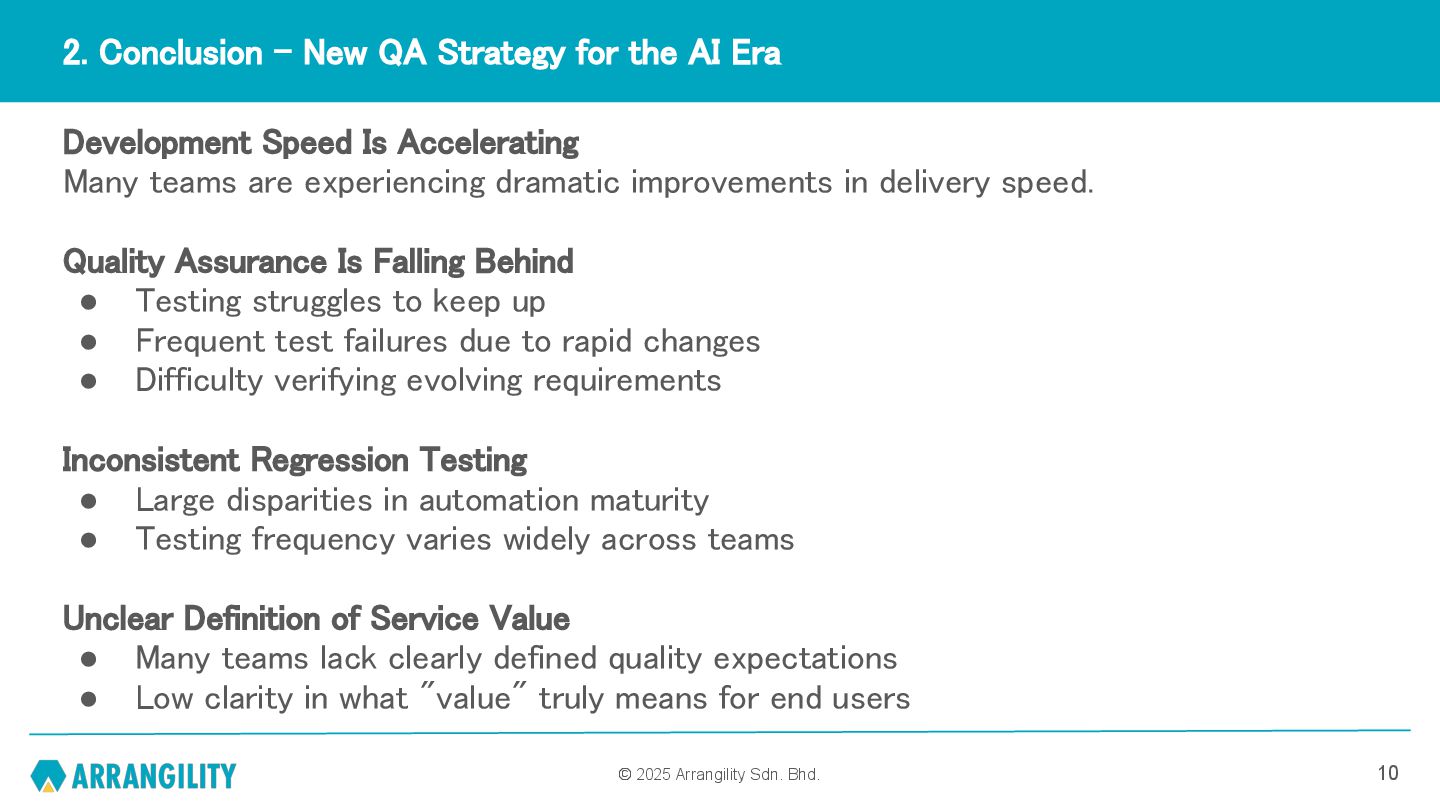
for the ra evelopment peed s ccelerating any teams are experiencing dramatic improvements in delivery speed. uality ssurance s alling ehind • esting struggles to keep up • requent test failures due to rapid changes • ifficulty verifying evolving requirements nconsistent egression esting • arge disparities in automation maturity • esting frequency varies widely across teams nclear efinition of ervice alue • any teams lack clearly defined quality expectations • ow clarity in what "value" truly means for end users 10
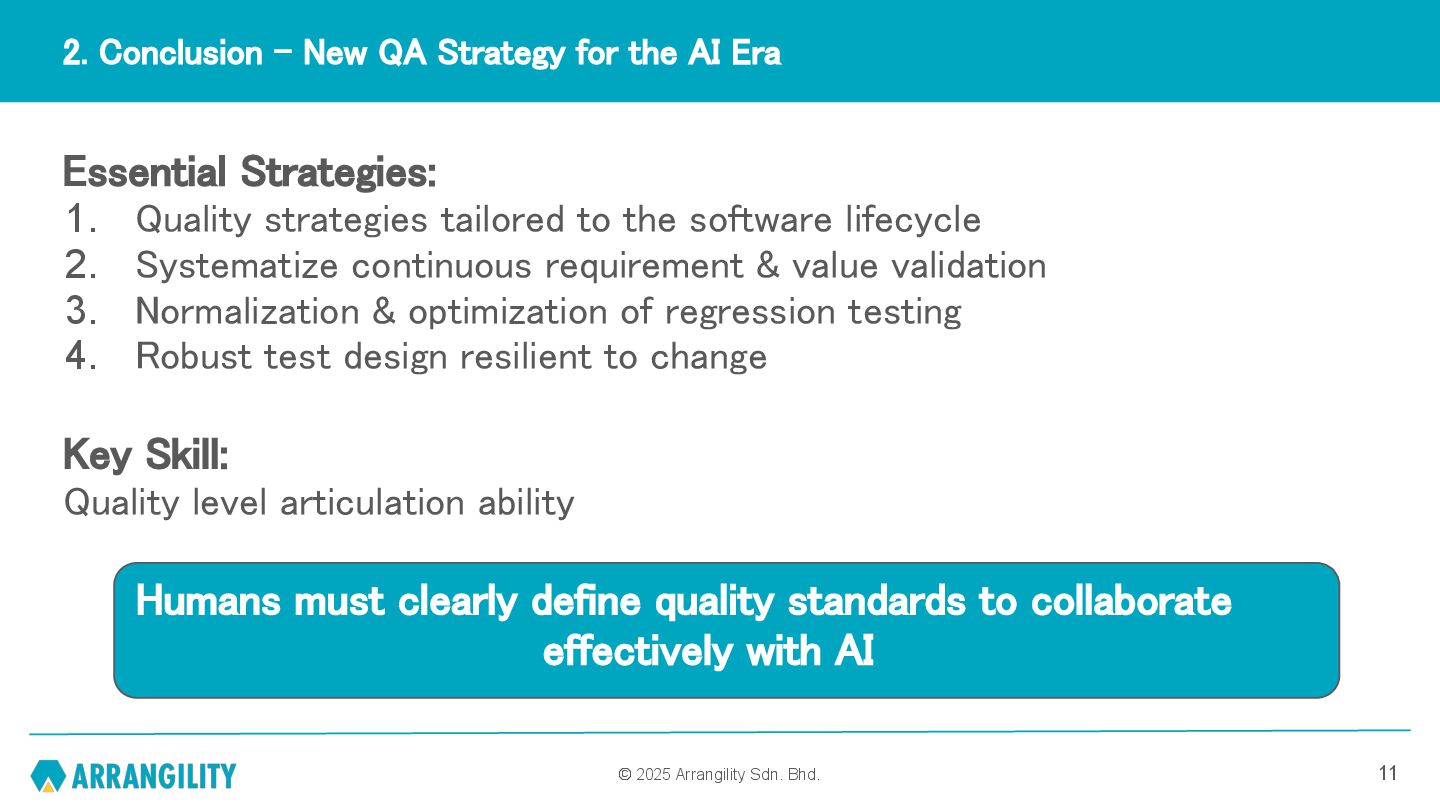
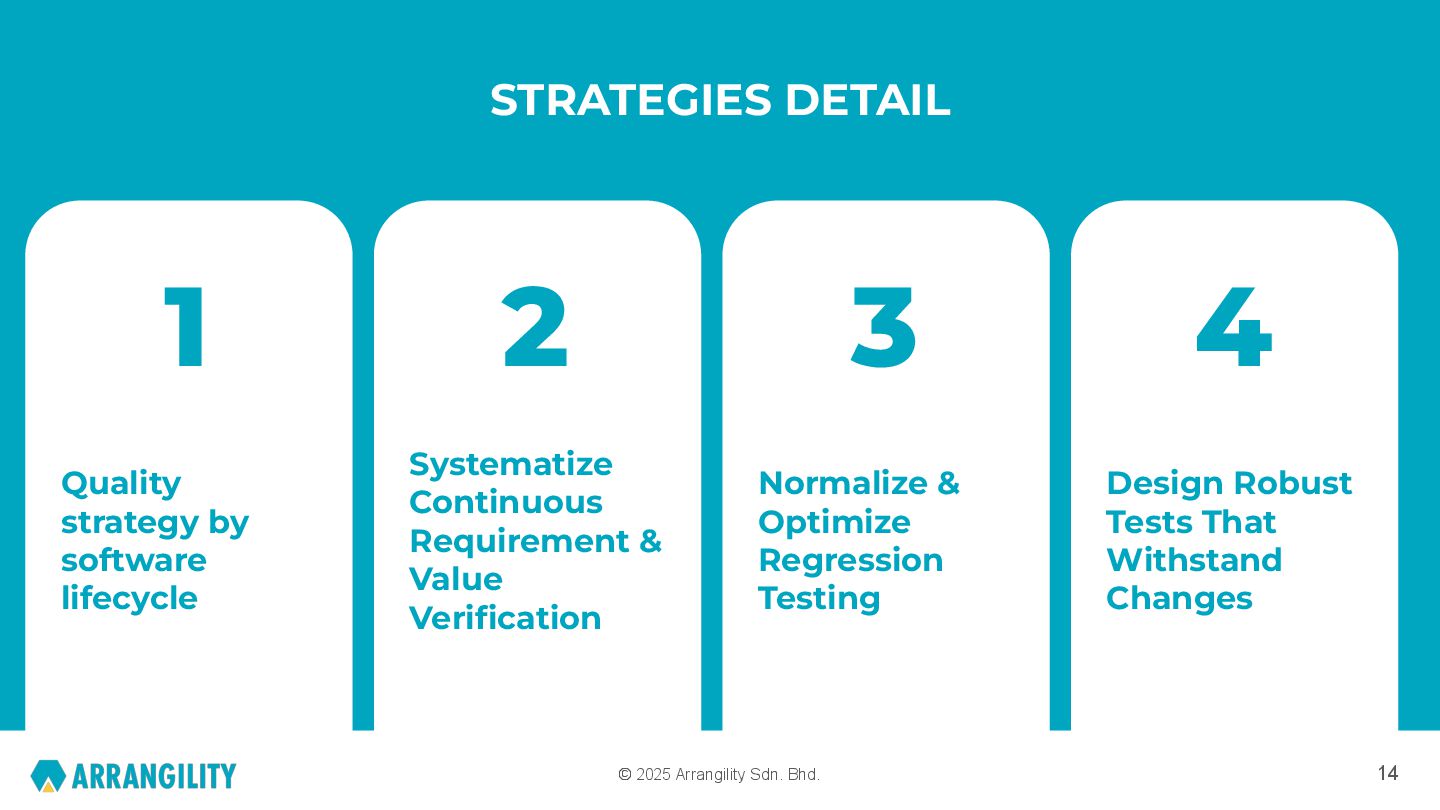
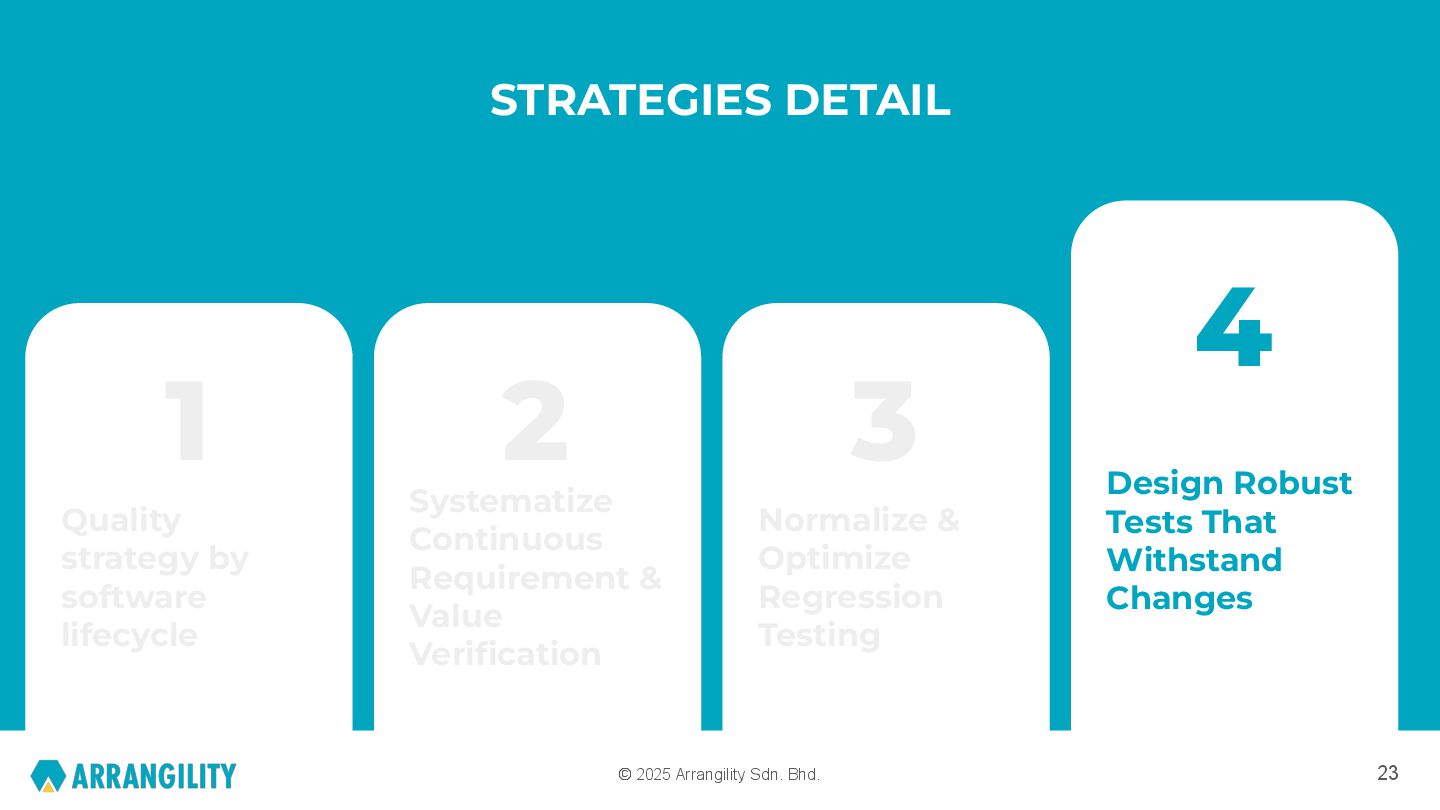
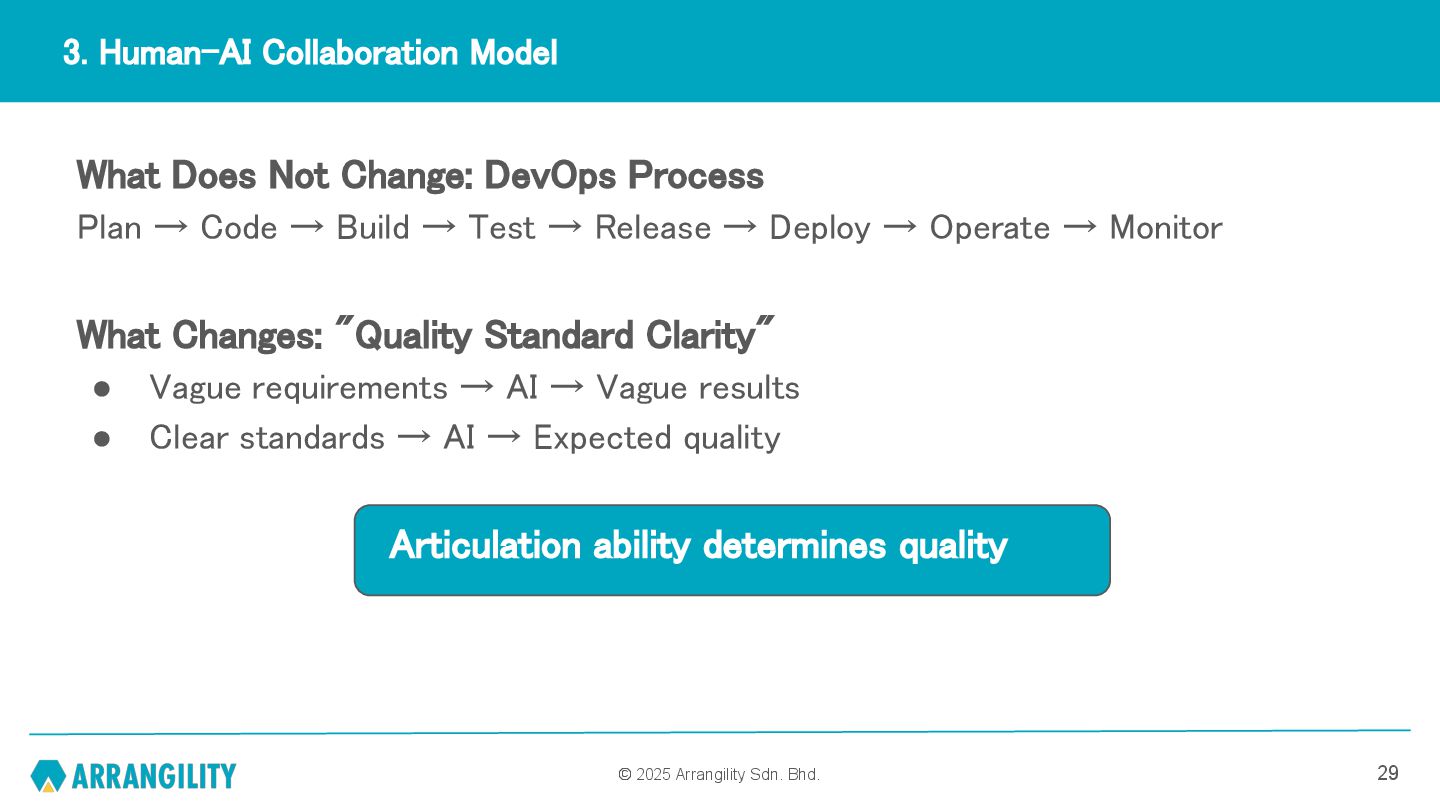
for the ra ssential trategies: 1. uality strategies tailored to the software lifecycle 2. ystematize continuous requirement & value validation 3. ormalization & optimization of regression testing 4. obust test design resilient to change ey kill: uality level articulation ability umans must clearly define quality standards to collaborate effectively with 11
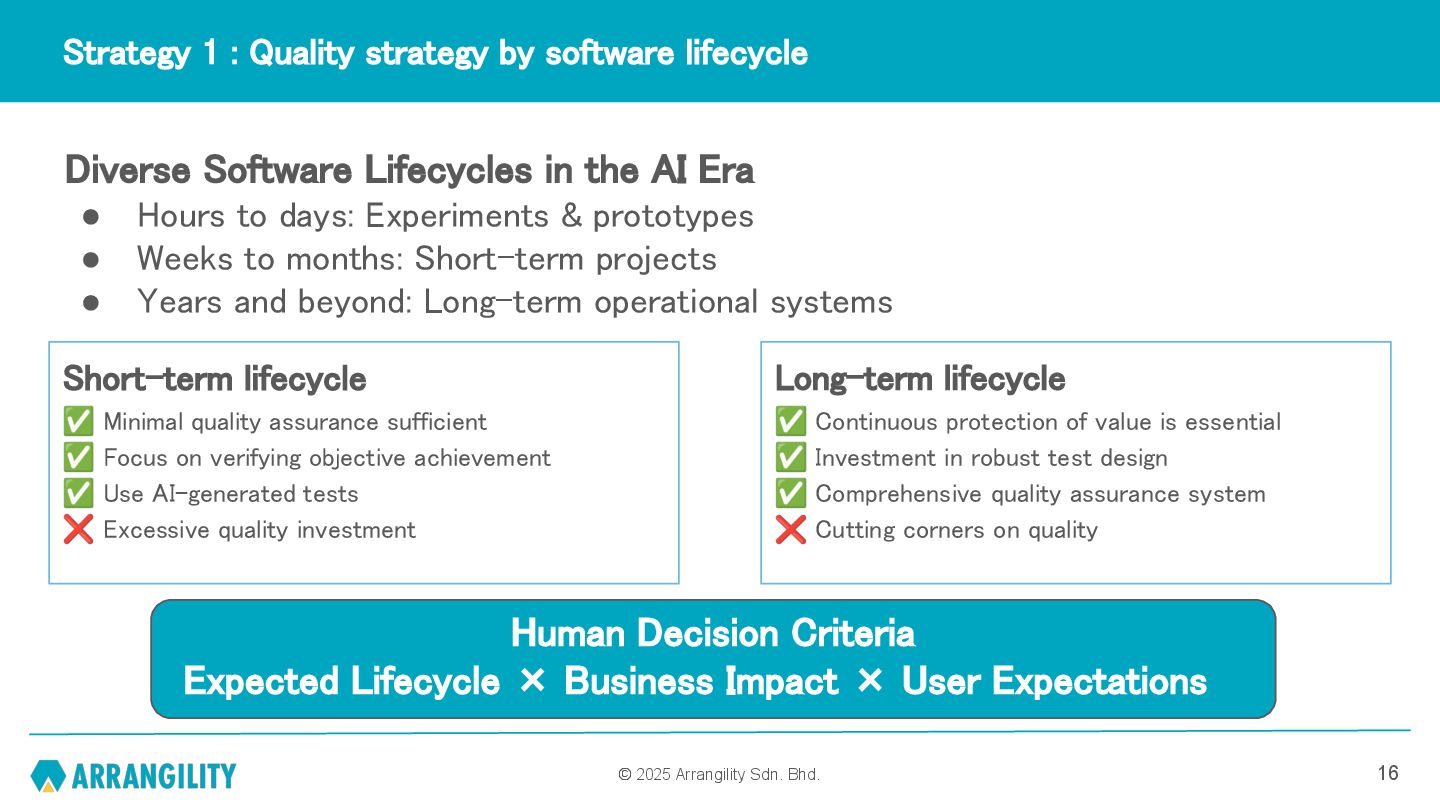
by software lifecycle hort-term lifecycle ✅ inimal quality assurance sufficient ✅ ocus on verifying objective achievement ✅ se -generated tests ❌ xcessive quality investment 16 ong-term lifecycle ✅ ontinuous protection of value is essential ✅ nvestment in robust test design ✅ omprehensive quality assurance system ❌ utting corners on quality uman ecision riteria xpected ifecycle × usiness mpact × ser xpectations iverse oftware ifecycles in the ra • ours to days: xperiments & prototypes • eeks to months: hort-term projects • ears and beyond: ong-term operational systems
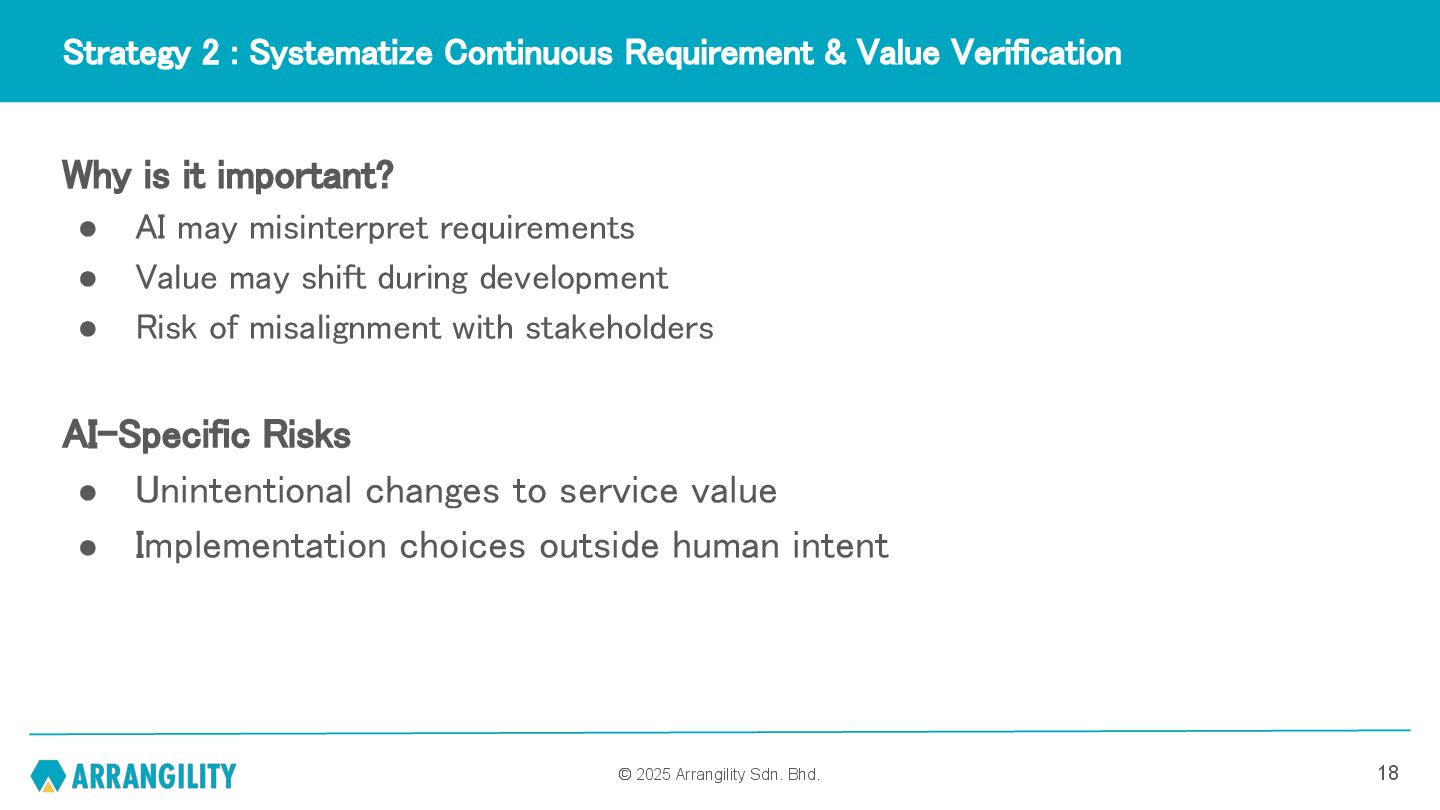
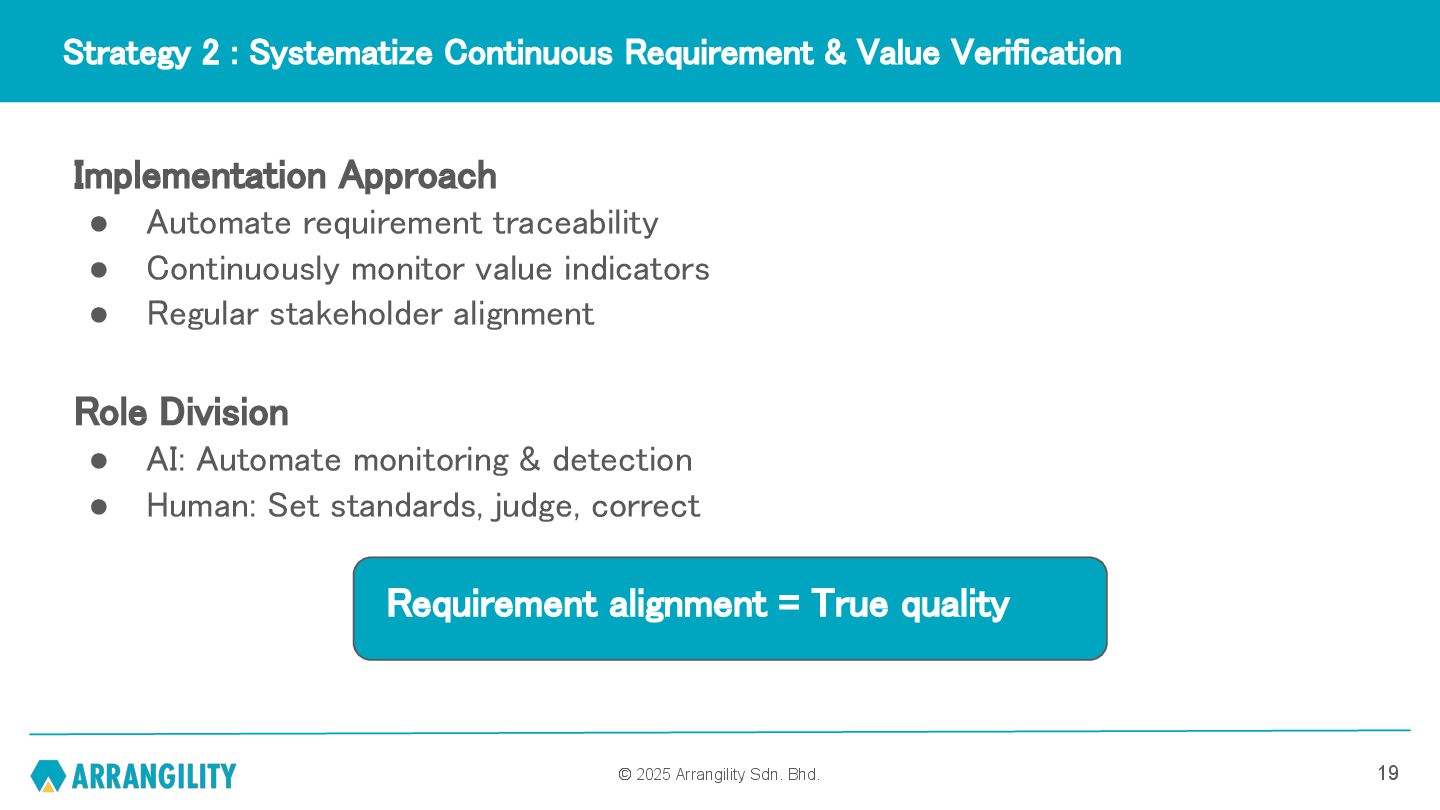
equirement & alue erification hy is it important? • may misinterpret requirements • alue may shift during development • isk of misalignment with stakeholders - pecific isks • nintentional changes to service value • mplementation choices outside human intent 18
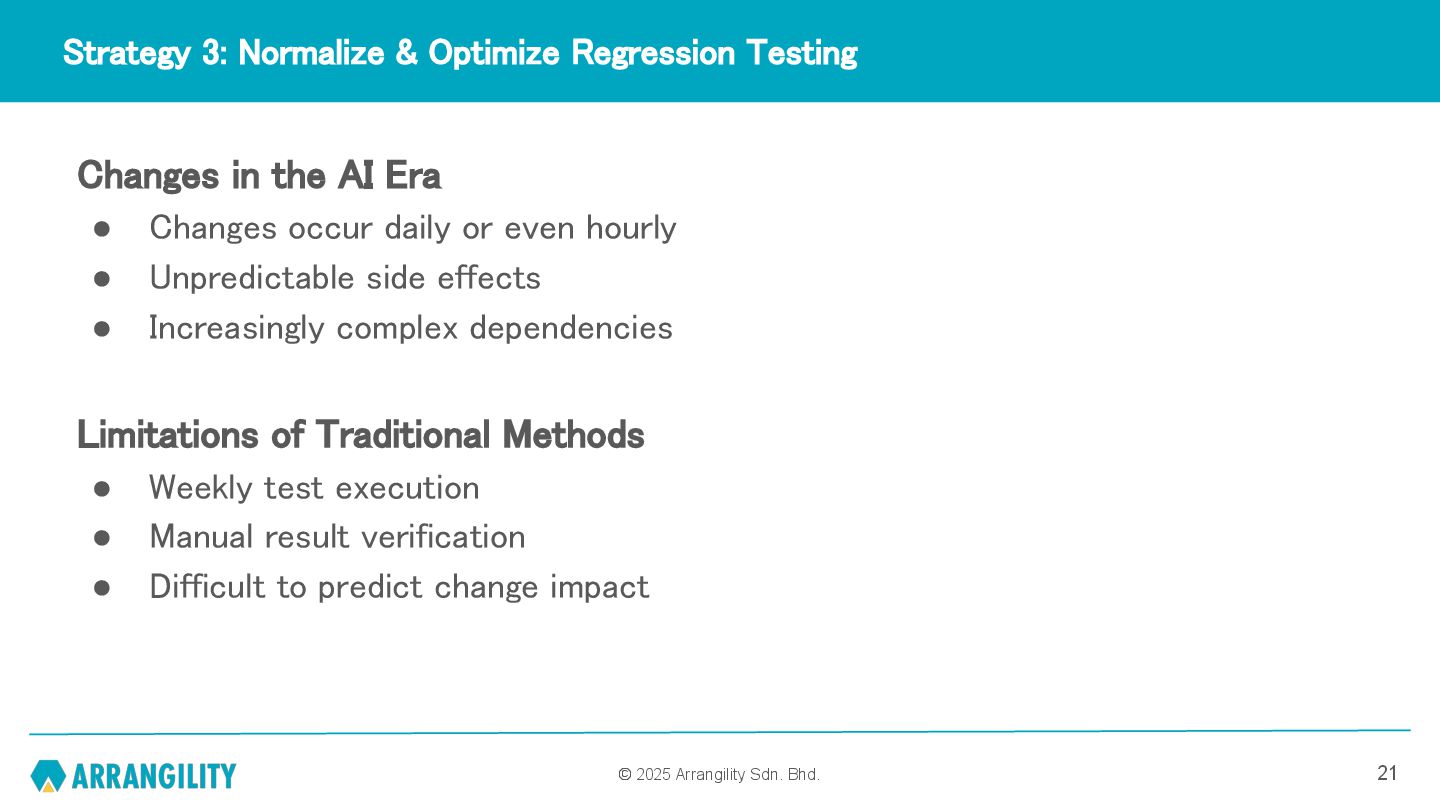
egression esting 21 hanges in the ra • hanges occur daily or even hourly • npredictable side effects • ncreasingly complex dependencies imitations of raditional ethods • eekly test execution • anual result verification • ifficult to predict change impact
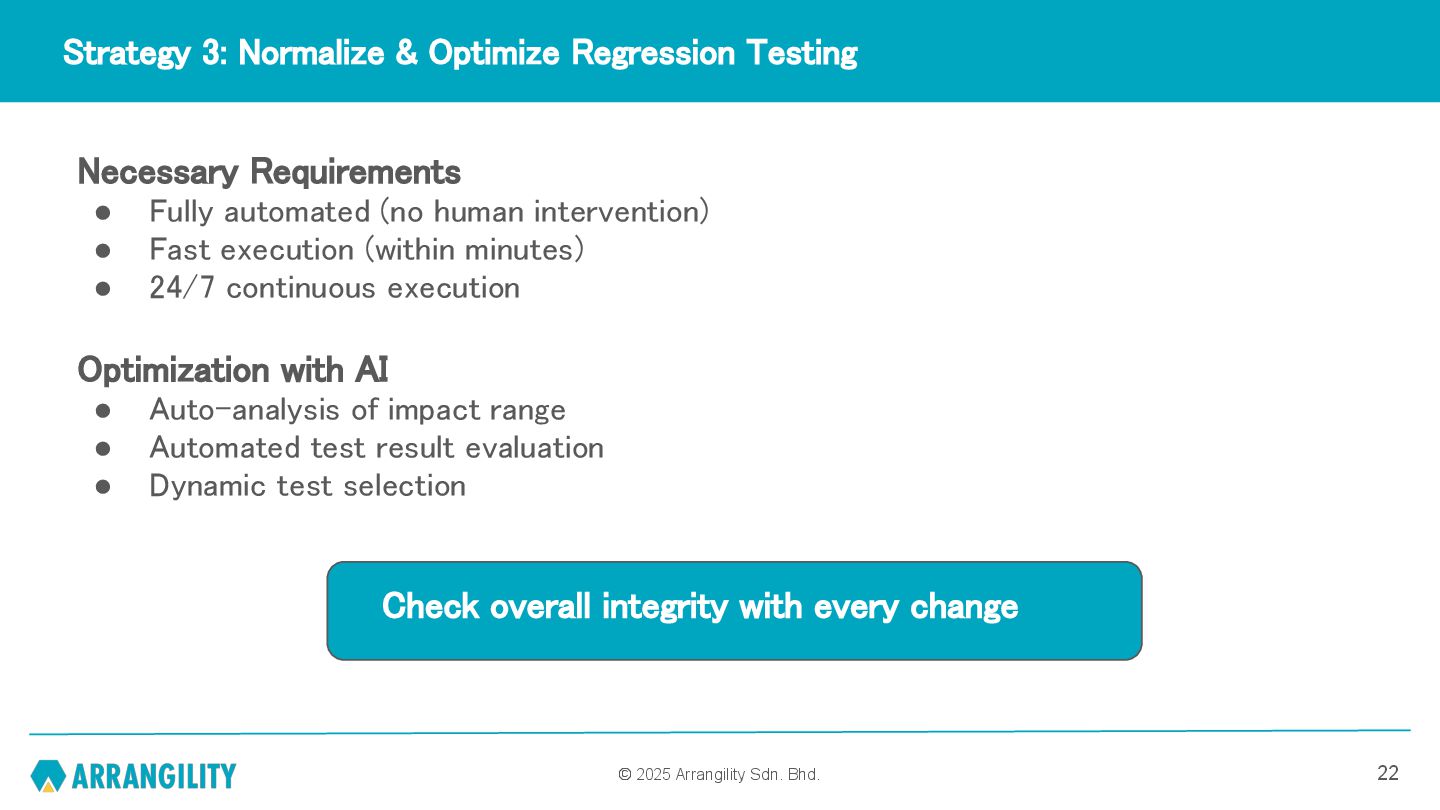
egression esting 22 ecessary equirements • ully automated (no human intervention) • ast execution (within minutes) • 24/7 continuous execution ptimization with • uto-analysis of impact range • utomated test result evaluation • ynamic test selection heck overall integrity with every change
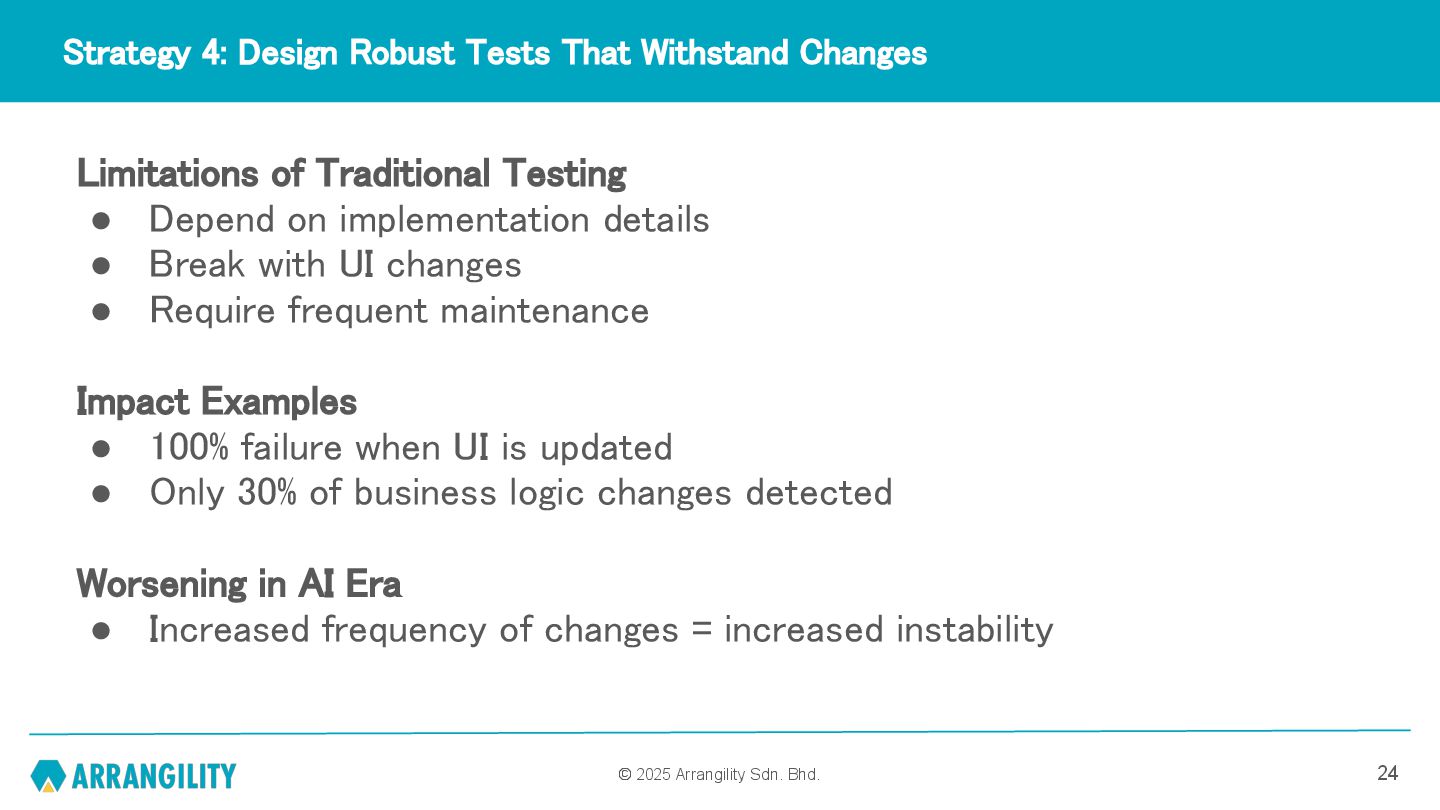
hat ithstand hanges 24 imitations of raditional esting • epend on implementation details • reak with changes • equire frequent maintenance mpact xamples • 100% failure when is updated • nly 30% of business logic changes detected orsening in ra • ncreased frequency of changes = increased instability
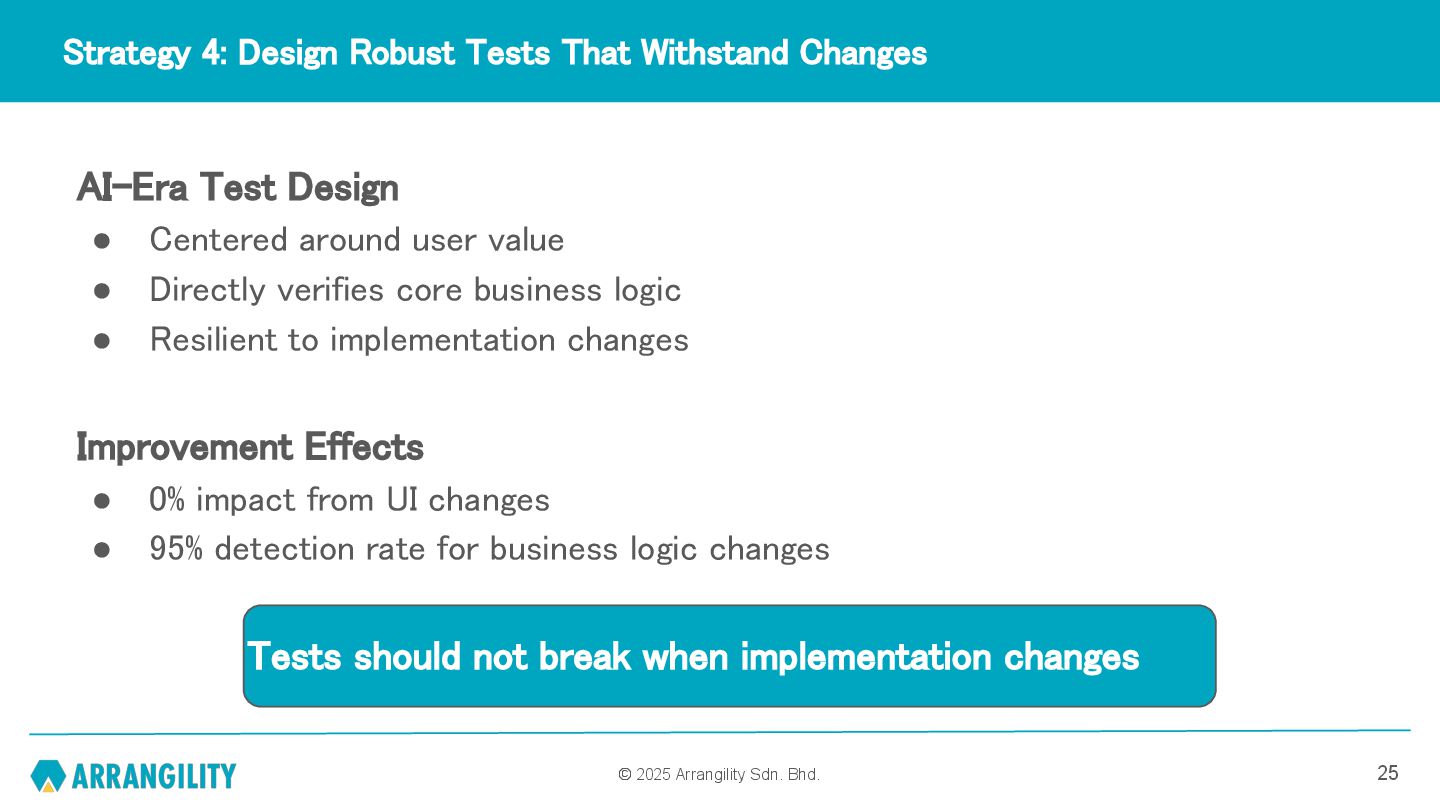
hat ithstand hanges 25 - ra est esign • entered around user value • irectly verifies core business logic • esilient to implementation changes mprovement ffects • 0% impact from changes • 95% detection rate for business logic changes ests should not break when implementation changes
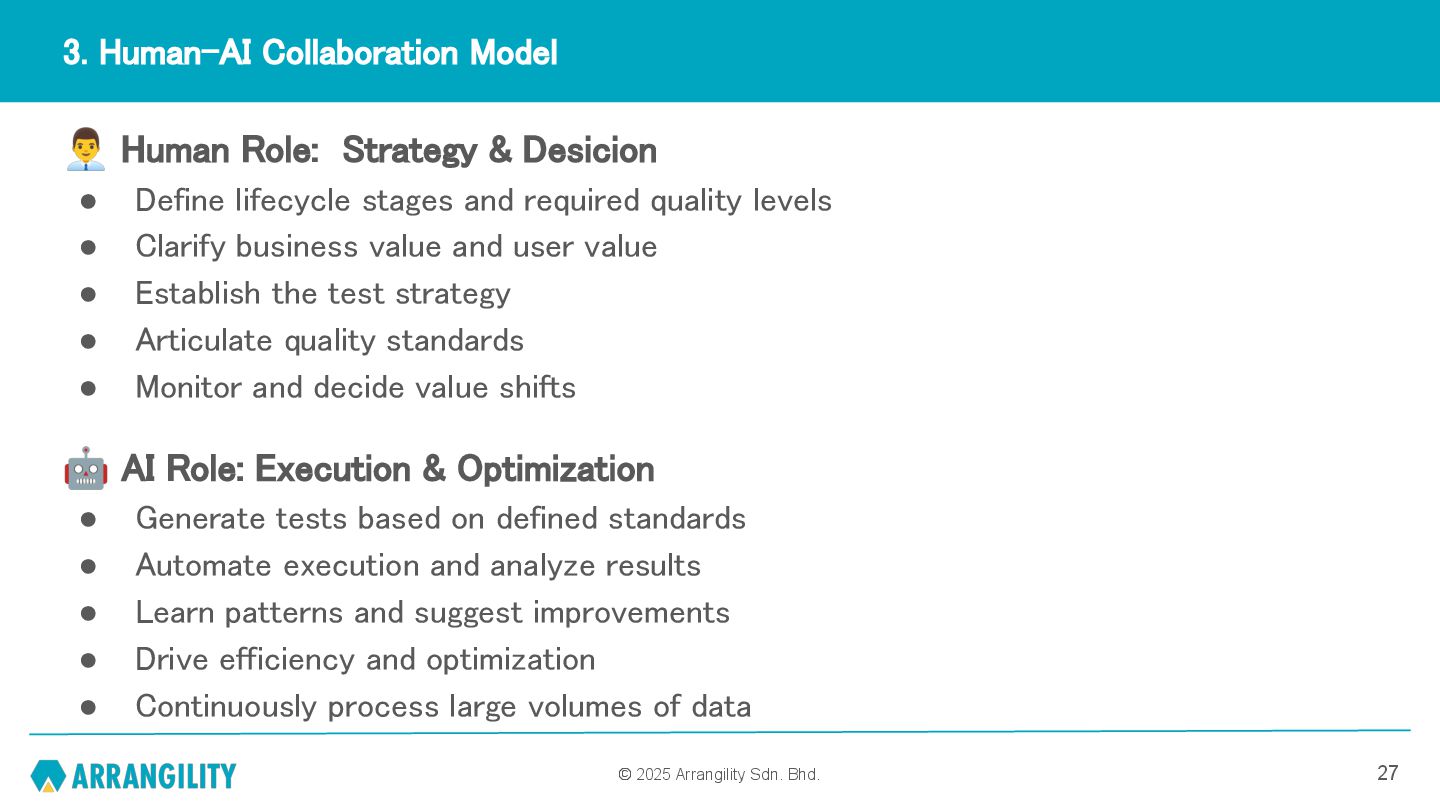
uman ole: trategy & esicion • efine lifecycle stages and required quality levels • larify business value and user value • stablish the test strategy • rticulate quality standards • onitor and decide value shifts 27 🤖 ole: xecution & ptimization • enerate tests based on defined standards • utomate execution and analyze results • earn patterns and suggest improvements • rive efficiency and optimization • ontinuously process large volumes of data
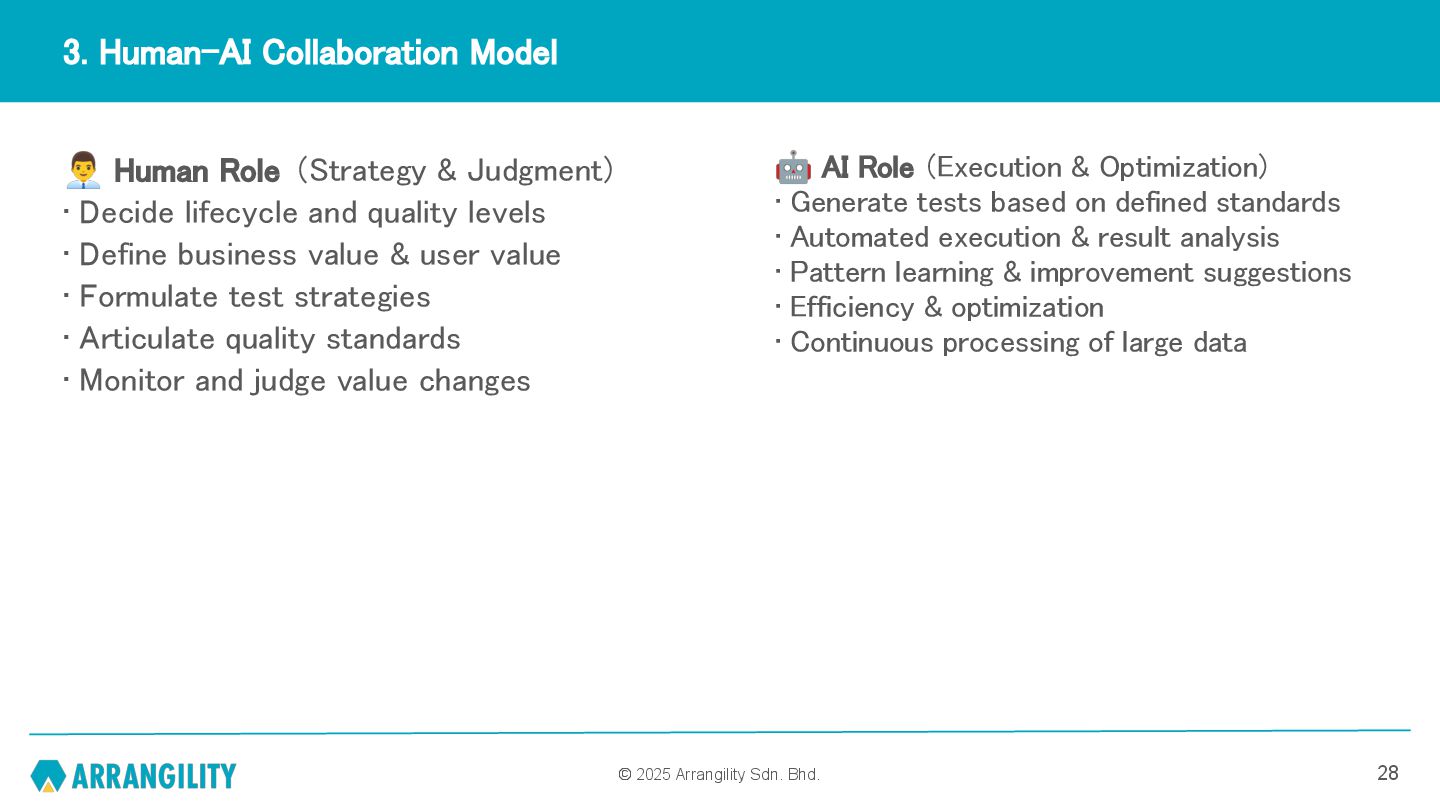
uman ole ( trategy & udgment) • ecide lifecycle and quality levels • efine business value & user value • ormulate test strategies • rticulate quality standards • onitor and judge value changes 28 🤖 ole ( xecution & ptimization) • enerate tests based on defined standards • utomated execution & result analysis • attern learning & improvement suggestions • fficiency & optimization • ontinuous processing of large data
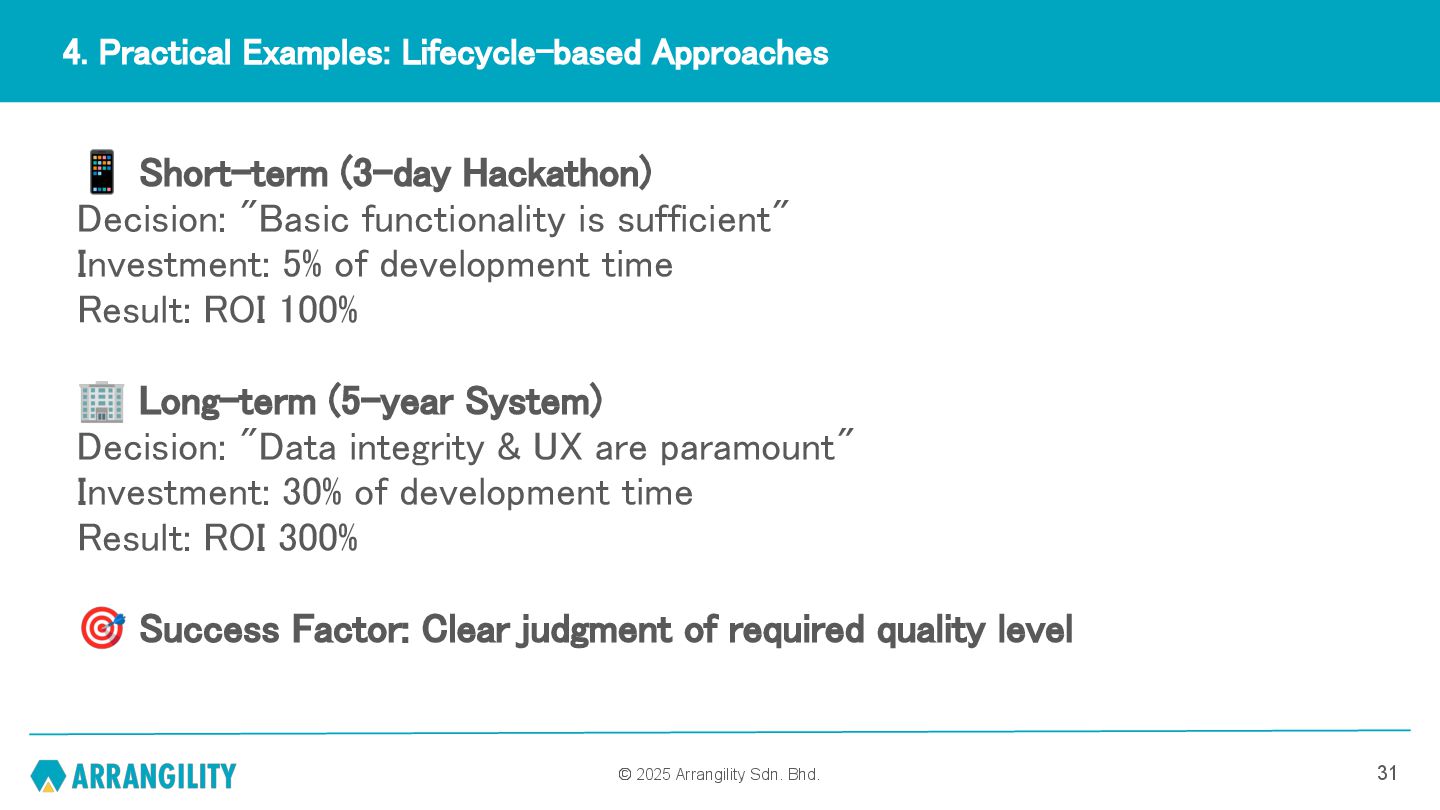
ecision: " asic functionality is sufficient" nvestment: 5% of development time esult: 100% 🏢 ong-term (5-year ystem) ecision: " ata integrity & are paramount" nvestment: 30% of development time esult: 300% 🎯 uccess actor: lear judgment of required quality level 4. ractical xamples: ifecycle-based pproaches
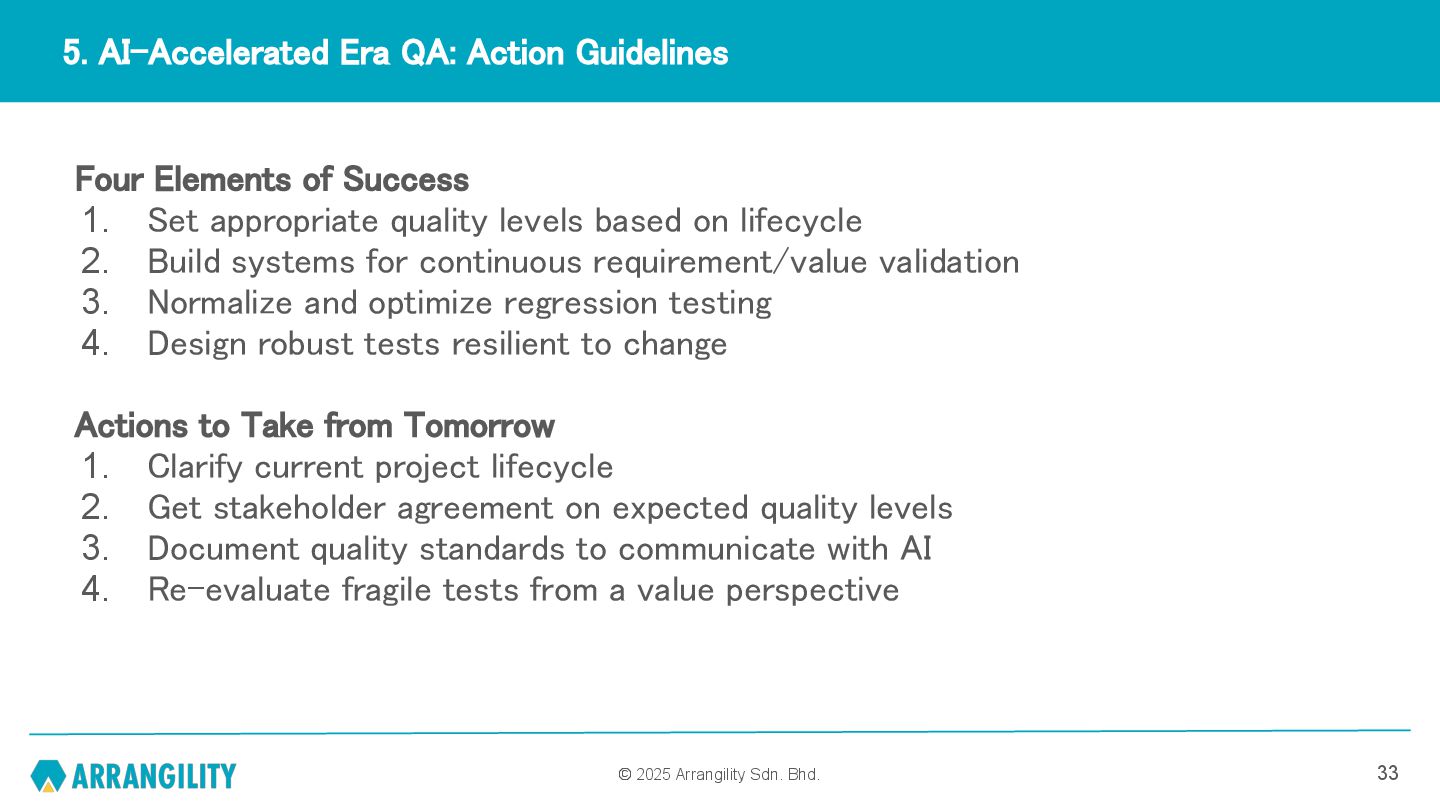
ction uidelines our lements of uccess 1. et appropriate quality levels based on lifecycle 2. uild systems for continuous requirement/value validation 3. ormalize and optimize regression testing 4. esign robust tests resilient to change ctions to ake from omorrow 1. larify current project lifecycle 2. et stakeholder agreement on expected quality levels 3. ocument quality standards to communicate with 4. e-evaluate fragile tests from a value perspective 33
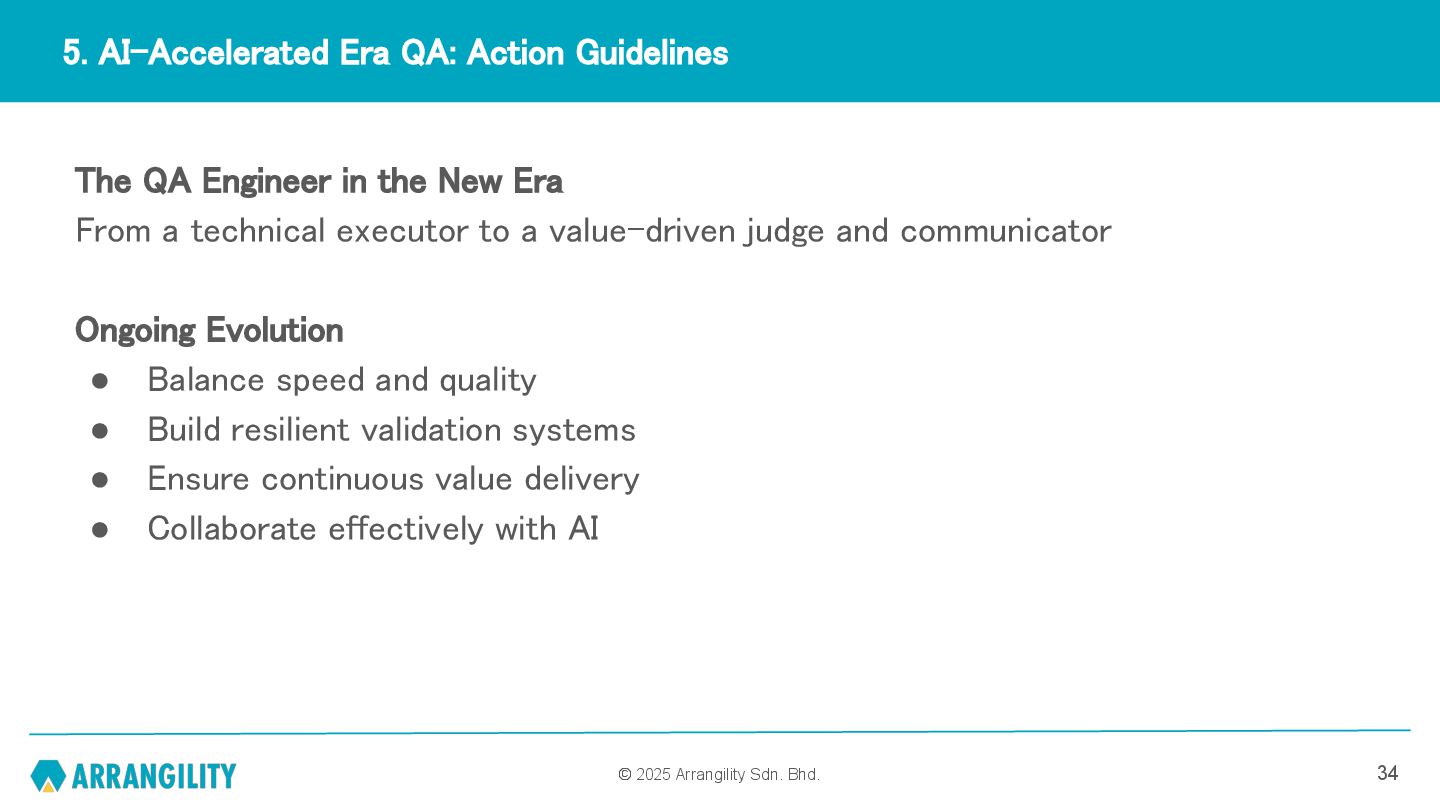
ction uidelines he ngineer in the ew ra rom a technical executor to a value-driven judge and communicator ngoing volution • alance speed and quality • uild resilient validation systems • nsure continuous value delivery • ollaborate effectively with 34


 tomasagi
 riyaamemiya
 onk
onk
 prog893
 mohab1
 odashi
 pfn
pfn
 greenmidori
 kaminashi
 puhitaku
.png) yamad
yamad
 genda
genda
 tetsuya28
 tamaranovitovic
 mraible
 marcelosomers
 livdayseo
 tenderlove
 greggifford
 helmedeiros
 kimpetersen
 pauljervisheath
 addyosmani
 minecr
 axbom
axbom