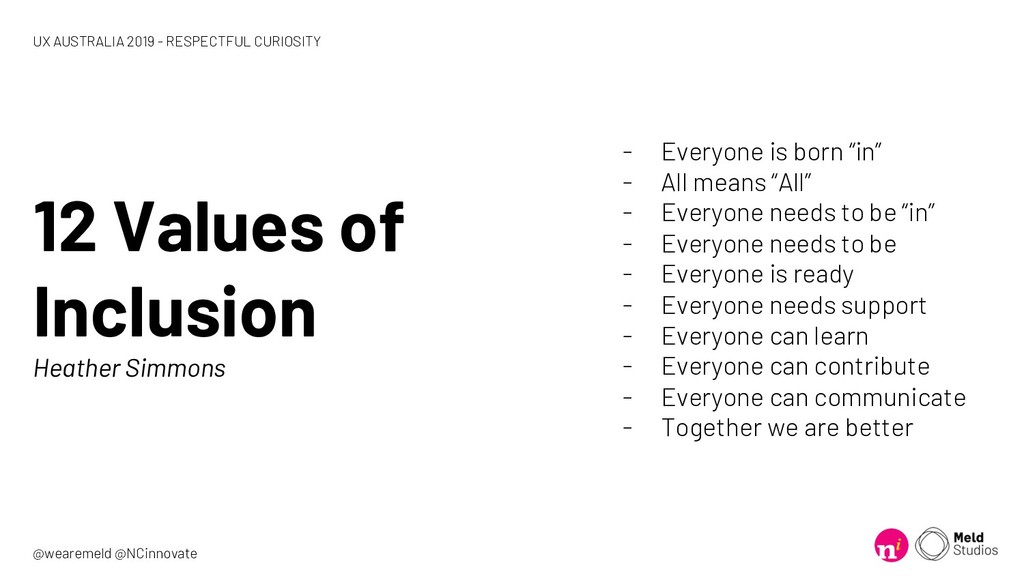
Heather Simmons - Everyone is born “in” - All means “All” - Everyone needs to be “in” - Everyone needs to be - Everyone is ready - Everyone needs support - Everyone can learn - Everyone can contribute - Everyone can communicate - Together we are better @wearemeld @NCinnovate
Heather Simmons - Everyone is born “in” - All means “All” - Everyone needs to be “in” - Everyone needs to be - Everyone is ready - Everyone needs support - Everyone can learn - Everyone can contribute - Everyone can communicate - Together we are better @wearemeld @NCinnovate
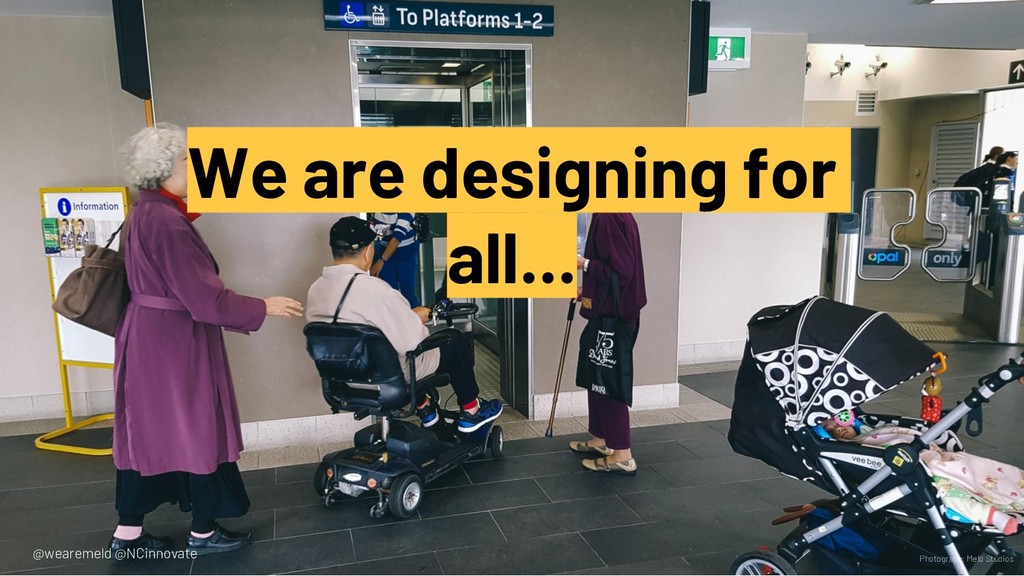
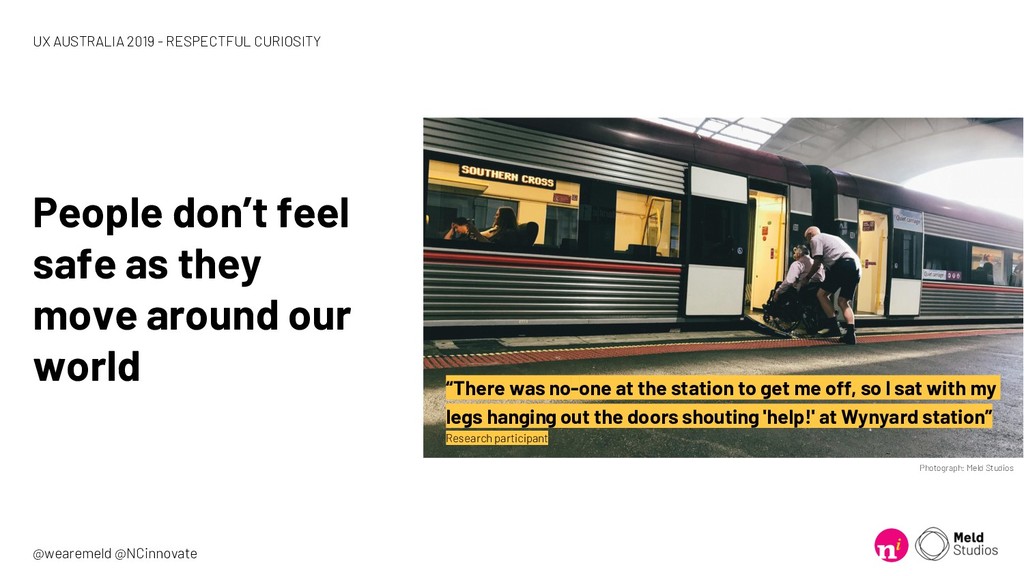
as they move around our world “There was no-one at the station to get me off, so I sat with my legs hanging out the doors shouting 'help!' at Wynyard station” Research participant Photograph: Meld Studios @wearemeld @NCinnovate
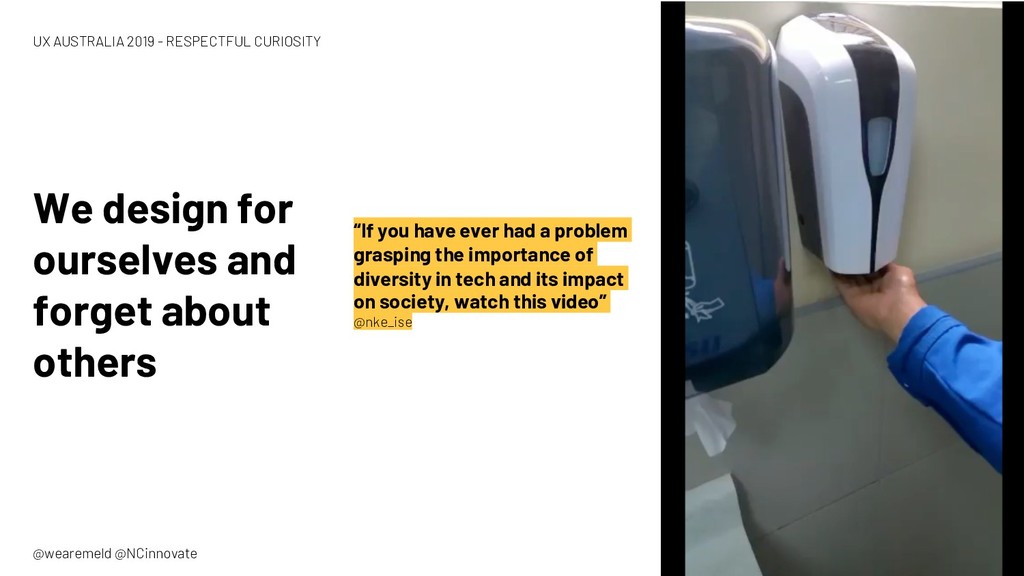
and forget about others “If you have ever had a problem grasping the importance of diversity in tech and its impact on society, watch this video” @nke_ise @wearemeld @NCinnovate Video: Via Twitter Chukwuemeka Afigbo @nke_ise
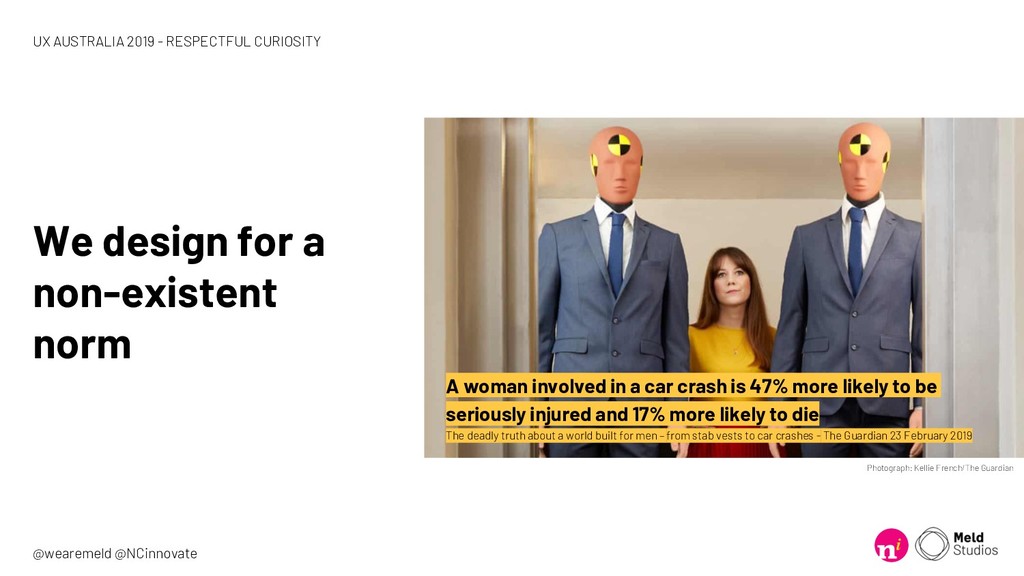
non-existent norm A woman involved in a car crash is 47% more likely to be seriously injured and 17% more likely to die The deadly truth about a world built for men – from stab vests to car crashes - The Guardian 23 February 2019 Photograph: Kellie French/The Guardian @wearemeld @NCinnovate
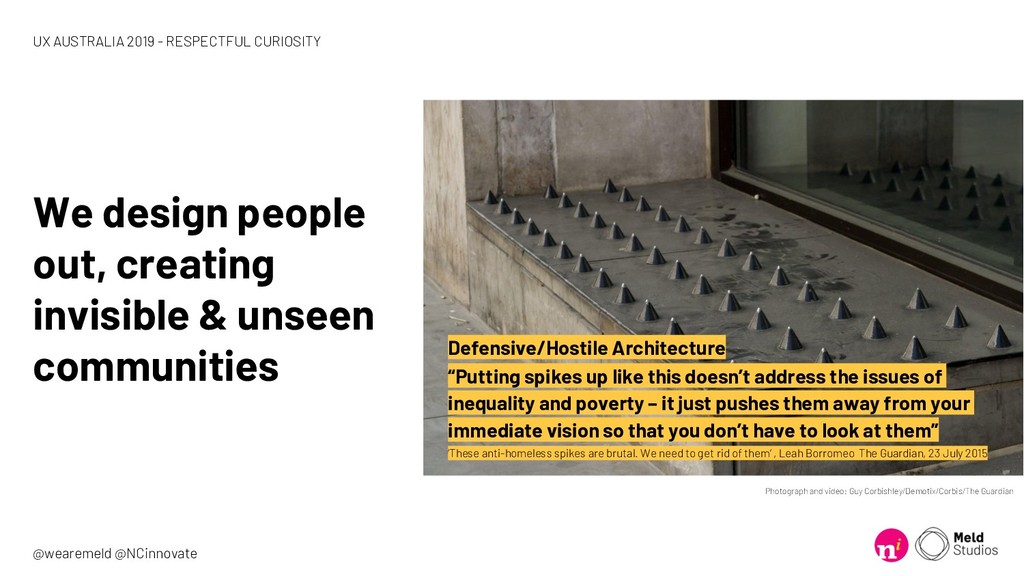
creating invisible & unseen communities Defensive/Hostile Architecture “Putting spikes up like this doesn’t address the issues of inequality and poverty – it just pushes them away from your immediate vision so that you don’t have to look at them” ‘These anti-homeless spikes are brutal. We need to get rid of them’ , Leah Borromeo The Guardian, 23 July 2015 @wearemeld @NCinnovate Photograph and video: Guy Corbishley/Demotix/Corbis/The Guardian
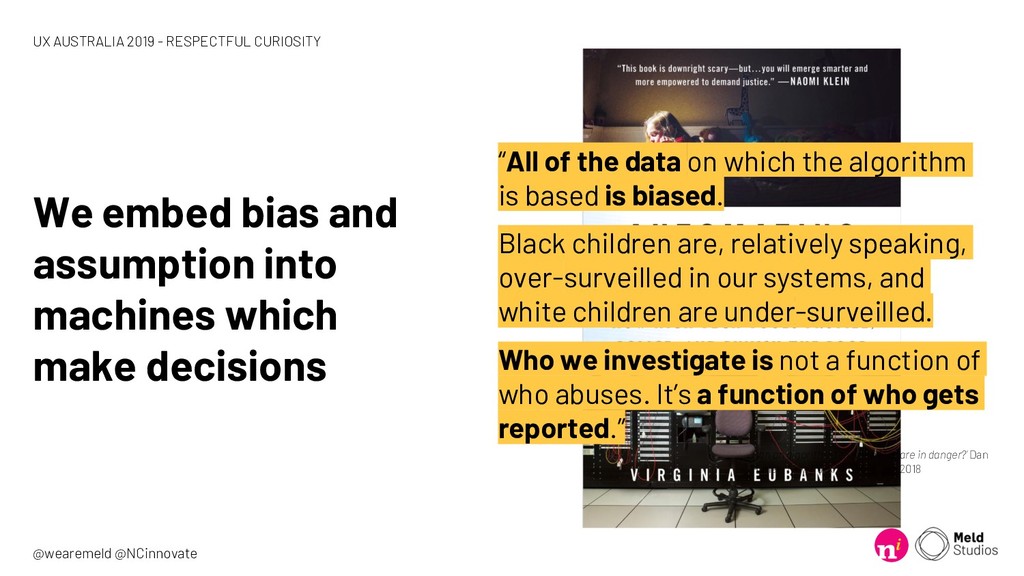
assumption into machines which make decisions @wearemeld @NCinnovate ‘Can an algorithm tell when kids are in danger?’ Dan Hurley, New York Times, 2 Jan 2018 “All of the data on which the algorithm is based is biased. Black children are, relatively speaking, over-surveilled in our systems, and white children are under-surveilled. Who we investigate is not a function of who abuses. It’s a function of who gets reported.”


 uxevents
 ajstarks
 noppefoxwolf
 accessinnovations
 nishame
 h0sa
h0sa
 ayumidesign
 shosira
 kakukoki
 edmontonriver
 isaikaori
 sekiguchiy
 garyuten
 popppiees
 aleyda
 panda_program
 shlominoach
 sergeychernyshev
 oripsolob
 jacobtomlinson
 hatefulcrawdad
 szymonslowik
 smashingmag
 kimpetersen
 morganepeng