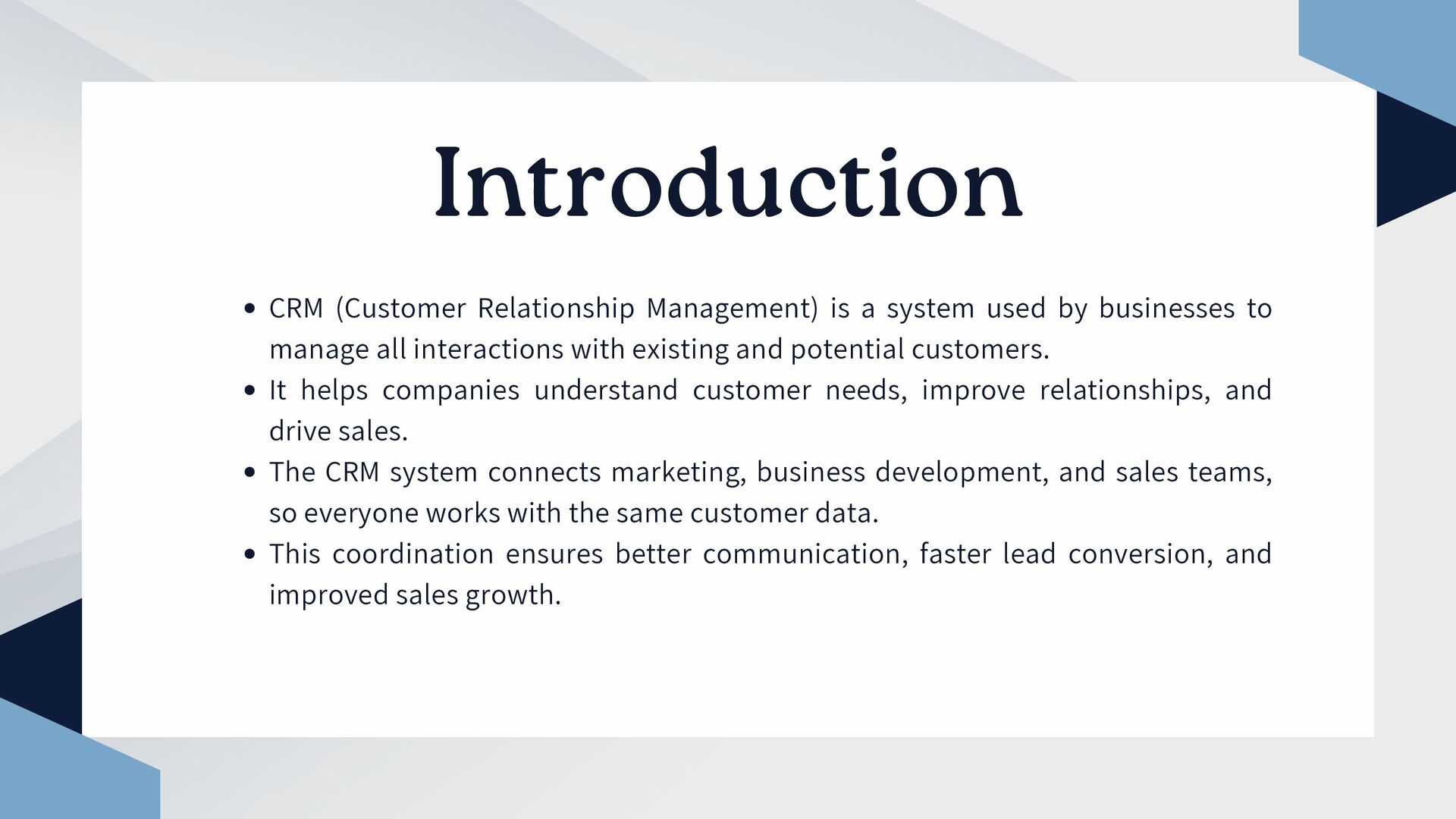
Customer Relationship Management (CRM) is far more than software it’s a business philosophy that focuses on building meaningful relationships with customers and maximizing growth through data-driven strategies. In a world where customer expectations are higher than ever, CRM helps organizations align their marketing, business development, and sales teams on one unified platform. This synchronization ensures that every lead, campaign, and communication is tracked efficiently, resulting in faster conversions and stronger customer loyalty.
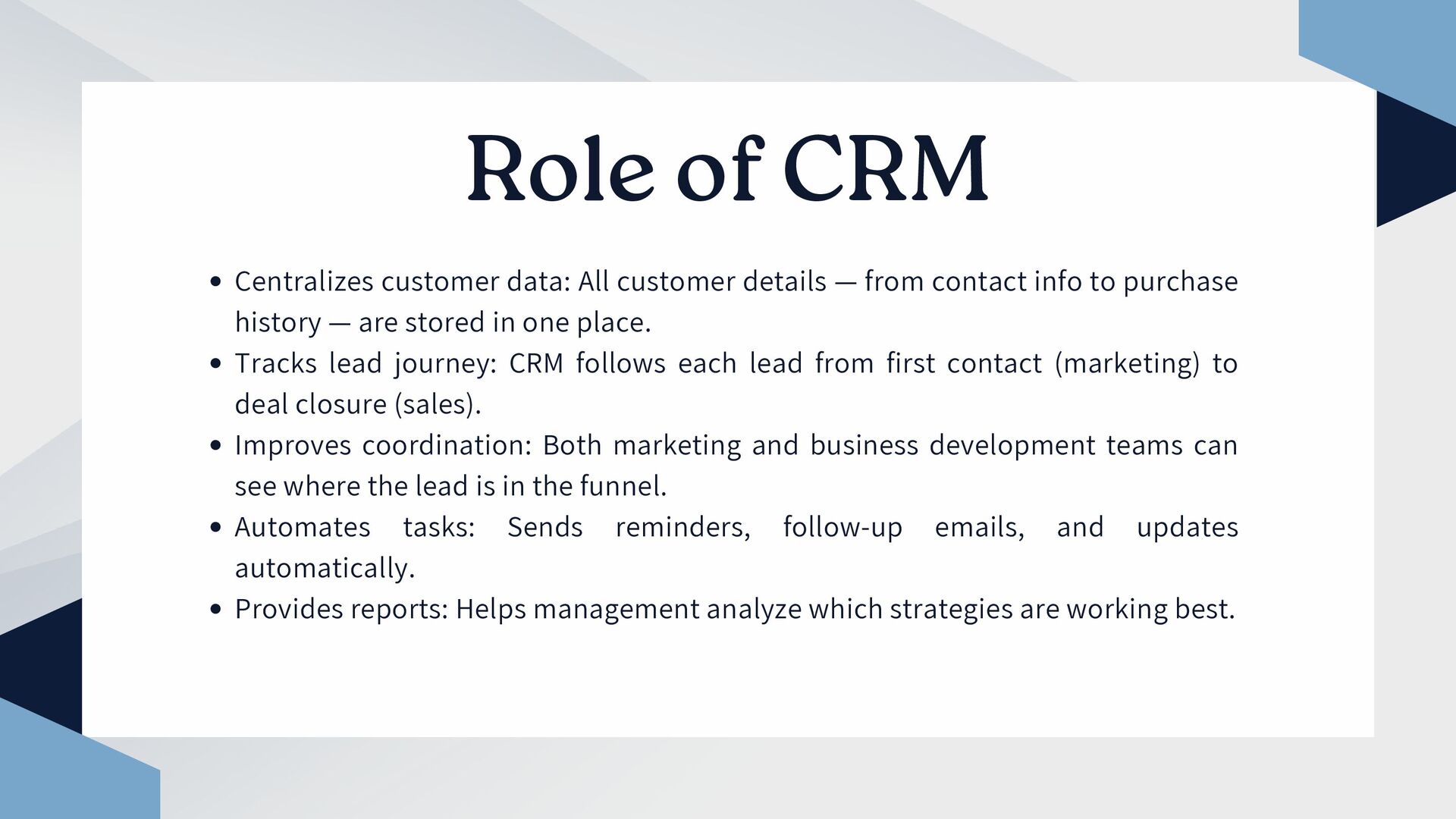
CRM centralizes every aspect of customer data from contact information and purchase history to communication records making it accessible to all departments. This single source of truth eliminates data silos, improves internal collaboration, and enhances customer experiences. Automation tools handle follow-ups, reminders, and lead nurturing, allowing teams to focus on relationship-building and revenue generation.
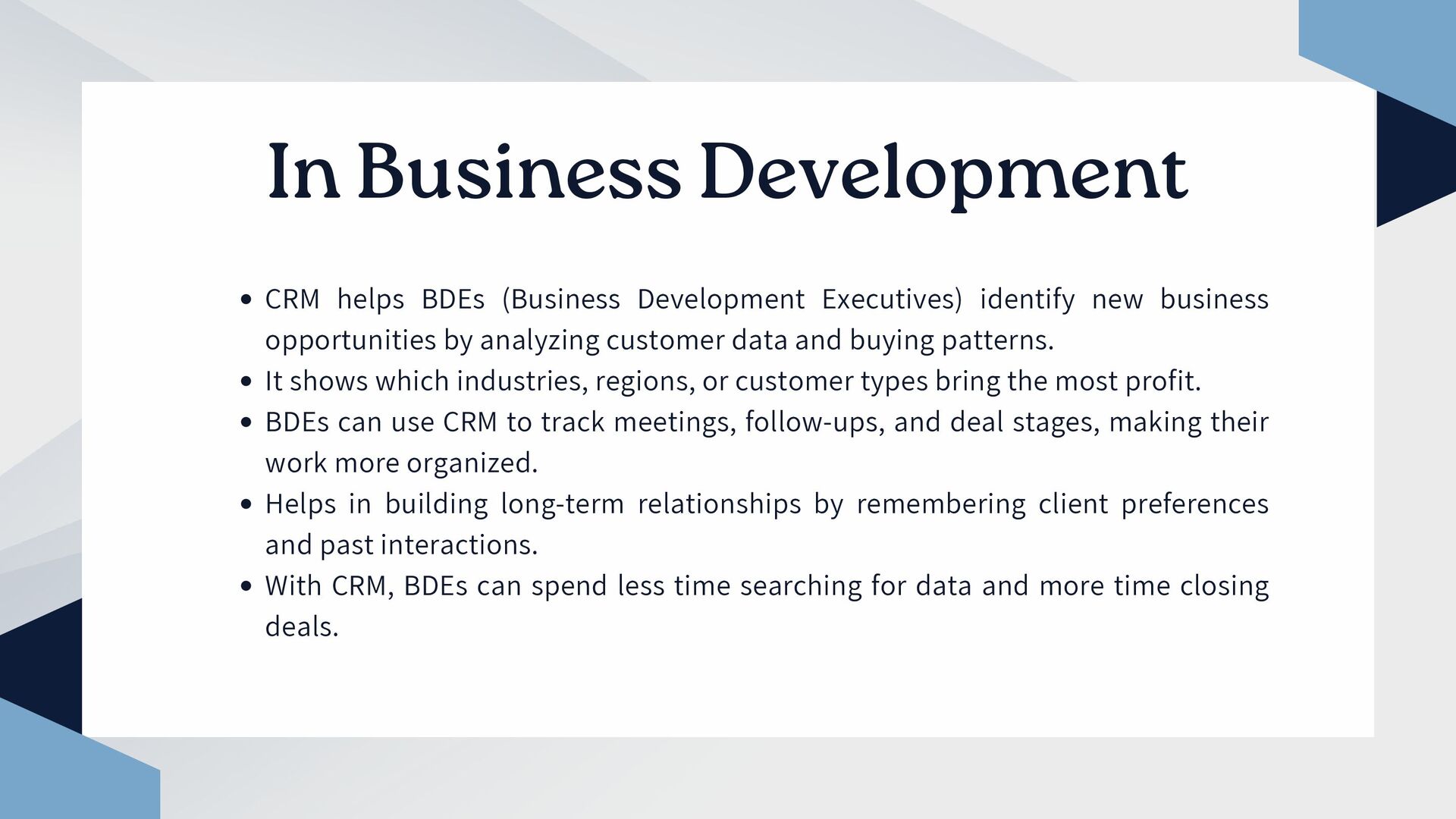
In business development, CRM provides clarity and control. Business Development Executives (BDEs) can analyze client segments, identify profitable markets, and track deal progress seamlessly. It stores complete interaction histories, enabling personalized communication that builds trust. By reducing manual work and improving visibility, CRM empowers BDEs to manage opportunities efficiently and close deals faster.
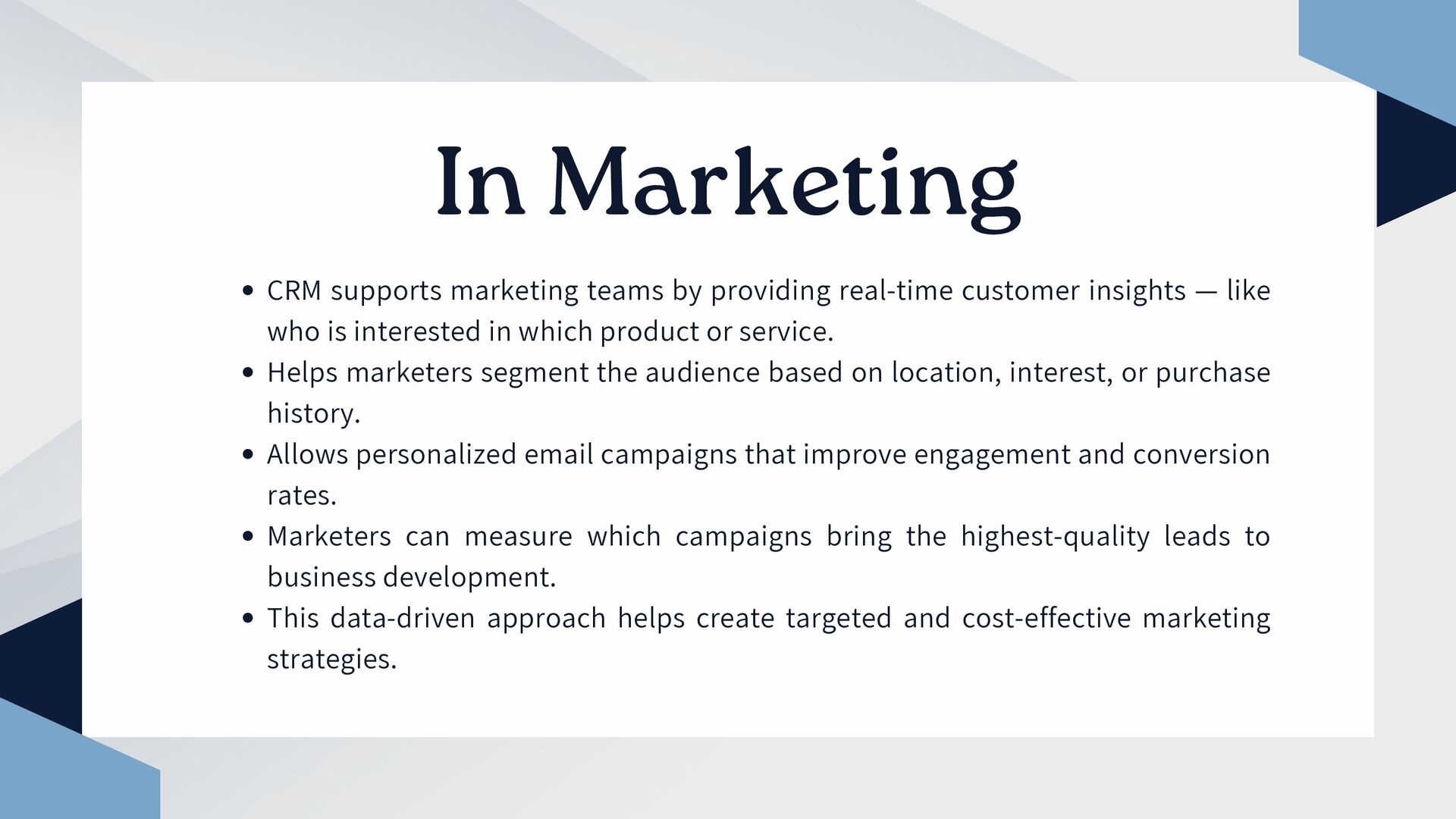
In marketing, CRM acts as a data powerhouse. It allows teams to segment audiences, personalize campaigns, and track engagement metrics. By integrating CRM data with marketing automation, organizations can run precise campaigns that reach the right audience at the right time. Marketers gain actionable insights into which campaigns generate high-quality leads, allowing smarter budget allocation and stronger ROI.
For sales, CRM ensures that no lead is lost between departments. Sales professionals can view the full customer journey, understand needs better, and offer tailored solutions. Real-time dashboards and analytics help track performance from calls and meetings to deal closures leading to improved accountability and sales growth.
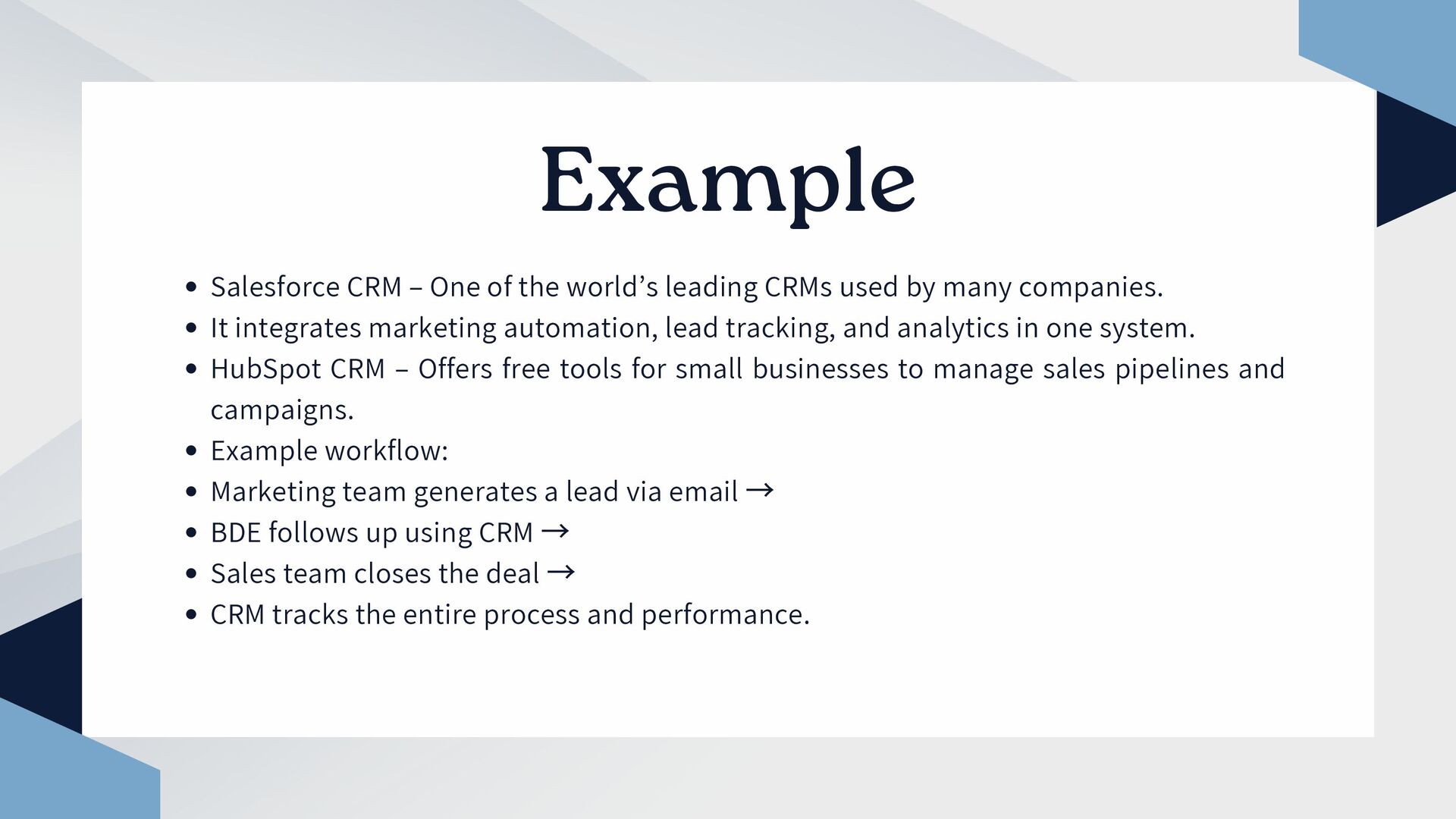
Popular systems like Salesforce and HubSpot CRM showcase how technology can simplify complex workflows. A typical CRM process involves the marketing team generating a lead, the BDE following up through CRM, and the sales team closing the deal. The entire process is monitored through CRM analytics, ensuring transparency and continuous improvement.
The key benefits of CRM include improved collaboration, quicker deal closures, enhanced customer loyalty, higher productivity, and better forecasting. By connecting data, communication, and strategy, CRM turns insights into actions and actions into measurable results. It’s not just a tool for efficiency it’s a bridge that unites people, processes, and purpose.
In conclusion, CRM has become the foundation of modern business success. It empowers marketing teams to create targeted campaigns, supports business development in identifying opportunities, and strengthens sales through organized, data-backed decision-making. As Puja Lakum of Vibe Tech Labs summarizes, “CRM is the bridge between marketing and business growth where customer data becomes business power.”


 hiyoriyamakankou
 iwashi86
 kawanotron
 malna
 daiksy
 gatechnologies
 natsumidnx
 ashisuto_career
 tsuchihashi
 neuroenergia
 makaibito
 ggfs
 jacobian
 chriscoyier
 sergeychernyshev
 chrislema
 nikkihalliwell
 tamaranovitovic
 ipullrank
 stephaniewalter
 aleyda
 katarinadahlin
 techseoconnect
 smashingmag